Key Takeaways
- A breakfast cereals and extruded foods bank loan DPR, supported by CMA Data and realistic working capital estimation, is mandatory for medium to large bank finance in India. Lenders evaluate project cost, means of finance, profitability, cash flows, debt service coverage ratio and the working capital cycle before sanctioning term loan and cash credit facilities.
- Well-prepared DPR and CMA Data must be internally consistent, product-specific (corn flakes, oats, extruded snacks, noodles) and aligned with Indian banking formats. Assumptions in the technical sections must reconcile with financial projections.
- Underestimation of working capital; particularly raw material inventory, packaging stock, finished goods and receivables; is one of the most frequent reasons for funding gaps in new breakfast cereals and extruded foods plants.
- A complete DPR improves loan approval chances by 40 to 60 percent, according to industry experience, because it enables credit officers to assess repayment capacity without repeated follow-ups.
- Project Report Bank, led by CA Manish Gugliya (FCA, DISA), assists promoters with customised DPR, CMA Data, financial projections and bank loan advisory for food processing projects across India.
Introduction: Bank Financing for Industrial Breakfast Cereals and Extruded Foods Plants
A bankable detailed project report is a structured document that presents the technical, commercial and financial case for a manufacturing project in a format that Indian banks can appraise for term loan and working capital sanction. CMA Data (Credit Monitoring Arrangement Data) supplements the DPR with prescribed financial schedules covering projected operating statements, balance sheets, current assets and liabilities, fund flows and ratios. Working capital assessment quantifies the funds required to carry raw materials, work-in-progress, finished goods and receivables, net of trade creditors. Together, these three components form the foundation of a breakfast cereals and extruded foods bank loan DPR submitted to Indian lenders.
Medium and large breakfast cereals, corn flakes, extruded snack and instant noodles manufacturing plants in the ₹5 crore to ₹100 crore range are capital-intensive food processing projects. Fixed investment covers extrusion lines, dryers, roasters, coating drums, flaking mills, packaging machines, utilities, quality control laboratories and industrial building. Recurring working capital stays tied up in grains (corn, rice, wheat, oats), packaging materials, functional ingredients like vitamins and minerals, and trade receivables from distributors and modern retail chains.
The global breakfast cereal market was valued at USD 112.76 billion in 2025 and is expected to reach USD 154.34 billion by 2034, growing at a CAGR of 3.6 percent from 2026 to 2034. In India, increasing urbanization, rising disposable income, urban health awareness and busy lifestyles are driving expansion. Demand for fortified foods and high protein breakfast cereals is rising alongside growth in ready to eat foods. These conditions make the sector commercially attractive, yet even promising projects can struggle if working capital is underestimated or incorrectly structured in the DPR and CMA statements.
This article focuses on bank finance, DPR preparation, CMA Data, working capital assessment and DSCR analysis for industrial breakfast cereals and extruded foods plants. It is tailored for serious industrial promoters and finance professionals in India, not for general information about food business setup.
Understanding Bank Loan Requirements for Breakfast Cereals and Extruded Foods Manufacturing Projects
Different food processing product lines carry different risk and funding profiles, even when they share extrusion or cereal-processing technologies. Each product type shapes the project cost, working capital intensity and repayment capacity in distinct ways.
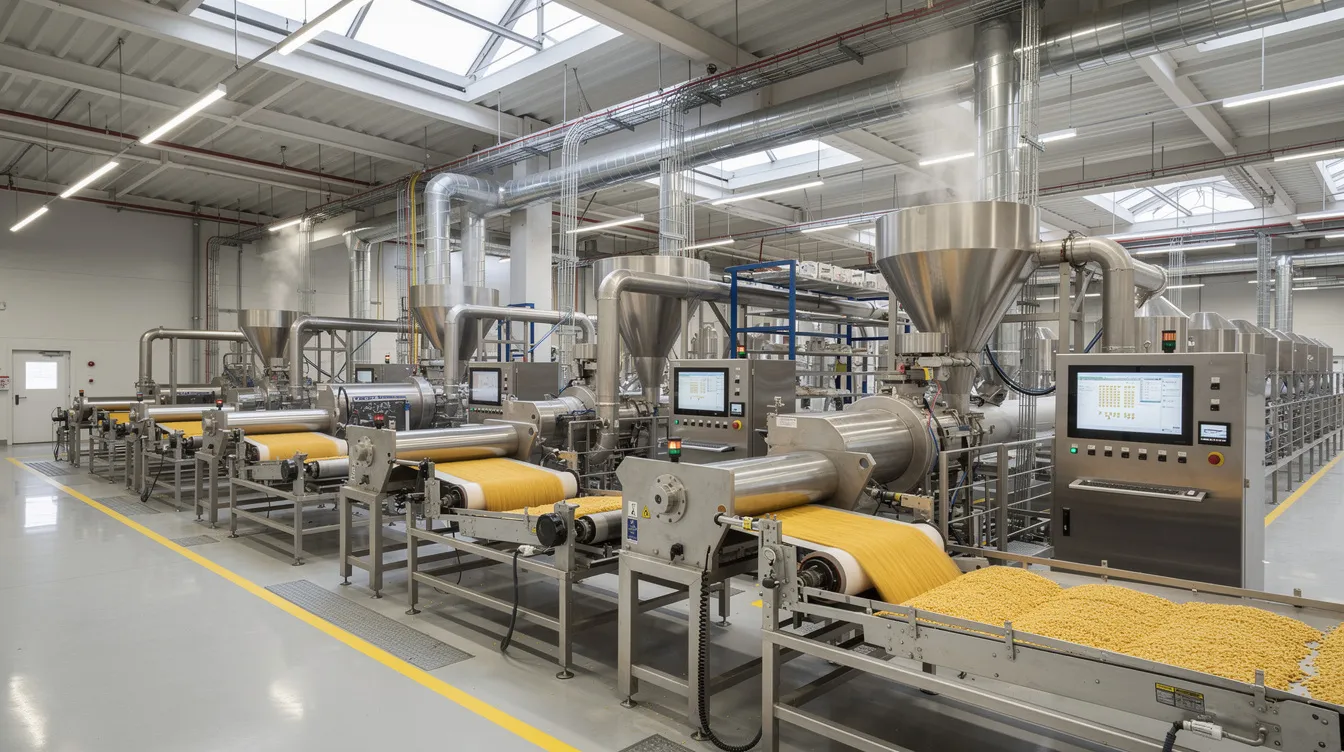
- Extruded ready-to-eat breakfast cereals require twin-screw extruders, dryers, coating systems and high-speed packaging. Extruders are essential for producing puffed cereals, and dryers and roasters determine final texture and shelf life. Capacity utilisation ramp-up is gradual because brand building or private-label contracts take time. For a detailed plant-level analysis, see the Extruded Breakfast Cereals Manufacturing Plant Project Report.
- Corn flakes and multigrain flakes manufacturing units use flaking mills that convert groats into uniform flat flakes, followed by toasting, coating and packaging. Total capital investment for a corn flakes plant can be approximately ₹2.18 crore, and projected rate of return for corn flakes manufacturing is around 22 percent. The Industrial Corn Flakes & Multigrain Flakes Manufacturing Plant Project Report covers product-level economics in detail.
- Industrial rolled oats and instant oats processing plants involve grain cleaning, steaming, flaking and drying of oat groats. Grain procurement is seasonal and storage-intensive, creating higher raw material inventory days. The Industrial Rolled Oats & Instant Oats Processing Plant Project Report addresses these supply-chain considerations.
- Integrated multi-product extruded snacks plants produce rings, balls, sticks and other shapes on multiple extrusion lines sharing common utilities. The breadth of product mix affects both machinery investment and finished goods holding patterns.
- 3D snack pellets and ready-to-fry products are manufactured, dried and packed for later frying by the end user. Distribution to institutional buyers and distributors often involves 45 to 90 days of credit. The 3D Snack Pellets & Ready-to-Fry Manufacturing Plant Project Report explores working capital implications for this segment.
- Fully automatic instant noodles and cup noodles lines involve steaming, frying or hot-air drying, seasoning and cup or pouch packaging. High automation raises fixed capital but can reduce per-unit labour cost. The Noodles Manufacturing Plant Project Report examines the production capacity and packaging economics relevant to this format.
Product mix (flakes vs puffs vs noodles), plant capacity, automation level, packaging format (sachets, pouches, cartons, cup packaging) and distribution strategy (B2B, private label, modern trade, general trade) each affect total project cost and loan requirement. Term loan sizing is based on fixed asset cost and margin money for working capital. Working capital limits depend on inventory days, receivable days and supplier credit; those calculations must feed into CMA Data.
Different business models (own brand, private label, contract manufacturing) create different working capital needs and debt service coverage profiles that the DPR must reflect accurately.
Term Loan, Cash Credit and Other Bank Finance Facilities
Indian banks provide a combination of fund-based and non-fund-based facilities for food processing projects. The two primary categories are term loans (for fixed capital expenditure) and cash credit or overdraft (for working capital). Each serves a different purpose and follows a different appraisal path.
A term loan finances land, building, plant and machinery, utilities, installation, pre-operative expenses and margin money for working capital. Repayment extends over 7 to 15 years, including any moratorium period during project construction and commissioning. Cash credit funds the day-to-day operating cycle: raw material purchases, packaging, wages and receivables. The sanctioned limit is renewable annually, and actual utilisation depends on drawing power calculated from eligible stock and book debts, net of borrower margin.
Letters of credit are relevant where imported extruders, flavours, modified starches or specialised additives are procured from overseas suppliers, or where domestic procurement involves deferred payment terms. Bank guarantees may be required when large buyers demand performance or supply guarantees.
| Facility | Primary Purpose | Tenor / Repayment | Security & Margin | Key Appraisal Focus |
|---|---|---|---|---|
| Term Loan | Land, building, machinery, utilities, pre-operative expenses, WC margin | 7–15 years (including moratorium) | Primary: project assets; Margin: 25–30% | Project cost, means of finance, DSCR, cash flow |
| Cash Credit / OD | Inventory (raw materials, FG) and receivables | Annual renewal | Stocks margin 20–25%; receivables margin 25% | Operating cycle, CMA Data, drawing power |
| Working Capital Demand Loan | Short-term bulk requirement | 3–12 months | As per bank policy | Cash flow, repayment plan |
| Letter of Credit | Procurement of imported or domestic inputs | 90–180 days typically | Margin 10–25% | Supplier arrangement, import documentation |
| Bank Guarantee | Performance / supply obligations | As per contract | Margin 10–25% | Contractual terms, counterparty risk |
Drawing power in a cash credit account is computed by applying the bank’s margin norms to eligible current assets (stock valued at cost, receivables up to 90 days) and subtracting ineligible items. This calculation must match the working capital assessment in CMA Data. Interest rates, collateral requirements, promoter contribution percentage and facility mix vary by bank, borrower profile, credit rating and project risk. The DPR should present a reasonable and flexible financing structure rather than assume uniform terms.
Detailed Project Report (DPR) Requirements for Bank Loan Approval
A DPR is essential for securing bank loans. It converts the promoter’s manufacturing concept into structured financial statements and risk analysis that credit officers can evaluate. A bank-finance DPR is not a marketing plan or investor pitch deck; it is the core appraisal document for term loan and cash credit sanction.
Key sections of a bankable DPR for breakfast cereals and extruded foods include:
- Executive summary and promoter background, including educational and experience qualifications of the promoters
- Product range (corn flakes, multigrain cereals, extruded snacks, noodles, fortified foods) and proposed manufacturing capacity (TPD or TPA)
- Market demand assessment and competitive landscape analysis identifying major brands in the market; market analysis is needed for evaluating demand for breakfast cereals and food products in the target geography
- Manufacturing process description tailored to cereal production requirements, covering grain cleaners and mills, extruders, flaking mills, dryers, roasters and packaging machines. Machinery costs for breakfast cereal production range from ₹12 lakh to ₹80 lakh depending on capacity and automation. The Industrial Breakfast Cereals & Food Extrusion Machinery, Plant Layout and EPC Cost in India provides detailed equipment specifications.
- Plant location and infrastructure details, land and building requirements, plant layout and utility connections
- Raw material sourcing and logistics, covering key raw materials such as corn, rice, wheat, oats, sugar, salt, milk powder, flour, vegetable oils, vitamins, minerals and packaging materials
- Detailed breakdown of project cost, capital investment and operational costs
- Means of finance, working capital assessment and implementation schedule
- Financial projections: projected profit and loss, projected balance sheet, cash flow statement, break even analysis, DSCR and sensitivity analysis
The DPR must demonstrate technical feasibility and financial viability. It must include verified financials and realistic cost projections. Discrepancies between line capacity, operating hours, wastage and yield assumptions on one side, and production volumes, raw material consumption and power cost on the other, are a common source of bank queries.
A project report must also provide a clear project implementation schedule and show regulatory compliance requirements such as FSSAI licence and GST registration.
CMA Data for Breakfast Cereals and Extruded Foods Manufacturing Plants
Credit Monitoring Arrangement (CMA) Data is a prescribed set of financial schedules that most banks require for working capital limits above certain thresholds or for combined term loan and cash credit proposals. Even when not formally labelled “CMA,” lenders typically seek similar projected balance sheet, working capital and ratio information in some format.
Standard CMA schedules include:
- Existing and proposed bank borrowing facilities
- Past performance (3 years audited data for existing units; projections only for greenfield)
- Projected operating statement (revenue, cost of production, expenses, profit)
- Analysis of balance sheet (assets, liabilities, net worth progression)
- Current assets and current liabilities statement
- Working capital assessment (inventory, receivables, creditors, gap, bank finance)
- Fund flow statement
- Financial ratios (current ratio, debt-equity, DSCR, interest coverage)
| CMA Schedule | Input Data Required | Use in Credit Appraisal |
|---|---|---|
| Operating Statement | Turnover by product, raw material cost, manufacturing expenses, overheads | Evaluates profitability, cost structure |
| Balance Sheet Analysis | Assets, liabilities, net worth, term loan outstanding | Assesses financial position, leverage |
| Current Assets & Liabilities | Inventory days, receivable days, creditor days | Computes working capital gap |
| Working Capital Assessment | Gross current assets, current liabilities, margin, bank finance | Determines cash credit / OD limit |
| Fund Flow Statement | Sources and uses of funds year-on-year | Checks cash adequacy, capital deployment |
| Ratio Analysis | Current ratio, DER, DSCR, TOL/TNW | Benchmarks against bank norms |
The same assumptions must flow from the DPR into CMA schedules. Projected sales by product group (breakfast cereals, extruded snacks, instant noodles) link to cost of production, inventory levels, receivables days and bank borrowing. Inconsistencies between these documents create appraisal delays.
For a greenfield manufacturing unit, CMA Data relies entirely on projections and promoter financial profile; there are no historical financials to anchor. For an expansion project, banks expect 3 years of audited data, projected combined performance and incremental working capital assessment. Project Report Bank prepares integrated DPR and CMA Data so that projected balance sheet, profit and loss and working capital schedules reconcile, reducing back-and-forth with the bank.
Working Capital Requirements for Extruded Foods Manufacturing Plants
Working capital assessment for a food extrusion plant must follow the operating-cycle approach, quantifying the funds locked in each stage from raw material procurement through to collection of sale proceeds.
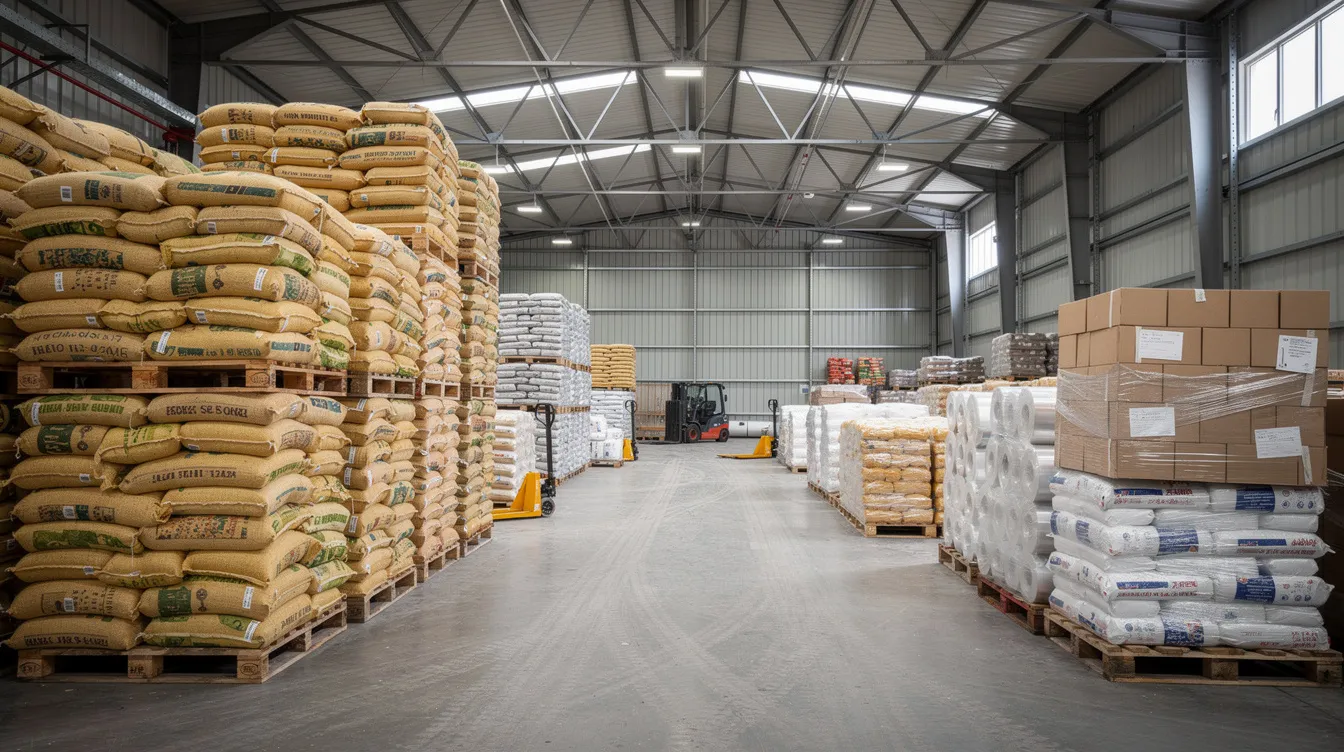
Raw material inventory is the largest component. Raw materials account for 55 to 65 percent of breakfast cereal revenue, and operating costs are driven by raw material consumption at 60 to 70 percent of operating expenses. Typical holding depends on procurement logistics and seasonal availability:
- Corn and maize grits, rice, wheat and oats may require 30 to 60 days of raw material storage depending on whether the plant buys in bulk during harvest season
- Starches, sugar, salt, vegetable oils, flavours, modified starches and functional ingredients such as vitamins and minerals for fortified and high protein products
- Packaging materials (laminated pouches, cartons, shrink wraps, corrugated boxes, speciality cup-noodle packaging) often need higher safety stock due to supplier lead times and directly impact working capital
Work-in-progress covers material undergoing conditioning, food extrusion, drying, toasting, coating, cooling and quality checks. While technical WIP time may be measured in hours, the value at large production capacity (e.g. 50+ TPD) is not trivial.
Finished goods inventory includes packed breakfast cereals, extruded pellets, ready-to-fry products, instant noodles and multigrain products. Holding periods depend on distribution geography, order cycles and shelf-life constraints. Gross profit margins for breakfast cereals typically range between 40 and 50 percent, which means finished goods carry substantial embedded value.
Receivables vary by channel. Distributors may settle in 30 to 45 days. Modern trade chains and organised retail often demand 60 to 90 days of credit. Private-label and institutional buyers may have their own payment cycles. These credit norms directly increase trade receivables in CMA Data.
Trade creditors and other current liabilities (supplier credit on grains and packaging, statutory dues) partially offset current assets. Banks evaluate net current assets, not only gross current assets, when computing the working capital gap.
The cash conversion cycle (inventory days plus receivable days minus creditor days) determines the duration for which the business must finance its operations from its own resources or bank borrowings. Underestimating any component, particularly receivable days or seasonal grain procurement, leads to liquidity stress in the first 12 to 24 months of plant operation.
Practical Example: Working Capital Calculation for an Industrial Food Extrusion Plant
This is an illustrative example for educational purposes, not a universal benchmark. Real projects require customised analysis based on actual capacity, product mix, operating assumptions and lender-specific norms.
Assumed parameters for a large-scale integrated plant:
- Installed capacity: 18,000 TPA (breakfast cereals, corn flakes, 3D snack pellets)
- Year 1 capacity utilisation: 60 percent (10,800 TPA production)
- Annual sales (Year 1): ₹54 crore (average realisation ₹50,000 per tonne)
- Raw material cost: 62 percent of sales (₹33.48 crore)
- Processing and other manufacturing costs: ₹8.10 crore
- Raw material holding period: 45 days
- WIP holding period: 3 days
- Finished goods holding period: 15 days
- Receivable collection period: 45 days
- Creditor payment period: 30 days
| Working Capital Component | Basis | Valuation (₹ Crore) |
|---|---|---|
| Raw Material Inventory | ₹33.48 Cr × 45/365 | 4.13 |
| Work-in-Progress | (₹33.48 + ₹8.10) Cr × 3/365 × 50% completion | 0.17 |
| Finished Goods Inventory | (₹33.48 + ₹8.10) Cr × 15/365 | 1.71 |
| Trade Receivables | ₹54 Cr × 45/365 | 6.66 |
| Other Current Assets (stores, advances) | Estimated | 0.50 |
| Total Current Assets | 13.17 | |
| Trade Creditors | ₹33.48 Cr × 30/365 | 2.75 |
| Other Current Liabilities | Estimated | 0.80 |
| Total Current Liabilities | 3.55 | |
| Working Capital Gap | 9.62 | |
| Borrower Margin (25% of current assets) | 3.29 | |
| Indicative Bank Finance Requirement | 6.33 |
Stock is valued at cost, not at selling price. Receivables are computed on sales value because that is the amount outstanding from customers. The lender’s chosen assessment method, margin norms, eligibility rules and documentation requirements determine the final sanctioned limit and drawing power.
Sensitivity to key variables:
| Scenario | Change | Impact on Working Capital Gap |
|---|---|---|
| Receivable days increase from 45 to 60 | +15 days | Gap increases by ₹2.22 Cr |
| Raw material holding increases from 45 to 60 | +15 days (seasonal procurement) | Gap increases by ₹1.38 Cr |
These shifts illustrate why the DPR and CMA Data must model realistic, not optimistic, operating cycle assumptions. A 15-day change in debtor collection can increase the cash credit requirement by over ₹2 crore.
Working Capital Assessment Methods Used by Banks
Indian banks apply different working capital assessment norms depending on exposure size, industry, internal policies and regulatory guidelines.
- Operating cycle method: The approach demonstrated above, linking inventory days, receivable days and creditor days to compute the working capital gap. Banks use this for larger exposures, typically above ₹5 crore.
- Turnover method: For smaller working capital limits, banks may assess working capital as a fixed percentage (e.g. 20 to 25 percent) of projected annual turnover. Borrower margin of approximately 5 percent of turnover is typically required under this approach.
- Projected balance sheet approach: For larger borrowers, banks review the projected balance sheet to evaluate whether current assets, current liabilities and net working capital are consistent with the projected operating cycle and sales growth.
- Drawing power calculation: Under cash credit, the bank computes drawing power monthly based on eligible stock (valued at cost, net of margin) and eligible receivables (up to 90 days, net of margin). This must align with the working capital assessment in CMA Data.
- Historical context (Tandon/MPBF): Some banks still use variants of the Maximum Permissible Bank Finance framework, but methods are not uniform across lenders. Promoters should clarify the applicable method with their specific bank.
- Cash budget approach: Where seasonality is high, such as bulk maize or paddy procurement during harvest, a cash-flow-based assessment may be appropriate. This can be relevant for cereal-processing projects with concentrated raw material buying seasons.
Borrower margin and minimum net working capital expectations link directly to DSCR and repayment capacity analysis in the DPR.
Project Cost and Means of Finance for Large-Scale Manufacturing Plants
Total project cost for an industrial breakfast cereals and extruded foods manufacturing unit includes land, building, civil works, machinery, utilities, pre-operative expenses and margin money for working capital.
Typical cost heads include:
- Land acquisition and site development
- Factory building, godowns and administrative block
- Extrusion lines, flaking machinery, roasting and drying equipment, coating and flavouring systems
- Packaging machines for filling, sealing and cartoning
- Quality control laboratory, power and water systems, effluent treatment
- Installation, erection and commissioning charges
- Contingency provision (typically 5 to 10 percent of fixed assets)
- Preliminary and pre-operative expenses (interest during construction, professional fees, trial runs)
- Margin money for working capital
Breakfast cereal plant setup costs range from ₹8 lakh to ₹35 lakh for small-scale units, while machinery costs range from ₹12 lakh to ₹80 lakh depending on capacity and automation level. For medium and large plants, total project cost can range from ₹5 crore to ₹100 crore. Refer to Breakfast Cereals & Extruded Foods Plant Setup Cost and Investment for a detailed breakdown across different plant sizes.
An illustrative means of finance structure for a ₹25 crore project might include:
- Promoter equity: ₹7.50 crore (30%)
- Unsecured loans from promoter group: ₹2.50 crore
- Bank term loan: ₹15.00 crore
- Working capital limits (cash credit, LC): assessed separately based on CMA Data
Margin money for working capital is treated as part of project cost in many DPRs because it provides the borrower’s contribution toward current assets from the outset, improving liquidity in the first year. Government subsidies, if available under central or state food processing industries schemes, should be treated conservatively as a post-implementation benefit rather than a core means of finance, unless sanctioned in writing by the relevant authority.
Financial Projections, DSCR and Bank Loan Repayment Capacity
Realistic financial projections are central to any breakfast cereals and extruded foods bank loan DPR and directly influence sanction size, loan tenure and repayment schedule. Banks require detailed financial projections typically covering at least 3 to 5 years, and many DPRs extend to 7 or 10 years for larger projects.
Projections include income and expenditure estimates, projected profit and loss account, projected balance sheet and cash flow statement. These must reflect capacity utilisation ramp-up, price assumptions, raw material cost ratios and operating expenses. Projected financial statements should also consider inflation and market conditions over the projection period.
Breakfast cereals typically deliver gross margins of 30 to 45 percent depending on product mix, brand positioning and distribution channel. Gross profit margins for branded variants can reach 40 to 50 percent. Break-even point for breakfast cereal manufacturing is typically 3 to 6 years from the start of commercial operations. Fixed costs, including depreciation, interest and administrative overheads, are covered progressively as capacity utilisation increases.
Financial projections must include a balanced debt service coverage ratio. Lenders generally prefer DSCR of at least 1.25 on an average basis across the loan tenure, though specific norms vary by bank and borrower profile. Financial ratios such as DSCR and ROI are critical elements that banks evaluate alongside current ratio, debt-equity ratio, interest coverage and overall cash flow adequacy.
A professionally prepared DPR aligns the term loan repayment schedule (instalment and interest) with expected cash generation. Back-ended balloon payments should be avoided unless justified by project cash flows. For deeper modelling details, refer to Breakfast Cereals & Extruded Foods Financial Projections, DSCR and Profitability.
Documents Required for Bank Loan DPR and CMA Data Preparation
A complete document set at first submission reduces appraisal time. Typical requirements include:
Promoter documents: PAN, Aadhaar, KYC of all promoters and guarantors, educational and experience details, net worth statement with supporting evidence, income tax returns for the last 3 years, and proof of existing business operations if any.
Organisation documents: Partnership deed, company incorporation certificate, memorandum and articles of association, shareholding pattern, board resolutions for borrowing (where applicable), Udyam registration for MSME classification.
Financial documents: Last 3 years audited financial statements and GST returns for existing businesses, provisional statements for the current period, bank statements (12 months), details of existing loans and securities offered.
Project documents: Land ownership or lease papers, building plan and construction estimate, machinery quotations from equipment suppliers for extrusion lines, dryers, packaging systems and utilities, plant layout, utility connection proposals.
Regulatory and operational documents: FSSAI application or licence plan, pollution control consent (where applicable), statutory approvals like GST registration, projected production and sales data, raw material supply arrangements, major customer tie-up letters or distributor agreements if available. A SWOT analysis covering operational risks such as power outages and raw material price fluctuations strengthens the proposal.
For greenfield projects, the emphasis shifts to promoter financial strength and project details. For expansion or diversification, the focus is on historical performance, existing banking relationship and incremental working capital.
Common Reasons Bank Loan Proposals Face Objections or Delays
Most objections arise from internal inconsistencies or unrealistic assumptions, not because the industry is unattractive.
- Capacity-sales mismatch: Machinery throughput (kg/hr) does not reconcile with projected annual sales volume. Over-optimistic capacity utilisation (90 to 100 percent from the first year) without supporting offtake evidence raises questions.
- Unrealistic pricing or margin claims: Product pricing assumed without reference to market demand, competition or channel margins. Profit margins that exceed industry norms without justification weaken credibility.
- Underestimated working capital: Inventory and receivable days too low compared with actual distributor and modern trade norms. Missing treatment of seasonal bulk grain procurement. CMA Data that does not match the operating cycle described in the DPR.
- Structural weaknesses: Insufficient promoter contribution, inaccurate means of finance, incomplete machinery quotations, missing licences, or projections that do not reconcile between profit and loss, balance sheet and cash flow.
- Weak initial-year DSCR: Cash flows negative or inadequate in the first 1 to 2 years because the repayment schedule is too front-loaded or working capital shortfall absorbs operating cash.
Corrective steps: Revalidate production and sales assumptions against actual line capacity and vendor specifications. Perform sensitivity analysis on selling price and raw material cost. Recalculate DSCR with conservative scenarios. Revise working capital assessment to be consistent with realistic credit terms.
Professionally prepared DPR and CMA Data from a qualified Chartered Accountant reduce such objections, though final sanction remains the bank’s independent decision.
How to Improve Bankability Before Submitting the Loan Proposal
Promoters have substantial control over how bankable a cereals or extruded foods project appears, by refining assumptions and structure before approaching lenders.
- Cross-check line capacities with vendor data. Ensure realistic downtime and wastage assumptions. Benchmark product pricing and market demand with actual distributor or retail information.
- Revisit promoter contribution to ensure adequate equity. Explore quasi-equity or unsecured loans from the promoter group. Tune loan tenure to achieve smoother DSCR across years.
- Model multiple operating-cycle scenarios for working capital. Align raw material procurement strategy with available supplier credit. Ensure DPR working capital matches CMA Data and projected balance sheet.
- Run integrated scenario analysis (changing capacity utilisation, selling price, raw material cost, receivable days) to identify a project structure that withstands downside conditions before formal submission.
- Engage professional project finance advisors early, rather than only after initial rejections or queries from banks.
Professional DPR, CMA Data and Project Finance Advisory Services
Project Report Bank is a Chartered Accountant-led professional advisory practice specialising in DPR preparation, CMA Data, project finance and working capital assessment for manufacturing and food processing projects across India. The practice is led by CA Manish Gugliya (FCA, DISA, ICAI) with over 20 years of professional experience.
Core services for breakfast cereals and extruded foods projects include:
- Customised bank loan DPR preparation covering all sections required for term loan and cash credit appraisal
- CMA Data and ratio analysis aligned with Indian banking formats
- Working capital and drawing power assessment using operating cycle and projected balance sheet methods
- Financial projections, DSCR modelling and sensitivity analysis
- Project cost structuring and means of finance planning
- Support for promoter discussions with lenders as professional advisors
Advisory is tailored for projects typically ranging from ₹5 crore to ₹100 crore, including greenfield manufacturing units, capacity expansions and diversification into new product lines like high protein breakfast cereals, fortified foods or instant noodles.
To initiate a professional consultation, promoters can contact Project Report Bank via the website or WhatsApp, sharing the basic project outline: location, proposed capacity, estimated project investment, planned food products, new or expansion status, and intended term loan and working capital requirement. The firm does not sell generic templates; every DPR is based on project-specific analysis and professionally reasoned assumptions aligned with banking expectations.
Frequently Asked Questions
The following questions address points not fully covered in the main article body. Answers are specific to Indian banking and food processing context.
What is a bank loan DPR for a breakfast cereals and extruded foods manufacturing plant?
It is a detailed project report specifically structured for bank appraisal. It covers the proposed product range (corn flakes, multigrain cereals, extruded snacks, noodles), manufacturing process, project cost, means of finance, financial projections (including revenue, cost, profit, cash flow and projected balance sheet), working capital assessment and debt service coverage ratio. The document converts the promoter’s business concept into structured financial analysis that credit officers can evaluate for term loan and cash credit sanction. DPR should detail capital investment, operational costs and the project’s financial viability over the loan tenure.
Is CMA Data compulsory for every breakfast cereals or extruded foods project loan?
Most banks require CMA Data for working capital limits above certain thresholds (often ₹1 crore or above) or for combined term loan and cash credit proposals. Exact requirements vary by bank and loan size. Even when not formally labelled “CMA,” lenders typically seek similar projected balance sheet, working capital and ratio information. Preparing CMA-style data in advance is prudent for any project of ₹5 crore or above.
Can a newly incorporated food processing company with no past financials still get a term loan and cash credit facility?
Banks in India regularly fund greenfield food processing projects, including breakfast cereals and extruded foods units, based on promoter profile, project viability, collateral and properly prepared DPR and CMA Data. Such proposals usually undergo more detailed appraisal and may require higher promoter contribution, clear security and conservative assumptions in financial projections. The promoter’s net worth, industry experience and equity commitment carry greater weight when historical financials are unavailable.
How does distributor credit period affect working capital and CMA projections?
Longer credit to distributors or modern retail (e.g. 60 to 90 days) directly increases trade receivables and hence total current assets, resulting in a higher working capital gap and larger cash credit requirement in CMA Data. If the distributor credit period is extended, promoters must either arrange higher margin money or negotiate better supplier credit terms to avoid cash-flow strain. The practical example in this article shows that a 15-day increase in receivable days can add over ₹2 crore to the working capital requirement for a mid-sized plant.
How can promoters reduce working capital pressure in the first year of plant operations?
Practical approaches include phasing the capacity ramp-up to avoid excess finished goods inventory, negotiating shorter credit periods with initial customers or securing better supplier credit, retaining additional equity or unsecured loans as a working capital buffer, and limiting the initial product range to reduce stock complexity. Revisiting packaging sizes, product mix and launch geography can also reduce initial stock requirements. These decisions should be reflected in the DPR and CMA projections to present a consistent and credible financing proposal to the bank.
Conclusion
Successful financing of breakfast cereals and extruded foods manufacturing projects in India depends on an integrated package: a technically sound and realistic bank loan DPR, internally consistent CMA Data, and carefully modelled working capital and DSCR. Each component reinforces the others. The project report establishes technical and commercial feasibility. CMA Data translates those assumptions into financial schedules that credit officers evaluate. Working capital assessment ensures the business has adequate liquidity to operate without cash-flow stress during the initial ramp-up years.
Lenders focus on actual commercial viability, promoter contribution, security and cash flow visibility. Generic templates and optimistic projections do not substitute for structured financial analysis backed by defensible assumptions. The DPR must detail raw material sourcing, production economics, market demand and repayment capacity in a format that addresses the bank’s specific appraisal requirements.
Professional preparation of these documents by experienced advisors helps promoters present well-structured proposals, address likely bank queries in advance and manage project finance risks. Promoters planning breakfast cereals, corn flakes, extruded snacks, rolled oats or instant noodles manufacturing plants in India can reach out to Project Report Bank for customised DPR, CMA Data and project finance advisory support tailored to their specific capacity, investment and financing requirements.