An integrated multi-product extruded snack foods manufacturing plant offers a fundamentally different investment proposition compared to a conventional single-product snack unit. By combining shared raw material handling, multiple extrusion configurations, downstream finishing, seasoning systems, and automated packaging within a single facility, such a plant enables product diversification without proportionate increases in capital expenditure. The result is a manufacturing operation capable of producing corn rings, puffed curls, multigrain snacks, co-extruded filled rolls, pellets, and baked variants from a common infrastructure base.
This article examines the technical, commercial, and financial dimensions of setting up an industrial-scale integrated extruded snacks manufacturing plant in India. The discussion covers plant design, production technology, machinery selection, capital investment, raw material planning, manufacturing cost, working capital, profitability, DSCR, IRR, risk assessment, and the essential role of a professionally prepared Detailed Project Report. A DPR is essential for integrated snack food manufacturing plants, and this guide explains why.
Key Takeaways
- This is a Chartered Accountant-led integrated multi product extruded snack foods manufacturing plant project report focused on India, industrial-scale operations, and bank finance readiness, prepared from the professional perspective of CA Manish Gugliya, FCA, DISA (ICAI).
- The report covers plant setup, automatic extruded snacks production line machinery, multi product extruded snacks manufacturing plant cost, working capital assessment, and profitability analysis for capacities ranging from approximately 500 to 2,000 kg/hour.
- The guide explains integrated plant design for corn rings, curls, puffed snacks, pellets, and core-filled snacks, along with common raw materials, manufacturing process flows, and downstream packaging integration.
- The article adopts a financial-feasibility perspective: capital expenditure planning, DSCR, IRR, break-even analysis, and risk assessment structured for term loan and investor evaluation.
- Serious promoters can obtain a customised industrial extruded snack foods manufacturing plant DPR and CMA Data from Project Report Bank for bankable and investor-ready documentation.
What Is an Integrated Multi-Product Extruded Snack Foods Manufacturing Plant?
An integrated facility is a single plant that produces multiple categories of extruded snacks using shared utilities, storage, and production infrastructure. Product portfolios may include direct-expanded snacks such as cheese balls, corn puffs, and kurkure-type curls alongside co-extruded snacks with cream or chocolate fillings, third-generation snack pellets, and health-oriented multigrain or millet-based products. Integrated multi-product lines produce different snack shapes using extrusion technology, with modular add-ons allowing the plant to switch between product types.
The plant typically integrates raw material handling, milling, mixing, preconditioning, extrusion, frying or baking, seasoning, and automatic packaging into a cohesive production line. Products sharing similar moisture and fat targets – such as direct-expanded corn puffs and cheese curls – can often share the same extrusion and downstream line. However, third-generation pellets require dedicated long dryers and separate finishing fryers, while high-millet formulations may need modified screw configurations for consistent expansion.
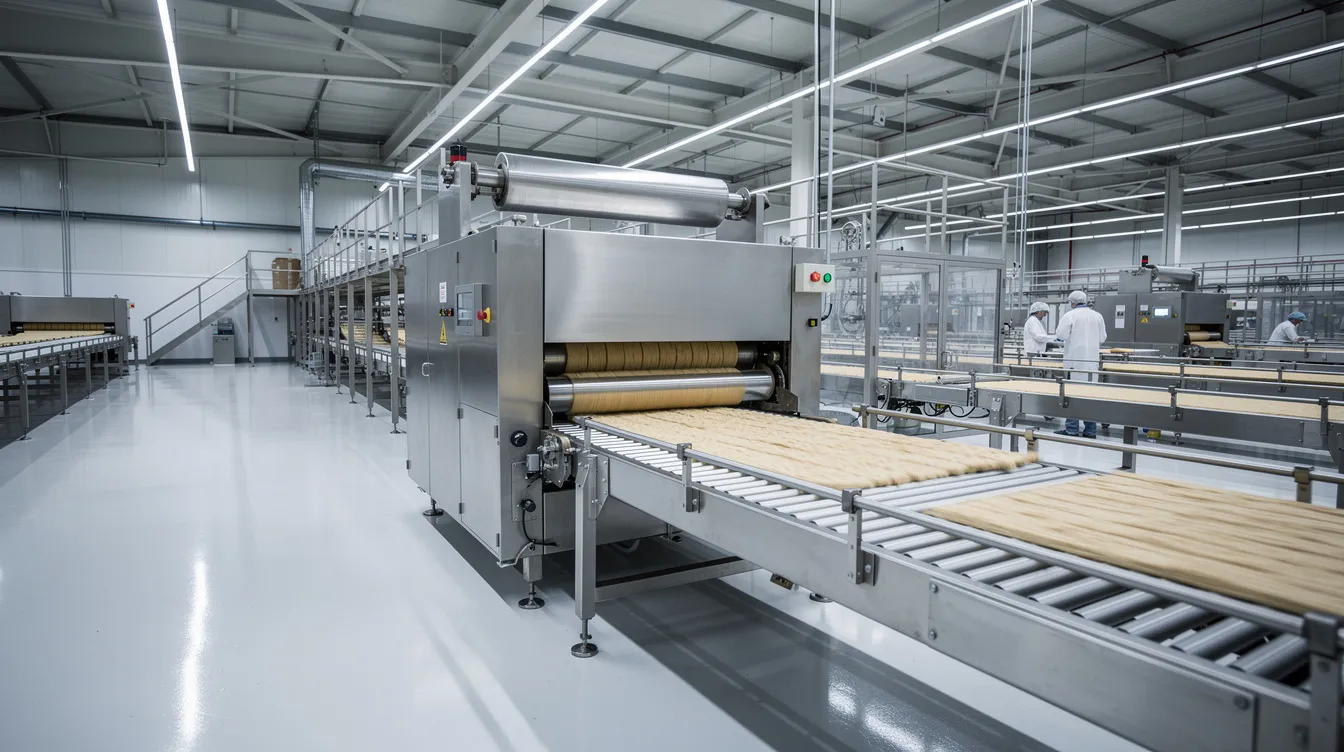
This integrated design reduces the unit manufacturing cost by spreading land, building, utilities, quality lab, warehousing, and staff costs across multiple SKUs. A professionally engineered layout must, however, ensure allergen control, cleaning protocols, and hygienic zoning so that products with different seasonings and ingredients can be produced without compromising food safety.
Product Portfolio and Manufacturing Opportunities
The commercial potential of an integrated extruded snacks plant lies in its ability to serve a diversified product basket. Agricultural processing projects, especially in snacks, see rising demand for healthy options, which means the product mix can range from conventional corn-based snacks to health-focused variants containing 3–5 grams of fibre per serving and free from artificial preservatives.
| Product Category | Typical Raw Materials | Processing Route | Additional Equipment | Distribution Channels |
|---|---|---|---|---|
| Corn rings, curls, puffs | Corn grits, corn flour, corn starch | Direct-expanded extrusion | Standard dies, light frying/baking | General trade, modern trade |
| Rice-based expanded snacks | Rice flour, rice grits | Direct-expanded extrusion | Modified die sets | General trade, institutional |
| Multigrain extruded snacks | Wheat flour, millet blends, whole grains | Twin-screw extrusion | Pre-conditioning adjustments | Modern trade, e-commerce |
| Co-extruded filled snacks | Corn/wheat shell, cream/chocolate filling | Co-extrusion with filling pump | Co-extrusion head, cooling tunnel | Premium retail, export |
| 2D/3D snack pellets | Wheat flour, potato starch, starches | Pellet extrusion, drying, frying | Pellet dryer, continuous fryer | B2B, wholesale, contract |
| Baked health variants | Multigrain, pulse flour, oats | Extrusion + baking oven | Baking oven, oil-free seasoning | Health retail, D2C |
Corn-based extruded snacks such as cheese balls and corn rings primarily rely on maize grits and direct expansion. For promoters exploring millet-focused product lines in greater depth, the Millet-Based Extruded Snacks Manufacturing Plant Project Report provides dedicated analysis. Similarly, pulse- and protein-enriched extruded snacks represent a growth area covered in the Value-Added Pulse Snacks and Integrated Food Processing Plant Project Report.
Third-generation snack pellets and co-extruded filled snacks require dedicated process modules – pellet die sets, long dryers, special fryers, and filling pumps – and cannot always be created by merely changing dies on a simple puff line. However, the ability to create multiple seasoning variants (masala, tomato, cheese, peri-peri, cream and onion, regional flavours) from the same base extruded snacks significantly improves product variety without proportionate extra capital expenditure.
Indian Extruded Snack Foods Market and Industrial Investment Opportunities
The global extruded snacks market was valued at approximately USD 54.80 billion in 2025 and is expected to reach USD 72.50 billion by 2034. Within India, the extruded snack food market was valued at roughly USD 654 million in 2025, projected to reach USD 1,159 million by 2034 at a CAGR of about 6.57%. Urbanisation, rising disposable incomes, and the expansion of modern trade and e-commerce channels continue to drive demand. Notably, 61% of consumers preferred online grocery shopping in 2024, expanding distribution possibilities for branded snacks.
Market analysis should include consumer demographics and regional demand patterns. The health-focused snacks market expenditure is projected to double in five years, and India’s adult obesity rate is projected to grow at 4.1% annually until 2035, which paradoxically drives both indulgent and health-conscious snack forms. Effective distribution strategies must span modern trade, e-commerce, and institutional sales to capture volume across channels.
Opportunities in contract manufacturing and private-label production for modern retail chains, D2C brands, and institutional buyers (airlines, railways, canteens) make integrated plants particularly attractive. Export potential exists for the Middle East, Africa, and South Asia, subject to importing-country food safety, labelling, and packaging standards. Competitive pressures remain intense: leading manufacturers invest heavily in marketing, distributor margins are substantial, and frequent price promotions demand cost-efficient production. Health-oriented segments (multigrain, millet, baked, low-oil) are emerging as higher-value SKUs but require careful pricing given their raw material and packaging costs. A reference point for understanding India’s popular kurkure-type snack manufacturing provides useful context on entry-level extruded snack production.
Manufacturing Process and Production Technology
The manufacturing process for extruded snacks encompasses the complete sequence from raw material intake to finished packaged food products. Production involves sourcing natural ingredients like nuts and seeds alongside primary cereals and oils. The core manufacturing processes include extrusion, drying, seasoning, and packaging, with each stage requiring precise control of process parameters.
Core Process Flow:
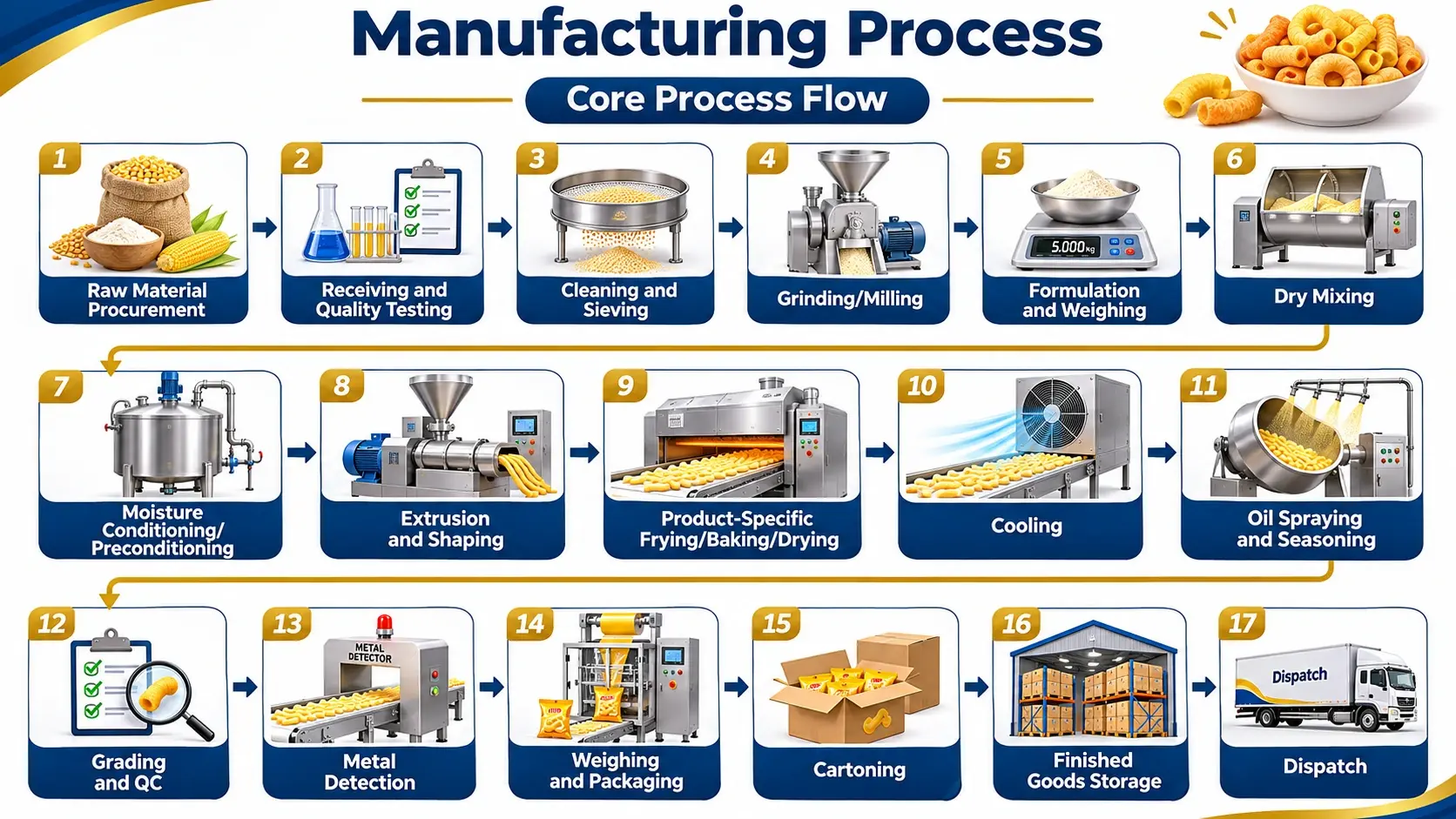
Raw Material Procurement → Receiving and Quality Testing → Cleaning and Sieving → Grinding/Milling → Formulation and Weighing → Dry Mixing → Moisture Conditioning/Preconditioning → Extrusion and Shaping → Product-Specific Frying/Baking/Drying → Cooling → Oil Spraying and Seasoning → Grading and QC → Metal Detection → Weighing and Packaging → Cartoning → Finished Goods Storage → Dispatch.
Direct-expanded extruded snacks undergo single-step expansion at the die, often followed by light frying or baking. Third-generation pellets, by contrast, are extruded at low expansion, then dried (forced air drying is typically done at temperatures around 50–60°C), stored, and later fried or popped before packaging. Core-filled snacks require additional co-extrusion heads and filling pumps that synchronise outer shell extrusion with inner filling before cutting and downstream processing.
Key process parameters include moisture content of input, preconditioning time, extrusion barrel temperature profile, screw speed, specific mechanical energy (SME, typically 0.08–0.20 kWh per kg for direct-expanded snacks), expansion ratio, bulk density, texture, and oil absorption. Modern extrusion systems improve production efficiency and reduce waste through automated parameter control. Process control includes in-line moisture meters, metal detectors, sieve analysis, and oil-content checks.
Savoury extruded snacks differ technologically from ready-to-eat breakfast cereals, which use different cooking, flaking, and toasting technologies. The Extruded Breakfast Cereals Manufacturing Plant Project Report addresses cereal-specific production requirements separately.
Industrial Extrusion Machinery and Automated Production Lines
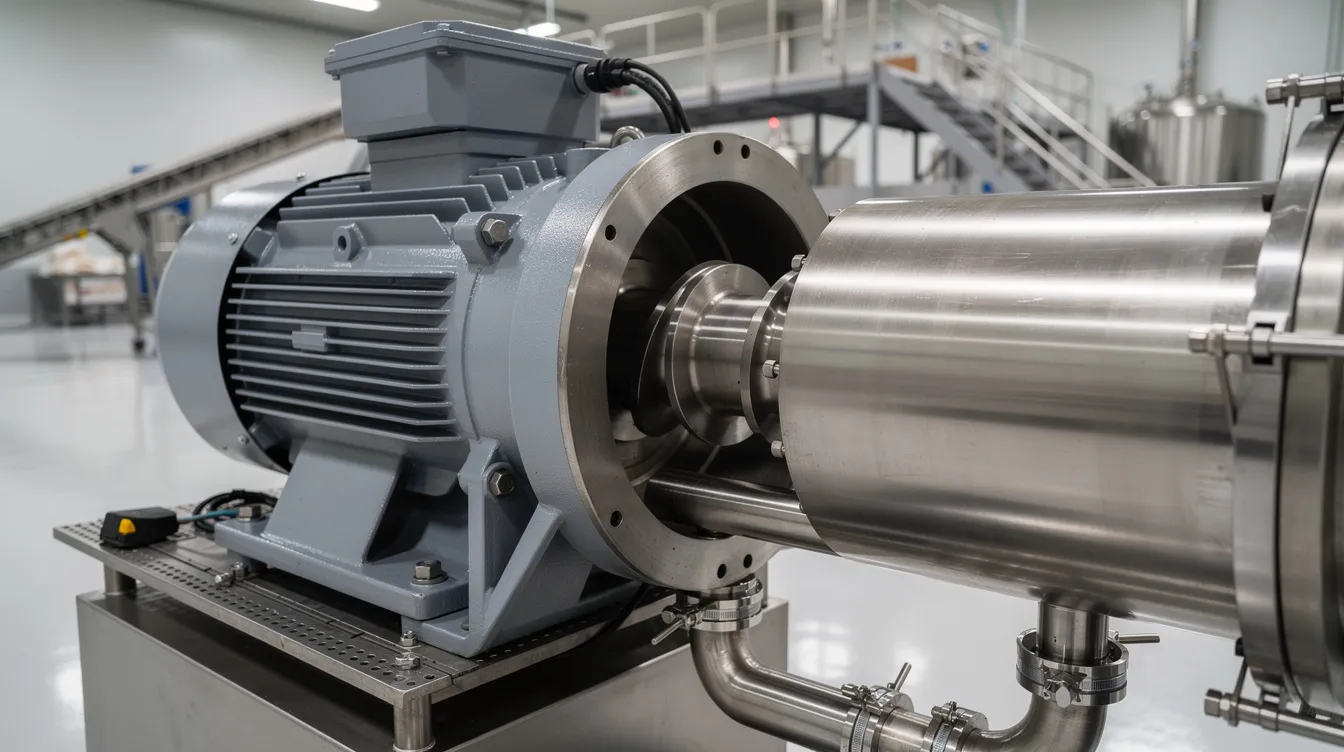
An integrated multi-product plant uses an automatic extruded snacks production line machinery configuration with pre-processing, extrusion, finishing, and packaging modules designed for continuous production.
| Equipment Module | Key Components |
|---|---|
| Raw material storage and handling | Silos, bag dump stations, pneumatic conveyors |
| Cleaning and preparation | Destoner, sieve, hammer mill/pulveriser |
| Mixing and preconditioning | Ribbon mixer with load cells, preconditioner |
| Extrusion | Single-screw extruder, twin-screw extruder, dies and cutters |
| Downstream finishing | Continuous fryer, baking oven, multilayer dryer, cooling conveyor |
| Seasoning systems | Oil sprayer, seasoning drum, bucket elevator |
| Packaging | Multihead weigher, FFS pouch machine, nitrogen flushing, cartoning |
| Quality and safety | Metal detector, moisture analysers, lab equipment |
| Utilities | Compressor, boiler, DG set, water treatment, electrical panels |
Single-screw extruders offer lower capital investment and are adequate for standard corn puffs and simple snack forms. Twin-screw extruders provide better capability for complex formulations – multigrain, high-fibre, fortified rice, and filled snacks – and more precise control over the extrusion process, but come with higher investment and maintenance costs. Twin-screw extruders can produce 120–250 kg/h of snacks depending on product type and configuration.
Indian OEMs offer competitive pricing and easier service for most savoury snack applications, while certain high-capacity or specialised co-extrusion and pellet lines may justify selective import of specific modules. Automation options such as PLC-based control, recipe management systems, automatic seasoning application, and fully automatic packing lines play a crucial role in labour saving, product consistency, and food safety.
Plant Capacity Planning and Product Mix
Capacity planning in an industrial extruded snack foods manufacturing plant DPR must address installed capacity (kg/hour), annual operating days, shifts, and realistic capacity utilisation over the first five to seven years. Annual production capacity for such plants typically ranges from 5,000 to 20,000 MT depending on configuration. Efficient project planning should include production capacity and maintenance scheduling to optimise effective output.
| Parameter | 500 kg/hr Line | 1,000 kg/hr Line | 2,000 kg/hr Line |
|---|---|---|---|
| Installed extrusion capacity | 500 kg/hr | 1,000 kg/hr | 2,000 kg/hr |
| Shifts per day | 2 × 8 hours | 2 × 8 hours | 2 × 8 hours |
| Annual operating days | 300 | 300 | 300 |
| Theoretical annual output | ~2,400 MT | ~4,800 MT | ~9,600 MT |
| Expected Year-1 utilisation | 50–60% | 50–60% | 45–55% |
| Stabilised utilisation (Year 4–5) | 75–85% | 75–85% | 70–80% |
| Typical SKU range | 8–15 | 15–30 | 25–50+ |
The difference between raw material input and net finished output is significant. For example, a dry blend feed of 1,000 kg/hour may yield a lower volume of finished products after accounting for moisture loss during extrusion, oil uptake during frying, seasoning additions, and process losses such as fines and trimmings. Product changeover time, cleaning for allergen and flavour control, and seasoning system flushing reduce net effective capacity. A realistic DPR will use conservative ramp-up, utilisation, and downtime assumptions when computing DSCR and IRR.
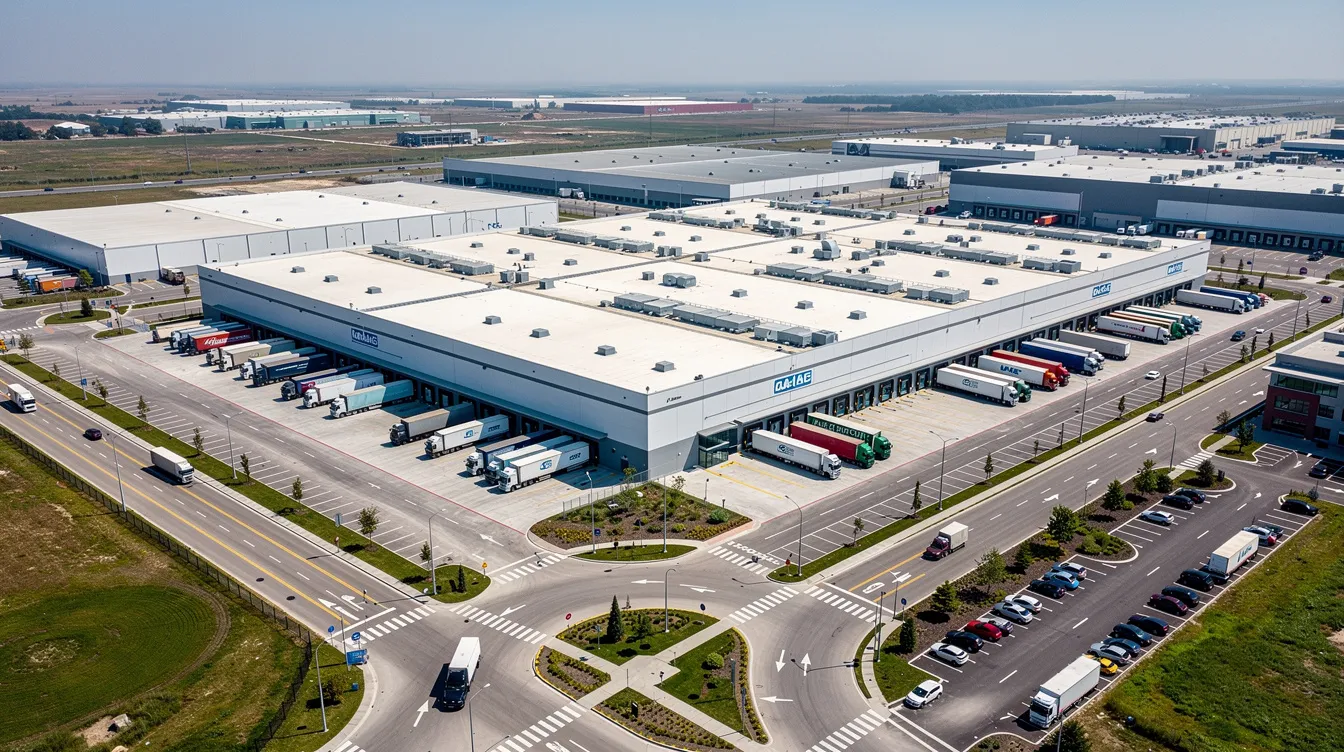
Land, Building, Layout and Infrastructure
For a multi-product plant sized around ₹5–15 crore investment, land requirements depend on capacity, site configuration, zoning regulations, and provision for future expansion. A medium-scale integrated plant may require 2,000–5,000 square metres of built-up area.
Main built-up zones include raw material godown, ingredient and minor additive store, production hall (extrusion, frying/baking, seasoning, packing), finished goods warehouse, packaging material store, utilities block (boiler, compressor, DG set, water treatment), quality control and R&D laboratory, administration and staff amenities, and waste handling and effluent treatment area.
Good hygienic design requires linear process flow from raw material entry to finished-goods dispatch, separation of raw and finished product movement, air-lock entry to production zones, and appropriate flooring and drainage for wet or oily zones. Adequate ceiling height, ventilation, lighting, and provision for future additional lines are essential so the building can accommodate capacity expansion. Infrastructure requirements for fire safety (hydrants, extinguishers, emergency exits), food safety (pest control design, sealed openings), and internal logistics (forklift aisles, loading docks) must be detailed at concept level in any bankable DPR.
Integrated Multi-Product Extruded Snacks Manufacturing Plant Setup Cost
Multi product extruded snacks manufacturing plant cost depends heavily on capacity, level of automation, choice of Indian versus imported equipment, land cost, and local construction rates. Project cost estimates should include land, civil construction, and machinery along with all supporting infrastructure. The figures discussed here are illustrative and not vendor quotations.
A typical CAPEX structure includes:
- Land and site development
- Factory building and civil works
- Extrusion and pre-processing machinery
- Fryers, baking ovens, and dryers
- Seasoning and oil spraying systems
- Automated packaging lines
- Utilities and electrical infrastructure
- Lab and QA equipment
- Pre-operative and start-up expenses
- Contingency provisions (typically 5–10% of hard costs)
- Margin for initial working capital
For industrial-scale investments, machinery and building typically form the largest components. Machinery alone often accounts for 40–50% of total capital expenditure. The importance of factoring in taxes, freight, erection and commissioning, trial runs, interest during construction, and unforeseen items cannot be overstated – promoters frequently underestimate these without a structured DPR.
Raw Material Requirements and Procurement Strategy
Key raw materials for extruded snacks include maize grits, corn flour, rice flour, wheat flour and semolina, millet flours (jowar, bajra), pulse flours, starches including corn starch, edible oils, salt, spices, seasoning blends, emulsifiers, and permitted food additives. Supplier qualification and quality specifications are essential for raw material sourcing – consistent granulation (particle size) and moisture content directly affect stable extrusion performance.
Edible oil selection (palmolein, rice bran oil, sunflower oil) depends on smoke point, stability, cost, and flavour neutrality. Pre-mixed seasonings are typically supplied by specialised companies under non-disclosure agreements with consistent specification control. Price volatility in key inputs (maize, wheat, rice, edible oil) demands that DPR-level planning include sensitivity to commodity price trends. Inventory norms for working-capital planning generally assume 15–30 days stock for major cereals and 7–15 days for high-value seasonings.
Manufacturing Cost and Product-Wise Profitability Analysis
A structured cost-sheet framework per kg of finished extruded snacks should divide manufacturing cost into raw material consumption, edible oil, seasonings, packaging materials, power and fuel (influenced by energy consumption patterns of extrusion and drying), direct labour, repairs and maintenance, and variable overheads. Raw materials account for 65–75% of operating expenses across most product categories, making raw material consumption the dominant cost driver.
| Cost Component | Standard Corn Rings | Multigrain Puffed Snacks | Core-Filled Rolls |
|---|---|---|---|
| Raw materials and oil | High | Higher (premium grains) | Highest (filling ingredients) |
| Seasoning cost | Moderate | Moderate | Lower (filling adds flavour) |
| Packaging cost | Moderate | Higher (N₂ flush, premium laminate) | Highest (rigid trays/pouches) |
| Ex-factory realisation per kg | Base | 15–25% premium | 30–50% premium |
| Relative gross contribution | Base | Higher per kg | Highest per kg |
Note: Values are illustrative for understanding relative economics, not industry benchmarks.
Gross profit margins for extruded snacks typically range between 30–40%, while operating costs are driven by raw materials at 65–75% of total OpEx. Contribution per kg is computed as selling price (ex-factory, net of trade discounts) minus variable costs. High-margin SKUs like premium flavoured, baked, or multigrain products can improve blended EBITDA even when their share of volume is modest. Pricing levels along the chain – ex-factory price to distributor, distributor margin, retailer margin, consumer MRP – all affect realised net sales in financial projections.
Working Capital Requirements
Working capital for an extruded snack foods plant comprises funds locked in raw material inventory, packaging materials, work-in-progress, finished goods, and receivables, minus supplier credit and other current liabilities. Working capital assessments are crucial for managing inventory and cash flow effectively. Raw material inventory management impacts overall working capital requirements significantly, especially for plants holding 15–30 days of cereal stocks.
The typical operating cycle moves from purchase of cereals and oil through processing into finished snacks, holding finished stock, sale to distributors or modern trade, and credit period realisation. This often results in 30–90 days of net working-capital requirement. Banks provide cash credit and working-capital term loans where drawing power is calculated based on stock and receivables, and accurate CMA Data is essential for discussing limits with bankers. The DPR from Project Report Bank always includes a separate annexure on working capital assessment, interest costs, and stress-testing of working-capital cycles.
Financial Projections, DSCR, IRR and Investment Returns
A robust 10-year financial projection should structure year-wise installed capacity versus utilisation, product-wise sales volume and value, cost of goods sold, gross profit, EBITDA, PBT, PAT, cash flows, and key ratios. Financial models should incorporate realistic projections of costs and revenues rather than optimistic assumptions. Financial projections assess capital investment and operating costs across the entire projection period.
Key financial projections include debt-equity ratios and break-even points. The DSCR (Debt Service Coverage Ratio) measures cash available for debt service relative to total debt obligations (interest plus principal) each year. Banks typically expect an average DSCR safely above 1.25, with a practical target of around 1.5 for manufacturing projects. Project financing options may involve promoter equity (typically 25–30% of project cost) and bank loans with repayment periods up to 15 years.
Financial viability assessments include measures like IRR and NPV. The projected ROI for extruded snacks manufacturing is based on realistic assumptions of capacity utilisation, product mix, and market penetration. Base-case, optimistic, and downside scenarios – varying capacity utilisation, selling prices, and variable costs – should demonstrate resilience or vulnerability of DSCR and IRR under different business conditions. Project Report Bank uses detailed Excel-based financial modelling to reconcile production plans, cost structures, loan amortisation, and tax implications, ensuring internal consistency of the large scale extruded snacks manufacturing plant feasibility study.
Financial Sensitivity and Risk Assessment
Even technically sound extruded snack projects face commercial risks, and a responsible DPR must include sensitivity and risk analysis rather than only a base-case projection. Key risk variables include increase in maize, rice, wheat, and edible oil prices; lower-than-planned capacity utilisation; slower market acceptance or distribution build-up; pressure to reduce operating expenses through price cuts; supply chain disruptions; higher-than-expected packaging and freight costs; and delay in receiving government incentives.
Scenario tables showing the impact of a 5–10% increase in key raw material costs on EBITDA margin and DSCR demonstrate to promoters and bankers the project’s tolerance to cost shocks. Operational risks include prolonged equipment breakdowns, product recalls due to quality issues, and lack of skilled operators. Strategic risks such as changes in consumer preference towards baked and health-focused snacks can be partially mitigated by a multi-product plant with twin-screw flexibility and spare capacity, allowing faster pivot to newer SKUs than a single-product unit.
Regulatory Approvals and Food Safety Compliance in India
Quality control includes food safety management systems and compliance with standards applicable to packaged food manufacturing. Statutory approvals for food processing plants include FSSAI licences and environmental clearances. Larger integrated plants with multiple lines and interstate supplies typically require Central FSSAI licences with approved product categories and labels.
Mandatory compliance with Legal Metrology (Packaged Commodities) Rules covers MRP, net weight declarations, batch coding, and nutritional labelling. GST registration with appropriate HSN code classification is required. Voluntary yet commercially valuable certifications include HACCP, ISO 22000/FSSC 22000, and retailer-specific audits – especially for contract manufacturers and companies targeting export markets. Environmental management must address waste generation and treatment practices, including fire NOC, boiler approvals, local pollution-control board consents, and oily waste disposal norms for frying operations. Exact requirements depend on state, industrial area, and project scale at implementation.
Bank Loan DPR, CMA Data and Project Finance
Integrated extruded snack plants in the ₹5–15 crore and above range are typically financed through a mix of promoter equity and term loans from banks, supplemented by working-capital limits. A bankable DPR contains promoter and management profile, detailed project concept, technical description of machinery, plant layout, implementation schedule, detailed project cost, means of finance, projected financial statements, DSCR analysis, risk assessment, and security details. DPRs cover the project lifecycle from raw material procurement to distribution, and the DPR should include organisational structure and staff training plans.
CMA Data – a standardised format summarising projected balance sheets, profit and loss accounts, fund flow statements, working capital assessment, and ratio analysis – is required by banks for sanctioning limits. A DPR should demonstrate commercial viability through effective market and financial analysis. “Bankability” differs from simple profitability: lenders focus on cash-flow adequacy, DSCR, collateral coverage, promoter contribution, and adherence to margin norms. Project Report Bank, under CA Manish Gugliya, prepares industrial extruded snack foods manufacturing plant DPRs, CMA Data, and loan-structuring plans aligned with realistic project cash flows. For details on professional DPR, CMA Data, and financial advisory services, promoters may visit the dedicated services page.
Integrated Plant Versus Separate Product-Specific Production Lines
| Parameter | Integrated Multi-Product Plant | Separate Dedicated Lines |
|---|---|---|
| Capital cost per kg capacity | Lower (shared infrastructure) | Higher (duplicated utilities) |
| Flexibility to add SKUs | High | Limited per line |
| Production scheduling complexity | Higher | Simpler per line |
| Cleaning and changeover time | Significant (flavour/allergen control) | Minimal within dedicated line |
| Cross-contamination risk | Requires strong protocols | Lower |
| Scalability | Modular expansion possible | Line-by-line addition |
| Suitability for contract manufacturing | Strong (multi-client flexibility) | Best for large single-brand volumes |
Integrated plants achieve better capital efficiency and shared overheads but require sophisticated production planning. Dedicated lines may be justified for very large-volume single products or technically incompatible items such as oil-heavy pellet snacks versus low-oil baked rings. For an analogous example of production-line integration in a different product category, the Integrated Poha, Puffed Rice and Rice Snacks Manufacturing Process demonstrates similar integration logic applied to rice-based food products.
Project Implementation Schedule
A realistic greenfield implementation timeline runs approximately 10–15 months from project conception to commercial production, depending on land availability, statutory approvals, and machinery delivery schedules. The main stages include conceptualisation and pre-feasibility, detailed feasibility and DPR preparation, firming up land and approvals, architectural and engineering design, ordering of extrusion and packaging machinery, civil construction and utilities installation, machinery erection and commissioning, trial runs and product validation, and market launch and sales ramp-up.
Long-lead items such as twin-screw extruders, continuous fryers, and high-speed packing machines often dictate the critical path. Bank transfer sanctions, project funding disbursements, and equity infusion milestones must be aligned with procurement and construction plans. Project Report Bank can assist promoters in crafting implementation-linked fund-flow schedules to ensure disbursements match project cash requirements stage-wise.
Why a Professional DPR and Feasibility Study Is Essential
Industrial-scale integrated multi product extruded snack foods manufacturing plant project reports cannot be generic templates. They must be customised to specific products, capacities, technology choices, locations, and funding structures. A professional DPR enables promoters to compare alternative configurations – for example, 500 versus 1,000 kg/hour, single-screw versus twin-screw, varying levels of automation – on both technical and financial grounds before locking capital investment.
Feasibility work covers demand assessment, competitor mapping, raw material availability, supply-chain design, plant layout options, manpower planning, working-capital cycles, and sensitivity analysis, providing a 360-degree view of project risk. Lenders and investors increasingly expect structured, well-documented DPRs and financial models that withstand due diligence, with transparent assumptions and reconciled projections. Project Report Bank specialises in such customised DPRs, financial modelling, project-cost assessment, DSCR analysis, and means-of-finance planning for integrated snack and food processing projects across India.
Frequently Asked Questions
The following questions address specific investor queries not fully detailed in the preceding sections.
What is a realistic minimum capacity for an integrated extruded snack plant in India?
For serious branded or contract manufacturing operations targeting bank finance, installed capacities of around 500 kg/hour and above with two shifts and 250–300 working days are generally more viable than very small lines. Fixed costs, distribution overheads, and the need to produce multiple snack types in commercially meaningful volumes make smaller configurations difficult to justify financially.
Can direct-expanded snacks and 3D snack pellets be produced on the same extrusion line?
Basic extrusion hardware may be shared to an extent, particularly with a flexible twin-screw extruder. However, true third-generation pellets typically need specific dies, significantly higher drying capacity, and sometimes separate finishing fryers. This integration decision should be engineered case-by-case in the DPR based on production volumes, product specifications, and equipment capability.
How does an extruded snack plant differ from a corn flakes or breakfast cereals plant?
Savoury extruded snacks focus on low-density, seasoned, often fried or baked produce for snacking. Corn flakes and extruded breakfast cereals use different cooking, flaking, toasting, or coating technologies and target different market demands. Readers may refer to the Industrial Corn Flakes and Multigrain Flakes Manufacturing Plant Project Report and the Ready-to-Eat Millet Breakfast Cereals Manufacturing Plant Project Report for cereal-specific guidance.
Will banks finance integrated multi-product extruded snack plants?
Banks in India regularly finance technically and financially viable food processing projects, including integrated extruded snack facilities. Adequate promoter contribution (typically 25–30%), collateral or security as per bank norms, and a bankable DPR and CMA Data demonstrating acceptable DSCR and risk profile are required.
Why should I engage a specialised DPR consultant instead of using a generic project report?
Lender and investor appraisal depends on credible, project-specific assumptions, realistic capacity ramp-up, correctly structured term loans, and rigorous sensitivity analysis. Generic templates rarely address the innovative solutions, eco friendly process considerations, or transportation requirements specific to each project. Project Report Bank, led by CA Manish Gugliya, focuses precisely on this customised professional work for manufacturing promoters.
Conclusion and Professional DPR Assistance
Integrated multi-product extruded snack plants in India can be attractive industrial investments when designed with the right product mix, suitable extrusion technology, automated packaging, efficient plant layout, and strong distribution strategy. The market for extruded snacks continues to grow, industry trends favour product diversification, and companies with multi-product capability can respond to market demands more flexibly than single-product manufacturers. The ability to produce multiple snack forms, serve different sales channels, and adjust to shifting consumer preferences positions such plants for sustained commercial relevance.
Financial success depends on accurate estimation of multi product extruded snacks manufacturing plant cost, disciplined control of manufacturing processes and wastage, realistic working-capital planning, and conservative DSCR and IRR expectations tested under multiple scenarios. A well-prepared DPR transforms a manufacturing concept into a structured, bankable investment proposal that serious promoters, bankers, and investors can evaluate with confidence.
Project Report Bank, led by CA Manish Gugliya, FCA, DISA (ICAI), provides customised integrated multi product extruded snack foods manufacturing plant project reports, feasibility studies, financial projections, CMA Data for bank loans, project finance advisory, and investor-ready documentation for serious promoters planning industrial-scale investments.
Promoters planning large-scale extruded snacks manufacturing investments are invited to share their proposed location, target capacity, product range, and tentative capital budget through the Project Report Bank website’s WhatsApp contact option. A tailored scope and professional engagement proposal can then be prepared.
CA Manish Gugliya FCA, DISA (ICAI) Project Report Bank https://projectreportbank.com/