Key Takeaways
- This pulse snacks manufacturing plant project report covers the technical configuration, capital investment, operating cost structure, and profitability analysis for an industrial-scale integrated plant in India producing roasted, fried, baked, and extruded pulse snacks.
- The article focuses on value-added pulse snacks manufacturing rather than conventional dal milling or basic pulses processing, addressing the full chain from raw pulse procurement through snack production, packaging, and distribution.
- Designed for entrepreneurs, existing dal mill operators, food manufacturers, and investors evaluating capital expenditure above ₹5 crore, the report outlines realistic machinery costs, capacity planning, financial projections, and risk assessment.
- Project Report Bank, led by CA Manish Gugliya (FCA, DISA), prepares customised, bankable project reports, CMA Data, financial models, and feasibility studies for such integrated food processing projects across India.
- Core financial metrics discussed include DSCR, IRR, payback period, break-even analysis, and sensitivity analysis with illustrative assumptions clearly distinguished from verified industry data.
Introduction to Value-Added Pulse Snacks Manufacturing
A pulse snacks manufacturing plant project report is a structured document that evaluates the technical feasibility, capital requirements, operating economics, and financial viability of setting up an industrial facility to convert raw pulses into branded, packaged snack products. Unlike a conventional dal mill project that ends at cleaning, splitting, and grading, a value-added pulse snacks plant extends the processing chain into roasting, frying, extrusion, baking, seasoning, and retail-ready packaging.
The distinction matters commercially. A dal mill sells processed pulse commodities into a competitive bulk market where margins are thin and price discovery is largely driven by mandi rates. A value-added snacks manufacturer, by contrast, creates differentiated products – roasted chana, fried moong dal namkeen, extruded pulse puffs, high-protein baked snacks – that can command higher realisations per kilogram, build brand equity, and access organised retail, e-commerce, and institutional channels.
An integrated plant that handles both primary pulses processing and downstream snack production can improve margins and plant capacity utilisation significantly. Existing dal mill owners are increasingly exploring forward integration into snack manufacturing, while new investors are evaluating branded and private-label opportunities in this segment. The rest of this article outlines the technical configuration, plant setup, capital investment, operating cost structure, and financial feasibility of such a project in the Indian context.
Market Opportunities and Demand Drivers in India
The market for pulse-based snacks in India is shaped by several converging demand drivers. Rising consumer demand for protein-rich, convenient snack options has created opportunities beyond the traditional namkeen category. Health-conscious consumers form a significant target market for pulse snacks, as these products offer plant based protein, dietary fiber, and nutritional benefits that align with plant based dietary patterns and the broader shift towards vegetarian and vegan diets.
Key macro trends supporting the demand outlook include:
- Shift from loose to packaged snacks: Urbanisation and organised retail expansion are driving consumers from unbranded, loose namkeen purchased from local shops towards branded, hygienically packaged alternatives with clear labelling and shelf-life guarantees.
- Plant-based protein positioning: As health conscious eating continues to influence purchase decisions, pulse snacks are increasingly positioned as alternative food sources offering plant derived protein without the environmental concerns associated with conventional livestock farming and animal protein sources.
- Regional flavour innovation and premiumisation: Several multinational companies and domestic snack brands are investing in regional flavour profiles and better-for-you formulations, creating space for new manufacturers with differentiated products.
- E-commerce and institutional demand: Online grocery platforms, quick-service restaurants, airline catering, and railway catering represent growing institutional channels for pulse-based snacks.
Globally, the pulse processing sector is expanding steadily. The global pulses market was valued at USD 103.25 billion in 2025 and is expected to reach USD 140.23 billion by 2034, projected to grow at a CAGR of 3.5%. Worldwide production of major pulses exceeds 90 million tonnes annually. Market analysis includes demand trends for traditional pulse-based snacks as well as newer functional foods and nutritious food products.
The competitive landscape includes national brands with extensive production capacities, regional namkeen players with strong local distribution, and emerging D2C high-protein snack brands. Differentiation in flavour, texture, nutrition claims, and packaging quality is essential for new entrants. Export potential exists in Middle East, European, and Indian-diaspora markets for roasted pulses and extruded snacks, though export-market entry requires compliance with destination-country food safety and labelling regulations.
Industry Trends, Processing Industry Landscape and Integrated Opportunities
India’s food processing industry has witnessed a notable shift in how pulses are utilised commercially. The processing industry is moving from bulk commodity sales of chana, moong, and masoor towards value-added products including besan, pulse flour, roasted chana, pulse-based namkeen, and protein snacks. This transition reflects broader industry trends in the worldwide food industry, where processed pulses are increasingly used in ready-to-eat meals and snacks.
Integration across the pulse value chain – combining dal mills, besan and pulse flour manufacturing facilities, and downstream snack production – allows manufacturers to maximise value addition from each kilogram of raw pulse procured. This integration also reduces exposure to raw pulse price volatility, since higher-margin finished products can absorb some of the commodity price swings that erode margins in basic processing.
Pulses are a key component of sustainable food production systems, with a low environmental footprint compared to livestock-based protein and recognised contributions to soil fertility through nitrogen fixation. Government emphasis on pulse cultivation and processing – including the recently approved Mission for Aatmanirbharta in Pulses – reinforces the long-term supply-side support for this sector. From a global perspective, the agriculture organization frameworks increasingly highlight pulses’ role in eco friendly food systems and sustainable food production.
Modern automatic frying, roasting, and extrusion lines combined with advanced packaging technologies are reshaping operational efficiency and product consistency. Automated systems reduce labour dependency, improve food safety, and lower per-kilogram processing costs, making industrial-scale production increasingly viable for medium and large investors.
Products Manufactured in an Integrated Pulse Snacks Plant
A well-designed integrated pulse snacks plant can serve multiple market segments simultaneously – from mass-market namkeen to premium health-oriented snacks. The product mix influences machinery selection, capital expenditure, raw material consumption, and target distribution channels.
Key products include:
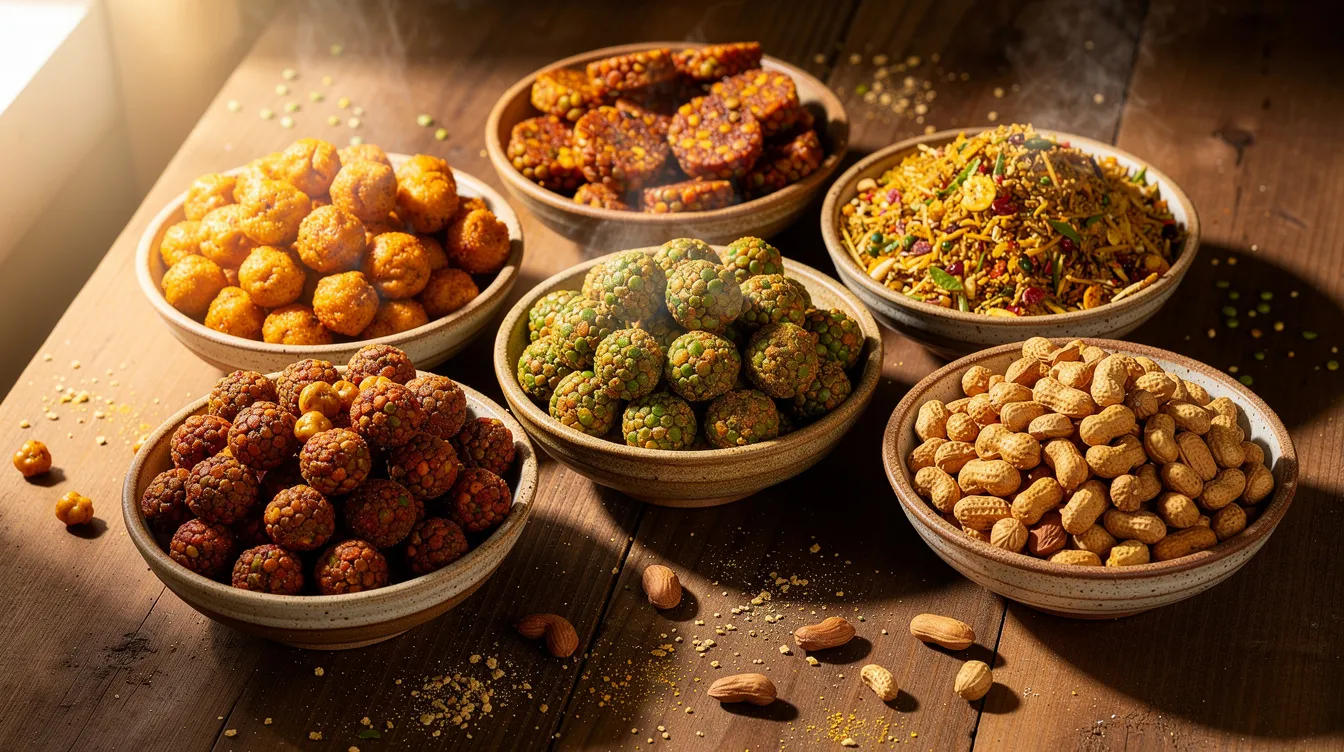
- Plain and masala roasted chana: Roasted snacks with minimal oil content, long shelf life, and broad consumer acceptance. These require roasting machines, seasoning systems, and appropriate packaging.
- Roasted moong and other pulse-based snacks: Similar processing to roasted chana but with different pulse varieties and flavour profiles.
- Chana dal and moong dal namkeen: Fried dal snacks, one of the most established namkeen product categories in India, requiring continuous or batch fryers and de-oiling systems.
- Fried mixed dal: Blended pulse snacks combining multiple dal varieties with spices.
- Pulse-based extruded puffs: Products similar to kurkure-style snacks but formulated with pulse flours for higher protein content. Require twin-screw or single-screw extruders.
- Besan-based sev and bhujia: Traditional savoury snacks made from gram flour, requiring specialised extrusion/pressing and frying equipment.
- High-protein baked sticks and crisps: Baked rather than fried, targeting health-oriented consumers. Require baking ovens and different formulation expertise.
- Blended pulse-millet snacks: Emerging product category combining pulses with millets for multi-grain nutritional positioning.
Packaging must prevent moisture absorption and extend shelf life for pulse snacks, typically requiring nitrogen-flushed laminated pouches or metallised film packaging.
| Product Type | Main Raw Materials | Core Processing Method | Primary Target Market/Channel |
|---|---|---|---|
| Roasted chana (plain/masala) | Desi chana, spices | Roasting, seasoning | Retail, institutional, export |
| Fried chana dal namkeen | Chana dal, edible oil, spices | Frying, de-oiling, seasoning | Mass retail, wholesale, modern trade |
| Moong dal namkeen | Moong dal, edible oil, spices | Frying, de-oiling, seasoning | Mass retail, wholesale |
| Extruded pulse puffs | Pulse flour blends, starch | Twin-screw extrusion, baking/frying | Branded retail, D2C, modern trade |
| Besan-based sev/bhujia | Besan (gram flour), oil, spices | Extrusion/pressing, frying | Mass retail, wholesale |
| High-protein baked snacks | Pulse flour, cereals | Baking, seasoning | Premium retail, e-commerce, health stores |
| Blended pulse-millet snacks | Pulse flour, millet flour | Extrusion, baking | Premium, health-oriented channels |
Fried dal namkeen represents a lower-investment entry point with established demand, while high-protein extruded or baked snacks require more advanced technology, R&D capability, and brand-building investment.
Integrated Pulse Snacks Manufacturing Business Model
The integrated business model spans the entire chain: procurement of raw pulses, primary processing (cleaning, grading, dehusking), value-added snack manufacturing (roasting, frying, extrusion, baking), seasoning, packaging, and distribution to wholesale, retail, and institutional channels.
Major business model options include:
- Fully integrated plant handling everything from raw pulses to finished packaged snacks under one roof
- Partially integrated model with outsourced co-packing for certain product lines
- Private-label and institutional supply focused on manufacturing for third-party brands, retailers, or institutional buyers
- Brand-led model with own distribution and marketing
Different snack lines – roasted pulses versus fried namkeen versus extruded puffs – require separate equipment and often separate oil management and quality control systems. Machinery is not always interchangeable across these product categories. A continuous fryer designed for dal namkeen cannot be repurposed for extrusion, and a twin-screw extruder cannot substitute for a roasting line.
For existing dal mill or besan plant operators, forward integration into snack manufacturing is commercially logical. The existing primary processing capacity and raw-material handling infrastructure can feed downstream snack lines, reducing duplication and improving overall plant utilisation. Pulse flour from a besan unit, for instance, can serve as direct input into extruded snack formulations.
Integrated Value Chain (Simplified):
Raw Pulses → Cleaning & Destoning → Grading → Dehusking/Splitting (where needed) → [Primary Processed Pulses] → Roasting / Frying / Extrusion / Baking → Seasoning & Flavouring → Cooling → Quality Control → Packaging → Finished Goods Storage → Distribution
Manufacturing Process and Production Technology
The production process varies by product category. Manufacturing processes for pulse snacks include cleaning, roasting, and packaging as core operations, but the specific unit operations differ significantly across roasted, fried, and extruded products.
Roasted pulse snacks: Raw pulses are cleaned, destoned, graded, and moisture-conditioned before being fed into batch or continuous roasters operating at controlled temperatures. Post-roasting, the product passes through seasoning drums for flavour application, then cooling conveyors, metal detection, and automated packaging.
Fried dal namkeen: Cleaned and graded dal (split or whole) undergoes moisture conditioning and is fried in continuous or batch fryers with temperature-controlled edible oil. Oil filtration systems maintain oil quality and reduce absorption. De-oiling shakers remove excess surface oil before seasoning. The fried product is cooled and packaged in moisture-barrier pouches.
Extruded/baked pulse snacks: Pulse flour blends are mixed with water and other ingredients, then processed through twin-screw or single-screw extruders at specific temperature-pressure combinations. The extrudate is shaped, cut, and either baked in tunnel ovens or flash-fried. Seasoning is applied via tumbling drums or spray systems.
Process Flow (Text Flowchart):
Raw Pulses → Cleaning & Destoning → Grading & Dehusking/Splitting (if required) → Moisture Conditioning → Roasting / Frying / Extrusion → Seasoning & Flavouring → Cooling → Metal Detection & Quality Checks → Packaging (FFS / Multihead Weigher) → Finished Goods Warehouse
The process flow for pulse snacks includes steps from raw material intake to packaging and storage, with quality control standards ensuring food safety and hygiene at each stage. Technology choices affect the operating cost structure significantly – continuous processing lines deliver lower per-kg costs at higher utilisation but require greater capital expenditure versus batch equipment. Automation reduces labour requirements and improves consistency, though the trade-off between higher capital costs and lower operating costs must be evaluated in the project’s financial analysis.
Plant Machinery and Equipment Requirements
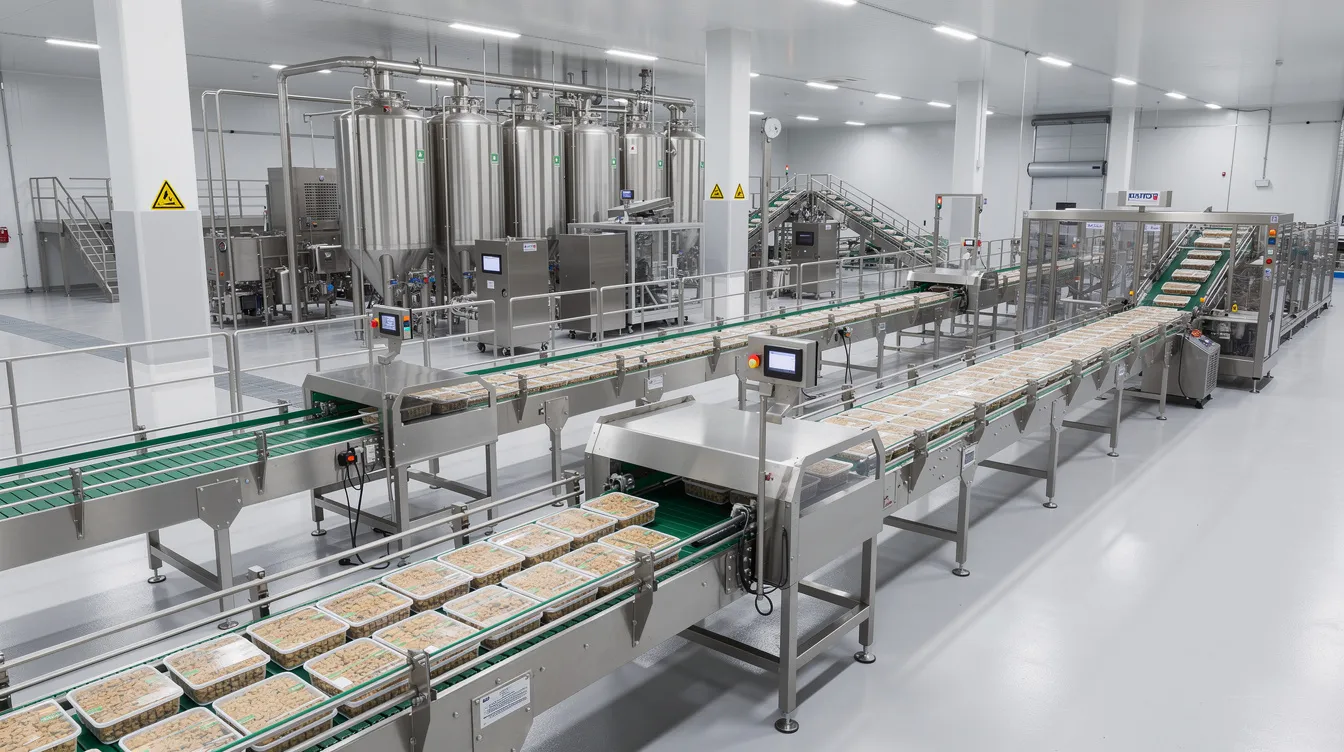
The exact machinery list for a value-added pulse snacks manufacturing plant depends on the final product mix, plant capacity, degree of automation, and food-safety standards. Essential equipment spans primary pulse processing, snack production, packaging, and utilities.
Primary processing machinery: Vibratory cleaners, destoners, gravity separators, magnetic separators, dehuskers, splitters, and grading systems handle the initial conversion of raw pulses into process-ready inputs.
Snack processing machinery: This is the core production equipment and varies by product line – continuous or batch roasters, continuous or batch fryers with oil filtration, single-screw or twin-screw extruders, seasoning drums, slurry coating systems, and cooling conveyors.
Packaging and downstream equipment: Form-fill-seal (FFS) machines, multihead weighers, nitrogen flushing systems, pouch sealing machines, case packers, and date-coding systems. Packaging equipment must be compatible with the product type, pack size range, and throughput requirements.
Utilities and quality control: Boilers or thermic fluid heaters for fryers, air compressors, water treatment systems, electrical panels, effluent treatment systems, and a quality-control laboratory with moisture analysers, weighing balances, and basic microbiological testing equipment.
| Machinery | Function | Typical Capacity Range (Illustrative) | Relevance to Product Lines |
|---|---|---|---|
| Vibratory cleaner & destoner | Removing stones, dust, foreign matter | 1–5 TPH | All products |
| Dehusker/splitter | Removing husk, splitting pulses | 0.5–3 TPH | Dal namkeen, besan input |
| Continuous roaster | Roasting whole or split pulses | 200–800 kg/hr | Roasted chana, roasted moong |
| Continuous fryer with oil filtration | Deep frying dal/snacks | 200–500 kg/hr | Fried namkeen, sev, bhujia |
| Twin-screw extruder | Extrusion of pulse flour blends | 100–500 kg/hr | Extruded puffs, baked snacks |
| Seasoning tumbler/drum | Applying spice blends and flavours | 200–1,000 kg/hr | All flavoured snacks |
| Cooling conveyor | Reducing product temperature pre-packaging | Matched to line speed | All products |
| Form-fill-seal (FFS) machine | Primary packaging in pouches | 30–120 packs/min | All products |
| Multihead weigher | Accurate product weighment | 30–120 weighments/min | All packaged products |
| Metal detector | Detecting metallic contaminants | In-line | All products (food safety) |
Twin-screw extruder costs range from approximately ₹12.5 lakh for a 100–125 kg/hr unit to ₹40–60 lakh or more for high-capacity industrial-grade machines with full automation. Complete snack production lines including fryer, seasoning, and cooling equipment can range from ₹6–9 lakh for smaller configurations to over ₹1 crore for fully automated stainless-steel industrial lines.
Production Capacity Planning and Plant Capacity Scenarios
Proper capacity planning is critical for any pulse snacks project. The installed plant capacity must align with realistic market demand, shift patterns, operating cost efficiency, and bank appraisal requirements. Overbuilding capacity leads to underutilisation and inflated depreciation costs per kilogram; underbuilding limits revenue potential and creates bottlenecks.
Three illustrative capacity scenarios (these are sample assumptions, not industry standards):
| Parameter | Small Industrial | Medium Industrial | Large Integrated |
|---|---|---|---|
| Combined snack output | 500–700 kg/hr | 1,000–1,500 kg/hr | 2,000–3,000 kg/hr |
| Operating shifts | Single shift | Double shift | Double/triple shift |
| Annual processing capacity (illustrative) | ~1,200–1,800 MT | ~5,000–9,000 MT | ~12,000–50,000 MT |
| Typical total project cost range | ₹3–7 crore | ₹8–15 crore | ₹15–50+ crore |
For a large integrated facility, the proposed processing facility has a capacity of 50,000 MT at the upper end, requiring substantial land, infrastructure, and working capital. The proposed plant has an annual processing capacity of 50,000 MT in such a configuration.
Production capacity utilization typically ramps up over 3–4 years. A realistic assumption for a new plant might be 50–60% in Year 1, increasing to 70–80% in Year 2, and 80–85% from Year 3 onwards. This ramp-up directly affects cost per kilogram and profitability. Capacity is constrained by the slowest operation – if the frying line can process only 300 kg/hr while the cleaning line handles 1,000 kg/hr, the frying line becomes the bottleneck. Separate balanced lines help avoid this.
Product mix also influences throughput and power consumption. Fried snacks require more energy and oil management than roasted snacks, while extruded products need significant electrical power for the extruder motor.
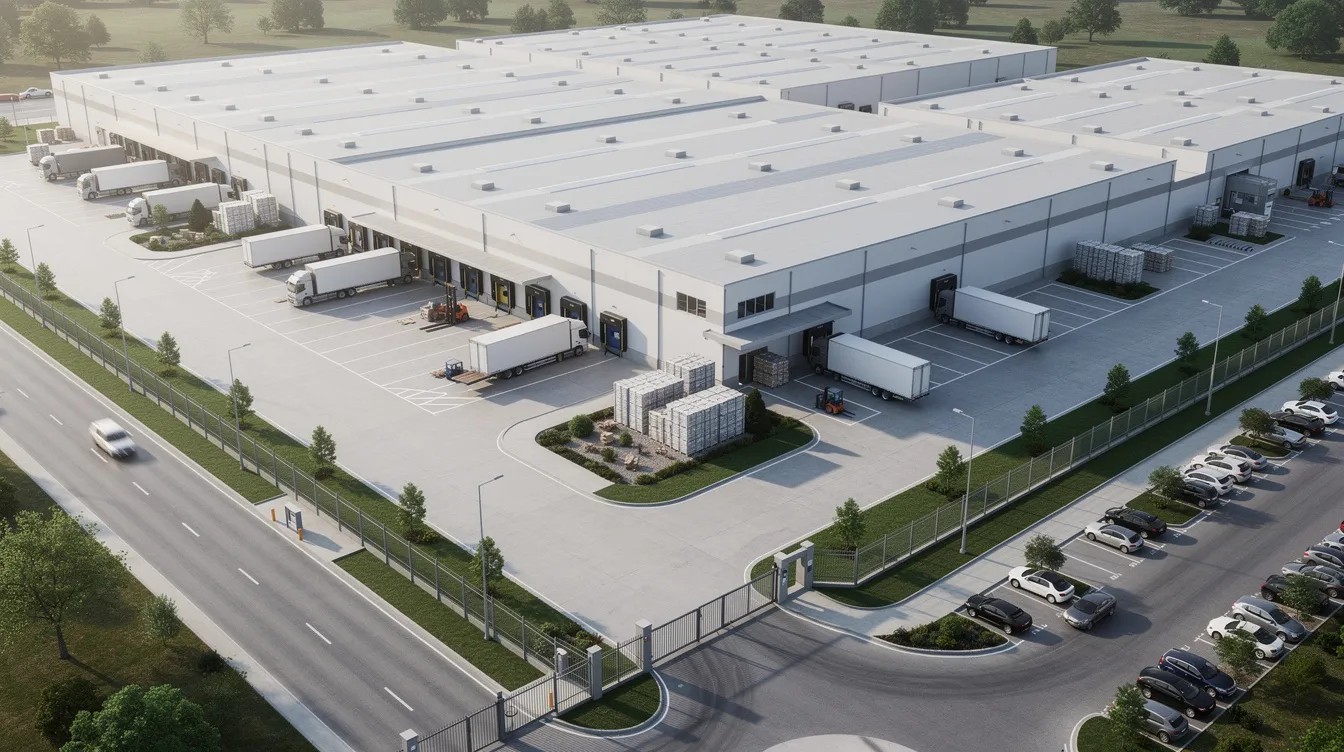
Land, Building and Factory Layout Planning
Land requirements for an integrated pulse snacks plant depend on capacity, product lines, and provision for future expansion. Indicative ranges:
- Small industrial plant: 0.5–1 acre
- Medium industrial plant: 1.5–2.5 acres
- Large integrated plant: 2.5–5+ acres
Built-up area typically covers 40–60% of total land, with the balance allocated to open utilities, vehicle movement, raw-material unloading, and expansion space.
Plant layout should separate raw material, processing, and finished goods areas to prevent contamination. Recommended zoning includes:
- Raw-material receipt and storage (covered godowns with pest-control systems)
- Primary pulse processing area (cleaning, grading, dehusking)
- Snack production lines (roasting, frying, extrusion – separated where necessary)
- Packaging hall (clean environment, controlled access)
- Finished-goods warehouse (FIFO-organised, temperature-appropriate)
- Utilities zone (boiler, compressor, water treatment, effluent treatment systems)
- QC laboratory and admin block
Hygienic design principles include unidirectional material flow from raw to finished goods, control of dust and oil fumes through ventilation, food-grade flooring and wall finishes as recommended by FSSAI, adequate fire exits, and space for effluent and oil-waste management. Utilities required for a pulse manufacturing plant include power, water, and waste management. Layout should accommodate future expansion – adding an additional frying line or extrusion line – without disrupting existing operations. Effluent treatment plans are necessary for compliance with pollution control regulations in food processing.
Pulse Snacks Manufacturing Plant Setup Cost in India
Important disclaimer: All investment figures presented below are illustrative estimates based on typical industry ranges as of 2025–26. Actual costs must be validated through current supplier quotations, location-specific construction costs, and the specific plant capacity and product mix proposed.
For a medium-scale integrated pulse snacks plant with a total project cost in the broad range of ₹8–15 crore, the following table provides an indicative cost structure:
| Cost Component | Illustrative Range (₹ Lakh) | Remarks |
|---|---|---|
| Land & site development | 50–200 | Varies by location, size, registration and infrastructure |
| Factory building & civil works | 100–250 | Includes processing halls, warehouse, utilities, admin |
| Plant & machinery (snack lines) | 250–600 | Largest component; depends on product mix and automation |
| Electrical installations & material handling | 30–80 | Panels, wiring, transformers, conveyors |
| Utilities (boiler, compressor, water, ETP) | 25–60 | Thermic fluid heater, compressed air, water treatment |
| Lab & QC equipment | 8–20 | Moisture analyser, balances, testing instruments |
| Furniture, office equipment, IT | 5–15 | Admin and factory office |
| Preliminary & pre-operative expenses | 15–40 | DPR, consultancy, interest during construction |
| Contingencies (5–10% of above) | 25–70 | Standard provision |
| Margin for working capital | 50–150 | Raw pulse and oil inventory, initial receivables |
| Total project cost (illustrative) | 558–1,485 | ₹5.6 crore to ₹14.9 crore approximately |
Machinery costs represent the largest portion of capital expenditure in most pulse snacks projects. Land and site development costs include registration and infrastructure. Establishing project cost assessments is crucial for accurate financial planning in manufacturing.
The total capital expenditure (CapEx) covers all fixed assets and pre-operative costs, while operating expenses (OpEx) cover recurring costs of production. These appear separately in the project report and CMA Data. The distinction between capital expenditure and other capital costs versus recurring operating costs must be clear in any bankable DPR.
Project Report Bank, led by CA Manish Gugliya, supports detailed project cost estimation and funding structure aligned with bank norms for such manufacturing projects.
Raw Material Requirements, Pulse Processing and Procurement Strategy
Principal raw materials for a pulse snacks plant include:
- Pulses: Chana (desi and kabuli), moong, masoor, urad, yellow and green peas
- Edible oils: Palmolein, soybean oil, mustard oil, or rice bran oil (depending on product and regional preference)
- Spices and seasonings: Salt, chilli powder, turmeric, chaat masala, proprietary spice blends
- Pulse flour: Besan (gram flour) for sev, bhujia, and extruded products
- Packaging materials: Laminated pouches, metallised film, corrugated cartons, labels
- Additives: Permitted preservatives, antioxidants, and colours as per FSSAI norms
Raw material sourcing should focus on reliable supply chains for pulses and additives. Local agricultural mandis can be a source for raw pulses for snack manufacturing. Procurement patterns are seasonal – chana arrives primarily between March and May, moong between September and November. Promoters must decide between spot purchasing at mandis and APMC yards versus long-term contracts with aggregators and large traders. Contract-based procurement offers price predictability but locks in committed volumes; spot buying offers flexibility but exposes the business to price volatility.
Understanding pulses processing yield is critical for accurate cost estimation. Cleaning losses, dehusking and splitting losses, and roasting or frying shrinkage can collectively reduce yield by 10–25% depending on the process. Roasted snacks typically achieve 75–85% recovery from raw uncleaned pulses; fried products may yield less due to oil uptake offsetting weight loss from moisture removal. These yield factors directly affect raw material consumption per kilogram of finished product.
Storage requirements include moisture-controlled warehousing, pest-management systems, and FIFO (first-in-first-out) inventory rotation. For those integrating with existing roasted chana and sattu processing infrastructure, raw-material handling systems can be shared, improving capital efficiency.
Operating Cost Structure and Production Cost per Kg
The operating cost structure of a pulse snacks plant can be broken down into the following major components:
- Raw materials (pulses, edible oil, spices, packing materials): This is the dominant cost. Raw uncleaned pulses account for 88–92% of operating expenses in basic processing; for value-added snacks, this share is somewhat lower when oil, seasoning, and packaging are separated out, but raw materials collectively still represent 70–85% of total operating expenses depending on the product mix and oil intensity.
- Direct labour: Production workers, machine operators, QC staff, packaging operators
- Utilities: Power, fuel (LPG, diesel, or biomass for boilers/fryers), water. Utility costs represent 3–5% of total operating expenses. Industrial electricity rates range from ₹7.70 to ₹8.50 per kWh in many states.
- Salaries and wages contribute to the operating cost structure beyond direct production labour (supervisors, admin, sales team).
- Packaging materials: Laminated pouches, cartons, labels – a significant cost for retail-packed snacks
- Repairs and maintenance: Equipment upkeep, spare parts
- Depreciation and taxes are included in operating expenses when calculating total cost of production
- Transportation and packaging are part of operating expenses for distribution
- Selling and distribution: Commissions, trade margins, logistics, marketing
Illustrative Cost Build-Up (per kg of fried chana dal namkeen):
| Cost Element | Approximate Range (₹/kg) |
|---|---|
| Raw chana dal (adjusted for processing loss) | 55–75 |
| Edible oil (net of recovery) | 20–35 |
| Spices and seasoning | 8–15 |
| Packaging material | 10–20 |
| Power and fuel | 3–6 |
| Direct labour | 3–5 |
| Factory overheads | 4–8 |
| Factory-gate manufacturing cost | 103–164 |
The factory-gate cost is materially different from the MRP visible to consumers. Distributor margins (8–15%), retailer margins (15–30%), GST, logistics, and brand-building costs must all be layered on top. A detailed profit-and-loss projection with product-wise costing is part of a professionally prepared project report. For reference on how production cost analysis is structured for related products, see besan production cost analysis.
Profitability Analysis and Break-Even Assessment
Key profitability drivers for a pulse snacks plant include contribution margin per kilogram, production capacity utilization, product mix (higher-margin roasted versus lower-margin fried), control over oil and seasoning usage, and effective pricing strategy. Pulses processing plants have gross profit margins of 8–12% at the basic processing level, while value-added snacks can achieve somewhat higher margins depending on brand strength and product positioning. Net profit margins for pulses processing are estimated at 3–7%.
A financial viability analysis should include break-even point calculations and cash flow statements. The break-even point is the production volume at which total revenue equals total costs, including fixed costs such as salaries, depreciation, and interest. Under normal operating conditions, many pulse snacks plants achieve break-even at approximately 50–60% capacity utilisation when all fixed costs are included.
Illustrative scenario (clearly labelled as example): If a plant has fixed costs of ₹1.5 crore per annum and achieves a contribution margin of ₹30 per kg after variable costs, break-even volume would be approximately 500 tonnes per year. With an installed capacity of 1,500 tonnes, this represents roughly 33% utilisation – suggesting that the business can achieve healthy profitability potential once it crosses the initial ramp-up period.
Net profit margins in value-added snack businesses are sensitive to raw pulse and oil price swings. A 10–15% increase in pulse or oil prices, without corresponding selling-price adjustments, can materially compress margins. Profitability analysis in a DPR should be accompanied by sensitivity tests for raw-material cost increases, selling-price pressure, and lower-than-expected capacity utilisation.
Financial Projections, CMA Data and DSCR Analysis
Banks and financial institutions require detailed 5–7 year financial projections for appraising any industrial term-loan application. These projections include projected profit-and-loss statements, balance sheets, and cash-flow statements, and they form the basis for evaluating the project’s financial viability and debt-servicing capacity.
Financial projections should assess capital costs, working capital, and profitability analysis over the projection period. The project report should include a detailed financial model and risk assessment for investors and lenders. Typical assumptions entering the model include:
- Installed plant capacity and year-wise ramp-up of utilisation
- Product-wise selling prices with realistic escalation
- Raw material costs with inflation adjustments
- Wage escalation at 5–8% per annum
- Interest rates on term loan and working-capital facilities
- Repayment schedule (typically 6–8 years for term loans)
CMA Data – the standardised format used by Indian banks – summarises these projections into working-capital requirements, term-loan repayment capacity, and key ratios. The Debt Service Coverage Ratio (DSCR) measures the relationship between projected cash profits (net profit + depreciation + interest on term loan) and term-loan repayment obligations (principal + interest). For bankable projects, lenders typically expect DSCR above 1.25–1.30 in stabilised years; however, no fixed DSCR can be guaranteed and each bank applies its own threshold.
Project Report Bank has prior experience preparing such projection models for agro-processing and besan/pulse flour manufacturing units and extends the same analytical approach to pulse snacks plants. A Detailed Project Report serves as a roadmap for technical and financial evaluations of projects.
Working Capital Requirements and Bank Finance Structure
Working capital for a pulse snacks plant is driven by inventory of pulses, edible oil, spices, packing material, finished snacks stock, trade receivables from distributors and retailers, and short-term credit from suppliers. The operating cycle – from raw-material purchase to cash collection – determines the quantum of working capital locked in the business at any point.
Key operating-cycle components:
- Raw-material holding period: 30–60 days (longer if seasonal bulk purchasing is used)
- Processing time: 1–3 days
- Finished-goods holding: 15–30 days
- Average collection period: 30–60 days (modern trade chains often take 45–90 days)
- Supplier credit received: 15–30 days
For a medium plant with monthly raw-material and production costs of ₹60–80 lakh, working-capital requirements can easily run into ₹2–4 crore depending on credit terms and inventory policy. This estimate is illustrative and must be validated against actual business terms.
Typical bank finance products relevant to this project include:
- Term loan for plant and machinery, building, and other capital costs
- Cash credit (CC) limit for working capital against hypothecation of stock and receivables
- Export packing credit or bill discounting where applicable
Proper structuring of working capital, as documented in CMA Data, is crucial to avoid liquidity stress once the plant starts operations. For a detailed discussion of working-capital structuring for food processing plants, refer to related analyses for comparable product categories.
ROI, IRR, Payback Period and Sensitivity Analysis
Investment appraisal for a pulse snacks plant should consider Return on Investment (ROI), Internal Rate of Return (IRR), payback period, and Net Present Value (NPV). These metrics depend on initial capital investment, annual cash profits after tax, working-capital changes, and the timing of cash flows over the projection period.
For medium-scale integrated plants in the ₹8–15 crore total investment range, IRR in the range of 18–25% is achievable under favourable conditions – stable demand, competitive raw-material sourcing, 70–80% capacity utilisation by Year 2–3, and disciplined working-capital management. Payback periods of 4–6 years are realistic when government subsidies are factored in.
However, these metrics are highly sensitive to operating assumptions. Sensitivity analysis should examine at least three scenarios:
| Scenario | Key Assumption Change | Impact on IRR/Payback |
|---|---|---|
| Lower utilisation | Year 2 at 50% instead of 70% | IRR may decline by 4–6 percentage points; payback extended by 1–2 years |
| Rising input costs | Pulse and oil prices increase 15% without selling-price adjustment | Operating margins compress significantly; DSCR may fall below comfort levels |
| Pricing pressure | Selling price reduced 8–10% due to competition | Contribution margin drops; break-even utilisation increases |
A robust DPR should present multiple what-if scenarios to help promoters and lenders understand the risk and resilience of the project. Project Report Bank routinely performs such sensitivity and scenario analysis for agro-processing and food projects as part of viability studies. Maintaining operational flexibility through diversified product mix and phased capacity addition strengthens resilience against adverse scenarios.
Licences, Registrations and Food Safety Compliance
Operating a pulse snacks manufacturing plant in India requires several mandatory registrations and licences:
- Business entity registration: Company incorporation, LLP registration, or partnership/proprietorship registration
- FSSAI licence: Regulations require food safety licenses for operating snack manufacturing plants in India. The category (state or central) depends on turnover and inter-state sales.
- GST registration: Mandatory for all taxable suppliers
- Factory licence: Under the relevant state Factories Act, depending on workforce size and power usage
- Shops & Establishment registration where applicable
- Trade licence from local municipal authority
- Pollution control board consent: Environmental compliance includes obtaining necessary licenses and clearances for food processing, especially if the plant generates waste oil, effluent, or significant air emissions from frying operations
Food-safety obligations include adherence to FSSAI standards for snacks and namkeen, proper labelling requirements (ingredient list, nutritional information, allergens, best-before date, FSSAI logo and licence number), and batch traceability. Hygiene protocols in snack production should comply with Good Manufacturing Practices and HACCP principles.
Voluntary but commercially valuable certifications include:
- ISO 22000 (Food Safety Management Systems)
- HACCP certification
- BRC (British Retail Consortium) for export to UK/EU markets
- Organic or other specialty certifications depending on product positioning
Documented SOPs for cleaning systems, sanitation, oil management, pest control, and personal hygiene are essential to meet audit expectations from institutional buyers and export customers. Promoters should consult qualified legal and regulatory advisors and verify the latest FSSAI and state regulations before finalising plant design and product labels.
Government Subsidies, Schemes and Financial Assistance
Several central and state government schemes may be relevant to value-added pulse snacks manufacturing, though availability and terms change frequently and must be verified at the time of actual project planning.
Types of potentially relevant scheme categories:
- PM Formalisation of Micro Food Processing Enterprises (PMFME): Offers credit-linked capital subsidy of up to 35% (maximum ₹10 lakh) for individual micro food processing enterprises. Covers branding, marketing, training, and common infrastructure as well.
- Mission for Aatmanirbharta in Pulses (2025–26 to 2030–31): Allocates ₹11,440 crore to boost domestic pulses production, processing, and packaging. Processing and packaging units are eligible for a maximum subsidy of ₹25 lakh. The Mission targets establishing 1,000 processing units to reduce post-harvest losses.
- PMKSY (Pradhan Mantri Kisan SAMPADA Yojana): Provides credit-linked grants for food processing capacity creation, value-addition, and preservation infrastructure.
- State-level food-processing policies: Various states offer capital subsidies, interest subsidies, stamp-duty exemptions, and electricity concessions for food processing units established within designated food parks or industrial areas.
- MSME credit-guarantee and interest-subvention schemes for eligible enterprises
Subsidy, if available, should be treated as an additional benefit and not as the primary justification for investment. Core project viability must stand on its own commercial and financial merits. Eligibility is project-specific, and no subsidy approval is guaranteed. Project Report Bank can assist in preparing documentation aligned with scheme guidelines but does not guarantee sanction or subsidy approval.
Major Business Risks and Investment Challenges
Investing in a pulse snacks manufacturing plant involves material risks that must be identified, quantified where possible, and mitigated through project design and financial structuring.
Market and competitive risks:
- Volatility in pulse and edible oil prices can swing margins significantly. Edible oil prices are particularly volatile, and since fried namkeen products depend heavily on oil, cost fluctuations can erode profitability rapidly.
- Intense competition from national brands, regional namkeen manufacturers, and unorganised-sector producers creates pricing pressure.
- Changes in consumer taste, retailer terms, or regulatory requirements can affect demand and margins.
Operational risks:
- Quality issues including inconsistent seasoning, texture defects, or shelf-life failures can lead to product returns, brand damage, and food-safety lapses.
- Underutilised machinery inflates cost per kilogram and weakens financial returns.
- Rising demand for consistent supply from organised retailers may strain production planning.
Financial risks:
- Inadequate working capital or slow collections from distributors and modern trade can create liquidity stress.
- High leverage combined with slow capacity ramp-up may result in inability to meet term-loan repayment, weakening DSCR below lender-comfort levels.
Practical mitigation strategies:
- Conservative financial structuring with adequate promoter contribution and working-capital buffers
- Phased capacity addition rather than building extensive production capacities upfront
- Strong quality control systems, documented SOPs, and in-line testing
- Diversified product mix across roasted, fried, and extruded categories to spread risk
- Hedging or staggered purchasing of key commodities during favourable market windows and maintaining operational flexibility
A well-prepared project report and feasibility study should explicitly analyse and document these risks with corresponding mitigation measures.
Feasibility of an Integrated Pulse Snacks Manufacturing Plant
Feasibility assessment for a pulse snacks project operates at three levels, and it is important to distinguish between them.
Technical feasibility evaluates whether the project can produce the intended products at the planned capacity. Key factors include availability of raw pulses in sufficient quantity and quality, reliable machinery suppliers, access to skilled and semi-skilled manpower, availability of utilities (power, water, fuel), and logistics connectivity. For most locations in India’s major pulse-growing or pulse-trading regions, technical feasibility is generally achievable.
Commercial feasibility assesses whether the products can be sold profitably and consistently. This requires market trends analysis, competition assessment in the target geography, evaluation of pricing power, product differentiation strategy, and realistic assessment of stable demand from identified channels. The rising demand for healthy snack alternatives has increased consumer interest in pulse-based products, but converting this broad trend into actual purchase orders from distributors and retailers requires active sales effort and brand-building investment.
Financial feasibility determines whether the project generates adequate returns to justify the capital investment and service the proposed debt. Key parameters include capital costs, expected contribution margins, working-capital intensity, ROI and IRR benchmarks, and lender comfort with DSCR and available collateral. For medium-scale projects, IRR in the 18–25% range and payback within 4–6 years may be achievable under realistic assumptions, but each project must be evaluated on its own merits.
Each proposed pulse snacks project must be evaluated through a customised DPR and financial model rather than relying on generic industry averages. The difference between a technically feasible project and a bankable, financially viable investment lies in the quality of market assumptions, cost estimation, and financial structuring. For a related perspective on conducting feasibility evaluation for pulse-based food processing, refer to besan manufacturing feasibility studies.
Role of a Detailed Project Report (DPR) and Project Report Bank Services
A project report for a pulse snacks manufacturing plant requires structured layout covering technical details, plant capacity planning, machinery specifications, layout concept, project cost, means of finance, financial projections, and risk analysis. The DPR serves as the primary document for investment decision-making, bank credit appraisal, and promoter evaluation of project viability.
It is important to clarify that DPR preparation is forward-looking analysis based on realistic assumptions. It is not a guarantee of future performance and not an audit or certification of financial results. Lenders use a DPR, CMA Data, and projections during credit appraisal to understand project viability, promoter strength, and repayment capacity – not as a commitment of specific financial outcomes.
Project Report Bank is a Chartered Accountant-led advisory practice with experience in agro-processing, besan, pulse flour, roasted chana, and food manufacturing projects across India. The practice is led by CA Manish Gugliya, FCA, DISA (ICAI), with more than 20 years of professional experience in project finance, financial modelling, and industrial advisory.
Serious promoters planning a value-added pulse snacks manufacturing plant can contact Project Report Bank for customised DPR preparation, CMA Data, financial modelling, sensitivity analysis, and bank loan proposal support tailored to their specific plant setup, product mix, capacity, and business plan.
Frequently Asked Questions (FAQs)
The following FAQs address practical queries frequently raised by Indian entrepreneurs evaluating a pulse snacks manufacturing plant. Answers are intended as general guidance and not as specific financial or legal advice.
What is a practical minimum plant size for a bankable pulse snacks project?
While very small plants can technically be established, banks generally find projects in the ₹5–10 crore total project cost range and above more attractive for serious industrial term-loan financing. However, actual bankability depends on the promoter’s financial profile, available collateral, quality of the business plan, and the specific product-market positioning. Projects below ₹5 crore may still be viable through MSME schemes, PMFME subsidies, or promoter self-financing.
Should a new entrant start with roasted pulse snacks or fried namkeen?
Roasted pulses offer a healthier product positioning with moderate oil usage and potentially longer shelf life, but initial offtake may be slower unless brand and distribution are already established. Fried namkeen has established, stable demand across India but involves higher oil costs, greater quality-control complexity, and more competitive pricing. Product selection should align with the target market, available capital, branding strategy, and the promoter’s operational experience. Many successful plants operate both lines to diversify risk.
How long does it typically take from concept to commissioning of a pulse snacks plant?
A realistic timeline from concept to commercial production is approximately 9–15 months, covering DPR preparation, loan processing and sanction, land acquisition and building construction, machinery ordering and delivery, installation, trial production, and FSSAI licence completion. Timelines vary significantly based on project complexity, land availability, approval processes in the specific state, and machinery lead times from manufacturers.
Can an existing dal or besan mill be upgraded into an integrated snacks plant?
Forward integration from an existing pulses processing unit into snack manufacturing is common and commercially logical. Existing cleaning, grading, and dehusking infrastructure can feed snack production lines, and raw-material handling systems can be shared. However, upgrading requires investment in new snack-processing machinery (roasters, fryers, or extruders), packaging equipment, upgraded food-safety systems, and potentially modified factory layout to achieve unidirectional material flow and hygienic separation between raw and finished zones.
How frequently should financial projections and cost assumptions be updated?
Selling prices, raw-material costs, and operating expenses should be reviewed and updated at least annually, or sooner if there is major volatility in pulse or oil prices. Financial projections prepared at the DPR stage are based on assumptions prevailing at that time. As the business operates, actual costs and revenues will diverge from projections. Regular review ensures that the business remains profitable, bank covenants are met, and management can take timely corrective action on pricing, product mix, or procurement strategy.
Conclusion – Investment Outlook and Next Steps
Value-added pulse snacks manufacturing, when backed by sound plant design, efficient plant operations, an appropriate operating cost structure, and disciplined financial management, can be a viable industrial investment in India. The demand outlook is supported by rising consumer interest in protein-rich, convenient snack options, expanding organised retail, and growing export opportunities – though converting these trends into profitable operations requires careful execution rather than optimistic assumptions alone.
Success depends on correct assessment of market trends, intelligent product selection, right-sized plant capacity, disciplined raw-material procurement strategy, and careful project funding structure. The project economics must be validated through realistic financial analysis covering DSCR, working capital, IRR, sensitivity analysis, and break-even assessment before committing significant capital.
Serious entrepreneurs, MSMEs, and industrial promoters planning a pulse-based snacks manufacturing business are welcome to reach out to Project Report Bank via the website or WhatsApp for customised pulse snacks manufacturing plant project reports, CMA Data, feasibility studies, financial modelling, and project finance advisory.