An integrated roasted chana and sattu manufacturing plant combines two complementary product lines from a single raw material stream. Before committing capital to land, machinery and working capital, a promoter must evaluate whether the project can generate sufficient cash flow to service debt, cover operating costs and deliver acceptable returns. This article examines the feasibility study, project economics, bank finance requirements and investment risks of such a plant from the perspective of a practising Chartered Accountant who has prepared project reports and financial projections for food processing ventures across India.
Key Takeaways
- An integrated roasted chana and sattu plant can be a profitable business when raw material cost, process recovery (88-92%), capacity utilisation (65-75% by Year 3) and selling prices are aligned with realistic assumptions.
- Plant feasibility depends on chana procurement price per kg, roasting and dehusking losses, product mix between whole roasted chana and sattu flour, and tight working capital management through the seasonal procurement cycle.
- Professional financial projections, a bankable detailed project report and properly prepared CMA Data are prerequisites before applying for bank finance; generic templates do not withstand lender scrutiny.
- Under practical assumptions for 1-3 TPD integrated plants, ROI and IRR can be attractive for MSME investors when the project is sized correctly and downside scenarios are tested through sensitivity analysis.
- This article reflects the advisory perspective of CA Manish Gugliya, focusing on feasibility study preparation, project report documentation and bank loan assessment rather than general manufacturing guidance.
Executive Summary: Is an Integrated Roasted Chana & Sattu Plant Financially Viable?
Sattu, a traditional Indian food product made from roasted Bengal gram, has moved from seasonal consumption in Bihar, Jharkhand and UP into urban markets across India. Rising interest in high-protein, plant-based foods has expanded market demand for both roasted chana snack preparations and sattu-based health drinks. Bengal gram is the primary raw material for sattu, and the same cleaning-roasting infrastructure serves both product lines.
An integrated facility that produces whole roasted chana and sattu flour from a common processing line reduces duplicated investment in cleaning, grading and roasting equipment. This shared infrastructure improves plant economics compared with operating two separate units. The sattu manufacturing process, which involves cleaning, roasting, cooling, dehusking, grinding and sieving, shares the first four steps with roasted chana production.
Typical capacity bands range from 1-2 TPD micro plants (suitable for local retail) through 3-5 TPD MSME plants to 10+ TPD semi-automatic units. The financial drivers that determine viability are raw material cost per kg, net product recovery percentage, conversion cost, achievable selling price, fixed overheads, term-loan structure and working capital cycle length. The project is usually viable when capacity utilisation stabilises at 65-75% within two to three years with steady offtake through B2B and local retail channels. It becomes risky when chana prices are volatile, the sales network is weak, or the capital structure carries excessive leverage. A roasted chana sattu plant feasibility study and customised DPR prepared by a professional advisor are recommended before final investment.
Quick Navigation
- Executive Summary: viability conditions and financial drivers
- Business Model: integrated processing, product mix and market segments
- Technical Feasibility: machinery, capacity and process parameters
- Project Cost and Investment Requirements: land, building, machinery and working capital margin
- Operating Cost and Revenue Feasibility: per-kg economics and channel-wise realisations
- Financial Projections and Profitability Analysis: 5-7 year projected statements
- Roasted Chana Sattu Plant ROI and Payback Analysis: ROI, IRR, NPV and payback
- Break-Even Analysis and Capacity Utilisation: fixed costs, contribution margin and utilisation sensitivity
- Roasted Chana Sattu Plant Bank Finance and Loan Eligibility: term loan, working capital and promoter contribution
- CMA Data, DSCR and Bankable DPR Preparation: documentation for bank appraisal
- Sensitivity Analysis and Investment Risks: downside scenarios and risk mitigation
- Working Capital Feasibility: cash conversion cycle and liquidity management
- Government Schemes and Compliance: FSSAI, MSME registration and subsidy schemes
- Professional Assessment: go/no-go decision framework
- Services by CA Manish Gugliya: DPR, CMA Data and project finance advisory
- FAQs and Conclusion
Understanding the Integrated Roasted Chana & Sattu Manufacturing Business Model
A stand-alone sattu manufacturing unit typically purchases roasted gram externally or operates a small batch roaster, then grinds and packs sattu. An integrated plant, by contrast, controls the entire production process from raw chana procurement through cleaning, grading, roasting, cooling, dehusking and splitting. One fraction of the output is sold as whole or split roasted chana for snack use; the remainder is ground into fine powder (sattu flour) and packed. Broken pieces go to namkeen manufacturers or dal mills, and husk is sold as cattle feed where commercially feasible. This product diversification is similar to the approach described in the Value-Added Pulse Snacks & Integrated Food Processing Plant Project Report, where pulse-based processing businesses maximise value from each raw material fraction.
Sattu is made from roasted Bengal gram, though barley, wheat and other grains can also be used to produce variant sattu products. Raw material sourcing ensures a steady supply of high-grade chickpeas, and buying raw materials in bulk reduces the cost per kg. An integrated procurement strategy, such as annual contracts or seasonal stocking after harvest when prices are lower, supports a more stable profitability profile.
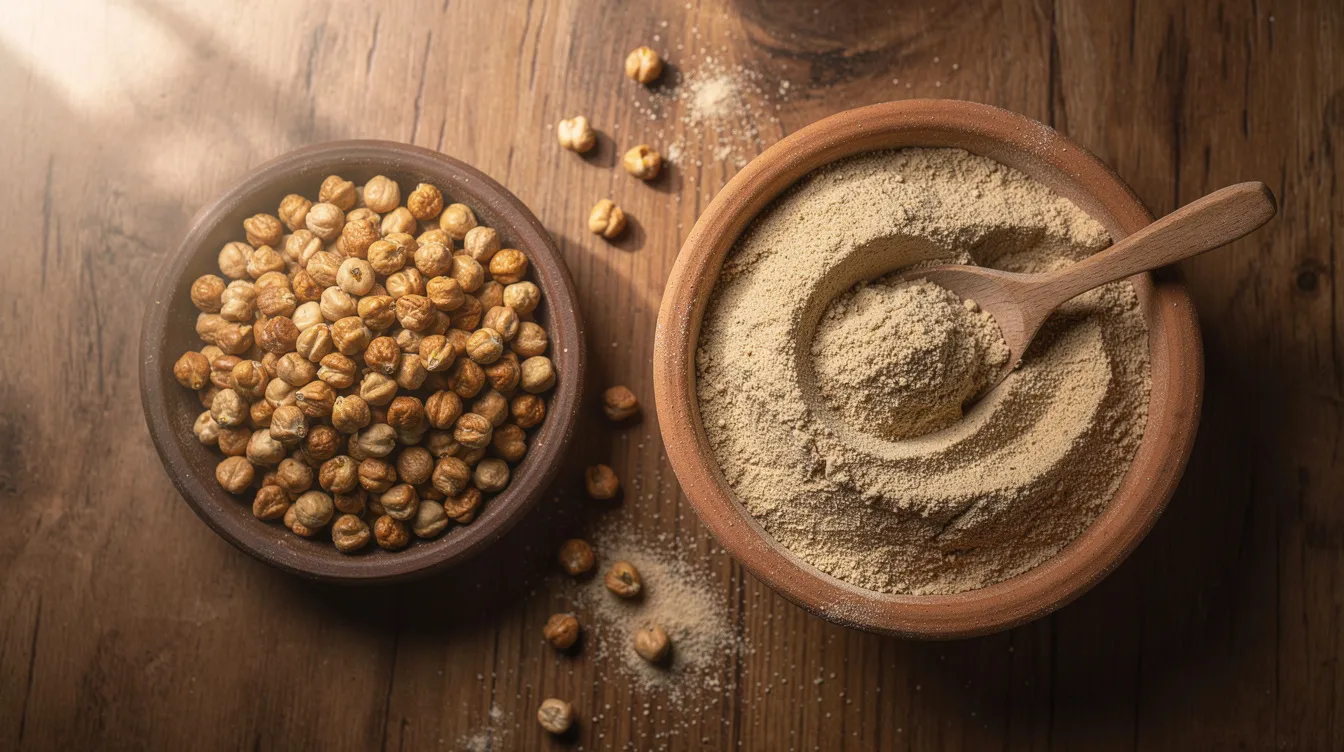
Market segments include institutional buyers (cafes, health-food brands, ready-mix producers), namkeen and snack manufacturers, regional FMCG brands, modern trade, e-commerce and local kirana stores. Sattu can be sold through local grocery stores and supermarkets, and online selling expands the market reach for sattu products into different regions. Social media marketing can promote sattu products to health-conscious consumers in urban markets. Offering different pack sizes, from 500g retail pouches to 100kg bulk bags, can attract diverse customer preferences, while product sampling helps customers experience the quality of sattu before committing to regular purchases.
Technical Feasibility and Manufacturing Capacity
Technical feasibility in a roasted chana and sattu plant depends on matching machinery configuration and capacity (kg/hour) with raw material quality and the desired product mix. The manufacturing process includes cleaning, roasting, grinding and packaging, and each stage requires equipment sized to avoid bottlenecks.
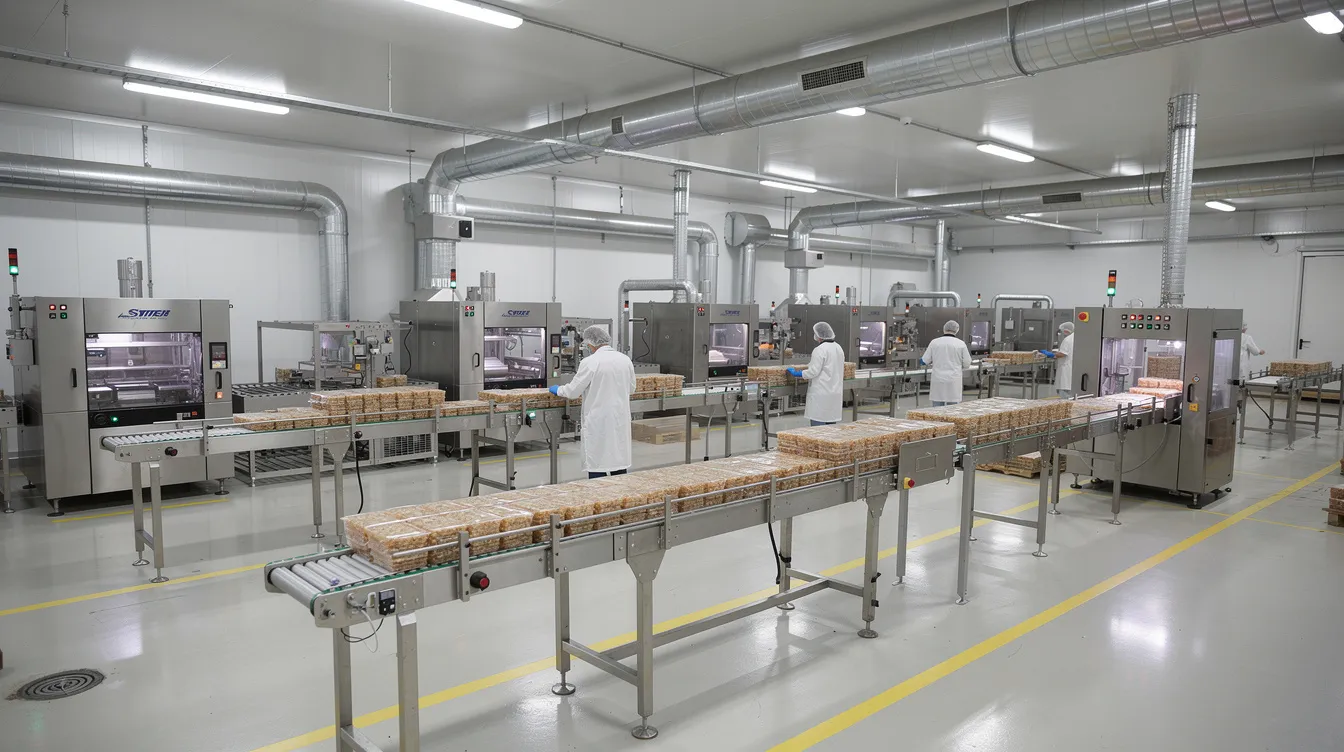
Key machinery includes: a grain cleaning machine that removes impurities from grains, a destoner, a grading machine, a continuous or batch roaster (roasting machines evenly roast grains and give sattu its characteristic taste, aroma and texture), a cooling conveyor, dehusking and splitting machines, an aspiration system, a pulveriser or grinder (pulverizers grind roasted grains into fine sattu powder), sieving machines that ensure smooth and uniform sattu texture, a blending system for multigrain variants, weighing machines that accurately measure sattu before packaging, and filling machines that pack sattu into pouches or containers. Moisture-proof packaging extends shelf life and preserves quality of the final product. For a detailed review of machinery specifications and automation levels, see the guide on Automatic Roasted Chana & Sattu Plant Machinery & Capacity.
Capacity configurations typically range from 500 kg/hr to 2,000 kg/hr. A 500 kg/hr plant running 8 hours per day for 25 days per month achieves approximately 100 tonnes/month or about 3.3 TPD. Process losses include moisture loss of 4-6% during roasting, cleaning losses of 1-2%, and dehusking losses. Combined usable output from good-quality chana is typically 88-92%. Sattu is prepared from roasted gram after milling and sieving, and quality checking is performed before packaging the finished sattu.
Plant utilities include three-phase power (40-100 HP depending on scale), DG backup, fuel storage for roasting (LPG, PNG, diesel or agro-waste briquettes), ventilation, FSSAI-compliant hygiene facilities and water supply. Staffing for a 3 TPD plant typically includes 10-15 persons: machine operators, helpers, an electrical/maintenance technician, quality supervisor, storekeeper, packaging staff and a production manager.
Project Cost and Investment Requirements for an Integrated Plant
Project cost has two components: fixed capital expenditure and margin for working capital. Capital investment includes costs for land, building and machinery. For a 3 TPD integrated roasted chana and sattu plant, an illustrative cost structure includes:
- Land and site development (owned or leased): ₹10-25 lakh depending on location
- Civil construction (production hall, godowns, office, utilities block): ₹25-45 lakh
- Plant and machinery (cleaning, roasting, dehusking, grinding, packing line): ₹30-60 lakh
- Electrical installation and DG set: ₹5-10 lakh
- Furniture, lab equipment and platform scales: ₹2-4 lakh
- Pre-operative and preliminary expenses: ₹3-5 lakh
- Contingency (5-10% of eligible costs): ₹5-10 lakh
- Margin money for working capital: ₹10-20 lakh
Total cost of a 3 TPD plant may fall in the range of ₹90 lakh to ₹1.80 crore depending on automation level, location and civil specifications. A small sattu business can start with ₹3 lakh to ₹8 lakh at micro scale for very local markets, but such units often struggle with fixed-cost absorption. For a detailed cost breakdown, refer to Roasted Chana & Sattu Manufacturing Plant Setup Cost & Investment.
These figures are illustrative. Actual project cost depends on current machinery quotations from multiple suppliers, local civil construction rates, and prevailing utility costs. Common MSME funding structures involve 25-35% promoter contribution and 65-75% bank term loan for fixed assets, with separate working capital cash credit limits.
Operating Cost and Revenue Feasibility
In any roasted chana sattu plant feasibility study, raw material cost and product realisations per kg dominate the profitability equation. Costs of raw materials affect the overall profitability of the project more than any other single variable. Production costs include raw materials, labour and packaging expenses.
For a 3 TPD plant (assumed chana purchase price ₹55/kg, process loss 10%, conversion cost ₹8/kg including fuel, power and direct labour), the variable cost per kg of finished product is approximately ₹69-72. Packaging material adds ₹3-8/kg depending on SKU size. Quality raw materials are essential for good production; lower-grade chana increases breakage and reduces the proportion of premium whole roasted product.
Revenue realisations vary by channel. Whole roasted chana commands ₹100-200/kg at retail and ₹80-120/kg in bulk. Sattu flour sells at ₹40-60/kg wholesale and can reach ₹400-600/kg at premium retail for stone-ground, desi-chana variants in branded packaging. Attractive packaging can enhance brand recognition for sattu products, and market demand varies between local retail and institutional buyers. Direct selling can improve profit margins compared to retail sales through distributors.
A simple contribution analysis helps assess viability: contribution per kg equals selling price minus variable cost. If the blended contribution across the product mix is ₹25-40/kg and the plant produces 900 tonnes/year at 75% utilisation, the annual contribution of ₹225-360 lakh must cover fixed costs (salaries, depreciation, rent, insurance, maintenance, interest) of perhaps ₹50-80 lakh. The surplus becomes operating profit. Market analysis should identify target consumers and survey local competitors before finalising the business plan.
Financial Projections and Profitability Analysis
Banks and investors expect 5-7 year financial projections covering income statement, cash flow and balance sheet. These projections must be built on stated assumptions: installed capacity in TPD, capacity utilisation ramp-up (for example, 50% in Year 1, 65% in Year 2, 75% from Year 3), selling price growth, raw material price escalation, wage inflation and interest rate.
The projected Profit & Loss account should show product-wise sales volume and value, raw material consumption, manufacturing expenses, employee cost, selling and administrative overheads. This yields EBITDA. After deducting depreciation on fixed assets and interest on term loan and working capital, the statement shows PBT, tax provision and PAT. Profit margins for sattu manufacturing can range from 15% to 30% at operating level depending on scale, product mix and channel.
For illustration: a 3 TPD plant at 70% utilisation producing 756 tonnes/year with blended realisation of ₹90/kg generates revenue of approximately ₹680 lakh. If EBITDA margin is 18%, EBITDA is ₹122 lakh. After depreciation of ₹12 lakh, interest of ₹14 lakh and tax, PAT may be ₹65-75 lakh. These figures are illustrative and assume specific cost and price levels that must be validated for each project. Financial viability relies on break-even analysis and profit margin calculations tailored to actual conditions.
For structured projections suitable for bank submission, including fund-flow statements, MPBF working capital assessment and banking ratios, refer to Roasted Chana & Sattu Plant Financial Projections, CMA Data & DSCR.
Roasted Chana Sattu Plant ROI, IRR and Payback Period
Return on Investment at project level is calculated as average annual PAT divided by total project cost. If PAT averages ₹70 lakh per year on a total cost of ₹1.40 crore, project-level ROI is approximately 50%. This number, however, does not reflect cash availability, debt repayment timing or risk.
Internal Rate of Return (IRR) is the discount rate at which NPV of project cash flows equals zero. For a 7-10 year horizon, if the plant generates annual free cash flows of ₹80-95 lakh after an initial investment of ₹1.40 crore, IRR may fall in the 18-25% range. Net Present Value at a 14% discount rate converts those future cash flows into a present-value sum; a positive NPV indicates the project exceeds the required return threshold.
Payback period measures how many years cumulative net cash flows take to recover the initial investment. For MSME-scale plants, a payback under 5-6 years is generally preferred by lenders and promoters.
The distinction between project-level ROI and equity ROI matters. If 65% of the project is debt-financed, equity investors bear the residual risk but also benefit from leverage. A ₹49 lakh equity investment generating ₹70 lakh PAT (after interest is already deducted) produces equity ROI above 100% on paper. Leverage magnifies both upside and downside outcomes. These figures are illustrative and should not be treated as guaranteed for all plants.
Break-Even Analysis and Capacity Utilisation
Fixed costs in a roasted chana and sattu plant include salaries, factory rent or depreciation on owned premises, minimum power charges, insurance and loan interest. Variable costs cover raw material, packaging, fuel, variable labour and freight. Break-even quantity equals total fixed costs divided by contribution per kg.
If monthly fixed costs are ₹6.5 lakh and contribution per kg is ₹30, break-even quantity is approximately 21,667 kg/month. For a plant with installed capacity of 75,000 kg/month (3 TPD, 25 days), this translates to break-even at about 29% capacity utilisation. Published project profiles for sattu units confirm break-even points in the 35-40% range for medium-scale plants.
Realistic ramp-up assumptions, such as 40-50% utilisation in Year 1, 60-70% in Year 2 and 75-80% from Year 3, are more acceptable to bankers than projections showing 90% utilisation from day one. Under-utilisation is one of the main reasons otherwise technically sound plants face repayment stress; the linkage between capacity utilisation and DSCR is direct. A professionally prepared feasibility study will include a break-even chart and capacity-sensitivity table showing how profitability changes at 50%, 60%, 70%, 80% and 90% utilisation levels.
Bank Finance and Project Loan Eligibility for Roasted Chana & Sattu Plants
Bank funding structures for MSME food processing projects typically include a term loan for fixed assets and a working capital facility (cash credit or overdraft). Banks expect promoter contribution of at least 25-30% of project cost as equity. The exact norms vary by bank, scheme and project size.
Appraisal criteria include promoter background and experience in food processing or trading, market feasibility, technological soundness, quality and realism of financial projections, DSCR levels, collateral coverage and regulatory compliance (FSSAI, GST registration). Working capital limits are assessed through the projected operating cycle: average raw material inventory, finished goods holding, receivables collection period and supplier credit, converted into permissible limits using MPBF or bank-specific methods.
MSME-oriented financing facilities and credit guarantee mechanisms like CGTMSE may provide collateral-free coverage for smaller ticket sizes, but eligibility and scheme rules change periodically and must be verified against current official notifications. Obtaining roasted chana sattu plant bank finance is not guaranteed by a DPR alone; it depends on the lender’s independent appraisal, risk assessment and policy guidelines at the time of sanction.
CMA Data, DSCR and Bankable DPR Preparation
A bankable roasted chana sattu manufacturing plant DPR, supported by structured CMA Data, forms the primary basis on which banks evaluate term loan and working capital proposals. CMA Data components include projected P&L statements, balance sheets, fund-flow statements, working capital assessment and key financial ratios over 5-7 years.
DSCR is calculated as: (PAT + depreciation + interest on term loan) divided by (interest on term loan + principal repayment due in that year). Banks typically look for average DSCR above 1.3-1.5, though this is not a universal rule. Means of finance is structured to show promoter equity, term loan and working capital borrowing, ensuring total sources equal total uses.
A project may show acceptable ROI but still be considered weak by banks if DSCR under downside scenarios, security coverage or promoter background factors are not comfortable. Production assumptions (capacity, utilisation, recovery, wastage), pricing assumptions, credit terms and cost escalations must be transparently documented so that projections appear defensible during bank appraisal. CMA Data and projections are prepared for decision support and lender appraisal, not as certified guarantees of future performance.
Sensitivity Analysis and Investment Risks
Sensitivity analysis tests how the project performs under adverse movements in key variables. A feasibility study should include risk assessments and mitigation strategies across multiple scenarios.
The main risk variables to test: raw chana purchase price increases of 10-20%, fall in finished-product selling prices, lower-than-planned capacity utilisation, reduced process recovery from 92% to 85%, increase in power and fuel tariffs, higher interest rates and delayed debtor realisation.
Three scenarios should be prepared. The base case uses realistic, balanced assumptions. The optimistic case assumes slightly higher utilisation or better price realisations. The downside case models lower utilisation with squeezed margins. For instance, a 5% reduction in contribution per kg combined with 10% lower capacity utilisation could reduce EBITDA by 25-30% and push DSCR from 1.8 to 1.2, approaching the minimum threshold.
Some risks can be partly mitigated through procurement contracts, a diversified customer base, product variety (including multigrain or flavoured sattu products and roasted grains variants) and conservative borrowing levels. Sattu is a high-protein food product gaining popularity as a health drink, which supports long-term demand, but short-term price elasticity remains a concern. Investors should proceed only after understanding downside cases and confirming the project remains at least cash-neutral under stress.
Working Capital Feasibility and Cash Conversion Cycle
Even a technically efficient plant can face liquidity problems if working capital is underestimated. Raw chana inventory may be held for 30-90 days depending on seasonality and procurement strategy. Bengal gram, the commonly used pulse for sattu, has harvest-driven price cycles that incentivise bulk stocking.
Other working capital elements include packaging and consumables inventory, WIP and finished goods holding (sattu can be packaged in sizes ranging from 500g to 100kg), and trade receivables from wholesalers and institutional buyers. Trade credit from suppliers offsets part of the requirement. The cash conversion cycle (inventory days plus receivables days minus payables days) determines how long cash remains locked.
Interest on working capital can be a major line item if the cash cycle exceeds 60-90 days. Managing this requires staggered procurement, realistic credit terms, partial advance payments from B2B buyers where possible, and disciplined receivable follow-up. Packaging should maintain product quality and prevent spoilage from moisture, as returns or quality rejections further strain working capital.
Government Schemes, Incentives and Regulatory Compliance
Several central and state-level initiatives periodically support food processing and MSME manufacturing projects. Food processing businesses must comply with local food safety regulations, including FSSAI food licence, GST registration, UDYAM/MSME registration, local trade licences and pollution/no-objection certificates.
Some states and central bodies offer interest subsidies, capital subsidies or reimbursement schemes under food processing or MSME policies, subject to conditions and budget allocations. These should be treated as potential upside, not the primary basis for project viability. Proper packaging and labelling compliance, including declaration of ingredients, nutrition facts, net quantity, batch number, manufacturing and expiry dates and FSSAI licence number, is mandatory. Proximity to suppliers and transportation links is also crucial for plant location selection to minimise logistics cost.
Professional Feasibility Assessment: When Should an Investor Proceed?
In my experience as a practising Chartered Accountant, the go/no-go decision on a roasted chana and sattu plant should balance five dimensions:
- Technical viability: suitable technology, reliable machinery suppliers, realistic production capacity and manageable utilities
- Commercial viability: clear target customers, competition mapping through market research, and price positioning. Sattu is very popular item in eastern India, particularly in Bihar and Hazaribag districts, but demand is expanding nationally
- Financial viability: acceptable ROI, IRR, payback, DSCR and break-even under both base-case and downside scenarios
- Promoter capability: experience, time commitment and ability to manage procurement, marketing strategies and advertising to attract customers
- Bankability: adequate equity, quality of DPR and CMA Data, and collateral comfort
An investor should proceed when all parameters are satisfactory with comfortable DSCR and established customer linkages. The plan should be revised when capacity is too high, machinery configuration is not optimal, or dependence on a single buyer is excessive. Investment should be reconsidered when margins are very tight or leverage is too high. A professionally prepared detailed project report and feasibility study help identify weaknesses on paper before committing major capital.
How CA Manish Gugliya and Project Report Bank Assist with Roasted Chana & Sattu Projects
I have been in practice as a Chartered Accountant since 2006, with more than 20 years of professional experience in project finance, DPR preparation, CMA Data and feasibility studies for MSME manufacturing and food processing ventures across India.
Core services relevant to roasted chana and sattu plants include:
- Customised roasted chana sattu manufacturing plant DPR tailored to capacity, location and product mix
- Financial projections and financial modelling including ROI, IRR, DSCR, break-even and sensitivity analysis
- CMA Data preparation assistance for bank term loans and working capital limits
- Project cost estimation, means-of-finance planning and working capital assessment
- Bank finance proposal preparation and support for lender queries
All analysis is based on project-specific assumptions discussed with the promoter. Numbers are prepared for decision support and lender appraisal, not as guarantees of performance. For serious project promoters, I am available for professional consultation via online meetings and WhatsApp, subject to formal engagement and professional-fee terms. If you are considering an integrated roasted chana and sattu processing business, seek a detailed feasibility review and bankable project report before finalising land, machinery orders or loan applications.
Frequently Asked Questions
Below are practical questions that investors frequently raise about integrated roasted chana and sattu plant projects.
What is the minimum economic capacity for a roasted chana and sattu plant?
Very small capacities below about 1 TPD can serve local markets and small scale businesses but often struggle to absorb fixed costs such as salaries, depreciation and minimum power charges. Integrated units of 2-3 TPD generally offer better economies of scale for most MSME entrepreneurs, provided local demand and marketing strength justify the investment requirements. The ideal location for the plant should also have adequate access to raw material supply and distribution networks.
How much total investment is needed for a 2-3 TPD integrated plant?
A 2-3 TPD integrated plant, including plant and machinery, basic building, electrical installation, pre-operative expenses and initial working capital margin, may require a total cost in the range of ₹80 lakh to ₹1.80 crore. Actual project cost varies with location, level of automation, civil specifications, product range and prevailing machinery quotations. Low maintenance equipment reduces long-term operating costs but may carry higher upfront prices. These figures are indicative and must be validated through current supplier quotes and a project-specific report.
How quickly can such a plant typically reach break-even?
Break-even timing depends on ramp-up of capacity utilisation, achieved contribution margins and the level of term-loan repayment obligation. In many practical cases, promoters target operational break-even within 1-2 years and full payback within 5-7 years under stable conditions. Plants with strong customer preferences mapping and established B2B offtake arrangements tend to reach break-even faster. Sattu, having high nutritional value and growing recognition as a vegetarian food option, supports steady demand growth.
Do banks insist on prior food processing experience for sanctioning loans?
Prior experience in food processing or trading is positive but not always mandatory. Banks look for overall business experience, seriousness, equity commitment and quality of the detailed project report. Many dal mills and existing pulse processing business owners have an advantage because they already understand raw material markets and industrial applications of gram in flour form. Promoters without direct experience may strengthen their proposals by engaging technical and financial advisors and demonstrating market tie-ups.
Can I diversify into multigrain or flavoured sattu later using the same plant?
Most integrated roasted chana plants with proper grinding, blending and packing systems can be adapted for other grains and flavoured sattu products with limited additional equipment. Sattu can be made from various grains and pulses, including barley and wheat, so de husked grams from different sources can be processed. Customer preferences for health benefits and high nutritional content are driving demand for multigrain variants. Feasibility should be reassessed before any diversification to confirm product demand, ensure regulatory labelling compliance and verify that the production process handles the new raw materials required without excessive modification.
Conclusion
An integrated roasted chana and sattu plant can be a profitable business opportunity when approached with disciplined feasibility analysis, realistic financial projections and well-planned bank finance. The project economics depend on more than installing machinery: they require strong raw material procurement, clear marketing strategies, efficient production process control and rigorous monitoring of working capital and DSCR.
Promoters should treat the roasted chana sattu plant feasibility study and detailed project report as decision tools, not just loan documents. These reports help evaluate risk-adjusted ROI and IRR before locking capital into land, building and equipment.
I encourage serious entrepreneurs and investors to seek customised, data-driven analysis and bankable documentation rather than relying on generic templates or untested assumptions when planning their roasted chana and sattu processing business. The numbers should tell a logical business story, and every assumption should be defensible.
CA Manish Gugliya FCA, DISA (ICAI) More than 20 years of professional experience in project reports, financial projections, CMA Data, project finance and business advisory.