Key Takeaways
- Roasted chana sattu plant financial projections must be built on realistic assumptions about raw material recovery, capacity utilisation ramp-up, product mix and working capital requirements rather than optimistic revenue targets alone.
- Sattu manufacturing margins are highly sensitive to chana procurement prices, roasting and milling recovery percentages, and the balance between bulk institutional sales and branded retail products.
- A structured detailed project report and properly prepared CMA Data are standard requirements for any serious sattu manufacturing plant bank loan application in India, whether through public-sector or private-sector banks.
- DSCR, projected cash flows, working capital adequacy and loan structuring carry more weight in a bank’s appraisal than impressive profit figures that cannot be supported by sustainable cash generation.
- Project Report Bank, led by CA Manish Gugliya (FCA, DISA), prepares customised financial projections, CMA Data and bankable project reports for roasted chana and sattu manufacturing plants across India.
Introduction: Why Financial Projections Matter for Roasted Chana & Sattu Plants
Sattu and roasted chana products have moved well beyond household consumption in Bihar and eastern India. The global sattu drinks market was valued at approximately USD 131.6 million in 2025 and is projected to reach USD 466.6 million by 2034, reflecting a sustained shift towards plant-protein and health-positioned food products. Within India, packaged sattu is expected to grow at around 18.5% annually by FY2030, and sattu sales rose by up to 40% during the 2026 heatwave season. Plain sattu powder accounted for 91.5% of 2025 revenue, while the instant sattu drink premix segment is growing at 22.1% annually. Sattu demand overall is increasing by 8 to 10 percent annually in India.
These trends attract entrepreneurs and existing food processing industries to consider sattu manufacturing as a viable manufacturing business. However, committing capital to machinery, building, land and working capital without preparing realistic roasted chana sattu plant financial projections is a common source of financial stress. Before ordering equipment or signing a long-term lease, a promoter should understand how capacity, pricing, competition and credit terms translate into projected profitability and, more importantly, into actual debt-servicing ability.
A structured project report and CMA Data convert a manufacturing idea into numbers that banks, investors and promoters can evaluate objectively. The DSCR remains the core ratio bankers use to judge whether a sattu manufacturing plant can service its term loan from operating cash flows. All figures presented in this article are illustrative, based on a typical 250 to 500 kg per hour plant, and must be customised in a detailed project report for each specific project.
Understanding Roasted Chana & Sattu Manufacturing: Products, Process and Revenue Streams
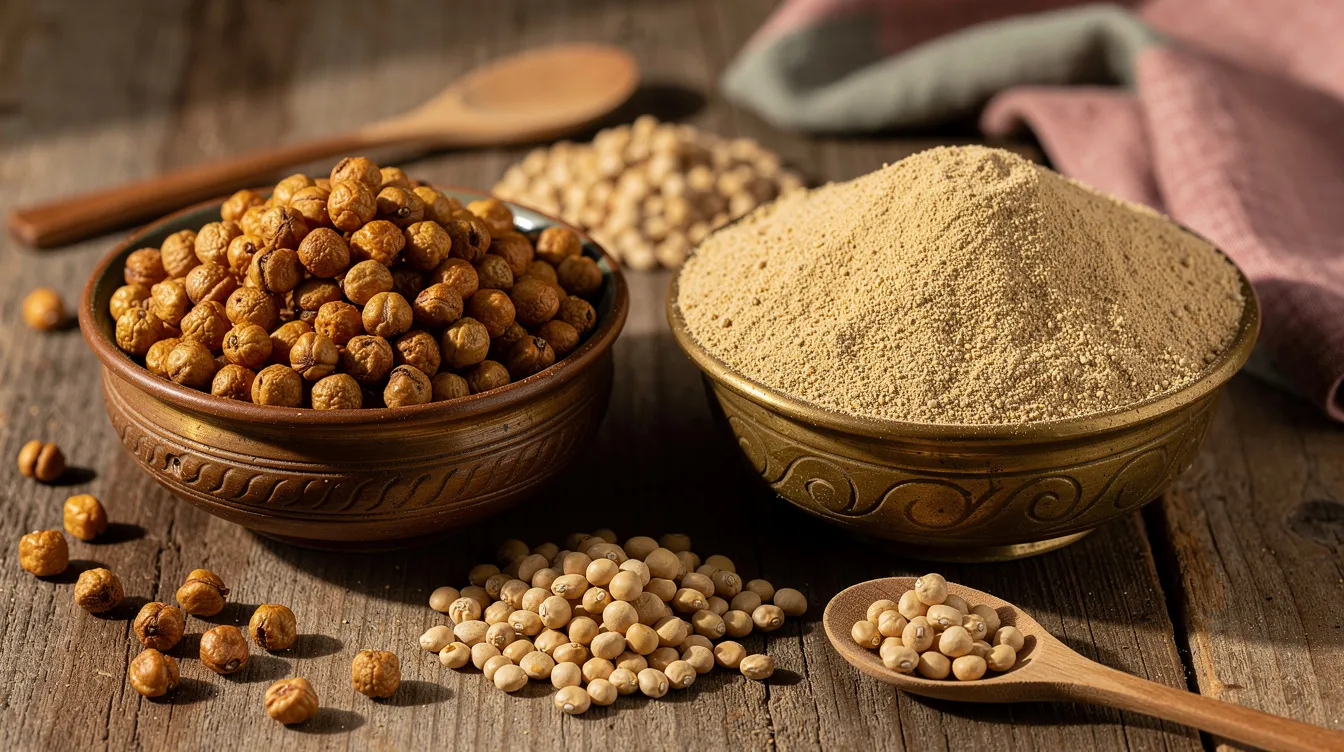
Roasted chana and sattu are pulse-based products derived from Bengal gram. Sattu flour can be produced using roasting and grinding processes, and the finished powder serves as a base for traditional beverages, health drinks, gram flour substitutes and ready-to-eat preparations. These products fit squarely within the pulse-processing and sattu drinks market that is gaining market share in modern trade and online channels.
Key product categories include:
- Whole roasted chana and split roasted chana for direct retail and snack applications
- Plain chana sattu powder for beverages and cooking
- Multigrain sattu blends incorporating wheat, barley and other grains
- Instant drink premixes (sweet and flavoured) targeting urban consumers
- Institutional bulk sattu for industrial applications in snack manufacturing and beverage companies
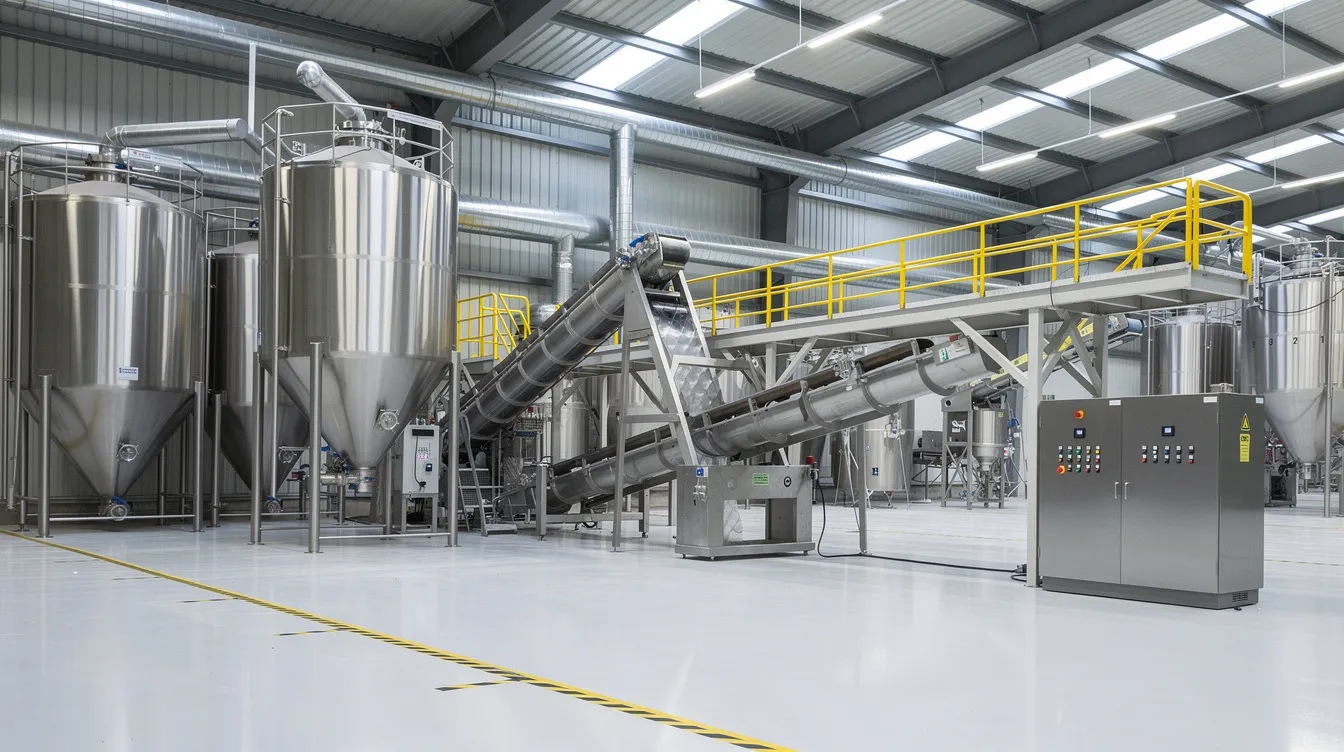
The manufacturing process involves cleaning and grading of raw gram, roasting in a dry fryer, cooling, dehusking or decorticating, grinding in milling equipment, sieving through a vibro separator for grading materials by particle size, blending if required, and packaging. Sattu processing requires a dry fryer, grinder, and packing machine as core equipment. Screw conveyors are used for moving materials between stages. Grinding mills can process 75 to 100 kg of sattu per hour, and sattu plants can have capacities ranging from 250 to 500 kg per hour.
Different SKUs impact the financial model significantly. Loose bulk sacks have lower packaging cost but command lower selling prices. Retail pouches and premix sachets require higher packaging investment and moisture control in packaging, which is critical because sattu is hygroscopic and absorbs moisture easily, affecting its shelf life and quality. Sattu can typically be stored for about six months at room temperature when properly packaged. Value-added premix products require higher investment in packaging and quality control but can support better contribution margins.
Financial Planning for a Roasted Chana & Sattu Manufacturing Plant
This section converts technical plant details into structured financial planning assumptions suitable for projections and CMA Data.
Capacity and production assumptions:
- Installed capacity choices typically range from a 250 kg/hour semi-automatic line to a 500 kg/hour automatic line. A sattu processing plant capacity can be approximately 2 MT per day for smaller units, with annual operating days generally assumed at 300 days after accounting for maintenance and holidays.
- Production capacity for a smaller-scale unit may be estimated at around 90 metric tons per annum.
Product mix and utilisation:
- Fixing the product mix between roasted chana, plain sattu, multigrain sattu and instant drink premix determines the weighted average realisation per kg and the marketing expenditure required.
- Capacity utilisation should ramp up realistically: approximately 45 to 50 percent in Year 1, scaling gradually to 75 to 80 percent by Year 5.
Raw material and recovery:
- Processing losses in sattu production, including cleaning and roasting, are generally around 4 to 5 percent. At scale, recovery from raw chana to finished sattu can range between 80 and 85 percent by weight depending on roasting parameters and dehusking specifications.
- Chana prices can fluctuate significantly based on agricultural conditions and market demand. The MSP for gram for Rabi 2026-27 stands at ₹5,875 per quintal, but actual market prices often move above MSP. Seasonal demand for sattu spikes during summer months due to its cooling properties, affecting both supply planning and sales cycles.
Selling price estimation:
- Sattu sells for ₹140 to ₹160 per kilogram in Bihar for plain powder in bulk or semi-branded packs. Branded stone-ground sattu in retail channels can command ₹400 to ₹600 per kg. The blended realisation depends heavily on channel mix.
Major operating expenses to quantify:
- Raw material cost (Bengal gram)
- Power and fuel for roasting, grinding and packaging
- Packaging materials including moisture-barrier pouches and sachets
- Labour and employee costs
- Repairs, maintenance and quality control
- Freight, distribution and administrative overheads
Major operating costs in sattu manufacturing include raw materials, power, labor, and packaging. Working capital cycle assumptions covering stock of raw chana, finished goods, debtors and creditors form the base for the cash credit limit assessment in the DPR.
Project Cost and Means of Finance for a Sattu Manufacturing Plant
Project cost covers both fixed assets and initial working capital margin, and it must align with the term loan and promoter contribution plan presented to the bank. Total capital investment for a sattu plant at a smaller MSME scale is approximately ₹35.56 lakh, though this varies substantially with capacity and location.
Key components of project cost include:
- Land and site development (owned or leased, with suitable plot size for processing, storage and loading)
- Factory building and civil works including roofing, flooring, ventilation and drainage
- Roasting, grinding, sieving and packaging machinery, with plant and machinery cost for sattu processing at approximately ₹11.45 lakh for a basic line
- Electrical installations, panels, wiring and LT connections
- Utilities such as transformer share, compressor and blower systems
- Quality-control lab equipment including moisture meter, sieve sets and weighing scales
- Preliminary and pre-operative expenses covering technical consultancy, interest during construction, trial-run expenses and initial registration outlays
- Contingency provisions at 5 to 10 percent on plant and building costs
- Margin money for working capital as part of total project cost
Working capital required for one month of operations is approximately ₹21.25 lakh at moderate utilisation. For a detailed investment break-up across different capacity levels, readers can refer to the Roasted Chana & Sattu Plant Setup Cost and Investment guide.
The means of finance typically comprises promoter contribution (equity), term loan and separate working capital limits such as cash credit. A debt-equity ratio of 2:1 to 3:1 is generally considered suitable for MSME food processing projects, though this depends on bank policy and project risk profile.
Five-Year Financial Projections for a Roasted Chana & Sattu Plant
A standard roasted chana sattu plant project report for bank finance will typically include five to seven years of projections. The following illustrative table demonstrates Year 1 through Year 5 for a smaller-scale unit with approximately 90 MT annual capacity at full utilisation.
| Particulars | Year 1 | Year 2 | Year 3 | Year 4 | Year 5 |
|---|---|---|---|---|---|
| Capacity Utilisation (%) | 50% | 60% | 70% | 75% | 80% |
| Production (MT) | 45 | 54 | 63 | 67.5 | 72 |
| Gross Sales (₹ Lakh) | 29.25 | 36.72 | 44.10 | 48.60 | 53.28 |
| Raw Material Cost (₹ Lakh) | 15.80 | 19.44 | 23.10 | 25.20 | 27.36 |
| Packaging & Mfg. Overheads (₹ Lakh) | 3.20 | 3.70 | 4.20 | 4.50 | 4.80 |
| Employee Cost (₹ Lakh) | 2.40 | 2.60 | 2.80 | 3.00 | 3.20 |
| Power & Fuel (₹ Lakh) | 1.20 | 1.40 | 1.60 | 1.70 | 1.80 |
| Admin & Selling Expenses (₹ Lakh) | 1.00 | 1.10 | 1.20 | 1.30 | 1.40 |
| EBITDA (₹ Lakh) | 5.65 | 8.48 | 11.20 | 12.90 | 14.72 |
| Interest (₹ Lakh) | 2.10 | 1.85 | 1.55 | 1.25 | 0.95 |
| Depreciation (₹ Lakh) | 1.90 | 1.70 | 1.55 | 1.40 | 1.30 |
| Profit Before Tax (₹ Lakh) | 1.65 | 4.93 | 8.10 | 10.25 | 12.47 |
| Tax (₹ Lakh) | – | 1.23 | 2.03 | 2.56 | 3.12 |
| Profit After Tax (₹ Lakh) | 1.65 | 3.70 | 6.07 | 7.69 | 9.35 |
All figures are illustrative and must be customised in a detailed project report. Actual performance depends on location, market conditions and operational efficiency.
Year 1 revenue for a roasted chana sattu plant at this scale is around ₹29.25 lakh, with net profit from the project at approximately ₹4.35 lakh (adjusted for tax benefits available in initial years). Gross profit margins for sattu manufacturing typically range from 20 to 30 percent, widening as capacity utilisation improves and fixed costs are absorbed more efficiently.
Financial forecasts for sattu manufacturing should include detailed analysis of raw material prices and operating costs, with all assumptions on inflation, price escalation and wage increases clearly documented. Similar projection logic applies in allied pulse-processing projects such as Besan Plant Financial Projections, CMA Data and DSCR, though roasted chana and sattu involve additional fuel costs for roasting, different packaging requirements and distinct market positioning.
CMA Data Preparation for Roasted Chana Sattu Plant Bank Finance
CMA Data is the standardised format through which banks assess both capital expenditure and working capital requirements for manufacturing project lending. It converts roasted chana sattu plant financial projections into a banker-friendly structure covering projected profit and loss, projected balance sheet, fund-flow statement, cash-flow statement and key schedules.
Within CMA Data, the working capital assessment includes estimated levels of current assets (raw material inventory, work-in-progress, finished goods, receivables, cash and bank balances) and current liabilities (trade creditors, statutory dues, other payables) for each projected year.
Inventory holding periods in days, receivable and payable cycles feed directly into drawing power and the recommended cash-credit limit. For a sattu plant, raw chana inventory may be held for 30 to 60 days depending on procurement season, while finished goods typically move within 15 to 30 days.
Bankers reviewing roasted chana sattu plant CMA Data focus on current ratio, turnover ratios, net profit margin, interest coverage, DSCR and tangible net worth to total outside liabilities. CMA Data is built on the same assumptions used in the detailed project report, is not a certification of results, and remains subject to the lending institution’s independent appraisal and sanction conditions.
Working Capital Assessment for Roasted Chana & Sattu Manufacturing
Working capital estimation deserves particular attention because chana procurement is seasonal while plant operations must be continuous. Many households across India consume sattu regularly, but demand peaks sharply in summer, requiring planned inventory build-up.
Major current-asset components include:
- Raw Bengal gram inventory: typically 1 to 2 months of coverage, higher during post-harvest procurement
- Packaging material: barrier pouches, sachets and corrugated boxes, usually 15 to 30 days of stock
- In-process roasted chana and work-in-progress: minimal if production is continuous
- Finished sattu and premix stocks: 15 to 30 days depending on channel mix
- Trade receivables: 30 to 45 days for distributors; modern trade and institutional buyers may stretch to 60 days
Supplier credit terms, peak-season bulk procurement and commodity price volatility all influence the size of the cash-credit limit. The methodology is broadly comparable to other pulse processing projects. For a detailed overview of inventory financing in related industries, readers can review the Working Capital and Cash Credit for Besan Manufacturing resource.
A shift from bulk loose sattu to branded retail packs lengthens the receivable cycle and raises the need for disciplined debtor monitoring and stock-age tracking.
DSCR Calculation for a Sattu Manufacturing Plant
The debt service coverage ratio measures whether cash generated from business operations is sufficient to meet annual debt obligations. It is central to any sattu manufacturing plant DSCR appraisal conducted by banks.
Formula: DSCR = (Profit After Tax + Depreciation + Term Loan Interest) ÷ (Term Loan Interest + Scheduled Principal Repayment)
| Year | PAT (₹ Lakh) | Depreciation (₹ Lakh) | TL Interest (₹ Lakh) | Cash for Debt Service (₹ Lakh) | Principal (₹ Lakh) | Total Debt Service (₹ Lakh) | DSCR |
|---|---|---|---|---|---|---|---|
| 1 | 1.65 | 1.90 | 2.10 | 5.65 | 2.50 | 4.60 | 1.23 |
| 2 | 3.70 | 1.70 | 1.85 | 7.25 | 3.00 | 4.85 | 1.49 |
| 3 | 6.07 | 1.55 | 1.55 | 9.17 | 3.50 | 5.05 | 1.82 |
| 4 | 7.69 | 1.40 | 1.25 | 10.34 | 3.50 | 4.75 | 2.18 |
| 5 | 9.35 | 1.30 | 0.95 | 11.60 | 3.50 | 4.45 | 2.61 |
Illustrative only. Actual DSCR depends on loan amount, tenure, interest rate and project-specific cash flows.
The overall DSCR should be computed using weighted averages over the loan tenure rather than a simple arithmetic mean, especially where repayment amounts differ across years. Banks typically look for comfort above 1.25 to 1.30, though the acceptable band varies across institutions, schemes and risk profiles. Under Central Bank’s food-processing cluster scheme, the stated average DSCR requirement is 1.25.
A project can be profitable on the P&L but still fail on DSCR if the loan is too large, repayment is too aggressive, or working capital is under-financed.
Projected Cash Flow and Term-Loan Repayment Planning
Accounting profit and actual cash movement are not the same. A sattu plant may show healthy profits while simultaneously facing liquidity pressure if working capital is tied up in inventory or receivables.
Key cash-flow components include:
- Operating cash flow from net profit adjusted for non-cash items (depreciation) minus working capital changes
- Investing cash flow covering capital expenditure for machinery, building upgrades and low maintenance replacement equipment
- Financing cash flow including term-loan drawdown, repayments, interest and any equity infusion
Term-loan repayment should align with the expected ramp-up period. A moratorium of 6 to 18 months during construction and trial production is common. Step-up repayments synchronised with seasonal sales peaks can reduce early-year cash-flow stress.
Common cash-flow mismatch risks include underestimation of working capital needs, delays in realising receivables from distributors or modern trade, and the impact of sudden raw chana price spikes on liquidity.
Break-Even Analysis, ROI, IRR and Payback Period for Roasted Chana & Sattu Plants
Beyond profitability, bankers and investors evaluate break-even, return on investment and IRR to test commercial viability.
The break-even point for a sattu plant is approximately 39 percent of installed capacity, meaning the plant covers all fixed and variable costs at relatively modest utilisation. The break-even point for sattu manufacturing projects is generally achieved within 12 to 18 months of commercial operations.
Fixed costs (machinery depreciation, staff salaries, rent, insurance) must be segregated from variable costs (raw chana, packaging, fuel) to compute break-even quantity and break-even sales value accurately.
The rate of return for a sattu manufacturing plant can be around 57 percent on promoter equity at stabilised utilisation. The internal rate of return for sattu manufacturing projects is estimated between 22 and 27 percent on total investment, depending on product mix and market realisation. Equity IRR, which measures returns to the promoter after loan servicing, will typically be higher due to financial leverage.
Payback period analysis should consider both simple and discounted payback, and promoters should avoid relying on short nominal payback claims without full sensitivity testing.
Sensitivity Analysis and Financial Risks in Roasted Chana & Sattu Manufacturing
Static projections are insufficient. Banks and serious promoters need to understand how the project behaves under changing conditions. Financial forecasts for sattu manufacturing should stress-test at least three scenarios:
Base case: Conservative but reasonable assumptions on capacity utilisation, raw material cost at MSP levels, and blended selling price around ₹150 to ₹160/kg for bulk-weighted product mix.
Downside case: Capacity utilisation 10 percent lower than base, raw chana prices 15 percent above MSP, and selling price erosion of 5 to 8 percent due to competition from loose or unpackaged sattu.
Improvement case: Faster utilisation ramp-up, higher share of branded retail and premix products yielding better realisations, and improved processing recovery through optimised roasting parameters.
Parameters to stress-test include raw Bengal gram prices, roasting and grinding recovery percentage, selling prices of sattu and premixes, power and fuel costs, packaging material prices and distribution margins. Working capital stress scenarios covering extended debtor days, slower stock rotation during off-season and higher inventory build-up during peak procurement must also be examined.
Combined risk impacts should be assessed rather than changing one variable at a time, to avoid underestimating financial pressure during adverse periods.
Bank Loan Documentation, Project Report and Financial Appraisal
Lenders evaluate a sattu manufacturing plant bank loan proposal by examining the detailed project report, CMA Data, promoter profile, collateral and industry outlook together.
A comprehensive roasted chana sattu plant project report includes:
- Project background and business overview
- Market analysis covering sattu drink, roasted chana and gram flour demand trends
- Technical details of the manufacturing plant including manufacturing process and flow diagram
- DPR includes a market survey and suppliers list
- Total capital investment details and means of finance
- Five-to-seven-year financial projections with clearly stated assumptions
- DPR requires break-even point analysis, DSCR and cash-flow projections
- Regulatory compliance including FSSAI standards for sattu and food safety licensing
Supporting documents typically include KYC, income-tax returns, bank statements, net-worth statements, machinery quotations, land documents and regulatory licences (FSSAI, pollution consent, factory registration, GST). DPR preparation involves customised analysis for each project rather than generic templates.
Promoters considering diversified product lines such as roasted pulse snacks can also explore the Value-Added Pulse Snacks Manufacturing Plant Project Report for a broader expansion roadmap.
Common Financial Planning Mistakes in Roasted Chana & Sattu Projects
Many technically sound projects struggle financially due to planning errors rather than market absence.
- Over-optimistic sales and capacity utilisation from Year 1, ignoring the time needed to build distributor networks
- Under-budgeting marketing and trade schemes required for retail pack distribution
- Underestimating working capital and depending excessively on supplier credit during peak procurement
- Misjudging recovery percentages and losses in roasting and grinding
- Assuming constant raw chana prices across all five projected years without accounting for commodity volatility
- Mismatch between production capacity and projected sales quantity
- Ignoring maintenance capex and periodic replacement of critical machine components
- Designing term loans with aggressive repayment when DSCR is tight, leaving no buffer for seasonal downturns or unexpected disruptions
Professional Advisory Support by Project Report Bank (CA Manish Gugliya)
Project Report Bank is a Chartered Accountant-led advisory practice specialising in manufacturing project reports, CMA Data and financial modelling for MSMEs and food processing units across India.
Services relevant to roasted chana and sattu manufacturers include:
- Customised detailed project reports for bank finance and investor presentations
- Five-to-seven-year roasted chana sattu plant financial projections
- CMA Data preparation aligned with bank appraisal requirements
- DSCR and repayment analysis tailored to project-specific cash flows
- Working capital assessment and term-loan structuring
- Project feasibility and viability studies
All documents are prepared based on project-specific assumptions and available data. While the aim is to make the proposal bankable and realistic, no guarantee of sanction or specific profitability is implied. DPR must comply with FSSAI standards for sattu and applicable regulatory requirements.
Promoters planning a new roasted chana and sattu manufacturing plant or expansion can reach out via ProjectReportBank.com or WhatsApp for an initial discussion on scope and requirements.
Frequently Asked Questions on Roasted Chana & Sattu Plant Finance
How are financial projections prepared for a roasted chana and sattu manufacturing plant in practice?
Projections begin with operational assumptions: installed capacity, operating days, shift pattern, product mix between roasted chana, plain sattu and premixes, and expected capacity utilisation by year. Raw material consumption is computed using processing recovery rates, and selling prices are benchmarked against current market data and channel-specific realisations. Revenue, cost and profitability are then projected year-wise for five to seven years, ensuring internal consistency across all statements.
Is CMA Data always required for a sattu manufacturing plant bank loan?
Most public-sector and private-sector banks require CMA Data as part of the term-loan and working-capital finance appraisal for any manufacturing project above a threshold exposure level. Even where not formally mandated, CMA Data provides a structured format that makes the lending assessment process significantly smoother. Projections typically cover five to seven years of operations.
How is DSCR calculated and interpreted for a roasted chana and sattu project?
DSCR is calculated as the sum of profit after tax, depreciation and term-loan interest, divided by total annual debt service comprising interest plus scheduled principal repayment. A DSCR above 1.25 to 1.30 is generally considered adequate, though the acceptable threshold depends on bank policy and project risk. Debt service coverage ratio is important for assessing loan repayment capacity because it measures actual cash generation against debt obligations rather than accounting profit alone.
What practical factors determine the working capital requirement of a sattu plant?
Beyond basic inventory formulas, practical working capital depends on chana procurement seasonality, storage and access to raw material during off-season, the mix between bulk and branded retail sales, distributor payment terms, packaging material lead times and the need to build finished goods inventory ahead of summer demand peaks.
Why can a plant that is profitable on paper still face repayment or cash-flow difficulties?
Profitability on the P&L does not automatically translate into available cash. Working capital increases tied up in inventory and receivables, seasonal demand fluctuations requiring inventory build-up, delayed payments from distributors or institutional buyers, and unexpected raw material price spikes can all create situations where a profitable business cannot meet its scheduled loan repayments on time.
Conclusion: Building a Bankable and Sustainable Roasted Chana & Sattu Project
A roasted chana and sattu manufacturing plant can be a financially viable project when built on grounded assumptions, disciplined working capital planning and realistic DSCR targets. The growing demand for packaged sattu products and health-positioned pulse-based beverages provides a supportive market context, but market opportunity alone does not ensure project success. Every assumption about capacity utilisation, raw material cost, processing recovery and selling price must withstand scrutiny by both the promoter and the lender.
Roasted chana sattu plant CMA Data, DSCR analysis, cash-flow projections and sensitivity checks are not bureaucratic formalities. They are practical tools to prevent over-leveraging and to align the loan size with the sustainable cash generation ability of the business. A project where the numbers tell a coherent and defensible story is far more likely to secure appropriate financing and deliver long-term returns than one built on optimistic assumptions that cannot be explained or supported.
Promoters should invest adequate time and professional effort into preparing a robust roasted chana sattu plant project report before committing significant capital or approaching banks. Project Report Bank, led by CA Manish Gugliya, provides specialised support in this area, helping convert a manufacturing idea into a structured financial proposal that serves both business planning and bank finance objectives.