Key Takeaways
This guide explains the machinery, capacity planning and financial feasibility of fully automatic roasted chana and sattu plants from Project Report Bank’s advisory perspective, combining technical evaluation with investment analysis.
- A modern automatic roasted chana and sattu manufacturing plant uses integrated cleaning, continuous roasting, cooling, dehusking, pulverising and packaging systems. Food-contact surfaces are typically stainless steel (SS304 or SS316), and a fully automatic roasted chana plant cleans, roasts, cools, and packages chickpeas with minimal manual intervention.
- Plant sizing (for example a 500 kg/hr line or 5 to 20 TPD raw input) must be matched to realistic market demand, the kg/hr ratings of the roasting machine and downstream equipment, and working-capital capability. The production capacity of roasted chana plants ranges from 50 kg to over 1,000 kg per hour depending on configuration.
- Automation through PLC controls, conveyors and automatic weighing and packing reduces labour cost and wastage, but increases initial project cost. Payback period and DSCR must be analysed before committing capital.
- Chana processing plants require detailed project reports for feasibility, and financial projections are essential for evaluating chana processing investments. Working capital assessment is crucial for chana processing projects of this nature.
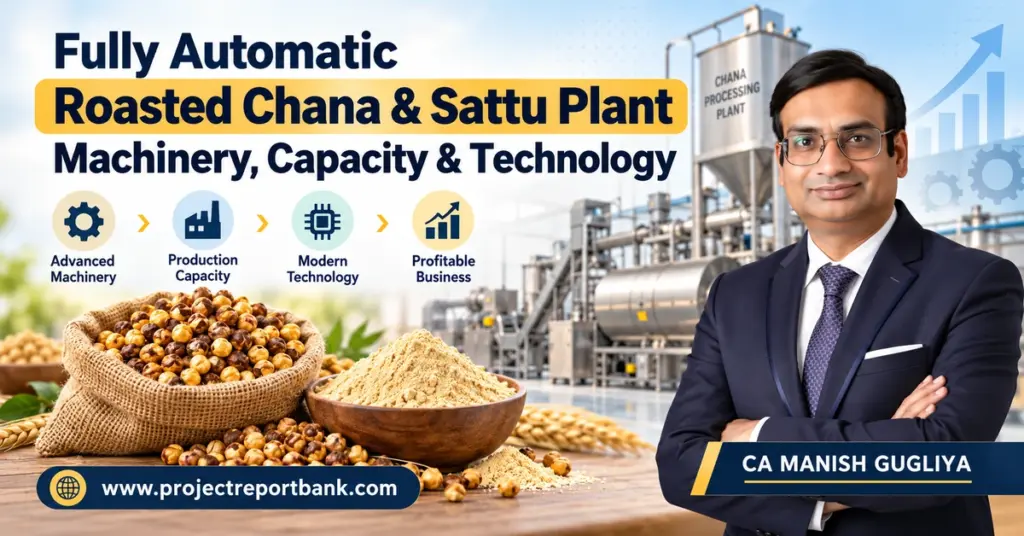
- Project Report Bank, led by CA Manish Gugliya, FCA, DISA (ICAI), prepares customised DPRs, financial models, CMA Data and bankable project reports for investors planning industrial roasted chana and sattu plants across India.
Introduction: Industrial-Scale Fully Automatic Roasted Chana & Sattu Plants
Roasted chana and sattu have moved well beyond traditional street-food counters. Institutional buyers, FMCG brands and nutrition-product companies now source roasted gram and sattu flour as protein-rich ingredients for snacks, instant mixes, beverages and fortified food formulations. Chana roaster machines are widely used in the food processing industry, and the commercial applications continue to expand as processed food categories grow.
Traditional fire-based batch roasting and manual dehusking cannot deliver the consistency, kg/hr throughput, hygiene compliance or traceability that branded and private-label packaging demands. Roasting improves the flavor and aroma of pulses, and roasting enhances the nutritional profile of pulses; however, achieving these benefits at industrial scale requires controlled process technology rather than artisanal methods.
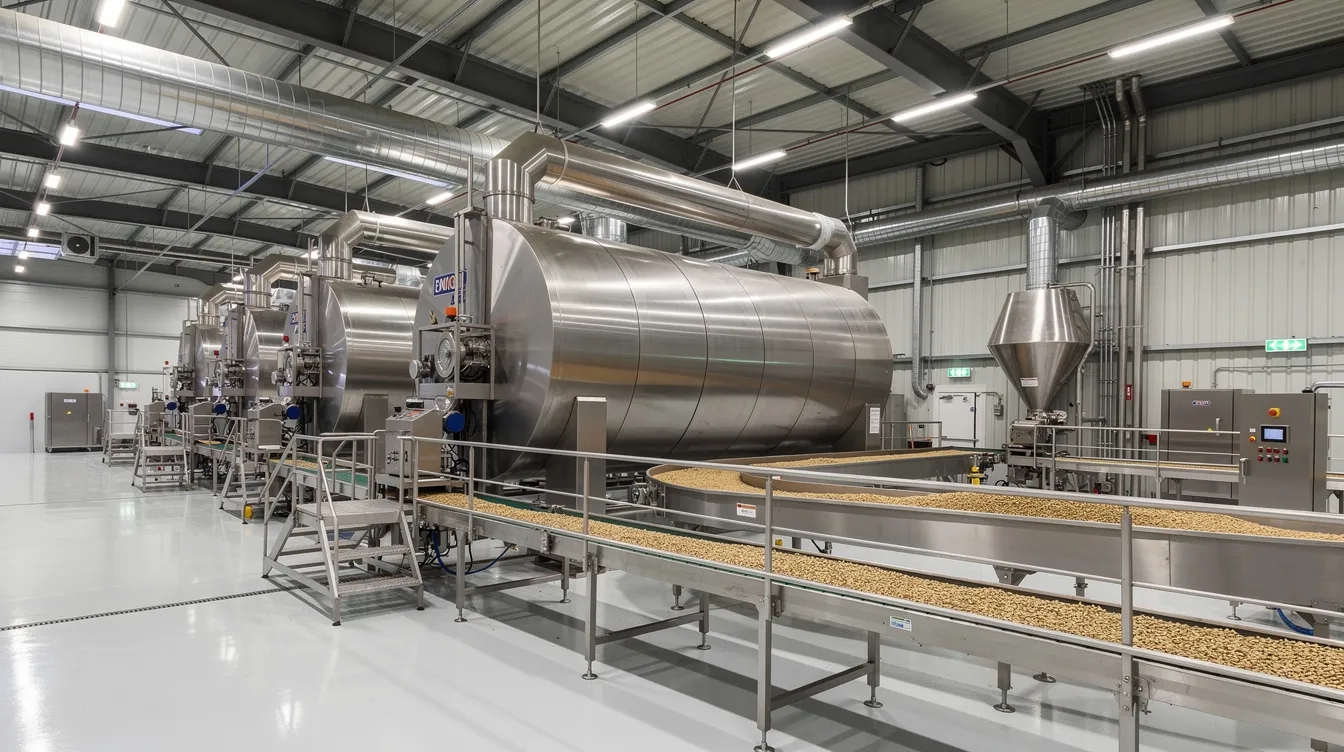
A fully automatic roasted chana plant typically includes automatic feeding, a continuous chana roaster machine, online cooling, dehusking and splitting, grading, an industrial sattu pulveriser, sieving and an automatic packing line. Fully automatic roasted chana plants typically use continuous hot air roasting technology for uniform crunch across large production volumes.
Choices of roasting machine technology, level of automation and material of construction (stainless steel vs mild steel) directly impact project cost, production cost per kg, working-capital intensity and bankability. An investor who selects equipment without modelling the downstream financial consequences risks either over-investing or under-sizing the facility.
This article, written from the perspective of CA Manish Gugliya and Project Report Bank, focuses on plant design, machinery selection, 5 to 20 TPD capacity planning, project cost structure, profitability drivers and bank finance considerations for integrated roasted chana and sattu manufacturing.
Project Concept: Integrated Roasted Chana & Sattu Manufacturing Facility
An integrated roasted chana and sattu manufacturing plant is a single facility that processes raw gram (chickpeas) into multiple finished products using shared front-end infrastructure and dedicated downstream lines. The concept allows investors to address several market segments from one location.
Key product streams include:
- Whole salted or plain roasted chana
- Roasted split chana
- Dehusked roasted chana dal
- Plain sattu flour
- Flavoured sattu (masala, chocolate, high-protein blends)
- Bulk roasted gram and sattu supplied in 25 to 50 kg sacks as industrial ingredients
Processing needs differ by product. Whole roasted chana mainly requires precise temperature control during roasting and gentle cooling. Dehusked roasted dal additionally needs hulling and peeling machines. Sattu requires fine grinding, temperature-controlled pulverisation and powder sieving to achieve the desired mesh fineness.
Investors should define their initial and future product mix clearly, because the product range drives selection and sizing of the roasting machine, dehusker, pulveriser, blender and packaging section. A plant designed only for whole roasted chana will require different downstream equipment than one producing sattu flour as its primary output.
For existing dal mills or besan manufacturing plants, integration opportunities exist: common raw-material cleaning and storage can be shared, a continuous roaster and cooler can be added, and a new value-added roasted range can be created using existing milling infrastructure. This approach can reduce per-kg capital cost and improve asset utilisation.
Manufacturing Process Flow for a Fully Automatic Roasted Chana Plant
The entire production cycle of roasted chana includes cleaning, grading, conditioning, and cooling processes, though not every step applies to every product variant. The process flow below covers the full range from raw chana reception to finished roasted chana and sattu.
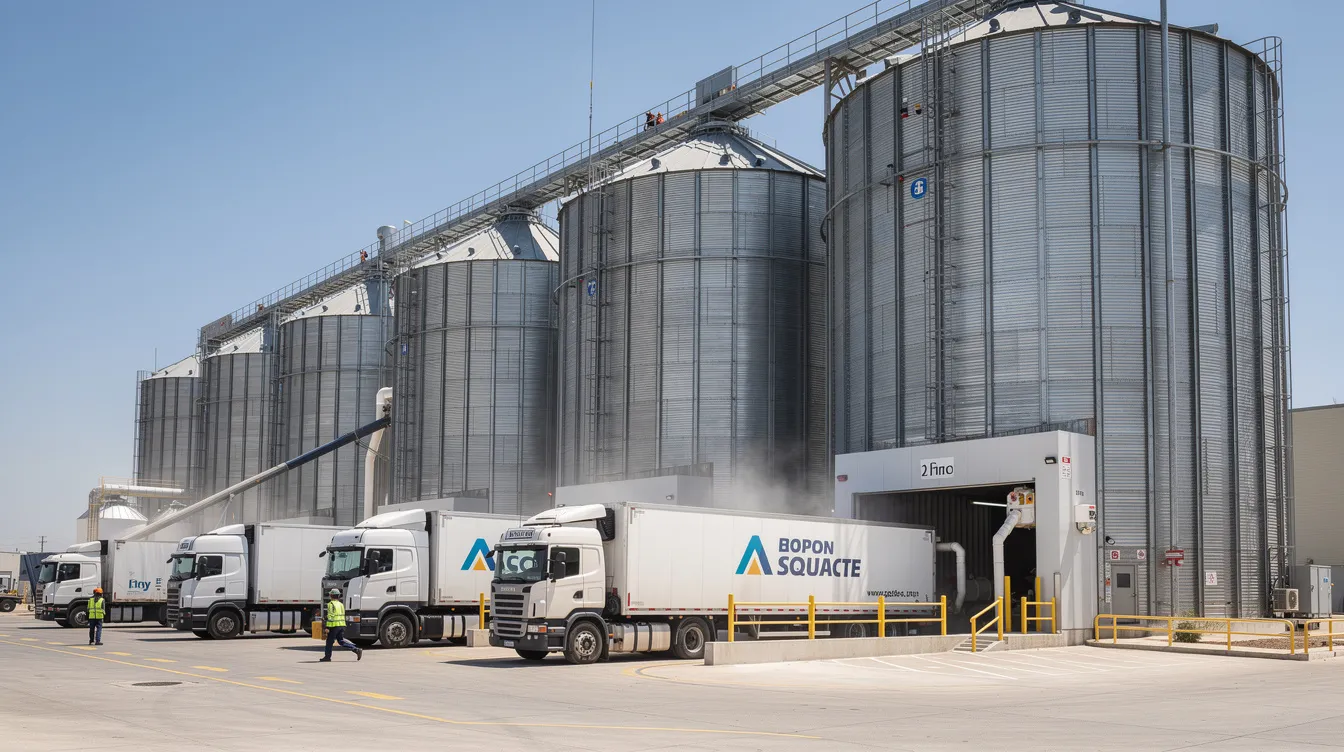
Raw chana receiving and storage: Incoming raw chana is sampled for moisture content and foreign matter. Lots are stored in silos or bins with separation for traceability. Moisture in raw chana typically ranges from 12 to 14 percent.
Cleaning and grading: Pre-cleaner, de-stoner, aspirator and magnetic separator remove dust, stones, metal fragments and undersized grains. This step is essential for food safety and ensures uniform grain size entering the roaster, which directly affects roasting consistency.
Conditioning (optional): Some roasting technologies require controlled moisture equilibration before roasting. This step depends on the specific process design and product quality parameters.
Roasting: The continuous chana roasting machine (gas, LPG, diesel, electric or thermo-fluid heated) operates with controlled drum speed, temperature and residence time. Roasting machines can achieve temperatures up to 300 degrees Celsius. Maintaining consistent roasting temperature and time improves product quality across batches. Digital temperature regulation in roasting prevents bitter burning or under-cooked spots.
Cooling and moisture stabilisation: Integrated cooling systems preserve texture and quality of roasted products. Forced-air or fluidised-bed coolers prevent condensation and over-roasting. Integrated cooling systems are optional for rapid cooling of roasted products in smaller configurations but are standard in continuous lines. Higher-specification plants include inline metal detection after cooling.
Dehusking and splitting: Roasted chana peeling machines operate at 250 to 300 kg/hr capacity. Dry dehuskers with aspiration separate husk without affecting roast flavour. A grader then separates whole kernels, splits and brokens. The peeling section must be sized to match the kg/hr output of the roaster.
Sattu manufacturing sub-process: Roasted dehusked dal is fed to an industrial pulveriser. Temperature control during grinding prevents excessive heat build-up that degrades product quality. Multi-deck sieving achieves the desired mesh (typically 60 to 80 mesh for consumer-grade sattu).
Packaging: Modern roasted chana processing plants may include automatic weight and sealing machines. Pouch packing, jar filling and bulk bags are used for roasted chana; laminated pouches, paper bags with inner liner and bulk sacks serve sattu customers. Coding, checkweighers and carton packing complete the line.
Process Flow:
Raw Chana Receiving → Cleaning & Grading → Roasting → Cooling → Dehusking/Splitting → Grinding & Sieving (for Sattu) → Blending → Metal Detection → Packing → Storage & Dispatch
Complete Machinery List & Layout for an Automatic Roasted Chana & Sattu Plant
The table below covers major equipment for an integrated line. Food-grade stainless steel construction of processing plants helps prevent contamination and comply with safety standards. Non-contact structural frames may use mild steel with food-safe coatings.
| Machinery / Equipment | Industrial Function | Automation Options | Important Selection Criteria |
|---|---|---|---|
| Bucket elevator / intake conveyor | Raw material transfer to cleaning | Semi/fully automatic | Capacity in kg/hr matching roaster feed rate |
| Vibrating pre-cleaner | Removal of dust, chaff, oversized material | Automatic | Screening efficiency, mesh sizes |
| De-stoner | Stone and heavy impurity removal | Automatic | Throughput, separation accuracy |
| Magnetic separator | Metal fragment removal | Inline, automatic | Field strength, cleaning ease |
| Continuous chana roaster | Controlled roasting of cleaned gram | PLC-controlled temperature, speed, feed rate | Product quality, energy efficiency, fuel type, capacity in kg/hr |
| Cooling conveyor / fluidised bed cooler | Post-roast cooling | Automated airflow control | Cooling rate, moisture stabilisation |
| Dehusker / peeler | Husk removal from roasted chana | Semi/fully automatic | Throughput, breakage rate |
| Grading screen | Separation of whole, split, broken | Automatic | Mesh accuracy, changeover |
| Industrial sattu pulveriser | Fine grinding of roasted dal | Automatic feed control | Fineness (mesh), temperature rise, HP rating |
| Multi-deck sieve | Powder classification | Automatic | SS304/316 screens, mesh range |
| Ribbon blender | Mixing flavoured or fortified sattu | Batch/automatic | Homogeneity, cleaning ease |
| Metal detector | Foreign body detection | Inline automatic | Sensitivity, reject mechanism |
| FFS packing machine | Consumer pouches | Fully automatic | Speed, pouch size range, nitrogen flushing option |
| Weigh-filler for bulk bags | 25-50 kg B2B packs | Semi/fully automatic | Accuracy, bag type compatibility |
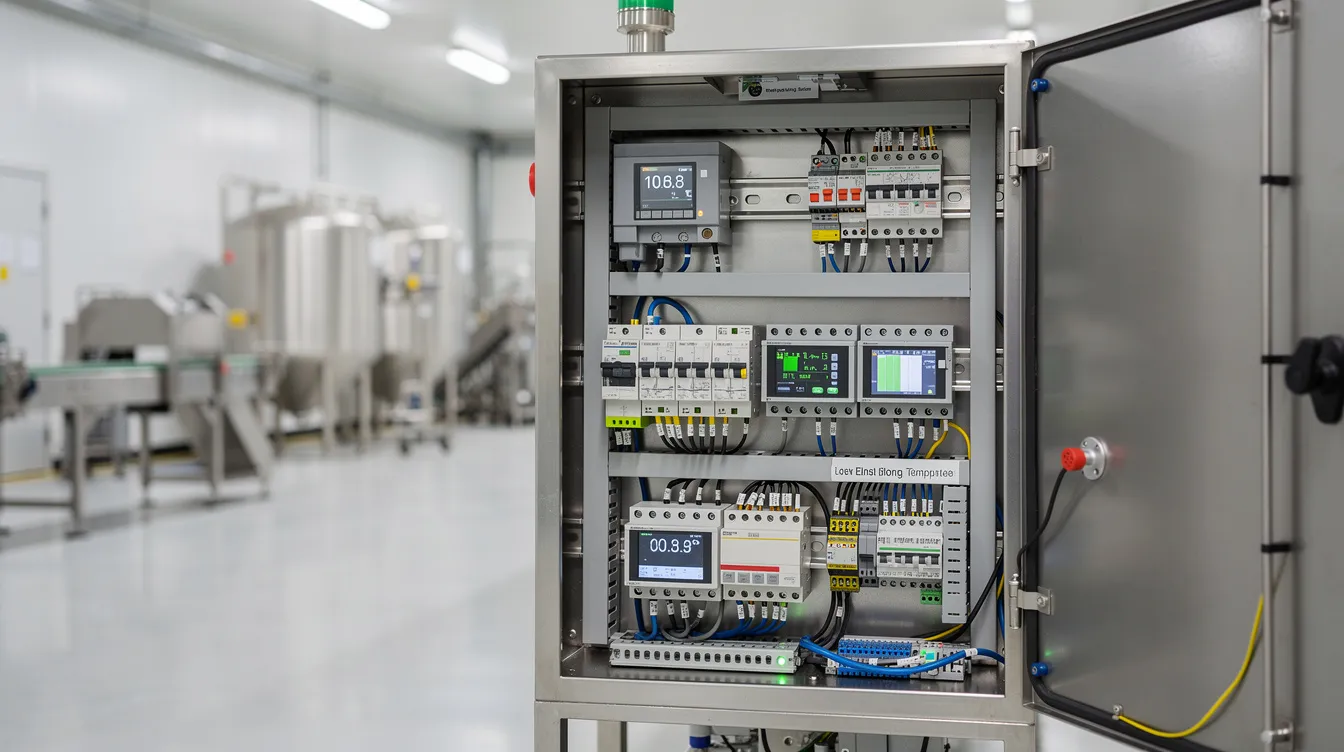
Supporting systems include storage silos and day bins, dust extraction with bag filters or cyclone separators, air compressors for pneumatic valves and packing machines, PLC/HMI-based control panels with temperature and speed control, and SCADA as an option for larger plants. Electrical panels, motors and VFDs should be sized for the connected load of each section.
Essential vs optional equipment: A basic automatic line needs the cleaning train, roaster, cooler, dehusker, packing machine and conveyors. Optional upgrades include inline metal detectors, automatic bag palletisers, nitrogen flushing systems, online checkweighers and colour sorters. The choice depends on customer requirements and budget.
Chana roaster machines feature adjustable settings for various products, and chana dal roasters can process various grains and nuts, seeds like sesame, peanuts and almonds, making the roasting section suitable for diversified production if designed accordingly. Multiple Indian OEMs supply roasting machines rated from a few hundred kg/hr to multi-TPD capacities, subject to technical evaluation.
Batch vs Continuous Roasting Technology Comparison
Investors frequently choose between batch roasters and continuous chana roasting machines. The choice depends on capacity needs, product range, heating method and budget rather than one option being universally superior.
Batch roasting uses drum or pan-type roasters where a fixed quantity of chana is roasted per cycle with manual or semi-automatic loading and unloading. Chana dal roasters achieve uniform roasting with rotary drum motion. These machines use rotary drum motion for uniform roasting across each batch. Batch systems suit smaller kg/hr capacities and offer wider flexibility for recipe changes.
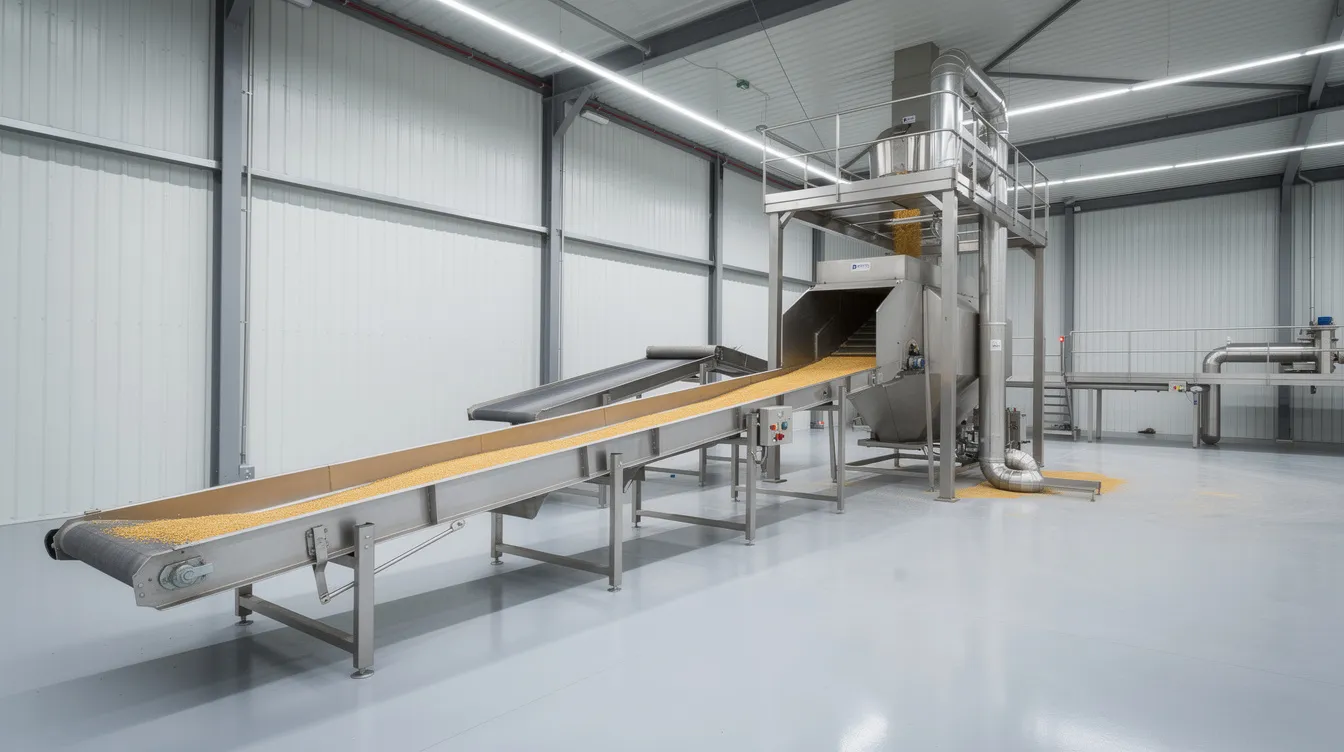
Continuous roasting uses conveyor or rotary-drum roasters with continuous feed and controlled residence time. These are appropriate for a fully automatic roasted chana plant above a certain throughput, especially when supplying FMCG brands or institutional buyers. Uniform roasting prevents hotspots and undercooked sections across production runs.
| Parameter | Batch Roasting | Continuous Roasting |
|---|---|---|
| Capacity suitability | Up to 1-2 TPD; flexible for small lots | 5 TPD and above; suited to steady volumes |
| Roasting uniformity | Good within batch; variation between batches | Consistent across production run |
| Labour requirement | Higher; manual loading/unloading | Lower per kg; automatic feed and discharge |
| Energy consumption per kg | Higher due to start-stop cycles | Lower at steady state |
| Changeover flexibility | Quick product changes | Slower changeover; cleaning needed |
| Automation potential | Limited; semi-automatic options | Full PLC integration available |
| Maintenance complexity | Simpler; fewer moving parts | More complex; requires trained personnel |
| Capital cost | Lower | Higher |
Direct-fired vs indirect-heated systems represent another choice. Indirect heating offers gentler, more uniform roasting with less risk of scorching, but involves higher initial cost. The actual selection should be finalised with process technologists and the machinery OEM based on the specific product range.
For 10 to 20 TPD integrated roasted chana and sattu plants, continuous roasters with PLC controls are the configuration most often evaluated commercially. Smaller pilot or regional plants may still prefer improved semi-automatic batch roasters for cost reasons and product flexibility.
Plant Capacity Planning: 5, 10 and 20 TPD Illustrative Configurations
Capacity planning is a financial decision as much as a technical one. Installed TPD must match realistic sales forecasts, raw-material supply and working-capital finance. Effective throughput is determined by the bottleneck machine, not the nameplate rating of the roaster alone.
TPD in this section refers to raw-material input basis. For example, 10 TPD means 10 tonnes of raw chana processed per day, with approximate finished-product output depending on dehusking loss, moisture reduction and breakage. Chana dal roaster machines can process up to 300 kg/hr, while automatic chana processing plants can handle 500 kg/hour. Chana processing plants can achieve capacities of 250 to 500 kg/hour across mid-range configurations.
Illustrative Plant Capacity Comparison Matrix
| Parameter | 5 TPD | 10 TPD | 20 TPD |
|---|---|---|---|
| Operating days/year | 300 | 300 | 300-330 |
| Production hours/day | 8-10 (1-2 shifts) | 16 (2 shifts) | 16-24 (2-3 shifts) |
| Roaster capacity (indicative) | 500-600 kg/hr | 800-1,000 kg/hr | 1,500-2,000 kg/hr or parallel lines |
| Cooler capacity | Matched to roaster | Matched to roaster | Matched; possibly parallel |
| Dehusker capacity | 300-500 kg/hr | 500-800 kg/hr | 1,000+ kg/hr |
| Sattu pulveriser (if applicable) | 150-200 kg/hr | 400-600 kg/hr | 800-1,000 kg/hr |
| Packing line speed | 1 FFS + bulk filler | 2 FFS + bulk line | Multiple packing stations |
| Operators per shift (indicative) | 8-12 | 15-25 | 30-50 |
| Automation level | Semi to fully automatic | Fully automatic | Fully automatic with SCADA |
| Year-1 utilisation (typical DPR assumption) | 50-60% | 50% | 45-55% |
A 5 TPD configuration can be achieved with one smaller continuous roaster running in two shifts. A 20 TPD plant may need a higher-capacity continuous roaster or two parallel lines to avoid over-dependence on a single piece of equipment and to allow maintenance windows.
All numerical illustrations above are indicative and serve as planning references for DPR preparation. They are not supplier-certified ratings. Similar capacity-planning frameworks are used for other food processing projects such as specialty flour plants.
Integrated Roasted Chana and Sattu Plant Technology & Product-Mix Strategy
Combining roasted chana, roasted dal and sattu in a single plant can improve asset utilisation and margins, but introduces complexity in scheduling, hygiene management and inventory control.
Common front-end systems (raw-material storage, cleaning, grading and the roasting machine) can feed different downstream lines: one for whole roasted chana products and another for sattu and blended powders. This shared infrastructure is the primary economic advantage of integration.
Separate grinding and blending rooms for sattu are recommended to control dust, cross-contamination and flavour carryover when producing masala or flavoured variants alongside plain products. Cleaning protocols (clean-in-place or clean-out-of-place) between production runs are operationally necessary when switching between salted snack roasted chana and neutral roasted material intended for grinding into sattu flour.
Inventory management requires separate bins for different roasting grades or lots, first-in-first-out (FIFO) principles, moisture and microbiological monitoring, and product traceability for each batch. These are not optional refinements; they are baseline requirements for any facility supplying organised retail or institutional buyers.
A practical approach is to initially dedicate a higher proportion of capacity to one anchor product (such as plain sattu in bulk for B2B customers) and progressively introduce premium SKUs (flavoured sattu, retail snack packs) once market feedback and brand-building budgets allow. This strategy reduces early-stage marketing risk while maintaining utilisation.
Automation, PLC Controls and Smart Manufacturing in Roasted Chana Plants
The term “fully automatic roasted chana plant” implies not only mechanical equipment but also PLC/HMI-based control of critical parameters, integrated conveying, and automated weighing and packing systems. Higher production efficiency in fully automatic plants integrates several stages like feeding, roasting, and packaging into a single controlled workflow.
Three levels of automation are commercially relevant:
Basic mechanisation: Individual stand-alone roasting machine, manually controlled, with manual bag dumping and packing but powered conveyors for material movement. Suitable for lower investment profiles and small-scale operations.
Semi-automatic configuration: PLC-controlled continuous roaster and cooler with automatic feeding from cleaned grain bins, but semi-automatic packing where an operator assists weigh-filling. This balance often optimises capex vs labour cost at mid-scale plants (5 to 10 TPD).
Fully automatic line: Central PLC with HMI, automatic feed-rate control, temperature and residence-time logging, VFD-driven conveyors, automatic batching and blending, in-line metal detection, automatic FFS packing and palletisation, with centralised SCADA monitoring. Precision in automated systems reduces product wastage and improves roasting consistency. Automated systems minimize manual touchpoints in food processing, enhancing hygiene standards. Automation in food processing allows for better control over production costs and resource utilization.
Automation Investment Decision Table
| Parameter | Basic Mechanisation | Semi-Automatic | Fully Automatic |
|---|---|---|---|
| Indicative capex | Lowest | Moderate | Highest |
| Manpower per shift | 15-25 | 10-18 | 6-12 |
| Process control precision | Operator-dependent | PLC on key parameters | Integrated PLC/SCADA |
| Energy monitoring | Manual meter reading | Basic logging | Real-time dashboards |
| Wastage and rejections | Higher | Moderate | Lower (optimized process) |
| Data availability | Minimal | Partial | Full batch traceability |
| Suitability for contract manufacturing | Limited | Adequate | Ideal for third-party/brand contracts |
More automation raises depreciation and interest charges but may reduce unit processing cost through lower labour, lower rejections and better fuel control. A DPR should evaluate the impact on EBITDA margin, DSCR and payback period under different utilisation scenarios before the automation level is finalised.
Land, Layout, Utilities and Factory Infrastructure
Layout requirements depend on capacity, vertical storage choices, future expansion space and local regulatory setbacks. This section provides planning-level guidance rather than rigid norms.
Major functional zones in the layout include: raw-material unloading yard, raw chana storage (silos or warehouse), cleaning and grading hall, roasting and cooling area, dehusking and grading section, grinding and blending section for sattu, packaging hall, finished-goods warehouse, utilities block, laboratory, and admin offices.
A linear or U-shaped product flow from raw-material intake to finished dispatch minimises cross-movement and ensures hygienic zoning between raw and finished areas. The roasting section requires adequate exhaust and ventilation due to heat and moisture discharge.
Utility heads include: connected electrical load for roaster drives, blowers, pulverisers and packing machines; heating fuel (LPG, PNG, diesel or agro-waste) for the roaster; compressed air for actuators and packing equipment; technical water for cleaning; and dust-extraction systems with cyclone separators or bag filters. A compact layout with separate electrical panels for process and utilities reduces wiring cost and simplifies maintenance.
Provision for truck movement, a weighing bridge (for larger plants), finished-goods loading dock, and separate entry and exit paths for raw material and dispatch vehicles reduces congestion and contamination risk. Fire-fighting lines and extinguishers should comply with local fire norms.
Capital Investment Structure and Roasted Chana Plant Cost Framework
Actual project cost varies by capacity, location, automation level and building standard. A well-structured capital-cost framework is essential before approaching banks or investors.
Roasted Chana & Sattu Project Cost Framework
| Cost Category | Includes |
|---|---|
| Land & Building | Land purchase or lease, site development, boundary wall, factory shed, RCC structures, office, utilities block |
| Plant & Machinery | Roasting machine, sattu plant machinery, conveyors, dehusker, pulveriser, blender, packing line |
| Electrical & Utilities | Transformer, panels, motors, VFDs, boiler/TFH, compressors, dust collectors |
| Environmental & Safety | Dust extraction, fire safety, pollution control |
| Pre-operative & Contingencies | Trial runs, interest during construction, professional fees, contingency (5-10%) |
| Margin for Working Capital | Raw material stock, finished goods, receivables margin |
Investment in chana processing machinery ranges from approximately Rs 58,000 to Rs 8,10,000 per individual machine depending on capacity and type. For a 16 TPD double roasted chana processing unit evaluated in Rajasthan, total project cost was approximately Rs 1.34 crore, with civil works at 31 percent and plant and machinery at 48 percent of the total.
For larger, highly automated 10 to 20 TPD integrated plants with high-quality civil structures and export-grade equipment, total project outlay can cross Rs 5 crore. Smaller or less-automated configurations can be implemented with lower capital. This distinction must be clear in any DPR.
Investors should benchmark supplier quotations and civil cost estimates against independent DPR and cost-engineering analysis rather than relying only on indicative online numbers. Project Report Bank supports promoters in validating machinery quotations, installation costs and contingencies from a financial-modelling standpoint, while detailed engineering remains with technical consultants and OEMs.
Operating Costs, Production Economics and Profitability Analysis
Profitability in roasted chana and sattu manufacturing is driven by raw chana procurement economics, process yields, energy efficiency of the roasting machine and pulveriser, labour cost and achievable selling prices across different product types.
Major variable costs: Raw chana price per kg, roasting fuel consumption, electricity for drives and utilities, packaging material (pouches, cartons, secondary packing), direct and contract labour, repairs and maintenance, quality-testing consumables.
Major fixed costs: Salaries of key personnel and team members, admin overheads, building depreciation, machinery depreciation, interest on term loan, insurance.
Illustrative Production Cost Calculation (10 TPD Input, 70% Utilisation)
This example assumes 10 TPD raw chana input, 300 operating days, 70 percent utilisation (i.e. 7 tonnes processed per day), producing a mix of roasted chana and sattu. All numbers are assumptions for illustration only.
| Cost Head | Assumed Rate | Annual Cost (Approx.) |
|---|---|---|
| Raw chana (2,100 T at Rs 55/kg) | Rs 55/kg | Rs 11.55 crore |
| Fuel for roasting | Rs 2.5/kg processed | Rs 52.5 lakh |
| Electricity | Rs 1.5/kg processed | Rs 31.5 lakh |
| Packaging | Rs 3/kg output | Rs 60 lakh (approx.) |
| Direct labour | Lump sum | Rs 30 lakh |
| Overheads, maintenance, insurance | Lump sum | Rs 25 lakh |
| Depreciation, interest | Based on project cost | Project-specific |
From these illustrative inputs, processing cost per kg (excluding raw material) works out to approximately Rs 9 to 11 per kg. Total cost per kg depends on the raw chana procurement price and yield after moisture loss and dehusking.
Contribution margin per kg, break-even capacity utilisation, and EBITDA margin are functions of selling price, product mix and utilisation. A sensitivity analysis showing the effect of plus or minus 10 percent change in raw chana price or selling price on annual profit and DSCR should be part of every DPR. Similar financial analysis frameworks are applied in puffed rice plant financial projections and other food processing projects.
Financial Feasibility, DPR, CMA Data and Bank Finance
As a practising Chartered Accountant, I have consistently observed that investors who base their decision on a bankable Detailed Project Report and a realistic financial model make better capital allocation choices than those relying on supplier brochures or rule-of-thumb estimates.
A DPR for an automatic roasted chana and sattu plant should include: project background, technical concept, capacity rationale, detailed cost estimates, implementation schedule, revenue model linked to capacity and utilisation, risk analysis and financial projections (profit and loss, balance sheet, cash flow over five to seven years).
Means-of-finance planning covers promoter contribution, term loan, working-capital limits (cash credit or overdraft) and any other instruments. The 16 TPD Rajasthan project used a 50:50 promoter equity and bank term loan structure with separate working capital margin. Repayment schedules must match projected cash flows and account for seasonality in raw-material buying.
CMA Data preparation for bank loans includes projected sales, production volumes, working-capital cycle (raw material stock for 15 days, finished goods for 1 month, debtors for 15 days as used in the Rajasthan project), margin money, interest coverage, DSCR and other ratios in line with Indian banking norms.
Analytical tools such as break-even analysis, project IRR, NPV and sensitivity analysis on key variables help management understand downside risks before capital is locked in. The framework is similar to that used in atta chakki plant ROI and IRR analysis.
Project Report Bank does not guarantee loan sanctions or profitability. We provide professional, customised DPRs, financial models and CMA Data aligned with each promoter’s assumptions and the banker’s requirements.
Regulatory Compliance, Quality Standards and Food-Safety Systems
Roasted chana and sattu fall under food processing in India and require FSSAI licence or registration depending on scale. Labelling norms (ingredient list, nutrition panel, allergen declaration) and packaging rules apply under FSSAI and Legal Metrology regulations.
Factory-level compliances include Shops and Establishment Act or Factories Act registrations, fire NOC, building approvals, electricity connection permissions and state pollution-control consents (primarily for emissions, dust and boiler operations where applicable).
For plants supplying organised retail, institutional buyers or export markets, adoption of GMP, HACCP or ISO 22000 is commercially expected though not always strictly mandatory. These certifications support advertising and market access for premium channels.
A basic in-house laboratory for moisture, ash, bulk density and sieve analysis is strongly recommended. Microbiological testing can be partly outsourced to accredited labs. Periodic shelf-life studies for roasted products and sattu mixes protect brand reputation and customer relationships.
Investors should verify current regulatory details directly from official FSSAI and state-government sources before finalising plant design or packaging artwork.
Machinery-Supplier Selection and Technical Due Diligence Checklist
This checklist helps investors evaluate roasting machine and plant suppliers on technical suitability and lifecycle cost rather than upfront price alone.
Machinery Selection Checklist:
- Review supplier’s installed base for roasted chana and sattu plants; visit existing users where possible
- Conduct actual product trials with the proposed raw chana quality to check colour, texture, breakage (target below 2 to 3 percent for whole roasted chana)
- Obtain written specifications: rated capacity in kg/hr, heating method (LPG, gas, diesel, electric), material of construction, insulation details, control system type
- Request energy-consumption data under defined operating conditions
- Confirm ability to handle the desired product range (whole chana, dal, various grains, peanuts, seeds)
- Verify spares availability and service network in India
- Confirm warranty period, commissioning support, operator training and post-commissioning performance testing
- Define acceptance-test criteria contractually: agreed throughput, permissible roast-colour variation, maximum sattu temperature exiting pulveriser, energy-consumption tolerance
- Evaluate equipment for low maintenance design, robust construction, durability and cleaning accessibility
Machines with features like economical energy use, compact footprint and equipment designed for industrial applications across a wide range of products provide better long-term value than the lowest-priced model.
Project Report Bank does not act as a machinery supplier or manufacturer but can assist promoters in interpreting quotations, comparing options financially and building these assumptions into DPRs and loan proposals.
Risk Factors, Sensitivity and Investment Safeguards
Roasted chana and sattu projects face market, raw-material, operational and financial risks that need structured assessment.
Key risks: Chana price volatility, uneven monsoon affecting pulse supply in India, slower-than-expected sales ramp-up, product-acceptance issues in new geographies, unexpected equipment downtime, fuel-price increases, quality or shelf-life complaints leading to product returns, and excessive working capital consumption.
Three-Scenario Sensitivity (Illustrative 10 TPD Plant)
| Scenario | Capacity Utilisation | Gross Margin | Annual Cash Profit (Indicative) | DSCR (Indicative) |
|---|---|---|---|---|
| Downside | 50% | 12% | Marginal or break-even | Below 1.2 |
| Base case | 70% | 16% | Positive | 1.4 to 1.6 |
| Upside | 85% | 20% | Strong | Above 1.8 |
Mitigation measures: Diversified procurement sources, flexible product mix (ability to produce both roasted chana snacks and sattu), adequate spares inventory and maintenance agreements with the machinery OEM, conservative debt-equity mix, and contingency allowance in project cost. Insurance covering stock, machinery breakdown and loss of profit provides additional safeguards for lenders and investors.
CA Manish Gugliya’s Investment Decision Framework for an Automatic Roasted Chana & Sattu Plant
This is the stepwise framework used at Project Report Bank to guide promoters from initial idea to final investment and financing decision.
Steps 1 to 3: Market and customer validation (B2B vs B2C vs private label), preliminary product-mix selection (share of whole roasted chana vs sattu vs blends), and definition of target plant capacity (5, 10 or 20 TPD) consistent with validated demand. This stage answers the question: who will buy the output, at what price, in what volumes?
Steps 4 to 6: Technology and machinery-capacity matching (batch vs continuous roaster, kg/hr ratings, stainless steel specification), raw-material sourcing and logistics strategy, and project-cost benchmarking using actual quotations and standard cost indices. This stage converts the concept into an engineering and cost framework.
Steps 7 to 9: Preparation of an integrated financial model with realistic capacity-utilisation build-up (for example 50 percent in year one, increasing by 5 percentage points annually), computation of break-even point, DSCR and IRR, plus structured downside testing for lower margins or slower ramp-up. The model must be an honest representation of the investment, not an exercise in generating attractive ratios.
Final step: Decision on whether to proceed at full scale, scale down, phase the investment (starting with a semi-automatic line and expanding later) or defer the project until further market clarity or funding availability. This approach protects capital, preserves banking relationships and avoids the cost of an oversized facility operating below break-even utilisation.
Frequently Asked Questions (Project-Planning Focus)
These FAQs address practical questions that industrial investors commonly raise when planning an automatic roasted chana and sattu plant.
What minimum economic capacity should investors consider for a fully automatic roasted chana plant?
While units with small kg/hr ratings exist, fully automatic lines with continuous roasting and automatic packing are commercially meaningful from around 5 TPD raw input upwards, especially where institutional or brand contracts are targeted. The final capacity decision must reflect market access, available capital and risk appetite. The choice between a 5 TPD and a 20 TPD plant is primarily a market and financing decision, not a technology constraint.
Can the same roasting machine be used for other food products besides chana?
Many industrial roasters can technically handle peanuts, other pulses, rice, almonds, sesame seeds, and some other grains or snacks. However, design parameters, residence time and cleaning protocols must be evaluated with the OEM to avoid flavour carryover, allergen issues and uneven roasting when switching products. A machine ideal for one kind of product may need modification for another. The types of products a roaster can handle should be confirmed through actual trials.
How long does it typically take to commission an integrated roasted chana and sattu plant?
From civil readiness to performance trials, commissioning can take several months depending on scale, supplier coordination, utility readiness, machinery delivery timelines and statutory clearances. Detailed project schedules should be developed jointly with the machinery company and civil contractor. Delays in any one area (building completion, power connection, equipment shipping) can extend the overall timeline.
Is it necessary to invest in a laboratory for a roasted chana and sattu plant?
A basic QA lab is strongly recommended even for domestic sales. Monitoring moisture, organoleptic quality, sieve analysis and powder fineness requires in-house capability. More advanced microbiological and shelf-life testing can be partly outsourced to accredited labs. For export-oriented or brand-oriented operations, in-house lab capabilities should continue to expand as the customer base grows and the product range widens.
How can Project Report Bank support investors after the DPR is completed?
Beyond DPR and CMA Data, Project Report Bank can assist with financial-closure documentation, periodic financial monitoring, project-variance analysis and updated projections during expansion or modernisation. Technical commissioning, process optimisation and detailed engineering remain with machinery suppliers and specialised process consultants. We provide the financial analysis layer that helps promoters and their bankers track project performance against the original projections.
Professional Advisory
Promoters planning integrated or fully automatic roasted chana and sattu facilities should evaluate machinery, capacity and financing together rather than in isolation. A well-prepared DPR converts a processing idea into a structured financial proposal that can be discussed with bankers and investors.
Manish Gugliya & Company, Chartered Accountants provides bank finance DPR and loan proposal assistance, industrial project feasibility studies, CMA Data and financial projections, project cost and means of finance analysis, working capital assessment, financial modelling and investment viability analysis for food processing projects across India.
Machinery design and engineering specifications should be confirmed by qualified technical consultants and suppliers. For customised financial analysis and DPR preparation, serious investors may reach out through www.projectreportbank.com, with WhatsApp as the preferred enquiry channel.
CA Manish Gugliya FCA, DISA (ICAI) More than 20 years of professional experience in project reports, financial projections, CMA Data, project finance and business advisory.