Key Takeaways
- FCI Grain Silo PPP Projects under DBFOO and DBFOT offer long-tenure, annuity-style income over concession periods of up to 387 months, but require careful analysis of concession terms, land arrangements, and financing structures before any investment commitment.
- Under the DBFOO model (Design-Build-Finance-Own-Operate), private developers typically arrange their own land, resulting in higher upfront capital but stronger asset ownership; under DBFOT (Design-Build-Finance-Operate-Transfer), FCI or a government agency usually provides land, which reduces initial outlay but limits mortgage rights and requires asset transfer at concession end.
- A bankable FCI Grain Silo Project Report (DPR) with detailed financial modelling, DSCR analysis, project IRR, equity IRR, and sensitivity testing is essential before bidding on tenders or approaching banks for term loan financing.
- DBFOT and DBFOO are common concession frameworks for silo projects, and investors must evaluate each tender’s specific terms, including Viability Gap Funding provisions, performance penalties, and termination compensation, rather than relying on generic assumptions.
- Project Report Bank, led by CA Manish Gugliya (FCA, DISA, ICAI), provides customised DPRs, CMA Data preparation, project finance advisory, and investment evaluation for FCI grain silo PPP and other grain storage projects across India.
Introduction – Investment Opportunities in FCI Grain Silo PPP Projects
India is undertaking a fundamental shift in how it stores foodgrains. For decades, the country relied on conventional covered-area godowns managed by the Food Corporation of India and state agencies. While these served their purpose during earlier phases of food security planning, they come with well-documented limitations: high storage losses, manual handling inefficiencies, vulnerability to weather and pests, and limited integration with modern logistics networks.
The policy response has been decisive. The Government of India, through the Department of Food & Public Distribution and FCI, has committed to developing modern steel silos with automated systems for temperature and humidity control, bulk handling infrastructure, and rail-road connectivity under Public-Private Partnership frameworks. Modern steel silos reduce post-harvest grain losses compared to traditional storage methods, and bulk storage in modern silos requires significantly less land than conventional methods. FCI grain silo PPP projects modernize India’s food grain storage infrastructure at a scale that would be difficult for the public sector to achieve alone.
The two principal investment structures are the DBFOO model (Design-Build-Finance-Own-Operate) and the DBFOT model (Design-Build-Finance-Operate-Transfer). Each carries different implications for land procurement, capital outlay, bankability, asset ownership, and long-term returns. Understanding these differences is not optional for serious investors – it is the starting point for any credible investment decision.
Revenue under these projects typically comes from contracted storage and handling charges under long-term FCI agreements. However, actual terms – including tariff structures, indexation, performance parameters, and payment mechanisms – vary by tender and phase. Investors should always verify the latest terms on the FCI and DFPD websites before modelling returns.
If you are an infrastructure developer, EPC contractor, logistics company, or private investor evaluating FCI grain silo PPP opportunities, we encourage you to reach out to Project Report Bank on WhatsApp for a preliminary discussion on customised DPR preparation and investment appraisal. Our approach focuses on realistic assumptions and structured financial analysis rather than generic documentation.
For readers seeking an introduction to detailed steel grain silo plant project planning, we recommend reviewing that resource alongside this article for a more complete technical perspective.
What Are FCI Grain Silo PPP Projects?
The Food Corporation of India was established under the Food Corporations Act, 1964 with a mandate to procure, store, and distribute foodgrains, maintain buffer stocks, and ensure food security across the country. Over the past decade, FCI has recognised that fulfilling this mandate at the scale India requires demands private sector capital, technology, and operational expertise.
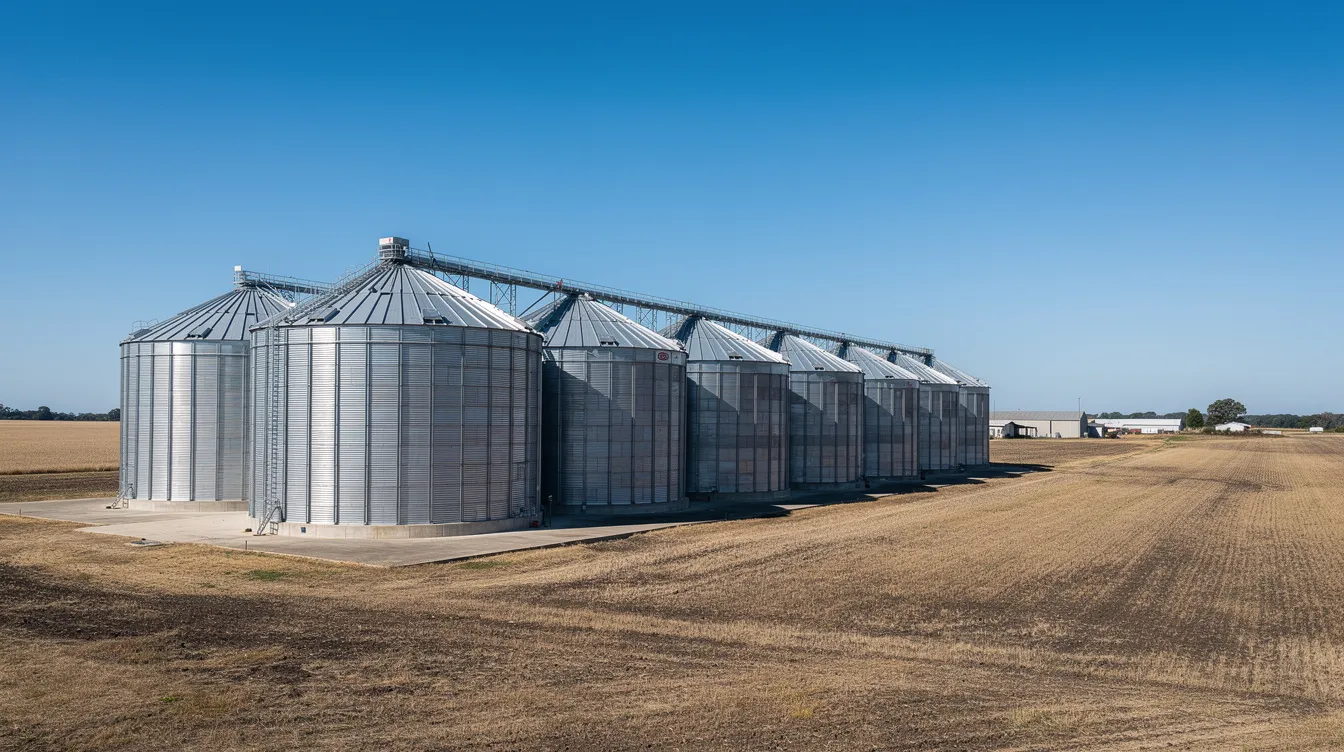
FCI Grain Silo PPP Projects are long-term concession-based arrangements where private players design, build, finance, and operate modern steel grain silos for FCI under a Public Private Partnership framework. FCI remains the nodal public authority – it defines specifications, provides the offtake commitment, and supervises performance. The private concessionaire undertakes the investment, construction, and day-to-day operations through a Special Purpose Vehicle (SPV) established specifically for the project. Public-Private Partnerships leverage private sector financing for infrastructure projects that would otherwise require massive public budgetary outlays.
The government collaborates with private developers to create mechanized steel silos under what is known as the FCI Hub and Spoke Grain Silo Model. Under this concept, rail-linked hub silos located near major railheads are connected to road-fed spoke silos positioned closer to procurement and consumption centres. Together, they form an integrated grain logistics network enabling bulk movement by rake and regional distribution by trucks. Private sector expertise and technology integration are emphasized in these projects to achieve operational efficiency levels that traditional godowns cannot match.
FCI invited applications for silo projects in India, with the last date for application submission being July 4, 2022, marking a significant acceleration in the programme. Eleven food grain silo tenders are published in 2026, indicating continued momentum in expanding storage capacity. The FCI Grain Storage PPP Model has evolved since around 2016–2017 with multiple phases. Phase-I covered 34.875 LMT across 80 locations – 14 under DBFOT and 66 under DBFOO. Phase-II tenders for 25.125 LMT across 54 locations under DBFOO were floated in September 2024. As of October 2026, official tender and capacity data must be checked on FCI and DFPD portals for the latest status.
To illustrate, consider a generic 50,000 MT rail-linked hub silo project. An SPV would sign a concession agreement with FCI, raise project finance from banks, construct the silo complex including railway siding infrastructure, and operate it for the full concession period. The SPV earns contracted storage and handling revenues while meeting strict performance and quality standards. Connected spoke silos in the surrounding procurement zones feed grain into the hub for onward bulk transportation – a model designed for the scale and complexity of India’s food distribution system.
Understanding the DBFOO Model for FCI Grain Silos
The FCI Grain Silo DBFOO Model – Design-Build-Finance-Own-Operate – is the structure under which the private concessionaire assumes comprehensive responsibility for the project, including identifying and acquiring suitable land. This is the predominant model for spoke silos and several hub locations where FCI does not have available land. The terminology and obligations are defined in the applicable FCI tender documents and align broadly with the PPP frameworks maintained by PPP India, Department of Economic Affairs.
Under DBFOO, the concessionaire’s responsibilities include identifying and procuring land that meets FCI’s location and connectivity criteria, arranging all project finance (both equity and debt), designing the silo complex to meet FCI’s technical specifications, constructing the facility within the stipulated timeline, operating and maintaining the silos for the entire concession period, and meeting defined performance standards for grain storage, handling, and quality preservation throughout the contract.
Private land procurement directly affects the FCI Silo Project Investment Cost. The promoter must account for land price (which varies significantly by state and location), stamp duty, registration charges, site development and levelling, approach road construction, and boundary infrastructure. These elements increase equity requirements compared to DBFOT. From a lender’s perspective, the availability of mortgageable land alongside silo assets strengthens the security package, but land title risk and acquisition delays become the promoter’s problem entirely.
Ownership under DBFOO is relatively straightforward: the SPV generally owns the silo assets, related infrastructure, and the underlying land throughout the concession period, subject to the specific concession agreement terms. This ownership also means the concessionaire retains residual value after concession expiry – a factor that can improve equity IRR calculations. However, step-in rights for lenders and FCI’s supervisory rights must be read directly from the tender documents.
The revenue structure for DBFOO grain silo PPP investment models in India typically includes fixed storage charges per MT per year and handling charges for actual throughput, with performance-linked deductions if operational benchmarks are not met. The concession period for silo projects is 387 months (approximately 32.25 years), providing long-term revenue visibility. However, actual tariffs, indexation formulas, and payment mechanisms are tender-specific and must never be assumed from one tender to another.
Consider a hypothetical case: a private company sets up a 50,000 MT road-fed spoke silo under DBFOO near a major procurement centre in Punjab. The company purchases 8–10 acres of agricultural land, obtains change-of-land-use permissions, constructs modern steel silos with mechanised bulk handling, and commissions the facility within 810 days. Revenue begins from the commercial operation date under a fixed storage charge contract with FCI. The financing mix might include 25–30% promoter equity and 70–75% term loan, with the loan structured against concession receivables and asset mortgage.
The key risk factors for DBFOO investors include land acquisition and title risk (delays, litigation, encumbrances), regulatory clearances (environmental, land-use conversion), higher upfront capital outlay compared to DBFOT, and the need to demonstrate clear title to satisfy both FCI and project lenders. Challenges for silo projects include land acquisition delays and regulatory complexities, which can push timelines and increase pre-operative costs.
Understanding the DBFOT Model for FCI Grain Silos
The FCI Grain Silo DBFOT Model – Design-Build-Finance-Operate-Transfer – is the structure under which FCI or another government agency typically provides land on licence or lease for the concession period. This model has been used for several rail-linked hub silo projects and locations where FCI already holds suitable land parcels.
Under DBFOT, the private concessionaire still finances, designs, builds, and operates the silos. The critical difference is in asset ownership trajectory and land arrangements. The facility is structured so that the silo complex, along with land rights, reverts to FCI or the government at the end of the concession period. The specific handback conditions – including the required physical condition of silos, residual useful life, refurbishment obligations, and documentation – are detailed in each concession agreement. Investors must study these clauses carefully, as handback costs can be material.
Land availability from FCI reduces initial cash outflow for the promoter, which can improve project IRR and equity payback. However, this also restricts the promoter’s ability to mortgage land separately, limits alternate land use, and means lenders cannot rely on land as primary collateral. Instead, lenders generally rely on assignment of concession receivables, charge on project assets (silos, equipment, machinery), escrow mechanisms for revenue collection, and step-in rights under the concession agreement. Legal due diligence on the DBFOT concession document is critical for both the promoter and financing banks.
Typical obligations under DBFOT include meeting construction milestones within stipulated timelines, achieving minimum contracted storage capacity, maintaining performance standards for scientific storage including aeration, temperature monitoring, and pest management, submitting to FCI’s inspection and reporting requirements, and fulfilling transfer requirements at the end of the concession. The condition in which silos must be handed back – including structural integrity, equipment functionality, and remaining useful life – can require significant maintenance and refurbishment expenditure in the final years of the concession.
Consider a hypothetical scenario: a 1,00,000 MT rail-linked hub silo under DBFOT on FCI land near a major railhead in Bihar. Because land is provided by FCI, the promoter’s project cost is lower by the land acquisition component, which might represent 8–12% of total project cost depending on location. This allows a more favourable debt-equity structure or reduces the total financing requirement. However, the promoter must plan for transfer-condition compliance costs and cannot claim residual land value at concession end – factors that offset some of the initial advantage.
DBFOO vs DBFOT – Detailed Investment Comparison
Both the FCI Grain Silo DBFOO Model and the FCI Grain Silo DBFOT Model can be financially viable. However, risk allocation, land arrangements, financing dynamics, and bankability differ in ways that matter substantially for investment decisions.
| Parameter | DBFOO | DBFOT |
|---|---|---|
| Land Ownership | Private developer acquires and owns land | FCI / government provides land on licence / lease |
| Land Acquisition Responsibility | Entirely with the concessionaire | FCI / government ensures availability |
| Initial Project Investment | Higher (includes land cost) | Lower (land cost reduced or eliminated) |
| Project Financing Flexibility | Land mortgage available as security | Limited land security; reliance on receivables |
| Construction Responsibility | Concessionaire | Concessionaire |
| O&M Responsibility | Concessionaire for full concession period | Concessionaire for full concession period |
| Asset Ownership During Concession | SPV owns assets and land | SPV operates assets; land rights are limited |
| Transfer / Handback Obligations | Generally none; assets remain with SPV | Facility transfers to FCI in prescribed condition |
| Revenue Mechanism | Fixed storage + handling charges (tender-specific) | Fixed storage + handling charges (tender-specific) |
| Typical Concession Period | ~30–32 years (387 months in recent tenders) | ~30–32 years (387 months in recent tenders) |
| Lender Security | Mortgage on land + assets + receivables | Charge on assets + receivables + escrow + step-in |
| Key Risk Allocation | Land title, acquisition delays, higher capex | Handback condition, limited collateral, land dependency on FCI |
Developers with strong land banks or established local land access may prefer DBFOO because they can control site selection, leverage existing land holdings, and offer lenders stronger mortgage security. Infrastructure funds and institutional investors who prefer lower land risk and clearer government support may favour DBFOT, particularly for large hub projects where FCI has already identified suitable railway-connected sites.
In evaluating DBFOO vs DBFOT grain silo projects, investors must always check the latest tender terms, including any Viability Gap Funding provisions – some early DBFOT PPP projects received VGF approvals to bridge financial viability gaps. Termination payments, performance-linked deductions, and change-in-law provisions also differ between tenders. Investors should refer to PPP India and FCI documentation for up-to-date details on each. Viability Gap Funding supports private developers in silo projects where the economics require a capital subsidy to achieve bankable returns.
For a deeper understanding of structuring project cost and means of finance for grain storage investments, we recommend reviewing that resource.
FCI Hub-and-Spoke Grain Silo Investment Model
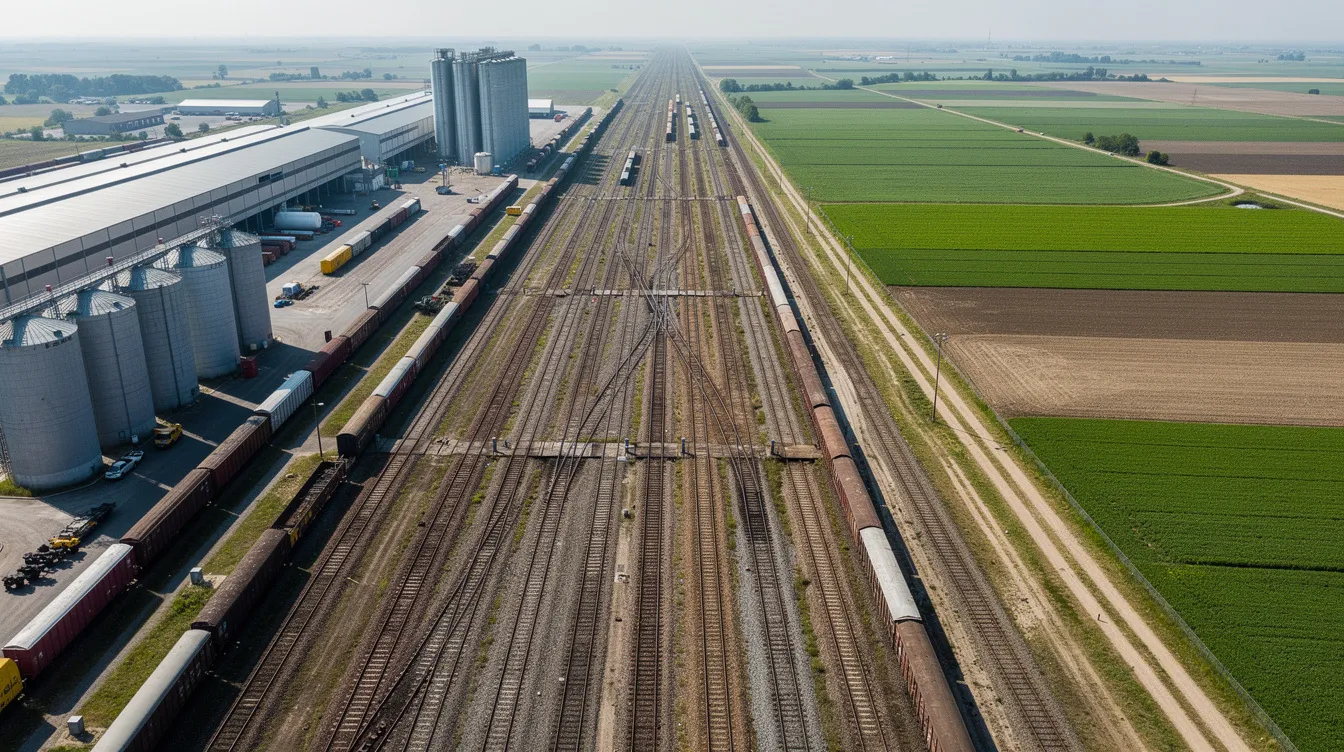
The FCI Hub and Spoke Grain Silo Model is the backbone of the current silo expansion programme. Rail-linked hub silos, typically located near major railheads, serve as aggregation and dispatch points for bulk grain movement by rake. Road-fed spoke silos, positioned closer to procurement mandis and consumption centres, collect grain from surrounding areas and feed it into the hub network.
Storage capacity planning in hub-and-spoke projects requires matching hub capacity with the aggregate capacity of connected spokes, aligning with rake sizes (typically 2,600–3,000 MT per rake), and accounting for seasonal procurement patterns. A hub might be designed at 50,000 MT or larger, while individual spoke silos in the network could range from 10,000 to 25,000 MT. Readers interested in grain silo capacity planning from 5,000 to 50,000 MT will find relevant guidance on sizing methodology.
Operationally, grain arrives at spoke silos by truck from mandis, undergoes cleaning and preliminary quality checks, and is stored in modern steel silos with automated grain storage systems that reduce repeated manual handling and improve preservation. Mechanized handling in silos improves operational efficiency and reduces labor costs. Bulk transfer to hub silos occurs by road or short-haul rail, and onward movement to deficit regions takes place by full-rake dispatch.
Capital investment implications are significant. Rail-linked hub silos need railway sidings, wagon loading and unloading systems, container depots, and more complex infrastructure. Spoke silos mostly require road access, truck handling areas, and receiving pits. Many investors evaluate spoke projects first, given their simpler infrastructure requirements and lower capital intensity.
For detailed project planning, readers may refer to the hub and spoke grain silo project report, the road-fed grain silo storage facility DPR, the rail-linked grain silo terminal project report, and the bulk grain handling and logistics terminal DPR.
Project Report Bank can prepare integrated network DPRs where promoters bid for clusters of hub and spoke silo projects, combining technical design, capacity optimisation, and detailed financial modelling across multiple SPVs.
FCI Grain Silo Project Cost and Capital Investment
Total FCI Silo Project Investment Cost depends on multiple variables: capacity (ranging from 25,000 to 1,00,000 MT or more), whether the project is DBFOO or DBFOT, hub or spoke configuration, land prices in the specific state and district, and the level of automation and equipment sophistication. Tenders include projects with costs ranging from approximately Rs 60,000 to Rs 1.38 crore per project component, depending on scope and configuration. Modern steel silos have higher upfront cost but deliver better long-term operating economics than conventional warehouses.
The key cost heads for an FCI grain silo project include:
Illustrative Project Cost Table – 50,000 MT Road-Fed Spoke Silo (DBFOO)
| Cost Head | Illustrative Amount (Rs Crores) |
|---|---|
| Land and land development | 4.00 – 8.00 |
| Civil works and foundations | 6.00 – 10.00 |
| Modern steel silos (including erection) | 18.00 – 25.00 |
| Receiving pits, conveying and elevation systems | 3.00 – 5.00 |
| Grain cleaning and grading equipment | 1.50 – 2.50 |
| Aeration and temperature monitoring systems | 1.00 – 2.00 |
| SCADA, automation and control systems | 1.00 – 1.50 |
| Electrical installations and power supply | 1.50 – 2.50 |
| Boundary wall, internal roads and drainage | 1.00 – 2.00 |
| Consultancy, engineering and approvals | 0.50 – 1.00 |
| Pre-operative expenses | 0.50 – 1.00 |
| Interest during construction (IDC) | 2.00 – 4.00 |
| Contingency provision | 1.50 – 2.50 |
| Initial working capital margin | 0.50 – 1.00 |
| Total (approximate range) | 42.00 – 68.00 |
These are illustrative assumptions for financial understanding. They are not official FCI tender costs.
Cost per MT declines as capacity increases due to economies of scale – a 1,00,000 MT hub silo will typically have a lower per-MT capex than a 25,000 MT spoke, even after accounting for railway siding and signalling systems. For detailed cost benchmarks, refer to grain silo and warehouse setup cost in India and grain silo machinery, equipment and cost.
GST on construction services and equipment supply must be factored into project cost estimates. Customs duties may apply if specific imported equipment is used. These taxes need to be treated correctly in DPRs and loan appraisals – input tax credit availability and project-specific exemptions (if any) should be verified before finalising cost estimates.
FCI Grain Silo PPP Revenue Model and Storage Charges
The FCI Silo Project Revenue Model under PPP generally involves two broad components: fixed storage charges linked to a defined contracted capacity and handling charges based on the quantity of grain actually received, stored, and dispatched. FCI provides long-term agreements with private operators for grain storage and handling, creating a visible and relatively predictable revenue stream. However, contract terms differ between tenders and phases, and investors must verify the applicable payment mechanism for each specific opportunity.
Capacity-linked payments may be structured so that the concessionaire receives storage charges for the contracted capacity regardless of actual utilisation levels in certain months – effectively a take-or-pay arrangement for fixed components. This significantly improves revenue visibility and debt-servicing comfort. However, performance parameters including availability, quality maintenance of stored grain, and loading and unloading turnaround times can lead to deductions if standards are not met. Automated grain storage reduces repeated manual handling and improves preservation, but the concessionaire remains responsible for meeting all performance benchmarks.
Indexation or escalation clauses are common in long-term concessions to protect revenue against inflation. The exact formula – whether linked to WPI, CPI, or a fixed annual percentage – is tender-specific and must be checked in each FCI Grain Silo Concession Agreement. Over a 387-month concession, even small differences in indexation formulas can materially affect cumulative revenues and project NPV.
Additional income opportunities may exist through short-term storage arrangements for state agencies or private parties, value-added services such as cleaning and grading for non-FCI grain, or utilisation of spare capacity during off-season periods. These should be treated as opportunity-based upside in any financial model, not as guaranteed revenue.
Revenue risks include delays in commencement of payments pending commissioning certification, disputes over performance metrics, changes in FCI’s offtake patterns, and administrative delays in processing claims. A well-prepared DPR should use conservative revenue assumptions and model scenarios where some of these risks materialise.
Financial Projections and Profitability of FCI Grain Silo PPP Projects
From a Chartered Accountant’s perspective, FCI Grain Silo Project Profitability must be evaluated based on realistic revenue, operating and maintenance costs, finance costs, depreciation, taxes, and – most importantly – cash flow available for debt servicing over the entire concession period. The numbers should tell a logical business story, not an optimistic narrative designed to secure approvals.
The key building blocks of the FCI Silo Project Financial Model include construction schedule and interest during construction, ramp-up of capacity utilisation if applicable, contracted storage and handling revenues with applicable escalation, operating expenses (staff, power, maintenance, insurance, consumables), planned major overhauls (typically every 10–15 years for silo refurbishment), working capital cycle, income tax and MAT provisions, and terminal value or handback costs in the case of DBFOT.
From projected revenues and expenses, the model derives EBITDA, profit before tax, profit after tax, cash profit, and free cash flow to firm. For lenders, the DSCR – both average over the loan period and minimum in any single year – is the most scrutinised metric. Infrastructure lenders typically require a minimum DSCR of 1.25x to 1.50x, though specific thresholds depend on the bank’s risk appetite and the quality of the concession.
Illustrative Financial Snapshot – 50,000 MT Spoke Silo (DBFOO)
| Parameter | Assumption / Illustrative Value |
|---|---|
| Total Project Cost | Rs 55 Crores |
| Promoter Equity (30%) | Rs 16.5 Crores |
| Term Loan (70%) | Rs 38.5 Crores |
| Concession Period | 387 months (~32 years) |
| Construction Period | ~18–24 months |
| Annual Storage Revenue (stabilised) | Rs 6.5 – 8.0 Crores |
| Annual O&M Cost (stabilised) | Rs 1.8 – 2.5 Crores |
| EBITDA Margin | 60% – 72% |
| Average DSCR | 1.40x – 1.65x |
| Project IRR | 12% – 16% |
| Equity IRR | 16% – 22% |
| Equity Payback | 8 – 12 years |
These are purely illustrative figures based on hypothetical assumptions. They are not official FCI returns, guaranteed tariffs, or investment promises. Actual returns will depend on tender terms, project cost, financing structure, and operating performance.
Break-even analysis and NPV calculations help promoters decide whether to bid aggressively or conservatively. For detailed modelling guidance, readers can refer to grain storage financial projections, working capital and DSCR analysis and grain silo ROI, IRR, payback and sensitivity analysis.
Bank Loan and Project Finance for FCI Grain Silo PPP Projects
Grain silo PPP project financing in India is typically structured as limited-recourse project finance, where the primary repayment source is projected cash flow from the concession rather than the promoter’s balance sheet alone. Debt-equity ratios commonly range from 70:30 to 75:25, subject to DSCR adequacy and the lender’s risk assessment of the specific project.
The typical means of finance include promoter equity (sometimes supplemented by institutional equity or private investors), term loans from scheduled commercial banks or infrastructure finance companies, and in some cases subordinate debt or quasi-equity. The financing mix differs between DBFOO and DBFOT – DBFOO projects require more equity for land acquisition, while DBFOT projects may achieve a slightly higher leverage ratio due to lower total project cost.
Banks evaluate such proposals on the strength of sponsors and their past experience in infrastructure or silo projects, the promoter’s net worth and financial capacity, the quality and depth of the detailed project report, the terms of the FCI Grain Silo Concession Agreement, projected DSCR across the loan tenor, and the risk-mitigation structure including insurance and guarantees.
Core loan structuring aspects include moratorium during construction and the initial operational period, door-to-door tenor designed to align with the concession period but typically shorter than the full 387 months, a repayment schedule that may use sculpted EMIs matching projected cash flows, and a security package comprising charge on assets, escrow of FCI receivables, assignment of concession rights, and sponsor guarantees during the construction phase.
Banks insist on comprehensive, customised DPR and financial models – not generic templates – along with CMA Data, projected cash flow statements, and detailed repayment capacity analysis. For professional assistance with bank finance DPR and loan proposal preparation or project finance advisory and loan structuring, promoters can engage Project Report Bank for structured documentation aligned with lender expectations.
FCI Grain Silo Tender Eligibility and Bidding Process
Eligibility criteria and bid parameters change from one tender to another, and investors must always rely on the latest official tender documents and corrigenda from FCI and DFPD. What follows describes typical patterns observed across recent tenders, not universal rules.
Typical technical eligibility conditions in FCI grain silo tender eligibility include prior experience in construction or operation of warehouses, silos, or relevant infrastructure. Bidders need project experience exceeding 20% of project cost in some tenders, while certain tenders require bidders to have experience exceeding 100% of project cost. Bidders can include O&M experience for scoring in technical evaluations. Alternatively, a promoter can engage qualified technical partners within a consortium to satisfy eligibility.
Financial eligibility patterns typically include minimum net worth requirements – bidders must have a minimum net worth of 25% of the project cost in many FCI tenders. Turnover thresholds and criteria for demonstrating capacity to arrange project financing are also common. Consortium members must hold at least 26% equity each, and bidder consortiums cannot exceed five members. Bidders must apply for all locations in a project bundle when tenders are structured as multi-location packages.
The common bidding stages are: issue of Request for Qualification (RFQ) or single-stage RFP, pre-bid meetings and clarifications, submission of technical and financial bids, evaluation and scoring, award of Letter of Award (LoA), negotiation and signing of the concession agreement, and achievement of financial closure within the stipulated period.
Standard bid securities and performance security instruments (typically bank guarantees) are required at various stages. Penalties for delay in construction milestones are defined through liquidated damages clauses. Promoters should conduct internal feasibility assessments and secure in-principle bank support before bidding aggressively, to avoid winning a project that is later difficult to finance.
Risk Assessment for DBFOO and DBFOT Investments
A professional risk analysis of FCI Grain Silo PPP Projects from both investor and lender perspectives is essential before any capital commitment. PPP India and FCI model concession agreements attempt to balance risks between the public authority and private concessionaire, but they do not remove them.
| Risk Category | DBFOO Exposure | DBFOT Exposure | Mitigation Approach |
|---|---|---|---|
| Land acquisition and title | High – entirely with promoter | Low – FCI provides land | Title insurance, legal due diligence, conservative timelines |
| Construction cost escalation | Moderate to High | Moderate to High | Fixed-price EPC contracts, adequate contingency provision |
| Time overrun | High (land + construction) | Moderate (construction only) | Milestone-based project management, buffer in timelines |
| Machinery performance | Moderate | Moderate | Equipment warranties, preventive maintenance contracts |
| Interest rate risk | High over 387 months | High over 387 months | Interest rate hedging, conservative leverage, refinancing |
| Demand / offtake risk | Low (contracted capacity) | Low (contracted capacity) | Take-or-pay clauses where applicable |
| FCI payment delay | Moderate | Moderate | Escrow, adequate working capital, strong collection systems |
| O&M performance | Moderate | Moderate (plus handback) | Professional O&M contracts, quality monitoring |
| Regulatory / environmental | Moderate to High | Low to Moderate | Early clearances, compliance monitoring |
| Termination risk | Low to Moderate | Low to Moderate | Understand compensation clauses, maintain compliance |
Each major risk should be tested through sensitivity analysis on key variables – project cost overruns of 10–20%, interest rate increases of 100–200 basis points, and revenue reduction scenarios – in the FCI Silo Project Financial Model before finalising bid tariffs. For a detailed framework on sensitivity analysis for grain silo investments, promoters should review that methodology.
FCI Grain Silo PPP Project Feasibility Study
A feasibility study in this context is a technical, financial, legal, and commercial evaluation of a proposed grain silo PPP project undertaken before bidding or signing the concession agreement. It serves as the go/no-go decision framework.
Technical feasibility components include suitability of location for grain procurement catchment, land characteristics (soil bearing capacity, drainage, flood history), road and rail connectivity, access to mandis and procurement centres, availability of power supply and water, and environmental considerations including clearances required under applicable regulations.
Commercial and financial feasibility involves a realistic estimate of project cost, revenue assumptions based on draft tender terms, O&M cost benchmarks from comparable projects, financing assumptions including interest rates and loan tenor, and preliminary DSCR, ROI, IRR, and payback analysis. Silos utilize a Hub-and-Spoke model for efficient grain movement, and the feasibility study must evaluate whether the proposed location fits within FCI’s network design.
Concession evaluation is equally critical: understanding the payment mechanism, indexation terms, performance conditions, penalty structures, termination events, compensation clauses, and step-in rights, and how these affect bankability and equity returns. Silo projects are vital for improving India’s food security framework, but each individual project must stand on its own financial merits.
For a structured feasibility exercise, promoters can review the grain storage and silo project feasibility study or explore project feasibility study services in India offered by Project Report Bank.
Documents Required for an FCI Grain Silo PPP Project DPR
Lenders and investors require a structured, project-specific FCI Grain Silo Project Report DPR rather than generic reports because every silo PPP project has unique land, capacity, concession terms, and financing parameters. The DPR must test specific assumptions, structure finance around actual project parameters, and identify risks particular to the proposed investment.
Typical inputs required from promoters include company incorporation documents and Memorandum of Association, promoters’ KYC and detailed professional profiles, audited financial statements for the preceding three to five years, net worth certificates, proposed project locations and land documents (sale deed, title search report, mutation records for DBFOO), copy of FCI tender documents and draft concession agreement, broad technical configuration and silo capacity details, and any preliminary machinery quotations or EPC proposals.
Further technical documents include preliminary site layout, plant and machinery list with specifications, civil and structural design concepts, utilities planning (power supply, water, waste management), and a project implementation schedule with construction milestones.
The final DPR prepared by Project Report Bank covers detailed project cost, means of finance with debt-equity analysis, projected profit and loss statements, cash flow projections, projected balance sheets, DSCR analysis across the loan period, break-even analysis, sensitivity analysis on key variables, and risk commentary. The DPR is prepared using promoter-supplied data combined with independent benchmarks and professional judgement, with clear disclosure of assumptions. It is not a guarantee of loan sanction or project success.
How CA Manish Gugliya Assists FCI Grain Silo PPP Investors
CA Manish Gugliya, FCA, DISA (ICAI), brings over 20 years of professional experience in project finance, DPR preparation, financial modelling, and advisory for manufacturing, infrastructure, and grain storage projects across India. His practice at Project Report Bank focuses on delivering financially rigorous, bankable documentation that promoters can confidently present to lenders and investors.
Core services relevant to FCI Grain Silo PPP Projects include preparation of customised detailed project reports designed around actual tender terms and project-specific parameters, financial model design covering the full concession period with revenue, cost, DSCR, IRR and sensitivity outputs, CMA Data preparation for bank loan proposals, bank finance DPR and loan proposal assistance, and project finance advisory including loan structuring.
The firm supports investors from pre-bid to financial close: pre-bid feasibility analysis to assess whether the project economics justify participation, bid strategy support on tariff and charge levels (without claiming tender success), lender discussions and documentation, and responses to bank queries during the appraisal process. For financial projections and financial modelling, the approach is built on transparent assumptions and practical financial assessment.
For larger players such as infrastructure developers and logistics companies seeking equity partners or infrastructure funds, Project Report Bank can also assist with investor-ready DPRs and fundraising documentation.
Prospective concessionaires, EPC players, and investors are encouraged to share their FCI tender details and proposed silo capacities on WhatsApp for a preliminary discussion on DPR scope, timeline, and professional fees.
Frequently Asked Questions
The following FAQs address practical investor queries that may not have been fully covered in the sections above.
Can a promoter without prior silo experience bid for FCI Grain Silo PPP projects?
Some FCI tenders allow consortiums where a financial investor partners with an experienced O&M or EPC player to meet technical eligibility requirements. The financial member may bring net worth and funding capacity while the technical partner provides construction and operations experience. However, actual consortium rules, including the number of permitted members and minimum equity-holding requirements, must be taken from the specific tender document. Bidder consortiums cannot exceed five members in many recent FCI tenders.
Can existing warehouses or land banks be used for FCI Grain Silo DBFOO projects?
Using existing land is often possible under DBFOO if the site meets FCI’s location, connectivity, and technical criteria. However, existing conventional godowns usually cannot be simply converted into modern silos because modern steel silos require specific structural design, foundation engineering, and automated bulk handling systems that are fundamentally different from traditional warehouse construction. The tender may specify minimum standards that rule out retrofitting.
Is refinancing possible after stabilisation of an FCI grain silo PPP project?
Many infrastructure lenders permit refinancing once the project achieves Commercial Operation Date and demonstrates stable DSCR over an initial period. Refinancing at lower interest rates – if market conditions permit – can reduce finance cost and improve equity IRR. However, refinancing requires consent from existing lenders and may need to comply with the provisions of the FCI Grain Silo Concession Agreement regarding assignment of financing arrangements.
How do rising interest rates affect FCI Grain Silo PPP Project ROI and DSCR?
Higher interest rates increase finance cost, reduce cash flow available for debt servicing, and can depress both project IRR and equity IRR. Given that the concession period is 387 months, even a 100–150 basis point increase in interest rates can meaningfully impact cumulative returns and DSCR in early years. Interest-rate sensitivity analysis should be a mandatory component of the FCI Silo Project Financial Model before finalising any bid submission.
What is a realistic timeline from bid award to financial closure and construction?
Many FCI PPP tenders specify a fixed period – typically 6 to 12 months – for achieving financial closure after the Letter of Award, and approximately 18 to 24 months (around 810 days in recent tenders) for completing construction and achieving commercial operation. Promoters should always check actual tender conditions and build reasonable buffers into their implementation plans, particularly for land acquisition in DBFOO projects and railway siding approvals in hub projects.
Conclusion – Evaluating FCI Grain Silo PPP Investments
FCI Grain Silo PPP Projects under DBFOO and DBFOT represent long-term, infrastructure-style investments aligned with India’s food security priorities. Silo projects aim to secure India’s food supply and expand storage capacity significantly through a resilient combination of public policy commitment and private sector execution. The overall programme – with plans for over 111 LMT of modern silo capacity across 249 locations – signals sustained government commitment to grain storage modernisation.
However, the quality of the investment decision depends entirely on the quality of the analysis behind it. Investors must carefully study each FCI Grain Silo Concession Agreement, compare DBFOO vs DBFOT structures for their specific situations, and run detailed financial projections including DSCR, IRR, ROI, payback period, and sensitivity scenarios across multiple variables before submitting bids or closing financing. The comment that every project is identical would be misleading – each tender, each location, and each sale of storage services under the concession carries its own risk profile.
This article should be treated as a starting framework. For tender-specific decisions, investors must rely on up-to-date data from FCI, DFPD, and PPP India. No generic article – however detailed – can replace project-specific professional advice tailored to the investor’s financial capacity, technical capabilities, and risk appetite.
For customised FCI Grain Silo Project Report DPRs, feasibility studies, financial modelling, CMA Data, and project finance advisory support, promoters, infrastructure companies, and logistics players are invited to contact Project Report Bank and CA Manish Gugliya via WhatsApp or email. Every engagement begins with understanding the specific tender, the promoter’s profile, and the financial structure that makes sense – not with a template.
CA Manish Gugliya FCA, DISA (ICAI) More than 20 years of professional experience in project reports, financial projections, CMA Data, project finance, and infrastructure project advisory.