India’s cotton crop generates millions of tonnes of cottonseed at ginning units every year, and converting this raw material into refined cottonseed oil, cottonseed meal, hulls and linters through an integrated processing facility represents a significant agro-industrial investment opportunity. This article examines the technical, financial and commercial considerations involved in planning a cottonseed oil processing plant project report for medium and large industrial projects in India.
Key Takeaways
The following points summarise the most important considerations from this cottonseed oil processing plant project report for promoters evaluating this investment:
- A modern cottonseed oil production plant is an integrated commodity-processing operation combining oil extraction, cottonseed oil processing, oil refining and by-product recovery from cottonseed meal, hulls and linters, not merely a single expeller line producing crude oil.
- Project cost depends primarily on plant capacity (100 to 1,000 TPD of raw cottonseeds), configuration (expeller only, expeller plus solvent extraction, or integrated with refinery), level of automation, and local land, civil work and working capital requirements, which often match or exceed machinery cost.
- Cottonseed oil plant profitability is driven more by raw cottonseed procurement price, oil yield, cottonseed cake and hull realisations, and capacity utilisation levels than by quoted crude oil or refined oil selling prices alone. Gross profit margins for cottonseed oil typically range between 20 and 30 percent.
- Financial projections must include capital investment, operating costs and pricing trends. A bankable cottonseed oil mill bank loan DPR must present detailed DSCR, CMA Data, cash-flow analysis and sensitivity scenarios, which Project Report Bank prepares professionally under the guidance of CA Manish Gugliya.
Introduction: Cottonseed Oil Processing as an Integrated Agro-Industrial Project
India produces approximately 12.4 million tonnes of cottonseed annually from its cotton crop. At ginning units, cotton plants yield lint for the textile value chain and cottonseed as a critical by-product. This cottonseed feeds into a processing chain that can produce edible oil, animal feed, fiber and fuel products, making the cottonseed oil mill plant a multi-revenue business.
A cottonseed oil manufacturing plant earns from refined cottonseed oil, crude cottonseed oil if sold externally, cottonseed meal or de-oiled cake used as cattle feed, hulls used as roughage or fuel, cotton linters used in textiles and plastics production, and soap stock from the refining process. This is a commodity processing and risk-management operation where margins depend on efficient oil extraction, disciplined raw material procurement, and accurate financial planning.
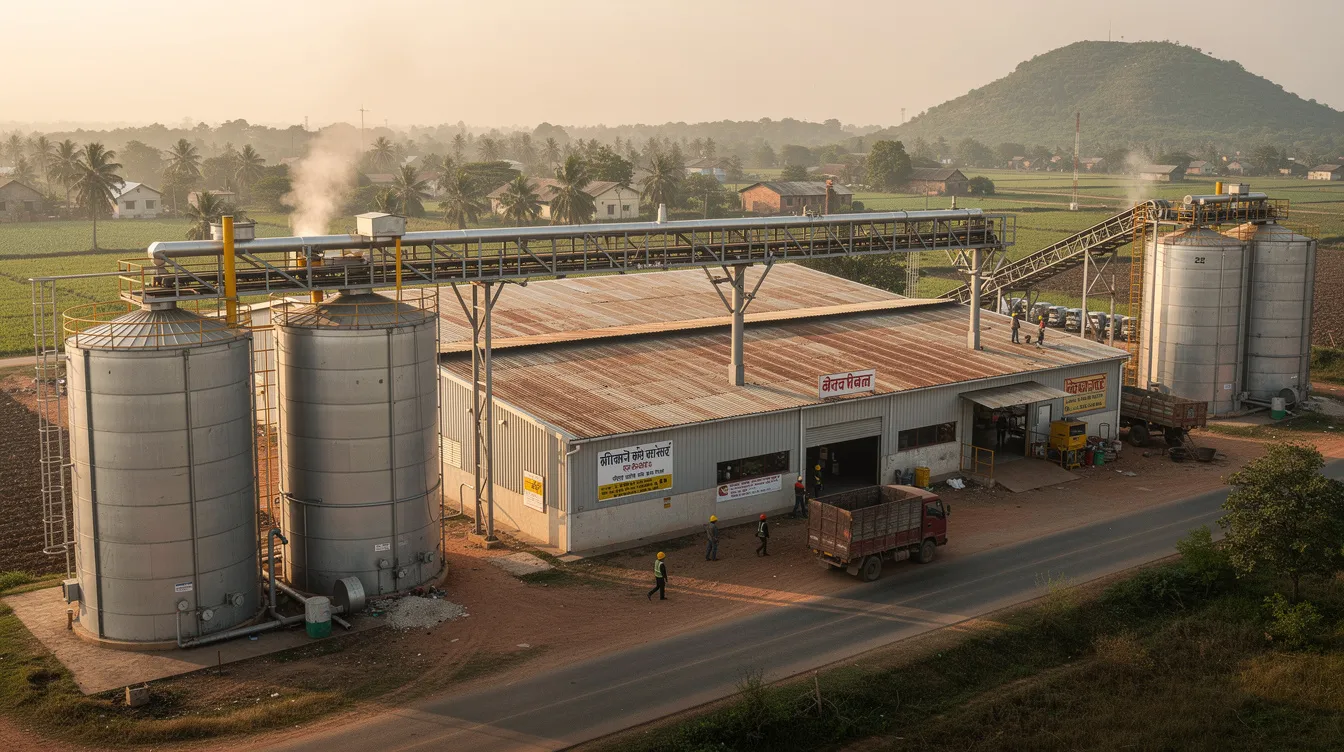
Project Report Bank, led by CA Manish Gugliya, FCA, DISA (ICAI), specialises in preparing customised detailed project reports, project finance advisory and financial modelling for medium and large industrial cottonseed oil production plants across India.
Industry Overview and Cottonseed Oil Market Opportunities in India
The global cottonseed oil market stood at 5.21 million tons in 2025 and is projected to reach 6.44 million tons by 2034, reflecting a CAGR of 2.4 percent from 2026 to 2034. Cottonseed oil ranks 5th among all edible oils globally and contains 60 to 90 percent unsaturated fatty acids, including linoleic acid and oleic acid, along with vitamin E. The oil has a high smoke point and mild flavor with a neutral taste, making it attractive for food processing industries and the personal care industry for cosmetic formulations.
In India, cottonseed oil is a major cooking oil in Gujarat, where it accounts for a dominant share of edible oil consumption. The India quick service restaurants market, valued at USD 9.3 billion in 2025, drives increasing demand for frying oils. Cottonseed meal, containing approximately 30 percent protein, serves the cattle feed, dairy and poultry sectors as animal feed. Cottonseed hulls can be used as mulch or animal feed, while gossypol in cottonseed can act as a natural insecticide, adding niche industrial applications.
Key industry drivers include:
- The cottonseed oil industry faces demand-supply gaps for edible oils, creating import substitution opportunities
- States like Gujarat, Maharashtra, Telangana, Andhra Pradesh, Madhya Pradesh, Karnataka and Rajasthan are prime cotton producing regions for plant siting
- Rising livestock sector demand for high-protein meals
- Government emphasis on agro-processing and MSME manufacturing support
Proximity to cotton-producing regions reduces inbound transportation costs and distribution costs. However, commodity price volatility, seasonal raw material supply constraints, and seed quality variation must be analysed carefully in any cottonseed processing plant feasibility study.
Project Configurations: Types of Cottonseed Processing & Oil Extraction Plants
Different promoters may choose different project scopes based on their business requirements, from a basic cottonseed oil mill plant to a fully integrated extraction and refinery complex.
- Option 1: Standalone seed cleaning, delinting and decortication plant, selling kernels, hulls and linters to nearby oil mills and fiber users.
- Option 2: Mechanical cottonseed oil extraction plant using expellers. Mechanical extraction is best for small-to-medium scale capacities, producing crude oil and cake at lower capital cost but with lower oil recovery.
- Option 3: Cottonseed solvent extraction plant using hexane, suitable for 300 to 1,000 TPD. Promoters evaluating this model should review the Industrial Solvent Extraction & Multi-Oilseed Processing Plant DPR for multi-oilseed synergies.
- Option 4: Cottonseed oil refinery plant converting crude oil to refined edible oil.
- Option 5: Integrated cottonseed oil production plant combining all stages for maximum oil recovery.
- Option 6: Value-addition projects further processing meal, hulls and linters for improved margins.
| Configuration | Capacity Range | Capital Intensity | Oil Recovery (Seed Basis) | Complexity | Suitable Promoter |
|---|---|---|---|---|---|
| Expeller only | 50–200 TPD | Moderate | ~14–16% | Medium | Smaller promoters |
| Solvent extraction + prepress | 200–500 TPD | High | ~17–20% | High | Industrial investors |
| Refinery only | 10–100+ TPD crude | Medium-high | NA | Technical | Oil brands |
| Integrated plant | 300–1,000+ TPD | Very high | Up to ~18% | Complex | Large groups |
The economic trade-offs between configurations are examined further in the guide on Integrated Expeller vs Standalone Solvent Extraction Cost & ROI.
Cottonseed Oil Processing Technology and Manufacturing Flow
Cottonseeds have to be cleaned, delinted, hulled and extracted to produce oil. The complete manufacturing process covers these unit operations:
- Receiving and storage – moisture control below 8–10 percent, foreign matter removal
- Seed cleaning and grading – removal of sticks, stones, dirt
- Delinting – removal of short fibers for improved kernel quality
- Decortication – hull separation from kernel; kernel recovery targets of 35–45 percent of raw seed weight
- Conditioning, cooking and flaking – preparing kernels for efficient oil extraction
- Mechanical pressing – primary extraction via screw press expellers; mechanical pressing yields about 16 percent crude oil from crushed cottonseed
- Solvent extraction – hexane-based extraction of residual oil from press cake; solvent extraction can recover more oil from cottonseed cake, reducing residual oil to under 2 percent
- Desolventising-toasting – solvent removal from extracted meal
Cottonseed oil extraction methods include mechanical pressing and solvent extraction, and the choice determines both capital cost and oil recovery. Whole cottonseed typically yields 15 to 25 percent oil, while the kernel contains up to 46 percent oil on a dry basis. Raw cottonseed contains gossypol which must be managed during processing and refining. Crude cottonseed oil contains about 2 percent gossypol, requiring refining before it is suitable as edible oil. Quality control measures should address the gossypol levels in cottonseed to meet safety standards under FSSAI regulations.
For deeper process details, refer to the article on Solvent Extraction Plant Process Flow and Technology.
Process flow Chart
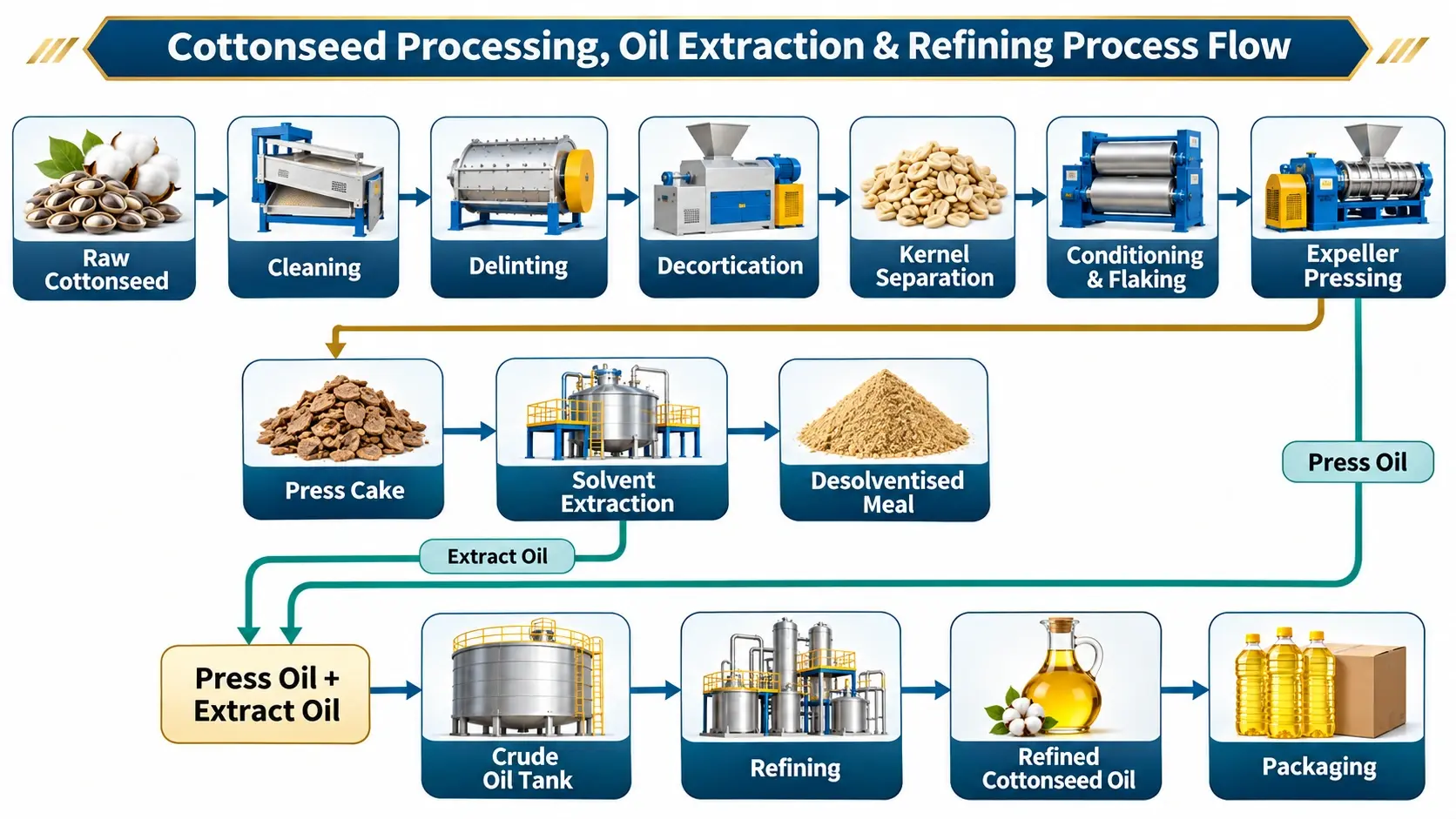
Raw Cottonseed → Cleaning → Delinting → Decortication → Kernel Separation → Conditioning & Flaking → Expeller Pressing → Press Cake → Solvent Extraction → Desolventised Meal
Press Oil + Extract Oil → Crude Oil Tank → Refining → Refined Cottonseed Oil → Packaging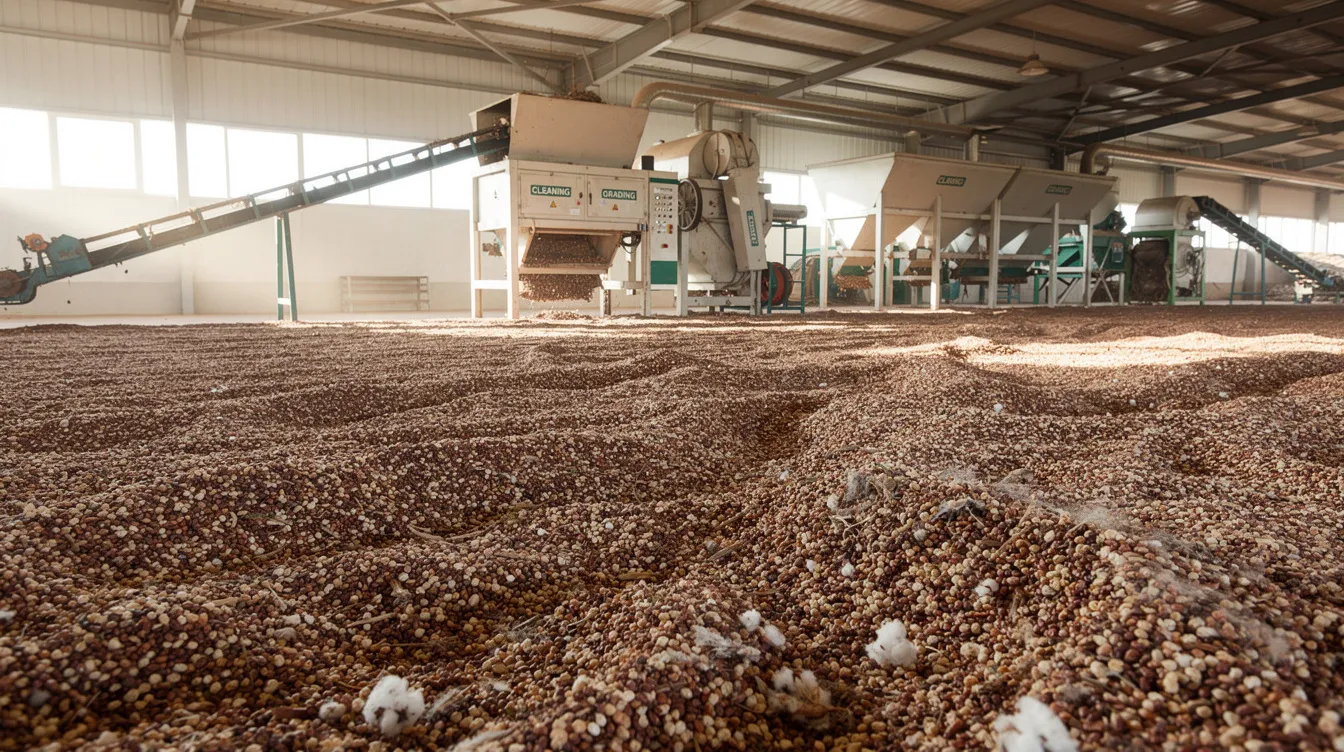
Cottonseed Oil Refining: From Crude Oil to Edible Oil
Crude cottonseed oil is a vegetable oil extracted from kernels, but it contains free fatty acids, phospholipids, pigments and gossypol, making oil refining essential before it can be sold as edible oil. Cottonseed oil refining involves degumming, neutralization, and deodorization as core steps. The process includes alkali refining using caustic soda for neutralisation, bleaching with activated earth to remove impurities and achieve a light golden color, and deodorisation under vacuum to produce a final product with neutral taste.
Chemical refining is generally standard practice for cottonseed oil due to the presence of phosphatides, colour bodies and gossypol. The comparison with physical refining is detailed in the article on Physical vs Chemical Refining of Edible Oils. Refining losses typically range from 2 to 4 percent of crude oil input. By products include soap stock and spent bleaching earth.
Integrated promoters processing multiple vegetable oils may consider a common refining hub, as discussed in the Large-Scale Edible Oil Refinery & Fractionation Plant Project Report.
| Parameter | Indicative Benchmark |
|---|---|
| Free fatty acids (as oleic acid) | ≤1.0% |
| Moisture and impurities | As per FSSAI |
| Peroxide value | ≤10 meq/kg |
| Hexane residue (solvent extracted) | ≤5 ppm |
Plant Capacity Planning and Output Assumptions
Stated TPD must be clearly defined: TPD of raw cottonseed input, kernels, or refined oil output. These bases are not interchangeable. A cottonseed oil processing facility can produce 20,000 to 100,000 MT annually depending on configuration and operating days.
- 100 TPD raw seed (~30,000 MT/year at 300 days): viable with expeller or pre-pressing, moderate investment
- 300 TPD (~90,000 MT/year): suits solvent extraction plus refining for regional coverage
- 500–1,000 TPD: large-scale operations requiring substantial catchment and buyer networks
Realistic capacity utilisation starts at 50 to 60 percent in year one, ramping to 80 to 90 percent by year three. The setup process typically takes 12 to 30 months to complete. Higher plant capacity does not automatically mean higher profit if raw material supply, cottonseed oil market access and working capital lines do not scale accordingly.
Plant layout should allow flexibility to handle additional oilseeds such as soybean or groundnut where technically feasible, mitigating seasonal raw material constraints. Even a 20 TPD cottonseed oil plant can yield significant by-product revenue when properly integrated.
Land, Building, Plant & Machinery and Utility Requirements
Investors often focus on oil extraction and cottonseed oil refinery machinery but underestimate land development, buildings, utilities, ETP and fire safety infrastructure. Key building blocks include raw seed warehouse, preparation block, extraction and desolventising section, refinery, finished goods storage, tank farm, boiler area, solvent storage, ETP, weighbridge and administrative facilities. Cottonseed oil processing plants require seed cleaning and dehulling machines alongside decorticators, flakers, cookers, expellers, extractors and refining vessels. Effective dust control systems are necessary to mitigate air pollution from cottonseed processing.
Utilities include steam boilers, thermic fluid heaters, power distribution with DG backup, water treatment, cooling systems, and solvent-handling safety infrastructure. Edible oil refineries have specific utility profiles detailed in Edible Oil Refinery Utility Requirements. Machinery selection should evaluate automation level, energy efficiency, corrosion resistance and EPC responsibility, as discussed in Edible Oil Refinery Machinery, Technology and EPC Selection.
Project Cost Structure: Cottonseed Oil Plant Setup Cost and Investment Planning
No single universal cottonseed oil plant cost exists. Factors affecting project cost include land, building, machinery, and operational expenses. A small cottonseed oil workshop costs around USD 8,000, while total costs can range from under USD 100,000 to several million dollars depending on scale and integration. For reference, a 297 TPD solvent extraction plant costed approximately ₹30.66 crore including land and building at ₹8.50 crore, plant and machinery at ₹13.52 crore, and working capital.
Fixed capital cost heads include land acquisition, civil construction, seed preparation machinery, mechanical oil extraction equipment, solvent extraction systems, refinery units, storage tanks, boilers, electricals, ETP, laboratory equipment, fire safety, freight, erection and commissioning. Preliminary and pre-operative expenses, interest during construction and contingencies are additional. Capital investment includes machinery, utilities, and working capital margin required by banks.
Promoters can benchmark refinery component costs through the article on Edible Oil Refinery Project Cost and Investment.
Raw Material Procurement, Oil Recovery and By-Product Economics
Raw cottonseed cost typically accounts for 75 to 85 percent of total operating cost. Operating costs account for 80 to 85 percent of total expenses in cottonseed oil production. Whole cottonseed prices average USD 309 to USD 438 per ton globally, though Indian prices vary by state and season. Cottonseed processing plants require significant planning across raw material sourcing and engineering.
Without scientific processing, oil recovery from whole cottonseed is only about 11 to 12 percent, whereas modern delinting, decortication, pre pressing and solvent extraction push recovery to 16 to 18 percent. Improvement in extraction efficiency and better cottonseed meal and hull realisations can change contribution margin more materially than minor changes in refined oil selling price. A cottonseed oil manufacturing plant relying only on oil sales without by product revenue from cottonseed meal and hulls is highly exposed to downside risk. Cottonseed oil is used in food processing and cosmetics, while canola oil and other vegetable oils compete in the same edible oil market. Even biodiesel production represents a potential secondary market for lower-grade oil, and the personal care segment uses cottonseed oil in cosmetic formulations.
Working Capital, Operating Cycle and CMA Data for Cottonseed Oil Plants
Cottonseed procurement is seasonal but oil and meal sales are continuous, so cottonseed oil mill projects need substantial working capital. Major components include raw cottonseed inventory (30 to 60 days), in-process stocks, finished crude and refined oil inventory, cottonseed meal and hull stocks, trade receivables (30 to 60 days), less trade payables. Operating costs for the first year are projected to be significant given the need for initial stock building.
Bank cash-credit limits, drawing power and margin requirements must be properly estimated. Under-estimation of working capital can lead to procurement disruption even if the plant is technically viable. Credit Monitoring Arrangement Data is the standard format used by Indian banks. For a detailed example, refer to Multi-Oilseed Solvent Extraction Plant Financial Projections, CMA Data and DSCR.
Financial Projections, Profitability and Bank Finance
A bankable cottonseed oil processing plant project report must convert technical assumptions into integrated financial statements over 5 to 7 years. The project report should include a detailed project cost, projected profit and loss, cash flow, balance sheet, and key ratio analysis. Expenditure projections should cover all variable costs and fixed costs realistically.
Key metrics include DSCR, break-even capacity, ROI, project IRR and payback period. Break-even for a cottonseed oil processing business ranges from 5 to 8 years depending on configuration and market conditions. Project implementation includes phases like market study, land acquisition, financing and construction. Sensitivity scenarios should test higher seed prices, lower oil selling prices, reduced oil recovery and lower capacity utilisation.
Financial projections for producing cottonseed oil should use realistic local cottonseed and oil market data. The long term sustainability of the investment depends on disciplined financial management, not just achieving headline ROI in the base case.
Feasibility Study, Risk Assessment and Sensitivity Analysis
A cottonseed processing plant feasibility study must objectively assess risks before promoters commit capital. Major risk categories include raw cottonseed procurement risk, product market risk across the cottonseed oil market, operational risk affecting oil extraction efficiency, financial risk from interest rates and regulatory compliance costs.
Scenario analysis should test resilience: a 5 to 10 percent increase in seed price, a 5 to 10 percent decrease in refined oil price, or 1 to 2 percentage point drops in oil recovery. Each scenario should recompute DSCR and cash flows. Key players in the cottonseed oil market and their production patterns affect price dynamics. For refinery-specific risks, promoters should review Edible Oil Refinery Feasibility Study, ROI, IRR and Profitability.
Statutory Approvals and Regulatory Compliance in India
Exact approvals depend on state, scale and technology. Common requirements include:
- Land conversion and building plan approval, factory licence under the Factories Act
- Environmental clearances include approvals from the State Pollution Control Board for Consent to Establish and Consent to Operate
- FSSAI licence for edible oil manufacturing; BIS and Agmark quality standards for refined cottonseed oil
- Fire NOC, boiler registration, PESO approvals for solvent storage
- GST registration, MSME/Udyam registration, ESI/PF compliance
Professional DPR Preparation and Project Finance Advisory by Project Report Bank
CA Manish Gugliya and Project Report Bank provide customised cottonseed oil mill project reports, not generic downloadable templates. The process involves understanding promoter objectives, validating raw material catchment, selecting appropriate plant capacity and technology, obtaining preliminary quotes, preparing realistic financial projections, working capital assessment, DSCR computation, break-even and sensitivity analysis.
The final deliverables – bankable DPR, CMA Data and financial model – are structured to meet Indian bank appraisal expectations. A generic project profile differs fundamentally from a bankable DPR backed by capacity-specific assumptions, location-based cost estimates and detailed means of finance. Promoters considering a new cottonseed oil production plant or expansion should engage early so that technology, capital structure and funding strategy are aligned.
Frequently Asked Questions
Is cottonseed oil extraction and refining still profitable when seed prices are high?
Profitability depends on the processing margin: the spread between combined product realisations from oil, cake, hulls and linters, and total seed plus operating cost. When cottonseed prices rise, mills reduce capacity utilisation unless oil and cake prices also strengthen. Feasibility studies should stress-test profitability at elevated seed prices before investment decisions are taken.
Can I start with crude cottonseed oil production and add a refinery later?
Phased implementation is a common and prudent strategy. Starting with expeller or solvent extraction and selling crude cottonseed oil, then adding refining capacity after stable operations, lowers initial capex. Plant layout, utilities and tankage should be designed from day one to accommodate future refinery integration.
How important are cottonseed meal and hull sales to overall project viability?
Cottonseed meal and hull revenues contribute a sizeable share of total revenue and stabilise margins when edible oil prices are under pressure. Lack of consistent buyers for meal and hulls can stress an otherwise promising project. Promoters should map feed mills, cattle feed manufacturers and dairy clusters during the feasibility stage.
What working capital challenges are specific to cottonseed oil processing?
Seasonal cottonseed availability requires building large raw material stocks during peak arrivals. This creates substantial working capital needs that cannot be covered by term loans. Banks assess this through CMA Data and drawing power calculations. Under-funded procurement capacity is a common reason for operational stress in otherwise viable cottonseed oil processing plants.
Why is a professional DPR important for a cottonseed oil plant bank loan?
Banks appraise loan proposals based on project-specific assumptions – local seed prices, land costs, capacity, technology, promoter equity and buyer base. A professionally prepared cottonseed oil processing plant project report integrates engineering assumptions with financial modelling, DSCR and sensitivity analysis, improving the credibility and quality of the loan proposal significantly compared to generic templates.
Professional Cottonseed Processing Plant DPR, Financial Projections & Bank Finance Advisory
CA Manish Gugliya, FCA, DISA (ICAI) ProjectReportBank.com 20+ Years of Professional Experience
Core services for cottonseed oil projects include customised DPR preparation, detailed financial projections, CMA Data, DSCR and repayment analysis, project feasibility reports and bankable loan documentation. Each cottonseed oil processing plant project report is built around the specific project capacity, technology, location, promoter funding plan and targeted banks or investors.
Serious entrepreneurs and industrial promoters planning new cottonseed oil production plants or expansions are invited to reach out via the ProjectReportBank.com website or WhatsApp enquiry. Please share: promoter or company name, proposed project location and state, new unit or expansion, proposed TPD capacity, desired configuration (expeller, solvent extraction, refinery), estimated investment and expected bank or equity funding requirement.
No advisor can guarantee bank sanctions or returns. A robust, data-driven DPR and financial model, however, significantly improves decision-making quality and the credibility of the project in front of lenders and investors.