India’s manufacturing sector is experiencing a structural shift. With PLI schemes covering 14+ sectors, Make in India gaining real traction, and ₹3.2 lakh crore in realized investments already committed through government incentive programs, 2026 is arguably the strongest window for launching large scale business ideas in manufacturing. Large-scale business ideas often involve substantial investment and infrastructure, but they also offer the kind of long-term wealth creation that smaller ventures simply cannot match. As a Chartered Accountant with over 20 years of experience preparing project reports and arranging bank finance for manufacturing projects, I have seen firsthand how the right industrial venture-backed by thorough research and a solid feasibility study-can transform an entrepreneur’s trajectory.
This guide covers 15+ profitable manufacturing business ideas suited for significant investment, along with practical guidance on selection, financing, and execution.
How We Chose the Best Large Scale Business Ideas
Every business idea in this list was evaluated using criteria I apply when preparing detailed project reports for bank loan appraisals:
- Investment potential ranging from ₹5 crores to ₹100+ crores, with clear capex breakdowns for land, machinery, and utilities
- Manufacturing scalability and export potential-can the business serve global markets beyond domestic demand?
- Government PLI scheme eligibility and active policy support for the sector
- Bank loan viability including DSCR (Debt Service Coverage Ratio) above 1.25, realistic break-even timelines, and IRR projections
- Market demand projections for 2026-2030 based on industry data and market trends
- Raw material availability and supply chain stability-domestic sourcing versus import dependence
- Technology requirements and automation possibilities that affect long-term operational costs
Market research helps identify consumer needs and market trends, and a feasibility study assesses startup costs and potential revenue. These are non-negotiable steps before committing capital to any tried and tested idea in manufacturing. Every idea below has been vetted through this lens.
Table of Contents
Top 15 Large Scale Business Ideas for High Investment Ventures
1. Electric Vehicle Battery Manufacturing
Lithium-ion battery cell and pack manufacturing for automotive and energy storage applications represents one of the most capital-intensive yet strategically important manufacturing business ideas in India today.
The government’s ACC PLI Scheme has allocated ₹18,100 crore to build 50 GWh of battery cell capacity. India sold approximately 5.2 million EV two-wheelers and 520,000 passenger EVs in 2026, with combined EV volume penetration reaching 28%. Renewable energy sectors are subject to significant global investment, and battery manufacturing sits at the intersection of EV and clean energy storage.
- Investment: ₹50-200 crores for cell manufacturing; ₹10-50 crores for pack assembly
- Best for: Industrial groups, NRIs, and private limited companies with technology partnerships
- Key strengths: PLI incentives (25% value addition within 2 years, 60% within 5 years), growing demand, export potential
- Limitations: Raw material imports (lithium, cobalt, nickel), high technology costs, 4-6 year payback
AI systems are increasingly being integrated into enterprise workflows for quality control in battery production, while Robotics-as-a-Service allows companies to deploy automation without heavy upfront costs on robotic assembly lines.
2. Specialty Chemicals Manufacturing
Production of high-value chemical intermediates, electronic chemicals, agrochemical formulations, and specialty chemicals for various industries.
India’s specialty chemicals market is valued at USD 67 billion in 2025, projected to reach USD 93.4 billion by 2034. Top-quartile firms like SRF and Vinati Organics report operating profit margins of 30-32%.
- Investment: ₹20-200 crores depending on product complexity
- Best for: Existing chemical companies and experienced industrialists seeking high profit margins
- Key strengths: Consistent market demand across different industries, strong export opportunities, scalable production capabilities
- Limitations: Environmental clearances, safety compliance, REACH certification for exports
Circular economy initiatives focus on waste reduction and resource recovery, making green chemistry approaches increasingly valuable. Successful business models leverage technology to scale rapidly in this space-process patents and innovation command premium margins over commodity chemicals.
3. Solar Equipment Manufacturing
Production of solar panels, inverters, and mounting structures to serve India’s ambitious renewable energy targets.
- Investment: ₹25-100 crores for module assembly lines
- Best for: Manufacturing entrepreneurs who believe in the growing demand for clean energy
- Key strengths: Government support through PLI subsidies, customs duty protection on imports, favorable land and power in Gujarat and Rajasthan
- Limitations: Technology dependence for cell manufacturing, competition from established players, raw material costs
The digital financial infrastructure market is growing rapidly, enabling easier project financing and subsidy disbursement for solar manufacturing units.
4. Pharmaceutical API Manufacturing
Active pharmaceutical ingredient production for domestic consumption and export to regulated markets (US, EU, WHO-prequalified).
Healthcare technology platforms are in high demand due to global health needs, and APIs are the backbone of pharmaceutical supply chains. The global revenue of the health and beauty industry reached $534 billion in 2022, with pharma forming a substantial portion.
- Investment: ₹30-150 crores including R&D and quality labs
- Best for: Healthcare industry investors with regulatory expertise
- Key strengths: High margins, regulatory barriers create competitive moats, subscription models provide high predictability in revenue through long-term supply contracts
- Limitations: USFDA/EMA compliance cycles of 18-36 months, quality infrastructure costs, API stability requirements
5. Food Processing and Packaging
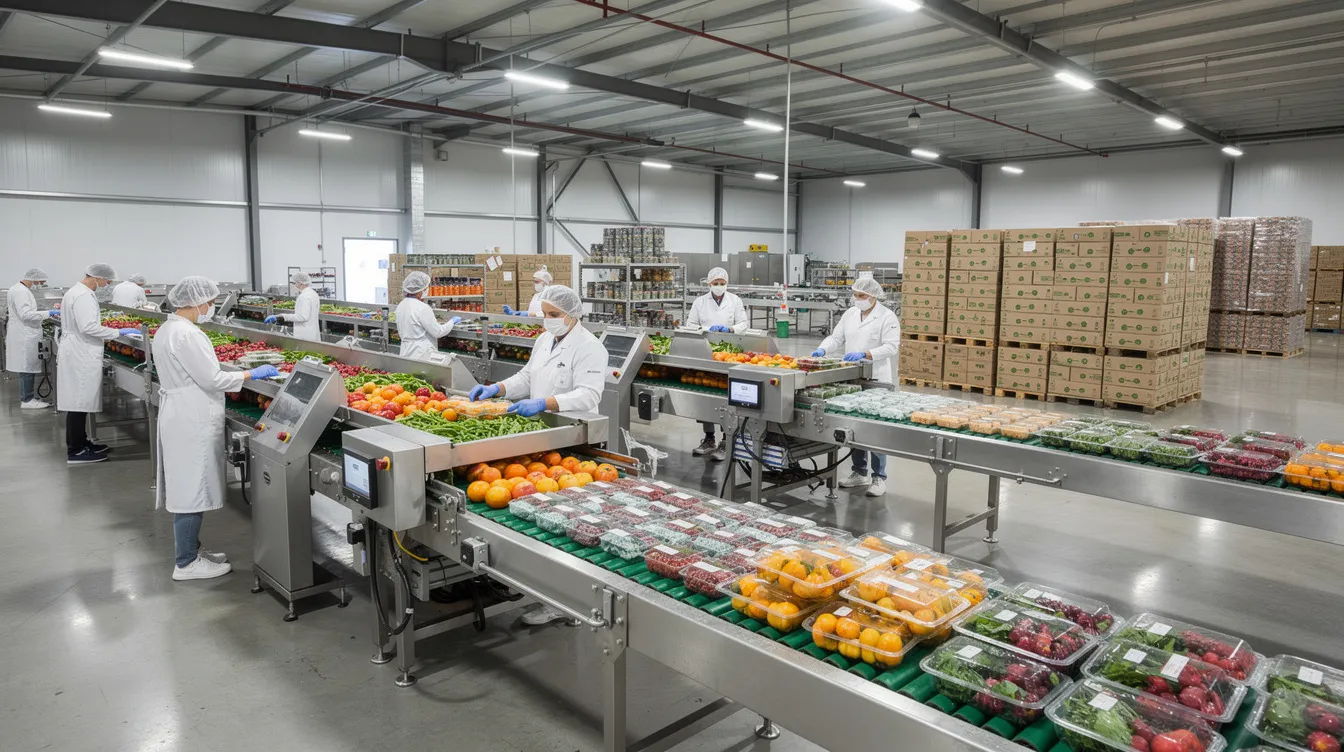
Large-scale processing of fruits, vegetables, grains, dairy, and ready-to-eat foods-a profitable venture in India’s food and beverage industry.
The global market size of the food and beverage industry reached $258.80 billion in 2020. The catering industry grew from USD 37 billion to USD 58 billion between 2011 and 2017, indicating rising demand for processed and packaged food. In 2022, global sales of organic food reached $146 billion, and the global market for organic food and beverages reached nearly $146 billion in 2022, showing strong consumer preferences for health-conscious options. The market value of the organic food industry was nearly $146 billion in 2022. Even adjacent segments like cloud kitchens require low investment and are highly profitable, illustrating the breadth of the food business opportunity.
- Investment: ₹10-75 crores depending on product line and cold chain infrastructure
- Best for: Agriculture-connected entrepreneurs and beverage industry veterans
- Key strengths: Steady demand, organic farming integration possible, FSSAI support, export to Gulf and Southeast Asian target markets
- Limitations: Perishable inventory management, cold chain requirements, seasonal business cycles for certain crops, quality maintenance
6. Steel Processing and Fabrication
Secondary steel processing into TMT bars, structural components, pipes, and specialized industrial products.
- Investment: ₹30-150 crores for rolling mills and fabrication units
- Best for: Metal industry professionals with infrastructure connections and major clients in construction
- Key strengths: Consistent industrial demand from infrastructure projects, scalable operations, B2B repeat business
- Limitations: Raw material price volatility, environmental norms, high power consumption driving up operating costs
Large-scale business models generate recurring revenue when you secure long-term supply contracts with construction and infrastructure companies.
7. Textile Manufacturing with Technical Textiles
Production of industrial textiles, medical textiles, geotextiles, and technical fabrics alongside conventional clothing business lines. The apparel and footwear manufacturing industry exceeded $1.5 trillion in retail sales in 2021 globally.
- Investment: ₹15-80 crores for technical textile lines
- Best for: Export-oriented textile manufacturers and mechanical engineering entrepreneurs venturing into fabric-based products
- Key strengths: Export potential to global markets, government incentives, direct-to-consumer e-commerce improves margins and brand control through own online services
- Limitations: Technology imports, skilled labor, international competition from Bangladesh and Vietnam
Manufacturers can sell through e commerce platforms to build a strong online presence and target audience directly.
8. Automobile Component Manufacturing
Production of auto parts for OEMs and aftermarket segments, including EV-specific components like traction motors and power electronics.
The PLI-Auto scheme has a ₹25,938 crore outlay through FY2026-27, with updated criteria to include EV components.
- Investment: ₹25-100 crores depending on component complexity
- Best for: Engineering entrepreneurs with automotive industry connections
- Key strengths: Tier system benefits, long-term OEM contracts, franchise models allow for rapid geographical expansion across manufacturing hubs. The platform ecosystem model facilitates interactions between distinct groups-OEMs, tier-1 suppliers, and aftermarket distributors.
- Limitations: Quality certifications (IATF 16949), customer concentration financial risk, cyclical demand patterns
9. Industrial Machinery Manufacturing
Production of specialized machinery for food processing, packaging, textiles, and chemical manufacturing sectors.
- Investment: ₹10-60 crores for machine tool and assembly operations
- Best for: Machine tool companies and business ideas for men with deep engineering expertise
- Key strengths: High margins, technical expertise barriers protect against competition, B2B relationships with major clients
- Limitations: Long development cycles, working capital intensive, after-sales technical support needs
Emerging opportunities include AI-powered scientific research and sustainable food production, both of which require specialized machinery-creating new demand verticals.
10. Plastic Processing and Recycling
Large-scale plastic manufacturing including recycled plastic products, packaging materials, and engineering plastics.
- Investment: ₹10-50 crores for extrusion, injection molding, and recycling lines
- Best for: Packaging industry entrepreneurs and environmental technology investors
- Key strengths: Waste-to-wealth model aligns with government policy, diverse applications across various industries, furniture production and building materials applications
- Limitations: Environmental regulations tightening, raw material quality variation in recycled inputs, technology requirements for food-grade recycled plastics
In the digital space, freemium models charge for advanced features while offering basic services for free-a concept that plastic recyclers can adopt when offering waste collection logistics platforms.
11. Construction Materials Manufacturing
Production of cement products, AAC blocks, ready-mix concrete, tiles, and building materials for India’s infrastructure boom.
- Investment: ₹15-80 crores depending on product range
- Best for: Real estate-connected entrepreneurs and construction industry veterans. Also relevant for daycare services facility builders requiring modular construction
- Key strengths: Steady demand from government housing and infrastructure projects, local competitive market advantages reducing logistics costs
- Limitations: Environmental clearances, transportation costs for heavy materials, seasonal variations in construction activity
Marketplace models connect service providers directly with consumers, and construction material manufacturers can leverage digital platforms for B2B distribution.
12. Electronics Manufacturing
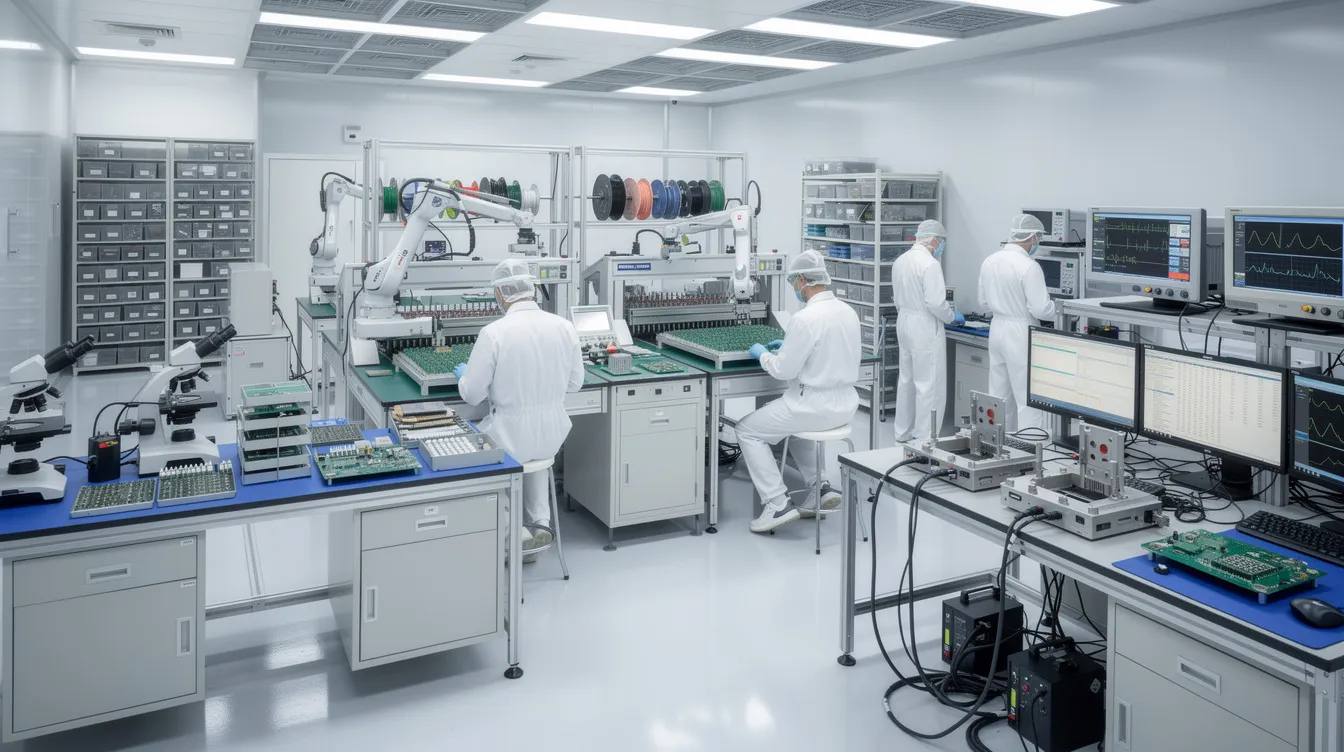
Production of electronic components, multi-layer PCBs, power semiconductors, and consumer electronics under the new ECMS scheme.
The global revenue of the electronics manufacturing industry reached $1.6 trillion in 2022. India’s ECMS scheme has attracted ₹41,863 crore in greenfield investment proposals, with production potential of ₹2.58 lakh crore. Even adjacent digital sectors like website designing is a fast-growing business opportunity in India, reflecting the broader tech ecosystem expansion.
- Investment: ₹25-200 crores for component manufacturing
- Best for: Technology entrepreneurs and electronics industry investors
- Key strengths: Government incentives, rapidly growing market, export focus under China-plus-one strategy
- Limitations: Technology licensing complexity, skilled workforce scarcity, component import dependence during ramp-up
13. Aluminium Processing
Secondary aluminium processing into profiles, sheets, extrusions, and finished products for construction, automotive, and consumer goods.
The demand for lightweight materials spans surprising sectors-even the global market size of the toy making industry reached $308.21 billion in 2022, with aluminium components used in premium product lines.
- Investment: ₹20-80 crores for extrusion and processing lines
- Best for: Metal processing entrepreneurs seeking value addition opportunities
- Key strengths: Diverse end-uses across different industries, recyclable material with strong circular economy alignment, consistent industrial demand
- Limitations: Power costs (aluminium processing is energy-intensive), technology requirements for precision extrusions, competitive market from established players
14. Defence Equipment Manufacturing
Production of defence components, drone parts, communication systems, and equipment under Make in India’s defence procurement policies.
- Investment: ₹30-200 crores depending on product category
- Best for: Engineering companies with defence industry experience and security clearances
- Key strengths: Long-term government contracts, technology development partnerships, strategic national importance ensuring policy stability
- Limitations: Security clearance requirements, stringent quality standards, long gestation periods of 3-5 years
Even adjacent service markets demonstrate India’s consumer spending power-pet care services are a growing business with high profit potential, and the market size of the pet food and supplies industry was $99.10 billion in 2022 globally, showing how pet owners drive demand across manufacturing segments including specialized pet equipment and accessories.
15. Renewable Energy Components
Manufacturing of wind turbine components, energy storage systems, green hydrogen equipment, and grid-scale battery solutions.
- Investment: ₹25-150 crores for component manufacturing
- Best for: Energy sector entrepreneurs and technology-focused investors
- Key strengths: Future growth potential aligned with India’s net-zero targets, environmental benefits, strong policy support through PLI and customs duty structures
- Limitations: Technology dependence on international partners, certification requirements, market still in development stage for certain components
Successful businesses adapt to market changes and customer demands-renewable energy manufacturing requires continuous evolution as technology improves and costs decline.
Quick Comparison of Large Scale Business Ideas
| Business | Investment (₹ Cr) | Profit Margins | Risk Level | Export Scope | Scalability |
|---|---|---|---|---|---|
| EV Battery Manufacturing | 50-200 | Medium-High | High | Strong | Very High |
| Specialty Chemicals | 20-200 | 30-32% OPM | Medium | Strong | High |
| Solar Equipment | 25-100 | Medium | Medium | Moderate | High |
| Pharma API | 30-150 | High | Medium-High | Very Strong | High |
| Food Processing | 10-75 | Medium | Low-Medium | Moderate | High |
| Steel Processing | 30-150 | Low-Medium | Medium | Moderate | High |
| Technical Textiles | 15-80 | Medium | Medium | Strong | High |
| Auto Components | 25-100 | Medium-High | Medium | Strong | High |
| Industrial Machinery | 10-60 | High | Medium | Moderate | Medium |
| Plastic Processing | 10-50 | Medium | Low-Medium | Moderate | High |
| Construction Materials | 15-80 | Medium | Low | Low | Medium |
| Electronics Manufacturing | 25-200 | Medium-High | High | Very Strong | Very High |
| Aluminium Processing | 20-80 | Medium | Medium | Moderate | High |
| Defence Equipment | 30-200 | High | High | Growing | High |
| Renewable Components | 25-150 | Medium | Medium-High | Strong | Very High |
Note: While small scale industries require an investment of ₹8–80 lakhs and small scale industries can adapt quickly to market changes, the opportunities above operate at fundamentally different scales. Small scale industries contribute to local job creation and small scale industries can cater to niche markets often overlooked by larger firms-but large-scale manufacturing creates ecosystem-level impact. For those exploring lower initial investments, consider small business ideas and low investment business ideas as stepping stones, or look at small scale manufacturing business options first. That said, even low cost business ideas and ventures that require minimal investment can serve as feeders into larger manufacturing operations over time.
How to Choose the Right Large Scale Business Idea
Choose Based on Investment Capacity
Your financial resources determine which opportunities are realistic:
- ₹5-25 crores: Food processing, plastic manufacturing, construction materials, furniture production units
- ₹25-50 crores: Auto components, steel processing, aluminium processing, industrial machinery
- ₹50+ crores: EV batteries, pharma API, electronics manufacturing, defence equipment
Startup costs vary dramatically within each category. A business plan should include financial projections and cost analysis covering land, machinery, utilities, and working capital. Cash flow projections for at least 5 years are essential for bank appraisals.
Choose Based on Industry Experience
Match your own business background with the manufacturing business you choose. Conducting market research can reveal gaps in the market, but execution requires domain expertise.
- Existing industry knowledge and connections reduce gestation periods significantly
- Technology requirements must align with your team’s production process capabilities
- Regulatory familiarity matters-pharma and chemicals require deep compliance expertise that cannot be learned overnight
Effective market research informs business strategy and marketing plans, but industry experience is what converts market gaps into a profitable niche. Always conduct market research before committing capital, and use customer feedback from pilot runs to refine your manufacturing process.
Choose Based on Market Outlook
Market research can enhance decision-making for business growth over multi-year horizons:
- Assess 5-10 year demand projections-is the industry trends line moving upward? For example, the global market for organic food reached $146 billion in 2022, indicating a durable trend in organic and health-focused food processing
- Consider government policy support-PLI scheme eligibility windows are time-bound, and delays mean fewer incentive years
- Evaluate supply chain stability-dependence on imported raw materials creates currency and geopolitical financial risk
The strongest manufacturing business ideas sit at the intersection of rising demand, policy support, and supply chain resilience. Focus on emerging trends rather than saturated segments.

Which Large Scale Business Is Best for You?
There is no single best answer-the right choice depends on your industry trends familiarity, investment capacity, and risk appetite:
- Choose EV Battery Manufacturing if you have ₹50+ crores, technology partnerships, and patience for a 4-6 year payback. This is a lucrative idea for those with deep pockets and strategic vision.
- Choose Specialty Chemicals if you want high profit margins, export focus, and have process chemistry expertise. A truly profitable venture for experienced industrialists.
- Choose Food Processing if you have agriculture connections, prefer steady demand with moderate risk, and want to serve both domestic and export target market segments. The beverage industry and organic farming integration can maximize profitability.
- Choose Auto Components if you have automotive industry relationships, quality management systems, and want long-term OEM contracts that generate repeat business.
- Choose Solar Equipment if you believe in renewable energy’s trajectory and can leverage government support for a strong brand identity in clean manufacturing.
- Choose Electronics Manufacturing if you can manage technology licensing and want to ride the China-plus-one wave in a competitive market with strong export potential.
For those earlier in their business journey, consider whether digital marketing services or digital marketing capabilities are needed to build market presence for your products. Every successful business today needs a marketing strategy that includes a strong online presence alongside traditional B2B selling.
Final Thoughts
Large-scale manufacturing offers the most significant wealth creation pathway available to Indian entrepreneurs in 2026, but it demands careful planning at every stage. A clear business plan defines products and target audience-without one, no bank will entertain your loan application, and no investor will take you seriously. You need a comprehensive business plan that withstands scrutiny.
Here are the key factors that separate successful manufacturing ventures from failed ones:
- Professional project reports are non-negotiable. Banks require detailed DPRs, CMA data, DSCR analysis, and break-even projections. This is where most first-time manufacturers stumble.
- PLI scheme windows are closing. Projects commissioned earlier get more incentive years-delays cost real money.
- Working capital kills more factories than competition. Underestimating inventory management, receivables, and operational costs is the most common mistake I see in 20 years of practice.
- Export strategy should be built in from day one. Schemes like RoDTEP, EPCG, and international quality certifications (ISO, BIS, REACH) unlock global markets.
- Technology and automation determine long-term competitiveness. Industry 4.0 adoption is no longer optional for niche markets or high-volume production.
Among the best business ideas for 2026, manufacturing stands apart because it creates tangible assets, generates employment, and builds competitive moats. Whether you are exploring gold refining, biodiesel production, jewellery manufacturing, or rare earth magnet recycling, the fundamentals remain the same: solid feasibility analysis, professional documentation, and disciplined execution.
Large-scale manufacturing is not a low startup costs game-it requires commitment. But for those with the vision, financial resources, and willingness to invest in professional guidance, these business ideas in India offer generational wealth creation.
Need a detailed project report, CMA data, business valuation, or investor pitch deck?
CA Manish Gugliya and the team at ProjectReportBank.com specialize in manufacturing feasibility reports, bank loan documentation, financial modelling, and startup advisory for industrial projects across India. Whether you need a term loan report for a ₹10 crore food processing unit or a comprehensive DPR for a ₹200 crore battery plant, professional documentation is the foundation of every successful business.
What are large scale business ideas?
Large scale business ideas are businesses that require significant investment, industrial machinery, skilled manpower, and large production capacity. These businesses typically operate in sectors such as manufacturing, chemicals, automobiles, food processing, pharmaceuticals, renewable energy, and engineering.
Which is the best large scale business to start in India?
Some of the best large scale business ideas in India include specialty chemicals manufacturing, EV component manufacturing, drone parts manufacturing, solar equipment production, pharmaceutical manufacturing, food processing, gold refining, industrial machinery manufacturing, and plastic product manufacturing. The right choice depends on your investment capacity, market demand, and industry experience.
How much investment is required to start a large scale business?
Investment can range from ₹1 crore to over ₹100 crore, depending on the industry, production capacity, land, plant and machinery, working capital, and technology requirements.
Which large scale manufacturing business is the most profitable?
Industries with strong profit potential include specialty chemicals, pharmaceuticals, renewable energy equipment, industrial automation, EV batteries, medical devices, food processing, drone manufacturing, and high-value engineering products. Profitability depends on operational efficiency, market demand, and product quality.
Can I get a bank loan for a large manufacturing business?
Yes. Banks and financial institutions provide term loans and working capital finance for eligible manufacturing projects. A professionally prepared Detailed Project Report (DPR), CMA Data, financial projections, promoter profile, and business plan significantly improve loan approval chances.
Which government schemes support large manufacturing businesses?
Entrepreneurs may benefit from schemes such as Startup India, MSME registration (where applicable), CGTMSE, Production Linked Incentive (PLI), state industrial subsidy schemes, export promotion schemes, and sector-specific incentives. Eligibility varies by industry and project size.
What documents are required before setting up a large manufacturing unit?
Generally, you may need:
Detailed Project Report (DPR)
Business Plan
Financial Projections
Land documents
Company registration documents
Pollution and environmental approvals
Factory License
GST Registration
MSME Registration (if applicable)
Power and utility approvals
How do I choose the right large scale business idea?
Evaluate market demand, investment requirements, raw material availability, infrastructure, competition, government policies, profit margins, export opportunities, technology requirements, and long-term scalability before making a decision.
Is a Detailed Project Report (DPR) necessary?
Yes. A Detailed Project Report helps entrepreneurs assess project feasibility, estimate costs, forecast revenue, identify risks, and obtain bank loans or investor funding. It is one of the most important documents for industrial projects.
Which large scale businesses have the highest export potential?
Businesses with strong export opportunities include specialty chemicals, engineering products, pharmaceuticals, food processing, textiles, jewellery manufacturing, auto components, drone parts, renewable energy equipment, and industrial machinery.
What are the biggest challenges in starting a large scale manufacturing business?
Common challenges include high initial investment, regulatory approvals, technology selection, skilled workforce availability, working capital management, supply chain disruptions, environmental compliance, and market competition. Proper planning and financial discipline can significantly reduce these risks.
Where can I get professional help for project reports, pitch decks, and business valuation?
If you are planning to start or expand a manufacturing business, CA Manish Gugliya and ProjectReportBank.com provide professional services including Detailed Project Reports (DPR), bank loan project reports, CMA Data preparation, premium business ebooks, investor pitch decks, financial projections, and business valuation reports to support entrepreneurs, startups, MSMEs, and industrial businesses.
- Poha, Puffed Rice & Value-Added Rice Products Project Report & Processing Opportunities

- Integrated Value-Added Rice Products Processing Plant Project Report & DPR

- Integrated Rice Plant Bank Loan, Feasibility, ROI, IRR, Payback & Sensitivity Analysis
- Integrated Rice Processing Plant Financial Projections, Working Capital & DSCR
- Integrated Rice Products Revenue Model, Market Strategy & Profitability
- Integrated Value-Added Rice Plant Project Cost & Means of Finance
- Raw Material Procurement & Inventory Planning for Integrated Value-Added Rice Plant
- Common Utilities, Warehousing, Packaging & Material Handling for Integrated Rice Plant
- Integrated Rice Processing Plant Land, Building & Multi-Line Plant Layout – A Practical Guide for DPR & Bank Finance
- Integrated Rice Processing Plant Capacity Planning & Product Mix
- Integrated Value-Added Rice Plant Machinery & Equipment Cost – A Practical DPR-Oriented Guide
- Integrated Poha, Puffed Rice & Rice Snacks Manufacturing Process & Line Integration
- Instant Poha Manufacturing Plant Project Report & DPR – Bankable Guide by Project Report Bank
- Ready-to-Cook Rice Breakfast Mixes Manufacturing: Products, Process & Plant Setup
- Cup Poha Manufacturing, Packaging & Business Model – A Practical Guide for Entrepreneurs in India