Rice bran, the outer layer of rice grains removed during milling, contains 10% to 23% oil by weight and represents one of India’s most underutilised edible oil resources. For entrepreneurs evaluating a rice bran oil extraction plant project report, the opportunity lies in converting this by-product of rice mills into refined oil, de-oiled bran and valuable by products. However, an integrated rice bran oil processing plant demands careful technical planning, realistic financial projections and a professionally prepared Detailed Project Report before committing capital.
Key Takeaways
- A rice bran oil extraction plant project report must address bran quality, stabilisation, oil recovery and refining losses as the core technical drivers of profitability.
- Integrated bran oil processing plant models (100–500 TPD) capture more margin than standalone configurations but require higher initial investment and working capital.
- Rice bran oil plant setup cost in India varies widely by capacity and configuration; financial projections, DSCR and IRR analysis are essential for bank finance.
- Operating costs are primarily driven by raw materials, accounting for 80–85% of expenses, making procurement planning critical.
- Project Report Bank, led by CA Manish Gugliya, prepares customised DPRs and rice bran oil plant feasibility study documents for serious industrial promoters.
Rice Bran Oil Industry Overview and Investment Opportunity in India
Rice bran oil is an edible oil extracted from rice bran through solvent extraction and subsequently refined for cooking, food processing and industrial applications. Rising health awareness and growing preference among health conscious consumers for healthy cooking oils with a high smoke point have driven steady demand growth.
India produced approximately 135.8 million tonnes of paddy in FY 2022–23, generating an estimated 8–9 million tonnes of rice bran annually. However, only a fraction is currently processed into oil. Major rice-growing belts – Punjab, Haryana, Uttar Pradesh, West Bengal, Andhra Pradesh, Telangana, Chhattisgarh and Odisha – form natural clusters for bran oil processing plant location selection.
The global rice bran oil market was 1.88 million tons in 2025 and is projected to reach 2.19 million tons by 2034, growing at a CAGR of 1.7%. The global market is expected to reach USD 1.74 billion by 2026, with Asia Pacific as the fastest growing market. Increasing health awareness drives demand for rice bran oil, which contains antioxidants like gamma-oryzanol, vitamin E promoting antioxidant benefits, and has a balanced fatty acid profile. Crude rice bran oil contains bioactive compounds like γ-oryzanol and tocopherols. Studies suggest it may lower plasma cholesterol levels and supports insulin resistance improvement, positioning it well among healthy fats for deep frying, high temperature cooking and salad dressings.
Rice bran oil also finds non-food applications in cosmetics, nutraceuticals and rice bran wax production, which marginally improve project economics. However, structural risks remain: commodity price cycles, dependence on rice milling volumes, and policy shifts on edible oil imports affect long term sustainability.
Promoters considering upstream integration should also review the integrated rice milling & processing plant project report for raw material linkage.
Integrated Rice Bran Oil Processing Plant – Business Model
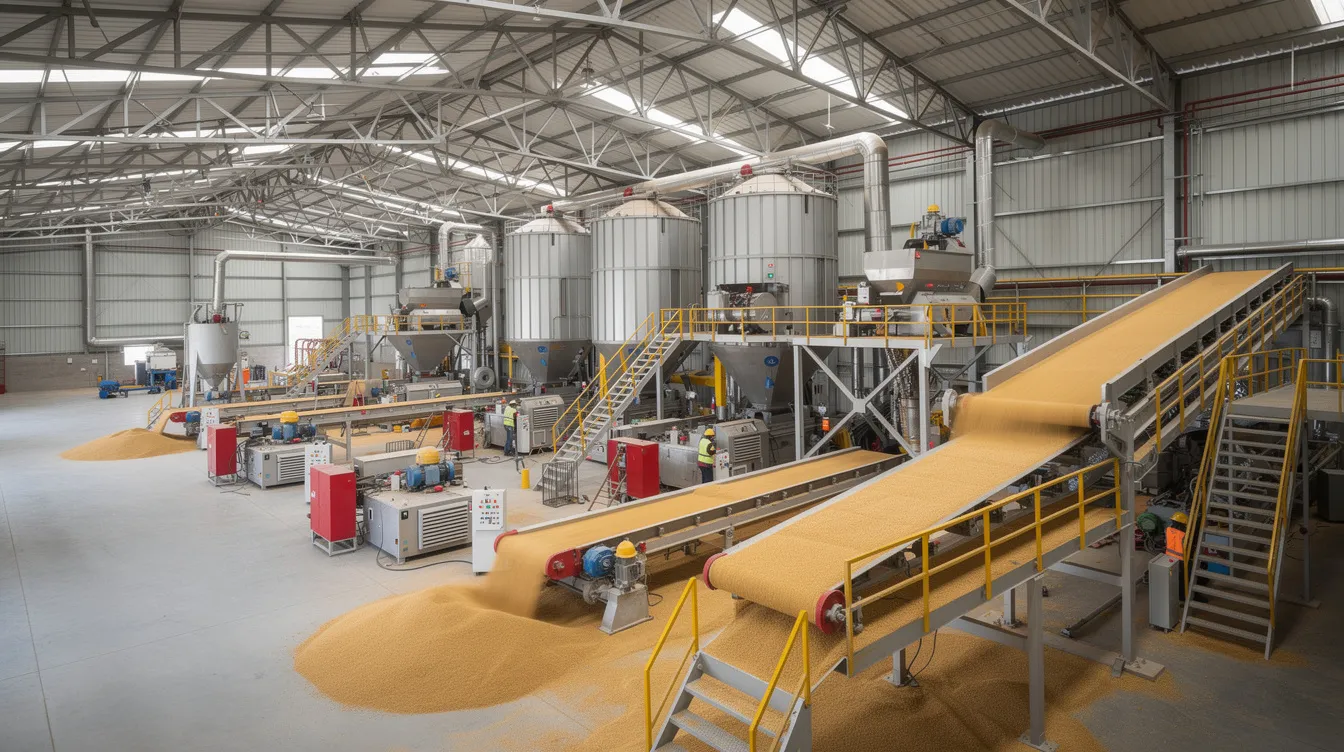
An integrated rice bran oil processing plant combines bran stabilisation, solvent extraction, crude oil refining, dewaxing and packaging within a single facility.
- Model A – Extraction Only: Bran stabilisation and rice bran oil solvent extraction plant producing crude rice bran oil and de-oiled rice bran. Lower capex intensity, simpler manufacturing process, but limited margin capture and dependence on crude oil buyers.
- Model B – Standalone Refinery: Purchases crude oil from extractors and produces refined oil. Lower raw materials risk from bran quality, but exposed to crude oil price trends and supply availability.
- Model C – Fully Integrated: Combines bran receiving through packaging. Higher capital expenditure and manufacturing process complexity, but captures the entire process margin, enables quality control from bran to final product, and supports own-brand ambitions.
Production capacity of rice bran oil processing plants can range from 20,000 to 100,000 MT annually depending on configuration. Model C is preferable where promoters have easy access to a steady supply of fresh bran at scale (200–500 TPD) and target branded retail. Models A or B suit promoters with capital constraints or limited bran access.
For multi-oilseed extraction technology, refer to the industrial solvent extraction & multi-oilseed processing plant DPR. For refinery-focused configurations, the large-scale edible oil refinery & fractionation plant project report provides relevant background.
Rice Bran Procurement, Stabilisation and Raw Material Planning
Raw materials represent a significant portion of operating expenses – rice bran accounts for 80–85% of total operating expenses in most extraction plants. Project planning involves evaluating raw material availability and supplier contracts with rice mills within a 50–100 km collection radius.
Stabilization of raw bran is crucial to deactivate lipase enzymes before extraction. Without intervention, free fatty acids escalate rapidly – studies show FFA can reach 5–7% within the first 24 hours in hot, humid Indian conditions. Rice bran must be stabilized within hours after milling to keep FFA levels low (ideally below 5%). Raw rice bran must be processed quickly to prevent free fatty acid escalation, as higher FFA leads to greater neutralisation losses during the refining process and directly erodes the processing margin assumed in the project report.
Desirable quality parameters for procurement: moisture 10–14%, oil content 14–22% depending on variety, minimal impurities. Stabilisation methods include dry heat stabilisers at 110–130°C, extrusion and puffing systems. Seasonal bran availability (kharif and rabi milling patterns) requires buffer stock planning and inventory modelling across months.
Rice Bran Oil Extraction and Refining Manufacturing Process
The entire process from bran receiving to packaged refined oil involves the following steps:
- Bran receiving and quality inspection
- Cleaning – removal of stones, metal and hull impurities
- Stabilisation and conditioning
- Puffing or pelleting for improved solvent percolation
- Continuous solvent extraction using hexane
- Miscella separation, evaporation and solvent recovery
- Crude rice bran oil storage
- Wet meal desolventisation, drying and cooling (DTDC)
- De-oiled bran storage and dispatch
The refining process continues with:
- Degumming and neutralisation (chemical or physical refining route)
- Bleaching with bleaching earth and filtration
- Dewaxing and winterisation – essential for rice bran oil clarity
- Deodorisation under vacuum at high temperatures
- Polishing filtration
- Storage in finished oil storage tanks
- Packaging – bulk tankers and retail packs via packaging machinery
The extraction process involves cleaning, conditioning, and puffing rice bran before solvent contact. Rice bran oil extraction typically uses hexane as a solvent, and solvent extraction can recover up to 95% of oil content. Crude rice bran oil undergoes refining to remove impurities before becoming the final product. Physical refining is often preferred for rice bran oil as it better preserves oryzanol content.
For detailed extraction sequences, refer to the solvent extraction plant process flow. Refining details are covered in the edible oil refinery process flow.
Rice Bran Oil Solvent Extraction Plant – Technology and Machinery
Major machinery blocks for a rice bran oil extraction and refining plant include:
| Equipment Section | Purpose | Key Selection Parameters |
|---|---|---|
| Bran stabiliser / expander | Enzyme deactivation | Residence time, steam requirement, TPH capacity |
| Continuous extractor (rotocel/loop) | Oil-solvent contact | Bran throughput, miscella concentration |
| DTDC desolventiser | Solvent removal from meal | Residual solvent in DOC, energy efficiency |
| Miscella distillation | Solvent recovery from oil | Recovery rate, hexane loss per tonne |
| Degumming/neutralisation reactor | Gum and FFA removal | Batch vs continuous, chemical vs physical route |
| Dewaxing crystalliser and chiller | Wax separation | Temperature control, crystal formation time |
| Deodoriser column | Odour and volatile removal | Vacuum level, steam consumption |
Hexane recovery systems are crucial for safety and operational cost control. Proper laboratory equipment is essential for quality control – including FFA titration setups, moisture analysers and colour measurement – ensuring quality assurance and compliance with industry standards. Equipment costs vary significantly by automation level and whether imported or Indian machinery is selected.
For refinery machinery context, see edible oil refinery machinery, technology & EPC selection.
Rice Bran Oil Plant Capacity Planning and Production Configuration
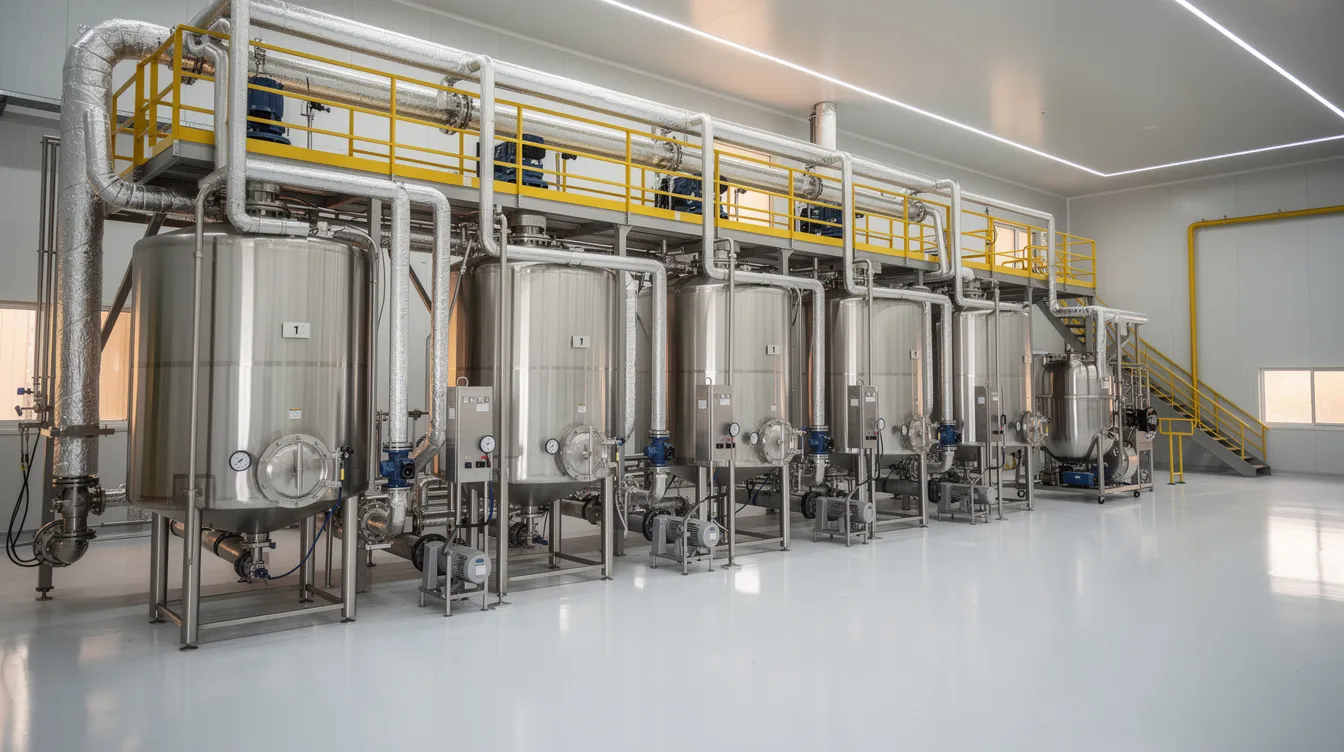
Plant capacity refers to rice bran input (TPD), not crude oil output. A 200 TPD bran extraction plant does not require a 200 TPD refinery – the refinery processes only the crude oil produced, typically 60–80% of extraction-equivalent throughput. Plant capacity can significantly influence the project’s overall financial viability.
| Capacity (TPD Bran) | Annual Bran (MT, 300 days) | Crude Oil Output (indicative) | Typical Profile |
|---|---|---|---|
| 100 | 30,000 | 4,500–5,400 MT | Regional operator |
| 200 | 60,000 | 9,000–10,800 MT | Mid-scale integrated |
| 300 | 90,000 | 13,500–16,200 MT | Multi-state distribution |
| 500 | 1,50,000 | 22,500–27,000 MT | National-scale key players |
The plant requires significant power and steam for solvent extraction and refining. Electrical and water supply are essential utilities required for operation. For detailed utility norms, refer to the edible oil refinery capacity planning guide.
Rice Bran Oil Extraction and Refinery Plant Setup Cost in India
All cost figures below are illustrative planning estimates, not supplier quotations. Location selection is critical for the profitability of a rice bran oil extraction facility.
For smaller-scale operations, initial investment for a rice bran oil plant is estimated at USD 200,000 to USD 250,000. A rice bran oil plant at the smaller end may require around 500 square meters of land. For industrial-scale integrated plants:
- 50 TPD extraction-only: Approximately ₹7–8 crore total project cost
- 200 TPD integrated extraction + refinery: Approximately ₹25–40 crore depending on automation
- 500 TPD integrated with high automation: ₹50–70 crore or higher
Major cost heads include land and site development, civil construction, extraction and refining machinery (typically 45–55% of fixed capital), electrical installation, boiler and steam systems, ETP, fire protection, laboratory, pre-operative expenses, interest during construction, contingency and margin money for working capital.
For refinery-side capex benchmarks, see edible oil refinery project cost & investment.
Land, Factory Building, Utilities and Infrastructure Requirements
A 100–200 TPD integrated plant typically requires 5–10 acres, with provisions for future expansion, internal roads and green belt. Layout planning must segregate hazardous areas (solvent storage and extraction block) from non-hazardous zones per PESO norms.
Utility requirements include connected power load of 1–3 MW, steam generation (coal, biomass, rice husk or natural gas), process and cooling water, compressed air and chilled water for dewaxing. Fire hydrant and foam systems around the tank farm, nitrogen blanketing for storage tanks and compliance with environmental regulations through ETP/STP are non-negotiable infrastructure requirements.
Rice Bran Oil Recovery, Refining Losses and Production Economics
A realistic material balance is central to any rice bran oil plant feasibility study. The expected oil recovery yield is typically 14% to 18% from raw bran under practical conditions, depending on bran variety, oil content and FFA levels.
Illustrative material balance for 1,000 kg rice bran (20% oil content):
- Theoretical oil: 200 kg
- Crude oil recovered (at 95% efficiency): ~190 kg
- De-oiled bran: ~800 kg (residual oil 1–2%)
- Refining losses (neutralisation 2–4%, bleaching ~1%, dewaxing 1–2%, deodorisation ~1%): Total ~5–8%
- Refined oil output: ~175–180 kg
- By-products: rice bran wax, soap stock, fatty acid distillate
The oil produced must meet FSSAI standards. De-oiled rice bran is sold as animal feed. Regular maintenance of extraction and refining machinery helps minimise unexpected losses and protect contribution margins.
Rice Bran Oil Plant Operating Costs and Profitability
Major variable costs include rice bran purchase price, transportation costs, solvent consumption, electricity, steam fuel, processing chemicals, labor costs, maintenance costs and distribution costs. Total operating expenses must be computed per tonne of bran processed and translated into production costs per tonne of refined oil.
Rice bran oil processing plants can achieve gross profit margins of 20–30% under favourable conditions. Net profit margins for rice bran oil manufacturers can reach 10–15% at stabilised operations. However, margins fluctuate with selling price movements and bran cost price trends. Break-even analysis helps determine the capacity needed to cover fixed costs – typically at 60–70% capacity utilisation for solvent extraction units.
Project Investment, Means of Finance and Working Capital
Typical project financing involves promoter equity (25–35%), bank term loan (50–65%) and working capital cash credit facility. A Detailed Project Report is essential for securing bank loans or attracting investors – comprehensive assessments of technical feasibility and market demand are expected by lenders.
Working capital assessment must cover inventory of bran (15–30 days), finished oil and de-oiled bran inventory, receivables (15–45 days) and creditor adjustments. For commodity-based rice bran oil manufacturing, working capital intensity is high due to price volatility and seasonal bran availability. CMA Data preparation in RBI-prescribed formats is essential for bank loan proposals.
Rice Bran Oil Plant Financial Projections, DSCR, IRR and Feasibility
Financial projections typically cover a 5 to 7 year horizon in project reports, though 10-year models are common for larger projects. Expenditure projections must flow from capacity utilisation assumptions – typically 50–60% in Year 1, ramping to 85–90% by Year 3.
A comprehensive project report includes sections on market analysis, technical feasibility, and financial projections covering projected P&L, balance sheet, cash flow, DSCR (target above 1.25–1.50), project IRR, equity IRR, NPV and payback period. Financial projections include ROI, profitability, and long term sustainability assessments under base, optimistic and conservative scenarios.
For methodology reference, see edible oil refinery financial projections, CMA Data & DSCR.
Sensitivity Analysis and Major Investment Risks
Rice bran oil projects are highly sensitive to bran procurement price, FFA quality deterioration, oil content variation, refined oil selling price changes and capacity utilisation shortfalls. A ±5–10% shift in processing margin can materially alter DSCR and IRR.
Key risk mitigation includes long-term bran procurement contracts, conservative recovery assumptions, phased capacity expansion, adequate insurance and strict operating expenses control. Environmental and safety risks in solvent extraction plants must be addressed through engineering controls and regulatory compliance.
For sensitivity frameworks, see solvent extraction plant feasibility study, ROI & IRR.
Licences, Statutory Approvals and Regulatory Compliance in India
Regulatory approvals are required before establishing a rice bran oil extraction plant. Environmental compliance with pollution control regulations is mandatory. Key approvals include:
- FSSAI manufacturing licence for edible oil production
- Factory licence, ESI and PF registrations
- Consent to Establish and Operate from State Pollution Control Board
- PESO approval for solvent storage and handling
- Boiler registration under IBR
- Fire safety NOC
- GST registration and Udyam registration for MSME eligibility
- Food-grade packaging and labelling compliance under FSSAI
Promoters should verify current requirements with official notifications and engage local regulatory advisers where necessary.
What Should a Bankable Rice Bran Oil Extraction and Refining Plant DPR Include?
A professional project report should cover: promoter profile, project rationale, site and capacity details, detailed manufacturing process description, machinery list, plant layout, raw material planning, market and industry analysis, itemised project cost, means of finance, 7–10 year financial projections, DSCR, IRR, break-even, sensitivity analysis, risk mitigation, implementation schedule and compliance checklist.
Project Report Bank prepares customised DPRs and financial models tailored to the promoter’s specific capacity, location, raw material strategy and financing plan – distinct from automated template-based reports.
Professional DPR, Financial Modelling and Bank Finance Advisory by CA Manish Gugliya
In my approach to preparing industrial DPRs, the focus is on building each financial projection from operational assumptions – plant capacity, recovery norms, realistic price assumptions and conservative market growth estimates – rather than generic percentage claims.
Core services for rice bran oil projects include project conceptualisation, detailed project report preparation, financial projections, CMA Data, DSCR and IRR analysis, term-loan and working-capital structuring, and investor-ready documentation. These services are designed for medium- and large-scale rice bran oil manufacturing projects, including forward integration by existing rice mills.
A well-prepared DPR improves the quality of credit appraisal but does not guarantee loan approval. Serious promoters are invited to share preliminary details – proposed capacity, location, configuration, estimated project cost, raw material linkages and funding requirement – via the website or WhatsApp for an initial professional discussion.

Frequently Asked Questions
What is an integrated rice bran oil extraction and refining plant?
It is a facility combining rice bran stabilisation, solvent extraction of crude oil, oil refining (degumming, bleaching, dewaxing, deodorisation) and packaging within one site. This allows the promoter to capture the full processing margin from bran to refined oil and superior quality de-oiled bran, maintaining quality control across the production process.
Why is rice bran stabilisation so critical for project viability?
Lipase enzymes begin breaking down oil into free fatty acids immediately after milling. Timely processing of rice bran is essential to maintain oil quality. Without stabilisation within hours, FFA levels can exceed 5–7% in a single day, leading to higher refining losses, lower net oil produced and significantly reduced profitability compared to what the project report assumes.
How much does a rice bran oil processing plant cost in India?
For small-scale mechanical pressing or expeller units, initial investment can start at approximately USD 200,000–250,000. Industrial solvent extraction plants at 50 TPD cost approximately ₹7–8 crore, while 200 TPD integrated extraction and refinery plants range from ₹25–40 crore. Costs depend on technology, automation level and whether refining machinery is included.
Is a rice bran oil extraction plant profitable?
Rice bran oil processing plants can achieve gross profit margins of 20–30% and net profit margins of 10–15% under stable conditions. However, profitability depends on the processing margin between bran cost and combined revenue from refined oil and de-oiled bran. Market growth in rice bran oil production supports long-term demand, but sensitivity analysis is essential rather than relying on fixed profit promises.
Can banks finance rice bran oil extraction and refinery projects?
Yes, such projects are generally eligible for term loans and working capital facilities from banks, subject to project viability, adequate promoter contribution, collateral coverage and a professionally prepared DPR with CMA Data. The rice bran oil extraction plant project report must demonstrate adequate DSCR, realistic capacity utilisation and conservative financial projections to support the credit appraisal process.
Conclusion – Evaluating an Integrated Rice Bran Oil Project Before Investment
Successful investment in rice bran oil production depends on securing a reliable and fresh bran supply, selecting appropriate extraction and refining technology, building realistic oil-recovery and refining-loss assumptions, ensuring adequate capital and working capital, and establishing market access for refined oil and de-oiled bran.
Conservative financial projections, detailed sensitivity analysis and alignment with industry standards are essential before committing substantial capital. Promoters should commission a customised rice bran oil extraction plant project report tailored to their specific capacity, location and financing structure rather than relying on generic templates.
Serious entrepreneurs and rice mill owners are welcome to consult CA Manish Gugliya and Project Report Bank for a professionally prepared DPR, feasibility study and project-finance advisory.