
Key Takeaways
- A small 1 TPH semi-automatic pulse cleaning, grading and packing plant in India may require approximately ₹1.75–2.25 crore total project cost (including working capital margin), while a 5 TPH automatic multi-pulse processing plant with optical colour sorter can go upwards of ₹6–8 crore depending on specifications and location.
- The pulse cleaning grading packing plant setup cost depends primarily on capacity (kg/hr or TPH), automation grade, colour sorter selection, land and building standards, and working capital needed for pulse inventory and packing materials.
- This article covers whole-pulse cleaning, grading, optical colour sorting and packing for chana, moong, urad, masoor, toor, yellow peas, pigeon peas, kidney beans and peas. Dal milling machinery (dehusking, splitting, polishing) is intentionally excluded from investment estimates.
- Investors should differentiate between machinery-only cost, fixed capital investment, margin for working capital, and total funding requirement including bank working capital limits.
- Project Report Bank, led by CA Manish Gugliya, FCA, DISA (ICAI), can prepare a customised DPR, financial projections, CMA Data and bank loan proposal for pulse cleaning, grading and packing plants of various capacities across India.
Introduction – Pulse Cleaning, Grading & Packing Plant Investment Opportunity in India
Setting up a pulse cleaning grading packing plant requires financial and operational planning that goes well beyond selecting machinery. This article examines the investment required for a processing plant focused on cleaning, grading, optical sorting and packing of whole pulses – not a dal milling plant involving dehusking, splitting or polishing. While pulse processing includes cleaning, dehulling, and sorting stages in broader industry terminology, the scope here is limited to the cleaning-to-packing chain for whole food grains.
Many traders, FPOs, cooperatives and agri-businesses in India are investing in value-added pulse cleaning and packaging business operations to capture margins from quality-based grading, branded retail packs and institutional supply. These processing plants serve bulk buyers, modern retail, HORECA and exporters through consistent quality standards, food safety compliance and operational efficiency.
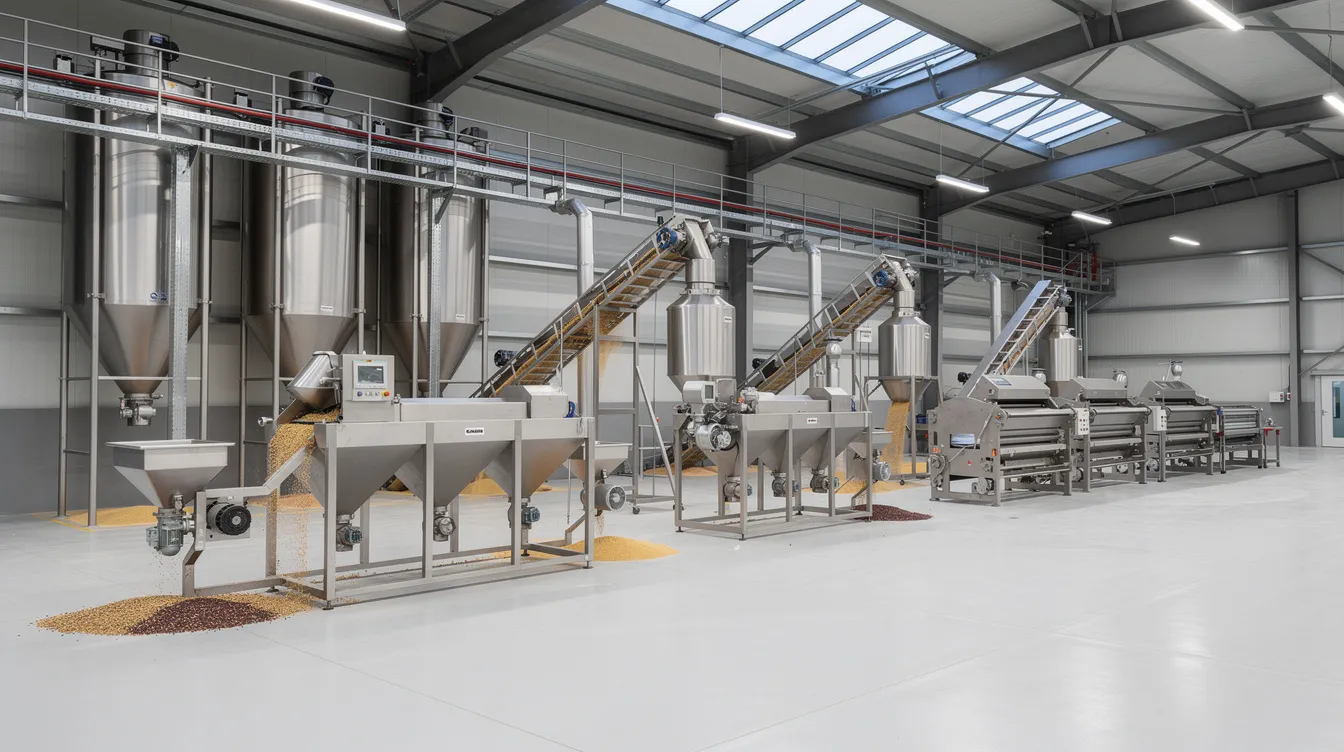
The typical process flow runs as follows: raw pulse receipt → pre-cleaning → aspiration → destoning → sieving and grading → gravity separators (where required) → optical colour sorting → weighing → automatic packing → palletised finished goods storage. A commercial pulse cleaning and grading facility typically has a capacity of 1 to 2 metric tons per hour, though larger plants at 5–10 TPH are increasingly common. For a complete concept-level study, investors may refer to the Integrated Multi-Pulse Cleaning, Grading & Packing Plant Project Report. This article concentrates specifically on setup cost and investment planning.
The discussion is based on Indian conditions, with investments expressed in ₹ lakh and crore at indicative 2025–26 cost levels. All figures are illustrative and must be validated through supplier quotations and a tailored Detailed Project Report before committing capital. Promoters should establish clear project objectives before launching a pulse processing facility.
How Much Does a Pulse Cleaning, Grading & Packing Plant Cost in India?
The pulse cleaning and packing plant cost in India varies considerably by capacity, automation level and infrastructure standards. Broadly, a 1 TPH semi-automatic plant may cost ₹1.75–2.25 crore total project cost, a 2–5 TPH automatic plant ₹3–8 crore, and a 10 TPH export-grade facility ₹7–10+ crore. These ranges assume multi-pulse cleaning, gravity separation, basic optical colour sorting and packing. Costs vary based on capacity from small-scale to large commercial plants, and different equipment types affect the total project cost of a cleaning and grading facility.
Investors should distinguish four financial concepts:
- Machinery-only cost: the pulse cleaning grading packing machinery cost for the process line plus packing equipment.
- Fixed capital: land, building, plant and machinery, electrical installation, utilities and pre-operative expenses.
- Margin for working capital: funds for raw pulse inventory, packing materials, receivables and operating cash.
- Total project cost and funding requirement: fixed capital plus working capital margin, financed through promoter contribution, term loan and bank working capital limits.
Capital expenditure includes equipment costs for a pulse cleaning and grading line, building and infrastructure, and all ancillary systems. For a 1 TPH plant with semi-automatic packing, machinery-only may be around ₹70–100 lakh, fixed capital about ₹1.3–1.7 crore, and total project cost approximately ₹1.75–2.25 crore. For a 5 TPH automatic pulse cleaning grading packing plant, total cost can reach ₹6–8 crore. These are not quotations – they are illustrative ranges anchored to publicly available DPR data and equipment market reports.
Financial modeling is essential for assessing project feasibility, and project feasibility studies should evaluate economic viability before investment commitments are made.
Capacity-Wise Plant Setup Cost – 1 TPH, 2 TPH, 5 TPH and 10 TPH
The table below compares indicative investment across four capacity levels. TPH refers to input handling rate under standard conditions.
| Parameter | 1 TPH (1,000 kg/hr) | 2 TPH (2,000 kg/hr) | 5 TPH (5,000 kg/hr) | 10 TPH (10,000 kg/hr) |
|---|---|---|---|---|
| Configuration | Semi-automatic, basic colour sorter | Semi-automatic with colour sorter | Fully automatic, multi-channel sorter | Export-grade, NIR sorter, auto packing |
| Plant & Machinery (approx.) | ₹70–100 lakh | ₹1.2–1.8 crore | ₹2.5–4 crore | ₹4–6 crore |
| Land Requirement | 0.5–0.75 acre | 0.75–1.25 acres | 1.5–2 acres | 2–3+ acres |
| Built-up Area | 6,000–8,000 sq. ft. | 8,000–12,000 sq. ft. | 12,000–15,000 sq. ft. | 15,000+ sq. ft. |
| Installed Power | 15–25 HP (approx. 100 kW range) | 50–80 HP | 100–150 HP | 150–250+ HP |
| Manpower per Shift | 6–10 | 10–15 | 15–25 | 25–40 |
| Total Project Cost (indicative) | ₹1.75–2.25 crore | ₹3–4.5 crore | ₹6–8 crore | ₹7–10+ crore |
Pulse processing plants require 6,000 to 15,000+ sq. ft. of area depending on capacity. Energy consumption for pulse processing ranges from 100 to 250 kW. Smaller plants typically require 15–25 HP power connections; larger plants require considerably more. Plant capacity decisions should consider both peak volume and operational hours.
Annual processing volume depends on operating hours, working days (typically 210–280 days per year) and realistic capacity utilisation – often 50–60% in year one, rising to 70–80% by year three. Saleable output will be lower than input throughput because of removal of dust, stones, shrivelled and damaged grains and other impurities. Raw pulse-to-finished clean recovery typically hovers around 70% to 75%.
A 5 TPH or 10 TPH multi-pulse processing plant becomes more cost-efficient per tonne due to economies of scale in power consumption, manpower and civil works, but requires substantially higher working capital and stronger market arrangements. For deeper coverage on sizing, see the guide on Pulse Cleaning & Packing Plant Capacity, Land, Building & Layout Requirements.
Detailed Project Cost Breakdown
Lenders and investors expect a structured project cost statement separating land, civil works, machinery and pre-operative expenses before considering working capital margin. Infrastructure costs include land and site development, which varies significantly by location. Location near major pulse-producing areas reduces freight costs, and proximity to Agricultural Produce Market Committees lowers logistics overhead.
For a typical 2–5 TPH pulse cleaning grading packing plant, key cost heads include:
- Land and site development – varies by state; industrial estates may offer developed plots
- Factory building, godown and office – RCC or PEB; taller buildings with mezzanine floors support gravity-flow layout
- Cleaning machine line – pre-cleaner, aspiration channel, destoner, graders, gravity separators
- Optical colour sorter – single or multi-channel; ₹14–60 lakh depending on capacity and brand
- Automatic pulse packing machinery – weighing, bagging, sealing; semi-auto to servo-driven VFFS systems
- Bucket elevators, screw/chain conveyors – material handling between stages
- Electrical installation, cabling and control panels – PLC-based or basic starter panels
- Dust collection, air compressor and pneumatic systems – 10–25% of machinery cost
- Fire protection, safety and ventilation – essential for compliance
- Laboratory and quality-control equipment – moisture meters, sieve analysis, weighing balances
- Installation, testing and commissioning – erection, trial runs
- Preliminary and pre-operative expenses – professional fees, licences, interest during construction
- Contingency – typically 5–10% of fixed cost
- Margin for working capital – raw pulses, packing materials, operating cash
GST on machinery (typically 18%) may be eligible for input tax credit and is normally shown separately in DPR cost tables. Customs duty on imported optical sorters (7.5–10%) is capitalised. In CA Manish Gugliya’s DPR practice, freight, erection and loading charges are allocated either to machinery or pre-operative expenses – not both – to avoid double counting.
Plant & Machinery Cost and Automation Options
Machinery can represent 45–60% of total fixed capital for a greenfield pulse cleaning, grading and packing unit. Standard equipment includes pre-cleaners, destoners, and gravity separators for grading. Gravity separators remove stones and impurities from pulses, while vibro separators facilitate three-dimensional motion for effective cleaning. Mechanical cleaning techniques include pre-cleaners and gravity separators working in sequence.
Key machines in a pulse processing plant:
- Raw material intake hoppers and feeding systems
- Pre-cleaners and aspiration channels for removing dust, chaff and foreign materials
- Destoners and gravity separators for density-based separation
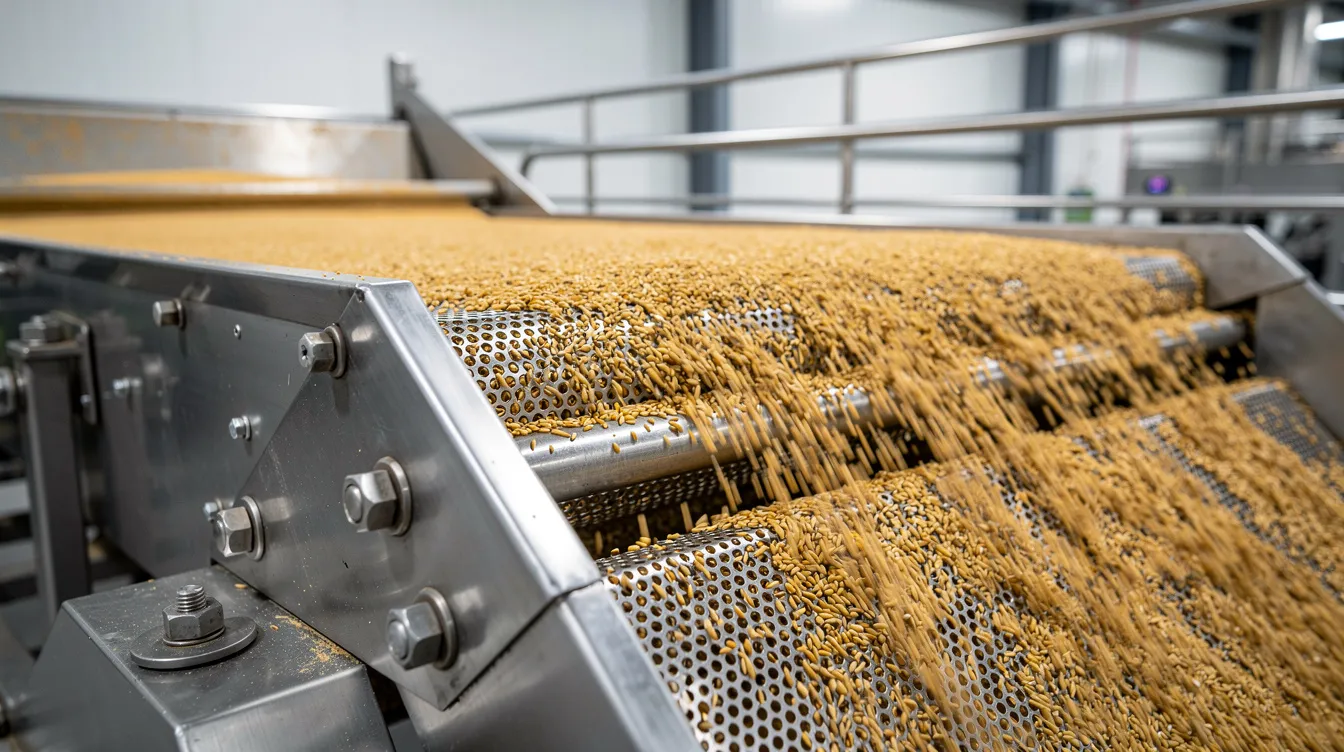
- Multi-deck sieving and grading machines for size classification
- Magnetic separators for metal contamination
- Optical colour sorters (CCD/NIR types) for removing discoloured and damaged grains
- Weighing and packing systems – from manual bagging to fully automatic VFFS with multi-head weighers
- Elevators, conveyors, dust collection and compressed air systems
Pulse cleaning machines can process up to 500 kg per hour per unit in smaller configurations. Advanced cleaning systems ensure 99.99% purity in pulses when combined with optical sorting. Operational efficiency of pulse processing plants can reach 99% with properly calibrated equipment using contemporary techniques. Automation can significantly reduce long-term labor costs in processing facilities and reduces operational costs per tonne over time.
For reference, a multipurpose grain cleaning and grading plant may cost around ₹4,35,000, a fully automatic seed cleaning machine approximately ₹5,50,000, a seed cleaning plant about ₹25,00,000, and a 1 TPH seed cleaning machine around ₹44,99,999 – though these are vendor-listed prices and actual costs depend on specifications. Investors can request a quote price or product brochure from any leading manufacturer and supplier to compare technical specifications and motor capacity before finalising selections.
For detailed equipment lists, refer to Pulse Cleaning, Grading & Sorting Machinery: Equipment List, Specifications & Cost. Those evaluating colour sorter options specifically may find the guide on Optical Colour Sorter for Pulses: Technology, Capacity, Price & Selection useful.
Investors planning integrated multi-pulse processing should consider flexible graders with changeable sieves and programmable cleaning recipes to handle different commodity characteristics without excessive downtime. The offered machine in each category should be evaluated for motor power, power source compatibility, power consumption, material of construction, operation mode, long service life and energy efficiency – not just the latest price.
Land, Building, Warehouse and Plant Layout Investment
Land purchase cost varies drastically by location – from a few lakh per acre in rural pulse-producing districts to several crore near metro areas. Building construction cost is more predictable. Pulse processing plants require 6,000 to 15,000+ sq. ft. depending on capacity. Pre-engineered building (PEB) sheds offer faster construction, clear spans and easier future expansion compared to conventional RCC structures.
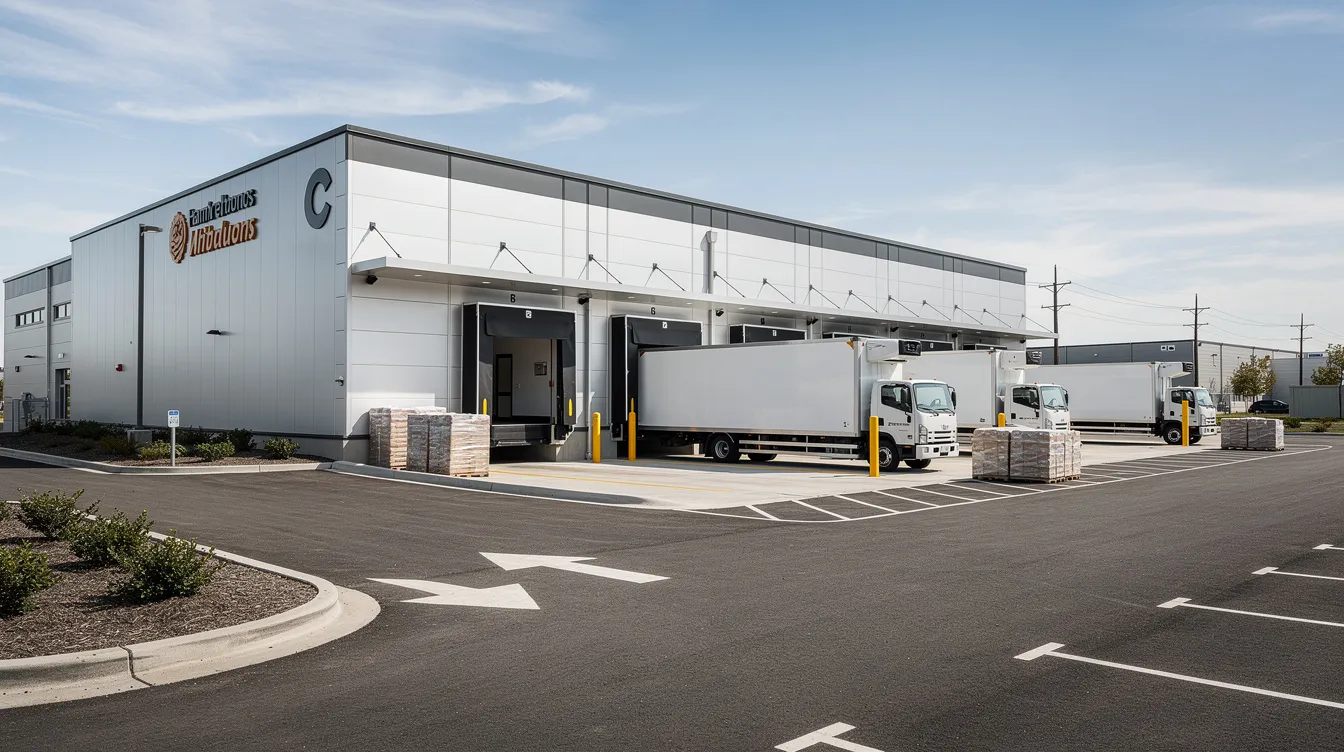
Built-up areas to plan include: raw material storage godown, cleaning and grading hall, colour sorting and packing area, finished goods warehouse, QC lab, office, utilities block (compressor, DG set, transformer), workers’ amenities and weighbridge space. Layout should ensure unidirectional material flow, prevent cross-contamination of clean pulses and unprocessed stock, and provide adequate truck movement space and loading docks.
Working Capital Requirement for a Pulse Cleaning and Packing Business
Many pulse packing plants face stress not because of machinery problems but because working capital needs are underestimated. Working capital needs can dominate total operational expenses in pulse processing.
Initial working capital typically ranges from ₹10 lakh to ₹40 lakh for smaller plants, scaling considerably higher for 2–5 TPH units operating on own-account trading. Initial working capital buffers should cover raw materials, utilities, and labor costs. Monthly operating expenses include plant supervisor salaries and utilities costs. A practical assessment for a mid-sized plant involves:
- Raw pulse inventory: 30–60 days of throughput at prevailing market prices
- Packing material stock: bags, pouches, labels – typically 15–20 days
- Wages, power and factory overheads: one month’s provision
- Debtors: 30–45 days of sales outstanding
- Less: creditors for raw material and packing suppliers (20–30 days)
The working capital cycle differs significantly between a plant that buys, processes and sells pulses on its own account versus a job-work facility processing material belonging to customers. Job-work models carry far lower raw-material inventory risk. For the Pulse Cleaning, Grading & Packing Job-Work Business Model, working capital requirements are comparatively modest but margins per tonne are also lower.
The seasonal nature of crop arrivals (chana in March–April, toor in January–March, moong and urad in specific windows) introduces price volatility. Promoters should adopt risk-managed stock policies rather than speculative inventory positions.
Business Models and Investment Implications
Key business models for pulse cleaning grading packing units include:
- Job-work cleaning and packing – lower working capital, stable per-tonne charges, requires customer contracts
- Bulk cleaning and institutional supply – 25–50 kg bags for wholesalers, defence, HORECA
- Own-brand retail packing – 500 g to 5 kg consumer SKUs; higher margins but greater marketing and compliance investment
- Export-grade pulse cleaning and packing – requires higher-grade optical sorters, metal detectors, HACCP compliance and traceability; see the Export-Grade Pulse Cleaning, Colour Sorting & Packing Plant Project Report
- Integrated multi-pulse plant – combining several models across type of pulses including cereal grains and seeds
Food safety ratings in packaging enhance marketability of processed pulses, and implementing food safety standards ensures compliance for graded pulses. Each model carries a different risk profile, capital intensity and margin structure. A seed cleaning grading plant serving FPOs may also function as a seed processing plant – diversifying revenue across food and seed processing customers.
Production Cost, Revenue, Profitability and ROI
Profitability depends on throughput, processing margin per tonne and control over operational costs. Electrical costs depend on connected load and operational hours. Key cost components include raw pulse purchase (for trading model), labour, power and fuel, packing materials, repairs, factory overheads, administrative expenses, logistics, quality-control costs, interest on term loan and working capital, and depreciation.
In a buy-process-sell model, margin per tonne is the difference between sale price and total cost of raw pulses plus processing and packing. In a job-work model, revenue is the processing fee per kg/hr or per tonne – typically lower but steadier.
For a 2–5 TPH plant at 60% utilisation processing approximately 3,000–5,000 tonnes annually, processing margins of ₹2,000–4,000 per tonne (on own-trading basis) may yield EBITDA margins of 8–15% depending on business mix. These are illustrative only. Investors should evaluate break-even utilisation, simple ROI, IRR and payback period under both base-case and downside scenarios. High performance in head pulses recovery and minimal waste contribute directly to margin improvement.
Bank Loan, Promoter Contribution and Project Financing
Most pulse cleaning and packing plants are financed through a combination of term loan (for fixed capital) and working capital facilities, with promoter contribution typically 25–40% depending on lender policy. Government schemes can provide capital subsidies for project financing, improving the effective funding structure.
Lenders review the DPR, projected financial statements, DSCR over loan tenure, promoter profile and track record, collateral security and market feasibility. Well-prepared CMA Data showing projected inventory, receivables and repayment capacity is typically mandatory. Those interested in understanding how dal milling projects are structured differently may find that comparison useful.
Bank Finance DPR & Loan Proposal Assistance from Project Report Bank generally starts around ₹25,000, with fees varying by complexity. No advisor can guarantee sanction – banks apply independent credit policies – but professional documentation significantly reduces queries and improves clarity.
Financial Projections and Sensitivity Analysis
Projections typically cover 5–7 years: projected Profit & Loss, Balance Sheet, Cash Flow, DSCR table and break-even analysis. These should be assumption-driven – linking installed capacity, operating hours, utilisation ramp-up, processing margins and selling prices.
Sensitivity analysis should test: lower capacity utilisation, reduced gross margin per tonne, higher power tariffs, increased interest rates, longer receivable days and rising maintenance costs. CA-led DPRs typically present at least three scenarios with commentary on DSCR, IRR and payback period under each.
Licences, Registrations and Applicable Compliance
Compliance requirements differ by state. Mandatory licenses include food safety registrations like FSSAI and local municipal licenses. Key registrations typically relevant for a unit dealing in food grains include:
- FSSAI licence for food processing and packing
- GST registration (especially for interstate trading)
- Udyam Registration for MSME recognition
- Factory licence and local municipal or panchayat approvals
- Electricity connection in industrial category – electrical supply consistency is crucial for processing machinery operations
- State Pollution Control Board consent for dust-control compliance
- Legal Metrology registration for weighing instruments and pre-packed commodities
- For export: IEC, Export Promotion Council registration, phytosanitary compliance
Safety and quality control mechanisms are essential for maintaining industry standards in clean pulses processing and packing. All compliance costs are factored into DPR estimates where appropriate.
Government Subsidies and Financial Assistance
Various central and state schemes may support food processing projects, including capital subsidy, interest subvention and cluster-based programmes. Promoters should verify latest scheme guidelines from official portals before building subsidy assumptions into investment decisions. In DPRs prepared by Project Report Bank, potential incentive benefits are modelled as an upside case without building them into base-case viability calculations until receipt is reasonably certain.
Common Investment Planning Mistakes
Common errors that affect pulse cleaning grading packing projects include:
- Underestimating working capital, especially for own-trading models
- Overestimating capacity utilisation and working days in the first year
- Assuming unrealistic processing margins based on peak-season prices
- Selecting a cleaning machine or colour sorter unsuitable for the target impurity profile
- Ignoring flexibility requirements for handling multiple pulse varieties
- Under-sizing dust collection and aspiration systems
- Preparing projections without sensitivity analysis
- Relying on generic DPR templates not aligned with bank appraisal formats
- Inconsistent numbers between DPR and CMA Data
Promoters should validate assumptions with both technical vendors and a professional financial advisor before finalising machinery orders or borrowing commitments.
Why a Professional DPR Matters for Pulse Cleaning & Packing Plant Investment
A Detailed Project Report is not merely a formality for bank finance. It is a decision-making tool that helps promoters evaluate whether their planned pulse processing plant is financially and commercially viable. A robust DPR includes the Pulse Cleaning, Grading, Sorting & Packing Process Flow, itemised project cost, means of finance, projected financials and sensitivity analysis.
For larger automatic pulse cleaning grading packing plant investments (5–10 TPH and above), a DPR also serves internal capital budgeting, board approvals and discussions with potential investors. Developed with project-specific assumptions rather than generic templates, it becomes a financial roadmap the promoter can confidently discuss with any stakeholder.
Frequently Asked Questions
What is the approximate total investment for a 1 TPH pulse cleaning, grading and packing plant in India?
For a 1 TPH multi-pulse cleaning plant operating one main shift with semi-automatic packing, total project cost (fixed capital plus working capital margin) may broadly fall in the range of ₹1.75–2.25 crore at 2025–26 indicative levels, assuming moderate land cost. Within this, machinery may account for ₹70–100 lakh, building and infrastructure ₹40–60 lakh, with the balance towards electricals, pre-operative expenses, contingencies and working capital margin. A customised DPR with site-specific quotations is essential before finalising investment.
Is optical colour sorting mandatory for a pulse cleaning and packing unit?
Optical colour sorting is not legally mandatory for all domestic sales, but it is commercially important where buyers demand high purity, uniform colour and minimal defects. Optical sorters are necessary for achieving high-quality pulses for premium markets. Advanced plants achieve 99.99% purity in processed pulses with optical sorting. Smaller job-work plants may defer this investment initially but should recognise that skipping it can limit market access and achievable margins. For export-grade plants, a suitable optical colour sorter is usually considered essential.
Can I set up a multi-pulse cleaning grading plant that also serves as a seed processing plant?
Many plants are designed as multi-purpose facilities handling both food pulses and planting seeds, subject to appropriate grading, gravity separation and regulatory requirements. Machinery selection should support fine adjustments for different seed sizes and density. This hybrid model can diversify revenue by serving FPOs, seed companies and food traders through a single facility, but introduces additional compliance requirements around seed certification that should be reflected in the DPR.
Is it possible to start in a rented building instead of buying land?
Many entrepreneurs begin with a long-term lease in an industrial estate to reduce initial fixed capital. Lenders may accept leasehold premises subject to tenure, documentation and security structure. The DPR and CMA Data should clearly state whether land is owned, leased or rented, and how rental charges are built into operating costs. This is suitable for call back pulses businesses and job-work models where minimising upfront capital is a priority.
How can I get a customised DPR for my pulse cleaning, grading and packing project?
Promoters can share basic details – proposed capacity, automation level, location, business model (job-work, own-brand, exports) and current business profile – with Project Report Bank. Initial communication is easiest over WhatsApp, where the team can gather project information and suggest an appropriate DPR and CMA Data scope. An interested request leads to a customised proposal. After engagement confirmation, CA Manish Gugliya’s team prepares a project-specific Detailed Project Report, financial projections, working capital assessment and bank-compatible CMA Data. To view complete details of the firm’s approach and advisory services, promoters can visit the website or initiate a WhatsApp conversation directly.
Conclusion
Pulse cleaning, grading and packing plants – whether 1 TPH entry-level units processing a single type of pulses or 10 TPH export-grade multi-pulse cleaning plants handling everything from chana to pigeon peas – require integrated planning of plant capacity, machinery, land and building, working capital, business model and financing structure. The latest price capacity available from any company or supplier should be validated against thorough cleaning and production capacity requirements specific to the project, made in India or imported.
Online estimates for pulse cleaning grading packing plant setup cost provide a starting point, but serious investors should rely on a professionally prepared DPR with realistic assumptions, technical validation and sensitivity analysis. As a practising Chartered Accountant with more than 20 years of project-finance experience, CA Manish Gugliya and Project Report Bank support entrepreneurs with DPRs, financial modelling, CMA Data and bank loan proposal assistance tailored to pulse processing projects across India. Professional fees for Bank Finance DPR and Loan Proposal Assistance generally start from ₹25,000, depending on project complexity.
Interested promoters may share their project details over WhatsApp or through the website contact form for a customised scope and fee proposal.