
Key Takeaways
- The AMF manufacturing process converts cream or butter into highly concentrated anhydrous milk fat (typically over 99.8% milk fat, under 0.1% moisture) through heating, centrifugal separation, vacuum dehydration, clarification, and hygienic storage.
- Industrial AMF production technology relies on cream separators, high-fat separators, vacuum dryers, filtration systems, and insulated storage tanks integrated into a continuous AMF production line.
- From a DPR perspective, fat recovery efficiency, energy consumption, automation level, and AMF plant machinery configuration directly influence project cost, profitability, DSCR, and bankability.
- Promoters can produce anhydrous milk fat either from cream or from butter, each route requiring different AMF plant equipment, utilities, and integration strategies.
- Setting up an anhydrous milk fat manufacturing plant demands coordinated planning of raw material balance, process flow, AMF processing equipment sizing, utilities, hygiene, and financial projections, ideally documented in a dedicated project report.
Introduction to AMF Manufacturing
Anhydrous milk fat (AMF), also called butter oil in certain markets, is a highly concentrated milk fat product manufactured by removing virtually all water and non fat solids from cream or butter. Within the dairy industry, it sits above butter and ghee in fat concentration and shelf life, serving as a standardised industrial fat ingredient with steady growth in global demand.
The global AMF market was valued at USD 3.3 billion in 2025 and is expected to reach USD 5.6 billion by 2034, projected to grow at a CAGR of 5.96% from 2026 to 2034. Rising demand for processed foods is driving AMF market growth across bakery, confectionery, chocolate, ice cream, recombined dairy products, and export markets where standardised pure milk fat is required.
This article is written from the perspective of an industrial project finance and DPR consultant, focusing on AMF production technology, AMF plant machinery, process engineering, and project economics. Detailed financial and planning aspects are typically captured in an AMF Manufacturing Plant Project Report, and this article provides the technical foundation needed for such a DPR.
What is Anhydrous Milk Fat (AMF)?
Anhydrous milk fat AMF is a purified, nearly water-free milk fat phase produced from cream or butter through controlled thermal and mechanical processing. AMF contains over 99.8% pure milk fat in industrial grades, with moisture content typically held below 0.1%. AMF manufacturing involves removing water and non fat solids from milk or butter to achieve this concentration.
AMF is liquid above 36 °C and solid below 16 °C, which directly affects pump selection, heat exchanger design, and storage tank configuration. AMF is naturally lactose-free and maintains a rich flavor profile without the cooked notes characteristic of ghee. It can be stored for several months at +4 °C, and its long shelf life makes it efficient for bulk transport in drums or ISO tanks.
Terms such as anhydrous milk fat, butter oil, and concentrated milk fat are used variably across regulations and export destinations. Buyers and regulatory bodies apply different specifications, so promoters should confirm applicable standards before finalising the final product specification.
AMF vs Butter vs Ghee
Entrepreneurs often compare anhydrous milk fat, table butter, and ghee when planning dairy fat projects. All three are derived from the same milk fat but differ in processing, moisture levels, and end applications. AMF has a much longer shelf life than regular butter due to its extremely low moisture.
| Parameter | AMF | Butter | Ghee |
|---|---|---|---|
| Milk fat % | ≥99.5–99.8% | ~80–82% | ~98–99% |
| Moisture content | <0.1% | ~16–18% | ~0.3–0.5% |
| Non fat solids | Very low | Proteins, lactose, salt | Minimal (some charred solids) |
| Key process | Separation, vacuum dehydration | Churning, working | Melting, clarification, cooking |
| Flavour profile | Neutral, clean dairy fat | Fresh cream, rich dairy | More pronounced flavour, cooked aroma |
| Shelf stability | Months at controlled temperature | Refrigerated, shorter | Better than butter, less than AMF |
| Typical packaging | Drums, bulk tanks | Blocks, tubs | Jars, tins |
| Major applications | Food industry fats, export, customised fat products | Consumer spreads | Culinary, traditional form use, Arab countries |
AMF is widely used in bakery, confectionery, and dairy products as a functional fat, while ghee retains ancient traditional roots and a more pronounced flavour for culinary uses. For details on ghee processing, refer to our guide on the industrial ghee manufacturing process. Similarly, understanding the industrial butter manufacturing process helps when planning butter production alongside AMF conversion.
The choice among these dairy products is a strategic decision influenced by market demand, shelf life needs, export orientation, and plant configuration. AMF is used in various applications including chocolate, baking, and ice cream production, making it versatile across the food industry.
Raw Materials for AMF Production
The anhydrous milk fat manufacturing process can start from multiple milk fat streams, but industrial plants primarily rely on high-fat cream or butter. AMF is produced from cream or reworked butter, each requiring distinct pretreatment.
Fresh cream with fat contents of 35–40% is preferred for direct processing. Incoming cream should have low acidity, minimal free fatty acids, low peroxide value, and acceptable microbial quality. Non pasteurised cream may be used if immediately processed, but pasteurisation is standard for most plants. For butter-based routes, non salted butter or fresh product stocks are preferred. Salted butter or cultured butter requires additional washing or neutralisation. Butter quality directly affects downstream AMF refining needs. Other fat streams such as whey cream or butter serum may be processed but require tighter quality control and more protein removal, yielding different functional properties.
From a DPR perspective, raw material planning must begin with the dairy’s milk procurement pattern and cream or butter availability across seasons, not merely with desired AMF output capacity. Reliable laboratory testing at intake is essential to protect both plant performance and commercial contracts. AMF plants can have an annual capacity of 5,000–15,000 MT, but this must align with available fat supply year-round.
AMF Manufacturing Process – Step by Step
The AMF production process includes centrifugal separation, phase inversion, and vacuum drying as its core stages. Here is how AMF principally takes place at industrial scale:
- Reception and sampling: Cream or melted butter is received in a buffer tank. Temperature, fat percentage, acidity, and microbiology are tested.
- Quality testing: Fat content (Gerber or NIR), moisture, non fat solids, and free fatty acids are verified against specification.
- Cream separation or butter melting: Centrifugal separation isolates cream with roughly 35% to 40% milk fat from whole milk. For butter routes, butter is melted to ensure complete melting at 55–65 °C using indirect heating.
- Preheating and conditioning: The cream is pasteurized and pre heated before concentration steps, typically using a plate heat exchanger to reach ~60 °C.
- Pre concentration: Fat is concentrated in high-fat separators. AMF production from cream involves pre-concentration to 75% fat, creating a cream concentrate.
- Phase inversion and further concentration: During phase inversion, high-pressure homogenization disrupts fat globules, allowing efficient fat separation. The final concentration starts to push fat content higher. AMF can achieve 99.5% fat content after final concentration using a final concentrator separator.
- Vacuum dehydration: The hot product enters a vacuum chamber or vacuum vessel where vacuum drying reduces moisture in the fat to less than 0.1%. Oil is pre heated to ~95–98 °C before entering the vacuum system. The final evaporation step removes residual water and volatile compounds.
- Clarification and polishing: Clarifier centrifuges and polishing filters remove fine solids. Polishing adds 20–30% water to AMF for clarity in some configurations before a final polishing separator removes it.
- Temperature adjustment and cooling: AMF is cooled via heat exchangers. Typical packing temperature is ~35–40 °C.
- Storage: The final product is held in an insulated storage tank with nitrogen blanketing where required.
- Quality testing: In-process and final checks for moisture content, fat, FFA, and peroxide value.
- Filling and packaging: Drums, bulk containers, or tankers. AMF is commonly cooled to a packaging temperature around 35 °C to 40 °C and flushed with nitrogen gas during packaging.
- Storage and dispatch: Finished goods stored under controlled storage temperature conditions.
Project Planning Insight: Even a 0.5–1% improvement in separator efficiency or vacuum drying performance can significantly increase annual AMF output and revenue, because milk fat is the principal value component. In my experience evaluating dairy processing projects, these small gains compound rapidly across high-throughput plants.
AMF Manufacturing Process Flow Chart
Below is a text-based AMF manufacturing process flow diagram suitable for conversion into a visual block chart for presentations or a DPR:
Cream / Butter Intake ↓ Reception & Quality Testing ↓ Preheating / Butter Melting ↓ Fat Concentration / Phase Separation ↓ Centrifugal Separation (High-Fat Separator) ↓ Moisture Removal / Vacuum Dehydration ↓ Clarification / Polishing Filters ↓ Temperature Adjustment & Cooling ↓ AMF Storage ↓ Filling & Packaging ↓ Finished Product Storage & Dispatch
- Reception & Quality Testing: Intake tanks with sampling for fat, acidity, and microbial load using balance tank systems.
- Preheating / Butter Melting: Cream heated or melted butter conditioned at ~55–65 °C via plate heat exchanger or jacketed melters.
- Fat Concentration / Phase Separation: Separators raise fat concentration; phase inversion (if cream route) disrupts globule membranes for efficient continuous flow direct separation of the light phase from heavier serum.
- Centrifugal Separation: The final concentrator raises fat to ~99.5% before dehydration.
- Vacuum Dehydration: The hot product enters the vacuum vessel under reduced pressure for final moisture removal.
- Clarification / Polishing: Fine filtration removes residual proteins, burnt particles, and non fat solids.
- Cooling and Storage: Product cooled to packing temperature; stored in insulated tanks with inert gas protection.
- Filling and Packaging: Accurate weighing, nitrogen flushing, and sealing into drums or bulk containers.
AMF Manufacturing from Cream
The cream to AMF manufacturing process is typically preferred in integrated dairies where fresh cream is directly available, enabling a more continuous AMF production line. The fat content is concentrated to roughly 75% before undergoing phase inversion, using high-fat separators at feed temperatures around 60 °C.
Homogenisation disrupts fat globule membranes, converting the oil-in-water emulsion and releasing mechanical energy that generates heat. The light phase (fat) is then separated further in a final concentrator to achieve near-anhydrous concentration. Subsequent vacuum dehydration and polishing bring the product to specification.
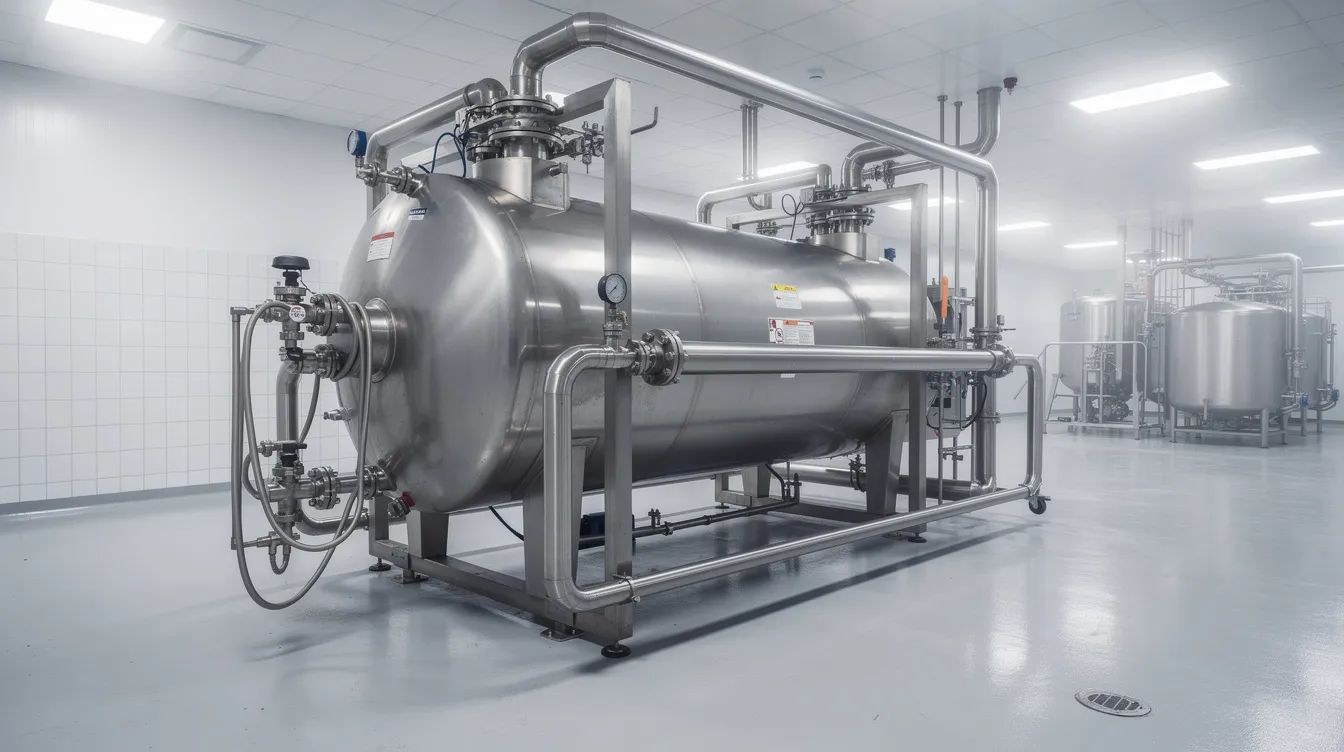
Separator performance-bowl speed, feed temperature, flow rate, and automatic sludge discharge-directly determines fat recovery. Buttermilk and serum phases (typically called buttermilk in the dairy industry) should be reprocessed for additional fat recovery, which has material financial significance. More protein in these streams means more potential value recovered. Integration with upstream milk reception, cream separation, and pasteurisation stages defines the overall milk fat processing technology employed.
AMF Manufacturing from Butter
The butter to AMF manufacturing process is common where surplus product butter stocks exist or where butter AMF conversion smooths out seasonal production cycles. Controlled butter melting in jacketed melters at ~55–65 °C is critical to ensure complete melting without burning. The melted butter is held to allow aqueous phase separation, then processed through centrifugal separators to remove serum and non fat solids.
Further processing through high-fat concentration, filtration, and vacuum-assisted dehydration achieves the target moisture level. Neutralisation reduces free fatty acids in AMF using 8–10% NaOH where butter quality demands it, particularly for export specifications. The holding tank stage allows avoid disturbing settled phases before separation.
Butter quality-whether sweet cream, salted butter, or cultured-significantly affects final AMF flavour and refining needs. Plants already operating a butter manufacturing production line can plan AMF conversion as a natural extension, converting surplus product during lean demand periods.
Cream-Based vs Butter-Based AMF Production
Both routes are commercially viable. The choice depends on raw material pattern, existing infrastructure, and target markets.
| Parameter | Cream-Based AMF | Butter-Based AMF |
|---|---|---|
| Feedstock | Fresh cream (~35–40% fat) | Stored or fresh butter (~80% fat) |
| Pre-treatment | Pasteurisation, standardisation | Butter melting, possibly desalting |
| Key extra machinery | Homogeniser, high-fat separator | Butter melters, holding tank |
| Process complexity | Higher (more separation stages) | Moderate (fewer separators) |
| Energy profile | Continuous heating and separation | Latent heat for melting + dehydration |
| Seasonal flexibility | Needs consistent cream supply | Can use stored butter year-round |
| Integration | Best with integrated dairy | Stand-alone or with butter section |
| Commercial considerations | Lower working capital if fresh cream | Higher raw material cost per kg fat |
No single route is universally superior. Some large dairy groups operate hybrid plants capable of producing AMF from both cream and butter, providing flexibility but increasing capital cost.
Project Planning Insight: Promoters must evaluate both options at the feasibility stage, comparing not just investment but also raw material logistics, product mix, and year-round utilisation before committing to AMF plant equipment procurement.
Main Machinery Required for an AMF Manufacturing Plant
| Machinery / Equipment | Main Function | Important Selection Considerations |
|---|---|---|
| Cream reception / balance tanks | Buffering incoming cream or melted butter | SS construction, insulation, CIP capability |
| Butter melting tank | Ensure complete melting without burning | Indirect heating, agitation, temperature control |
| Feed / transfer pumps | Moving cream, oil, and serum phases | Hygienic design, positive displacement, temperature rated |
| Plate heat exchanger / tubular HE | Preheating, cooling, heat recovery | Fouling resistance, CIP, energy recovery, surplus heat utilisation |
| Cream separator / high-fat separator | Fat concentration, serum removal | Hermetic design, capacity, automatic sludge discharge |
| Homogeniser | Phase inversion (cream route) | Pressure rating, CIP, heat management |
| Vacuum evaporator / dryer | Final moisture removal to <0.1% | Vacuum pump sizing, condenser, hygiene |
| Clarifier / polishing filters | Remove fine solids, proteins | Filter fineness, ease of change-out |
| AMF storage tank | Holding final product at stable temperature | Insulation, nitrogen blanketing, CIP |
| CIP system | Cleaning all process equipment | Validated cycles, chemical tanks, automation |
| Filling / packaging systems | Drums, bulk containers, inert gas flushing | Heated nozzles, weighing accuracy, coding |
| PLC / instrumentation | Process automation and monitoring | Sensor accuracy, data logging, SCADA |
| Utilities (boiler, chiller, compressor) | Steam, hot water, chilled water, compressed air | Capacity with margin, redundancy, efficiency |
| Laboratory equipment | QC testing (fat, moisture, FFA, peroxide) | Calibrated instruments, sampling tools |
Final machinery configuration depends on process route, plant capacity, degree of automation, finished product specification, and whether the AMF section is integrated with an existing dairy. For readers comparing broader dairy fat processing machinery, equipment overlap between ghee and AMF plants exists in separators, heat exchangers, and storage systems.
Cream Separators and High-Fat Separators
Centrifugal separation is at the heart of industrial AMF production technology. Disc-stack separators generate centrifugal force to separate heavier skim or serum from the lighter fat phase. Hermetic designs prevent air entrainment, reducing oxidation and improving consistent quality of the final oil.
Feed temperature critically affects viscosity and separation efficiency-warmer feed (~60 °C) improves performance but excessive heat risks oxidation. Separator selection (capacity, bowl design, automation) directly affects fat recovery and must be aligned with the AMF production line capacity and expansion plans. From a DPR perspective, many lenders and appraisers specifically assess separator make, capacity, and service support when evaluating technical robustness.
AMF Moisture Removal, Vacuum System, Clarification and Filtration
Residual moisture must be reduced to very low levels to minimise microbial risk, hydrolytic rancidity, and downstream splattering. After fat concentration, the oil is pre heated to ~95–98 °C and enters an AMF vacuum drying system operating at approximately 35–50 torr. Vacuum drying reduces moisture in the fat to less than 0.1%, while also removing volatile off-flavour compounds.
The vacuum system includes pumps, condensers, vacuum receivers, and instrumentation. Condensate must be handled hygienically.
AMF clarification uses centrifugal clarifiers and an AMF filtration system (bag and polishing filters) to remove residual protein particles, burnt specks, and non fat solids through closed, hygienic pipelines.
DPR Perspective: Higher-end moisture removal and polishing systems increase capital cost but reduce product complaints, improve shelf life, and support premium pricing in export markets.
Heat Exchangers, Temperature Control and AMF Storage Tanks
Effective temperature adjustment is critical throughout the AMF manufacturing process. Plate heat exchangers handle preheating and cooling duties, while tubular heat exchangers manage higher-fouling streams. Heat recovery-using outgoing hot streams to preheat incoming cold cream-directly reduces steam and refrigeration costs by recovering surplus heat.
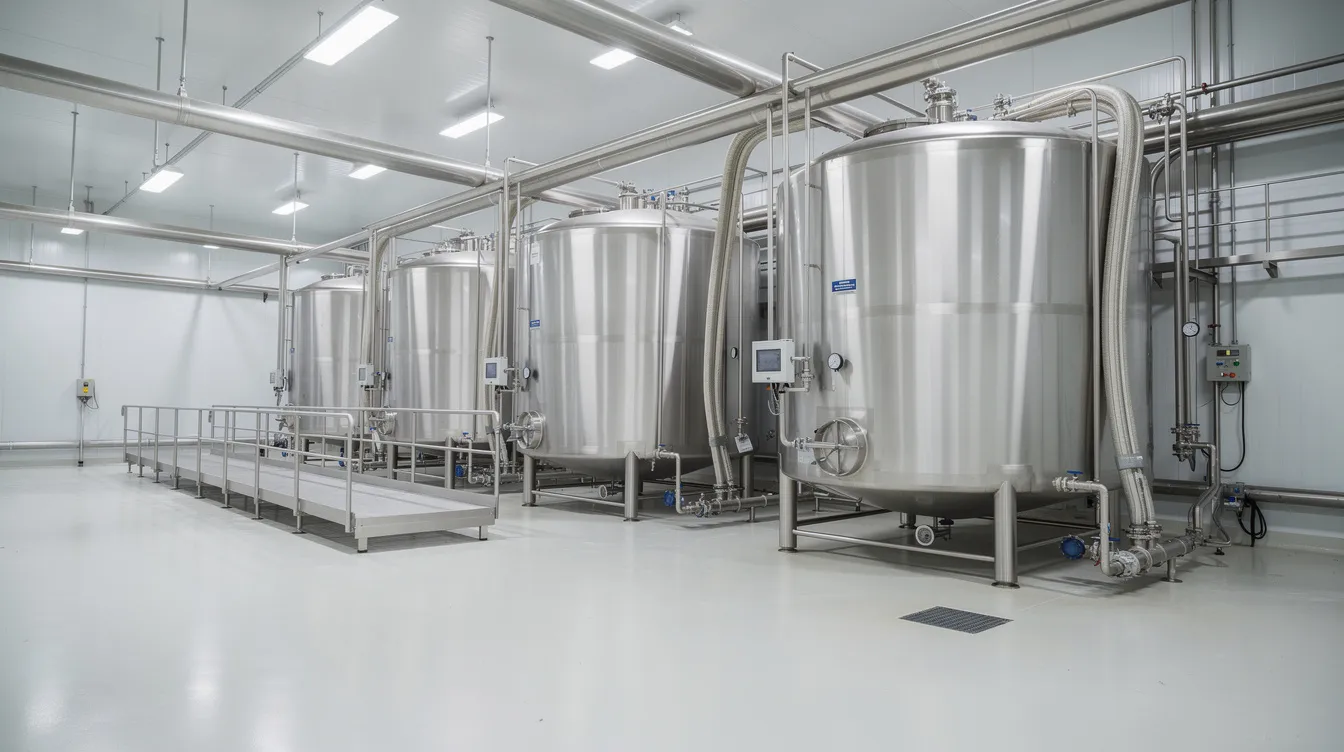
AMF storage tanks require stainless-steel construction with food-grade welds, insulation, optional heating jackets for temperature maintenance, and provisions for nitrogen blanketing to control oxidation. Capacity sizing should reflect batch size, packing schedule, and continuous flow processing time. Under-sized storage causes frequent startups and shutdowns, increasing operational losses.
AMF Filling, Packaging Systems and Automation
AMF is typically packed in steel or plastic drums (185–210 litres), bag-in-box for medium-scale food industry buyers, or bulk road tankers for large buyers. Heated pipelines and nozzles maintain product flow at the typical packing temperature. Nitrogen flushing limits oxidation. Weighing systems ensure accurate net weight control with integrated coding for traceability.
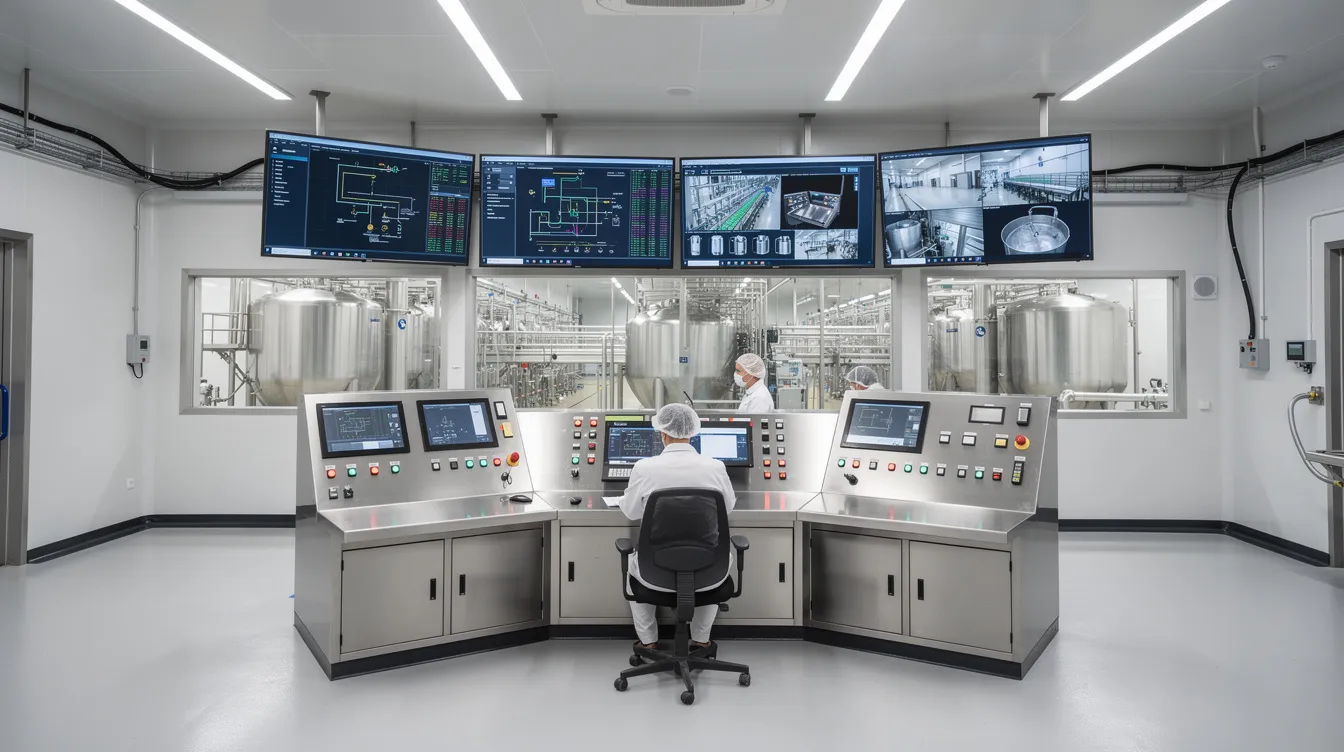
Modern AMF production line automation relies on PLC-based controls managing valves, pumps, separators, and tanks. Temperature, flow, and level sensors feed into automatic CIP sequencing and batch tracking. Data logging supports quality audits and consistent quality production.
Higher automation increases capital expenditure but typically reduces manpower, product losses, and variability-factors that should be factored into project economics for bank appraisals. An automatic AMF manufacturing plant achieves more stable output and better fat recovery than manual operations.
Batch vs Continuous AMF Manufacturing Technology and Capacity Planning
Batch systems suit smaller plants with lower initial AMF plant machinery cost and higher flexibility, but involve more labour and variable quality. Continuous or semi-continuous AMF production processes offer higher throughput, better consistency, and improved fat recovery but demand higher capital and skilled operators.
For capacity planning, promoters should estimate plant size based on available milk and cream or butter across seasons, targeted AMF output, planned operating days and shifts, and storage capacities. AMF plants can have an annual capacity of 5,000–15,000 MT depending on configuration.
Project Planning Insight: Sizing AMF manufacturing equipment in isolation without a complete milk fat balance often leads to under-utilisation or bottlenecks. Every component-separators, vacuum chamber, packaging line, storage-must be balanced for the fresh product throughput.
Material Balance, AMF Recovery Efficiency and Utilities
A simple material balance tracks inputs (milk fat in cream or butter, moisture, non fat solids) against outputs (AMF, by-product streams, CIP losses). An illustrative formula:
AMF Output ≈ Recoverable Milk Fat ÷ Target Fat Fraction
Actual recovery depends on separator performance, operating temperature, maintenance, and cleaning practices. Historical data indicates fat losses of ~0.9–1.3% in older butter-to-AMF processes. Even small recovery improvements compound across high-volume plants producing AMF at industrial scale.
| Utility | Main Application | Key Planning Consideration |
|---|---|---|
| Electrical power | Separators, pumps, automation | Peak load, VFDs, redundancy |
| Steam / thermal energy | Heating, melting, vacuum generation | Boiler sizing, fuel cost |
| Hot water | CIP, process heating | Temperature, recovery systems |
| Chilled water | Cooling AMF, heat exchangers | Refrigeration capacity |
| Process water | Washing, dilution | Quality, treatment |
| Compressed air | Instrumentation, valves | Clean, dry air supply |
| Vacuum | Moisture removal | Pump capacity, condenser |
| CIP chemicals | Cleaning cycles | Caustic, acid, sanitiser |
Operating costs for AMF plants are driven by raw material consumption, followed by utilities and labour.
CIP, Hygiene, Quality Control and Laboratory Requirements
CIP systems circulate caustic, acid, and rinse solutions through tanks, pipelines, separators, heat exchangers, and fillers. Validated cleaning cycles with controlled chemical concentration and temperature are essential for fat removal and hygiene. Plant layout should avoid dead legs and product traps, use sanitary valves, and maintain segregation between raw and processed areas.
Key quality control parameters include fat content, moisture level, free fatty acids, peroxide value, colour, flavour, and packaging integrity. Even though low-moisture fat is less prone to microbial growth, microbiological checks remain standard practice.
Laboratory equipment typically includes fat analysers or Gerber equipment, moisture determination apparatus, titration setups for acidity and FFA, spectrophotometric instruments for oxidation tests, incubators for microbiology, and calibrated balances and thermometers.
Technology Selection, Machinery Cost Factors and Plant Layout
A practical framework for AMF production technology selection should evaluate raw material pattern, desired AMF specifications, capacity and scalability, automation level, domestic versus imported machinery, supplier service networks, CIP design, and integration with existing butter or ghee manufacturing plants.
| Cost Driver | Impact on Investment |
|---|---|
| Plant capacity | Scales most equipment costs |
| Number / type of separators | Major cost item with recovery implications |
| Vacuum system sophistication | Affects moisture spec and product quality |
| Automation level | Higher capex, lower operating cost |
| Imported vs domestic equipment | Significant cost and lead-time differences |
| Storage and packaging | Scales with throughput and inventory needs |
Plant layout must zone raw material areas, processing hall, utility block, packaging, and finished-goods storage with provisions for CIP rooms, laboratories, and future expansion. AMF manufacturing technology India-specific considerations include local service support, power reliability, and climate-appropriate insulation.
AMF manufacturing plant setup costs include capital investments and operating expenses. AMF plant gross profit margins typically range between 10–16%, making technology and recovery choices critical to bankability.
Energy Efficiency, Product Loss Reduction and Common Planning Mistakes
Energy efficiency opportunities include heat recovery in heat exchangers, insulating pipelines and tanks, installing variable-frequency drives, optimising steam systems, and scheduling production and CIP to reduce peak loads.
Product loss reduction measures: minimise hold-up in oversized pipelines, optimise separator settings with regular performance checks, use product recovery during changeovers, and design tank bottoms to reduce residual fat heel.
Common planning mistakes in AMF projects:
- Finalising machinery before confirming raw material availability
- Under-sizing utilities (especially steam and refrigeration)
- Overlooking adequate AMF storage and drum handling space
- Focusing purely on purchase price rather than lifecycle cost and fat recovery
- Not planning for modular expansion of the AMF production line
- Ignoring vegetable oils contamination risks in shared facilities handling both butter and vegetable oils
DPR Perspective: Addressing these aspects at the project report stage reduces cost overruns, improves bankability, and supports smoother commissioning of the AMF manufacturing plant.
AMF Manufacturing Plant DPR Perspective and Technical–Financial Linkages
As a Chartered Accountant involved in project report preparation and financial appraisal, I consider the AMF manufacturing process and machinery configuration to be fundamental to any AMF project’s viability. Production yield, fat recovery, energy consumption, automation, plant capacity, and machinery selection ultimately flow into project cost, working capital, profitability, DSCR, and overall project viability.
A formal Anhydrous Milk Fat Manufacturing Plant Project Report should cover promoter profile, detailed AMF manufacturing process description and flow chart, technology options, machinery list with capacities, building and civil works, utilities, manpower, implementation schedule, capital cost, working capital, revenue projections, operating cost, profitability, cash flow, DSCR, IRR, and sensitivity analysis.
| Technical Factor | Operational Impact | Financial Impact |
|---|---|---|
| Fat recovery | Higher product output | Higher revenue |
| Energy efficiency | Lower steam/power use | Lower operating cost |
| Automation | Better process consistency | Lower labour and product loss |
| Equipment reliability | Reduced downtime | Higher capacity utilisation |
| CIP design | Better hygiene | Lower rejection and downtime |
A well-prepared DPR aligns the engineering design of the AMF production line with realistic financial projections, improving discussions with banks, investors, and technology suppliers.
FAQs
What is the basic AMF manufacturing process in an industrial plant?
The AMF manufacturing process involves receiving cream or butter, preheating or melting the raw material, concentrating fat through centrifugal separation, removing moisture via vacuum dehydration, clarifying and polishing the oil, cooling to packing temperature, and filling into drums or bulk containers. The AMF principles remain consistent across plants, though specific equipment configurations vary by supplier and capacity. The process produces a final product with over 99.8% milk fat and less than 0.1% moisture.
How does AMF differ from butter oil and ghee in terms of process and applications?
AMF, butter oil, and ghee are all concentrated milk fat products but differ in processing and flavour. AMF uses controlled separation and vacuum drying for a neutral-flavour, ultra-low-moisture fat used as a functional ingredient in the food industry. Ghee involves cooking butter to develop a pronounced flavour with ancient traditional roots. Butter oil is often used interchangeably with AMF in trade, though specifications can vary. Promoters considering broader dairy fat processing may also refer to resources on the industrial ghee manufacturing process for comparison.
What machinery is essential for an automatic AMF manufacturing plant?
Core AMF plant machinery includes cream separators, high-fat separators, homogenisers (cream route), vacuum evaporators or dryers, plate heat exchangers, clarifiers, polishing filters, insulated storage tanks, CIP systems, filling lines with nitrogen flushing capability, and PLC-based automation panels. The exact configuration depends on whether the feed is cream or butter, the target capacity, and the degree of automation required for the AMF production line.
Can an AMF processing plant be integrated with an existing dairy?
Yes, integration is common and often economically attractive. Cream separated at the main dairy feeds directly into the AMF section. Shared utilities-steam, chilled water, CIP chemicals-reduce investment. Butter production units can supply surplus butter for AMF conversion during periods of low butter demand, providing further processing flexibility. However, capacity planning must ensure the AMF section does not create bottlenecks in the parent dairy’s operations.
Why is a Detailed Project Report important before investing in an AMF manufacturing plant?
A DPR integrates technical, commercial, and financial assessments into a coherent document that banks and investors require for appraisal. It ensures that AMF production technology choices, machinery sizing, raw material planning, and utility requirements are consistent with revenue projections, operating costs, and debt-servicing capacity. Without a properly prepared project report, promoters risk mismatched capacities, under-estimated costs, and difficulty securing project finance. Specific designs, capacities, and cost estimates should always be validated with equipment suppliers and through a dedicated AMF manufacturing plant project report tailored to the promoter’s context.