
Industrial butter manufacturing is a precisely controlled sequence of operations that transforms standardized cream into a stable, commercially viable dairy product. Unlike household churning, the industrial butter manufacturing process demands consistent cream composition, validated thermal treatments, engineered crystallization, mechanical processing, and rigorous moisture management – all within a hygienic production environment backed by cold-chain discipline.
This article examines every stage of the butter production process from a technical, operational and project-planning perspective, helping promoters, dairy companies and financial institutions evaluate what a complete industrial butter production line entails and how process choices influence project feasibility.
Key Takeaways
- Industrial butter manufacturing is the controlled conversion of standardized cream into butter through separation, pasteurization, ageing, crystallization, churning or continuous production, working, packaging and cold storage. Butter must contain at least 80% milk fat and a maximum of 16% water, and industrial methods allow for higher throughput than traditional methods by relying on automated, high-speed machinery and inline process controls.
- The choice between batch and continuous butter making, level of automation and butter processing line layout directly affects fat recovery, moisture control, operating cost, utility consumption and overall project feasibility. These technical decisions influence DSCR, IRR and bankability of the proposed project.
- A typical butter manufacturing process flow chart follows this sequence: Milk Reception → Cream Separation → Cream Standardization → Cream Pasteurization → Cooling & Ageing → Churning or Continuous Butter Making → Working → Packaging → Cold Storage → Dispatch.
- In India, industrial butter production lines are often integrated with ghee and AMF processing, making technical choices around cream and butter handling critical for future diversification.
- A bankable DPR must convert the technical butter production process into realistic capacity, yield, utility and cost assumptions that lenders can trust.
What Is Industrial Butter Manufacturing?
Industrial butter manufacture is the large-scale, controlled conversion of milk fat – sourced from cream – into a standardized water in oil emulsion within an industrial butter processing plant. Butter starts with cream separated from whole milk, and the finished product is a fatty product derived exclusively from milk fat, with commercial specifications typically targeting around 80% or more milk fat and moisture not exceeding 16%.
The emulsion structure is central to understanding butter formation. Cream is an oil-in-water emulsion where fat globules are dispersed in an aqueous phase. During the buttermaking process, phase inversion occurs: the fat globule membrane is disrupted, fat coalesces, and the system converts into a water in oil structure where discrete water droplets are trapped in a continuous fat phase. This transformation requires precise control of temperature, crystallization, and mechanical energy.
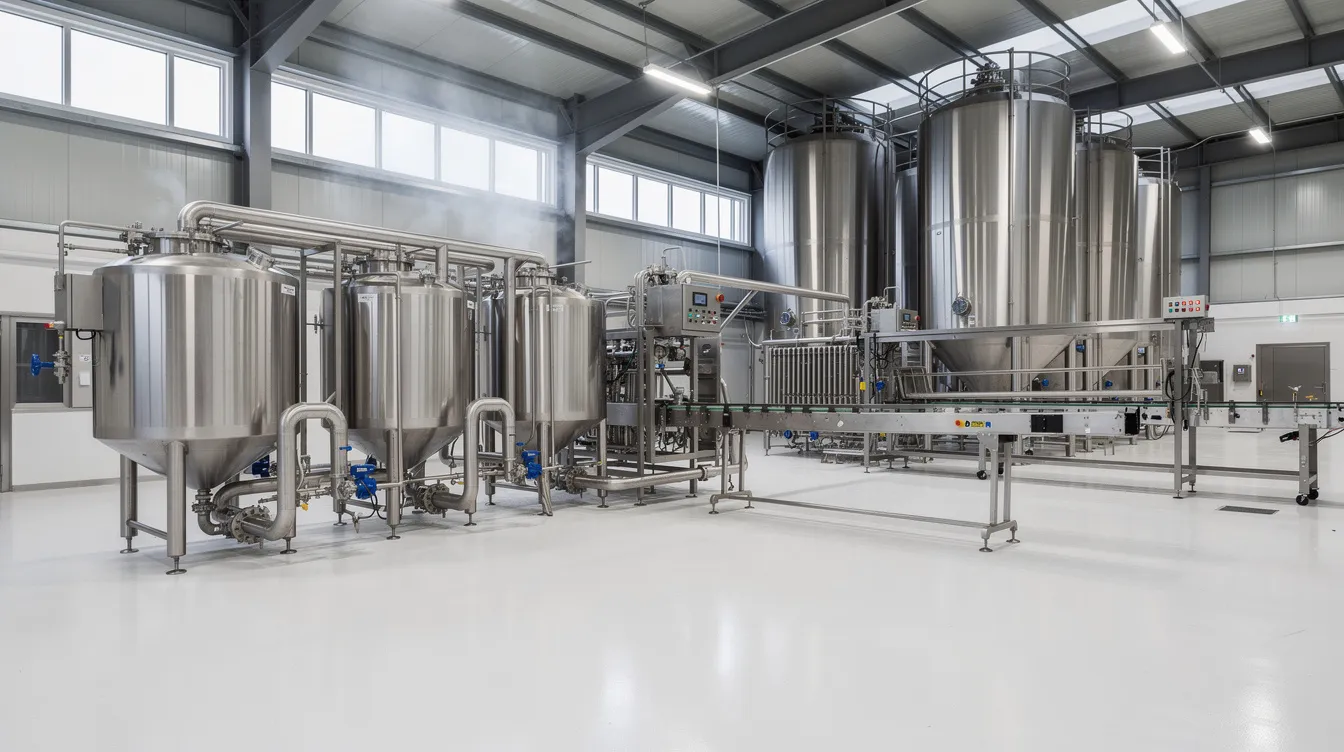
Industrial butter production ensures repeatability through tight control of cream fat content, pasteurization parameters, ageing and crystallization profiles, moisture adjustment, salt addition and hygienic handling. By contrast, household butter making involves small batch churning with variable cream quality, no formal moisture control, rudimentary packaging and limited shelf life. In a dairy plant, butter manufacturing technology is selected considering throughput, product mix (sweet cream, cultured, salted or unsalted variants) and integration with other dairy products like SMP, WMP and ghee.
Raw Materials Required for Industrial Butter Production
The core raw materials for an industrial butter production process include:
- Fresh sweet cream (primary input)
- Cultured cream (for ripened cream butter or cultured butter)
- Potable process water
- Food-grade common salt
- Permitted additives (where legally applicable)
- Packaging materials
Cream is the main input, typically at 35–40% fat, separated from cow or buffalo milk. Some butter making processes use higher-fat cream (up to 45–48%) to reduce volume and processing energy. The cream’s fat content is standardized to ensure consistent product quality throughout the production run.
Incoming cream quality directly influences butter yield, flavour and shelf life. Key parameters include fat percentage, SNF, acidity, microbiological load, presence of antibiotics or detergents, and off-flavour compounds from feed or storage. Sweet cream butter is made from fresh, pasteurized cream, while cultured butter is fermented with lactic acid cultures before churning. Sour cream butter has a richer aroma and higher yield than sweet cream butter due to controlled acidification, and this choice impacts ageing tank requirements and process control complexity.
Food-grade salt must have fine particle size, high purity and low insolubles, serving a dual role in flavour and microbial control for salted butter variants. Packaging materials range from aluminium-foil laminates and parchment for retail packs to poly-lined cartons for 20–25 kg industrial blocks, and thermoformed cups for table butter. High-quality process water is required for cream dilution, butter washing, brine preparation, and CIP systems, meeting strict microbiological and chemical standards.
Industrial Butter Manufacturing Process Flow Chart
The typical butter manufacturing process flow chart for an industrial dairy butter plant follows this sequence:
Milk Reception & Testing → Cream Separation → Cream Standardization → Cream Pasteurization → Cream Cooling → Cream Ageing & Butterfat Crystallization → Batch Churning or Continuous Butter Making → Buttermilk Separation → (Optional) Butter Washing → Butter Working & Kneading → Moisture Adjustment → Salt Addition (for salted butter) → Butter Standardization → Butter Packaging → Cold Storage → Dispatch.
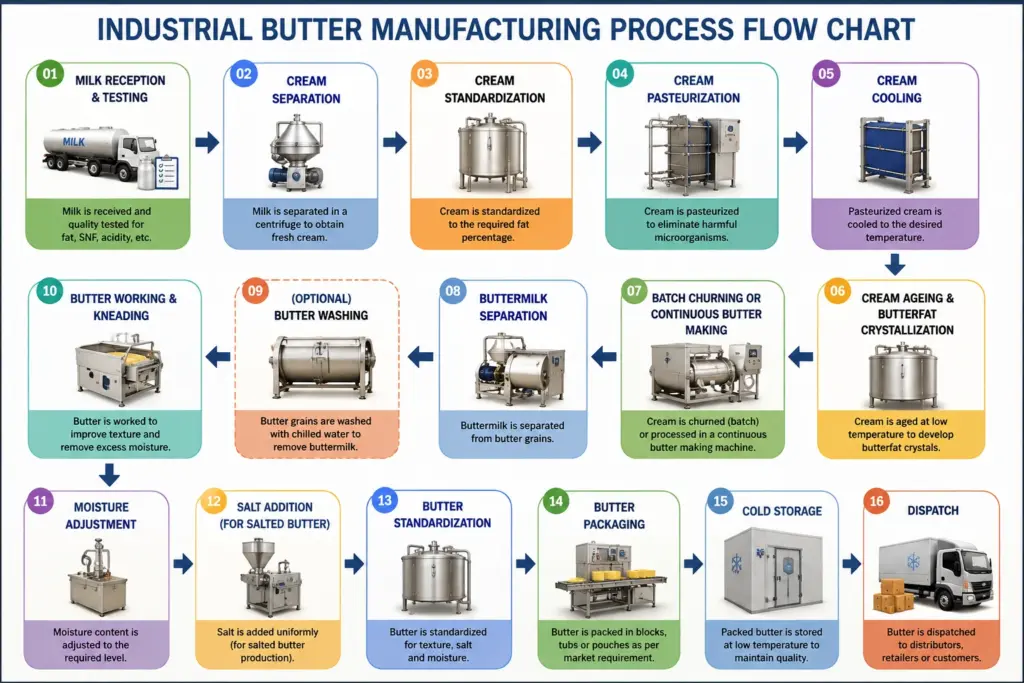
This is the standard butter production process flow diagram for medium-to-large Indian dairy plants, with variations depending on product type, installed capacity and machinery supplier design. The cream processing segment (separation, pasteurization, ageing) is often shared with other dairy products, so its capacity planning must align with broader plant strategy. The following sections explain each stage step by step.
Step-by-Step Industrial Butter Manufacturing Process
Each stage below reflects realistic Indian dairy plant conditions for facilities producing 10–50 TPD of butter. Exact temperatures and times depend on specific butter making equipment and supplier recommendations.
Milk Reception and Quality Testing
Raw milk is delivered in bulk tankers, ideally chilled below 10°C, and unloaded into reception tanks. Initial checks cover temperature, smell and appearance. Key quality tests relevant to butter production include fat and SNF measurement (Gerber or infrared methods), acidity, MBRT or equivalent microbial indicators, adulteration screening (urea, sugar, water), antibiotic residues and density verification.
For a butter-focused dairy plant, fat is the primary economic driver, making accurate fat testing critical for predictable cream yields. Milk failing minimum quality standards is segregated or rejected to protect finished butter quality.
Cream Separation
Whole milk is preheated to separation temperature (typically around 50–60°C depending on equipment design) and fed to high-speed cream separators. These centrifugal machines split raw milk into cream and skim milk. Target fat levels in cream for butter making generally range around 35–40% in Indian plants, with actual set points based on separator design and process economics.
Skim milk is routed to other dairy products (SMP, casein, liquid milk), making butter production part of an integrated dairy processing strategy. Stable cream fat percentage is essential for predictable downstream butter formation.
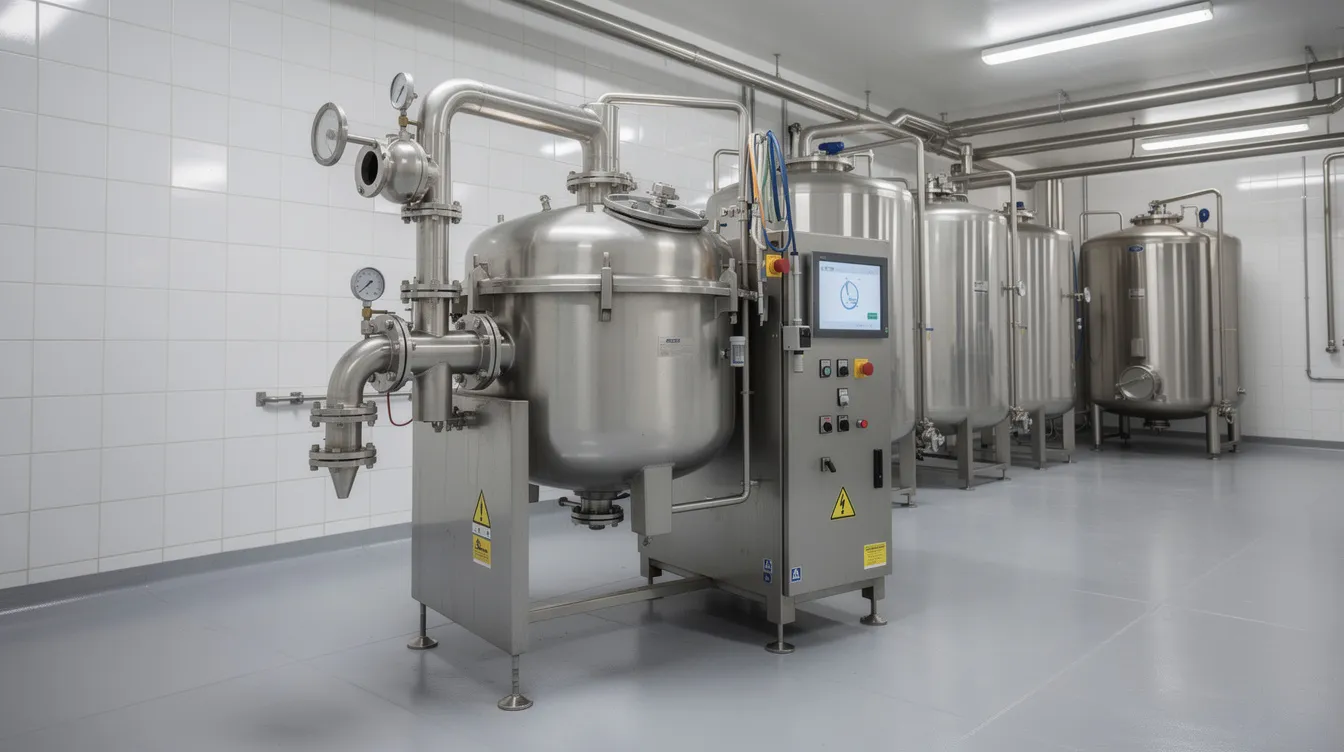
Cream Standardization
Standardizing cream fat content – for example, consistently around 38–40% for sweet cream butter – is essential for stable churning behaviour, butter moisture control and predictable butter yield. Methods include in-line blending of cream and skim milk using automatic control valves and fat analysers, or batch standardization using lab results as reference. More consistent fat in cream leads to tighter butter specifications, reducing rework and avoiding penalties on off-spec lots.
Cream Pasteurization
Cream pasteurization for butter production is generally more intensive than for drinking milk because fat globules can shield microorganisms and enzymes. Cream is pasteurized at approximately 85°C for 15 seconds or higher in most industrial plants, using HTST plate heat exchangers or tubular pasteurizers designed for higher-viscosity cream.
Key objectives include destroying pathogenic and spoilage microorganisms, inactivating lipases that cause rancidity from free fatty acids, and improving flavour stability and shelf life. Pasteurization destroys pathogenic microorganisms and deactivates enzymes that would otherwise degrade butter quality during storage. Exact time–temperature combinations are finalized with the equipment supplier and must comply with FSSAI regulations.
Vacuum treatment may remove unwanted volatile odors from cream. Vacuum deaeration removes undesirable flavors originating from feed or storage conditions, and is incorporated in plants where incoming cream quality is variable or seasonal off flavour is an issue.
Cooling and Cream Ageing
After pasteurization, pasteurized cream is rapidly cooled to an ageing temperature range. Cooling and holding cream at 4°C to 10°C for several hours crystallizes milk fat globules, creating the solid fat fraction needed for efficient churning. Cream is aged for about 12 hours before churning in most sweet cream butter processes.
Temperature control during the aging process affects butter texture, spreadability and fat recovery. Ageing tanks with gentle agitation prevent creaming and temperature stratification. For cultured butter production, starter culture organisms (lactic acid bacteria) are added post-cooling, and the cream is held at controlled temperatures to develop the desired acidity and flavour, with ripening times extending to 18–24 hours.
Butterfat Crystallization
During ageing, milkfat crystallizes partially, creating a controlled ratio of solid and liquid fat within each fat globule. This crystallization is critical for efficient butter making: it enables better phase inversion during churning, improves butterfat recovery (less fat lost in buttermilk) and produces finished butter with correct firmness and plasticity.
In Indian conditions, seasonal variation in fat hardness – summer versus winter, cow versus buffalo milk – requires dynamic adjustment of cooling and ageing programs. Some advanced butter processing plants use NMR or similar sensors to measure the solid fat fraction, while most rely on validated temperature–time profiles developed with machinery suppliers.
Butter Churning Process
In traditional industrial batch churning, aged cream is loaded into a butter churn – modern churns can hold 8,000 to 14,000 liters of cream. Churning at controlled speed and temperature induces phase inversion: air is incorporated, foam forms, the fat globule membrane is disrupted, fat globules coalesce, and butter granules develop while buttermilk separates.
Churning separates buttermilk from butter grains. Monitoring parameters include churning temperature (typically in the 8–14°C range), churn loading level, churning time and visual assessment of grain size. Churning recovery should be less than 0.70 for quality butter, indicating efficient fat capture. Many medium-scale Indian plants still use batch churns, while very large plants migrate to continuous butter making machines for high speed, high-volume production.
Continuous Butter Making Process
A continuous butter making machine (CBMM) receives aged cream in a steady flow through a pressurized, temperature-controlled cylinder where phase inversion, buttermilk separation, working and moisture adjustment occur in one integrated system. Continuous buttermakers combine churning, washing, and working in a single machine.
Continuous buttermakers can produce 200 to 10,000 kg/h of butter, with leading equipment suppliers offering machines that handle several thousand litres of cream per hour. Advantages of continuous production include stable quality, consistent moisture and salt distribution, better fat recovery, lower labour per kg and easier inline integration with downstream butter packaging machines. The process requires stable cream feed, reliable refrigeration and skilled operators for automation systems.
Buttermilk Separation
Buttermilk is the aqueous phase expelled when the cream emulsion breaks. In batch churns it is drained periodically; in continuous systems it is discharged via dedicated outlets. Residual fat in buttermilk represents a direct economic loss – plants strive to keep buttermilk fat below 0.5% through optimized ageing, churning and equipment settings.
Downstream uses for buttermilk include pasteurized beverages, bakery formulations and spray-drying into buttermilk powder. Proper sieving and fines recovery systems in the butter processing line can recapture butter particles from the butter stream and return them to production.
Butter Washing
Washing butter removes residual buttermilk after churning. Butter grains may be rinsed with chilled potable water or dilute brine, particularly in batch systems. This reduces residual lactose and proteins, improves flavour stability and lowers the risk of microbial spoilage – especially relevant for sweet cream butter intended for longer storage.
In many continuous buttermakers, a washing section is built-in, but its use depends on product specification and supplier recommendations. Washing practice influences material balance and effluent load, factors important in project design and ETP sizing.
Butter Working and Kneading
Working is the mechanical kneading of drained butter grains into a homogeneous, plastic mass. Butter grains are kneaded for texture and emulsification, creating fine dispersion of water droplets within the fat phase. Equipment includes rotating paddle workers in batch systems and twin-screw working sections in continuous machines.
Proper working determines texture, appearance (gloss, absence of visible free moisture) and optimum consistency for packaging. Overworking raises temperature and softens butter; underworking leaves free moisture and creates quality defects.
Moisture Adjustment and Control
Butter production requires a minimum of 80% milk fat content, and the legal maximum moisture content in butter is 16%. Moisture must be maintained within these specification limits and evenly distributed. Plants control moisture by measuring initial levels, adding controlled amounts of chilled water or brine during working, and using inline moisture analysers where installed.
Each fraction of a percent of additional moisture within legal limits increases saleable butter weight without consuming more fat – but any exceedance risks non-compliance and product downgrading. From a financier’s perspective, realistic assumptions about achievable moisture control are critical when modelling yields and revenue in a butter plant DPR.
Salt Addition
Salt is added during the working stage of butter production. For salted butter, methods include dry salt dosing in batch workers and slurry or brine injection in continuous buttermakers, with metered feeding for uniform distribution. Typical target ranges sit around 1.5–2% for standard salted butter, as per buyer specifications, using common salt of food-grade purity.
Salt contributes to flavour and reduces water activity, slightly improving microbial stability for longer distribution chains. Salt levels in butter are monitored and adjusted for quality, and automation of salt dosing reduces batch-to-batch variability in both salted butter and unsalted butter production runs.
Butter Packaging
Main industrial packaging formats include:
- 20–25 kg bulk blocks for bakeries and food processors
- Butter can be packed in bulk packs over 5 kg for institutional use
- Retail butter packaging typically includes sizes of 250 g and 500 g for consumer markets
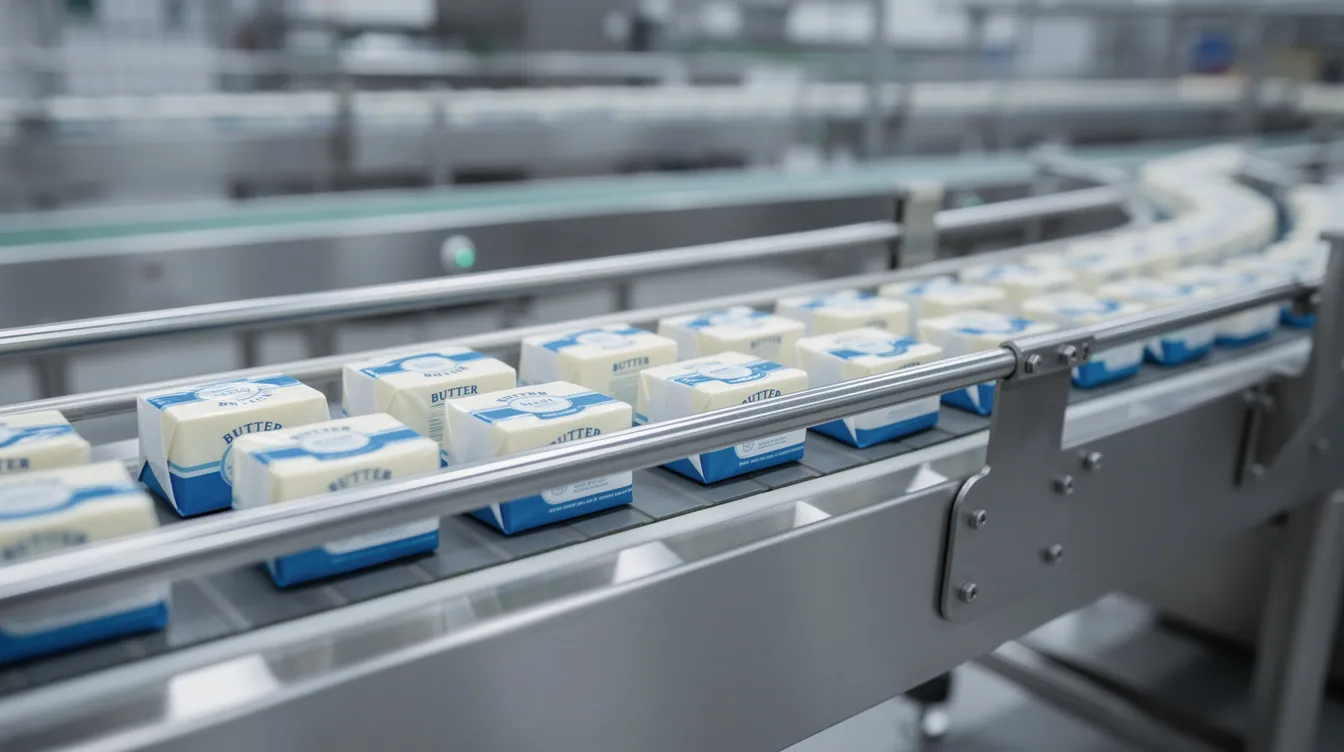
Butter is usually wrapped in aluminum foil for protection, and modern packaging uses laminated materials that protect against oxygen and moisture, preventing oxidation and off flavour development. Automated packaging machines – forming, filling and wrapping – handle blocks, cups and cartons at high speed. Synchronizing butter production rate with packaging capacity avoids bottlenecks and excessive residence time in butter silos.
Cold Storage and Dispatch
Cold storage at around +5°C helps maintain butter consistency for short-term domestic distribution. For longer preservation or export, butter is stored at -18°C or below. Cold rooms require proper air distribution to avoid temperature gradients, pallet racking for efficient space use and integration with the plant’s refrigeration system.
Dispatch relies on insulated vehicles, loading-temperature monitoring and FIFO inventory management. Plants serving both domestic and export markets may need separate storage regimes, impacting warehouse sizing and investment.
Batch Churning vs Continuous Butter Manufacturing
Both batch and continuous butter making technologies rely on the same physics – phase inversion and mechanical working – but differ significantly in engineering, automation and economics.
| Parameter | Batch Churning | Continuous Butter Making Machine |
|---|---|---|
| Operating principle | Intermittent batch loading of cream into a churn | Cream enters continuously; butter discharged as a ribbon |
| Capacity range | Suited for small to medium scale (up to a few TPD) | Preferred for medium-large scale (tens of TPD) |
| Automation | Lower; manual sampling and loading | High; PLC/SCADA, inline measurement |
| Process control | Manual checks, batch-to-batch variation | Inline moisture, salt and fat monitoring |
| Labour per kg | Higher | Lower |
| CIP | Manual/segmental | Fully automated CIP loops |
| Capital investment per kg | Lower initial capex | Higher initial capex, better economies of scale |
| Product flexibility | Easier for multiple small SKUs | Suited for standard high-volume SKUs |
| Packaging integration | Requires intermediate handling | Direct integration with automatic packaging lines |
There is no universally superior technology. Selection must align with available cream, target markets, utility reliability, capital budget and long-term capacity plans. Continuous butter production lines can justify higher initial capex through lower unit operating cost, which should reflect in DPR IRR and DSCR calculations.
Complete Industrial Butter Production Line
A complete butter production line for a medium-to-large Indian dairy plant includes these major equipment groups in process order:
- Milk reception, weighing and chilling system
- Cream separator and skim milk handling
- Cream balance and holding tanks with standardization skid
- Cream pasteurizer (plate or tubular) with holding tube
- Cream cooling and ageing tanks with agitators
- Optional vacuum deaerator
- Batch butter churn or continuous butter making machine
- Buttermilk collection tanks, pumps and by-product handling
- Butter worker and inline mixers
- Salt and water dosing systems
- Butter silos or intermediate storage
- Butter packing machines for bulk and retail formats
- Conveyors and transfer pumps
- Cold rooms and blast freezers
- Refrigeration plant (compressors, condensers, evaporators)
- CIP system (central station, tanks, pumps)
- Utilities (steam/hot water, compressed air)
- Process-control instrumentation (temperature, flow, pressure, inline composition analysers)
A professionally designed butter production line layout ensures hygienic product flow, smooth integration between sections and easy access for maintenance. When preparing a DPR, each equipment item must be specified with make, capacity and key features, as this directly impacts total plant and machinery cost, depreciation and term-loan requirement.
Automatic Butter Production Line
An automatic butter manufacturing line is controlled by PLC/SCADA systems, minimizing manual intervention. Key automation features include automatic temperature control in pasteurizers and ageing tanks, flow control with mass or volumetric meters, automatic cream and buttermilk routing, inline moisture and salt measurement, and automatic data logging with batch traceability.
Packaging automation involves servo-controlled filling and wrapping, automatic weight checks, rejection of non-conforming packs and integration with coding systems. CIP automation runs preprogrammed cleaning cycles, reducing downtime and ensuring sanitary conditions.
Higher capex for automation is offset by lower long-term labour cost, reduced human error, better yield control and stronger food safety assurance – factors that influence bank appraisal and risk perception during project evaluation.
Butter Manufacturing Process Parameters
| Stage | Typical Parameter | Purpose |
|---|---|---|
| Incoming cream | ~35–40% fat, chilled | Separation efficiency, pasteurization design |
| Cream pasteurization | ~85°C / 15 seconds or higher | Microbial safety, enzyme inactivation |
| Cooling & ageing | 4–10°C for ~12–15 hours | Butterfat crystallization, churning efficiency |
| Churning / CBMM feed | ~8–14°C | Fat plasticity, phase inversion, yield |
| Butter moisture | ≤16% | Regulatory compliance, yield optimization |
| Salt content (salted) | ~1.5–2% | Flavour, water activity, stability |
| Cold storage (domestic) | ~0–5°C | Texture, shelf life |
| Cold storage (long-term) | ≤ -18°C | Extended preservation |
| Microbiological targets | Per buyer/FSSAI specification | Food safety, keeping quality |
These values are indicative and must be finalized during detailed engineering with input from equipment suppliers and applicable standards.
Butter Manufacturing Yield and Material Balance
Butter yield represents the kg of finished butter produced per kg of fat in cream, accounting for moisture and non-fat milk solids in the finished product. The main components of a butter plant material balance include fat in incoming cream, fat in finished butter, fat losses in buttermilk, processing losses (spillage, CIP, sampling) and water and salt additions.
Illustrative Example (for concept explanation only): Assume 10,000 kg of cream at 38% fat enters a continuous butter making machine. Total fat input is 3,800 kg. If finished butter contains 80% fat, then theoretical butter output is approximately 4,750 kg/hour. Buttermilk and losses account for the balance. If buttermilk contains 0.4% fat, the fat lost per hour is roughly 21 kg; reducing this to 0.2% recovers an additional 10+ kg of fat per hour, translating to meaningful revenue over a full production year.
Even small improvements in fat recovery generate substantial annual profit in a plant producing several tonnes of butter per day. Realistic yield and loss assumptions directly influence projected sales, raw-material consumption, and thereby DSCR and IRR in the DPR.
By-Products and Their Commercial Utilization
Buttermilk is the principal by-product of butter manufacturing, with quantity roughly linked to cream input and butter yield. Potential commercial uses include direct sale as liquid buttermilk after pasteurization, fermentation for flavoured beverages, concentration and drying into buttermilk powder, or controlled addition back into milk within regulatory limits.
From a project-finance perspective, by-product realization can materially improve overall plant margins. DPRs should not ignore realistic revenue from buttermilk – and in some Indian plants, buttermilk revenue can contribute meaningfully to debt-servicing capacity.
Quality Control in Industrial Butter Manufacturing
A dedicated QA/QC laboratory monitors butter manufacturing at cream, in-process and finished-product stages. Key quality parameters for finished butter include fat content, moisture, salt content (if applicable), acidity, colour, flavour (organoleptic scoring), texture and melting point behaviour. Butter grading evaluates multiple parameters before release.
Routine microbiological tests cover total plate count, yeast and mould, coliforms and any additional tests per customer or FSSAI requirements. Packaging integrity checks assess seal strength, wrap tightness, correct coding and carton condition. Reference samples and periodic shelf life studies under real storage conditions confirm keeping quality over time.
Hygiene, CIP and Food Safety
Butter, being a high-fat dairy product with moderate moisture, is vulnerable to spoilage by yeasts and moulds if hygienic practices are weak. Industrial butter processing lines use stainless steel product-contact surfaces, smooth welds, drainable piping and dead-leg minimization.
CIP practices include separate circuits for cream pasteurization and butter processing lines, with multi-step cycles (pre-rinse, alkali wash, intermediate rinse, acid wash, final rinse). Personnel hygiene, zoning of raw and pasteurized areas, air filtration in packaging rooms and pest control are essential. Indian plants must align their food safety and HACCP plans with current FSSAI regulations, verified at the time of project planning.
Utilities Required for Butter Production
Correct sizing of utilities is vital for uninterrupted butter processing, with major capex and opex implications:
- Electricity: separators, pumps, butter making machines, packaging lines, refrigeration
- Steam / hot water: cream pasteurization, CIP heating
- Refrigeration and chilled water/glycol: cream cooling, ageing, working temperature control, cold rooms
- Process water: washing, brine preparation, CIP, boiler feed
- Compressed air: automation valves, pneumatic packaging
- Effluent handling: ETP for high-fat, high-COD streams from CIP and washings
Utility consumption depends on installed capacity, hours of operation and butter manufacturing technology, and should be estimated in consultation with machinery suppliers.
Production-Line Capacity Planning
Butter production capacity is limited by cream availability, which depends on milk procurement volumes, seasonal patterns and competing uses for cream. Planning must balance rated capacity of cream separators against butter making machines, account for operating hours and shifts, and synchronize churning or continuous production with packaging and cold storage capacity.
Seasonal milk surpluses during flush season require provision for peak cream handling. Future expansion plans should include space and utility headroom for additional butter making equipment. Actual achievable utilization – typically with ramp-up over the first 2–3 years – must be realistically reflected in the DPR submitted to banks.
Factors Affecting Butter Production Efficiency
Key technical factors include cream fat percentage, cream temperature profile, ageing time, butterfat crystallization program, butter making machine settings and maintenance of sharp separation between butter and buttermilk. Operational factors cover operator skill, adherence to standard procedures, rapid response to process deviations and planned preventive maintenance.
Seasonal variation in milkfat composition – particularly between cow and buffalo milk – affects hardness and softness of butter. Moisture and salt control, minimization of fat losses, reduction of unplanned downtime and careful handling during start-up and shutdown directly impact overall plant efficiency and profitability.
Common Bottlenecks in an Industrial Butter Production Line
Frequent bottlenecks include insufficient cream ageing capacity leading to unstable butter texture, inadequate refrigeration causing high cream temperatures at churning, and undersized butter workers or packaging machines that cannot keep pace with continuous butter production.
Buttermilk handling issues – inadequate storage or pumping – can create back-pressure on the butter making machine. Limited cold storage space, slow palletization or constrained loading bays delay dispatch and force production slowdowns. Insufficient CIP windows or poorly designed CIP systems reduce effective production hours and create contamination risk. Identifying these bottlenecks at the design stage avoids costly retrofits later.
Butter Production Line Layout Considerations
A well-designed butter plant layout ensures product flows from raw to finished zones with minimal cross-traffic. Key principles include separating raw milk reception from pasteurized cream handling zones, keeping butter processing distinct from packaging and finished goods, providing logical CIP and utility routing, and planning hygienic personnel movement with gowning areas and dedicated corridors.
Ergonomic design – adequate working space around butter making equipment, safe maintenance access, proper drainage slopes and avoidance of dead corners – contributes to operational efficiency. Early conceptual layout decisions significantly influence project cost and future scalability.
Integration of Butter and Ghee Manufacturing
Many Indian dairies plan an integrated milk-fat complex: cream to butter to ghee or butter oil, allowing flexible response to market demand. Clarified butter, or ghee, is made by heating butter to remove water and non-fat solids, and integrating this process with butter production maximizes milk-fat utilization.
Promoters planning such integration should study the industrial ghee manufacturing process and production line to understand additional equipment and process stages. Selection of butter manufacturing technology should allow efficient transfer of butter to an existing or future ghee manufacturing plant machinery setup, minimizing double handling. Any plan to add a ghee line must factor in the overall industrial ghee manufacturing plant setup cost in India, including building, utilities and common services.
How Process Technology Affects Project Economics
During DPR preparation, the butter manufacturing process is not merely a technical narrative – it is a direct driver of capex, opex and financial viability. Choosing batch versus continuous butter manufacturing affects plant and machinery investment, labour cost per kg, butter yield, downtime frequency and ability to scale without major redesign.
Automation through PLC/SCADA and inline analysers increases initial investment but improves consistency, reduces wastage and strengthens acceptance by institutional buyers. Process parameters – cream fat percentage, achievable moisture, expected buttermilk fat – feed directly into gross margin, EBITDA, break-even capacity utilization, DSCR and IRR calculations.
Unrealistic assumptions – zero losses, maximum legal moisture at all times, or very low utility consumption – will be questioned by informed bankers and may weaken the bankability of a butter plant project.
Industrial Butter Manufacturing Process for DPR and Bank Finance
A bankable DPR for an industrial butter manufacturing plant must present the manufacturing process clearly so that lenders understand how raw milk and cream are transformed into butter and by-products. Key elements include installed capacity (TPD), a detailed process description, butter processing line machinery list with specifications, raw-material requirement per tonne of butter, utilities, manpower and quality-control arrangements.
Production assumptions must be coherent: capacity utilization ramp-up, seasonal cream availability, product mix (salted versus unsalted, bulk versus retail) and realistic yield and loss factors. As a project consultant, reconciling these technical assumptions with financial projections produces a credible DPR that supports loan appraisal. Banks increasingly expect clarity on food safety systems, environmental compliance and by-product utilization when examining dairy projects.
Key Information Required Before Planning a Butter Production Line
Before freezing the butter manufacturing line design, promoters and consultants should clarify:
- Target butter capacity (TPD) and phased expansion plan
- Expected cream availability based on milk procurement and competing uses
- Butter type: sweet cream, cultured, salted, unsalted, bulk versus retail share
- Preferred technology: batch churn versus continuous butter making machine; automation level
- Packaging formats and branding strategy
- Utilities available on site (power reliability, steam source, water quality)
- Space and building constraints
- Cold storage requirements (chilled and/or frozen)
- By-product strategy for buttermilk
- Integration with present or future ghee/AMF lines
- Regulatory requirements (FSSAI licences, pollution control consents)
- Banker and investor expectations regarding project size and payback
Clarifying these points early avoids repeated design changes and helps develop a realistic, bankable butter plant DPR.
Frequently Asked Questions
What is the industrial butter manufacturing process step by step?
The industrial butter manufacturing process follows a controlled sequence: raw milk reception and quality testing, cream separation from whole milk, cream standardization, cream pasteurization (typically at high temperature for short time), cooling and ageing for butterfat crystallization, batch churning or continuous butter making, buttermilk separation, optional washing, butter working and kneading, moisture and salt adjustment, packaging and cold storage. While this sequence is common, exact parameters and equipment configurations vary by plant capacity, product type and supplier design.
How is butter manufacturing different in a continuous butter production line?
In a continuous butter production line, aged cream enters steadily into a continuous butter making machine where churning, buttermilk separation, working sections, moisture dosing and salt addition all occur in one integrated system. Butter is discharged as a continuous ribbon rather than in batches. Benefits include higher throughput, better consistency, easier automation and direct integration with packaging, though it requires stable cream supply and higher initial investment.
Can the same plant manufacture both butter and ghee efficiently?
Many Indian dairies integrate butter and ghee production, using cream or bulk butter as feedstock for ghee. This requires the plant to be designed with suitable equipment and utilities for both processes. Promoters planning such integration should evaluate additional investments in ghee processing, storage and packaging, and ensure capacity alignment across both product lines.
Why is accurate moisture control so important in industrial butter manufacturing?
Moisture level is both a regulatory parameter and the biggest lever for yield. Butter must contain at least 80% milk fat with a maximum of 16% moisture. Staying within the specification limit increases saleable weight without consuming more fat, while exceeding the limit makes the product non-compliant. Tight moisture control requires good processing conditions and, in larger plants, inline analysers and automation.
What factors most affect butter yield in an industrial plant?
The most impactful factors include cream fat percentage, effectiveness of butterfat crystallization during ageing, churning or continuous machine efficiency (measured by fat losses in buttermilk), moisture control precision, and minimization of processing losses during start-up, shutdown and CIP. Even a small reduction in buttermilk fat content – say 0.1–0.2% – can generate significant additional revenue annually in a plant producing several tonnes per day.
Conclusion
Successful industrial butter manufacturing depends on far more than churning cream. It is a carefully engineered production system encompassing cream quality, thermal treatment, controlled crystallization, efficient butter making, precise moisture control, hygienic processing, protective packaging, reliable refrigeration and disciplined cold-chain management.
Choices made at the process and equipment level – batch versus continuous, degree of automation, integration with ghee and other dairy products – have direct consequences on fat recovery, operating cost, scalability and ultimately on the project’s profitability and debt-servicing capacity.
Promoters and investors evaluating an industrial butter project should ensure that their proposed butter production line design, raw-material assumptions and capacity planning are carefully aligned with realistic financial projections before approaching banks or financial institutions for funding. A DPR that accurately reflects the butter manufacturing process – with conservative, defensible assumptions – is the foundation of a bankable and sustainable dairy project.