Key Takeaways
- The UHT milk processing plant setup cost in India can range from approximately ₹8–15 crore for an entry-level commercial line to ₹60–80 crore or more for a large, multi-product UHT dairy plant, depending on capacity, packaging format and automation level.
- Machinery quotations from vendors often cover only the UHT processing skid or a portion of the production line. A bankable project must additionally account for land, building, utilities, effluent treatment, working capital, pre-operative expenses and contingencies.
- Aseptic packaging equipment, utility infrastructure (boiler, refrigeration, ETP) and packaging-material inventory are typically among the largest cost components after the UHT system itself. Aseptic packaging machinery often represents a substantial portion of total UHT plant costs.
- The global UHT milk market is projected to reach USD 205.42 billion by 2034, underlining stable demand and rising demand across India’s tier-2 and tier-3 cities.
- Accurate project costing requires a customised DPR with detailed financial projections and bank-finance planning, which CA Manish Gugliya prepares through ProjectReportBank.
Introduction: How Much Does a UHT Milk Plant Cost in India?
There is no single fixed figure for UHT milk plant cost in India. The total investment varies substantially based on the UHT processing capacity in LPH, total litres per day handled, chosen product mix, aseptic packaging format, automation level, origin of machinery, civil construction standard and location-specific infrastructure requirements.
Here are broad indicative ranges, expressed as planning benchmarks rather than market quotations:
- An entry-level commercial UHT line of about 5,000–10,000 LPH (40,000–80,000 litres per day) with one aseptic packaging line may need around ₹8–15 crore including buildings and basic working capital, excluding land and taxes.
- A mid-size integrated UHT dairy plant handling 50,000–1,00,000 litres per day with multiple SKUs may fall in the ₹30–60 crore band, excluding land. The NDDB/JICA benchmark pegs a 1 lakh litre-per-day greenfield dairy at approximately ₹35 crore (excluding land).
- A large multi-product UHT facility above 1,50,000 litres per day can cross ₹80 crore depending on packaging formats and automation. The total estimated fixed project cost of a UHT plant at this scale often ranges from ₹50 crore to ₹70 crore for machinery and infrastructure alone.
These are illustrative ranges. All project promoters must validate costs through current vendor quotations and a bankable DPR. A complete UHT project includes not just a UHT steriliser but full milk processing, aseptic storage, aseptic filling, utilities, quality control and working capital.
What Is Included in a Complete UHT Milk Processing Plant?
Many vendor “UHT offers” cover only part of the actual project scope. A complete UHT milk processing plant includes:
- Raw-milk reception dock, weighing, sampling and incoming quality lab for fresh milk testing.
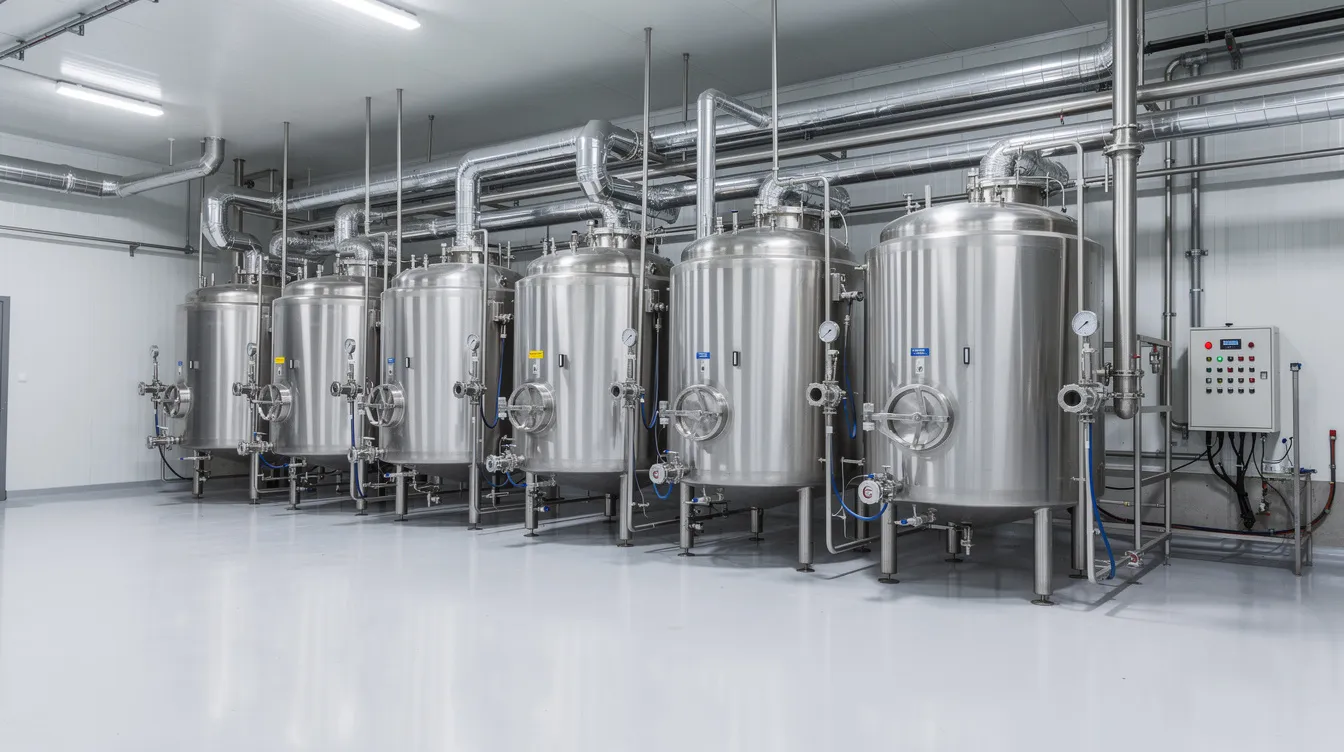
- Chilling system and raw-milk storage tanks to maintain cold storage integrity before processing. A 500-litre-per-day plant at minimum needs a Bulk Milk Cooler.
- Clarifier, cream separator and standardisation system to achieve desired fat and SNF levels for standardised milk.
- Homogeniser to break down fat globules and ensure stable, uniform dairy products before UHT treatment.
- UHT sterilisation plant (tubular or plate-based) with appropriate capacity in LPH. UHT processing typically heats milk to 135°C–150°C for a few seconds, achieving ultra high temperature sterilisation for extended shelf life.
- Aseptic balance tanks and intermediate buffer tanks to decouple processing from filling.
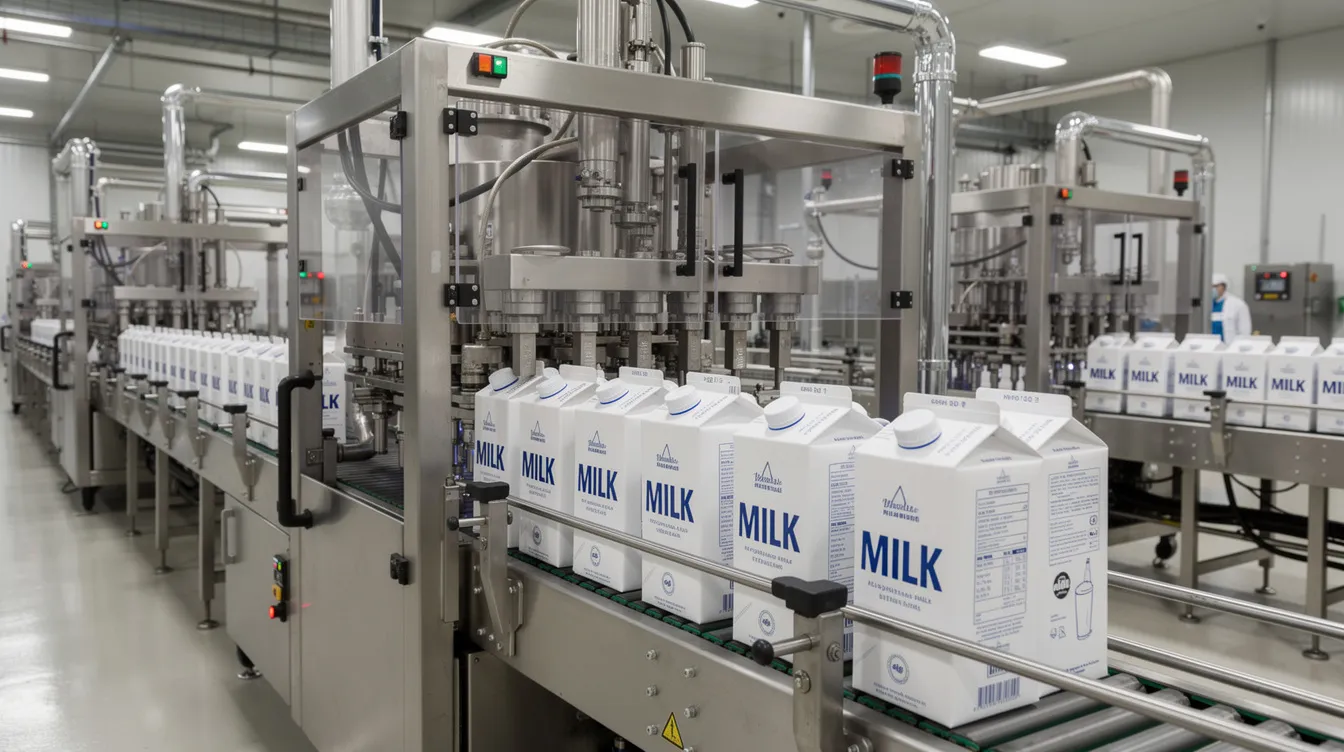
- Aseptic filling and packaging line (cartons, PET, bottles or pouches) with conveyors.
- Secondary and tertiary packaging: shrink wrapping, case packing, palletisation.
- A UHT processing plant typically requires CIP systems, homogenizers and related system components for hygiene assurance.
- Boiler and steam distribution, hot water system, refrigeration plant, chilled-water and glycol systems.
- Water-treatment plant, compressed-air system and nitrogen where needed for packaging.
- Electrical sub-station, LT panels, DG backup, effluent-treatment plant.
- Quality-control laboratory, warehouses and milk-tanker parking.
- Installation, commissioning, validation runs and plant trials.
Basic machinery quotations typically exclude civil construction, utilities, laboratory, ETP, engineering, pre-operative expenses and working capital. This is precisely why DPR-level costing always exceeds a simple “UHT plant machinery cost” figure.
Major Factors Affecting UHT Milk Processing Plant Setup Cost in India
The UHT milk processing plant setup cost in India is driven by processing capacity, product mix, packaging format, automation level, machinery origin, and whether the project is greenfield or an expansion. Capital expenditure for UHT plants is heavily influenced by machinery and equipment costs, but promoters must consider dairy plant capacity planning, packaging strategy and milk procurement simultaneously.
Processing Capacity and Plant Utilisation
UHT systems are rated in litres per hour (LPH) while overall plant capacity is expressed in litres per day (LLPD). A 10,000 LPH UHT line running 16 hours per day achieves about 1,60,000 litres per day of processed volume. However, planned downtime for CIP, sterilisation cycles and product changeovers reduces saleable output significantly.
For example, a 20,000 LPH plant running 16 hours per day for 300 days per year yields 96 lakh litres per year theoretically. At realistic utilisation of 60–70%, saleable output drops to 60–70 lakh litres. Banks expect capacity utilisation plans year-wise, with first-year utilisation often at 40–50%, rising to 70–80% over two to three years. Choosing very high rated capacity based on optimistic year-one projections distorts feasibility calculations.
Product Mix and Dairy Business Strategy
A basic UHT milk processing plant producing only plain toned milk will cost less than a multi-product dairy processing plant also handling flavoured milk, fortified milk, cream, lassi, curd or other long-life dairy beverages. Multiple recipes require additional mixing tanks, syrup and ingredient dosing systems, extra CIP circuits and higher validation costs. Producing more products and value added products increases revenue potential but also project cost. When UHT is part of a broader dairy processing strategy, an integrated dairy processing plant project report may be necessary.
Packaging Format and Aseptic Filling Capacity
Aseptic packaging is usually one of the largest components of UHT milk plant cost with aseptic packaging line. Aseptic packaging systems are critical for UHT milk to prevent re-contamination and ensure the long shelf life that defines UHT milk production.
- Aseptic carton lines (including brands like Tetra Pak) are widely used for long-life packs but carry higher machinery and material costs.
- Aseptic PET or HDPE bottle lines require blow-moulding or preform handling infrastructure.
- Aseptic pouch lines may offer lower machinery cost but different market positioning.
UHT steriliser capacity (LPH) is not the same as filler capacity. Filling machines are rated in packs per hour and throughput changes with pack size. A domestic supplier quoted approximately ₹4.5 crore for a 7,500 packs-per-hour aseptic line. Multi-format filling increases UHT milk packaging machine cost and changeover downtime. The aseptic packaging plant setup cost also includes conveyors, carton erectors, straw applicators, case packers and inkjet printers.
Level of Automation and Origin of Machinery
Higher automation level through automatic conveyors, case packers, palletisers, SCADA systems and traceability modules increases initial UHT milk plant machinery cost but can reduce long-term operating costs if utilisation is high. Imported UHT systems from European manufacturers typically cost more than Indian-made equipment but may offer better heat-recovery efficiency, sterility-validation standards and expert supervision during commissioning. Domestic UHT sterilisers for smaller capacities (500–10,000 LPH) are available in the ₹1.25 lakh to ₹12.5 lakh range, while scaled-up imported systems with advanced machinery and full automation run into several crores. Cost comparison must always be on like-for-like technical scope.
Greenfield UHT Dairy Plant vs Expansion of an Existing Facility
Adding a UHT line to an existing dairy plant is significantly more cost effective than a greenfield long-life milk processing plant in India. Existing facilities already have milk reception, chilling, utilities, established milk collection infrastructure and trained manpower. Milk collection infrastructure may require significant investment for new UHT plants, whereas expansion projects leverage the existing dairy processing plant setup cost in India already incurred.
Capacity-Wise Indicative UHT Milk Plant Cost in India
The following table presents planning-level cost ranges under 2025–26 conditions. These are not vendor quotations.
| Category | UHT Capacity (LPH) / Typical LLPD | Packaging Format | Automation | Machinery & Equipment (₹ Crore) | Total Project Cost Excl. Land (₹ Crore) | Key Notes |
|---|---|---|---|---|---|---|
| Entry-level commercial | 5,000–10,000 / 40,000–80,000 | Single aseptic carton or pouch line | Semi-automatic | 4–8 | 8–15 | Excludes land, taxes; basic QC lab |
| Medium-capacity | 15,000–25,000 / 1.5–4 lakh | Aseptic carton + one alternate format | Moderate automation | 15–25 | 30–50 | Tamil Nadu example: ~₹45 crore for 25,000 LPD UHT flavoured milk plant |
| Large integrated | 30,000–50,000 / 5–8 lakh | Multi-format aseptic lines | Fully automatic | 25–40 | 50–70 | Bhilwara co-op: ₹46.82 crore for UHT aseptic packaging facility |
| Multi-product industrial | 60,000–1,00,000 / 10+ lakh | Multiple lines, multiple SKUs | Full SCADA, palletising | 40–70 | 70–120+ | NDDB benchmark: 10 lakh LPD ~₹196 crore |
Promoters must obtain current quotations, particularly for imported UHT systems. Local civil-construction rates, state incentives and power infrastructure can materially change the final figure. Use this table only as a starting point before commissioning a detailed UHT milk plant DPR.
Detailed Cost Breakdown for a UHT Dairy Plant Project
Banks require itemised cost heads in every DPR. A typical cost sheet includes:
- Land and site development – purchase or lease, boundary, road, grading (usually excluded from machinery offers).
- Factory building and civil construction – production block, utility block, warehouses, admin area.
- Milk reception and raw-milk storage – weighbridge, reception dock, chillers, raw-milk silos.
- Pre-processing and standardisation – clarifiers, separators, balance tanks.
- Homogeniser and UHT sterilisation system – core of the UHT milk production line. Equipment costs for a small 500 LPH plant start at ₹25–45 lakhs, while 2,000 LPH plants range from ₹50 to ₹70 lakhs.
- Aseptic balance and storage tanks.
- Aseptic filling and packaging line.
- Secondary packaging and material handling.
- CIP and hygiene systems.
- Boiler, refrigeration and compressed air.
- Electrical installation and backup power.
- Water-treatment and effluent-treatment plants – ETP for a mid-sized 250 KLD dairy plant costs ₹1.2–2.5 crore without ZLD.
- Laboratory and quality-control equipment.
- Furniture, computers and office equipment.
- Installation and commissioning.
- Engineering, consultancy and validation.
- Preliminary and pre-operative expenses.
- Interest during construction.
- Contingency provision – typically 5–10%.
- Margin money for working capital.
This structure aligns with how banks view dairy plant project cost and means of finance.
UHT Processing Machinery and Equipment Cost
UHT milk plant machinery cost generally accounts for 40–60% of total project cost excluding land. The major equipment groups include milk reception and chilling systems, clarifier and cream separator, standardisation system, homogeniser (single or double-stage), and the UHT system itself (tubular or plate, direct or indirect heating). For broader context on dairy processing plant machinery and equipment cost, capacity, metallurgy (SS304 vs SS316), heat-recovery efficiency, automation and after-sales commitments all influence the final UHT milk processing equipment price. UHT processing requires specialised aseptic technology for long shelf life. UHT processing plants have stricter hygienic standards than conventional pasteurization facilities processing pasteurized milk. Equipment costs for a small dairy plant range from ₹25 to ₹75 lakhs depending on configuration.
Land, Building and Plant Layout Cost
Civil and infrastructure cost varies widely by state and construction standard, potentially accounting for 20–35% of UHT dairy plant project cost excluding land. A small dairy plant requires 1,500 to 2,000 square feet. Land requirements for mid-scale UHT plants are typically around 1 to 2 acres, while large integrated facilities may need 6 acres or more including ETP and future expansion provision. A small dairy processing plant for basic pasteurised-milk operations costs ₹20 to ₹30 lakhs, while a larger 2,000-litre-per-day unit costs ₹50 to ₹70 lakhs, but UHT plants operate at significantly higher scales. A 500-litre dairy processing plant costs ₹20–30 lakhs to set up for basic dairy processing alone.
Functional zoning covers raw-milk reception, processing area, aseptic packaging hall, utility block, warehouses, admin block and vehicle circulation. UHT processing plants require segregation between low-risk and high-risk aseptic zones with appropriate air handling. Finished UHT milk usually does not require cold storage if properly processed and packed, but raw milk and intermediate milk products require reliable refrigeration. For detailed planning, refer to dairy plant land, building and infrastructure requirements.
Utilities and Infrastructure Cost for a UHT Milk Plant
Under-budgeted utilities can make an apparently cheap machinery quotation commercially unviable. UHT facilities require sophisticated utilities for steam generation and wastewater treatment. Key utility components include:
- Steam generation: boilers, fuel storage, water conditioning. UHT plants sit at the higher end of steam intensity within the dairy industry.
- Electrical infrastructure: connected load, demand charges, DG backup.
- Refrigeration and chilled-water capacity for process milk cooling and auxiliary loads.
- Process and potable water: dairy processing requires three litres of water per litre of milk processed.
- Compressed air, CIP chemicals and dosing systems.
- Effluent-treatment plant sized for dairy waste management systems and BOD/COD loads.
- Fire-fighting systems per local norms and industry standards.
For detailed utility planning, the guide on dairy plant utilities requirement covers power, water, steam, refrigeration and ETP requirements comprehensively. Utility design must align with both UHT processing capacity and planned aseptic filling speed.
Aseptic Packaging Material and Initial Inventory
Even though machinery is a one-time investment, aseptic packaging material is a recurring high-cost item affecting both cost per litre and working capital. Typical materials include aseptic cartons or sleeves, PET preforms, multilayer pouches, caps, closures, straws, corrugated shipper cartons, shrink film and coding consumables. Suppliers often impose minimum order quantities requiring several weeks of inventory. Initial commercialisation also demands extra material for trials, validation and operator training wastage. A serious UHT milk business plan in India must quantify packaging-material inventory as a key working-capital component, not just an operational expense. UHT systems’ economics depend on procurement prices, product realisation, and packaging formats.
Pre-Operative and Hidden Costs in UHT Milk Plant Investment
Many early budgets omit “soft costs”, leading to funding gaps during implementation. Typical pre-operative and hidden costs include:
- Product and shelf-life trials, sterility validation runs and third-party certifications.
- Technical consultancy, dairy technologist and process engineer fees.
- Plant design, engineering drawings and plant layout optimisation.
- Travel and lodging for foreign and Indian installation supervisors.
- Freight, marine insurance, customs duty and port handling for imported UHT or packaging lines.
- Trial production losses and start-up wastage at low initial capacity utilisation.
- Recruitment, induction and operator training costs.
- Licensing and professional fees to Chartered Accountants and consultants.
- Marketing-launch expenditure: initial branding, packaging design, trade promotion for target markets.
- Security deposits for power connection and other statutory deposits.
- Initial stock of critical spares and maintenance consumables.
A prudent DPR includes realistic contingency to accommodate cost escalation over the typical 12–24 month implementation window.
Statutory Approvals and Compliance for a UHT Milk Processing Plant
Regulatory compliance for UHT plants generally includes FSSAI and local approvals. An FSSAI manufacturing license is mandatory for dairy processing plants. FSSAI licensing costs range from ₹50,000 to ₹2 lakhs depending on scale. A state FSSAI license is needed for annual turnover below ₹20 crore. Key approvals include:
- Factory registration and Factories Act compliance.
- State Pollution Control Board NOC is required for effluent management.
- Boiler registration and periodic inspection approvals.
- Fire-safety and electrical-safety approvals.
- Legal Metrology compliance for pack-size declarations.
- Local Body Trade License is needed from municipal authorities.
- GST registration is required after ₹20 lakhs turnover.
- MSME Udyam Registration is free and takes about 10 minutes, enabling access to government subsidies.
Promoters should verify current requirements with relevant authorities, as statutory approvals include FSSAI licensing and pollution control clearances that vary by state.
Working-Capital Requirement for a UHT Milk Business
UHT milk’s long shelf life can paradoxically increase finished-goods inventory and receivable cycles, making working capital crucial for UHT plants to manage expenses before achieving break-even. Initial working capital for a dairy plant is typically 3–6 months of milk procurement costs. Key components include:
- Raw milk purchases and transport. Milk procurement costs can be one of the largest ongoing expenses in UHT operations, and UHT plants incur high operational costs largely due to raw material expenses.
- Packaging material, ingredients, sugar, flavours, stabilisers and fortificants.
- Salaries, wages, electricity, fuel, water and CIP chemicals.
- Distribution, logistics and distributor margins.
- Finished products inventory and trade receivables from distributors, modern trade and institutional buyers.
A DPR should compute margin money based on realistic credit terms and inventory norms relevant to your business requirements.
Means of Finance for UHT Milk Plant Investment in India
Financing structures for UHT projects typically include equity, loans, and potential subsidies. Usual components include:
- Promoter’s equity contribution including capital and share premium.
- Term loans from banks or financial institutions for plant, machinery and civil works.
- Unsecured loans from promoters or group companies where acceptable.
- Financial support for UHT projects may be available through government schemes like AHIDF.
- NABARD offers 25% to 33.33% capital subsidies for dairy startups and dairy entrepreneurs.
- PMFME Scheme provides grants up to ₹10 lakhs for micro food processors.
- State-level dairy schemes complement central government programs in 2026, providing additional financial assistance.
- Working-capital limits (cash credit, overdraft) to finance inventories and receivables.
- Internal accruals for expansion projects where existing dairy business generates surplus.
For a broader view, the guide on dairy plant project cost and means of finance covers financing structures. Final debt-equity ratios and repayment tenors depend on lender policy, projected DSCR, collateral coverage and risk profile.
Bank Appraisal of a UHT Milk Project
Banks examine both technical feasibility and financial viability. A strong UHT milk plant project report is essential. Typical appraisal covers:
- Promoter background, experience in the dairy business and net-worth position.
- Milk collection and procurement arrangements, including chilling centres; refer to the guide on dairy plant milk collection and procurement infrastructure.
- Installed UHT capacity, aseptic filling capacity and realistic capacity-utilisation assumptions.
- Product mix, packaging and distribution strategy across retail, HoReCa, institutions and the competitive landscape.
- Machinery quotations, technical specifications and vendor credentials.
- Project implementation schedule, sales price assumptions and sensitivity to raw-milk and packaging costs.
- Working-capital cycle, break-even analysis, DSCR, projected profitability and cash-flow adequacy.
- Statutory-compliance status, collateral offered and promoter contribution.
An expensive aseptic line alone does not guarantee favourable appraisal. Guidance on dairy processing plant bank loan and project finance is available for promoters preparing for bank discussions.
Cost per Litre and Capacity-Utilisation Analysis
Understanding cost per litre at various utilisation levels is critical before finalising capacity and UHT milk plant bank loan size. Consider a 20,000 LPH UHT line operating 16 hours per day for 300 days per year: theoretical output is 96 lakh litres per year. After planned maintenance, product changeovers and sterility runs, practical saleable output may be 60–70 lakh litres initially.
Fixed costs such as interest, depreciation, salaries and many utility charges are spread across produced volume. At 40–50% utilisation, per-litre fixed cost is substantially higher than at 80–85%. A bottleneck risk also arises when UHT processing capacity exceeds aseptic filling capacity. Preparing UHT milk plant financial projections on 100% first-year utilisation is a common error. Realistic ramp-up is essential for genuine dairy processing plant feasibility and project viability assessment.
Cost-Control Strategies for UHT Milk Projects
Careful planning can optimise capital cost without compromising safety or compliance:
- Finalise product and packaging strategy before freezing machinery specifications.
- Obtain comparable quotations with identical technical scope; avoid mixing “bare” UHT skids with turnkey offers.
- Separate UHT sterilization plant cost from aseptic packaging line cost to understand individual impact.
- Evaluate using existing dairy plant utilities where reliable.
- Plan modular expansion: design civil infrastructure for future capacity, install only what current procurement and market demand justify.
- Align UHT processing capacity with filling-line speed to avoid under-utilised advanced machinery.
- Maintain reasonable contingency rather than running with unrealistic budgets.
Support from an experienced financial adviser like CA Manish Gugliya can help balance technical ambitions with bankability.
Common Mistakes While Estimating UHT Milk Plant Setup Cost
Many promoters underestimate true cost and overestimate profitability. Common mistakes include:
- Treating machinery quotation as total project cost, ignoring buildings, utilities, ETP and working capital.
- Ignoring aseptic packaging investment while focusing only on the UHT steriliser.
- Selecting plant capacity without confirming sustainable raw milk supply or procurement infrastructure.
- Assuming instant market acceptance and very high temperature early-year utilisation.
- Omitting installation, commissioning, validation and trial-production expenses.
- Comparing vendor quotations with different technical scope and warranty coverage.
- Underestimating inventory and credit periods, thereby undersizing working capital for the dairy industry supply chain.
- Assuming subsidies will arrive on time and compressing promoter contribution in projections.
Independent DPR-level costing and sensitivity analysis is far more reliable than single-page vendor budgets.
Is a UHT Milk Plant Financially Viable?
Viability depends on project-specific factors and must be analysed through financial projections. UHT milk processing has gross profit margins of 25–35%. For comparison, paneer and ghee offer profit margins of 20–40%. Small dairy processors handling even fruit juices and other dairy products alongside UHT milk can achieve profitability within 18–24 months at adequate scale. Key variables include raw-milk purchase price, packaging cost per litre, average realisation per litre, capacity utilisation over 5–7 years, distribution reach, energy efficiency, interest cost and the length of inventory and receivable cycles. Markets in the Middle East and domestically show high demand for UHT products.
A project-specific UHT milk plant feasibility study with sensitivity analysis is essential before committing to large capital expenditure.
Why a Bankable DPR Is Necessary for a UHT Milk Plant
A bankable Detailed Project Report converts a technical idea into a structured financial plan for lenders and investors. Essential elements include:
- Detailed technical configuration of UHT processing and aseptic packaging lines matching industry standards.
- Total project cost with itemised breakdown including civil works, machinery, utilities and pre-operative expenses.
- Means of finance showing equity, term loans, unsecured loans and expected incentives.
- Implementation schedule, sales volume assumptions and year-wise capacity-utilisation plan.
- Projected profit and loss account, balance sheet and cash-flow statement over 7–10 years.
- Working-capital assessment, break-even analysis, DSCR, IRR and payback period.
- Sensitivity analysis for raw milk price, packaging cost, selling price and utilisation.
Generic online figures on UHT milk plant cost in India cannot substitute for a DPR tailored to the promoter’s site, capacity and financing conditions. CA Manish Gugliya prepares such DPRs and CMA data professionally through ProjectReportBank. Estimated total project costs for mid-scale UHT plants vary based on scale and complexity, reinforcing why customised analysis is non-negotiable.
Frequently Asked Questions (FAQs)
The following FAQs address common queries from dairy entrepreneurs and investors.
How much does it cost to set up a small UHT milk processing plant in India?
For a genuinely commercial small UHT plant of about 5,000–10,000 LPH with one aseptic packaging line, total investment excluding land and major taxes can roughly fall in the ₹8–15 crore band under 2025–26 conditions. This depends on packaging choice, automation level and local civil costs. Minimum equipment cost for a 500 LPH plant starts at ₹25–45 lakhs for basic processing equipment alone, but a complete UHT line with aseptic filling costs considerably more. These are planning ranges that must be confirmed through quotations and a DPR.
What is typically included in UHT milk plant cost quotations from machinery suppliers?
Many quotations cover only the UHT processing skid and sometimes basic balance tanks and a filler. They often exclude civil construction, utilities such as boiler and refrigeration, water treatment, ETP, laboratory, quality control facilities, installation, pre-operative expenses and working capital. Promoters must add these separately when estimating total investment.
Can a UHT line be added to an existing dairy processing plant?
Yes. Adding a UHT and aseptic packaging line to an existing pasteurised-milk dairy plant is common and reduces project cost because milk reception, chilling, utilities and QC facilities are already available. Layout, hygienic zoning and utility-capacity checks are necessary to confirm technical feasibility.
Is an aseptic carton line such as Tetra Pak mandatory for UHT milk?
UHT milk can be packed in aseptic cartons, bottles or pouches. Carton lines from brands like Tetra Pak are widely used but not legally mandatory. The choice depends on target markets, brand positioning, cost per litre and distribution model. Each option carries a different machinery and packaging-material cost structure. The Tetra Pak milk plant setup cost will differ from a pouch-based or PET-based line.
How can ProjectReportBank and CA Manish Gugliya help in planning a UHT milk plant?
ProjectReportBank, led by CA Manish Gugliya, FCA, DISA (ICAI), assists promoters by preparing customised UHT milk plant project reports, DPRs, CMA data, financial projections, term-loan assessment and feasibility analysis aligned with bank requirements. This enables businesses and dairy entrepreneurs to understand realistic project cost, financing structure and risk before placing machinery orders or approaching lenders.
Conclusion and Professional Advisory Note
- The cost to set up a UHT milk processing plant in India depends on capacity, product mix, packaging format, automation, civil works, utilities and project location.
- Plant quotations focusing only on UHT machinery or aseptic lines may represent only 40–60% of total project cost. Full budgeting must cover buildings, utilities, ETP, statutory compliance, working capital and contingencies.
- True viability requires project-specific financial projections, sensitivity analysis and a clear financing plan rather than generic cost-per-litre assumptions.
- Serious promoters, cooperatives and dairy companies are welcome to contact CA Manish Gugliya via www.projectreportbank.com for a customised, bank-oriented UHT milk plant DPR, including total project cost estimation, means of finance, CMA data and feasibility assessment. No guarantee of loan sanction or subsidy approval is made or implied.