Key Takeaways
- Eye hospital project cost in India can range broadly – from around ₹75 lakh–₹1.5 crore for a basic rented-premises surgical eye centre in a Tier-3 city to ₹5 crore or more for an advanced ophthalmology hospital in a metro – depending mainly on hospital size, service offerings, and equipment choices.
- The major cost heads include land or lease deposit, building and civil work, interiors and fit-outs, ophthalmology diagnostic equipment, OT and surgical equipment, IT systems, statutory approvals, pre-operative expenses, contingency, and working capital. Of these, ophthalmology medical equipment and OT infrastructure typically form the largest share, often accounting for 35% to 50% of initial capital expenditure.
- As a practising Chartered Accountant, CA Manish Gugliya focuses on preparing realistic, bank-ready eye hospital project reports where project cost, means of finance, and revenue projections are logically linked – not just a list of equipment prices.
- All cost figures in this article are illustrative estimates based on 2025–2026 conditions. Final budgets must be based on actual supplier quotations, site conditions, and a proper feasibility study.
- The article also compares small vs medium vs advanced eye hospitals and explains how to present project cost in a professional eye hospital project report for a bank loan.
Explore Eye Hospital DPR Guides
Explore our complete series on Eye Hospital project planning, financial analysis and bank finance.
Introduction: Eye Hospital Project Cost in India – Direct Answer First
The cost to start an eye hospital in India in 2026 has no single fixed number. Practically, it can range from about ₹75 lakh–₹1.5 crore for a small rented-premises clinic-cum-cataract OT in a Tier-3 town to ₹5–₹10 crore or more for a medium or advanced eye hospital with retina, glaucoma, LASIK, and day-care beds in a metro city, excluding the cost of land where premises are owned.
This wide range depends on specific variables: city and location, ownership of land or building, built up area, equipment brand and technology level, number of OTs, bed strength, diagnostic scope, and whether the hospital offers only cataract surgery or also provides services like corneal services, pediatric ophthalmology, retinal imaging, and vision correction procedures. Patient care areas typically include outpatient departments and surgical theaters, and many hospitals also provide emergency eye care services alongside routine eye care services for cataracts and glaucoma.
The main components of eye hospital project cost in India include land or lease deposit, civil construction, interiors and fit-outs, ophthalmology diagnostic equipment, OT and surgical equipment, furniture and fixtures, IT systems and hospital management software, licences and professional fees, pre-operative expenses, contingency, and working capital margin.
From the perspective of project report preparation, project cost must be structured systematically so that lenders can clearly see how each rupee of capital investment connects with the proposed eye health services and projected revenue. Effective project costing for eye hospitals requires consideration of specific operational models and patient populations served.
What Determines the Cost of Starting an Eye Hospital in India?
Defining the scope of the proposed eye hospital – its services, target patients, and capacity – is the first step before discussing rupee figures. Without clarity on whether you are planning a small cataract removal centre or a comprehensive healthcare facility offering advanced diagnostics and surgical services, any cost estimate will be unreliable.
City tier is among the key factors. Land cost, lease rentals, and construction rates in metros like Mumbai, Delhi, and Bengaluru are dramatically different from those in Tier-2 or Tier-3 cities. A hospital design that costs ₹2 crore to build and fit out in a district town might cost ₹4–₹5 crore in a metro simply because of real estate and labour. Land costs significantly impact the overall hospital project budget, making location one of the most powerful cost drivers.
The decision between owning a hospital building and operating from leased premises can change initial capital investment by crores. Many new eye hospitals in India start in rented commercial or hospital buildings to limit upfront capital outlay, deferring building ownership to a later stage of future growth.
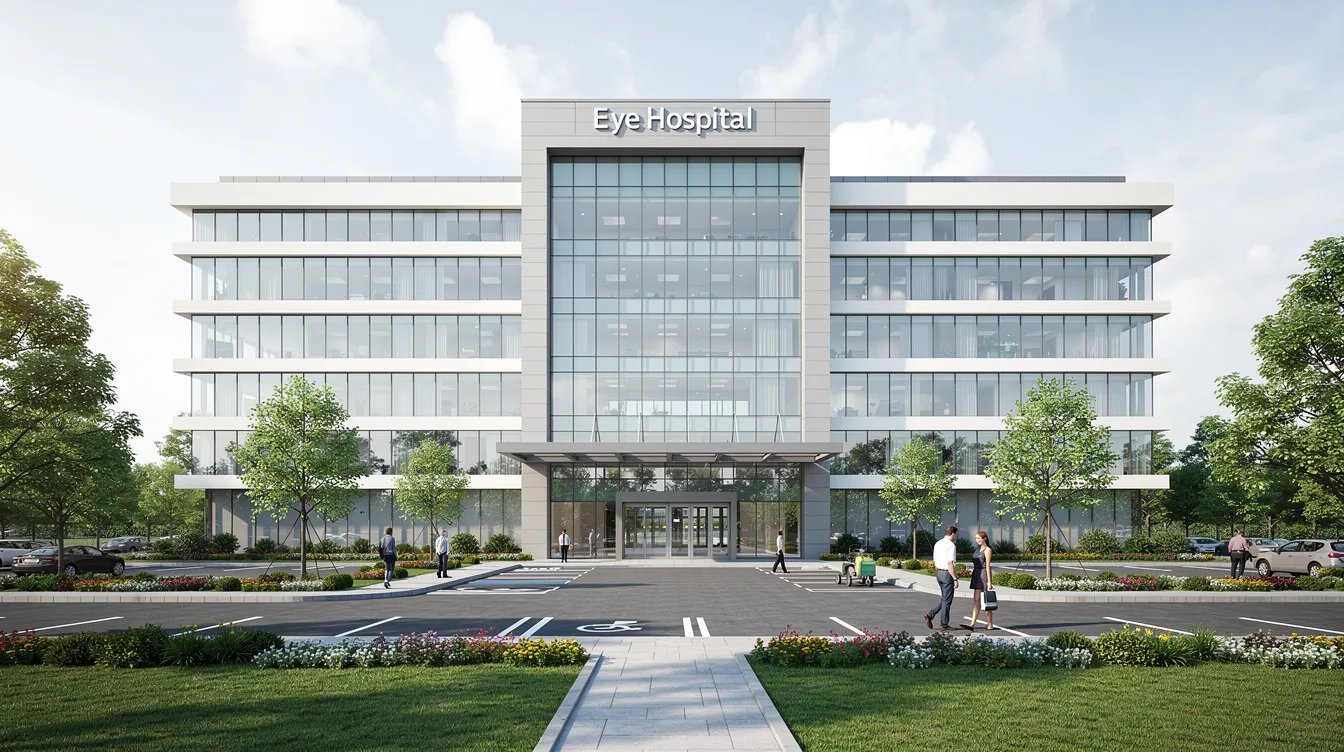
Space requirements for eye hospitals can vary from 1,000 sq ft for small clinics to over 10,000 sq ft for larger facilities. A small surgical eye clinic may need 2,000–3,000 sq ft, while a medium centre with separate pre-op, post-op, diagnostics, and multiple OTs might require 6,000–8,000 sq ft or more. How many beds you plan – whether day-care recliners or in-patient beds – further influences area, staffing, and regulatory requirements.
Clinical scope drives both equipment cost and staffing. A basic cataract-only centre needs a phaco machine, operating microscope, and core diagnostics. Adding retina, glaucoma, corneal transplants, or LASIK/refractive services using a femtosecond laser can significantly increase capital investment. Choices between Indian vs imported medical equipment, new vs refurbished machines, electronic medical records, and ophthalmology-specific hospital management software also affect project cost and long-term operational costs. Eye hospitals need specialized layouts for operation theatres and patient wards, and this specialized infrastructure is essential for efficient operations.
Eye Hospital Project Cost – Major Components Overview
Before diving into component-wise details, here is a summary table showing each cost head at a glance:
| Project Cost Component | What It Includes | Key Cost Considerations |
|---|---|---|
| Land / Lease Deposit | Purchase of land, security deposit for lease, stamp duty | Metro vs Tier-2 rates; owned vs rented model |
| Building & Civil Work | Structure, partitions, plumbing, electrical, fire safety | New construction vs renovation of existing facility; ₹/sq ft rates |
| Interior & Fit-Out | Flooring, false ceiling, AC, lighting, wall finishes, signage | Functional vs premium finish; OT-grade areas cost more |
| Ophthalmology Diagnostic Equipment | Slit lamp, ARK, OCT, fundus camera, perimeter, A/B scan | Indian vs imported; new vs refurbished; number of diagnostic stations |
| OT & Surgical Equipment | Phaco machine, operating microscope, vitrectomy system, OT infrastructure | Single vs multiple OTs; cataract-only vs retina/LASIK |
| Furniture & Fixtures | Patient seating, consultation desks, beds, trolleys, counters | Quantity driven by OPD capacity and bed count |
| IT & Hospital Management Systems | HMS software, computers, networking, data backup | One-time licence + recurring subscription costs |
| Licences & Regulatory Approvals | Clinical Establishment registration, fire NOC, drug licence | State-specific; delays add indirect cost |
| Preliminary & Pre-Operative Expenses | Consultancy, recruitment, training, trial runs, launch marketing | Often 6–12 month implementation window |
| Contingency | Buffer for unforeseen cost increases in civil/equipment | Typically 5–10% of eligible items |
| Working Capital Margin | Salaries, rent, consumables, receivables for initial months | At least 3–6 months of operating expenses |
Each of these components is discussed in detail below.
Land or Lease Deposit for an Eye Hospital
There are three common models: purchasing land and constructing a dedicated building, using a promoter-owned property, or operating from leased floors in a commercial or hospital building. Each model affects eye hospital capital investment very differently. Many private hospitals, especially newer ones, begin in leased premises to conserve capital for medical equipment and working capital.
Land cost can range from negligible (own existing building) to several crores in metro areas. Many eye hospitals exclude promoter-owned land from the financed project cost, while new purchases are often included for bank finance. In cities like Bengaluru, Chennai, Hyderabad, Mumbai, and Delhi, refundable lease/security deposits of 6–12 months’ rent or more may be blocked for a 3–5 year lease. This deposit is part of the project budget even though it is not consumed as an expense.
In the project report, the land/lease model should be clearly stated with basic assumptions – for example, 2,500 sq ft at ₹80/sq ft per month with a 10-month refundable deposit – and whether this portion is to be financed or funded by promoters.
Building and Civil Construction Cost
This section differs depending on whether the promoter constructs a new hospital building or does internal civil alterations within an existing building. For a new construction, construction costs for a hospital can vary widely based on city and specifications, with general hospital-grade construction costs ranging from ₹3,200 to ₹4,500 per square foot.
For internal fit-outs in leased premises, a 10–12 bed day-care eye hospital with 2 OTs may need 3,000–4,000 sq ft of built up area. Major civil-cost items include structural work (if any), internal partitions, OT-grade doors and windows, plumbing for wash areas and scrub stations, electrical wiring and panels, fire-safety provisions, and basic flooring. OT, pre-op, and scrub areas require better finishes, medical gas systems, and air-handling provisions than general patient areas.
As a reference, the LV Prasad Eye Hospital’s Siddipet facility – 14,500 sq ft built up area – had an infrastructure cost of ₹3.70 crore for civil and building work, translating to roughly ₹2,550/sq ft. For basic hospital-grade internal civil work in 2025–2026, illustrative rates may range from ₹1,800 to ₹3,000 per sq ft, excluding land. In the project report, construction cost should be supported by an architect’s estimate or a simple area-based calculation showing rate per sq ft, total area, and total civil cost.
Interior and Hospital Fit-Out Cost
There is a practical distinction between essential functional interiors and premium aesthetic elements. Banks are generally more comfortable financing practical, service-linked interiors than luxury fittings.
Typical interior areas in an eye hospital include reception and billing, waiting areas, optometry and refraction rooms, consultation cabins, diagnostic rooms (for OCT, perimeter, fundus camera), pre-op and post-op areas, day-care beds, nursing stations, pharmacy or optical shop (if included), and administrative space. Major fit-out elements include modular partitions, false ceiling, hospital-grade vinyl flooring, built-in counters, storage units, signage, lighting fixtures, and split or ductable air-conditioning.
The cost of hospital interiors and MEP (mechanical, electrical, plumbing) services can significantly increase overall expenses, particularly in OT zones where HVAC and HEPA filtration are required. As a high-level guideline, interiors and non-medical fit-out may account for around 10–20% of total project cost in many eye hospitals, but the exact figure depends on design choices and local rates. The project cost estimate should present interiors under a separate head, ideally backed by at least one interior contractor quotation.
Eye Hospital Equipment Cost – Diagnostic and Clinical Equipment
This is one of the most consequential cost heads. Ophthalmic equipment typically accounts for 35% to 50% of initial capital expenditure, excluding land. High-quality diagnostic tools like OCT and phacoemulsification machines are essential for eye hospitals delivering specialized care.
Essential diagnostic equipment for a basic comprehensive eye hospital includes:
- Auto-refractometer and keratometer (or combined ARK unit)
- Slit lamp with applanation tonometer
- Indirect ophthalmoscope and retinoscope
- Trial lens set and trial frame
- Lensometer
- Visual acuity charts
- Basic A-scan ultrasound for IOL power calculation
Advanced diagnostic equipment commonly found in medium and advanced centres includes optical coherence tomography (OCT) for retina and glaucoma assessment, fundus camera (standard and wide-field for retinal imaging), visual field analyser/perimeter, B-scan, corneal topographer, specular microscope, YAG laser, green laser for retina, and pachymeter. These may be phased in based on demand and patient flow rather than purchased all at once.
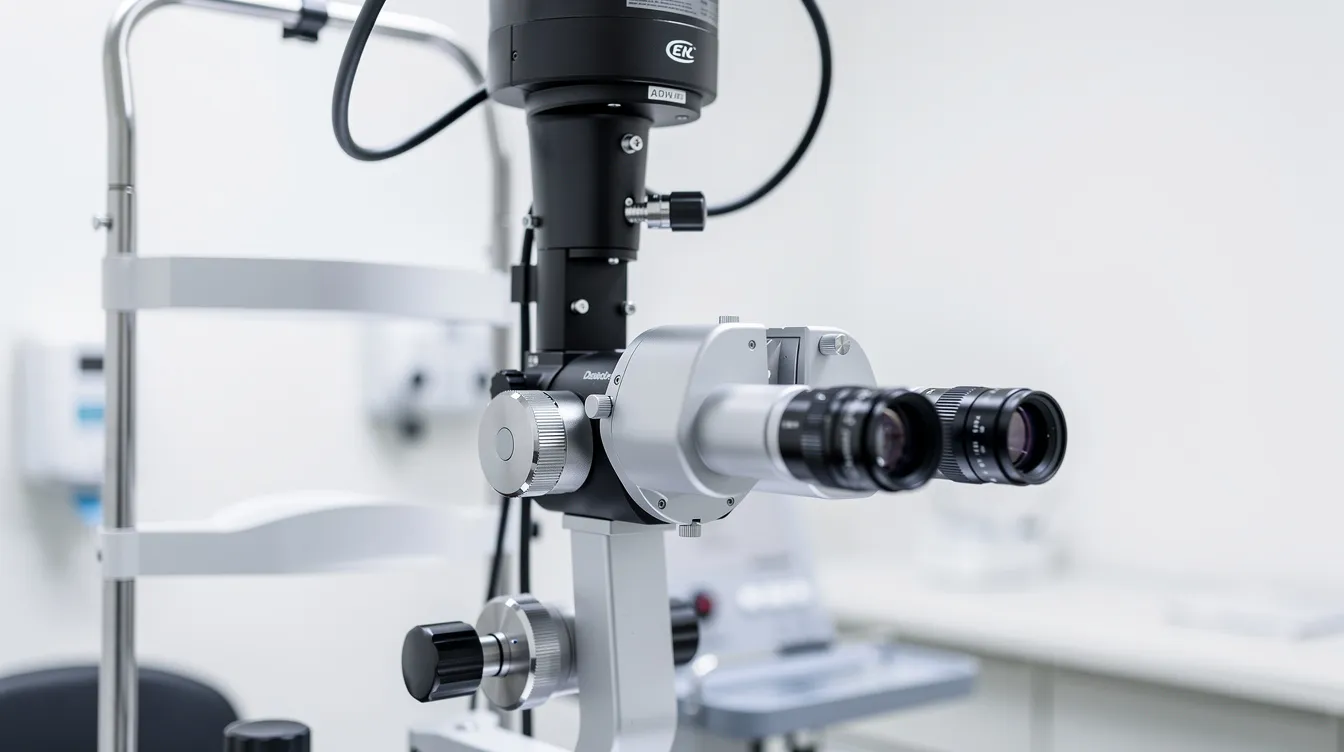
As illustrative ranges from recent industry analysis: OCT units may cost ₹25–50 lakh, standard fundus cameras ₹8–20 lakh, wide-field versions ₹35–65 lakh, and phaco machines ₹18–35 lakh (mid-range) to ₹45–80 lakh (premium). For promoters preparing project reports, item-wise quotations from at least 2–3 suppliers should be summarised in a machinery and equipment annexure. For guidance on how to properly present equipment details in a bank-loan-oriented project report, see Machinery & Equipment Details in a Mudra Loan Project Report.
Eye Operation Theatre Setup Cost and Surgical Equipment
The OT is the revenue-generating heart of a surgical eye hospital. Eye operation theatre setup cost depends on whether the hospital has a single combined OT, separate clean and septic OTs, or multiple speciality OTs for cataract, retina, and LASIK.
Major OT infrastructure elements include OT flooring and wall finishes, sterile ceiling, laminar airflow or AHU, HEPA filters, OT doors, scrub area, post-op recovery space, and a dedicated sterilisation room (CSSD) with autoclaves. Illustrative cost for a single modular OT setup including finishes, sterilisation suite, and basic HVAC is approximately ₹25–50 lakh per OT.
Key surgical equipment includes the operating microscope (basic vs advanced, ceiling vs floor-mounted), phacoemulsification machine, vitrectomy machine for retina work, OT tables, phaco handpieces and surgical instruments sets, cautery, suction, sterile trolleys, and shadowless OT lights. Adding refractive surgery like LASIK or SMILE requires separate excimer or femtosecond laser platforms, specialised pre-operative diagnostic devices, and stricter environmental control in surgical theaters – this can significantly increase capital expenditure compared with cataract-only centres.
In the project report, OT setup should be presented as a distinct sub-head under medical equipment, with itemised costs and a clear note on whether equipment is new, refurbished, or under any vendor-financing arrangement.
Furniture, Fixtures and Office Equipment
This section covers all non-medical movable items required for smooth hospital functions: reception counters, waiting-area chairs, consultation-room tables and chairs, diagnostic-area workstations, storage cupboards, and patient lockers where relevant.
Clinical furniture includes examination chairs, stools, instrument trolleys, day-care beds or recliner chairs, crash carts, bedside lockers, and simple ward furniture if in-patient beds are planned. Office equipment includes computers, printers, scanners, biometric attendance systems, CCTV cameras, networking switches, Wi-Fi routers, and basic telephony.
This head often accounts for 5–10% of total project cost. A detailed list with approximate unit cost and quantity should be prepared during project-report drafting to avoid underestimation.
IT Systems and Hospital Management Software
Although IT spending is smaller than medical equipment cost, significant investment is needed for IT and digital infrastructure in modern eye hospitals for operational efficiency, patient records, and billing accuracy.
Key IT components include a hospital management system (HMS) with registration, appointment scheduling, billing, inventory, and electronic medical records, along with ophthalmology-specific modules for refraction, pre-op evaluation, IOL calculation, and post-op follow-up. Hardware includes desktops or laptops for reception, billing, OT, and doctors’ cabins, server (if on-premise), networking infrastructure, data-backup solutions, and basic website or digital marketing presence.
Some costs are one-time (software licences, hardware) while others are recurring (annual maintenance, cloud subscriptions). Only the initial setup and first-year licences are normally considered under project cost, with later renewals treated as operating expenses. The project report should contain a short note explaining the chosen HMS solution and cost, showing that data security and patient record management have been planned.
Licences, Regulatory Approvals and Professional Expenses
Regulatory approvals include local health authority permissions and clinical establishment registration. Licenses and permits for eye hospitals include biomedical waste authorization and fire NOC. Key licenses include Clinical Establishment License and Drug License, and additional approvals may be needed for pharmacy, surgical services, or advanced technology platforms.
Accreditation for an eye hospital – whether NABH or equivalent – can require extensive compliance and regulatory planning. Operating without proper licenses is illegal in India, and the licensing process can take 6 to 12 months, so starting the application process early is strongly recommended. Licensing costs can add 20–30% to total expenses when you factor in professional charges, compliance requirements, documentation, and delays.
Actual requirements vary by state and municipality. Clinical establishments in one state may face different registration processes than in another. This cost head in the project report should include not only statutory fees but also professional charges paid to architects, Chartered Accountants, lawyers, and consultants for project planning and financial projections. While the rupee amount of licence fees may be small compared to surgical equipment, delays or non-compliance can postpone the opening and increase other project costs substantially.
Preliminary and Pre-Operative Expenses
These are expenses incurred before the eye hospital becomes fully operational, capitalised as part of project cost in many bank-oriented project reports. Setting up an eye hospital involves significant planning before the first patient walks in.
Typical pre-operative expenses include company or firm incorporation costs, project report and CMA Data preparation fees, architect and engineering design fees, staff recruitment and initial training of doctors and support staff, travel for equipment selection and site visits, trial runs, soft opening expenses, and initial branding and digital marketing for launch. Interest during construction (IDC) and loan processing fees may also be included where term loans are drawn before commercial operations.
The estimate for preliminary expenses should be derived from an implementation schedule – often 6–12 months – and realistic assumptions about professional and administrative costs during that period.
Contingency Provision in Eye Hospital Project Cost
Contingency is a prudent allowance for unforeseen but reasonable increases in civil, interior, and equipment costs. It should normally be kept within a moderate percentage – for example, 5–10% of eligible cost items – to avoid appearing inflated to lenders.
Heads that typically qualify for contingency include civil work, interiors, electrical, plumbing, and sometimes locally purchased equipment. Statutory fees fixed by government or pre-negotiated supplier contracts where the price is firm usually do not need contingency. Contingency should be shown as a separate line item in the project cost estimate, with a short note that it is only a buffer against minor changes and not a margin to be spent without justification.
Working Capital Requirement for an Eye Hospital
There is a critical distinction between fixed capital investment (buildings, equipment, interiors) and working capital – the funds needed to run day-to-day operations. Underestimating working capital is a common cause of stress in the first 12–18 months, even when the hospital is technically profitable on paper.
Key working capital components include initial stock of medicines and surgical consumables (IOLs, disposables, viscoelastics), optical inventory (if an optical shop is included), unpaid insurance/TPA receivables, one to three months of salaries for doctors and staff (human resources), rent, electricity, utilities maintenance, and marketing budget. Operational expenses for eye hospitals include staff salaries and medical consumables, and these must be funded from Day 1.
Initial working capital is essential for covering at least 6 months of expenses. In the first year, monthly recurring costs for small-to-medium eye hospitals may range from ₹5–25 lakh depending on scale. For a detailed method of structuring working capital in a bank-oriented project report, see How to Present Working Capital Requirement in a Mudra Loan Project Report.
Staffing includes various healthcare professionals and administrative management – ophthalmologists, optometrists, OT technicians, nurses, receptionists, billing staff, and housekeeping – and their salaries form a major portion of recurring costs.
Illustrative Eye Hospital Project Cost Breakdown (Table Format)
The following table presents an illustrative project cost for a mid-range 2-OT day-care eye hospital of approximately 4,000–5,000 sq ft in a Tier-2 city (2025–2026). These figures are purely indicative and must not be copied blindly.
| Project Cost Component | Illustrative Amount (₹ lakh) |
|---|---|
| Lease / Security Deposit | 15–25 |
| Civil Work & Basic Construction | 30–50 |
| Interior & Fit-Out | 25–40 |
| Ophthalmology Diagnostic Equipment | 40–70 |
| OT & Surgical Equipment | 50–90 |
| Furniture & Fixtures | 10–18 |
| IT & Software | 5–10 |
| Electrical, HVAC & Power Backup | 10–20 |
| Licences & Professional Fees | 5–10 |
| Preliminary & Pre-Operative Expenses | 8–15 |
| Contingency (5–10%) | 10–20 |
| Margin for Working Capital | 25–45 |
| Illustrative Total | ₹2.5–₹3.5 crore |
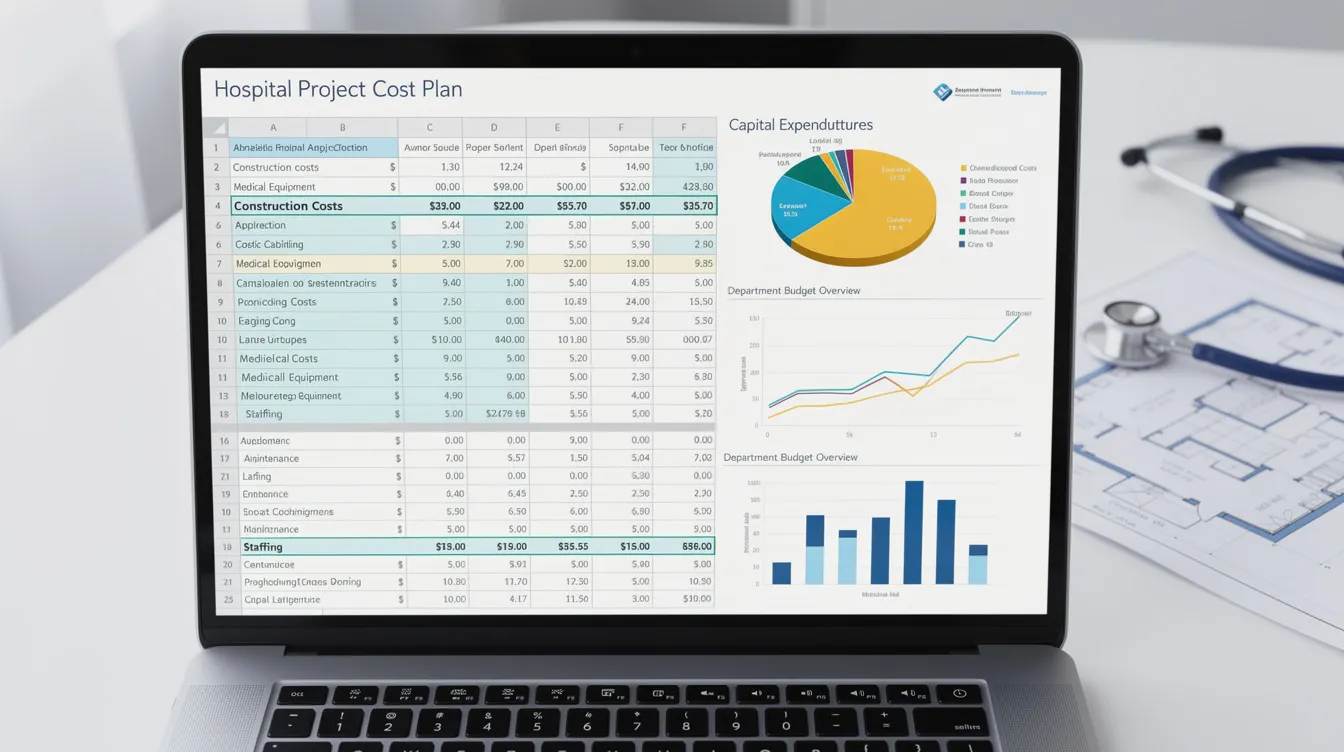
For smaller hospitals in rented premises with modest interiors and core equipment only, total project cost may be considerably lower – in the ₹75 lakh–₹1.5 crore range. For advanced tertiary ophthalmology centres in metros with premium imported equipment, the figures will be significantly higher. A planned budget for a 30-bed eye hospital can range from ₹8 crore to ₹18 crore depending on scope and location.
Small vs Medium vs Advanced Eye Hospitals – How Investment Changes
The term “eye hospital” is broad. Capital expenditure for an eye hospital in India varies by scale and location, and the scale of the facility directly impacts capital requirements.
| Category | Typical Area | Key Services | Illustrative Investment |
|---|---|---|---|
| Small Eye Clinic / OPD + Minor Procedures | 800–1,500 sq ft | Consultations, refraction, minor surgeries, diagnostic labs, referral for surgery | ₹20–₹70 lakh |
| Small Eye Hospital with Surgical Facility | 2,000–3,000 sq ft | Cataract surgery, basic diagnostics, day-care beds, emergency care | ₹75 lakh–₹1.5 crore |
| Medium Eye Hospital | 4,000–8,000 sq ft | Cataract, glaucoma, retina diagnostics, possible LASIK, multiple OTs | ₹1.5–₹3.5 crore |
| Advanced Ophthalmology Centre | 8,000–15,000+ sq ft | All subspecialties, advanced diagnostics, retina surgery, LASIK/SMILE, corneal transplants | ₹3–₹8 crore+ |
Tertiary eye hospitals typically require a minimum investment of ₹3 crore to ₹5 crore. For reference, cataract day-care center setup costs range from ₹50 lakh to ₹1.2 crore. Many hospitals – including chains with an extensive network like Aravind Eye Hospital – started small and scaled up based on patient flow and market demand. Smaller hospitals can achieve high quality care and patient satisfaction with focused service offerings and efficient operations.
These are not rigid definitions but useful frameworks for deciding what level matches your experience, local demand, and financing capacity.
How Much Does It Cost to Start a Small Eye Hospital in India?
This is perhaps the most frequently asked question, and the answer depends on the model chosen.
Model A – Consultation-plus-diagnostic clinic with tie-up OT elsewhere: In a Tier-2 or Tier-3 city, with about 1,000–1,500 sq ft of rented space, minimal staff, core diagnostic equipment, and an arrangement to use another existing facility for eye surgery, the illustrative project cost may be in the range of ₹30–₹70 lakh.
Model B – Small day-care eye hospital with own OT: With about 2,000–2,500 sq ft of rented premises, one OT capable of performing routine cataract surgery and minor surgeries, basic diagnostics, and 3–5 day-care beds, the illustrative project cost may range from ₹75 lakh to ₹1.5 crore.
Cost varies if premises are partly owned, interiors are kept modest, and some equipment is purchased refurbished. Feasibility studies assess project viability before hospital setup, and a proper market survey is essential for hospital cost planning. Before finalising investment, a feasibility study should be prepared covering demand, site suitability, and financial projections. Hospital project costs can vary by ₹10–20 crore based on assumptions alone, so feasibility studies help avoid costly mistakes in hospital planning.
How Equipment Selection Changes Eye Hospital Project Cost
Equipment planning is not only a clinical decision but also a financial one that significantly alters both the project budget and annual maintenance expenses. Advanced technology platforms can double or triple equipment-related capital expenditure.
Indian ophthalmology equipment manufacturers offer competitive pricing with good after-sales support services, while imported brands from the US, Europe, and Japan often command premium pricing. Promoters should align equipment choices with their target market and expected procedure volumes – a hospital in india targeting high-volume cataract removal may prioritise a robust mid-range phaco system over a premium imported one.
Refurbished phaco machines, microscopes, and OCT units can reduce initial capex but may have shorter warranties and higher maintenance risk. Banks may also request more clarity when refurbished equipment forms a large proportion of the project cost. Factoring in extended warranties and annual maintenance contracts (AMC) is essential for long-term cost planning – premium OCT, lasers, and phaco systems often carry significant annual AMC charges after the warranty period.
Equipment capacity should match projected patient and surgery volumes. Including an expensive LASIK system in a location with limited refractive demand may weaken the financial feasibility – a point that should be clearly evaluated in the feasibility report and financial projections.
Project Cost vs Means of Finance – Structuring the Investment
Project Cost represents the total investment requirement to establish the eye hospital (fixed capital plus margin for working capital). Means of Finance explains how this investment will be funded.
| Project Cost Components | ₹ lakh | Means of Finance | ₹ lakh |
|---|---|---|---|
| All fixed assets & pre-op | 230 | Promoter Contribution | 100 |
| Working Capital Margin | 30 | Term Loan | 140 |
| Contingency | 15 | Unsecured Loans / Internal Accruals | 35 |
| Total | 275 | Total | 275 |
Banks expect a reasonable promoter contribution and the ratio between term loan and own funds should be consistent with bank norms and the risk profile of the project. For understanding how project cost and means of finance later flow into CMA Data and cash-flow projections during loan appraisal, see CMA Data vs Project Report for Mudra Loan: Key Differences.
Eye Hospital Project Cost for Bank Loan and Project Report Preparation
When presenting eye hospital project cost in a professional project report for a bank loan, lenders expect clear schedules and well-supported assumptions.
Core expectations include: item-wise project cost with supporting quotations (especially for machinery and equipment), realistic civil and interior estimates backed by area-based calculations, a detailed means-of-finance statement, an implementation schedule, and at least 5–7 years of financial projections based on achievable patient volumes and a thorough market analysis.
Lenders will examine whether the investment in surgical equipment and infrastructure is justified by projected ophthalmology procedures, OPD volume, and local market potential. For insights on presenting revenue assumptions, see How to Present Sales & Revenue Projections in a Mudra Loan Project Report, and for understanding how banks analyse CMA Data for loan applications, review the linked guide.
A well-prepared project report improves clarity and reduces queries, but it does not guarantee loan sanction. The final decision depends on bank policy, promoter profile, collateral, and overall risk assessment.
Linking Project Cost with Revenue Projections and Profitability
In a professional financial analysis, eye hospital project cost must be linked with operational planning: number of OPD consultations per day, expected cataract and other surgeries per month, utilisation of diagnostic equipment, and average billing per service category.
Revenue projections should be broken into logical segments – OPD fees, cataract surgeries, retina procedures, glaucoma services, diagnostic tests (OCT, fields, fundus photography), and income from pharmacy or optical units. Each major capital item should have a corresponding revenue line with realistic utilisation growth over 3–5 years, rather than assuming full capacity from Day 1. Government programs and strategic partnerships with insurance companies or public private partnerships can influence patient volumes significantly.
The aging population in India, combined with the eye care market growing at approximately 11.4% CAGR, creates strong demand for eye care services addressing visual impairments. However, all assumptions about patient footfall, tariff rates, and growth must be grounded in local market study, not optimistic expectations. For guidance on building such assumptions, see How to Make Realistic Assumptions in CMA Data.
Projected cash flows should be sufficient to cover term-loan instalments, interest, taxes, and working capital needs, forming the basis for assessing repayment capacity.
Common Mistakes While Estimating Eye Hospital Project Cost
Several common errors can undermine a project cost estimate:
- Ignoring GST, customs duty, and freight on imported ophthalmology equipment, which can add significant amounts to the landed cost of OCT, lasers, and phaco systems.
- Underestimating electrical, HVAC, and power backup costs for OT and diagnostic rooms – these are often substantially more expensive than general-area electrical work, and the environmental impact on sterile environments must be considered.
- Underestimating working capital – even when the hospital is technically profitable, delayed TPA/insurance payments and ramp-up-period losses can create cash flow stress.
- Mixing one-time project cost with recurring operating expenses – confusing capital expenditure with monthly operational costs weakens the project report’s credibility.
- Over-specifying OT and equipment without matching expected surgery volumes – a LASIK platform costing ₹2–3 crore needs sufficient refractive-surgery demand to justify the investment.
- Not accounting for initial marketing and brand-building – new hospitals require patient awareness campaigns; digital marketing and community outreach are not optional.
- Ignoring interest during construction when loan disbursement happens before revenue starts.
- Copy-pasting generic online templates – instead, base estimates on an actual site plan, supplier quotations, and a structured feasibility study.
For reference, medical equipment costs for a 50-bed hospital range from ₹2 to ₹4 crore, a 50-bed hospital project typically costs between ₹15 to ₹30 crore, a 20-bed hospital in India costs around ₹8 to ₹15 crore, and a 100-bed hospital costs ₹30–60 crore or more. These benchmarks from general hospitals illustrate how dramatically scale affects investment, and sustainable hospitals plan their expansion carefully.

Expert Note by CA Manish Gugliya
The cost of an eye hospital should not be calculated merely by adding the price of phaco machines, microscopes, and diagnostic equipment. In my experience preparing project reports for healthcare ventures, I have seen that a financially sound estimate connects the hospital’s clinical capacity – number of OTs, equipment list, staff strength – and infrastructure with realistic patient volumes, revenue projections, and working capital needs.
Each major equipment item – whether OCT, lasers, or LASIK platforms – should have a clear operational and financial rationale within the proposed business model, supported by market demand and utilisation assumptions. Patient safety and patient experience should be designed into the infrastructure, not treated as afterthoughts. Sustainable practices in equipment procurement and energy management also contribute to long-term viability.
A project report is a planning tool, not a guarantee of results. Projections represent assumptions about future performance and should be treated as such.
CA Manish Gugliya, FCA, DISA (ICAI) Chartered Accountant | Project Report & Business Finance Professional ProjectReportBank.com
About CA Manish Gugliya and ProjectReportBank.com
CA Manish Gugliya is a practising Chartered Accountant with experience in preparing project reports, CMA Data, financial projections, and MSME/business finance proposals for bank loans across various sectors, including healthcare and eye hospitals. Through ProjectReportBank.com, he and his team focus on preparing bank-oriented project reports and financial plans that are practical, data-backed, and aligned with lender expectations – without promising automatic loan approval.
The purpose of this article is educational – to help ophthalmologists, doctors, and healthcare entrepreneurs understand how to structure and estimate eye hospital project cost in India before committing large sums of capital or approaching a lender. Staff recruitment, regulatory compliance, and equipment procurement decisions should all be informed by proper financial planning.
Frequently Asked Questions (FAQs) on Eye Hospital Project Cost in India
The following FAQ section answers practical questions that arise once a promoter starts planning an eye hospital project in India, especially around minimum investment, rented premises, and financing.
What is the minimum investment required to start an eye hospital in India?
For a very small rented-premises eye clinic with basic diagnostics and tie-up OT, illustrative startup investment may begin around ₹30–₹40 lakh in smaller cities. A small eye hospital with its own cataract OT usually starts from around ₹75 lakh–₹1.5 crore, depending on city, interiors, and equipment mix. These are indicative only and must be validated through a feasibility study, quotations, and a proper project report.
Can I start an eye hospital in rented premises, or do I need to own a building?
Many successful eye hospitals in India operate from leased premises, especially in the initial years. Banks do finance projects based on rented buildings provided the lease terms are reasonable and long enough (typically 5+ years with renewal options). Owning a building is not mandatory but may improve long-term asset value and reduce recurring rental outflow.
Will banks finance ophthalmology equipment like phaco machines and OCT?
Term loans from banks and NBFCs often cover eligible medical equipment such as phaco systems, operating microscopes, OCT, lasers, and diagnostic equipment, subject to margin requirements and overall project appraisal. Equipment details, quotations, and justification must be properly documented in the project report.
How long does it usually take to prepare a bank-ready eye hospital project report?
A basic project report may be compiled in 1–2 weeks if architectural plans and quotations are available. A comprehensive feasibility-based report with detailed projections, CMA Data, and scenario analysis may take 3–4 weeks, depending on how quickly information is shared by the promoters and how complex the service offerings are.
Is it necessary to hire a consultant or CA for estimating eye hospital project cost?
Doctors and promoters can prepare preliminary budgets themselves, but engaging an experienced CA or healthcare project consultant is usually helpful for refining cost estimates, structuring means of finance, and preparing projections that align with how lenders evaluate proposals. This does not guarantee loan approval but can significantly improve clarity, reduce errors, and present a more professional case to the bank.
Conclusion
Eye hospital project cost in India is primarily driven by hospital size, service mix (cataract only vs retina, glaucoma, LASIK, corneal services), land or lease model, medical and diagnostic equipment choices, interiors, and working capital planning – rather than by any single “cost per bed” figure. The difference between a small eye clinic and a comprehensive ophthalmology centre can run into crores.
Credible estimates should be based on a clear concept note, architectural plan, local market study, and up-to-date supplier quotations. The generic ranges provided in this article are for orientation only. A proper feasibility study is where cost planning should begin.
A well-structured eye hospital project report should show a logical chain: Project Cost → Means of Finance → Capacity & Services → Revenue Projections → Profitability → Cash Flow → Repayment Capacity. This chain helps both promoters and lenders make informed decisions and supports the long-term success of any new hospital delivering specialized care and high quality care for eye health.
Explore All Eye Hospital DPR Guides
Continue exploring our complete series on Eye Hospital project planning, financial projections, repayment capacity and bank finance.
- Eye Hospital Project Report / DPR for Bank Loan – Complete Guide

- Eye Hospital Term Loan Assessment: How Banks Evaluate Your Project in India
- Bank Loan for Eye Hospital – Project Finance & Documentation Guide

- Eye Hospital DSCR & Loan Repayment Capacity – Complete Guide
- Eye Hospital Working Capital Requirement – Assessment & Calculation (India-Focused Guide)
- Eye Hospital Financial Projections – How to Prepare Projections for DPR (India)
- Eye Hospital Revenue Model – How to Prepare Realistic Revenue Projections (Eye Hospital Project Report)
- Eye Hospital Project Cost & Means of Finance – How to Structure the Investment

- Eye Hospital Equipment List & Cost in India – Complete Setup Guide