
Key Takeaways
- Instant poha manufacturing builds on conventional flattened rice processing by adding controlled drying, seasoning, mixing and modern packaging to create a shelf-stable, ready-to-cook product. The manufacturing process of instant poha combines traditional flattening and modern dehydration techniques.
- An instant poha manufacturing plant typically starts with pre-made rice flakes and converts them into branded, value-added instant mixes through a dedicated processing and packaging line.
- Different formats – plain instant poha, masala poha mix, vegetable or Indori-style mixes, single-serve cups – each require distinct recipes, moisture targets, processing conditions and packaging solutions.
- This article covers process flow, machinery, plant layout, production capacity, cost drivers, quality control and project-finance considerations relevant to setting up an instant poha manufacturing business in India.
- Written from the perspective of CA Manish Gugliya (Project Report Bank), the focus spans both the technical process and bankable project planning including DPR preparation, CMA data, financial projections, working capital and term loan structuring.
Introduction: Growth of Instant Poha and Ready-to-Cook Poha Products
Rising demand for convenient breakfast and snacking options across urban India has expanded the market well beyond loose flattened rice. Branded instant poha products – seasoned, portioned and packaged for 3-minute preparation – now occupy dedicated shelf space in modern trade, general trade and e-commerce channels. Instant poha is designed to cook by simply adding hot water, making it ideal for time-pressed consumers.
Traditional poha manufacturing converts raw paddy into rice flakes through soaking, roasting and flaking. Instant poha manufacturing starts from these flakes and layers on additional steps: cleaning, moisture control, ingredient blending, seasoning and retail packaging. From a project-appraisal perspective, instant poha is a value-added extension of a poha manufacturing unit, improving realisation per kg and enabling a distinct product mix and market strategy.
This article covers the industrial instant poha manufacturing process and production line configuration – not home recipes – along with machinery, capacity planning, quality systems and the financial planning framework relevant to MSMEs and growing food brands in India.
What Is Instant Poha? Formats and Product Types
Instant poha is a shelf-stable, pre-processed rice flakes-based mix that consumers can turn into a ready meal with hot water or minimal cooking in 3–5 minutes. Unlike loose, unseasoned poha sold in bulk, instant poha includes pre-mixed seasonings, controlled moisture levels, dehydrated vegetables, oil (where used) and precise food grade packaging.
Medium-to-thick flakes are generally preferred for instant poha to ensure they do not disintegrate upon rehydration. Poha grades serve different market segments: thin poha (1–1.5 mm) suits ready-to-eat products, medium poha (2–3 mm) targets household use, and thick poha at approximately 4–5 mm works well for snacks.
Major commercial formats include:
- Plain instant poha and ready-to-cook seasoned poha
- Masala poha, kanda poha mix, lemon poha mix and Indori-style poha mix
- Vegetable poha mix with dehydrated peas, carrots and onion
- Single-serve breakfast cups and bowl packs
- Stand-up pouches (60–200 g), family packs (200–500 g) and institutional bulk packs (1–5 kg)
The ready-to-cook poha manufacturing process differs from ready-to-eat poha manufacturing: the former requires consumer-side rehydration and light cooking, while the latter involves retort processing or full pre-cooking before packaging.
Conventional Poha vs Instant Poha Manufacturing
Conventional poha production begins from paddy. Cleaning and grading raw paddy involves removing impurities like stones and dirt. Paddy is soaked for 3–4 hours before roasting. Rotary roasting drums operate at temperatures between 180°C and 220°C. Flaking rollers then determine poha thickness from 1 to 5 mm, producing the base rice flakes.
An instant poha processing plant starts from already-made flattened rice and focuses on value addition.
| Aspect | Conventional Poha | Instant Poha |
|---|---|---|
| Primary raw material | Raw paddy | Pre-made rice flakes (poha) |
| Main output | Unseasoned bulk flakes | Seasoned, shelf-stable instant mix |
| Key operations | Soaking, roasting, flaking, drying | Cleaning, seasoning, mixing, packaging |
| Typical buyers | Wholesalers, retailers | End consumers, retail chains, HoReCa |
| Packaging | Loose, jute bags, basic poly packs | Printed laminate pouches, cups |
| Margin structure | Lower per-kg realisation | Higher value-added margins |
| Quality focus | Flake thickness, yield, breakage | Taste, moisture, shelf life, uniformity |
| Shelf life concern | Moderate | Critical – 6 to 12 months target |
Entrepreneurs must not assume that conventional poha manufacturing and the instant poha manufacturing process are identical. The latter demands food-processing expertise, shelf-life testing and rigorous quality systems.
Raw Materials Required for Instant Poha Manufacturing
Core ingredients include cleaned and graded rice flakes, edible salt, sugar (where used), turmeric, chilli powder, citric acid or lemon flavouring, curry-leaf and mustard seasoning, peanuts, roasted chana, cashews, dehydrated onion, dehydrated vegetables and food-grade edible oil for tempering-based recipes. Seasoning in instant poha typically includes dehydrated ingredients to ensure long shelf stability.
| Ingredient | Function | Notes |
|---|---|---|
| Poha (rice flakes) | Base, texture, reconstitution | Breakage reduces usable yield; moisture must be stable |
| Edible oil | Flavour, mouthfeel | Susceptible to oxidation; affects rancidity risk |
| Salt, sugar, spices | Taste, colour, aroma | Uniform mixing critical; add salt and spices per batch recipe |
| Dehydrated vegetables | Nutrition, texture, appeal | Hygroscopic; store in airtight containers |
| Peanuts, roasted chana | Protein, crunch | Allergen labelling required |
| Packaging material | Barrier, branding | PET/ALU/PE laminates for best shelf life |
Raw-material specifications and vendor-approval policies directly affect instant poha quality control and should feature in the quality manual.
Instant Poha Manufacturing Process Step by Step
This section describes a representative industrial process for manufacturing instant poha starting from purchased rice flakes, suitable for a commercial poha processing line in India.
Overall sequence: Raw Material Receipt → Inspection → Cleaning & Sieving → Grading → Conditioning/Moisture Adjustment → Drying/Dehydration → Cooling → Ingredient Preparation → Mixing & Blending → In-Process QC → Weighing & Filling → Nitrogen Flushing (if used) → Sealing & Coding → Secondary Packing → Finished-Goods Storage.
Raw Material Receiving and Inspection
Incoming poha and ingredients are sampled for moisture content, foreign matter, flake size distribution, broken flakes, colour and odour. Supplier records and incoming QC forms support traceability. Bulk rice flakes should be stored on pallets in dry, ventilated godowns following FIFO or FEFO protocols.
Cleaning and Sieving
The poha cleaning process uses a vibro cleaner, aspirator and vibratory sieve to remove dust, fine powder and light foreign particles. Magnets and metal detectors may be included to remove ferrous contamination. This step improves poha quality by ensuring clean, uniform base flakes.
Grading of Poha
Instant poha production requires careful grading and separation to ensure uniformity of flakes. Vibratory sieves divide poha into thin, medium or thick categories. Uniform flake size supports even seasoning, consistent rehydration and predictable fill weights. Flaking rollers determine poha thickness and grade at the upstream rice flakes stage. Rejected fractions – excessively broken flakes or powder – can be sold for namkeen or chivda-type snack products.
Drying and Moisture Control
Moisture control is critical for maintaining the texture and stability of instant poha. Even when incoming poha appears dry, ambient humidity – particularly in monsoon-prone Indian states like Madhya Pradesh, Maharashtra and Odisha – can raise moisture beyond safe levels. Options include continuous dryer, tray dryer or fluid-bed systems. Time and temperature combinations must be optimised: over-drying leads to brittle flakes while under-drying invites fungal growth. Proper drying reduces moisture to safe levels, preventing mold and rancidity in instant poha. The DRDO study on protein-rich instant poha achieved finished-product moisture of approximately 5.92%, which supported a 6-month shelf life.
Ingredient and Seasoning Preparation
Dry ingredients – salt, sugar, masala blends, citric powder – are weighed per batch recipe. Oil-based tempering ingredients (mustard seeds, curry leaves, peanuts) are roasted and cooled under hygienic conditions where the recipe requires. Dehydrated vegetables must be handled carefully to avoid moisture pickup.
Mixing and Blending
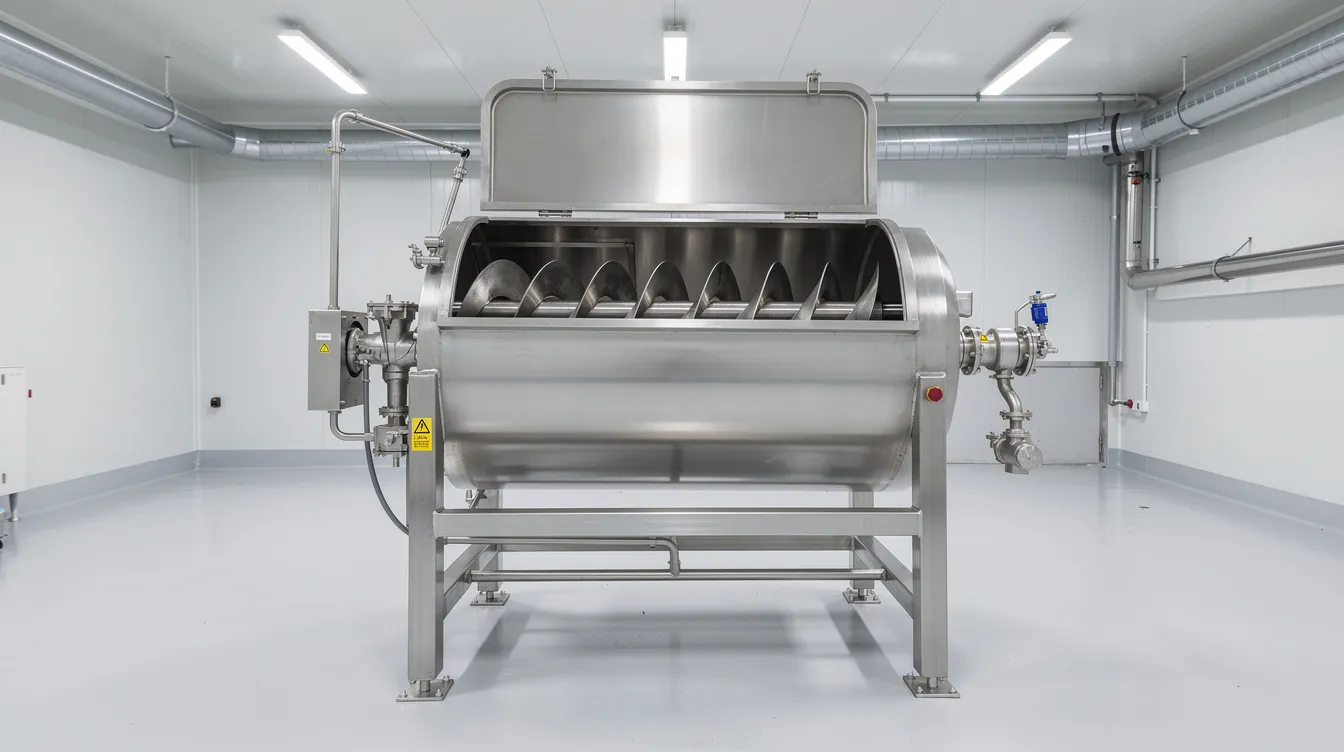
Batch mixing systems like a ribbon blender or seasoning mixer gently coat rice flakes with spices and oil without causing excessive flake breakage. Typical sequence: load poha → add dry seasoning → gentle mix → oil spray if formulation requires → final blending → sampling. Mixer design, fill level and mixing time directly affect seasoning uniformity and must be validated during product trials.
Cooling and Stabilisation
Mixes exiting a dryer or oil-seasoning step may be warm. Product should pass over a cooling conveyor or rest in stainless steel bins until it reaches near-ambient temperature. Packing warm product causes condensation inside pouches, leading to clumping and microbial growth.
Weighing and Filling
Options range from semi automatic cup fillers and linear weighers to advanced multihead weighers. Calibration ensures accurate net weight – underweight packs create legal issues while overfill inflates cost.
Packaging and Sealing
A form fill seal machine forms, fills and seals instant poha into pillow packs, stand-up pouches or cups. Airtight and moisture-resistant packaging is crucial for the shelf life of instant poha. Sealing parameters (temperature, pressure, dwell time) and periodic seal-strength tests should be part of quality control records.
Nitrogen Flushing
Nitrogen flushing displaces ambient air with food-grade nitrogen before sealing, reducing oxygen and extending shelf life. It is commonly used for premium ready-to-eat formats or high-fat seasoned mixes but may not be necessary for every product.
Coding and Secondary Packaging
Batch coding prints manufacturing date, best-before date, batch number and MRP on each pack. Secondary packing into corrugated cartons enables proper storage and transport with clear lot identification for traceability.
Instant Poha Manufacturing Process Flow Chart
Rice Flakes & Ingredients Receiving
    ↓
Quality Inspection (Moisture, Size, Colour, Foreign Matter)
    ↓
Cleaning & Sieving (Vibro Cleaner, Aspirator)
    ↓
Grading (Thin / Medium / Thick)
    ↓
Drying / Moisture Conditioning (if required)
    ↓
Cooling
    ↓
Ingredient & Masala Preparation (Roasting, Weighing)
    ↓
Batch Mixing in Ribbon Blender / Seasoning Mixer
    ↓
In-Process QC (Sampling, Taste, Moisture)
    ↓
Weighing & Filling
    ↓
Nitrogen Flushing (if used)
    ↓
Sealing & Coding
    ↓
Secondary Packing (Cartons)
    ↓
Finished-Goods Warehouse Storage
    ↓
Dispatch
When integrated with upstream rice flakes production, the flow chart adds paddy cleaning, soaking, roasting and flaking before the instant line.
Machinery Required for Instant Poha Production Line
A poha manufacturing plant can process 100 to 5000 kg/hr depending on scale. Key equipment includes de-stoners, soaking tanks and flaking rollers for integrated plants. Poha processing machinery costs between ₹12 lakh and ₹60 lakh depending on capacity and automation level.
| Machine | Function | Line Position |
|---|---|---|
| Vibro cleaner & aspirator | Removes dust and foreign matter | Cleaning stage |
| Vibratory sieve / grader | Size separation of flakes | Grading stage |
| Destoner | Removes stones (integrated plants) | Pre-cleaning |
| Continuous / tray dryer | Moisture reduction | Drying stage |
| Cooling conveyor | Temperature normalisation | Post-drying |
| Ribbon blender / seasoning mixer | Uniform ingredient coating | Mixing stage |
| Oil spraying system | Temper-based flavour application | Seasoning stage |
| Multihead weigher | High-speed accurate portioning | Filling stage |
| Form fill seal machine | Pouch forming, filling, sealing | Packaging stage |
| Nitrogen flushing system | Oxygen displacement | Before sealing |
| Batch coding machine | Date, batch, MRP printing | Post-sealing |
| Metal detector / check weigher | Safety and weight verification | Final QC |
| Carton sealing machine | Secondary packaging | Dispatch prep |
| Bucket elevator, screw/belt conveyor | Material handling system | Throughout line |
| Roaster machine / furnace | Paddy roasting (integrated plants) | Upstream |
For a structured view of investment required for a poha processing plant, refer to our dedicated project cost guide.
Automatic vs Semi-Automatic Instant Poha Production Line
| Parameter | Semi-Automatic | Automatic |
|---|---|---|
| Capital investment | Lower (₹5–10 lakh for basic setup) | Significantly higher |
| Production capacity per hour | 100–300 kg typical | 500–2000+ kg |
| Manpower per shift | Higher (more packers, helpers) | Lower (line operators, technicians) |
| Product consistency | Operator-dependent | More uniform |
| Packaging speed | Moderate | High (multihead weigher + FFS) |
| Production losses | Higher breakage risk | Lower with gentle handling systems |
| Suitability | First-time MSME entrepreneurs | Established brands, contract manufacturing |
From a bank-finance perspective, higher automation must translate into higher throughput and better margins; otherwise, lenders may question the economic justification. Most entrepreneurs start with a semi automatic setup and progressively upgrade as volumes grow. Maintenance competence, spares availability and trained operators are key considerations for a fully automatic poha manufacturing plant.
Production Capacity of an Instant Poha Plant
Production capacity ranges from 100 to 5000 kg/hr depending on scale. A 500 kg/day poha mill requires ₹5–10 lakh investment at a semi automatic level, with monthly production capacity of approximately 13 tonnes.
Effective Annual Production = Installed Capacity × Working Hours/Day × Working Days/Year × Capacity Utilisation %
Illustrative example: 500 kg/hr × 8 hours × 300 days × 60% utilisation = 720 tonnes/year.
During initial years, realistic capacity utilisation is often 40–60% due to market development and product trials. In project appraisal, machinery capacity should reconcile with projected sales, working-capital levels and repayment schedules. Detailed capacity ramp-up analysis should form part of poha plant financial projections.
Plant Layout and Material Flow
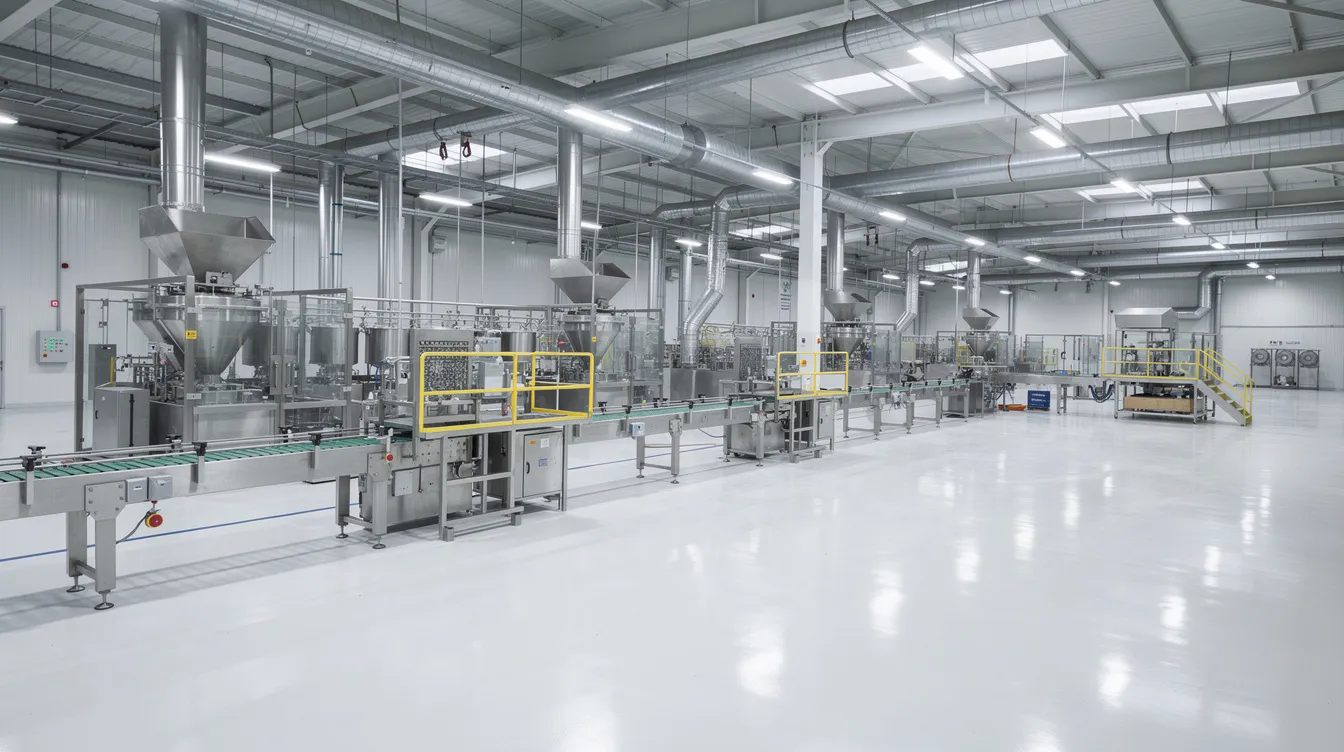
An efficient layout follows forward-moving product flow: raw materials enter at one end and finished goods exit at the other, minimising backtracking and cross-contamination. Key zones include raw material receiving and storage, ingredient store, cleaning and grading area, drying and cooling section, mixing and seasoning room, packaging hall, finished-goods warehouse, QC lab, utilities area (compressor, heat source), and staff change rooms.
Separate flow paths for raw materials and finished goods support hygiene compliance. Space for future expansion – adding extra mixers or parallel packing lines – should be planned from the start. The layout, together with the process flow chart, forms an important chapter in any comprehensive poha plant DPR.
Utilities Required for Instant Poha Manufacturing
Main utilities include three-phase electricity for motors and processing equipment, LPG/PNG/biomass-based fuel or heat for dryers and roasters, water for cleaning and hygiene, and compressed air for pneumatic operations. Connected electrical load must align with machine HP ratings. Backup power avoids downtime in continuous packaging operations. Ventilation is important in the mixing area, especially where oil tempering is used. Energy costs and utility sizing should feature in financial projections because they affect operating expenses, production efficiency and DSCR calculations.
Manpower Requirement for an Instant Poha Manufacturing Unit
Typical categories: production supervisor, machine operators (cleaning, mixing, packing), helpers, QC technician, storekeeper, maintenance support, accounts/admin staff and sales/dispatch personnel. Manpower numbers depend heavily on automation level – semi automatic plants need more packers while automatic lines shift requirements towards line operators. Training in hygiene, food safety and machine operation reduces downtime and product losses. Documented SOPs for each machine poha step support consistent product quality across shifts.
Quality Control in Instant Poha Manufacturing
| Parameter | Checkpoint |
|---|---|
| Incoming poha moisture | At receipt; target typically 5–8% depending on product |
| Final product moisture | After mixing, before packing |
| Flake integrity | Breakage percentage at grading and post-mixing |
| Sensory evaluation | Taste, colour, aroma per batch |
| Seasoning uniformity | Visual and taste sampling |
| Microbiological safety | Periodic lab testing (TPC, yeast, mold) |
| Seal integrity | Destructive and non-destructive tests |
| Net weight accuracy | Check weigher or manual verification |
| Shelf-life validation | Real-time or accelerated studies |
A small scale QC lab with a moisture meter, weighing scales and sample storage is a worthwhile investment that directly supports best quality outcomes.
Hygiene and Food Safety
GMP requirements include regular cleaning schedules, pest-control contracts, personal hygiene protocols and dedicated change areas. Food-contact surfaces – mixers, conveyors, hoppers – should be food-grade stainless steel. Allergen control measures are essential where peanuts, cashews or other allergens are used. Indian units must comply with FSSAI regulations for licensing, labelling and hygiene norms. Documented SOPs and training records support regulatory inspections.
Packaging Options for Instant Poha
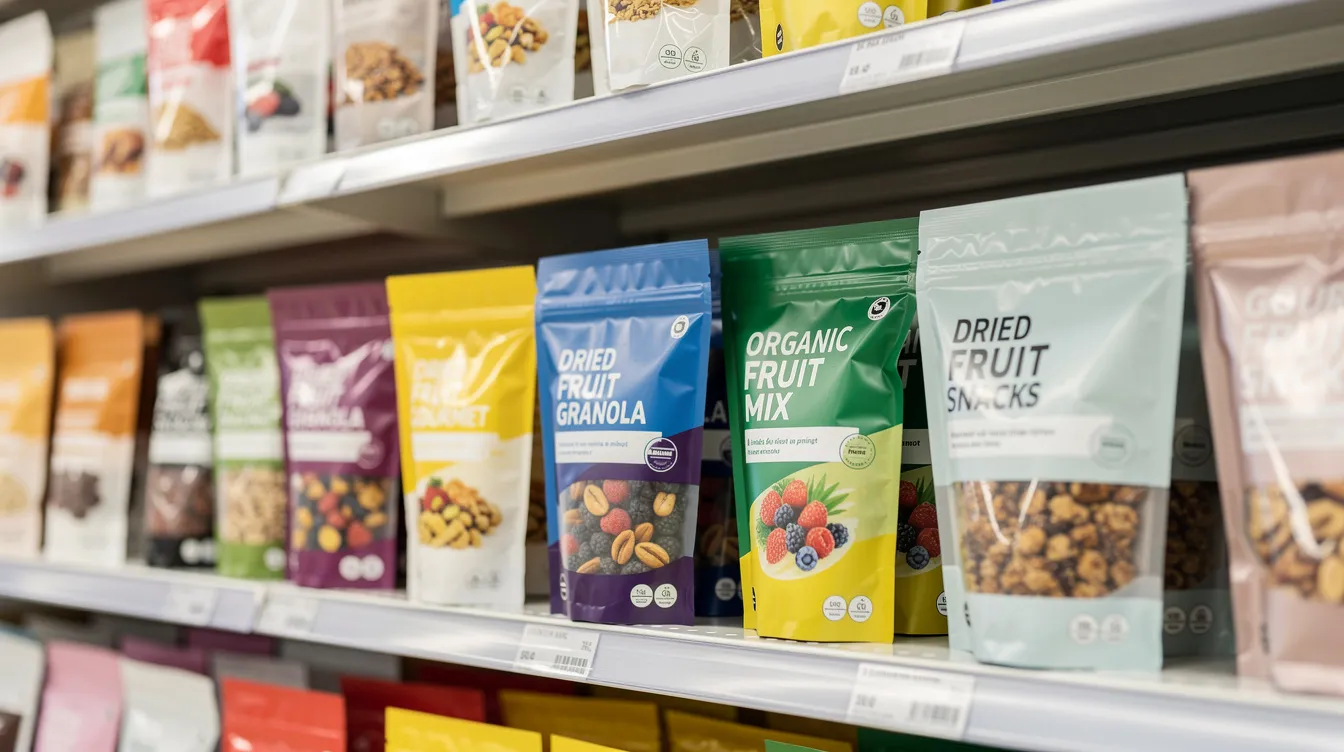
Common formats: small retail pillow packs (60–100 g), stand-up zipper pouches, family packs (200–500 g), single-serve cups with lids and bowl packs, and institutional bulk packs (1–5 kg). Selection of packaging material depends on desired shelf life, oil content, distribution reach and brand positioning. Automatic weighing and packing machine setups handle high-speed small packs, while semi automatic weighing suits bulk packs. Packaging cost per kg is significant for small sachets and must feature in the poha manufacturing revenue model.
Shelf Life of Instant Poha
Typical commercial shelf life for ready-to-cook instant poha ranges from 6 to 12 months. Factors include initial moisture, oil quality, dehydrated ingredient stability, oxygen level in the pack, exposure to heat and humidity during distribution, and seal integrity. Shelf-life claims must be backed by proper testing – real-time or accelerated – rather than assumptions. Research shows that metallised polyester laminates significantly outperform basic PP pouches in preserving product quality over storage. Nitrogen flushing or higher-barrier films may be justified for premium or high-fat variants after cost–benefit analysis. Market selling price for poha ranges between ₹25–40 per kg, making shelf-life failures particularly costly to margins.
Production Losses and Yield
Typical loss points: cleaning-stage fines, breakage during conveying and mixing, seasoning dust, off-spec batches and rejected pouches with poor seals. High flake breakage reduces yield and affects texture. A realistic yield percentage should be used in financial projections – overly optimistic assumptions distort feasibility analysis. Gentle material handling systems and proper operator training help maintain production efficiency and minimise losses.
Cost Drivers in Instant Poha Manufacturing
Major cost components: base poha, spice and seasoning mixes, dehydrated vegetables, edible oil, packaging materials, labour, power and fuel, repairs, QC expenses, depreciation, admin and selling expenses, freight, distributor margins and marketing spends. Packaging and marketing costs are considerably higher per kg in branded instant products than in bulk poha. Promoters should prepare detailed cost sheets per SKU and map them to realistic selling prices. Raw-material price volatility – especially poha and oil – demands sensitivity analysis as part of poha manufacturing profitability and break-even analysis.
Instant Poha Plant Investment Considerations
Main investment heads: land, civil construction, plant and machinery, packaging equipment, utilities and electrical installation, lab equipment, furniture, pre-operative expenses and contingencies. A semi-automatic poha setup costs between INR 5–10 lakh for basic machinery. Total investment for a poha mill may range from ₹25 lakh to ₹140 lakh depending on capacity, automation, product diversity and whether rice flakes manufacturing is integrated. Entrepreneurs should seek multiple vendor quotations for core machinery before freezing project cost. Bankable project cost statements must align with plant layout, machinery list and capacity assumptions in the DPR.
Working Capital Requirement
Key working capital components: inventory of poha and ingredients, packaging material stock, finished-goods inventory, receivables from distributors and modern retail, and minimum cash for operating expenses. Branded ready-to-cook poha typically has a longer working-capital cycle than bulk poha due to credit terms and higher finished-goods holding. Detailed guidance is available in our working capital assessment for poha projects. Underestimating working capital can cause cash-flow stress even when the manufacturing process is technically sound.
Profitability of Instant Poha Manufacturing
Profitability depends on raw-material cost, achievable selling price, packaging cost, product mix, capacity utilisation and distribution margins. Promoters should not assume high margins simply because instant poha is branded – competition from large FMCG players and private labels is real. Early years typically involve higher marketing spend, temporarily depressing net profit. Production capacity and technology choices directly influence per-unit conversion cost and overall demand fulfilment.
Bank Finance for an Instant Poha Manufacturing Plant
Typical funding: promoter’s equity plus term loan for fixed assets and working-capital limits (cash credit or overdraft) for operations. Lenders evaluate project cost, means of finance, promoter background, process description, machinery list, market potential, projected profitability, cash accrual, DSCR and break-even period. Financial projections and CMA data are professional estimates prepared for appraisal – not certified guarantees. Consistent reconciliation between installed capacity, projected production and working capital is critical. For understanding collateral and loan structuring, refer to our guide on bank loan for a poha processing plant.
Detailed Project Report for Instant Poha Manufacturing Plant
A professional DPR presents the complete picture: executive summary, promoter profile, product description and SKUs, market analysis, detailed instant poha manufacturing process, capacity, plant layout, machinery list, raw materials, utilities, manpower, project cost, means of finance, projected financial statements, DSCR, IRR, break-even, sensitivity analysis and risk assessment. The DPR should clearly differentiate conventional poha production from instant poha value-addition. Promoters should finalise their process, capacity and target product mix before freezing DPR numbers. Project Report Bank prepares customised Poha Processing Plant Project Report & DPR tailored to bank formats.
Common Mistakes While Planning an Instant Poha Production Line
- Ordering machines before finalising recipe and moisture targets
- Underestimating drying and moisture control requirements, especially in regions with high moisture climates
- Choosing aggressive mixers that cause excessive broken flakes
- Treating packaging as a minor cost when it can be 15–25% of product cost for small packs
- Ignoring shelf-life testing – products fail in hot and humid distribution channels
- Overestimating first-year capacity utilisation (assuming 80%+ from day one)
- Under-budgeting marketing and trade-promotion expenses
- Providing generous credit terms without adequate working capital
- Cramped plant layout with poor separation between raw-material and packing zones
- Assuming conventional poha production and instant poha processing are identical operations
Conclusion
A successful instant poha manufacturing business in India requires synergy between a technically sound production line, robust quality and hygiene systems, carefully chosen packaging and a realistic market strategy. The manufacturing process itself – from cleaning and grading through seasoning, mixing and packaging – must be validated through product trials before commercial scale-up.
From a project-finance perspective, machinery capacity, process design, project cost, working capital, profitability and repayment ability must all align before approaching banks or investors. Entrepreneurs should validate formulations at pilot scale, establish shelf-life data, and then support their project with a bankable DPR, CMA data and financial projections.
For customised project reports, financial models or documentation for bank loan applications, explore the poha project resources available on ProjectReportBank.com.
– CA Manish Gugliya, Project Report Bank
FAQs – Instant Poha Manufacturing Process & Project Planning
Can I outsource poha flakes and focus only on instant poha processing?
Yes, many brands buy bulk flattened rice from established mills and operate only the instant poha processing plant – handling cleaning, seasoning, mixing and packing in-house. This reduces capital investment and lets you focus on branding and distribution. The trade-off is dependency on external poha quality and pricing, which can affect consistency and margins. Establishing clear raw-material specifications and reliable supplier relationships is essential for this model.
What licences and registrations are generally required for an instant poha plant in India?
At a minimum, you will typically need an FSSAI food licence, Udyam MSME registration, GST registration (if applicable turnover criteria are met), local trade or shop licences, and any factory or pollution clearances required by your state’s norms. Some states may require additional approvals depending on scale and location. Consult a local CA or compliance professional for state-specific requirements.
How long does it usually take to set up an instant poha production line?
Timelines depend on land/building readiness, machinery lead times and financing. Many MSME projects take 4–8 months from finalising DPR and securing finance to commissioning. Allow additional time for product trials, packaging design finalisation, FSSAI licence processing and initial market seeding before full commercial launch.
How much space is typically needed for an instant poha manufacturing unit?
A small semi automatic unit can function in 2,000–4,000 square feet including processing, packing and storage areas. Larger automatic plants with in-house ingredient preparation and multiple packing lines may need 8,000–15,000 square feet or more. The exact area depends on capacity, layout configuration and whether rice flakes manufacturing is integrated on-site.
What is the minimum scale at which an instant poha plant is commercially viable?
Viability depends on product mix, brand strategy and distribution reach rather than a single capacity number. Many MSME units start with a semi automatic line producing a few hundred kilograms per day and scale gradually. A detailed poha plant feasibility analysis covering capacity utilisation, pricing, margins and working capital is essential to determine the right starting scale for your specific project.