

The industrial cheese production process is a controlled, repeatable conversion of large volumes of milk into standardised cheese products. It involves a defined sequence of operations – milk reception, standardisation, pasteurisation, starter-culture inoculation, rennet-driven coagulation, curd cutting, whey removal, salting, shaping, ripening or chilling, and packaging – each governed by precise temperature, time and acidity parameters.
This article explains the complete milk-to-cheese manufacturing process as it operates inside a commercial cheese processing plant. Whether you are planning a new cheese factory in India or evaluating the feasibility of adding cheese to an existing dairy operation, understanding each production stage is essential for realistic capacity planning, machinery selection, utility sizing and financial projections.
As a project consultant, I consider the selected cheese variety and its production process to be among the first inputs required for estimating plant capacity, machinery, utilities, working capital and financial viability. The notes below are drawn from my experience preparing DPRs and working with dairy entrepreneurs. Where specialist process design, product formulation or microbiological validation is required, I always advise promoters to engage a qualified dairy technologist and food-safety professional.
Key Takeaways
The industrial cheese production process transforms liquid milk into preserved dairy solids through a systematic chain of operations. At its core, the overall cheese-making process involves coagulation, whey removal, and aging – but executing this at factory scale demands standardised cheese milk, validated heat treatment, defined starter cultures, metered rennet dosing, and automated or semi-automated equipment that maintains batch-to-batch consistency.
Different cheese varieties follow the same broad cheese making process but diverge at critical stages. Mozzarella requires hot-water stretching of curd. Cheddar cheese involves cheddaring, milling and dry salting before pressing and extended maturation. Processed cheese is manufactured by grinding and blending natural cheese with emulsifying salts and heating the mixture. Fresh cheese, cottage cheese, cream cheese and many other types of cheese each have their own curd-treatment and packaging protocols.
From a DPR perspective, the chosen production process directly determines how much cheese milk a plant must procure daily, what machinery it needs, how large its cold rooms and ripening spaces should be, and how much working capital it must carry. A plant making aged cheeses like cheddar ties up inventory for months; a mozzarella line rotates stock within days. These differences flow straight into cash-flow projections, break-even analysis and loan-repayment schedules.
Industrial cheese production relies on hygienic operations, quality control in cheese manufacturing at every stage, and proper cold-chain management from the cheese plant to market. Promoters must work with qualified dairy technologists for detailed process design, while a practising Chartered Accountant supports project feasibility, financial projections and loan documentation.
What Is the Industrial Cheese Production Process?
The industrial cheese production process is a systematic, repeatable method for converting large volumes of raw milk into standardised cheese products using controlled temperatures, timings and food-safety procedures. Unlike household or artisanal cheese making – where a small batch of milk may be curdled using lemon juice or leftover whey in a kitchen – industrial production demands documented process flows, validated equipment, defined starter cultures and traceability from milk supplier to packed cheese.
Modern production processes prioritise uniformity in cheese flavor and texture. Every batch of cheese milk is tested, standardised, pasteurised and inoculated under controlled conditions. High-speed automated systems monitor temperature and pH throughout production, and CIP systems ensure high hygiene standards in cheese facilities. The process relies on precise temperature control and mechanical separation to deliver products that meet declared specifications for moisture, fat, salt and microbiology.
Key differences between industrial and artisanal cheese making include:
- Batch sizes measured in thousands of litres rather than a few litres
- Standardised milk composition using centrifugal separators, cream adjustment or membrane-based methods
- Validated pasteurisation regimes with continuous recording
- Use of commercially defined starter cultures instead of back-slopped or wild fermentation
- Automated curd cutting, cooking and whey-drainage equipment
- Mechanised moulding, pressing, brining and packaging
- HACCP-based food-safety plans, lot-coded traceability and cold-chain documentation
- Compliance with FSSAI product standards and microbiological limits for cheese produced in India
Commercial cheese production process planning must also consider the product mix – mozzarella, cheddar cheese, processed cheese, cream cheese or other varieties – because each imposes different equipment, ripening, storage and working-capital requirements.

Industrial Cheese Manufacturing Process Flow
The complete industrial cheese manufacturing process can be visualised as a linear sequence from the moment raw milk enters the factory to the moment packed cheese leaves the cold store. A cheese-making process flow chart is usually part of a detailed project report or plant-design package, but the textual sequence below covers all major stages.
The typical flow is: milk reception and testing → filtration and clarification → milk standardisation → optional cream separation and recombination → heat treatment (pasteurisation) → cooling to inoculation temperature → starter culture and adjuncts addition → calcium chloride and colouring where permitted → rennet addition → milk coagulation → curd cutting → curd cooking and stirring → whey drainage → variety-specific cheese curd processing (cheddaring, stretching or direct moulding) → salting or brining → moulding and pressing → ripening or rapid chilling → packaging → cold storage and dispatch.
Each stage has one or more control points that determine the quality, yield and safety of the finished cheese. The table below summarises these in a format suitable for quick reference.
| Production Stage | Main Activity | Important Control Point | Intermediate or Final Output |
|---|---|---|---|
| Milk reception | Weighing, sampling, initial tests | Temperature, fat, SNF, acidity, adulterants | Accepted raw milk lot |
| Filtration and clarification | Removal of physical impurities | Filter integrity, clarifier throughput | Clean raw milk |
| Standardisation | Adjusting fat and protein ratio | Fat-to-casein ratio, target solids | Standardised cheese milk |
| Pasteurisation | Heat treatment to reduce pathogens | Pasteurisation completeness, recording | Pasteurised milk |
| Cooling and culture addition | Inoculation with starter cultures | Inoculation temperature, culture viability | Acidifying milk |
| Rennet addition and coagulation | Gel formation via enzyme action | Rennet dose, pH, coagulation time | Milk gel (coagulum) |
| Curd cutting | Breaking gel into curd particles | Cut size, uniformity, fines control | Curd and whey mixture |
| Cooking and stirring | Heating curd to expel whey | Temperature ramp rate, stirring speed | Firmed curd grains |
| Whey drainage | Separating whey from curd | Curd acidity, moisture at drainage | Drained curd mass |
| Variety-specific processing | Cheddaring, stretching or blending | Target pH, curd temperature, texture | Formed cheese or processed blend |
| Salting or brining | Adding salt by dry or brine method | Salt uptake, brine concentration | Salted curd or brined cheese |
| Moulding and pressing | Shaping and compressing curd | Press pressure, duration, drainage | Pressed cheese blocks |
| Ripening or chilling | Controlled storage for maturation | Temperature, humidity, duration | Ripened or chilled cheese |
| Packaging and cold storage | Wrapping, coding, refrigerated storage | Seal integrity, batch code, cold-chain | Finished cheese ready for dispatch |
Step-by-Step Industrial Cheese Production Process
This section breaks down the commercial cheese production process into practical factory-level stages, aligned with how a cheese manufacturing plant operates shift by shift. Each heading below corresponds to a major unit operation, which also helps promoters understand space planning, equipment selection and sequencing of utilities in a cheese plant layout.
While the steps described are generic, exact conditions – time, temperature, pH, culture type – must be finalised with a dairy technologist and process-equipment supplier based on the intended cheese varieties. The descriptions below are indicative and should be read alongside product-specific recipes.
Milk Reception and Preliminary Quality Testing
Raw milk arrives in bulk tanker trucks from dairy farms, village collection centres or integrated dairies. Industrial methods utilise pooled milk from multiple sourcing farms, so incoming quality can vary significantly between loads. Each tanker is weighed using a weighbridge or inline mass-flow meter so that daily milk intake and eventual cheese yield can be tracked accurately.
Initial checks begin before unloading. Operators evaluate milk temperature on arrival, appearance, odour and the presence of visible dirt. These quick organoleptic checks help segregate doubtful lots before they enter the main processing system.
Basic quality tests follow: fat and SNF measured by automated milk analysers, acidity by titration, density and freezing-point depression to detect dilution with water. Where on-site facilities exist, indicative total plate counts may also be run. Screening for adulterants and antibiotic residues – using rapid test kits – is critical because residues can inhibit starter cultures, slow lactic acid development and reduce both cheese yield and safety.
Milk that does not meet defined acceptance criteria is either rejected or diverted to lower-risk applications. Supplier-wise records support traceability and help procurement managers plan long-term quality improvements. In a DPR, this reception infrastructure must be sized for peak milk arrivals, including adequate tanker-bay space, sampling stations and chilled holding capacity.
Milk Filtration, Clarification and Storage
Accepted raw milk is passed through inline filters and centrifugal clarifiers to remove physical impurities, sediments and somatic cells. This step improves both hygiene and the service life of downstream equipment such as pasteurisers and separators.
The cleaned milk is held temporarily in insulated or chilled raw-milk storage tanks. Residence time before processing is kept as short as practical – ideally a few hours – to limit bacterial growth and preserve functional milk proteins needed for good coagulation. Tanks are equipped with gentle agitators, temperature sensors and CIP spray balls, ensuring the milk remains homogeneous, chilled and handled under sanitary conditions.
The time gap between reception and pasteurisation is an operational KPI. Longer delays increase microbial load and can compromise the performance of starter cultures and rennet later in the cheese making process.
Milk Standardisation
In industrial cheese making, the fat and sometimes protein content of cheese milk is adjusted to meet each product’s specification. Centrifugal separators adjust the fat-to-protein ratio of milk for specific recipes by removing or adding cream. Milk is standardised to target fat-to-casein ratios – for example, a casein-to-fat ratio of approximately 0.64–0.70 is often targeted for cheddar-type cheese to achieve the required fat-in-dry-matter with maximum yield.
The fat to protein ratio influences final cheese moisture, texture, fat-in-dry-matter and therefore both cheese yield and labelled nutritional values. For cheddar cheese and similar hard cheeses, tighter control of fat and protein helps achieve consistent body and sliceability. For fresh cheese or high-moisture products, slightly different ratios may be targeted.
Promoters should not adopt a universal standardisation formula from generic sources. Milk composition varies by breed, feed, season and region. In India, with typical cow’s milk fat around 3.5% and protein somewhat lower than European averages, the milk-to-cheese conversion ratio tends to be higher – meaning more milk is needed per kilogram of finished cheese. Standardisation decisions feed directly into financial projections because they affect not only cheese yield but also cream by-product value in the project’s revenue model.
Pasteurisation and Cooling
Standardised cheese milk is heat-treated in a plate heat exchanger or tubular pasteuriser to eliminate harmful bacteria and reduce spoilage organisms. Pasteurisation kills pathogenic bacteria in milk. Standard pasteurisation is at 72°C for 15 seconds, which is the widely accepted minimum for HTST (high-temperature short-time) processing. Most cheese types are made from pasteurised milk, and pasteurisation extends the shelf life of cheese by reducing the starting microbial load.
However, the heat treatment used in a cheese factory production process must be selected carefully. Thermal treatment at 85–90°C denatures whey proteins, which can interfere with curd formation, alter texture and change yield dynamics. Over-denaturation impairs the ability of casein micelles to form a strong gel when rennet is added. Industrial plants validate their pasteurisation regimes against coagulation performance to balance food safety with cheese-making functionality.
Immediately after heat treatment, milk is cooled to the appropriate inoculation temperature for starter cultures – mesophilic cultures typically require a lower temperature range than thermophilic ones. Accurate cooling ensures good lactic acid development and stable coagulation when rennet is introduced.
Addition of Starter Culture and Other Permitted Ingredients
Industrial cheesemaking relies on defined starter cultures for predictability. These are carefully selected strains of lactic acid bacteria, added to pasteurised milk to convert lactose into lactic acid. Starter cultures ferment lactose into lactic acid during cheesemaking, and this lactic acid production lowers pH, aiding curd formation. Without adequate acid development, coagulation is sluggish, whey expulsion is poor and the resulting cheese may have texture and safety problems.
Starter cultures influence cheese flavor and texture during ripening as well. Different cheeses use specific starter cultures for unique characteristics – thermophilic strains for mozzarella and Swiss cheese, mesophilic strains for cheddar and many softer cheeses. Mixed strain cultures support each other in cheese production, with some producing acid while others contribute to flavour development, carbon dioxide gas formation (as in Swiss cheese with its characteristic eyes) or surface ripening.
Industrial plants typically use frozen or freeze-dried direct-vat-set cultures from reputable suppliers, dosed accurately according to milk volume and target cheese characteristics. Complementary permitted ingredients may include calcium chloride to improve coagulation in pasteurised milk, colouring agents for cheddar-style cheese, and other additives subject to current FSSAI regulations. Culture selection, adjunct cultures for flavour, and protective cultures for shelf life should be finalised by a dairy technologist or culture supplier, not purely on commercial or theoretical criteria.
Rennet Addition and Milk Coagulation
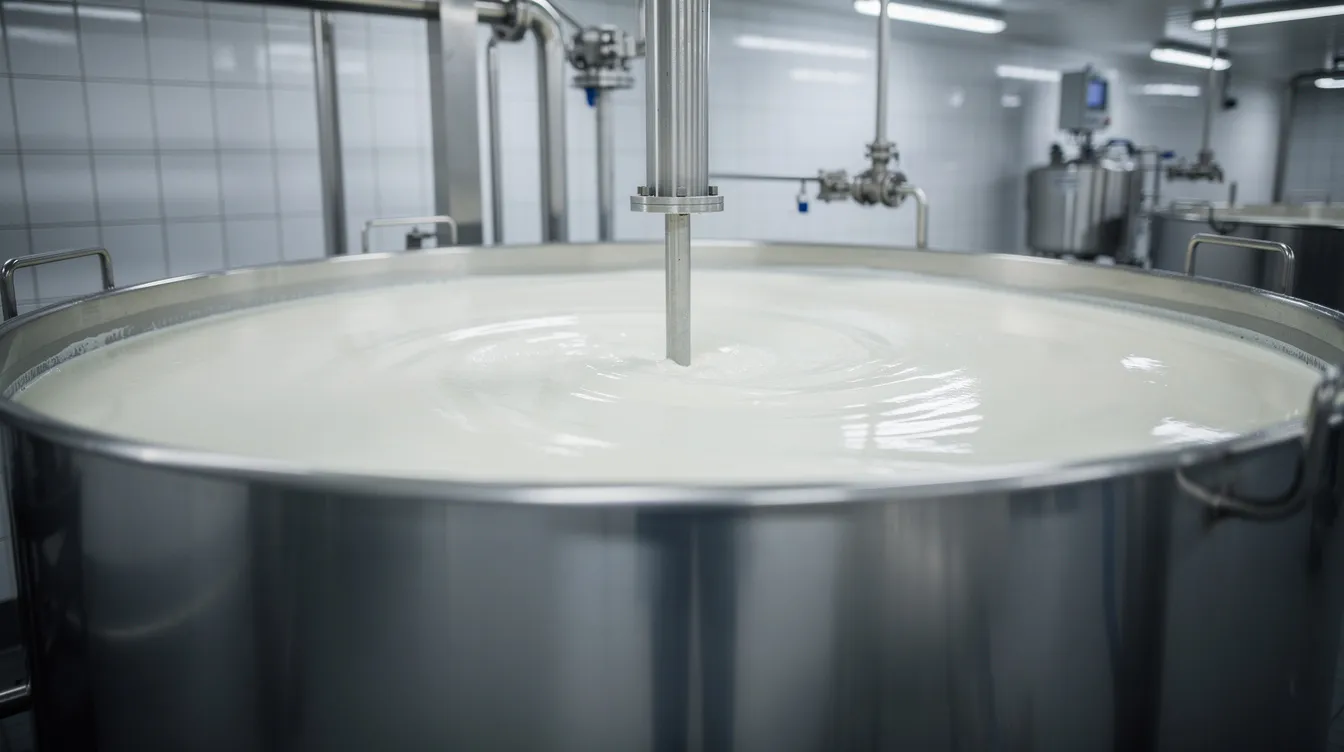
Rennet coagulation uses chymosin to destabilise casein micelles, causing them to aggregate and form a continuous protein gel that traps fat globules and moisture. Rennet is typically dosed at 20–40 mL per 100 L of milk, though exact dosage depends on enzyme strength, milk composition and the target cheese variety.
Coagulation time typically takes 30–45 minutes after rennet addition at the correct temperature and acidity. The firmness of the resulting gel must be assessed – either by trained operators using a knife test or by automated sensors – before cutting can begin. A gel that is too soft yields fragile curd particles that break into fines; a gel that is too firm resists clean cutting and produces uneven particles.
Acid coagulation is used for cottage cheese and cream cheese, where the pH is lowered to approximately 4.6 – the isoelectric point of casein – without relying primarily on rennet. Most semi-hard and hard cheeses, however, use a combination of acid development and enzymatic coagulation.
Industrial cheese processing technology usually involves metered rennet dosing, gentle agitation for uniform distribution, and controlled setting times. A single rennet rate cannot be recommended for all factories because milk composition, enzyme strength and process conditions differ between plants and seasons.
Curd Cutting
Once appropriate gel firmness is reached, the coagulated milk is cut using stainless steel cheese knives or wire harps into pieces of controlled size, initiating whey separation. Automated equipment cuts gel into uniform cubes to maximise whey release, reducing operator dependence and supporting scale-up.
Curd cutting size affects moisture content in cheese. Smaller curd cuts lead to drier, harder cheeses because the increased surface area allows more whey to escape. Larger cuts retain more whey and are used for softer cheeses and some fresh cheese varieties. Curd is cut into pieces to control moisture content, and the choice of cut size is one of the earliest decisions that defines whether the final cheese will be a firm cheddar or a high-moisture mozzarella.
Uniform curd cutting reduces fines losses, improves moisture distribution and supports predictable cheese yield calculations in the milk-to-cheese manufacturing process. In modern plants, automated cutting systems control cut size through agitator design, speed and cutting duration.
Curd Cooking and Stirring
After cutting, curd is gently heated and stirred in the cheese vat or automatic coagulation tank to promote syneresis – the expulsion of whey from curd particles. Whey removal is influenced by curd heating and stirring: as temperature rises, curd grains contract and release moisture.
The rate of temperature rise, final cooking temperature and stirring intensity are critical cheese processing steps. Insufficient stirring or rapid heating can cause curd clumping or uneven moisture. Excessive agitation may break curd grains and increase fines in whey, harming cheese yield. The balance matters: too gentle, and curd particles mat together before adequate whey expulsion; too aggressive, and curd particles fragment.
Specific cooking profiles differ substantially between cheddar cheese, mozzarella, semi-hard cheeses and fresh cheese, and should be defined as part of the product-specific process design with a dairy technologist.
Whey Drainage and Separation
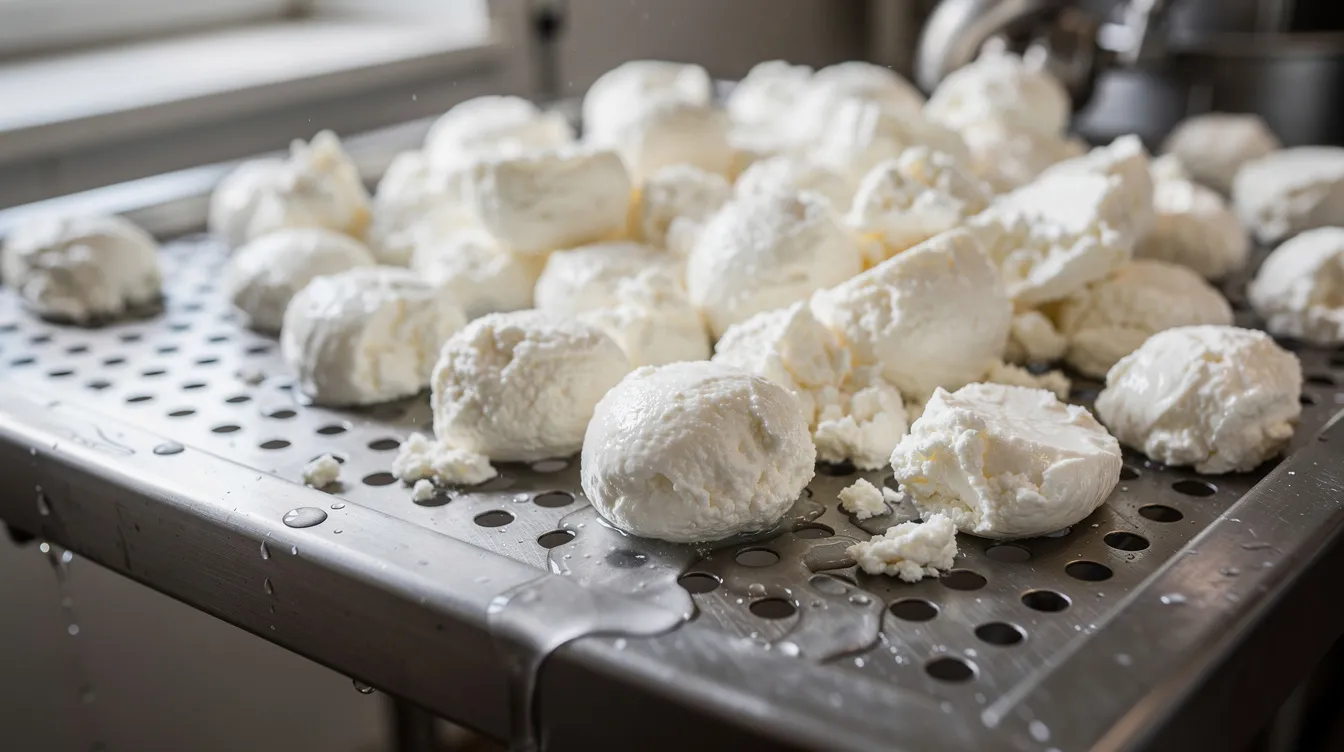
Once the desired curd texture and acidity are reached, whey is drained from the vat. Whey is removed by draining or dipping after curd formation, and mechanised processors separate liquid whey from solid curds using drainage tables, screens or continuous curd-whey separators.
This stage significantly affects moisture in the final cheese. The timing of whey drainage must be controlled with respect to curd pH and handling to avoid over-drying or retaining too much residual whey. Pressing curds at a later stage expels remaining whey and shapes cheese, but the primary separation happens here.
Cheese whey is an important by-product containing lactose, whey proteins, minerals and some residual milk fat. Many industrial plants plan downstream utilisation – whey drinks, whey protein concentrates, whey powder, whey cheeses such as Ricotta and Brunost, or animal feed – to improve project viability. Untreated whey disposal can impose high effluent loads (high BOD/COD), so a cheese plant DPR should evaluate whey management options and, where needed, include an effluent treatment plant sized for expected volumes.
Variety-Specific Curd Processing
After basic whey drainage, the cheese making process branches depending on product type. Cheese is classified by moisture content into hard, semi-hard and soft categories, and each follows a distinct curd-treatment path.
For cheddar-type cheese, the process involves cheddaring – stacking and turning slabs of drained curd to expel more whey and develop acidity to a target pH – followed by milling the slabs into chips and dry salting. Cheddar cheese is typically salted before pressing to enhance flavor. Large-scale operations may use mechanised cheddaring towers and continuous milling, similar to the process described in a dedicated cheddar cheese manufacturing plant project.
For mozzarella and other pasta filata varieties, drained curd is held until it reaches a target acidity, then immersed in hot water and stretched until a smooth, elastic structure forms. This stretching step aligns the protein fibres and gives mozzarella its characteristic pull and melt. More detail on this route is available in a specialised mozzarella cheese manufacturing plant guide.
For processed cheese, natural cheese blocks – sometimes of different ages – are ground, mixed with water, emulsifying salts and other permitted ingredients, then heated above approximately 80°C to melt and emulsify the mixture into a homogeneous product. This downstream blending and emulsification stage is detailed in a separate processed cheese manufacturing plant project guide.
Fresh cheese and some high-moisture products may skip long maturation entirely, undergoing gentle handling and quick chilling instead. Cream cheese is a soft unripened cheese with a mild flavor that follows an acid-coagulation route and is packaged soon after formation. These faster-turnaround products provide shorter inventory cycles but also shorter shelf life.
Blue cheeses follow yet another route: blue cheese is characterised by blue-green mould from Penicillium species that are introduced into the curd or pierced into the cheese body during ripening. Each variety imposes its own requirements on equipment, ripening rooms and quality control.
Explore Related Cheese Manufacturing Guides
Promoters who need product-specific technical and financial planning can refer to the following dedicated guides on ProjectReportBank.com:
- Mozzarella cheese: Process variations, capacity planning and financial-model structures for a mozzarella cheese manufacturing plant
- Cheddar cheese: Cheddaring process, maturation economics and DPR preparation for a cheddar cheese manufacturing plant
- Processed cheese: Blending, emulsification and downstream processing for a processed cheese manufacturing plant
These guides complement this broad industrial cheese production process explanation by giving more detailed process variations, capacity-planning examples and financial-model structures. Together, they help promoters design coherent product portfolios, shared utilities and integrated whey-utilisation strategies.
Salting and Brining
Salt is added to curds to halt bacterial action and enhance flavor. Salt enhances flavor and inhibits undesirable microbial growth in cheese, making it one of the most important functional ingredients after milk, culture and rennet. Salt content in cheese typically ranges from 0.5% to 2.0%, depending on variety.
Two primary methods are used. Dry salting can be done manually or mechanically on curds – for cheddar, milled curd chips are mixed with measured quantities of salt before hooping. Salting occurs before pressing or during brining, depending on the product. Brine salting involves immersing formed cheese in a salt solution of 16–25% concentration for a defined period, commonly used for mozzarella, gouda and many semi-hard cheeses.
In brining operations, plants monitor brine concentration, temperature, microbial load and clarity, and periodically refresh or filter brine to maintain quality. Brine parameters are cheese-specific and should be validated experimentally; no single universal brine strength or time applies to all cheeses.
Moulding and Pressing
Salted curd or finished curd is transferred into cheese moulds – sometimes called cheese hoops – made from food-grade plastic or stainless steel, shaped as blocks, wheels or loaves with drainage openings. The choice of cheese molds matches the product’s market format and customer expectations.
Mechanical or hydraulic presses apply controlled pressure to remove residual whey, knit curd particles together and form compact cheese blocks with the desired geometry. Pressing intensity and duration depend on cheese type, curd temperature and target moisture. Over-pressing can cause surface cracks, while under-pressing leaves unwanted mechanical openings in the body.
In high-throughput plants producing cheddar and similar cheeses, continuous block formers may replace static moulds, improving labour productivity and block uniformity. The formed cheese then moves to the next stage – either ripening rooms or rapid chilling, depending on variety.
Cheese Ripening and Maturation
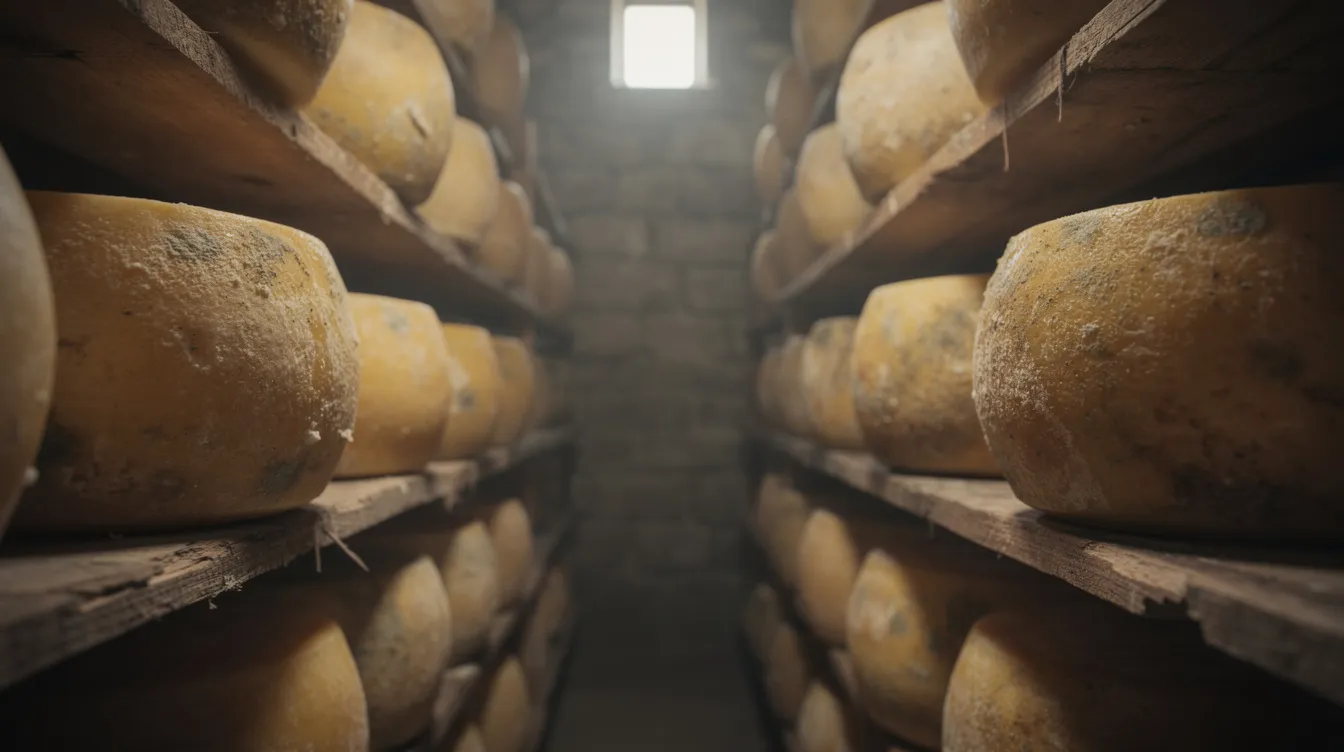
Ripening occurs in climate-controlled rooms to develop texture and flavor. Many cheeses undergo controlled storage where temperature, humidity and air circulation are regulated to allow enzymatic and microbial changes over weeks or months. Cheese ripening can take from one month to several years, depending on the variety and desired intensity.
During ripening, proteins and lipids break down. Proteolytic and lipolytic enzymes – from residual rennet, starter cultures and non-starter bacteria – generate amino acids, free fatty acids and a range of volatile compounds that define the cheese’s flavor, aroma and body. Ripening influences cheese texture and aroma through these biochemical changes. Temperature and humidity control affects cheese flavor development: too warm accelerates proteolysis unevenly, while too dry causes excessive rind formation and cracking.
Aged cheeses like cheddar have no residual lactose by the end of maturation because starter cultures and other bacteria consume it entirely during the early stages. This is relevant for labelling claims aimed at lactose-intolerant consumers.
Different cheese types require different ripening strategies:
- Fresh cheese is dispatched soon after production with minimal maturation
- Mozzarella requires rapid chilling and short controlled storage in a cheese cellar or cold room
- Cheddar and similar cheeses need extended maturation, sometimes in dedicated ripening rooms maintained at around 8–15°C and 85–95% relative humidity
- Processed cheese relies more on the ripening of input natural cheeses and less on post-pack ageing
Design of ripening rooms, racks and handling systems is a specialised task and should factor into building layout and refrigeration-load calculations in the DPR.
Packaging, Coding and Cold Storage
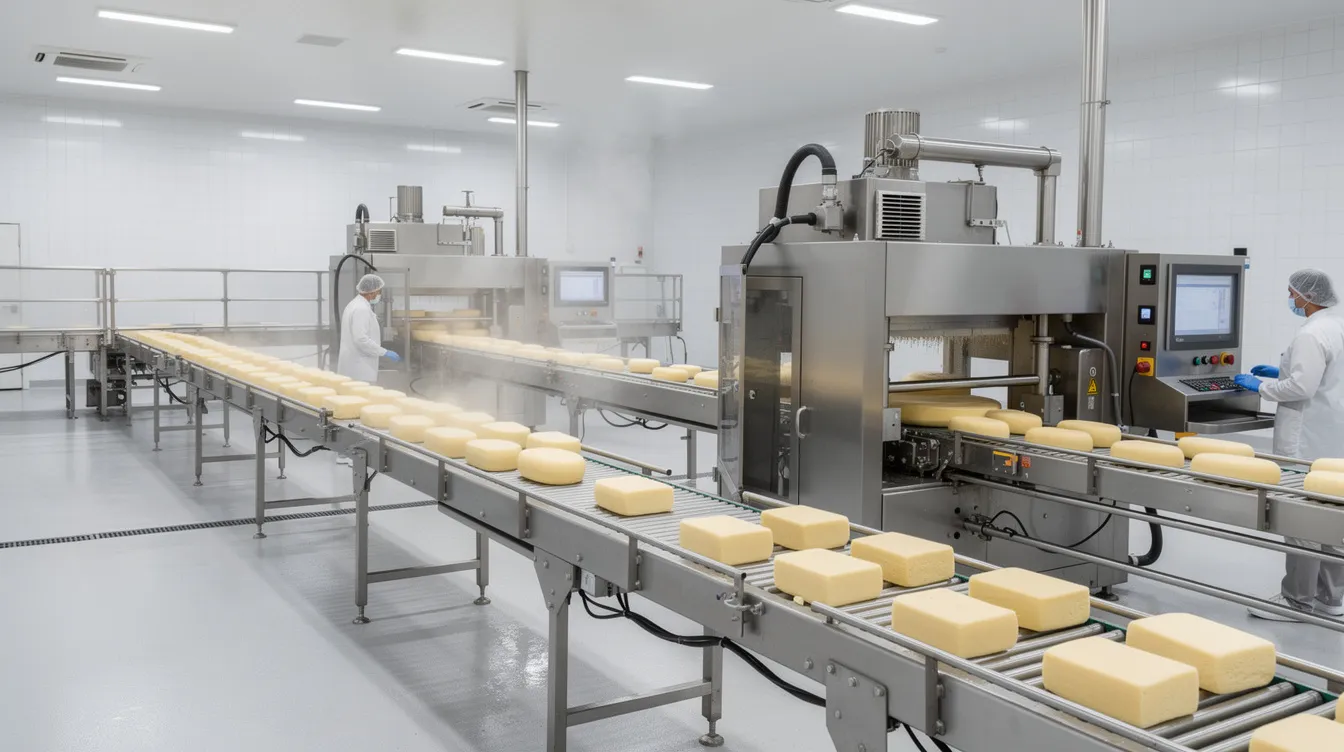
Automated systems package finished cheeses using vacuum sealing or wax, depending on variety. Common industrial cheese packaging options include vacuum-packed blocks, thermoformed packs, gas-flushed pouches, sliced or shredded retail packs, and bulk packs for food-service or industrial users.
Packaging materials must be food-grade and suitable for the specific cheese type, providing adequate barriers against moisture loss, oxygen ingress and contamination while supporting the required shelf life. Label printing and batch-coding systems record manufacturing date, best-before date, batch number and plant code, supporting traceability and any necessary product-recall action.
Packed cheese is stored in cold rooms at variety-appropriate temperatures. A reliable cold chain – refrigerated vehicles, insulated boxes – is vital from factory gate to distributor, retailer and end customer. Cold-chain breaks can accelerate spoilage, mould growth or texture deterioration, undermining both safety and brand reputation.
Process Differences Between Major Cheese Products
While the core cheese processing steps are common, the industrial cheese production process differs meaningfully between mozzarella, cheddar cheese and processed cheese. These differences affect equipment, holding times, working capital and inventory cycles.
Processed cheese usually uses natural cheese as a major input, so it represents an additional manufacturing stage beyond the primary milk-coagulation route. This has implications for stock management and costing, since the plant must first procure or produce natural cheese before it can manufacture a processed cheese product.
Indian entrepreneurs often plan a mix of mozzarella (for pizza and QSR demand), cheddar (for retail blocks and slices) and processed cheese spreads. The DPR must model production scheduling around these different ripening and storage profiles.
| Parameter | Mozzarella | Cheddar Cheese | Processed Cheese |
|---|---|---|---|
| Primary raw material | Pasteurised, standardised whole milk | Pasteurised, standardised whole milk or skim milk blends | Natural cheese (of varying ages), emulsifying salts, water |
| Key processing distinction | Hot-water stretching (pasta filata) | Cheddaring, milling, dry salting | Grinding, blending, heating and emulsification |
| Ripening requirement | Minimal; rapid chilling and short storage | Extended maturation (weeks to months or years) | Minimal post-pack ripening; depends on input cheese age |
| Typical texture | Elastic, fibrous, smooth | Firm, close-textured, crumbly when aged | Smooth, spreadable or sliceable depending on formulation |
| Packaging consideration | Vacuum pack or brine pack; short shelf life | Vacuum block or wax-coated; longer shelf life after maturation | Foil wraps, cups, tubes, slices; moderate shelf life |
| Major process-control concern | Stretch temperature, pH at stretching, melt quality | Acid development during cheddaring, moisture at milling, maturation conditions | Emulsification completeness, blend consistency, cooking temperature |
Cheddar cheese typically has a moisture content of 55% on a fat-free basis, placing it in the semi-hard to hard category. Mozzarella carries higher moisture and is considered a softer cheese. Processed cheese moisture depends on the specific formulation and target product format.
Machinery Used in an Industrial Cheese Production Line
This section gives only a functional overview of machinery for the cheese manufacturing plant process. Specific models, makes and quotations belong in a separate machinery and costing study. Promoters can refer to a dedicated guide on cheese plant machinery and equipment cost when ready to compare supplier quotations and align them with project budgets.
Key equipment groups include:
- Milk reception and storage tanks: Insulated or jacketed tanks with agitators and temperature sensors for holding raw milk
- Filters and clarifiers: Inline mesh filters and centrifugal clarifiers for removing impurities
- Cream separators and standardisation units: Centrifugal separators for adjusting milk fat content to recipe targets
- Pasteurisation systems: Plate heat exchanger or tubular pasteurisers with holding tubes and divert valves
- Cheese vat or coagulation tank: Jacketed, agitated vessels where culture, rennet and coagulation occur
- Starter-culture and rennet dosing systems: Metered dosing pumps and aseptic handling equipment
- Curd cutting devices: Cheese knives, wire harps or automated cutting frames
- Cooking and agitation systems: Jacketed vat heating, controlled agitator drives
- Whey-drainage equipment: Drainage tables, screens, or curd-whey separators
- Cheddaring or stretching equipment: Cheddaring towers and cooker-stretchers for pasta filata
- Cheese moulds and presses: Block moulds, wheel moulds, hydraulic or pneumatic presses, or continuous block formers
- Brining tanks: Stainless steel brine baths with temperature control and filtration
- Ripening rooms: Insulated, climate-controlled chambers with racks and air handling
- Cutting and packaging machines: Block cutters, vacuum packers, thermoformers, labellers
- Cold rooms: Walk-in or drive-in refrigerated storage
- CIP systems: Automated cleaning-in-place stations for all product-contact surfaces
- Effluent treatment: Systems for managing whey and wash-water before discharge
Machinery configuration varies by capacity – for example, 500 litres per hour versus 5,000 litres per hour – and by the level of automation and chosen cheese varieties. Professional layout and piping design is essential for efficient product flow, CIP coverage and maintenance access. Hygienic design and cleanability are key selection criteria, not only mechanical output ratings.
Quality Control in Industrial Cheese Manufacturing
Quality control runs through three levels: raw milk, in-process curd and finished cheese, each with its own checks, records and corrective-action procedures. Robust QC not only protects consumer safety but also influences cheese yield, complaint levels, regulatory compliance and ultimately plant profitability.
Test frequencies and methods should align with FSSAI requirements, customer specifications and internal HACCP plans. Many mid-size plants maintain an in-house basic laboratory plus access to external accredited labs for periodic validation.
Raw-Milk Quality Control
Key raw-milk quality parameters include fat percentage, SNF, milk protein content, acidity, microbiological load, somatic cell count (where monitored), absence of antibiotics and adulterants, and acceptable sensory attributes. Milk composition variations – influenced by breed, feed, lactation stage and season – directly affect casein availability and therefore cheese yield.
Deviations in raw milk quality affect not just yield but also curd firmness, flavour and the risk of defects such as late blowing or off-odours during ripening. Supplier grading and differential pricing based on quality can encourage farmers or collection centres to supply milk that meets the cheese plant’s specifications. This matters especially in India, where milk arrives from dairy farms with varying management practices.
In-Process Quality Control
Typical in-process checks include monitoring of pH or titratable acidity at defined time points, checking coagulation time and curd firmness, observing curd particle size and integrity after cutting, and tracking whey clarity and solids loss. Process-control logs record pasteurisation status, cooking profiles, whey-draining times, brine parameters and hygiene observations.
Clean and sanitised equipment, timely culture addition and consistent process temperatures are as important as laboratory measurements. When a quality problem appears in the finished cheese, batch-level in-process records help trace the root cause – whether it was a slow culture, overheated curd or delayed whey drainage.
Finished-Product Quality Control
Checks on finished cheese include moisture content, fat-in-dry-matter, protein, salt content, pH or acidity, texture assessment (body, openness), and – where relevant – meltability or stretchability for mozzarella and processed cheese. Cheese quality is also assessed through trained sensory panels evaluating taste, aroma, colour and appearance.
Routine microbiological tests for pathogenic bacteria and indicator organisms confirm food-safety compliance and shelf-life claims. Packaging integrity checks – seal strength, vacuum level where applicable, correct labelling – and periodic shelf-life studies under real or simulated distribution conditions round out the QC programme.
Specifications must comply with relevant FSSAI product standards and any additional export-market or institutional-buyer requirements. Under FSSAI regulations, microbiological limits for cheese include restrictions on total plate count, coliforms and E. coli.
Hygiene, CIP and Food-Safety Requirements
Industrial cheese processing technology relies on hygienic design of equipment and premises. Surfaces in contact with milk products must be smooth, cleanable and made of food-grade stainless steel or approved materials. Floors and drains must handle wet cleaning without pooling, and production areas must separate raw-milk zones from finished-product areas to avoid cross-contamination.
CIP systems play a central role. A typical CIP cycle includes pre-rinse, caustic wash, intermediate rinse, acid wash and final sanitisation. These cycles are validated for effectiveness and applied to pasteurisers, pipelines, tanks and vats according to a documented schedule. CIP systems ensure high hygiene standards in cheese facilities and reduce the risk of biofilm build-up.
Supporting controls include:
- Personnel hygiene: hand-washing stations, protective clothing, restricted-access zones, medical fitness checks and periodic food-safety training
- Pest management: barrier controls, monitoring traps and professional pest-control contracts
- Water quality: regular testing of potable process water for microbiological and chemical parameters
- Temperature monitoring: calibrated thermometers and continuous recording at critical points
- Allergen management: segregation of allergen-containing ingredients where relevant
- Batch traceability: linking raw-milk supplier, process records and packaging codes
- Product-recall procedures: documented steps for withdrawing non-conforming product from the market
Plants should implement HACCP-based food-safety plans. However, this article does not replace professional regulatory or legal advice. Promoters must work with qualified food-safety consultants to develop site-specific plans.
Factors Affecting Cheese Yield and Production Efficiency
Cheese yield – expressed as kilograms of cheese produced per 100 kilograms of milk – is a primary profitability driver in any cheese plant. For hard cheeses such as cheddar, typical yield may be in the range of approximately 10–12%, depending on milk solids, moisture targets and process efficiency. Small improvements in yield, even 0.1% annualised over large volumes, can materially improve contribution margins.
High-level factors influencing yield include:
- Casein and milk fat content of incoming raw milk
- Seasonal variation in milk composition
- Heat treatment intensity and its effect on whey protein behaviour
- Starter performance and acid development rate
- Coagulation efficiency and gel strength
- Curd cutting quality and fines lost in whey
- Whey-fat losses during cooking and drainage
- Moisture targets in the final cheese
- Salting method and salt uptake uniformity
Operational factors such as equipment design, operator skill, adherence to SOPs, downtime, rework levels and packaging damage also impact effective yield and overall equipment effectiveness (OEE). There is no single fixed milk-to-cheese conversion ratio. In India, estimates suggest approximately 7–8 litres of milk may be needed per kilogram of hard cheese, depending on milk quality and process assumptions. DPR assumptions should use realistic ranges with sensitivity analysis to understand how yield deviations affect contribution margins.
Utilities and Supporting Infrastructure
A cheese production line requires reliable utilities, and their sizing directly affects both capital cost and operating cost. Key utility requirements for an industrial cheese production process include:
- Electricity: For motors, refrigeration compressors, lighting, automation and laboratory equipment
- Steam or hot-water generation: For pasteurisation, CIP heating and cheese-vat jacketing
- Refrigeration: For milk chilling, cold rooms, ripening rooms and dispatch areas
- Chilled water: For plate heat exchanger cooling sections and process cooling
- Potable process water: For CIP, brine preparation and general cleaning
- Compressed air: For pneumatic valves and certain packaging equipment
- Effluent treatment: For managing whey-derived wastewater and cleaning chemicals before discharge
- Laboratory facilities: For in-house quality testing of milk, curd and finished cheese
Utility loads depend heavily on plant capacity (litres of milk per day), choice of milk products and cheese types (high cold-storage needs for ripened cheeses versus fast-turnover fresh cheese), and level of automation. Energy-efficiency investments – heat recovery from pasteurisers, variable-frequency drives on motors – have a direct impact on operating-cost assumptions in financial projections.
Common Problems in Industrial Cheese Production
Even well-designed plants face practical issues. Early identification and root-cause analysis help avoid recurring losses and customer complaints. Common problems include:
- Fluctuating raw-milk quality: Inconsistent fat, protein or microbial loads cause unpredictable curd behaviour and yield variation
- Slow or irregular acid development: May result from weak or contaminated starter cultures, antibiotic residues in milk, or incorrect inoculation temperature
- Weak or crumbly coagulation: Often linked to low casein content, incorrect rennet dosage, or excessive heat treatment damaging casein micelles
- Excessive curd fines in whey: Caused by overly aggressive cutting or stirring, leading to lost solids and reduced cheese yield
- Incorrect moisture: Over-drying produces excessively hard cheeses; under-drying creates soft, perishable products that may violate FSSAI moisture limits
- Uneven salting: Results in inconsistent flavour, localised moisture pockets and variable shelf life across the same batch
- Texture defects: Open body, cracks, or gas holes from uncontrolled bacterial activity or faulty pressing
- Contamination: Post-pasteurisation contamination from equipment, personnel or environment can lead to spoilage or pathogenic bacteria in finished cheese
- Poor meltability or stretchability: Especially problematic in mozzarella and processed cheese, often linked to pH, calcium balance or incorrect blending
- Inadequate chilling: Delays in cooling after moulding or stretching accelerate spoilage and reduce shelf life
- Packaging or seal failures: Vacuum leaks, incorrect labelling or weak seals lead to early spoilage and customer complaints
- Cold-chain interruption: Temperature abuse during transit or storage degrades cheese quality and can create food-safety risks
For each problem, systematic troubleshooting using process data, lab tests and expert consultation is more effective than trial-and-error approaches.
Importance of the Production Process in a Cheese Plant DPR
From my experience as a project consultant, the chosen industrial cheese manufacturing process and product range are the starting points for estimating milk procurement, plant capacity, building size, utilities, manpower and working capital in any DPR.
Different cheeses have different ageing times and inventory cycles. Cheddar cheese ties up working capital for months during maturation, while some fresh cheese products rotate within days. This difference directly affects cash-flow projections and the quantum of working-capital finance a promoter needs to arrange.
Detailed process understanding helps in sizing tanks, pasteurisers, cheese vats, presses, cold rooms and packaging lines, ensuring that the cheese production line remains balanced without chronic bottlenecks. It also determines labour requirements – a fully automated line needs fewer operators but higher capital outlay, while a semi-automatic plant has lower machinery cost but higher per-unit labour expense.
A Chartered Accountant prepares or assists in financial projections, CMA data and loan-appraisal documents based on technical inputs, market research and realistic assumptions. These projections are illustrative scenarios – not guaranteed outcomes. Promoters can refer to specialised guidance on cheese manufacturing plant setup cost in India when estimating investment, while using this article to understand the underlying industrial cheese production process.
A project report or DPR supports bank appraisal but does not assure loan sanction. Credit decisions depend on multiple banking and regulatory factors, including the promoter’s track record, collateral, market assessment and the bank’s internal policies.
Conclusion
Successful industrial cheese production integrates high-quality milk, appropriate industrial cheese processing technology, trained manpower, strict hygiene, robust quality control, planned whey utilisation and disciplined financial management. No single element can compensate for weakness in another – a state-of-the-art cheese production line cannot fix poor raw milk, and excellent milk cannot overcome a badly designed process.
Process choices – product mix, automation level, ripening strategy – directly affect investment size, cheese yield, operating costs and profitability. These choices must be aligned with the promoter’s market strategy, risk appetite and access to reliable milk supply. The production of cheese at industrial scale is ultimately a business decision shaped by technical realities.
Specialised technical design, recipe development and food-safety validation must be handled by qualified dairy technologists and food-safety professionals familiar with dairy science and current regulations. Financial structuring, DPR preparation, CMA data and bank-finance presentations can be led by a practising Chartered Accountant with project-consulting experience.
If you are planning a cheese processing plant and need a customised project report, detailed DPR, CMA data assistance, financial projections, feasibility analysis or bank-finance presentation, you are welcome to contact CA Manish Gugliya through ProjectReportBank.com. I would be happy to help you structure your project for informed decision-making and a sound appraisal by your lending institution.
Frequently Asked Questions (FAQ)
This FAQ section answers common queries that project promoters and first-time dairy entrepreneurs often raise beyond the main discussion of the industrial cheese production process.
What are the main steps in industrial cheese production?
The main steps are: milk reception and quality testing, filtration and standardisation, pasteurisation, cooling and starter-culture addition, rennet addition and coagulation, curd cutting and cooking, whey drainage, variety-specific curd processing (cheddaring, stretching or blending), salting or brining, moulding and pressing, ripening or chilling, packaging and cold storage. All large-scale plants follow this framework with parameter variations based on cheese type and equipment configuration.
How is cheese manufactured from milk in a factory?
In a factory, chilled raw milk is standardised for fat and protein, pasteurised to reduce undesirable microorganisms, then cooled and inoculated with starter cultures that produce lactic acid. A coagulating enzyme (rennet) is added to form curds, which are cut, cooked, separated from whey and further processed according to the target cheese type. The finished curd is salted, formed into blocks or other shapes, ripened or chilled as needed, then packaged and stored under refrigeration before dispatch. Automated monitoring and documentation make the process repeatable and compliant with food-safety standards.
Why is starter culture used in cheese manufacturing?
Starter cultures convert lactose into lactic acid, lowering the pH so that milk proteins coagulate properly, whey separates efficiently and undesirable microorganisms are suppressed. Cultures also contribute to flavour development, aroma and texture changes during ripening, making them essential for consistent commercial cheese quality across batches.
What factors most strongly affect cheese yield?
Cheese yield depends mainly on milk composition – especially casein and milk fat levels – the effectiveness of coagulation, curd cutting quality, the extent of whey and fat losses, targeted moisture content in the cheese and adherence to process parameters such as temperature and acidity throughout the production cycle. Good record-keeping allows plants to correlate these variables with actual yield and improve performance over time.
Why is a DPR required for a cheese manufacturing plant?
A Detailed Project Report combines technical details of the cheese production process with financial projections, investment estimates, utility sizing and risk assessment, helping both promoters and bankers evaluate project feasibility. Banks and financial institutions rely on a structured DPR, supported by a Chartered Accountant, to understand how the proposed cheese plant will procure milk, operate, generate revenue and service term loans and working-capital limits. A DPR does not guarantee loan sanction, but it provides the structured information that lending institutions need for appraisal.