Key Takeaways
Many applicants believe that once a mudra loan is sanctioned, the money is guaranteed. This is not always true.
- Yes, a sanctioned mudra loan can be cancelled by the bank in genuine situations, especially before disbursement and final documentation.
- Sanction is only an “in-principle approval,” not a 100% guarantee. Conditions in the sanction letter must be fulfilled within the validity period.
- Unfair or arbitrary cancellation without valid written reasons can be challenged through bank grievance channels, the RBI Banking Ombudsman, or Consumer Commission.
- Adverse changes in eligibility or creditworthiness can result in cancellation of a sanction before disbursement.
- You will learn: legal grounds for cancellation, unfair practices to watch for, your rights as a borrower, step-by-step actions if the bank cancels, and how to avoid cancellation with honest documents and a clear business plan.
Introduction
A shopkeeper in Jaipur applied for a Pradhan Mantri Mudra Yojana (PMMY) loan in 2026. He received a sanction letter for ₹4,00,000 under the Kishore category. Two weeks later, the bank refused to disburse. No clear reason was given. He was shocked.
Many applicants face this situation. They assume sanction means the money is theirs. In banking, sanction and disbursement are two separate steps. Can a sanctioned Mudra loan be cancelled by the bank? Yes, but only for proper reasons and usually before disbursement.
This guide is written by CA Manish Gugliya (FCA) based on 20+ years of experience in MSME finance, mudra loan consultancy, CMA data, and project reports. It is for first-time micro entrepreneurs and small business owners who need plain-language answers.
Here is what you will learn:
- The difference between loan approval, sanction, and disbursement
- Valid vs. unfair reasons for cancellation
- What to do if your sanctioned loan is cancelled
- How to protect your rights legally and practically
India launched the PMMY scheme in April 2015 to provide collateral-free credit up to ₹10 lakh for micro and small businesses. But the final lending decision always rests with the bank, not the government.

Table of Contents
What Does a Mudra Loan Sanction Mean?
Sanction means the bank has examined your mudra loan application, your business plan, your cibil score, and your documents and has given “in-principle approval” to lend you a specific loan amount under PMMY, subject to conditions.
A typical sanction letter contains: sanctioned amount, loan type, rate of interest, repayment plan, margin requirements, validity period, and conditions you must complete before the bank will release money. You can learn exactly what each field means in the Mudra Loan Sanction Letter Format Explained guide, or review a Sample Mudra Loan Sanction Letter for reference.
Mudra loans are categorized into four categories under the pradhan mantri mudra yojana:
| Category | Loan Amount |
|---|---|
| Shishu | Up to ₹50,000 |
| Kishore | ₹50,001 to ₹5,00,000 |
| Tarun | ₹5,00,001 to ₹10,00,000 |
| Tarun Plus | Up to ₹20 lakh (for repeat borrowers) |
MUDRA itself is a refinancing institution; it does not lend directly to borrowers. Your bank, NBFC, or MFI is the actual lender. Eligibility includes micro units in manufacturing, services, trading, and allied agricultural activities.
Sanction is always conditional. If the bank later finds fake documents, wrong information, or an adverse credit update, it can legally cancel the sanction before disbursement. The process typically moves from mudra loan under credit appraisal to approved, then sanctioned, then disbursed.
Does a Sanction Letter Guarantee Loan Disbursement?
No, a sanction letter does not always guarantee that your mudra loan will be disbursed.
Between sanction and disbursement, several steps remain: signing loan documents, completing KYC, submitting pending papers, post-sanction verification of your business and residence, and complying with every condition in the letter. Most banks keep sanction valid for 30 to 90 days. If you do not complete documentation within this period, the sanction may lapse. Non-disbursement within the validity period can lead to cancellation of a sanctioned loan.
| Aspect | Sanction | Disbursement |
|---|---|---|
| Meaning | In-principle approval | Actual release of money |
| Timing | After credit appraisal | After all conditions met |
| Conditions | Still pending | All fulfilled |
| Who acts | Bank issues letter | Bank transfers funds |
| Risk | Can still be cancelled | Very hard to reverse |
If your loan is stuck between these stages, the guides on Mudra Loan Pending After Internal Bank Approval and Mudra Loan Disbursement Delay explain timelines in detail. For a full breakdown, read the Difference Between Mudra Loan Approval, Sanction & Disbursement.
Once loan documents are fully executed and funds disbursed, cancellation shifts into loan recall territory, which is a separate legal process.
Can the Bank Cancel a Sanctioned Mudra Loan?
Yes, the bank can cancel a sanctioned mudra loan, especially before disbursement, but only for valid, documented reasons. The bank exercises its sole discretion based on facts, not whims.
Cancellation most commonly happens at these stages:
- After the sanction letter is issued but before you sign loan documents
- After signing some papers but before full disbursement
- During field or credit verification when problems surface
Failure to satisfy sanction conditions can lead to a bank cancelling the loan. A mere change of mind by the branch manager without a documented reason is not a valid ground. The RBI’s Fair Practices Code requires banks to communicate reasons for any adverse decision in writing.
The borrower can also request cancellation of a sanctioned loan before disbursement. Pradhan Mantri MUDRA Yojana does not impose a penalty for cancelling an unused loan sanction. If a loan sanction expires without being accepted, it may lapse automatically.
Valid Reasons Why Banks May Cancel a Sanctioned Mudra Loan
RBI and PMMY do not allow banks to cancel loans randomly. But they also do not force banks to lend where clear risk or fraud exists.
False Information Discovered
If you reported wrong income, inflated turnover, or hid existing loans, the bank will find the truth during verification. This creates an unjustified loan scenario, and the bank cancels to protect itself.
Fake Documents
Banks verify Aadhaar, PAN, GST, Udyam registration, ITR, and bank statements using digital tools. Material misrepresentation or fraud can result in cancellation of a loan sanction. In a 2024 case, a borrower submitted fabricated statements showing ₹15 lakh annual revenue from a trading business that had zero transaction history; the bank cancelled and reported the case.
Adverse CIBIL Update
Your cibil report can change between sanction and disbursement. A new default, bounced EMI, or credit card overdue can drop your cibil score below the bank’s cut-off. Low or no CIBIL score leads to loan rejection, and existing loan defaults result in immediate rejection. A score above 700 improves loan approval chances. Applicants must not have a history of loan defaults.
Serious Verification Mismatch
A field visit finds no business at the given address, or the shop is at a different address from what was declared. Incomplete or mismatched documents cause most loan rejections. If the business proof does not match the reality on the ground, the bank cannot proceed. Proof of business operations is required for loan approval.
Business Closed
Your shop was running when you applied, but it closed before disbursement. Lack of business viability kills the proposal. Business activities not eligible under PMMY also face rejection.
Customer Failed to Complete Documentation
Missing signatures, not opening a current account, not producing a rental agreement or required licenses within the validity period. Mudra loan applications require a PAN and Aadhaar card. Incomplete documents can lead to immediate rejection of applications.
Sanction Validity Expired
Sanctions carry validity of 60 to 90 days. If you remain inactive, the bank marks the file as “sanction lapsed.” If a loan sanction expires without being accepted, it may lapse.
RBI or Regulatory Compliance Issue
Regulatory or policy reasons can lead to a bank declining to disburse a loan. A new RBI circular, internal audit objection, or PMMY guideline clarification after your sanction can force the bank to withdraw category loans in specific sectors.
Fraud Detection
If you are linked to earlier fraud, willful default, or multiple Mudra loans beyond limits, the bank may cancel. Banks across India flagged several such cases during 2024-25 audits.
Applicant Voluntarily Withdrew
The borrower may choose to cancel the loan before disbursement and request cancellation. You can do this by submitting a formal application. Lack of a clear business plan sometimes makes borrowers themselves reconsider.
Situations Where Cancellation May Be Unfair
Banks have rights, but borrowers also have protections under PMMY and RBI consumer protection rules.
- No written reason: The branch says “Head Office cancelled” or “System rejected” but gives nothing in writing. This is a red flag.
- Repeated delays then silent cancellation: The bank keeps asking for the same documents, delays credit appraisal, then lets sanction validity expire without helping.
- New conditions after sanction: Some branches demand collateral, insist on a co-applicant, or ask for higher margin money after issuing the letter. No collateral security is required for standard Mudra loans up to ₹10 lakh.
- Forced insurance or product purchase: A manager pressures you to buy high-premium insurance as a condition for releasing the loan amount. If this happens, you have the right to demand an insurance charge refund.
- Collateral demands in pure Mudra cases: Asking for heavy property security for a shishu category or small Kishore loan defeats the scheme’s purpose.
| Valid Cancellation | Potentially Unfair Cancellation |
|---|---|
| Fake documents found | “Policy changed” with no written notice |
| CIBIL default discovered | Repeated delays by bank, then lapse |
| Business not found at address | Demanding collateral for ₹50,000 loan |
| Borrower voluntarily withdrew | Forcing third-party product purchase |
If cancellation seems unjust, do not argue at the branch. Gather facts, then use escalation channels. Learn more about your protections in the guide on Can Banks Ignore RBI & PMMY Guidelines.
Can a Bank Cancel a Loan After Issuing the Sanction Letter?
Many borrowers believe that once the sanction letter is printed and signed, the bank cannot go back. That is incorrect. Until money is actually disbursed and the loan agreement fully executed, both sides have room. The bank can withdraw for good cause. The borrower can also refuse if conditions are unacceptable.
Common real-life scenarios for post-letter cancellation:
- Field verification finds no business at the declared address
- CIBIL turns adverse between sanction and documentation
- Borrower fails to open the required current account or deposit margin
- Higher authority reverses the branch manager’s earlier decision based on audit findings
Mudra Loan Journey (where cancellation happens)
Application → Credit Appraisal → Approval → Sanction Letter → Documentation → Verification → Disbursement
Cancellation most often occurs between the Sanction Letter and Disbursement stages.
Any cancellation after partial disbursement is more complex and usually involves loan recall or fraud classification. Borrowers must return any disbursed funds immediately unless specified otherwise by the lender. The loan must not have been utilized to ensure a clean cancellation. In such cases, consult a CA or lawyer.

What Happens If Your Mudra Loan Is Cancelled?
Cancellation feels like a setback, but your financial life is not destroyed.
- Bank system status changes from “sanctioned” to “cancelled” or “lapsed.” No loan amount is disbursed.
- CIBIL impact: In most pre-disbursement cancellations, there is no negative entry, only an enquiry record. But cancellation of a Mudra loan can affect the borrower’s credit history if multiple applications create many enquiry records. Repeated applications across many banks can slightly lower your score.
- Refund: If you paid any official processing fee, ask for written confirmation of refund policy. Unofficial cash paid to agents is not recoverable.
- Mudra loans can be cancelled by submitting a formal application, and loan cancellation requests must include valid reasons for cancellation. The cancellation process may take several weeks to complete.
Depending on the reason, you may file a fresh mudra loan application in the same bank after fixing issues, approach another bank, regional rural banks, rbi registered nbfcs, or MFI, or consider alternative business loan products.
First, fully understand the real reason. If the same problem repeats, the next application will also fail.
What Should You Do Immediately After Cancellation?
Follow this action plan within the first 7 to 10 days.
Step 1: Obtain the written cancellation reason. Request a written note or email from the branch stating the exact reason and date. This document is crucial for any escalation.
Step 2: Review your sanction letter. Compare the cancellation reason with conditions originally listed. Check the validity date, pending documents, and special conditions.
Step 3: Correct deficiencies. Fix common issues: business address proof mismatch, missing GST or Udyam Registration (which is recommended for mudra loan applications), minor cibil problems, or corrections in your simple business plan. Professional CMA data and realistic projections strengthen your case.
Step 4: Meet the Branch Manager. Carry all papers, ask specific questions, and request reconsideration if the cancellation reason is minor and now resolved. Read more about the role of Branch Manager Approval in Mudra Loan decisions.
Step 5: Escalate within the bank. Write to the regional office, MSME cell, or nodal officer. Visit a nearby branch office if needed. Keep copies and acknowledgement receipts with dates.
Step 6: Use external grievance channels. After exhausting the bank’s internal process (or if no reply within 30 days), approach the RBI Integrated Ombudsman Scheme. Consumer Commission is an option where clear deficiency in service is visible.
Step 7: Decide on reapplication. Fix all issues first. You can apply online or offline at the same bank or a different one, including Canara Bank, ICICI Bank, or any authorized lender.
Can You Challenge the Cancellation of a Sanctioned Mudra Loan?
Yes. Borrowers have the right to question cancellation if the bank acted unfairly or against PMMY guidelines.
Internal grievance: File a written complaint at the branch. If no satisfactory response within 15 days, escalate to the Regional Manager, then the bank’s Nodal Officer for customer service. Banks must usually reply within 30 days.
Banking Ombudsman (RBI Integrated Ombudsman): Eligible only after the bank fails to reply or resolve within 30 days. You can raise issues like unfair denial, non-transparent reasons, or discrimination. Ombudsman decisions are generally binding on banks.
Consumer Commission: Where there is clear deficiency in service (forced insurance, bribe demands, or where loan approval letter claims were dishonored without reason), file a case in the District Consumer Commission. This route is slower and may need legal help.
| Route | When to Use | Cost | Time | Outcome |
|---|---|---|---|---|
| Internal Bank Complaint | First step always | Free | 15-30 days | Resolution or escalation |
| RBI Ombudsman | After bank fails to resolve | Free | 30-60 days | Binding on bank |
| Consumer Commission | Clear service deficiency | Court fees (small) | 3-12 months | Compensation possible |
Challenge only when cancellation looks clearly unjust. If strong evidence of fraud or serious default exists on your side, fighting may backfire.
Documents Required While Challenging Cancellation
Success in any complaint depends on paperwork. Verbal claims do not work against a bank.
| Document | Why It Helps |
|---|---|
| Original mudra loan application form | Proves you applied formally |
| Sanction letter | Proves bank found your proposal viable |
| Identity proof (PAN, Aadhaar) | Confirms your identity |
| Business proof (Udyam, GST, licenses) | Shows ongoing activity |
| Business plan / project report | Demonstrates repayment capacity and business viability |
| Bank statements and transaction history | Shows regular income and revenue |
| Utility bill or rental agreement as address proof | Confirms business address |
| Written cancellation letter | States the bank’s own reason |
| Email/SMS communications | Shows timeline and any informal demands |
Keep a simple chronological list: application date, sanction date, documents submitted, visit dates, cancellation date, complaint dates. Scan everything into a digital folder on your phone.
Common Mistakes Applicants Make That Lead to Cancellation
Most mudra loan problems are not due to big fraud. They come from small mistakes or miscommunication.
- Giving approximate or guessed figures instead of real sales and profit
- Not disclosing existing loans or credit card dues, which the bank discovers in your cibil report
- Submitting incomplete or mismatched documents (address on Aadhaar says one city, business proof says another, with a different address causing confusion)
- Rushing to sign forms without reading sanction conditions
- Applying for a high Tarun loan amount with no prior business track record or without even a basic business plan
- A business plan is necessary for Kishore and Tarun loans; many applicants skip this step
- Relying fully on agents instead of visiting the official bank branch
- Ignoring SMS or email from the bank asking for clarifications, leading to “non-responsive” status
- Letting sanction validity expire by delaying document submission
Treat your mudra loan as a serious business decision. Keep records, answer calls, be honest. This prevents cancellation and builds better credit history for future credit needs.
Expert Tips from CA Manish Gugliya to Avoid Cancellation and Protect Your Rights
From 20+ years of MSME and Mudra loan consulting, here are practical recommendations:
- Keep photocopies and scanned copies of every document you give the bank
- Double-check all forms for spelling mistakes and number errors before submission
- Maintain a small diary noting every discussion with the bank officer, including name and date
- Check your cibil score before applying; clear small overdues or credit card late fees first; a CIBIL score above 700 improves your chances
- Avoid applying with multiple banks simultaneously; many enquiries lower your score
- Prepare a simple, realistic business plan showing how the loan amount will be used and how EMIs will be repaid from business cash flow
- Never submit fake documents or inflated turnover; one shopkeeper in Mumbai inflated revenue by 3x, got sanctioned, then cancelled and blacklisted when the bank cross-checked GST returns
- Politely insist on written reasons for rejection or cancellation; ask the branch to cite the relevant policy
- Use email for important queries so everything is recorded
- Use official channels only: udyamimitra.in, authorized branches of banks like Canara Bank or ICICI Bank, and not private agents asking for commission; most banks charge zero official processing fee for Mudra
- If you feel treated unfairly, escalate early while records are fresh rather than waiting months
- Understand your repayment capacity honestly before applying; borrowers who cannot repay create problems for themselves and for the scheme
- If you can apply online through your bank’s portal, do so for a digital paper trail
- For Kishore and Tarun loans, get a professional project report; it builds banker confidence about your market potential and revenue projections

Frequently Asked Questions
These FAQs cover the most common questions about sanctioned Mudra loan cancellation, answered in simple English.
Can a sanctioned Mudra loan be cancelled by the bank if my CIBIL score drops suddenly?
Yes. If your cibil score drops due to a new default or missed payment after sanction but before disbursement, the bank can revoke the sanction. Banks run fresh credit checks before disbursement. Adverse changes in eligibility or creditworthiness can result in cancellation. Keep all existing loan EMIs and credit card payments current during this period.
Is a Mudra loan sanction letter legally binding on the bank?
No. A sanction letter is an in-principle approval with conditions. It is not a contract to lend. Courts, including the Kerala High Court in Muhammed Finosar T.V vs Mudra, have respected bank discretion when eligibility criteria are not met. The bank must disburse only after all conditions are fulfilled.
Can the bank cancel my Mudra loan without informing me?
The bank should inform you in writing. RBI’s Fair Practices Code requires communication of reasons for adverse decisions. If you receive no written notice, this is a procedural violation you can raise with the bank’s grievance cell or the RBI Ombudsman.
Will cancellation of a sanctioned Mudra loan affect my CIBIL score?
In most pre-disbursement cancellations, no negative remark appears. Only an enquiry record may exist. But if you had availed partial disbursement and the loan is recalled, it can affect your credit record. Cancellation of a Mudra loan affects the borrower’s credit history mainly when funds were actually used. Borrowers may face penalties for cancelling a sanctioned Mudra loan only in specific bank policy scenarios, which are rare under PMMY.
I changed my mind after sanction. Can I cancel my own Mudra loan?
Yes. The borrower may choose to cancel the loan before disbursement. Submit a formal written application to the branch. Pradhan Mantri MUDRA Yojana does not impose a penalty for cancelling an unused loan sanction. Your credit history will not be harmed if no funds were disbursed. The loan must not have been utilized to ensure a clean cancellation. The cancellation process may take several weeks to complete.
Can I apply at another bank if one bank cancelled my Mudra loan?
Yes. You can approach another bank, rbi registered nbfcs, regional rural banks, or MFIs. Fix the issue that caused cancellation first. If mismatched documents were the problem, correct your business address proof and identity documents before reapplying.
How long should I wait before reapplying after cancellation?
It depends on the reason. If it was a documentation issue, reapply as soon as you fix it. If your cibil score dropped, wait 3 to 6 months while clearing dues and rebuilding your score. If fraud was alleged, consult a professional before reapplying.
Does a cancelled Mudra sanction appear as a negative remark in CIBIL?
A pre-disbursement cancellation typically does not create a negative remark. It may show as an enquiry. If funds were partially disbursed and borrowers must return any disbursed funds immediately unless specified otherwise by the lender, failure to return them can create a negative record.
Conclusion
A sanctioned mudra loan under the mantri mudra yojana pmmy is a milestone, not the finish line. Sanction does not guarantee disbursement. Banks may cancel for valid reasons such as fraud, wrong information, adverse credit changes, or failure to meet sanction conditions.
Cancellation should always be reasoned and communicated in writing. You have the right to understand the ground, correct mistakes, reapply, or challenge unfair decisions through bank grievance systems and the RBI Ombudsman.
Keep your documents ready. Complete conditions quickly. Maintain honest communication with the bank. Monitor your cibil score before and after application. Never pay unofficial fees to agents.
If one sanctioned loan is cancelled, do not lose hope. With proper guidance, corrected documentation, and a realistic business plan backed by professional project reports, a new mudra loan or other MSME finance can still be arranged. Many applicants who faced initial setbacks have gone on to successfully get their credit needs funded.
Explore the related guides on How to Check Whether Your Mudra Loan Sanction Letter Is Genuine and Can Bank Keep Asking for New Documents to strengthen your knowledge before approaching the bank again.
Additional FAQs
If my Mudra loan is cancelled, can I still get other government subsidy schemes?
Yes. Cancellation of a Mudra loan sanction does not disqualify you from other government schemes like PMEGP, Stand-Up India, or state-level MSME subsidies. Each scheme has independent eligibility criteria. Check with your District Industries Centre for options.
Can I shift my Mudra loan proposal from one branch to another after cancellation?
Yes. If the same bank has a different branch near your business location, you can request transfer. More practically, you can submit a fresh application at any authorized lender. Many applicants switch to a different bank entirely after cancellation.
If my co-applicant has a problem in CIBIL, will the bank cancel my already sanctioned Mudra loan?
It depends on the bank’s policy. If the co-applicant’s adverse credit history is discovered after sanction, the bank may review the file. For smaller shishu category loans, co-applicant issues are less common. For larger Kishore or Tarun loans where a co-applicant was part of the sanction, a new default in their name can trigger cancellation. Ask your bank upfront whether a co-applicant’s credit will be re-checked before disbursement.
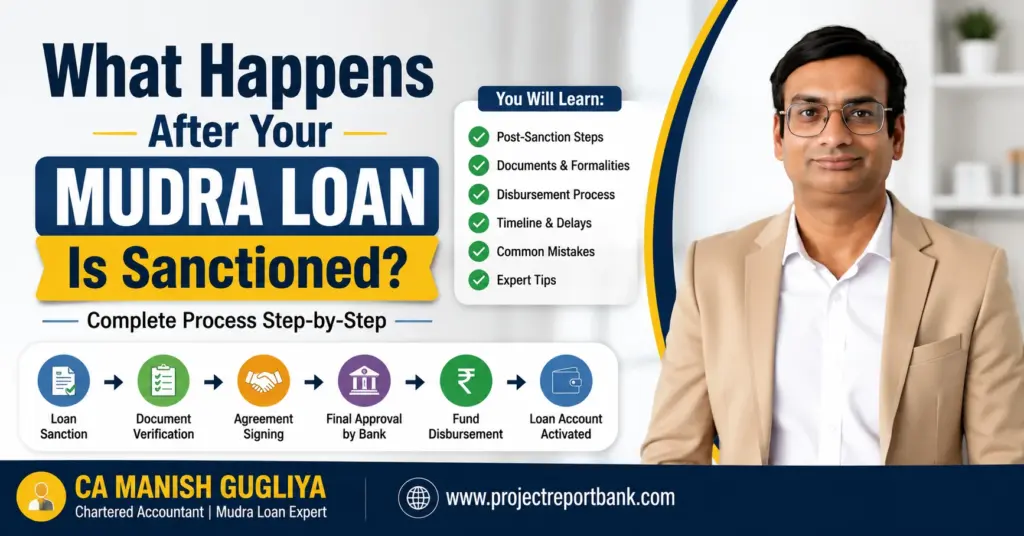
- What Happens After Your Mudra Loan Is Sanctioned?

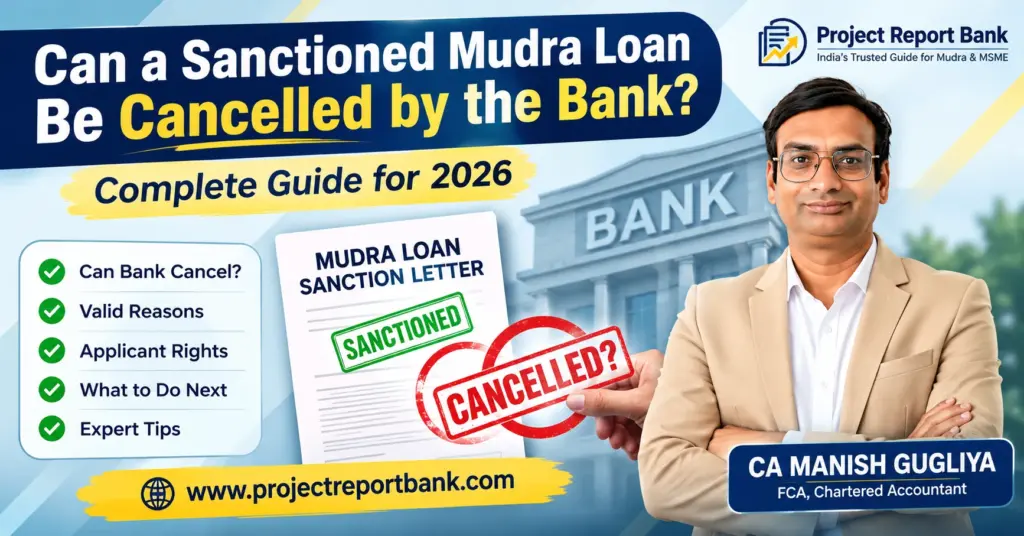
- Can a Sanctioned Mudra Loan Be Cancelled by the Bank? Complete Guide (2026)
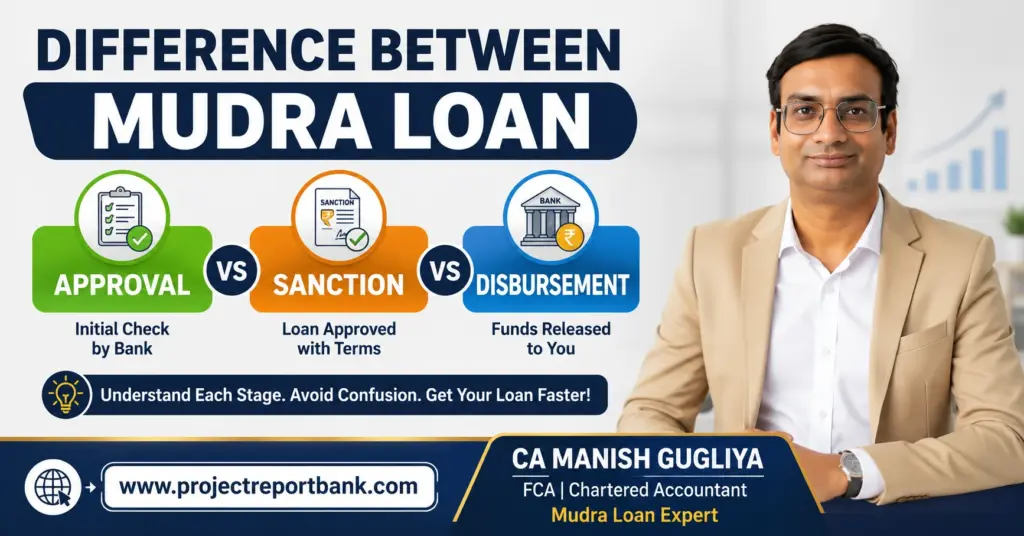
- Difference Between Mudra Loan Approval, Sanction and Disbursement
- Mudra Loan Sanction Letter Format: Every Section Explained
- Mudra Loan Sanction Letter Download – Complete Step‑by‑Step Guide