
Key Takeaways
- This article provides a structured overview of the industrial corn flakes manufacturing plant project report framework for India, covering technology selection between roller-flaking and extrusion, plant capacity configurations from 500 to 3,000 kg/hour, machinery, project cost, working capital, and financial feasibility, written from the professional perspective of CA Manish Gugliya, FCA, DISA (ICAI).
- Conventional roller-flaked corn flakes plants and modern extrusion-based multigrain flakes production lines serve different product strategies; the article explains when each technology is commercially suitable and how the choice affects capital expenditure and operating economics.
- Project economics depend on machinery configuration, production capacity (which can range from 20,000 to 100,000 MT annually at industrial scale), grain yield, distribution strategy, and capacity utilisation, not only on the installed plant cost.
- Promoters should not rely on generic cost figures found online; they must obtain supplier quotations and a customised DPR and feasibility study before committing bank finance or promoter capital.
- Project Report Bank (ProjectReportBank.com), led by CA Manish Gugliya, prepares bankable DPRs, CMA data, financial models, and feasibility studies for industrial breakfast cereal flakes projects across India.
Introduction – Industrial Corn Flakes & Multigrain Flakes Manufacturing Opportunities in India
India’s organised breakfast cereals market has expanded from a niche consumed primarily in metro cities to a product category available across modern retail chains, online grocery platforms, and institutional buyers in Tier-1 and Tier-2 urban areas. The India breakfast cereal market, which includes corn flakes, oats, muesli, and multigrain blends, is valued at approximately USD 732 million in 2025 and is expected to reach USD 1,143 million by 2031, with volume rising from around 138,600 tonnes to 185,300 tonnes over the same period. Corn flakes remain the single largest sub-segment by revenue within this market.
An industrial corn flakes manufacturing plant project report refers to a comprehensive DPR-style analysis for setting up a medium-to-large-scale breakfast food manufacturing plant in India. This is distinct from a small kitchen-scale or cottage-industry unit. The proposed project categories include plain corn flakes, honey or sugar-coated variants, chocolate-coated flakes with cocoa, and multigrain flakes containing wheat, rice, oats, millets, barley, and other grains. These products serve FMCG retail packs, HORECA formats, institutional bulk supplies, and private-label contracts.
The market segments for such a plant include branded FMCG products for national distribution, private-label manufacturing for supermarket chains and e-commerce brands, contract manufacturing for third-party brand owners, and institutional bulk packs for hotels, hospitals, and corporate cafeterias. Integrated plants can combine grain processing, flaking, toasting, coating, and automated packaging on a single corn flakes production line. Setting up a corn flakes plant typically takes 12 to 24 months, including site acquisition, civil works, machinery procurement, commissioning, and recipe development. A professionally prepared project report and feasibility study covering market assessment, technical parameters, and compliance is essential before investing several crores. Detailed project reports assist in securing bank financing and investor support, and they force the promoter to examine every assumption before capital is committed. This article is written from the perspective of CA Manish Gugliya, a practising Chartered Accountant, with focus on both process-technology choices and project finance feasibility for Indian promoters.
Understanding Corn Flakes and Multigrain Flakes Manufacturing
Corn flakes are produced from milled corn through cooking and flaking. Conventional corn flakes use cleaned and graded corn grits as the primary cereal input, cooked with water, sugar, salt, and malt extract, then roller-flaked and toasted. Multigrain flakes use mixed cereal flours, including corn flour, wheat, rice, oats, and millets, often processed through extrusion technology. Ready-to-eat breakfast cereals are consumed directly with milk or yogurt, while ready-to-cook cereal ingredients require further preparation.
Conventional corn flakes manufacturing follows a sequence: cleaned corn grits of suitable hardness and particle size are batch or continuously cooked with steam, tempered for uniform moisture, passed through heavy-duty flaking rollers, and toasted in high-temperature ovens. This process produces the classic flat, crisp flake that consumers associate with traditional breakfast cereals.
Multigrain flakes manufacturing typically involves blending mixed cereal flours with sugar, salt, malt, and fortification premixes, then processing through a twin screw extruder that cooks, gelatinises, and forms pellets or sheets. The extruded material is then flaked, dried, and toasted. This route allows flexible shapes, complex grain blends, and the ability to produce related products such as cereal bars ingredients and puffed cereals on the same line. Promoters considering multigrain or millet-based diversification should evaluate extrusion technology carefully during the feasibility study.
| Feature | Conventional Roller-Flaked Corn Flakes | Extrusion-Based Multigrain Flakes |
|---|---|---|
| Primary raw materials | Corn grits (degermed, whole) | Mixed cereal flours (corn, wheat, oats, millets, rice) |
| Core equipment | Steam cookers, tempering bins, flaking rollers, toasters | Twin-screw extruder, pellet cutter, flaking rollers, dryers |
| Process stages | Separate cooking, tempering, flaking, toasting | Mixing, cooking, and forming combined in extruder |
| Product shape flexibility | Primarily flat flakes | Flakes, stars, balls, rings, and novelty shapes |
| Grain blend flexibility | Limited to single-grain or simple blends | Handles complex multigrain and high-fibre formulations |
| Finished-product texture | Traditional crispy flake, longer bowl life in some formulations | Texture varies with recipe; requires careful toasting for crispness |
| Capital investment intensity | Higher for cookers, boilers, steam systems | Extruder lines can be compact but extruder itself is expensive |
| Operating complexity | More equipment stages, more labour | Fewer stages but high precision in extrusion parameters |
Grain formulation influences the choice of core equipment, energy consumption profile, plant layout, finished-product texture, and nutritional positioning. A high maize percentage suits traditional roller-flaking; complex multigrain blends with higher fibre and protein suit extrusion-based systems.
Market Potential and Demand Assessment in India
The India corn flakes market stood at USD 100.08 million in 2025, forecast to grow to USD 312.18 million by 2034 at a CAGR of about 13.59%. At the global level, the corn flakes market was valued at USD 2.00 billion in 2025 and is expected to reach USD 5.96 billion by 2034, exhibiting a CAGR of 12.9% from 2026 to 2034. These numbers reflect industry trends driven by urbanisation, which is increasing demand for convenient breakfast options like corn flakes, and rising health and nutrition awareness.
Corn flakes are preferred by consumers for their convenience and long shelf life. In some States, government breakfast schemes have demonstrated measurable impact; over 90% of students showed better nutrition from breakfast schemes in Tamil Nadu, illustrating institutional demand potential, though such demand is policy-dependent and cannot be treated as guaranteed offtake.
Large FMCG companies dominate national brands. The opportunity for mid-sized manufacturers lies in private-label production for supermarket chains, hotel chains, airlines, and online grocery brands. Contract manufacturing and co-packing represent practical investment opportunities, with independent brands outsourcing production to a dedicated corn flakes manufacturing plant to avoid their own capital expenditure. Export potential exists for neighbouring countries, the Middle East, and African markets, subject to destination-country food safety regulations and buyer specifications.
Distribution realities matter: typical channel margins for distributors and retailers in FMCG absorb a substantial portion of the end-consumer price. Trade schemes, introductory offers, and promotional spending in competitive markets can reduce early-year profitability. Every industrial corn flakes manufacturing plant project report must include a location-specific market assessment with realistic assumptions rather than relying solely on broad industry growth numbers.
Plant Capacity Planning and Production Configuration
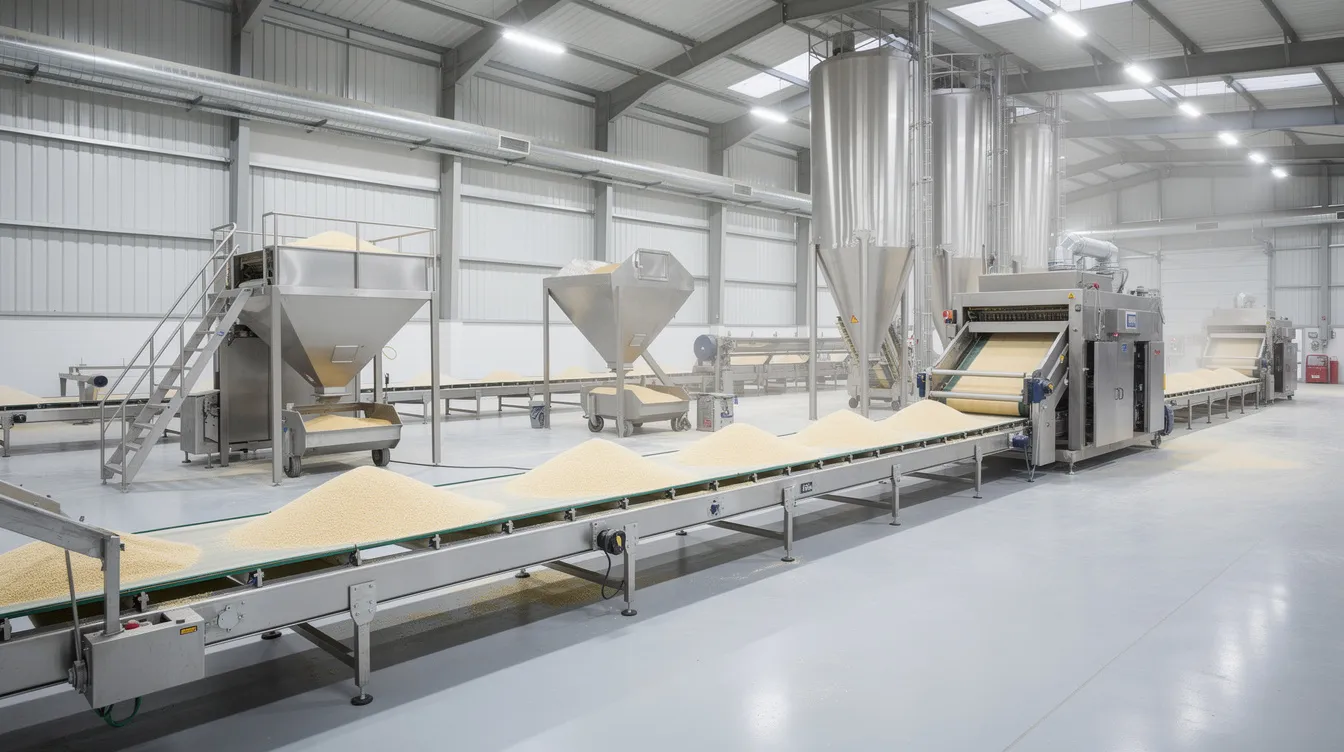
Production capacity of a corn flakes plant ranges from 20,000 to 100,000 MT annually at industrial scale, depending on the number of production lines, shift patterns, and operating days. A corn flakes manufacturing plant requires capacity planning in this range to achieve the economies of scale needed for competitive unit costs. Production capacity planning is crucial for aligning with market demand and financial viability.
Rated hourly capacity (kg/hour of finished flakes) determines the machinery specification, building size, and utility demand. The production line can output 100 to 1,000 kg/h for smaller industrial configurations, while larger plants operate at 2,000 to 3,000 kg/hour or above.
| Rated Capacity (kg/hr) | Operating Hours/Day | Operating Days/Year | Theoretical Annual Output (MT) | Assumed Utilisation (%) | Effective Annual Output (MT) |
|---|---|---|---|---|---|
| 500 | 20 | 300 | 3,000 | 65% | 1,950 |
| 1,000 | 20 | 300 | 6,000 | 70% | 4,200 |
| 2,000 | 20 | 300 | 12,000 | 75% | 9,000 |
| 3,000 | 20 | 300 | 18,000 | 75% | 13,500 |
Input grain mass reduces due to moisture loss during cooking and toasting. Yield from input blend to packed flakes is typically 80 to 92%, depending on process route and product type. A KVIC-profile micro unit documented 80% flake yield, 15% by-products (bran and broken), and 5% processing loss.
Higher installed capacity lowers unit conversion cost but increases capital expenditure and break-even sales volume. Smaller plants may be easier to finance but risk higher unit overhead if under-utilised. Each multigrain flakes manufacturing plant project report and corn flakes manufacturing plant project report should include multiple capacity scenarios so that promoters and bankers can evaluate the optimal scale.
Raw Materials Required for Corn Flakes and Multigrain Flakes
Corn flour is the primary raw material for corn flakes. Corn flakes manufacturing uses maize, sugar, and vitamins as key ingredients. The specific formulation requires maize (corn grits or corn flour), sugar, malt extract, and salt. Corn flakes can include vitamins and flavouring agents for nutritional fortification and taste enhancement. Optional ingredients include dried fruits, colours, honey, and cocoa for value-added variants.
Corn flakes production heavily relies on the quality and moisture content of yellow corn. Grain quality parameters include moisture range, foreign matter limits, aflatoxin control, and consistent grit size for uniform cooking and flaking. Corn grits account for 70 to 80% of operating expenses, making procurement strategy and price management central to project economics.
For multigrain flakes, additional cereals include wheat (flour or semolina), rice, oats, millets such as jowar, bajra, and ragi, and barley. Promoters sourcing millets may find relevant procurement and processing guidance in the context of maize flour milling or multigrain flour production.
Packaging materials include metallised polyester laminates, LDPE liners, pillow pouches, bag-in-box formats, printed cartons, and corrugated shipper cartons. Nitrogen-flushed packs enhance shelf life for premium SKUs. Export packaging details may include wooden case packing or pallet wrapping depending on buyer specifications. Any corn flakes manufacturing plant feasibility study should model raw material costs using current regional market prices and expected seasonal variation.
Industrial Corn Flakes Manufacturing Process – Step-by-Step
This section describes the conventional roller-flaking manufacturing process for classic corn flakes. The main steps include cleaning, cooking, flaking, and toasting corn. Cleaning and degerming are initial critical steps in the corn flakes manufacturing process. The entire corn flakes production process from cooking through packing can take 15 to 20 minutes for the flaking-toasting cycle per batch, though total throughput time depends on line configuration.
Raw Material Procurement and Receiving: Corn grits of specified granulation are procured from pre-qualified suppliers and received with documentation for traceability.
Incoming Quality Inspection: Moisture, foreign matter, and mycotoxin checks are performed before grits enter the process.
Cleaning, De-stoning, and Magnetic Separation: Grits pass through de-stoners, magnetic separators, and sieves to remove contaminants. Proper hygiene protocols in food processing follow GMP standards at every stage.
Ingredient Weighing and Formulation: Grits are batched with sugar, salt, malt extract, and other nutrients according to standard recipes. Minerals and vitamins are dosed where fortification is specified.
Cooking: Batch or continuous cookers apply steam at controlled temperature and holding time. Grit moisture before cooking should be within specification (typically 10 to 14%). The cooking stage gelatinises starch and develops flavour.
Tempering / Moisture Conditioning: Cooked grits rest in tempering bins for uniform moisture redistribution, a step that affects flaking quality.
Flaking: Flaking processes require heavy-duty precision rollers to flatten cooked grits into flakes. Roll gap, nip force, speed, and roller temperature must be controlled. Modern flaking rollers use alloy steel or hardened steel surfaces with hydraulic gap adjustment and water cooling to prevent sticking.
Toasting: High-temperature toasting is essential for achieving the characteristic crispness in corn flakes. Hot-air toasters or multi-pass ovens operate at temperatures in the range of 274 to 329°C for approximately 90 seconds. Final moisture target is typically 1 to 3% for standard ready-to-eat flakes.
Optional Coating and Fortification: Sugar solution, honey, or chocolate coating is applied in coating drums. Vitamin and mineral premixes are sprayed where fortification is targeted.
Cooling: Flakes are cooled to ambient temperature and moisture is stabilised using cooling conveyors or vibratory coolers.
Final Quality Testing: Moisture, crispness, breakage, and microbiological parameters are checked.
Packing, Coding, and Cartoning: Corn flakes are typically dried in a hot air dryer after flaking, cooled, and then weighed and packed. Packaging materials must ensure moisture barrier to maintain product quality and shelf life.
Finished Goods Storage and Dispatch: Packed product enters the finished-goods warehouse under FIFO inventory control.
Extrusion-based corn flakes technology follows a different process route and should not be treated as identical to roller flaking. The detailed operating parameters for a particular plant must be defined in collaboration with machinery suppliers and documented in the industrial corn flakes manufacturing plant project report.
Multigrain Flakes Manufacturing Process
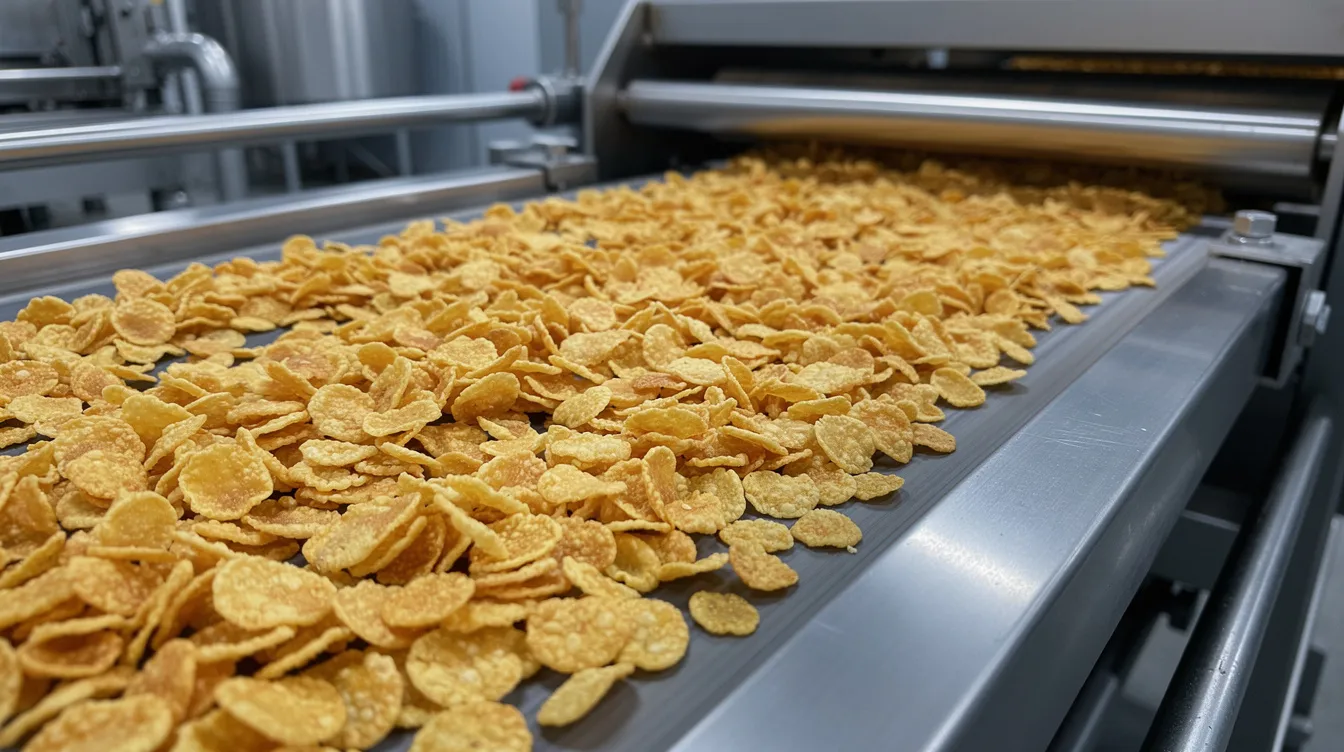
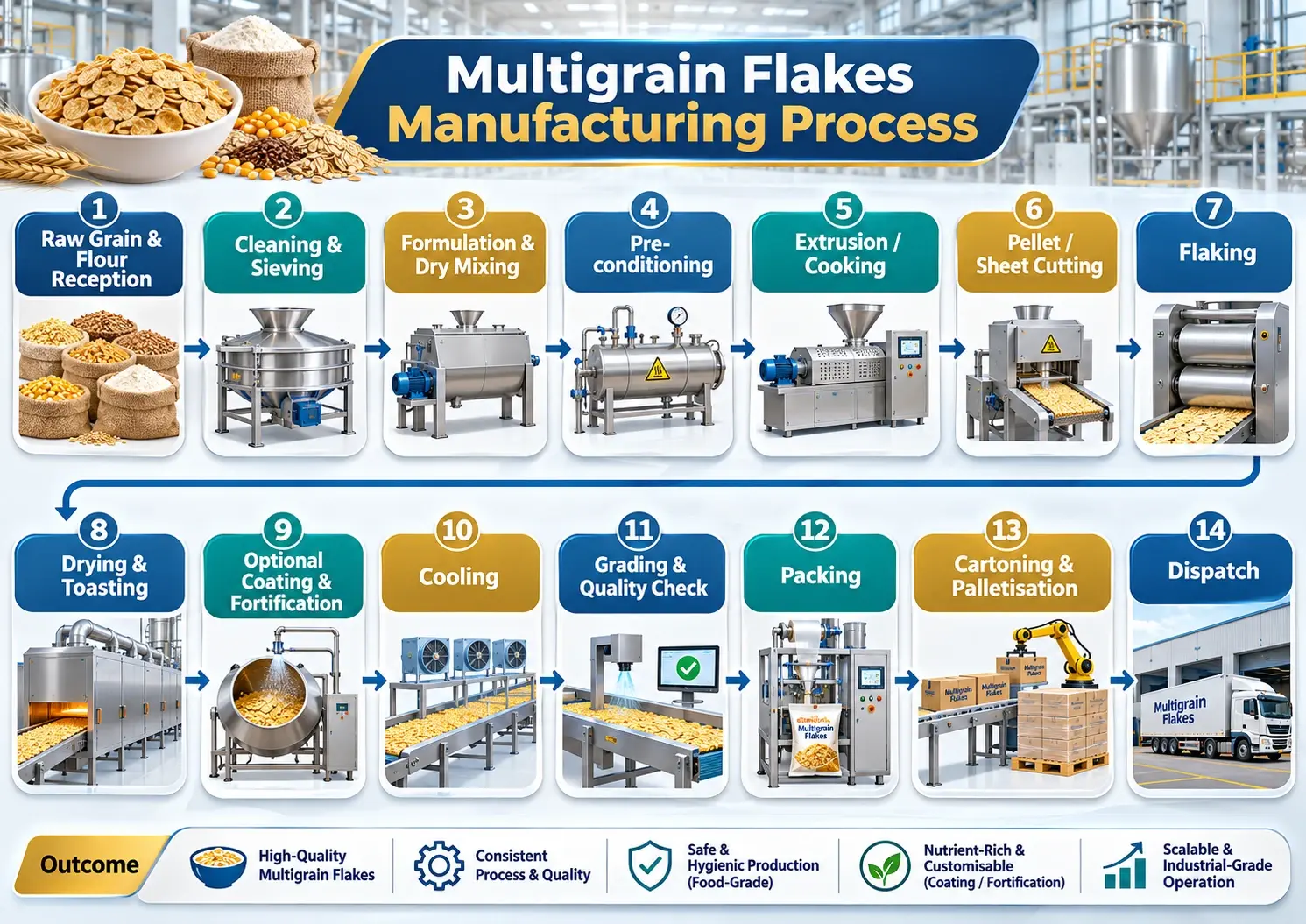
Multigrain flakes are often produced on extrusion-based lines using twin-screw extruders, offering flexibility in grain blends and product shapes. The general process stages are:
Grain and Flour Preparation: Cleaning, milling, and sifting of each cereal component. Promoters processing millets may refer to related puffed cereal processing for additional context on grain preparation.
Ingredient Formulation: Weighing cereals, sugar, salt, cocoa, flavours, fruits powders, and fortification premix.
Dry and Wet Blending: Industrial mixers achieve homogeneity before extrusion.
Pre-conditioning: Moisture adjustment prior to extrusion, controlled through pre-conditioner units.
Cooking / Extrusion: Twin-screw extruder gelatinises starch, cooks the blend, and forms the extrudate. Specific mechanical energy consumption for cereal extrusion generally lies between 0.10 and 0.20 kWh/kg.
Pellet or Sheet Formation: Extruded strands are cut into pellets or rolled into sheets.
Flaking: Pellets or sheets pass through flaking rolls to achieve desired thickness.
Drying and Toasting: Multi-layer dryers reduce moisture and develop crispness.
Optional Coating and Fortification: Spraying sugar syrups, honey, or vitamin-mineral premixes.
Cooling: Product reaches ambient temperature.
Quality Testing: Physical, chemical, and microbiological checks.
Packing: Dosing into pouches or cartons with nitrogen flushing where required.
Process Flow: Raw Grain & Flour Reception → Cleaning & Sieving → Formulation & Dry Mixing → Pre-conditioning → Extrusion / Cooking → Pellet / Sheet Cutting → Flaking → Drying & Toasting → Optional Coating & Fortification → Cooling → Grading & Quality Check → Packing → Cartoning & Palletisation → Dispatch
Higher oat or millet content requires adjustments to moisture and extrusion conditions. Sugar and syrup content influences stickiness and dryer load. Multigrain lines can also produce related products such as crunchy clusters or puffed breakfast cereals, improving plant utilisation across multiple product SKUs. Promoters exploring millet-based breakfast cereals should assess whether a shared extrusion platform serves both product families.
Industrial Breakfast Cereal Flakes Plant Machinery & Equipment
A modern corn flakes production line and multigrain flakes line require the following equipment groups, adapted to the selected technology and capacity. A corn flakes factory requires a twin screw extruder where multigrain or shaped products are part of the portfolio. Corn flakes production includes a mixer and a dryer as core equipment alongside other processing machines. Investments in automated machinery lead to better production efficiency and consistency across shifts.
| Machinery / Equipment | Function | Typical Capacity Range | Key Selection Considerations |
|---|---|---|---|
| Grain cleaning and grading systems | Remove foreign matter, grade by size | Matched to plant throughput | Food-grade construction, dust extraction |
| Destoner and magnetic separator | Remove stones and metal contaminants | Matched to plant throughput | Sensitivity, ease of cleaning |
| Storage silos and day bins | Bulk grain and ingredient storage | 5-50 MT per silo | Moisture control, fumigation provision |
| Ingredient dosing and batching | Precise recipe formulation | Batch or continuous | Accuracy, PLC integration |
| Industrial mixers and pre-conditioners | Dry and wet blending, moisture conditioning | 200-3,000 kg/batch | Homogeneity, cleaning access |
| Batch or continuous cookers | Steam cooking of corn grits | 300-3,000 kg/hr | Pressure rating, temperature control |
| Twin-screw extruder | Cooking, gelatinising, forming for multigrain | 300-2,000 kg/hr | Screw configuration, die design, energy efficiency |
| Flaking rollers | Flatten cooked grits or extruded pellets | Matched to throughput | Alloy steel rolls, hydraulic gap control, water cooling |
| Multi-layer dryers and toasters | Drying and toasting to target moisture | Matched to throughput | Temperature zoning, residence-time control |
| Cooling conveyors | Cool flakes to ambient temperature | Matched to throughput | Air handling, dust control |
| Coating drums and spray systems | Apply sugar, honey, or fortification coatings | Matched to throughput | Uniform coverage, CIP capability |
| Metal detectors and check weighers | Detect contaminants, verify pack weight | In-line | Sensitivity, reject mechanism |
| Automatic packing machines (FFS) | Weigh, fill, seal pouches or cartons | 30-120 packs/min | Film compatibility, nitrogen flushing option |
| Utility equipment | Boiler, compressor, water treatment, power supply panels, DG set | Site-specific | Fuel type (gas, biomass, wooden pellets), power supply reliability |
| QC laboratory equipment | Moisture analysers, texture testers, microbiology | Project-specific | Calibration, traceability |
Steam generation costs have historically depended on fuel type; some plants use wooden pellets or biomass as boiler fuel, while others use gas or electricity. Corn flakes machines can produce various shapes like stars and balls when configured with appropriate extruder dies, expanding the product range.
Fully automatic lines use PLC or SCADA-based control of recipe, temperature, speed, and pack weight. Semi-automatic configurations combine automated upstream process control with manual bagging. Machinery procurement must be supported by comparative evaluation of at least 2 to 3 credible vendors, with reference checks for running plants. Machine prices vary by origin (Indian vs. imported), degree of automation, stainless steel grades, and capacity. For a 300 to 500 kg/h corn flakes making machine line, indicative equipment-only prices range from USD 48,000 to USD 70,000, with connected power load of 140 to 240 kW.
Plant Layout, Building, Storage & Infrastructure
The layout of a corn flakes manufacturing plant must support hygienic forward flow of materials from raw grain receiving to finished-goods dispatch. Dense industrial areas should be targeted for site selection to ensure raw material availability and market access, along with reliable power supply and transport infrastructure.
Land area requirements vary from 0.5 to 2 acres or more depending on capacity and provision for future expansion. Built-up area segments include the production hall, raw material warehouse, finished-goods storage, packing hall, utilities block, administration, and QC laboratory. Linear or L-shaped process flow minimises backtracking. Hygiene zoning separates low-, medium-, and high-hygiene areas. Personnel entry points include change rooms and hand-wash facilities.
Specific infrastructure requirements include raw material warehousing with racking and pest prevention, silo or bin storage for corn grits, finished-goods godown with FIFO inventory control, and packaging material stores shielded from moisture and dust. Utility facilities cover boiler house, compressor room, electrical substation, DG set, and water storage. Ventilation, dust extraction, and temperature control in the production hall are necessary for product safety and worker comfort. Fire safety provisions, emergency exits, and structural design to support heavy equipment such as flaking rollers and oven systems must comply with local regulations. Detailed plant layout drawings should be prepared in consultation with machinery suppliers and attached to the bankable project report.
Automatic Corn Flakes Manufacturing Plant Cost & Project Investment
This section provides a structured framework for estimating automatic corn flakes manufacturing plant cost. All values below are illustrative and require validation through current supplier quotations and site-specific civil-cost estimates. A clear estimation of land and building costs should be included in every project report, along with all other cost heads.
Project financing requires clear development of a promoter’s contribution and funding structure. The main capital-cost heads for an industrial breakfast cereal flakes plant include:
- Land and Site Development: Purchase or lease, compound wall, internal roads.
- Factory Building and Civil Construction: Production block, warehouses, admin building, QC lab.
- Main Processing Machinery: Cookers, flaking rollers, extruders, toasters, dryers, conveyors.
- Packaging Machinery: FFS machines, carton packers, coding systems.
- Electrical Installations and Utility Systems: Transformers, wiring, boiler, compressors, water treatment, DG set.
- Storage and Material Handling: Silos, bins, pallet racks, forklifts.
- Quality-Control Equipment: Moisture analysers, testing instruments.
- Engineering, Installation, and Erection: Foundation work, fabrication, installation charges.
- Preliminary and Pre-operative Expenses: Consultancy, company formation, interest during construction, trial runs.
- Contingency Provision: Typically 5 to 10% of hard costs.
- Margin for Working Capital: Initial inventory and receivable funding at start-up.
Industry reports provide benchmarks for estimating project costs and scale based on production capacity. In India, semi-automatic flakes-making equipment lines range from approximately ₹15 lakh to ₹1.5 crore, while fully integrated processing lines may cost ₹1.5 crore to ₹10 crore or more for equipment alone. Generic “turnkey” price tags found online typically cover only bare production lines and exclude land, building, utilities, working capital, and statutory compliances. The plant setup process includes securing licenses and arranging funding alongside physical construction and machinery installation. The cost structure must be analysed along with the financing pattern, including term loan versus equity, and potential use of food processing or agro-based industry incentive schemes subject to current government policies.
Working Capital Requirements
For a corn flakes manufacturing plant, working capital is required for raw material and packaging inventory, work-in-progress, finished goods stock, trade receivables, and day-to-day cash expenses. Monthly working capital needs include raw materials, labour wages, and utility costs.
Raw Material Inventory: Corn grits, cereals, sugar, malt, flavours, and fortification premix held for 15 to 30 days of consumption.
Packaging Inventory: Films, cartons, and labels procured in economic lot sizes.
Work-in-Progress: Semi-processed material within cooking, flaking, and toasting stages.
Finished Goods: 15 to 45 days of sales depending on distribution strategy.
Trade Receivables: Credit extended to distributors or institutional customers, typically 15 to 60 days.
Trade Payables: Supplier credit partially finances raw material requirements.
Cash flow projections should account for at least six months of operation in planning to ensure that seasonal demand fluctuations and initial ramp-up periods are covered. Banks assess working-capital limits based on projected inventory and receivables, with margin requirements from the promoter. Drawing-power calculations and periodic stock statements govern actual utilisation. Under-estimating working capital is a common reason for stress in new food processing units. Operational expenditures must cover raw materials, packaging, and energy consumption on an ongoing basis, and DPRs should contain realistic, seasonally adjusted working-capital estimates. The approach to working capital assessment for food processing plants follows similar principles across cereal and grain-based projects.
Manufacturing Cost Per Kilogram
Unit production cost must separate factory production cost (at plant gate) from distribution and marketing costs (channel margins, freight, promotions). Operating costs are driven primarily by raw material consumption, mainly corn grits.
| Cost Component | Illustrative Share of Factory Cost |
|---|---|
| Raw materials (cereals, sugar, malt, additives) | 55–65% |
| Packaging materials | 10–15% |
| Power and fuel | 5–8% |
| Direct labour | 4–6% |
| Repairs and maintenance | 2–3% |
| Factory overheads and QC | 3–5% |
| Depreciation | 3–5% |
Note: Percentages are illustrative. Actual shares vary with grain prices, capacity utilisation, packaging choice, and automation level.
Sensitivity factors include changes in maize and grain prices due to crop cycles, variation in energy tariffs, machines running below rated capacity (which raises overhead per kg), and packaging choice. Selling price must cover manufacturing cost, distribution and marketing expenses, channel margins for the entire trade chain, and a reasonable profit margin. A corn flakes manufacturing plant feasibility study should carry out sensitivity analysis for at least three scenarios: base case, pessimistic case (higher raw-material costs, lower selling price), and optimistic case.
Financial Projections, Profitability & Bank Loan Feasibility
Lenders and investors assess an industrial corn flakes manufacturing plant project report based on integrated financial projections typically spanning 7 to 10 years. Financial projections include capital investment and operating costs analysis as core components. Profitability analysis includes calculating gross profit margin and determining break-even points. A project’s success is contingent upon a robust financial model and feasibility analysis.
Standard financial statements required: projected profit and loss account, projected balance sheet, and projected cash-flow statement including term-loan disbursements and repayments.
Revenue assumptions include planned selling prices per kg for different SKUs, capacity utilisation ramp-up (50 to 60% in Year 1, increasing to 80 to 90% in subsequent years), and raw-material cost inflation. Key financial indicators include gross contribution and EBITDA margins, depreciation, interest on term loan and working capital, and net profit. Gross profit margins for corn flakes typically range between 30 and 40% at steady-state utilisation.
Project-finance metrics:
- Debt-Equity Ratio: Typical norms for Indian food-processing projects range from 60:40 to 70:30.
- DSCR: Minimum acceptable range around 1.25 to 1.30 over loan years.
- Break-Even Point: Fixed-cost coverage at a particular production level; break-even for corn flakes manufacturing typically ranges from 3 to 6 years.
- Project IRR and Equity IRR: Derived from project cash flows; expected range usually 15 to 25%.
- NPV and Payback Period.
Economic viability is assessed through ROI and break-even analysis under base, pessimistic, and optimistic scenarios. Professional financial modelling under the guidance of an experienced Chartered Accountant is essential for preparing realistic, bank-acceptable projections and supporting CMA Data discussions. The approach mirrors financial projection methodologies used across food processing projects.
Government Approvals, FSSAI, BIS & Regulatory Compliance
An industrial breakfast cereal flakes plant must comply with food-safety, factory, tax, and environment-related regulations. Licensing under FSSAI is mandatory for food businesses in India. Regulatory certifications are crucial for operational compliance in food production.
Food regulations: FSSAI central or State licence as a food-manufacturing unit. FSSAI regulations define breakfast cereals under regulation 2.4.35 as ready-to-eat or quick-cook cereal products made from one or more milled or whole grains. Product standards specify moisture content limits (7.5% maximum for cereals without dried fruits or nuts) and acid insoluble ash (0.1% maximum on dry basis). Labelling requirements include ingredient list, nutritional information, allergen declaration, and date/batch coding.
Other registrations: Factory registration under State Factories Act; labour-law registrations (EPF, ESIC); State Pollution Control Board consent for boiler operations and emissions. Environmental clearance and food safety licenses are essential regulatory requirements for factories. Legal Metrology (Packaged Commodities) Rules apply for net quantity declarations and MRP labelling. GST registration is required for all manufacturing businesses.
Export compliance: Registration with export authorities, meeting importing-country norms, and third-party certifications such as HACCP, ISO 22000, or BRC where demanded by overseas buyers. These are typically voluntary but commercially relevant for export contracts. Regulatory requirements evolve; promoters must verify current rules through official government sources at the time of project implementation.
Quality Control, Food Safety & Shelf-Life Management
Corn flakes and multigrain flakes are low-moisture products, but they remain vulnerable to staling, loss of crispness, rancidity, insect infestation, and contamination if controls are weak. Food safety management systems like ISO 22000 and HACCP are necessary for corn flakes manufacturing at industrial scale.
Incoming inspection: Moisture, foreign material, insect damage, and mycotoxin testing for all grains consumed in the plant.
In-process checks: Cooking parameters, flake thickness, toast colour, and breakage rates.
Final-product testing: Moisture content, water activity, crispness, bulk density, and flavour consistency.
Microbiological checks include total plate count and yeast/mould monitoring. Aflatoxin and contaminant monitoring is essential for cereals. Verification of fortification levels applies where vitamins and minerals are claimed on pack.
Adoption of Good Manufacturing Practices (GMP) and Good Hygiene Practices (GHP) is the baseline. Allergen management controls apply if nuts, soya, or milk derivatives are used. Shelf life depends on final-product moisture, water activity, and packaging barrier properties against oxygen and moisture. Traceability systems from raw material batch to finished pack, retention of product samples per batch, and a documented recall procedure are standard requirements. Pilot production and real-time shelf-life studies should be conducted before full-scale commercial launch.
Major Risks and Feasibility Challenges
An honest corn flakes manufacturing plant feasibility study must identify risks and propose mitigation strategies. Proper risk analysis and mitigation strategies are needed to address supply chain and quality risks before capital is committed.
| Risk Category | Description | Mitigation |
|---|---|---|
| Raw material price volatility | Corn, wheat, and sugar prices fluctuate seasonally | Forward contracts, diversified sourcing, conservative pricing |
| Technology selection | Under-sized or over-complex line | Technical evaluation, pilot trials, reference checks |
| Product consistency | Inconsistent flake texture and taste | Strong process control, skilled technical staff |
| Low capacity utilisation | Under-loading of fixed assets | Flexible product portfolio, contract manufacturing |
| High distribution costs | Margins absorbed by trade incentives | Realistic budgeting, phased geographic expansion |
| Working capital pressure | Extended credit to distributors | Disciplined credit control, adequate sanctioned limits |
| Regulatory non-compliance | Penalties or product withdrawals | Proactive monitoring, documented food-safety systems |
| Excessive debt | Aggressive repayment structure | Conservative debt-equity structure, adequate promoter contribution |
Sensitivity analysis within the DPR tests profitability under adverse scenarios. Promoters should consider staggered investment or modular capacity expansion rather than committing to maximum capacity without secure offtake.
How to Prepare a Bankable Corn Flakes Manufacturing Plant DPR
A bankable industrial corn flakes manufacturing plant project report converts a promoter’s broad concept into a structured document that lenders can appraise.
Essential components: Executive Summary; Promoter Profile (experience, financial background, track record); Detailed Business Model (product mix, target market, distribution); Market Assessment with data; Technology and Machinery Evaluation; Capacity Planning and Plant Layout; Capital-Cost Estimates and Means of Finance; Working-Capital Assessment; Manufacturing Economics and Unit Cost Analysis; Ten-Year Financial Projections; DSCR and financial indicators (IRR, NPV, break-even); Risk Assessment; Project Implementation Schedule (Gantt-style plan covering land, building, machinery, trial runs, and commercial start).
CMA Data preparation for banks is a distinct but related requirement covering past and projected financials, fund-based and non-fund-based requirements, ratio analysis, and working-capital assessment. A comprehensive project report should cover market feasibility, technical parameters, and compliance together.
Generic downloadable project-report templates lack project-specific capacity and cost customisation, and they do not reflect the promoter’s actual capital structure or local-market conditions. Project Report Bank specialises in preparing customised DPRs and financial models for corn flakes and multigrain flakes manufacturing plants in India.
Why Professional DPR and Financial Feasibility Advisory Matters
Breakfast cereal flakes projects involve multi-crore investment in plant, building, and working capital. Errors in planning can produce long-term financial stress that no amount of subsequent cost-cutting can reverse.
CA Manish Gugliya, through ProjectReportBank.com, supports promoters by conducting detailed financial feasibility studies with realistic market and cost assumptions, preparing customised industrial corn flakes manufacturing plant project reports and multigrain flakes manufacturing plant project reports, designing the means of finance including promoter contribution and term loans, developing ten-year financial projections, preparing CMA Data aligned with Indian bank requirements, and assisting with sensitivity and scenario analysis.
The advisory approach is independent and analytical, not tied to any machinery supplier. The focus remains on long-term sustainability, DSCR adequacy, and defensible assumptions rather than headline profit figures. Professional DPR and advisory improve the quality of documentation and planning, though they do not guarantee bank sanction, which remains at the discretion of lenders.
Frequently Asked Questions
The following questions frequently arise when promoters explore investment in industrial corn flakes and multigrain flakes plants in India.
What is the typical investment required for an automatic corn flakes manufacturing plant in India?
Total investment depends on plant capacity (for example, 500 vs. 2,000 kg/hour), technology (roller-flaking vs. extrusion), level of automation, land cost, and expansion provisions. Online price tags for a corn flakes production line usually cover only core machinery and exclude land, building, utilities, working capital, and regulatory-compliance costs. Equipment-only costs for integrated lines in India range from ₹1.5 crore to ₹10 crore or more. A realistic total project cost must be developed through a customised DPR with current quotations.
Which machinery is essential for industrial corn flakes production?
The critical machines include grain cleaner and destoner, magnetic separator, corn-grit intake system, cookers, tempering bins, flaking rollers, dryers and toasters, cooling conveyors, coating drums (if needed), metal detectors, and automatic packing machines. Control systems, utilities (boiler, compressor, power distribution), and QC equipment are integral parts of the industrial breakfast cereal flakes plant machinery even though they are sometimes omitted from simple equipment lists.
Is extrusion technology mandatory for corn flakes manufacturing?
Classic corn flakes can be manufactured using conventional cooking and roller-flaking technology without extrusion. Many established manufacturers worldwide still use this route. Twin-screw extrusion is more commonly adopted where the product portfolio includes multigrain flakes, shaped breakfast cereals, and puffed or expanded products on the same line. The choice must be based on desired product characteristics and commercial strategy, evaluated within the feasibility study.
Can a corn flakes plant obtain term loans and working capital from banks?
Indian banks finance viable food processing projects, including corn flakes manufacturing plants, provided the project is technically and financially feasible, promoters bring adequate equity, and a detailed bankable DPR and CMA data are submitted. Lenders scrutinise capacity utilisation assumptions, DSCR, collateral security, and promoter background before sanctioning term loans and working-capital limits. The approach to bank finance for food processing projects follows similar appraisal principles.
How is this project different from a millet breakfast cereal manufacturing plant?
Millet-based ready-to-eat cereals focus on millets and related health positioning, with somewhat different processing and formulation considerations. Corn flakes plants centre on maize as the dominant grain with established consumer expectations around taste and texture. Promoters interested in millet breakfast cereal projects can refer to Project Report Bank’s dedicated article on ready-to-eat millet breakfast cereals manufacturing plants as a complementary reference.
Conclusion – Investment Planning & Financial Feasibility
Industrial corn flakes and multigrain flakes manufacturing offers a structured opportunity within India’s expanding packaged-food sector. The country’s breakfast cereal market is growing both in value and volume. Success, however, depends on precise alignment between technology, capacity, market positioning, and financial strength, not merely on setting up a factory with the right machines.
Careful selection between roller-flaking and extrusion-based systems, realistic assessment of demand and distribution costs, and robust quality and food-safety systems are all essential to long-term viability. A professionally prepared industrial corn flakes manufacturing plant project report and multigrain flakes manufacturing plant project report, combined with customised financial modelling and CMA Data, is indispensable before committing capital and approaching banks.
Serious industrial promoters and MSME manufacturers are invited to contact ProjectReportBank.com for customised DPR preparation, corn flakes manufacturing plant feasibility study, detailed financial projections, bank-loan documentation, and project finance advisory tailored to their specific production line or flakes manufacturing plant proposal. Readers planning cereal-based diversification may also review resources on ready-to-eat millet breakfast cereals, integrated millet processing, and puffed millet processing on ProjectReportBank.com.