Key Takeaways
- An industrial oilseed processing plant project report must cover technical process design (oil extraction, refining), plant capacity, machinery, capital expenditure, operating costs, and financial feasibility with defensible assumptions.
- The article addresses edible oils from mustard, groundnut, sunflower, rice bran, cottonseed, corn germ, and soybean – covering crude oil production, refining, and by-product utilisation in a bankable DPR format.
- India imports nearly 50% of its edible oil requirements, and oilseed production covers over 26 million hectares, creating strong investment opportunities for modern oil processing plants.
- Project Report Bank, led by CA Manish Gugliya, FCA, DISA (ICAI), prepares customised detailed project reports, feasibility studies, and CMA Data for oil processing projects of 50–500+ TPD capacity.
- Subsequent sections cover project cost structure, capital expenditure, operating expenses, profitability analysis, DSCR, and what bankers and investors expect from a professional DPR.
Introduction – Industrial Oilseed Processing & Project Reports
An industrial oilseed processing plant transforms raw oilseeds into edible oils and by-products through mechanical pressing, solvent extraction, and refining operations. Oilseed processing is a segment of agro-processing and food manufacturing industries, encompassing feedstocks such as mustard, groundnut, sunflower, cottonseed, corn germ, rice bran, and soybean.
A professionally prepared industrial oilseed processing plant project report is essential to evaluate technical design, capital investment, working capital needs, and long-term profitability before committing funds. The detailed project report helps businesses secure financing by assessing technical feasibility and profitability in a structured manner that banks and investors can examine.
India’s edible oil market remains one of the largest globally. Despite the country growing oilseeds on over 26 million hectares, domestic edible oil production falls short of consumption, sustaining heavy import dependence and opening scope for value addition through modern processing. This article is written from the perspective of a Chartered Accountant and project finance advisor, focusing on what bankers and investors look for in a DPR and feasibility study – relevant equally for promoters planning 50–100 TPD MSME expeller units and 300–500+ TPD solvent extraction complexes.
Vegetable & Edible Oil Processing – Technical Overview
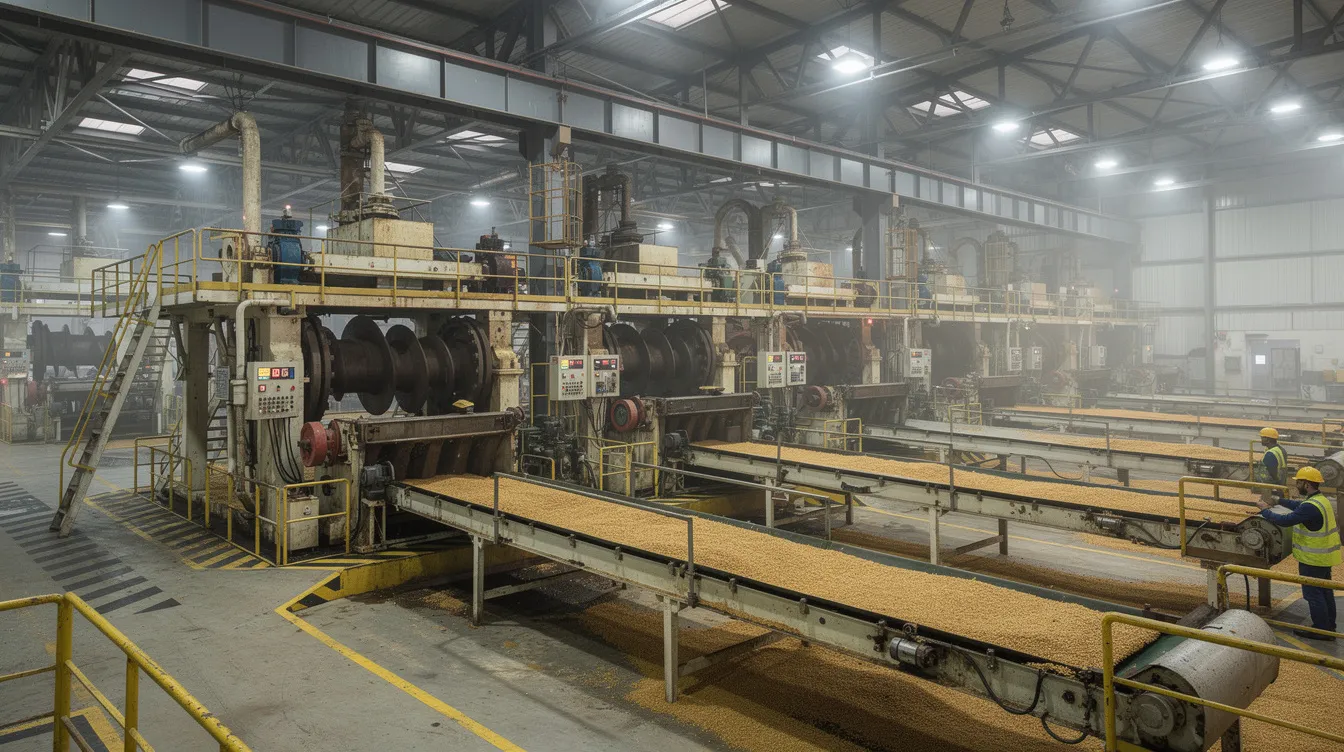
Vegetable oil processing involves seed preparation, pressing, and refining. The typical oilseed processing workflow includes cleaning, conditioning, and extraction stages, followed by crude oil clarification and further refining.
The major process stages are:
- Seed cleaning and preparation: Removal of stones, metal, and foreign matter using de-stoners, magnetic separators, and seed cleaners. Seed preparation and cleaning equipment is essential for consistent oil yield.
- Conditioning and flaking: Adjusting moisture content and temperature, then flaking seeds for better extraction efficiency.
- Oil extraction: Oil extraction machinery includes mechanical pressing or solvent extraction units. The choice of extraction technology significantly impacts the oil recovery rates and operational costs.
- Crude oil clarification: Filtering and settling to produce crude oil ready for storage or refining.
- Refining: Refining equipment includes degumming, neutralization, and deodorization units. Additional steps like bleaching, winterisation, and dewaxing apply depending on the oil type.
Different oilseeds require different processing routes. Rice bran, for example, requires rapid stabilisation after milling to prevent free fatty acids from rising sharply, which increases refining losses. Sunflower oil typically needs dewaxing or winterisation to remain clear in cold conditions. Advanced cold-press extraction technologies are gaining adoption for premium edible oil segments, while membrane technology improves oil recovery in some modern processing facilities.
The difference between non-refined filtered oil and fully refined deodorised oil determines both equipment costs and market positioning.
Market Drivers, Industry Trends & Investment Opportunities
The global vegetable oil processing market was valued at USD 293.99 billion in 2025, reflecting rising demand across food processing, industrial applications, and biofuel industries. India’s edible oil consumption continues to grow, driven by rising population, increasing per-capita consumption, a shift from loose to branded packaged cooking oils, and expanding food processing sectors.
Market research is essential for oilseed processing profitability due to fluctuating seed costs and oil prices. Market analysis should include local and global demand for edible oils and oilseed meals.
Key industry trends include:
- Modernisation of solvent extraction plant configurations for higher oil recovery and lower energy consumption
- Growing interest in speciality oils – rice bran oil, corn oil, sunflower oil – alongside conventional mustard and groundnut oils
- Expansion of demand from biodiesel production and oleochemical segments (though edible oil remains the primary revenue driver)
- Market expansion in branded and packaged edible oils
Even niche segments show activity: the global rubber seed oil market was valued at USD 1,313.35 million in 2025, indicating global demand for diverse vegetable oil sources.
Regional raw material availability must inform every feasibility study – cottonseed in Gujarat and Andhra Pradesh, rice bran in Punjab and Chhattisgarh, corn germ in maize-processing clusters of Karnataka and Bihar, and mustard in Rajasthan and Uttar Pradesh.
Plant Setup Requirements & Configuration
Plant setup requires evaluating technological and quality assurance factors alongside location-specific considerations such as land acquisition, proximity to raw materials, and transportation infrastructure.
Typical land and building requirements vary by scale:
| Scale | Capacity | Approximate Land | Key Infrastructure |
|---|---|---|---|
| Small | 30–50 TPD | 0.5–1.5 acres | Expeller hall, seed godown, oil tanks, office |
| Medium | 100–150 TPD | 3–5 acres | Extraction plant, tank farm, boiler house, ETP, lab |
| Large | 300–500 TPD | 8–15 acres | Integrated extraction + refinery, large storage, weighbridge, fire systems |
Core processing zones include raw material receiving, seed cleaning and preparation, mechanical expeller section, solvent extraction plant (where applicable), crude oil storage and filtration, edible oil refinery, and finished goods storage. The project report should present a block layout covering internal roads, effluent treatment plant, transformer yard, and laboratory.
A crude oil–only extraction plant requires less capital investment but limits value addition. An integrated extraction plus refinery configuration is commercially justified when scale, feedstock supply, and market access support higher-margin refined oil sales. For detailed refinery planning, refer to our guide on edible oil refinery machinery, technology and EPC selection.
Core Machinery & Equipment for Oil Processing Plants
Machinery selection directly determines oil yield, energy efficiency, and long-term maintenance cost. The DPR must list major machines with tentative capacities and budgetary costs from reputed machinery suppliers.
Key equipment categories:
- Seed cleaners, de-stoners, magnetic separators, hullers/decorticators
- Conditioning and flaking machines
- Screw presses (expellers) – a 100 TPD expeller line may require 4–6 screw presses
- Solvent extractors, desolventiser-toaster units, and meal coolers for a 300 TPD continuous oil solvent extraction plant
- Solvent recovery systems (condensers, distillation columns)
Refining machinery:
- Degumming tanks, neutralisation reactors, bleaching vessels, filters, deodorisers
- Dewaxing and winterisation chillers where applicable (sunflower, rice bran oil)
Utilities and support systems:
- Boilers or thermic fluid heaters, steam distribution, compressed air, cooling towers
- Electrical panels, DG sets, instrumentation for flow, temperature, and level control
- Quality control laboratory equipment
Final equipment costs require vendor quotations. Infrastructure costs for installation, piping, and foundations typically add 10–15% over quoted machinery prices. For a broader understanding of edible oil refinery project cost and investment, a separate detailed analysis is advisable.
Raw Materials, Oil Extraction Efficiency & By-product Utilisation
Raw materials account for 85–90% of total operating expenses in an edible oil processing plant, making procurement strategy and oil extraction efficiency critical factors in the project report. The project report should assess raw material availability, transportation costs, and storage solutions.
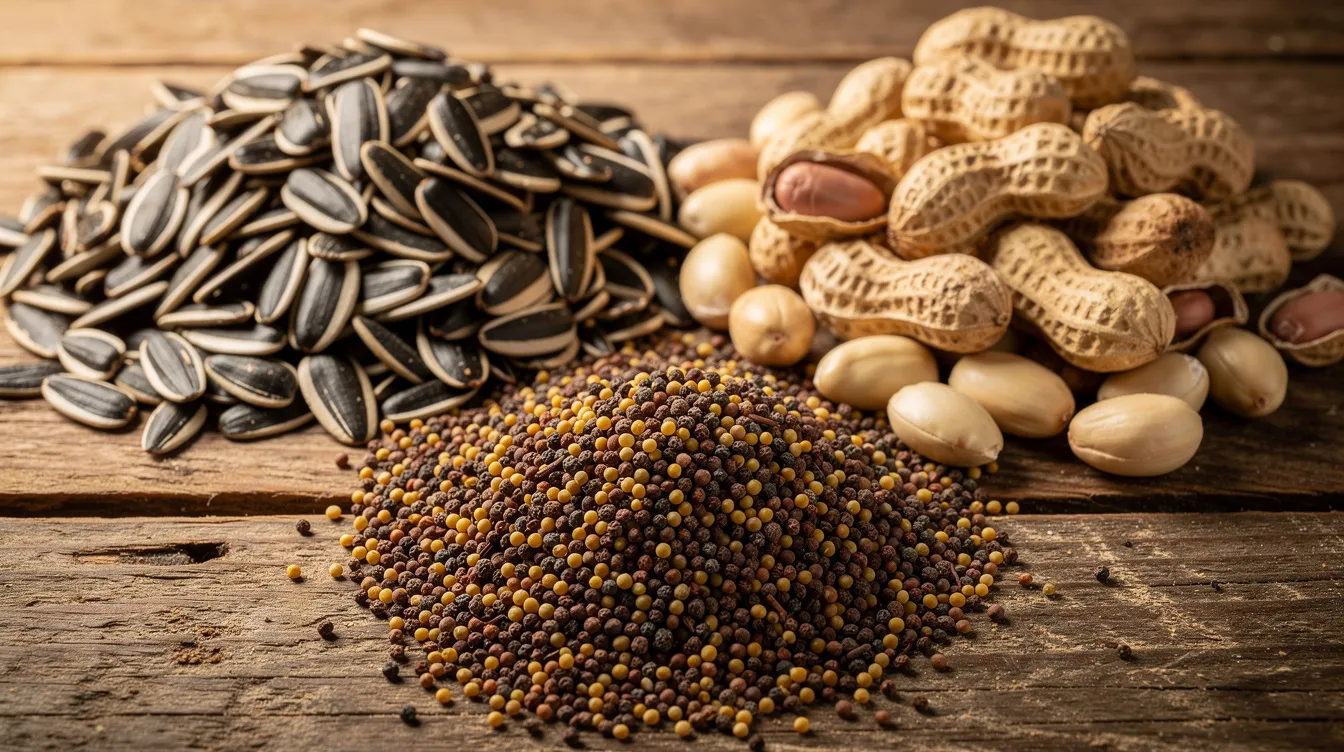
Common oil-bearing raw materials in India include mustard/rapeseed (oil content 36–42%, practical recovery ~34–35%), groundnut (~38–40%), sunflower (~35–40%), soybean (~18–20%, practical ~16–18%), rice bran (~15–20%), cottonseed kernels (~20–25%), and corn germ (~40–45%). In specialised segments, rubber seeds comprise 40–50% of rubber seed oil processing costs, and rubber seed oil processing plants typically have a capacity of 1,000 MT annually.
The DPR must clearly differentiate between theoretical oil content and practical oil recovery after mechanical or solvent extraction, accounting for process losses and refining losses.
Oilseed meal is a significant by-product used in animal feed manufacturing. Other by-products – rice bran wax, cottonseed hulls, lecithin – contribute additional revenue streams. Critical factors for oilseed processing success include raw material availability and oil extraction efficiency.
Seasonality and storage issues must be analysed: rice bran rancidity, moisture content control in corn germ, and aflatoxin risk in groundnut all affect processing economics.
Capital Expenditure (CapEx) – Setup Cost Structure
CAPEX includes land, machinery, and infrastructure costs, and must reflect the chosen capacity, technology (expeller-only versus integrated extraction and refining), automation level, and location-specific civil costs.
Major CapEx components:
| Component | Typical Share of Fixed Capital |
|---|---|
| Plant & machinery | 40–55% |
| Civil construction | 20–30% |
| Utilities (boiler, ETP, transformer) | 8–12% |
| Installation & commissioning | 5–10% |
| Pre-operative expenses, contingencies | 5–10% |
Illustrative total capital investment ranges (extraction-only plants, indicative):
| Capacity | Fixed Capital (₹ Cr) | Working Capital Margin (₹ Cr) | Total Project Cost (₹ Cr) |
|---|---|---|---|
| 100 TPD | 7–12 | 3–5 | 10–17 |
| 200 TPD | 12–20 | 6–15 | 18–35 |
| 500 TPD | 28–45 | 13–25 | 41–70 |
These are budgetary estimates only. Actual figures require vendor quotations and site-specific engineering.
For bank finance, the DPR must be supported by at least 2–3 budgetary quotations from reputed machinery suppliers and contractors.
Operating Costs, Working Capital & Profitability Analysis
Operating expenses and working capital planning determine day-to-day cash requirements. OPEX comprises 85–90% raw materials and 5–8% utilities. Labour and maintenance costs are significant operational expenses. Operating costs increase due to inflation and market fluctuations, and total operational costs are projected to rise by the fifth year in most financial models.
Operational plans must consider utility consumption and staff requirements – human resource requirements for a medium-scale plant typically include production operators, quality lab staff, maintenance crew, stores, and administration.
Working capital cycle: Raw material inventory (often 2–3 months for seasonal seeds), work-in-progress, finished oil stock, receivables from buyers – offset by creditor days from seed and chemical suppliers. This cycle directly determines bank cash-credit limits under CMA Data.
Profitability framework:
Revenue projections for large-scale plants estimate production capacity of 100,000–300,000 metric tons depending on scale and feedstock. Gross profit margin typically ranges from 10–15%, while net profit margin is projected between 3–6% for standard vegetable oil processing. In comparison, gross profit margin for rubber seed oil processing typically ranges between 40–55%, and expected ROI for rubber seed oil processing is healthy under normal conditions – though these are niche segments.
Break-even capacity utilisation generally falls between 50–60% for smaller plants. DSCR, IRR, and payback period are outputs of the financial model, not guarantees.
Project Feasibility Study, Detailed Project Report & Bank Documentation
A feasibility study assesses technical options, location, raw material logistics, market access, cost estimates, and financial viability before capital expenditure is committed. A detailed project report helps businesses secure financing, and investors require detailed project information to evaluate investment opportunities in oilseed processing.
Structure of a professional DPR:
- Promoter profile and industry analysis
- Technical process description and machinery list with capacities
- Plant layout and project cost (fixed and working capital)
- Means of finance, promoter contribution, and term loan requirements
- Projected financial statements for 5+ years
- CMA Data (Forms I–VI), DSCR calculation, and term-loan repayment schedule
- Financial projections include ROI, IRR, and payback period calculations, along with NPV calculations in project economics
- Sensitivity analysis and risk evaluation
Securing financing entails presenting a thorough financial analysis with risk assessments and revenue forecasts. For large-scale ventures seeking PE/VC or strategic investors, an investor-ready DPR with pitch deck and valuation analysis is also relevant. Project Report Bank prepares customised DPRs aligned with commercial-bank appraisal practices – not generic templates.
Industry Regulations, Quality Standards & Compliance
Compliance with regulatory requirements is crucial for operating an oilseed processing facility. Environmental management is vital in oilseed processing to handle waste, emissions, and ensure environmental regulations are met.
Core approvals and registrations:
- Company/LLP incorporation, GST registration
- FSSAI licence for edible oil processing and packaging
- Factory licence, local trade licence
- State Pollution Control Board consents (CTE and CTO)
- PESO or equivalent approvals for hexane storage in solvent extraction plants
- Fire safety, boiler safety, and electrical safety certifications
- ISO 22000/HACCP (voluntary but increasingly expected)
- Labour law compliance: ESI, EPF, minimum wages
Regulatory compliance should be documented in the DPR with a clear implementation timeline.
Risk Factors, Sensitivity Analysis & Mitigation Strategies
The edible oil business is margin-sensitive and exposed to multiple risk factors. A well-prepared project report aids in risk assessment and presents mitigation measures for potential operational challenges.
| Risk | Mitigation |
|---|---|
| Seed price volatility | Long-term procurement contracts, conservative cost assumptions |
| Oil selling price fluctuation | Diversified product mix, hedging where possible |
| Lower-than-expected oil recovery | Conservative yield assumptions in DPR, quality seed sourcing |
| Delayed commissioning | Realistic implementation schedule, adequate contingencies (5–10%) |
| Machinery breakdown | Annual maintenance contracts, redundancy in critical equipment |
| Working capital shortage | Adequate bank limits, seasonal inventory planning |
| DSCR deterioration | Stress-tested financial model with sensitivity analysis |
| Environmental or regulatory compliance | Pre-operative approvals, ETP and safety infrastructure |
Standard sensitivity tests in the financial model cover ±5–10% changes in seed cost, finished oil price, capacity utilisation, and interest rate – demonstrating impact on profitability and DSCR to bankers and investors.
Role of Professional Advisors – Project Report Bank Perspective
Project Report Bank is a Chartered Accountant–led advisory specialising in industrial project finance documentation, including edible oil and multi-oilseed processing projects.
Services for oil processing projects:
- Customised detailed project report preparation and feasibility study
- Financial modelling, CMA Data, DSCR and break-even analysis
- Term-loan structuring and working capital assessment
- Investor-ready DPR and fundraising support
CA Manish Gugliya’s team works with machinery vendors and technical consultants to align capacity assumptions, oil extraction efficiency, and utility consumption with financial projections. All reports reflect realistic assumptions to support transparent discussions with banks and investors.
Promoters planning an oil processing plant are invited to share basic project details – location, proposed capacity, targeted oilseeds, investment budget, and financing requirements – through the contact options available on ProjectReportBank.com.
Frequently Asked Questions (FAQ) – Industrial Oilseed Processing Plant DPR
What key differences should a DPR highlight between mechanical pressing and solvent extraction?
Mechanical pressing involves lower capital expenditure and simpler operations but leaves higher residual oil in the cake (8–12%). Solvent extraction recovers 95–99% of available oil, justifying higher CAPEX and regulatory compliance for hexane handling. The DPR should compare setup cost, oil recovery rate, scale requirements, and safety infrastructure for each approach, helping the promoter select the appropriate technology based on feedstock and investment capacity.
How do banks evaluate the financial viability of an edible oil project?
Banks examine DSCR (minimum 1.25 typically required), projected profitability over 5+ years, promoter contribution (usually 25–35% of project cost), collateral security, working capital adequacy, and sensitivity analysis showing project resilience under adverse scenarios. The CMA Data and projected financial statements must demonstrate that the business generates sufficient cash flow to service debt even with conservative assumptions.
Can a multi-oilseed plant handle frequent switching between different seeds?
Switching between seeds like mustard, sunflower, and groundnut is feasible in expeller plants with proper cleaning between batches. However, rice bran, cottonseed, and corn germ require specialised preparation equipment that may not be interchangeable. Cross-contamination, allergen management, and varying unit operations involved in different feedstocks make it essential to conduct an engineering assessment before assuming full multi-seed flexibility.
How often should the assumptions in an oil processing DPR be updated?
Assumptions should be reviewed before financial closure and whenever there is a material change in raw material prices, selling prices, taxation, interest rates, or regulatory requirements. Oilseed and oil prices can fluctuate significantly within months – an outdated DPR with stale pricing assumptions weakens credibility with lenders and investors.
Is it necessary to include government schemes and subsidies in the project report?
Government schemes and subsidies may be mentioned in the DPR with appropriate caution. Eligibility, quantum, and disbursement conditions vary by state and scheme, and change periodically. The financial projections should remain viable without subsidy dependence. If a subsidy is included, the DPR should clearly state the scheme name, eligibility criteria verified at the time of preparation, and the assumption that it has not been treated as a key success factor for project viability.