Key Takeaways
- This article is a professional, investor-focused guide to planning an integrated roasted chana, sattu and pulse processing plant in India, covering manufacturing process, machinery, project cost, financial projections, DSCR and risk analysis.
- Project Report Bank, led by CA Manish Gugliya (FCA, DISA ICAI), prepares customised, bankable DPRs, CMA Data and financial models for such integrated food processing projects.
- Total capital investment can range from sub-₹5 crore to ₹15 crore and above, depending on capacity, automation, land, product mix and technology, with separate coverage of fixed cost and working capital requirements.
- The article includes illustrative investment matrices, production cost structures, raw material sensitivity tables and capacity planning scenarios to support informed project planning.
- All numbers in this article are illustrative for planning purposes only and must be customised through project-specific analysis before approaching banks or investors.
Introduction – Integrated Roasted Chana, Sattu & Pulse Processing Opportunity
Sattu – a nourishing flour made by roasting and grinding chickpeas – has been widely consumed across eastern and central India for generations. In the age old way, chana roasted in an iron kadhai and ground manually kept farmers energised through blazing summers. Today, what was once considered an underrated food is being rediscovered as India’s original superfood, rich in plant protein, fiber and essential minerals. For fitness enthusiasts seeking real food alternatives to expensive protein supplements, sattu has emerged as the body’s preferred source – a whole food the body recognises, unlike synthetic formulations marketed as OG protein powder. It is, by any measure, not a cheap substitute but a serious nutritional product.
Market demand for sattu is increasing as a nutritious food option, with sattu demand in India growing at an estimated 8–10% per annum. The global pulses market was valued at USD 103.25 billion in 2025 and is expected to reach USD 140.23 billion by 2034, driven significantly by consumer demand for plant-based proteins and processed convenience foods. India, being the world’s largest producer of chickpeas with over 13–14 million tonnes of annual output, has a natural comparative advantage for roasted chana and sattu manufacturing.
An integrated roasted chana, sattu and pulse processing plant combines common operations – cleaning, grading, roasting, grinding and packaging – within a single facility designed to produce multiple finished products. Investors typically evaluate capacities of 1 TPH, 2 TPH or 5 TPH, with total project cost often falling in the ₹5 crore to ₹15 crore band depending on land ownership, technology and automation level.
This article is written as an introduction to project planning for serious industrial investors, not as a generic small-business idea. Subsequent sections detail project cost structure, means of finance, quality control requirements, production economics, DSCR-focused projections and how to prepare a bankable Detailed Project Report.
What Is an Integrated Roasted Chana, Sattu & Pulse Processing Plant?
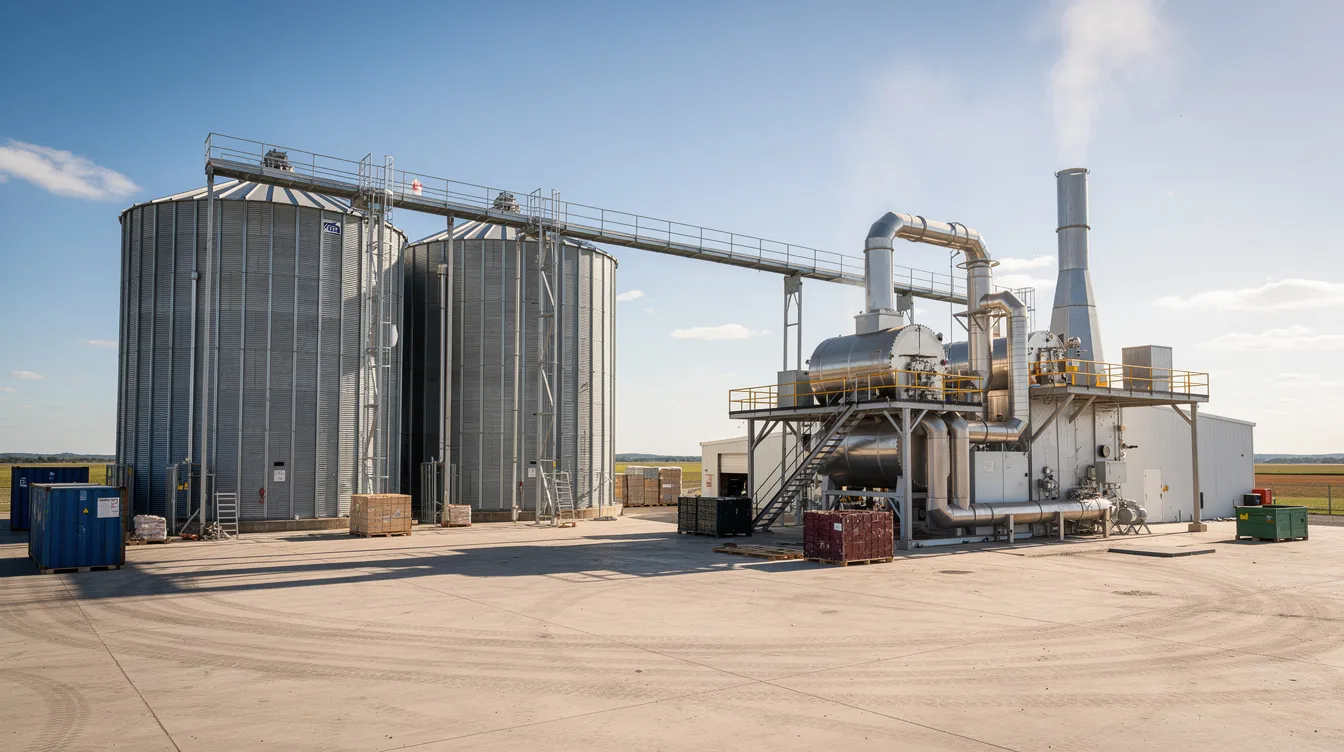
An integrated plant is designed to process raw gram and selected pulses through shared and product-specific unit operations within one facility. Sattu is produced by cleaning, roasting and pulverizing chickpeas into fine flour, while roasted chana follows a parallel but distinct production line ending in whole or split roasted product. Understanding how sattu is made – and where the production lines diverge – is essential for capacity planning.
- Common operations across all products: raw material intake, pre-cleaning using vibratory separators, destoning, grading by size, storage in silos, weighing and internal conveying systems.
- Roasted chana line: conditioning (if required), continuous or batch roasting, cooling conveyor, final grading, de-stoning, colour sorting, and packaging as whole or split roasted chana.
- Sattu line: roasting of gram, tempering or resting, grinding using an impact pulveriser, sieving through vibro sifters (where the product is sieved slowly through controlled mesh sizes to ensure uniform particle distribution), blending for flavoured or fortified variants, and packaging as roasted chana flour.
- Integrated pulse processing: cleaning and grading of other pulses such as masoor, moong or chana dal; optional dehusking, splitting or dry heat treatment for pulse snacks or pulse flours.
- Shared vs product-specific equipment: cleaning, grading, dust collection, laboratory, bulk storage and some packaging systems can serve multiple lines. Roasters, pulverisers, seasoning drums and specialised sattu making machines are typically product-specific.
- Important caution: not all pulses or snack variants can be processed on the same roaster or grinder without verifying temperature profile, residence time, allergen control and flavour carryover with machinery suppliers.
Why Consider an Integrated Roasted Chana and Sattu Manufacturing Project?
The commercial logic for integration rests on several factors, but the decision should be driven by validated demand and financial feasibility, not merely by the availability of machinery catalogues.
- Product diversification: the same raw material – chana – can generate roasted chana, plain sattu, flavoured sattu and pulse-based snacks, reducing dependence on a single product line.
- Shared infrastructure: common land, building, utilities, laboratory, quality control and material handling serve multiple SKUs, improving fixed-cost absorption.
- Improved machinery utilisation: roasters, grinders, packaging lines and compressors can be balanced across production schedules, subject to hygiene planning and changeover protocols.
- Multiple revenue streams: B2B bulk roasted gram, B2C packed sattu, institutional supplies to HORECA segments, private-label contracts and ready-mix manufacturers can be addressed simultaneously.
- Value addition: moving from raw pulses to roasted, ground and blended products increases unit realisation substantially. Similar principles of value addition apply in related sectors such as besan manufacturing or pulse dal milling.
- Key challenges: product-wise demand forecasting, separate storage to prevent flavour contamination, differing shelf life across products, dust control, allergen management during line changeovers, and more complex production planning.
- Essential principle: an integrated project must be backed by a realistic market plan and financial feasibility study rather than by equipment specifications alone.
Products Manufactured in an Integrated Processing Plant
The core and optional product range should be defined at the project planning stage to guide capacity design and machinery selection.
| Product | Main Raw Material | Key Processing Requirement | Typical Packaging | Potential Market |
|---|---|---|---|---|
| Roasted Chana (Whole/Split) | Unpolished chana | Continuous roasting, cooling, grading, colour sorting | Retail pouches, bulk 25–50 kg bags | Retail, wholesalers, namkeen manufacturers |
| Plain Sattu Powder | Roasted chana | Grinding, sieving | 200 g, 500 g, 1 kg pouches | Branded retail, institutional kitchens |
| Flavoured/Fortified Sattu Mix | Base sattu + sugar/jaggery, spices, premixes | Blending line, specialised packaging | Consumer-friendly pouches or bulk bags | Health food segment, e-commerce, modern trade |
| Roasted Pulse Snacks | Cleaned moong, masoor, chana mixes | Roasting, seasoning, nitrogen-flush packing | Pillow pouches | Snack brands, airline catering, canteens |
| Pulse Flours and Blends | Roasted/unroasted pulse flours | Milling, sieving, blending | Bulk sacks | Food manufacturers, bakery premix units |
The recommended approach is to commission with the base set – roasted chana and plain sattu – and phase in flavoured mixes, complex snacks and pulse flour blends after stabilising operations and cash flows.
Manufacturing Process and Integrated Plant Flow
The standard technological flow includes cleaning, roasting, dehusking, grinding and packaging. Moisture control is critical to prevent caking during processing, particularly before grinding and at the packaging stage.
Roasted Chana Flow: Raw Gram Receipt → Sampling & Quality Check → Pre-cleaning → Destoning → Grading → Storage → Conditioning → Roasting → Cooling → Final Grading & Sorting → Metal Detection → Weighing & Packing → Cartoning → Finished Goods Warehouse.
Sattu Flow: Raw/Roasted Gram Receipt → Cleaning & Destoning → Roasting → Cooling → Dehusking (if applicable) → Grinding/Pulverising → Sieving → Blending (for flavoured sattu) → Metal Detection → Packing → Storage.
Roasted Pulse Snacks: Cleaning and Grading → Soaking/Conditioning → Roasting/Drying → Seasoning → Cooling → Nitrogen-flush Packing → Cartons.
Food safety touchpoints include moisture checks before roasting and grinding, sieve analysis of sattu powder, microbiological testing on finished products, and packaging integrity verification. Dedicated production runs, allergen segregation and proper changeover cleaning between plain and flavoured lines are essential for quality control.
Environmental and worker-safety aspects include dust extraction and collection systems, proper chimneys for burners, noise control, PPE for staff, and compliance with state pollution control norms.
Plant Capacity Planning – Small, Medium and Industrial Scale
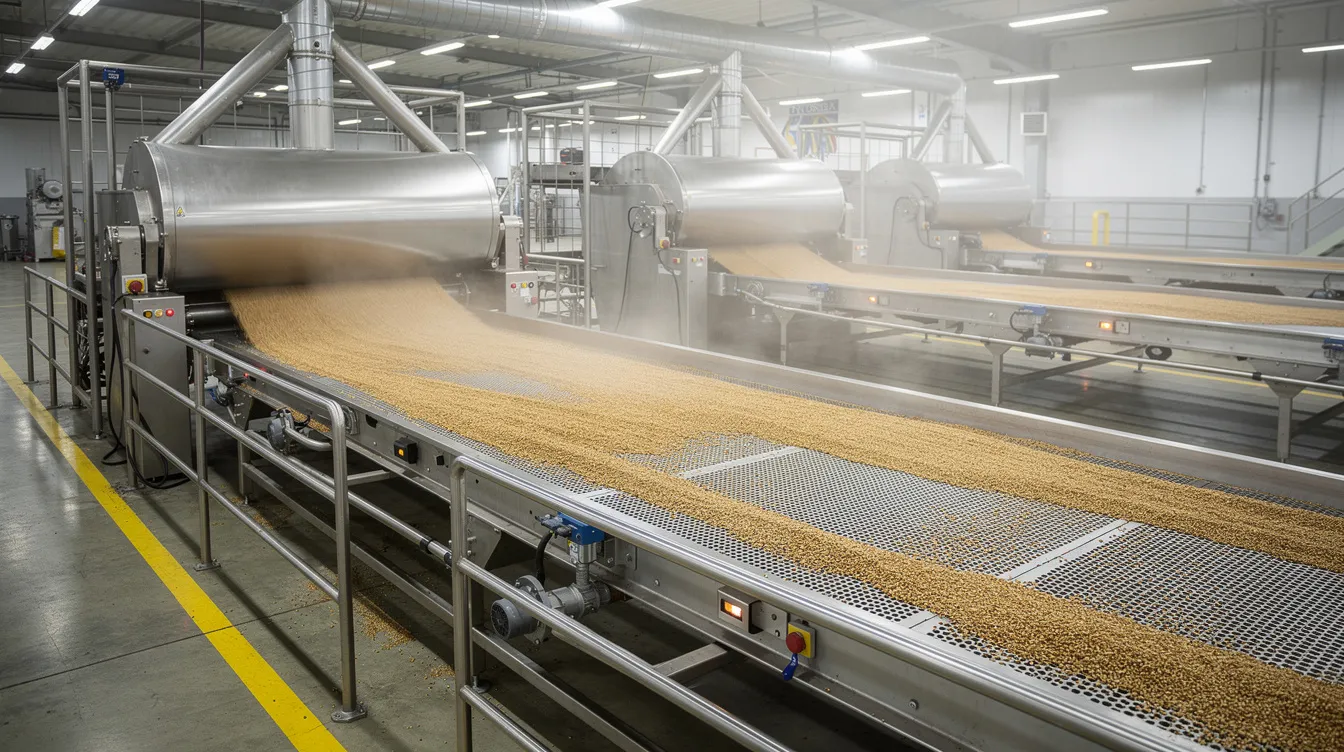
Plant capacity must be designed backward from market demand, raw material availability and targeted investment level, not simply from available machine sizes. A pulses processing plant may have an annual capacity of 50,000 MT at larger scales, but most integrated chana-sattu projects operate at substantially lower volumes.
- Key capacity parameters: tonnes per hour for cleaning, roasting and grinding; effective working hours per shift; number of shifts; 280–300 operating days per year for financial modelling.
- 1 TPH integrated line: suitable for sub-₹5 crore investment excluding land; approximate daily raw material requirement of 8–16 MT depending on shifts; production of roasted chana and sattu in a defined product mix.
- 2 TPH integrated line: dual or parallel roasters, higher grinding capacity, semi-automatic packing lines; indicative suitability for ₹8–10 crore investment depending on civil and utility costs.
- 5 TPH roasting and grinding complex: multi-line roasters, high-speed pouch and bagging machines, centralised utilities, extensive warehousing; project cost likely exceeds ₹15 crore with land and building.
- Bottleneck awareness: effective line capacity is often constrained by roasting time, cooling time or packing rates rather than nominal motor ratings of grinders.
Note: Integrated plant capacity cannot be calculated by simply summing individual machine throughputs. Production scheduling and product mix planning are essential for realistic throughput estimation.
Machinery Required for an Integrated Roasted Chana and Sattu Plant
Machinery used in sattu production includes roasters, grinders and packaging machines. A dry fryer, grinder and packing machine are essential for sattu production at any scale. The following table lists typical equipment categories.
| Machinery Group | Example Equipment | Function | Essential/Optional |
|---|---|---|---|
| Pre-cleaning & Grading | Vibratory pre-cleaner, de-stoner, gravity separator | Remove dust, stones, undersize grains | Essential |
| Roasting Systems | Continuous roaster / batch roaster (gas/diesel/electric) | Roasting of chana and pulses | Essential |
| Cooling & Conveying | Cooling conveyors, bucket elevators, screw conveyors | Bring product to safe temperature | Essential |
| Grinding & Pulverising | Impact pulveriser, hammer mill | Convert roasted chana into sattu flour | Essential |
| Sieving & Grading | Vibro sifter, plansifter | Control particle size of flour | Essential |
| Blending | Ribbon blender, double-cone blender | Mix sattu with flavours or micronutrients | Optional |
| Dust Collection | Pulse-jet bag filters, cyclones | Control emissions, reduce product loss | Essential |
| Packaging | Semi-auto/automatic FFS machines, multi-head weighers, band sealers | Pack roasted chana, sattu, snacks | Essential (automation level varies) |
| Quality Testing | Moisture meters, metal detectors, check weighers, lab equipment | Food safety and quality control | Essential |
Roaster machine prices for medium-scale units range from approximately ₹1.5 lakh to ₹2.7 lakh depending on capacity and material of construction. A full sattu plant machinery set for throughput around 800 kg/hr has been quoted at approximately ₹2.25 lakh by some manufacturers for basic configurations. Detailed technical specifications, capacity matching and food safety compliance should be confirmed through consultation with reputed machinery suppliers.
Land, Factory Building, Layout and Utilities
- Indicative land requirements: 0.5–1 acre for a 1 TPH line; 1–2 acres for a 2 TPH integrated plant; 3+ acres for a 5 TPH complex with warehousing and expansion provisions. These are planning ranges and vary by location.
- Key building blocks: raw material godown, pre-cleaning hall, roasting section with ventilation, grinding and blending room, packaging hall, finished goods warehouse, quality control laboratory, utility room, administrative block and staff amenities.
- Hygienic zoning: separation between dusty raw processing zones and clean packing zones; controlled access to blending and finished goods areas to support food safety standards.
- Utilities: electrical connected load estimation (200–400 kW for a 1–2 TPH facility), gas or biomass requirements for roasters, compressed air, water for cleaning and utilities, ventilation and lighting.
- Safety and compliance infrastructure: fire-fighting systems, emergency exits, earthing and lightning protection, pest control provisions, and compliance with local building bye-laws.
- Professional plant layout drawings showing material flow, minimising cross-traffic and allowing future expansion of additional roasting or packing lines should be prepared by qualified engineers.
Integrated Roasted Chana and Sattu Plant Project Cost in India
Machinery costs account for the largest portion of CapEx in most integrated food processing projects. Pulses processing plant setup cost includes both capital and operational expenditures, and distinguishing fixed project cost from total project outlay – which also includes working capital margin – is critical for bank term loan structuring.
All figures below are purely illustrative planning numbers, not quotations.
| Particulars | Scenario A (~₹5 Cr) | Scenario B (~₹10 Cr) | Scenario C (~₹15 Cr) |
|---|---|---|---|
| Land & Site Development | ₹0.50 Cr | ₹1.20 Cr | ₹2.00 Cr |
| Factory Building & Civil | ₹0.80 Cr | ₹1.80 Cr | ₹3.00 Cr |
| Plant & Machinery | ₹1.80 Cr | ₹3.50 Cr | ₹5.50 Cr |
| Electricals & Utilities | ₹0.30 Cr | ₹0.60 Cr | ₹1.00 Cr |
| Packaging Infrastructure | ₹0.20 Cr | ₹0.50 Cr | ₹0.80 Cr |
| Lab & QC Setup | ₹0.10 Cr | ₹0.20 Cr | ₹0.35 Cr |
| Pre-operative & Professional Fees | ₹0.15 Cr | ₹0.25 Cr | ₹0.40 Cr |
| Contingency | ₹0.25 Cr | ₹0.45 Cr | ₹0.70 Cr |
| Working Capital Margin | ₹0.90 Cr | ₹1.50 Cr | ₹2.25 Cr |
| Total Project Cost | ~₹5.00 Cr | ~₹10.00 Cr | ~₹16.00 Cr |
For reference, a Rajasthan government DPR for a roasted chana processing unit documented total project cost of approximately ₹1.34 crore for a modest-scale unit, while an EIRI DPR for a 2 MT/day sattu plant reported the total capital investment for a sattu plant is Rs. 35.56 Lac in a basic configuration. Automation level and product diversification can shift project cost dramatically between these reference points and the ₹15 crore range.
Investors should not rely on per-TPH thumb rules alone and should commission a project-specific DPR to account for support infrastructure, construction costs and quality control expenditure.
Means of Finance and Bank Loan Structure
- Typical funding mix: promoter contribution (equity and unsecured loans), term loan for fixed assets, and separate working capital limits (cash credit, WCDL). Working capital consists of recurring expenses for raw material, labor and utilities.
- Illustrative example for ₹10 crore project: 25–30% promoter margin, 70–75% term loan for fixed assets, separate working capital limit based on stock and debtors. Actual ratios depend on bank appraisal and project risk profile.
- Term loan structuring: typical moratorium period during construction and initial stabilisation, repayment tenure of 6–8 years, with instalments aligned to projected cash flows and DSCR.
- Interest rate assumptions: linked to MCLR or repo-linked lending rate plus credit spread based on borrower rating; impact on DSCR must be tested in projections.
- Securities and collateral: primary charge on plant and machinery and other fixed assets, hypothecation of current assets, possible collateral security and personal guarantees, equitable mortgage on land and building.
- A professionally prepared DPR, CMA Data and realistic financial projections significantly support lender confidence but do not guarantee sanction.
Raw Material Procurement and Inventory Planning
Chana (gram) is the primary raw material, followed by other pulses and ingredients including spices, salt, flavours and packaging material. Demand for processed pulses is increasing due to convenience, which supports consistent offtake but also intensifies competition for quality raw material.
- Procurement seasons: chana harvest arrives primarily during March–May across major growing states. Sattu and roasted chana manufacturers may need to stock raw material for 6–8 months of the year.
- Quality parameters: moisture level (ideally below 12–13%), foreign matter, broken and damaged percentage, colour and variety (desi vs kabuli) all affect roasting behaviour, yield and roasted chana flour quality.
- Procurement models: direct purchase from mandis and farmer groups, tie-ups with established traders, long-term supply agreements – each with distinct pricing and reliability trade-offs.
- Working capital implications: a ₹1–₹2 per kg change in chana cost can materially affect monthly and annual raw material bills. Operating costs are driven by raw material consumption at 88–92% of OpEx in typical pulse processing operations.
Investors should include sensitivity of raw material prices and inventory days in their feasibility study to realistically estimate working capital funding needs.
Roasted Chana and Sattu Production Cost per Kg
Illustrative Cost Sheet – Plain Sattu (per kg)
| Cost Component | Indicative Range (₹/kg) |
|---|---|
| Raw chana (adjusted for ~4.5% process loss) | 42–55 |
| Roasting fuel | 2–4 |
| Power consumption | 1–2 |
| Direct labour | 1–2 |
| Packing material | 3–6 |
| Factory overheads | 2–4 |
| Total Manufacturing Cost | 51–73 |
Illustrative Cost Sheet – Roasted Chana (per kg)
| Cost Component | Indicative Range (₹/kg) |
|---|---|
| Raw chana (adjusted for roasting loss) | 40–52 |
| Roasting fuel | 2–3 |
| Labour & packing | 3–5 |
| Factory overheads | 1–3 |
| Total Manufacturing Cost | 46–63 |
Manufacturing cost (ex-factory) should be distinguished from total cost including admin expenses, marketing, freight, trade margins and credit cost. Actual operational costs vary by location, energy source, plant efficiency, wages and packaging specifications.
Financial Projections, Profitability, CMA Data and DSCR
Financial projections assess capital investment and operating costs over a 5–7 year horizon. A DPR must outline the economics of the business through projected Profit & Loss accounts, balance sheets, cash-flow statements and key ratios.
- Illustrative revenue model: at 60–70% capacity utilisation, an integrated 2 TPH plant processing a mix of roasted chana and sattu could generate annual gross revenue in the range of ₹15–25 crore, depending on product mix and selling prices.
- Major cost heads: raw material consumption based on technical norms, direct wages, power and fuel, repairs, quality control, administrative overheads, selling expenses, interest and depreciation.
- Gross profit margins for pulses processing typically range between 8–12%, with profitability sensitive to raw material cost, capacity utilisation and selling price realisation.
- Break-even point for sattu production is estimated at approximately 39% of installed capacity in smaller configurations, as documented in published KVIC project profiles. The rate of return for the sattu processing project has been reported at 57% in basic DPR configurations.
- DSCR computation: average DSCR of 1.5–2.0x is generally expected by lenders; sensitivity analysis should test DSCR under varying utilisation assumptions (50%, 65%, 80%).
- CMA Data: banks in India require standardised CMA formats containing projected statements, working capital assessment based on holding norms for raw material, WIP, finished goods and receivables.
A DPR assesses financial viability, ROI and NPV, and outlines project-specific assumptions and financial assessments. Similar analytical frameworks apply to related food processing projects such as puffed rice plant financial projections.
Integrated Plant vs Standalone Sattu or Roasted Chana Plant
| Parameter | Standalone Roasted Chana | Standalone Sattu Plant | Integrated Plant |
|---|---|---|---|
| Initial Capital Investment | Lower | Lower | Higher |
| Machinery Complexity | Moderate | Moderate | Higher |
| Product Diversification | Limited | Limited | Significant |
| Quality Control Requirements | Standard | Standard | More extensive |
| Management Complexity | Simpler | Simpler | More demanding |
| Working Capital Intensity | Moderate | Moderate | Higher |
| Brand-building Effort | Focused | Focused | Multi-product |
| Scalability | Limited | Limited | Strong |
A standalone plant may be adequate where demand is concentrated in one product and the promoter wants to test the market. Integrated plants are better suited to experienced processors or those targeting regional and national brand strategies. Investors can also phase their investment – start with roasted chana and plain sattu, then add snack and flavoured lines once brand acceptance and cash flows stabilise.
Market Opportunities and Sales Strategy
Consumer demand for plant-based proteins is rising significantly, and sattu is often packaged in consumer-friendly pouches or bulk bags to serve diverse channels. It is no longer meat-alternative marketing but mainstream nutrition positioning, especially as the country’s awareness of traditional foods increases.
- Domestic markets: traditional strongholds in Bihar, Jharkhand, Uttar Pradesh, West Bengal and Madhya Pradesh for sattu; all-India demand for roasted chana as snack input; growing urban demand among health-conscious consumers.
- Sales channels: wholesale distributors, modern retail chains, kirana stores, online marketplaces, D2C e-commerce, institutional buyers including canteens, railways and corporate cafeterias.
- Private-label and contract manufacturing: supplying sattu and roasted chana flour to other brands, nutrition companies and ready-mix manufacturers.
- Branding strategies: regional language packaging, FSSAI-compliant nutrition claims, convenient pack sizes and strong shelf presentation to create brand success.
- Export caution: exports may represent an opportunity but should not form the core justification for a new plant without firm demand visibility, certifications and buyer relationships.
Statutory Approvals, Food Safety and Quality Compliance
A DPR includes regulatory procedures and compliance requirements relevant to the proposed facility. FSSAI licensing is necessary for food processing units in India. Key requirements include:
- Entity and registrations: company incorporation, Udyam registration for MSMEs, GST registration, trade licence and factory licence under the relevant state Factories Act.
- FSSAI: central or state licence depending on scale, compliance with food product standards, packaging and labelling regulations including nutrition labelling and allergen declarations.
- Pollution control: consent to establish and consent to operate from the state pollution control board; proper management of dust emissions and fuel combustion emissions.
- Fire safety: NOC where required, installation of hydrants, extinguishers, alarms and evacuation plans.
- Labour compliance: PF and ESI registration, minimum wages, health and safety provisions for factory workers.
- Voluntary certifications: HACCP, ISO 22000 or FSSC 22000 to support institutional and export business requirements.
- Documentation: SOPs, traceability records and batch-wise quality control measures should ensure product safety and compliance with standards.
Major Investment Risks and Sensitivity Analysis
A project report for an integrated roasted chana sattu plant needs key sections addressing risk. Quality control measures, market validation and financial stress-testing are non-negotiable.
Business risks: raw chana price spikes, below-expected capacity utilisation in initial years, slower brand acceptance, competition from established local brands, and credit risk from distributors.
Operational risks: roasting or grinding bottlenecks, equipment downtime, quality failures leading to product returns, and skilled labor availability.
Financial risks: higher interest rates, project commissioning delays leading to cost overrun and interest during construction.
Raw Material Price Sensitivity (Illustrative)
| Price Change (₹/kg) | Annual Additional Cost at 10,000 MT Throughput |
|---|---|
| +₹1/kg | +₹1.00 crore |
| +₹3/kg | +₹3.00 crore |
| +₹5/kg | +₹5.00 crore |
Capacity Utilisation Impact (Directional)
| Utilisation | EBITDA Direction | DSCR Direction |
|---|---|---|
| 50% | Under pressure | Below comfort |
| 65% | Moderate | Adequate |
| 80% | Healthy | Comfortable |
Project Report Bank incorporates such sensitivity scenarios in DPRs and financial models to help promoters and lenders understand downside and upside cases before investment.
How to Prepare a Bankable DPR for an Integrated Roasted Chana and Sattu Plant
A detailed project report must outline the economics of the business comprehensively. A DPR includes a detailed market overview and unit operations, covers raw material, utility and infrastructure requirements, and provides capital and operational expenditure analysis.
Key sections of a robust DPR:
- Promoter profile and experience
- Project concept and rationale
- Product mix and capacity planning
- Market and competition analysis
- Technical process and technology details
- Machinery list with quotations from suppliers
- Itemised project cost and means of finance
- Implementation schedule
- Projected profitability, cash flow, balance sheet
- Working capital assessment and CMA Data
- DSCR analysis, break-even, ROI and IRR
- Sensitivity analysis and risk mitigation
- Regulatory compliance requirements
Financial projections should be built on realistic, defensible assumptions supported by market data, machinery quotations and discussion with bankers – not optimistic projections from generic templates. While a bankable DPR improves transparency and speeds up appraisal, final loan sanction remains subject to each bank’s internal policies and credit assessment of promoters. Understanding the principles of realistic CMA Data is equally important for working capital funding.
Frequently Asked Questions
What is a practical minimum capacity for a commercially viable integrated roasted chana and sattu plant?
Micro units are technically possible, but serious B2B and B2C operators generally consider at least 0.5–1 TPH roasting capacity with scope to scale. Below this threshold, fixed cost absorption and brand-building economics become challenging for business requirements that involve institutional or modern retail sales.
Can I start with manual packaging and later upgrade to automatic packing lines?
Yes. A phased automation strategy is common. Many promoters begin with semi-automatic weighing and sealing, then invest in automatic FFS machines once volumes and product reliability justify the expenditure. The efficiency gains from automation become significant above 1 TPH.
Which parts of the plant must have the strictest quality control?
Roasting parameters (temperature and residence time), sieving of roasted chana flour, metal detection before packaging, and packaging integrity testing are the most critical control points. Microbiological checks on finished sattu are also essential to meet FSSAI standards and maintain brand reliability for clients.
How long does it typically take to implement such a project from DPR to commissioning?
For a medium-scale integrated plant, a realistic timeline is 12–18 months covering DPR finalisation, loan sanction, land and building construction, machinery procurement and installation, trial runs and FSSAI licensing. Delays in any stage – particularly civil construction and machinery delivery – can extend timelines by 3–6 months.
Can one DPR cover both bank term loan and investor funding discussions?
A well-structured DPR with detailed projections, sensitivity analysis and clear assumptions can support both lender and equity investor discussions. However, an investor-facing document may additionally require a business narrative, valuation analysis, comment on competitive positioning and an investor pitch deck, which professionals can prepare as supplementary resources.
Professional DPR and Project Finance Advisory by Project Report Bank
At Project Report Bank, we specialise in preparing customised bankable Detailed Project Reports, CMA Data and financial models for manufacturing and processing projects across India. Our work is led by CA Manish Gugliya, whose experience since 2006 in project finance and industrial feasibility studies helps promoters refine capacity, product mix, project cost and means of finance before committing large capital.
For roasted chana, sattu and pulse processing projects specifically, we provide project-specific DPR preparation with realistic assumptions, sensitivity and scenario analysis, working capital assessment for CMA Data, and DSCR-focused loan structuring support. Our approach is to create analysis that serves as a decision-making tool, not merely a document for submission.
Serious investors and project promoters are invited to share basic details – proposed capacity, location, approximate budget, target market and funding requirements – through the enquiry form or WhatsApp facility on www.projectreportbank.com for a professional discussion.
No assurance of bank loan approval, profitability or funding is given. Our services focus on robust analysis, documentation and project planning to support informed decisions and lender appraisal.
About the Author – CA Manish Gugliya
CA Manish Gugliya, FCA, DISA (ICAI), is a practising Chartered Accountant since 2006 and founder of Manish Gugliya & Company, Chartered Accountants, Ratlam, Madhya Pradesh.
- Core expertise: Detailed Project Reports, CMA Data, project finance advisory, industrial feasibility and viability studies, financial modelling, business valuation and investor documentation for manufacturing and processing projects.
- Sector experience: MSME and mid-sized industrial clients across food processing, agro processing, grain and cereal processing and pulse-based projects.
- Platform: Project Report Bank serves as an educational and professional advisory platform offering customised DPRs and analytical content for serious industrial investors and entrepreneurs planning capital-intensive manufacturing facilities.