Key Takeaways
- This article walks Indian entrepreneurs through every section of a bankable urad dal mill project report – from plant setup cost, machinery selection and processing recovery to financial projections, DSCR analysis and bank loan documentation for 5–50 TPD dal mill plant capacities.
- Costs for setting up urad dal processing mills vary widely depending on scale and automation level; typical project costs for a small-to-medium urad dal mill range from ₹15 lakh to ₹25 lakh for basic setups, while larger automatic plants can run into several crores.
- Financial projections, profitability estimates and recovery percentages mentioned here are illustrative and assumption-driven – they must be customised for each promoter’s location, raw material sourcing, market access and financing terms before committing capital.
- Project Report Bank, led by CA Manish Gugliya (FCA, DISA), prepares customised DPRs, CMA Data and financial models for urad dal mill projects across India.
- The article also covers licences, government schemes, working capital planning, sensitivity analysis, automation comparison, implementation timelines and FAQs specific to black gram processing plants.
Introduction – Urad Dal Mill Project Report & Business Opportunity in India
India is the world’s largest producer and consumer of pulses, and urad dal – commonly referred to as black gram – occupies a significant place in this ecosystem. From everyday household cooking to the food processing industry supplying papad, idli and dosa batter, vada mixes and ready-to-eat products, urad dal is a staple dietary protein source in India with steady daily consumption. For any entrepreneur evaluating a pulse milling venture, preparing a detailed urad dal mill project report is the first step toward understanding whether the business makes financial sense before committing to land, building or machinery.
A urad dal mill is a specialised dal mill plant that receives raw black gram and processes it through cleaning, dehusking, splitting, grading and optional polishing to produce whole and split urad dal for sale. The process involves multiple stages that determine finished product quality and, ultimately, profitability. While this article focuses specifically on urad dal processing, the concepts largely apply to integrated plants that may also handle moong dal, toor dal and chana dal with appropriate machinery adjustments.
From a Chartered Accountant’s perspective, the project report must demonstrate technical feasibility, market demand and financial sustainability before any machinery is booked or construction begins. A comprehensive project report includes market analysis, raw material procurement strategy and risk assessment – without these, even a well-equipped plant can struggle with poor capacity utilisation or working capital shortages.
Urad Dal Processing Industry and Market Opportunities
Pulses occupy about 21.9% of India’s total foodgrain area but contribute only around 7.9% of total foodgrain production by volume, according to NITI Aayog data. Within this basket, urad (Vigna mungo) is among the top pulses alongside gram, tur and moong. India’s urad production has fluctuated between roughly 2.08 and 3.49 million tonnes in recent years, as per Ministry of Food Processing Industries data, representing approximately 12–13% of total pulse output.
Major black gram producing states include:
- Madhya Pradesh (among the largest contributors, with significant acreage)
- Maharashtra, Uttar Pradesh and Rajasthan
- Andhra Pradesh, Karnataka and Tamil Nadu
Locating a dal processing plant near these procurement centres reduces logistics costs and improves margins, especially for operations that buy directly from mandis, FPOs or farmers during the harvest season.
Market demand for urad dal spans several segments:
- Household retail packs (1 kg, 5 kg) sold through kirana shops and modern retail
- Loose bulk sales to wholesalers and traders
- B2B supplies to hotels, restaurants, cloud kitchens and canteens
- Branded FMCG players seeking contract-processed or white-labelled dal
- Papad and snack manufacturing units, batter producers and instant food mix companies
- Export markets, particularly for premium graded and sorted product
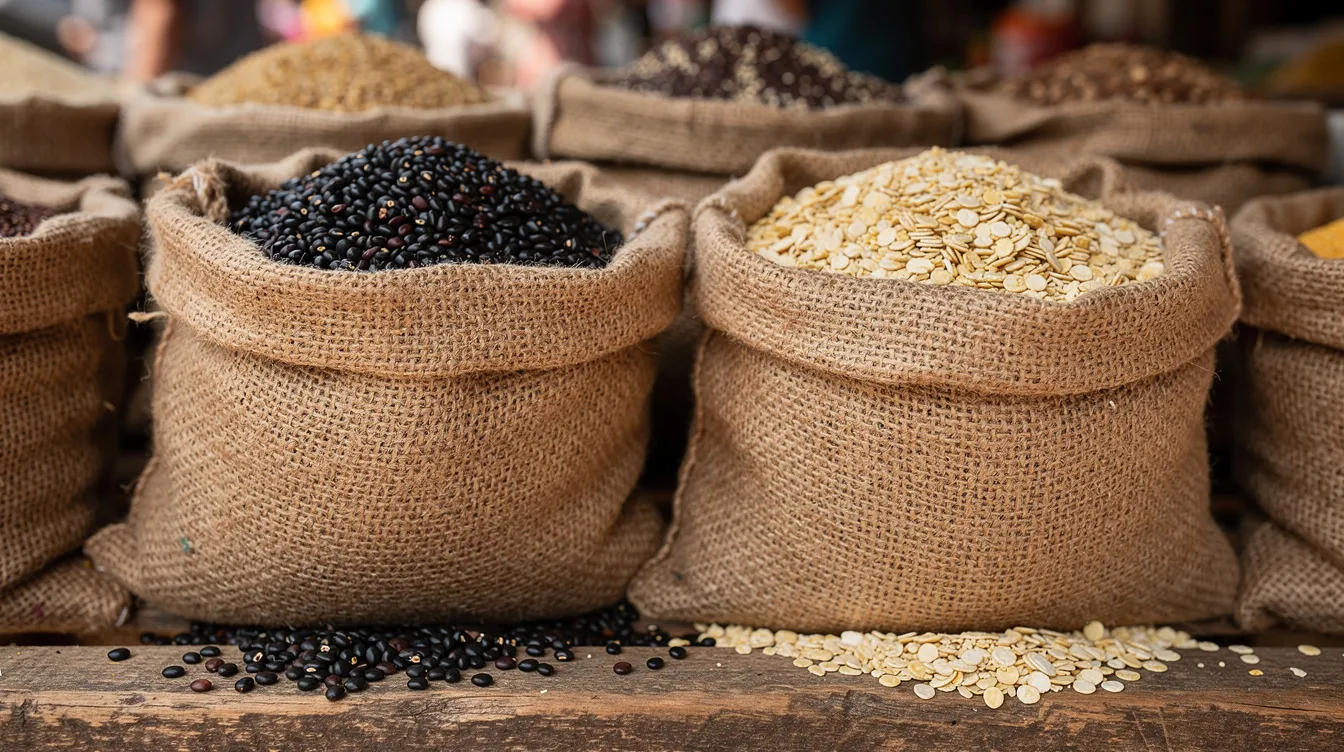
Product variants include whole urad (with and without skin), split urad (white and black), and polished versus unpolished dal. Polished white urad generally commands a premium in retail markets but involves additional processing cost and a slight yield reduction. Unpolished or “chilka” urad is preferred in certain regional and health-conscious segments. Margins differ materially between commodity bulk sales and branded, value-added packaging.
Competition comes from traditional small dal mills in rural areas, modern automatic dal mill plants, integrated food processing companies and branded pulses players. The processing margin structure depends on raw material procurement efficiency, recovery percentage, product mix and sales channel – not merely on installed capacity.
Procurement strategy is critical. Black gram prices can fluctuate sharply due to monsoon performance, import policy changes and MSP revisions. Round-the-year stocking requires higher working capital and good storage infrastructure, while seasonal buying concentrates price risk into a narrower window.
Many promoters also evaluate diversification into moong dal, toor dal and chana dal using a common processing plant with suitable adjustments. For a deeper look at this approach, the Integrated Multi-Pulse Processing Plant Project Report provides useful context on handling multiple pulses through shared infrastructure.
Urad Dal Mill Plant Capacity and Business Models
Dal mill plant capacity is typically expressed in TPD (tonnes per day) of raw black gram input, not finished dal output. Since urad dal processing plants can achieve 70–80% recovery of head pulses, the finished product output will always be lower than the raw input figure. Getting this distinction right in the project report is important for realistic revenue estimation.
Four indicative business models are commonly evaluated:
- 5 TPD plant: Suitable for a local or mandi-based miller targeting nearby wholesale and retail markets. Lower investment, simpler staffing, typically semi-automatic. Machinery investment often in the range of ₹35–55 lakh for equipment alone.
- 10 TPD plant: Regional packer or contract processor serving a wider distribution area. Moderate automation, 8–15 workers per shift. Machinery typically ₹60–90 lakh depending on configuration.
- 20 TPD plant: Suitable for a branded dal company or multi-state distributor. Higher automation, dedicated quality control, possible colour sorting. Machinery investment often ₹1.5–2.5 crore.
- 50 TPD plant: Integrated food processor or large exporter. High automation, near-continuous operations, full quality assurance including optical sorting. Machinery alone can cost ₹6–8 crore.
These are educational examples, not fixed recommendations. Actual configurations depend on market access, raw material availability and promoter resources.
Practical operating patterns vary:
- Single-shift (8–10 hours) is typical for smaller plants or new ventures
- Double-shift (16 hours) improves asset utilisation for mid-size units
- Near-continuous operations (20–24 hours) are feasible at 50 TPD but require robust maintenance schedules
Most DPRs assume 270–300 working days per year, accounting for maintenance, festivals, monsoon-related procurement gaps and machinery downtime. Theoretical 330+ operating days are rarely achieved in practice.
Banks expect realistic capacity utilisation ramp-up. A DPR for a 7.5 TPD dal mill under the Rajasthan Agricultural Competitiveness Project assumed 45% utilisation in Year 1, growing gradually to approximately 73% by Year 5 – a pattern that reflects ground reality more accurately than assuming 80% from Day 1.
For detailed capacity calculations across different scales, the article on Dal Mill Capacity Planning – 5 TPD, 10 TPD, 20 TPD & 50 TPD provides further guidance.
Urad Dal Mill Setup Cost in India – Components of Investment
Understanding the difference between fixed capital investment, total project cost and overall funding requirement is essential for a credible urad dal mill project report. Fixed capital covers land, building, plant and machinery, electricals and other permanent assets. Total project cost adds working capital margin and pre-operative expenses. The overall funding requirement is what the promoter actually needs to mobilise – through equity, debt and, where available, grants or subsidies.
Key cost heads in an urad dal mill project include:
- Land and site development: A 5–10 TPD plant may need 2,000–5,000 sq ft of built-up area with adequate open space; a 20–50 TPD plant typically requires significantly more, including approach road, power infrastructure and future expansion provision. Costs vary enormously by state and industrial zone.
- Factory building and civil infrastructure: Production hall with adequate clear height for elevators and conveyors, separate raw material godown, finished goods warehouse, office block, utility area and labour amenities. Shed height and layout directly affect material flow and installation efficiency.
- Plant and machinery: This is the largest single cost head. Analyses of machinery costs should include quotes and specifications from multiple suppliers rather than relying on a single estimate. As discussed above, a mini semi-automatic line may cost ₹5–15 lakh for machinery, while a fully automatic 20–50 TPD line can cost several crores. The article on Dal Mill Plant Setup Cost in India provides broader dal mill cost benchmarks.
- Electrical installation: LT panel, cabling, motor starters, internal wiring, earthing and lighting. A DG set may be needed in regions with unreliable grid power.
- Storage and material handling: Silos or bins (where used), bagging platforms, pallet racks, forklifts or hand pallet trucks, belt conveyors, bucket elevators and screw conveyors.
- Quality control equipment: Moisture metres, weighing balances, sample sieves and – for premium operations – a basic laboratory setup.
- Preliminary and pre-operative expenses: Company formation, DPR preparation, technical consultancy, interest during construction, trial-run expenses and initial marketing and branding costs.
- Contingency provision: Typically 5–10% of certain cost heads to cover price changes or design changes during project execution. This is not padding – it is a necessary buffer that banks also expect to see.
- Working capital margin: Funds for stocking raw black gram, running expenses for the initial months, and credit extended to customers, net of supplier credit.
For reference, the Rajasthan 7.5 TPD dal mill DPR cited earlier had a total project cost of approximately ₹809.99 lakh, including fixed capital of ₹736.32 lakh, preliminary expenses of ₹17 lakh and contingency of approximately ₹12.93 lakh. These figures are specific to that project and cannot be directly applied elsewhere, but they illustrate the order of magnitude for a mid-size plant.
Urad Dal Mill Machinery and Equipment Requirements
Machinery configuration differs by capacity and level of automation. Urad dal processing requires a structured approach in machinery selection and operational workflow because the black gram husk is mucilaginous and sticky, making dehusking more sensitive than for some other pulses. A standard commercial processing line integrates cleaning, dehusking, grading and polishing units into a coordinated sequence.
Key machinery and equipment includes:
- Raw pulse cleaning equipment: Receiving hopper, feed elevator, pre-cleaner with vibrating screen decks, magnetic separator for ferrous impurities and aspiration channel. Cleaning and grading sieves remove impurities and size the seeds. The cleaning process uses rotary or reciprocating screen cleaners to handle dust, chaff and foreign matter.
- Destoner and graders: Gravity destoner removes stones and heavy impurities. Rotary or vibro graders sort raw black gram by size before conditioning. Grading separates pulses by size and weight using vibratory sieves.
- Conditioning and drying equipment: Soaking or conditioning bins and dampening conveyors add controlled moisture to loosen husk from cotyledons. Mechanical dryers or tray dryers bring moisture to the optimum range. This step is critical – improper conditioning causes high breakage in urad.
- Dehusking machinery: A roller machine removes the tight outer husk from urad grains via abrasive rollers. Emery-coated roller machines, rubber roll shellers or impact-type dehuskers are used; multiple passes may be needed. Dehusking can achieve 50–75% removal in a single pass, with unhulled grains recycled for reprocessing.
- Dal splitting equipment: Splitters or impact mills used after partial dehusking to separate cotyledons. Dal milling involves cleaning, dehusking and splitting pulses into the finished product.
- Separation and aspiration systems: An aspirator uses a blower system to separate lightweight husk from heavier cotyledons. Cyclones, dust collectors and rotary sieves handle husk, brokens and fines. Dust control is important for worker safety and plant cleanliness.
- Polishing machines: Cylindrical or brush polishers improve surface finish for white urad dal. Some markets prefer unpolished product for a “natural” positioning, so this step is optional depending on product mix.
- Optical colour sorting: Modern colour sorters remove discoloured, insect-damaged or foreign grains to achieve high quality output. Essential for export or premium retail brands; can be deferred in basic local-market plants.
- Weighing and packaging equipment: Electronic weighers, semi-automatic or automatic form-fill-seal machines for consumer packs (1 kg, 5 kg) and bulk bags (25–50 kg). The final step includes packaging the processed dal into bags for distribution.
- Auxiliary systems: Bucket elevators, belt conveyors, screw conveyors, platforms, ducts and a central dust collection system. Plant layout must integrate these for linear material flow to ensure efficient operations.
To illustrate market pricing: a 3HP dal mill machine costs approximately ₹1,61,900 and processes 80–100 kg/hr, suitable only for micro-scale operations. A 1000 kg/hr urad dal processing plant processes black gram into various forms and can cost around Rs 9,50,000 for the processing machinery, while a 1000 kg/hr dal mill machine is available at approximately Rs 75,00,000 at higher automation levels. A 25 HP automatic urad dal mill plant has a capacity of 1 ton per hour and costs approximately ₹25,00,000. For high-capacity needs, a 2 ton/hr dal mill plant, designed for high-capacity processing, can cost around Rs 85,00,000. These are indicative market prices and will vary by supplier, configuration and year of purchase.
Dal mill machines process pulses into edible dal and, at higher automation levels, dal mill machines automate cleaning, dehusking and grading, ensuring high-quality output with minimal manual intervention and less breakage. For a more detailed comparison between semi-automatic and fully automatic configurations, the article on Fully Automatic vs Semi-Automatic Dal Mill and the guide on Dal Mill Machinery, Equipment & Cost are useful companion resources.
Urad Dal Manufacturing Process and Recovery Parameters
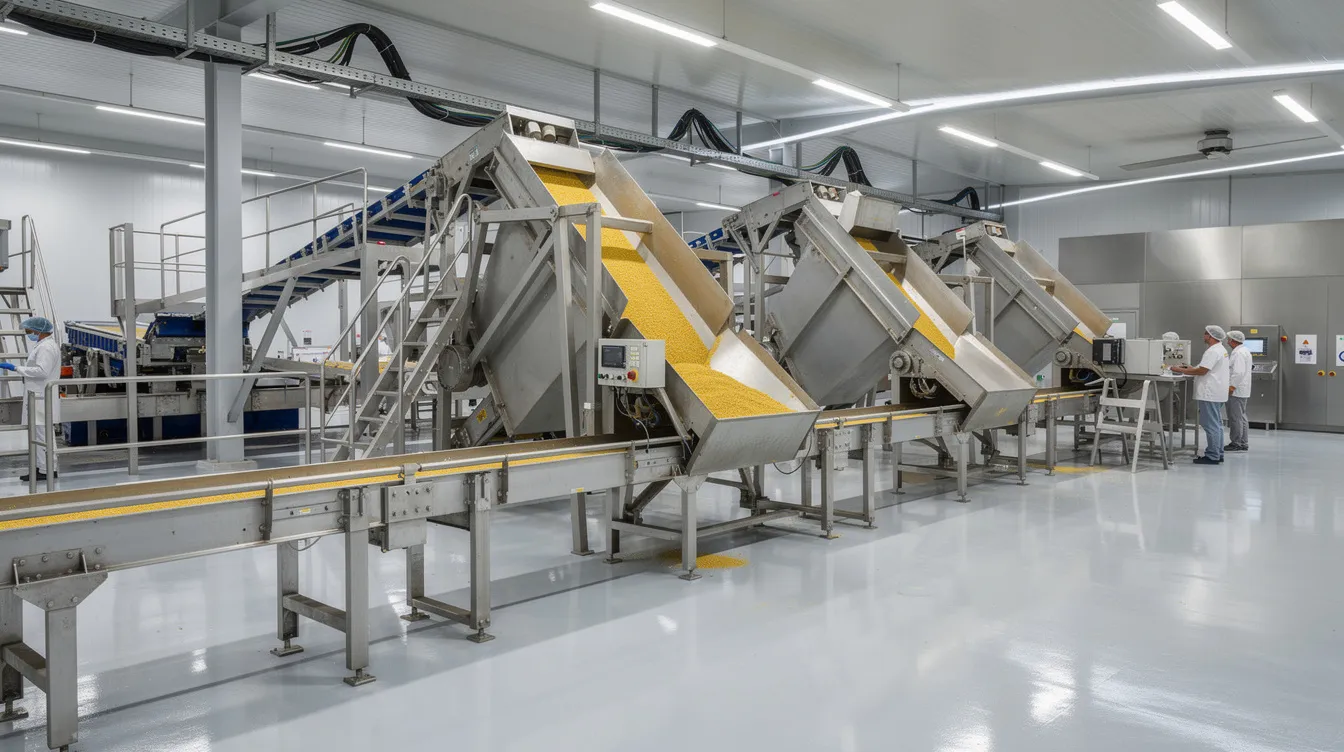
The typical milling process sequence for urad dal is: Raw Black Gram Receiving → Cleaning → Grading → Conditioning → Drying/Tempering → Dehusking → Splitting → Separation → Optional Polishing → Final Grading → Packaging. Operational procedures include raw material receiving, cleaning, milling, grading and bagging.
Key stages explained:
- Raw material receiving and quality checks: Moisture testing, admixture level assessment, damaged grain percentage, variety identification, grain size and colour evaluation. Quality control in milling must include inspection for moisture content and foreign matter in grains. Poor raw material directly reduces finished dal recovery.
- Cleaning and grading: Removal of dust, chaff, stones, sticks, metals and undersized grains. This protects downstream machinery from damage and improves final product quality. Urad dal processing involves stages like cleaning, grading and polishing at various points.
- Conditioning and tempering: Controlled addition of water and resting time loosens husk from cotyledons. Urad’s sticky husk makes this stage particularly sensitive – over-conditioning causes sticking, under-conditioning causes breakage.
- Drying: Mechanical dryers bring moisture to the optimum range before dehusking. Sun drying is still practised in some operations but offers less consistency and hygiene control.
- Dehusking and splitting: Multiple passes through emery or rubber roll dehuskers, with intermediate aspiration and sieving. Unhulled pulses are recycled for reprocessing. Urad dal mills utilize advanced technology for efficient processing at this stage to maximise recovery.
- Optional polishing: Used when the market demands polished white urad dal. The trade-off is between better appearance and slight nutrition loss; some consumers prefer unpolished dal.
- Final grading: Separates head dal, splits, brokens and fines for separate sale or reprocessing.
Recovery metrics for financial projections:
| Output Category | Typical Range (% of Raw Input) |
|---|---|
| Head dal (whole + splits) | 70–75% |
| Brokens / fines | 8–10% |
| Husk / bran | 10–15% |
| Process loss / foreign matter | 2–5% |
These ranges are influenced by raw material quality, machinery settings, number of passes and automation level. Dal mill machines ensure high-quality output when properly calibrated and maintained.
By-products are not waste: husk and bran are sold as cattle feed or fuel, and brokens go to snack manufacturers at lower prices, improving overall realisation per quintal of raw black gram processed.
The Dal Milling Process & Flow Chart article provides a more detailed multi-pulse process diagram for readers wanting a broader technical background.
Land, Factory Building and Utilities for an Urad Dal Mill
Land and plant layout planning significantly influence future expansion capability, operating efficiency and regulatory compliance for any dal mill plant.
- Land requirement: A small 5–10 TPD urad dal processing plant typically needs 3,000–8,000 sq ft of total plot area (including built-up and open space), while a 20–50 TPD plant may require 15,000–40,000 sq ft or more, depending on storage needs, parking, internal roads and green belt requirements. Industrial zoning is essential.
- Building layout: The production block should have adequate clear height (typically 15–20 feet minimum) to accommodate bucket elevators. Separate areas are needed for raw material godown, finished goods warehouse, QC lab, utility section (DG set, compressor), administrative office and worker amenities.
- Material flow: Receiving bay → cleaning section → dehusking/splitting → polishing/sorting → packing → finished goods storage, arranged to minimise back-tracking and manual handling.
- Power and electricity connection: A typical mill requires a power connection between 15 HP to 50 HP depending on scale. Larger plants need HT/LT connections. Standby genset provision depends on local grid reliability. Urad dal milling requires adequate utilities such as water and electricity for efficient operations.
- Water: Limited but essential for sanitation, staff facilities and conditioning/cleaning. Borewell or industrial water supply may be needed with basic treatment.
- Ventilation and safety: Natural and forced ventilation, dust extraction system, bag filters or cyclones, fire detection and firefighting equipment, emergency exits and compliance with local fire norms.
The guide on Dal Mill Land, Building & Plant Layout Requirements covers these aspects in greater detail.
Urad Dal Mill Project Cost and Means of Finance
A professional urad dal mill project report must clearly present both the project cost and the proposed means of finance in a structured format acceptable to banks.
Fixed capital components include: land (if purchased), site development, civil construction, plant and machinery, electricals, utilities, furniture and fixtures, initial vehicles and preliminary and pre-operative expenses.
Working capital margin covers: investment required for stocking raw black gram, running expenses for 1–3 months (power, wages, consumables, administration) and credit extended to customers, net of supplier credit.
Illustrative means of finance for a 10 TPD urad dal mill (assumptions-based):
| Source | Indicative Share |
|---|---|
| Promoter’s equity contribution | 25–35% of total project cost |
| Term loan from bank | 50–65% of fixed assets |
| Working capital finance (CC/OD) | As assessed by bank based on stock and receivables |
| Grant-in-aid / subsidy (if eligible) | Variable, not to be assumed in base case |
Banks typically expect a promoter margin of 20–30% or more, depending on project risk profile and lender policy. Term loans for agro-processing MSME units usually carry repayment tenure of 5–7 years including a moratorium of 6–12 months. Interest rates are linked to prevailing MCLR or EBLR; for reference, some banks offer food and agro-processing term loans at rates between approximately 9.15% to 11% depending on credit rating and security.
Working capital finance is usually structured as a cash credit or overdraft limit against stock and receivables. Drawing power depends on regularly updated stock statements and CMA Data.
Other funding sources may include unsecured loans from promoters or relatives, equity investors, or MSME/SIDBI schemes – but these must be validated against current scheme guidelines.
Financial Projections for an Urad Dal Mill (Illustrative 10 TPD Model)
Financial projections in a project report are scenario-based and should be customised. Financial modelling involves crafting projections on production costs, profit margins and investor returns tailored to the specific project. Below is a logical framework using a notional 10 TPD urad dal processing plant.
Core operating assumptions:
| Parameter | Assumption |
|---|---|
| Installed capacity | 10 TPD raw black gram input |
| Operating days per year | 280 days |
| Capacity utilisation (Year 1 → Year 5) | 50% → 75% |
| Head dal recovery | 72% |
| Brokens | 9% |
| Husk/bran | 14% |
| Process loss | 5% |
Input and output assumptions:
- Procurement price of raw black gram: to be based on prevailing mandi rates in the target region (assume an indicative range for modelling, with sensitivity tested at +10–15%)
- Selling price of head urad dal, brokens and husk/bran: based on current wholesale and retail market rates; premium for polished and graded product
- Revenue = quantity of each saleable product × assumed realisation per kg
Operating cost assumptions:
- Power and fuel: estimated kWh per tonne of raw material based on motor power and machine running hours
- Direct labour: operators, helpers, supervisors – typically 8–15 workers per shift for 10 TPD
- Repairs and maintenance: commonly estimated at 2–3% of machinery cost per annum
- Consumables, packing material, factory overheads and administrative expenses
Financial charges and depreciation:
- Interest on term loan and working capital estimated based on applicable bank rates
- Depreciation based on Companies Act or Income Tax norms as applicable
Illustrative 5-Year projection summary (for framework illustration, not guaranteed outcomes):
| Year | Capacity Utilisation | Turnover (₹ Lakh) | EBITDA (₹ Lakh) | PAT (₹ Lakh) | DSCR |
|---|---|---|---|---|---|
| 1 | 50% | Assumption-based | Moderate | Low / marginal | ~1.2–1.3x |
| 2 | 60% | Higher | Improving | Improving | ~1.3–1.5x |
| 3 | 70% | Growing | Stable | Reasonable | ~1.5–1.8x |
| 4 | 75% | Stabilising | Stable | Healthy | ~1.7–2.0x |
| 5 | 75% | Stable | Stable | Stable | ~1.8–2.0x |
Exact numbers depend entirely on raw material price, recovery, selling price and operating costs specific to the project. The DSCR indicates the ratio of cash available for debt service to the term-loan instalment and interest obligation.
Detailed, Excel-based financial modelling is part of customised DPR preparation by Project Report Bank rather than a downloadable template – because the value lies in testing assumptions, not filling in blanks.
Working Capital and Cash Flow Management in an Urad Dal Mill
Working capital can make or break a dal processing business. Thin processing margins and raw material seasonality mean that even a profitable plant can face liquidity stress if cash flow is not planned carefully.
- Raw material inventory: Many mills build higher black gram stocks during harvest season when prices are lower. The carrying cost must be weighed against price risk, and projected stock levels must align with bank drawing power limits.
- Finished goods inventory: Depending on whether the plant sells bulk or consumer packs, 7–21 days of finished stock may be maintained.
- Receivables and credit policy: Distributors and wholesalers often expect 15–45 days of credit. Higher sales through extended credit increase working capital needs and bad-debt risk.
- Payables and supplier credit: Realistic assumptions for credit periods from traders or farmers moderate net working capital requirements.
- Operating cycle: Days of inventory + receivables – payables define the cash conversion cycle, which underpins CMA Data and bank-sanctioned limits.
Professionally prepared CMA Data is essential for securing and maintaining working capital finance from banks. Project Report Bank’s CMA Data Preparation Services page explains this process in detail.
Rolling cash-flow forecasts, regular monitoring of stock rotation and disciplined alignment of procurement with sales help avoid liquidity crises.
Urad Dal Mill Profitability, ROI, IRR, DSCR and Payback Analysis
Profitability in an urad dal manufacturing plant is driven by processing margin per quintal, capacity utilisation, dal recovery rate, operating efficiency and finance costs – not by plant size alone.
- Gross processing margin: The difference between weighted average sale price of all outputs (head dal, brokens, husk) and raw black gram purchase price, per kg or per quintal, before overheads. Even small variations in recovery (say 70% vs 75%) materially affect this margin when multiplied across large volumes.
- EBITDA margin: EBITDA equals sales minus variable costs minus fixed operating costs (excluding interest and depreciation). Banks view stable EBITDA margins as a sign of business resilience.
- Net profit margin and ROI: Evaluated after interest, depreciation and tax. Return on investment is assessed over the project life in the DPR.
- Internal rate of return (IRR): The discount rate at which net present value of project cash flows equals zero. Higher IRR indicates a more attractive manufacturing project.
- DSCR: A DSCR above 1.3–1.4 times is generally considered acceptable for term-loan appraisal, though specific lender requirements vary. Average DSCR over the entire loan tenure matters more than any single year.
- Break-even analysis: The capacity utilisation percentage at which the plant covers all fixed and variable costs. A lower break-even point provides more margin of safety.
- Payback period: Time taken for cumulative net cash accruals to recover the promoter’s investment. Shorter payback with acceptable DSCR is attractive for both promoters and lenders.
Sensitivity analysis is essential. A DPR should test how profitability and DSCR change if raw black gram price increases by 10–15%, or if head dal recovery drops by 2–3 percentage points. Projects that remain viable under conservative assumptions are genuinely bankable; those that break under minor stress need restructured assumptions or a revised business plan.
Licences and Regulatory Requirements for Urad Dal Mill in India
Regulatory requirements vary by state, scale and processing method. Promoters must verify specific requirements with local authorities. Commonly applicable compliances include:
- Business entity registration: Proprietorship, partnership, LLP or private limited company, aligned with funding, ownership and tax planning objectives.
- Udyam registration: Benefits for eligible MSMEs in terms of easier access to schemes and bank finance. Registration is online through the official government portal.
- FSSAI licence or registration: To operate legally, food processing units must obtain FSSAI registration and other necessary licenses. The applicable category depends on turnover and capacity.
- GST registration: Required once turnover crosses the applicable threshold or for interstate supplies. Common regulatory approvals include GST registration and State Pollution Control Board consent.
- Factory Act and industrial approvals: Factory registration, labour law compliances, safety norms and standing orders where applicable.
- Pollution Control Board consent: Consent to Establish (CTE) and Consent to Operate (CTO) are typically required even for food processing plants with relatively low emissions; solid waste disposal norms apply.
- Fire NOC and building approvals: Local municipal or panchayat clearances, including trade licence where applicable.
- Legal Metrology: Compliance with packaged commodities rules for labelled weights and MRP on retail urad dal packets.
Government Schemes and Bank Finance Options for Urad Dal Mill Projects
Government scheme availability and terms change frequently. A prudent project report should treat subsidies as upside potential, not as the base for viability calculations.
- MSME-focused term-loan schemes are available through public sector banks, private banks and NBFCs under priority-sector lending norms. Specific product names and terms should be verified at the time of application.
- Food-processing related schemes under the Ministry of Food Processing Industries (such as PMFME) or state industrial promotion agencies may classify urad dal processing under the agro-processing category, potentially offering capital subsidy, interest subvention or infrastructure support. PMFME, for instance, provides credit-linked subsidies for eligible micro food processing enterprises.
- CGTMSE-backed collateral-free loans for eligible MSMEs may be available, subject to current coverage limits, guarantee fees and lender-specific policies.
- State-level industrial and agro-processing policies may offer incentives on stamp duty, electricity duty, SGST reimbursement or capital subsidy for units in backward districts or food parks. Always check the current state policy document.
Even when subsidies are likely, base project viability and DSCR calculations should be prepared without assuming subsidy receipts. Subsidies, when confirmed, can be shown as additional safety margin.
Urad Dal Mill Risks and Project Feasibility Assessment
A realistic urad dal mill feasibility study must test both technical and commercial assumptions before capital is committed.
- Raw material risks: Black gram crop failure due to monsoon issues, policy changes affecting MSP or imports, and high price volatility can compress or eliminate processing margins.
- Recovery and quality risks: Variation in grain size, moisture and variety can push head dal recovery below projections. Improper conditioning or machinery settings amplify this. Trial runs with actual raw material lots are essential before finalising assumptions.
- Technical and machinery risks: Downtime due to inadequate maintenance, poor installation or absence of skilled operators can reduce effective capacity. Latest machinery from reputable manufacturers with minimal maintenance requirements reduces this risk.
- Market and pricing risks: Entry of leading manufacturer brands, aggressive discounting, fluctuation in B2B contract prices and overdependence on a few large customers.
- Power and utility risks: Frequent outages and high tariffs in certain states increase cost per kg processed. DG backup raises operating costs further.
- Working capital and liquidity risks: Inability to fund seasonal stock build-up, delayed payments from buyers and over-leveraging short-term finance.
- Regulatory and compliance risks: Penalties or disruption if food safety, GST or factory compliances are not maintained.
These risks tie directly to the need for sensitivity analysis, DSCR stress-testing and professional feasibility assessment. Project Report Bank’s Project Feasibility Study Services page explains how these assessments are structured for manufacturing projects.
How to Prepare a Bankable Urad Dal Mill DPR
A bankable detailed project report for an urad dal mill must integrate market study, technical configuration, cost estimates and structured financial projections into a lender-friendly format.
- Promoter profile: Ownership structure, experience in agro-trading, dal processing or food manufacturing, financial background and contribution capacity.
- Market and technical feasibility: Raw material availability, competing mills, target customer segments, product positioning (polished vs unpolished, branded vs bulk) and chosen technology.
- Project cost and means of finance: Clearly itemised capital cost, working capital requirement, proposed term loan, working capital limits, promoter margin and other funding sources.
- Implementation schedule: Realistic timeline from land acquisition through building construction, machinery erection and commissioning to commercial production, typically presented month-by-month.
- Financial projections: 5–7 years of projected profit and loss, balance sheet and cash flow statements; separate schedules for term-loan repayment, interest and depreciation.
- Ratios and analysis: DSCR, break-even analysis, IRR, NPV, payback period, current ratio and projected coverage ratios expected by banks.
- Business valuation services: For promoters seeking equity investors, business valuation services assess the worth of the milling business based on revenue and asset value, complementing the DPR.
The Bank Finance DPR & Loan Proposal Assistance page explains how Project Report Bank structures DPRs to meet bank appraisal expectations.
Why Professional DPR Preparation Matters for Urad Dal Mill Projects
In my experience, dal mill promoters frequently underestimate working capital, overestimate dal recovery or adopt unrealistic sales prices in their initial planning. These gaps surface during bank appraisal and can delay or derail financing.
- An experienced Chartered Accountant translates technical information from machinery suppliers into coherent financial assumptions and risk-adjusted projections that lenders can evaluate.
- Aligning project cost, means of finance and repayment schedule avoids mismatches between capacity expansion plans, term-loan obligations and realistic market penetration timelines.
- Integrating CMA Data with the DPR ensures consistency between term-loan projections and working capital assessment – so that the bank branch, regional office and credit department receive a complete picture.
- Scenario and sensitivity analysis – preparing optimistic, base and conservative cases – tests resilience against raw material price hikes, lower recovery and slower capacity ramp-up.
Project Report Bank is a professional advisory platform led by CA Manish Gugliya, with over 20 years of expertise in DPR preparation, financial modelling and project finance advisory for MSME food processing and dal mill projects across India.
Comparison with Other Pulse-Specific Projects (Toor & Moong Dal)
Many urad dal mill promoters also evaluate toor dal or moong dal processing, either in the same plant or as separate lines. The economics, however, differ meaningfully by pulse.
- Technical differences: Recovery behaviour, husk adhesion, conditioning requirements and splitting characteristics vary. Toor dal generally has higher husk content and different conditioning needs; moong is easier to dehusk but has its own market dynamics. Popular varieties and demand patterns differ by region – toor is dominant in western and southern India, while urad and moong are consumed more broadly.
- Market differences: Pricing, seasonality and competition vary. Urad is less commonly imported than toor, which gives domestic processors a different competitive position.
- Integrated multi-pulse configuration: Common cleaning and grading sections can be shared, with separate dehusking and splitting parameters for each pulse. Product changeover requires careful calibration and some downtime.
For promoters comparing options, the Toor Dal Mill Project Report & DPR and Moong Dal Processing Plant Project Report & DPR provide pulse-specific analysis. Rice, cereal processing and grain milling projects (such as besan or wheat flour) also share some infrastructure concepts but have fundamentally different processing economics.
Automation Level: Automatic vs Semi-Automatic Urad Dal Mill
The automation choice directly affects urad dal mill project cost, manpower requirement, consistency of quality and achievable recovery rates. A high degree of automation improves milling efficiency and product consistency in processing units, but it also increases capital investment and depreciation.
- Semi-automatic plants: Lower capital cost, higher dependence on skilled labour, more manual bag handling and machine feeding. Suitable for smaller 5–10 TPD capacities or locations with affordable labour. Operation mode is simpler but quality consistency depends heavily on operator skill.
- Fully automatic plants: Higher initial investment but integrated conveyors, elevators, central control panels, better dust control and consistent throughput. Often preferred from 20–50 TPD upwards. An automatic dal mill ensures high quality production with lower per-tonne labour cost and less breakage through innovative technology in material handling.
- Hybrid configurations: Partially automated material handling with semi-automatic bagging. This optimises budget while improving productivity over fully manual setups.
- Impact on financial projections: Automation improves per-tonne operating costs and product quality but increases depreciation and interest expense. Detailed financial modelling is needed to compare both options side by side for the specific project’s scale and market.
Project Implementation Planning and Timelines
Even a financially viable urad dal mill project can face delays and cost overruns without clear implementation planning.
Major implementation stages and indicative timelines:
| Stage | Indicative Duration |
|---|---|
| Project conceptualisation, DPR and financial closure | 2–3 months |
| Land acquisition or lease finalisation | 1–3 months |
| Approvals and building plan sanction | 1–2 months |
| Civil construction | 4–6 months |
| Machinery ordering, manufacturing and delivery | 3–5 months |
| Installation, erection and commissioning | 2–3 months |
| Trial runs and commercial launch | 1–2 months |
Some stages can overlap. Strong project management and coordination between civil contractor, machinery supplier, electrical contractor, colour sorter vendor and packaging machinery company are essential to avoid bottlenecks.
Pre-launch activities include recruitment and training of operators, trial processing with different lots of black gram to validate recovery assumptions, product testing, FSSAI labelling approvals and initial marketing tie-ups with distributors and wholesalers.
Frequently Asked Questions – Urad Dal Mill Project Report & DPR
What minimum capacity is practical for a new urad dal mill in India?
Very small mini dal mills below 2 TPD can serve hyper-local markets but struggle with economies of scale. A 3HP dal mill machine costs approximately ₹1,61,900 and processes 80–100 kg/hr – adequate only for micro-scale or trial operations. Most bank-funded projects start at 5 TPD or above, where unit processing cost becomes more competitive and the business can support term-loan repayment. First-time promoters targeting local or regional markets often find the 5–10 TPD range offers a practical balance between investment and viability.
Can the same urad dal mill process both polished and unpolished products?
Yes. A single processing line can produce both polished and unpolished urad dal by adjusting process steps. For unpolished batches, the product bypasses the polishing machines and goes directly to final grading and packaging. The DPR should reflect this flexibility in the product-mix assumptions. FSSAI labelling requirements differ for “polished” versus “unpolished” dal, and branding must align with how the product is actually processed.
How should a promoter choose between leasing and buying industrial land for a dal mill?
Freehold land offers collateral value for bank loans and long-term security but requires higher upfront capital. Leasehold arrangements reduce initial outlay but may limit collateral availability and complicate financing. Long-term lease agreements (typically 15–30 years with renewal options) are often acceptable to banks, provided the lease is registered and the terms are documented. The choice should be reflected accurately in the project cost, security structure and DPR documentation.
Is it necessary to include a colour sorter in a small urad dal mill?
For a basic B2B or local market plant, a colour sorter can be deferred initially. However, if the plant targets premium retail brands, export quality or large institutional buyers, colour sorting becomes commercially essential – it delivers the finest dal with minimal discolouration, which commands better prices and fewer rejection complaints. The DPR can be structured with a phased investment plan, adding high-end equipment once the business stabilises and cash flow permits.
How frequently should financial projections be updated after the plant starts?
Promoters should review actual versus projected performance at least quarterly, revising working capital, profitability and DSCR estimates based on real data from the urad dal plant. Ongoing financial monitoring helps in discussions with banks for limit enhancement, restructuring or expansion financing. Updated projections also support privacy choices around financial disclosures to investors or partners and ensure the business remains aligned with its original plan or justified departures from it.
Conclusion and Professional Assistance from Project Report Bank
A urad dal (black gram) processing plant can be a robust MSME or mid-size manufacturing opportunity when raw material sourcing, dal recovery, plant capacity, working capital and market linkages are analysed carefully in a professional urad dal mill project report. The food processing industry in India continues to develop, with demand for quality-assured pulses at affordable prices growing across household, food service and industrial segments. Whether the promoter plans a 5 TPD semi-automatic plant in rural areas or a 50 TPD fully automatic dal mill plant serving national markets, the fundamentals remain the same: procurement efficiency, processing recovery, operating cost control and disciplined cash flow management.
The key to a bankable urad dal mill DPR is conservative assumptions, transparent cost estimates, realistic DSCR and a clear demonstration of the promoter’s execution capability. Every numerical assumption – from raw pulses purchase price to head dal sales realisation, from capacity utilisation ramp-up to electricity connection costs – should be defensible in front of a banker, an investor or the promoter’s own assessment of speed and productivity targets.
Project Report Bank, under CA Manish Gugliya (FCA, DISA, ICAI), supports entrepreneurs with customised DPRs, CMA Data, detailed financial projections, bank loan proposal assistance and project feasibility studies specifically tailored to urad dal and integrated dal mill projects across India. If you are a serious promoter evaluating a black gram processing plant project, initiate a WhatsApp-first or email enquiry for professional DPR preparation, bank finance advisory and end-to-end financial documentation support.