Key Takeaways
- A puffed rice manufacturing plant project report is a bank-focused DPR covering technology, plant setup, project cost, means of finance, and 5–7 year financial projections with DSCR and CMA Data-not a simple business summary.
- Viability depends on rice sourcing, process selection (traditional sand roasting vs. modern puffing machine), realistic capacity planning, and assured sales channels-not just low machinery cost.
- Fixed “one-size” investment figures are misleading; actual project outlay varies widely by capacity (micro to automated plant), location, automation level, and product mix.
- A professionally prepared DPR by a Chartered Accountant improves the quality of decision-making and bank appraisal but never guarantees term loan approval or profitability.
- Project Report Bank, led by CA Manish Gugliya, provides customised, bankable DPRs, financial modelling, and project finance advisory for puffed rice and murmura manufacturing plants across India.
Introduction – Commercial Potential of Puffed Rice & Why You Need a DPR
I am CA Manish Gugliya, FCA, DISA (ICAI), a practising Chartered Accountant with over 20 years of experience in project finance, DPR preparation and manufacturing project advisory. A puffed rice manufacturing plant project report is often the first document an entrepreneur needs when planning a commercial murmura unit-whether for a bank term loan, investor presentation or internal feasibility assessment.
Puffed rice-known as murmura in Hindi, muri in Bengali, kurmura in Marathi-is a mass-consumption cereal snack used across India in bhel puri, chaat, namkeen mixtures, breakfast mixes and value added products. India produces over 100 million tonnes of rice annually, providing an abundant raw material base. Puffed rice commands strong demand in both national and international markets, and as a popular low-cost breakfast cereal and snack, it also offers various health benefits including the potential for lowering cholesterol levels.
Setting up a puffed rice manufacturing plant requires market research and financial planning. Machinery alone does not determine viability. Key considerations include raw material sourcing and technology selection, production capacity, working capital, market linkages and financial structuring. This article serves as a hub overview covering major technical, commercial and financial aspects, with references to 15 in-depth supporting guides on ProjectReportBank.com.
Puffed Rice & Murmura Manufacturing Business in India
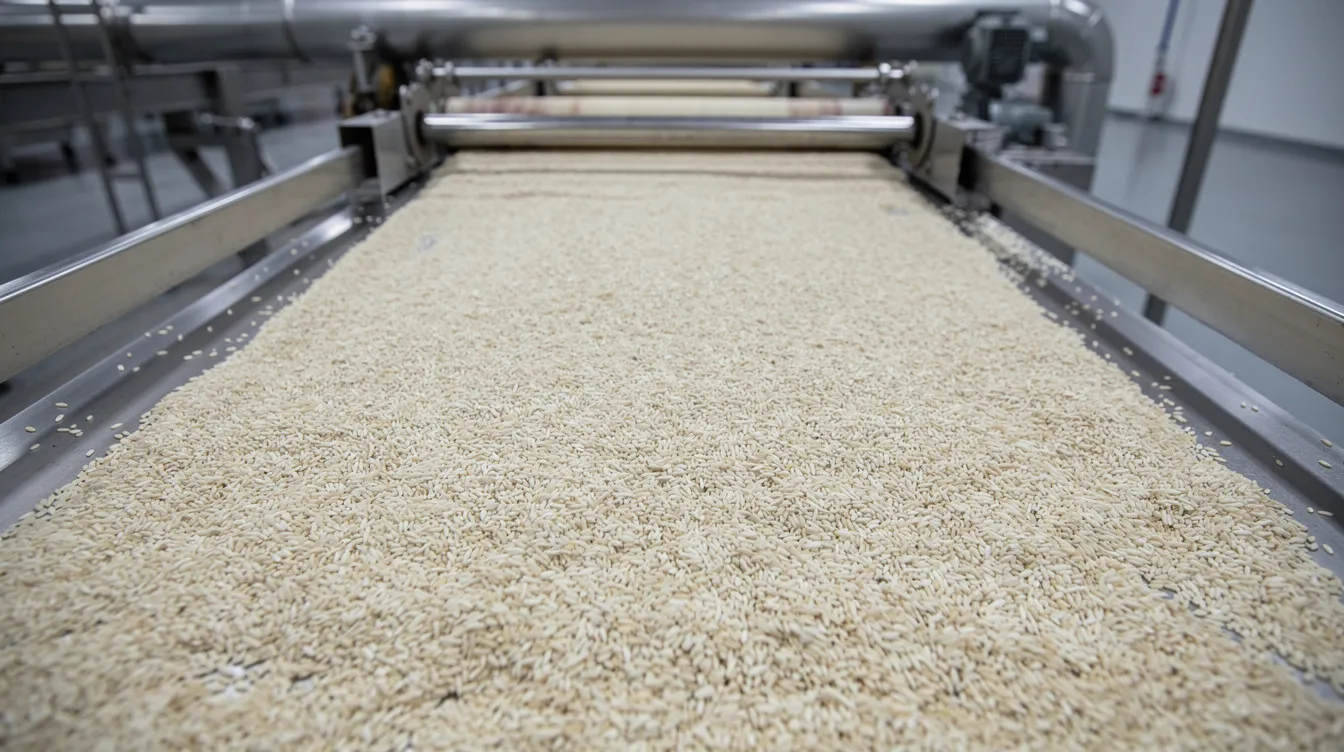
Puffed rice is a low-density, ready-to-eat product obtained by puffing parboiled or raw rice grains using thermal energy. The food processing industry for puffed rice in India is largely fragmented, with thousands of small units alongside some organised medium and large plants. India’s snack market reaches ₹40,000 crore, and growing demand from street-food vendors, snack manufacturers, packaged-food brands and health-conscious consumers sustains year-round consumption.
Regional consumption is particularly strong in eastern states (West Bengal, Odisha, Bihar, Assam), Chhattisgarh, Jharkhand, Maharashtra, Karnataka and parts of southern India. Product variants include plain puffed rice, masala or flavoured murmura, jaggery-coated snacks and diet mixes. Even a small murmura unit can earn ₹25,000–₹50,000 per month when operated efficiently with stable local demand.
Common business models include:
- Small murmura unit supplying local wholesalers and bhel vendors
- Semi-automatic factory supplying loose puffed rice in 20–25 kg bags
- Contract packer for regional FMCG brands
- Own branded retail packs for kirana and modern trade
- Online D2C brand selling flavoured or healthy variants
Location near rice mills and paddy-producing belts reduces raw material costs and freight. The country’s extensive rice production infrastructure gives Indian manufacturers a natural advantage as both producers and potential exporters.
What Is Included in a Puffed Rice Manufacturing Plant Project Report?
A proper project report-or detailed project report (DPR)-is a structured technical and financial document serving dual purposes. For the entrepreneur, it is a decision tool to test feasibility before investing. For lenders and investors, it is an appraisal document to evaluate viability, risks and repayment capacity. A comprehensive project report serves as a blueprint for technical feasibility and is essential for accessing bank loans and subsidies. Project reports are often required for bank loans or government subsidies.
A DPR should follow standard sections including executive summary, market analysis and financial projections. It should also cover a detailed business plan and product range.
| Key DPR Chapter | Primary Purpose for Bank / Investor Appraisal |
|---|---|
| Project at a Glance | Quick summary of capacity, cost and promoter details |
| Market Potential | Demand assessment and competitive landscape |
| Manufacturing Process | Technical feasibility and technology justification |
| Plant & Machinery | Equipment specification and supplier basis |
| Project Cost | Total investment including fixed and working capital |
| Means of Finance | Equity-debt structure and funding sources |
| Financial Projections | Revenue, cost, profitability, cash flow over 5–7 years |
| DSCR Analysis | Loan repayment capacity assessment |
| Risk & Sensitivity | Stress-testing under adverse scenarios |
Puffed Rice Manufacturing Process & Technology Selection
Multiple manufacturing methods exist for puffed rice production, and technology choice directly affects quality, yield, fuel cost and manpower requirements. Puffed rice manufacturing typically requires cleaning, soaking, puffing, and packaging processes. Quality control in puffed rice production involves monitoring moisture and processing conditions to achieve uniform puffing and crispness.
Typical process flow:
Raw Rice → Cleaning & Destoning → Conditioning / Soaking → Drying / Tempering → Puffing → Cooling → Grading & Sieving → Optional Flavouring → Weighing & Packaging → Storage & Dispatch
Traditional sand roasting uses iron kadais with heated sand at approximately 230–275°C. Skilled workers stir rice with hot sand to achieve expansion without burning. This approach involves higher manual labour but lower initial investment.
Modern puffing machine systems-including batch puffers, continuous roasters and gun puffing units-offer more uniform puffing, better scalability and reduced fuel consumption. Extrusion-based methods, where rice is processed under heat, steam and pressure before sudden release, create popped rice with consistent expansion ratios.
Technology choice impacts yield (kg of finished product per kg of rice input), fuel usage, labour intensity and quality consistency. For a detailed explanation, refer to the detailed puffed rice manufacturing process and flow chart.
Puffed Rice Plant Machinery & Equipment Requirements
A puffed rice plant is more than just a single puffing machine. Machinery selection must match proposed capacity, technology and product mix. Murmura production requires a rice puffing machine and sealing machine at minimum, along with cleaning, grading and material-handling equipment. Individual puffed rice machines cost around ₹65,000 to ₹1,10,000 each, while a small murmura unit needs ₹2–5 lakh for basic machinery setup.
Major equipment categories:
- Cleaning and destoning machines, storage bins and conveyors
- Soaking tanks and dryers for rice conditioning
- Puffing machine (sand-roasting roasters, continuous puffers or gun puffing units)
- Cooling conveyors, sieves and grading equipment
- Flavouring mixers and seasoning drums (for value-added variants)
- Weighing and packaging lines (semi-automatic to automatic)
- Quality-control instruments (moisture meters, weighing balances)
Machine configuration differs substantially between micro units, semi-automatic medium plants and large automatic puffed rice plants. For supplier-level cost breakdowns, see the guide on detailed puffed rice and murmura plant machinery cost.
Production Capacity Planning for a Commercial Murmura Plant
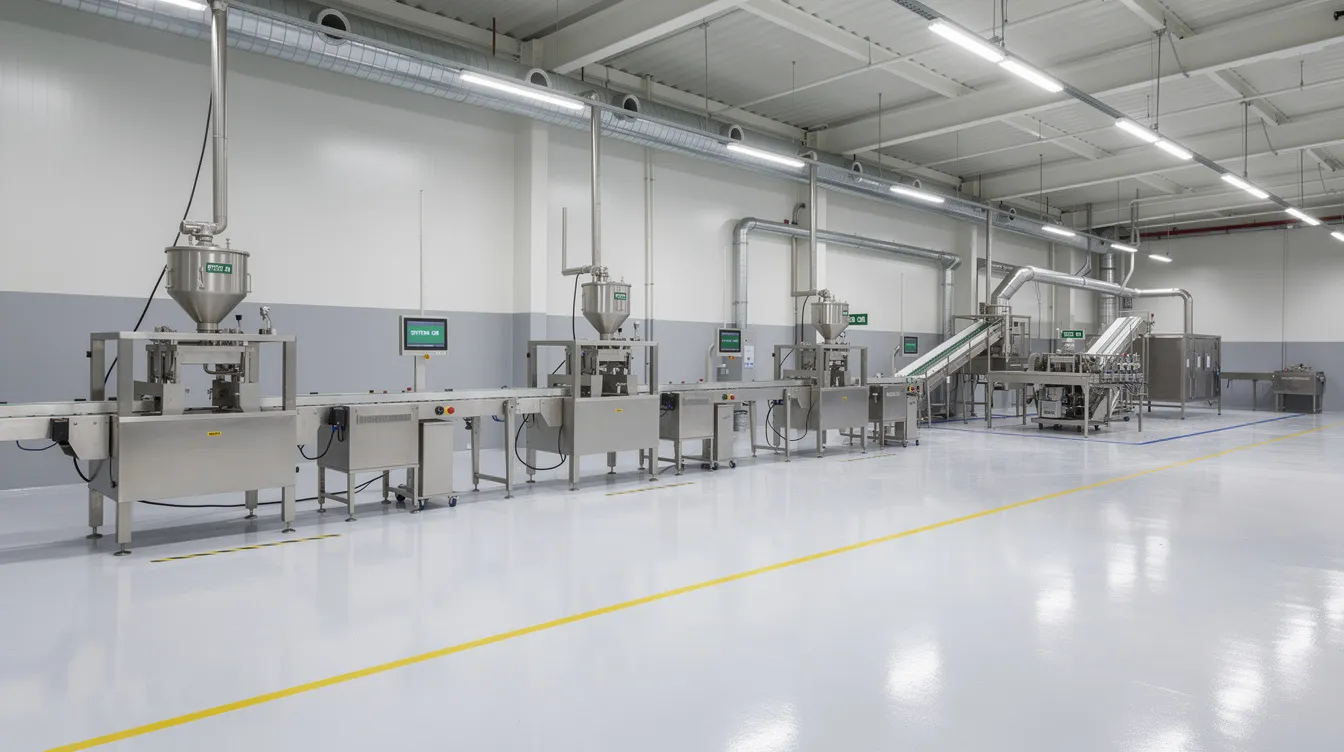
Installed or rated capacity (kg/hour as per machinery specification) differs from practical achievable production after accounting for downtime, changeovers and maintenance. Murmura making machines can produce 200 kg/hr to 1 ton/hr depending on configuration.
Key planning dimensions:
- Number of shifts per day (typically 1–3 shifts of 8 hours)
- Operating days per year (often 250–300 days)
- Capacity ramp-up: lower utilisation in Year 1 (often 50–60%), rising to 70–80% in subsequent years
Banks routinely challenge unrealistic 90–100% utilisation assumptions in the first year. Overstated production capacity leads to inflated revenue projections and weakened DSCR credibility. For detailed planning methodology, see puffed rice plant capacity planning and production capacity.
Land, Building, Factory Layout & Infrastructure
A hygienic, logically planned factory layout is critical in food processing to maintain product quality and regulatory compliance. Unidirectional material flow-from raw material entrance to finished goods dispatch-minimises cross-contamination.
Key considerations include separation between dusty, hot roasting areas and clean packing areas, proper ventilation and exhaust systems, adequate plot size for current operations and future expansion, and compliance-ready flooring, drainage and lighting. Infrastructure needs cover electrical connections sized for production load, water storage, fuel storage (LPG bullets or alternative fuel systems) and internal roads. For layout planning guidance, refer to land, building and plant layout requirements for a puffed rice plant.
Raw Material Requirement & Procurement Planning
Rice quality, moisture content, variety and price are the single largest technical and commercial drivers for a puffed rice manufacturing unit. High-starch, medium-grain rice varieties are preferred for puffed rice production, as they yield better expansion and crispness. The report must cover raw material requirements and costs comprehensively. Raw materials also include sand or approved roasting medium, packaging materials, and optional ingredients like salt, spices, edible oil and jaggery for flavoured variants.
Procurement strategy should address sourcing from local rice mills or mandis, seasonal price variations, storage conditions to preserve moisture levels, and yield assumptions. Losses from broken grains and unpuffed kernels directly affect raw material costs per kg of saleable output. For comprehensive planning, see raw material planning for puffed rice and murmura manufacturing.
Utilities, Fuel, Power & Manpower
The required utilities for a puffed rice plant include power and water supply, along with thermal energy for the puffing process. Murmura production involves using electric or LPG-fired puffing machines, though alternative fuels such as agro-waste or producer gas are increasingly adopted.
Manpower planning should cover production supervisors, machine operators, helpers for puffing, grading and packing stages, quality-control personnel, and administrative staff. Utility and manpower costs should be clearly separated into fixed and variable components in the DPR. For detailed requirements, see puffed rice plant utilities, power, fuel and manpower requirements.
Puffed Rice Manufacturing Plant Project Cost in India
There is no single fixed investment amount for a puffed rice plant. The project cost for a puffed rice plant must include fixed and working capital assessments, and investments should include machinery, utilities, and operational costs. Startup investment for a small murmura unit is ₹2–5 lakh, while semi-automatic medium plants may require ₹20–50 lakh and large automatic plants can exceed ₹50 lakh to ₹1 crore.
| Cost Head | Description |
|---|---|
| Land & Site Development | Purchase or lease, levelling, boundary |
| Building & Civil Works | Factory shed, office, storage, utilities |
| Plant & Machinery | Puffing line, handling, grading, packing |
| Electricals & Utilities | Internal electrification, panels, genset |
| Miscellaneous Fixed Assets | Furniture, lab equipment, vehicles |
| Pre-operative Expenses | Formation, legal, interest during construction |
| Contingency | Cost-escalation provision |
| Working Capital Margin | Stocks, receivables, minimum cash balance |
How much investment is needed depends entirely on capacity, automation, location and scope. For structured project-cost estimation, see puffed rice and murmura plant project cost and means of finance.
Means of Finance & Capital Structure
Means of finance covers how total project cost will be funded. Principal components include promoter equity, term loans, and potential subsidies under schemes such as PMFME (which offers 35% capital subsidy for upgrading micro food processing units), PMEGP (which offers up to 35% subsidy for murmura units, with SC/ST entrepreneurs receiving a 35% enhanced PMEGP subsidy), and state-specific food processing policies.
Banks assess whether the promoter’s stake demonstrates sufficient commitment and margin of safety. Financing terms-interest rate, repayment period, moratorium-directly influence cash flow and DSCR. There are no universal percentages guaranteed across all lenders; each bank follows its internal policies.
Revenue Model, Product Mix & Marketing Strategy
Revenue planning requires market analysis assessing the demand-supply gap and target consumer segments. Products may range from plain puffed rice in bulk bags for bhel vendors and namkeen manufacturers to branded retail pouches, flavoured murmura variants, and premium diet or organic mixes suitable for making health-focused snacks and export.
Pricing strategy depends on raw material costs, competition and brand positioning. B2B bulk supply operates on lower margins but higher volumes; branded retail packs command better price realisation but involve higher packaging and marketing costs. Credit terms to distributors affect working capital substantially. For detailed revenue planning, see puffed rice and murmura revenue model, product mix and market strategy.
Operating Cost & Cost of Puffed Rice Production
The DPR should distinguish variable costs (rice, sand, fuel, packaging, direct labour), fixed costs (salaries, rent, administration, insurance), non-cash costs (depreciation) and financing costs (interest). Cost per kg calculation at realistic capacity utilisation determines whether projected selling prices can create adequate margins. Gross margins of 30–50% are achievable on plain murmura when rice sourcing is efficient and process losses are controlled.
Major cost drivers include rice input price and puffing yield, fuel consumption per kg of finished product, labour intensity and packaging material costs. For detailed cost-structure analysis, refer to puffed rice plant operating cost and cost of production.
Profitability & Break-Even Analysis
Profitability analysis should cover gross contribution (sales minus variable costs), EBITDA, net profit after tax and cash accruals (net profit plus depreciation). Break-even quantity-in kg and sales value-should normally be well below projected utilisation in a viable project.
Profitability is not the same as debt-servicing ability. A project may show accounting profit yet face cash-flow pressure if receivables are high or debt repayment is aggressive. A change in selling price, rice cost or utilisation can significantly alter both profit and break-even levels. For detailed methodology, see puffed rice and murmura profitability and break-even analysis.
Financial Projections for a Bankable Puffed Rice Plant DPR
Financial projections are typically prepared for 5–7 years and must be internally consistent. A detailed project report includes a 5-year financial projection covering projected P&L, balance sheet, cash flow statement, depreciation schedule, term-loan repayment schedule, working capital assessment and ratio analysis. Financial projections include 5-year revenue and profit estimates that banks can appraise systematically.
Bank appraisers examine assumptions on selling price, raw material cost escalation, utilisation ramp-up, interest rates and credit periods. The difference between accounting profit and cash flow, and between project IRR and equity IRR, should be clearly understood and presented. For comprehensive guidance, see puffed rice plant financial projections for DPR.
Working Capital Requirement for a Puffed Rice Plant
Working capital represents money blocked in raw rice or raw paddy inventory, packaging materials, finished goods, and trade receivables, minus supplier credit. Even profitable manufacturing units can face liquidity stress if receivable cycles are long or the business grows faster than available limits.
Bankers expect a separate working capital assessment-often formatted as CMA Data-showing peak and average working capital gaps. For focused analysis, see working capital requirement for a puffed rice plant.
DSCR & Loan Repayment Capacity
DSCR (Debt Service Coverage Ratio) equals cash available for debt service divided by scheduled debt obligations (interest plus principal) for the period. DSCR must be greater than 1.5 for loan approval in most bank appraisals, though acceptable ranges differ by lender and risk profile.
A project with attractive IRR but very tight DSCR in initial years may be considered high risk. Factors affecting DSCR include loan amount, interest rate, repayment period, moratorium and the accuracy of operating-profit projections. For detailed analysis, see DSCR and loan repayment capacity for a puffed rice project.
Bank Loan & Project Finance for Puffed Rice Manufacturing
A project report is essential for accessing bank loans and subsidies. The typical process involves preparing a bankable DPR and CMA Data, submitting to the bank with KYC documents, promoter profile and collateral details, followed by the bank’s technical and financial appraisal. Facilities may include term loans for fixed assets and working capital facilities such as cash credit or overdraft.
Mudra loans provide collateral-free financing up to ₹10 lakh for smaller units, while CGTMSE provides collateral-free loans up to ₹2 crore for MSMEs. A professionally prepared DPR improves presentation and clarity but is never a guarantee of loan approval. For further detail, see bank loan, term loan and project finance for a puffed rice plant.
Project Feasibility, ROI, IRR, Payback & Sensitivity Analysis
Project feasibility studies evaluate the financial viability of a proposed project across three dimensions: technical feasibility (suitable technology, process design, utilities), commercial feasibility (market demand, competitive positioning, distribution) and financial feasibility (profitability, cash flow, DSCR, return on investment).
Key return metrics include ROI at project level, IRR on project funds and equity, and payback period. Sensitivity analysis tests the effect of adverse changes-higher rice cost, lower selling price, slower capacity ramp-up, increased fuel cost-to identify which variables the project is most sensitive to. An attractive projected IRR alone does not guarantee success. For complete methodology, see puffed rice plant feasibility, ROI, IRR, payback and sensitivity analysis.
Regulatory Approvals & Compliance
Statutory compliance includes obtaining necessary licenses and approvals from local authorities. FSSAI registration is mandatory for food processing units in India under the Food Safety and Standards Act, 2006. Additional requirements typically include Udyam registration for MSME benefits, GST registration, trade license, factory license (where applicable under the Factories Act), consent from the State Pollution Control Board, fire safety approvals and labour-law compliances (EPF, ESI) when staff thresholds are crossed.
Proper food labelling-ingredient list, nutritional information, allergen declaration, FSSAI logo and licence number, MRP, batch and date coding-is essential for packaged products. Entrepreneurs should consult local professionals for project-specific regulatory requirements.
Risks in Puffed Rice Manufacturing Projects
Risk analysis should address potential risks and mitigation strategies in project planning. Every puffed rice or murmura manufacturing unit carries operational, market and financial risks.
| Risk Category | Description | Mitigation |
|---|---|---|
| Raw Material Price | Rice price volatility affecting margins | Multiple suppliers, forward contracts, flexible customer pricing |
| Yield & Quality | Inconsistent puffing, breakage, rejections | Process control, operator training, moisture management |
| Fuel & Power Cost | LPG or fuel price increases | Energy-efficient equipment, alternative fuel evaluation |
| Market & Competition | Local oversupply, aggressive pricing | Branding, product innovation, channel diversification |
| Working Capital | Delayed receivables, stock build-up | Disciplined credit control, adequate bank limits |
| Equipment Breakdown | Production stoppages | Preventive maintenance, spares inventory |
| Regulatory | Non-compliance penalties | Timely registrations, periodic internal audits |
How to Prepare a Bankable Puffed Rice Plant DPR
A step-wise approach for promoters:
- Define project concept: capacity (kg/day), product mix, target market and channels
- Collect technical inputs: process technology, machinery quotations, utility requirements, tentative layout
- Estimate land and building requirements with cost estimates or offers
- Prepare detailed project cost and means of finance with realistic promoter contribution
- Build integrated financial projections using internally consistent assumptions
- Perform break-even and sensitivity analysis
- Compile supporting documents: promoter CVs, net-worth statements, existing business financials
Evidence-backed assumptions, conservative projections and clear explanations of how the entrepreneur will sell the planned output create a document that banks can appraise constructively. Professional involvement of a Chartered Accountant experienced in manufacturing project finance substantially improves DPR quality.
Professional DPR & Project Finance Advisory by CA Manish Gugliya
I am CA Manish Gugliya, FCA, DISA (ICAI), practising Chartered Accountant and founder of ProjectReportBank.com. We provide customised services for puffed rice and murmura manufacturing projects-not template-based documents-including:
- Bankable Detailed Project Reports aligned to bank formats
- Techno-economic feasibility studies and project viability analysis
- Financial projections and modelling (P&L, balance sheet, cash flow, ratios)
- Project cost estimation and means of finance planning
- CMA Data preparation and working capital assessment
- DSCR calculation and term-loan repayment analysis
- Bank loan proposal and project-finance documentation assistance
Each assignment is based on project-specific capacity, technology, location and promoter profile. Serious entrepreneurs and project promoters may share their proposed plant location, capacity, planned technology, expected budget and financing requirement through the official contact channel on ProjectReportBank.com. While a professionally prepared DPR strengthens the project’s presentation, no advisor can guarantee loan sanction, subsidy approval or future profitability.
Frequently Asked Questions
What is included in a puffed rice manufacturing plant project report?
A puffed rice plant project report typically includes the business concept, manufacturing process description, machinery details, land and layout plan, project cost, means of finance, production and sales projections, operating-cost analysis, profitability and break-even, working capital calculations, DSCR and repayment analysis, risk assessment, and regulatory-compliance overview-all structured for bank appraisal. A project profile or project report document of this nature typically serves as both a feasibility study and a financing proposal.
How much investment is required for a murmura manufacturing unit in India?
Investment can range from ₹2–5 lakh for very small semi-manual murmura units to ₹20–50 lakh for semi-automatic plants and over ₹50 lakh to ₹1 crore for large automatic puffed rice manufacturing plants. The DPR should estimate project cost based on selected technology, capacity, land arrangements and packaging ambitions rather than relying on generic fixed numbers.
Is puffed rice or murmura manufacturing a profitable business?
Murmura manufacturing can be profitable when raw-material sourcing is efficient, utilisation levels are reasonable and reliable sales channels are established. Gross margins of 30–50% are achievable on plain murmura, but actual profitability varies by region, product mix and competition. A project-specific profitability and break-even analysis is essential before committing investment.
What licences are needed for a puffed rice manufacturing plant?
Common requirements include FSSAI licence, Udyam registration, GST registration, local trade license, factory license (where applicable), pollution-control consent and fire safety approvals. Food labelling must comply with FSSAI standards. Specific requirements depend on plant size, state and production activities.
Why should I get a professional DPR prepared instead of using a generic template?
A generic template cannot reflect the specific capacity, technology, pricing, cost structure, working-capital cycle and financing terms of an individual puffed rice project. Banks expect realistic, internally consistent DPRs with credible DSCR and sensitivity analysis. A professional with project-finance experience can create a document where the numbers tell a logical business story-defensible projections based on reasonable assumptions rather than aspirational figures.
Conclusion
Puffed rice and murmura manufacturing offers a practical opportunity for entrepreneurs and existing rice processors in India, but commercial success depends on informed decisions about technology, capacity, sourcing, market positioning and financial structuring-not on low-cost puffing machines alone. A comprehensive, professionally prepared puffed rice manufacturing plant project report tests technical and commercial feasibility, estimates realistic project cost and working capital, demonstrates profitability and DSCR to lenders, and identifies key risks before capital is committed.
Entrepreneurs serious about establishing a commercially viable puffed rice plant may consider engaging Project Report Bank for customised DPR preparation, financial projections, CMA Data and project-finance advisory through the official contact options on ProjectReportBank.com.
CA Manish Gugliya FCA, DISA (ICAI) Over 20 years of professional experience in project reports, financial projections, CMA Data, project finance and business advisory.