
Sanction of a term loan for a dairy beverage manufacturing plant does not depend only on the total project cost a promoter submits. The lender needs to assess the eligible project cost, the promoter’s financial commitment, an appropriate debt level, projected cash generation and the capacity to service the proposed debt over the full repayment period. This article explains the practical mechanics of dairy beverage plant term loan assessment from a project-finance and banking perspective, written for Indian entrepreneurs, dairy processors, investors and companies planning new or expanded dairy beverage units in 2024–2026.
Key Takeaways
- Dairy beverage plant term loan assessment focuses on eligible project cost, realistic loan amount, promoter contribution, cash flow-based repayment structuring and DSCR-driven credit decisions – not simply a fixed percentage of whatever the promoter estimates.
- Banks assess viability, repayment capacity and dairy beverage-specific risks before determining the loan quantum; loan amounts depend on project viability and repayment capacity rather than a standard funding ratio.
- Projected cash flow from dairy beverages (flavoured milk, probiotic drinks, lassi, buttermilk, UHT milk) drives decisions on moratorium, loan tenure and instalment size.
- A professionally prepared DPR linking capacity, revenue, operating costs, cash accrual and DSCR substantially strengthens the bank finance proposal.
- Lenders evaluate technical, operational, financial and market feasibility for dairy beverage term loans through a structured multi-step appraisal rather than a single-metric check.
What Is Term Loan Assessment for a Dairy Beverage Manufacturing Plant?
A term loan for a dairy beverage manufacturing plant is long-term finance used primarily for investment in fixed and project assets – land development, plant and machinery, building and civil construction, utilities, cold-chain infrastructure and pre-operative expenses such as trial runs and statutory approvals. It does not cover routine daily costs like raw milk purchase, packaging inventory, wages or transportation, all of which fall under working capital limits. Banks assess a term loan for dairy beverages by conducting a structured appraisal of various criteria rather than simply granting a pre-decided fraction of the promoter’s expenditure.
The dairy beverage plant term loan assessment means a multi-step process: first, defining eligible project cost; second, quantifying promoter contribution; third, evaluating projected cash flow through financial projections; and fourth, structuring the moratorium and repayment period so that the dairy beverage unit can service debt from internal cash accrual once operational. A detailed project report is required for loan applications, and the assessment goes beyond on-paper profitability to examine whether the business can generate real surplus after meeting all expenses, working-capital needs and debt obligations.
Several banking terms recur throughout this assessment: project cost, means of finance, promoter contribution, debt-equity ratio, loan tenure, moratorium, interest servicing, principal repayment, cash accrual and DSCR. This article focuses specifically on quantifying and structuring the term loan; for a broader perspective on bank loan and project finance for dairy beverage manufacturing plant, including lender expectations and financing process, refer to the linked guide.
Why Dairy Beverage Projects Require Careful Term Loan Assessment
Dairy beverage plants in India – whether processing 50,000 or 1,00,000 litres per day – are capital-intensive and operate on relatively thin margins. The project capacity should be defined in litres per day, and incorrect loan structuring against an unrealistic production plan can quickly create repayment stress.
Technical elements that increase project complexity and capital cost include:
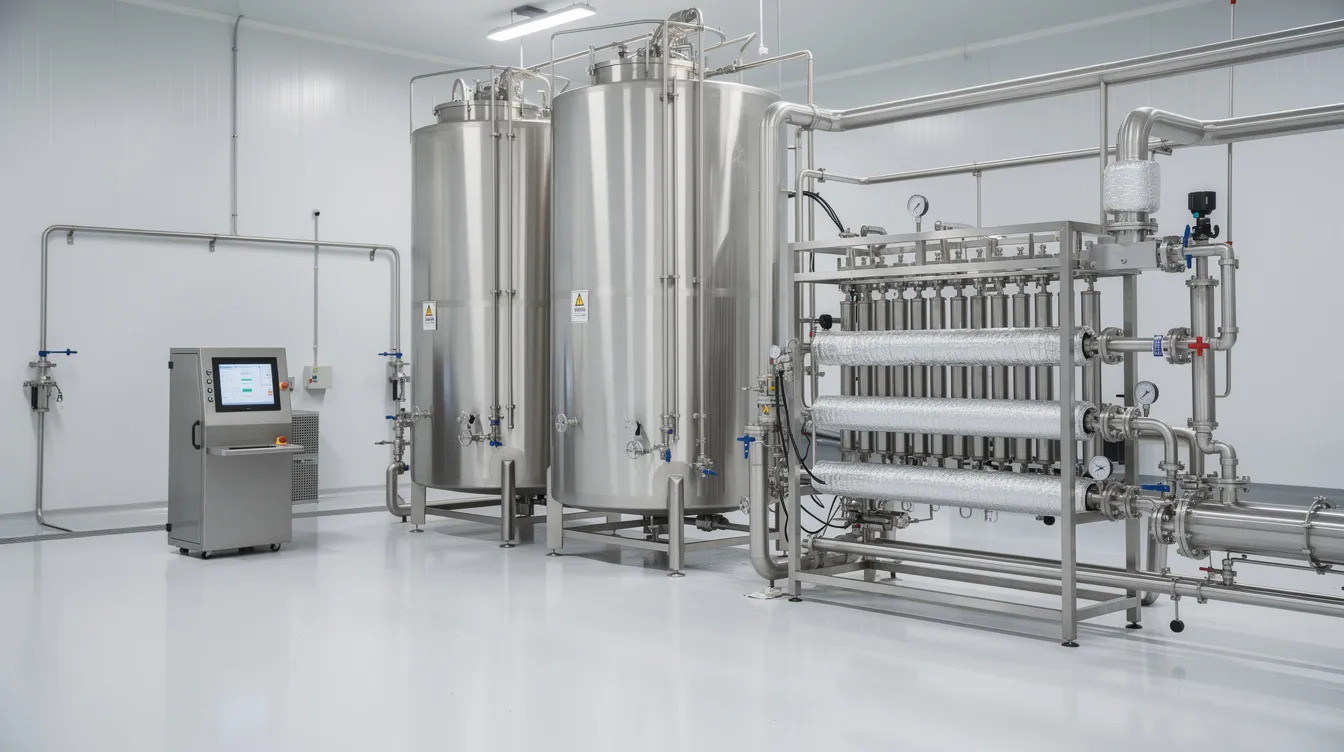
- Pasteurisation or UHT systems, homogenisers, flash coolers
- Milk reception docks, chilling units, storage tanks
- CIP (clean-in-place) systems for hygienic processing
- Filling and packaging lines for bottles, pouches and cartons
- Cold rooms and refrigeration systems
- Temperature-controlled processing environments necessary to prevent spoilage in dairy beverages
Supporting infrastructure adds further capital expenditure: hygienic plant layout, SS pipelines, utilities (steam boilers, chilled water plants, air compressors, water-treatment plants, DG sets), quality-control laboratories and food-safety compliant buildings. Utilities like water and power must be reliable for dairy processing facilities, and food safety certifications must comply with standards set by relevant authorities like FSSAI. Dairy processing also generates high-strength wastewater requiring effective effluent treatment, adding to both capital and operating cost.
Multiple SKUs – flavoured milk, lassi, drinking yoghurt, buttermilk, UHT milk, probiotic drinks – across packaging formats (200 ml bottles, 500 ml pouches, 1 litre packs) make capacity and product mix planning critical for cash flow projections and debt servicing. Capital cost alone (for example, Rs 15–25 crore for a mid-size plant) does not make a project bankable. What matters is sustained demand, realistic pricing, operating efficiency and cash flow after working-capital requirements, including cattle feed cost where backward integration exists with upstream dairy farming or small dairy units. Proximity to raw milk collection points is critical for ensuring supply chain stability, and market viability includes assessing competition, distribution channels and target consumer demographics.
Determining Total Project Cost for a Dairy Beverage Plant
Total project cost is a detailed estimate of all expenditure needed to bring the plant from concept to stable commercial production. It is the starting point for dairy beverage manufacturing plant project finance, but it is not the final loan amount.
Major cost heads typically considered:
- Land and site development (purchase or lease premium, boundary wall, approach road)
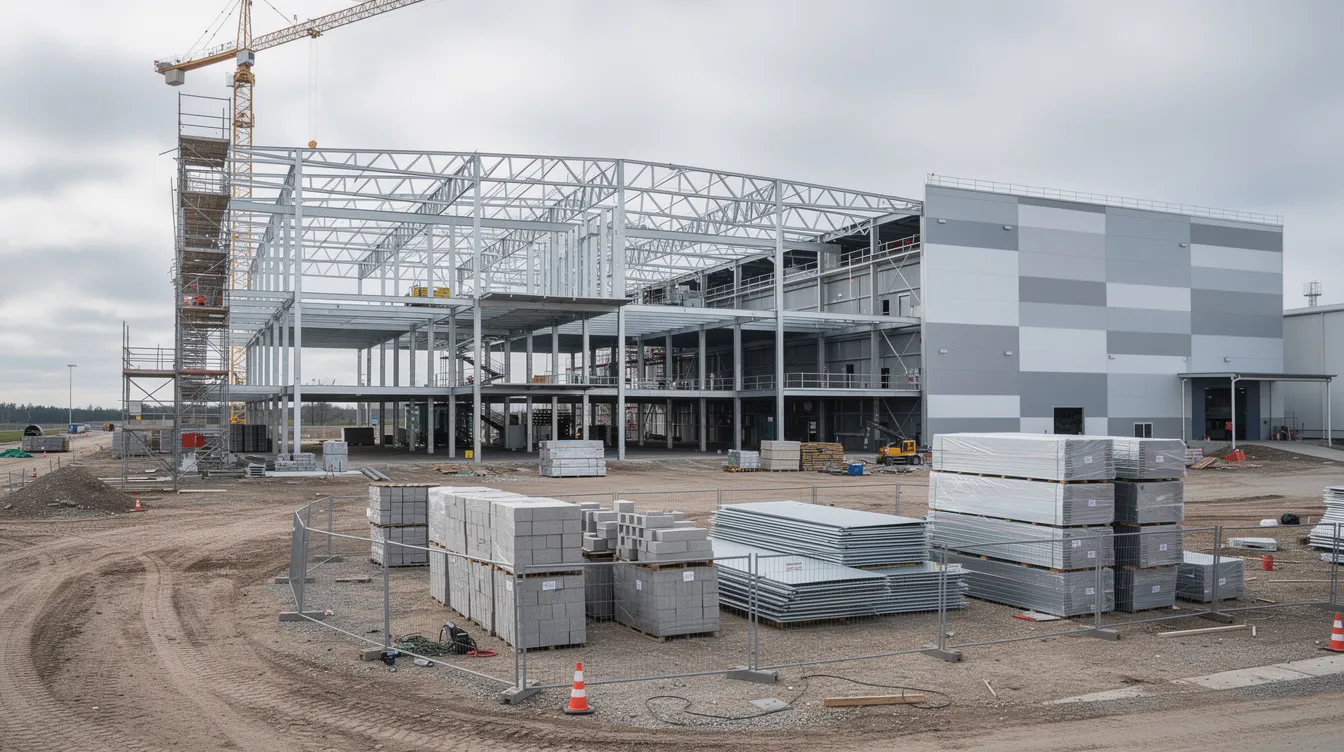
- Factory building and civil works (production block, cold rooms, utility area, admin block, cattle sheds where applicable for integrated operations)
- Plant and machinery (milk reception, processing, packaging, CIP systems)
- Electrical installations (transformer, panels, cabling)
- Refrigeration and chilling systems
- Utilities (boiler, compressed air, water treatment)
- Laboratory and quality-control equipment, including milking machines for integrated setups
- Storage, cold-room infrastructure, material-handling systems
- Office equipment and furniture
Indirect costs also form part of project cost: preliminary and pre-operative expenses (company formation, design, consultancy, interest during construction, trial run), statutory approvals, product development, and initial marketing. Some lenders may allow margin for working capital within project cost, especially for greenfield units, while others prefer it financed separately. For detailed structuring guidance, refer to dairy beverage plant project cost and means of finance.
Not every rupee of estimated cost will be accepted for term finance. Banks examine whether each component is necessary, properly evidenced and aligned with the proposed capacity and product mix.
Eligible Project Cost and Promoter Contribution in Term Loan Assessment
A critical distinction in dairy beverage plant term loan assessment is between total project cost (as estimated in the DPR) and project cost eligible for term financing (as accepted by the bank after appraisal). These are rarely the same number.
Lenders evaluate each item: the asset’s nature (productive versus decorative), proof of ownership or title for land, credibility of machinery suppliers, reasonableness of prices including GST, freight, installation and commissioning, and whether equipment is new or second-hand. Already-incurred expenditure without proper invoices, related-party purchases without arm’s-length pricing, and unsupported lumpsum estimates are scrutinised more critically. Costs for dairy beverage plant machinery and equipment often constitute 40–60% of total project cost; inflated quotations here distort both eligible cost and loan requirement.
Promoter contribution – own funds through share capital, internal accruals, partner capital and, where bank policy permits, subordinated unsecured loans – represents the promoter’s “skin in the game.” Lenders insist on adequate contribution because it reduces the bank’s risk exposure and demonstrates commitment. Promoters must show credible sources: past savings, sale of assets created from prior businesses, or business accruals supported by bank statements, income-tax records and KYC documents. Unexplained margin money or inflated contribution figures weaken the credit assessment. The eligible age for loan borrowers is generally 18 to 75 years, and the promoter profile – including dairy industry experience, financial strength and prior track record – directly influences the lender’s confidence.
Means of Finance and Debt-Equity Structure
The means of finance equation forms the core of dairy beverage plant debt financing:
Project Cost = Promoter Contribution + Term Loan + Other Eligible Sources
Other eligible sources may include state or central government subsidies (under applicable scheme provisions), interest subvention benefits, soft loans through the national bank for agriculture and rural development (NABARD) or similar institutions, and quasi-equity. The financing schedule should match the implementation schedule to avoid cash-flow mismatches during construction.
The debt-equity ratio for a dairy beverage plant (total long-term debt relative to tangible net worth) is a qualitative indicator of leverage. Excessively high debt makes DSCR weak and cash-flow buffers thin, while too little promoter contribution raises concerns about commitment. In practice, promoter contribution for value-added dairy plants is often in the range of 25–35% of project cost, though this varies by project size, risk profile and lender policy.
Illustrative only: Consider a conceptual Rs 20 crore project with Rs 8 crore promoter contribution (40%) and Rs 12 crore term loan (60%). This is not a bank norm – actual ratios depend on project-specific assessment. For broader context, refer to the project cost and financing structure guide and the dairy beverage plant project finance article.
How Banks Decide Term Loan Quantum, Moratorium and Repayment Period
Banks do not simply sanction a pre-decided percentage of project cost. They back-calculate an appropriate dairy beverage plant loan appraisal based on eligible cost, promoter margin, projected cash flow and DSCR. The proposed loan amount is constrained by eligible project cost, minimum promoter contribution, and realistic capacity of the business to service debt after meeting operating and working-capital needs. Loan amounts under MUDRA can reach Rs 20 lakh for smaller dairy units, while larger value-added plants may require term loans of several crore.
The moratorium is an initial grace period on principal repayment, covering construction, machinery delivery, installation, trial production and initial market development. Interest is generally payable during the moratorium (whether serviced or capitalised depends on sanction terms). For medium-to-large dairy beverage plants, moratorium periods commonly range from 12 to 18 months.
Repayment periods for dairy loans typically range from 3 to 7 years, though larger value-added projects with longer asset lives may see tenures extended up to 8–10 years depending on lender policy and DSCR support. Too-short tenures stress monthly instalments; too-long tenures require strong justification. NABARD-linked loans require a detailed project appraisal and may have specific tenure guidelines.
| Project Stage | Cash Flow Position | Financing Consideration |
|---|---|---|
| Construction and installation | Negative (no revenue) | Moratorium on principal; interest serviced or capitalised |
| Trial production | Minimal or nil income | Moratorium continues; equipment commissioning verified |
| Initial ramp-up (Year 1) | Low, building gradually | Lower instalments or moratorium tail; working capital accessed |
| Stabilised operations (Year 3+) | Moderate to stronger | Full principal + interest instalments; DSCR monitored |
Revenue, Operating Costs, Cash Flow, DSCR and Repayment Capacity
Dairy beverage plant term loan assessment is ultimately driven by cash flow and DSCR, not just on-paper profitability. Lenders examine how quickly the project will generate surplus after meeting all expenses and working-capital needs.
Revenue assumptions should reflect realistic capacity utilisation ramp-up – for example, 45–55% in Year 1, 60–70% in Year 2, 75–80% in Year 3 for a new plant – along with detailed product mix and market channels (retail, distributors, HoReCa, institutional, private label). For structuring these assumptions, refer to the dairy beverage revenue model and market strategy guide. Unrealistic revenue projections from dairy entrepreneurs overstate loan-servicing capacity and weaken the proposal.
Key operating cost drivers include raw milk production and purchase, cattle feed for integrated farms, ingredients (sugar, flavours, cultures, stabilisers), packaging materials, electricity, steam and fuel, refrigeration, labour, repair and maintenance, cold-chain and logistics, selling and distribution, and administrative overheads. Milk unions and milk producer companies influence procurement pricing. Sensitivity to raw milk and packaging cost volatility is particularly important.
Projected Profit & Loss, Balance Sheet and Cash Flow statements must be internally consistent. Debt repayment schedules in the dairy beverage plant financial projections must match the proposed loan repayment schedule used to calculate DSCR.
The Debt Service Coverage Ratio should ideally be above 1.25 to 1.5 for dairy beverage facilities, with stabilised-year DSCR often expected around 2.0 for value-added plants. DSCR is calculated as cash accrual (profit after tax plus depreciation plus other non-cash charges) divided by annual debt service (principal due plus interest). Banks check both year-wise and average DSCR over the tenure. For detailed methodology, see dairy beverage project DSCR and loan repayment capacity.
Term Loan vs Working Capital in a Dairy Beverage Project
Term loan finances long-term fixed assets; working capital facilities (cash credit, overdraft) fund the operating cycle – inventory of raw milk, ingredients, packaging, finished goods and receivables. Even a perfectly structured term loan will not succeed if working-capital requirement is underestimated. Seasonal flush-lean variations in milk supply and price, credit extended to distributors, and cold-chain inventory can lock up significant funds.
Margin money for working capital is sometimes included in total project cost, but the actual working-capital limit is assessed under separate norms. Bank finance for dairy beverage plants typically considers the entire operating cycle. For detailed assessment methodology, refer to the dairy beverage plant working capital requirement guide.
| Particular | Term Loan | Working Capital |
|---|---|---|
| Purpose | Fixed assets (land, building, machinery, utilities) | Operating cycle (stock, receivables, expenses) |
| Tenure | 5–10 years (with moratorium) | Short-term, revolving |
| Repaid from | Long-term cash accrual | Operating cycle collections |
| Security focus | Fixed assets financed | Current assets (stock, receivables) |
Correct segregation of term-loan and working-capital finance prevents diversion of funds and provides clearer visibility of dairy beverage plant repayment capacity to the lender.

Illustrative Term Loan Assessment Example (Educational Only)
The following illustration uses round numbers for educational purposes only and should not be treated as indicative project cost, DSCR requirement or bank sanction norm.
Consider a new dairy beverage plant in India, FY 2026–27:
| Component | Amount (Rs Crore) |
|---|---|
| Land, building and civil works | 5.00 |
| Plant and machinery | 8.00 |
| Utilities and refrigeration | 2.50 |
| Pre-operative expenses and contingency | 1.50 |
| Working-capital margin | 1.00 |
| Total Project Cost | 18.00 |
| Promoter Contribution | 7.00 (39%) |
| Proposed Term Loan | 11.00 (61%) |
Projected capacity utilisation: 50% in Year 1, 65% in Year 2, 75% in Year 3. Assuming stabilised revenue of approximately Rs 30 crore by Year 3 with EBITDA margins around 12–14%, annual cash accrual might reach Rs 2.5–3.0 crore against annual debt service (principal plus interest) of approximately Rs 2.0–2.2 crore, giving a stabilised-year DSCR of approximately 1.3–1.5.
A moratorium of 12–18 months, followed by a 7–8 year repayment period, could be evaluated by the bank based on whether year-wise DSCR stays within a comfortable range. If DSCR in early years is too tight, the bank may suggest a reduced loan amount, higher promoter contribution or adjusted tenure. Real-life assessment considers many project-specific factors – technology, location, promoter profile, existing liabilities, security, collateral, market contracts for farmers and multi state cooperatives – beyond this simplified arithmetic.
DPR, Documentation and Common Appraisal Errors
A bankable DPR for dairy beverage plant credit assessment must integrate technical capacity, capital cost, revenue model, operating cost, profitability and break-even analysis, working capital, cash flow and DSCR into a single consistent financial story.
Key documents typically required for dairy beverage project loan eligibility:
- Detailed Project Report with technical, market and financial sections
- Promoter background, net-worth details and KYC documents
- Constitutional documents of the company or firm
- Land and building papers (title, lease, approvals)
- Machinery quotations with technical specifications
- Implementation schedule
- Licences and statutory approvals (FSSAI, PCB) as applicable
- Last 2–3 years’ financial statements of existing businesses
- Bank statements evidencing source of promoter contribution
- Projected financial statements, CMA data, loan repayment schedule and DSCR workings
| Component | Relevance to Project Cost | Term Loan Consideration | Key Appraisal Point |
|---|---|---|---|
| Plant and machinery | Core production asset (40–60% of cost) | Eligible if new, properly quoted | Quotation validity, capacity match, supplier credibility |
| Building and civil works | Houses production and storage | Eligible with clear title | Land ownership, layout adequacy, hygienic design |
| Pre-operative expenses | Statutory, trial runs, consultancy | Partly eligible, often capped | Reasonableness, documentation |
| Margin for working capital | Ensures initial liquidity | Sometimes included, bank-specific | Quantum justified by operating cycle |
Common mistakes in dairy beverage term-loan proposals include inflated machinery cost, assuming maximum capacity utilisation from Year 1 without market development, ignoring cold-chain and marketing expenses, underestimating raw milk and packaging cost volatility, mismatched financial statements, confusing term-loan and working-capital usage, and copying generic templates without adapting to actual product mix, region or project size. Dairy farm loans can fund cattle purchase and infrastructure for integrated operations, but these must be separately structured and not mixed into the beverage plant’s term-loan assessment.
Professional assistance from an experienced Chartered Accountant in preparing DPR, CMA data and financial projections reduces such errors and presents a more credible case to banks. CA Manish Gugliya assists promoters and dairy entrepreneurs with preparation and financial structuring of DPRs, term-loan assessments and DSCR analysis – without promising any guaranteed sanction, as banking policies differ by lender, scheme, borrower profile and project.
FAQs on Dairy Beverage Plant Term Loan Assessment
The following FAQs address common follow-up questions from borrowers and dairy entrepreneurs about dairy beverage plant term loan assessment that supplement the main discussion above.
What is term loan assessment for a dairy beverage plant?
Term loan assessment is the bank’s process of examining eligible project cost, promoter contribution, projected cash flows and risk factors to decide whether to sanction a term loan for a dairy beverage manufacturing plant and on what terms – loan amount, interest rate, moratorium and repayment period. It involves technical, financial and credit appraisal of the DPR, site, promoters and proposed plant setup. This assessment is distinct from – but connected to – working-capital appraisal for funding raw milk, packaging and operating expenses.
How do banks decide the loan amount and repayment period?
There is no universal formula. Lenders look at eligible project cost, minimum promoter margin, projected DSCR, overall cash flow and existing obligations before finalising the term-loan quantum. Repayment periods for dairy loans typically range from 3 to 7 years for standard projects, though larger facilities may access extended tenures up to 8–10 years with an initial grace period. If projections show weak DSCR in early years, banks may suggest a lower loan amount, higher promoter contribution or longer repayment tenure.
Can working capital and margin money be part of the dairy beverage plant term loan?
Margin money for working capital is sometimes included within total project cost and partly financed through the term loan, especially for new units, but the actual working-capital limit is sanctioned under separate facilities like cash credit. Banks are cautious about using long-term debt to fund permanent working-capital gaps because this can distort cash-flow planning and DSCR assessment. Kisan Credit Card offers interest rates as low as 4% for prompt payers in dairy operations, which can complement working-capital arrangements for farmers linked to the plant.
Is collateral compulsory for a dairy beverage plant term loan?
Primary security normally consists of the assets financed – land, buildings, plant and machinery, refrigeration and utilities. Additional collateral may or may not be required depending on loan size, scheme, borrower profile and lender policy. No collateral is needed for loans up to Rs 1 lakh under certain government schemes, and no collateral is required for MUDRA’s Shishu and Kishore tiers (MUDRA loans for dairy can range from Rs 50,001 to Rs 5 lakh). For larger term loans, collateral requirements depend on the lender’s internal norms and any applicable government guarantee schemes. Discuss security expectations early in the appraisal process rather than assuming loans will be fully unsecured.
How can a DPR improve the chances of a favourable term loan structure?
A professionally prepared DPR presents a coherent picture linking capacity, product mix, project cost, means of finance, profitability, cash accrual and DSCR, which helps the bank understand and trust the projections. A strong DPR includes realistic sensitivity analysis – for example, the impact of a 10% raw milk price increase or lower selling price – and clearly shows repayment capacity under conservative assumptions. This improves the quality of dairy beverage plant bank loan appraisal. CA Manish Gugliya assists promoters in preparing such integrated DPRs, financial projections and CMA data so that the term-loan proposal is structured in line with banking expectations. Groups and companies with prior access to industry networks, modernization plans or expansion goals benefit particularly from well-structured project finance documentation that can support access to finance from the nearest branch of their banking partner.
A successful dairy beverage plant term loan proposal depends on more than obtaining a machinery quotation or estimating project cost. It requires realistic financial projections, adequate promoter contribution, appropriate debt structure, well-supported cash accrual estimates, sensible DSCR and a repayment schedule aligned with actual cash generation. Every dairy beverage project should be evaluated based on its capacity, product mix, technology, market, capital expenditure, operating cycle, viability, eligibility under applicable schemes and promoter profile.
CA Manish Gugliya assists entrepreneurs and businesses with preparation and financial structuring of Detailed Project Reports, project financial projections, CMA data, term-loan assessment, DSCR and repayment analysis, and project finance documentation for dairy beverage manufacturing plants across India.