
Key Takeaways
Dairy beverage plant project cost encompasses far more than processing machinery. It includes land, factory building, utilities, cold storage, packaging lines, laboratory equipment, electrical installations, preliminary and pre-operative expenses, contingency and margin for working capital. Each component must be estimated realistically and matched with a clear means-of-finance plan before approaching any lender.
In India, a bankable dairy beverage plant DPR must define total project cost, plant capacity, product mix, fixed assets, working capital, promoter contribution and proposed term loan structure. The cost varies widely depending on capacity (from small 5,000 LPD units to large 1,00,000 LPD facilities), technology (chilled vs aseptic), automation level and packaging format (PET, glass, pouches, cartons). There is no single universal figure.
- Means of finance typically blends promoter contribution, term loan, unsecured loans and sometimes government subsidy. Total project cost must always equal total means of finance in a professional DPR.
- Setting up a dairy beverage plant requires substantial capital investment, and dairy beverage production costs are classified into capital expenditures and operational expenditures.
- Key capital expenditures include land, construction, processing equipment, utilities, vehicles and licenses.
- A properly structured dairy beverage plant project report for bank loan improves appraisal chances, but no consultant can guarantee sanction or subsidy approval.
Introduction: Why Dairy Beverage Plant Project Cost Is More Than Machinery
In my practice as a project finance consultant, the most common question I hear from promoters is: “What is the cost of a dairy beverage plant?” Almost invariably, they are thinking only of processing machinery prices. While machinery is important, it is just one component of a much larger investment picture.
For a bankable dairy beverage plant DPR in India, total project cost normally includes land, site development, factory building, the milk processing unit, utilities, packaging lines, cold storage, quality control laboratory, electricals, preliminary and pre-operative expenses, contingency and margin for working capital. Missing any of these heads can undermine both the project and the bank proposal.
The second core pillar, after estimating dairy beverage plant project cost, is structuring the means of finance. This involves deciding how much will come from promoter contribution, equity, unsecured loans, term loan and working-capital limits, and what the dairy beverage plant debt equity ratio will look like. This article covers both pillars from the perspective of preparing detailed project reports, CMA data, financial projections and term-loan proposals for industrial dairy beverage projects in India.
Understanding Dairy Beverage Plant Project Cost
From a DPR and bank-finance standpoint, “project cost” means the total long-term funds required to bring the dairy beverage manufacturing plant to commercial production, including initial working capital margin. Most dairy plants require a detailed project report to assess costs and operational planning before any finance is considered.
It is critical to distinguish between these terms: machinery price refers to the basic ex-works price of plant and equipment; factory setup cost covers land, building, utilities and installation; fixed asset investment aggregates all tangible assets capitalised in the balance sheet; total project cost adds preliminary and pre-operative expenses, contingency and working-capital margin on top of fixed assets; and working-capital requirement represents funds needed for inventory, receivables and cash during the operating cycle.
Banks generally assess dairy beverage plant total project cost, fixed asset cost and working-capital requirement separately. Fixed assets are financed through a dairy beverage plant term loan, while working capital is financed through cash credit or working-capital limits. Mixing both leads to confusion during appraisal.
Major Components of Dairy Beverage Plant Project Cost
A typical dairy beverage processing plant capital cost is broken into multiple heads, and lenders expect a clear break-up in the DPR. Every dairy beverage plant project report should cross-check these components against actual vendor quotations and civil estimates for the specific location and capacity.
Land and Site Development
The DPR should state whether land is already owned or proposed to be purchased, with area in square metres and location (industrial zone, food park or private land). Concrete cost heads include purchase price, stamp duty, registration, land conversion charges, filling and levelling, compound wall, internal roads, storm-water drainage and gate construction.
Many commercial banks in India may not finance land purchase as part of the dairy beverage plant term loan, or may cap the eligible portion. The DPR must clearly mention lender policy assumptions. Even in expansion projects where land is already owned, realistic market value strengthens the collateral mix. Land choice should also consider logistics of raw milk procurement, access to utilities and proximity to target dairy markets.
Factory Building and Civil Construction
Building components include milk reception dock, raw-milk chilling area, processing hall, pasteurization and homogenisation section, blending room, filling and packaging hall, finished-goods cold rooms, dry store, quality-control lab, utilities block and administrative areas. Dairy processing requires 1,500 to 2,000 square feet of space even for smaller units, and this scales substantially with capacity.
Civil-cost estimation should be based on plinth area and realistic per-square-foot rates for RCC or PEB structures. Construction costs for dairy processing facilities typically range from $420 to $720 per square foot when benchmarked internationally. Facility construction requires adherence to specialised hygienic standards and food safety regulations, including washable wall and ceiling finishes, separate material and personnel flows, food-grade epoxy floors and segregated processing zones.
Dairy beverage plant building cost is often underestimated by first-time promoters. A detailed understanding of dairy beverage plant land, building and utilities requirements is essential before finalising the DPR.
Plant and Machinery
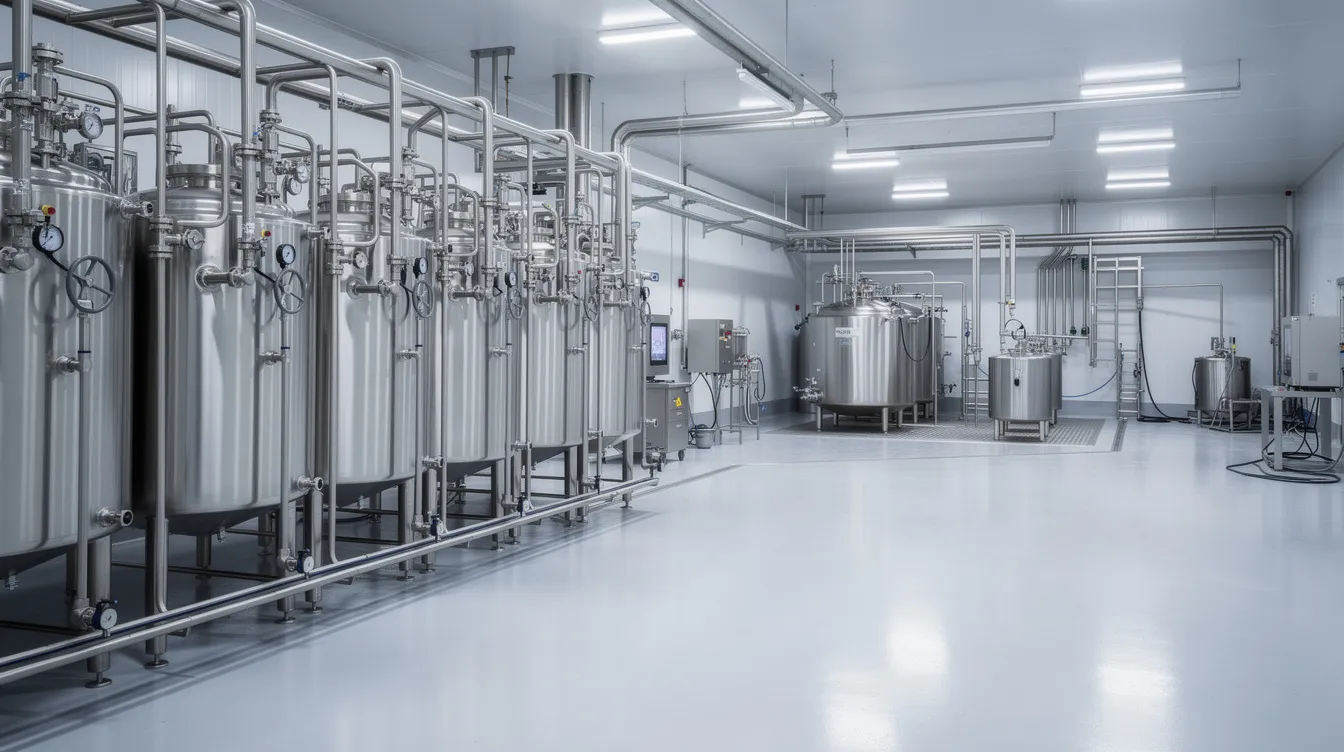
Dairy beverage plant machinery cost is usually the single-largest fixed-asset head. Main categories include milk reception tank and weigh bowl, plate or tubular chillers, raw milk storage tanks, clarification and filtration units, cream separator, standardisation systems, homogenisers, pasteurisers and heat-treatment systems, mixing and blending tanks, sugar dissolving systems, flavour-dosing units, CIP systems and product transfer pumps. The dairy beverage manufacturing process and selected technology directly affect machinery configuration and cost.
Imported components such as UHT systems or aseptic fillers introduce foreign-exchange risk and longer lead times. Automation level and litres-per-hour capacity drastically influence dairy beverage plant machinery and equipment cost. Choosing the right equipment and advanced machinery appropriate to planned capacity is fundamental.
Packaging and Bottling Infrastructure
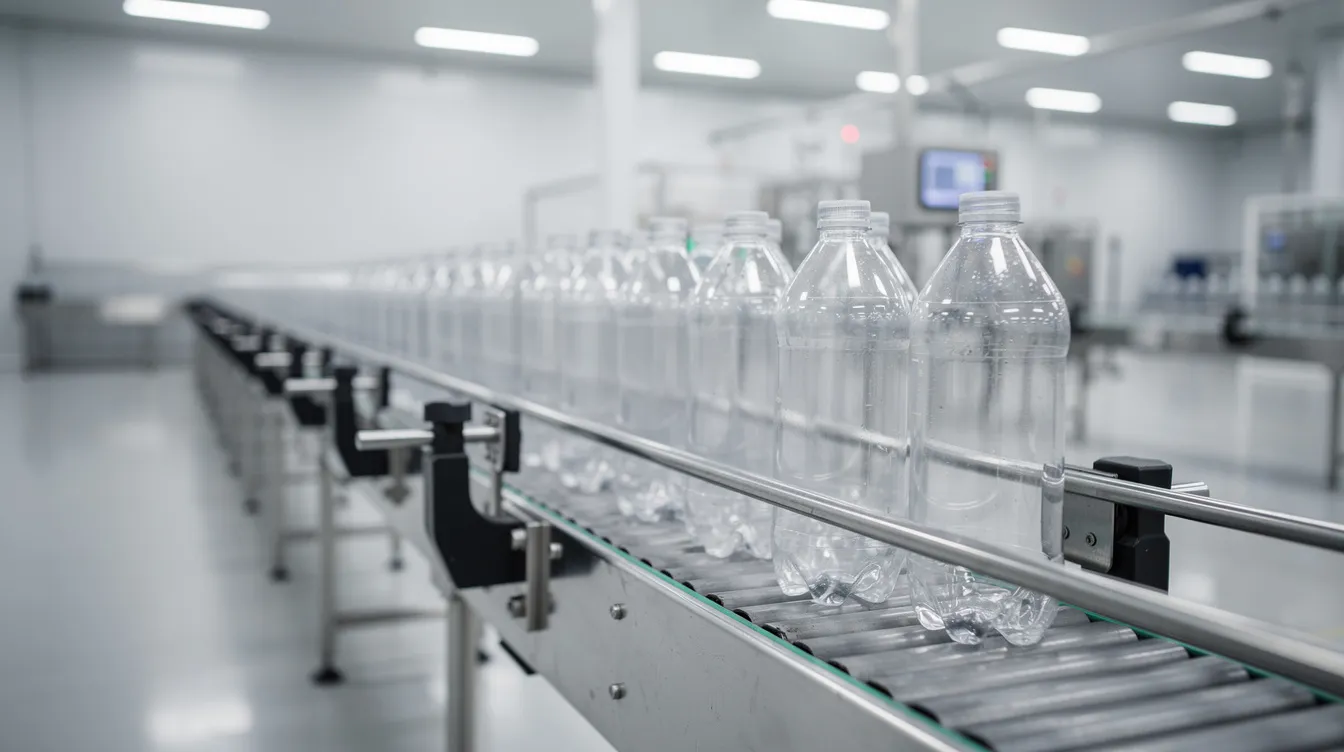
Packaging and labeling machinery costs depend on the chosen format and can vary significantly. Typical equipment includes bottle unscramblers, rinsers, filling machines, capping and sealing units, labellers, inkjet coders, shrink tunnels, carton erectors, case packers and conveyors. Different cost profiles apply for PET bottles, glass bottles, pouches and cartons.
Aseptic dairy beverage packaging needs sterile filling rooms and more expensive technology, significantly increasing dairy beverage plant setup cost. Multi-size SKUs require additional moulds and change parts. A thorough assessment of dairy beverage bottling and packaging systems is essential before finalising the packaging investment.
Utilities and Supporting Infrastructure
Utilities form a separate block: boiler or steam generator, refrigeration compressors, chilled-water systems, air compressors, water treatment plant, hot-water generators, CIP central units and effluent treatment plant. Banks scrutinise whether utility capacities are adequate for planned production and capacity utilisation. Under-sized utilities can compromise output.
Raw materials, labor, quality control, utilities and marketing drive ongoing operational costs, so the utility infrastructure must be designed to support full-scale operations efficiently.
Cold Storage and Cold Chain
Chilled dairy beverages with short shelf life require in-plant cold rooms, walk-in chillers and sometimes blast chillers, all adding to dairy beverage plant total project cost. Capital items include insulated cold rooms with PUF panels, refrigeration units, insulated doors, temperature-monitoring systems and racking. Refrigerated logistics vehicles may be included in the project or treated as separate investment.
Understanding cold chain requirements for dairy beverages helps promoters decide between chilled-chain models and shelf-stable distribution, where investment shifts to processing and aseptic packaging but cold storage requirements may reduce.
Electrical Installation and Other Fixed Assets
Typical investments include HT/LT panels, transformers, DG set, cable trays, internal wiring, lighting, earthing, lightning protection and automation panels. Support assets cover computers, ERP hardware, furniture, CCTV, fire-fighting systems, forklifts and trolleys. Although individually small, these collectively impact dairy beverage factory investment cost and must not be clubbed under a vague head in the DPR.
Preliminary and Pre-Operative Expenses
These typically include company incorporation expenses, project consultancy fees, architecture and engineering design, statutory approval fees, travel for vendor selection, salaries during construction, trial-run expenses and insurance during erection. Dairy processing requires compliance with food safety authorities, and obtaining mandatory registrations forms part of this cost head. An FSSAI Manufacturing License is essential for dairy processing plants. GST registration is mandatory if turnover exceeds ₹20 lakhs annually. State Pollution Control Board NOC is required for dairy processing operations, and a Local Body Trade License is needed from municipal authorities. MSME Udyam Registration allows access to government subsidies and should be obtained early.
Interest during construction may be capitalised as part of project cost depending on accounting policy and lender norms. Not every pre-operative expense will automatically be considered eligible by all banks.
Contingency Provision
Contingency is typically 3–10% on selected cost heads like machinery, civil works and utilities. In a dairy beverage plant financial feasibility report, contingency should be reasonable, not an arbitrary inflation. Some lenders allow it only on specific heads or at capped percentages. It is particularly important where imported machinery is involved due to exchange-rate fluctuation.
Margin for Working Capital
Margin for working capital is the promoter’s contribution towards the operating-cycle requirement covering raw milk, sugar, flavours, stabilisers, packaging materials, finished goods and receivables. Initial working capital should cover 2 to 3 months of operational expenses.
Illustrative Example Only – Not a Bank Sanction Benchmark: If total working capital assessed is ₹1.00 crore and the bank finances 75%, margin money for dairy processing plant working capital will be ₹25 lakh, funded by the promoter. Term-loan financing covers fixed assets, while working-capital facilities like cash credit finance current assets. Lender policies on including working-capital margin within project cost can vary.
What Determines the Cost of a Dairy Beverage Plant?
Dairy beverage plant cost in India is not a single fixed number. It responds to several design and business decisions that must be clarified before finalising the DPR.
Production Capacity
Installed capacity in litres per day directly influences building size, machinery, utilities and dairy beverage production plant investment. A small dairy processing plant costs ₹20 to ₹30 lakhs to set up, while a larger dairy processing unit requires ₹50 to ₹70 lakhs. The cost of a small-to-medium dairy beverage plant ranges from ₹40 lakhs to ₹2 crores based on automation and product mix. Realistic capacity utilisation ramp-up (50–60% in year one, increasing over 3–5 years) must be reflected in projections and DSCR analysis. Detailed dairy beverage plant capacity planning should precede DPR preparation.
Product Mix
Flavoured milk is a nutrient-rich product with nine essential nutrients, and the global flavored milk market was valued at USD 63.75 billion in 2025. Different products such as flavoured milk, chocolate milk, milkshakes, lassi, protein shakes and probiotic drinks each need additional tanks, blending systems and CIP segmentation. A dairy processing unit can produce paneer, curd, butter and cheese alongside beverages, with value added dairy products like paneer and ghee offering profit margins of 20% to 40%. Flavored milk production can achieve gross profit margins of 30–40%. Operating costs for flavored milk plants are driven by raw materials, and sugar accounts for 70–80% of total operating expenses in flavored milk production. More SKUs increase inventory complexity and changeover time.
Packaging Format
PET and glass packaging systems have different investment implications. Glass bottles may need bottle washers and heavier handling equipment. PET needs blow moulding or preform purchase. Carton-based aseptic filling systems are high-capex items often supplied on long-term contracts.
Level of Automation
Three broad levels exist: manual or semi-automatic lines (lower capex, higher labour), semi-automatic with PLC controls (balanced), and fully automatic high-speed lines (higher capital, lower variable cost, more consistent quality). Automation also affects SCADA and instrumentation investments.
Chilled vs Shelf-Stable Distribution
Pasteurised, chilled dairy beverages demand significant cold storage and cold-chain investment but moderate processing technology. UHT or aseptic dairy beverage processing and packaging requires advanced heat treatment and aseptic fillers, with comparatively lower cold-chain dependence. This choice fundamentally alters dairy beverage plant project cost composition and should be decided at concept stage to increase shelf life and manage distribution reach.
Greenfield vs Expansion Project
A greenfield dairy beverage manufacturing plant must invest in complete infrastructure, whereas an existing dairy processing unit adding a beverage line may reuse utilities, building and staff. Expansion DPRs show incremental project cost and incremental means of finance, often funded by smaller term loans and higher internal accruals.
Illustrative Dairy Beverage Plant Project Cost Structure
The initial project cost for a 10,000 LPD plant can reach ₹5.0 to 7.5 crores excluding land, based on industry cost guides. Below is an illustrative percentage-based breakdown:
Illustrative Example Only – Not a Machinery Quotation or Bank Sanction Benchmark
| Project Cost Head | Approximate Share | Typical Treatment |
|---|---|---|
| Land & Site Development | Project-specific | May require promoter funding |
| Building & Civil Works | 25–35% | Fixed Asset |
| Plant & Machinery | 35–45% | Major Fixed Asset |
| Packaging Equipment | 8–12% | Fixed Asset |
| Utilities & Compliance | 10–18% | Fixed Asset |
| Cold Storage/Refrigeration | 3–8% | Fixed Asset |
| Electrical Installation | 3–5% | Fixed Asset |
| Laboratory & Other Equipment | 1–3% | Fixed Asset |
| Preliminary/Pre-operative Expenses | 5–10% | Subject to lender treatment |
| Contingency | 3–5% | Subject to lender norms |
| Working Capital Margin | 2–5% | Depending on financing structure |
Actual amounts depend upon capacity, technology, automation, location, product mix, packaging and lender assessment. A customised dairy beverage plant financial feasibility report is needed for accurate numbers.
What Is Means of Finance in a Dairy Beverage Project?
Total project cost must equal total means of finance in any dairy beverage project report submitted for term-loan sanction. Means of finance is a structured list of funding sources: promoter contribution or equity, term loan from bank or financial institution, unsecured loans, internal accruals in expansions and eligible capital subsidy where firmly established. Financing options for dairy processing facilities include bank loans, government backing and private equity.
The dairy beverage plant funding structure separates long-term funds for fixed assets from working capital facilities for day-to-day operations. Treatment of unsecured loans, quasi-equity and subsidy differs across banks.
Promoter Contribution in a Dairy Beverage Plant
Promoter contribution is the equity or own funds that the promoter brings into the project. Lenders insist on adequate promoter stake to ensure commitment, reduce leverage and improve DSCR. Legitimate sources include own funds, retained profits, sale of non-essential assets, unsecured loans from family members where acceptable, and capital from partners or co-investors.
There is no single compulsory percentage. Banks may prefer different dairy beverage plant debt-equity ratios based on risk, project size, collateral, projected cash flows and promoter background. Banks routinely verify source of promoter funds through bank statements, ITRs and financial statements, so dairy entrepreneurs must plan their own contribution well before major disbursements begin.
Margin Money Explained
Margin is the portion of project or working-capital requirement financed by the promoter instead of the bank. There are two distinct types: margin on fixed assets (promoter’s share in project cost alongside term loan) and working-capital margin (promoter’s share in current assets funded via cash credit).
Illustrative Example Only: For a dairy beverage plant project cost of ₹10 crore, the promoter might contribute ₹3.5 crore and the term loan covers ₹6.5 crore. Separately, if the cash-credit limit is ₹1 crore with 25% margin, the promoter funds ₹25 lakh as working-capital margin. Margin requirement for dairy plant loan depends on bank norms and risk assessment.
Term Loan Structure for Dairy Beverage Manufacturing Plant
A term loan for dairy beverage plant typically finances eligible fixed assets: building, plant and machinery, utilities, electricals, part of pre-operative expenses and sometimes working-capital margin. Key parameters include sanctioned loan amount, interest rate, repayment tenure (often 7–10 years), an initial grace period or moratorium on principal, instalment frequency, security and covenants like minimum DSCR.
Disbursement is phased against civil-work progress and machinery invoices, with the bank insisting on proportionate margin being brought in by the promoter. The dairy beverage plant loan structure must match projected cash flows, allowing sufficient moratorium until commercial production stabilises. Banks sanction term loans only against a robust dairy beverage plant loan project report demonstrating technical feasibility and financial viability.
Debt-Equity Structure of the Project
The debt-equity ratio reflects term debt relative to promoter equity. A very high ratio increases interest burden and repayment pressure, weakening DSCR especially during early years when capacity utilisation is ramping up. Promoters should aim for balanced leverage rather than maximising borrowing. Lenders use projected DSCR, break-even analysis and sensitivity scenarios to judge whether the proposed structure is sustainable against market risks and seasonal demand changes.
Working Capital Requirement Is Separate from Project Cost
While margin for working capital may appear in total project cost, the revolving working-capital limit itself is assessed separately based on inventory, receivables and payables. Milk procurement accounts for 55% to 70% of operational costs in dairy production, with dairy farmers and milk unions being primary supply sources. Labor expenses for a small dairy beverage plant range from ₹2 to ₹5 lakhs per month, while typical monthly labor costs may increase to ₹15 to 45 lakhs for larger scale operations due to staffing needs.
The operating cycle runs from purchase of raw material through production, storage, sale, credit to customers and collection. Working-capital finance may be provided through cash credit, overdraft or bill-discounting, with banks requiring periodic stock statements and financial information.
Why Capacity Planning Must Come Before Project Cost Estimation
Trying to estimate dairy beverage plant project cost before finalising capacity, shifts, product mix and distribution strategy leads to unreliable numbers and project delays. Promoters should first decide target markets, expected demand, starting and ultimate capacity, number of working days, shifts and key SKUs, then request machinery and civil quotations accordingly. Misaligned capacity and product mix planning can produce idle capacity, bottlenecks or excessive project cost relative to achievable sales.
Role of Quotations in Project Cost Estimation
A credible dairy beverage plant DPR for bank finance should be built on vendor quotations for machinery, utilities, packaging lines, cold rooms and indicative civil and electrical estimates from contractors. Quotations ensure that dairy beverage plant fixed asset cost is realistic and current, avoiding outdated internet price assumptions. Promoters should obtain multiple quotations, short-list vendors and integrate cost estimates with reasonable contingency. Banks sometimes seek copies of key quotations and may sanction term loans with reference to the lower of quotation value and actual invoicing.
Project Cost Overruns and Promoter Responsibility
Common causes include delayed civil works, machinery delivery delays, layout changes, additional utility requirements, exchange-rate movement for imported equipment and revised statutory requirements. By the fifth year of operations, operational costs are expected to increase significantly, making initial cost discipline even more important.
Banks generally do not automatically increase term-loan limits for every cost overrun. Promoters are usually expected to arrange additional funds. A conservative approach at the planning stage avoids last-minute funding gaps that can delay commercial production and strain relationships with lenders.
Bank Appraisal of Dairy Beverage Project Finance
Banks examine far more than machinery value: promoter profile, experience in dairy or FMCG, credit history, collateral security, market analysis, competition, supply of raw milk, local brands landscape and supply-chain robustness. Financial appraisal covers projected sales volumes, price assumptions, gross margins, operating expenses, interest costs, depreciation, tax, cash accrual, DSCR and break-even over at least 5–7 years.
Dairy beverage plant bank loan proposals must show adequate repayment capability even at conservative capacity-utilisation levels. Each lender may have different credit norms, and high capital costs can sometimes be offset by government subsidies or grants aimed at dairy development through schemes like the dairy entrepreneurship development scheme. Government schemes like PMFME provide subsidies for micro and small dairy processing units, offering financial assistance and government support to eligible dairy entrepreneurs.
Importance of DPR for Dairy Beverage Plant Bank Finance
A comprehensive dairy beverage plant DPR integrates project background, promoter profile, detailed manufacturing process, plant layout, list of machinery requirements, infrastructure requirements, project cost, means of finance, implementation schedule and regulatory compliance. It should include complete financial projections: projected profit and loss, balance sheet, cash-flow statement, working-capital assessment, term-loan repayment schedule and DSCR analysis.
A well-structured dairy beverage plant project report for bank loan helps the credit officer understand the project quickly. DPR quality does not guarantee loan sanction, but it significantly improves clarity and professionalism. The final decision remains with the lender after independent appraisal.
Common Mistakes While Estimating Dairy Beverage Plant Project Cost
Frequent errors include treating ex-works machinery price as total project cost, ignoring utilities, underestimating building and shed construction costs, forgetting cold storage and cold-chain vehicles, omitting quality control lab and ETP, and assuming subsidies will surely arrive.
Finance-related mistakes include planning unrealistically low promoter contribution, assuming banks will finance 100% of asset value, leaving out preliminary expenses, and not budgeting for interest during construction. Forecasting errors include assuming immediate 90–100% capacity utilisation, ignoring credit periods to distributors, neglecting seasonality and failing to consider realistic selling prices. Avoiding these mistakes is a key advantage of engaging a professional DPR advisor early in the planning stage.
Dairy Beverage Project Cost for Different Business Models
Dairy beverage factory investment cost varies significantly between business models. Each still requires a dedicated, product-specific DPR. The rising demand for value added dairy products and shifting consumer preferences are expanding the sector.
Flavoured Milk Plant
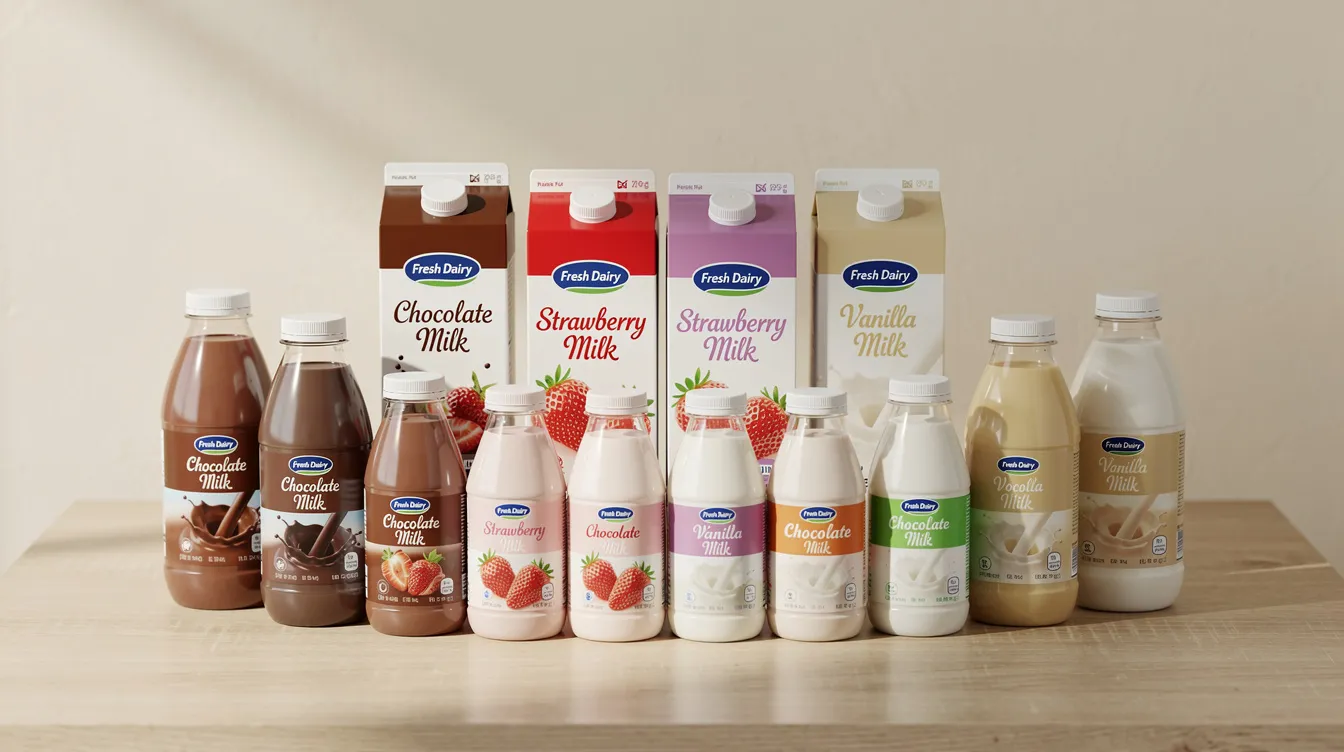
Flavored milk plant setup costs include machinery and infrastructure for pasteurization, homogenisation, mixing, flavouring and chilled storage. Initial investment for flavored milk production is significant, driven by mid-range packaging lines and walk-in chillers. A flavoured milk manufacturing plant project report addresses these specifics.
Chocolate Milk Plant
A chocolate milk manufacturing plant project report reflects additional process requirements for cocoa dispersion, higher viscosity handling and more robust mixing equipment compared to regular flavoured milk.
Milkshake Manufacturing Plant
Higher solids content and texture requirements demand powerful mixers and stabiliser dosing. A milkshake manufacturing plant project report covers these premium-segment nuances.
Protein & Functional Dairy Beverage Plant
Specialised ingredients like whey protein, vitamins and probiotics need precise dosing, inline mixing and validation. A protein and functional dairy beverages manufacturing plant project typically involves more sophisticated labs and QA systems.
Ready-to-Drink Dairy Beverage Plant
A ready-to-drink dairy beverages manufacturing plant covers broader RTD portfolios including cold coffee, flavoured lassi and yoghurty drinks, often requiring flexible filling systems for multiple pack sizes.
Aseptic Dairy Beverage Plant
Aseptic dairy beverage processing and packaging plants require UHT systems, sterile product transfer and aseptic fillers. While cold-chain requirements reduce, capital investments in processing and packaging increase substantially.
Practical Perspective from CA Manish Gugliya
In my experience preparing dairy beverage plant DPRs and CMA data for clients across India, I never finalise project cost in isolation. It is always aligned with capacity planning, product mix, process technology, layout, utilities and an honest assessment of promoter resources.
I typically prepare integrated financial projections: capital-structure plan, term-loan proposal, repayment schedule, DSCR analysis and working-capital assessment. The goal is to ensure that the dairy beverage project’s means of finance supports long-term viability, not merely short-term sanction. This guide covers the key considerations, but every project requires customised analysis.
The most sustainable dairy beverage manufacturing plant investment is not the lowest-promoter-contribution model. It is the structure where project cost, means of finance and projected cash flows are genuinely aligned, with enough cushion for the business to manage animals and cattle feed cost fluctuations, farmer payment cycles and seasonal demand patterns that every dairy sector enterprise faces.
FAQs
What is included in dairy beverage plant project cost?
It includes land and site development, factory building, plant and machinery, packaging and bottling lines, utilities, cold storage, electrical installation, laboratory equipment, preliminary and pre-operative expenses, contingency and margin for working capital. Working-capital limits themselves are separate banking facilities, but their margin portion is usually included within total project cost for DPR purposes.
How much does a dairy beverage manufacturing plant cost in India?
There is no single answer. Key determinants include capacity (small 5,000–10,000 LPD vs large 50,000–1,00,000 LPD), process technology (chilled vs aseptic), product mix, automation level and packaging format. The initial project cost for a 10,000 LPD plant can reach ₹5.0 to 7.5 crores excluding land. Promoters should treat online figures as rough orientation and rely on a customised feasibility report backed by current quotations.
How much promoter contribution is required for a dairy beverage plant?
There is no universally applicable percentage. Lender expectations vary according to project risk, promoter profile, collateral, project size and the specific bank’s policy. Many lenders expect 20–30% or more, but the exact requirement emerges from the credit appraisal process.
What is margin money in a dairy beverage plant loan?
Margin money is the portion of the investment or working-capital facility that the bank expects the promoter to fund from own resources. It applies both to fixed-asset finance (where your equity contribution acts as margin) and to working-capital limits (where the bank finances a percentage of current assets and the balance is your margin).
Does an aseptic dairy beverage plant cost more than a chilled beverage plant?
Generally, yes. Aseptic plants require UHT or high-temperature processing, sterile filling environments and specialised aseptic packaging systems, which are significantly more capital-intensive. However, they may reduce ongoing cold storage and cold-chain logistics costs, and they increase shelf life of finished products, potentially accessing wider markets.
Conclusion
Dairy beverage plant project cost covers a wide range of elements, from land and civil construction to plant and machinery, packaging, cold chain, preliminary expenses and working-capital margin. It must be estimated only after clarifying production capacity, product mix, process technology, automation level, packaging format and building requirements.
Every rupee of the dairy beverage plant total project cost should be matched by a well-structured means-of-finance plan involving suitable promoter contribution, term loan and, where applicable, properly documented funds from other sources. Maintaining sustainable debt servicing and realistic financial projections is what separates a viable project from a stressed one.
Entrepreneurs, dairy companies and investors planning a dairy beverage manufacturing unit in India can approach CA Manish Gugliya through www.projectreportbank.com for professional assistance with detailed project reports, bank-finance project reports, CMA data, financial projections, project-cost structuring, means-of-finance planning and DSCR and repayment analysis. The objective is always to help you begin with a strong, professionally structured proposal – while the final sanction decision remains with the lender.