
Key Takeaways
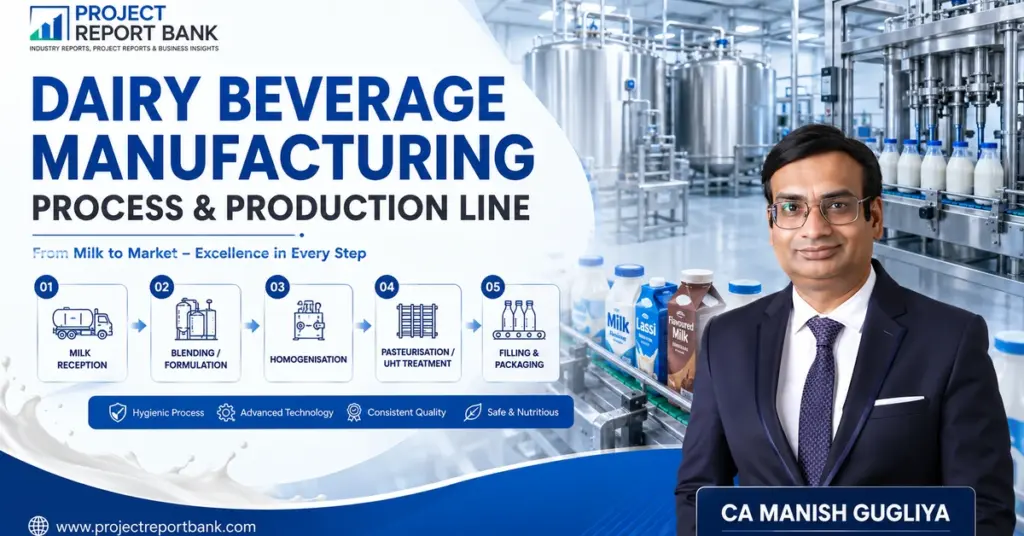
An industrial dairy beverage manufacturing plant converts fresh farm milk into commercially packaged flavoured milk, chocolate milk, milkshakes, protein drinks and other fluid milk products through an integrated, hygienic and automated production line. The dairy beverage manufacturing process transforms raw milk into appealing consumer drinks via a defined sequence: raw milk reception → testing → filtration and clarification → chilling → standardisation → ingredient preparation → formulation and blending → preheating → homogenisation → pasteurisation or UHT treatment → cooling or aseptic holding → filling and packaging → cold storage or ambient warehouse → dispatch.
Project promoters in India must design the dairy beverage processing plant as a complete system – including utilities, CIP, cold chain and warehousing – rather than purchasing isolated machines. Line balancing, process losses and capacity utilisation directly affect bankability, DSCR and overall financial viability. The choice between pasteurised (refrigerated) and UHT (ambient) dairy beverages drives decisions on aseptic dairy processing, packaging formats, capital cost and operating complexity. A robust DPR and financial model should connect market demand, product mix, plant capacity, machinery selection, manufacturing steps and working capital requirements for lenders and investors.
Industrial Dairy Beverage Manufacturing: Introduction & Project Context
In my experience preparing Detailed Project Reports for dairy processing ventures across India, I have observed that many promoters underestimate how tightly the milk beverage manufacturing process must be engineered as one integrated system. An industrial dairy beverage manufacturing plant does not simply heat and bottle milk. It converts untreated raw milk into shelf-stable or refrigerated consumer beverages – flavoured milk, chocolate milk, thick milkshakes, protein-enriched drinks, fortified RTD milk beverages, condensed milk derivatives and both pasteurised and UHT dairy beverages – each with distinct formulation, processing and packaging requirements.
Dairy beverages require stringent processing protocols due to their perishable nature. Dairy beverages are often susceptible to microbial growth due to their neutral pH and rich nutrient content, making dairy beverage manufacturing distinguished by strict controls on thermal processing and hygiene. Dairy beverage production processes differ significantly due to milk’s biological composition and spoilage risk, which is precisely why the production line, from raw processing through dispatch, must function as a coordinated whole.
The sequence and parameters of the manufacturing process depend on whether the product targets a shelf life of 2–10 days (pasteurised, refrigerated) or 3–9 months (UHT, ambient), the packaging format (bottle, pouch, cup, carton), and the distribution chain. From a DPR and project-finance perspective, decisions on dairy processing plant design, automation level, packaging configuration and product mix directly impact project cost, operating efficiency, working capital cycle and financial viability. India’s milk output has grown from approximately 1,873 lakh metric tonnes in 2018–19 to about 2,393 lakh metric tonnes in 2023–24, and the dairy industry increasingly serves an increasingly diversified market demanding multiple beverage products prepared to consistent quality standards.
Dairy Beverage Manufacturing Process – Complete Overview
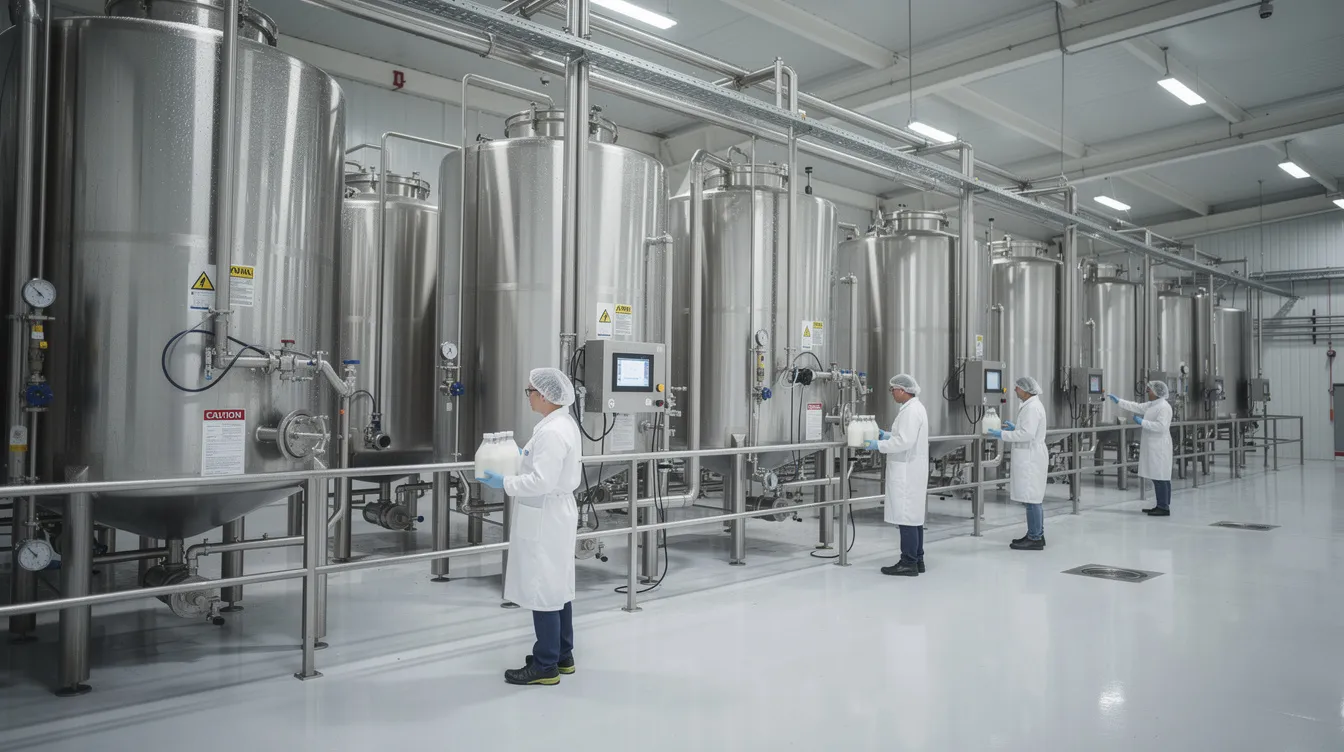
The dairy beverage manufacturing process is a step-by-step industrial route transforming chilled raw milk into packaged, tested and dispatch-ready beverage products. The complete dairy beverage processing line follows this flow:
Raw Milk Reception → Milk Testing and Quality Approval → Filtration/Clarification → Raw Milk Chilling and Storage → Standardisation → Ingredient Preparation → Dairy Beverage Formulation and Blending → Preheating → Homogenisation → Pasteurisation or UHT Heat Treatment → Cooling or Aseptic Holding → Filling and Packaging → Secondary Packaging → Cold Storage/Warehouse → Dispatch.
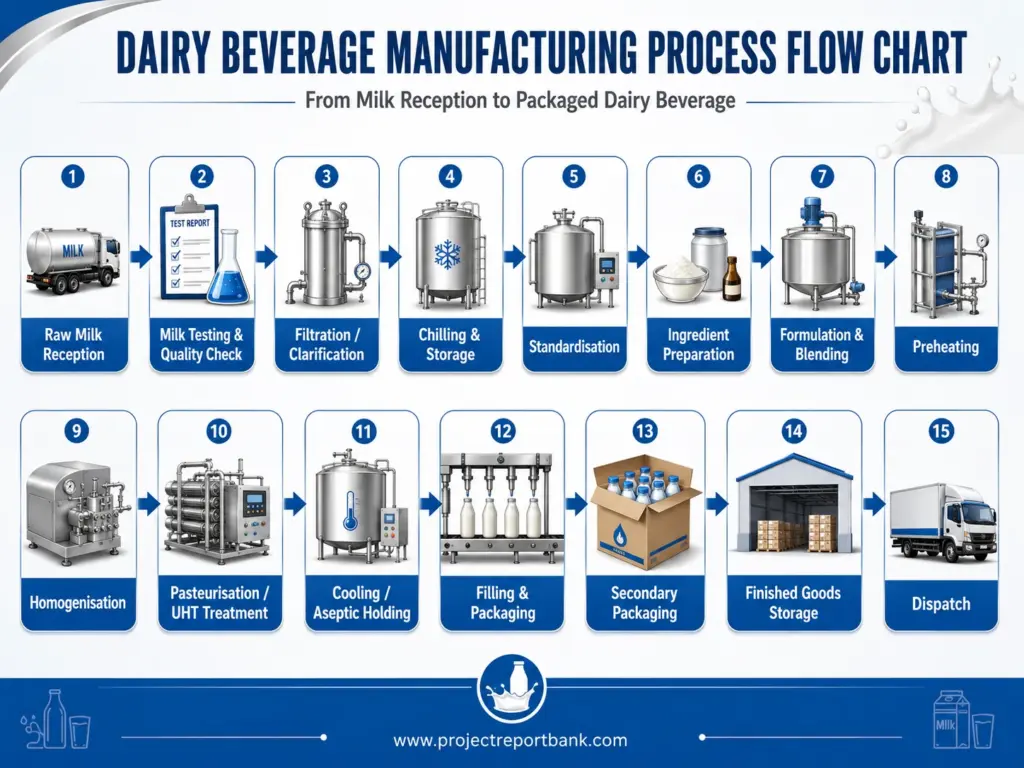
Some plants may vary the order – for instance, placing clarification before or after initial chilling, or using in-line versus batch standardisation. However, the entire process must always satisfy food safety, product quality and regulatory norms. New processing methods continue to emerge, but the fundamental process architecture remains consistent. Microbial safety is a primary concern in dairy beverage manufacturing, requiring systems like HACCP throughout.
At a high level, two main philosophies exist: the pasteurised dairy drink manufacturing process (chilled distribution, shorter shelf life) and the UHT or aseptic dairy beverage production process (higher capital cost, aseptic packaging, ambient distribution). This complete dairy beverage plant process flow chart forms the technical backbone for sizing capacity, utilities, manpower and costing in any dairy beverage manufacturing plant project report.
Raw Milk Reception and Quality Testing
Raw milk arrives at the dairy beverage processing plant in insulated road tankers or cans. Raw receiving processors weigh milk on a weighbridge or measure it volumetrically and log it into the traceability system. Quality-control teams sample every tanker. Raw milk is tested for quality, antibiotics, and temperature before processing – including checks for acidity, fat, SNF, density, adulteration (added water, starch, urea, detergent) and organoleptic examination.
Microbiological checks such as MBRT and antibiotic residue screening are critical. Milk with inhibitory substances must be rejected as it can disturb downstream processing and violates FSSAI food-safety regulations. A practical acceptance–rejection protocol defines parameter ranges, conditional acceptance with segregation for quick processing, and documentation in case of rejection.
From a project-economics viewpoint, consistent high-quality raw milk improves yield, supports longer shelf life and directly influences profitability. Poor SNF or adulterated milk means fewer solids per litre, raising cost and distorting the assumptions used in DPR financial projections.
Filtration, Clarification and Initial Milk Handling
After reception and approval, milk is pumped through strainers to remove visible foreign matter, then through a clarifier or clarifying separator to remove finer impurities, sediments and some somatic cells. Sanitary milk pumps, food-grade stainless-steel pipelines and improved mix proof valves ensure hygienic handling. Balance tanks provide steady feed to clarifiers, reducing surges. The choice of appropriate construction materials matters – all product-contact surfaces must be fully drainable, smooth-finished stainless steel suitable for CIP.
Minimising time in the temperature safety zone (roughly 10–30°C) is critical, as this range accelerates microbial growth. In DPRs and layout planning, pipeline routing and pump placement are often overlooked but can become hidden causes of higher process losses and energy consumption.
Milk Chilling and Raw Milk Storage
Raw milk must be cooled rapidly and stored at or below 4°C to prevent microbial growth. Plate heat exchangers or instant chilling systems bring milk to the target temperature quickly. Insulated raw-milk storage tanks or vertical silo tanks are fitted with agitators, temperature probes and level indicators, integrated with refrigeration and CIP systems. Dairy processing depends on a continuous cold chain to ensure product safety and quality from this point forward.
Storage capacity – often 1.5–2 times average daily reception – must match procurement windows and processing schedules. Inadequate silo capacity can restrict the dairy beverage production line even if downstream equipment is sized correctly. Chilled storage, refrigeration and insulation form a significant portion of the dairy beverage manufacturing plant setup cost in India.
Standardisation of Milk for Dairy Beverages
Standardisation adjusts milk fat and solids-not-fat to achieve consistent composition for each product. The fat and protein contents of milk are adjusted to meet legal or product recipe requirements. A cream separator blends cream and skim milk to target percentages, sometimes integrated with PLC/SCADA for precision. Different beverages require different levels: low-fat flavoured milk, full-cream chocolate milk, thick milkshakes with higher total solids, or protein-enriched drinks using added milk protein concentrates.
FSSAI prescribes minimums – for example, cow milk requires at least 3.2% fat and 8.3% SNF. Milk fat and solids are the most expensive raw materials, so precise standardisation reduces give-away, controls cost per litre and improves yield calculations in the DPR.
Ingredient Preparation for Dairy Beverages
Industrial dairy beverage formulation uses liquid and dry ingredients: sugar, cocoa powder, chocolate syrup, stabilisers (carrageenan, guar gum), emulsifiers, flavours, colours, fruit preparations, vitamins, minerals and functional ingredients like whey protein isolate or probiotics. Dedicated ingredient preparation systems include sugar-dissolving tanks, high-shear mixers for stabiliser hydration and pre-blending tanks for cocoa slurries used in chocolate milk manufacturing.
Ingredients like stabilizers may be necessary to maintain particle dispersion in flavored dairy beverages, and RO-treated process water is essential for dissolving them. Allergen management and ingredient traceability – particularly for nuts, soy or functional additives – are critical for food safety and regulatory compliance. Flavoured milk manufacturing and milkshake production each require distinct formulation systems reflecting ingredient and product characteristics.
Dairy Beverage Formulation and Blending Process
Standardised milk is transferred to formulation tanks where minor ingredients are added during blending to achieve the desired flavor and consistency. Equipment includes jacketed mixing tanks with agitators, high-shear mixers for dispersing powders, flow meters for accurate dosing and recipe management software. A rapid process combining liquid base with dry powders must be controlled to avoid lumps and foaming.
Formulation determines viscosity, flavour profile, stability against sedimentation and cost per litre – all of which feed directly into pricing and contribution margins in the DPR model. Flavored milk beverages contain at least 1.0% milk protein, and blended milk beverages must have a milk protein content of at least 1.0g/kg. Milkshake beverages blend milk with ice cream and flavorings at higher total solids. Some categories like fermented milk beverages use lactic acid bacteria for fermentation – fermentation is used in products like yogurt and kefir to develop flavor and texture. Lactobacillus beverages contain live bacteria and have specific protein content requirements. For protein and functional dairy beverages manufacturing plant projects – including post workout recovery drink formats – formulation systems may require additional powder-handling capacity and deaeration.
Preheating of the Beverage Mix
Preheating the blended mix through plate or tubular heat exchangers before homogenisation improves fat emulsification, stabiliser functionality and overall process efficiency. Temperatures and holding times are determined by product formulation and the design of downstream equipment, and must be finalised with qualified dairy technologists. Preheating can reduce homogenisation pressure requirements, improve microbial kill in subsequent heat treatment and minimise fouling, thereby reducing cleaning frequency and energy costs. Preheating units should match the dairy beverage production line capacity in litres per hour and include automatic controls, temperature recorders and diversion valves.
Homogenisation Process for Dairy Beverages
Homogenisation is a critical mechanical process where the dairy beverage mix is forced at high pressure through narrow gaps, breaking fat globules into much smaller sizes. Homogenization prevents cream layer formation in milk products and provides a smooth, uniform texture. Homogenization occurs at 50–75°C and 15–25 MPa pressure. In a two-stage homogeniser, the first stage primarily reduces fat-globule size while the second stage breaks up clusters – especially important for chocolate milk, high-fat beverages and milkshakes.
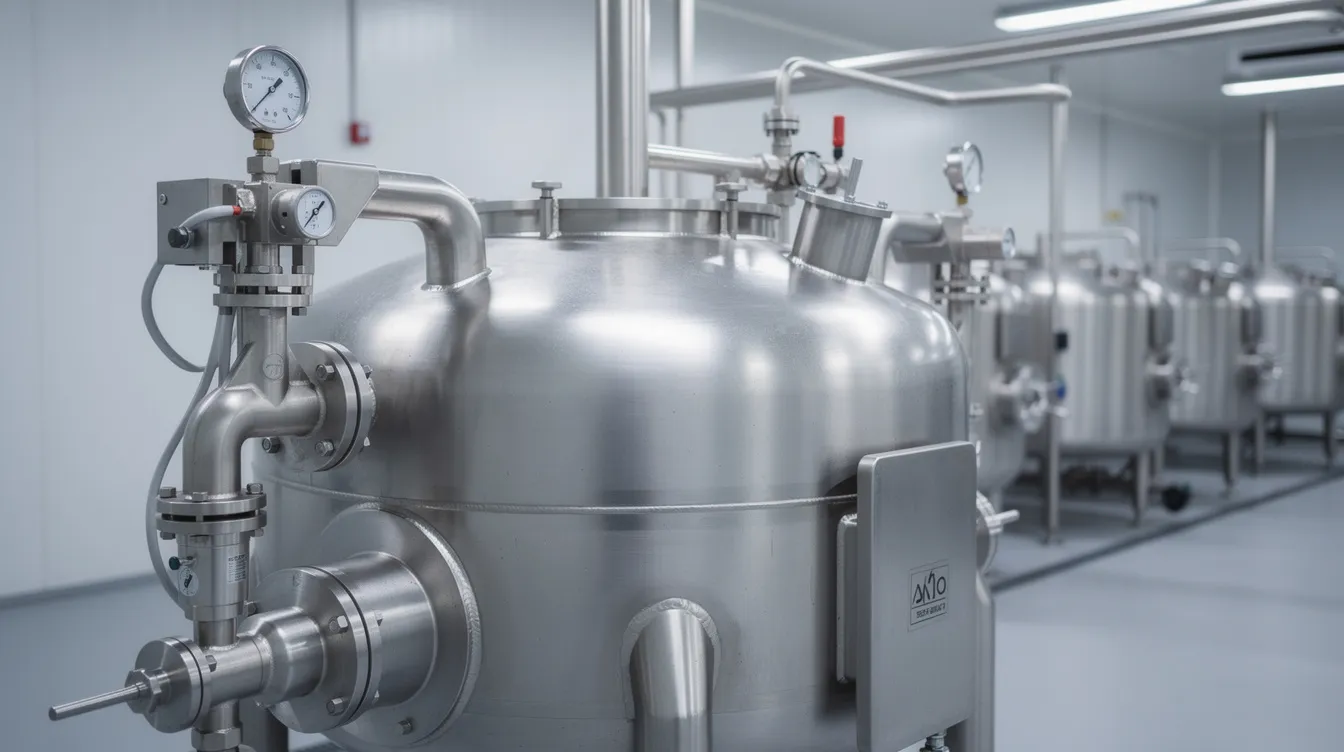
Homogenization improves product consistency and extends shelf life by preventing creaming and sedimentation. Poor homogenization can lead to product stratification during shelf life. Homogeniser throughput must equal or exceed pasteurisation/UHT and filling capacities; otherwise, it becomes the bottleneck machine. Homogeniser pressure rating, automation features and energy consumption contribute significantly to dairy beverage plant machinery and equipment cost and must match the planned product mix.
Heat Treatment of Dairy Beverages
Thermal processing is a fundamental process essential to ensure food safety, destroy pathogenic microorganisms and achieve the desired shelf life. The dairy beverage heat treatment process can be implemented via HTST pasteurisation or UHT systems (indirect plate/tubular or direct injection), with parameters defined by product type, legal standards and process-validation requirements. Exact temperatures, holding times and cooling regimes must be finalised by competent technologists to comply with FSSAI regulations.
Pasteurised Dairy Beverages
High Temperature Short Time is the common pasteurization method for dairy beverages. Pasteurization typically involves heating milk to at least 72°C for 15 seconds in a plate heat exchanger with regeneration, followed by rapid cooling. Pasteurization destroys pathogens to improve food safety and pasteurization extends the shelf life of dairy beverages. Pasteurization is crucial for mass consumption safety, and pasteurized beverages can be sold at better prices due to assured quality.
Pasteurised products must be stored and distributed under continuous refrigeration. Maintaining temperatures below 4°C is critical for pasteurized dairy beverages to inhibit spoilage organisms, giving a typical shelf life from a few days to about two weeks. Pasteurised lines often have lower capital cost and simpler packaging – plastic bottles, HDPE bottles, pouches or cups – making them attractive for regional markets. However, they impose ongoing refrigeration and logistics requirements, and from a DPR viewpoint require reliable cold-chain distributors to achieve high capacity utilisation.
UHT Dairy Beverages
Ultra-High Temperature processing involves heating milk to 135°C to 150°C for a few seconds to achieve commercial sterility. UHT is not merely “higher pasteurisation” but a different process philosophy requiring tight control of preheating, holding, cooling, deaeration and sterile zoning. The sterilized milk beverage is then filled aseptically into pre-sterilised packages – aseptic cartons or aseptic PET bottles – through aseptic filling machines. Aseptic filling technology can achieve a shelf life of 2–9 months at ambient temperature.
UHT plants require higher capital expenditure, sophisticated automation and skilled operation, but offer decreased transport costs and significantly reduce dependence on cold-chain distribution. This makes UHT technology valuable for ready-to-drink dairy beverages manufacturing plant projects serving distant markets and e-commerce channels.
Choosing Between Pasteurisation and UHT
| Attribute | Pasteurised Dairy Beverages | UHT Dairy Beverages |
|---|---|---|
| Typical shelf life | 3–14 days (refrigerated) | 2–9 months (ambient) |
| Refrigeration required | Continuous cold chain | Not required if aseptically packed |
| Processing complexity | Moderate | High |
| Packaging | Bottles, pouches, cups | Aseptic cartons, aseptic bottles |
| Capital cost | Lower | Significantly higher |
| Operating skill | Standard dairy operations | Specialised technical teams |
| Distribution radius | Regional/local | National/export possible |
The optimal choice depends on target markets, distribution radius, retailer capabilities and project budget. Many dairy producers eventually adopt a hybrid model. This decision strongly influences the cost of setting up a dairy beverage plant and should be finalised before locking plant layout and financial projections. Detailed engineering and pilot trials should confirm actual process parameters before committing to large-scale UHT investments.
Cooling, Aseptic Holding and Intermediate Storage
After heat treatment, pasteurised beverages are rapidly cooled to near 4°C and either sent directly to filling or held briefly in insulated balance tanks. In UHT systems, product is cooled to filling temperature and held in an aseptic tank under sterile conditions with nitrogen blanketing. Tank sizing must match upstream capacity and downstream filler speed; oversized tanks increase product hold-time and risk quality degradation. Design features like conical bottoms, smooth finishes and spray balls for CIP support food safety and efficient cleaning. Intermediate storage sizing affects batch size, changeover time and utilisation of expensive UHT and filling equipment.
Dairy Beverage Filling and Packaging Process
The packaging filling stage portions the processed dairy beverage into consumer packs – PET bottles, HDPE bottles, glass bottles, pouches, thermoformed cups or aseptic cartons – using specialised filling machines. Container preparation includes bottle blowing or de-stacking, rinsing or sterilisation. Filling may be volumetric, flow-meter or weight-based, followed by capping, date/batch coding, labelling and on-line inspection.
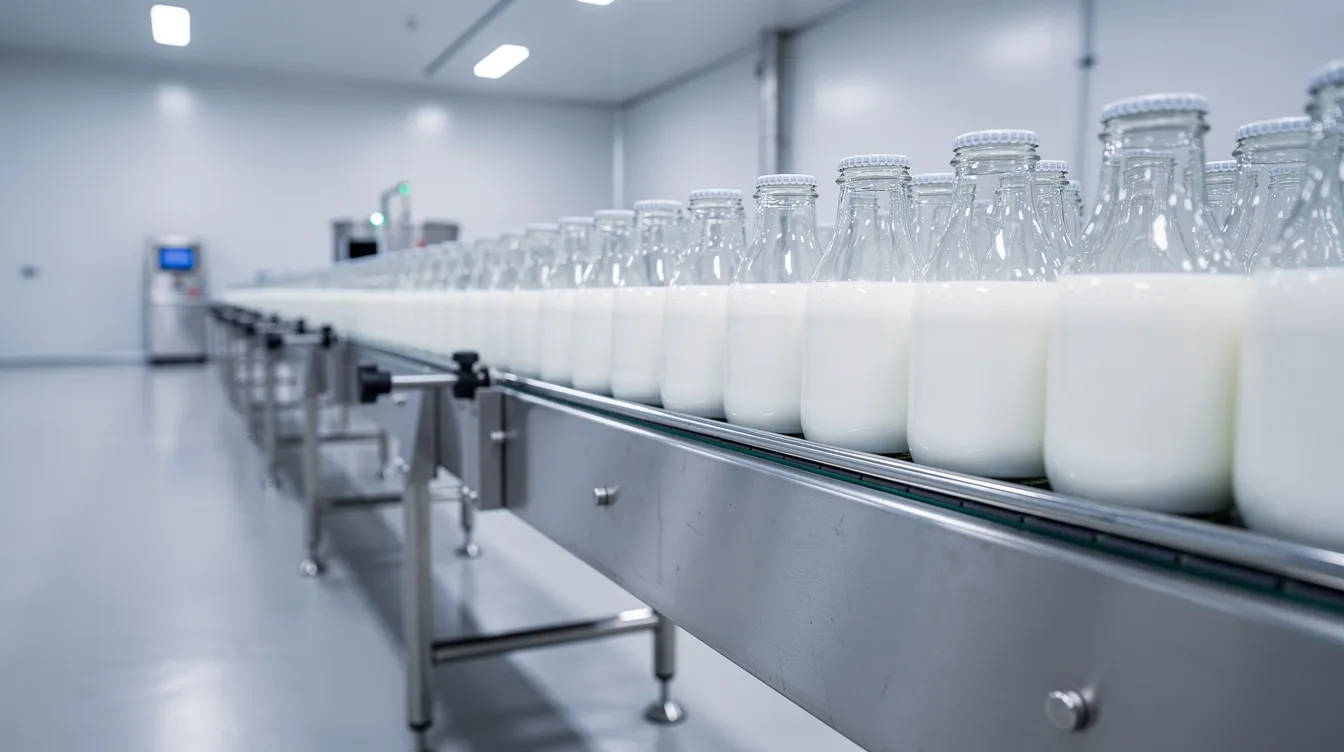
Standard hygienic cold filling serves pasteurised products, while the dairy beverage bottling process for UHT requires aseptic systems combining sterile product, sterile packaging and sterile environment. Aseptic packaging prevents post-process contamination in dairy beverages. Packaging material selection significantly affects project cost, product positioning and working-capital needs. Hot filling may be used for certain acidified beverages but is less common for neutral-pH milk drinks.
Aseptic Filling for UHT Dairy Beverages
In an automatic dairy beverage production line for UHT products, aseptic filling is a critical sub-system. Packaging sterilisation (hydrogen peroxide and hot air for cartons or preforms), sterile product piping, aseptic dosing nozzles and hygienic sealing operate under positive-pressure sterile air. Robust monitoring – temperature logs, sterilant concentration checks, filter integrity – demonstrates that the dairy plant consistently meets commercial sterility. This technology has higher capital and maintenance costs but delivers extended shelf life and nationwide distribution reach, making it central to serious dairy beverage manufacturing plant project report investments. Lenders scrutinise process validation and technical risk in aseptic dairy processing line projects closely.
Secondary Packaging and End-of-Line Automation
Primary packs exit the filler and move through labellers, coders and inspection systems before shrink-wrapping into bundles, packing into corrugated cartons or creating tray packs. In higher-capacity plants – some operating a dozen packaging lines for multiple SKUs – conveyors, case sealers, checkweighers, vision systems and palletisers form an integrated end-of-line system. Supporting expanded automation at this stage reduces manual labour and improves throughput but increases investment and demands careful line balancing with expected sales volumes. Coding and batch traceability on secondary packaging support both inventory control and recall readiness across the dairy lifecycle.
Cold Storage, Finished Goods Warehouse and Dispatch
Pasteurised dairy beverages must be stored in cold rooms at controlled temperature bands with proper air circulation and racking. UHT beverages can be stored in ambient dry warehouses, though packaging containers must be protected from direct sunlight and extreme heat. Dispatch planning considers shelf life, transit times across Indian states and retailer replenishment cycles. Under-sized cold rooms force frequent dispatches, while oversized storage adds unnecessary capital and operating cost. Efficient warehouse management using FIFO/FEFO principles plays a major role in controlling wastage, managing working capital and improving profitability in commercial dairy beverage production.
Dairy Beverage Production Line Machinery and Equipment
A dairy beverage production line comprises carefully selected automated dairy processing equipment. Machinery specification must reflect product mix, capacity, automation level and budget.
| Production Stage | Typical Equipment | Main Function |
|---|---|---|
| Milk Reception | Tanker unloading, weighbridge, weigh bowl | Intake, traceability |
| Filtration/Clarification | Strainers, centrifugal clarifier | Remove physical impurities |
| Chilling | Plate heat exchanger, chiller | Cool raw milk to ≤4°C |
| Raw Milk Storage | Insulated silos, agitators | Buffer supply, temperature control |
| Standardisation | Cream separator, dosing skid | Adjust fat and SNF |
| Ingredient Preparation | Sugar tanks, high-shear mixer | Prepare additions uniformly |
| Blending | Jacketed mixing vats, flow meters | Combine base milk with ingredients |
| Homogeniser | Two-stage high-pressure homogeniser | Fat-globule reduction, stability |
| Pasteuriser/UHT | PHE, holding tubes, UHT steriliser | Thermal treatment for safety and shelf life |
| Intermediate Tanks | Balance/aseptic holding tanks | Buffer between processing and filling |
| Filling Machine | Hygienic or aseptic fillers | Portioning and packaging |
| Capping/Sealing | Cappers, heat sealers | Closure and integrity |
| Labelling/Coding | Labellers, inkjet/laser coders | Brand identity, traceability |
| Secondary Packaging | Case packers, shrink wrappers, palletisers | Logistics grouping |
| CIP System | Tanks, pumps, spray balls, controls | Hygiene maintenance |
| Utilities | Boiler, chillers, compressors, WTP, ETP, DG sets | Support continuous operation |
Automated equipment from different suppliers must be integrated carefully to avoid mismatched capacities. For detailed cost analysis, readers can refer to the dedicated resource on dairy beverage processing equipment cost. While imported lines may offer higher speed, Indian-manufactured equipment can provide cost advantages and easier service support; the DPR should evaluate lifecycle cost rather than just purchase price.
Dairy Beverage Production Line Capacity Planning
Capacity is expressed in litres per hour for the processing line and litres per day or per annum for overall plant output. Milk beverage processing lines can handle 500 L/h to 20 T/h depending on scale. Multiple process systems feeding into shared filling lines must be balanced so that no single machine constrains output.
Consider an illustrative example: a 5,000 L/h pasteuriser paired with a 4,000 L/h filler makes the filler the bottleneck, limiting daily production regardless of upstream capacity. Parallel and concurrent activities – such as ingredient preparation running alongside raw milk processing – can improve utilisation but require careful scheduling. Capacity decisions affect utility sizing, floor space and working capital, and must be integrated into the dairy beverage manufacturing plant project report and financial model. Promoters should begin with market demand, then work backwards to define installed capacity and select machinery.
Batch Production vs Continuous Dairy Beverage Processing
Batch systems formulate, heat and hold product in discrete tank batches, offering flexibility for multiple SKUs, frequent recipe changes and smaller volumes – well-suited to meet flexible processing demands of emerging brands or multi product facility designs. Continuous processing lines handle standardisation, blending, homogenisation and heat treatment at constant flow rates, ideal for large volumes with fewer SKUs. Batch systems generally require lower initial investment but have higher changeover losses; continuous lines demand greater automation but deliver superior process efficiency and energy use. Many Indian dairy processors start with batch lines and later add continuous UHT capacity as demand stabilises. The choice influences plant layout, CIP design, control systems and financing, and must be articulated in the DPR.
CIP Cleaning System in a Dairy Beverage Processing Plant
Cleaning-in-Place is a central hygiene system that cleans tanks, pipelines and sterilisers without dismantling. CIP systems were developed to improve cleaning efficiency in dairy processing. CIP systems use acid, alkali solution and pure water circulated at controlled temperatures and flow rates. A typical CIP cleaning process takes about 2 hours to finish, and CIP systems ensure high sanitation in dairy processing, which is essential to improve food safety and support food safety across the entire process.
Well-designed CIP avoids cross-contamination between flavours or SKUs. Supporting simultaneous CIP operations on multiple circuits can significantly reduce cleaning downtime. CIP capacity must align with the number of process lines and filling machines; under-sized CIP extends cleaning time and reduces production hours. CIP chemicals, water and energy are operational costs that should be estimated realistically in the DPR’s operating-expense projections. Prevent equipment performance issues by ensuring CIP system design addresses all product-contact surfaces, and consider equipment safety during high-temperature wash cycles.
Utilities Required for a Dairy Beverage Production Line
Key utilities include electric power, steam (from boilers), refrigeration (chillers, ice water), compressed air, process and hot water, water-treatment plant, effluent-treatment plant and backup power (DG sets). Utilities must be sized on peak demand of the complete dairy beverage manufacturing process – for example, simultaneous operation of UHT plant, homogeniser, fillers, CIP and cold rooms – rather than average loads.
Inadequate steam pressure interrupts continuous pasteurisation; insufficient refrigeration tonnage compromises milk cooling and cold storage. Utilities often account for a major share of both project cost and monthly operating expenses. Accurate estimation of consumption (electricity per litre, steam per litre, refrigeration load per tonne) is vital for a realistic dairy beverage processing plant DPR. Environmental compliance – effluent treatment for dairy wastewater, potential water-reuse and pollution-control norms – must be addressed in project planning.
Quality Control During Dairy Beverage Manufacturing
A quality-control laboratory monitors raw materials, in-process product and finished goods across the dairy beverage production process step by step. For raw materials, routine tests cover fat, SNF, microbial load, antibiotic residues in raw milk; water quality; sugar, cocoa and other raw materials purity; and packaging-material checks.
In-process QC tracks pH, acidity, density, total solids, viscosity, pasteurisation/UHT temperature records, homogenisation pressure and sensory parameters. Finished-product QC includes microbiological counts, chemical composition, sensory evaluation (colour, flavour, mouthfeel), fill volume compliance, package integrity, leak tests and accelerated shelf-life studies. Milk protein content must be at least 1.0% for beverages as per regulatory requirements. Batch coding and traceability support regulatory compliance and risk management, yielding higher quality products across production runs.
Process Losses and Yield Management
Process losses represent the difference between input milk and ingredients and saleable finished product. Loss points include reception spillage, clarifier and separator skimmings, standardisation mismatch, product trapped in pipelines (equipment hold-up), discarded initial and final product during pasteuriser/UHT start-up, and under- or over-filled packages rejected by QC. Individual losses of 1–2% at each stage can accumulate to several percent of total input – financially very significant in plants handling tens of thousands of litres daily.
Realistic loss assumptions must be built into mass-balance calculations, raw-material cost estimates and profitability projections in the DPR. Over-optimistic yield assumptions distort DSCR and IRR assessments. Operational strategies to reduce losses include proper pipeline design, standardised CIP schedules, minimising flavour changeovers, accurate filling machines and strong operator training. Even small process improvements that increase milk production yield translate directly into improved margins.
Automation and Process Control in Dairy Beverage Plants
Modern industrial dairy beverage manufacturing relies on PLCs, SCADA systems, automated valves, sensors (temperature, pressure, flow, level) and recipe-management software. A central control room can oversee the entire process in real time. Benefits include consistent product quality, precise parameter control, traceable production records, fewer manual errors and enhanced food safety.
Automation levels range from semi-automatic lines to fully integrated systems supporting expanded automation with real-time data logging and remote diagnostics. Higher automation increases initial equipment cost but reduces labour, product variability and wastage. Promoters should match automation to plant scale, workforce capability and financing constraints rather than assuming maximum automation is always optimal. A flexible and innovative approach to controls – blending manual oversight with automated equipment where it balances capital costs against operational savings – often produces the best outcome for Indian projects.
Typical Dairy Beverage Plant Process Flow Chart
For project planning and bank discussions, a dairy beverage process flow diagram presented as a clear text-based chart is invaluable.
Pasteurised Dairy Beverage Production Line: Raw Milk Reception → Testing → Filtration/Clarification → Chilling → Raw Milk Storage → Standardisation → Ingredient Preparation → Formulation/Blending → Preheating → Homogenisation → Pasteurisation (HTST) → Cooling → Pasteurised Product Storage → Hygienic Filling (bottles/pouches/cups) → Coding and Labelling → Secondary Packaging → Cold Storage → Dispatch under Refrigeration.
UHT Dairy Beverage Production Line: Raw Milk Reception → Testing → Clarification → Chilling/Storage → Standardisation → Ingredient Preparation → Formulation/Blending → Preheating → Homogenisation → UHT Treatment → Cooling to Aseptic Filling Temperature → Aseptic Tank → Aseptic Filling (cartons/aseptic bottles) → Coding and Labelling → Secondary Packaging → Ambient Warehouse → Dispatch.
These dairy beverage manufacturing flow charts are generic templates; the final configuration must be adapted to specific products, capacities and technologies. They form the basis for detailed engineering drawings, utility load calculations and cost estimation in a professional DPR.
Factors Determining the Final Production Line Design
Key design determinants include planned plant capacity, range of products (flavoured milk, chocolate milk, milkshakes, functional drinks), number of SKUs, packaging formats, shelf-life targets and cold-chain availability. Land and building layout, local infrastructure, utility availability and regulatory requirements shape equipment selection. Construction materials matters for all building elements in contact with process environments. Future expansion should be planned – leaving space and utility margins for additional filling lines or upgraded UHT capacity. Operational factors like number of shifts, planned working days, labour availability and skill levels influence automation and CIP design. Each factor must be explicitly justified in the dairy beverage factory project report India so lenders understand the rationale behind the chosen configuration. Flexible processing demands across seasons and product launches should inform design from the outset.
Common Bottlenecks in Dairy Beverage Manufacturing Plants
Frequent bottlenecks include insufficient raw-milk storage capacity, slow ingredient-preparation systems, under-sized homogenisers, filling demand exceeding filler capacity, limited cold-storage space and inadequate CIP capability. Packaging-material supply disruptions, labour shortages and sub-optimal changeover procedures reduce effective utilisation well below installed capacity.
Bottlenecks often arise because machinery is purchased independently without a holistic production-line design. For instance, a plant with a fast UHT line but slow aseptic filler forces product to wait in aseptic tanks, raising quality risk and causing downtime that impacts monthly sales and cash flow. Equipment performance issues compound when multiple process systems are not aligned. Careful bottleneck analysis during project conceptualisation – combined with realistic scheduling – can improve throughput, reduce unit cost and strengthen financial metrics presented to banks.
Dairy Beverage Manufacturing Process and Project Economics
Technical processing choices connect directly with financial outcomes. Milk procurement cost and seasonal variation, utilisation of fat and milk solids, ingredient cost, energy consumption, labour, packaging material cost and logistics expenses are the key economic drivers. Capacity utilisation is critical: fixed costs are spread over more litres at higher utilisation, significantly improving profitability; under-utilised plants face high cost per litre.
Product mix influences margins – premium protein and functional dairy beverages may carry higher contribution per litre than standard flavoured milk. Process losses, rejections and near-expiry discounts must be realistically estimated as they substantially erode theoretical margins. The production process ultimately serves project economics and must be integrated into the financial model for any commercial production venture.
Importance of the Production Process in a Dairy Beverage Plant DPR
A professional DPR integrates technical process design with financial modelling rather than merely attaching machinery quotations. Key DPR components include description of dairy beverage manufacturing steps, detailed process-flow chart, mass-balance and yield calculations, installed capacity, machinery list with specifications, utility requirements, manpower planning and production schedule.
Financial sections build upon this technical base: project cost estimates, means of finance (equity, term loan, subsidies), projected revenue, operating-cost break-up, working-capital assessment, profitability, cash flow, DSCR, break-even and IRR/ROI analysis. The production process narrative demonstrates to banks that the promoter understands technical realities and has made realistic assumptions. A production-line quotation alone is not a complete project feasibility assessment.
Aligning Market Demand, Capacity and Finance – Consultant’s Perspective
In my practice as a project finance consultant, I consistently advise promoters to follow a structured logic: Market Demand → Proposed Product Mix → Annual Sales Volume → Installed Capacity (L/day and L/h) → Production Schedule (shifts, days) → Machinery Capacity and Line Design → Utilities and Infrastructure → Total Project Cost → Working Capital Requirement → Debt-Servicing Capacity.
For example, targeting 25,000 litres/day of flavoured milk and milkshakes leads to concrete decisions on pasteurisation/UHT line sizing, number and speed of filling machines, packaging types and cold-storage capacity – each translating into investment and financing numbers. Finalising the dairy beverage plant setup cost purely from vendor quotations without integrating demand projections and financial viability can lead to over-designed, under-utilised or financially stressed plants. Sensitivity analysis in the DPR should test robustness under lower capacity utilisation, higher milk prices, increased energy tariffs and delayed market ramp-up. A sound DPR provides a transparent basis for discussions with banks, investors and potential partners.
FAQs on Dairy Beverage Manufacturing Process & Project Planning
Below are answers to additional practical questions commonly raised by dairy entrepreneurs evaluating industrial projects in India.
What is the step-by-step dairy beverage manufacturing process from milk reception to dispatch?
The chronological stages are: raw milk reception and testing, filtration and clarification, chilling and storage, standardisation, ingredient preparation, formulation and blending, preheating, homogenisation, pasteurisation or UHT treatment, cooling or aseptic holding, filling and sealing, coding and labelling, secondary packaging, cold storage or ambient warehousing, and final dispatch. The exact parameters and sequence are adjusted based on the specific product, packaging and shelf-life requirements, and should be validated by dairy technologists.
What minimum capacity is practical for an industrial dairy beverage manufacturing plant in India?
While technically smaller plants are possible, from an economic and financing perspective many bankable projects start from roughly 5,000–10,000 litres per day upwards. Optimal capacity depends on market reach, product mix, investment appetite and access to raw milk supply. Promoters should work backwards from realistic sales projections rather than selecting capacity based solely on machinery availability.
Can I start with pasteurised dairy beverages and later upgrade to UHT and aseptic filling?
Yes, but it requires careful initial planning of building layout, utility sizing and product flow so that a future UHT and aseptic filling block can be integrated without major disruption. Civil foundations, steam and water headers, and drainage should accommodate expansion. Promoters should discuss phased-expansion options with both equipment suppliers and DPR consultants to avoid costly retrofitting.
What regulatory approvals apply to dairy beverage manufacturing plants in India?
Plants must comply with FSSAI licensing and product standards, local pollution-control norms for effluent treatment, factory and boiler regulations, and labour laws. Optional certifications like BIS or AGMARK may apply depending on product type. Process design, quality systems and documentation should be aligned with these requirements from the outset to avoid delays during commissioning.
Why is a DPR necessary before approaching banks for a dairy beverage project loan?
Banks expect a structured dairy beverage manufacturing plant DPR detailing the technical process, machinery specifications, installed capacity, project cost, means of finance, expected revenues, operating costs, profitability, DSCR and risk analysis. Without this, lenders cannot appraise viability and promoters cannot make informed investment decisions. Entrepreneurs or companies planning an industrial dairy beverage manufacturing project in India may seek professional assistance from CA Manish Gugliya and ProjectReportBank.com for Detailed Project Reports, bank finance DPRs, financial projections, CMA Data assistance, feasibility studies, project cost and means of finance documentation, DSCR analysis, working-capital assessment, profitability and break-even analysis, and investor-ready project documentation.