Key Takeaways
- Value-added dairy plant feasibility is about testing whether an industrial dairy project can consistently procure raw milk, convert it into products like paneer, curd, yogurt, ghee or cheese, cover all operating and capital costs, service bank loans and still leave acceptable profit for promoters.
- A proper dairy plant feasibility study converts assumptions on milk procurement, product mix, capacity utilisation and pricing into structured financial projections, DSCR calculations, break-even analysis and sensitivity scenarios rather than relying on generic estimates.
- Banks in India now examine DSCR, break-even capacity utilisation, working capital adequacy and realistic ramp-up timelines before sanctioning term loans for dairy processing plants; template-style project reports with inflated profitability rarely survive credit appraisal.
- Value-added dairy products can stabilize farm income streams and command higher prices than selling raw milk, but only when technical design, cold chain logistics, market strategy and financing structure are properly aligned.
- This article, written from the perspective of CA Manish Gugliya, guides promoters on how to evaluate value-added dairy project viability and prepare a bankable dairy processing plant feasibility report for Indian conditions.
Introduction: Why Value-Added Dairy Plant Feasibility Matters Before You Invest
Setting up a value-added dairy plant in India involves far more than purchasing machinery and arranging milk from nearby dairy farms. It is a long-term industrial capital investment that must be tested for viability before a single rupee is committed. India’s milk output increased from 146.30 million tonnes in 2014 to 239.30 million tonnes in 2024, and the Asia-Pacific region accounts for over 35% of global dairy market share. These numbers attract promoters, but national milk production growth alone does not guarantee that a specific project in a specific location will generate returns.
Many farm project promoters focus on visible elements: the building, the processing equipment, the brand name. They ignore harder questions about milk procurement stability, realistic selling prices, operating margins, working capital discipline and debt servicing ability. Establishing a value-added dairy processing facility offers higher profit margins compared to selling raw milk, yet that advantage evaporates if the plant runs at low capacity or if cold chain failures destroy product before it reaches the consumer.
From my experience as a practising Chartered Accountant advising MSMEs and dairy businesses, the most common failures arise from over-optimistic capacity utilisation, underestimation of working capital and inadequate cold-chain planning. A structured value-added dairy plant feasibility study and dairy processing plant feasibility report translates all operational assumptions into projected financial statements, break-even analysis, DSCR and sensitivity scenarios that reveal whether the project is bankable and sustainable.
This article is for entrepreneurs, existing dairy processors, milk cooperatives and investors considering medium-to-large value-added dairy plants in India. The focus is on commercial, technical and financial feasibility rather than generic dairy industry commentary.
What Is a Value-Added Dairy Plant Feasibility Study?
A value-added dairy plant feasibility study is a structured evaluation of whether a proposed industrial dairy processing plant, producing products like paneer, curd, yogurt, lassi, butter, ghee or cheese, can operate profitably and service all its obligations under realistic Indian market conditions.
Such a dairy plant feasibility study assesses whether the project can:
- Consistently procure adequate quality fresh milk from dairy farms and procurement networks
- Convert it efficiently into the chosen dairy products using appropriate technology
- Achieve realistic capacity utilisation across the projection period
- Sell output at commercially viable prices across the target geography
Assessing value-added dairy plant feasibility requires evaluating raw milk supply as the starting point. A strong milk procurement network is crucial for ensuring a consistent supply of quality milk for processing. Without procurement security, financial projections are built on sand.
The financial outcomes a feasibility study must demonstrate include:
- Sufficient gross contribution and EBITDA to cover fixed costs
- Ability to pay interest and term-loan instalments on time
- Adequate working capital to fund daily operations
- Resilience when selling prices fall or milk costs rise
- Acceptable promoter-level return on capital investment
A simple project report, often a template-style document with basic cost and profit estimates, should not be confused with a comprehensive dairy processing plant feasibility report. The latter includes detailed assumptions, integrated financial projections, DSCR, break-even, cash flow analysis and sensitivity testing. For bank finance and serious investment decisions, lenders expect a document that qualifies as a bankable dairy plant project viability analysis rather than a marketing brochure.
Key Components of Value-Added Dairy Project Viability
Value-added dairy project viability rests on four interconnected pillars: technical feasibility, market and commercial feasibility, financial feasibility, and managerial and operational capability.
Weaknesses in any one pillar can undermine overall dairy plant commercial viability. A plant with excellent machinery but no cold chain will lose product to spoilage. A project with strong market demand but excessive debt will struggle with cash flow. A technically sound factory run by an inexperienced team will face quality-control failures and regulatory problems.
The following sections unpack these components systematically, starting with technical feasibility and moving into land and layout, cold chain, market and revenue model, project cost, financial projections, DSCR and risk analysis. A well-prepared value-added dairy plant project report should transparently document all these components so that both promoter and banker can understand the logic behind the numbers.
Technical Feasibility: Capacity, Product Mix and Process Design
Technical feasibility is not about buying the most expensive machines available. It is about designing an efficient, hygienic and scalable production system aligned with the selected value-added products and targeted capacity. For a regional industrial dairy plant, capacity typically ranges from 50,000 to 1,50,000 litres per day (LPD), though smaller plants at 10,000 to 20,000 LPD serve specific market niches.
Production capacity planning and product mix decisions must be made together. A plant processing paneer, curd and flavoured beverages simultaneously needs different process lines, utilities and cold rooms compared to one focused on ghee and milk powder. Dairy plant capacity planning and product mix provides a detailed reference on how capacity for multiple SKUs should be balanced.
Process technology differs across products. The value-added dairy products manufacturing process and production line for paneer involves coagulation and pressing; for curd and yogurt, fermentation tanks and culture labs; for ghee, fat separation and clarification. Line compatibility matters because running incompatible products on the same line creates bottlenecks, cross-contamination risk and lower throughput.
Key technical considerations include:
- Machinery selection: Imported vs. Indian equipment, stainless steel grade (AISI 304 vs. 316), automation levels (PLC/SCADA), CIP systems. Promoters should study the implications for both cost and reliability; the value-added dairy plant machinery and equipment cost page provides an overview of typical cost heads.
- Utilities and services: Boilers for steam, chillers, refrigeration plant, compressed air, RO/soft water treatment, CIP sanitation systems. Inadequate sizing of these elements creates hidden bottlenecks. Utilities often account for 5-10% of operating expenditure.
- Laboratory and QC: In-house testing for fat, SNF, acidity, microbial counts. Regulatory compliance in dairy processing includes adherence to FSSAI food safety standards and local health codes.
- Manpower: Skilled labor is essential for effective dairy processing and quality management. Production operators, QC staff, maintenance technicians, procurement executives and cold-chain logistics supervisors must be budgeted. A dairy farm can house 100 to 1,000 milking cows at the supply end, but the processing plant needs its own dedicated human resources. Small dairy farms in regions like Republika Srpska yield 3,050 to 4,175 litres of milk per cow annually; Indian milk yield per cow varies by breed and management, and procurement planning must factor in realistic per-animal output.
Provision for future expansion (space for another pasteuriser line, additional fermentation tanks, extra cold rooms) matters because many Indian dairy plants need to scale within 3 to 5 years if the business plan succeeds.
Land, Building, Utilities and Hygienic Infrastructure
For an industrial dairy processing plant, land and building design directly impact food safety compliance, product quality, operating cost and future expansion. These factors influence dairy plant technical feasibility and economic feasibility.
Key layout principles include:
- Segregated “raw” and “clean” zones with controlled product flow from milk reception to processing, packaging and dispatch
- Separate utility areas for boilers, generators and effluent treatment
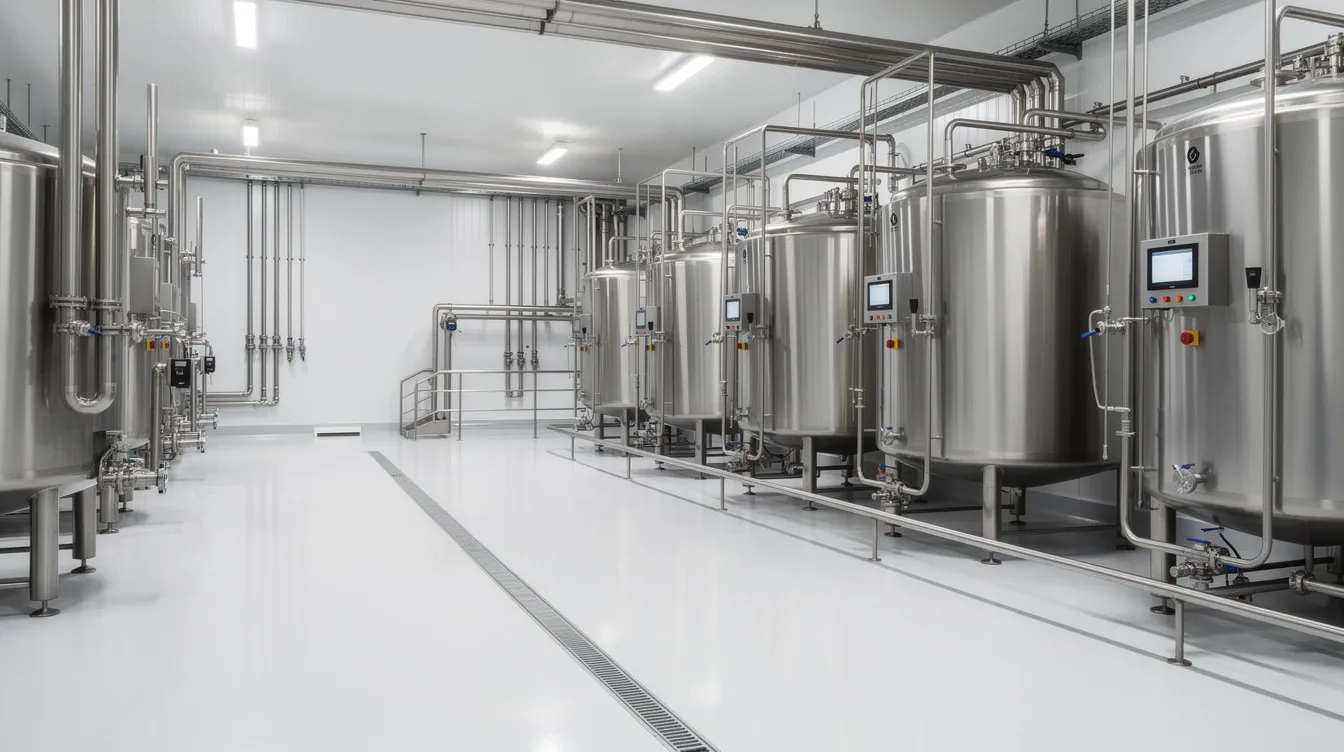
- Wet processing areas with alkali and acid-resistant tiled floors, glazed walls up to 1.5 metres, and proper drainage slopes per BIS and FSSAI guidelines
Practical land requirements: 1 to 3 acres for a 50,000 to 1,00,000 LPD value-added dairy plant, with road access for milk tankers and reefer vehicles, municipal permissions, and scope for future building expansion.
Mandatory utilities include:
- Reliable 3-phase electricity with backup DG sets
- Assured drinking water supply for both processing and CIP, plus a water treatment plant
- Steam and hot water systems for pasteurisation and coagulation
- Compressed air for pneumatic operations
- Effluent treatment plant (ETP) or zero liquid discharge systems
Environmental compliance involves managing waste disposal and meeting local regulations on effluent treatment. Failure to budget for ETP (costs can range from ₹0.35 to 2.5 crore depending on standards and site conditions) causes delays in commissioning and regulatory problems.
The value-added dairy plant land, building, utilities and hygienic layout resource explains how an optimal layout reduces cross-contamination risk and improves material movement efficiency.
Cold Chain Feasibility for Chilled Value-Added Products
For products like paneer, curd, yogurt, probiotic drinks and lassi, uninterrupted cold chain from factory to retailer is a non-negotiable condition for value-added dairy project viability.
Cold chain logistics are essential to maintain the quality of perishable dairy products during transport and storage. Typical cold-chain elements include:
- Chilled process rooms and blast coolers for rapid cooling after production
- Walk-in cold rooms maintained at 0 to 4°C for paneer and curd storage
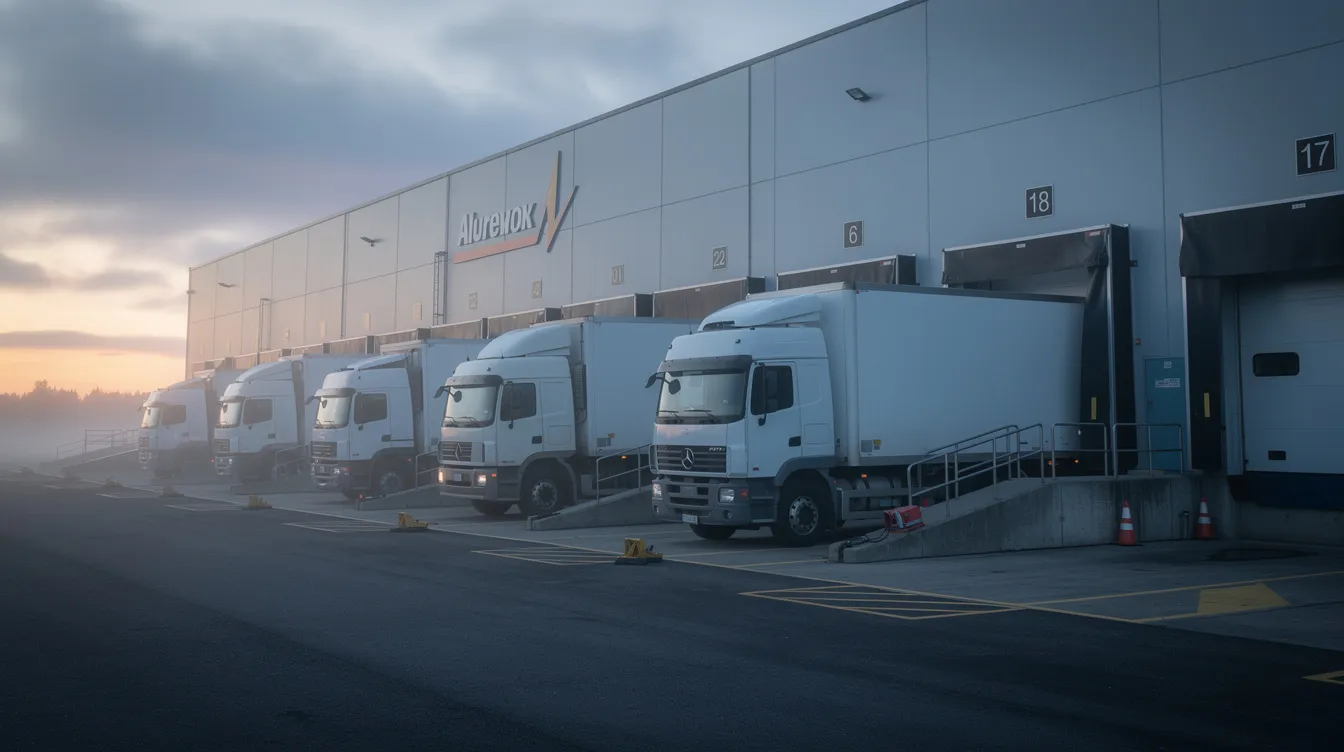
- Reefer trucks and insulated delivery vehicles for distribution
- Distributor-level refrigeration infrastructure at depots and retail points
Shelf-life considerations directly shape route planning, distributor selection and SKU strategy. Paneer carries 7 to 15 days shelf life under proper chilled conditions. Probiotic products and yogurt typically offer 15 to 30 days if packaging integrity and cold chain are maintained. Poor cold chain can cause spoilage losses of 5 to 10% of production.
Cost aspects must be built into dairy plant financial feasibility projections:
- Refrigeration and cold storage account for a major share of power consumption; systems run continuously
- Maintenance of cold rooms, reefer vehicles, and temperature monitoring equipment adds recurring cost
- Climate and location influence cold chain cost; longer transport distances and higher ambient temperatures require stronger insulation or active cooling
The cold storage and cold chain requirements for value-added dairy products page covers design options and capacity considerations in detail.
Market Feasibility and Product-Mix Assessment
Even a technically sound plant will fail if the market cannot absorb its planned output at viable prices. Market feasibility is central to dairy plant project viability analysis.
Market research is necessary to ensure demand for the selected dairy products before setting up a processing plant. Market demand for dairy products should consider target consumer demographics and dietary preferences. Value-added dairy products are increasingly popular among consumers, but popularity does not guarantee demand at a specific price point in a specific geography.
Key product categories and their typical characteristics:
| Product | Margin Profile | Shelf Life | Cold Chain Need | Market Complexity |
|---|---|---|---|---|
| Paneer | Higher per kg | 7-15 days | Very high | Moderate |
| Curd/Dahi | Moderate | 15-21 days | High | Low |
| Greek Yogurt | Premium | 15-30 days | High | High (education needed) |
| Ghee | Good | Long (months) | Low | Moderate |
| Lassi/Beverages | Moderate | 15-30 days | High | High (branding) |
| Cheese | Good | Varies | Medium-High | High |
Cheese production requires 6 to 8 litres of milk per kilogram of cheese. This conversion ratio has a direct bearing on raw material cost per kg and therefore on contribution margin. Diversification strategies enhance market positioning for dairy farms and processing units alike.
Target geography for chilled dairy products typically covers a 150 to 300 km radius from the plant. Beyond that, transportation costs and cold-chain risks escalate. Institutional demand from HoReCa (hotels, restaurants, caterers), sweet shops, modern trade (supermarkets) and e-commerce channels must all be mapped.
Distribution structure matters: distributors and sub-distributors typically take 10 to 20% margin; retailers similarly. Trade promotions and branding costs reduce net effective selling price. Value-added dairy products can command higher prices than raw milk due to differentiation and branding opportunities, but these premiums must be verified through market assessment, not assumed.
Dairy processing can enhance farmer relationships by providing a reliable outlet for milk production. This creates a competitive advantage in milk procurement stability.
SKU strategy, including pack sizes (200 g, 500 g, 1 kg for paneer; 200 g and 400 g curd cups; family vs. single-serve yogurts), influences production planning, packaging cost and inventory risk. The value-added dairy products revenue model and market strategy resource explains how to convert market assumptions into a structured revenue model for the feasibility study.

Project Cost and Means of Finance
Total project cost, including land, civil construction, plant and machinery, utilities, quality-control lab, cold chain, vehicles and working capital margin, is the starting point for evaluating dairy plant investment feasibility. Financial viability involves estimating capital and operational expenditures for a dairy processing plant before committing to specific suppliers or construction contractors.
Major capital cost heads include:
- Land acquisition or lease and site development
- Factory buildings, utility blocks and cold rooms
- Processing and packaging machinery
- Refrigeration and cold storage systems
- Electrical installations, transformer, DG sets
- Laboratory and QA equipment
- Effluent treatment plant
- Vehicles (reefer trucks, milk tankers)
- Pre-operative and preliminary expenses
- Contingencies (typically 5 to 10% of hard costs)
- Margin money for working capital
For context, international benchmarks show dairy farm setup costs averaging around €142,000 for small operations, while Indian industrial dairy processing plants operate at different scales: a 10,000 to 20,000 LPD plant may cost ₹5 to 15 crore excluding land; a 50,000 LPD plant ranges from ₹25 to 50 crore; and a 1,00,000 LPD multi-product facility can reach ₹35 to 60 crore or higher. Investment costs for small dairy farms average around €142,000 in European contexts, but Indian value-added processing plants require substantially different capex structures.
Means of finance typically involves:
- Promoter contribution (equity): 30 to 40% for greenfield projects
- Term loan from bank or financial institution: 50 to 70% of fixed asset cost
- Possible subsidies or soft-loan components (NABARD, PMKSY, PM Kisan Sampada)
- Working capital financed through separate cash credit or unsecured loans
The value-added dairy plant project cost and means of finance page describes how project cost is allocated across heads in a typical DPR. Promoters planning investment in 2026-27 should prepare feasibility analysis tailored to their specific scale, location and product scope.
Financial Projections for Project Feasibility
Integrated financial projections, covering profit and loss, balance sheet and cash flow statements, form the backbone of any dairy processing project feasibility exercise.
Projection period typically spans 7 to 10 years. Sales volumes by product and SKU, milk procurement cost per litre, and average selling price drive topline revenue and gross margin. The first 1 to 2 years usually reflect lower-than-full capacity utilisation during ramp-up.
Key operating cost heads in the projections:
- Raw milk and other ingredients (the largest variable cost; dairy farm operating costs are 60 to 70% raw material consumption, and cattle feed accounts for 60 to 70% of operating expenses at the farm level, which directly influences milk output prices)
- Packaging material (cups, tubs, vacuum packs, labels)
- Power and fuel, including refrigeration electricity
- Direct labour and factory overheads
- Repairs and maintenance
- Selling and distribution expenses (transport, distributor margins, promotions)
- Administrative overheads
From these assumptions, the projections compute EBITDA, depreciation, interest, profit before tax, tax and cash accruals. Cash accruals (profit after tax plus depreciation) are especially important because they determine whether the project can repay its term loan.
The value-added dairy plant financial projections for DPR page details how spreadsheets used for projections must be internally consistent across income statement, balance sheet and cash flow. Banks spot inconsistencies quickly, and they erode lender confidence.
Profitability and Break-Even Analysis
Profitability in value-added dairy production is sensitive to contribution per litre or per kilogram. Realistic gross margin and break-even analysis are central to dairy plant commercial viability.
Contribution per unit equals revenue minus variable costs (milk cost, other raw materials, packaging, freight). Gross contribution must cover all fixed costs: salaries, interest, depreciation, plant overheads. The aggregate contribution across all product lines determines whether the plant generates positive EBITDA.
Dairy farms can achieve gross profit margins of 35 to 45%, but processing-stage margins depend on product mix, scale and operational efficiency. Operational efficiency in a dairy processing plant can minimize costs and improve profitability through better capacity utilization.
Key elements of break-even analysis:
- Fixed costs: Staff salaries, administrative expenses, depreciation, interest on term loans, insurance, plant overheads
- Variable costs: Raw milk, packaging, power (partially variable), distribution
- Break-even capacity utilisation: The percentage of installed capacity at which total revenue covers total cost. In a well-designed value-added dairy plant, break-even at 60 to 70% utilisation is usually considered manageable.
- Margin of safety: The gap between projected operating capacity and break-even capacity
Plants that require 80 to 85% capacity utilisation just to break even carry higher risk. During seasonal demand dips, initial market-development phases or supply disruptions, such projects will operate below break-even and accumulate losses.
The average internal rate of return (IRR) for small dairy farms is 3.72%, and net present value (NPV) for most small dairy farms is negative, according to studies in regions like Republika Srpska. However, Farm 1 in those studies achieved a positive NPV of €10,011 in milk production, demonstrating that farm-level economics are not uniformly unprofitable. The lesson for processing-plant promoters: value addition through dairy processing is where better margins typically emerge, but only if the plant achieves adequate scale and utilisation.
The value-added dairy plant profitability and break-even analysis page illustrates how small changes in contribution per litre can shift the break-even point by several percentage points of capacity.
Working Capital Feasibility
Adequate working capital is vital in dairy processing because milk procurement payments, packaging purchases and logistics costs must be funded well before collections from distributors and institutional buyers are realised.
Major working-capital components:
- Raw milk and ingredient inventory (limited due to perishability, but daily procurement outflows are high)
- Packaging stocks (cups, films, cartons held in inventory)
- Finished goods in cold rooms awaiting distribution
- Trade receivables from distributors, modern trade chains and institutional buyers (often 30 to 60 days)
- Operational cash balances for payroll and other expenses
The perishability of dairy products requires efficient inventory management and logistics to minimize spoilage. A long receivable cycle in chilled dairy creates liquidity stress even when the P&L appears profitable. If milk is paid for within 7 to 10 days but distributor payments arrive in 45 to 60 days, the cash conversion cycle stretches, and the business needs continuous working capital funding.
Promoter margin for working capital is usually part of total project cost. Underestimating this requirement is a common reason for cheque bounces and irregular bank accounts in the dairy sector.
The working capital requirement for value-added dairy products plant page advises promoters to prepare a month-wise working-capital assessment for at least the first operating year, which many standard project reports skip.
DSCR and Loan Repayment Capacity
Debt Service Coverage Ratio (DSCR) is one of the key indicators used by Indian banks while assessing dairy plant bank loan feasibility and overall dairy project financial viability.
DSCR in simple terms: cash accruals available in a given year divided by total term-loan obligations (interest plus principal instalments) of that year. Lenders typically look for an average DSCR exceeding 1.25 to 1.30 across the loan tenure. Some schemes, including NABARD-linked cooperative projects, specify minimum thresholds.
Factors that influence DSCR:
- Repayment period: Longer tenors (7 to 10 years) spread out principal and improve year-wise DSCR
- Moratorium: Initial 1 to 2 year holidays before principal repayment begins, aligning with the ramp-up period
- Instalment structure: Back-ended instalments reduce early-year pressure but increase later-year burden
- Cash accrual trajectory: Gradual capacity ramp-up means lower cash accruals in early years
The feasibility analysis should present both year-wise DSCR and average DSCR, and should transparently highlight years in which coverage is tight. A 5 to 10% drop in EBITDA, caused by lower sales or higher milk prices, can push DSCR below 1.0 in the early years of a project with aggressive debt levels.
The DSCR and loan repayment capacity for value-added dairy project page covers how to structure these calculations for a bankable DPR.
Bank Loan and Project Finance Feasibility
Banks evaluate dairy plant investment feasibility by examining multiple parameters; they do not rely on projected turnover alone.
Key appraisal aspects:
- Adequacy of promoter contribution (typically 30 to 40% equity)
- Reasonableness of proposed capacity and product mix relative to market
- Quality and internal consistency of the Detailed Project Report
- Clarity of marketing and procurement strategy
- Realism of financial assumptions compared with industry benchmarks
- Projected profitability, DSCR and working capital adequacy
- Promoter background, track record and management capability
- Security and collateral: mortgage of factory land and building, hypothecation of plant and machinery, additional guarantees where required (varies by bank and case)
A coherent, data-backed dairy processing plant feasibility report increases lender confidence and speeds up credit decision-making, especially for MSMEs and new promoters without established banking relationships.
The bank loan and project finance for value-added dairy products plant page explains why the feasibility report should be treated as a joint decision-making tool, not just a procedural document for loan application.
Term Loan Assessment for Dairy Manufacturing Plants
Term loan assessment is the process by which bankers and advisers determine the appropriate quantum of long-term debt that a value-added dairy manufacturing plant can safely service over its economic life.
Key concepts in term loan assessment:
- Eligible project cost: As per bank norms; sometimes government schemes cap subsidy-eligible costs
- Required promoter margin: Banks insist on minimum equity stake
- Debt-equity ratio: Typically 1.5:1 to 2:1 for industrial dairy projects
- Maximum permissible term loan: Determined by the interaction of project cost, equity and desired leverage
Selecting repayment tenure and moratorium should align with expected ramp-up of milk sales and product revenue. Balancing lower EMI burden against total interest cost is a practical trade-off. Projected cash accruals must leave a safety margin above debt obligations across the entire repayment period.
Misalignment between debt size and project cash flows is a key cause of stress even in technically strong dairy plants. The term loan assessment for value-added dairy manufacturing plant page covers how advisers can structure term loans to match realistic profitability scenarios instead of stretching debt to cover aggressive capex.
Sensitivity Analysis in Dairy Project Feasibility
Base-case projections represent only one scenario. A robust value-added milk products project feasibility study must test the impact of adverse changes in key variables through sensitivity analysis.
Common sensitivity scenarios include:
- Raw milk procurement price increasing by 5 to 10%
- Average product selling price declining by 5 to 10%
- Capacity utilisation falling 10 to 15 percentage points below base case
- Packaging or power cost escalating by 10 to 15%
- Delayed plant commissioning by 6 to 12 months (adding interest during construction and cost overruns)
- Interest rate rising by 1 to 2 percentage points
- Longer receivable cycle or higher distribution cost
When milk cost rises 10% while selling prices remain flat and capacity utilisation drops from 75% to 60%, EBITDA margins that looked comfortable at 14 to 15% can shrink to 5 to 7%, and DSCR can fall below 1.0 in multiple years. The feasibility report should show these scenarios explicitly so promoters and lenders understand the boundaries of viability.
For products like Greek yogurt and probiotic items, where margins can be higher but demand is more niche, market-penetration risk and product-return risk should also be stress-tested in the dairy plant economic feasibility assessment. Price volatility in both input (feed costs affecting milk price) and output markets makes sensitivity analysis a key factor rather than an optional appendix.
Capacity Utilisation and Ramp-Up Period
Assuming 80 to 100% capacity utilisation from the first full year is rarely realistic in a new dairy processing project, especially where a new brand is being launched and distribution is still evolving.
A phased ramp-up approach is more credible. Indicative patterns might follow 35 to 50% in year one, 55 to 70% in year two, and 70 to 85% in year three and beyond. However, actual percentages must be customised based on specific market strategy, promoter strength and product portfolio. They should not be treated as a universal rule or plugged mechanically into projections.
Ramp-up affects multiple dimensions of dairy plant financial feasibility:
- Milk procurement contracts must match actual processing volumes; over-contracting wastes resources, under-contracting creates supply gaps
- Manpower may need phased hiring to avoid carrying a full workforce before volumes justify it
- Energy utilisation is sub-optimal at low capacity; fixed power costs per unit of output rise
- Overbuilding capacity without realistic demand depresses returns for several years
Feasibility studies should document the assumptions behind ramp-up: planned distribution tie-ups, marketing budget allocation, institutional contracts in pipeline and growing demand in the target geography. These assumptions should be discussed openly with lenders and investors so that all parties share the same expectations about the investment period before stabilisation.
Product-Level Feasibility: Different Value-Added Products, Different Economics
Each value-added dairy product has a distinct profile in terms of margin, shelf life, capex intensity and marketing complexity. Value-added dairy business feasibility should examine these differences rather than aggregating everything into a single blended projection.
Dairy farming can benefit from creating multiple product lines to diversify risk and stabilize revenue. Diversifying into cheese processing, for example, improves profitability for small farms. Small dairy farms can produce 5,337 kg of cheese annually, and cheese production requires 6 to 8 litres of milk per kilogram. This conversion ratio is a key factor in calculating raw material cost and deciding whether cheese belongs in a plant’s product mix.
Product-specific observations:
- Paneer generally offers better contribution per kg but carries short shelf life (7 to 15 days) and high cold-chain dependence. Promoters can reference the industrial paneer manufacturing plant project report for detailed production economics.
- Curd/Dahi has wide demand, relatively predictable milk sales and lower technical risk. The curd / dahi manufacturing plant project report covers the specific processing and distribution considerations.
- Greek yogurt and probiotic dairy products offer premium pricing but require more sophisticated marketing, product education and culture sourcing. The Greek yogurt manufacturing plant project report and probiotic dairy products manufacturing plant project report detail these requirements.
- Lassi and flavoured dairy beverages need branding investment and packaging variety. The industrial lassi manufacturing plant project report addresses production and market considerations for this category.
Promoters with an existing dairy farm or access to reliable dairy farms may choose different value-added products than purely trading-based processors. Feasibility studies should align product strategy with raw milk quality, fat and SNF profile, and the farm business model behind the procurement chain. Farm owners who also process their own milk produced on-site capture margin at both the dairy farming and processing stages.
Major Risk Factors Affecting Dairy Project Viability
A realistic dairy plant project viability analysis must explicitly identify and discuss key risk factors rather than assuming they will be managed informally.
Procurement and supply risks:
- Sharp fluctuation in procurement prices of raw milk, driven by seasonal cycles, monsoon variability and feed costs
- Inconsistent supply from dairy farms due to animal health issues, competition from other processors or herd management problems
- Quality risks: adulteration, low fat/SNF, bacterial contamination at collection points
Market and commercial risks:
- High dependence on a narrow product mix (for example, concentrating on paneer alone exposes the business to demand cycles and pricing pressure)
- Overestimation of achievable selling prices in competitive markets
- Slow market penetration for premium products like Greek yogurt or probiotic items
- Product returns and expiry losses in chilled dairy products
Operational and infrastructure risks:
- Inadequate refrigeration or cold chain causing spoilage
- Frequent power cuts without adequate backup, especially in semi-intensive industrial zones
- Quality-control failures leading to brand damage or regulatory action under food security and FSSAI norms
- Delays in plant commissioning increasing interest during construction
Financial and structural risks:
- Excessive leverage with high interest rate burden
- Under-estimated working capital requirement
- Low capacity utilisation during ramp-up draining cash
- Dependence on a few key institutional customers
A good dairy plant feasibility study should not only list these risks but also suggest practical mitigation strategies: diversified product mix, phased capacity addition, conservative debt structure, strong QA systems and contractual procurement arrangements with dairy farming networks.
Indicators of a Financially Viable Dairy Project
No single number proves value-added dairy project viability. Promoters should look for a balanced set of indicators pointing towards long term sustainability and manageable risk.
Key indicators include:
- Credible market-demand assessment: Sufficient institutional and retail demand within the plant’s distribution radius, verified through direct interviews with potential buyers and distributors, not just assumed from industry reports
- Sustainable EBITDA margin: Under realistic assumptions (not inflated selling prices or suppressed costs), EBITDA margins of 12 to 18% for a mid-sized value-added dairy plant are generally considered acceptable
- Comfortable break-even: Break-even capacity utilisation substantially below projected stabilised utilisation, providing a margin of safety
- Positive cash accruals: Throughout most of the projection period, after meeting all operating expenses, interest and tax
- Adequate DSCR: Average DSCR above 1.25 to 1.30 across the loan tenure, with individual years not falling below bank comfort levels under base-case assumptions
Capital structure should reflect moderate leverage with reasonable equity contribution, appropriate repayment period, and adequate working capital. The business model should withstand seasonal fluctuations and temporary market shocks without triggering loan defaults.
Promoters should also evaluate their own return on investment, payback period and net present value expectations, but these vary by risk appetite, alternate investment opportunities and strategic business objectives. Sensitivity scenarios should still show the project remaining solvent and capable of servicing debt even when key assumptions are moderately adverse. This resilience distinguishes a robust project from an overly optimistic one.
Role of DPR in Establishing Project Viability
A professionally prepared Detailed Project Report (DPR) is the main document through which the entire value-added dairy plant feasibility study is communicated to promoters, lenders and potential investors.
A strong DPR integrates:
- Technical design and capacity plan developed based on site-specific conditions
- Project cost and means of finance with vendor quotations where available
- Detailed revenue and cost assumptions with stated rationale
- Projected financial statements: P&L, balance sheet, cash flow
- Working capital assessment with month-wise detail for the first year
- Profitability analysis and break-even calculations
- Year-wise DSCR and repayment schedule
- Sensitivity analysis covering at least 3 to 4 adverse scenarios
The DPR should clearly set out all assumptions, data sources and rationale so that both promoter and banker can test and question them. Presenting only final numbers without explanation is a red flag for lenders.
A good dairy processing plant feasibility report is valuable even if the promoter decides not to pursue a bank loan. It reveals weaknesses, over-optimistic expectations and additional factors that need attention before the business plan is executed. This in depth analysis protects the promoter’s own capital as much as it satisfies the banker.
Role of CA Manish Gugliya in Dairy Project Feasibility
I assist entrepreneurs and businesses planning industrial value-added dairy plants across India with the financial and analytical components of project preparation. My work typically covers preparation of bankable Detailed Project Reports (DPRs), value-added dairy plant feasibility studies, financial projections, structured CMA Data preparation, project cost and means-of-finance structuring, working capital assessment, DSCR calculations, term loan assessment, profitability and break-even analysis, and sensitivity analysis tailored to each project.
All projections and feasibility conclusions are based on assumptions and project-specific information shared or validated during the assignment, combined with my professional understanding of dairy production economics and bank-finance practices in India. I do not “certify” future financial results or projected CMA statements. My role is to help promoters convert their concept, whether emerging from modern dairy farms, existing dairy processing operations, new investor groups or milk cooperatives, into a structured, realistic and bank-ready dairy plant feasibility study.
I encourage promoters who are serious about setting up or expanding a value-added dairy plant to seek professional advice early, ideally before finalising land, building layout or major machinery orders. When the financial plan and technical design are aligned from the outset, the project avoids costly mid-course corrections and stands on a stronger foundation for bank discussions and long term sustainability.
Conclusion: Using Feasibility to Take Better Dairy Investment Decisions
The feasibility of a value-added dairy plant cannot be judged by rising milk demand, broad dairy sector growth, national milk production figures or headline selling prices of paneer, curd or ghee alone. The economic benefits of dairy production at the national level do not automatically translate into project-level profitability for a specific plant in a specific location.
A sound investment decision requires simultaneous evaluation of milk procurement arrangements from dairy cows and dairy farming networks, production technology, product mix, plant capacity, market demand, capital investment, operating margins, working capital discipline, debt servicing, break-even behaviour, and sensitivity to adverse movements in key variables such as milk price, output prices and capacity utilisation. The total cost of getting these evaluations wrong is not merely financial; it includes years of wasted effort and damaged lender relationships.
A properly prepared value-added dairy plant feasibility study and dairy processing plant feasibility report allows promoters to identify hidden weaknesses, revisit design and financing decisions, and enter discussions with banks and financial institutions from a position of clarity and preparedness. It is the most practical tool available for distinguishing investment opportunities worth pursuing from projects that look attractive only on the surface.
Entrepreneurs, dairy business promoters and investors planning substantial dairy processing or value-added dairy products projects in India are invited to seek professional assistance for DPR preparation, feasibility analysis, financial projections, CMA Data and bank-finance assessment from:
CA Manish Gugliya www.projectreportbank.com

Frequently Asked Questions on Value-Added Dairy Plant Feasibility
What is the minimum practical scale for a value-added dairy plant to be bankable in India?
While plants at 10,000 to 20,000 LPD can be viable in smaller markets, bankability depends more on market access, product mix and promoter strength than on a fixed capacity threshold. Very small plants often struggle to absorb fixed costs, cold-chain expenses, and QC overheads. A plant with 25,000 LPD or above processing multiple value-added products typically finds it easier to demonstrate a financially viable business case to lenders.
Can an existing dairy farm integrate forward into value-added processing with lower investment risk?
Owning a dairy farm or a network of dairy farms can reduce raw milk procurement risk and improve margin capture at both the dairy farming business and processing stages. However, dairy processing still requires separate investment in plant, cold chain infrastructure, marketing, skilled labor and working capital. A full feasibility study remains necessary because the processing operation has a different cost structure, different risks and different capital requirements than the dairy farming sector alone. Government support schemes like NABARD loans can help bridge the financing gap for farm owners moving into processing.
How long does it typically take to prepare a bankable Dairy Plant Feasibility Study and DPR?
For a detailed DPR and feasibility study, the typical timeline is 3 to 6 weeks once all technical specifications, market inputs, vendor quotations and promoter-level information are available. Complex multi-product plants, projects involving multiple locations, or those in other regions with specific regulatory requirements may take longer. Delays usually occur when input data from the promoter side is incomplete or when machinery specifications need to be finalised.
Do banks in India insist on independent feasibility studies for dairy processing projects?
Banks require a structured DPR with financial projections, CMA Data and supporting documents. For larger projects, lenders may also seek independent technical opinions or valuations. Having a professionally prepared feasibility report at the outset reduces the volume of queries during appraisal and accelerates the credit decision timeline. The dairy farming sector has seen increasing scrutiny from lenders in recent years, making the quality of the feasibility report more important than before for farmer’s income improvement projects and industrial-scale dairy ventures alike.
Can the same feasibility study be reused if the project is delayed by a year or more?
Key assumptions such as raw milk price, selling price, interest rate, construction cost, regulatory norms and competitive landscape change over time. Milking machines cost, breeding stock prices, and construction material costs can move in either direction. A feasibility report older than 9 to 12 months should be updated before relying on it for major investment or bank-finance decisions. Resubmitting outdated projections to a bank risks rejection and can damage the promoter’s credibility.