Setting up an eye hospital demands substantial investment in premises, interiors, ophthalmology equipment, operation theatre facilities, diagnostic systems, human resources and working capital. Whether you are an ophthalmologist planning your first hospital or expanding an existing clinic, understanding the financial aspect of project finance and bank loan documentation can make the difference between a smooth sanction and months of back-and-forth queries.
This guide, written from the professional perspective of CA Manish Gugliya, explains how an eye hospital project is evaluated from a banking standpoint, what documents may be required, and how to prepare a financially realistic loan proposal.
Key Takeaways
- Banks and financial institutions in India do finance new and existing eye hospitals, but loan eligibility depends on the specific bank, borrower profile, project size, scheme and collateral structure.
- A professional eye hospital project report for bank loan is central to the proposal, covering project cost, means of finance, revenue model, working capital, DSCR and repayment capacity.
- Fixed-asset financing (term loan and equipment loan) and working-capital finance typically feature together in eye hospital project finance.
- Realistic financial projections backed by data-based assumptions on cataract surgery volume, OPD flows and other eye care services matter more than inflated, optimistic numbers. A conservative revenue model can help win support from financial institutions.
- CA Manish Gugliya and ProjectReportBank.com offer expert resources for preparing DPRs, financial projections, CMA Data and loan documentation for eye hospital projects in India.
Explore Eye Hospital DPR Guides
Explore our complete series on Eye Hospital project planning, financial analysis and bank finance.
Can You Get a Bank Loan for an Eye Hospital?
Banks and financial institutions in India routinely consider proposals for eye hospital project finance, subject to their internal lending policies and appraisal standards. Healthcare business loans are used for purchasing land, constructing hospitals, equipping facilities and funding operations. Various banks and NBFCs offer structured financial packages for healthcare, including Bank of Baroda’s Baroda Arogyadham Loan and IDFC FIRST Bank’s Healthcare Equipment Loan.
Common financing scenarios include:
- Bank loan for starting a new eye hospital in a Tier-2 city
- Expansion of an existing ophthalmology clinic into a full eye hospital
- Adding a cataract surgery OT or purchasing phaco machines
- Acquiring LASIK eye surgery platforms or advanced diagnostic equipment
- Opening a second branch or modernising infrastructure
A new eye hospital project loan is appraised mainly on promoter profile, project feasibility and projected cash flows, whereas an expansion loan can also rely on historical financial performance and bank account conduct. Lenders may structure finance as a term loan for building and interiors, an equipment loan for high-value devices, and a working capital loan for medicines, consumables and salaries. Sanction amount, tenure, margin, interest rates and security are not uniform across lenders.
What Can Be Financed Under an Eye Hospital Project?
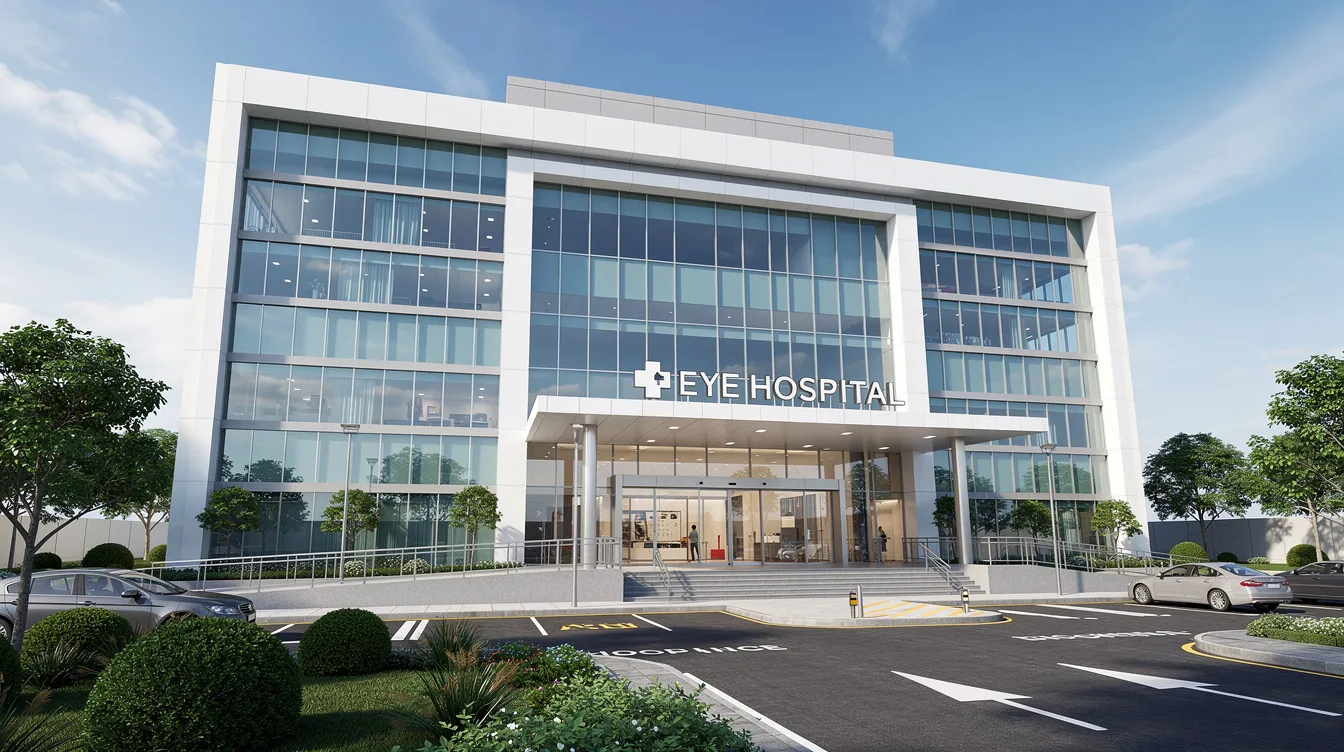
A well-structured eye hospital project loan separates fixed assets from working capital. Typical fixed-asset components include land (where eligible), building or civil construction, leasehold improvements, interiors, electricals, furniture, phaco and vitrectomy machines, lasik surgery systems, microscopes, slit lamps, diagnostic equipment such as OCT and fundus cameras, sterilisation equipment, air handling units, UPS, computers and hospital software.
Pre-operative and preliminary expenses may also be capitalised. Some lenders treat initial working capital margin (inventory build-up, initial salaries, basic consumables) as part of the total cost, while the balance working capital is funded through separate limits.
For detailed cost breakdowns, refer to the dedicated guide on Eye Hospital Project Cost in India – Complete Investment Breakdown.
Types of Bank Finance for an Eye Hospital
An eye hospital bank loan package may combine multiple facilities depending on project size and lender structure. Funding for eye hospitals involves healthcare infrastructure financing that can include term loans, equipment finance and working capital.
Term Loan
An eye hospital term loan generally finances long-term assets: building, civil work, interiors, OT setup and sometimes large composite packages including modern equipment. Term loans for infrastructure typically have tenures of up to 10 years, with fixed or floating interest rates. Construction-period financing must account for interest during construction phases, and a moratorium period during construction can ease financial pressure on hospitals by deferring principal repayment until operations stabilise. Banks evaluate whether projected cash flow can comfortably service instalments without creating financial stress. The effective loan cost includes interest and various fees beyond the headline rate.
Equipment Finance
Eye hospital equipment loan or medical equipment financing is available for high-end ophthalmology equipment like phaco machines, microscopes, OCT, lasik platforms and retinal lasers. Lenders expect detailed quotations, technical specifications and supplier credentials. Equipment loan tenures typically align with the competitive lifespan of technology, often shorter than building loans, which impacts annual debt service and DSCR calculations. Foreign-exchange exposure impacts costs for hospitals using imported equipment, so currency risks should be factored into the project report.
Working Capital Finance
Eye hospital working capital loan covers recurring needs: medicines, IOL inventory, surgical consumables for cataract surgery, staff salaries, utilities, rent and short-term receivables. Cash credit facilities help manage daily operational liquidity. Overestimating working capital leads to idle borrowing cost, while underestimating it creates financial strain even in a profitable hospital.
Composite or Combined Financing
In composite eye hospital project finance, a single sanction may include term loan plus working-capital facilities, common in MSME-focused schemes. The DPR should clearly show which portion is covered by each facility and promoter contribution. Some NBFCs and specialised healthcare financiers structure flexible packages, but terms vary widely.
Eye Hospital Project Cost and Means of Finance
Project cost represents the total investment required, while means of finance explains where the money will come from. A robust financing structure includes promoter contribution (equity), bank term loan, acceptable unsecured loans from promoters or family, and working-capital facilities. Total means of finance must exactly match total project cost. Promoter’s own funds should be stated separately from borrowed funds, as this affects the debt-equity ratio.
For detailed structuring guidance, see Eye Hospital Project Cost & Means of Finance – How to Structure the Investment.
How Much Promoter Contribution May Be Required?
Promoter contribution or margin money is the portion of project cost that promoters invest from their own funds, distinct from bank loans. Banks typically require a 15% to 25% margin for healthcare loans, though this varies with bank policy, type of assets financed, project risk profile and whether any MSME scheme is used. No universal percentage applies.
Higher and clearly evidenced promoter contribution strengthens eye hospital loan eligibility by demonstrating commitment and ability to absorb initial teething losses. Promoters should be prepared to show sources through bank statements, income proof and IT returns. Eligibility typically requires age between 21 and 58 years, a minimum monthly income of ₹15,000, and at least one year of work experience.
Eye Hospital Equipment and Equipment Financing
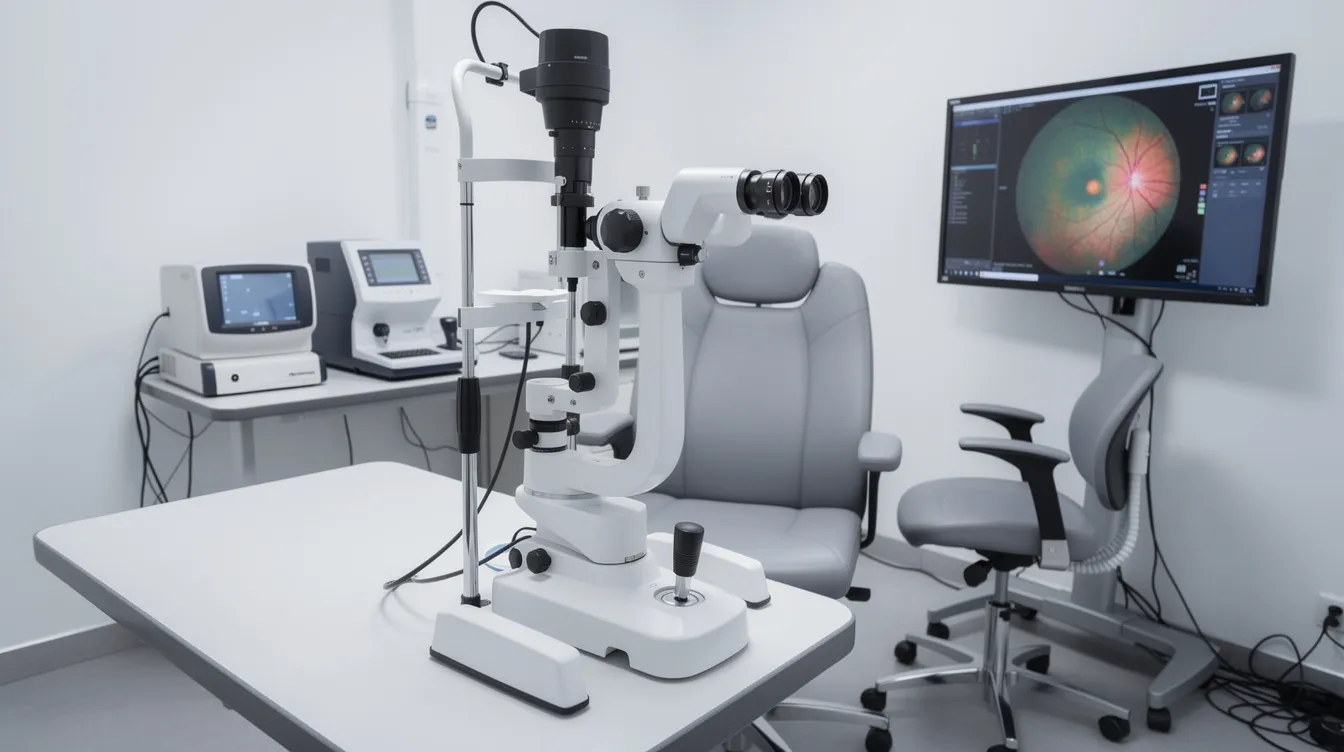
In ophthalmology hospitals, equipment is often the largest or second-largest component of project cost. Categories include OPD and refraction units, cataract removal equipment, lasik eye surgery platforms, retinal surgery devices, imaging and diagnostic systems, OT and sterilisation units, and basic monitoring devices.
LASIK surgery costs in India range from ₹40,000 to ₹1,20,000 per eye, and the average lasik cost for both eyes is ₹35,000 to ₹1,35,000. Advanced lasik technologies like SMILE cost more than standard lasik. Equipment choices must match planned services and the revenue model. Buying a premium lasik platform only makes sense if demand and pricing in the hospital’s location support the investment. Bajaj Finance offers zero or low-cost EMI options for lasik, while Fibe offers instant approvals for lasik financing options. Medical loans can cover lasik surgery and aftercare costs, and debit card EMIs allow monthly payments for lasik surgery costs. Most insurance policies do not cover lasik surgery costs, which is an important consideration for patients and revenue planning.
For complete equipment lists, refer to Eye Hospital Equipment List & Cost – Complete Setup Guide.
Working Capital Requirement for an Eye Hospital
Working capital is the liquidity needed for day-to-day operations, distinct from one-time project cost. Key components include medical and surgical consumables (IOLs, viscoelastics, sutures), medicines, salaries of doctors and staff, rent and utilities, maintenance contracts, marketing expenses and minimum cash buffer. Hospitals with health insurance and corporate tie-ups may have receivable cycles of 30–90 days.
Underestimating working capital is a common reason for cash-flow stress in otherwise viable eye hospitals, especially during the first 12–24 months when patient volumes are ramping up. For detailed methodology, see Eye Hospital Working Capital Requirement – Assessment & Calculation.
Eye Hospital Revenue Model Considered in Project Finance
The viability of eye hospital project funding depends on stable revenue from multiple ophthalmic services, not just a single procedure. Key revenue streams include OPD consultations, cataract surgery (including different IOL segments covering various cataract surgery costs), other eye surgery procedures for glaucoma and retina, lasik and refractive procedures, diagnostics like OCT and visual fields, optical and contact lenses sales, and pharmacy revenue.
Merely projecting high numbers of surgeries is insufficient. Banks expect assumptions based on location catchment, referring doctors, existing practice, local competition and realistic capacity utilisation. A proper lasik quote includes testing, planning, and follow up care costs. Revenue projections should show conservative ramp-up over 3–4 years. Healthcare providers who demonstrate quality care and informed decisions in their service planning tend to build stronger proposals.
For templates and examples, see Eye Hospital Revenue Model – How to Prepare Realistic Revenue Projections.
Financial Projections Required for Eye Hospital Bank Finance
A professional eye hospital project report for bank loan must include forward-looking financial statements for at least 5–7 years. Core components include projected P&L, Balance Sheet, Cash Flow Statement, depreciation schedule, interest schedule, term-loan repayment schedule and DSCR calculation through detailed financial analysis.
All projections must be internally consistent. Revenue derives from realistic patient volumes and tariffs. Expenses come from staffing plans, consumable norms, maintenance and utilities. Break-even analysis showing how many surgeries and OPD patients are required to cover fixed costs validates the business model. Technological advancements in ophthalmology should be reflected in equipment depreciation and replacement planning.
For projection preparation guidance, see Eye Hospital Financial Projections – How to Prepare Projections for DPR.
Loan Repayment Capacity and DSCR
The debt service coverage ratio assesses the ability to handle debt obligations. DSCR is the ratio of cash available for loan servicing to total loan repayment (interest plus principal) in a given year. Lenders evaluate debt service coverage ratio to ensure financial health.
Illustrative example: If annual net cash available after operating expenses is ₹2.4 crore and annual debt service (principal plus interest) is ₹1.5 crore, the DSCR is 1.60. Changes in patient volume, overall cost or interest rates directly affect this ratio.
Banks have internal benchmarks, and these vary by lender and project stage. For detailed calculations, see Eye Hospital DSCR & Loan Repayment Capacity – Complete Guide.
Eye Hospital Project Report for Bank Loan
From a lender’s viewpoint, a detailed project report is essential for loan applications. It explains the eye hospital concept, investment, revenue model and loan repayment capacity. A professional DPR typically includes:
- Executive summary and promoter profile
- Hospital location, catchment analysis and proposed services
- Infrastructure and equipment plan with quotations
- Project cost and means of finance
- Revenue model covering OPD, cataract surgery, retina, lasik and paediatric ophthalmology
- Operating costs and manpower plan
- Financial projections, DSCR analysis and sensitivity analysis
- Key assumptions and risk mitigants
The project report should be internally consistent, data-backed and written in language both medical promoters and bankers understand. ProjectReportBank.com uses actual vendor quotations, realistic patient-volume assumptions and structured financial models to prepare credible DPRs. Early detection of modelling inconsistencies during DPR preparation prevents delays during bank appraisal.
Documents Required for an Eye Hospital Bank Loan
Eye hospital loan documents fall into multiple categories. Basic documentation includes ID proof and income proof. Some lenders may require additional documents for verification. Requirements vary with bank, loan type and local regulations.
KYC and Promoter Documents
PAN, Aadhaar, passport or voter ID, address proof, photographs and recent bank statements. These verify identity and basic financial situation of applicants.
Professional Documents
MBBS and ophthalmology degree certificates, medical council registration, fellowship credentials and experience certificates. Strong professional credentials strengthen any ophthalmology hospital loan proposal.
Business Constitution Documents
Registration certificates for proprietorship, partnership deed, LLP agreement, or Memorandum and Articles of Association and incorporation certificate for companies. Banks verify legal ownership and borrowing authority.
Existing Business Financial Documents
Last 2–3 years’ audited financial statements, income-tax returns, GST returns, salary slips where applicable, and main bank account statements. These help assess turnover trends, profitability and repayment track record.
Project Documents
A detailed project report, civil and interior cost estimates, equipment quotations, projected financial statements, means-of-finance statement, and working-capital assessment. Mismatched figures between quotations and projections delay appraisal.
Property and Security Documents
Where collateral is required, title deeds, approved plans, encumbrance certificates and valuation reports may be needed. Banks focus on collateral packages that can include property and equipment. Collateral requirements often involve collateral-free or lower-collateral debt for smaller loan amounts. Requirements differ across lenders.
Statutory and Healthcare Approvals
Eye hospitals must obtain registrations and licences depending on state laws, bed capacity and services. Banks require proof of regulatory and licensing compliance before sanctioning loans. Regulatory compliance is crucial for project feasibility in healthcare financing. The project report should list required documents, their status and any conditions affecting timelines.
How Banks May Appraise an Eye Hospital Loan Proposal
The lender assesses technical feasibility, commercial viability, management capability and repayment capacity. Appraisal focus areas include:
- Promoter qualification and ophthalmology experience
- Existing practice, patient base and credit score history
- Location attractiveness: catchment, accessibility, competition
- Hospital design: beds, OTs, diagnostic mix
- Reasonableness of project cost and medical expenses
- Projected revenue across OPD, cataract, lasik and other services
- DSCR trends over loan tenure
The implicit questions bankers ask: Can this hospital attract enough patients? Are the cataract surgery costs and pricing realistic? Will cash flow comfortably cover emi plans and other obligations? Strong, data-backed assumptions and consistent financial modelling significantly improve chances of smooth appraisal.
New Eye Hospital vs Expansion of Existing Eye Hospital
Lenders view new eye hospital finance differently from expansion proposals. For new projects, promoter’s clinical and managerial experience, location study, demand assessment and realistic ramp-up timeline are critical. Adequate contingency for delays and initial losses must be planned.
For expansion or modernisation, banks can review historical turnover, OPD and surgery volumes, past profitability, account conduct and repayment history. Expansions such as adding an OT, introducing lasik or upgrading cataract surgery equipment may show quicker cash-flow impact because a patient base and referral network already exist. This often provides quick access to financing compared to greenfield projects.
Common Mistakes in Eye Hospital Loan Proposals
Frequent errors that weaken proposals include:
- Over-optimistic revenue projections, especially cataract and lasik volumes without supporting catchment data
- Underestimating working capital and ignoring receivable cycles from insurance companies
- Inconsistencies between project cost tables and fixed assets in projected balance sheets
- Missing or weak DSCR analysis and ignoring interest during construction
- Incomplete KYC, outdated equipment quotations, absence of clear title documents
- Treating the eye hospital DPR as a formality rather than a genuine planning exercise
- Not accounting for financial constraints during ramp-up periods
Each mistake reduces credibility and increases queries during appraisal, potentially delaying sanction.
Step-by-Step Process for Preparing an Eye Hospital Bank Loan Proposal
- Define the hospital model – day-care centre, full-service with in-patient beds, or specialised diagnostics
- Finalise services – cataract surgery, lasik, retina, glaucoma, paediatric ophthalmology, routine eye exams, diabetic retinopathy screening, macular degeneration treatment
- Choose location and estimate infrastructure requirements for clearer vision on catchment potential
- Prepare equipment list with quotations from multiple vendors covering eye tests and surgery equipment
- Estimate total project cost including contingencies
- Structure means of finance – promoter contribution, term loan, equipment loan, working capital
- Estimate working-capital requirement covering consumables, salaries, inventory
- Build the revenue model with realistic patient volumes supporting eye health services
- Prepare financial projections – P&L, balance sheet, cash flow for 5–7 years
- Calculate DSCR and validate repayment capacity against loan amount
- Draft the DPR with all required documents and supporting evidence
- Compile all documentation – KYC, professional certificates, quotations, property papers
- Shortlist appropriate banks/NBFCs based on project profile and financing options
- Submit the proposal and respond systematically to lender queries
Following this structured process demonstrates professionalism from the first meeting and helps promoters apply online or in-person with confidence.
How the Eye Hospital Financial Model Should Connect
Every element of the DPR must be logically interlinked. The flow works as follows:
Installed OT and diagnostic capacity → feasible daily surgeries and OPD visits → revenue by service line → operating costs → EBITDA and cash flow → interest and principal repayment → DSCR
The second linkage: Building + interiors + equipment + software + initial working capital → total project cost → promoter contribution + bank finance → resulting debt-equity ratio and interest burden
Changing any element – such as investing in a premium lasik platform or revising surgery costs – should reflect throughout the model. This integrated approach is central to how ProjectReportBank.com builds eye hospital financial projections. Whether the focus is on elective procedures like lasik or essential services like cataract removal, the financial model must demonstrate that hospital functions generate sufficient cash to service debt.
Expert Note from CA Manish Gugliya
An eye hospital project loan should not begin with a pre-decided loan amount and then work backwards to justify it. Start with your clinical vision and service mix. Estimate actual investment and operating costs. Let the appropriate loan amount, tenure and structure emerge from the hospital’s cash-flow potential. Transparent assumptions and conservative projections help more than aggressive numbers when dealing with experienced credit officers. Premium policies and advanced options in treatment planning should reflect in your financial model naturally, not as aspirational figures.
No cost emi and interest free options may exist for specific equipment or patient financing, but the core hospital financing must be built on the strength of your business model.
CA Manish Gugliya Chartered Accountant & Project Finance Professional ProjectReportBank.com
About CA Manish Gugliya
CA Manish Gugliya is a practising Chartered Accountant with extensive experience in preparing project reports, DPRs, CMA Data, financial projections and MSME bank loan proposals across healthcare and other sectors in India. Through ProjectReportBank.com, he has worked on multiple eye hospital project reports for bank loan applications, helping promoters structure project cost, means of finance, DSCR and documentation in a bank-oriented manner. He does not represent any bank or government agency. His role is to interpret banking expectations and translate them into practical project-finance guidance for ophthalmologists and healthcare entrepreneurs, supporting their quality of life improvements through better medical care delivery. Each step forward in documentation quality represents a step forward in the sanction process.
Frequently Asked Questions
Can a small ophthalmology clinic upgrade to an eye hospital using bank finance?
Many lenders consider financing upgrades from a single-doctor clinic to a small eye hospital or day-care centre, especially where a proven patient base and stable turnover exist. The proposal typically focuses on additional equipment, OT setup, interiors and working capital. Historical financials of the clinic support the expansion case, and a viable option for many practitioners is to demonstrate existing OPD volumes and dental care or multi-specialty referral networks that bring patient flow.
Are cataract surgery and LASIK revenues treated differently in projections?
In financial models, cataract surgery and laser assisted refractive procedures are projected as separate service lines because their pricing, demand patterns and marketing requirements differ significantly. Partial coverage through some health savings account arrangements or insurance may apply to cataract but most insurance policies offer partial coverage or none for cosmetic procedure classifications like standard lasik. Lenders prefer revenue broken down by major procedures. Visual quality improvements drive demand differently for each service.
Can health insurance and government schemes improve loan appraisal?
Having tie-ups with health insurance companies or government eye-care schemes strengthens the revenue model by diversifying patient inflows. This reduces dependence on purely cash-paying patients and supports projected cataract surgery volumes. Promoters should document such tie-ups in the project report and explain how they affect receivable cycles. Quick approval process for insurance claims improves cash flow predictability, and easy monthly instalments from patient financing also support the revenue model. Follow ups with insurance companies should be factored into administrative costs.
Is it necessary to hire a Chartered Accountant for an eye hospital DPR?
There is no legal requirement, but banks usually expect professionally prepared financials and DSCR analysis with minimal documentation errors. Experienced project-finance professionals familiar with healthcare projects help avoid modelling errors and present proposals in formats bankers are comfortable with. This is especially important when dealing with complex required documents and quick approval expectations.
How long does it typically take to prepare a bankable eye hospital project report?
Timelines vary with project complexity. Once promoters finalise location, services and equipment list, a detailed DPR and financial model can often be prepared within a few weeks. Starting documentation work early – parallel to property finalisation and vendor discussions – helps avoid delays when the bank process begins. Personal loan documentation for promoter contribution evidence should also be prepared simultaneously to ensure the overall financial situation is clearly presented.
Explore All Eye Hospital DPR Guides
Continue exploring our complete series on Eye Hospital project planning, financial projections, repayment capacity and bank finance.
- Eye Hospital Project Report / DPR for Bank Loan – Complete Guide
- Eye Hospital Term Loan Assessment: How Banks Evaluate Your Project in India
- Bank Loan for Eye Hospital – Project Finance & Documentation Guide
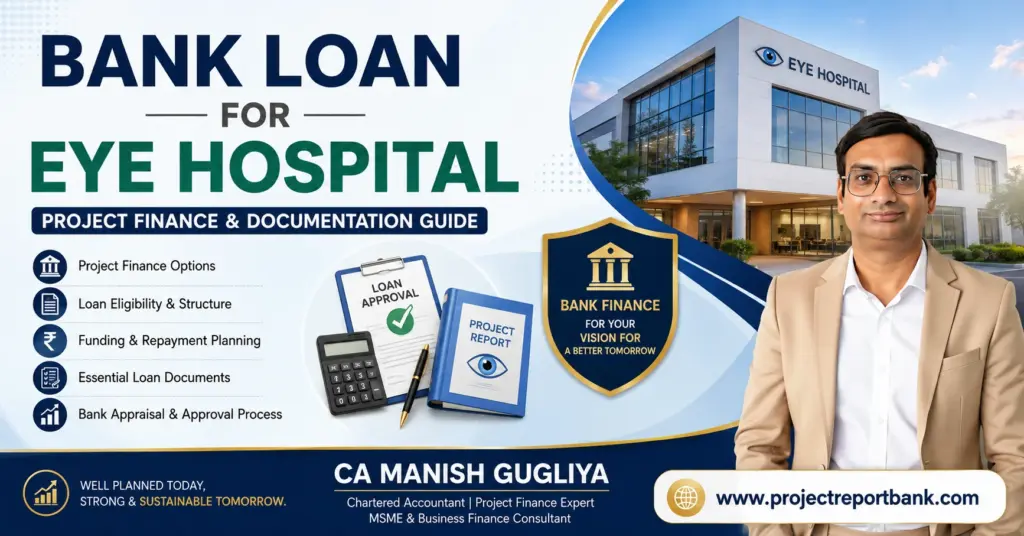
- Eye Hospital DSCR & Loan Repayment Capacity – Complete Guide
- Eye Hospital Working Capital Requirement – Assessment & Calculation (India-Focused Guide)
- Eye Hospital Financial Projections – How to Prepare Projections for DPR (India)
- Eye Hospital Revenue Model – How to Prepare Realistic Revenue Projections (Eye Hospital Project Report)
- Eye Hospital Project Cost & Means of Finance – How to Structure the Investment
- Eye Hospital Equipment List & Cost in India – Complete Setup Guide