Introduction
India’s manufacturing sector is experiencing a transformation unlike anything we’ve seen in the last two decades. As a Chartered Accountant who has helped hundreds of entrepreneurs prepare project reports and secure bank financing for manufacturing ventures, I can tell you this with confidence: 2026 is one of the best years to start a manufacturing business in India.
Manufacturing currently accounts for about 14% of India’s GDP, with GVA growth hitting 9.13% in Q2 of FY25-26. The government’s PLI scheme alone has attracted cumulative investments of over ₹2.16 lakh crore across 14 sectors, generated production worth ₹20.41 lakh crore, and created more than 1.44 million jobs. Private corporate CAPEX data shows manufacturing absorbed over 50% of total capital expenditure in 2025-26.
Manufacturing creates jobs in local communities, contributes to economic growth and stability, and supports a resilient and dynamic economy. Small manufacturing businesses can start with low investment, and the sector allows for product customization and innovation that few other industries offer.
Whether you’re a first-time entrepreneur or an experienced industrialist looking for your next profitable venture, this guide covers 100+ manufacturing business ideas organized by sector, investment level, and profit potential – along with practical guidance on bank loans, government schemes, and risk management.
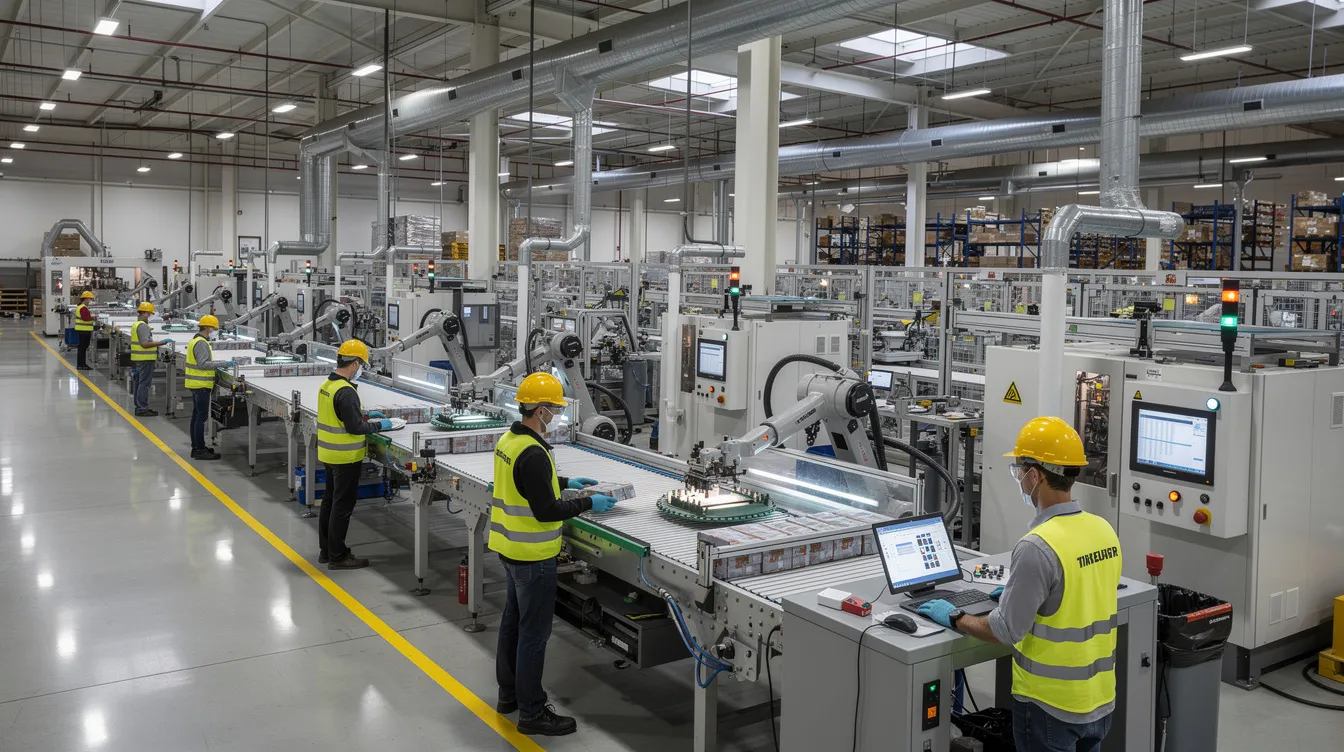
Table of Contents
How We Selected the Best Manufacturing Business Ideas
Before listing any business idea, we evaluated each opportunity against practical criteria that matter when you’re actually investing your money and time.
Market Demand Analysis: We prioritized sectors where domestic consumption is growing and import dependence is high – creating clear opportunities for local production. For example, India imports medical devices worth $10-15 billion annually, indicating massive room for domestic manufacturers.
Investment and Scalability: Ideas are categorized from under ₹5 lakh to above ₹1 crore, aligned with MSME classification thresholds that affect loan eligibility and promoter contribution requirements.
Profit Margin Potential: We examined sector-specific margins – auto component suppliers earn 20-30%, medical consumables achieve 25-40%, while OEM manufacturers typically operate at 5-10%.
Government Policy Support: Sectors covered under PLI, ECMS, or state-level subsidy schemes received preference. The PLI scheme covers 14 strategic sectors with incentives ranging from 4% to 18% on incremental sales.
Practical Setup Considerations: You need to conduct market research to identify trends and customer needs. You must develop a comprehensive business plan outlining goals and strategies. Choose a suitable location for your manufacturing operations. Secure necessary licenses and permits to operate legally. Establish relationships with reliable suppliers for raw materials.
These aren’t theoretical exercises – every bank reviewing your loan application will evaluate these exact factors.
Top 15 Fastest Growing Manufacturing Industries in India (2026)
The manufacturing industry in India is shifting toward higher-value production. Medium and high technology industries now contribute about 46.3% of manufacturing value added. Customization and rapid delivery enhance competitiveness in the manufacturing sector today.
Here are the top five fastest-growing sectors worth your attention:
1. Electric Vehicle (EV) Manufacturing
Why It Stands Out: India’s two-wheeler EV annual sales have crossed 5.2 million units (36% of all two-wheelers), while passenger car EVs reached approximately 520,000 units. The PLI scheme for Advanced Chemistry Cell battery manufacturing carries an outlay of ₹18,100 crore with incentive rates of 18-20% on net sales.
Best For: Entrepreneurs with technical background and higher investment capacity.
Key Strengths: Electric vehicles are accelerating demand for components such as batteries, motors, controllers, and charging equipment. Export opportunities are significant, and companies like Ola Electric have already begun cell-level manufacturing.
| Parameter | Details |
|---|---|
| Investment Range | ₹50 lakh to ₹5 crore |
| Profit Margin | 15-25% |
| Government Support | PLI for ACC batteries, auto components |
| Export Potential | High |
Possible Limitations: High initial investment, technical expertise required, and evolving safety/quality standards. Consider starting with EV battery recycling as a lower-investment entry point into the EV ecosystem.
2. Green Hydrogen Manufacturing
Why It Stands Out: An emerging renewable energy sector with massive government backing under the National Green Hydrogen Mission.
Best For: Investors focused on sustainable energy solutions with long-term vision.
Key Strengths: Future-ready technology with significant export potential. The global solar panel market is predicted to grow by 8.05% each year, and green hydrogen production fits within the broader clean energy supply chain.
| Parameter | Details |
|---|---|
| Investment Range | ₹2 crore to ₹10 crore |
| Profit Margin | 20-30% |
| Government Support | National Green Hydrogen Mission |
| Export Potential | Very High |
Possible Limitations: High technology barriers, regulatory uncertainties, and long gestation periods before commercial viability.
3. Medical Device Manufacturing
Why It Stands Out: India’s medical devices market is estimated at US$14-16 billion and is forecast to reach US$30-50 billion by 2030. Heavy import dependence makes this a prime import substitution opportunity.
Best For: Entrepreneurs with healthcare industry experience.
Key Strengths: Consistent market demand, high profit margins of 25-40% for consumables and diagnostics, and dedicated PLI scheme with ₹34.20 billion outlay. The global dietary supplements market is also projected to expand significantly, creating adjacent opportunities. Explore the comprehensive medical devices manufacturing guide for detailed planning.
| Parameter | Details |
|---|---|
| Investment Range | ₹25 lakh to ₹2 crore |
| Profit Margin | 25-40% |
| Government Support | Medical Devices PLI |
| Export Potential | High |
Possible Limitations: Strict regulatory compliance under Medical Device Rules, quality certifications (ISO 13485), and testing infrastructure requirements.
4. Drone Components Manufacturing
Why It Stands Out: The drone technology boom spans agriculture, defense, surveillance, and last-mile delivery.
Best For: Tech-savvy entrepreneurs with precision manufacturing capabilities.
Key Strengths: Multiple application sectors, strong government push under Drone Shakti and PLI for drones, growing defense procurement. Drone parts manufacturing is a specialized niche with limited domestic competition.
| Parameter | Details |
|---|---|
| Investment Range | ₹30 lakh to ₹1.5 crore |
| Profit Margin | 20-35% |
| Government Support | PLI for drones, defense procurement |
| Export Potential | Moderate to High |
Possible Limitations: Technical complexity, evolving DGCA regulations, and need for precision engineering capabilities.
5. Sustainable Packaging Manufacturing
Why It Stands Out: The global bioplastic packaging market is expected to grow by 17.2% annually. Demand for sustainable packaging is growing due to environmental regulations and e-commerce growth.
Best For: Entrepreneurs focused on eco-friendly business models serving eco conscious consumers.
Key Strengths: Eco-friendly manufacturing has massive growth potential due to consumer and government interest in sustainability. The shift away from single-use plastics creates rising demand for alternatives.
| Parameter | Details |
|---|---|
| Investment Range | ₹15 lakh to ₹75 lakh |
| Profit Margin | 18-28% |
| Government Support | Plastic ban enforcement, export incentives |
| Export Potential | High |
Possible Limitations: Raw material cost fluctuations and competition from traditional packaging materials in a competitive market.

Investment-wise Manufacturing Business Categories
Manufacturing Ideas Under ₹5 Lakh
These are ideal small scale manufacturing ideas for aspiring entrepreneurs with minimal investment looking to start their first manufacturing venture.
Handmade Soap and Skincare Products: Handmade soap manufacturing requires low startup costs and has high demand, especially among consumers seeking high quality natural products. The beauty industry continues to expand with health and sustainability trends driving consumer preferences toward organic formulations. You can sell through local craft fairs, e commerce platforms, and social media platforms.
Agarbatti (Incense Stick) Production: A classic small scale manufacturing unit with steady demand across Indian households and temples. Raw materials are inexpensive, and automated rolling machines are available under ₹1 lakh. Profit margins range from 15-25%.
Paper Bag Manufacturing: Paper bag manufacturing is lucrative due to the global push for eco-friendly products. With plastic bans across states, environmentally conscious consumers and commercial clients are driving increasing consumer demand.
Candle Making: Candle making is a low-cost business with steady market demand. From decorative candles to aromatherapy products, this is a light manufacturing business idea with profit margins of 20-40%. Scented and designer candles target niche markets with higher pricing power.
Organic Fertilizer from Kitchen Waste: The organic fertilizer manufacturing market is experiencing a surge in demand as sustainable agriculture practices expand. Organic fertilizer manufacturing is surging with sustainable agriculture trends, and production can start from composting units with relatively low startup costs.
Manufacturing Ideas Under ₹10 Lakh
LED Bulb Assembly: India’s LED market continues growing. Assembly units require moderate machinery, and BIS certification is mandatory. Margins run 15-25% with consistent local markets.
Plastic Recycling Products: Recycling plastic products aligns with circular economy and waste reduction initiatives. Check plastic business ideas for detailed planning on various plastic manufacturing ideas.
Food Processing (Pickles, Spices, Snacks): The global organic food market reached $146 billion in 2022, and health-focused food items, including specialty snacks and organic foods, provide niche market opportunities. Bakery products manufacturing is consistently profitable due to high consumer demand. FSSAI licensing is mandatory.
Wooden Furniture Manufacturing: Small scale manufacturing business in furniture benefits from growing consumer demand for customized and artisanal products. Local production reduces transportation costs and allows faster delivery.
Textile Accessories Production: Textile manufacturing accessories like buttons, zippers, and labels serve various industries. The target market includes garment manufacturers and fashion brands.
Pet Food Manufacturing: Pet food manufacturing is growing due to increasing pet ownership and health awareness. The pet food sector represents growing demand across urban India, with health and wellness products for pets commanding premium pricing.
Manufacturing Ideas Under ₹25 Lakh
Automobile Spare Parts: Auto component suppliers can earn 20-30% profit margins on specialized parts. Rising demand from the aftermarket segment makes this a profitable manufacturing business. Read starting an auto parts business for additional insights.
Electronics Accessories: Chargers, cables, protective cases – growing consumer demand for smartphone accessories creates steady demand. Quality control and BIS compliance are essential.
Ayurvedic Products: Health and wellness products in the Ayurvedic segment benefit from increasing demand both domestically and internationally. AYUSH licensing required.
Sports Equipment: Bamboo products manufacturing is growing due to eco-friendly demand, and bamboo-based sports equipment (cricket bats, badminton rackets) is finding traction. The global wooden toys market is projected to grow at a 4.5% annual rate through 2030, and toy manufacturing in wood presents similar opportunities.
Building Materials: Concrete blocks, interlocking tiles, and pre-fabricated components serve India’s construction boom with high demand and reliable market value.
Manufacturing Ideas Under ₹50 Lakh
Chemical Manufacturing: Industrial chemicals including cleaning agents, adhesives, and specialty formulations. Grease manufacturing is one example of a profitable business in this category serving commercial clients.
Pharmaceutical Intermediates: India’s pharma industry needs domestic intermediate suppliers. High margins but requires compliance with drug regulatory norms.
Solar Panel Components: The global solar panel market is expected to reach $287.81 billion by 2031, and solar panel manufacturing of components like junction boxes, frames, and mounting structures offers strong entry points. Water purification unit manufacturing is also rising due to safety concerns, presenting adjacent opportunities.
Food Packaging Machinery: Serving the food processing sector with packaging materials and machinery. Efficient production processes and lean manufacturing principles reduce costs and improve margins.
Precision Engineering Components: CNC machining and precision parts for automotive, aerospace, and industrial equipment. High profit margins for specialized work.
Manufacturing Ideas Under ₹1 Crore
Plastic Products Manufacturing: Beyond recycling, this includes manufacturing containers, pipes, household items. The global bioplastic packaging market is projected to grow to $87.98 billion by 2033.
Metal Fabrication: Structural steel, railings, industrial frames. Steel business ideas and steel ingot manufacturing from scrap offer detailed pathways.
Consumer Electronics Assembly: The ECMS has approved 22 proposals with projected investment of ₹41,863 crore. Smaller assembly operations can participate in this supply chain.
Footwear Manufacturing: The global leather goods market was valued at $242.85 billion in 2022. Footwear manufacturing serves both domestic and export markets. Eyeglass frame manufacturing is another consumer product with similar investment profiles.
Pharmaceutical Manufacturing: Full-scale pharma production requires significant licensing but offers strong returns. The most profitable manufacturing business categories often include pharma.
Manufacturing Ideas Above ₹1 Crore
Automobile Manufacturing: OEM operations with operating margins of 5-10%. Requires scale, certifications, and deep industry relationships.
Heavy Machinery Production: Industrial equipment for construction, agriculture, and mining sectors.
Chemical Plant Setup: Large-scale chemical production including specialty chemicals with higher risk tolerance requirements.
Textile Mills: Full-scale textile manufacturing from fiber to fabric. India’s textile export potential remains significant across global markets.
Steel and Metal Processing: The global solar panel market is expected to reach $287.81 billion by 2031, driving demand for steel and aluminum components. Renewable energy infrastructure requires massive metal inputs. Bio CNG plant projects and biogas plant setups also fall in this investment range for energy manufacturing.

Quick Comparison of Top Manufacturing Sectors
| Sector | Best For | Investment | Profit Margin | Risk Level | Scalability |
|---|---|---|---|---|---|
| Renewable Energy | Future-focused entrepreneurs | High (₹1Cr+) | 20-30% | Medium-High | Very High |
| Food Processing | Beginners with steady demand | Low-Medium (₹5-50L) | 15-25% | Low | Medium |
| Healthcare Products | High-margin seekers | Medium (₹25L-2Cr) | 25-40% | Medium | High |
| Electronics Manufacturing | Tech-oriented exporters | Medium-High (₹50L-5Cr) | 10-20%+ | Medium | Very High |
| Sustainable Products | Eco-conscious businesses | Low-Medium (₹15-75L) | 18-28% | Low-Medium | High |
| Chemical Manufacturing | Experienced industrialists | High (₹50L-5Cr) | 15-25% | High | High |
The best manufacturing business is not the one with the highest margin – it’s the one that matches your capital, skills, and market access.
How to Choose the Right Manufacturing Business for You
Choose Based on Investment Capacity
Assess your available capital honestly. Banks typically require promoter contribution of 25-33% of project cost for term loans. If your total project cost is ₹1 crore, you need ₹25-33 lakh of your own money before approaching a bank.
Evaluate cash flow projections and breakeven timeline. Most small manufacturing businesses break even in 18-36 months. Your financial projections must demonstrate this clearly.
Choose Based on Technical Expertise
Not every manufacturing venture requires an engineering degree, but some do. EV components, medical devices, and precision engineering need specialized knowledge. Food processing and packaging require less technical depth but demand strict quality control systems.
Consider the skill requirement for each sector and whether you can hire the right people in your location.
Choose Based on Market Demand
Study market trends carefully. Direct-to-consumer sales require effective e-commerce integration in manufacturing. A strong marketing strategy using social media platforms and e commerce platforms can differentiate small manufacturers from larger competitors.
Compliance with regulatory standards is critical in sectors like food and cosmetics. Always verify whether your target market is large enough to sustain your production volume.
Choose Based on Government Support
Sectors under PLI schemes offer 4-18% incentives on incremental sales, which can transform a marginally profitable business into a highly profitable venture. The Union Budget FY 2026-27 allocated ₹40,000 crore for electronics manufacturing alone.
Identify which government schemes apply to your chosen sector before making investment decisions.
Bank Loan and Financing Guide for Manufacturing Business
This is where most entrepreneurs struggle – and where proper preparation makes all the difference.
Documents Required:
- Promoter KYC and address proof
- Udyam MSME registration certificate
- GST registration and recent returns
- ITR for 2-3 years
- Audited past financials (if existing business)
- Bank statements (12 months minimum)
- Collateral documentation
- Machinery quotations with technical specifications
- Lease/ownership documents for premises
Detailed Project Report (DPR): Your DPR must include capacity planning, production processes, machinery specifications with costs, raw materials sourcing, labor requirements, marketing plan, and detailed financial projections. Banks like SBI review capacity utilization assumptions, raw material cost projections, and promoter credibility.
CMA Data: The Credit Monitoring Arrangement report contains six prescribed forms – P&L, Balance Sheet, Current Assets & Liabilities, MPBF calculation, Fund Flow, and Ratio Analysis. It must include 2-3 years of historical data and 2-5 years of projections.
Key Financial Ratios Banks Evaluate:
| Ratio | Minimum Required |
|---|---|
| DSCR (Debt Service Coverage) | ≥ 1.25x |
| Current Ratio | ≥ 1.33:1 |
| TOL/TNW | < 4:1 to 6:1 |
| Promoter Contribution | 25-33% of project cost |
CGTMSE for Collateral-Free Financing: MSMEs can access collateral-free loans under CGTMSE up to specified limits, which is particularly useful for first-time entrepreneurs.
Common Rejection Reasons: Inconsistent financials, unrealistic sales projections, weak DSCR, missing environmental or technical approvals, and poor promoter credit history. Loan processing typically takes 2-4 weeks for smaller amounts and 4-8 weeks for larger project loans.
Government Schemes and Incentives (2026)
PLI (Production Linked Incentive): Covers 14 sectors with total outlay of approximately ₹1.97 lakh crore. Incentive rates range from 4% for electronics hardware to 18% for auto components (category-dependent).
ECMS (Electronics Components Manufacturing Scheme): New window with ₹40,000 crore Budget allocation for FY2026-27 covering PCBs, camera modules, passive components, and sub-assemblies.
MSME Registration (Udyam): Free online registration unlocking access to priority sector lending, capital subsidy schemes, and government procurement preferences.
Startup India: Tax benefits under Section 80-IAC, self-certification for labor and environmental laws, and access to Fund of Funds.
State Industrial Policies: Most states offer capital subsidy (15-30% on plant & machinery), interest subvention (3-5%), stamp duty exemption, and electricity duty waiver for new manufacturing units. Check your state’s industrial policy document.
Export Promotion: MEIS/RoDTEP benefits, advance authorization for duty-free raw materials import, and SEZ benefits for export-oriented manufacturing.
Risk Analysis and Mitigation Strategies
Every manufacturing venture carries risks. Here’s what to watch for:
Market Risks: Demand fluctuation, pricing pressure from imports, and changing consumer preferences. Mitigation: Diversify your customer base across local markets, institutional buyers, and export channels.
Operational Risks: Supply chain disruptions, machinery breakdown, and quality failures. Mitigation: Maintain buffer inventory of critical raw materials, invest in preventive maintenance, and implement inventory management systems.
Financial Risks: Cash flow gaps between production and payment collection, working capital shortages. Mitigation: Negotiate favorable payment terms, maintain adequate working capital limits, and monitor DSCR continuously.
Regulatory Risks: Changes in environmental norms, pollution control requirements, BIS/FSSAI standards. Mitigation: Budget for compliance costs upfront and stay updated on industry trends and regulatory changes.
Technology Risks: Obsolescence, need for automation upgrades. Mitigation: Choose modular machinery that can be upgraded, and invest in operator training.
Rising input costs can squeeze margins significantly. Recent metal price increases threatened to erode auto component margins by 65-75 basis points – non-trivial when OEM margins are already in low single digits.
Future Manufacturing Trends (2026-2035)
Innovative manufacturing focuses on sustainability, advanced technology, and shifting consumer habits. Here’s what’s shaping the next decade:
Industry 4.0 & Smart Factories: IoT sensors, AI-driven quality control, and predictive maintenance are becoming accessible even for mid-sized manufacturers.
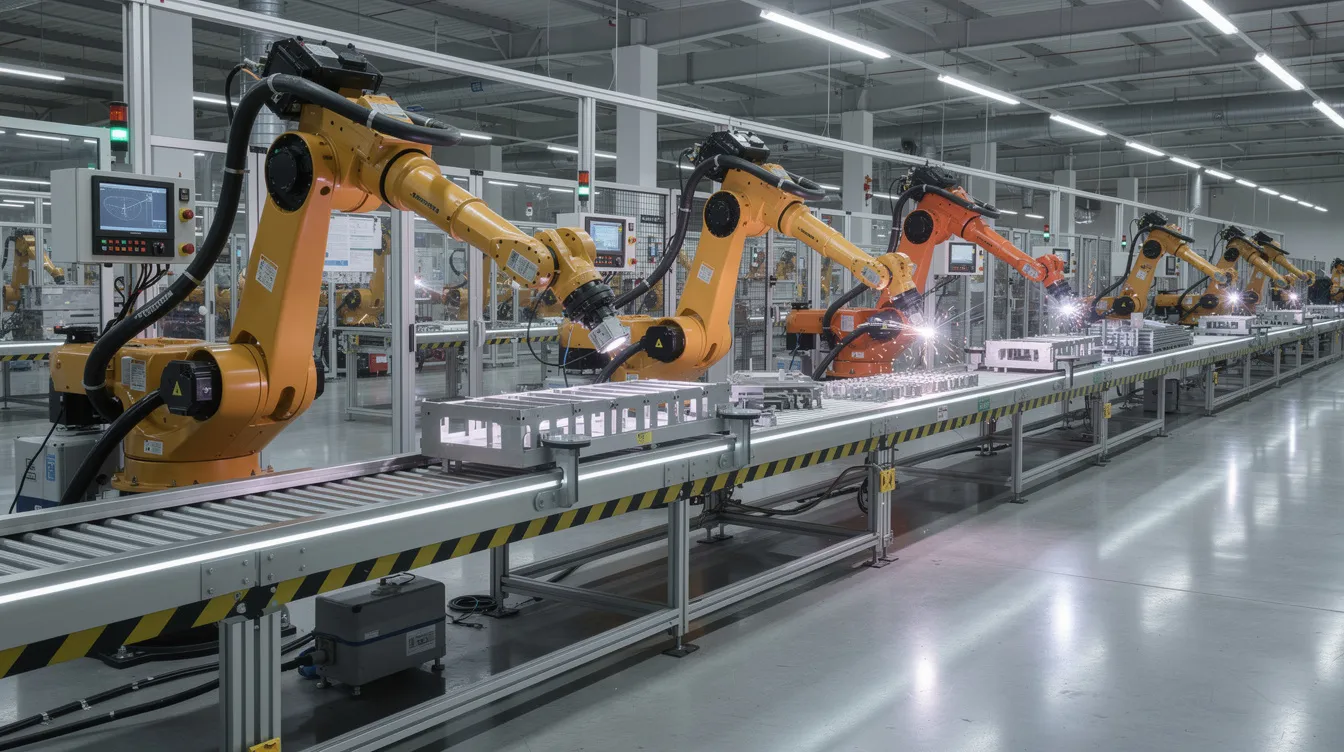
AI and Robotics: Automated assembly, robotic welding, and AI-powered demand forecasting are reducing costs and improving production processes across the manufacturing sector.
Circular Economy: Battery recycling, plastic-to-fuel conversion, and waste-to-product manufacturing. The government’s push for EPR (Extended Producer Responsibility) creates regulatory tailwinds.
EV Ecosystem Development: From cell manufacturing to charging infrastructure, the entire EV value chain is being built domestically.
Biotechnology & Pharma: Schemes like Biopharma SHAKTI are pushing biosimilar and biologics production capacity.
Green Manufacturing: Carbon neutrality goals and ESG compliance are becoming business requirements, not optional add-ons. Eco-friendly manufacturing has massive growth potential as both consumer interest and government regulations intensify.
Which Manufacturing Business Is Best for You?
- Choose Food Processing if you want steady demand with moderate investment and are comfortable with FSSAI compliance
- Choose Electronics Manufacturing if you have technical expertise and export focus – the ECMS scheme offers significant support
- Choose Chemical Manufacturing if you have high investment capacity, industrial experience, and higher risk tolerance
- Choose Renewable Energy if you’re focused on future growth and want to leverage government support in a scale manufacturing business ideas context
- Choose Healthcare Products if you want high margins and are comfortable with regulatory requirements
- Choose Sustainable Products if you prioritize environmental impact and want to serve growing demand from eco conscious consumers
Conclusion
The manufacturing sector in 2026 offers unprecedented opportunities backed by government schemes, growing domestic consumption, and India’s positioning as a global manufacturing alternative. But opportunity without preparation is just risk.
Success in any manufacturing business – whether it’s a small manufacturing business starting with ₹5 lakh or a ₹5 crore EV component plant – requires careful selection based on your investment capacity, technical expertise, and market demand. Proper planning, professional financial documentation, and regulatory compliance are non-negotiable.
The future belongs to sustainable, technology-driven manufacturing businesses. Start with a detailed feasibility study and professional guidance, not assumptions. The entrepreneurs who succeed are the ones who invest in planning before they invest in machinery.
About the Author – CA Manish Gugliya
CA Manish Gugliya is a Chartered Accountant with over 20 years of experience in project finance, manufacturing business consultancy, and MSME advisory. He specializes in:
- Detailed Project Report (DPR) preparation for manufacturing businesses
- CMA data preparation and financial projections
- Bank loan documentation and credit assessment support
- Business valuation and feasibility studies
- Startup advisory and investor readiness
He has helped hundreds of entrepreneurs across India start and scale successful manufacturing businesses with professionally prepared, banker-friendly documentation.
Professional Manufacturing Business Services
Project Report Bank and CA Manish Gugliya offer end-to-end support for manufacturing entrepreneurs:
- Detailed Project Reports (DPR) for all manufacturing sectors and loan types including Mudra, PMEGP, and term loans
- CMA Data & Financial Projections prepared to banking standards
- Bank Loan Documentation including working capital assessment and DSCR computation
- Pitch Deck Preparation for startup funding and investor presentations
- Business Valuation and feasibility studies
- MSME Registration & Government Scheme Advisory
- Manufacturing Business Setup Consultation including location analysis, machinery selection, and licensing guidance
Whether you need a project report for a ₹10 lakh candle making unit or a ₹10 crore chemical plant, professional documentation dramatically improves your loan approval chances and reduces processing time.
Contact Project Report Bank today for professionally prepared, banker-friendly project reports and financial documentation tailored to your specific manufacturing business idea.
Frequently Asked Questions
Which manufacturing business is most profitable in India 2026?
Medical device consumables (25-40% margins), specialty auto components (20-30%), and sustainable packaging (18-28%) are among the most profitable manufacturing business categories. However, profitability depends heavily on scale, location, and operational efficiency. The best manufacturing business matches your skills and capital with market demand.
What is the minimum investment required for manufacturing business?
You can start small scale manufacturing with as little as ₹2-5 lakh in sectors like candle making, agarbatti production, paper bag manufacturing, or organic fertilizer production. These small scale manufacturing business ideas offer low startup costs while building manufacturing experience.
How to get bank loan for manufacturing business without collateral?
Under the CGTMSE scheme, MSMEs can obtain collateral-free loans up to specified limits. You’ll still need a strong DPR, clean financial history, adequate promoter contribution, and DSCR above 1.25x. Proper documentation is critical.
Which manufacturing business is best for beginners?
Food processing (pickles, spices, snacks), paper bag manufacturing, candle making, and LED bulb assembly are excellent starting points. These require lower technical expertise, have proven market demand, and involve manageable regulatory requirements. Start small, build production processes, and scale gradually.
What are the major government schemes for manufacturing in 2026?
PLI schemes across 14 sectors (₹1.97 lakh crore outlay), ECMS for electronics (₹40,000 crore), CGTMSE for collateral-free loans, Mudra loans for micro enterprises, PMEGP for rural manufacturing, and various state-level capital and interest subsidy schemes.
How to prepare DPR for manufacturing business loan?
A DPR must include project description, product details, manufacturing process overview, machinery list with costs, raw materials and sourcing plan, market analysis, financial projections (5-year P&L, balance sheet, cash flow), DSCR calculation, and promoter background. Banks evaluate capacity utilization assumptions, cost realism, and market viability.
Which states offer best incentives for manufacturing business?
Gujarat, Tamil Nadu, Maharashtra, Uttar Pradesh, Telangana, and Madhya Pradesh currently offer competitive manufacturing incentives including capital subsidy (15-30%), interest subvention, land at subsidized rates, and electricity duty exemptions. Always check the latest state industrial policy.
What are the fastest growing manufacturing sectors in India?
EV components, medical devices, electronics and semiconductor packaging, specialty chemicals, sustainable packaging, drone components, defense equipment, and green hydrogen equipment are among the fastest-growing sectors.
How long does it take to get manufacturing business loan approved?
For small term loans (under ₹50-100 lakh) with clean documentation: 2-4 weeks. For larger project loans: 4-8 weeks or more. Delays typically occur due to inconsistent financial statements, missing technical/environmental approvals, or unrealistic projections in the DPR.
What are the key success factors for manufacturing business in India?
Thorough market research before investment, realistic financial projections, proper licensing and compliance, strong supplier relationships for raw materials, quality control systems, efficient production processes, and professional bank documentation. The gap between successful and failed manufacturing ventures almost always comes down to planning quality.
- Atta Chakki Plant Project Report – A Professional DPR & Business Plan Guide

- Atta Chakki Plant ROI, IRR, Payback & Sensitivity Analysis

- Atta Chakki Plant Feasibility Study & Project Viability
- Atta Manufacturing Financial Projections, Working Capital & DSCR
- Atta Chakki Plant Project Cost & Means of Finance (India Focus)
- Atta Chakki Plant Land, Building & Layout Requirements
- Atta Chakki Plant Capacity Planning – TPD & Production Capacity
- Atta Manufacturing Process & Flour Mill Flow Chart (Expert Guide for Plant Promoters)
- Atta Chakki Machine Price & Automatic Atta Plant Machinery Cost – A Practical Guide for Entrepreneurs
- Atta Chakki Plant Setup Cost in India – Practical Cost Guide by CA Manish Gugliya
- Roller Flour Mill Project Report & DPR: Complete Guide for Bank Finance and Project Planning

- Roller Flour Mill ROI, IRR, Payback & Sensitivity Analysis: A Practical Guide for Investors and Bankers

- Roller Flour Mill Feasibility Study & Project Viability
- Roller Flour Mill Financial Projections & Working Capital
- Roller Flour Mill Project Cost & Means of Finance