Key Takeaways
- India consumes 25–26 million tonnes of edible oil annually with over 55–60% import dependence, creating a substantial opportunity for large-scale sunflower oil extraction and refining plants across the 100–500+ TPD range.
- Profitability in sunflower oil manufacturing is driven by raw material prices (sunflower seeds account for 85–90% of total operating expenses), oil extraction efficiency, and refining losses – not simply the refined cooking oil selling price.
- Four distinct business models exist – mechanical pressing, pre-press plus solvent extraction, standalone crude oil refining, and fully integrated complexes – each carrying different capital expenditure, risk profiles, and return potential.
- A comprehensive sunflower oil extraction plant project report must integrate technical feasibility, financial viability, working capital assessment, and sensitivity analysis before capital is committed.
- Project Report Bank, led by CA Manish Gugliya (FCA, DISA, ICAI), prepares customised bankable DPRs, financial models, CMA data, and feasibility studies for sunflower oil projects across India.
Introduction and Industrial Investment Opportunity
Sunflower oil – extracted from the seeds of Helianthus annuus – occupies a growing position in India’s edible oil basket. Known for its light color, neutral flavor, and high smoke point, it has become a preferred cooking oil and frying oil across urban and semi-urban households. Sunflower oil production accounts for approximately 80% of sunflower crops globally, and Russia alone produces 22.4% of the world’s supply.
India’s edible oil demand stands at roughly 25–26 million metric tonnes as of 2025–26, with domestic production covering only about 40%. Over 95% of India’s crude sunflower oil requirement is imported by refiners, primarily from Russia, Ukraine, and Argentina. India’s sunflower oil market was 2.9 million tons in 2025 and is projected to reach 5.0 million tons by 2034, growing at a 6.38% CAGR. Even the EU’s sunflower oil consumption exceeds its production by 5.3%, underscoring global tightness.
Sunflower oil’s share in India’s consumption mix has grown from roughly 6% to 11.6% over the last decade. Market analysis identifies demand for sunflower oil across retail, institutional, and food industry segments, including the rising niche of high oleic sunflower oil valued for oxidative stability and longer shelf life. Key producers of sunflower seeds in India include Karnataka (~52.5% of total production), Haryana (~12.9%), and Odisha (~11.3%), though average yields remain modest at ~1,201 kg/ha.
Processing domestic sunflower seeds into crude oil involves seed preparation and oil extraction at a crushing facility, while refining imported crude oil requires port-side or inland refinery infrastructure with bulk storage. Each approach carries distinct implications for quality control, inventory management, and working capital. The difference matters substantially in a sunflower oil extraction plant project report.
This article covers the manufacturing process, machinery requirements, project cost structure, working capital, production economics, ROI/IRR and DSCR considerations, regulatory approvals, risks, and implementation planning. For broader edible oil context, readers may refer to the large-scale edible oil refinery and fractionation plant project report on Project Report Bank.
Sunflower Oil Extraction & Refining Business Models
There is no single configuration for a sunflower oil manufacturing plant. Four realistic models serve different promoter profiles:
Mechanical expeller-based extraction suits MSMEs at 50–200 TPD. Cold pressing is a popular method for edible sunflower oil in this segment. Capital expenditure is lower, but mechanical pressing extracts only 70–80% of oil from sunflower seeds, leaving significant residual oil in the cake.
Pre-press plus solvent extraction routes the pressed cake through hexane-based solvent extraction, achieving up to 99% oil recovery with residual oil in meal below 1%. Solvent extraction is used for large-scale sunflower oil production above ~150–200 TPD, requiring strict safety and environmental compliance.
Standalone crude sunflower oil refinery processes imported or domestically sourced crude oil through degumming, neutralisation, bleaching, dewaxing, and deodorisation. It offers flexibility when domestic crushing is limited but demand for refined oil is strong.
Integrated complexes combine seed preparation, oil extraction, solvent extraction, refining, dewaxing/winterisation, storage, and packaging at one site, maximising by-product recovery and margin capture but demanding robust management and EPC partners.
| Parameter | Mechanical Pressing | Pre-Press + Solvent | Standalone Refinery | Integrated Complex |
|---|---|---|---|---|
| Investment intensity (₹ crore per 100 TPD) | 5–15 | 25–40 | 10–20 | 40–60+ |
| Operational complexity | Low–moderate | High | Moderate–high | Very high |
| Raw material dependency | Seed only | Seed + solvent | Crude oil (import/domestic) | Seed + crude + solvent |
| By-product recovery | Cake only (high residual oil) | Meal + hulls (low residual oil) | Soapstock, wax, spent earth | Full recovery (meal, hulls, wax) |
| Working capital intensity | Moderate | High | High (crude inventory) | Very high |
| Promoter suitability | MSMEs, small promoters | Mid-to-large corporates | Branding-focused entities | Large players, vertical integrators |
Project Report Bank evaluates these models during each tailored business plan and manufacturing plant project report engagement.
Sunflower Oil Plant Capacity Planning – 100 TPD to 500+ TPD
Plant capacity is typically measured in tonnes of seeds processed per day. Sunflower oil production lines range from 1 TPD to 5,000 TPD globally, but Indian industrial projects commonly fall in the 100–500 TPD band. Seed crushing capacity, solvent extraction capacity, and crude oil refining capacity must be balanced – they are not interchangeable.
A 100 TPD seed processing line with seeds at ~50% oil content yields roughly 45–50 tonnes/day of crude oil, requiring a matching refinery of 25–60 TPD depending on whether third-party crude is also processed. At 200–300 TPD, economies of scale improve fixed-cost absorption. A 500 TPD plant typically suits port-based locations or major seed-growing belts where raw materials can be sourced within a 200–300 km radius.
Realistic operating days in India range from 280 to 330 per year. First-year capacity utilisation may be 60–70%, ramping to 85–90% by year 3–5. Low utilisation sharply increases per-unit fixed costs and weakens DSCR. Sunflower oil refining plants can also process 1–30 tons per day in smaller standalone configurations.
Sunflower Oil Extraction and Refining Manufacturing Process
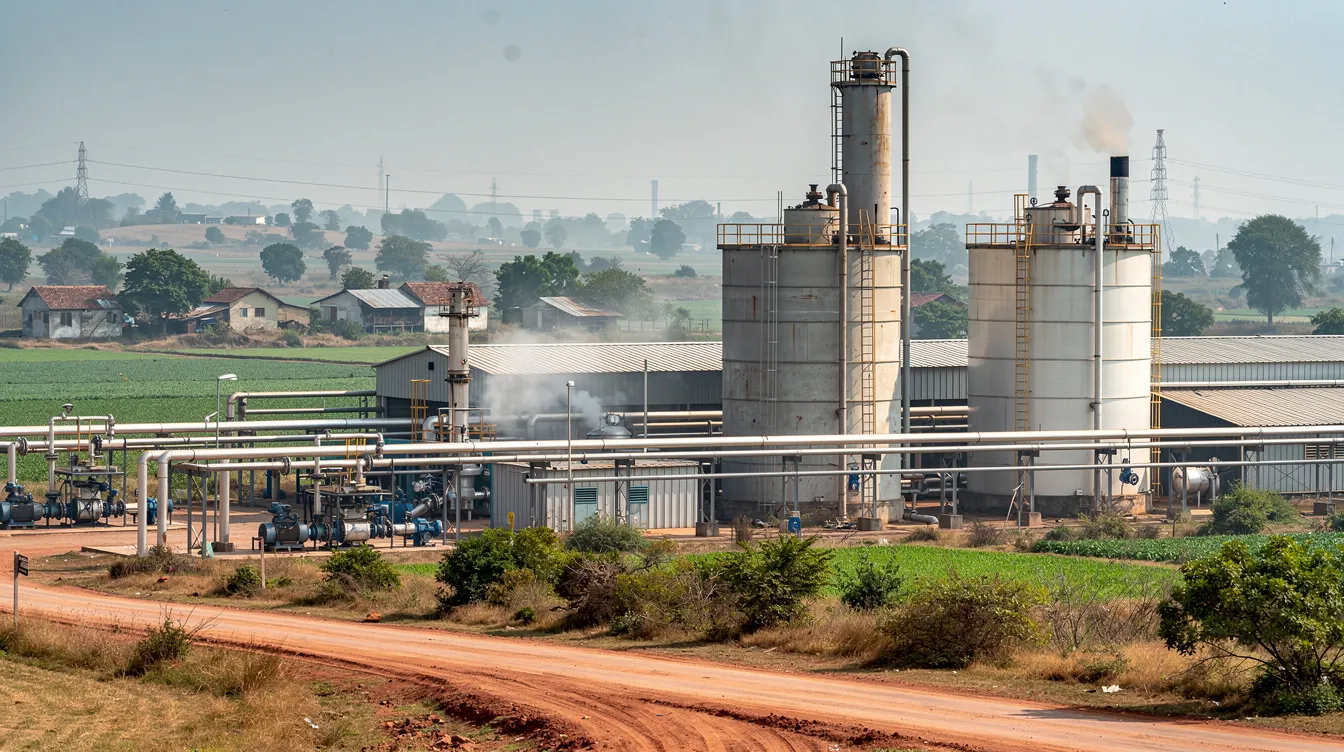
The production process for a sunflower oil manufacturing unit follows a defined sequence: seed preparation, oil extraction, and crude oil refining into food-grade edible oil.
Seed preparation begins with receiving, sampling for moisture (target 8–10%) and foreign matter (<1%), followed by cleaning using vibrating screens, aspirators, and magnetic separators to remove impurities. Sunflower seeds should be dehulled to improve oil yield – sunflower seed dehulling machines are essential for large-scale production, with hull constituting 20–30% of seed weight. After dehulling, kernels pass through flaking mills and a seeds cooker/conditioner at 80–90°C.
Oil extraction requires seed cleaning, dehulling, and pressing. Sunflower oil press machines are screw-type oil expellers that process conditioned flakes. Mechanical pressing extracts 70–80% of oil from seeds. The pressed cake, retaining 20–30% of the original oil, either goes to solvent extraction or is sold directly. Sunflower seeds have an oil content ranging from 35% to 40% depending on variety, though Indian high-oil varieties and imports may reach 48–53%. Solvent extraction can achieve up to 99% oil recovery, with the DTDC system (desolventiser-toaster-dryer-cooler) processing extracted sunflower meal – a valuable by-product used mainly as animal feed.
Crude oil clarification uses settling tanks and an oil filter press or leaf filters to remove fines before storage.
Refining of crude sunflower oil follows: degumming (phospholipid removal) → neutralisation with caustic soda (reducing free fatty acids) → washing and drying → bleaching with activated earth → dewaxing/winterisation (cooling to crystallise and filter waxes) → deodorisation under high vacuum at 200–250°C with steam stripping. Refining losses typically run 5–10%. High oleic sunflower oil follows similar refining but targets specific oxidative stability and linoleic acid balance. Quality control at each stage measures FFA, phosphorus, colour, moisture, and wax content – these checkpoints determine final product quality.
Process flow: Sunflower seed reception → cleaning → de-stoning → dehulling → conditioning → flaking → pre-pressing → solvent extraction (if applicable) → crude oil clarification → crude oil storage → degumming → neutralisation → washing & drying → bleaching → dewaxing/winterisation → deodorisation → polishing filtration → refined oil storage → packaging.
Plant and Machinery Requirements
Detailed equipment lists specify required machinery for seed processing and oil extraction across the entire oil production line. A reliable power supply is essential for oil extraction and refining operations – large plants may draw 500–2,000 kVA depending on scale. The edible oil refinery machinery and EPC selection guide covers technology evaluation in depth.
| Machinery Group | Key Equipment |
|---|---|
| Seed preparation | Seed cleaner, de-stoner, magnetic separators, dryer/conditioner, dehuller, hull separator, flaking mill, cooker |
| Extraction | Screw presses (oil expeller), cake conveyors, continuous solvent extractor, DTDC, evaporators, condensers, solvent recovery |
| Crude oil handling | Storage tanks (MS/MSRL), settling vessels, leaf/pressure filters, transfer pumps |
| Refining | Degumming reactor, neutralisation vessel, centrifuges, bleaching vessel and filters, dewaxing chillers and filtration systems, deodoriser with vacuum system |
| Utilities | Boiler, thermic fluid heater, cooling towers, air compressor, water treatment, ETP |
| Storage & packaging | Refined oil tanks, automatic filling/capping lines, QC laboratory |
Selection criteria include throughput matching, material of construction (SS-304/316 for oil contact), automation level (PLC/SCADA for larger plants), energy efficiency, and local service support.
Sunflower Oil Extraction & Refinery Plant Cost in India (CAPEX Structure)
Project cost estimation encompasses land, machinery, and installation expenses. A small-scale sunflower oil production line costs above $7,000, while a 5 ton/day oil pressing line costs about $5,500 and the cost of a 1 ton/day oil refinery plant is about $19,800 – but industrial-scale projects require substantially higher capital expenditure.
For Indian conditions (2025–26 indicative ranges, excluding GST):
| Configuration | 100 TPD | 200 TPD | 500 TPD |
|---|---|---|---|
| Mechanical pressing + small refinery | ₹15–25 crore | ₹25–40 crore | ₹50–70 crore |
| Pre-press + solvent + refinery | ₹25–40 crore | ₹40–60 crore | ₹80–110 crore |
| Standalone refinery only | ₹8–15 crore | ₹15–25 crore | ₹30–50 crore |
Extraction plant cost and refinery cost are separate line items. A 100 TPD seed crushing line will not carry the same investment as a 100 TPD refinery. Additional capital expenditure applies for high oleic sunflower oil segregation, nitrogen blanketing, automation, and bulk tanker loading. Typical capex distribution: plant & machinery 50–60%, civil works 15–20%, utilities 10–12%, storage and packaging 5–8%, pre-operative and contingency 8–12%.
For detailed edible oil refinery project cost benchmarks, Project Report Bank maintains current reference data.
Raw Material Availability, Procurement & Working Capital
Operating costs are primarily driven by sunflower seed expenses – sunflower seeds account for 85–90% of total operating expenses in a crushing-based sunflower oil manufacturing plant. Indian sunflower seed production for 2025–26 is approximately 2.70 lakh tonnes over 2.25 lakh hectares. Procurement channels include APMC mandis, contract farming, and aggregators. Proper storage solutions are necessary for raw sunflower seeds to prevent spoilage – covered godowns with moisture and pest control are essential.
Imported crude sunflower oil arrives primarily from Russia, Ukraine, and Argentina. Basic customs duty on crude edible oils currently stands at 20%, with refined sunflower oil at 32.5% plus cess. Foreign exchange exposure, freight, insurance, and price trends require active management.
Working capital assessments include raw material inventory and operating expenses. For a 200 TPD plant:
| Component | Days | Approximate ₹ Crore |
|---|---|---|
| Seed inventory | 30 days | 25–35 |
| WIP (extraction + refining) | 5–7 days | 3–5 |
| Finished goods | 10–15 days | 8–12 |
| Receivables | 30–45 days | 15–25 |
| Less: Creditors | 15–20 days | (8–12) |
| Net working capital requirement | – | 40–65 |
Working capital can approach or exceed fixed capital expenditure – a reality that many promoters underestimate.
Sunflower Oil Production Economics & Profitability Analysis
Gross profit margins for sunflower oil range from 10–20%, but actual margins depend on the crushing margin (seed cost vs crude oil + meal value) and refining margin (crude oil cost vs refined oil realisation).
Illustrative 200 TPD integrated plant (per operating day):
- Seed input: 200 tonnes at ₹50,000/tonne = ₹1.00 crore
- Crude oil output: ~95 tonnes (after extraction and clarification)
- Refined sunflower oil: ~88 tonnes after 7% refining losses
- Refined oil revenue at ₹1,10,000/tonne: ₹0.97 crore
- Meal revenue (~100 tonnes at ₹20,000/tonne): ₹0.20 crore
- Total daily revenue: ~₹1.17 crore
- Daily variable costs (seed, energy, chemicals, packaging): ~₹1.06 crore
- Daily contribution margin: ~₹0.11 crore
Operating costs are primarily driven by sunflower seed prices. If seed price rises 10%, daily margin can compress by 40–50%. A 1-percentage-point drop in oil recovery loses significant value at scale. At 60% capacity utilisation versus 85%, fixed cost per unit rises sharply, potentially eroding DSCR below acceptable thresholds.
Financial Projections, Bankable DPR & Project Finance
A comprehensive project report establishes technical feasibility and financial viability. The project report structure typically includes sections for market, technical, and financial analysis spanning 7–10 years.
Financial viability includes break-even analysis and return on investment projections. Financial projections include ROI and profitability assessments alongside DSCR, IRR, NPV, and payback period. Loan structuring involves outlining financing methods and repayment plans for project funding – banks typically require DSCR of 1.2–1.5x.
Illustrative DSCR: If annual cash accrual is ₹10 crore against debt service of ₹7 crore, DSCR = 1.43x. A 10% seed price increase reducing accrual to ₹8 crore drops DSCR to 1.14x – a level most lenders consider uncomfortable.
CMA data preparation covers projected balance sheets, profit & loss statements, fund flow, and ratio analysis per RBI norms. For detailed financial modelling approaches, refer to the edible oil refinery financial projections resource.
Regulatory Approvals, Food Safety & Environmental Compliance in India
Statutory approvals are necessary based on plant location and manufacturing process. Regulatory compliance includes obtaining licenses from health and pollution control authorities.
Core requirements include:
- Company/LLP registration, PAN, TAN, GST
- Factory registration under the Factories Act
- FSSAI central licence for edible oil manufacturing
- Consent to Establish (CTE) and Consent to Operate (CTO) from the State Pollution Control Board
- ETP for wastewater and spent bleaching earth management
- Fire department NOC and fire safety systems
- PESO approvals for solvent storage and handling where applicable
- Boiler inspectorate and electrical safety approvals
- Legal Metrology Act compliance for packaging and labelling
Exact approvals depend on capacity, location, configuration, and prevailing regulations at the time of implementation.
Key Risks in Sunflower Oil Projects & Mitigation Strategies
Risk analysis identifies potential business risks and strategies to mitigate them. Market demand analysis must assess competition from other edible oils including palm, soybean, and rice bran oil products.
| Risk Category | Severity | Mitigation |
|---|---|---|
| Seed/crude price volatility | High | Diversified procurement, hedging, forward contracts |
| Low oil extraction yield | Medium | Strict seed QA, process control, equipment maintenance |
| Refining losses above target | Medium | Quality crude sourcing, trained operators, process monitoring |
| Inadequate working capital | High | Conservative leverage, adequate bank limits, buffer funds |
| Solvent safety incidents | Medium–High | PESO compliance, safety training, explosion-proof systems |
| Competitive pressure (palm, soybean) | Medium | Product differentiation, branding, high oleic variants |
| Regulatory changes (duties, standards) | Medium | Active policy monitoring, flexible procurement |
Integrated Sunflower Oil Plant Feasibility Assessment
Before committing large initial investment, promoters must evaluate technical, raw material, market, site, and management feasibility for their specific configuration.
Pre-sanction checklist:
- Obtain indicative machinery quotations from at least 2–3 suppliers
- Verify location-specific power tariffs and water availability
- Assess realistic selling channels (bulk B2B vs retail cooking oil)
- Confirm seed catchment adequacy within viable transport radius
- Stress-test DSCR and IRR under adverse scenarios
- Evaluate EPC contractor capability and commissioning track record
Banks and investors look for realistic ramp-up assumptions, adequate contingency provisions, and long term sustainability of the production cost structure. Project Report Bank conducts integrated feasibility assessments that support structured go/no-go decisions.
Implementation Schedule and Commissioning Roadmap
A structured implementation plan reduces cost overruns and interest during construction. Indicative milestones:
- Concept and market study – 4–6 weeks
- Detailed project report and financial modelling – 6–10 weeks
- Regulatory approvals – 2–4 months (varies by state)
- Bank/investor funding closure – 2–3 months
- Engineering and EPC finalisation – 1–2 months
- Civil works and construction – 5–7 months
- Machinery procurement and installation – 4–8 months (overlapping)
- Trial production and commissioning – 1–2 months
- Commercial operations – ramp-up over subsequent months
Total indicative timeline from DPR to commercial operations: 14–22 months depending on scale and complexity.
Professional DPR & Financial Advisory Support by Project Report Bank
Project Report Bank is a Chartered Accountant-led professional project advisory firm specialising in manufacturing and processing projects. CA Manish Gugliya (FCA, DISA, ICAI) brings over 20 years of experience in preparing customised DPRs, financial models, and bank finance documentation – not generic templates.
Services relevant to sunflower oil projects include:
- Detailed project report preparation for sunflower oil extraction and refinery projects
- Financial modelling, project feasibility and commercial viability analysis
- Project cost and means of finance structuring
- CMA data for bank loans, DSCR, break-even, ROI and IRR analysis
- Investor-ready DPRs and pitch documentation
Serious industrial promoters planning 100–500+ TPD sunflower oil plants may contact via WhatsApp with planned capacity, location, business model, expected investment range, and financing requirement. The team will respond with a structured way forward – without promising guaranteed finance or profitability. Investment opportunities in this sector reward thorough preparation.
Frequently Asked Questions
What is the approximate cost of setting up a 100 TPD sunflower oil extraction and refining plant in India?
A 100 TPD mechanical pressing line with a matching 50–75 TPD refinery typically requires ₹15–25 crore in fixed capital expenditure, covering land, civil works, plant and machinery, utilities, and pre-operative expenses. Adding solvent extraction pushes this to ₹25–40 crore. These are indicative figures for Indian conditions as of 2025–26 and must be validated with supplier quotations. Investment costs for small-scale sunflower oil lines start above $7,000, but industrial projects require substantially higher commitments. Setting up a sunflower oil factory at any meaningful production capacity requires location-specific cost assessment.
How much crude sunflower oil can be extracted from one tonne of sunflower seeds?
With seeds at 48–50% oil content, mechanical pressing alone yields approximately 350–400 kg of crude oil per tonne (70–80% recovery). Pre-press followed by solvent extraction raises total recovery to 460–490 kg per tonne, as solvent extraction can achieve up to 99% oil recovery from the pressed cake. Actual yield depends on seed variety, moisture, efficient extraction equipment, and process control. The final product after refining will be lower by another 5–10% due to refining losses.
Is importing crude sunflower oil for standalone refining commercially viable in India?
It can be viable when domestic seed supply is insufficient and refining margins justify import costs. However, current basic customs duty on crude edible oil stands at 20%, with additional cess. Foreign exchange risk, freight costs, and price trends in global markets create variable costs that must be factored into the business plan. Many key players operate both import-based refining and domestic crushing to balance supply risk. A tailored oil manufacturing plant project report should model both scenarios.
Why is dewaxing necessary in sunflower oil refining?
Crude sunflower oil contains natural waxes that cause cloudiness at lower temperatures, affecting product quality and consumer acceptance. Dewaxing or winterisation involves cooling the oil to crystallise waxes, then filtering them out. This step is particularly important for oil marketed as non volatile oil suitable for salads or in cooler climates. Without dewaxing, the refined sunflower oil may not meet market expectations for clarity, negatively impacting distribution costs and shelf performance.
How does DSCR affect bank finance approval for a sunflower oil plant?
Banks use the Debt Service Coverage Ratio to assess whether a project generates sufficient cash to meet annual principal and interest obligations. Most lenders require DSCR of at least 1.2–1.5x. For sunflower oil projects, DSCR is highly sensitive to seed prices, processing capacity utilisation, and refining margins. Expenditure projections that assume aggressive utilisation from year one or ignore working capital interest can produce misleading ratios. A professionally prepared project report with realistic sensitivity analysis strengthens bankability and gives promoters defensible projections to discuss with financial institutions.