Key Takeaways
- Investors hesitate to fund greenfield manufacturing projects primarily because such projects carry high execution risk, uncertain demand, heavy capital expenditure, long gestation periods and zero revenue during the construction phase.
- Even technically sound manufacturing proposals are frequently rejected due to poor financial structuring, unrealistic capacity utilisation assumptions, inadequate sensitivity analysis and absence of a professionally prepared investor-ready DPR.
- Equity investors systematically evaluate project IRR, equity IRR, DSCR, promoter contribution, debt-equity ratio, break-even capacity utilisation and exit options before committing capital to any new manufacturing plant.
- Promoters can significantly improve their funding prospects through rigorous project feasibility studies, validated demand assumptions, realistic financial projections, well-structured means of finance and clear risk-mitigation plans.
- The difference in risk perception between greenfield and brownfield investment is central to understanding why investors hesitate – greenfield projects lack operating history, customer validation and proven cash flows that brownfield deals inherently provide.
Introduction – Why Do Investors Hesitate to Fund New Greenfield Manufacturing Projects?
Understanding why investors hesitate to fund greenfield manufacturing projects requires examining the fundamental risk structure of such investments. A new manufacturing plant in India typically demands heavy capital expenditure on land acquisition, civil construction, plant and machinery, utilities and infrastructure – all before the first unit of commercial production. This cash-negative period of 18 to 30 months (or longer, if delays occur) creates a risk profile that many equity investors find difficult to accept without substantial mitigation.
Greenfield investments are widely considered the highest-risk category of capital investment. Greenfield projects generate zero revenue during construction and commissioning phases, leaving investors exposed to execution delays, cost escalation and demand uncertainty with no offsetting income. Contrast this with an existing business where audited financial statements, established customer relationships and measurable cash flows provide tangible evidence of commercial viability.
A project can be technically feasible and still unattractive to a particular investor. The mismatch may arise from risk-return profile, sector mandate, investment horizon, ticket size or exit timeline. Investors in India – whether private equity funds, family offices, HNIs or foreign investors – use a specific analytical framework to evaluate greenfield proposals. This framework includes project IRR, equity IRR, DSCR, debt-equity ratio, break-even capacity utilisation, working capital requirements and sensitivity analysis. The rest of this article unpacks each of these dimensions and explains what promoters can do to address them.
Understanding Greenfield Manufacturing Investment Risk (and Comparison with Brownfield)
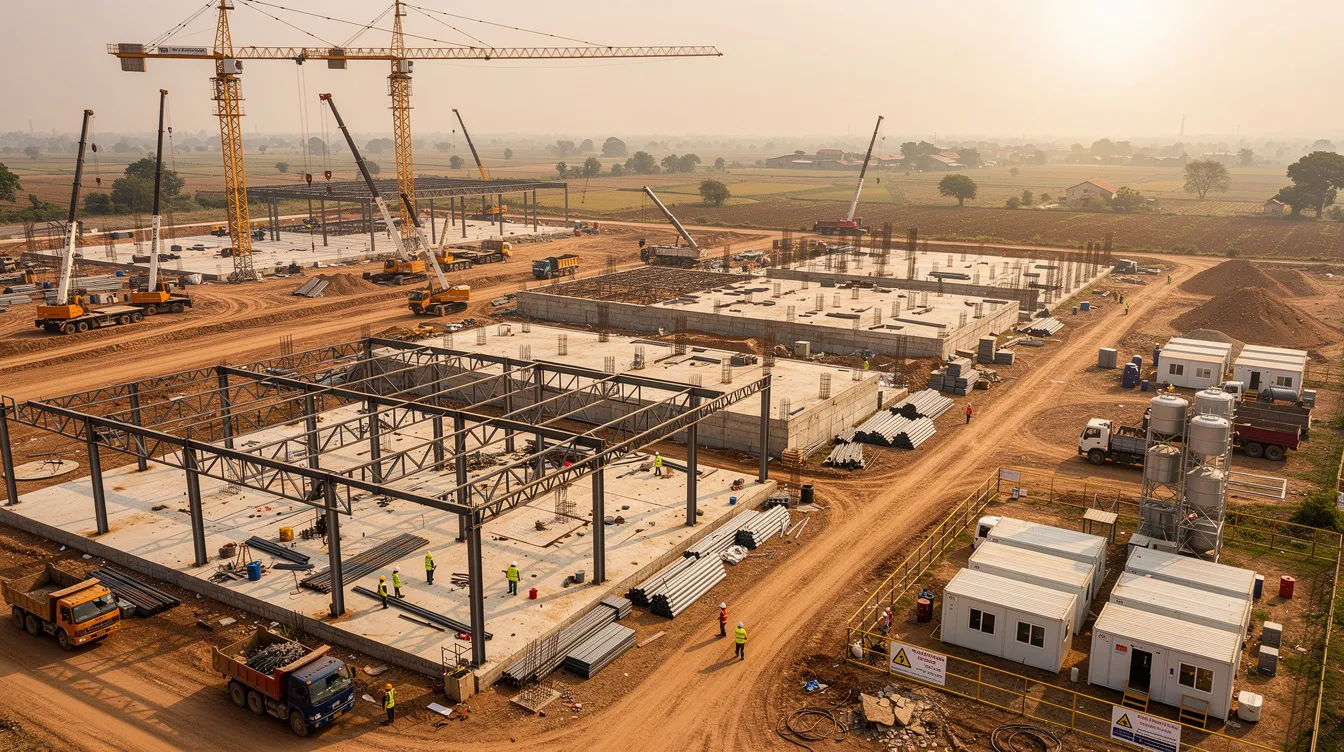
A greenfield manufacturing project means establishing entirely new facilities on undeveloped land – acquiring the site, constructing buildings, installing plant and machinery, securing regulatory approvals and hiring an entire workforce from scratch. A brownfield investment, by contrast, involves acquiring, expanding or upgrading existing facilities with established operations, revenue streams and operational processes.
From an investor’s perspective, greenfield investments differ fundamentally from brownfield projects in one critical aspect: visibility. A brownfield deal allows economic analysis based on historical performance. A greenfield development relies almost entirely on projections. This does not mean brown field investments are automatically safe – existing liabilities, outdated technology, legacy labour issues and environmental compliance gaps can create serious risks – but the visibility of past performance often tilts investor preference towards brownfield deals.
Globally, foreign direct investment (FDI) flows reflect this preference. In international project finance deals, foreign entities and multinational companies entering a foreign country frequently prefer acquiring existing assets or leasing existing facilities to reduce time-to-revenue and market entry risk. However, India’s positioning as a manufacturing destination has attracted growing greenfield FDI. India received 1,008 greenfield project announcements in 2023, and greenfield investments in India increased by 44 per cent that year. Across Asia, greenfield investments rose by 44 per cent in 2023, with the manufacturing sector dominating these flows.
India aims for $100 billion in annual FDI in the coming years, and key sectors attracting greenfield investment include automotive manufacturing, pharmaceuticals and biotechnology, logistics and warehousing, and computer hardware and software (which attracted over $7 billion in FDI). Greenfield investments in renewable energy projects grew by 54 per cent in value globally. Greenfield investments can also yield higher long-term returns and provide complete control over new operations, which is why they remain attractive despite higher risk. Tax breaks and financial incentives in developing countries and host countries continue to attract such projects.
Real world examples illustrate the scale: Toyota’s greenfield investment in Mexico was $1.5 billion and created over 3,000 jobs in its first year; Hyundai’s greenfield project in the Czech Republic employed over 3,000 people. Globally, greenfield investments created 0.445 jobs per $1 million invested, demonstrating their importance for job creation and local development. Bangladesh received $34.9 billion in greenfield FDI from 2003 to 2020. In southeast Asia and central Asia, greenfield development remains a primary vehicle for foreign direct investment, supporting economic development and sustainable development goals.
Yet despite these macro trends, individual investors evaluating a specific new manufacturing plant in India conduct project-level due diligence that is far more granular than macro FDI statistics suggest.
| Parameter | Greenfield Manufacturing Investment | Brownfield Investment |
|---|---|---|
| Revenue history | None; entirely assumption-based | Existing revenue, audited financials |
| Project execution uncertainty | High: civil, regulatory, equipment, ramp-up | Moderate: operational risks but higher visibility |
| Customer demand validation | Assumed via market study, possibly unconfirmed | Existing customers, validated demand |
| Capital expenditure | Large upfront investment before commercial operations | Lower incremental capex |
| Time to cash flow | Long gestation (18–30+ months) | Shorter, often immediately operational |
| Operational/technology risk | New processes, untested supply chains | Known technology, proven operations |
| Exit opportunities | Uncertain, depend on post-commissioning performance | Easier due to established track record |
For the automatic route of FDI in India, fdi equity inflows into both greenfield and brownfield categories are tracked, but greenfield proposals face materially longer diligence cycles. Foreign nations benefit from greenfield investment through economic growth, creating jobs and local economy development, but investors in such deals demand proportionately higher risk-adjusted returns.
15 Major Reasons Investors Hesitate to Fund Greenfield Manufacturing Projects in India
This section systematically addresses greenfield manufacturing project funding challenges in India and the core reasons why investors reject manufacturing project proposals. Each point explains why the risk matters, how it affects project viability, what documentation investors expect, and how promoters can mitigate the concern.
1. Absence of proven operating revenue. A greenfield project has no sales history, no demonstrated customer retention and no verified unit economics. Investors evaluating equity funding for new manufacturing projects in India cannot rely on past performance. They require at least indicative purchase orders, letters of intent or credible market-study evidence that the target market exists and is addressable. A promoter planning, say, an engineering components plant in Tamil Nadu should ideally secure anchor customer commitments before approaching investors.
2. Uncertainty regarding market demand. Project success relies on precise market forecasts and customer demand validation. Many promoters present demand projections based on macro industry growth without validating whether their specific product, at their proposed price, can capture a measurable share of the local market or export market. Investors face market and demand uncertainty in greenfield projects, and a project targeting a dynamic market like the us market or a new market in a foreign country must demonstrate validated buyer interest. Promoters should commission independent demand studies and, where possible, obtain binding or indicative offtake arrangements.
3. High initial capital expenditure. Greenfield investments require higher initial capital outlay – land, building, new production facilities, utilities, pre-operative expenses and working capital margin – all before generating any revenue. Investors are concerned about long payback periods for new manufacturing facilities. A mid-sized agro-processing unit in Maharashtra requiring ₹30 crore of total project cost with a 4–5 year payback period may struggle to attract financial investors expecting returns in 3–4 years. Promoters should provide detailed cost breakdowns supported by vendor quotations and include realistic contingencies.
4. Project execution delays. Greenfield projects face severe cost overruns and schedule delays. According to MoSPI data, over 1,500 infrastructure projects of ₹150 crore or more in India have reported cumulative cost overruns of approximately ₹4.95 lakh crore, with average time overruns of about 36 months among delayed projects. Construction projects are prone to delays due to contractor performance and regulatory approvals. Greenfield investments entail longer development timelines, and every month of delay increases carrying cost and depresses equity IRR. Promoters must present realistic implementation schedules with built-in contingencies.
5. Unrealistic project cost estimates. Many DPRs underestimate costs by ignoring pre-operative expenses, installation charges, utility connections, environmental compliance, training programs and working capital during ramp-up. Legal and compliance responsibilities can increase overall project costs in greenfield initiatives. Cost escalation of 15–30 per cent is common in Indian manufacturing projects. Promoters should obtain firm quotations, include contingency provisions and disclose all cost heads transparently.
6. Inadequate promoter contribution. Investors evaluate whether the promoter has sufficient “skin in the game.” If promoter equity contribution is below 25–30 per cent of project cost, or if the contribution is partly funded by personal borrowing, investor confidence drops. The promoter’s financial commitment must be credible and verifiable. A company seeking external equity should demonstrate that the promoter’s own capital is genuinely at risk.
7. Lack of relevant promoter experience. Operational risks in greenfield projects involve recruitment and training of skilled labor. A promoter without prior manufacturing experience raises questions about whether the team can execute civil works, commission machinery, establish quality control processes and manage production ramp-up. Talent acquisition challenges arise in establishing new greenfield projects, and competitive labor markets can cause delays in recruiting skilled workers. Promoters should highlight relevant industry experience, technical team credentials and advisory support.
8. Technology and machinery selection risks. Technology and integration risks are prominent in new manufacturing systems. Dependence on imported machinery from a foreign company creates exposure to foreign exchange fluctuations, delivery delays and after-sales service gaps. CEEW research notes that many green manufacturing setups depend heavily on imported plant and equipment. Promoters should select proven technology, obtain multiple vendor quotations and plan for technology integration testing before commercial production.
9. Unrealistic capacity utilisation assumptions. Financial projections that assume 75–80 per cent capacity utilisation from year one are immediately questioned. New plants typically require 12–24 months to stabilise production, build customer relationships and optimise processes. Promoters should model gradual ramp-up – perhaps 40–50 per cent in year one, increasing to 70–80 per cent by year three – supported by logical demand drivers.
10. Working capital underestimation. Manufacturing projects, especially in agro-processing, require substantial working capital for raw material inventory, receivables and seasonal procurement. Promoters frequently underestimate these requirements, creating cash flow stress in early operating years. DSCR estimates must account for working capital cycles, not merely fixed costs and debt service. Detailed operating cycle analysis strengthens the financial model.
11. Land, infrastructure and regulatory uncertainty. Greenfield projects require adequate infrastructure to function effectively. Land use disputes, unclear titles, delayed environmental clearances and inadequate power or water supply are persistent challenges. Greenfield projects must navigate complex regulatory and permitting hurdles. Changes in political administrations can affect the financial viability of greenfield projects. Greenfield investments require comprehensive evaluation of local regulations. Promoters should secure land with clear title and obtain critical approvals before approaching investors.
12. Raw material and supply-chain risks. Concentrated supplier dependence, volatile input prices and seasonal availability create procurement risk. A parent company setting up new facilities in a developing economy must demonstrate secure supply arrangements. Promoters should present supply tie-ups, alternative sourcing plans and pricing mechanisms.
13. Weak project financial projections. Unrealistic EBITDA margins, inconsistent cash flow assumptions and absence of sensitivity analysis undermine credibility. An investor-ready DPR must include at least base, downside and stress scenarios. Investors expect to see how project IRR, equity IRR, DSCR and break-even capacity utilisation change under adverse conditions.
14. Unclear funding structure and investor returns. Investors need clarity on equity dilution, preferred returns, valuation methodology and governance rights. Many proposals fail because the promoter has not thought through the means of finance or the investor’s expected return pathway. Professional financial projections and financial modelling should clearly demonstrate the return structure.
15. Limited exit opportunities. Investors may struggle to recover capital if the project underperforms or fails. Greenfield investments in the manufacturing sector offer fewer exit routes compared to technology or services investments. Financial investors typically seek exit in 4–7 years via strategic sale, secondary sale or IPO. Promoters must present a credible exit strategy with realistic timelines and potential buyer categories.
Why Technically Feasible Projects Still Fail to Attract Equity Investors
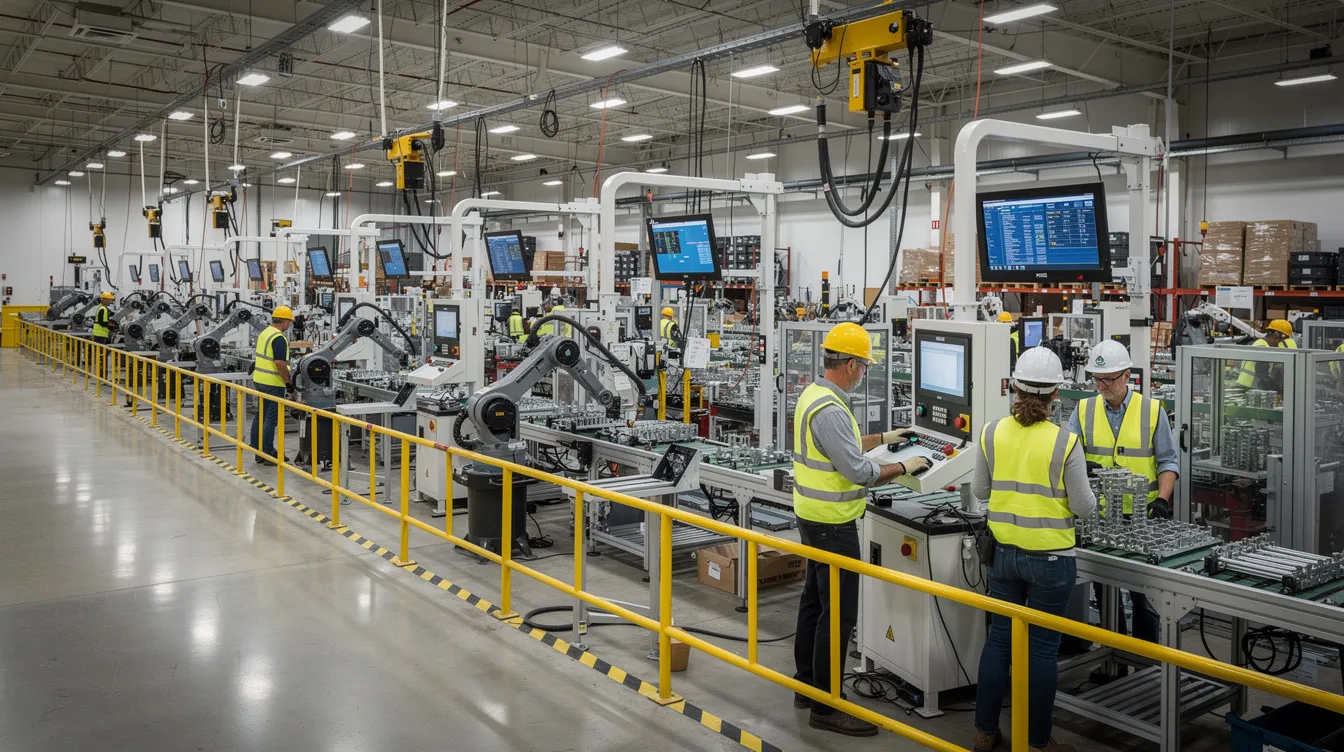
There is an important distinction between technical feasibility, commercial feasibility, financial viability and investor attractiveness. A project may be technically workable – the process functions, machinery is available, raw materials are accessible – yet the project’s risk-adjusted return may be insufficient for equity investors. Recent literature and investment practice confirm that meeting minimum DSCR and bank lending norms does not establish that private equity for manufacturing projects or HNI capital will follow. Banks primarily evaluate repayment capability; equity investors evaluate growth, returns and exit.
Consider project IRR versus equity IRR. A project with 16 per cent project IRR and 55 per cent debt may deliver an equity IRR of 20–22 per cent under base assumptions. But if commissioning delays compress operating years, the equity IRR can fall to 12–14 per cent – below the hurdle rate for most financial investors. According to McKinsey research, median PE deal IRRs in India have risen to approximately 33 per cent for recent vintages, meaning greenfield manufacturing must offer compelling returns to compete for capital.
CA’s Perspective: A common promoter misunderstanding is confusing bankability with investability. A bank may sanction a term loan if DSCR exceeds 1.25 and security is adequate. An equity investor, however, requires a return that compensates for the absence of collateral, the illiquidity of equity and the execution risk of a greenfield project. These are fundamentally different evaluation frameworks, and preparing only bank-focused documentation is insufficient for equity fundraising.
Foreign nations and domestic investors alike focus on risk-adjusted returns and credible exit pathways. A project eligible for tax breaks, subsidies or PLI benefits is still not automatically investable if the underlying economics are marginal.
Practical Example – Evaluating a ₹25 Crore Greenfield Manufacturing Project
This is a hypothetical illustration of greenfield project financing in India for a medium-sized agro-processing or food manufacturing facility.
Capital expenditure and working capital breakdown:
- Land and building: ₹6.5 crore
- Plant and machinery: ₹11.0 crore
- Utilities, electrical and installation: ₹2.5 crore
- Pre-operative expenses and contingency: ₹2.5 crore
- Margin for working capital: ₹2.5 crore
- Total project cost: ₹25.0 crore
Means of finance:
- Promoter equity: ₹6.0 crore (24%)
- External investor equity: ₹8.0 crore (32%)
- Term loan: ₹11.0 crore (44%)
The resulting debt-equity ratio is approximately 0.79:1, which is within acceptable limits for most lenders. However, the promoter contribution at 24 per cent is on the lower side, and some investors may view this as insufficient alignment.
Three scenarios:
| Parameter | Base Case | Downside Case | Stress Case |
|---|---|---|---|
| Commissioning delay | On schedule | 9-month delay | 12-month delay |
| Peak capacity utilisation (Year 3) | 75% | 60% | 50% |
| Cost escalation | Nil | 8% | 15% |
| Working capital adequacy | Sufficient | Tight | Additional ₹1.5 crore needed |
| Indicative impact on equity IRR | Acceptable range | Falls below most PE thresholds | Likely unviable for financial investors |
| Investor sentiment | Cautiously positive | Significant concerns | Likely rejection |
In the downside scenario, nine months of additional carrying cost combined with slower ramp-up compresses the window of profitable operation, and equity IRR falls below what most private equity investors would accept. In the stress case, 15 per cent cost escalation creates a funding gap – the promoter must either inject additional capital or accept greater equity dilution, further reducing returns.
CA’s Perspective: In my professional experience reviewing such models, the first element I examine is the ramp-up assumption and working capital sufficiency during the first 18 months of operations. Many models assume full working capital availability from day one without accounting for the operating cycle lag. This single oversight can make an otherwise viable project look distressed in early years.
For promoters developing such projects, detailed project feasibility analysis and professional financial projections and modelling are essential to present credible, stress-tested numbers to investors.
What Do Investors Actually Look for Before Funding a New Manufacturing Project?
Investors evaluating greenfield manufacturing proposals in India use five primary lenses: validated market demand, promoter quality and commitment, detailed execution plan, structured risk mitigation, and visible exit pathway. The absence of strength in any one area can lead to rejection, regardless of how strong the others appear.
| Investor Concern | Evidence Required | Promoter’s Recommended Action |
|---|---|---|
| Demand validation | LOIs, customer contracts, market study | Commission independent demand assessment |
| Promoter credibility | Track record, net worth, industry experience | Demonstrate relevant experience and financial strength |
| Project cost accuracy | Vendor quotations, detailed cost estimates | Obtain firm quotations with contingency |
| Technology reliability | Proven process, vendor credentials | Select established technology, plan integration testing |
| Regulatory approvals | Clearance status, land title report | Secure critical approvals before approaching investors |
| Raw material security | Supply agreements, sourcing plan | Establish supplier tie-ups and alternatives |
| Working capital adequacy | Operating cycle analysis, cash flow model | Model seasonal and cyclical requirements accurately |
| Governance framework | Shareholding structure, board composition | Define clear governance and reporting mechanisms |
| Exit options | Strategic buyers, IPO readiness, timelines | Present credible exit scenarios with realistic multiples |
Promoters should present a well-structured pitch to manufacturing project investors that addresses each concern with supporting evidence rather than optimistic assertions.
Strategic Investors vs Financial Investors – Who Is More Suitable for Greenfield Manufacturing?
The distinction between strategic investors and financial investors is critical when considering investor risks in greenfield manufacturing projects. A strategic investor – typically a larger company in the same supply chain, an industry player seeking market entry in India, or a foreign company expanding into new geographies – evaluates the project partly through the lens of strategic goals: supply security, brand image enhancement, access to raw materials, or positioning India as a manufacturing hub for exports.
Financial investors – private equity funds, family offices and HNIs – evaluate primarily through equity IRR, risk-adjusted returns and exit multiples. They seek maximum control over governance and expect clearly defined exit mechanisms within 4–7 years. Strategic investors may accept longer hold periods and lower financial returns in exchange for operational synergies, avoiding intermediary costs in their supply chain, or securing access to a dynamic market.
For a company establishing new production facilities in a specialised manufacturing segment – such as automotive components or pharmaceutical intermediates – a strategic investor may bring not only capital but also technology, customers and market access. Promoters seeking to find genuine business investors should evaluate investor fit against the project’s sector, stage, capital needs and operational requirements rather than pursuing the highest valuation.
The best investor for a greenfield manufacturing project is not necessarily the one offering the largest cheque, but the one whose risk appetite, sector expertise and investment horizon align with the project’s realities.
How Can Promoters Make Greenfield Manufacturing Projects More Attractive to Investors?
Promoters can meaningfully reduce perceived risk through ten practical measures:
- Commission an independent feasibility assessment covering technical, commercial and financial viability before finalising project design.
- Validate demand with real buyers – obtain LOIs, indicative orders or anchor customer commitments rather than relying solely on industry growth projections.
- Secure firm machinery quotations from at least two or three credible vendors, including installation, commissioning and after-sales terms.
- Resolve land and critical approvals early – clear land title, environmental clearance and utility connections before seeking equity.
- Plan realistic capacity ramp-up – model 40–50 per cent utilisation in year one increasing gradually, supported by demand drivers.
- Structure adequate working capital – account for raw material cycles, receivables, seasonal procurement and initial operating losses.
- Demonstrate strong promoter contribution – equity of 25–40 per cent of project cost, credibly funded.
- Prepare robust financial projections with base, downside and stress scenarios showing sensitivity of IRR, DSCR and cash flows.
- Prepare an investor-ready DPR and pitch deck tailored for equity evaluation, not merely bank submission – investor-ready DPR and fundraising documentation services can support this.
- Approach investors whose mandates match the project’s sector, stage, ticket size and geography, rather than broadcasting generic proposals.
Align the project scale with realistic funding capacity. Phasing capacity in stages – establishing the first phase with available resources before scaling – reduces risk for both promoter and investor.
Investor-Ready DPR and Financial Modelling – Why Documentation Matters
Serious foreign direct investment, domestic private equity and institutional lenders expect professional-grade documentation for capital-intensive greenfield manufacturing in developing countries like India. Funding greenfield projects requires detailed project documentation and risk management, and a poorly structured DPR is often the most immediate reason for rejection.
An investor-ready DPR should contain: promoter background and credentials, industry and demand analysis, project concept and technology selection, detailed project cost with land use and infrastructure plans, implementation schedule, manufacturing process, production capacity and utilisation plan, financial projections covering 7–10 years (including profit and loss, balance sheet, cash flow, DSCR, project IRR, equity IRR, break-even analysis, payback period and sensitivity scenarios), and a structured risk analysis with mitigation plans.
Such documentation does not guarantee funding. Its purpose is to support informed investor evaluation, reduce diligence friction and demonstrate that the promoter has thought rigorously about potential risks. Investor-ready DPR and fundraising assistance services are specifically designed for this purpose.
Common Mistakes Promoters Make When Approaching Investors
Several recurring errors undermine manufacturing startup funding attempts:
- Inflated valuations without supporting methodology or comparable transactions.
- Over-optimistic sales and margins that assume rapid market capture without evidence.
- Ignoring working capital requirements during the ramp-up phase.
- Underplaying implementation risk – presenting best-case timelines as the only scenario.
- Generic pitch decks that do not address investor-specific concerns or sector context.
- Unclear equity dilution – not specifying what percentage of ownership the investor receives and on what terms.
- Approaching mismatched investors – seeking PE capital from funds that do not invest in manufacturing or in the project’s ticket-size range.
- Accepting unfavourable terms without professional review of term sheet provisions and potential red flags.
CA’s Perspective: Telling an investor “we will figure out details after funding” is among the strongest negative signals a promoter can send. Serious investors expect that the promoter has already figured out the details – or has engaged professional advisors to do so. Approaching investors without adequate preparation wastes both parties’ time and damages future credibility.
Promoters should also understand when to decline an equity investor offer that imposes excessive control, unfavourable governance or unreasonable dilution. Reviewing investor board seats, veto rights and promoter control provisions is essential before accepting any term sheet. A practical guide to approaching investors in India can help promoters structure their outreach more effectively.

When Should a Promoter Reconsider or Restructure a Greenfield Project?
Not every greenfield manufacturing idea should be pursued at full proposed scale. When demand validation is weak, project cost is disproportionate to promoter net worth, equity fundraising repeatedly fails, or sensitivity analysis shows unacceptable downside IRR, the commercially prudent decision may be to restructure.
Alternative strategies include scaling down initial capacity to reduce capital requirements, choosing a brownfield path – such as acquiring or leasing an existing manufacturing plant – to accelerate revenue generation, bringing in a strategic partner who provides both capital and market access, or deferring investment until customer commitments or policy clarity emerge. In developing economies where trade restrictions, policy changes and infrastructure gaps create additional uncertainty, phased investment protects promoter capital.
Objective project viability analysis using break-even analysis, scenario planning and sensitivity modelling helps promoters make these decisions with financial discipline rather than emotional attachment to a project concept. Such projects benefit from external advisory perspective before major capital is committed.
How CA Manish Gugliya Can Help Prepare Your Manufacturing Project for Investors
Project Report Bank, led by CA Manish Gugliya, FCA, DISA (ICAI), provides customised advisory and documentation services for manufacturing and agro-processing promoters across India. With more than 20 years of professional experience in project finance, the practice supports promoters through investor-ready Detailed Project Reports, project feasibility studies, financial projections and financial modelling, project finance advisory, loan structuring and means-of-finance planning, business valuation support and investor pitch deck preparation.
The focus is on rigorous, project-specific financial analysis – not generic templates – aligned with what serious investors and lenders expect for capital-intensive greenfield manufacturing investments in India.
Planning a New Manufacturing Project and Looking for Equity Investors?
Before approaching investors, ensure your project cost, commercial feasibility, funding structure, financial projections and investment proposal have been properly evaluated. For professional assistance with investor-ready DPR preparation, project feasibility and financial modelling, connect with CA Manish Gugliya, FCA, DISA (ICAI) through ProjectReportBank.com.
Frequently Asked Questions
The following FAQs address common practical questions from Indian manufacturing promoters that supplement the detailed analysis above.
Why do investors hesitate to invest in greenfield manufacturing projects in India?
Beyond the 15 specific risks discussed above, investors also consider macro-level factors: infrastructure bottlenecks in semi-urban industrial zones, policy uncertainty where financial incentives or export benefits may be modified by successive administrations, and promoter-investor alignment challenges. India’s regulatory environment, while improving, still involves complex clearance processes. Even when a project targets a promising sector, investors weigh whether the local economy and infrastructure can support the proposed scale. Greenfield projects require adequate infrastructure, stable policy frameworks and strong promoter-investor trust to proceed.
Can a new manufacturing project obtain equity funding without existing sales?
Yes, but it requires significantly stronger preparation. Promoters must demonstrate validated demand through independent market studies, customer LOIs or confirmed distribution arrangements. The DPR and financial model must be investor-grade, with realistic assumptions and stress-tested scenarios. Promoter experience, credible equity contribution and a clear implementation plan become even more critical when there is no revenue history. For foreign securities or cross-border investment, the bar is often higher still.
How much promoter contribution do investors expect in a greenfield manufacturing project?
There is no universal percentage. In practice, investors in greenfield manufacturing typically expect promoter equity of 25–40 per cent of total project cost, depending on sector risk, promoter track record and project complexity. Higher-risk sectors or first-time promoters may need to contribute closer to 40 per cent. The key principle is credible financial alignment – the promoter must have sufficient capital at risk to demonstrate commitment. India being the third largest recipient of FDI among developing economies does not change the fact that individual project-level expectations are set by the specific risk profile.
What documents are required to attract investors for a new factory?
Key documents include an investor-ready Detailed Project Report covering project concept, market analysis, project cost, means of finance, implementation schedule and financial projections; a financial model with projected profit and loss, balance sheet, cash flow, DSCR, IRR and sensitivity analysis; land documents and regulatory approval status; machinery quotations; promoter KYC and financial statements; any customer LOIs or contracts; and a governance framework outlining shareholding, board structure and investor rights.
Are strategic investors better than private equity investors for greenfield projects?
Neither category is inherently superior. Strategic investors may bring industry expertise, customer relationships and longer-term commitment, which is valuable for specialised manufacturing or export-oriented new plants. Private equity investors may offer larger capital, governance discipline and growth acceleration, but require clearer exit mechanisms and higher returns. The right choice depends on the project’s sector, scale, strategic goals and the promoter’s willingness to share operational control. A company entering a new market may benefit more from a strategic partner, while an established promoter scaling through a greenfield expansion may find financial investors more suitable.
How can an investor-ready DPR improve a manufacturing project’s funding prospects?
A professionally prepared DPR demonstrates that the promoter has conducted thorough economic analysis, validated assumptions with market evidence, stress-tested financial projections and structured risks with mitigation plans. This reduces investor diligence time, minimises avoidable questions and builds credibility. It does not guarantee funding – no document can – but it substantially reduces the probability of rejection due to documentation gaps, inconsistencies or unrealistic projections. For promoters targeting serious equity capital, an investor-ready DPR is the minimum standard of preparation, not an optional enhancement.