Key Takeaways
- A commercial chana dal manufacturing plant in India requires a customised project report covering technical feasibility, project cost, means of finance, working capital, financial projections and risk analysis before machinery is ordered or a bank loan is applied for.
- Total project cost for a 5 TPD semi-automatic dal mill plant typically starts at around ₹1.50–2.50 crore, while a 50 TPD fully automatic plant may require ₹18–30 crore or more, depending on location, automation and infrastructure.
- Bengal Gram (Desi Chana) is the principal raw material, and chana dal production typically yields around 75% to 80% saleable dal from sound-quality grain, with 20–22% going to husk, chuni and by-products.
- Profitability hinges on the spread between raw chana purchase price and finished dal realisation, milling recovery percentage, capacity utilisation, working capital discipline and interest burden – not on any single optimistic assumption.
- A bankable DPR with CMA Data, 5–7 year financial projections, DSCR analysis and sensitivity modelling is essential for securing term loan and working capital finance from Indian banks.
- Project Report Bank, led by CA Manish Gugliya, FCA, DISA (ICAI), prepares customised Chana Dal Manufacturing Plant DPRs and financial models for serious promoters across India.
Introduction – Chana Dal Manufacturing Plant Project Report in India
Chana dal is a dietary staple and raw ingredient for flour in India, consumed daily across households, hotels, restaurants, institutional kitchens and by namkeen and snack manufacturers. India is the largest consumer and producer of pulses globally, and chana dal remains one of the most widely traded pulse products in domestic wholesale and retail markets. Chana dal production typically maintains consistent local demand throughout the year, making it an attractive manufacturing project for MSME entrepreneurs.
The raw material for conventional chana dal manufacturing is Bengal Gram, commonly known as Desi Chana. This differs from Kabuli Chana, which has a thinner skin and is primarily used for chole preparations and export markets. Major Desi Chana producing states include Madhya Pradesh, Rajasthan, Maharashtra, Karnataka and Telangana – regions that also form the natural sourcing belt for chana dal mills.
A chana dal manufacturing plant project report is a detailed technical, financial and commercial document that helps a promoter evaluate the investment, plan the financing, estimate profitability and present a structured proposal to a bank or investor. It is not a generic form to download and submit. Every project has location-specific costs, capacity-specific machinery requirements, market-specific selling assumptions and financing terms that must be captured accurately in the DPR.
This article is written from the practical perspective of CA Manish Gugliya, FCA, DISA (ICAI), a practising Chartered Accountant with over 20 years of experience in detailed project reports, CMA Data, financial modelling, project finance and MSME advisory. The objective is to give entrepreneurs a structured, financially grounded overview of what it takes to plan, finance and commission a commercial chana dal processing plant in India.
Key Takeaways for Chana Dal Project Planning
- Commercial chana dal plants are commonly planned at 5, 10, 20 or 50 TPD (tonnes per day of raw Bengal Gram input). Capex ranges from approximately ₹1.50 crore for a small semi-automatic unit to ₹30 crore or more for a large fully automatic integrated facility.
- Most plants operate 300 working days per year, with capacity utilisation starting at 60–65% in Year 1 and rising to 80–85% from Year 2–3 as markets are established.
- Chana dal profitability depends primarily on raw Bengal Gram purchase price, finished dal selling realisation, milling recovery percentage, capacity utilisation and interest burden on borrowed capital.
- The choice between semi-automatic and fully automatic dal mill configurations affects both upfront investment and per-kilogram operating cost – a decision that must be made before the DPR is finalised.
- A professionally prepared DPR, CMA Data and project feasibility study reduce the risk of under-financing, unrealistic projections and bank rejection.
- All numbers in this article are illustrative and should not be treated as machinery quotations or guaranteed profit figures. Actual values will differ for each promoter based on project-specific analysis.
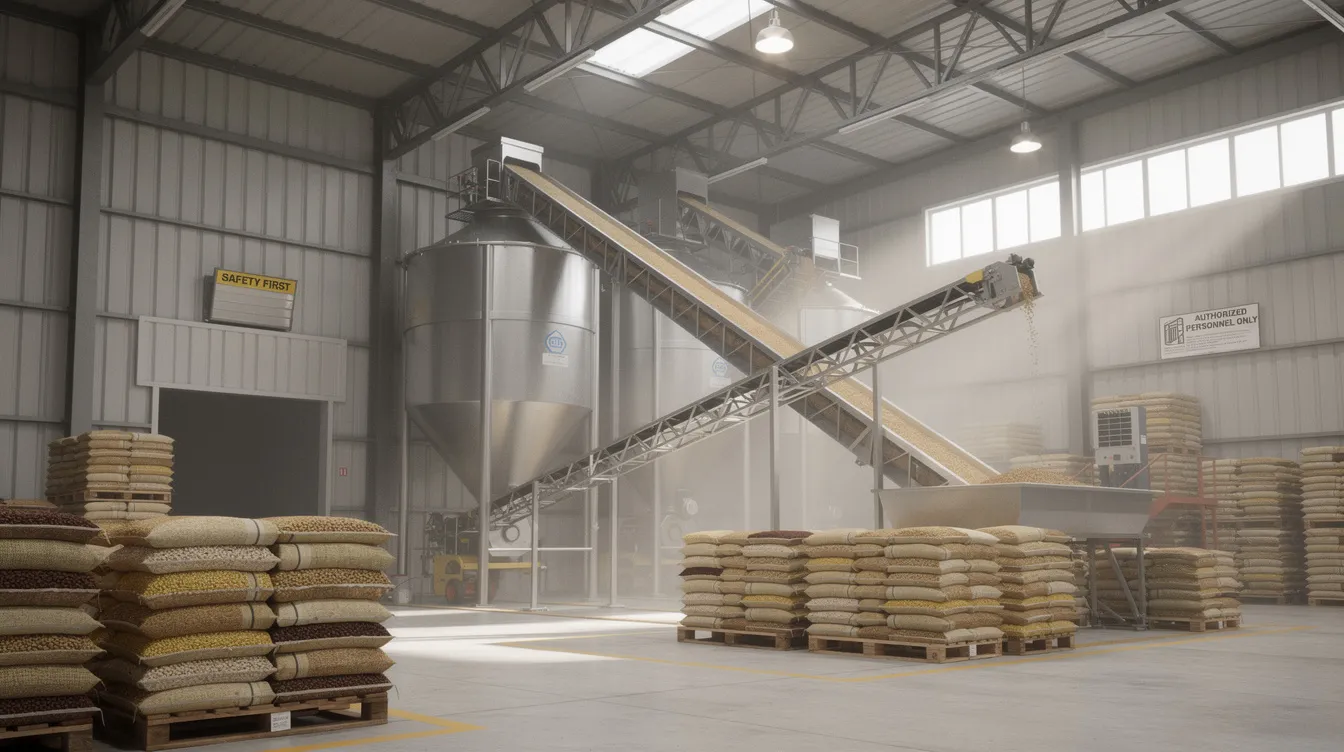
Chana Dal Manufacturing Business Opportunity in India
The demand for chana dal spans multiple channels. Households consume it as a daily cooking ingredient. Government nutrition schemes – including mid-day meal programmes and PDS distribution – procure dal in large volumes. Hotels, restaurants, caterers, canteens and food processing companies use chana dal as a base ingredient for a range of products, from ready-to-eat meals to spices and snack preparations.
Key opportunity dimensions include:
- Bulk B2B supply to wholesalers and institutional buyers
- Branded and packaged chana dal in 500 g, 1 kg and 5 kg retail packs for modern trade and online platforms
- Contract manufacturing for established consumer brands
- Institutional supply to government procurement agencies, canteens and processors
- Integration with besan (gram flour) manufacturing to utilise broken dal and fruits of the milling process
Proximity to chickpea-producing regions reduces logistics costs for processing plants. A dal mill located near mandi clusters in Madhya Pradesh, Maharashtra, Rajasthan or Telangana can source fresher grain at lower transport cost, which directly improves raw material quality and recovery. Project reports should analyze local and national demand for pulses, target markets and competitor pricing to present a realistic commercial picture.
Automation and better process control enable improved yield, consistency and food safety, helping meet the requirements of organised food processing companies and large retailers who demand graded and clean packaging. Quality control is essential for maintaining consumer preferences for uniformly sized, low-defect chana dal. This article does not quote national market-size numbers; the focus remains on project-level opportunity and financial feasibility for individual promoters.
Types of Chana Dal Manufacturing Plants
Plant type selection depends on target capacity, available investment, labour availability and the desired level of automation. A dal mill can be started with a small investment and proper planning, but the configuration must match the promoter’s market access and growth plan.
- Mini chana dal units (1–3 TPD): Suitable for micro entrepreneurs and rural clusters. Capex is low, but manual handling is high, recovery rates are less consistent and market reach is limited. A Semi Automatic Mini Dal mill with a capacity of 200 kg per hr is a common entry point for such units.
- Semi-automatic commercial plants (5–20 TPD): Core operations like cleaning, dehusking and splitting are mechanised, while some grading and bagging may remain semi-manual. This is the most common MSME-scale configuration. An Automatic 1 ton/hr Dal Plant, requiring 20 HP power, is representative of the machinery used in this range.
- Fully automatic chana dal manufacturing plants (20–50+ TPD): These feature automated feeding, bucket elevators, PLC panels, colour sorters and automatic bagging lines. Higher upfront investment but lower per-unit labour cost and better consistency. An Automatic 3 Ton/Hr Masoor Dal Mill Plant is offered in Jodhpur, illustrating the scale of equipment available for high-capacity pulse processing across different dal types.
- Integrated multi-pulse processing plants: These handle chana, toor, moong, urad and masoor on interchangeable lines. Promoters considering diversification across multiple pulses can refer to the Integrated Multi-Pulse Processing Plant Project Report for detailed guidance.
The distinction between an automatic dal mill and a fully automatic dal mill lies in the degree of automation across cleaning, milling, sorting and packaging stages. A detailed comparison is covered in the Fully Automatic vs Semi-Automatic Dal Mill article on Project Report Bank.
Chana Dal Manufacturing Process – Step-by-Step
The chickpea conversion process includes cleaning, grading, conditioning, de-husking and packaging – each stage influencing the final yield and quality of chana dal. Below is a practical, bankable-level description of the manufacturing process from raw Bengal Gram to finished dal.
- Raw material receiving and sampling: Incoming Desi Chana is inspected for moisture, foreign matter, damaged grains and uniformity of size before acceptance.
- Pre-cleaning and screening: The milling process for chana dal involves removing dust, stones and foreign matter through vibrating screens and aspirators.
- Destoning and aspiration: Heavy impurities like stones and metal particles are separated using destoners and air classifiers.
- Grading: Grain is sorted by size to ensure uniform dehusking and splitting across the batch.
- Pitting and conditioning: The seed coat is scored (pitted), and controlled moisture is applied. This is followed by a tempering or rest period that loosens the husk.
- Drying: Conditioned grain is dried to the appropriate moisture level (typically ≤12%) using batch or continuous dryers.
- Dehusking: The loosened husk is removed mechanically using emery rollers or rubber rollers.
- Splitting: Dehusked kernels are split into two cotyledons – the chana dal.
- Separation and polishing: Dal, husk, brokens and unsplit grain are separated. Polishing (where adopted) improves appearance for retail markets.
- Colour sorting and final grading: Optical colour sorters remove discoloured and defective pieces. Final vibro grading separates dal into size categories.
- Weighing and packaging: Finished chana dal is weighed, bagged and labelled for dispatch.
Process Flow: Raw Bengal Gram → Cleaning & Destoning → Grading → Pitting & Conditioning → Drying → Dehusking → Splitting → Separation & Polishing → Grading & Colour Sorting → Weighing & Packaging → Finished Chana Dal
Grain hardness, initial moisture content and conditioning parameters significantly affect milling recovery and the proportion of broken dal and husk. For a broader understanding of pulse milling flows, readers can refer to the Dal Milling Process & Flow Chart article on Project Report Bank.
Chana Dal Mill Machinery & Equipment Requirements
Machinery selection and plant layout directly influence efficiency, power consumption, yield and quality. Machinery quotations must be project-specific; costs vary by brand, automation level and configuration.
Key machines required in a commercial chana dal processing plant include:
- Raw material intake elevator and hopper
- Pre-cleaner and grader
- Destoner
- Aspirator
- Pitting and conditioning machine
- Horizontal or vertical scourer
- Batch or continuous dryer
- Dehusking machine (emery or rubber roller type)
- Dal splitter
- Vibro separator and grading machine
- Polisher – for example, Proveg Dal Mill Plant has a polishing capacity of 101–400 Kg/Hr, suitable for mid-range commercial plants
- Colour sorter
- Dust collection system
- Bucket elevators and conveyors
- Weighing and packaging machines
- Air compressor (if required)
- Electrical control panels and utilities
An Automatic Dal Mill Plant requires 100 HP installed power, and a Semi Automatic Dal Mill Plant also has an installed power of 100 HP – the difference lies more in automation of material handling, sorting and packaging rather than core milling energy. An 800 kg/hr Yellow Splits Plant is available in Bahraich and is representative of the capacity range used for mid-scale dal processing.
| Equipment | Main Function | Investment Category |
|---|---|---|
| Pre-cleaner & Grader | Removes dust, foreign matter; grades by size | Low–Medium |
| Destoner & Aspirator | Removes stones, metal, light impurities | Low |
| Conditioning & Pitting Unit | Loosens husk for efficient dehusking | Medium |
| Dryer (Batch/Continuous) | Reduces moisture to target level | Medium–High |
| Dehusker & Splitter | Removes husk and splits kernel into dal | Medium–High |
| Polisher | Improves dal surface finish for retail | Medium |
| Colour Sorter | Optical removal of defective/discoloured pieces | High |
| Packaging Machine | Weighing, bagging and sealing | Medium |
| Elevators, Conveyors, Panels | Material flow and electrical control | Medium |
It is important to distinguish core machinery cost from total installed machinery cost, which includes GST, transport, erection, commissioning and basic spares – typically adding 15–30% above ex-works pricing. For a deeper analysis of dal mill machinery, equipment and cost factors, readers can consult the dedicated article on Project Report Bank.
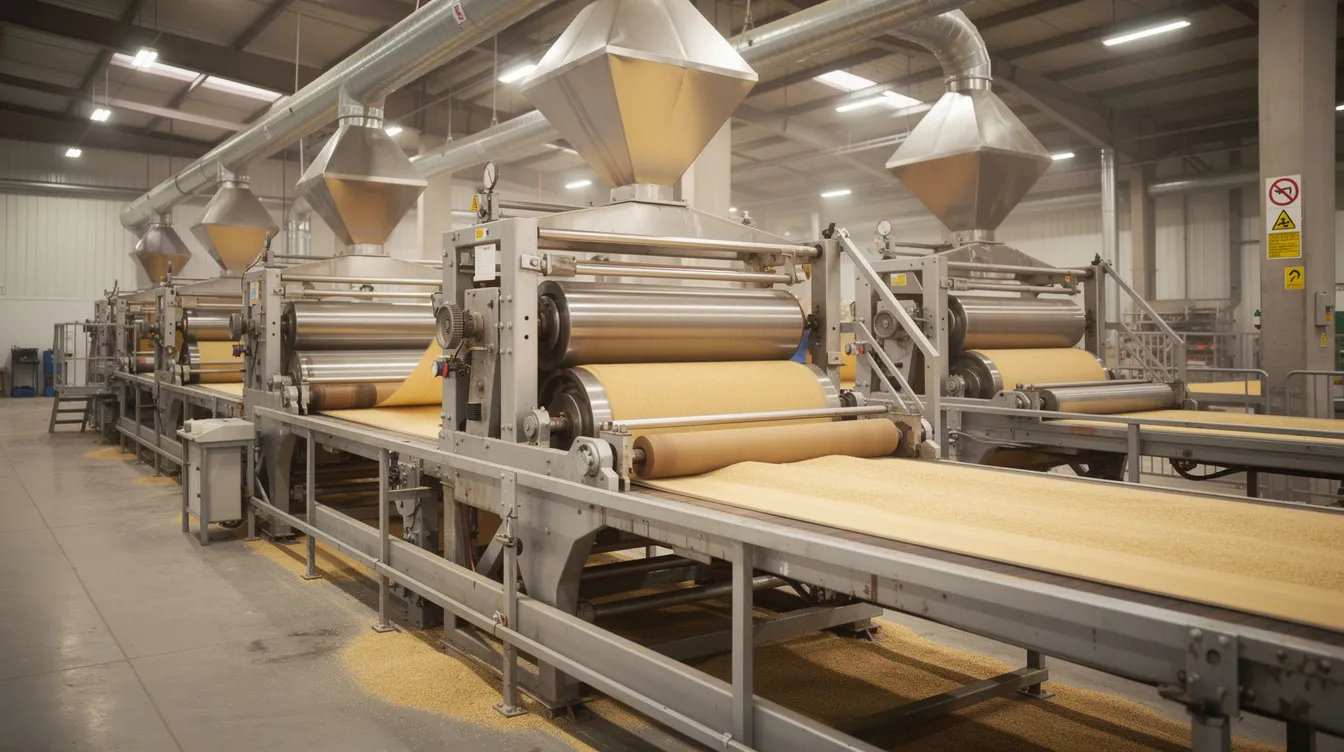
Chana Dal Processing Plant Capacity Planning – 5, 10, 20 & 50 TPD
Capacity, measured in TPD of raw Bengal Gram input, drives all major planning aspects: land, building, machinery rating, manpower and bank finance requirements. Production capacity planning should consider machinery specifications and operational efficiency to ensure realistic throughput projections.
The distinction between raw material input capacity and finished chana dal output is critical. Recovery assumptions typically used in financial projections are: approximately 75% dal, 20% husk and chuni, and 5% process loss and other splits. According to an FCI/Consumer Affairs study, the standard total outturn for chickpea dal is approximately 75.35%.
| Parameter | 5 TPD | 10 TPD | 20 TPD | 50 TPD |
|---|---|---|---|---|
| Annual Raw Material (MT @ 300 days) | 1,500 | 3,000 | 6,000 | 15,000 |
| Automation Level | Semi-automatic | Semi-automatic to automatic | Automatic | Fully automatic |
| Connected Load Band | 60–80 kW | 120–180 kW | 200–350 kW | 400+ kW |
| Typical Promoter Profile | Micro/Small MSME | MSME | Mid-MSME | Mid-corporate |
| Working Capital Intensity | Lower | Medium | Medium–High | Higher |
Standard planning assumptions include 300 operating days per year, one or two shifts of 8 hours depending on capacity, and a ramp-up from 60–65% utilisation in Year 1 to 80–85% in later years. Detailed guidance on engineering and financial planning for each capacity is covered in the Dal Mill Capacity Planning – 5, 10, 20 & 50 TPD article.
Chana Dal Manufacturing Plant Setup Cost in India
This section provides only indicative investment structures. Actual project cost will depend on location, civil construction standards, machinery brand, level of automation and the promoter’s electricity connection and utility arrangements.
Key cost heads include:
- Land purchase or lease premium (where applicable)
- Site development
- Factory shed and civil construction
- Plant and machinery (including installation)
- Electrical installation and DG set for backup power
- Utilities – transformer, wiring, compressor, water system
- Storage godowns for raw material and finished goods
- Vehicles (optional)
- Preliminary and pre-operative expenses – consultancy, legal fees, interest during construction
- Contingency margin (typically 5–10% of fixed capital)
- Margin money for working capital
A fully automatic dal mill plant costs approximately Rs 1,46,55,000 at the higher end of mid-capacity configurations. A 2 TPH dal mill plant is priced around Rs 1,46,55,000, while a dal mill plant can cost approximately Rs 1,13,10,000 at lower automation levels. Cost estimates for projects often include fixed capital and working capital assessments together as the total project cost.
| Cost Head | Approx. Share (10 TPD) | Approx. Share (20 TPD) |
|---|---|---|
| Land & Site Development | 8–12% | 7–10% |
| Building & Civil Works | 18–22% | 15–20% |
| Plant & Machinery (Installed) | 35–45% | 38–48% |
| Electrical & Utilities | 5–8% | 5–7% |
| Pre-operative & Contingency | 5–8% | 4–7% |
| Working Capital Margin | 12–18% | 12–16% |
Many promoters underestimate working capital and over-invest in civil works. An experienced DPR can balance allocations realistically for bank discussions. For a broader view of dal mill plant setup cost components, readers can refer to the Dal Mill Plant Setup Cost in India guide on Project Report Bank.
Land, Building & Plant Layout Requirements
Appropriate land area and a logical plant layout reduce material handling cost, dust contamination, cross-contamination between raw and finished product, and internal logistic delays. Lenders also evaluate whether the layout supports safety, hygiene and future expansion. Land requirements for manufacturing plants depend on production capacity and infrastructure needs.
- 5–10 TPD plants: Industrial plot of approximately 10,000–25,000 sq ft, with covered area of 4,000–8,000 sq ft, typically in a food processing or agro-processing zone.
- 20–50 TPD plants: Larger industrial plots with space for truck movement, raw material godowns, finished goods warehouse and future expansion – covered area of 10,000–25,000 sq ft or more.
Essential building blocks include:
- Raw Bengal Gram storage godowns (with pallets, ventilation)
- Processing hall housing the main milling line
- Cleaning and grading area (dusty zone, separated)
- Conditioning and drying area
- Finished goods warehouse
- Packaging room with weighing machines
- QC lab for moisture, purity and grading checks
- Utility room (electrical panels, compressor)
- Office and admin area, worker facilities
- Loading and unloading bays
Design should follow a straight-line product flow from raw intake to dispatch, with separation between dusty and clean zones and provision for future addition of a colour sorter or a besan grinding line. Fire safety, ventilation and compliance with factory norms are standard requirements. Detailed layout and infrastructure guidance is available in the Dal Mill Land, Building & Plant Layout Requirements article.
Raw Material Requirements, Processing Yield & By-Products
Bengal Gram procurement is typically done from APMC mandis, farmer-producer organisations and traders. Quality assessment focuses on seed size, foreign matter content, damaged grain percentage and moisture level. Procurement is planned around the Rabi harvest season (typically February–April), with bulk stocking during harvest months when farmers bring fresh produce to mandis.
Storage practices significantly impact milling quality. Raw chana should be stored on pallets with proper fumigation protocols, moisture monitoring and protection from rodents and insects. As per government norms, stack height should not exceed 1.5 metres, and forced aeration should be used where possible.
Illustrative Mass Balance – Processing 1,000 kg of Raw Bengal Gram:
| Output | Approx. Quantity | Notes |
|---|---|---|
| Finished Chana Dal (Grade I + II) | 730–770 kg | Varies by grain quality and process |
| Husk & Chuni | 180–220 kg | Used as cattle/poultry feed |
| Process Loss, Brokens & Fines | 30–50 kg | Brokens may go to besan units |
Academic research on desi chickpea varieties shows recovery ranging from 68% to 79% depending on variety, seed size and conditioning. Effective waste management strategies are critical for processing plants due to by-product generation – husk and chuni are sold for cattle and poultry feed, small brokens are supplied to besan manufacturers, and damaged grain is directed to feed applications.
The recovery rate in milling affects the profitability of chana dal production directly. Bankers often question assumed recovery percentages in dal mill project reports, and a 2–3% drop in dal yield can materially impact revenue and DSCR calculations.
Chana Dal Manufacturing Cost, Revenue & Profitability
Profitability analysis in a DPR focuses on contribution per quintal of raw Bengal Gram processed, then aggregates to annual figures. The raw material cost is the single largest expense, often accounting for 75–85% of total operating cost.
Key cost components:
- Raw chana purchase cost (largest share by far)
- Electricity and power (connected load and tariff-dependent)
- Direct labour, wages and supervision
- Packing materials – bags, labels, stitching
- Maintenance, spares and repairs
- Fumigation and QC expenses
- Factory overheads – lighting, water, admin
- Depreciation on fixed assets
- Finance costs – interest on term loan and working capital
Revenue elements:
- Sale of graded chana dal (primary income)
- Sale of husk and chuni
- Sale of brokens to besan processing units
- Processing charges if doing job work for third parties
Profitability is sensitive to spreads between raw chana purchase price and chana dal selling price. These spreads can compress during periods of high raw material price volatility. Typical EBITDA margins for well-utilised, quality-focused plants range from 8–15%, with smaller or under-utilised units often seeing lower margins. Project Report Bank’s DPRs model scenarios with varying input and output prices to show promoters reasonable ranges rather than a single optimistic case.
Working Capital Requirements for Chana Dal Manufacturing
Even a technically efficient dal mill can face financial stress if raw material stocking and debtor cycles are not funded adequately. Chickpea prices fluctuate based on seasonal harvesting and monsoon patterns, which means a plant may need to stock 30–90 days of raw material during harvest months when prices are lower.
Key working capital components:
- Raw Bengal Gram inventory (often 45–90 days stock)
- Work-in-progress during conditioning and drying
- Finished chana dal inventory (typically 7–15 days)
- Trade receivables from wholesalers and institutional buyers (30–60 days)
- Less: trade creditors and current liabilities
For a 10 TPD plant operating at 75–80% utilisation, working capital requirements can range from ₹70 lakh to ₹1.20 crore depending on procurement strategy and credit terms. Banks typically finance 70–75% of assessed working capital through cash credit limits, with the promoter providing 25–30% as margin money.
Banks assess drawing power from stock and debtor statements. Regular stock audits and proper documentation help maintain healthy working capital limits. CMA Data preparation is critical for presenting working capital assumptions professionally – a topic covered in detail in the section below and through Project Report Bank’s CMA Data Preparation Services.
Chana Dal Manufacturing Plant Project Cost & Means of Finance
A chana dal mill’s total project cost includes fixed assets plus margin for working capital. Banks expect a realistic financing pattern rather than 100% debt funding. Successful project financing requires detailed financial modelling and means of finance planning aligned with the promoter’s actual resources.
Common means of finance:
- Promoter contribution or equity (typically 25–30% of total project cost)
- Unsecured loans from promoters and relatives (where permitted by the lender)
- Term loan from banks or financial institutions for fixed assets (70–75%)
- Working capital limits – cash credit, overdraft, packing credit where export-linked
The DPR presents term loan repayment schedules, expected DSCR range and security cover. Primary security typically includes plant and machinery and the factory building; collateral may include additional property or personal guarantees. As per Central Bank of India’s Dal Mill Cluster scheme norms, minimum average DSCR of 1.25 and current ratio of 1.10 are standard financial benchmarks.
Project Report Bank assists promoters in structuring project cost and means of finance in line with realistic bankability norms, aligned with the specific project’s cash-generation capacity.
Financial Projections, DSCR, ROI, IRR & Payback Period
Bankers and investors look for 5–7 year projected financial statements to evaluate project viability. Financial projections are essential for securing bank funding and form the analytical backbone of any chana dal mill project report.
Core financial metrics typically included:
- Gross profit and EBITDA trends
- Net profit after tax
- Break-even sales volume
- Average DSCR and minimum DSCR (banks typically require ≥1.25)
- Internal rate of return (IRR) on total project cost
- Return on capital employed (ROCE)
- Payback period on promoter equity
A change in milling recovery from 77% to 73% on a 10 TPD plant can reduce annual gross contribution by ₹15–25 lakh or more, depending on grain price and selling realisation. Similarly, a ₹100 per quintal increase in raw chana price directly compresses margins unless selling prices adjust correspondingly.
Scenarios and sensitivity analysis – base case, conservative case and stressed case – are more meaningful to banks than a single optimistic projection. Financial projections in a DPR are estimates based on agreed assumptions and are not guarantees or certifications of actual performance. Project Report Bank typically models multiple scenarios in every chana dal DPR.
Bank Loan, CMA Data & Government Schemes
Chana dal mill projects are typically financed under standard MSME and food processing loan products by public and private sector banks, subject to project viability, collateral and the promoter’s track record. Reports must meet bank standards for funding applications, and a detailed project report is essential for bank funding.
Typical bank documentation needs:
- Detailed project report (DPR) with financial projections
- CMA Data in the format prescribed by the bank
- KYC documents of promoters
- Past financial statements (for existing businesses)
- Machinery quotations from identified suppliers
- Land and building ownership or lease documents
- Net worth statement of promoters
CMA Data is a structured document covering past and projected financials, working capital assessment and ratio analysis. Accurate preparation supports stronger credit appraisal and demonstrates the promoter’s understanding of the business economics. Over 3 lakh entrepreneurs have used professional project reports for bank finance applications across India.
Depending on the time of writing, promoters may explore schemes like general MSME credit guarantee schemes, food processing subsidy programmes under the Ministry of Food Processing Industries or state-level agro-processing incentives. However, promoters must always refer to the latest official notifications for current eligibility, limits and conditions. Project Report Bank offers specialised Bank Finance DPR & Loan Proposal Assistance to help align chana dal project assumptions with bank expectations.
Licences & Regulatory Approvals
A chana dal processing plant is part of the food processing industry and must comply with food safety, taxation, labour and factory-related regulations in India. Statutory approvals required for food processing plants include food safety and environmental clearances.
Key registrations and approvals:
- The FSSAI license is necessary for food manufacturing in India. Registration or licence is required depending on turnover and scale, with standards covering moisture (≤12%), foreign matter and purity.
- GST registration for tax compliance
- Udyam registration as an MSME (if qualifying by investment and turnover criteria)
- Local trade licence or shops and establishment registration where applicable
- Factory licence based on worker strength and machinery power
- Fire safety NOC
- Consent to Establish and Consent to Operate from the State Pollution Control Board – pulse milling is generally low-pollution, but dust and husk management must meet local norms
- Legal Metrology compliance – standard weights and measures, MRP declaration, batch and date coding, and nutritional labelling for pre-packed chana dal as per prevailing FSSAI and Legal Metrology rules
Actual approvals will vary by state, capacity and configuration and should be validated with local authorities or professional advisors at the time of project implementation.
Chana Dal Processing Plant Feasibility Study
A preliminary feasibility study focuses on whether the project should be taken forward at all. The full DPR then focuses on how it will be implemented and financed. Project feasibility studies assess market potential and profitability before the promoter commits significant capital.
Feasibility assessment dimensions:
- Location and proximity to raw chana-producing mandis and major markets
- Availability and cost of industrial land and reliable electricity connection
- Local power tariffs and reliability of supply
- Competition from existing dal mill businesses in the region
- Technical feasibility – selection of appropriate capacity (5 vs 10 vs 20 vs 50 TPD), semi-automatic versus automatic machinery, availability of skilled machine operators and integration potential with besan or other pulse lines
- Financial feasibility – expected margins based on historical price spreads, estimated project cost and funding options, promoter’s ability to bring margin money, and projected DSCR and break-even period
Project Report Bank provides independent Project Feasibility Study Services to help promoters evaluate chana dal projects before committing to land and machinery purchases.
Investment Risks & Sensitivity Analysis
Chana dal manufacturing is subject to commodity price cycles and operational risks, which should be transparently discussed in a professional DPR rather than glossed over.
Key risk categories:
- Volatility in Bengal Gram procurement prices due to crop output, monsoon patterns and government policy changes (MSP revisions, export bans, stock limits)
- Fluctuations in chana dal selling prices, which may not always move in tandem with input costs
- Lower-than-expected milling recovery – even a 2–3% shortfall from assumed yields can significantly affect annual profits and DSCR
- Power outages, unplanned downtime and machinery breakdowns
- Aggressive credit extended to buyers leading to stretched receivables or bad debts
- Underestimation of working capital, especially during peak procurement season
- Interest rate hikes on floating-rate term loans and working capital limits
- Intense competition from established dal mill brands and processors
- Regulatory changes affecting mandi access, stock limits or food safety requirements
Illustrative Sensitivity Analysis:
| Scenario Change | Impact on Annual EBITDA (Approx.) |
|---|---|
| Raw chana price increases by 5% | EBITDA may decline by 15–25% |
| Capacity utilisation stays at 60% vs planned 80% | Fixed cost burden increases; EBITDA may drop by 20–35% |
| Milling recovery drops from 77% to 73% | EBITDA may decline by 15–20% |
| Selling price drops by ₹2/kg | EBITDA may compress by 10–18% |
Project Report Bank routinely includes risk and sensitivity analysis in its chana dal DPRs so that promoters and lenders understand the downside as well as the base case.
What Should a Professional Chana Dal Manufacturing DPR Include?
A bankable Chana Dal Manufacturing Plant DPR is a comprehensive, customised document – not a generic downloaded report – and forms the core of both internal decision-making and bank appraisal. Stakeholders expect a project report to detail the operational workflow and process specifics for efficiency, alongside realistic financial projections.
Major components:
- Executive summary
- Promoter background, experience and financial overview
- Detailed project description – capacity, location, plant configuration
- Technical details of the manufacturing process and machinery
- Land and building plan with layout
- Implementation schedule (typically 6–12 months for MSME-scale projects)
- Market analysis – regional demand-supply, competition mapping, target customer segments, proposed sales and distribution strategy
- Itemised project cost and means of finance
- Working capital assessment
- Projected financial statements for 5–7 years (P&L, Balance Sheet, Cash Flow)
- Ratio analysis including DSCR, current ratio, debt-equity, ROCE
- Break-even analysis, ROI, IRR and payback period calculations
- Risk assessment and sensitivity analysis
- Annexures – machinery directory, tentative supplier quotations, land documents, key regulatory requirements and assumptions behind all financial projections
Customised reports are tailored to specific project needs. Project Report Bank prepares chana dal DPRs by discussing assumptions with promoters and aligning them with practical bank finance norms, not by simply editing a standard pdf template.
Professional DPR & Bank Finance Advisory by CA Manish Gugliya
Project Report Bank is a Chartered Accountant-led professional advisory platform – not a template-selling portal. Led by CA Manish Gugliya, FCA, DISA (ICAI), with over 20 years of professional practice in project finance, MSME advisory, DPR preparation and financial modelling, the platform serves serious project promoters across India.
Core services relevant to chana dal promoters:
- Customised Chana Dal Manufacturing Plant DPR preparation
- Bank finance DPR and loan proposal assistance
- CMA Data preparation for term loan and working capital appraisal
- Financial modelling and 5–7 year projections
- Project feasibility studies
- Working capital assessment and structuring
- Business plan documentation for investors
The team has experience preparing industrial and food processing DPRs for MSMEs across different Indian states, factoring in local costs, bank norms and state-level incentives where available. The effort is focused on preparing professional documentation that helps promoters present a strong, defensible case to lenders and investors.
Serious promoters planning a chana dal processing plant or dal mill business are invited to initiate a WhatsApp-first enquiry through ProjectReportBank.com for a discussion on project-specific DPR and finance planning.
While the advisory helps in preparing professional documentation and structuring, it does not guarantee bank loan sanction, subsidy approval or project profitability. Outcomes depend on multiple external factors including market conditions, promoter execution and regulatory decisions.
Frequently Asked Questions
What is the approximate cost of starting a small commercial Chana Dal mill in India?
For a 5–10 TPD semi-automatic dal mill, total project cost – including basic land development, building, automatic dal mill machinery and working capital margin – typically falls in the range of ₹1.50–6.00 crore, depending on location, land arrangement, automation level and pulses electricity connection charges. A dal mill plant can cost approximately Rs 1,13,10,000 at the lower end of the spectrum for basic configurations. Project Report Bank can provide a detailed, location-specific cost estimate and financing plan within a customised Chana Dal Manufacturing Plant Project Report.
How much Chana Dal can be produced from 1,000 kg of raw Bengal Gram?
Under reasonable processing conditions, 1,000 kg of raw Bengal Gram might yield around 730–770 kg of finished chana dal, 180–220 kg of husk and chuni, and a small percentage of other losses. Actual results depend on raw material quality, grain variety, moisture content and process control. DPR financial projections usually assume a conservative but realistic average recovery to avoid overstatement of income and profits when seeking a bank loan.
Is a Chana Dal Manufacturing Plant always profitable?
Chana dal milling can be profitable when planned correctly, but profitability is not automatic. It depends on procurement efficiency, milling recovery, capacity utilisation, cost control, working capital discipline and market pricing of both raw chana and finished dal. A feasibility study and sensitivity analysis are essential to understand how changes in raw chana prices, sales volumes and recovery may impact profits and DSCR over time. Promoters should prepare for challenges including seasonal price volatility and competition.
Can I start with only Chana Dal and later add Toor or Moong Dal processing?
Many plants start as single-product (chana-focused) dal mill plants and later add additional pulse lines or grow into an integrated multi-pulse setup, provided the original plant layout and machinery selection anticipated such expansion. Promoters considering future diversification should design the project from day one in consultation with professionals. Comparison references are available in Project Report Bank’s Toor Dal Mill Project Report and Moong Dal Processing Plant Project Report articles.
How long does it typically take to implement a Chana Dal Manufacturing Plant from concept to commissioning?
Most MSME-scale chana dal projects take 6–12 months from concept to commissioning, covering land acquisition or lease, civil construction, machinery ordering and delivery, installation, trial runs and regulatory approvals. Delays in any phase – particularly machinery delivery or regulatory clearances – can extend this timeline and accrue pre-operative expenses and interest during construction. A detailed implementation schedule is a standard part of a professional project report and helps the promoter store and track progress against milestones. Promoters in cities like Ahmedabad or in states like Maharashtra may experience different timelines based on local infrastructure and approval processes.
Conclusion
Commercial chana dal manufacturing in India is a viable food processing opportunity when designed with appropriate production capacity, correct machinery, robust raw material sourcing, realistic recovery assumptions and adequate working capital backing. The demand basis is strong – rice, dal and roti remain the foundation of Indian meals – and the processing industry continues to grow with increasing formalisation and consumer preference for quality.
A customised Chana Dal Manufacturing Plant DPR – with detailed project cost, means of finance, financial projections, DSCR analysis and risk assessment – is essential both for the promoter’s own decision-making and for presenting a strong, bankable case to lenders. The difference between a viable project and a stressed one often lies in how realistically the business plan was prepared before the first rupee was committed.
Project Report Bank, under the leadership of CA Manish Gugliya, FCA, DISA (ICAI), specialises in such DPRs, CMA Data preparation and project feasibility work for dal mill plant and pulse processing projects across India. Serious entrepreneurs and MSME promoters are invited to contact Project Report Bank via WhatsApp for a project-specific Chana Dal Mill DPR, financial model and bank finance advisory discussion.
Author: CA Manish Gugliya | FCA, DISA (ICAI) | 20+ Years of Professional Experience | ProjectReportBank.com