
Key Takeaways
- Whey processing converts liquid whey – historically treated as a low-value dairy by-product – into commercially valuable products such as whey powder, Whey Protein Concentrate (WPC), Whey Protein Isolate (WPI), demineralised whey powder, lactose and permeate powder. The cost of whey processing plant machinery in India varies widely based on the chosen product route and installed capacity.
- Machinery price depends not only on plant capacity but also on whey type (sweet, acid, paneer whey), desired finished product, target protein level, membrane system design, evaporation technology, drying requirements and automation level.
- Spray dryers, membrane filtration skids, evaporators and CIP systems are typically the highest-cost equipment groups in a whey powder, WPC or WPI plant. Indian machinery for commercial-scale plants is generally quoted in the ₹ lakh to ₹ crore range for 2025–26.
- Basic whey handling plants cost far less than full WPC, WPI or lactose-recovery lines. Supplier quotations frequently exclude utilities, civil works, ETP, working capital and several on-site costs, which can substantially increase total project investment.
- As a practising Chartered Accountant, I (CA Manish Gugliya, www.projectreportbank.com) assist entrepreneurs with DPRs, CMA Data, project finance documentation and cost estimation for whey-processing projects. I do not manufacture or supply machinery and do not guarantee bank-loan approval.
Whey Processing Plant Machinery and Equipment Cost Overview
Raw liquid whey is a by-product of cheese or casein manufacturing. For decades, Indian dairy plants either discarded whey or used it for animal feed, losing substantial nutritional value in the process. Today, a whey processing plant transforms liquid whey into high-value products – concentrated liquid whey, whey powder, Whey Protein Concentrate, Whey Protein Isolate, demineralised whey powder, lactose and permeate powder – used across the food industry, dietary supplements, sports nutrition and infant formula applications.
The global whey protein market was valued at USD 5.69 billion in 2025 and is expected to reach USD 7.69 billion by 2034. India’s growing domestic demand for protein powder and functional foods makes whey processing an increasingly attractive investment. Whey processing plant machinery and equipment cost in India, however, cannot be guessed from capacity alone. The figures discussed here are indicative for the 2025–26 period and must always be confirmed with current vendor quotations.
Equipment cost is driven by the product route, raw whey quality, automation, hygienic design, utility systems and whether the project is standalone or integrated with existing production lines in a dairy or cheese facility. The table below summarises how processing routes differ in their equipment needs and capital intensity.
| Processing Route | Principal Finished Product | Major Equipment Required | Relative Capital Intensity | Key Cost Driver |
|---|---|---|---|---|
| Basic whey handling | Concentrated liquid whey | Reception tanks, separator, pasteuriser, RO or basic evaporator | Low | Storage capacity, pasteuriser |
| Whey powder production | Standard whey powder | Pretreatment, RO/evaporator, spray dryer, packaging | Medium | Spray dryer capacity |
| WPC production | WPC 35–80 | UF/DF skids, evaporator, spray dryer, packaging | High | Membrane area, dryer design |
| WPI production | WPI (>90% protein) | UF/DF, ion exchange or chromatography, advanced dryer | Very High | Purification stages, automation |
| Demineralised whey | Demineralised whey powder | Ion exchange or electrodialysis, evaporator, dryer | Very High | Demineralisation technology |
| Lactose recovery | Lactose crystals or powder | Crystalliser, centrifuge, washing, drying, packaging | High | Crystallisation control, centrifuge |
This article focuses on indicative machinery cost in India for commercial-scale plants rather than micro or home-scale units.
Types of Whey and Their Impact on Machinery Selection
Not all whey is the same. The type and composition of your raw whey directly determines what machinery you need, how long your membranes last and what finished products you can economically manufacture.
- Sweet whey is generated during rennet cheese production. It has lower acidity, fewer suspended solids and a lower mineral load, making it the most suitable feedstock for WPC, WPI and lactose recovery. If you are planning a whey plant alongside a cheese facility, understanding the Cheese Plant Machinery and Equipment Cost helps plan both investments together.
- Acid whey, from yoghurt or lactic-style cheese manufacture, carries higher lactic acid and mineral content. It causes faster membrane fouling and requires more robust pretreatment, raising both machinery cost and operating cost.
- Paneer or chhana whey – extremely common in India – contains high suspended solids and fat fines. Centrifuges and separators are used to extract liquid whey from curds, but paneer whey typically demands stronger clarification, fat separation and microbial control before it can enter membrane systems.
- Whey received from an integrated dairy plant may be a variable mix of paneer whey, sweet whey and diluted streams, requiring flexible pretreatment and larger buffer storage.
Key whey-stream parameters – acidity, fat content, total solids, suspended solids, mineral load, protein content and microbiological condition – directly influence equipment selection, membrane configuration and finished-product quality. Entrepreneurs should arrange laboratory testing of representative whey samples before finalising machinery specifications or preparing a DPR. Not every whey stream can economically produce high-purity WPI or demineralised whey powder without substantial pretreatment investment.
Whey Processing Process Flow and Machinery Selection
Whey protein production involves filtration, separation, and drying processes arranged in a defined sequence. The typical process flow is:
Whey reception → storage → clarification → fat separation → pasteurisation → membrane processing (UF/NF/RO) → evaporation → spray drying → powder handling → packaging
Simpler plants may stop after concentration to produce liquid whey or concentrated whey for nearby users. Advanced plants add ultrafiltration, diafiltration, demineralisation, crystallisation and spray drying to produce powdered whey protein, WPC, WPI or lactose.
- For standard whey powder: clarify, separate, pasteurise, concentrate (RO or evaporation), spray dry.
- For WPC 60–80: add UF and diafiltration after pretreatment, then evaporate and spray dry with tighter control over protein content and moisture.
- For WPI (>90% protein): additional UF/DF stages, ion-exchange or chromatographic purification, demineralisation and a higher-spec dryer.
- For lactose: permeate from UF/NF is further concentrated, crystallised, centrifuged, washed and dried.
Machinery sizing is based on hourly whey inflow (for example, 5,000 or 10,000 litres per hour) and desired finished-product output. Process engineers and financial advisors should work together so that selected equipment balances technical performance with bankable project cost.
Whey Reception, Storage and Pretreatment Equipment
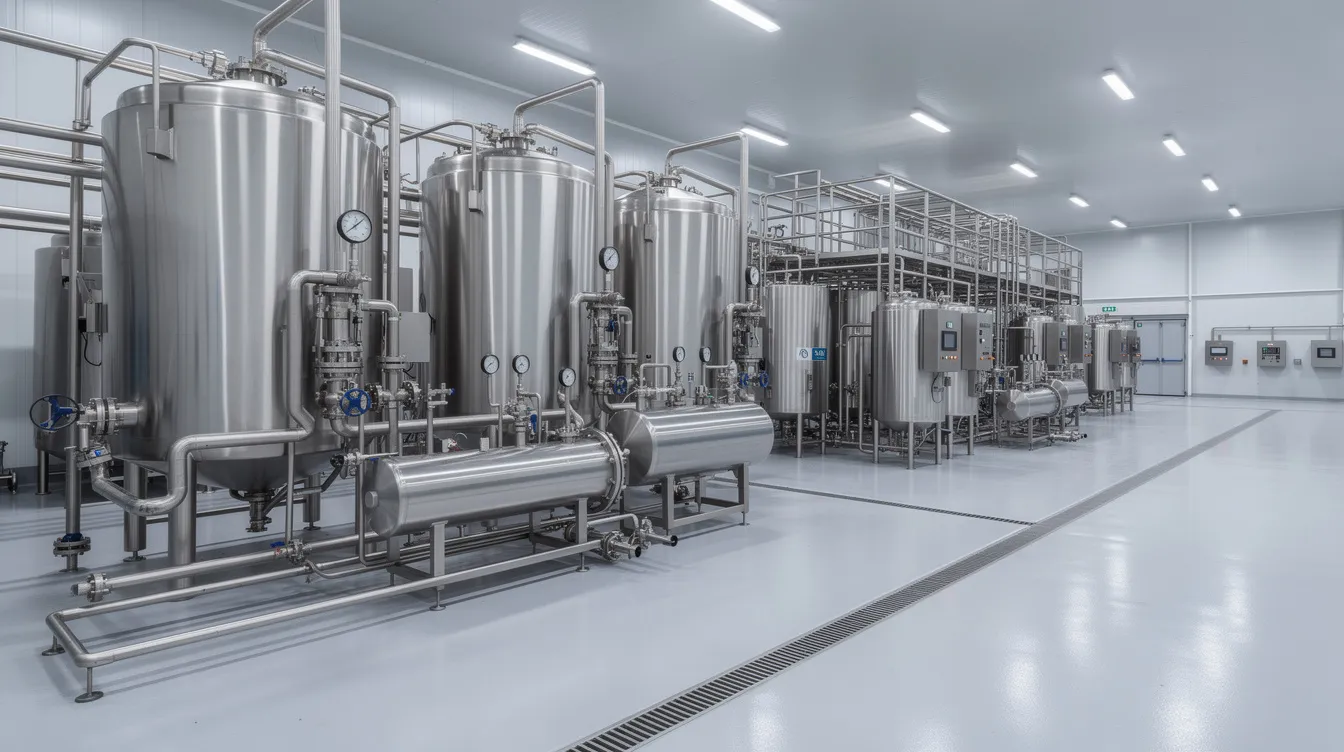
Reliable pretreatment protects your downstream membrane and dryer investments and directly affects product quality and nutritional value. Neglect here leads to expensive membrane replacements, poor powder quality and higher rejection rates.
Essential equipment includes:
- Insulated whey reception tanks and SS 304/316 storage tanks, typically sized for 4–8 hours of daily flow. For a 5,000 L/hr plant, this means 20,000–40,000 litres of buffer storage.
- Balance or surge tanks with centrifugal pumps, hygienic pipelines and sanitary valves for smooth material handling.
- Whey clarifier (plate or polishing type) to remove curd fines and suspended solids – particularly important for paneer whey. Centrifugal separators clarify whey by removing cheese fines and fat globules.
- Cream or fat separator (centrifuge) to reduce residual fat that would otherwise damage membranes and adversely affect powder stability. Centrifuges are used to separate liquid whey from solid curds in the initial stages.
- Pasteurisers heat whey to destroy pathogenic microorganisms without denaturing proteins. HTST (high temperature short time) or tubular types are common.
- Inline strainers and filters, deaeration equipment (if foaming is an issue) and temperature-control loops.
Construction is typically SS 304 or 316L (for acid whey). Main price drivers are steel thickness, surface finish, automation level and whether separators are imported or Indian-made. Filtration equipment removes impurities from liquid whey during processing, and whey machines improve product quality by removing impurities at this stage. Indicative cost for moderate-capacity pretreatment lines generally falls in the lower-to-mid ₹ lakh range, excluding GST and installation. Larger capacities or imported separators can push this to ₹1–2 crore or more.
Membrane Filtration Equipment for Whey Processing
Membrane filtration is the technological heart of any WPC or WPI plant. Membrane-based fractionation separates whey into proteins, lactose, and minerals – concentrating the protein stream for further processing while allowing lactose and minerals to pass through as permeate.
- Microfiltration (MF): whey protein undergoes microfiltration to remove fats and carbohydrates, along with bacteria.
- Ultrafiltration (UF): the key step for WPC production. Ultrafiltration uses semi-permeable membranes to separate components by molecular size, concentrating proteins while allowing smaller molecules to pass through.
- Nanofiltration (NF): used for partial demineralisation and concentration.
- Reverse osmosis (RO): used primarily to remove water from whey permeate to pre-concentrate before evaporation.
- Diafiltration (DF): adding water and re-filtering to further reduce lactose content and increase protein purity, essential for WPC 80 and WPI. DF requires larger membrane area, more water and additional effluent handling, raising both capex and opex.
A membrane skid comprises pressure vessels, membrane modules, high-pressure circulation pumps, feed and recirculation loops, instrumentation, PLC panels and automatic valves. Skid cost scales with membrane area and automation level. For a 5,000 L/hr capacity skid with basic automation, indicative Indian pricing is approximately ₹40–60 lakh. Fully integrated PLC/DCS and CIP systems for 10,000–20,000 L/hr can reach ₹2.5–5.0 crore. Whey processing plants can handle capacities from 500 to 10,000 LPH across various membrane configurations.
Recurring costs are often underestimated: membrane replacement (life often 1–3 years depending on fouling and cleaning frequency), specialised cleaning chemicals and downtime during cleaning cycles are significant. A dairy membrane filtration specialist should design the system – not a generic fabricator.
WPC Plant Machinery and Equipment
Whey Protein Concentrate (WPC) contains 35–80% protein, depending on the grade. There are three types of whey protein commonly discussed: WPC, WPI and WPH (Whey Protein Hydrolysate, which is pre-digested for faster absorption). WPC is widely used in sports nutrition, functional foods and infant formula blends. Whey protein is a complete protein with all essential amino acids, including branched chain amino acids critical for muscle growth and muscle recovery.
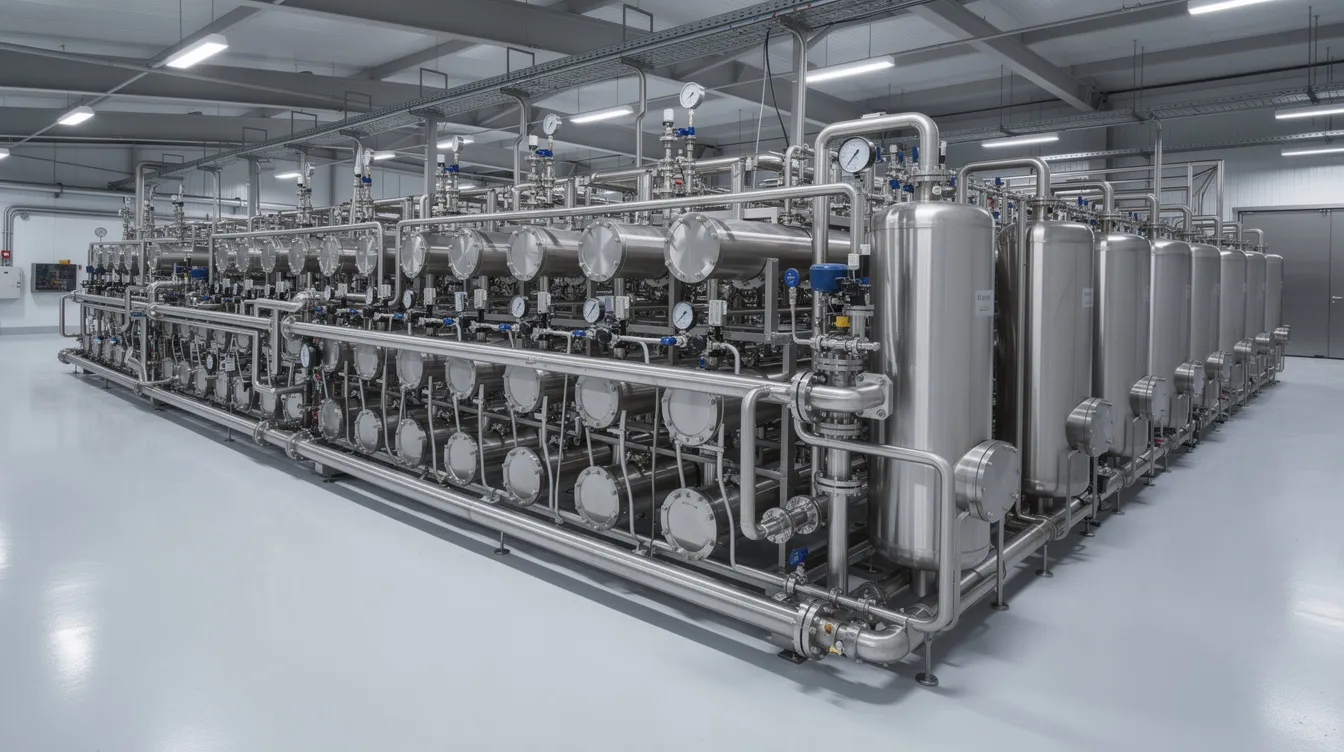
Typical WPC machine line sections include:
- Whey pretreatment (clarifier, separator, pasteuriser)
- Ultrafiltration system sized for the target protein concentration
- Diafiltration loops where higher purity is needed
- Intermediate storage tanks
- Evaporation and spray drying
- Powder handling, sifting and packaging machines
Higher protein grades (WPC 80) require more membrane area, diafiltration stages and tighter precise control than lower grades, directly increasing machinery cost and energy consumption. Whey protein manufacturing plants can produce 5,000 to 10,000 MT annually at commercial scale.
A WPC plant may share reception, storage and utilities with an existing dairy. If you are evaluating synergies with an Integrated Dairy Processing Plant Project Report, shared infrastructure can reduce total investment significantly. At 5,000–10,000 L/hr capacity, the membrane section alone is likely in the mid-to-upper ₹ crore range, with the full production line including evaporation, spray drying and utilities costing considerably more. These are assumption-based indications subject to current vendor quotations.
Proper WPC plant design directly determines recovery (kg protein captured versus lost), operational costs (steam, power, chemicals) and profitability. Whey protein manufacturing plants can achieve gross profit margins of 40–50% when designed and operated correctly – but this depends on sound machinery selection and realistic capacity planning.
WPI Plant Machinery and Equipment
Whey Protein Isolate (WPI) has higher purity than WPC, typically exceeding 90% protein on a dry basis. WPI commands premium pricing in domestic and export markets but demands significantly greater purification, tighter process control and higher capital investment.
WPI plants generally build upon WPC technology but add:
- Additional UF/DF stages for deeper protein concentration
- Ion-exchange or chromatographic purification steps
- Tighter demineralisation to reduce mineral and lactose content
- Advanced monitoring systems and SCADA for precise control over pH, temperature and microbial load
- Higher-specification spray dryer with better powder handling and consistent product quality controls
WPI is not achieved by simply adding one more machine. The overall design, raw-material selection (preferably sweet whey from quality cheese plants), upstream process control and stringent industry standards for environmental compliance and regulatory compliance are all critical. This significantly increases CAPEX over WPC lines.
WPI plant machinery cost in India for commercial capacities is usually in the higher ₹ crore to multi-₹ crore bracket, depending on scale and imported equipment content. Globally, plants processing 1–1.5 million kg whey per day can require USD 34–40 million just for membrane, dryer and packaging equipment. Indian projects at smaller scale will be proportionally lower, but must still be evaluated through detailed vendor offers. Entrepreneurs should carefully compare the higher machinery cost and operating complexity of WPI against realistic demand and pricing before finalising the project route.
Whey Evaporation and Concentration Equipment
Evaporation increases total solids of liquid whey or UF retentate before spray drying. This step dramatically reduces the energy load on the dryer and improves overall plant efficiency. Thermal evaporation equipment removes water efficiently while protecting protein quality – essential for maintaining the nutritional value of the final product.
- Falling-film evaporators are the standard in whey processing, offering gentle heat transfer suitable for heat-sensitive proteins.
- Multi-effect evaporators are commonly used in whey processing to reduce thermal energy consumption. More effects mean better steam economy but higher equipment cost and more complex controls.
- Vacuum evaporators efficiently remove water from whey under low temperatures, minimising protein denaturation.
- Mechanical vapour recompression (MVR) or thermal vapour recompression (TVR) can further increase energy efficiency but add to upfront cost and require reliable electrical power.
Ancillary systems include vacuum pumps, condensers, condensate-recovery loops, product pumps and automation to prevent thermal damage. Main price drivers are capacity (kg water evaporated per hour), number of effects, SS 316L construction for product-contact surfaces and degree of automation.
Whey evaporator plant cost in India can range from lower ₹ crore levels for modest capacities to several ₹ crore for large multi-effect or MVR systems – all as broad 2025–26 indications only.
Whey Spray Dryer and Powder-Handling Equipment
For whey powder, WPC and WPI production, the spray dryer is usually one of the single largest items of whey powder manufacturing plant machinery, strongly influencing total plant CAPEX and energy consumption. Spray drying converts liquid whey into powdered whey protein by atomising the concentrated feed into a hot-air chamber where moisture evaporates almost instantaneously.
Key components include:
- Main spray-dryer chamber with robust construction and smooth surfaces for hygienic operation
- Atomisation system (pressure nozzle, two-fluid nozzle or rotary atomiser) ensuring uniform distribution of droplets
- Air heater (steam, gas or oil-fired) with air filtration
- Cyclone separators and bag filters to recover powder fines
- Fluidized bed dryers or coolers that adjust moisture content and improve powder solubility
- Fines-return system and exhaust stack
Downstream powder-handling production equipment includes gentle conveyors, sifters, intermediate hoppers, metal detectors, automatic weighing and packaging equipment. Automated packaging lines fill and seal containers of whey powder under sanitary conditions. Whey processing machines can process up to 10,000 litres per hour in industrial configurations.
Major cost drivers are water evaporation capacity, inlet and outlet moisture specifications, product type (standard whey powder versus high-protein WPC/WPI), fuel source, hygienic design, level of automation and explosion-safety features. Many spray-drying design concepts are shared with milk powder plants, although whey and WPC may have different stickiness and heat-sensitivity. For a detailed comparison, see Milk Powder Plant Machinery and Equipment Cost.
Indicative Indian costs for spray dryers range from the high ₹ lakh range for small basic units to multiple ₹ crore for integrated, high-capacity, food-grade dryers – approximate 2025–26 guide figures excluding GST, building, utilities and installation.
Lactose Recovery and Crystallisation Equipment
UF or NF permeate from whey processing can be further processed to recover lactose crystals, adding another revenue stream. Whey processing can enhance economic benefits for dairy producers when sufficient permeate volumes and markets for food-grade or pharma-grade lactose exist.
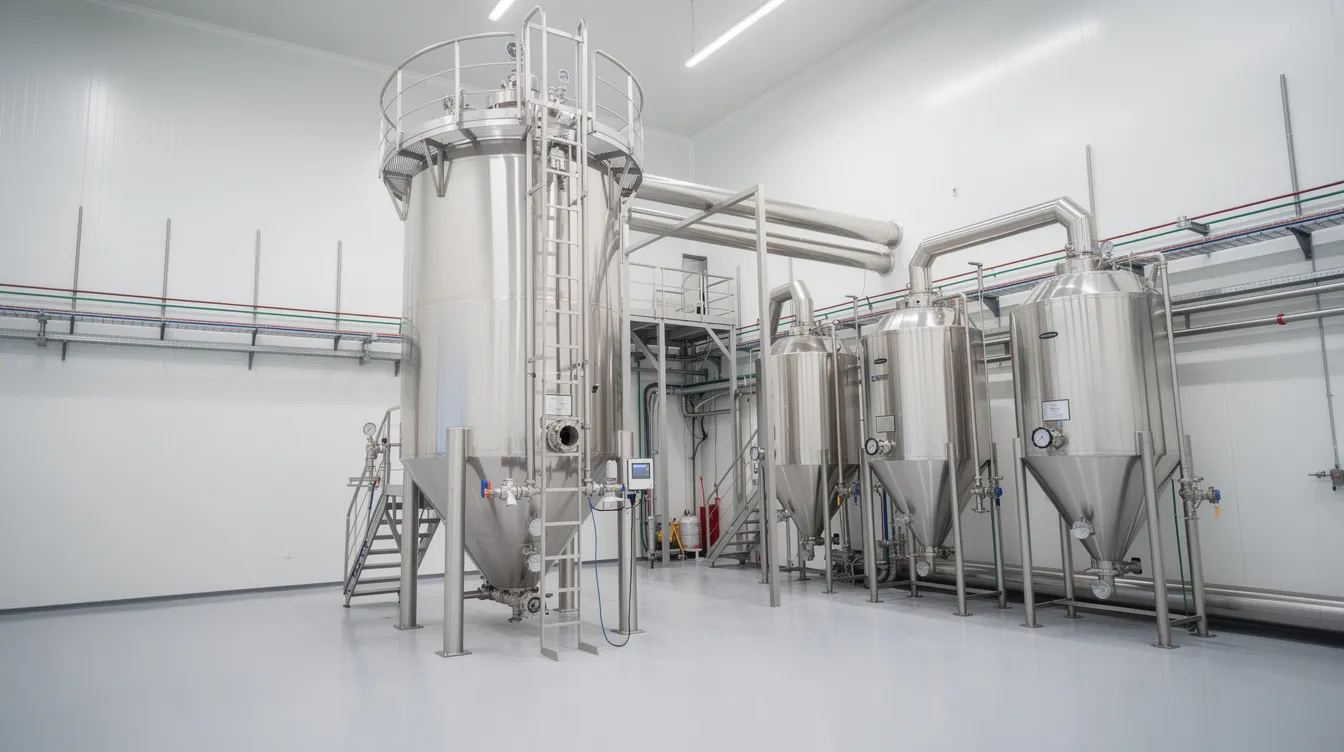
Core equipment includes:
- Crystallisation tanks with controlled cooling, agitation and seeding systems
- Plate or scraped-surface heat exchangers for precise temperature control
- Decanter or centrifuge for separating lactose crystals from mother liquor
- Washing systems and lactose drying equipment (fluid-bed or small spray dryers)
- Milling, sieving and packaging systems for food-grade lactose directed at confectionery, bakery, infant formula and pharmaceutical applications
Lactose recovery is capital- and knowledge-intensive and should be evaluated through a separate technical and commercial study. This machinery may significantly increase whey processing plant CAPEX and should be adopted only when permeate volume, quality and offtake arrangements are reasonably assured.
Demineralisation Equipment for Whey
Demineralised whey powder is widely used in infant formula and specialised nutritional products, requiring substantial reduction of mineral content from the raw whey stream.
- Ion-exchange systems use resin columns with regeneration (acids and alkalis), control valves, storage tanks and neutralisation systems. They offer high demineralisation levels but require careful operation and effluent handling.
- Electrodialysis (ED) uses membranes and electric potential to remove ions – higher equipment complexity but reduced chemical use compared with ion exchange.
- Nanofiltration (NF) can provide partial demineralisation and may be combined with ion exchange or ED depending on the target level (40%, 70% or 90%) and the end use, particularly infant formula.
These systems add to both machinery cost (typically ₹1–3 crore for ion-exchange at commercial scale) and operating complexity – chemicals, membranes, energy, skilled labour and regulatory compliance. Demineralised whey projects must be aligned with strict quality standards and regulatory requirements.
Utility and Supporting Equipment for Whey Plants
Quotations for whey processing plant machinery frequently exclude utilities, yet boilers, refrigeration, water treatment and ETP can together equal or exceed the cost of some process sections – often 30–60% of process-machinery cost.
Key utilities include:
- Boiler or steam-generation plant (sized for evaporator and air-heater requirements)
- Refrigeration and chilled-water systems, cooling towers
- Compressed-air system for pneumatic valves and instruments
- Water-treatment and RO plant for process and boiler-feed water
- Electrical transformer, control panels and DG sets where grid power is unreliable
Essential supporting systems:
- CIP (Clean-in-Place) systems are crucial for preventing contamination in whey processing facilities. CIP systems maintain hygiene by circulating sanitizing solutions through equipment – tanks, pipelines, membranes and dryers.
- Effluent-treatment plant (ETP) suited to whey’s high COD/BOD. Dairy ETP costs for 50 KLD capacity range from ₹35–70 lakh, scaling upward for larger plants.
- Laboratory and quality control equipment, fire-fighting and safety systems, and material-handling equipment such as forklifts and pallet trucks.
Some turnkey suppliers include CIP, utilities and advanced automation in their scope, while others supply only core process equipment. This difference significantly affects the apparent whey processing plant machinery price in India when comparing offers.
Indicative Whey Processing Machinery Cost in India
All machinery costs quoted below are indicative 2025–26 Indian ranges based on typical commercial offers, for preliminary guidance only. Actual prices must be obtained from current technical and commercial quotations. Equipment from different suppliers may not be directly comparable because their scopes, specifications and performance commitments differ.
| Machinery / Equipment Group | Function | Indicative Capacity Basis | Indicative Cost Range | Major Exclusions / Qualifications |
|---|---|---|---|---|
| Pretreatment line (clarifier, separator, pasteuriser, filters) | Removes solids, fat; ensures clean feed to membranes | 5,000–10,000 L/hr whey | ₹20–80 lakh | Civil foundations, steam boiler, external piping, installation |
| Membrane filtration skid (UF + NF/RO) | Protein concentration, partial demineralisation, water removal | 5,000 L/hr whey | ₹50 lakh to ₹2–3 crore | Membrane replacement; imported membranes add 20–40% premium |
| Evaporator (multi-effect / falling-film / MVR) | Concentrates liquid before drying | 3,000–8,000 kg water evaporation/hr | ₹1–3 crore | Vacuum pumps, condensation, steam supply often extra |
| Spray dryer + powder handling | Converts concentrated whey into powder | 500–1,000 kg/hr powder output | ₹2–8 crore+ | Air heater, fuel, exhaust systems, packaging line |
| Packaging machines | Filling, sealing and packing finished powder | Matched to dryer output | ₹10–50 lakh | Labelling, cartooning, palletising may be extra |
| CIP system | Automated cleaning of process equipment | Whole-plant scale | ₹15–60 lakh | Chemical storage, drainage, extended piping |
| Utilities (boiler, chiller, water treatment, power panels) | Plant-wide support | Matched to process load | ₹1–5 crore+ | Varies widely with site conditions |
Whey processing machinery includes packing machines for final products. Dairy membrane filtration equipment cost, whey ultrafiltration system cost, whey reverse osmosis plant cost, whey evaporator plant cost and whey spray dryer cost all vary significantly depending on supplier, origin (Indian versus imported), material grade and automation. WPC plant machinery cost, WPI manufacturing equipment and lactose-recovery plant machinery typically fall at the higher ends of these ranges.
Capacity-Wise Machinery Cost Scenarios
The following illustrative scenarios show how machinery cost scales with plant size and product complexity. These are not quotations and should not be used for supplier negotiation or bank submission without updated offers.
Scenario A – Small Commercial Plant
- Whey type: paneer whey and sweet whey mix
- Capacity: approximately 2,000–3,000 L/hr (50–70 tonnes/day)
- Product: whey powder or low-protein WPC (~35%)
- Equipment: reception and storage, separator, clarifier, pasteuriser, RO or small evaporator, small/medium spray dryer, powder handling, minimal automation, basic quality testing laboratory
- Indicative machinery-only cost: ₹1–2.5 crore (excluding land, civil, utilities, ETP)
Scenario B – Medium Industrial Plant
- Whey type: sweet whey from cheese plants, stable supply
- Capacity: approximately 5,000–10,000 L/hr
- Product: WPC 60–80 plus whey powder
- Equipment: higher-spec pretreatment, UF + DF + NF skids, multi-effect evaporator, larger spray dryer with advanced technology, packaging line, SCADA-based automation, quality control laboratory
- Indicative machinery-only cost: ₹3–7 crore
Scenario C – Large Integrated Plant
- Whey type: mainly sweet whey, large continuous flow
- Capacity: more than 15,000 L/hr
- Product: WPC (various grades), WPI (>90% protein), lactose recovery, possibly demineralised whey powder
- Equipment: state-of-the-art pretreatment, multiple UF/NF/DF/ion-exchange modules, large MVR evaporator, industrial spray dryer, robust powder handling and packaging, fully automatic system with SCADA, extensive utilities, full QC and certifications
- Indicative machinery-only cost: ₹10–25+ crore
Whey plants contribute significantly to India’s dairy industry and create employment opportunities in both rural and urban areas. These scenarios illustrate cost levels for industrial scale production and are not universal offers.
Basic Whey Handling vs Whey Powder vs WPC vs WPI Plant
| Parameter | Basic Whey Handling | Whey Powder Plant | WPC Plant | WPI Plant |
|---|---|---|---|---|
| Processing complexity | Low | Medium | High | Very High |
| Membrane requirement | None or basic RO | Optional | UF/DF essential | Multi-stage UF/DF + ion exchange |
| Evaporation requirement | Minimal | Yes | Yes | Yes, larger |
| Spray-drying requirement | No | Yes | Yes | Yes, high-spec |
| Quality-control intensity | Basic | Moderate | High | Very High |
| Automation level | Manual or semi-auto | Semi-auto | Automatic | Fully automatic with SCADA |
| Capital intensity | Low (₹ tens of lakh) | Medium (₹ low crore) | High (₹ multi-crore) | Very High (₹ high multi-crore) |
| Technical risk | Low | Moderate | Moderate-High | High |
| Market positioning | Commodity | Standard ingredient | Nutrition, sports, food | Premium nutrition, pharma, export |
Whey processing transforms low-value by-products into high-margin ingredients. Basic whey-handling plants have low machinery cost but limited value addition, while full WPI plants have very high CAPEX and target specialised markets. Whey powder manufacturing plant machinery cost typically sits between basic handling and WPC plants.
Imported vs Indian Whey Processing Machinery
Both Indian and imported options exist for industrial whey processing equipment. Entrepreneurs must evaluate lifecycle cost, not only the initial purchase price.
- Imported systems (European, New Zealand) may offer advanced automation, proven track record in similar installations, energy efficient designs and validated references for infant formula or export-grade products – but involve forex exposure, import duty, higher spare-parts cost and longer lead times with limited local service.
- Indian-made equipment has improved significantly in quality. Domestic fabricators and membrane specialists offer lower base price, better customisation, shorter delivery and easier corrosion resistance-grade fabrication. However, precision of construction, membrane cartridge quality and sophistication of automation can vary widely.
- A hybrid approach is common: Indian fabrication with imported membranes, nozzles, valves or instrumentation to balance quality and cost.
- Neither imported nor Indian machinery is automatically better for every case. The correct choice depends on project size, product specification, export plans, availability of skilled technical manpower and the supplier’s experience in Indian dairy and whey projects.
What Is Normally Included in a Whey Machinery Quotation?
Understanding the battery limits of a quotation is vital when comparing whey processing plant machinery price in India for bank proposals and DPRs.
- Core process equipment: tanks, clarifiers, separators, pasteurisers, membrane skids, evaporators, spray dryers and powder conveyors with robust construction.
- Associated pumps, motors, valves and pipelines within defined plant-room boundaries.
- Local control panels, PLCs for basic automation, level and temperature instruments and limited interconnecting piping.
- Installation supervision, trial runs and commissioning support, short-duration operator training and standard technical documentation (P&IDs, GA drawings, operating manuals).
Full SCADA, advanced analytics, extended warranties, membrane start-up charges, requirement verification code documentation or extended product-development support may or may not be included and must be confirmed in writing. Manual intervention requirements versus fully automated operation should also be clearly stated.
Expenses Commonly Excluded from Machinery Cost
Many entrepreneurs underestimate total project cost because they consider only ex-factory machinery price without adding site-related and pre-operative expenses.
Typical exclusions include:
- Land and site development, factory building and civil works, equipment foundations and structural supports
- External pipelines and cable trays beyond battery limits
- Utility-generation systems: boilers, refrigeration plants, air compressors, cooling towers
- Electrical transformer, statutory power-connection fees and DG sets
- Effluent-treatment plant (ETP), fire-fighting and safety systems, internal roads, staff facilities, office infrastructure and laboratory set-up
- GST and customs duty on imported components, freight and transit insurance, unloading and storage at site
- Erection and commissioning labour costs, pre-operative expenses, interest during construction, contingency margin and initial working-capital margin
For a comprehensive view of investment required beyond machinery, refer to Whey Processing Plant Setup Cost in India.
Factors Affecting Whey Processing Equipment Price
There is no single standard whey processing line cost. Each project’s machinery price reflects specific technical and commercial choices.
- Processing capacity (L/hr of liquid whey) and type of raw whey (sweet versus paneer versus acid)
- Target finished product: liquid concentrate, whey powder, WPC, WPI, demineralised whey or lactose
- Required protein concentration and product-recovery targets
- Membrane area, configuration and make (imported versus domestic)
- Grade and thickness of stainless steel, level of hygienic design (sanitary welds, smooth surfaces, CIP coverage)
- Complexity of evaporation and drying systems, energy-recovery design
- Automation level: manual, semi-automatic or fully automatic with SCADA
- Share of imported components, supplier scope (core equipment versus full utilities), freight and taxes
- Performance guarantees, after-sales service and verified installation history
In DPRs and feasibility studies, sensitivity analysis should be carried out to assess how changes in key machinery-cost items affect project profitability.
Hidden and Recurring Costs in Whey Processing Plants
CAPEX alone does not determine project success. Recurring costs significantly influence cost per kilogram of whey powder, WPC or WPI produced. Drying systems convert concentrated whey into powders using methods like spray drying, but ongoing costs are substantial.
- Membrane replacement (UF, NF, RO) – depending on the manufacturing process and cleaning regime, membranes may need replacement every 1–3 years at significant cost
- Cleaning chemicals and CIP operation, ion-exchange resin replacement, bag filters and cartridges
- Spray-dryer cleaning labour costs, spare parts for pumps, valves and atomisers
- Steam and fuel for evaporators and air heaters, electrical power for pumps, compressors and refrigeration
- Water consumption, effluent-treatment operational costs and sludge disposal
- Skilled technical manpower, microbiological and chemical quality testing, calibration of instruments, product-development trials and packaging material wastage
Advanced whey machines ensure consistent product quality through real-time monitoring, but these systems also need regular maintenance and calibration. Whey machines reduce waste by repurposing dairy by-products, yet optimistic underestimation of operating costs can make projects appear falsely attractive. These factors must be incorporated realistically into DPR operating-cost estimates.
How to Compare Whey Machinery Supplier Quotations
As a practising Chartered Accountant who has reviewed numerous whey plant proposals, I strongly advise against comparing quotations solely on ex-factory price per machine. You must compare capacity, scope and performance guarantees line by line.
Practical checklist:
- Verify rated input/output capacity (L/hr whey versus kg/hr powder output) and whey characteristics assumed (protein, solids, acidity)
- Confirm target product specifications (protein %, moisture, microbiology) and guaranteed product-recovery level
- Check material of construction, membrane make and expected life, steam and power consumption per unit output
- Compare cleaning cycle duration, CIP coverage, automation level and whether SCADA is included or optional
- Review battery limits (equipment and pipelines included), erection and commissioning scope, civil and utility requirements, delivery schedule and warranty conditions
- Assess spare-part pricing, local service-network strength and the supplier’s registered mobile number or service contact for emergency support
- Request reference installations and a verification code or verifiable list of similar-capacity plants commissioned in India
The lowest upfront quotation may result in higher cost per kilogram of finished product if operational efficiency, energy consumption, recovery or downtime performance is worse than a slightly more expensive but better-designed line.
Machinery Cost Treatment in DPR and Bank Finance
Banks and financial institutions in India expect detailed and realistic treatment of whey processing plant machinery cost within the project report.
The cost build-up in a DPR should include:
- Base ex-factory machinery cost supported by proforma invoices or detailed quotations
- GST and customs duties, freight and transit insurance, unloading at site
- Erection and commissioning, electrical and utility integration
- Plant and machinery contingency (typically 5–10%) and technical consultancy fees
- Pre-operative expenses (project management, salaries, interest during construction), margin money for working capital and initial inventory of critical spares and membranes
Supporting documents should include clear capacity justification (linked to raw milk or cheese production and whey availability), process-flow diagrams, mass balance, utility load calculations and a realistic implementation schedule. Whey processing creates employment opportunities and contributes to dairy products value addition, both of which strengthen the project narrative for bank appraisal.
I assist entrepreneurs with DPR preparation, CMA Data, financial feasibility and project-finance documentation for whey-processing and integrated dairy projects. I do not certify financial projections as guaranteed or assure loan sanction.
Common Machinery-Selection Mistakes in Whey Projects
Many whey-processing ventures in India face difficulties not due to demand but due to inappropriate machinery selection and over-optimistic assumptions at the planning stage.
Frequent mistakes include:
- Finalising machinery before properly testing raw whey composition and seasonal availability
- Designing for excessive capacity without assured whey supply throughout the year – existing production lines may not always generate enough raw material
- Underestimating pretreatment and ETP requirements for paneer or acid whey
- Comparing incomplete quotations (without utilities or CIP) against comprehensive offers, leading to misleading cost comparisons
- Ignoring membrane-replacement cost and downtime in operating projections
- Selecting a spray dryer whose capacity does not match upstream evaporation and UF output
- Focusing only on machinery price without assessing the market for the final product, whether it is whey powder, protein powder or lactose
- Choosing complex WPI or lactose-recovery routes without confirmed offtake or technical partners
- Ignoring the difference between pea protein or other plant-based alternatives gaining market share in specific segments, and not validating demand for whey products
Involving both process engineers and financial advisors early, and using realistic benchmarks, reduces the risk of financially unviable installations.
Conclusion: Planning a Viable Whey Processing Investment
Whey processing plant machinery cost in India is driven by the product route (whey powder, WPC, WPI, demineralised whey, lactose), processing scale, whey composition, membrane and dryer design, utilities, automation and supplier scope. The beverage industry and food industry demand for whey products continues to grow, but sound machinery selection determines whether a project delivers returns or becomes an expensive underperforming asset.
Machinery quotations must be evaluated along with total project-cost elements and operating costs to assess true viability. Entrepreneurs should not rely on capacity alone to estimate equipment cost.
Before finalising machinery:
- Complete raw-material (whey) assessment – test composition, confirm volumes and seasonality from cheese or paneer operations
- Conduct a product-market study for the target whey products
- Establish technical feasibility with process engineers
- Plan capacity realistically, aligned with whey collection and supply
- Shortlist and compare suppliers on scope, performance and lifecycle cost
- Assess utility and infrastructure requirements
- Prepare financial projections with sensitivity analysis for key variables
CA Manish Gugliya, through www.projectreportbank.com, supports dairy processors, cheese and paneer manufacturers and investors with tailored DPRs, project-cost estimation, CMA Data and project-viability analysis for whey-processing projects in India. No promises of guaranteed profitability or assured bank funding are made – only professional, data-driven advisory support.
Frequently Asked Questions
The following FAQ section provides concise clarifications on common doubts about whey processing plant machinery and equipment cost in India.
How much does whey-processing plant machinery cost in India?
Basic liquid whey handling and concentration machinery may start from tens of ₹ lakh for small capacities. Complete industrial whey powder, WPC or WPI lines with evaporation, spray drying and utilities typically range into multiple ₹ crore, depending on capacity, product route and scope. Only current vendor quotations can provide precise figures for a specific project.
What machinery is required for a whey-processing plant?
Core equipment includes whey reception and storage tanks, clarifier and cream separator, pasteuriser, membrane systems (UF, RO, NF as required), evaporator, spray dryer, powder-handling and packaging machines, CIP system and key utilities such as boiler, refrigeration and ETP. The exact list depends on target products – a plant producing only concentrated whey needs far less equipment than one manufacturing WPI.
Is a spray dryer compulsory for whey processing?
Spray drying is required only if the project aims to produce powdered whey, WPC or WPI. Plants focusing on concentrated liquid whey or liquid WPC for nearby industrial users may avoid a dryer initially, significantly reducing CAPEX but limiting shelf life, market reach and the ability to supply distant buyers or export markets.
Can paneer whey be used to manufacture whey protein?
Paneer or chhana whey can be processed, but typically needs stronger pretreatment – thorough clarification, fat separation and microbial control. It may deliver lower yields or more challenging powder properties than sweet whey from cow’s milk cheese production. A thorough technical and economic study of the specific whey stream is essential before designing WPC or WPI equipment around paneer whey.
How should machinery cost be estimated for a DPR?
DPRs should be based on updated proforma invoices from credible suppliers with proven installations. Include GST, freight, erection, commissioning, utility integration, contingency and working-capital margins. Align machinery capacity with realistic whey availability and validated sales projections. Professional assistance from an experienced project-finance advisor helps integrate these cost estimates into credible financial projections for bank appraisal.