Key Takeaways
A general hospital project report is not merely a compilation of cost estimates and revenue guesses. It is a structured financial and operational case that connects clinical capacity, infrastructure, equipment, manpower, revenue, operating cost, cash flow and debt servicing into a single coherent narrative. Banks use this document to decide whether your hospital project deserves financing – and promoters should use it to decide whether the project deserves their own capital.
Here is what matters most when preparing a bankable hospital DPR:
- A bankable hospital project report must connect beds, services, investment, working capital, DSCR and repayment capacity – not just list construction and equipment costs.
- Project cost is typically structured across land or building, interiors, medical equipment, pre-operative expenses and working-capital margin, funded through promoter contribution plus term loan.
- Revenue projections should be built from OPD footfall, IPD beds × occupancy × average realisation, diagnostics and pharmacy – not from arbitrary percentage growth assumptions.
- Most banks prefer a debt-to-equity ratio of around 70:30, and a Debt Service Coverage Ratio of at least 1.25 is generally considered acceptable for hospital term loans.
- Financial projections typically cover five to seven years, including projected P&L, balance sheet, cash flow, break-even analysis and loan repayment schedule.
- Banks evaluate promoter profile, realistic occupancy ramp-up, DSCR, debt-equity ratio and security before sanctioning a hospital term loan in India.
Explore General Hospital DPR Guides
Explore our complete series on General & Small Hospital project planning, cost, financial projections, repayment capacity and bank finance.
Explore Hospital Project Report Guides
Explore our complete Hospital Project Report guides covering general hospitals, multi-speciality hospitals, cancer hospitals, diagnostic centres and eye hospitals.
Introduction – Why a General Hospital Project Report Matters
Consider a typical scenario: a practising doctor in a Tier-2 Indian city has been running a successful clinic for years. The demand is clearly there – patients travel long distances for proper treatment because the nearest multi-specialty hospital is 40 km away. Now, this doctor wants to set up a 30-bed general hospital. The land is identified, a rough idea of the building exists, and the ambition is real. But the moment a bank loan enters the picture, the conversation shifts from clinical vision to financial feasibility.
A general hospital project report – or general hospital DPR – is the bridge between that clinical idea and the financial reality. It connects bed capacity and services to project cost, means of finance, cash flow and loan repayment. Without this bridge, promoters end up with either an under-financed project or an over-leveraged one.
The chain works like this:
Clinical Capacity → Infrastructure → Equipment → Manpower → Revenue → Operating Cost → Cash Flow → Debt Servicing → Bank Finance
Each link must be consistent. If you propose two operation theaters and an ICU, your equipment list, staffing budget and projected surgeries must support that scale. If your revenue model assumes 75% occupancy from Year 1 but your location has three competing hospitals within 5 km, the entire DPR loses credibility.
In my experience, banks in India increasingly expect structured, data-driven hospital DPRs rather than generic templates. This article serves as the central hub on ProjectReportBank.com, guiding you through planning, financing and evaluating a general or small hospital project – and pointing to detailed supporting guides where deeper numbers are needed.
What Is a General Hospital Project Report / DPR?
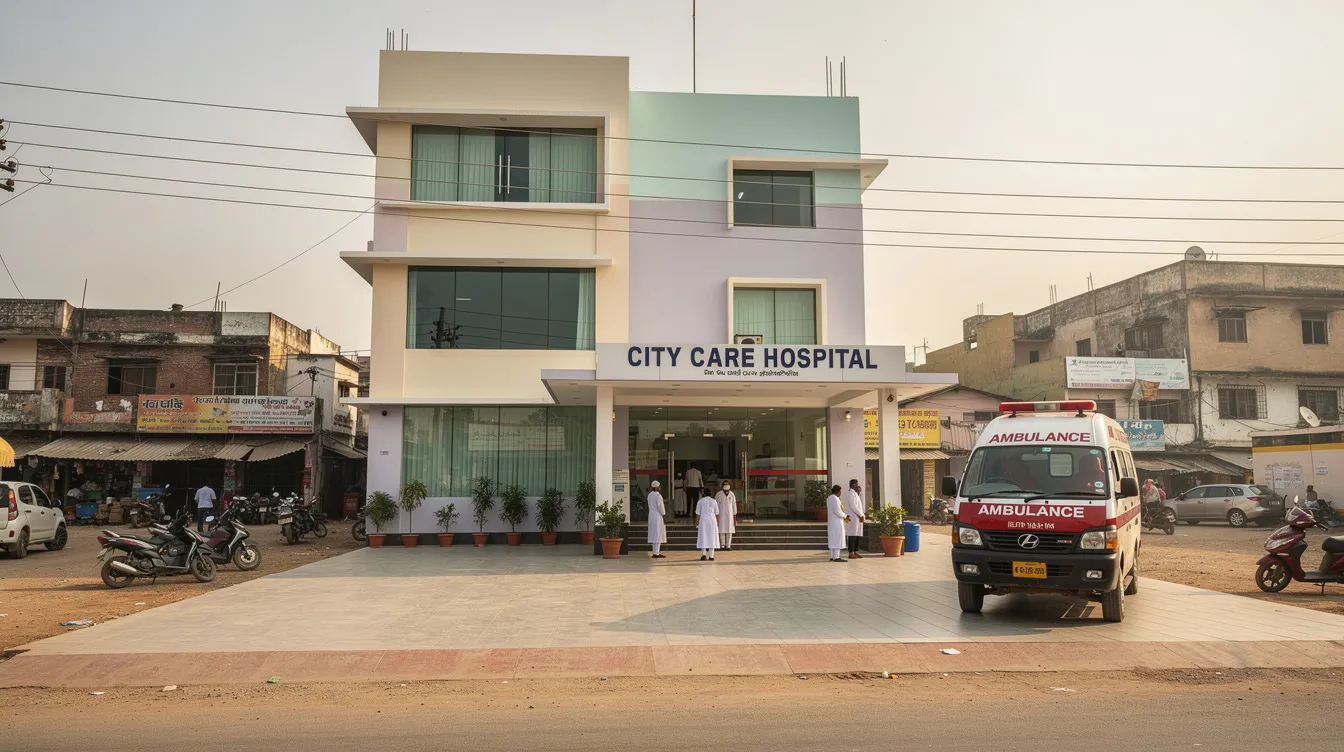
A general hospital project report is a detailed project report that integrates the technical, operational and financial details of a hospital project – typically covering 10 to 100 beds. It goes well beyond a simple business plan.
A basic business plan might define a vision, list approximate costs and project optimistic revenue growth. A bank-oriented hospital DPR, however, includes 5–7 year financial projections, a means of finance structure, DSCR calculations, a repayment schedule, sensitivity analysis and working-capital assessment. It covers physical planning (land, building, hospital design), clinical planning (bed strength, departments, diagnostic services, support services), manpower, project cost, revenue model and loan repayment capacity.
In India, a detailed project report for hospital projects is often mandatory for bank loans, project finance proposals, internal investment decisions and, in certain cases, government or PPP submissions. A well-prepared hospital DPR ties together assumptions – if you propose a 50 bed hospital with two OTs and eight ICU beds, your equipment list, staffing and projected surgeries must match that scale. Hospital quality frameworks also emphasise using performance assessment to improve actions, and the DPR is where those measurable indicators of effectiveness first take shape.
Who Needs a Hospital DPR?
Any serious hospital project – whether a new setup or hospital expansion – benefits from a structured DPR before committing large investments. The need is not limited to one type of promoter:
- Individual doctors planning to convert a successful practice into a 20–30 bed small hospital and need a bank loan to finance the transition.
- Healthcare entrepreneurs and nursing home owners setting up a 50 bed hospital in a district town who require a hospital project report for bank loan appraisal.
- Existing hospitals considering expansion – additional beds, ICU block, diagnostic wing – requiring an incremental project report outlining extra investment, capacity and cash generation.
- Partnerships, LLPs and companies entering the health care industry for the first time, often with investor-backed funding.
- Charitable trusts, PE funds or investors evaluating hospital project feasibility and long-term sustainability, even before seeking bank finance.
Core Contents of a General Hospital DPR
This section provides a high-level checklist of what a general hospital project report for bank loan should contain. It is not a format guide – it is a completeness check.
A hospital DPR normally includes:
- Executive summary – a 2–3 page snapshot that banks read first
- Promoter and organisation profile – the DPR must detail the promoter’s background and experience
- Project background and rationale
- Market and demand analysis – including local demographic analysis, proof of local health needs and competitor data, with data from government health reports and local census data
- SWOT analysis evaluating strengths, weaknesses, opportunities and threats for the new facility
- Hospital capacity and bed mix
- Location and site details – site analysis includes the exact address and land area in square feet
- Hospital design overview including total built-up area
- The DPR should list all proposed clinical services and specialties – general surgery, obstetrics, paediatrics, special clinics as applicable
- A detailed medical equipment plan
- Manpower plan with nurse-to-bed ratios and doctor availability
- Project cost and means of finance
- Revenue model with OPD, IPD, diagnostics and pharmacy streams
- Operating expenses
- Financial projections (projected P&L, balance sheet, cash flow)
- Working capital assessment
- DSCR and break-even analysis
- Loan repayment schedule
- The project report must include a comprehensive risk analysis for potential challenges – a strong DPR includes a risk assessment and mitigation plan
- Bank loan requirements and security details
- Regulatory compliance must address applicable hospital licensing and safety codes – the DPR should list all required licenses and their status
Every section must use consistent assumptions. The manpower salary cost must match the projected P&L. The equipment list must match the clinical services and capital expenditure. Hospital initiative reports should also include stakeholder feedback for qualitative depth. Promoters should use this checklist when reviewing any drafted hospital project report to ensure no key area is missing.
Deciding Hospital Capacity – 10, 20, 30 or 50 Beds
Choosing between a 10, 20, 30 or 50 bed hospital is not only a medical decision – it is a financial one that affects project cost, staffing, working capital and loan size. Hospital project reports should outline the expected demand for services and capacity before fixing bed numbers.
Smaller capacities (10–20 beds) may suit dense urban locations or doctor-run nursing homes, while 30–50 bed hospitals often suit semi-urban or district-level locations with a wider catchment area. Bed capacity drives land requirement, built-up area, the number of operation theaters, ICU beds, diagnostics and support areas – and therefore the overall hospital setup cost.
Higher bed strength raises both revenue potential and fixed costs. The DPR must show realistic occupancy ramp-up over 3–5 years rather than assuming 80% from Year 1. A thorough feasibility study is essential for hospital demand analysis – demand analysis determines if proposed bed capacity meets local needs. For indicative planning numbers across different capacities, refer to the guide on small hospital setup cost in India.
Hospital Project Cost – Main Investment Components
The term “project cost” in a hospital project includes much more than civil work and equipment. Total project costs include construction and working capital needs, along with pre-operative expenses, statutory fees and contingencies.
Major cost heads typically include:
- Land or leasehold improvements (where financed by the promoter)
- Building and civil construction
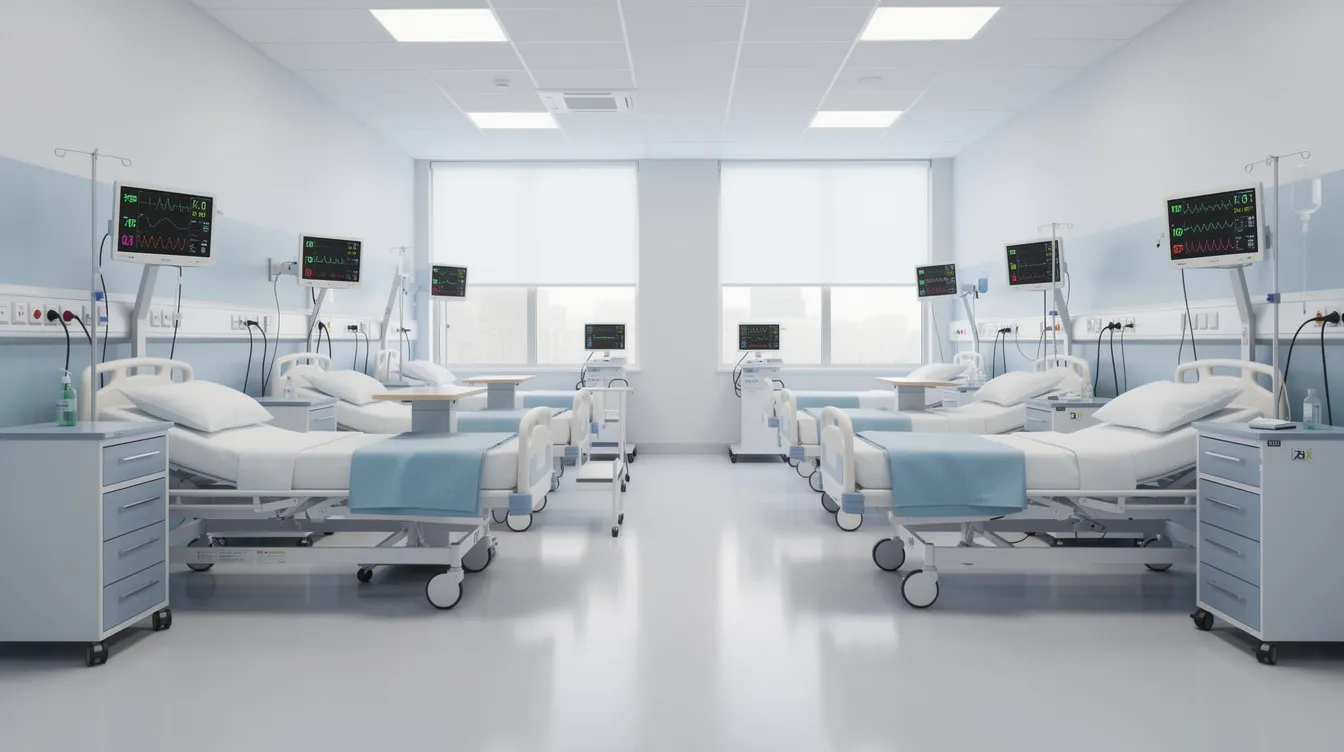
- Interior finishes for wards, OT, ICU and reception
- Electrical, plumbing, HVAC and medical gas pipeline
- Medical equipment – often 30–40% of total project cost for technology-intensive facilities
- Furniture and fixtures
- IT systems, HMIS and networking
- Statutory fees, consultancy and pre-operative expenses
- Deposits and contingencies (typically 5–10%)
- Working-capital margin for the initial operating period
Financial feasibility includes capital expenditure and operational expenditure analysis. Many Indian banks consider working-capital margin for the first operating cycle as part of total project cost, so the DPR should clearly show this as a separate component. The impact of location (metro versus Tier-3 town), quality of finishes and level of technology (basic x ray versus CT scan or MRI) substantially affects per-bed investment. For a deeper breakdown, refer to the detailed guide on general hospital project cost and means of finance.
Hospital Equipment Planning and Budgeting
Equipment is often 30–40% of a technology-intensive hospital project cost and must be tightly aligned with the proposed departments and bed mix.
The DPR should cover:
- Ward beds, monitors and basic patient care equipment
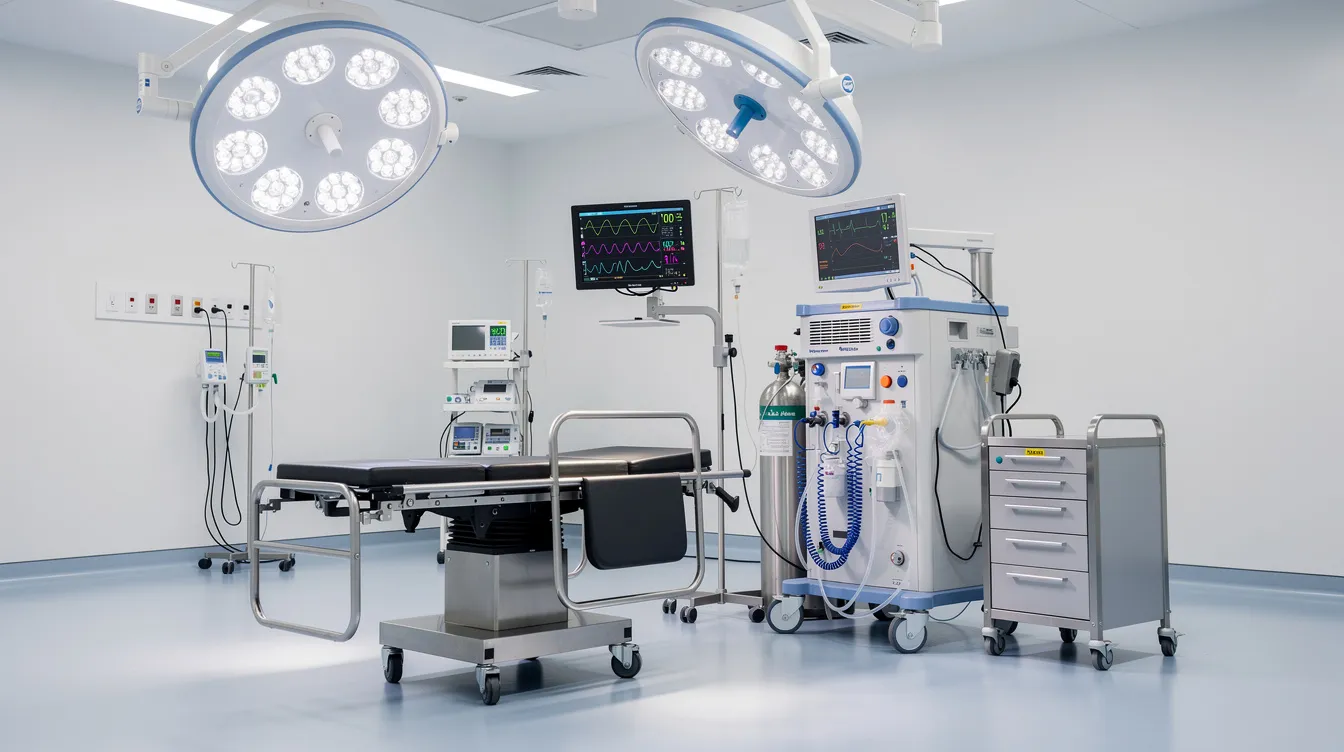
- OT tables, lights, anaesthesia workstations and surgical instruments
- ICU ventilators, multi-para monitors and infusion pumps
- Emergency and trauma equipment
- Diagnostic imaging – x ray, USG, CT scan as applicable
- Laboratory equipment for pathology and biochemistry
- Sterilisation and CSSD equipment
- Physiotherapy and rehabilitation devices
- Pharmacy refrigeration and storage
- IT hardware, HMIS software and networking
The equipment list for a 20 bed general hospital will differ significantly from that of a 50 bed multi specialty hospital, so promoters should avoid copy-paste catalogues from unrelated projects. The DPR should specify whether equipment will be funded through the main term loan, separate equipment finance, leasing or vendor credit – because this directly impacts loan amount and cash flows. Detailed line-item lists and typical cost ranges are discussed in the guide on small hospital equipment list and cost.
Project Cost & Means of Finance Structure
The basic finance equation is straightforward:
Total Project Cost = Promoter Contribution + Term Loan + Other Eligible Sources
Banks focus heavily on this structure in a general hospital bank loan project report. Most banks prefer a debt-to-equity ratio of 70:30 – meaning the promoter is expected to bring approximately 30% of the project cost as equity or margin, with 70% financed through a term loan.
Promoter contribution typically includes equity capital, internal accruals and, where acceptable to the bank, unsecured loans from promoters. The term loan covers hospital building construction, interiors, medical equipment, IT systems and eligible pre-operative expenses.
Means of finance must be consistent with projected cash generation. An aggressively high term loan without adequate DSCR in projections will raise red flags with lenders. Margin money for working capital is often included in project cost but funded partly from equity. For deeper examples and alternative funding structures, see the detailed article on general hospital project cost and means of finance.
Explore the Complete General Hospital DPR Guide
Use the following detailed guides to explore each major component of hospital planning, financial projections and bank finance:
| Detailed Guide | What It Covers |
|---|---|
| Small Hospital Setup Cost in India | Indicative planning considerations for 10, 20, 30 and 50-bed hospitals |
| Small Hospital Equipment List & Cost | Medical, diagnostic, OT, ICU and other equipment planning |
| General Hospital Project Cost & Means of Finance | Project investment, promoter contribution and financing structure |
| General Hospital Revenue Model & Financial Projections | OPD/IPD revenue assumptions, profitability and projections |
| General Hospital Working Capital Requirement | Operating cycle, working-capital gap and finance requirement |
| General Hospital DSCR & Loan Repayment Capacity | Debt servicing and repayment-capacity analysis |
| General Hospital Term Loan Assessment | How lenders evaluate a hospital term-loan proposal |
| Bank Loan for Small / General Hospital | Project finance, term loan and financing considerations |
| Small Hospital Project Report for Bank Loan | DPR preparation for smaller hospital projects |
Hospital Revenue Model – How a General Hospital Earns
A hospital project report must derive revenue from operational drivers, not arbitrary “10% growth per year” assumptions. Market demand analysis helps validate hospital project viability – and the revenue model is where that validation becomes financial.
Core revenue streams include:
- OPD consultation fees
- IPD room and bed charges
- Surgeries and procedures (general surgery, orthopaedic, obstetric)
- ICU and emergency charges
- Diagnostics – radiology (x ray, USG, CT scan) and laboratory
- Physiotherapy and rehabilitation services
- Pharmacy and consumable sales (where permitted)
The basic driver logic is straightforward. IPD revenue is approximately Beds × Occupancy % × Average Revenue per Occupied Bed Day. OPD revenue is based on daily footfall, charge per visit and working days. Market analysis includes proof of local health needs and competitor data. Use local census data and data from government health reports for credible demand analysis.
For a new 30 or 50 bed hospital project, occupancy ramp-up assumptions matter critically. Expecting 30–40% occupancy in Year 1, rising to 70–80% by Year 4–5, is realistic for most locations. The detailed approach with sample assumptions is covered in the guide on general hospital revenue model and financial projections.
Financial Projections for a Hospital DPR
From a bank-finance perspective, lenders judge project feasibility primarily from the integrated financial projections – not from isolated cost tables or equipment quotations. Financial projections should include startup costs and operating budgets across the full projection period.
A bankable hospital DPR usually includes 5–7 years of:
- Projected Profit & Loss Account (revenue by major service line, operating expenses including manpower, consumables, utilities, maintenance and administrative services, depreciation, interest, tax and net profit)
- Projected Balance Sheet (fixed assets, current assets, equity, long-term and short-term borrowings)
- Projected Cash Flow or Fund Flow Statement
- Break-even analysis and key financial ratios
Consistency is essential. The fixed assets schedule must tie back to project cost, loan outstanding to the repayment schedule, and equity movements to promoter contribution and profit plough-back. Hospital initiatives should relate to broader goals like quality of care and operational efficiency – and the financial projections are where those goals become measurable. For detailed modelling, see the guide on general hospital revenue model and financial projections.
Hospital Working Capital Requirement
Hospitals require working capital even when the project is profitable. The difference between project investment (long-term assets like building and equipment) and working capital (funds for day-to-day operations) is fundamental. Ignoring working capital requirements can derail hospital projects, even well-conceived ones.
Key working-capital components for a general hospital include:
- Inventory of medicines and consumables
- Receivables from patients, TPAs and insurance companies
- Minimum cash balance for daily operations
- Payables to suppliers, utility providers and staff
The DPR should estimate the working-capital gap based on typical holding periods for inventory, receivable cycles (especially if insurance or government scheme receivables are involved – these often take longer), and payment terms to suppliers. Banks may finance part of this requirement through cash credit or overdraft facilities, but they usually expect some margin money from the promoter.
For calculation methods and common banker expectations, refer to the dedicated guide on general hospital working capital requirement.
DSCR & Loan Repayment Capacity in Hospital Projects
DSCR – Debt Service Coverage Ratio – measures how comfortably the hospital can pay its interest and principal from cash profits. It is one of the most important numbers in any hospital loan project report.
The concept is:
DSCR ≈ Cash Accruals ÷ (Principal Repayment + Interest Payment)
A DSCR of 1.25 is generally considered acceptable for hospital term loans. Stronger proposals aim for an average DSCR of 1.3–1.5 over the loan tenure. Banks examine both the average DSCR and the minimum DSCR in any single year, particularly in early years when revenue is still ramping up.
Accounting profit alone is not enough. A hospital with high depreciation may show low net profit but still generate sufficient cash accrual to service debt – which is why cash accrual, not profit, is used. The interaction between loan tenure, moratorium period, instalment size and DSCR is critical. Realistic financial projections are crucial for risk management – the repayment schedule must match expected cash build-up. For worked-out examples, see the guide on hospital DSCR and loan repayment capacity.
How Banks Assess a General Hospital Term Loan Proposal
While each bank has its own credit policies, credit committees broadly examine similar themes when reviewing a hospital project report for bank loan purposes.
Key appraisal factors include:
- Promoter profile and experience in healthcare or management
- Clinical team strength and availability of doctors and nursing staff
- Total project cost and means of finance
- Location, catchment population and competitive landscape
- Proposed bed capacity and clinical services
- Realistic occupancy projections supported by a market survey or local data
- Projected profitability, cash flow and DSCR
- Debt-equity ratio and security or collateral offered
- Status of statutory approvals and licences – a hospital needs multiple approvals before starting operations, including common approvals such as licenses from health authorities
Transparency about regulatory challenges builds credibility with investors and lenders alike. Incomplete or copy-pasted hospital DPRs with unrealistic Year-1 occupancy or understated staff costs are often viewed as high risk. For the full credit-appraisal perspective, see the article on how banks assess a general hospital term loan proposal.
Bank Loan & Project Finance for a General or Small Hospital
Hospital project finance typically involves a long-term term loan for building and equipment, along with separate working-capital limits once operations commence.
The term loan generally covers civil works, interiors, medical equipment, IT systems and eligible pre-operative expenses. The promoter typically funds land, margin money and initial expenses as per bank norms. The term loan is repaid over 7–10 years from project cash flows, while working-capital limits (cash credit or overdraft) are renewed annually to support the operating cycle.
A fully bankable project report for hospital must demonstrate viability, adequate promoter contribution, compliance with local medical regulations and realistic loan servicing capacity. It cannot be just a compilation of quotations. For structures, security expectations and practical lender requirements, refer to the guide on bank loan for a general or small hospital.
Small Hospital DPR and Project Report for Bank Loan
Promoters planning a 10–30 bed nursing home or small general hospital often search specifically for guidance on a small hospital DPR for bank loan purposes. While the scale is smaller, the DPR structure remains similar: background, bed capacity, services, project cost, means of finance, revenue projections, operating expenses, working capital, DSCR and loan repayment schedule.
Scale-specific aspects include higher reliance on local OPD catchment, limited specialties, more direct promoter involvement in clinical practice, and often tighter manpower budgets. Even for a 20 bed hospital, banks will expect realistic occupancy ramp-up, proper documentation of equipment cost and a clear picture of promoter contribution versus term loan. For granular templates and examples, see the article on small hospital project report for bank loan.
Illustrative Example – 30 Bed General Hospital DPR Flow
The following is a hypothetical illustration to demonstrate DPR logic. All figures are indicative only – actual hospital setup cost and financial outcomes depend on city, land arrangement, clinical scope, technology level and financing terms.
Consider a 30-bed general hospital in a Tier-2 Indian city offering general medicine, general surgery, obstetrics and a 4-bed ICU. The promoter is an experienced doctor with a running clinic.
- Investment heads: Building and civil work, interiors (including modular OT finishes), electrical and plumbing, medical equipment (OT, ICU, diagnostic, lab, ward), furniture, IT/HMIS, pre-operative expenses and contingencies.
- Means of finance: Assume promoter contributes approximately 30% of total project cost as equity. The remaining 70% is sought as a term loan.
- Occupancy ramp-up: Year 1 occupancy assumed at 35%, increasing to approximately 65–70% by Year 4. OPD footfall starts conservatively and grows with reputation and referral networks.
- Revenue: IPD revenue based on beds × occupancy × average realisation per occupied bed day. OPD, diagnostics and pharmacy contribute additional streams.
- Operating costs: Manpower (doctors, nursing, technicians, administrative services, engineering services), consumables, utilities, maintenance and administrative overheads. Compliance with local medical regulations is factored into manpower and operational planning.
- Cash accrual and DSCR: After estimated EBITDA, deducting interest and tax, the remaining cash accrual is compared against annual principal and interest obligations. In this illustration, DSCR reaches approximately 1.25 by Year 2 and improves to 1.4+ by Year 4.
A phased implementation plan – commissioning some beds and services in Phase 1 and expanding in Phase 2 – improves project feasibility and cash flow. Actionable recommendations in the DPR should specify what, who, when and how to measure success at each phase.

Key Financial Ratios Banks Consider in Hospital Projects
Beyond DSCR, banks examine several financial ratios to judge the risk and stability of a hospital project:
| Ratio | What It Indicates | Typical Benchmark |
|---|---|---|
| Debt-Equity Ratio | Leverage and promoter stake | ~70:30 or lower |
| DSCR (Average) | Debt servicing comfort | ≥ 1.25–1.50 |
| Current Ratio | Short-term liquidity | ≥ 1.0 |
| EBITDA Margin | Core operating profitability | ~20–22% (Brickwork Ratings, 2025) |
| Net Profit Margin | After interest, depreciation, tax | ~7–10% |
| Break-Even Occupancy | Minimum occupancy to cover costs + interest | Varies by project |
Successful hospital initiatives should demonstrate measurable indicators of effectiveness – and these ratios serve as exactly that. Promoters should compute these ratios from their own projections before approaching lenders, using them as a self-stress-test of the hospital project.
Common Mistakes in Preparing a General Hospital DPR
In my experience, many otherwise sound hospital projects face delays because of weak DPR assumptions rather than poor clinical concepts. Common risks for hospital projects include overestimating bed occupancy – this is the single most frequent problem.
Key mistakes to avoid:
- Assuming 70–80% bed occupancy from Year 1 without credible demand data or referral networks
- Underestimating manpower cost – qualified nursing staff and specialists in Tier-2/3 towns often command higher salaries than expected
- Incomplete equipment budgeting – listing OT equipment but forgetting CSSD, laboratory or pharmacy infrastructure
- Ignoring working capital – a hospital can be profitable on paper yet cash-starved in practice
- Copying financial models from unrelated hospital projects or medical colleges without adjusting for scale, location and services
- Equipment lists not matching proposed clinical services
- Projected P&L not reconciling with project cost and loan schedules
- Repayment plans that assume unrealistic cash surpluses in early years
- Treating accounting profitability and cash availability as the same thing
How to Make a Hospital DPR More Bankable
“Bankable” means logically structured, realistic and internally consistent – it does not guarantee sanction. Here are practical measures:
- Justify bed capacity with local demand data – a market survey covering population, income levels, infant mortality rates and availability of nearby public health facilities and private health care strengthens the case
- Align hospital design, equipment and manpower with the proposed clinical scope
- Document project cost with vendor quotations for medical equipment and construction estimates
- Present adequate promoter contribution – clearly distinguish equity from borrowed funds
- Use realistic occupancy ramp-up assumptions and avoid “hockey-stick” revenue curves
- Prepare integrated projected financial statements where P&L, balance sheet and cash flow are internally consistent
- Calculate and present working capital separately from project investment
- Evaluate DSCR across all projection years, showing both minimum and average values
- Include sensitivity analysis – what happens if occupancy is 10% lower or staff cost is 10% higher
- A phased implementation plan, where feasible, builds confidence with lenders
- Maintain a coherent narrative from concept to cash flow – this builds more confidence with bank credit teams than isolated spreadsheets
Documents Commonly Required with a Hospital Loan Proposal
This is a practical checklist – not a rigid regulatory list. Requirements vary by lender and project.
Promoter and entity documents: KYC documents, partnership deed or LLP agreement or MOA/AOA, past financial statements and ITRs (typically 3 years for existing businesses), recent bank statements.
Project-specific documents: Land and building ownership or lease documents, sanctioned building plans where available, civil construction and equipment quotations, the detailed project report for hospital with financial projections and CMA-type data.
Approvals and licences: Local authority building permissions, pollution control clearance, fire NOC, Clinical Establishment registration as applicable. Compliance with local regulations is crucial – each bank may also ask for projected balance sheets, cash flow statements and a projected loan repayment schedule reviewed by the promoters and their financial advisor.
Role of CMA Data and Financial Projections in Hospital Finance
CMA Data (Credit Monitoring Arrangement information) is a standard format many Indian banks use to view projected financial statements and working capital for project-finance proposals, including hospitals.
For a hospital project, CMA Data typically includes projected Profit & Loss, Balance Sheet, Fund Flow and key ratios over the term of the loan. Chartered Accountants like CA Manish Gugliya assist in preparing and structuring CMA Data and projections – their role is to develop and review assumptions, not to “certify” that future results will occur.
The quality of assumptions – occupancy, tariffs, staff cost, financing terms – determines how reliable the projections are for both promoter decision-making and bank appraisal. A well-prepared CMA packet aligned with the general hospital project report makes lender discussions smoother and reduces back-and-forth queries.
New Hospital DPR vs Expansion / Hospital Expansion DPR
A DPR for a completely new hospital differs from one prepared for expansion of an existing healthcare facility.
For new projects, the focus is on complete project investment, land and building development, fresh bed capacity, new equipment, manpower recruitment and a multi-year occupancy ramp-up from a zero base.
For hospital expansion, the DPR should present historical performance (existing occupancy, revenue, profitability), the incremental investment, additional capacity (more beds, operation theaters, diagnostic block) and expected incremental cash generation. Banks examine whether the combined DSCR from existing and new loans remains acceptable. Promoters must clearly separate replacement capex from expansion capex to avoid confusion during appraisal.
Sensitivity Analysis in a General Hospital DPR
Sensitivity analysis tests how the hospital project behaves if key assumptions change. It is increasingly valued by both lenders and investors – and it signals that the promoter understands financial risk.
Common scenarios to test:
- Occupancy 10–20% below projection
- Slower OPD growth in early years
- Staff cost escalation of 10–15% per year
- Higher consumables and utility cost
- Delay in commissioning by 3–6 months
- Interest rate increase of 1–2%
The DPR should show how DSCR, break-even point and cash flow are affected under each scenario. From a bank-finance perspective, seeing that the project remains viable – or understanding exactly how viability is affected – under moderate stress builds confidence.
Step-by-Step Process for Preparing a General Hospital DPR
Here is a sequential roadmap for promoters, doctors and consultants:
- Define concept and bed capacity – 10, 20, 30 or 50 beds based on catchment and demand
- Identify target location – proximity to population centres, land availability, safety and accessibility
- Outline proposed specialties and services – general medicine, surgery, obstetrics, paediatrics, diagnostics
- Finalise hospital design – department layout, total built-up area, ward zoning, OT and ICU placement
- Prepare equipment list – matched to proposed services, with vendor quotations where possible
- Estimate project cost – building, equipment, interiors, pre-operative expenses, contingencies and working-capital margin
- Decide means of finance – promoter equity, term loan, equipment finance, margin money for working capital
- Plan manpower – doctors, nursing staff, technicians, administrative and engineering services personnel, with shift patterns
- Develop occupancy and tariff assumptions – conservative Year 1, gradual ramp-up over 3–5 years
- Build revenue and expense projections – by service line, with inflation-adjusted operating costs
- Estimate working capital – inventory, receivables, payables, minimum cash
- Prepare projected financial statements – P&L, balance sheet, cash flow for 5–7 years
- Calculate DSCR and repayment capacity – annual debt servicing versus cash accrual
- Design a realistic repayment schedule – with moratorium if applicable
- Conduct sensitivity analysis – test downside scenarios on occupancy, cost and interest
- Compile the DPR – with supporting documents, quotations and annexures
Cross-reference the navigation table and linked articles at each stage – for example, the setup-cost article when estimating project cost and the DSCR guide when structuring loan repayment.
When to Seek Professional Assistance for a Hospital DPR
While promoters can collect local data and define clinical vision themselves, integrating all of this into a bank-oriented hospital project report often benefits from professional support.
Professional assistance from a Chartered Accountant or financial consultant is particularly valuable when the project cost is substantial, financing involves multiple sources, term loan and working-capital limits are both being sought, or the promoter needs DSCR analysis and integrated financial projections. Consultants do not guarantee loan sanction – they help present a realistic, internally consistent and well-documented proposal that banks can evaluate efficiently.
Professional Perspective from CA Manish Gugliya
In my experience, a general hospital project report is most useful when promoters treat it as a decision tool for themselves – not merely as a document the bank requires.
The central chain must hold:
Project Investment → Operational Capacity → Revenue → Cash Generation → Debt Repayment
One common tendency I observe is that promoters fix the project cost first (often based on an architect’s estimate) and then try to “fit” occupancy and revenue assumptions to justify it. This approach almost always leads to unrealistic projections. The better approach is to build projections from realistic clinical and operational assumptions – bed utilisation, staff cost, working-capital cycle and DSCR – and then confirm that the project cost and financing structure are sustainable.
I encourage every hospital promoter to invest time in understanding their own numbers before finalising a hospital bank loan proposal. ProjectReportBank.com is designed as a resource where hospital promoters can access structured guidance on every DPR component. Where needed, professional assistance in DPR preparation, financial projections, CMA Data structuring, DSCR analysis and bank-finance-oriented financial analysis is available from CA Manish Gugliya.

Frequently Asked Questions (FAQ)
These FAQs address common doubts that arise when preparing a general or small hospital project report for bank finance in India.
What is the difference between a Hospital DPR and a simple project summary?
A project summary is a brief note describing concept, location and approximate cost. A hospital DPR is a comprehensive document connecting technical design, services, project cost, means of finance, revenue projections, working capital and DSCR over 5–7 years. Banks generally rely on the DPR – not a basic summary – when evaluating a hospital term loan or project finance proposal.
How early should I start preparing the Hospital Project Report before approaching banks?
Promoters should start drafting the general hospital DPR at least 2–3 months before formal loan discussions. This lead time allows assumptions, quotations and architectural inputs to be collected, reviewed and refined. Rushed numbers often contain inconsistencies that bank credit teams quickly identify.
Can the same DPR be used for multiple banks?
The core hospital project report can remain the same, but individual banks may request specific formats, additional annexures or CMA Data in their preferred structure. Promoters should keep the main DPR ready while being prepared to customise supporting schedules for each lender’s requirements.
How long does it usually take to prepare a realistic General Hospital DPR?
For a 20–50 bed general hospital, compiling a realistic DPR with surveyed cost data, architectural inputs and integrated financial projections typically takes 4–8 weeks. Larger or more specialised hospital projects – particularly those involving advanced healthcare infrastructure or multiple diagnostic services – can take longer due to design iterations and equipment finalisation.
Is a Hospital DPR also needed for upgrading or expanding an existing hospital?
Banks usually expect at least a concise DPR or expansion project report describing the current performance, proposed expansion, incremental cost, additional capacity and expected cash generation. Combining historical financials with incremental projections helps lenders assess whether the expanded facility can comfortably service both existing and new debt obligations.
Explore All General Hospital DPR Guides
Continue exploring our complete series on General & Small Hospital project planning, setup cost, equipment, financial projections, repayment capacity and bank finance.
Explore More Hospital Project Report Guides
Continue exploring specialized Hospital DPR guides for project planning, financial projections and bank finance.