Key Takeaways
- Banks assess a bank loan for small hospital as a complete project finance exercise-evaluating project viability, promoter contribution, DSCR, cash flow projections and repayment capacity, not merely the cost of a building or medical equipment.
- Hospital project finance typically involves a combination of term loan for fixed assets (construction, interiors, equipment) and working capital limits for day-to-day operations-both must be planned together.
- A realistic detailed project report, 5–7 year financial projections and DSCR analysis are central to hospital term loan approval; most banks require a DPR before processing hospital loan applications.
- The finance structure and loan eligibility depend heavily on project size (10, 20, 30 or 50 beds), location, promoter profile, proposed specialties and each lender’s prevailing policy.
- CA Manish Gugliya at ProjectReportBank.com assists hospital promoters with DPR preparation, CMA Data, financial projections and DSCR analysis to help structure bankable proposals.
Explore General Hospital DPR Guides
Explore our complete series on General & Small Hospital project planning, cost, financial projections, repayment capacity and bank finance.
Understanding Bank Loan for Small & General Hospital in India
When a doctor or healthcare entrepreneur plans to start or expand a small hospital in India, the first question is usually: how much bank finance can I get? The answer depends not on a single formula, but on how the entire project is structured and presented to the lender.
Banks typically assess hospitals as business projects during loan evaluations-not as simple retail lending. A bank loan for a general hospital is evaluated under project finance principles, where lenders examine project viability, market demand, technical feasibility, management capability, collateral and regulatory approvals before sanction. This is fundamentally different from a personal loan or a generic MSME working capital limit.
Project finance for hospitals relies heavily on future cash flow rather than credit history alone. While credit history matters, the core question a lender asks is: will this hospital generate enough surplus to repay the loan over the proposed tenure? This is why the DPR, financial projections and DSCR analysis carry so much weight. Hospitals located in Tier-II to Tier-VI centres may also qualify for the RBI’s Priority Sector Lending classification, which can influence terms.
It is important to note that there is a distinction between personal hospital loans (which cover medical expenses like surgeries and treatments, are typically processed within 24 to 48 hours, and often do not require collateral) and hospital project loans for establishing or expanding healthcare facilities. This article focuses entirely on project finance for setting up or growing a hospital business.
As a practising Chartered Accountant with experience in hospital DPR, CMA Data, financial projections and DSCR assessment, I have observed that promoters who understand how lenders think are far better positioned to structure a successful proposal. The rest of this guide reflects that practical project-finance experience.
Scope of Hospital Project Finance – What Banks Typically Fund
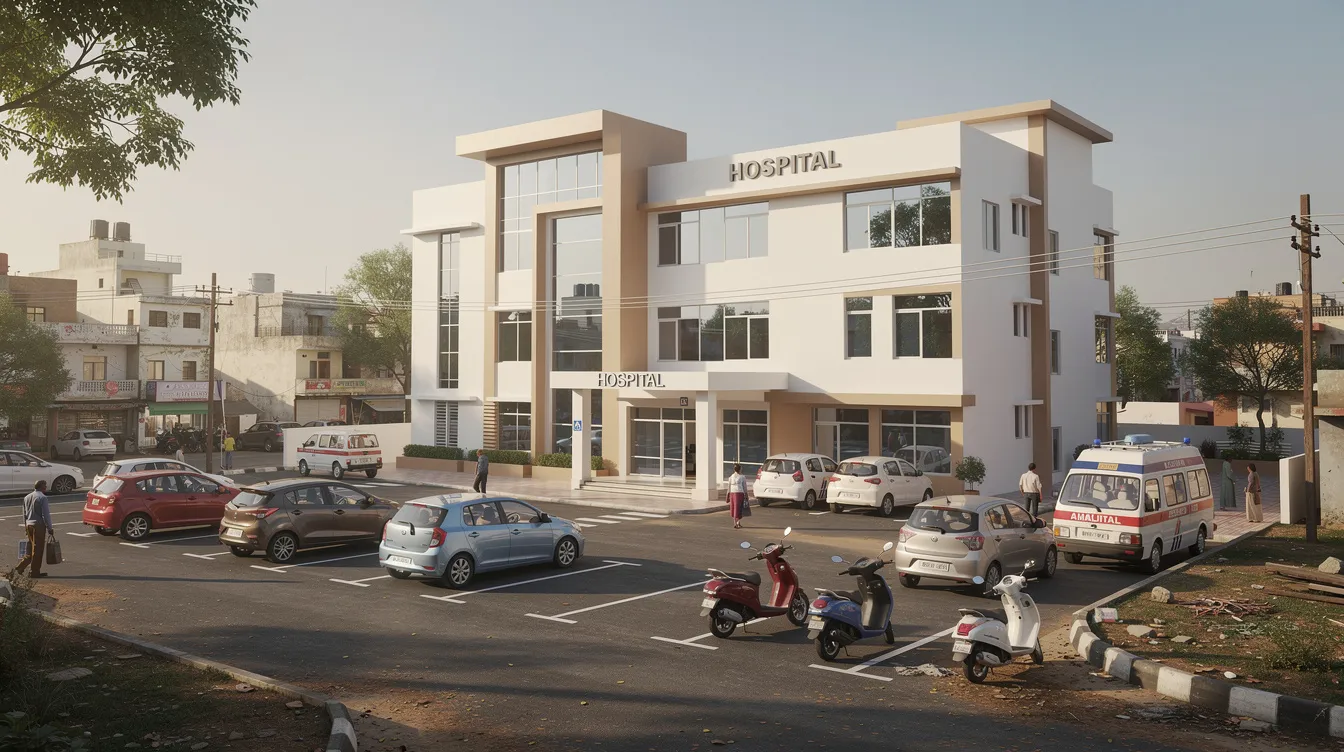
Hospital project finance can cover a wide range of healthcare projects: setting up a new 10–50 bed hospital, hospital expansion from an existing facility, modernization, addition of ICU or OT capacity, and upgrading diagnostic facilities. Healthcare financing involves various types of loans like equipment finance, term loans and working capital facilities-each serving a different purpose.
Typical components a hospital term loan may finance include:
- Civil construction and renovation
- Interiors, HVAC, electrical installations and plumbing
- Fire and safety systems, lifts and utilities
- Hospital furniture and beds
- ICU and OT equipment
- Diagnostic and laboratory equipment
- Basic IT/HMIS infrastructure
- Ambulances where applicable
- Pre-operative expenses and contingencies
Hospital construction loans cover costs for both new facilities and renovations. Some lenders may also consider part of the land cost, architect fees and commissioning expenses, depending on their policy. Public-Private Partnerships can further enhance hospital project financing options for certain development models.
Public sector banks often provide dedicated healthcare schemes for medical practitioners and healthcare enterprises-such as IOB’s Hospital & Equipment Finance Scheme or Bank of Maharashtra’s MAHA-DOC scheme, which offer tailored tenure, margin and eligibility criteria for hospitals and clinics.
The margin money and eligibility for each asset category vary by lender. For instance, some banks require 15% margin for new equipment but 25% for land or building and as high as 50% for used equipment. Banks may also offer separate hospital equipment finance lines for high-value advanced medical equipment like CT or MRI machines, with shorter tenure and different security structures.
Project Cost, Promoter Contribution & Means of Finance
Total project cost for a small hospital is built up from land (where applicable), building and construction costs, interiors, medical equipment, hospital furniture, pre-operative expenses and initial working capital. Each component must be supported by quotations, specifications and realistic estimates.
The “Means of Finance” represents how this cost will be funded:
Project Cost = Promoter Contribution (Equity) + Bank Term Loan + Equipment Finance (if separate) + Other Sources (subsidy, unsecured promoter loans)
Most banks prefer a debt-to-equity ratio of around 70:30 for healthcare projects, meaning the promoter is expected to bring in at least 25–30% of the project cost from own funds. Banks usually require a down payment of 15% to 25% for loans involving buildings or equipment, though the exact requirement depends on asset type and lender policy.
Transparent sources of promoter funds are critical. Own savings, sale of property, retained earnings from an existing hospital or practice, and documented unsecured loans from family are generally acceptable. Unexplained or unverifiable sources create serious appraisal concerns and can delay or derail a proposal.
For a detailed breakdown of how project cost and funding structure are typically computed for a general hospital, refer to the General Hospital project cost and means of finance analysis.
Small Hospital Setup Cost & Medical Equipment Planning
The bank loan amount and structure differ significantly between a 10-bed, 20-bed, 30-bed and 50-bed hospital. A 10-bed facility focused on basic care requires a fundamentally different investment than a 50-bed multispecialty unit with advanced diagnostics.
Key cost drivers include:
- Bed strength and number of specialties
- Owned versus leased premises
- Level of diagnostics (basic X-ray vs. CT, MRI)
- Number of OTs and ICU beds
- Construction quality and location (metro vs. tier-2/3 city)
- Level of automation and IT infrastructure
Within total project cost, medical equipment-OT tables, anaesthesia workstations, ventilators, patient monitors, imaging systems and laboratory instruments-can constitute 30–45% of the investment and often influences whether separate equipment finance is used. Equipment selection must align with the revenue model and loan repayment capacity; investing in a high-end MRI for a 20-bed hospital in a small town may not be financially justified.
For detailed bed-wise setup cost illustrations, see Small Hospital Setup Cost in India – 10, 20, 30 & 50 Bed Hospital. For equipment-specific planning, refer to the Small Hospital Equipment List & Cost in India.
Hospital Revenue Model, Financial Projections & DSCR
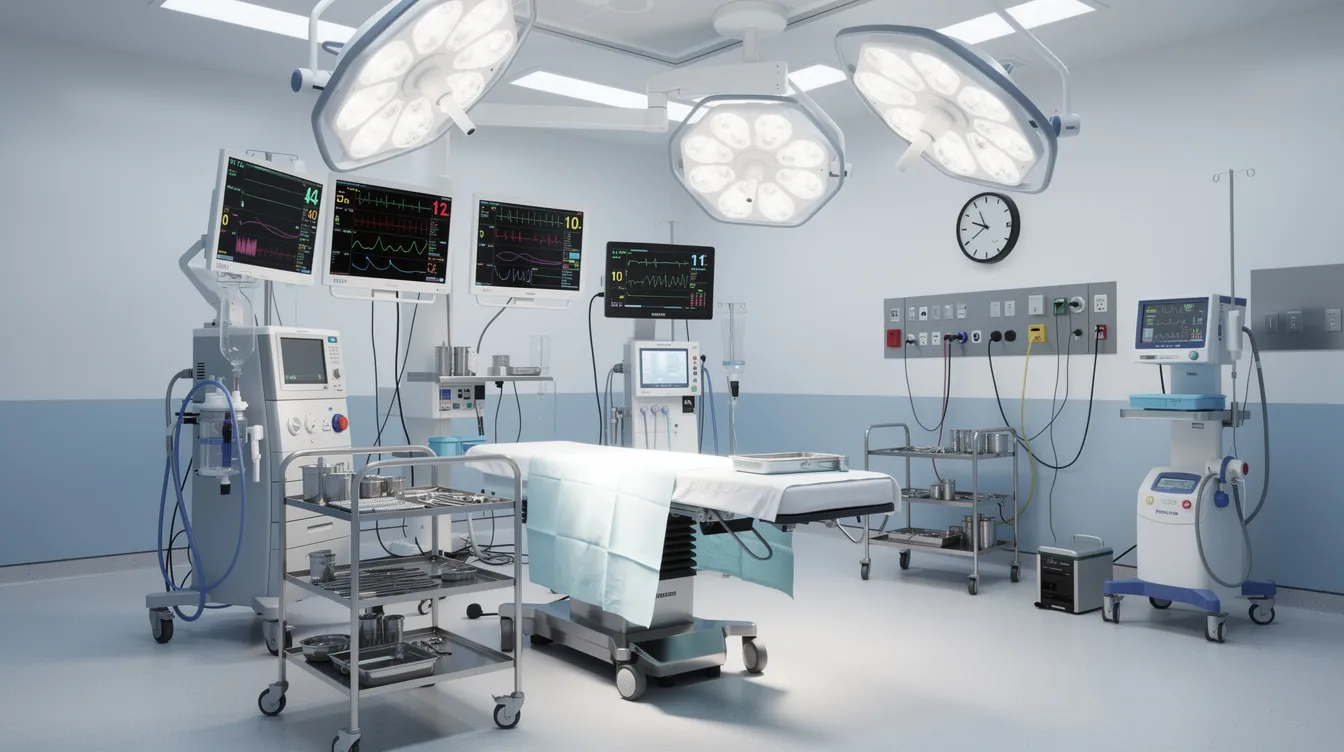
Banks rely heavily on projected revenues and cash flows to assess hospital loan repayment capacity. Revenue streams typically include OPD consultations, IPD room and bed charges, OT and procedure income, ICU charges, diagnostics, laboratory services and pharmacy where applicable.
The assumptions a bank scrutinizes most closely are:
- Bed occupancy ramp-up: Typically projected over 4–5 years from 20–30% in year one to 60–70% at stabilization
- ARPOB (average revenue per occupied bed): Must reflect local tariff realities, not aspirational corporate hospitals pricing
- Payer mix: Proportion of cash-paying patients vs. insurance/TPA and government scheme patients
- OPD footfall: Realistic daily patient volumes based on catchment area analysis
Financial projections in a DPR typically cover five to seven years-including projected profit and loss account, balance sheet, cash flow statement, break-even analysis and key financial ratios.
DSCR (Debt Service Coverage Ratio) tells a lender whether cash accruals after operating expenses are sufficient to cover annual principal plus interest repayments. A Debt Service Coverage Ratio of 1.25 is generally considered acceptable for hospital projects-meaning for every ₹1 of debt service, the hospital should generate at least ₹1.25 of cash accrual. As per Punjab & Sind Bank’s Doctors Special scheme, a minimum DSCR of 1.25:1 is explicitly required.
For detailed revenue modelling methodology, see the General Hospital Revenue Model & Financial Projections. For deeper DSCR analysis, refer to General Hospital DSCR & Loan Repayment Capacity.
Working Capital Requirement & Hospital Loan Structure
Financing a small hospital requires structured capital including term loans for fixed assets and working capital lines for day-to-day operations. Securing only a term loan without planning adequate working capital is a common and costly mistake.
Typical working capital items include:
- Medicines and consumables inventory
- Salaries and wages for doctors, nurses and support staff
- Utility bills, maintenance and administrative expenses
- Minimum cash balance for emergencies
- Receivables from insurance companies, TPAs and corporate clients
The distinction matters: term loan EMIs are repaid over years from cash accruals, while working capital facilities (cash credit, overdraft) are revolving limits that manage short-term liquidity. Both impact overall loan repayment obligations and financial capacity.
Underestimating working capital is a frequent reason for stress in the first 12–24 months-especially for new 20–30 bed hospitals that take time to reach stable occupancy. Insurance and TPA receivables can take 30–90 days to settle, creating urgent financial needs that must be anticipated in planning.
For detailed working capital computation methodology, see General Hospital Working Capital Requirement.
How Banks Assess a Small Hospital Term Loan Proposal
In practice, banks evaluate a hospital project loan through multiple lenses-technical, financial, commercial and legal. The risk assessment is structured and thorough.
Promoter and Management Assessment: Lenders examine the promoter’s medical qualifications, healthcare experience, management team strength and track record. A doctor with 10 years of clinical experience and an existing clinic carries more weight than a first-time applicant with no healthcare background. Lenders generally require a minimum credit score of 700 for loan eligibility, and existing liabilities, CIBIL history and repayment track record are reviewed closely.
Market and Location Appraisal: The catchment area, population density, existing competition, accessibility and demand for healthcare facilities in the specific location are assessed. Banks expect the DPR to include a realistic market study-not aspirational claims about patient volumes.
Financial Appraisal: This covers accuracy of project cost estimates, adequacy of promoter contribution and margin money, quality of financial projections, projected DSCR across the full loan tenure, and sensitivity analysis under scenarios of lower occupancy and tighter margins. Interest rates for hospital project loans in India vary by lender and risk profile, with rates typically starting around 10% or linked to RLLR/MCLR.
Security and Collateral: Medical equipment often serves as primary collateral in financing options, along with hypothecation of hospital furniture and assets. Where land or building is financed, mortgage is required. Collateral-free loans can be facilitated for small hospitals under the CGTMSE coverage, which allows lower collateral loans up to ₹500 lakhs for qualifying small hospitals. However, for larger exposures, additional collateral such as residential or commercial property may be required.
The exact hospital loan eligibility, margin, interest rate, flexible tenure and collateral requirements differ from bank to bank and must be confirmed with the specific lending institution. For a deeper dive into the appraisal methodology, see How Banks Assess a General Hospital Term Loan Proposal.
Bankable DPR, CMA Data & Documentation for Hospital Project Loan
A hospital DPR is essential for securing funding. Most banks require a DPR before processing hospital loan applications. Securing a bank loan for a small hospital requires a strong business plan and proof of licenses-the DPR serves as that business plan.
A well-prepared DPR reduces costly mistakes during hospital construction and appraisal by forcing structured thinking. It should logically connect:
Project Concept → Market Potential → Capacity → Project Cost → Means of Finance → Revenue Assumptions → Operating Costs → Profitability → Cash Flow → DSCR → Repayment Capacity
The DPR must include a market and demand analysis section, promoter background, services and specialties, bed mix, phased implementation plan and risk-mitigation strategy. A hospital DPR requires inputs from healthcare consultants and architects alongside financial expertise.
CMA Data presents past and projected financials in a bank-friendly format. As a CA, I assist in preparing CMA Data and projections-but it is important to clarify that projected CMA Data is prepared, not “certified,” by the Chartered Accountant. The projections reflect assumptions that must be validated by the lender.
Documents required typically include:
- KYC of promoters and entity, constitution documents (trust deed, partnership deed, MOA/AOA)
- Land ownership papers or registered lease deed, sanctioned building plans
- Quotations for construction costs and medical equipment from reputed vendors
- Regulatory approvals, licenses, registration under clinical establishment laws
- Last 3 years audited financial statements (for existing hospitals), income tax returns
- Projected financials, DPR and CMA Data
- Bank statements, details of existing loans, net worth certificates
- Security and collateral documents where applicable
Documentation and format requirements vary among lenders; promoters should verify the exact documents required with their chosen bank or financial institution.

New Hospital vs Existing Hospital Expansion – Financing Approach
Appraisal of a new 20–30 bed hospital differs materially from that of an existing hospital expanding to 40–50 beds.
For a new hospital, the lender relies heavily on promoter strength, market feasibility study, realistic ramp-up assumptions, implementation schedule and quality of DPR. There is no operating history to fall back on, so the focus shifts to the credibility of assumptions, the promoter’s financial support and management plan.
For an existing hospital expansion, historical occupancy levels, revenue mix, profitability, existing DSCR, repayment track record and actual cash flow trends provide tangible evidence. Banks can verify whether current operations are stable enough to absorb incremental debt. This typically results in a smoother appraisal and potentially better terms.
Consider the same 30-bed facility: if it is a greenfield setup, the bank must rely entirely on projections and promoter credibility. If the same 30-bed capacity results from upgrading an existing 15-bed hospital with documented 55% occupancy and positive cash accruals, the lender has concrete data to invest confidence in. The expansion cost per bed is also often lower because core infrastructure already exists.
Banks may structure term loan tenure and working capital limits differently for brownfield hospital expansion versus greenfield setups, reflecting the lower risk assessment of an established operation.
Illustrative Small Hospital Financing Example (Indicative Only)
The following is illustrative only, for understanding the financing structure. It is not a universal benchmark. Actual terms depend entirely on the lender’s policy, borrower profile and detailed project appraisal.
Scenario: A 30-bed general hospital in a tier-2 city.
| Component | Illustrative Amount (₹ Crore) |
|---|---|
| Land (owned by promoter) | Brought by promoter |
| Building & civil construction | 4.50 |
| Interiors, HVAC, electrical, plumbing, fire safety | 1.50 |
| Medical equipment (OT, ICU, diagnostics, lab) | 3.00 |
| Hospital furniture and beds | 0.60 |
| IT/HMIS, ambulance, pre-operative expenses | 0.60 |
| Contingencies (~5%) | 0.50 |
| Total Project Cost | 10.70 |
Means of Finance:
| Source | Amount (₹ Crore) |
|---|---|
| Promoter contribution (~28%) | 3.00 |
| Bank term loan (~67%) | 7.20 |
| Working capital (separate facility) | 0.50 |
| Total | 10.70 |
In the stabilized year (say year 4), the hospital projects annual revenue of approximately ₹8–9 crore at ~60% occupancy, with operating surplus (cash accrual) of approximately ₹1.80–2.00 crore after all expenses. Annual debt service (principal + interest) might be approximately ₹1.40 crore, yielding a DSCR of around 1.30–1.40x-which would generally be considered acceptable.
A bank would examine how DSCR trends evolve across the tenure. If early years show DSCR below 1.0x due to ramp-up, a moratorium on principal repayment during construction and initial operations (typically up to 24 months for building projects) helps bridge that gap. Conservative assumptions-say 50% occupancy instead of 70%-improve credibility even if headline numbers look less impressive.
Common Reasons Hospital Loan Proposals Get Delayed or Rejected
In practice, many hospital project finance proposals face difficulties due to avoidable issues rather than lack of demand for healthcare services.
Financial weaknesses:
- Underestimation of project cost (vague civil estimates, no contingency)
- Inadequate promoter contribution or unexplained fund sources
- Over-optimistic bed occupancy and ARPOB projections that don’t reflect local market reality
- Ignoring working capital requirement during ramp-up
- Weak DSCR under realistic stress scenarios
Non-financial gaps:
- Missing regulatory approvals (building plan, clinical establishment registration, fire safety)
- Unclear land ownership or problematic lease terms
- Incomplete documentation and minimal paperwork where lenders expect thorough evidence
- Contradictions between DPR narrative and financial projections
- Poorly defined management structure or lack of key medical personnel
How promoters can improve proposals: Commission a realistic DPR backed by actual market data. Obtain firm quotations from reputed vendors for major civil work and medical equipment. Align the repayment schedule with projected cash flows. Respond promptly and transparently to bank queries during the application process.
Strengthening these aspects does not guarantee hospital project loan approval, but significantly improves the quality of the appraisal and the lender’s ability to take an informed decision.
Step-by-Step Application Process for Bank Loan for Small Hospital
The journey from hospital concept to loan disbursal follows a logical sequence. Promoters who plan each stage systematically reduce delays and improve their chances.
Pre-application preparation:
- Define hospital concept, bed size, specialties and target community
- Prepare feasibility and market study for the catchment area
- Freeze project cost with firm quotations and specifications
- Structure means of finance-determine how much equity you can bring and how much funding you need
- Plan the medical equipment list aligned with revenue potential
- Develop revenue model and financial projections for 5–7 years
- Evaluate DSCR and sensitivity under conservative scenarios
- Compile the DPR and CMA Data with professional assistance
- Collect all documents required (KYC, land papers, approvals, quotations, financials)
- Approach 2–3 banks for preliminary discussions with the DPR
Bank’s internal process:
The bank typically proceeds through application submission, preliminary screening, detailed appraisal (technical, financial and legal), site visit, credit committee review, sanction with terms, formal documentation, creation of security and phased loan disbursal tied to project milestones.
Promoters should be prepared to answer clarifications on assumptions, provide updated quotations and sometimes revise project scope based on lender feedback. Processing fees and other charges vary by institution.
Timelines vary widely-some applicants receive in-principle approval within weeks while others face months of back-and-forth. Planning a realistic implementation schedule is crucial to manage operations and avoid cash-flow gaps while waiting for disbursement. Eligibility for hospital loans includes verification of income, employment history (for salaried doctor-promoters) and overall financial capacity, alongside project-specific assessment.

FAQ – Bank Loan for Small Hospital in India
The following answers address common practical queries from first-time hospital promoters and doctors. These are general guidance based on common banking practice in India; actual terms and eligibility criteria vary by bank and project.
How much bank loan can I typically get for a 20–30 bed small hospital?
The sanctioned loan amount depends on total project cost, acceptable debt-equity structure, collateral strength and projected DSCR-not bed count alone. Some banks may finance 60–75% of eligible project cost for small hospitals, but the actual percentage and maximum amount vary according to each bank’s policy and risk assessment. For example, Bank of Maharashtra’s MAHA-DOC scheme offers term loans up to ₹25 crore, while Kotak Healthcare finances from ₹10 lakhs to ₹10 crores. A promoter should first finalize a realistic project cost and means of finance plan, then discuss indicative exposure with 2–3 banks using a preliminary DPR, rather than starting with a fixed loan amount target.
Can I get a hospital project loan if the building is on leased premises?
Many lenders do finance hospitals operating from leased or rented properties, provided the lease tenure, lock-in period and renewal terms are acceptable. In such cases, banks typically treat medical equipment, furniture and other movable assets as primary security and may require additional collateral to compensate for not having building ownership. Including the registered lease deed, rent terms and landlord consent in the documents submitted for appraisal is advisable. The availability of finance for leased-premises hospitals has expanded as healthcare delivery models in India evolve, particularly for clinics and smaller facilities in urban areas.
Is collateral always mandatory for a bank loan for small hospital?
Not necessarily. While many banks require collateral (mortgage of residential or commercial property) in addition to primary security over hospital assets, certain schemes and government bodies offer alternatives. Collateral-free loans can be facilitated under CGTMSE coverage for qualifying hospitals within specified limits. Unsecured loans may also be available for smaller setups or equipment financing under specific schemes. However, collateral requirements ultimately depend on loan size, project risk, promoter profile, credit history and specific bank policies. Promoters should discuss collateral expectations transparently with lenders at an early stage to avoid surprises.
What tenure and moratorium are usually available for hospital term loans?
Hospital term loan tenure in India commonly ranges from 7 to 15 years depending on the lender and project type. Under IOB’s scheme, for instance, repayment tenure can extend up to 15 years including a moratorium of up to 24 months during construction. Equipment-only loans may have shorter tenures of 5–7 years. Banks may offer a moratorium on principal repayments during construction and initial stabilization, providing flexible tenure structures that align with hospital ramp-up periods. The repayment schedule should be aligned with projected cash flows and DSCR; promoters should avoid very short tenures that strain early-year cash accrual. Interest is generally payable during the moratorium or capitalized depending on sanction terms.
Does preparing a DPR with a Chartered Accountant guarantee loan approval?
No. Even a professionally prepared, bankable DPR does not guarantee hospital loan approval. The final decision rests with the lending institution’s credit committee based on its risk policies, the promoter’s overall profile, security offered and prevailing market conditions. However, a well-structured DPR with realistic projections, properly prepared CMA Data and thorough documentation significantly improves clarity, reduces appraisal time and helps lenders take an informed decision. At ProjectReportBank.com, I assist hospital promoters in preparing robust DPRs, financial projections and DSCR analysis-providing the financial support and professional rigour that strengthens your proposal, without making any assurance of sanction or specific loan terms. Excellence in preparation is what separates proposals that move forward from those that stall.
Explore All General Hospital DPR Guides
Continue exploring our complete series on General & Small Hospital project planning, setup cost, equipment, financial projections, repayment capacity and bank finance.