
Many entrepreneurs who availed their first mudra loan under the Pradhan Mantri Mudra Yojana find their businesses outgrowing the original loan amount within a year or two. The natural question is whether banks will consider the new, larger business scale during reapplication. This article, written from the practical experience of CA Manish Gugliya, covers exactly how Indian banks evaluate expanded businesses, what documents matter, and how to avoid common rejection traps.
Key Takeaways
- Banks under the mantri mudra yojana pmmy always assess the current business position – recent sales, GST filings, bank statements, staff strength, and machinery – not just the older application or earlier loan amount.
- Approval after expansion rests on three pillars: genuine growth proven through documents, clean repayment track of previous mudra loans or other credit, and a realistic updated project report.
- After business growth, borrowers can request a higher loan amount – for example, moving from Kishore to Tarun (up to 10 lakh) – provided cash flow and DSCR support the EMI at current interest rates. No collateral is required for loans up to ₹10 lakh, and expansion loans up to ₹20 lakh under Tarun Plus are generally collateral free.
- Over ₹33 lakh crore in pmmy loans have been sanctioned since India launched the scheme in 2015, and successful repayment of previous loans significantly improves eligibility for the next phase of funding.

Table of Contents
Understanding Mudra Loan Reapplication After Business Expansion
Mudra loan reapplication means applying again under the pradhan mantri mudra yojana – either after fully repaying a previous loan or after an earlier rejection – now with a larger business scale. Applicants must be Indian citizens aged 18 to 65 years, and eligible businesses include manufacturing, trading, and services sectors. Agricultural businesses are not eligible for mudra loans, as the mudra scheme specifically targets non farm income generating activities.
The flagship scheme operates through four categories tied to business stage: Shishu loans offer up to ₹50,000 for startups, Kishore loans range from ₹50,001 to ₹5 lakh, Tarun loans provide ₹5 lakh to ₹10 lakh for established businesses, and Tarun Plus loans range from ₹10 lakh to ₹20 lakh for borrowers who have successfully repaid loans under Tarun. PMMY loans are collateral free and support micro enterprises across the country. To reapply for a mudra loan after business expansion, you must first clear the existing loan, and a No Objection Certificate is needed after paying off the previous mudra loan.
Mudra loans can be applied for online or offline through various financial institutions including commercial banks, small finance banks, NBFCs, and micro units development and refinance agency (MUDRA stands for Micro Units Development and Refinance Agency) channel partners. Banks treat each reapplication as a fresh business loan request assessed on updated data and current risk. This guidance comes from CA Manish Gugliya, Chartered Accountant and MSME consultant with nearly 20 years of hands-on experience preparing project reports and working with bank credit officers.
Why Businesses Expand After the First Mudra Loan
PMMY promotes financial inclusion for small businesses and is designed to help micro and small businesses scale up. Roughly 70% of PMMY beneficiaries are women entrepreneurs, and expansion is common across all borrower profiles. Eligible businesses in manufacturing, trading, and services sectors regularly outgrow their initial credit needs.
Common expansion triggers include:
- Daily sales rising from ₹8,000 to ₹25,000 in a retail shop
- Purchase of additional machinery like a second packaging or sewing machine
- Shifting from a 100 sq. ft. stall to a 400 sq. ft. shop
- Hiring additional employees or delivery staff
- Adding new product lines or an online sales channel
- Entering B2B supply agreements that require higher working capital
The first loan – often a Shishu or lower Kishore amount – typically covers basic setup or initial working capital. As income generating activities grow, entrepreneurs need higher limits. Banks want to see that earlier funds were used for genuine business expansion, not personal use. This becomes a strong positive factor during reapplication.
Will Banks Consider the New Business Scale During Reapplication?
Yes. Lenders assess feasibility based on business expansion plans before loan approval. Credit officers compare your financials from the first application against the latest 6–12 months of data to verify real growth.
Key assessment parameters include:
- Current annual and monthly turnover reflected in bank statements and GST filings
- Gross profit margin and net profit trends
- Stability of sales inflows and banking discipline
- Repayment history – lenders require a repayment history for loan application assessment, and clearing previous dues is required for reapplying
Higher mudra categories are available for expanding businesses based on previous performance. A borrower who moved from Shishu to Kishore with consistent repayment can access Tarun. Under Tarun Plus, expansion loans up to ₹20 lakh are collateral free through the credit guarantee schemes backed by CGFMU. Banks also evaluate qualitative factors: market demand, customer quality, business reputation, and how professionally the entrepreneur handles GST, ITR, and basic accounts. Better financials and an existing bank relationship can help negotiate a relatively reasonable rate within the permitted interest rates band.
What Banks Verify During Mudra Loan Reapplication After Business Expansion
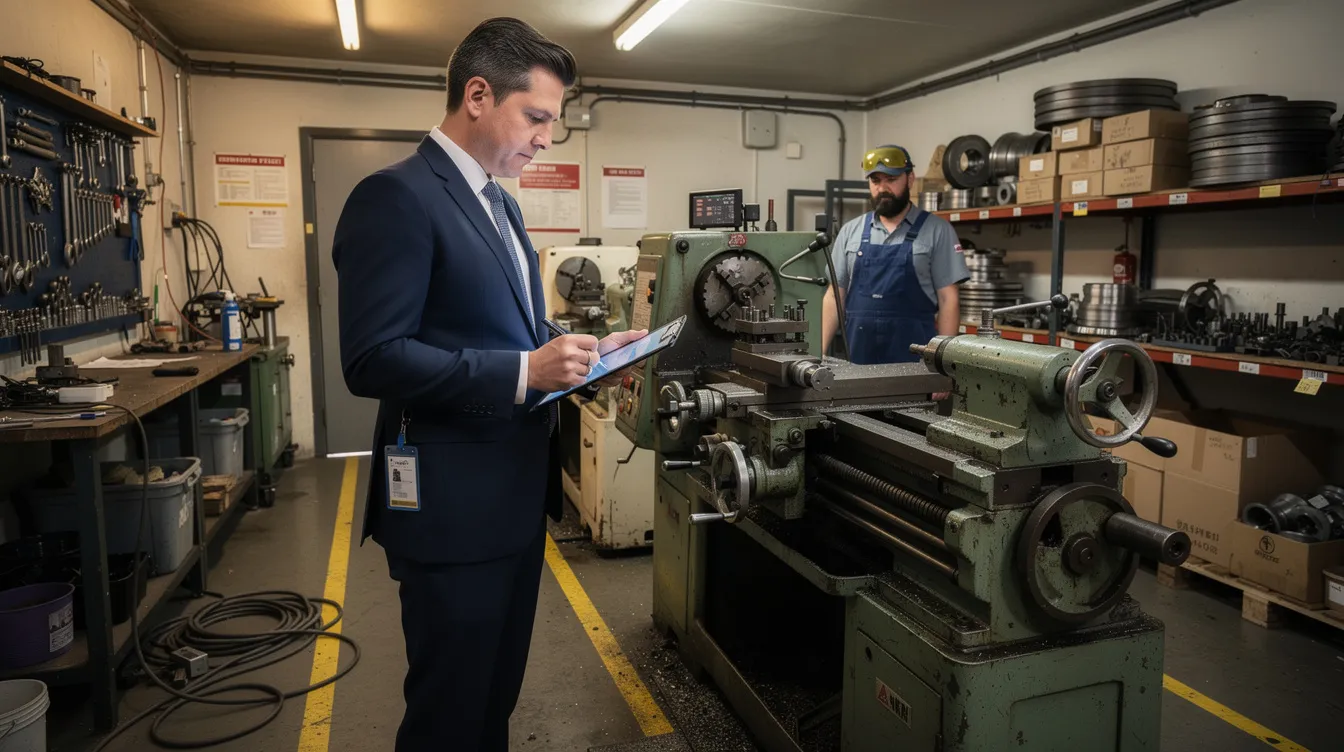
Based on CA Manish Gugliya’s experience with public sector and private banks, verification happens at three levels: documents and financials, bank statements and credit reports, and physical or telephonic verification of the business.
Operational checks during site visits:
- Business address and premises size
- Number of employees actually working
- Machinery installed (old and new assets)
- Stock levels and display
- UPI QR codes, POS machines, billing systems, and customer footfall
Documentary checks:
- Last 12 months’ bank statements
- GST registration and GSTR-1/GSTR-3B filings
- Income tax returns (last 2–3 years)
- Udyam Registration and shop licence
- Existing loan sanction letters and repayment track
Banks also obtain CIBIL reports of the proprietor or partners and check whether adding the new EMI keeps total obligations within safe limits. Digital footprints like UPI collections, card payments, and marketplace seller accounts help substantiate increased turnover. For deeper details on this process, you can explore the guide on how banks verify business turnover for Mudra loan.
Documents Required for Mudra Loan Reapplication After Expansion
Business documentation includes KYC documents, GST returns, and income tax returns. Here is a practical checklist grouped by category:
| Category | Documents |
|---|---|
| Personal KYC | Aadhaar, PAN, recent photographs, current address proof matching bank records |
| Business Identity | GST registration, Udyam Registration, shop licence, partnership deed or incorporation papers, rent agreement with owner KYC, sector-specific licences |
| Financial Records | Last 12 months’ bank statements, last 2–3 years’ ITRs, GSTR-1 and GSTR-3B summaries, P&L and balance sheet, existing Mudra loan closure details (sanction letter, repayment schedule, NOC) |
| Expansion Proof | Machinery purchase bills, quotations for new equipment, photographs of expanded premises, major customer purchase orders, project cost sheet |
Arranging documents neatly following a proper Mudra loan document file preparation guide reduces back-and-forth with the bank and signals professionalism.
Updated Project Report and How Banks Evaluate Business Growth
A detailed project report is needed to support the expansion application. After business growth, this is the single most important technical document – and where an experienced CA like Manish Gugliya adds maximum value.
An updated project report should contain:
- Business background and expansion details
- Current turnover (for example, FY 2024–25 turnover of ₹48 lakh versus ₹18 lakh in FY 2022–23)
- Proposed new investment and exact usage of the requested maximum loan amount
- Updated cost estimates: machinery quotations, renovation costs, additional working capital
- Profit projections, cash flow, and repayment capacity
Banks evaluate sales growth trends, improvement in gross profit margin, net profit, and monthly surplus available for EMI. The DSCR (Debt Service Coverage Ratio) must typically be 1.25 or above for Tarun category applications, and banks often expect 1.50 for Tarun Plus.
Expert Tip by CA Manish Gugliya: Avoid generic, copy-paste project reports. Use data from your actual GST, ITR, and bank statements so that the report matches what the banker independently verifies. Any mismatch is an immediate red flag.
Higher Loan Amount, Common Rejection Reasons, and Practical Approval Tips
It is reasonable to request an increased limit – say moving from an earlier ₹2,50,000 Kishore loan to an ₹8,00,000 Tarun loan – when your turnover is several times the requested amount and cash surplus comfortably covers all EMIs. Financial institutions extend higher Mudra categories when performance justifies the step up.
Common rejection reasons even after expansion:
- GST turnover not matching the figure claimed in the project report
- Low or falling profit despite higher sales
- Heavy cash withdrawals and weak banking habits
- Multiple existing EMIs making DSCR too weak
- Poor CIBIL score, past write-offs, or settled loan accounts
- Incomplete documentation or outdated financials
- Unrealistic projections the credit officer does not trust
Common Mistake: Many applicants inflate turnover and profit on paper without updating GST or ITR, which immediately triggers scrutiny from any experienced credit officer.
Practical tips to improve approval chances:
- Consolidate business transactions into one main bank account
- File GST and ITR on time showing realistic numbers
- Clear small overdues and credit card delays before applying
- Reduce unnecessary EMI burden where possible
- Maintain at least 6 months of stable operations at the new scale before reapplication
- Attach a properly structured project report prepared with professional support
Pro Tip: If your banking habits need improvement, spend 3–6 months building a stronger business profile – improving average monthly balance, eliminating cheque bounces – before submitting the reapplication.
Real Practical Example and Final Conclusion
Case Study – Rita’s Tailoring Unit, Indore
Rita took a ₹1,00,000 Kishore mudra loan in 2021 to buy 3 sewing machines and set up a home-based tailoring unit. By 2023, her monthly turnover grew from ₹80,000 to ₹3,50,000. She hired 5 more tailors, moved to a rented 300 sq. ft. shop, and started receiving bulk orders from local showrooms.
In 2024, CA Manish Gugliya prepared an updated project report showing three-year financials, actual GST turnover, and realistic projections for a ₹7,50,000 Tarun loan. The bank verified her bank statements, visited the new shop, confirmed machinery and staff, and found the DSCR comfortably above 1.25. Her EMI track on the first loan was perfect for 24 months. The beneficiary micro unit was sanctioned the higher amount for further expansion – new overlock machines and additional working capital.
Conclusion: Banks do welcome genuine business expansion under the government of India’s Pradhan Mantri Mudra Yojana. But documentation, repayment track record, and realistic planning matter far more than simply claiming a bigger scale. The lender needs to see your growth story confirmed by GST, ITR, bank statements, and a credible project report – not just verbal claims.
Before you reapply, compile updated financial data, ensure your credit behaviour is clean, and consider getting a professionally prepared project report. Your expanded business deserves to be presented clearly and credibly to the bank. That is the real reference point for approval.

Frequently Asked Questions on Mudra Loan Reapplication After Business Expansion
Can I apply for a second Mudra loan immediately after repaying the first one if my turnover has increased?
You can apply after full repayment, but banks prefer to see at least 3–6 months of stable operations at the new scale. Simply closing one loan and immediately applying for another without demonstrating sustained growth may weaken your case. Maintain strong bank inflows and updated GST filings during this period.
If my previous Mudra loan was rejected, will expansion and higher turnover automatically guarantee approval now?
Not automatically. While increased turnover helps, banks also need clean CIBIL behaviour, proper documentation, realistic projections, and adequate cash flow. If the earlier rejection was due to poor credit history or document issues, those must be resolved first regardless of business size.
Is GST registration compulsory for Mudra loan reapplication after expansion?
GST registration is not formally mandatory for very small cash-based businesses below the GST threshold. However, for Kishore and tarun category applications where you claim significant turnover, GST filings become practically essential for credibility. Banks cross-verify claimed turnover against GSTR returns, and absence of GST registration raises questions about declared numbers.
Can I shift from Shishu directly to a higher Tarun loan up to ₹10 lakh after my business grows?
It is possible but uncommon in a single jump. Banks typically prefer a gradual step-up – Shishu to Kishore, then Kishore to Tarun – because each stage builds repayment history and credit confidence. If your turnover and profits clearly justify the higher amount and your security and form of application are strong, some banks may consider the direct jump, but expect closer scrutiny.
Will the bank again visit my shop or factory during reapplication?
Yes, fresh field verification is standard practice for repeat applications, especially when the applicant is requesting a higher amount. Bank officers check premises, machinery, stock, employees, and customer activity. Keep your business premises clean, organised, and operational on any working day – the visit may be unannounced.
- Can Bank Reduce Mudra Loan Amount Without Your Consent? Complete Practical Guide (2026)


- What to Do If You Cannot Pay Your Mudra Loan EMI (2026 Guide)

- Can a Bank Refuse a Mudra Loan Because the Target Is Completed? Complete Guide (2026)

- Bank Refused My Mudra Loan Application – What Are My Rights?

- Mudra Loan for Used Vehicles (2026): Eligibility, Documents, Bank Rules & Complete Guide

- Rejected Mudra Loan – What to Do Next? Appeal Process Explained (2026)

- Mudra Loan Project Report Madhya Pradesh – Bank-Ready DPR & CMA Guide

- Project Report for Mudra Loan Maharashtra: Complete Guide for MSMEs, Startups and Small Businesses (2026)

- Mudra Loan Uttar Pradesh: Complete Guide for MSMEs, Startups and Small Businesses (2026)

- Mudra Loan Bihar 2026: Eligibility, Documents, Online Application Process & Project Report Guide

- Jan Samarth Mudra Loan 2026: Complete Guide to Online Application, Eligibility, Documents & Approval Process

- MSME Mudra Loan: Complete Guide for Small Businesses, Startups & Manufacturing Units in India (2026)

- Is the Mudra Loan Subsidy Real or Fake? Get the Facts Here

- Mudra Loan Without CIBIL Score: How to Qualify and Apply

- Mudra Loan for Used Machine (2026 Guide) – Eligibility, Documents, Valuation & Approval Tips