Key Takeaways
- Automatic ice cream plant machinery cost in India depends primarily on production capacity (LPH), level of automation, product mix, packaging formats, refrigeration design, Indian vs imported origin and scope of supply.
- A basic supplier quote typically covers only core processing machines – mixing, pasteurisation, homogenisation, ageing vats and continuous freezers – while filling, packaging, hardening, cold storage, utilities and installation can add 50–120% extra to the budget. Comprehensive budgeting should include both initial purchase and ongoing operational costs.
- Total project cost is very different from machinery cost and must also include civil work, land and building, pre-operative expenses, contingency and margin money for working capital.
- Production capacity influences the cost of ice cream machinery significantly – ice cream plants have capacities from 100 to 1,000 liters per hour for small to mid-scale, and well beyond for large industrial operations.
- This article is written by CA Manish Gugliya for www.projectreportbank.com as a practical guide for entrepreneurs and dairy companies planning an industrial automatic ice cream plant in India.
What Determines Automatic Ice Cream Plant Machinery Cost in India?
The ice cream plant equipment cost in India varies widely because no two projects share identical requirements. A basic 1,000 LPH cup-and-tub line with modest automation needs one continuous freezer, a simple pasteuriser and basic filling machines. A multi-product extrusion and moulding facility at the same LPH – producing cups, cones, sticks, bars, sandwiches and novelties with chocolate coating and nut inclusions – may require three to five times the machinery investment.
Production capacity (500, 1,000, 2,000 or 5,000+ LPH), desired product range and number of SKUs are the primary determinants of industrial ice cream plant machinery cost. The level of automation also matters: a fully automatic ice cream production line with PLC and SCADA control costs substantially more than a semi-automatic configuration.
Key cost drivers include:
- Plant capacity and throughput (LPH or litres per day)
- Product categories – cups, cones, tubs, sticks, bars, novelties
- Automation level – manual, semi-automatic, PLC-controlled or fully automatic
- Filling speed, packaging formats and number of filling lines
- Continuous freezers – number and capacity
- Refrigeration system design, hardening technology and cold-storage requirements
- Origin of equipment – Indian vs imported
- Scope of supply – core processing only vs turnkey including utilities and installation
Suppliers often quote only core ice cream processing plant machinery. Buyers must separately budget for hardening tunnels, cold rooms, refrigeration plant, CIP systems, electricals, utilities, installation, GST and freight to arrive at a realistic machinery investment figure.
What Is an Automatic Ice Cream Manufacturing Plant?
An automatic ice cream plant is an integrated production line where ingredient dosing, mix preparation, pasteurisation, homogenisation, cooling, ageing, continuous freezing, filling, packaging, conveying and CIP cleaning are controlled automatically – usually through PLC systems, sometimes with SCADA for supervisory monitoring. Automatic ice cream plants can be fully PLC-controlled, with touch-screen HMI dashboards, recipe management, automatic alarms and interlocked sequences.
Ice cream production plants include mixers, pasteurizers, and freezers as core machines. Automation features include automatic ingredient weighing, temperature and flow-rate control loops, servo-driven filling indexing, and central data logging for production monitoring and traceability.
Semi-automatic lines require manual weighing, manual valve operation and individual standalone machines. Fully automatic lines integrate these steps so operators supervise rather than intervene physically. For capacities beyond about 1,000–2,000 LPH, most new Indian projects prefer automatic configurations to meet food-safety compliance, reduce wastage and ensure consistent quality. Ice cream plants can process 100 to 1,000 liters per hour at the small-to-mid scale, while large industrial lines exceed this range significantly.
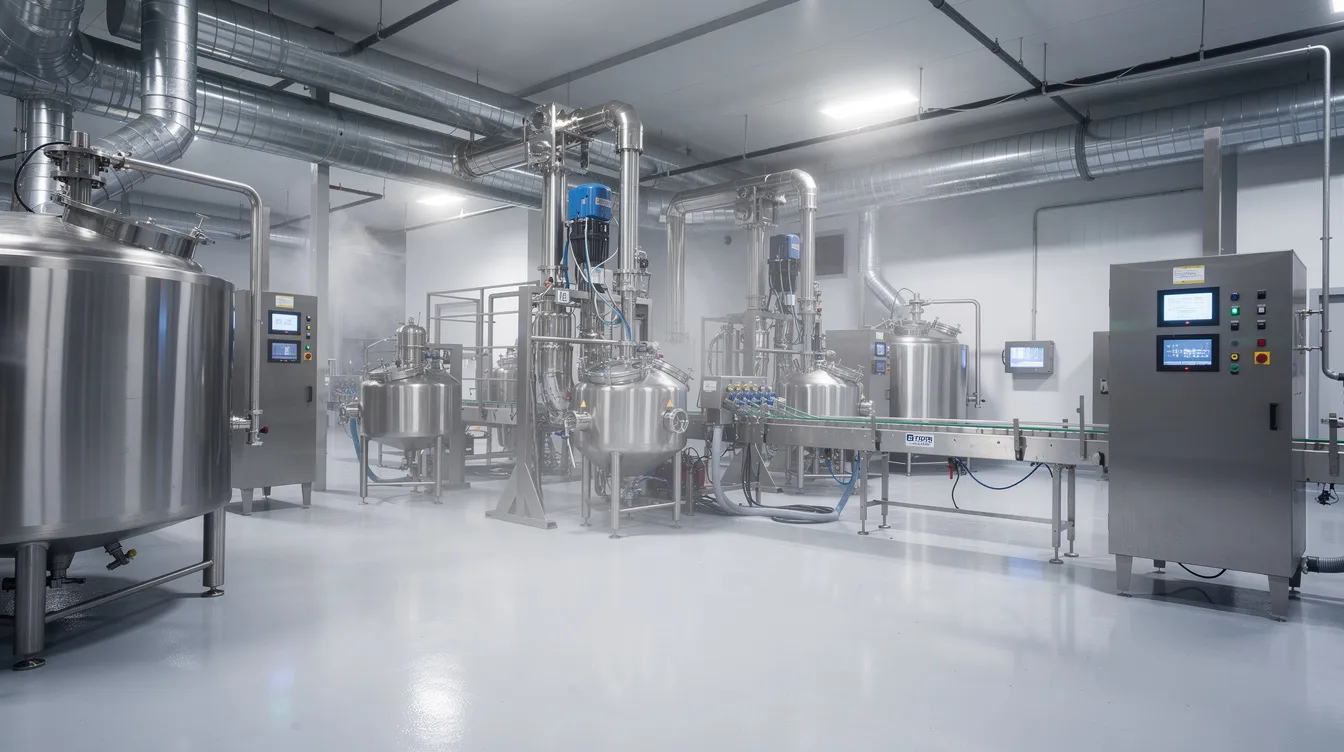
Industrial Ice Cream Production Process and Line Balancing
The typical production flow in an automatic ice cream manufacturing plant follows this sequence:
Raw-material receipt → ingredient weighing and mixing → pasteurisation → homogenisation → rapid cooling → ageing → flavour and inclusion dosing → continuous freezing with overrun control → filling or extrusion → hardening → secondary packaging → frozen storage and dispatch.
Pasteurisation occurs at 72°C (or 80–85°C for HTST processes lasting 15–30 seconds). After homogenisation, the mix is cooled to about 4°C and held in ageing vats for 4–12 hours. Continuous freezing brings the mix to around −5°C while incorporating air for overrun. Hardening tunnels then reduce temperature to −30°C to −40°C.
Line balancing is critical: the rated capacity of pasteuriser, homogeniser, ageing vats, continuous freezers, filling machines and hardening tunnels must be matched so no single machine becomes a bottleneck during peak summer demand. Decisions on batch vs continuous pasteurisation, number of shifts and SKUs packed per shift influence both ice cream production line cost and operating efficiency.
Complete Industrial Ice Cream Plant Machinery and Equipment List
Every machine in the line has specific cost drivers. Below is a consolidated equipment list suitable for an automatic ice cream manufacturing plant equipment list in a DPR:
| Equipment | Function | Capacity Basis | Essential? | Major Cost Drivers |
|---|---|---|---|---|
| Mix preparation system | Dissolve, blend ingredients | LPH, tank volume | Essential | Stainless steel grade (SS304/SS316), mixer type |
| Pasteuriser (batch/HTST) | Kill pathogens, sterilise mix | LPH, temperature rating | Essential | Type, heat recovery, automation |
| Industrial homogeniser | Reduce fat globules, improve texture | LPH, pressure (140–250 bar) | Essential | Pressure rating, stages, materials |
| Ageing vats | Hold mix at 4°C for crystallisation | Litres (2–3× hourly capacity) | Essential | Insulation, agitator, cooling jacket |
| Continuous freezer | Freeze mix, control overrun | LPH (300–1,500 L/H typical range) | Essential | Capacity, refrigerant, overrun control |
| Flavour/inclusion feeder | Add fruits, nuts, ripple sauces | Flow rate, SKU count | Product-dependent | Number of feeders, cleaning needs |
| Cup/cone filling machine | Fill and seal cups, cones | Units/hour, lanes | Essential (format-dependent) | Speed, lanes, servo controls |
| Tub/family-pack filler | Fill larger packs | Units/hour | Product-dependent | Format complexity, automation |
| Stick/extrusion line | Mould sticks, bars, novelties | Moulds/hour | Product-dependent | Mould count, chocolate coating |
| Hardening tunnel | Rapid freeze to −30°C to −40°C | kg/hour matching filling | Essential | Throughput, insulation, refrigeration |
| Refrigeration plant | Cool freezers, hardening, cold rooms | TR (tons of refrigeration) | Essential | Refrigerant type, redundancy |
| Cold storage rooms | Store finished goods at −18°C to −30°C | MT storage capacity | Essential | Panel thickness, temperature, size |
| CIP system | Automated cleaning | Circuits, pump capacity | Essential | Central vs local, automation level |
| Electrical & automation | PLC panels, cabling, drives | kW connected load | Essential | Automation scope, SCADA |
| Lab & QC equipment | Fat, SNF, microbial testing | Sample throughput | Essential | Instrument range, certification |
Core Processing Sections and Key Equipment
For raw-material handling and mix preparation, equipment includes milk reception systems, raw-milk storage tanks, cream and fat-melting units, high-shear mixers, mix tanks with agitators, sugar and milk-powder handling, transfer pumps, filters and sanitary pipelines. Automatic ice cream plants use stainless steel SS304 or SS316 for hygiene, and food-grade stainless steel compliance is necessary for safety standards. Higher-grade finishes and sanitary design increase the ice cream mix pasteurizer cost.
Pasteurisation and homogenisation form the thermal treatment backbone. HTST pasteurisers with heat-recovery systems cost more but reduce energy consumption over the plant’s life. Industrial homogenizer price depends on pressure rating (140–250 bar), number of stages and material of construction. For a 200 LPH mix plant, a homogeniser was quoted at approximately ₹2.25 lakh.
Cooling and ageing sections use plate heat exchangers to cool mix to about 4°C. Insulated ageing vats are sized at roughly 2–3 times hourly capacity to suit daily batch scheduling. Agitators prevent fat separation, and chilled-water circulation maintains temperature uniformity. A 500 LPH DPR listed a 600-litre ageing vat at approximately ₹3 lakh.
Continuous freezers with automatic overrun control are available with capacities from 300 to 1,500 L/H. Multiple freezers are arranged in parallel for plants above about 2,000 LPH. Fruit feeders, ripple pumps and nut dispensers for inclusions are optional but add cost – a fruit feeder for a 400 L plant was listed at ₹2.60 lakh.
Filling, Packaging, Hardening and Cold-Chain Machinery
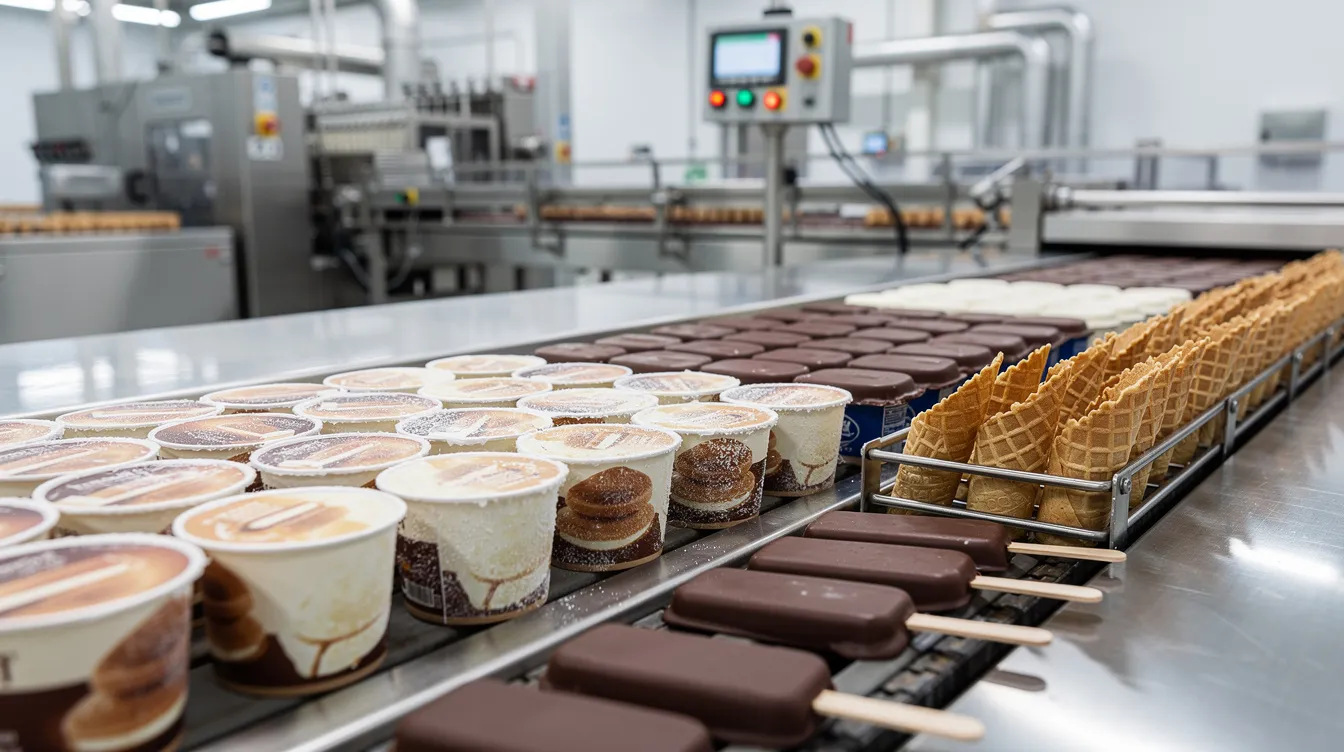
Filling and packaging machinery often rivals or exceeds core processing equipment in cost. Ice cream filling machines can handle 1,000 to 20,000 units per hour depending on lanes, servo controls and automation level. A high-speed fully automatic cup filling and sealing machine with multi-flavour capability and PLC-controlled indexing costs significantly more than a slower semi-automatic filler. Cone filling requires additional handling and chocolate-lining equipment.
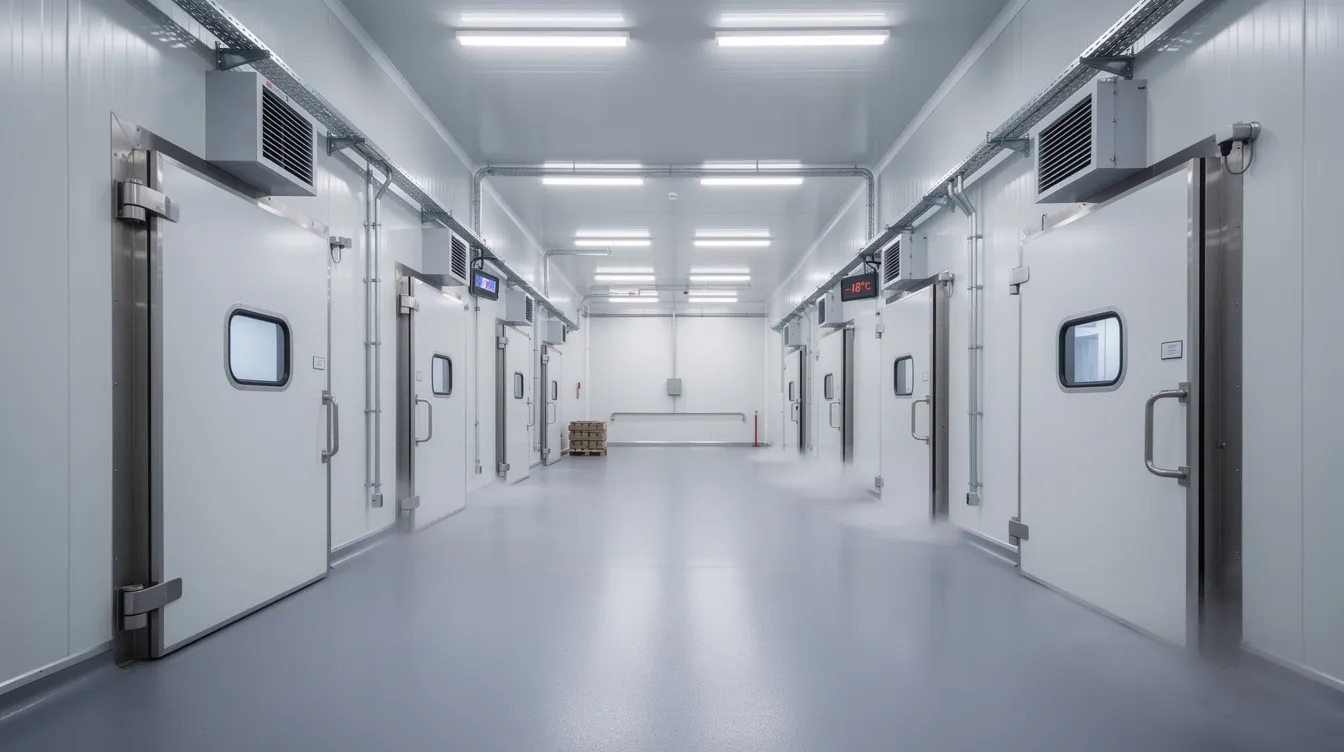
Hardening tunnels bridge the gap between process freezing (continuous freezer at about −5°C) and final product hardening at −30°C to −40°C. A government tender showed a single hardening tunnel unit cost of approximately ₹11.5 lakh including supply, installation and commissioning. Ice cream cold storage equipment cost scales with storage quantity – modular frozen rooms typically cost ₹28,000–₹45,000 per MT including panels and refrigeration.
Refrigeration, Utilities, CIP and Quality-Control Systems
High-capacity refrigeration systems are major components of ice cream plants. Central refrigeration plants include compressors, condensers, evaporators, chilled-water systems and cooling towers. The choice between ammonia and freon refrigerants affects both capital and operating cost. TR requirements are estimated based on continuous freezer load, hardening tunnels and cold-room capacity.
Key utilities include boilers for steam supply to pasteurisers, air compressors for pneumatic valves, water-treatment plants, electrical panels and diesel generator sets. These are frequently missing from basic machinery quotations but are essential for the budget.
Cleaning-in-Place systems are essential for maintaining hygiene in ice cream plants. A CIP system for an ice cream plant includes tanks, pumps, chemical dosing, spray balls and automated cleaning sequences. Central CIP systems cost more but offer better control for multi-line plants.
Quality-control equipment – metal detectors, checkweighers, and laboratory instruments for fat, SNF and microbial testing – are relatively smaller items but important from both DPR and food-safety perspectives.
Capacity-Wise Machinery Configuration and Indicative Cost Ranges
All figures below are indicative only, vary with specification and quotation date, and must be validated through current supplier quotations.
~500 LPH Plant: A basic configuration with one continuous freezer, limited SKUs (cups and family packs), modest automation and a hardening room. Core process and filling machinery may fall in the range of ₹50–80 lakh, with supporting systems adding ₹30–70 lakh. A 500 LPH DPR from APICOL listed core machinery at approximately ₹49.52 lakh before GST. 900 LPH ice cream plants are available for commercial use at varying price points.
~1,000 LPH Plant: More versatile product mix (cups, cones, tubs), 1–2 continuous freezers, higher-speed filling lines, larger hardening tunnel and bigger refrigeration. Core machinery often falls in the ₹1–1.8 crore range, with total machinery investment (including utilities and cold chain) reaching ₹2.5–3.5 crore.
~2,000 LPH Plant: Multiple ageing vats, larger HTST pasteuriser, two or more continuous freezers, at least one high-speed cup/cone line plus a tub line, hardening tunnels and sizeable cold storage. Core processing may cost ₹3–4 crore, with total machinery investment reaching ₹5–6 crore or more.
5,000 LPH and above: Multi-shift operation, multiple filling lines, automated cartoning, extensive ammonia-based refrigeration. Fully automatic ice cream plant machinery cost in India at this scale typically runs into several crores. A large-scale project reference showed machinery at approximately ₹5.35 crore excluding cold chain and utilities.
Indicative Equipment-Wise Cost Guidance
The following ranges are approximate, based on recent Indian market data for locally manufactured equipment. Imported or highly automated versions will be at the higher end or above these ranges.
| Equipment | Indicative Range | Basis |
|---|---|---|
| Continuous freezer (200–600 LPH) | ₹3.5–12 lakh | Standalone unit |
| Pasteuriser (100–500 LPH batch) | ₹1.2–2 lakh | Standalone unit |
| Industrial homogeniser (200 LPH) | ₹2–2.5 lakh | Standalone unit |
| Ageing vat (600 L) | ₹2.5–3.5 lakh | Standalone with agitator |
| Fruit/inclusion feeder | ₹2.5–3 lakh | Standalone |
| Hardening tunnel | ₹10–15 lakh | Installed unit |
| Cold storage per MT | ₹28,000–45,000 | Including panels & refrigeration |
| 700 LPH ice cream plant | ₹6,50,000 | Basic configuration |
| 900 LPH ice cream plant | ₹7,50,000 | Basic configuration |
| 200 Ltr/hr fully automatic plant | ₹9,80,000 | Compact automatic line |
| Mini ice cream plant | ₹17,00,000 | Small-scale integrated |
| Automatic ice cream making plant | ₹20,50,000 | Mid-range automatic |
Promoters should not simply add standalone equipment prices to assume a turnkey automatic ice cream plant project cost. Integration, utilities, installation and warranties materially affect final quotations. All ranges must be validated with current supplier quotations before finalising any DPR or bank proposal.
Automatic vs Semi-Automatic Machinery: Cost and Performance Comparison
The level of automation affects both initial and operational costs. Here is a practical comparison:
| Aspect | Semi-Automatic | Fully Automatic |
|---|---|---|
| Initial investment | Lower | Higher |
| Labour per shift | Higher | Lower |
| Production consistency | Variable | Excellent |
| Filling accuracy | Moderate | High |
| Product losses | Higher | Lower |
| Data recording | Manual | Automatic |
| CIP cleaning | Partly manual | Fully automated |
| Expansion potential | Limited | Suitable for scaling |
Higher automation is financially justified at capacities above 1,000 LPH, multi-shift operations, wide SKU range and where strict quality certifications are required. From a DPR and DSCR perspective, higher capital cost should be evaluated against savings in labour, reduced product loss and improved capacity utilisation over the project life.
Indian vs Imported Industrial Ice Cream Plant Machinery
Indian manufacturers today offer robust industrial ice cream plant machinery across most capacity ranges at lower initial price, with easier spare-parts availability and service support. Many customers in India find local technology suitable for standard cups, cones and tub formats.
Imported machinery may offer advanced extrusion and novelty technologies, higher energy efficiency and superior automation, but involves higher purchase price, freight, customs duty, GST, foreign-exchange exposure and sometimes longer lead times. Spare parts availability is crucial for minimising operational downtime – an important consideration when evaluating imported equipment with limited local service networks.
For large corporate or export-oriented plants, a balanced strategy of Indian core equipment with selected imported specialty machines (premium extrusion lines, high-speed novelty equipment) is often the most practical approach, to be evaluated case-by-case during DPR preparation.
Major Factors Affecting Ice Cream Plant Equipment Cost in India
Key factors that change both machinery selection and overall ice cream production line cost:
- Production capacity and number of shifts
- Batch vs continuous pasteurisation
- Product range, number of SKUs and packaging formats (cups, cones, tubs, sticks, bars, bulk packs)
- Filling speed requirements
- Automation level – PLC, SCADA, recipe management, remote monitoring
- Material of construction – stainless steel SS304 vs SS316 and sanitary design standards
- Energy-efficiency features – heat recovery, variable-frequency drives
- Refrigeration system design – ammonia vs freon, air-cooled vs water-cooled
- Indian or imported origin
- Future expansion provisions in plant layout and utilities
- Site-specific factors – power quality, water availability, ambient temperature and location
Product Mix and Its Impact on Machinery Investment
A plant making only basic cups and small tubs needs simpler filling and sealing machines. Adding cones requires cone-handling and chocolate-lining equipment. Adding sticks and bars needs moulding or extrusion lines and stick inserters. Premium products with nuts, fruit inclusions and chocolate coating demand ripple pumps, feeders, dipping tanks, sandwich formers and more complex hardening tunnels.
Turnkey ice cream plant cost for a multi-product novelty facility cannot be compared with a single-SKU cup plant even at similar LPH capacity, due to a higher equipment count and refrigeration load. Promoters should finalise an initial focused product mix for the first 3–5 years and keep provisions for future expansion into more categories.
Costs Commonly Excluded from Machinery Quotations
Promoters should watch for these items typically missing from supplier quotations:
- GST, import duty, freight and transit insurance
- Civil foundations, drainage and plinths
- Cold-room insulated panels, doors and flooring
- Utility piping – steam, water, compressed air lines
- Electrical cabling, panels and cable trays
- Refrigerant charge
- Erection, commissioning and trial-production materials
- Operator training and documentation
- Initial spare-parts kit and specialised tools
- Annual maintenance contracts and contingency margin
The installation and commissioning process can add 5% to 10% to equipment costs. Promoters should compare quotations on a like-for-like scope to avoid budgeting surprises.
Machinery Cost vs Total Industrial Ice Cream Plant Setup Cost
Core machinery cost covers processing equipment, filling and packaging lines, refrigeration, cold rooms, utilities and installation. Total industrial ice cream plant setup cost in India must also include land, building, civil construction, pre-operative expenses, interest during construction, contingency and margin money for working capital.
In a typical industrial project, machinery (including refrigeration and utilities) may account for around half to two-thirds of total project cost, with the balance in civil works, pre-operative expenses and working capital margin. Bank term-loan proposals and DPRs must be based on total project cost and means of finance, not only on ice cream processing plant machinery cost.
Plant Layout, Line Balancing and Installation Planning
Machinery selection must be integrated with plant layout and hygiene zoning. Hygienic layout principles include separate raw-material and finished-goods areas, unidirectional product flow, cleanable surfaces and controlled access. The physical arrangement of pasteurisation, ageing, continuous freezers, filling lines, hardening tunnels and cold rooms must coordinate with utility routes and maintenance access.
Poor layout or unbalanced capacities lead to idle equipment, bottlenecks, higher material-handling costs and lower achievable capacity utilisation. Promoters should obtain a layout and line-balancing proposal from suppliers and have it reviewed during DPR preparation.
Financial Evaluation of Machinery Choices – DPR Perspective
From my professional experience in preparing DPRs and financial projections, machinery choices directly influence capital expenditure, depreciation, interest cost and the fixed-cost burden – all of which determine break-even point and profitability.
Total cost of ownership should include purchase, utilities, labour and maintenance. Electricity costs often surpass maintenance costs for an automatic plant, and routine maintenance costs average 2% to 3% of machinery value annually. Energy consumption significantly impacts long-term operating costs, making energy-efficient equipment worth the higher upfront price.
Realistic capacity utilisation assumptions – typically 40–50% in year 1 ramping to 70–80% in steady state – should be aligned with market demand, seasonality and distribution reach. At www.projectreportbank.com, project reports and DPRs are prepared with these technical-financial linkages in mind, based on supplier quotations and promoter-provided data.
Machinery Selection Mistakes to Avoid
- Choosing plant capacity without a formal market assessment
- Ignoring packaging-line speed while sizing pasteuriser and continuous freezers
- Under-estimating refrigeration and hardening requirements for peak summer
- Omitting CIP, lab equipment or utilities during budgeting
- Comparing quotations with different scopes (with vs without installation, utilities, automation)
- Assuming maximum rated capacity can run continuously – actual throughput is lower due to cleaning, changeovers and downtime
- Selecting equipment only on lowest price without evaluating warranty, after-sales support, spare parts availability, energy efficiency and long-term operating cost
- Failing to reconcile technical offers with DPR assumptions on power consumption, manpower and capacity utilisation
Related Dairy-Processing Investments and Synergies
Many promoters consider ice cream as an extension of existing dairy operations. Those evaluating parallel investments may find an integrated dairy processing plant project report useful for optimising milk utilisation. Related resources include milk powder plant machinery and equipment cost, cheese plant machinery and equipment cost and UHT milk plant machinery and equipment cost. For larger integrated projects, whey processing plant machinery and equipment cost may also be relevant.
While synergies in utilities and refrigeration can reduce per-unit capital cost, each product line requires dedicated machinery and separate financial feasibility evaluation.
Machinery Quotation Comparison Checklist for Promoters
When requesting quotations, promoters should ask suppliers for:
- Rated and practical output (LPH) per product format
- Connected electrical load (kW), steam (kg/hr), water (litres/hr) and compressed-air requirements
- Refrigeration load in TR with assumed inlet/outlet temperatures
- Material of construction, surface finish and insulation specifications
- Automation details – PLC brand, HMI, SCADA capability, CIP compatibility
- Brands of bought-out components (pumps, valves, compressors, drives)
- Complete scope of supply with explicit inclusions and exclusions
- Installation, commissioning, performance guarantee and warranty terms
- Training, spare-parts package, after-sales support and delivery schedule
- Payment terms, quote product price validity and escalation clauses
Always compare life-cycle cost, energy consumption and service support – not just the initial price minimum order quantity or headline quote.
Frequently Asked Questions (FAQ)
What is a realistic timeline from ordering machinery to starting production?
Typical steps include finalising specifications (1–2 months), manufacturing lead time (4–8 months for large lines, longer for imported equipment), shipping and customs clearance (1–2 months if imported), installation and commissioning (1–3 months) and trial runs. Promoters should plan for 10–16 months overall and align finance drawdown accordingly.
Can bank term loans cover 100% of ice cream plant machinery cost?
Banks in India generally fund 60–75% of total project cost as a term loan. Promoters are expected to bring the balance as margin money or equity. Loan sanction depends on total project cost, DSCR and the bankability of the DPR – not only on machinery value. Engaging professional support for DPR, financial projections and CMA Data preparation through www.projectreportbank.com can help present a more bankable proposal.
How often should machinery cost estimates be updated in the DPR?
Machinery quotations should ideally be refreshed if more than 3–6 months old. DPRs should state the quotation date and include a reasonable contingency (typically 5–10%) for cost escalation. In an environment of rising stainless steel and imported component costs, outdated quotations can lead to significant budget shortfalls.
Is it possible to start with fewer filling formats and add more later?
Many successful projects begin with a focused product mix – for example, cups and family packs – and later add cones, sticks or novelties. The key is to design plant layout and utilities with future expansion in mind so additional filling or extrusion lines can be integrated at lower incremental cost.
Can an existing dairy plant share utilities and refrigeration with a new ice cream line?
Subject to spare capacity and technical compatibility, it is often feasible to share boilers, compressors, water-treatment plants and sometimes cold rooms, which may lower incremental investment. However, careful engineering review is required to avoid overloading existing systems. This connection between existing infrastructure and new ice cream capacity should be evaluated during the DPR phase.
Disclaimer: All machinery costs and financial estimates in this article are indicative only. Actual prices depend on production capacity, specifications, automation level, packaging formats, country of origin, location and quotation date. Promoters should validate all figures through current supplier quotations and a project-specific feasibility assessment before making investment decisions. CA Manish Gugliya and www.projectreportbank.com do not manufacture, supply or endorse any machinery brand. No guaranteed loan sanction, subsidy approval or profitability is implied.