
An oilseed meal processing plant project report is the foundational document that converts a promoter’s business concept into a structured, bankable investment proposal. For entrepreneurs evaluating oilseed meal manufacturing in 2026, this article covers what such a report should contain-and why getting it right matters before committing capital.
Key Takeaways
- An oilseed meal processing plant project report is a professional, data-backed document used for internal investment decisions, bank term loans and investor discussions. It should cover industry trends, plant setup, machinery and technology requirements, raw materials, capital expenditure, operating expenses and revenue projections for at least FY 2026–27.
- Oilseed meal-from soybean, mustard, sunflower, groundnut, rapeseed and cottonseed-is a core input for animal feed, food ingredients and industrial products. Market demand for oilseed meal comes from poultry, cattle, and aquaculture feed industries, creating diversified and relatively stable demand. Oilseed meal is primarily used in livestock and poultry feed, though food-grade and industrial applications are expanding.
- India’s installed oilseed crushing capacity stands at roughly 50 MMT, while actual crushing in MY 2026/27 is projected at about 34 MMT, meaning significant under-utilisation exists. A complete roadmap for any new project must account for this competitive landscape and price trends before assuming comfortable margins.
- Successful oilseed processing relies on technical feasibility and financial viability analysis. A credible manufacturing plant project report should present conservative financial projections, sensitivity analysis and DSCR calculations-not just attractive numbers.
- Project Report Bank, led by CA Manish Gugliya (FCA, DISA, ICAI), prepares customised bankable DPRs and CMA Data for oilseed meal and related oil processing plant projects across India. The focus is on defensible assumptions, not generic templates.
Industry Trends, Plant Setup, Machinery, Raw Materials, Investment Opportunities, Cost and Revenue
Oilseed meal processing occupies a critical position in India’s edible oil and protein economy, directly linked to the livestock, aquaculture and food processing sectors. The industry is shaped by growing global demand for standardised high-protein feed ingredients, tightening quality specifications for export-grade meal, and increasing integration between oil extraction, meal upgradation and by-product recovery.
Key 2026 industry trends that plant setup decisions must consider include the shift towards higher protein specifications in feed, export-quality meal with strict residual oil and moisture limits, sustainability and environmental compliance requirements, and integration with oil extraction and refining plants for improved operational efficiency.
A comprehensive oilseed meal processing plant project report should map:
- Industry trends and demand outlook (domestic and export)
- Recommended plant setup and layout
- Machinery selection for different oilseeds
- Raw material sourcing and logistics
- Capital expenditure and operating expenses
- Cost, revenue and ROI projections
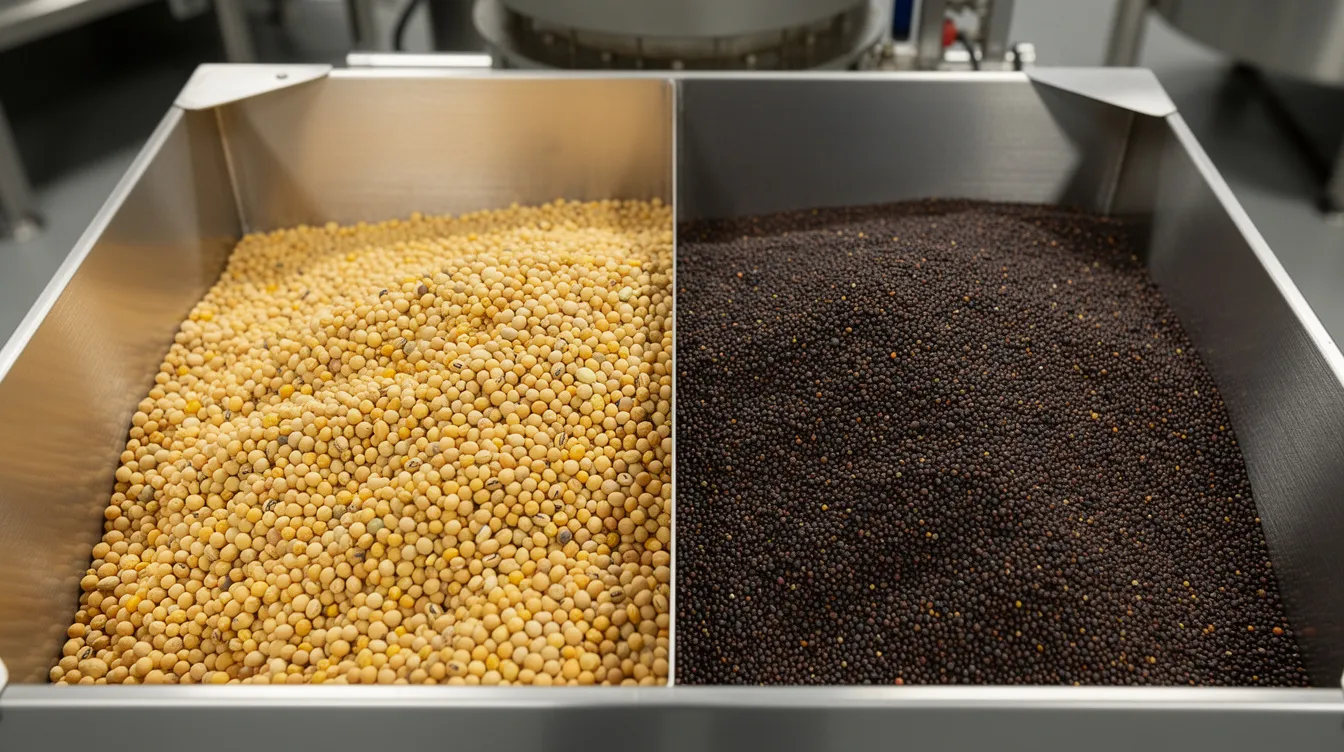
Typical raw materials include soybean, mustard and rapeseed, sunflower, groundnut, cottonseed and rice bran. Their regional availability directly drives site selection and procurement economics. The sections below break each aspect into focused subsections for entrepreneurs and industrial investors.
Oilseed Meal Processing Plant Project Report – Scope and Purpose
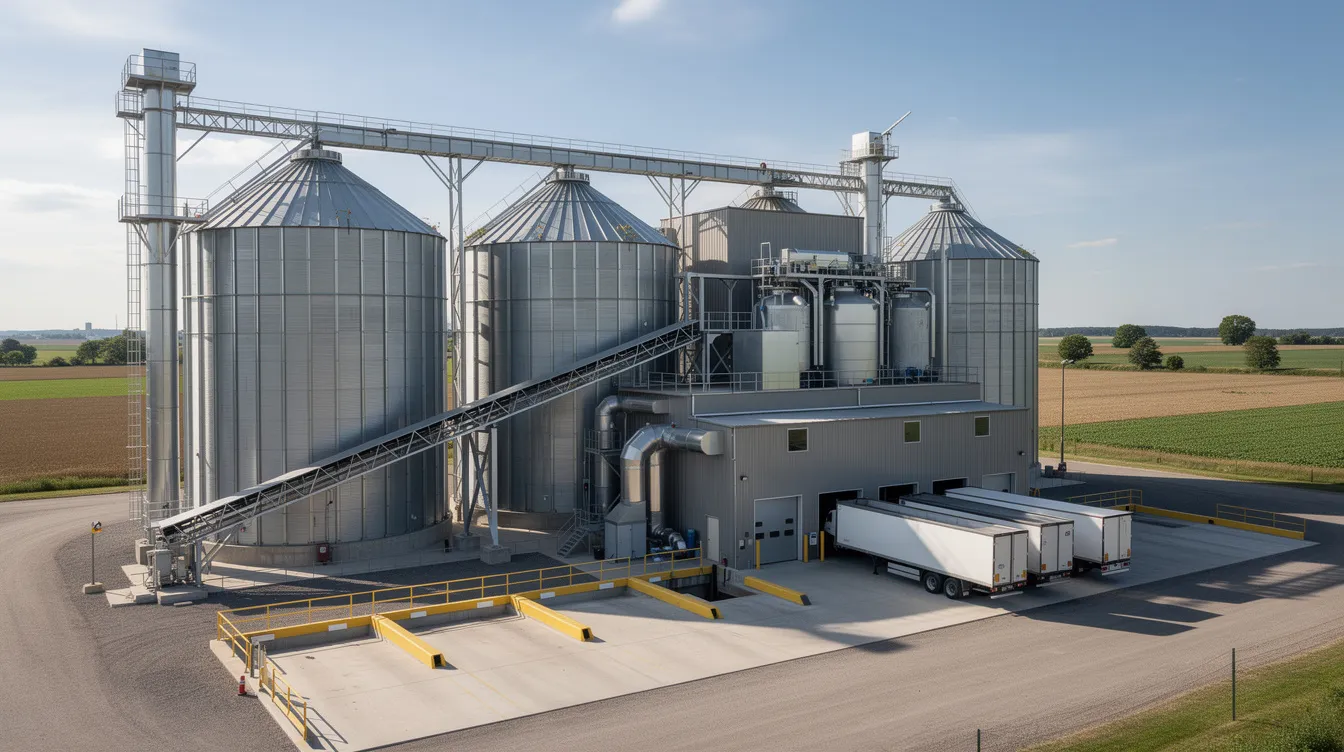
An oilseed meal processing plant project report is not a generic template-it is a professional, data-backed document used for internal investment decisions, bank loans, term finance and equity pitches. A structured report can help businesses secure funding from investors and banks by presenting a coherent financial and technical story.
DPRs provide comprehensive project feasibility analysis. Specifically, the report should include:
- Technical description of the oil extraction and meal manufacturing process
- Plant capacity in TPD and MTPA, with utilisation assumptions
- Detailed machinery, utilities and manpower requirements
- Capital cost, operating expenses and working capital assessment
- Projected profit and loss, cash flows, DSCR, break-even, ROI and IRR
DPRs include detailed capital and operational cost assessments, outline raw material requirements and supply chain logistics, and assess regulatory compliance and quality standards. They also help identify effective strategies to reduce manufacturing costs through process optimisation and scale selection.
For projects above ₹10–15 crore, banks and investors demand this level of structured documentation. Project Report Bank focuses on customised DPRs where assumptions match the promoter’s specific land, raw material zone, technology route and target market.
What Is an Oilseed Meal Processing Plant?
An oilseed meal processing plant converts oil-bearing seeds into two primary commercial outputs: extracted oil and high-protein oilseed meal (or de-oiled cake). In essence, oilseed processing involves extracting oil and producing high-protein meal used across feed, food and industrial applications.
The plant typically comprises two core blocks:
- Oil extraction – either through a mechanical expeller or a solvent extraction oil processing plant, or a hybrid of both.
- Meal processing – drying, cooling, grinding, grading, and sometimes pelletising or protein enrichment to meet specific buyer specifications.
Some plants focus on bulk animal-feed-grade meal, while others add process steps for food-grade or export-quality meal with strict protein, fibre and residual oil specifications. The economic objective is straightforward: maximise oil yield and oil recovery rates, produce consistent product quality in the meal, minimise losses, and meet safety and regulatory standards.
Oilseed Meal Market Overview and 2026 Industry Trends
Market assessment is necessary to ensure demand for oilseed meals and pricing trends justify the proposed investment. India’s oilseed meal production is projected at approximately 20.1 MMT for MY 2026/27, marginally below the previous year. Composition is shifting-less soybean meal due to declining crushing, more rapeseed and peanut meal.
Demand drivers include:
- Rising poultry, dairy, aquaculture and pet feed consumption domestically
- Growing interest in plant protein for the food industry, functional foods and clean-label ingredients
- Increased blending of oilseed meals in compound feed formulations
The global soy protein market was valued at USD 10.69 billion in 2025, and the soy protein market is expected to reach USD 19.54 billion by 2034. The soy protein industry reflects broader trends towards higher-value downstream processing. For comparison, whey protein concentrate and whey protein production require different raw material streams, and whey manufacturing plant costs include significant capital investment for high-throughput facilities, driven by raw material and energy consumption. Production capacity for soy protein plants ranges from 10,000 to 50,000 metric tons annually, depending on the product mix.
Risk assessment should address raw material price fluctuations and seasonal availability. Export competitiveness is under pressure-Indian soybean meal FOB pricing has been higher than CIF Rotterdam equivalents, and oilmeal exports fell approximately 13% in Q1 FY 2026-27. A serious plant project report 2026 should analyse how these price trends and the competitive landscape affect product mix, technology choice and risk profile, rather than simply presenting a comprehensive market overview of aggregate market size.
Types of Oilseeds and Oilseed Meals Processed
The oil processing plant design and machinery selection depend heavily on the oilseed type and intended meal product. Major Indian oilseeds and related meals include:
| Oilseed | Approx. Oil Content | Meal Protein (Typical) | Primary Feed Use |
|---|---|---|---|
| Soybean | 18–22% | 43–48% | Poultry, aquaculture |
| Mustard/Rapeseed | 38–44% | 33–38% | Cattle, poultry |
| Sunflower | 38–45% | 28–36% | Ruminant, poultry |
| Groundnut | 40–50% | 45–50% | Cattle, poultry |
| Cottonseed | 18–25% | 38–42% | Ruminant feed |
| Rice Bran | 15–22% | 12–15% | Mixed feed |
Soybean meal remains the benchmark for essential amino acids and branched chain amino acids in poultry and aquaculture feed. Mustard meal is growing in share.
Manufacturing Process for Oilseed Meal – From Seed to Meal
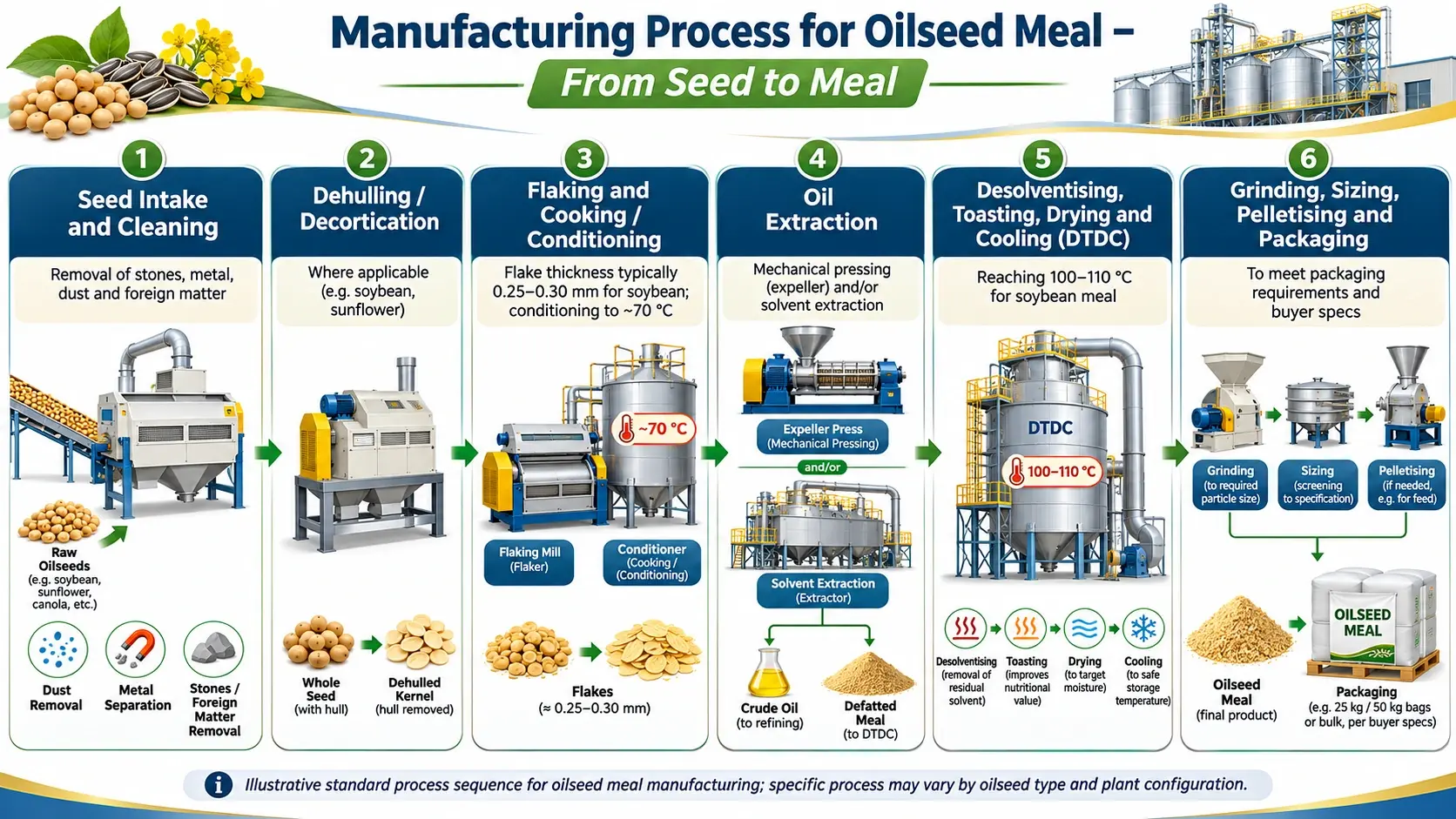
The unit operations involved in converting raw oilseed to finished meal follow a broadly standard sequence:
- Seed intake and cleaning – removal of stones, metal, dust and foreign matter
- Dehulling or decortication – where applicable (e.g. soybean, sunflower)
- Flaking and cooking/conditioning – flake thickness typically 0.25–0.30 mm for soybean; conditioning to ~70 °C
- Oil extraction – mechanical pressing (expeller) and/or solvent extraction
- Desolventising, toasting, drying and cooling (DTDC) – reaching 100–110 °C for soybean meal
- Grinding, sizing, pelletising and packaging – to meet packaging requirements and buyer specs
Process technology can include mechanical and solvent extraction methods. Mechanical extraction-only plants suit smaller capacities or high-oil seeds where full oil recovery is less critical. Integrated solvent extraction plants are designed for larger plant capacity and higher oil recovery. High-oil seeds like mustard and groundnut often use a hybrid route: mechanical pre-pressing followed by solvent extraction.
The project report’s manufacturing process section should specify the process route chosen, expected oil and meal recoveries, key quality parameters (residual oil ≤ 0.8–1.0%, moisture ≤ 10–12.5%), and utility requirements at each stage. Compliance aspects such as safe solvent handling, emissions control and effluent treatment are scrutinised by both banks and regulators.
Oilseed Meal Plant Capacity, Scale and Layout Planning
Typical capacity ranges for Indian oilseed meal plants:
- Small: 50–100 TPD (often expeller-only or niche market focus)
- Medium: 150–300 TPD (solvent extraction or hybrid units)
- Large: 500+ TPD (integrated extraction, refining and downstream processing)
Capacity selection depends on local raw material availability and procurement radius, proximity to oilseed-growing belts and mandis, and confirmed off-take contracts with feed millers, integrators and exporters. Proximity to agricultural hubs minimizes transportation costs for raw materials and distribution costs.
Capacity utilization rates influence financial projections and profitability. A new plant cannot typically operate at full capacity immediately. The project report should convert TPD into annual MTPA considering realistic operating days (280–330 days per year) and phased capacity utilisation ramp-up over the first 3–5 years.
Plant layout considerations:
- Linear material flow from seed intake to meal dispatch and oil storage
- Segregation of solvent extraction and boiler areas for safety
- Tank farms should be located 20–30 meters from main buildings for safety
- Provision for future expansion where feasible
- An efficient plant layout reduces material transport by up to 15%
- A well-designed plant layout enhances operator safety and workflow efficiency
A 50–100 TPD solvent extraction plant typically requires 1–2 acres; a 500 TPD plant may need 3–5 acres or more, including site preparation, utilities, hexane storage and administrative areas.
Major Machinery Used in an Oilseed Meal Processing Plant
Machinery selection should match the target processing capacity in Tons Per Day and the chosen extraction method. The core machinery and technology requirements include:
Mechanical preparation equipment:
- Seed cleaners, grading machines and de-stoners
- Cracklers, hullers/dehullers and hull separators
- Flakers, conditioners and cookers
Extraction and meal processing equipment:
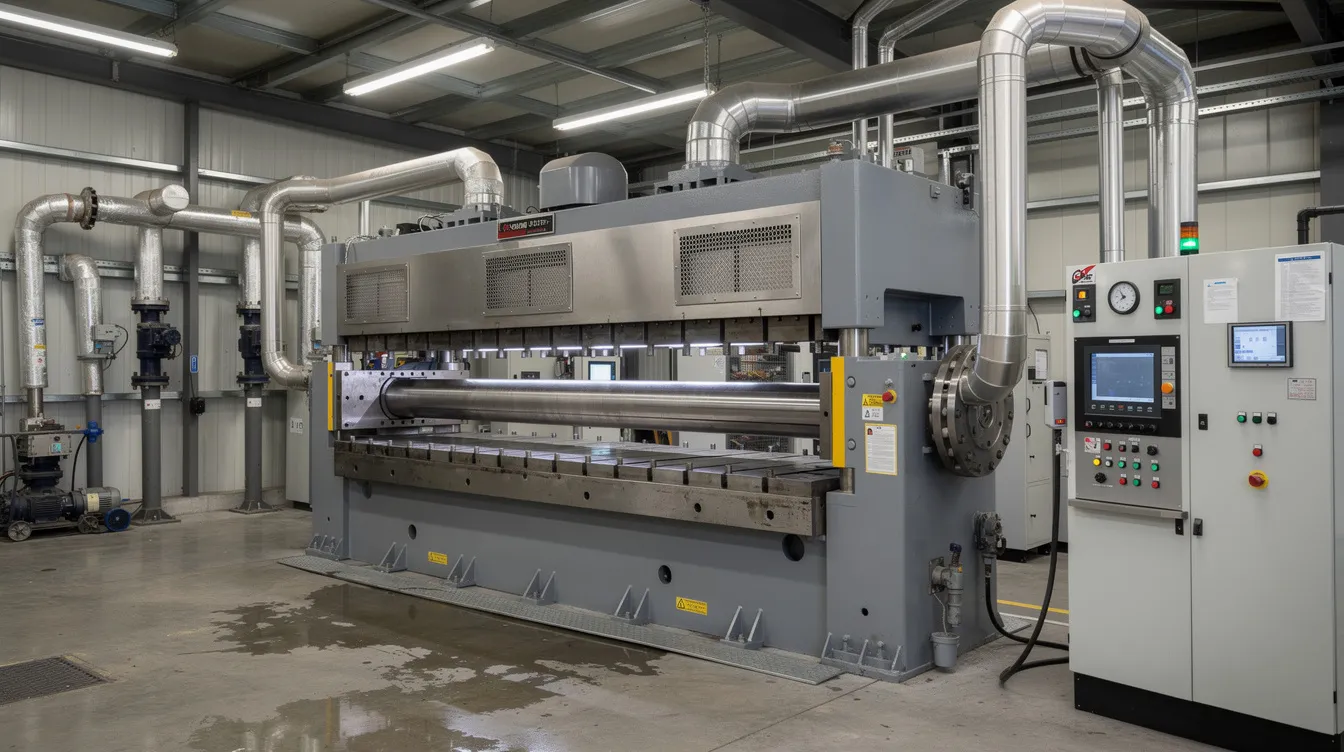
- Screw presses/expellers – high-capacity screw presses deliver 10–20 tons/hour throughput
- Solvent extractors (rotary or loop type) – solvent extractors achieve up to 98.5% extraction efficiency
- Desolventiser-toaster-drier-cooler (DTDC) units
- Meal dryers, coolers, hammer mills and pellet mills
- Evaporators, steam strippers, condensers and hexane recovery systems
Auxiliary and control systems:
- Material handling (conveyors, elevators), storage silos, bagging machines
- Quality control lab instruments for protein, moisture and residual oil testing
- Modern factories use PLC systems for centralized control of operations
- Explosion-proof equipment and LEL monitors for solvent extraction areas
Edible oil plants use seed cleaners, expellers, and filter presses as standard equipment. For a detailed guide on edible oil refinery machinery and technology selection, including EPC considerations, refer to our specialised article.
A professional manufacturing plant project report will tabulate machinery specifications, indicative costs, power ratings and vendor options. Final quotations must come from OEMs; the DPR should state this clearly.
Raw Materials, Utilities and Operating Expenses (OpEx)
Raw material costs generally form 70–80% of total operating expenses for an oil processing plant and thus dominate the cost structure. Operating expenses for soy protein plants are driven by soybean meal costs, accounting for 75–85% of OpEx. Raw material quality significantly influences the profitability of oilseed meal production-variations in moisture, oil content and foreign matter directly affect yield and finished oil quality.
Key OpEx components:
| Cost Head | Approx. Share of OpEx |
|---|---|
| Raw material (oilseed procurement) | 70–80% |
| Utilities (steam, power, water, hexane) | 8–12% |
| Labour and human resource requirements | 3–5% |
| Maintenance and spares | 2–3% |
| Packing, logistics, transportation requirements | 3–5% |
| Quality control and laboratory | 1–2% |
Power consumption for a soybean solvent extraction plant typically runs at 15–25 kWh per tonne of seed. Steam requirements are at 3.0–3.5 bar for DTDC sections. Hexane recovery efficiency should target ≥ 99.5%, with losses below 1.5 litres per tonne.
The project report should build raw material cost assumptions based on historic mandi prices and local patterns, consider seasonal stocking to average out variable costs and price volatility, and estimate utility requirements per tonne of seed processed. Expenditure projections should account for inflation, energy efficiency improvements and wage escalation through FY 2026–27.
Working capital is crucial for managing inventory and operational expenses, particularly given the seasonal nature of oilseed procurement.
Capital Expenditure (CapEx) and Project Cost Structure
Capital expenditure in an oilseed meal processing plant covers land, civil works, machinery, utilities and several pre-operative items. Feasibility studies assess capital expenditure (CapEx) and operating expenses (OpEx) together to determine viability.
Indicative project cost breakdown:
| Cost Head | Approx. % of Total Cost |
|---|---|
| Plant and machinery (including installation) | 40–50% |
| Civil and structural works | 20–30% |
| Electrical and instrumentation | 10–15% |
| Boiler, utilities, water systems | 8–12% |
| Hexane storage and safety infrastructure | 5–8% |
| Pre-operative expenses, IDC, contingency | 5–8% |
| Margin money for working capital | As assessed |
For mid-scale plants (100–500 TPD), total project cost typically ranges from ₹10 crore to ₹70 crore depending on capacity, automation level and seed type. Machinery-only costs for a 100 TPD solvent extraction plant are approximately ₹4–6.5 crore, while the total cost including civil works and utilities may reach ₹10–17 crore.
Inflation raises costs for specialty processing equipment and financing plant construction. Government subsidies can support agro-processing investments through grants and tax incentives in eligible categories. Lenders expect clear justification for every cost head, supported by vendor quotations and civil cost estimates. Capital investment planning must also factor in interest during construction and infrastructure requirements for roads, drainage and fire protection.
Revenue Streams, Pricing and Profitability Drivers
An oilseed meal processing plant earns revenue from at least two primary streams: sale of crude oil (or finished oil after refining) and sale of protein-rich meal or de-oiled cake. Additional by-product revenue may come from hulls, fines, lecithin, acid oil, soapstock and fatty acid distillates where integrated with refining.
Profitability analysis should account for production costs and expected sales revenues. Key profitability drivers include:
- Oil and meal recovery rates and quality – reducing residual oil from 12–16% in pre-press cake to below 1% in extracted meal dramatically improves revenue per tonne
- Crushing margins – the spread between seed cost and combined oil plus meal realisation
- Capacity utilisation and plant uptime – operating days of 280–330 per year
- Energy efficiency and solvent usage – directly affecting per-unit costs
- Operational excellence in maintaining consistent product quality
Gross profit margins for soy protein plants typically range between 30–40%, though these are sensitive to commodity cycles. For sports nutrition, weight management and functional foods applications, higher-specification protein ingredients command premium pricing.
Financial projections should include sales volume and pricing scenarios, sensitivity of profits to seed price spikes and meal price drops, and EBITDA margins under conservative, base and optimistic cases.
Project Economics: Cost Analysis, ROI and Feasibility Insights
Financial viability includes break-even analysis, ROI, and DSCR assessments. Financial projections assess capital investment, operating costs, and expected ROI across the project’s economic life. Feasibility studies include market analysis and operational requirements alongside financial modelling.
A credible manufacturing plant project report should present:
- Detailed capital cost and annual operating expenses (fixed costs and variable costs separated)
- Projected profit and loss statements for 7–10 years
- Cash flow projections demonstrating debt repayment ability
- Projected balance sheet and debt-equity structure
- Break-even capacity utilisation analysis
- Payback period, IRR and NPV
- DSCR across the full loan tenure
All projections must rest on conservative, transparent assumptions. Sensitivity analysis for changes in raw material prices, selling prices, exchange rates (for exports) and interest rates is essential for long term sustainability of the project’s financial model.
How to Set Up an Oilseed Meal Processing Plant – Practical Steps
A logical implementation sequence for a processing plant project:
- Initial concept, market study and pre-feasibility
- Preparation of detailed project report (DPR) and financial model
- Term-sheet discussions with banks and investors
- Land finalisation, site preparation and regulatory approvals
- Ordering machinery and starting civil works
- Installation, commissioning and trial production
Early engagement is important with process-technology suppliers, civil and structural engineers, pollution control and factory-licence consultants, and financial advisors such as Project Report Bank for DPR and CMA Data.
Coordinated planning prevents common mistakes: under-sized utilities, mismatched machinery requirements, and inadequate working capital provisioning. Implementation timelines typically run 9–12 months for medium-sized projects, though this varies with machinery supplier lead times and permit clearances.
Regulatory, Quality and Environmental Compliance
Statutory approvals include factory licenses and pollution control clearances. The principal licences and registrations for an oilseed meal and oil processing plant in India include:
- Incorporation and GST registration
- Factory licence under state rules
- FSSAI licence for food-grade oil and meal
- Pollution control consents (Consent to Establish and Consent to Operate)
- PESO approvals for solvent (hexane) storage and handling
- Fire NOC and building plan approvals
Quality standards and testing:
- Routine checks for protein, fibre, moisture, residual oil in meal
- Peroxide value, free fatty acids and essential fatty acids content in crude oil
- Adherence to buyer specifications for export consignments
Environmental compliance includes treatment of wastewater and air emissions. Specific requirements include efficient hexane recovery and VOC control, dust control in meal handling and bagging, and proper management of effluent and boiler blowdown. The project report should summarise compliance costs and timelines, as these affect project scheduling and financing conditions. Regulatory compliance timelines may add 3–6 months to the implementation schedule.
Materials Investment Opportunities and Integration with Other Oilseed Projects
Oilseed meal plants can integrate with edible oil refineries, poultry and cattle feed manufacturing plants, and biodiesel production units. Raw materials investment opportunities and materials investment opportunities cost considerations include:
- Co-locating with large solvent extraction units to reduce logistics and operational expenditure
- Sharing boilers, utilities and laboratories with adjoining plants
- Recovering additional value from husks, fines, soapstock, acid oil and lecithin
The project report can model standalone versus integrated project configurations, comparing CapEx, OpEx and expected returns for each route. Integration benefits include shared infrastructure requirements, reduced manpower requirements, and improved energy efficiency across the complex.
Role of a Chartered Accountant-Led DPR in Bank Finance and CMA Data
Project Report Bank is a CA-led advisory specialising in DPR preparation, financial modelling, CMA Data and project finance support for manufacturing plant projects. CMA data preparation is critical for bank loan applications, covering working capital assessment, drawing power, margin money and stock valuation.
A professionally prepared DPR translates engineering details into bankable financials, structures project cost and means of finance (term loan, equity, internal accruals, subsidies where applicable), and prepares CMA Data for working capital limits and cash-credit assessment. DSCR analysis, stress testing and realistic capacity ramp-up are particularly important for oilseed projects exposed to commodity-price cycles.
A sound DPR and CMA Data package improves clarity for lenders, but it does not guarantee loan sanctions. Outcomes depend on promoter profile, collateral and bank policies.
Report Customisation and Advisory Support from Project Report Bank
Project Report Bank offers customised oilseed meal manufacturing plant project reports tailored to the promoter’s chosen oilseed mix and capacity, location-specific raw material and market conditions, technology route (expeller versus solvent extraction or hybrid), and domestic versus export-focused product strategy.
Deliverables include detailed financial projections in Excel, scenario and sensitivity analysis, project implementation schedules, and bank-ready DPR and CMA Data packs. Serious promoters evaluating an oilseed meal or oil processing plant project may contact Project Report Bank via WhatsApp to discuss their specific requirements with CA Manish Gugliya, who brings more than 20 years of professional experience in project reports, financial projections and business advisory.
Frequently Asked Questions
The following questions address practical issues frequently raised by promoters planning oilseed meal processing investments in India.
What minimum capacity is generally viable for an oilseed meal processing plant in India?
Economic viability depends on raw material catchment, market access and technology choice. Many solvent extraction plants tend to be viable in the 150–300 TPD and above range because of the fixed costs associated with solvent handling, safety infrastructure and utilities. Smaller expeller-based units can operate at 50–100 TPD if linked to niche or local markets with secure offtake.
The project report should test multiple capacity options with separate financial models rather than assuming one fixed size. This allows promoters and lenders to evaluate the trade-off between scale economies and raw material availability.
How long does it typically take to implement an oilseed meal processing plant project?
A broad timeline for medium-sized projects runs 9–12 months. This includes 2–3 months for detailed planning, DPR preparation and finance tie-up; 4–6 months for civil works and machinery delivery; and 1–2 months for installation, commissioning and trial production.
Lead times vary significantly by machinery supplier, permit clearances and weather conditions. The DPR’s implementation schedule should reflect these variables realistically.
How sensitive is profitability to changes in oilseed prices and meal/oil realisation?
Crushing margins are highly sensitive to commodity prices. Because raw material costs represent 70–80% of total operating expenses, even a 10–15% variation in seed cost can shift EBITDA margins substantially. Similarly, meal and oil price drops-whether from domestic oversupply or export competition-directly affect revenues.
A robust manufacturing plant project report includes sensitivity tables showing profit and DSCR impact under adverse and favourable price movements, helping promoters and lenders understand risk before committing capital.
What information does a promoter need to share to start a detailed project report?
Practical data requirements include preferred location and land status, targeted oilseeds and capacities, intended markets (feed, food, export), preliminary machinery quotations if available, promoter equity and collateral details, and existing bank relationships. Early clarity on these aspects enables Project Report Bank to build grounded technical and financial assumptions.
Can an existing edible oil unit add a meal upgradation or pelletising line later?
Many plants start with basic oil extraction and coarse meal, then later add dryers, coolers, grinders and pellet mills to improve product quality and obtain better realisations per tonne. The DPR can be structured in phases, with CapEx and finance planning for the current scope and an outline for future expansion add-ons once cash flows stabilise. This phased approach reduces initial capital risk while preserving the option for value addition.