Key Takeaways
Understanding how to prepare for the first investor meeting is the difference between advancing to due diligence and becoming a wasted effort in an investor’s calendar. The first meeting is a screening conversation, not a sales pitch. Investors allocate 30–45 minutes and use that window to judge your financial preparedness, project clarity and governance maturity.
Here is what matters most:
- The first investor meeting should be tightly structured around a clear agenda, focused on alignment between the promoter’s funding requirement and the investor’s thesis-not on reading slides aloud. Investors value clarity and structure in meetings above everything else.
- Investors judge promoters heavily on preparation: clarity of project cost, means of finance, business plan, financial projections and ability to answer questions precisely, including tough questions about risks and assumptions.
- All numbers in the pitch deck, Detailed Project Report, financial model and any CMA Data must be internally consistent. Mismatches between documents immediately damage credibility with most investors.
- For Indian manufacturing and industrial projects, an investor-ready DPR, realistic working capital planning, clear fund utilisation controls and a phased capacity utilisation plan are essential preparation elements.
- Disciplined follow up with requested data and a clear plan for a second meeting is as important as the first meeting itself-compounding progress across multiple meetings is how deals actually close.
Introduction: How to Prepare for First Investor Meeting
Getting a confirmed meeting with a potential investor is a meaningful step. But it is only the beginning. The quality of what happens inside that 30–45-minute window determines whether you move to deeper questions, due diligence and eventually a term sheet-or whether investor interest quietly disappears.
This article focuses specifically on what to do after a meeting is confirmed: how to set the agenda, what materials to prepare, how to structure your investor presentation, which financial questions to anticipate, and how to follow up professionally. Securing investor meetings is a separate challenge covered in our guide on How to Get Investor Meetings in India.
The guidance here is designed for Indian business promoters pursuing equity cheques of ₹5 crore to ₹50 crore or more-typically for new manufacturing plants, industrial expansion, capacity enhancement or diversification projects. Whether you are approaching an angel investor, a family office, an HNI syndicate or a venture capital fund, the investor will evaluate your business model, market opportunity, cash flows, risk profile, valuation and exit paths.
This article reflects the professional perspective of CA Manish Gugliya, drawing on over 20 years of experience in Detailed Project Reports, project finance, financial modelling and investor-ready documentation for businesses across India.
Why Preparation for the First Investor Meeting Matters
From the investor’s perspective, a first meeting is a screening conversation. Most investors evaluate dozens of opportunities before committing capital to one. Their primary objective in the first meeting is to determine whether the business opportunity, the promoter and the financial proposition deserve further time and due diligence.
Investors are not only checking whether the idea is attractive. They are assessing whether the promoter is financially disciplined, realistic about risks and capable of implementing a ₹10–100 crore project without governance failures. Investors typically evaluate business models, market opportunities and the founder’s capabilities-often within the first ten minutes. A promoter who cannot clearly explain project cost, means of finance or revenue assumptions will struggle regardless of the project’s underlying merit.
Contrast a prepared promoter-structured agenda, clear capital plan, concise answers, investor-ready DPR-with one who talks continuously without listening, jumps between topics and presents inconsistent numbers. The first earns a next meeting. The second rarely does. Solid preparation also demonstrates respect for investor time and signals the kind of long-term governance quality that institutional and family-office investors in India specifically look for.
What Should You Prepare Before Meeting an Investor?
Before stepping into a first meeting, promoters must systematically prepare across several information areas. Preparing for investor meetings involves thorough research on the investor’s background-and equally rigorous preparation of your own business story and numbers.
Here is a practical checklist:
- Investor research: Understand the fund’s size, typical cheque size, sector and stage focus, investment thesis, typical holding period and existing portfolio companies. Understanding the investor’s preferred business stage and investment thesis aids significantly in meeting preparation. Basic online research plus references from other entrepreneurs who have raised capital from similar sources is a good starting point.
- Business opportunity narrative: Define the problem, your solution, the market size (both total and addressable in India), your positioning and any early traction or customer validation. Common topics in investor meetings include problem definition, customer needs and market size-prepare these answers with specific data.
- Promoter profile and management team: Summarise your track record, relevant technical and industry experience, execution capability, skin in the game and governance approach. If you have a co founder, clarify roles and complementary capabilities.
- Project cost and implementation status: Document total capital expenditure, implementation status (planned, partially underway, operational), and how much investment is already committed or spent.
- Investment requirement and fund utilisation: Clearly state how much equity you are raising now, the proposed use of funds (plant and machinery, land, working capital, marketing strategy, R&D) and the specific milestones this capital will achieve.
- Existing financial performance: If operational, prepare last 3 years’ audited financials, key ratios (current ratio, debt-to-equity, interest coverage, net profit margin), revenue mix and DSCR trends. For manufacturing and trading businesses, acceptable debt-to-equity ratios are typically around 2:1 to 3:1.
- Financial projections: Develop 5–7 year projections covering revenue build-up, EBITDA, cash flow, break-even and IRR calculations. Know your key metrics: traction, retention and runway. Promoters who are not comfortable building sophisticated models should consider Financial Projections and Financial Modelling Services.
- Valuation expectations: Prepare a preliminary view on pre-money valuation and proposed equity dilution, backed by either cash-flow-based valuation, comparable transactions or sector multiples.
- Risk analysis: Identify market, technical, regulatory, execution and financial risks with clear mitigation strategies drawn from a professional DPR perspective.
- Document consistency: Ensure all materials-pitch deck, DPR, financial model, CMA-style data-show identical numbers for project cost, revenue, margins and funding requirement. Prepare a clear executive summary and business plan that tie everything together.
First Investor Meeting Agenda – Step-by-Step (30–45 Minutes)
A structured agenda in meetings shows professionalism and respect for the investor’s time. Use a structured agenda to guide the investor meeting rather than letting the conversation drift. Below is a sample agenda for a 30–45-minute first meeting:
| Time Block | Duration | Focus Area |
|---|---|---|
| Opening and agenda | 3–5 min | Introductions, state the agenda, ask if the investor wants to focus on any specific area |
| Investor thesis and preferences | 5–7 min | Understand the investor’s sector focus, cheque size, stage preference and decision process |
| Company and project overview | 10–12 min | Business model, market opportunity, competitive advantage, project status and team |
| Key financials and funding requirement | 8–10 min | Revenue, margins, projections, project cost, means of finance, valuation and proposed dilution |
| Q&A | 8–10 min | Investor questions on assumptions, risk, returns, exit |
| Next steps | 2–3 min | Agreed follow-up actions, timeline, documents to share |
The meeting leader-usually the promoter or CEO-should open by stating the agenda and checking whether the particular investor wants to prioritise a specific area such as valuation or risk. Keep some buffer for questions related to numbers and assumptions, as most investors will interrupt to probe rather than waiting until the end.
For online meetings, keep the pitch deck, DPR summary and financial model printout in front of you. This prevents waffling and ensures you can reference specific numbers when investor asks for more detail.

How to Prepare an Effective Investor Meeting Presentation
The investor presentation serves a specific purpose: to communicate the business opportunity, financial proposition and funding requirement in 10–12 slides. It is distinct from the more detailed DPR and financial model.
A pitch deck should have around 10 slides. Limit your pitch deck to 10–15 slides maximum, and keep presentations under 10 minutes to leave adequate time for discussion. Lead with your strongest card-whether that is a validated market opportunity, secured key contracts, proprietary technology or demonstrated financial performance.
Recommended slide sequence:
- Cover and company snapshot
- Problem and pain point
- Market and industry context (with market size data)
- Solution and business model
- Competitive advantage and positioning
- Project cost and implementation status
- Financial performance (if operational)
- Projections and key metrics
- Funding requirement and use of funds
- Investor proposition, exit possibilities and team
Keep each slide focused on one key idea, with minimal numbers on-screen. Reserve deeper numbers for Q&A and the DPR. Explain three key growth drivers during the meeting so the investor understands what will move the business forward.
Consistency with the Detailed Project Report and financial model is non-negotiable. If project cost on your slide says ₹38 crore but your DPR says ₹42 crore, credibility suffers immediately. Promoters who need a polished, investor-friendly deck can explore Professional Investor Pitch Deck Services.
Rehearse a 7–10 minute walkthrough and avoid reading slides. Most founders underestimate how much investor confidence comes from conversational delivery with room for interruptions, not from slide-by-slide narration.
Important Questions Investors Ask in the First Meeting
First investor meetings are often dominated by investor questions rather than promoter presentations. Practice answering tough questions before the meeting so that you respond with data rather than speculation. Anticipating common investor concerns positively impacts the overall impression of the pitch. Confidence and vulnerability are key traits investors look for-not polished evasion.
Business Model and Market Opportunity
- What is the market size-total and addressable? Provide specific metrics to address market size objections.
- What is your business model? How do you make money? What are your unit economics?
- What is the customer acquisition cost and how does it compare to customer lifetime value?
- What is your marketing strategy for customer acquisition and retention?
- Who are your direct competitors and what is your competitive advantage?
Promoter Background and Execution Capability
- What is your relevant industry experience? Tell us your personal story.
- What makes you and your team uniquely positioned to execute this project?
- What is the promoter’s contribution-financial and operational?
Project Cost and Implementation
- What is the detailed project cost? What is the current implementation status?
- Have you secured machinery quotations, land and major approvals?
- What is the implementation schedule and what are the key risks of delay?
Revenue and Profitability
- What is the revenue build-up by volume and price? What is your growth rate?
- What are your gross margins and operating margins?
- At what capacity utilisation do you break even?
Funding and Promoter Contribution
- How much equity are you raising money for? What is the exact use of funds?
- What is promoter’s equity contribution? How much debt is proposed?
Valuation and Equity Dilution
- What is your pre-money valuation and how was it derived?
- What equity percentage are you offering? What is the cap table today?
Investor Returns and Exit
- What is the expected equity IRR? What are possible exit routes?
- Are you planning future rounds? What would dilution look like in future meetings?
- Have you spoken with other investors about this round?
Risk
- What are the top 3 risks and how will you mitigate each? Investors expect transparency about risks and challenges-not dismissal.
- What happens if revenue ramps 30% slower than projected?
For each category, the only question that should guide your preparation is: can I answer this with documented data from my DPR and financial model? Acknowledge investor concerns directly without deflecting. If you cannot answer something, commit to a specific 24–48-hour follow up timeline rather than guessing.
Take notes on investor questions to guide follow-up discussions-they reveal exactly what the investor believes matters most. Treat difficult questions as input for refining your projections and your product roadmap.
How to Explain Financial Projections to Investors
Financial projections are not just Excel numbers. They are a quantified version of your business strategy that good investors will stress-test. The investor’s attention goes first to the assumptions behind the numbers, not the numbers themselves.
Cover these key projection elements:
- Revenue build-up: Volume × price, tied to capacity utilisation ramp-up and operating days
- Gross margin and operating expenses: Raw-material cost, power, labour, overheads
- EBITDA, PAT and cash flow from operations
- Free cash flow and capital expenditure schedule
- Working capital requirement: Inventory days, receivable days, payable days
- Break-even analysis: Month or year of break-even under base-case assumptions
- DSCR trends: Manufacturing projects should target DSCR ≥ 1.25–1.50x in each of the first 3–5 years
- Payback period and IRR calculations
An important distinction: project IRR measures return on total invested capital, while equity IRR measures return to the equity investor after debt servicing. Since debt carries a fixed cost, equity IRR is typically higher than project IRR in leveraged projects-and this is the number that great investors and lead investor groups will focus on.
Prepare sensitivity analysis for at least base, optimistic and conservative scenarios. Show how a 10–15% decline in selling prices or a 20% increase in raw-material costs affects DSCR, break-even and equity IRR. This builds conviction far more than optimistic single-scenario projections.
All figures used in the first investor meeting must match the investor-ready DPR. Investors prefer transparency over perfection-realistic projections with visible assumptions are valued far more than polished numbers built on questionable foundations.
How to Present Funding Requirements, Valuation and Equity Dilution
Unclear or unrealistic valuation discussions in the first meeting are a common reason investors disengage. Many founders overestimate valuation without comparable transactions or justified cash flows-and this leads to no follow-up.
Present the funding structure systematically:
- Total project cost (land, building, plant and machinery, other fixed assets, pre-operative expenses, margin for working capital)
- Promoter contribution
- Proposed term loan and working capital facilities
- Equity amount being raised
Numerical Example: ₹40 Crore Manufacturing Project
| Component | Amount (₹ Crore) |
|---|---|
| Total project cost | 40.00 |
| Promoter equity contribution | 10.00 |
| Term loan (bank) | 20.00 |
| External equity sought | 10.00 |
If the promoter seeks ₹10 crore at a pre-money valuation of ₹40 crore, the post-money valuation becomes ₹50 crore. The external investor receives 20% equity (₹10 crore / ₹50 crore), and the promoter retains 80%. If the pre-money valuation is set at ₹30 crore, the same ₹10 crore investment would mean 25% dilution.
Valuation should be backed by either discounted cash flow analysis, comparable transactions or sector multiples. For professional valuation support, promoters can explore Business Valuation Services in India.
Outline the expected use of funds and capital-deployment timeline clearly. For detailed capital-planning guidance, refer to our article on Equity Funding Amount and Capital Planning in India.
Also address whether further equity will be required in 2–3 years in future rounds and how the current investor’s stake might get diluted or topped up then. Honest disclosure here builds real momentum toward a deal.
Documents Required for the First Investor Meeting
Not every internal financial or legal document should be shared in the first meeting. However, basic credibility documents must be ready. Send your pitch deck 2–3 days before the meeting so the investor can review it in advance. Including recent company milestones in pre-meeting communications builds momentum and captures the investor’s attention early.
First-meeting document checklist:
- Company profile and promoter CVs
- One-page executive summary (before the meeting, promoters usually share a short teaser; see our guide on Investor Introduction Email and One-Page Teaser)
- Updated pitch deck (10–12 slides)
- Investor-ready DPR summary covering project cost, means of finance, market study, production capacity, profitability, DSCR and IRR (full DPR is typically shared in later diligence). For a detailed assessment framework, see the Investor-Ready DPR Checklist for Equity Funding
- 5–7 year financial projections with key assumptions
- Business valuation summary
- Capital structure, existing loan details and shareholding pattern
- Major contracts, LOIs or key contracts that validate demand
- Material licences and approvals (environmental, factory, FSSAI, depending on sector)
- High-level implementation schedule
Highly confidential details-detailed vendor contracts, proprietary technical drawings, full customer lists, data room contents-can generally be kept for post-first-meeting diligence stages, possibly under NDA. A data room should be organised but access granted only after initial alignment is established.
Special Preparation for Manufacturing and Industrial Project Investors
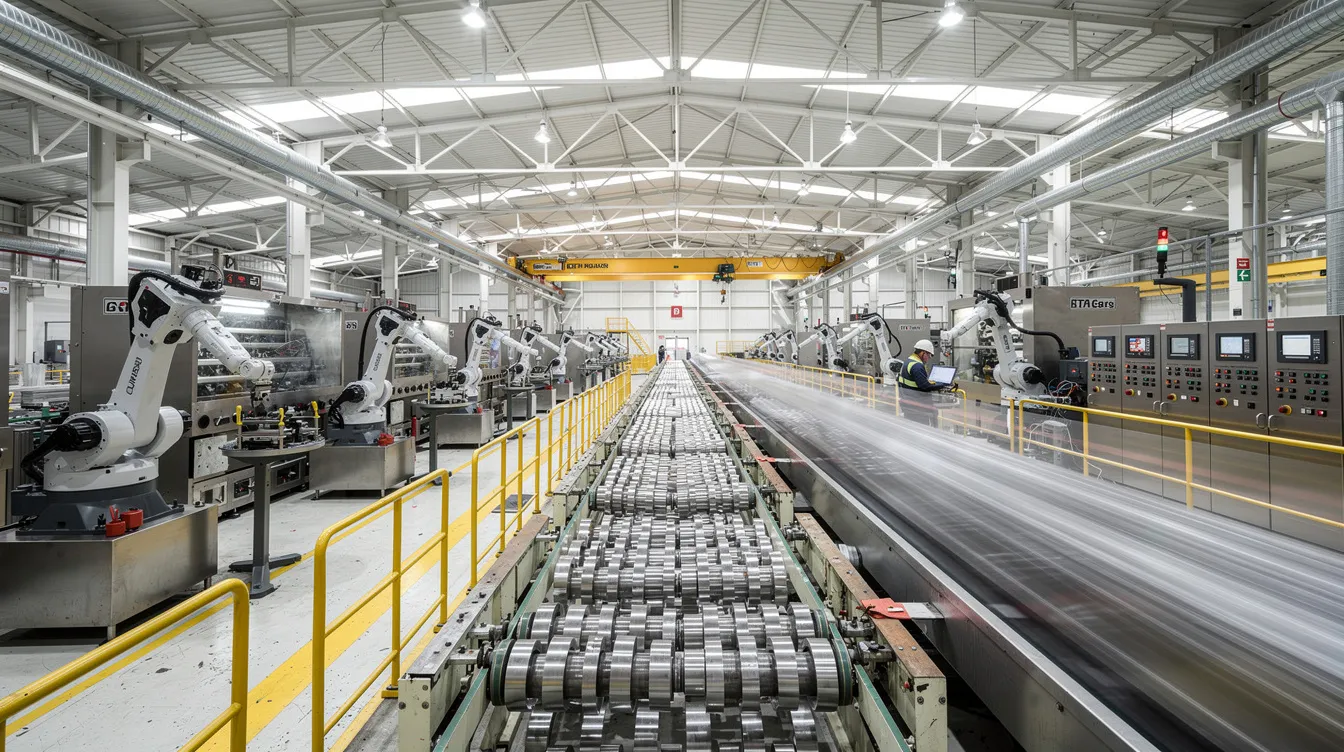
Indian manufacturing and industrial projects involve higher capex, longer gestation periods and complex implementation risks. Investors in this space-whether angel groups, family offices or strategic investors-expect more detailed preparation than what a typical technology startup might require. This is where an investor-ready DPR becomes particularly important for capital-intensive projects.
Key technical elements to prepare:
- Plant capacity and utilisation ramp-up: A realistic plan might assume 40–50% capacity utilisation in Year 1, increasing to 70–80% by Year 3. A new business that assumes 95% utilisation in Year 1 without supporting contracts will face deeper questions.
- Production process, machinery specifications and quotations: Have vendor names and high-level cost estimates ready.
- Utilities: Power, water, steam, effluent treatment requirements and costs.
- Raw material planning: Sourcing options, supplier concentration (competitive risk if dependent on two companies), price volatility, logistics costs and inventory holding periods.
Operating margins and working capital cycles in manufacturing materially impact cash flows and DSCR. Inventory days, receivable days and payable days should be modelled carefully-refer to our detailed guidance on Working Capital Planning Before Equity Funding.
An investor-ready industrial DPR should also include an 18–24 month implementation schedule, project management structure, contingency provision and sensitivity analysis for delays or cost overruns. Investors may ask for plant-visitation plans or reference checks with machinery suppliers, so prepare names and details in advance.
For comprehensive DPR and funding documentation support, manufacturing promoters can explore Investor-Ready DPR and Fundraising Assistance.
Questions Promoters Should Ask Potential Investors
The first investor meeting is also for promoters to evaluate whether the investor is the right person and the right long-term partner. Not every investor who shows interest is a good fit. Good investors add value beyond capital.
Consider asking:
- What sectors and stages do you focus on? What are your other investments in this space?
- What is your typical cheque size and preferred ownership percentage?
- Do you seek board representation? What is your governance expectation?
- What is your investment horizon-5 years, 7 years? What are your views on exit routes (IPO, strategic sale, promoter buyback)?
- Do you participate in follow-on rounds?
- What is your decision-making process and typical timeline from first meeting to term sheet?
- Beyond capital, what value do you bring-customer introductions, supply-chain relationships, management talent, lender relationships?
- How frequently do you expect MIS reporting and board meetings?
Listen carefully to the answers. Keep these questions conversational and frame them as part of building a long-term partnership, not an interrogation.
Common Mistakes to Avoid During the First Investor Meeting
Most founders walk into important meetings without realising how quickly small mistakes destroy credibility. Here are the most common ones:
- Talking continuously without listening. The investor’s questions reveal their priorities. Founders should be polite to everyone, attentive and responsive-not dominating.
- Starting with a long personal story instead of a clear agenda. A big win in the first two minutes is demonstrating structure, not narrating your life history.
- Presenting over-optimistic projections without data support. Revenue projections assuming 90%+ capacity utilisation in Year 1 without contracts are a red flag for most investors.
- Quoting inflated valuations without a valuation basis. If an investor believes the valuation is arbitrary, the conversation effectively ends.
- Mismatched numbers between slides and DPR. Inconsistency across documents is the fastest way to lose credibility.
- Not knowing key metrics. If you cannot state your EBITDA margin, break-even month, working capital requirement or DSCR from memory, preparation is incomplete.
- Being defensive about tough questions. Acknowledge investor concerns directly. Investors expect transparency about risks, not defensive posturing.
- Ignoring debt obligations when discussing equity returns. Equity IRR must account for debt service-presenting project IRR as if it were equity return is misleading.
- Disclosing highly sensitive information prematurely. Unique process details or trade secrets should not be shared without necessity or protection. It is nice to have enthusiasm, but protect proprietary information.
- Repeatedly rescheduling meetings or sending inconsistent follow-up messages. This damages credibility and momentum. What could have been a big win becomes a wasted effort.
What Should You Do After the First Investor Meeting?
Disciplined post-meeting actions significantly increase the chances of a second meeting or detailed diligence. Establishing clear next steps at the end of a meeting can facilitate follow-up opportunities.
Follow up within 24 hours after the meeting. Send a summary of key points discussed in the meeting, restating the agreed next steps and timelines. Acknowledging emails within the same business day builds trust and demonstrates operational discipline. Respond to questions promptly.
- Collate all investor questions that required follow up. Address all questions raised during the meeting in your follow-up communication. Attach only the necessary documents-updated deck, DPR summary, projections, valuation note-rather than flooding the investor.
- Provide additional data or insights requested by the investor. If they asked for specific information such as customer references, vendor quotations or cash-flow workings, respond professionally with clearly labelled files.
- Schedule the next meeting before concluding the follow-up to maintain momentum and avoid the conversation going cold.
- Update your fundraising tracker and refine your narrative based on feedback. Treat each meeting as data for improvement across future meetings.
When discussing fund utilisation in follow-up communications, build confidence around how investor money will be used and monitored-see our guide on Investor Capital Deployment and Fund Utilisation Controls.
Slow responses from investors do not always mean rejection. Continue parallel discussions with other investors to avoid dependency on a single source. Raising money often requires multiple meetings across several weeks or months.
First Investor Meeting Preparation Checklist
Use this checklist on the day of your meeting:
Materials:
- ☐ Confirmed agenda and meeting time
- ☐ Updated pitch deck (sent to investor 2–3 days prior)
- ☐ One-page executive summary
- ☐ Key financial summary printout (revenue, EBITDA, break-even, funding requirement, valuation)
- ☐ Soft copies of full DPR and financial projections
Personal Preparation:
- ☐ Clear 60–90 second elevator pitch (one line on what the company does, one line on market opportunity, one line on funding ask)
- ☐ 5–7 minute structured company overview rehearsed
- ☐ Explanation of project cost and means of finance prepared
- ☐ Answers to top 10 expected investor questions practised
- ☐ Key points and fundraising tips reviewed
Logistics:
- ☐ Stable internet connection (for online meetings)
- ☐ Quiet meeting environment
- ☐ Backup copy of presentation
- ☐ Screen-sharing or projector tested
Readiness Checks:
- ☐ Clarity on minimum acceptable equity stake
- ☐ Readiness to discuss risks and competitive risk openly
- ☐ Plan for how and when to follow up after the meeting
- ☐ Notepad for recording investor feedback and answering questions later
Frequently Asked Questions
These FAQs address common doubts about the first investor meeting that are not fully covered above.
How long should the first investor meeting be?
Most first meetings run 30–45 minutes. Avoid planning for longer unless the investor explicitly requests it. A concise, focused meeting that covers key points and leaves the investor wanting more detail is more effective than an overlong session.
Should I send the full DPR before the first meeting?
Generally, no. Send the pitch deck and a one-page executive summary 2–3 days before. The full DPR is typically shared after the first meeting generates investor interest, often during or after due diligence. Sharing a 100-page document prematurely can overwhelm and may expose proprietary details unnecessarily.
Can pre revenue projects still approach investors?
Yes. Pre revenue projects-especially in manufacturing where gestation periods are long-can meet investors if the business plan, market opportunity, promoter capability and financial projections are well-documented. Investors in industrial projects understand that revenue comes after plant commissioning. What matters is credibility of assumptions, not current revenue.
When should I discuss valuation in the first meeting?
Briefly. The first meeting should establish mutual interest. Share your valuation expectation at a high level and the basis behind it. Detailed valuation negotiation typically happens in the second meeting or subsequent discussions. Be prepared but do not anchor the entire conversation on valuation.
Is a formal Detailed Project Report mandatory for equity investors?
Not legally mandatory in every case, but strongly recommended-especially for manufacturing, industrial and capital-intensive projects. A professionally prepared DPR demonstrates financial rigour that an informal business plan cannot match. See the Investor-Ready DPR Checklist for Equity Funding for assessment criteria.
How do I handle confidentiality in the first meeting?
Share enough to demonstrate the business opportunity and financial viability. Reserve highly confidential details-proprietary process technology, detailed vendor terms, complete customer lists-for post-first-meeting stages, ideally under a signed NDA. Most investors understand this approach.
What if the investor asks a question I cannot answer?
Admit it clearly. Commit to a specific timeline-24 to 48 hours-for providing the information. Then follow through accurately and professionally. Attempting to fabricate an answer on the spot damages trust far more than an honest admission.
How many investors should I meet before closing a round?
There is no fixed number. Some promoters secure a lead investor after 5–8 meetings; others require 20 or more. The quality of preparation improves with each meeting. Track feedback systematically, refine your specific examples and projections, and maintain parallel conversations rather than depending on any single investor.
Professional Disclaimer
While structured preparation significantly improves the quality and outcome of investor meetings, no article, framework or professional advisory can guarantee investment. All investment decisions depend on investor judgement, detailed due diligence, market conditions and negotiation outcomes.
Promoters should consult their own legal, tax and regulatory advisers for transaction-specific structuring, especially for complex equity, preference-share or convertible-instrument deals.
How Project Report Bank Can Help Promoters Prepare
Project Report Bank is a Chartered Accountant-led project finance and investor-preparation advisory platform focused on helping Indian promoters build financially credible, investor-ready documentation. The practice is led by CA Manish Gugliya, with over 20 years of experience in DPRs, financial modelling, project feasibility and business valuation.
Services relevant to first investor meeting preparation include:
- Investor-ready Detailed Project Reports-see Investor-Ready DPR and Fundraising Assistance
- Financial Projections and Financial Modelling Services for 5–7 year projections, sensitivity analysis and IRR calculations
- Business valuation and equity dilution analysis
- Investor pitch deck preparation
- Funding structure and capital requirement assessment
- Fundraising Advisory and Investor Outreach Support
Serious Indian entrepreneurs and industrial promoters-typically seeking ₹5 crore to ₹50 crore or more in equity-are invited to share broad project details, estimated project cost and funding requirement through the official ProjectReportBank.com WhatsApp contact option.
Services focus on professional documentation, analysis and investor readiness. Project Report Bank does not promise investor introductions, guaranteed funding or assured valuations.
About the Author – CA Manish Gugliya
CA Manish Gugliya, FCA, DISA (ICAI), is a practising Chartered Accountant with over 20 years of professional experience in Detailed Project Reports, CMA Data, financial modelling, project finance, business feasibility, business valuation and investor-ready documentation. Through ProjectReportBank.com, he provides professional advisory and documentation services for entrepreneurs, manufacturing businesses and growth-oriented enterprises across India.
His work supports MSMEs and industrial promoters with DPR preparation, project appraisal, equity-funding readiness and bank finance documentation-combining practical business understanding with structured financial analysis.