Key Takeaways
- A chickpea and mung bean protein manufacturing project report is a detailed technical and financial document covering plant setup, protein extraction technology, project cost, means of finance, profitability and risk analysis for a planned pulse protein extraction plant in India.
- Commercial plants typically process 20–60 TPD of raw pulses, with total project cost often ranging from ₹10 crore for concentrate-only plants to ₹30–80 crore for integrated isolate and concentrate facilities, depending on scale, technology and automation.
- Technology choice between dry fractionation (producing 50–65% protein concentrates) and wet extraction (producing 80–90% protein isolates) directly affects capital investment, water and energy consumption, effluent load and product pricing.
- Realistic financial projections including DSCR analysis, break-even assessment, IRR calculation and bankable CMA Data are essential before committing capital and approaching lenders.
- Project Report Bank, led by CA Manish Gugliya (FCA, DISA (ICAI)), provides customised DPRs, financial modelling and project finance advisory for pulse protein extraction projects across India.
Introduction: Chickpea & Mung Bean Protein Manufacturing Project Report
Chickpea and mung bean proteins are emerging as credible alternatives to soy protein isolate and pea protein in food science and food engineering applications. Both legumes belong to the family Fabaceae and offer distinct functional advantages for clean-label, allergen-sensitive and plant-based food manufacturing. The main raw materials for protein extraction include food-grade chickpeas and mung beans, both widely cultivated across India.
A chickpea and mung bean protein manufacturing project report is a structured feasibility document that covers plant setup, protein extraction process design, project cost estimation, means of finance, working capital assessment, profitability analysis and investment risk evaluation. The report addresses main products – chickpea protein concentrate, chickpea protein isolate, mung bean protein concentrate and mung bean protein isolate – along with starch and fibre co-products used for noodles, gluten-free flours and feed applications.
Before investing ₹5–50 crore or more in a chickpea protein manufacturing plant or mung bean protein isolate manufacturing facility, entrepreneurs must carry out a structured feasibility study. This approach, similar to what is covered in the Integrated Pulse Protein, Starch & Fibre Processing Plant Project Report, ensures that technology selection, raw material economics and financial viability are evaluated before capital is committed. Chickpea and mung bean protein extraction relies on both dry and wet fractionation, requires attention to antinutritional factors, and is sensitive to raw material quality and process design.
Industry Overview and Market Opportunities
The global demand for non-soy and sustainable plant proteins is rising, driven by health-conscious consumption, lactose intolerance, vegan trends and clean-label ingredient requirements. According to the Food and Agriculture Organization, pulses are vital sources of nutrition and micronutrients, particularly in developing countries. India, as the world’s largest producer of chickpeas – with approximately 13.63 million metric tonnes produced in 2023 – holds a natural supply advantage for chickpea protein manufacturing.
Plant-based protein markets target meat and dairy alternatives, functional foods and nutritional supplements. Key demand drivers include sports nutrition, egg-free bakery formulations, ready-to-drink beverages and convenience foods. Chickpea protein offers a neutral taste profile suited to baked goods, snacks and hummus-type applications. Mung bean protein, by comparison, demonstrates good gelation and clarity, making it useful for noodles, plant-based egg analogues and beverages.
The competitive landscape includes established soybean protein suppliers and a growing pea protein segment – the latter covered in detail in the Pea Protein Isolate Manufacturing Plant Project Report. Export opportunities exist for high-purity isolates meeting stringent buyer specifications, including markets in Australia, Europe and North America. However, buyer validation remains essential: confirming required protein content, solubility, functionality, microbiological standards and indicative pricing before finalising capacity and technology. Customer feedback and trial testing are important before finalising plant capacity and specifications.
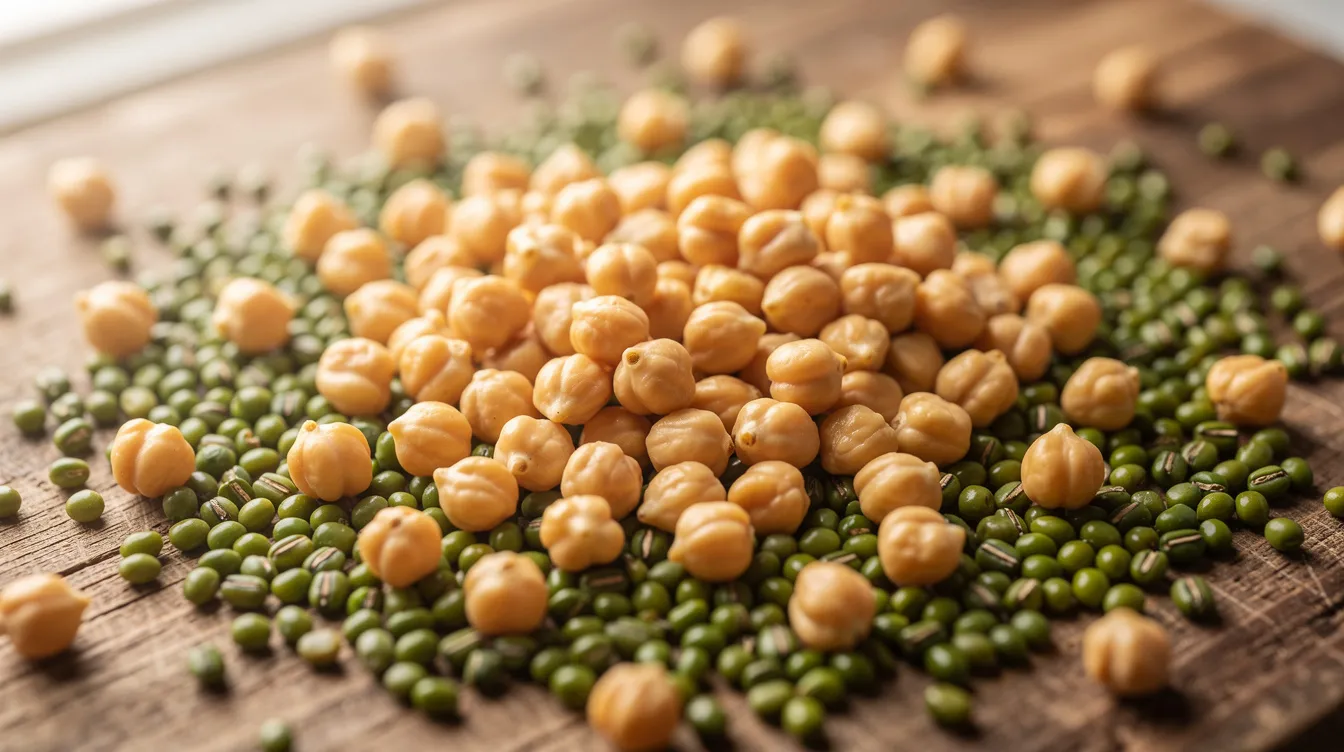
Chickpea and Mung Bean Protein Products & Applications
The DPR should clearly define the final product mix, as this determines process design, capital investment and financial viability.
Chickpea protein concentrate (typically 50–65% protein) is produced mainly by dry fractionation and air classification. Chickpeas contain 15% to 22% native protein content, and the concentrate finds applications in bakery, snacks, pasta, meal replacers and blended protein supplements. Chickpea protein is gluten-free and rich in lysine, an essential amino acid often limiting in cereal-based diets.
Chickpea protein isolate (typically 80–90% protein purity) is obtained through wet protein extraction and isoelectric precipitation. Chickpea protein excels in emulsification and solubility, and chickpea protein isolates improve in-vitro protein digestibility. Research confirms that chickpea protein extraction reduces antinutritional factors significantly. These isolates are suitable for beverages, high-protein nutrition products and plant-based meat analogues. Notably, chickpea protein can be used in ready-to-use therapeutic food (RUTF) formulations – RUTF must provide 13%–16.5% protein according to WHO standards, has a shelf life of 12–24 months, requires a maximum moisture content of 2.5%, and is shelf-stable without refrigeration. RUTF can be formulated using chickpeas and mung beans.
Mung bean protein concentrate serves functional roles in noodles, extruded snacks and traditional foods. Mung beans have a protein content of 24% to 26%, and mung bean protein has excellent gelling and foaming features, with textural properties valued in food development.
Mung bean protein isolate is valued for gelation and emulsification in plant-based egg analogues and speciality food formulations.
Co-products include starch (benchmarked against projects such as the Pea Starch Extraction & Manufacturing Plant Project Report), dietary fibre, and hulls for feed or bio-based applications.
| Parameter | Concentrate | Isolate |
|---|---|---|
| Protein purity | 50–65% | 80–90% |
| Process complexity | Lower (dry fractionation) | Higher (wet extraction) |
| CapEx intensity | Moderate | High |
| Water & energy use | Lower | Significantly higher |
| Typical price realisation | Lower | Higher |
Pulses contain 17–30% protein by dry weight, are rich in lysine, are gluten-free and low in fat content, and exhibit a low glycaemic index beneficial for blood sugar control. Lentils contain 21–31% protein, while mung beans have 15–33% depending on variety and conditions. The recommended intake of legumes is 1.5 cups per week according to dietary guidelines. Understanding nutritional composition, functional properties and differences between legume species is critical for positioning products with food manufacturers.
Manufacturing Process and Technology for Pulse Protein Extraction
Chickpea and mung bean protein extraction can follow either predominantly dry fractionation (for concentrates) or combined dry and wet fractionation (for isolates). Chickpeas and mung beans should be processed under optimised conditions tailored to their specific compositions. Technology choice strongly affects protein recovery, product quality and economics.
Major process steps:
- Raw material procurement and inspection – quality parameters for incoming raw materials include moisture and foreign matter limits, along with protein content verification.
- Pre-cleaning and grading – removal of stones, dust, metallic particles. Cleaning and de-hulling are essential preprocessing steps for pulses before extraction.
- Dehulling – chickpea protein is extracted through dehulling and milling; dehulling reduces fibre and improves yield.
- Conditioning and milling – fine milling to flour using impact or pin mills.
- Dry fractionation and air classification – separates protein-rich and starch-rich fractions mechanically. Dry fractionation processes offer fewer water-intensive steps compared to wet extraction processes.
- Wet protein extraction – alkaline extraction and isoelectric precipitation are common methods for protein extraction from pulses. Slurry preparation at pH 8–11, followed by centrifugal separation.
- Solid–liquid separation – solid-liquid separation in protein extraction is typically achieved using centrifugation (decanter and disc-stack centrifuges).
- Protein precipitation – isoelectric precipitation adjusts pH to the protein’s isoelectric point (typically pH 4–5) to precipitate proteins.
- Washing, neutralisation and pH adjustment – controlled conditions to remove residual solubles.
- Membrane filtration (UF/DF where adopted) – improves purity and removes small molecular weight compounds.
- Spray drying – a major energy consumer, converting wet slurry to powder at approximately 90% solids.
- Sieving, blending and packaging.
- Quality assurance – including analysis of protein content, vitamins, minerals, fats and micronutrients, plus monitoring antinutritional factors.
The role of food engineering in optimising temperature, pH, residence time and shear conditions is vital to maximise protein recovery and maintain functionality. Plant protein composition and functionality can vary between different legume species, requiring process parameters specific to each pulse rather than copying generic soy protein flowsheets.
Simplified Process Flowchart:
Chickpea/Mung Bean → Cleaning & Grading → Dehulling → Milling to Flour
  ├─(A) Dry Fractionation → Air Classification → Protein-Rich Fraction → Packaging (Concentrate)
  └─(B) Slurry Preparation → Alkaline Extraction → Centrifugation → Isoelectric Precipitation
       → Washing & Neutralisation → Spray Drying → Packaging (Isolate)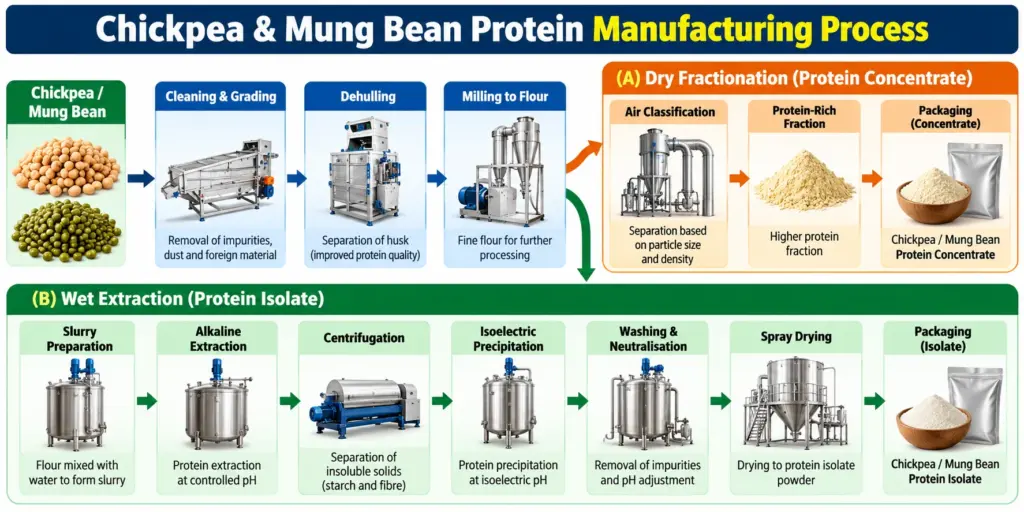
Dry fractionation yields concentrates at lower energy and water cost but gives lower protein purity, whereas wet extraction offers higher-purity isolates with higher capital expenditure, effluent load and operating complexity. The technology parallels used in Pea Protein Concentrate Manufacturing Project Report apply to chickpea and mung bean processing with appropriate modifications.
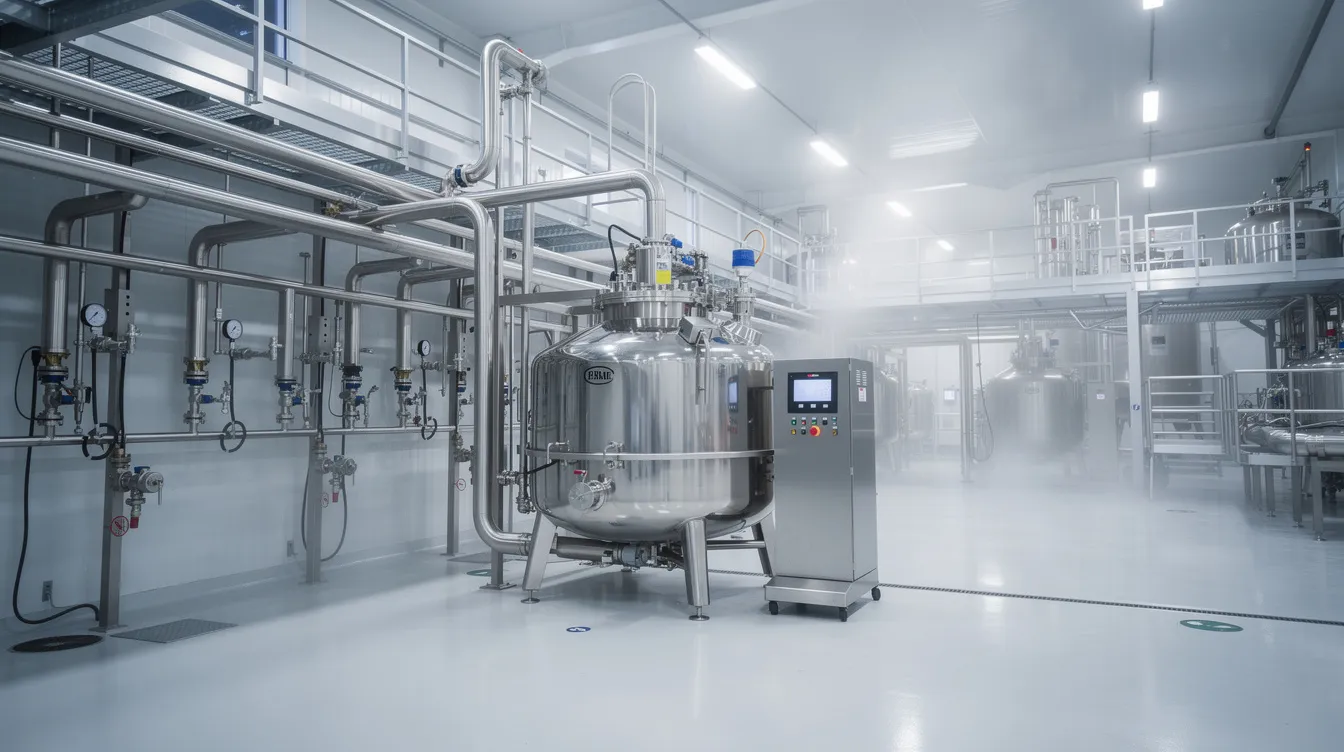
Plant Machinery and Equipment
Machinery selection should balance automation, flexibility between chickpea and mung bean processing, and provision for future capacity expansion. Commercial plant projects must distinguish between capital and operating expenditures when planning machinery procurement.
| Equipment Category | Key Items |
|---|---|
| Cleaning & grading | Pre-cleaners, destoners, magnetic separators, graders |
| Dehulling & milling | Dehulling machines, impact/pin mills, hammer mills |
| Dry fractionation | Air classifiers, cyclone separators |
| Wet extraction | Slurry tanks, agitated extraction tanks, pH dosing systems |
| Separation | Decanter centrifuges, disc-stack centrifuges |
| Filtration | Membrane filtration skids (UF/DF), pressure filters |
| Drying | Spray dryers (with feed system), fluid bed dryers |
| Blending & packaging | Vibro sieves, ribbon blenders, FFS machines, valve bag packers |
| Utilities | Boilers, thermic fluid heaters, air compressors, water treatment (RO/softener), CIP systems |
| Effluent management | Effluent treatment plant (ETP) for high-organic-load wastewater |
| Quality control | Kjeldahl/Dumas protein analysers, moisture analysers, fat analysers, microbiology lab |
High-capacity utilities including water supply, steam boilers and electrical connections are critical for processing plants. Effluent treatment plants are necessary for managing wastewater generated during protein processing – wastewater from protein extraction often has high COD and BOD. Packaging for protein powders often utilises multi-wall kraft paper with food-grade liners.
Practical points for the DPR: equipment capacity in kg/h must match planned TPD throughput; spray drying capacity is frequently the bottleneck; and space should be allowed for an additional extraction line or dryer for future expansion. Machinery cost estimates should be clearly marked as assumptions based on recent indicative quotations, not firm offers.
Plant Capacity, Raw Material & Recovery Planning
Capacity planning starts by selecting a realistic raw material throughput and estimating protein concentrate and isolate outputs based on typical recovery ranges.
Illustrative Example (Assumptions): A 30 TPD combined chickpea and mung bean processing plant operating 300 days per year:
| Parameter | Chickpea Line | Mung Bean Line |
|---|---|---|
| Daily raw pulse intake | 18 TPD | 12 TPD |
| Annual raw pulse | 5,400 tonnes | 3,600 tonnes |
| Concentrate output (est.) | ~600–810 tonnes/year | ~400–540 tonnes/year |
| Isolate output (est.) | ~350–540 tonnes/year | ~250–360 tonnes/year |
| Starch & fibre co-products | Significant volumes | Significant volumes |
These are illustrative figures. Actual recoveries depend on pulse variety, harvest year, storage conditions, dehulling efficiency, milling fineness, technology selected and targeted protein content. Research findings indicate that chickpea isolate yield ranges from approximately 11–17% of raw weight, while mung bean isolate yield may be approximately 15–20% of seed weight. Protein isolates typically require a purity of 80% to 90% – small drops in extraction yield or purity change revenue per kg dramatically.
Capacity utilisation ramp-up should be planned realistically: 50–60% in Year 1, 70–80% in Year 2, stabilising at 85–90% in later years. This feeds directly into financial projections and DSCR analysis.
By-product planning is essential: starch fractions may be sold to noodle or snack manufacturers, fibre to bakery or feed channels, and hulls as low-value feed or boiler fuel – contributing to waste reduction, resource recovery and additional revenue streams. Environmental sustainability considerations in protein processing include waste reduction and resource recovery.
Land, Building and Infrastructure Requirements
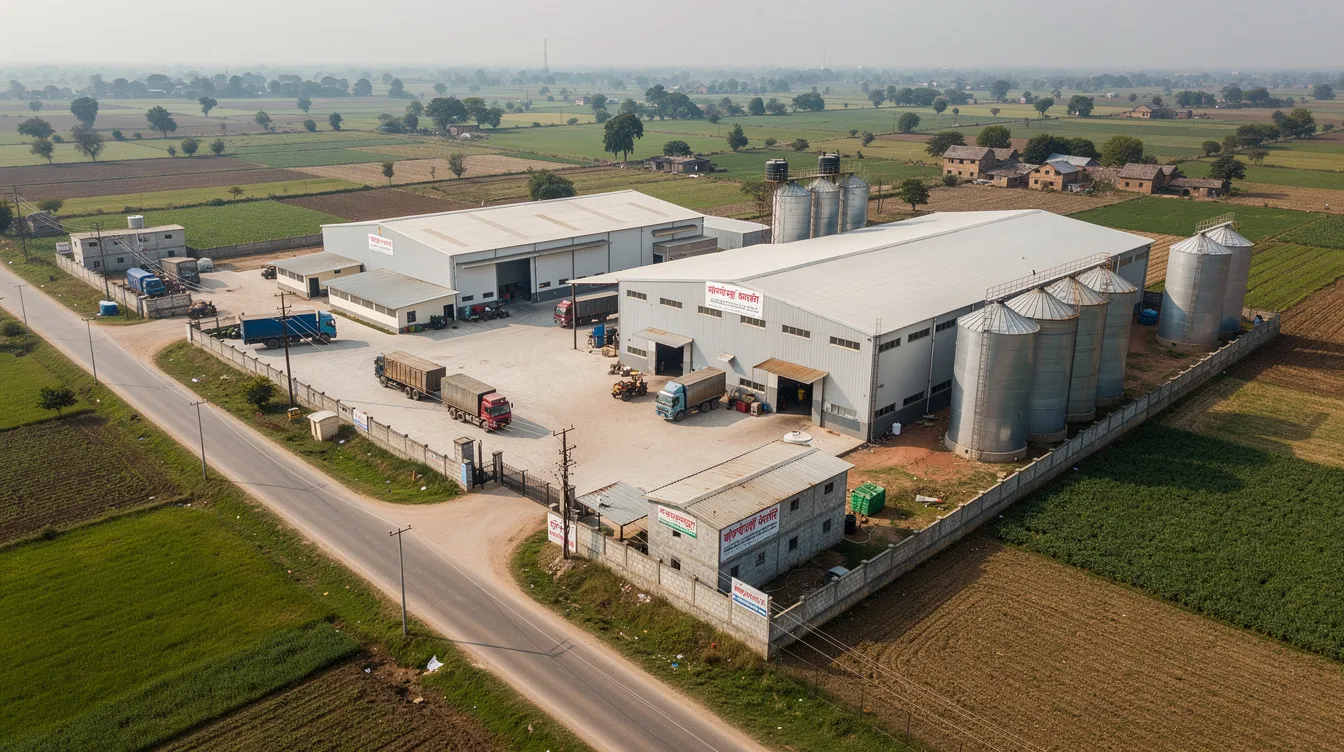
Plant setup involves strategic location consideration near agricultural hubs to minimise raw material logistics costs. For a 20–40 TPD chickpea and mung bean protein plant, land requirement may be in the range of 1–2 acres depending on layout, future expansion and local regulations (illustrative only).
Key building components include:
- Raw material godown with moisture-controlled storage
- Dehulling, milling and dry fractionation block
- Wet extraction and separation block (hygienic processing zone)
- Spray drying tower area
- Finished goods warehouse
- Quality control laboratory
- Staff amenities and administration
- Utilities block (boiler room, compressor room, water treatment, ETP)
Infrastructure requirements cover internal roads, drainage, fire-fighting systems, effluent handling, solid waste storage, boundary wall and provision for expansion. Site selection should consider proximity to pulse-growing regions, reliable power and water availability, and access to highways and ports.
Chickpea and Mung Bean Protein Plant Setup Cost in India
Capital cost for a pulse protein extraction plant DPR typically includes land, site development, civil construction, plant and machinery, electricals, utilities, laboratory, pre-operative expenses and margin money for working capital. Detailed project reports should include financial modelling and feasibility assessments for proposed projects.
Indicative Capital Investment Table – 30 TPD Integrated Plant (2026 Assumptions)
| Cost Head | Estimated Range (₹ Crore) |
|---|---|
| Land & site development | 1.5 – 3.0 |
| Factory building & civil construction | 4.0 – 7.0 |
| Main processing machinery (dehulling, milling, fractionation, extraction) | 8.0 – 15.0 |
| Spray dryer & separation systems | 5.0 – 10.0 |
| Electrical & instrumentation | 1.5 – 3.0 |
| Utilities, water treatment & ETP | 2.0 – 4.0 |
| Laboratory & QC equipment | 0.5 – 1.0 |
| Engineering, erection & commissioning | 1.5 – 3.0 |
| Pre-operative expenses & contingency | 2.0 – 4.0 |
| Working capital margin | 2.0 – 4.0 |
| Total estimated range | ₹28 – 54 Crore |
These figures are illustrative assumptions for a combined concentrate and isolate facility. A concentrate-only plant using dry fractionation would require significantly lower investment. Conversely, a high-purity isolate plant with advanced membrane filtration and zero liquid discharge ETP would push costs higher. Final numbers must be refined based on actual machinery quotations, location-specific civil costs and selected technology. Comparable reference points include reported soya protein isolate plants at 10 TPD costing approximately ₹14.4 crore total capital investment and pea protein plants at 5 TPD estimated at ₹1.5–3 crore.
Manufacturing Cost Structure, Working Capital & Profitability
Operating cost breakdown includes raw materials (the largest component), process chemicals (alkali, acid, cleaning agents), utilities (power, steam, water), labour, maintenance, packaging and overheads.
Raw material sensitivity is critical. For a 30 TPD plant, even a ₹2–3/kg change in chickpea or mung bean procurement prices can shift annual raw material cost by ₹1.5–3 crore, materially affecting gross margin and EBITDA.
Extraction yield and by-product realisation directly impact unit manufacturing cost. Higher protein recovery and better valorisation of starch and fibre reduce per-kg cost of protein products. For example, a plant achieving 60% protein recovery versus 50% on the same raw material input obtains substantially more saleable isolate per tonne of pulses processed.
Working capital elements include inventory of pulses (often 30–60 days during procurement season), finished protein products, receivables from B2B buyers (typically 30–60 days) and payables to farmers or traders. Cash credit and working capital limits from banks are typically required.
Key profitability sensitivities include plant utilisation, selling price fluctuations (export versus domestic mix), energy tariffs, effluent treatment cost, and product rejection or reprocessing due to quality issues. Compared with simple pulse flour or besan manufacturing, protein extraction plants face higher operating complexity but access higher-value B2B ingredient markets.
Financial Projections, CMA Data & DSCR Analysis
A bankable chickpea and mung bean protein manufacturing project report must include 5–7 year financial projections in line with standard CMA Data formats used by Indian banks. Financial projections in project reports often include break-even analysis and cash flow projections.
Key projection components:
- Projected production and sales volumes by product (concentrates, isolates, starch, fibre)
- Average realisation per kg for each product
- Raw material consumption and direct costs
- Overheads, finance costs, depreciation and tax
- Profit and loss account, balance sheet and cash flow statement (year-wise)
- Ramp-up in capacity utilisation from Year 1 through stabilisation
DSCR analysis is central to bank appraisal. Banks typically expect DSCR of at least 1.2 in early years and above 1.4 at maturity. DSCR is affected by interest rate, loan tenure, moratorium period and actual cash flow generation. Other metrics – break-even volume and sales, contribution margin, ROI, IRR and payback period – should all be calculated on realistic, stress-tested assumptions. Project viability analyses include financial metrics like ROI and IRR for new investments.
Project Report Bank prepares customised CMA Data and financial models reflecting the specific plant capacity, funding pattern and projected working capital needs.
Feasibility Study, Scenario Analysis & Investment Risks
Technical feasibility alone is not sufficient. Financial and commercial viability must be evaluated under multiple scenarios for a chickpea and mung bean protein extraction plant.
Key risk areas:
- Volatile raw material prices – pulses are agricultural commodities prone to seasonal and policy-driven price swings
- Variability in protein content of pulses across varieties and harvest years
- Process scale-up risk from pilot to commercial scale
- Technology reliability and vendor support
- Effluent management cost – wastewater from protein extraction often has high COD and BOD, and regulatory changes can increase ETP investment
Buyer-related risks: Time required for product trials and approvals, dependence on few major buyers, specification changes, and credit risk in domestic and export markets.
Operational risks: Lower-than-expected protein extraction yield, higher utilities consumption, unscheduled downtime, and difficulty controlling antinutritional factors and off-flavours affecting product acceptance.
The DPR should present base case (likely assumptions), optimistic case (better prices and yields) and downside case (lower utilisation, higher raw material cost), showing impact on cash flows, DSCR and IRR. Sensitivity analysis on 3–4 major variables is essential for lenders and investors. The investigation of these factors determines whether the project is commercially defensible.
Licences, Registrations & Regulatory Compliance
A chickpea and mung bean protein plant is a food processing facility and must comply with Indian food safety, factory and environmental regulations.
Typical registrations and approvals that may be applicable:
- Business entity incorporation or registration
- GST registration
- FSSAI licence for food manufacturing
- Factory licence under applicable state rules
- Trade licence and local body clearances
- Consent to Establish (CTE) and Consent to Operate (CTO) from State Pollution Control Board
- ETP design approval where applicable
Regulatory compliance needs include certifications such as ISO and HACCP for food safety. Many export and large domestic buyers expect HACCP-based Food Safety Management Systems, traceability and allergen management protocols. For export, compliance with destination-country requirements (EU novel food regulations, US GRAS status) must be evaluated.
Exact licences depend on location, plant capacity, products and export destinations, and should be confirmed during the DPR and implementation stage. Articles and journal references on regulatory compliance should be consulted for the latest requirements.
Bank Finance & Project Funding Strategy
The typical funding structure for a medium to large chickpea and mung bean protein plant includes promoter’s equity (own contribution) plus term loan from banks, and separate working capital facilities.
An appropriate debt–equity ratio, promoter contribution planning and selection of loan tenure must be consistent with projected cash flows and payback period. Bank appraisal aspects include project cost reasonableness, promoter background, DPR quality, projected DSCR, security and collateral cover.
CMA Data, projected balance sheets, cash flow statements and ratio analysis are required for working capital assessment and sanction of cash credit limits. Government schemes, interest subvention or capital subsidies (if any applicable) should only be factored in after verification from relevant official sources – not assumed in base-case projections.
Project Report Bank assists clients across India with bankable project reports, loan proposal preparation, CMA Data and support during the credit appraisal process. The findings presented in the DPR must be evident and defensible during bank discussions.
Frequently Asked Questions
The following questions address common investor and entrepreneur queries on practical project-planning issues for chickpea and mung bean protein extraction plants.
What is a practical minimum capacity for a chickpea and mung bean protein plant in India?
Very small plants struggle with economies of scale, particularly given the capital intensity of spray drying and wet extraction systems. In practice, commercial plants often start at around 10–20 TPD raw pulse processing, with developed projects scaling to 30–60 TPD as markets mature. The right capacity depends on targeted customers, availability of chickpea and mung bean in the sourcing region, and the promoter’s funding strength and risk appetite.
Can a single plant handle both chickpea and mung bean processing?
Yes. Many equipment systems – cleaning, dehulling, milling, dry fractionation, wet extraction and spray drying – can be shared between chickpea and mung bean with appropriate cleaning and changeover protocols. The DPR and layout should plan for flexible operation, silo segregation, allergen and cross-contamination controls, and separate product coding and traceability.
How long does it usually take to implement such a project?
Timelines depend on land readiness, machinery delivery and regulatory approvals. A typical medium-scale plant may take about 12–18 months from DPR finalisation and financial closure to commercial trial runs. Critical path items include long-delivery machinery (spray dryer, centrifuges), civil construction, power connection and pollution control clearances.
Is it necessary to have in-house R&D and application development?
While not mandatory at start-up, having at least a basic applications lab or collaboration with food science institutes helps in tailoring chickpea and mung bean protein functionality to buyer requirements. Such capability improves customer stickiness, enables co-development of products (plant-based meat or egg analogues, nuggets, beverages) and can justify premium pricing.
How do chickpea and mung bean protein projects compare with flour milling or besan plants?
Protein extraction plants are more capital- and technology-intensive than simple besan or pulse flour mills covered in the Besan, Gram Flour & Pulse Flour Manufacturing Project Report. They involve more complex wet processing, effluent treatment, spray drying and quality control but offer access to higher-value B2B ingredient markets. The manufactured products serve food processors and organisations that require functional protein ingredients rather than commodity flours.
Conclusion & Professional Advisory Support
Chickpea and mung bean protein extraction offers a serious industrial opportunity in India, moving beyond traditional pulse processing into high-value functional ingredient markets. However, the path from concept to a commercially viable plant requires robust technology selection, realistic raw material economics, validated protein recovery assumptions, product quality consistency and secure off-take arrangements. The availability of India’s large chickpea and mung bean agriculture base provides a natural advantage, but it does not eliminate the need for rigorous project planning.
A comprehensive chickpea and mung bean protein manufacturing project report must integrate technical design, plant and machinery specification, realistic project cost, working capital assessment, detailed financial projections, DSCR analysis and sensitivity analysis. The paper presented to banks or investors should distinguish clearly between verified information and forward-looking assumptions.
Project Report Bank, led by CA Manish Gugliya, FCA, DISA (ICAI), prepares customised, bankable DPRs, CMA Data, 5–7 year financial models, feasibility and viability studies, and investor-ready documentation for pulse protein extraction projects. Entrepreneurs, MSMEs and investors planning chickpea protein manufacturing plants, mung bean protein isolate manufacturing units or broader pulse protein extraction facilities are welcome to visit ProjectReportBank.com and share project details via WhatsApp for tailored advisory and DPR preparation.
CA Manish Gugliya FCA, DISA (ICAI) Manish Gugliya & Company, Chartered Accountants Ratlam, Madhya Pradesh – Providing Professional Services Across India.