Key Takeaways
- Grain warehouse subsidy in India is not a single programme. Multiple central schemes, including the Agriculture Infrastructure Fund (AIF) for interest subvention and the Agricultural Marketing Infrastructure (AMI) scheme for capital subsidy, operate with different rules, eligibility criteria and validity periods. The AMI scheme was notified up to 31 March 2026; any extension requires fresh government circulars.
- Subsidies for grain warehouses range from 15% to 33.33% depending on the applicant category and project location. General-category applicants receive up to 25% subsidy, while SC/ST applicants can receive up to 33.33% subsidy. Maximum subsidy under NABARD-linked schemes can reach INR 45 lakh for eligible projects. None of these benefits are automatic; each requires documentation, bank appraisal and scheme compliance.
- Eligible beneficiaries for grain storage schemes include individual farmers, cooperatives, FPOs, private companies, LLPs, proprietary firms, marketing boards, state agencies and federations. PACS, cooperatives and FPOs often qualify for higher subsidy slabs and concessional terms under the cooperative grain storage plan.
- Loan applicants must demonstrate financial viability and secure bank financing. A bankable Detailed Project Report with realistic financial projections, DSCR analysis and sensitivity testing remains the foundation for securing a grain warehouse bank loan, whether or not subsidy is expected.
- Project Report Bank, led by CA Manish Gugliya (FCA, DISA, 20+ years’ experience), provides professional DPR preparation, CMA Data, project finance advisory and scheme-aligned funding structures for grain storage and silo projects across India.
Introduction: Financing Opportunities for Grain Warehouse & Silo Projects in India
India produces approximately 311 million metric tonnes (MMT) of foodgrains annually. The country’s existing scientific storage capacity stands at roughly 145 MMT, leaving an estimated gap of about 166 MMT. This shortfall results in post-harvest losses, quality degradation and, in many regions, a distress sale of agricultural produce by farmers who lack access to safe storage facilities. Scientific storage reduces post-harvest losses by protecting grains from pests, moisture and weather damage. Strengthening storage infrastructure is central to the country’s food security objectives and to strengthening local rural economies.
The difference between a traditional godown and a modern steel grain silo is substantial. Traditional warehouses typically involve RCC or steel-shed construction with manual handling, whereas silos incorporate mechanised conveying, aeration, temperature monitoring and bulk storage systems. A 5,000 MT warehouse project may require ₹4 to ₹8 crore, while a mechanised silo complex of similar capacity can cost ₹8 to ₹15 crore depending on design, land and machinery specifications. Most promoters therefore rely on a combination of term loans, own contribution and whatever government support is available.
This article examines the grain warehouse subsidy in India as of 2026, covering the Agriculture Infrastructure Fund, NABARD warehouse subsidy scheme, Agricultural Marketing Infrastructure subsidy, cooperative-sector grain storage plan and other government schemes for grain storage. It also explains how banks evaluate grain silo and warehouse projects and what a bankable DPR must contain.
If you are planning a grain warehouse or silo project, consider seeking professional DPR and finance advisory support from Project Report Bank. CA Manish Gugliya provides WhatsApp-first consultations to discuss proposed capacity, investment and financing requirements before you commit capital.
Government Subsidy and Financing Schemes for Grain Warehouses & Silos
There is no single universal “grain warehouse subsidy” in India. Instead, several central and state-level schemes offer capital subsidy, interest subvention, credit guarantees or refinance support for storage infrastructure projects. Grain storage subsidies are primarily managed through NABARD, which functions as both a refinance institution and a subsidy-implementing agency. Support for grain storage includes financial assistance through various national schemes, each with its own eligibility, limits and procedures.
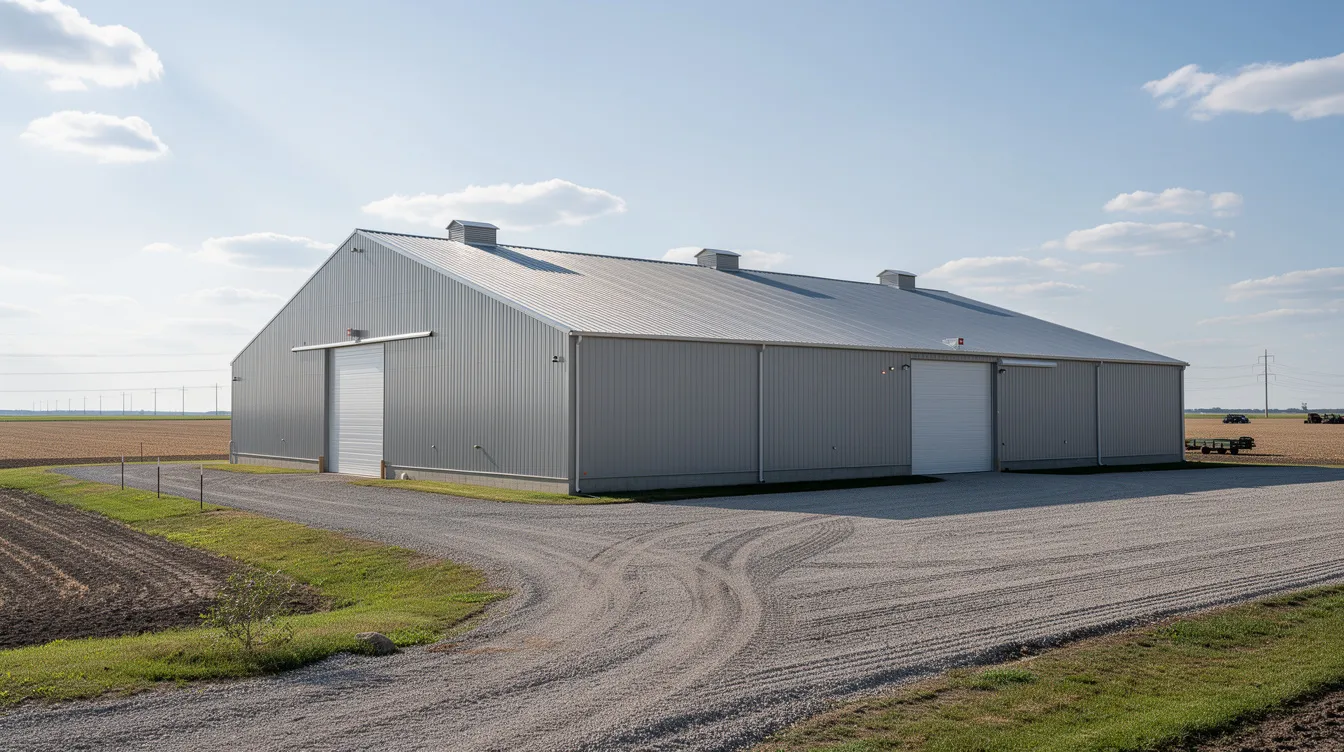
Eligible storage types under these schemes include conventional grain warehouses, scientific storage godowns, cold storage infrastructure, onion and potato storage structures, and silos and bulk storage systems. Farmers can store grains safely to prevent distress sales and gain flexibility in selling their produce through improved storage options.
| Scheme | Type of Assistance | Eligible Beneficiaries | Eligible Projects | Assistance Conditions | Status (2026) |
|---|---|---|---|---|---|
| Agriculture Infrastructure Fund (AIF) | Interest subvention (3% p.a.) + credit guarantee | Farmers, FPOs, PACS, cooperatives, companies, LLPs, agri-entrepreneurs | Warehouses, silos, cold chain, post-harvest infrastructure | Loans up to ₹2 crore per project; subvention for up to 7 years | Operational; verify fresh sanction window from AIF portal |
| Agricultural Marketing Infrastructure (AMI) | Capital subsidy (credit-linked, back-ended) | Individuals, FPOs, cooperatives, companies, state agencies | Warehouses (50 to 5,000 MT private; up to 10,000 MT state), cold storage, silos | 25% general; 33.33% NER/hilly/SC/ST/FPO; subsidy caps per project | Notified up to 31 March 2026; extension unconfirmed |
| World’s Largest Grain Storage Plan (Cooperative Sector) | Combined AIF + AMI + concessional terms for PACS | PACS, cooperative societies | Decentralised godowns, silos, allied facilities at PACS | Margin money 10%; 33.33% subsidy; FCI 9-year hiring assurance | Launched May 2023; ~1,012 PACS identified as of Sept 2026 |
| Gramin Bhandaran Yojana (historical, subsumed into AMI) | Back-ended capital subsidy | Farmers, cooperatives, NGOs, companies | Rural godowns for foodgrain and allied produce | Replaced/subsumed by AMI framework | Historical; current projects apply under AMI |
Gramin Bhandaran Yojana historically supported agricultural storage infrastructure in India with a back-ended subsidy for rural storage projects, but its provisions have been subsumed into the AMI framework. NABARD’s role in most of these schemes is as a refinance and implementing institution. NABARD supports refinance for banks financing agricultural infrastructure projects; it does not typically disburse retail loans directly to individual entrepreneurs.
Project Report Bank evaluates applicable central and state schemes for each client project and structures the means of finance accordingly. No advisory firm can guarantee subsidy sanction or bank approval.
Agriculture Infrastructure Fund (AIF) for Grain Storage Projects
The Agriculture Infrastructure Fund is the flagship central scheme for agriculture infrastructure, including grain warehouses and steel silos. It is implemented through scheduled commercial banks, cooperative banks, regional rural banks and other eligible lending institutions.
Eligible projects include construction of modern foodgrain warehouses, godowns and silos; upgradation of existing storage facilities to scientific standards; and ancillary facilities like quality testing labs, cleaning, grading and sorting units linked to storage. Projects must create agriculture infrastructure, not general commercial real estate.
Eligible beneficiaries under AIF include individual farmers, agri-entrepreneurs, FPOs, SHGs, PACS, cooperative societies, agri-startups, private limited companies, LLPs, partnership firms, state agencies and federations. Eligibility may vary by lender and by the latest scheme guidelines.
Key financial features (as historically notified; exact current terms must be rechecked from the AIF portal):
- Interest subvention of up to 3% per annum on eligible loans up to ₹2 crore per project, available for up to 7 years including moratorium
- Credit guarantee coverage through a dedicated fund or CGTMSE-type arrangement for loans up to ₹2 crore
- Loan tenure typically 7 to 10 years including moratorium, as per bank policy
By January 2026, AIF had sanctioned ₹80,224 crore in loans for over 1,50,431 projects, mobilising investment of ₹1,27,508 crore across the country.
There is an important distinction between the scheme’s operational window (the cut-off date for fresh loan sanctions under the scheme) and the benefit period (the number of years interest subvention is available on an already-sanctioned loan). A loan sanctioned within the window continues to receive subvention for its defined period even after the sanction window closes.
Illustrative interest subvention calculation (for educational purposes only):
| Parameter | Value |
|---|---|
| Project: 5,000 MT warehouse | Total cost ₹5 crore |
| Term loan amount | ₹4 crore |
| Nominal interest rate (market example) | 11% p.a. |
| AIF interest subvention | 3% p.a. |
| Effective interest rate | 8% p.a. |
| Annual interest saving (approx.) | ₹12 lakh |
| Cumulative saving over 7 years (approx.) | ₹84 lakh |
This is illustrative only, not an offer or guarantee. Actual rates, eligibility and subvention amounts depend on bank terms and scheme guidelines.
AIF does not itself provide a capital subsidy. Promoters must still contribute margin money, service the full loan and demonstrate repayment capacity. Project feasibility must hold even if subvention is delayed. Readers planning a detailed cost and financing analysis can study examples in the grain storage project cost and means of finance guide and the grain storage financial projections, working capital and DSCR resource published by Project Report Bank.
NABARD-Linked Warehouse Subsidy and Agricultural Marketing Infrastructure (AMI)
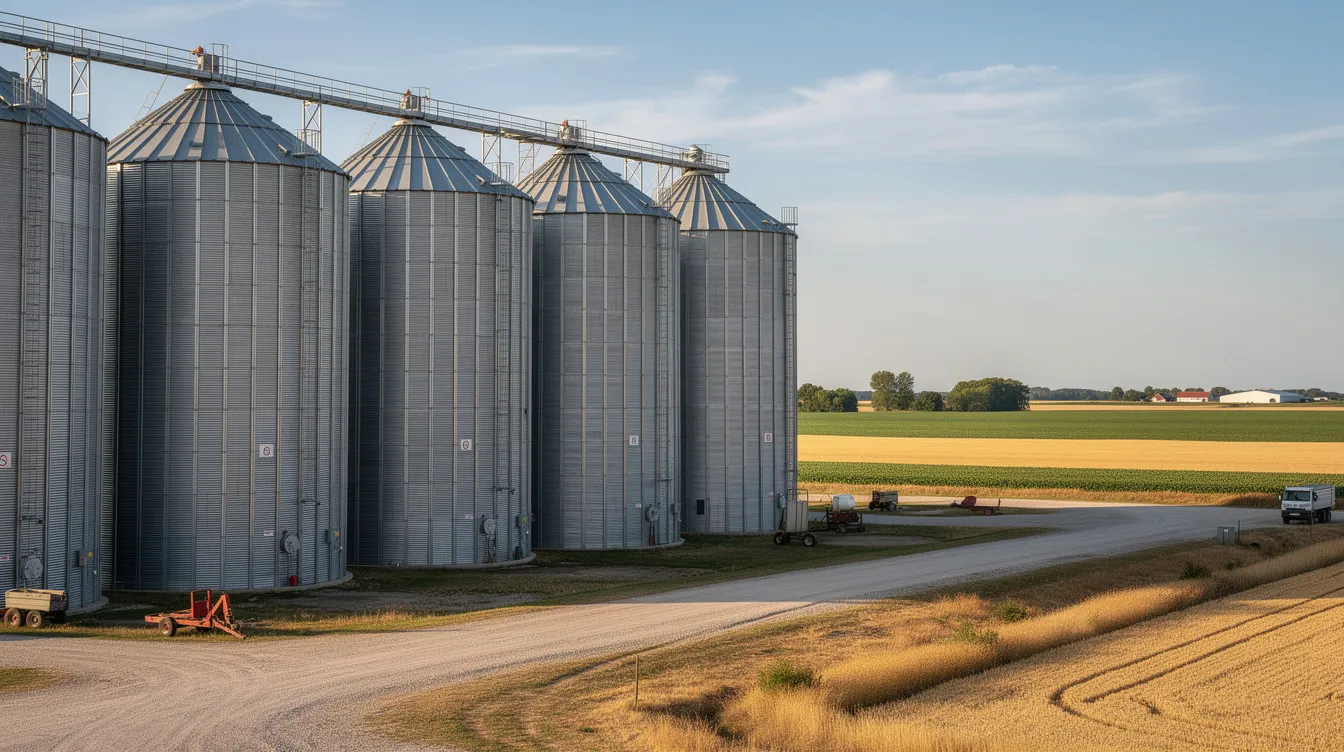
The Agricultural Marketing Infrastructure (AMI) scheme, part of ISAM, provides credit-linked back-ended capital subsidy for storage infrastructure including godowns, warehouses, silos and cold storage facilities. AMI has subsumed earlier schemes like Gramin Bhandaran Yojana. The scheme aims to reduce crop losses through scientific storage and to support the creation of scientific storage capacity across the country.
Current assistance patterns (subject to latest notification from NABARD and the Ministry of Agriculture):
- General-category applicants receive up to 25% subsidy; maximum subsidy for general-category is capped at INR 37.5 lakh
- SC/ST applicants may qualify for a higher subsidy of 33.33%; maximum subsidy for SC/ST applicants is capped at INR 45 lakh
- FPOs, cooperatives, women entrepreneurs and applicants in north eastern states and hilly areas historically qualify for the 33.33% slab
- The maximum subsidy under NABARD schemes can reach INR 45 lakh
- Subsidy is released after project completion and verification; it is a back-ended credit to the loan account, not an upfront grant
- NABARD allocated INR 5,000 crores for storage infrastructure in 2014-15
NABARD provides loans and refinance support for projects with a minimum eligible warehouse capacity of 50 metric tonnes. For certain refinance-linked schemes, NABARD provides support for projects with a minimum capacity of 5,000 MT. Eligible borrowers can receive up to 95% of project cost from NABARD-linked financing (including term loan and subsidy components combined). Projects must comply with NABARD’s technical standards, including compliance with norms of the Warehousing Development and Regulatory Authority (WDRA) where applicable.
Eligible infrastructure under AMI includes warehouses and cold storage facilities for foodgrains, pulses and allied produce. Capacity ranges are 50 to 5,000 MT for private and cooperative sector, and 50 to 10,000 MT for state agencies. Temporary or kutcha structures do not qualify.
Illustrative subsidy calculation:
A 1,000 MT warehouse with eligible project cost of ₹1.80 crore under general category at 25% subsidy yields a potential subsidy of approximately ₹37.5 lakh (subject to cap). The promoter contributes margin money (typically 20%), and the bank term loan covers the balance. A 2,000 MT warehouse in a North-Eastern state under the 33.33% slab would see a higher subsidy amount relative to project cost, subject to per-MT and overall caps.
The procedural flow typically works as follows: the borrower approaches a bank with a DPR and applies for a term loan under AMI-linked subsidy. The bank sanctions the term loan and forwards the subsidy proposal to NABARD or the nodal agency. After construction is completed as per approved design, joint monitoring inspection verifies capacity and quality. Subsidy is then released as a back-ended credit to the loan account.
The Government of India notified validity of AMI’s storage-infrastructure components up to 31 March 2026. Any extension beyond that date requires fresh circulars. Readers should verify the current position from NABARD and Ministry websites at the time of reading.
NABARD’s role is primarily as a refinance and implementing institution. Most private entrepreneurs will borrow from commercial banks, cooperative banks or regional rural banks that in turn access NABARD refinance. NABARD may directly finance certain cooperative or government-backed institutions in specific cases.
World’s Largest Grain Storage Plan in the Cooperative Sector
On 31 May 2023, the government approved the World’s Largest Grain Storage Plan in Cooperative Sector as a pilot project to address the gap between national foodgrain production and available scientific storage capacity. India’s primary initiative for grain storage is the World’s Largest Grain Storage Plan. The plan integrates several key government schemes for decentralised storage.
The cooperative sector plays a crucial role in the grain storage initiative. India has over 100,000 PACS with approximately 13 crore farmer members. Localised storage facilities are built through Primary Agricultural Credit Societies. Decentralised storage is aimed at bridging gaps in the rural agricultural supply chain and improving food security.
The plan converges funding from AIF, AMI, and other cooperative-sector programmes. Under this plan, PACS receive 33.33% capital subsidy, margin money requirement is reduced to 10%, admissible construction cost is set at ₹7,000 per MT in plain areas and ₹8,000 per MT for north eastern states and hilly areas, and the credit guarantee period is extended to 2+8 years. The Food Corporation of India provides a nine-year hiring assurance to godowns constructed under this plan.
By September 2026, approximately 1,012 PACS and cooperatives had been identified, about 313 godowns completed, and storage capacity of roughly 1.80 lakh MT created.
PACS-based projects differ from private commercial silo investments. PACS projects are typically smaller in ticket size but integrated with government procurement and public distribution, with concessional finance and policy support. Private PPP or FCI-linked silos typically operate under DBFOO or DBFOT models with long-term storage and handling contracts. Project Report Bank provides separate analysis of FCI grain silo PPP investment models and has specialised advisory for PACS and FPO rural grain storage warehouse project reports.
The initiative aims to improve food security and strengthen local economies by enabling farmers to store grains safely, avoid distress selling, and gain flexibility in selling their produce through improved storage options.
Grain Warehouse & Silo Subsidy Eligibility: Who Can Apply?
Eligibility differs across AIF, AMI, cooperative storage plan and state programmes. Promoters must match their entity type and project location with the correct set of guidelines before investing.
- Individual farmers and small agri-entrepreneurs: Usually eligible under AIF and many state schemes. Individual farmers must provide land ownership documentation. Capacity and loan size may be restricted by scheme norms.
- Partnership firms, LLPs and private limited companies: Primary beneficiaries for commercial grain warehouses and silos. Eligible for AIF interest subvention and historically for AMI subsidy, subject to category and region.
- Farmer Producer Organisations (FPOs) and Producer Companies: Often placed in higher subsidy slabs under AMI. Farmer Producer Organisations need registered entity documents for application.
- PACS and cooperatives: Key beneficiaries under the cooperative grain storage plan. Cooperatives require project approval and registration. Non government organizations and NGOs involved in agriculture may also be eligible under certain state schemes.
- APMCs, state agencies and marketing boards: May qualify for higher capacity thresholds (up to 10,000 MT) under AMI.
- PPP developers and corporations: Typically rely on concession arrangements and viability-gap funding rather than retail capital subsidy.
Schemes may set conditions on minimum and maximum storage capacities, project location (rural areas, proximity to mandis, north eastern or hill-state status), requirement for WDRA registration for negotiable warehouse receipts financing, and restrictions on repeat subsidy for the same facility.
Every applicant must have an acceptable credit profile, sufficient margin contribution and a viable project. Subsidy does not substitute for basic bank eligibility.
Grain Warehouse & Silo Bank Loan: Financing Options
A grain warehouse bank loan typically comprises a term loan for construction and machinery, alongside working capital limits for operations. Subsidy or interest subvention acts as support, not replacement, for bank finance.
- Term loan: Covers civil construction, silos, conveying systems, electricals, fire-fighting and related fixed assets
- Working capital facilities: Cash credit or overdraft against stock, receivables or warehouse receipts
- Equipment loans: For handling machinery, weighbridges, dryers and testing equipment
Banks assess promoter profile and net worth, land ownership and clear title, project location relative to production centres and transport corridors, storage demand analysis and tie-ups with the Food Corporation or private traders, technical design (RCC godown vs. steel silo), and projected capacity utilisation.
Key financial parameters include promoter contribution of typically 20% to 35% of project cost, loan tenure of 7 to 12 years with moratorium of 12 to 24 months, and DSCR expectations of at least 1.3 to 1.5. Financial projections and feasibility studies are essential for project applications. Lower effective interest rates from AIF subvention improve DSCR and cash flows, but the borrower must still be able to service full interest if scheme support is delayed or partially approved.
Grain Warehouse Project Cost, Margin Money & Means of Finance
Actual project cost varies by capacity, design, land cost and local civil rates. A structured project cost estimate typically covers:
- Land and site development (acquisition, boundary wall, internal roads, drainage)
- Civil construction (warehouse sheds, plinths, office building, platforms)
- Steel silos and mechanical equipment for silo projects (bins, elevators, conveyors, grain cleaners, dryers); detailed guidance is available in the grain silo machinery, equipment and cost resource
- Handling and weighing (weighbridge, forklifts, bagging machines)
- Electrical and utilities (transformers, LT panels, DG sets)
- Fire protection and safety systems
- Pre-operative expenses (design, approvals, interest during construction, contingency)
Illustrative means of finance for a ₹5 crore, 5,000 MT RCC warehouse (assumed):
| Component | Amount (₹ lakh) | % of Project Cost |
|---|---|---|
| Promoter contribution | 150 | 30% |
| Term loan from bank | 350 | 70% |
| Capital subsidy (if eligible, back-ended) | Credited later to loan account | Varies |
| AIF interest subvention | Annual benefit on loan interest | 3% p.a. for up to 7 years |
All figures are indicative. Promoter must bring full margin upfront. Capital subsidy, when received, reduces loan outstanding but does not replace initial equity. For detailed technical planning, see the grain storage warehouse land, building and plant layout requirements guide and the grain silo and warehouse setup cost in India reference.
How to Apply for Grain Warehouse Subsidy and Bank Loan
Application routes differ by scheme and lender. A structured approach reduces eligibility issues and delays. The application process for subsidies is managed digitally through official portals.
- Conceptualise the project: Define capacity (e.g. 2,000, 5,000 or 10,000 MT), location, target clients (farmers, traders, Food Corporation) and storage type (warehouse or silo).
- Check scheme eligibility: Identify whether AIF, AMI, cooperative storage plan or any state scheme applies. Verify latest dates, limits and portal requirements.
- Prepare a professional DPR: Include detailed cost estimates, technical specifications, layout drawings, implementation schedule, revenue model and 7 to 10 year financial projections with DSCR analysis.
- Approach banks: Submit DPR, KYC and land documents to a scheduled commercial bank, cooperative bank or regional rural bank.
- Bank appraisal and sanction: Respond to queries on capacity utilisation, tariffs and offtake agreements. Obtain sanction with clear terms.
- Scheme registration: Complete online registration on AIF, AMI or state portals as required. Ensure project details match the sanction letter.
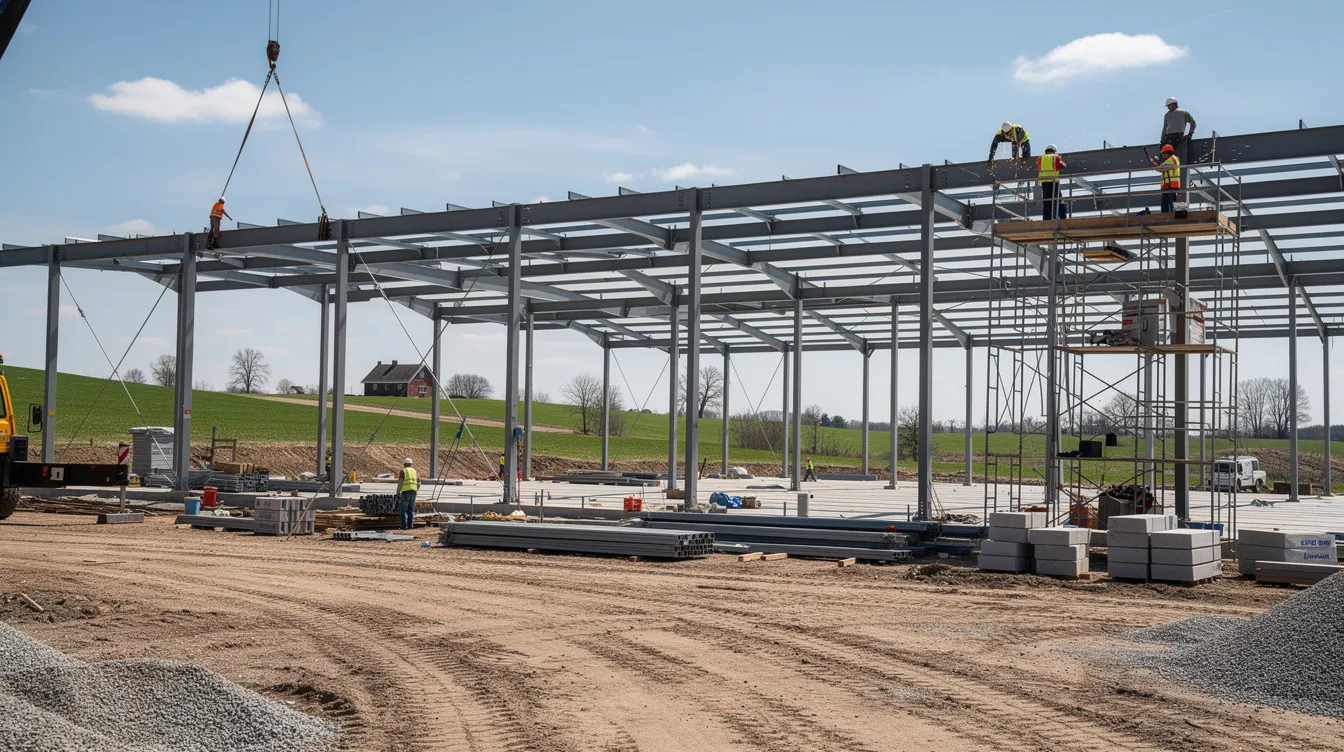
- Implementation: Execute construction as per approved plans. Maintain bills, photographs and progress reports.
- Inspection and compliance: Allow inspections by bank, NABARD or implementing agency. Ensure WDRA compliance where required. The regulatory authority for warehousing development oversees registration norms.
- Subsidy or subvention claim: Bank files claim with scheme authority. Subsidy is contingent on final verification and guideline compliance.
Avoid starting construction before financial closure if you want to remain eligible under credit-linked subsidy schemes. Engage Project Report Bank early for DPR, CMA Data and bank loan proposal preparation to align project structure with scheme norms from the outset.
Documents Required for Grain Storage Project Finance
Grain storage projects are treated as infrastructure or industrial loans, requiring full documentation for appraisal and subsidy claims.
Promoter and entity documents:
- KYC: PAN, Aadhaar, photographs, address proof of all promoters
- Entity formation documents: partnership deed, LLP agreement, Memorandum and Articles of Association, Udyam or MSME registration
- Audited financial statements and ITRs for at least 3 years (for existing businesses)
Project-specific documents:
- Land documents: sale deed, title search, mutation records, encumbrance certificate, lease agreement
- Approvals: land-use permission, building plan approval, environmental NOCs
- Technical documentation: drawings, structural designs, capacity calculations, machinery quotations
Financial documents:
- DPR with project cost, means of finance and implementation schedule
- CMA Data for bank loan with projected balance sheets, profit and loss, and cash flow
- DSCR calculations and sensitivity analysis
- Net worth statement of promoters
Scheme-related documentation:
- Scheme-specific application forms and declarations
- Undertakings on non-availment of similar subsidy for same project
- Photographic records, completion certificates and utilisation certificates
How Banks Evaluate a Grain Warehouse or Silo DPR
Banks evaluate both technical feasibility and commercial viability, not just subsidy eligibility. A professionally prepared DPR improves clarity and reduces processing time.
Technical and market evaluation:
- Location: proximity to grain-producing areas, mandis, transport hubs and railheads
- Demand: cropping pattern in the catchment area, historical procurement volumes, presence of competing warehouses or silos
- Design: ventilation, moisture control, pest management, WDRA norms compliance; for silos, material handling flow and safety
Financial evaluation:
- Revenue model: storage charges per MT per month, handling charges, value-added services (cleaning, grading, fumigation) and guaranteed revenues under FCI or state contracts
- Capacity utilisation: ramp-up from 40% to 50% in Year 1 to 80% to 90% by Year 3 or 4, with seasonal variation
- Cost structure: operating staff, utilities, repairs, insurance, security and administration
Key ratios examined:
- DSCR for each projected year and on average (banks typically expect 1.3 to 1.5 or higher)
- Break-even capacity utilisation level
- Interest coverage ratio and cash flow adequacy during moratorium and repayment
Banks stress-test projections with lower utilisation and tariff assumptions. Sensitivity analysis on key variables is examined carefully. Readers can review the grain silo ROI, IRR, payback and sensitivity analysis guide for detailed methodology.
Borrowers should present realistic, evidence-backed projections. Inflated numbers can undermine banker confidence and result in post-sanction issues.
Financial Feasibility: Can a Grain Silo Project Remain Viable Without Subsidy?
Many promoters ask whether silo projects only work because of subsidies. While government support improves returns, the core business model must be independently viable at near-market interest rates.
Key revenue drivers:
- Storage tariff per MT per month and average storage duration per lot
- Handling and ancillary service charges (inward and outward handling, cleaning, drying)
- Long-term contracts with FCI or large traders vs. spot storage for farmers
Main cost heads:
- Fixed costs: depreciation, interest, key technical staff, security, insurance
- Variable costs: energy for conveying and aeration, fumigation, routine maintenance
- Financing costs: term loan interest, working capital interest, bank charges
Illustrative scenario comparison for a 10,000 MT steel silo (hypothetical, for educational purposes only):
| Scenario | ROI (approx.) | Payback Period | DSCR (Year 3) |
|---|---|---|---|
| Without any subsidy | 10% to 12% | 8 to 10 years | 1.2 to 1.3 |
| With AIF interest subvention only | 13% to 15% | 7 to 8 years | 1.4 to 1.5 |
| With interest subvention + capital subsidy | 16% to 19% | 5 to 7 years | 1.6 to 1.8 |
These figures are illustrative only and not investment advice. Actual results depend on project-specific cost, tariff, utilisation, interest rate and location. A detailed grain storage and silo project feasibility study should be conducted before committing capital.
Investors should not commit large capital purely on expected subsidies. Feasibility must hold even if disbursement is delayed, partially sanctioned or subject to change in scheme terms.
Common Mistakes in Grain Warehouse Subsidy and Loan Applications
Many subsidy or loan rejections arise from avoidable errors in planning, documentation and assumption-building.
- Assuming that grain warehouse subsidy in India is automatic for all projects and starting construction before sanction, thereby making the project ineligible for credit-linked schemes
- Relying on outdated brochures for subsidy percentages without checking latest notifications, causing gaps between expected and actual assistance
- Underestimating true project cost (especially civil, fire-fighting, power and pre-operative expenses) and struggling with cost overruns
- Showing unrealistically high capacity utilisation or tariffs in projections just to meet DSCR benchmarks
- Not arranging clear land title or approvals before bank appraisal, leading to delays or cancellation
- Submitting incomplete DPRs without detailed costing, implementation schedule or sensitivity analysis
- Failing to maintain proper invoices, bills and progress records for subsidy verification
- Deviating from approved layout or capacity without prior bank approval
- Missing scheme deadlines for completion and claim submission
Working with an experienced DPR and project finance advisor helps avoid these pitfalls and aligns project structure, documentation and timelines with both bank and government requirements.
How CA Manish Gugliya Can Assist With Grain Warehouse Project Financing
CA Manish Gugliya is a practising Chartered Accountant (FCA, DISA from ICAI) with over 20 years of professional experience in project reports, CMA Data, project finance advisory and MSME funding across manufacturing, agro-processing and infrastructure projects.
Services specifically relevant to grain storage and silo projects:
- Preparation of customised, bankable Detailed Project Reports for grain warehouses, godowns and silo complexes, aligned to AIF, AMI and cooperative-scheme norms where applicable
- Financial projections and financial modelling for 7 to 10 years including profitability, cash flow, DSCR, break-even, ROI and IRR analysis under multiple scenarios
- CMA Data preparation and bank loan proposal documentation tailored to individual lender formats
- Project cost estimation and means-of-finance structuring, including evaluation of feasible promoter contribution, term loans, working capital and potential subsidy components
- Project feasibility and viability studies for proposed capacities from 2,500 MT to 50,000 MT
Entrepreneurs, PACS, FPOs and agribusiness companies planning a grain storage project can share basic project details via WhatsApp for an initial professional discussion. The firm provides advisory and documentation support; it does not sanction government subsidies or approve bank loans.
Frequently Asked Questions
The following questions address practical doubts commonly raised by grain warehouse and silo project promoters.
Is grain warehouse subsidy available in India in 2026?
As of 2026, assistance for grain storage projects comes through schemes like AIF (interest subvention and credit guarantee) and AMI or similar capital-subsidy schemes where validity was notified up to 31 March 2026. Cooperative-sector programmes and some state-level schemes also remain active.
Exact availability, percentage and maximum amount depend on beneficiary type, location, project capacity and current government notifications. Even where capital subsidy exists, it is usually credit-linked and back-ended, released only after project completion and inspection. Readers should verify latest guidelines from official portals or consult a professional advisor.
Can a private company obtain financial assistance for a grain silo project?
Private limited companies, LLPs and partnership firms are generally eligible for bank term loans for both warehouses and silos. They may also be eligible under AIF for interest subvention and historically under AMI for capital subsidy, subject to scheme guidelines and beneficiary category.
Additional options include PPP-style investments in FCI or state-agency silo projects where revenue comes from long-term storage and handling contracts rather than direct subsidy. Lenders will assess technical design, project cost, promoter strength and projected DSCR before considering any scheme benefits.
Does NABARD directly lend to warehouse and silo projects?
NABARD primarily functions as a refinance and development institution, providing lines of credit and subsidy-implementation support to cooperative banks, regional rural banks and other eligible institutions, which then lend to end borrowers.
In some cases, NABARD may directly finance projects of cooperatives or government-backed agencies, but typical private entrepreneurs obtain loans from scheduled commercial banks or cooperative banks that access NABARD refinance. Treat NABARD references in schemes like AMI as relating mainly to subsidy implementation and refinance rather than expecting NABARD to be your direct lender.
Is a DPR mandatory for a grain warehouse bank loan and subsidy?
While regulations may not always use the word “mandatory”, in practice banks require a detailed DPR for term loans of the size involved in grain warehouse and silo projects, especially where subsidy or interest subvention is being claimed.
Implementing agencies also rely on DPR information (capacity, cost, design, timelines) for technical appraisal and subsidy verification. A weak or generic DPR can delay or jeopardise both loan and subsidy claims.
Can multiple government schemes be combined for a single grain storage project?
Schemes are generally designed to prevent double-dipping on the same cost component. Certain combinations are permitted; for example, capital subsidy from one scheme with credit guarantee from another, provided guidelines allow it.
Integrated initiatives like the cooperative sector grain storage plan explicitly converge AIF, AMI and other schemes in a coordinated manner for PACS and cooperatives. Private projects must carefully examine cross-scheme restrictions. Review latest scheme circulars or work with an advisor to ensure compliance when layering benefits from more than one programme.
CA Manish Gugliya FCA, DISA (ICAI) Over 20 years of professional experience in project reports, financial projections, CMA Data, project finance and business advisory.