Key Takeaways
- Indicative project cost (excluding land): 10-bed hospital ≈ ₹1.5–2.5 crore, 20-bed hospital ≈ ₹3–5 crore, 30-bed hospital ≈ ₹5–8 crore, 50-bed hospital ≈ ₹8–15 crore. These are planning ranges – actual cost depends on city, hospital infrastructure, specialty mix and whether the building is owned or leased.
- Hospital project cost is not a simple “cost per bed” calculation. Land cost, hospital construction cost, medical equipment, diagnostic equipment, hospital registration, working capital and financing structure together determine the total investment required.
- Setting up a small hospital in India requires substantial capital expenditure and operational planning. Initial capital investment for a small hospital typically ranges from ₹3 crore to ₹8 crore in Tier-2/Tier-3 cities, scaling higher in metros or with advanced specialties.
- A realistic Small Hospital Project Report / DPR with financial projections, working capital assessment and DSCR analysis is essential before approaching banks or investors for business loans or hospital project finance.
- This article is written from the professional perspective of CA Manish Gugliya (ProjectReportBank.com), focusing on project cost structuring, financial feasibility and bank-ready documentation rather than clinical design.
Explore General Hospital DPR Guides
Explore our complete series on General & Small Hospital project planning, cost, financial projections, repayment capacity and bank finance.
Introduction – How Much Does It Cost to Start a Small Hospital in India?
The most common question from promoters planning a new hospital is straightforward: how much money do I need? The honest answer is that small hospital setup cost in India varies significantly – a compact 10-bed nursing home in a tier-3 town and a 50-bed secondary care hospital in a state capital are entirely different projects, both financially and operationally.
For 2025–2026, approximate planning ranges (excluding land) look like this: a 10-bed facility may require ₹1.5–2.5 crore, a 20-bed hospital around ₹3–5 crore, a 30-bed hospital ₹5–8 crore, and a 50-bed hospital ₹8–15 crore. Metro locations, advanced diagnostics, modular OTs or premium interiors can push these numbers considerably higher.
This article breaks down the project cost for each of these four hospital sizes, covering hospital construction, medical equipment, working capital requirement, manpower, and project finance. Rather than relying on a flat “cost per bed” benchmark, I encourage promoters to prepare a customised Small Hospital DPR with clear assumptions on built-up area, specialty mix, occupancy and hospital manpower cost. CA Manish Gugliya, through ProjectReportBank.com, assists promoters across India with exactly this kind of project structuring and bank-finance documentation.
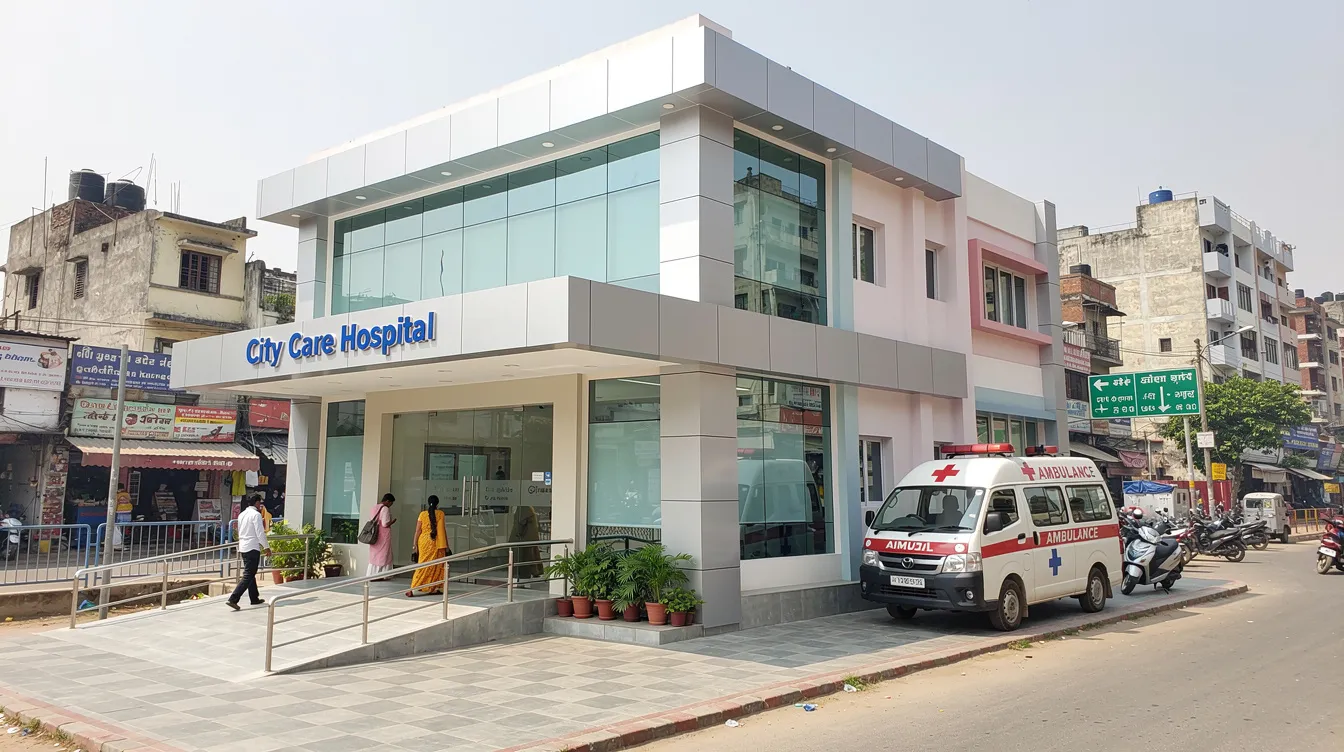
Small Hospital Setup Cost in India – Quick Comparison (10, 20, 30 & 50 Beds)
Before diving into detailed breakdowns, here is a quick visual comparison across the four hospital sizes most commonly planned in India.
| Hospital Size | Indicative Project Cost (Excl. Land) | Typical Built-up Area | Equipment Intensity | Working Capital (First 6 Months) | Suitable Project Profile |
|---|---|---|---|---|---|
| 10 Bed | ₹1.5–2.5 crore | 5,000–7,000 sq ft | Basic to Moderate | ₹15–30 lakh | Small nursing home, maternity unit in tier-3 town |
| 20 Bed | ₹3–5 crore | 10,000–14,000 sq ft | Moderate | ₹30–50 lakh | General/specialty hospital, district town |
| 30 Bed | ₹5–8 crore | 15,000–20,000 sq ft | Moderate to High | ₹50–80 lakh | Secondary care hospital with ICU/OT, tier-2 city |
| 50 Bed | ₹8–15 crore | 25,000–35,000 sq ft | High | ₹80 lakh–1.5 crore | Structured secondary care / basic multi specialty hospital |
Key assumptions behind these ranges:
- Land cost is excluded; costs assume mid-range construction in a tier-2 or tier-3 city.
- Adding advanced diagnostic equipment, ICU/OT complexity or premium interiors pushes the project into the upper band or beyond.
- A 50-bed hospital costs ₹15–30 crore depending on location when land and higher specifications are included.
- These are illustrative planning ranges based on 2025–2026 pricing. They should not be treated as quotations or universal standards.
What Is Included in Small Hospital Project Cost?
Hospital setup cost in India is the sum of multiple cost heads – not just construction and medical equipment. The major components include land, building, equipment, furniture, utilities, IT systems, pre-operative expenses, contingency and working capital. Together, these form the total project cost on which bank finance, DSCR and repayment capacity are evaluated.
Land – Owned vs Leased Premises
Some projects start on family-owned land, others require fresh purchase, and many small hospitals now operate from leased commercial or institutional buildings. Purchasing land adds heavily to the upfront outlay; leasing reduces initial capital but shifts the burden to monthly operating cost.
Land acquisition can cost ₹700 to ₹20,000 per square foot depending on city and micro-location. In absolute terms, land costs for acquiring or leasing can range from ₹1 crore to over ₹12 crore depending on the location.
Indicative plot requirements: roughly 0.1–0.2 acre for a 10-bed nursing home, up to about 0.5–1 acre for a compact 50-bed hospital. How much land is needed ultimately depends on local by-laws and FSI norms. In metro cities, land alone can exceed the entire hospital infrastructure cost, which is why many DPRs show land as a promoter’s existing asset.
Hospital Building and Civil Construction
Hospital construction cost in India for small hospitals includes RCC structure, internal partitions, OT/ICU-friendly flooring, plumbing, staircases and basic external development. Civil construction costs average ₹3,000 to ₹4,500 per square foot for hospital buildings, with metro and NABH-ready projects sometimes pushing beyond ₹5,000–₹6,500 per square foot.
Hospital infrastructure must accommodate medical gas systems, space for diagnostic equipment, stretcher-friendly lifts and fire exits – making hospital construction materially more expensive than a regular commercial building. Construction costs range from ₹3,200 to ₹4,500 per square foot for standard hospital-grade work in most tier-2 cities. Promoters should finalise a basic concept plan and bed-wise departmental layout before freezing budgets.
Medical Equipment
Medical equipment generally comprises 30% to 45% of the total setup budget for small hospitals. For a 50-bed hospital, medical equipment costs ₹2–4 crore covering diagnostics, ICU and OT requirements. Diagnostic equipment costs ₹2-4 crore for a 50-bed hospital when X-ray, ultrasound, lab analyser and possibly CT are included.
Key categories for 10–50 bed hospitals: patient monitors, OT tables and lights, ventilators, anaesthesia machines, syringe/infusion pumps, ultrasound, X-ray, ECG, basic lab equipment, autoclaves and sterilizers. Equipment selection should match the proposed specialty mix – a 20-bed orthopaedic hospital may prioritise C-arm over CT scanner.
Medical equipment costs can exceed initial estimates by 20-30% once installation, accessories and customs duties on imported items are factored in. Leasing high-cost equipment can reduce Year-1 capital outlay by 30–40%, which is worth evaluating for capital-constrained projects. A detailed hospital equipment list and cost annexure is usually prepared as part of the DPR.
Furniture and Fixtures
Hospital beds range from ₹25,000 to ₹1.5 lakh each depending on type (manual, semi-electric, ICU). A 30-bed hospital needs ₹20–₹45 lakh for beds alone when you include ICU beds, delivery tables and recovery stretchers. Furniture cost covers mattresses, over-bed tables, bedside lockers, waiting-area chairs, nursing stations, counters and storage – typically 5–10% of total project cost.
Electrical and Utility Infrastructure
MEP items – internal wiring, LT panels, UPS, DG set, lift, HVAC, medical gas pipeline, oxygen manifold or PSA plant, water tanks and fire safety systems – form a major line-item beyond pure civil construction. Even for a 20–30 bed hospital, this head may require several tens of lakhs. Fire safety compliance and the local fire department NOC requirements add both cost and time.
IT and Hospital Management Systems
Modern hospitals need computers, networking, CCTV, biometric access and a hospital management system covering registration, billing, pharmacy and inventory management. For a 10–20 bed hospital, IT cost may be a few lakhs. A 50-bed facility with hospital management software, EMR integration and digital systems may budget ₹15–30 lakh. Interiors and IT can add 10-15% to total project costs.
Ambulance and Vehicles
An ambulance is not mandatory for every 10-bed hospital, but many 20–50 bed hospitals invest in at least one basic life support ambulance (₹8–15 lakh including vehicle and basic equipment). Some promoters initially tie up with third-party ambulance providers to reduce upfront project cost.
Preliminary and Pre-operative Expenses
This includes architect fees, professional fees for CA and consultants, legal documentation, hospital registration, clinical establishment registration, drug license, fire safety NOC, biomedical waste authorisation, interest during construction, branding, training marketing and trial-run expenses. Pre-opening expenses are often underestimated in hospital budgets.
Mandatory licenses and approvals include health licenses, fire safety NOCs, and biomedical waste authorization. Key licenses include a clinical establishment license and fire safety NOC, and the licensing process typically takes 6 to 12 months. Operating without proper licenses is illegal under Indian law, and consultant fees can add 20-30% to total licensing costs. NABH accreditation costs range from ₹2 lakhs to ₹10 lakhs for NABH accredited hospitals. Regulatory costs depend significantly on state-specific requirements for healthcare facilities. Statutory approvals can increase project costs significantly – this is an area where many first-time promoters face last-minute funding gaps.
The clinical establishments act registration must be completed in each state as per the clinical establishments act, and relevant approvals from the chief medical officer or local health authority should be planned for in the project budget. Hospitals handling radioactive imaging equipment may also require clearance from the atomic energy regulatory board.
Contingency Provision
A prudent project report usually keeps a contingency of about 5–10% of hard costs. Hidden costs can add 15-20% to your budget when design modifications, regulatory changes or material price escalation occur during execution. Banks look positively at a reasonable contingency provision.
Working Capital Requirement for Small Hospitals
Working capital covers 4–6 months of operational costs – salaries, medicines and consumables, electricity, oxygen, rent, housekeeping, administration, marketing and maintenance. Monthly operational costs for a 30-50 bed hospital can range from ₹20 lakh to ₹60 lakh. A typical 20–30 bed hospital may require working capital in the range of ₹30–80 lakh.
Under-budgeting working capital is a major reason new hospitals face cash flow pressure despite heavy investment in hospital infrastructure.
10 Bed Hospital Setup Cost in India – Indicative Structure
A typical 10-bed hospital or nursing home operates as a small clinic or general hospital in a tier-2/tier-3 city: OPD, 8–10 general ward beds, possibly 1–2 labour/observation beds, a basic procedure room, small lab collection centre and pharmacy. Such units often work from G+1 or G+2 buildings with about 5,000–7,000 sq ft built up area, sometimes on leased premises.
| Cost Head | Indicative Range (₹ Lakh) |
|---|---|
| Building/Interiors (renovation or owned) | 40–80 |
| Medical Equipment | 35–60 |
| Furniture & Fixtures | 10–20 |
| Electrical & Utilities | 15–30 |
| IT & HMS | 3–8 |
| Pre-operative & Licenses | 10–20 |
| Contingency (5–8%) | 8–15 |
| Working Capital (4–6 months) | 15–30 |
| Total (excl. land) | ₹1.5–2.5 crore |
If the building is already owned and needs only renovation, the total 10 bed hospital project cost could drop below ₹1.5 crore. Greenfield construction or high-rent metro premises push costs toward the upper band. Even a 10-bed unit requires proper hospital registration, a drug license for pharmacy, fire NOC and biomedical waste management rules compliance.
20 Bed Hospital Setup Cost in India – From Nursing Home to Small Hospital
A 20 bed hospital typically features OPD, 12–14 general/semi-private beds, 2–3 deluxe rooms, 2–3 ICU/recovery beds, one OT, basic diagnostics (X-ray, USG, small lab) and 24×7 pharmacy. Built-up requirement is approximately 10,000–14,000 sq ft.
A 20-bed hospital typically costs ₹8–15 crore to set up when land purchase is included. Excluding land, the project cost is closer to ₹3–5 crore for mid-range specifications.
| Cost Head | Indicative Range (₹ Lakh) |
|---|---|
| Building & Interiors | 100–180 |
| Medical Equipment | 80–140 |
| Furniture & Fixtures | 20–35 |
| Electrical, MEP & Utilities | 30–55 |
| IT & HMS | 5–12 |
| Pre-operative & Licenses | 15–25 |
| Contingency | 15–25 |
| Working Capital (6 months) | 30–50 |
| Total (excl. land) | ₹3–5 crore |
A 20-bed hospital requires 2–3 qualified doctors and at least 8–12 nurses, plus technicians and support staff. Manpower expansion compared to a 10-bed unit raises both hospital manpower cost and working capital. A 20-bed unit is often the sweet spot for doctor-promoters planning a credible secondary care facility – a tailored hospital project report for bank loan is strongly recommended at this level.
30 Bed Hospital Setup Cost in India – Structured Secondary Care Facility
A 30-bed hospital usually functions as a full-service small general or multi specialty hospital with segregated wards, one or two operation theatres, a small ICU/HDU (4–6 beds), labour room, diagnostic equipment and a more prominent emergency unit. Approximate built-up area: 15,000–20,000 sq ft.
| Cost Head | Indicative Range (₹ Lakh) |
|---|---|
| Building & Civil Work + Interiors | 180–300 |
| Medical Equipment (incl. OT/ICU) | 140–250 |
| Furniture & Fixtures | 30–55 |
| Electrical, MEP, Medical Gas, Fire Safety | 50–90 |
| IT & HMS | 8–18 |
| Pre-operative & Licenses | 20–35 |
| Contingency | 25–40 |
| Working Capital (6–9 months) | 50–80 |
| Total (excl. land) | ₹5–8 crore |
At 30 beds, many promoters start considering in-house X-ray, ultrasound and a small pathology lab. Detailed guidance on pathology lab setup cost and equipment is available for readers planning stronger diagnostics. Certain economies of scale emerge at this size – cost per bed for equipment rooms, IT and some utilities may fall compared with 10–20 bed projects.
50 Bed Hospital Setup Cost in India – Larger Small Hospital Model
A 50-bed hospital sits at the upper end of “small hospital” – a structured secondary care hospital often with 3–4 OTs, separate ICU/HDU (a 50-bed hospital should have 5–8 ICU beds), emergency, labour rooms, diagnostics (USG, X-ray, well-equipped lab and sometimes CT), pharmacy and more elaborate infrastructure. Built-up requirement: 25,000–35,000 sq ft.
A 50-bed hospital costs ₹15–30 crore in India when land, premium interiors and full diagnostics are included. Excluding land, the range is ₹8–15 crore. Medical equipment for a 50-bed hospital costs ₹2 to ₹4 crore.
| Cost Head | Indicative Range (₹ Lakh) |
|---|---|
| Building & Civil Work + Interiors | 350–550 |
| Medical Equipment | 200–400 |
| Furniture & Fixtures | 50–85 |
| Electrical, MEP, Medical Gas, HVAC | 80–150 |
| IT, HMS & Digital Infrastructure | 15–30 |
| Pre-operative & Licenses | 30–50 |
| Contingency | 40–65 |
| Working Capital (6–9 months) | 80–150 |
| Total (excl. land) | ₹8–15 crore |
Some 50-bed units move close to a basic multi-speciality configuration. Readers comparing with larger projects can refer to specialised resources on Multi-Speciality Hospital Project Cost in India for wider benchmarks. Banks treat 50-bed projects as more structured healthcare ventures – detailed DPR, hospital financial projections for DPR and DSCR analysis become critical.
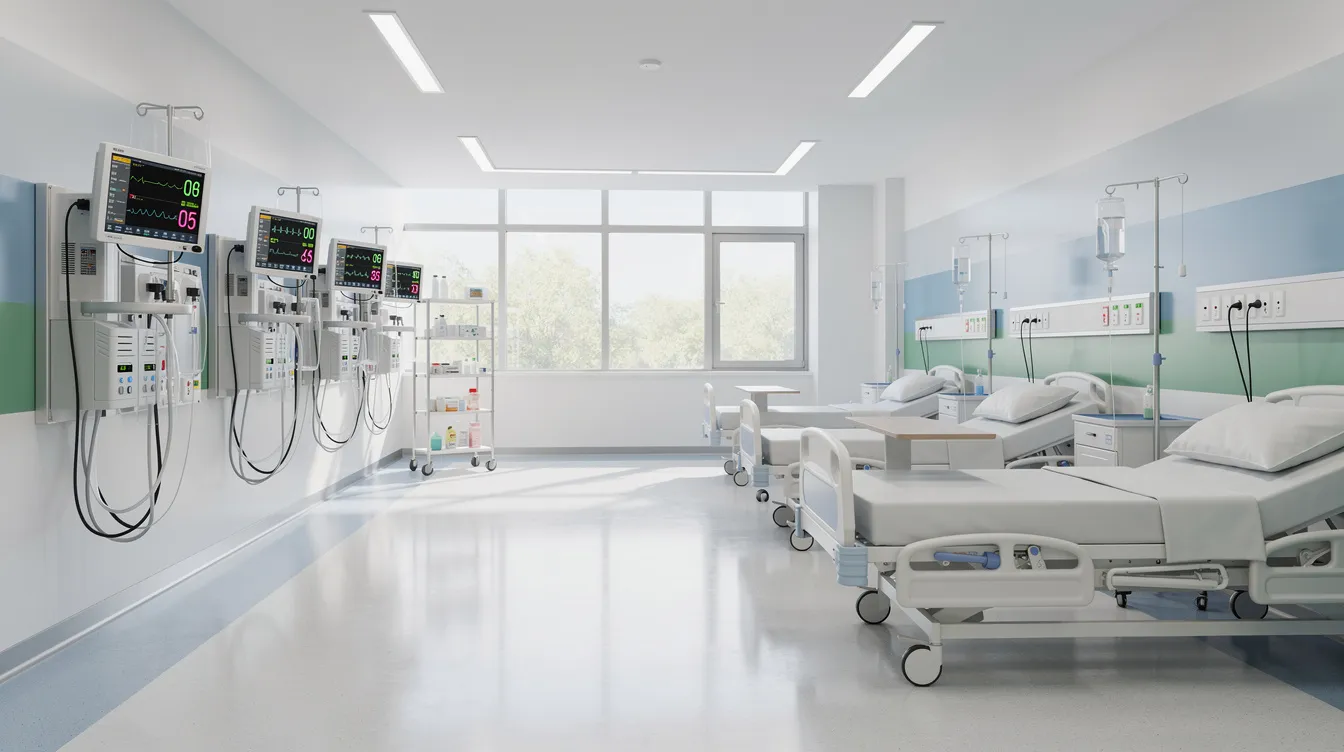
10 vs 20 vs 30 vs 50 Bed Hospital – Cost Comparison
Cost does not increase linearly with bed count. Certain fixed infrastructure – an OT shell, HMS, medical gas pipeline – is needed even at small scale, so incremental cost per additional bed often reduces at higher capacities.
| Parameter | 10 Bed | 20 Bed | 30 Bed | 50 Bed |
|---|---|---|---|---|
| Total Project Cost (excl. land) | ₹1.5–2.5 cr | ₹3–5 cr | ₹5–8 cr | ₹8–15 cr |
| Built-up Area | 5,000–7,000 sq ft | 10,000–14,000 sq ft | 15,000–20,000 sq ft | 25,000–35,000 sq ft |
| Medical Equipment Budget | ₹35–60 L | ₹80–140 L | ₹140–250 L | ₹200–400 L |
| Working Capital (6 months) | ₹15–30 L | ₹30–50 L | ₹50–80 L | ₹80–150 L |
| Manpower Intensity | Low | Medium | Medium-High | High |
| Infrastructure Complexity | Basic | Moderate | Structured | Full secondary care |
Per bed cost averages ₹15–25 lakh for basic small hospitals and can reach ₹50–90 lakh per bed for well-equipped multi-speciality configurations. Adding ICU, OT complex or advanced diagnostic equipment sharply changes per-bed economics.
Small Hospital Cost Per Bed in India – How Useful Is It?
Many promoters ask for a simple “per bed” estimate. While useful as a sense-check, this metric can be misleading. Two 20-bed hospitals may have completely different investments: one with only general wards and basic diagnostics might cost ₹15–20 lakh per bed, while another with ICU, modular OT and extensive diagnostic equipment could reach ₹40–60 lakh per bed.
Final small hospital project cost must be calculated from line-item budgets in a DPR. In financial appraisal, lenders look more at overall project gearing, cash accrual and hospital DSCR and loan repayment capacity than at nominal cost per bed alone.
Built-up Area Required for a Small Hospital (10–50 Beds)
There is no single statutory national figure for square foot per bed. However, small hospitals typically require 500 to 650 sq. ft. of built-up area per bed as a practical planning range. For a well-planned 50-bed unit, this may tighten to 350–550 sq ft per bed due to shared infrastructure efficiencies.
Plot area may need to be 1.5–2 times built-up to allow parking, ramps, fire tender movement and future growth. Architects familiar with hospital projects should always validate these numbers against local bye-laws and Indian public health standards before promoters freeze hospital construction or sign building leases.
Medical Equipment Cost for a Small Hospital
Medical equipment costs can reach ₹2 to ₹4 crore for diagnostics alone in a 50-bed hospital. For smaller facilities, equipment cost scales down but remains a substantial investment. A useful approach is to group equipment into practical categories: ward and monitoring equipment, emergency and OT equipment, ICU equipment, diagnostic equipment (X-ray, ultrasound, lab equipment), sterilization/CSSD and pharmacy support equipment.
For readers building diagnostic-heavy facilities, specialised resources such as diagnostic centre equipment list and cost provide deeper item-level guidance. Many hospitals also explore equipment financing or annual maintenance contracts with vendors to manage cash flow.
Manpower Requirement and Salary Cost
Staffing typically represents 60% to 70% of recurrent hospital expenditure – making manpower cost the single largest operating line item. Staffing costs are a significant part of hospital budgets across all hospital sizes.
Typical staff categories: full-time and visiting doctors, nursing staff across shifts, lab and radiology technicians, pharmacists, front-office and billing staff, housekeeping, security, maintenance and administrative staff. Hospitals require 1 nurse per 6 general ward beds as a baseline, with higher ratios for ICU.
You must hire licensed medical professionals for all clinical roles. A 20-bed hospital needs at least 8–12 nurses and 2–3 qualified doctors. Salary budgets should allow for annual increments and reflect local market demand – underestimating manpower cost is a common error in early project spreadsheets. Even a non medical person opening a hospital must ensure that licensed medical professionals manage all clinical operations, and any non medical entrepreneurs involved should structure governance accordingly.
Monthly Operating Cost of a Small Hospital
Lenders and investors focus heavily on ongoing operational costs, as these determine repayment capacity. Key recurring expenses include salaries and professional fees, medicines and consumables, lab reagents, utilities (electricity, water, oxygen and medical gases), housekeeping, biomedical waste disposal under biomedical waste management rules, annual maintenance contracts for equipment, IT subscriptions, rent (if on lease), insurance premiums and marketing expenses.
Monthly operational costs for a 30-50 bed hospital can range from ₹20 lakh to ₹60 lakh. In early months, when occupancy is still building, the hospital must fund a portion of these expenses from reserves or sanctioned working-capital limits.
Revenue Model and Occupancy for a Small Hospital
Revenue for a small hospital comes from OPD consultations, inpatient services (bed/room rent), surgeries and procedures, ICU charges, diagnostics (lab and imaging), pharmacy, day-care procedures and health packages. Hospital size alone does not determine revenue – patient volumes, bed occupancy percentage, average length of stay and average revenue per occupied bed drive the numbers.
Realistic financial projections should not assume full occupancy from month one. A practical ramp-up pattern: 25–30% occupancy in year one, rising gradually to 60–70% over 3–4 years. This progression directly impacts revenue, cash flow and the hospital’s ability to service term-loan instalments, making it central to any detailed feasibility study and business plan.
Project Cost and Means of Finance for a Small Hospital
Total small hospital project cost must be matched with an appropriate hospital project cost and means of finance structure. A typical split for a ₹6 crore 30-bed hospital project: 30–35% promoter contribution (including personal savings and unsecured loans) and 65–70% bank term loan, with exact ratios depending on lender policy and collateral. Some promoters also explore private equity, government schemes for healthcare facilities, or doctor loans from specialised lenders.
Over-leveraging can strain DSCR if occupancy ramps up slower than projected. A balanced mix is always preferable.
Illustrative 20-Bed Hospital Project – Cost, Finance and Repayment Logic
To show how project cost, finance, revenue and repayment connect, here is a simplified example of a 20-bed hospital in a tier-2 city (all figures illustrative).
Project Cost Summary:
| Head | ₹ Lakh |
|---|---|
| Building & Interiors | 140 |
| Medical Equipment | 110 |
| Furniture & Fixtures | 25 |
| Electrical, MEP & Utilities | 40 |
| IT & HMS | 8 |
| Pre-operative & Licenses | 20 |
| Contingency | 17 |
| Working Capital (6 months) | 40 |
| Total | ₹400 lakh (₹4 crore) |
Means of Finance:
| Source | ₹ Lakh | % |
|---|---|---|
| Promoter Contribution (Equity) | 130 | 32.5% |
| Bank Term Loan | 250 | 62.5% |
| Unsecured Loans | 20 | 5% |
| Total | 400 | 100% |
Key Assumptions:
- Occupancy: ~25% in year 1, rising to 55–60% by year 3
- Average revenue per occupied bed: ₹3,500–₹5,000/day (including OPD, diagnostics, pharmacy)
- Monthly operating cost at moderate occupancy: ~₹12–18 lakh
- Target average DSCR over loan tenure: 1.3–1.5
CA Manish Gugliya would refine these into detailed hospital financial projections including projected P&L, cash flows, working capital assessment and loan repayment schedule for a Small Hospital Project Report.
Bank Loan for Setting Up a Small Hospital in India
Banks evaluate a 10–50 bed hospital proposal based on promoter profile, medical or professional experience, project location, total hospital project investment, and security available. For business loans or project-specific term loans, lenders examine viability of cost estimates, adequacy of promoter contribution, projected occupancy, revenue robustness, working capital planning and expected DSCR.
Lenders also examine statutory compliance plans – hospital registration, drug license, pollution control and fire safety – as non-compliance can delay operations. For guidance on how banks assess hospital term loans, promoters should understand that no CA or consultant can guarantee loan sanction; approval depends on individual bank policy and project appraisal. New hospitals in rural or underserved areas may also benefit from priority sector lending or government schemes for healthcare.
Small Hospital Project Report / DPR and Financial Projections
A properly prepared DPR brings together technical, market and financial details into a coherent document. Contents include: promoter profile, project concept and location, bed configuration, proposed departments and diagnostic facilities, detailed project cost, means of finance, implementation schedule and market assessment.
The financial section covers year-wise revenue assumptions, manpower and operating expenses, projected Profit & Loss Account, Balance Sheet, cash-flow statements, hospital working capital requirement and DSCR calculation based on term-loan repayment. Projections must be internally consistent – bed occupancy, average tariff and number of procedures must logically support the revenue line rather than being arbitrary percentages. Operational efficiency and patient trust are built over time, and projections should reflect this reality.
DSCR, Break-even and Loan Repayment Capacity
Debt Service Coverage Ratio (DSCR) is the ratio of cash accrual available for servicing term-loan instalments to the actual instalments due. Banks typically look for an average DSCR of 1.3–1.6 over the loan period.
Hospital break-even occurs when contribution from OPD and IPD services covers fixed costs including interest. For example, if a 20-bed hospital has fixed monthly costs of approximately ₹15 lakh and contribution per occupied bed day averages ₹3,500, the hospital needs about 143 occupied bed days per month – roughly 24% occupancy – to break even at a basic level. More advanced hospitals with higher fixed costs will need higher occupancy.
Premium hospitals with larger project budgets face greater break-even pressure but also enjoy higher per-bed revenue potential. Realistic projections are non-negotiable for assessing repayment capacity for a hospital loan.
Factors That Can Increase or Reduce Small Hospital Setup Cost
Cost-increasing factors:
- Metro cities typically requires higher construction and land cost
- Premium interiors, modular OTs and full-fledged ICU
- High-end imported diagnostic equipment
- Extensive HVAC and MEP, in-house CT/MRI
- Long implementation periods causing interest during construction
Responsible cost-reduction strategies:
- Choosing a location with reasonable land cost but adequate market demand
- Leasing premises where commercially practical
- Phasing high-end diagnostic equipment acquisition
- Using appropriate (not over-specified) finishes
- Starting as a 20-bed hospital with provision to expand – this phased approach balances risk and return
Promoters should never reduce costs by compromising on essential safety, statutory compliance, oxygen and medical gas systems or minimum clinical establishment infrastructure. A no objection certificate from the local fire department remains mandatory regardless of hospital budget.
Common Mistakes While Estimating Small Hospital Project Cost
Seven to eight practical mistakes observed frequently in small hospital appraisals:
- Ignoring working capital entirely or budgeting only 1–2 months instead of 4–6
- Underestimating manpower cost – especially 24×7 nursing and technician coverage
- Assuming 70–80% occupancy from the first year
- Excluding pre-operative expenses and statutory licensing costs
- Omitting interest during construction on disbursed loan tranches
- Not budgeting for IT, HMS and annual maintenance contracts
- Buying too much diagnostic equipment on day one without clear demand
- Preparing financial projections backwards from the desired loan amount instead of from realistic revenue and cost assumptions
Cross-checking each cost head with at least one market quotation or recent project benchmark can materially reduce the risk of under- or over-budgeting.

Conclusion – Moving from Bed Count to Bankable Plan
The investment required for a 10, 20, 30 or 50 bed hospital in India cannot be calculated by multiplying bed strength with a flat cost-per-bed figure. It must reflect the land/building situation, hospital construction standard, medical equipment selection, hospital infrastructure cost, working capital and realistic revenue potential.
A customised Small Hospital Project Report with detailed project cost, means of finance, hospital financial projections, working-capital assessment and DSCR analysis is the most reliable way to plan your own hospital project and present it credibly to banks or investors.
CA Manish Gugliya, through ProjectReportBank.com, assists promoters and doctors across India in preparing hospital DPRs, CMA data, financial feasibility studies and bank-finance presentations for small general and multi-speciality hospital projects.
Do not finalise land purchase, major medical equipment orders or long-term leases until a clear, numbers-backed feasibility and financing plan has been prepared and reviewed.
FAQs – Small Hospital Setup Cost and Financing in India
These questions address practical doubts that often arise after a first reading of small hospital cost estimates and DPR concepts.
Is working capital included in hospital project cost, or should it be arranged separately?
In professional DPRs, total project cost typically includes a separate line for working capital margin (often 4–6 months of operating expenses). Banks expect promoters to bring a portion of this margin as part of their contribution. In addition, banks may sanction working capital limits (cash credit/overdraft) based on projected turnover and stock/receivable levels – but these are separate from the term loan.
How much promoter contribution is usually required for a hospital loan?
Requirements vary by lender, but for small hospital projects banks often look for promoter contribution of around 25–35% of total project cost (including working capital margin). Higher equity contribution and adequate collateral generally improve approval chances. Final decisions rest with each bank’s internal policy.
Can a non-doctor entrepreneur start a small hospital in India?
Yes. Non medical entrepreneurs can legally own a hospital in India, but all clinical services must be managed by qualified and registered medical professionals. All statutory licences – clinical establishment registration, drug license, biomedical waste authorisation – must be obtained in the hospital’s name. Lenders will pay particular attention to the professional team, empanelled doctors and governance structure described in the project report. Whether a non medical person open a hospital successfully depends largely on assembling the right clinical and management team.
Is a DPR mandatory for bank finance for a 10–20 bed hospital?
While some very small loans may be sanctioned on a simpler proposal, most banks increasingly insist on a structured DPR for term loans funding 10–50 bed hospitals where the project cost runs into crores. A proper DPR helps both the promoter and the lender understand project risk, repayment capacity and sensitivity to occupancy or tariff changes – making it a practical necessity even when not formally mandated.
How often should the financial projections for a small hospital be updated?
Projections prepared at DPR stage should be reviewed at major milestones: before construction start, at mid-construction, just before commissioning, and at least annually during the first 3–5 years. Updating with actual occupancy, tariffs and expense trends helps promoters course-correct early, renegotiate loan terms where justified, and plan phased expansion in a financially sound manner.
Explore All General Hospital DPR Guides
Continue exploring our complete series on General & Small Hospital project planning, setup cost, equipment, financial projections, repayment capacity and bank finance.