Key Takeaways
This is a finance-focused guide to multi-speciality hospital equipment list and cost in India, written from the professional perspective of CA Manish Gugliya. Here are the essential points every hospital promoter should note before reading further.
- For most new multi-speciality hospitals, medical equipment and hospital machinery typically form about 35%–55% of total project cost, depending on diagnostics and ICU/OT configuration.
- There is no single “standard” hospital equipment cost – it varies with bed strength (50-bed vs 100-bed), specialties offered, level of technology, new vs refurbished equipment, and Indian vs imported brands.
- This article provides a department-wise multi-speciality hospital equipment list with indicative Indian cost ranges (not quotations), plus sample budgets for 50-bed and 100-bed hospitals useful for DPR preparation and bank loan proposals.
- Realistic equipment budgeting is critical for project reports, CMA Data, financial projections and term-loan appraisal.
- A comprehensive medical equipment list tailored to the hospital’s clinical plan – not copied from a generic internet checklist – is essential for a credible DPR.
Explore Multi-Speciality Hospital DPR Guides
Explore our complete series on Multi-Speciality Hospital project planning, financial analysis and bank finance.
Introduction: Why Equipment Cost Drives Multi-Speciality Hospital Projects
In a typical greenfield multi-speciality hospital project in India (commissioned between 2024–2026), medical equipment, hospital machinery, and biomedical devices are among the largest capital expenditure heads after land and building. Multi-specialty hospitals require specialized equipment for diagnostics and treatment across departments, and the investment in these medical devices determines not just clinical capability, but also the hospital’s revenue potential and financial viability.
For a 50–100 bed multi-speciality hospital, hospital equipment investment can easily range from about ₹6 crore to ₹25 crore or more, depending on diagnostic facilities (CT, MRI), ICU setup, operation theatre configuration, and technology level. This article focuses on hospital medical equipment and machinery costs – not overall project cost – while clearly distinguishing between movable medical equipment, hospital machinery and infrastructure (medical gas system, HVAC for OT, CSSD), and furniture and fixtures.
What makes any universal cost estimate impossible? The answer is a combination of factors: number of beds, bed mix (ICU vs ward), number and type of OTs, clinical specialties offered, diagnostic services (basic X-ray vs CT/MRI), level of automation, accreditation ambitions (NABH/NABL), redundancy requirements, and city or tier location. All figures mentioned in this article are indicative planning ranges compiled from typical Indian hospital projects for DPR and bank-appraisal purposes, and are not vendor quotations, catalogue prices, or professional valuations.
What Equipment Is Required for a Multi-Speciality Hospital?
An effective multi-speciality hospital equipment list must be department-wise and service-wise, prepared according to proposed departments rather than copied from another hospital. A multi-specialty hospital needs a core layer of equipment across departments to function effectively.
The major categories of hospital equipment and medical devices required for most multi-speciality healthcare facilities include:
- Diagnostic equipment – radiology, cardiology, pathology (diagnostic equipment identifies diseases and monitors body functions)
- Surgical equipment – essential in operation theaters, including surgical instruments, OT tables, and anaesthesia workstations
- ICU and critical-care equipment – ventilators, monitors, infusion pumps
- Emergency and life support equipment – indispensable in hospitals for rapid response
- Laboratory equipment – used for diagnostic tests and analysis
- Patient-care and nursing equipment – including hospital beds, wheelchairs, and vital sign monitors
- CSSD and sterilisation equipment – autoclaves, washer-disinfectors
- Medical gas pipeline systems – oxygen, vacuum, compressed air
- Therapeutic equipment – vital for treatment and recovery in various departments
- Medical furniture – enhances comfort and efficiency in patient care areas
- Supporting equipment – trolleys, IT/HMIS hardware, digital medical equipment that enhances patient care and diagnostics
For DPR and bank loan proposals, a CA or project-finance consultant typically structures the hospital machinery and equipment list by departments with item-wise quantity and cost estimates. The following sections provide a department-wise breakdown.
Department-Wise Multi-Speciality Hospital Equipment List & Indicative Cost in India
This is the core section containing practical, department-wise hospital equipment lists for a typical 50–100 bed multi-speciality hospital. All amounts are shown as broad ranges and labelled as approximate planning ranges, exclusive of GST, freight, and installation, for use in project reports and DPRs.
OPD and Consultation Rooms – Basic Clinical Equipment
OPD is the main patient-flow entry point in most multi-speciality hospitals and a clinic environment that drives referrals. Equipment here is relatively economical but must cover different types of basic examination needs. Digital blood pressure monitors display results in numeric format, replacing older mercury devices. Advanced digital thermometers replace conventional mercury thermometers. Pulse oximeters diagnose oxygen saturation in blood, and glucometers measure blood glucose levels for diabetes management.
| Equipment | Quantity (10–15 Room OPD) | Indicative Cost Range | Remarks |
|---|---|---|---|
| Examination couch | 10–15 | ₹15,000–₹30,000 each | Basic padded, adjustable |
| BP apparatus (digital) | 10–15 | ₹2,000–₹5,000 each | Blood pressure monitoring |
| Pulse oximeter | 8–12 | ₹2,500–₹8,000 each | Finger-tip or tabletop |
| 12-channel ECG machine | 2–3 | ₹65,000–₹1,25,000 each | ECG machines diagnose heart conditions by capturing electrical activity |
| Diagnostic set (otoscope, ophthalmoscope) | 5–8 | ₹20,000–₹40,000 each | For ENT/ophthalmology OPDs |
| Weighing scale | 5–8 | ₹3,000–₹8,000 each | Adult and paediatric |
| Minor procedure instruments | 3–5 sets | ₹10,000–₹25,000 per set | Including scissors, forceps, basic surgical tools |
Total OPD clinical equipment cost: approximately ₹12 lakh–₹30 lakh. Speciality OPDs (orthopaedics, ENT, dental, obstetrics) will require additional speciality-specific equipment.
Emergency and Casualty Department – Life-Saving Equipment
A 24×7 emergency area typically includes 4–8 monitored beds for a 50-bed facility and 8–15 beds for a 100-bed facility. Emergency departments need portable ultrasound and portable X-ray units for rapid diagnostics. Emergency carts are essential for managing acute medical situations. Suction machines remove fluids from a patient’s airway or surgical site. Doctors and nurses in this area must have access to essential ppe kits and supplies for infection control.
| Equipment | Quantity (6–10 beds) | Indicative Cost Range |
|---|---|---|
| Emergency bed with side-rails | 6–10 | ₹25,000–₹50,000 each |
| Multiparameter monitor | 6–10 | ₹80,000–₹1,60,000 each |
| Defibrillator | 1–2 | ₹1,50,000–₹3,50,000 each |
| Basic ventilator | 2–4 | ₹2,50,000–₹6,00,000 each |
| Infusion pump | 6–10 | ₹40,000–₹80,000 each |
| Crash cart (emergency trolley) | 2–3 | ₹25,000–₹45,000 each |
| Suction machine | 3–5 | ₹20,000–₹50,000 each |
Defibrillators deliver electrical energy to the heart for arrhythmias. Emergency department equipment block: roughly ₹40 lakh–₹1.2 crore. For DPR and bank appraisal, emergency equipment is essential for commissioning and cannot be deferred.
ICU and Critical Care Equipment – High-Cost, High-Impact Items
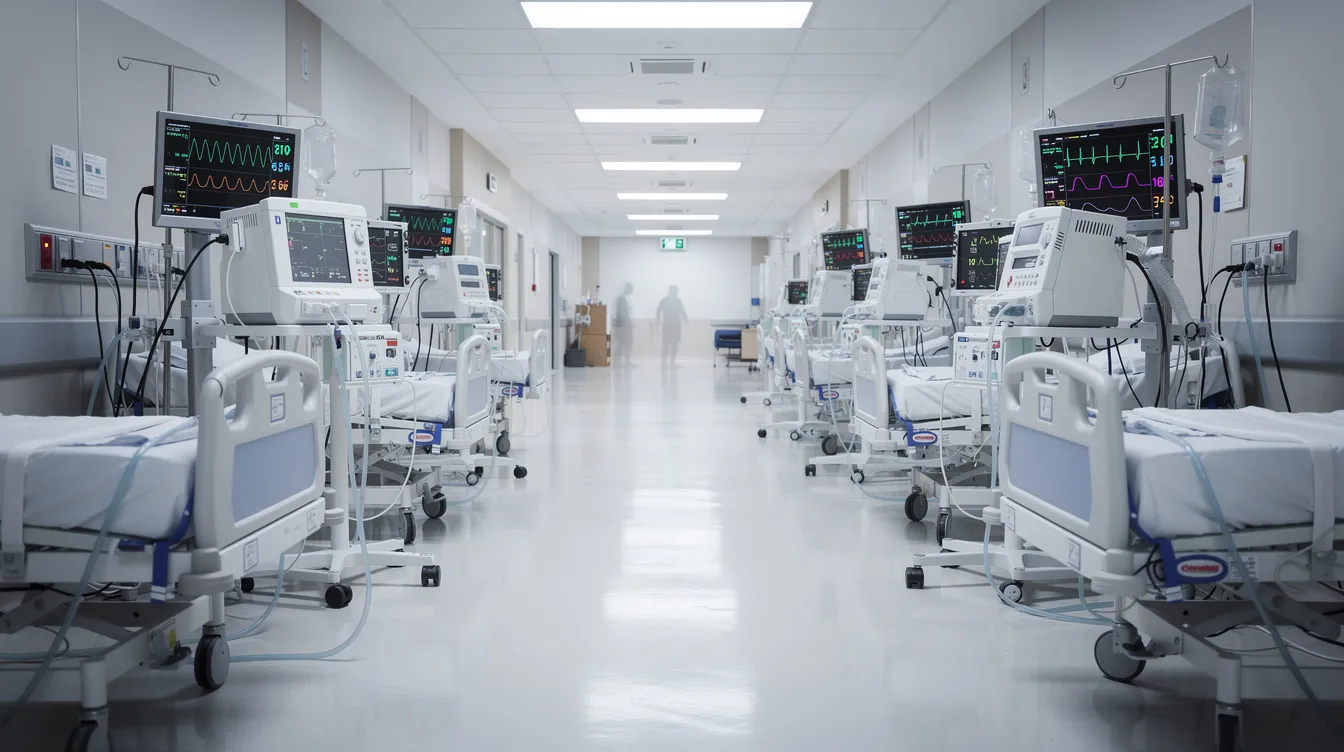
ICU equipment cost per bed can vary from about ₹5 lakh to ₹15 lakh or more. Patient monitors track vital signs and are essential in intensive care units. Patient monitors track heart rate and oxygen saturation continuously, and values are displayed on bedside screens. Ventilators assist patients who cannot breathe independently. Infusion pumps deliver controlled amounts of fluids and medications with precision.
| Equipment | Per 10-Bed ICU | Indicative Cost Range |
|---|---|---|
| Motorised ICU bed | 10 | ₹75,000–₹1,80,000 each |
| Multiparameter monitor | 10 | ₹1,00,000–₹2,00,000 each |
| ICU ventilator | 6–8 | ₹3,50,000–₹9,00,000 each |
| Syringe pump | 10–15 | ₹35,000–₹70,000 each |
| Infusion pump | 10–15 | ₹40,000–₹80,000 each |
| Defibrillator | 1–2 | ₹1,50,000–₹3,50,000 each |
| ABG analyser (shared) | 1 | ₹6 lakh–₹18 lakh |
| Central monitoring system | 1 | ₹5 lakh–₹20 lakh |
ICU equipment block: approximately ₹1 crore–₹2 crore (10 beds) and ₹2.2 crore–₹4 crore (20 beds). Key cost drivers include ICU level, redundancy, imported vs Indian brands, and whether additional devices like bedside ultrasound are included.
Operation Theatre (OT) Equipment and Surgical Instruments
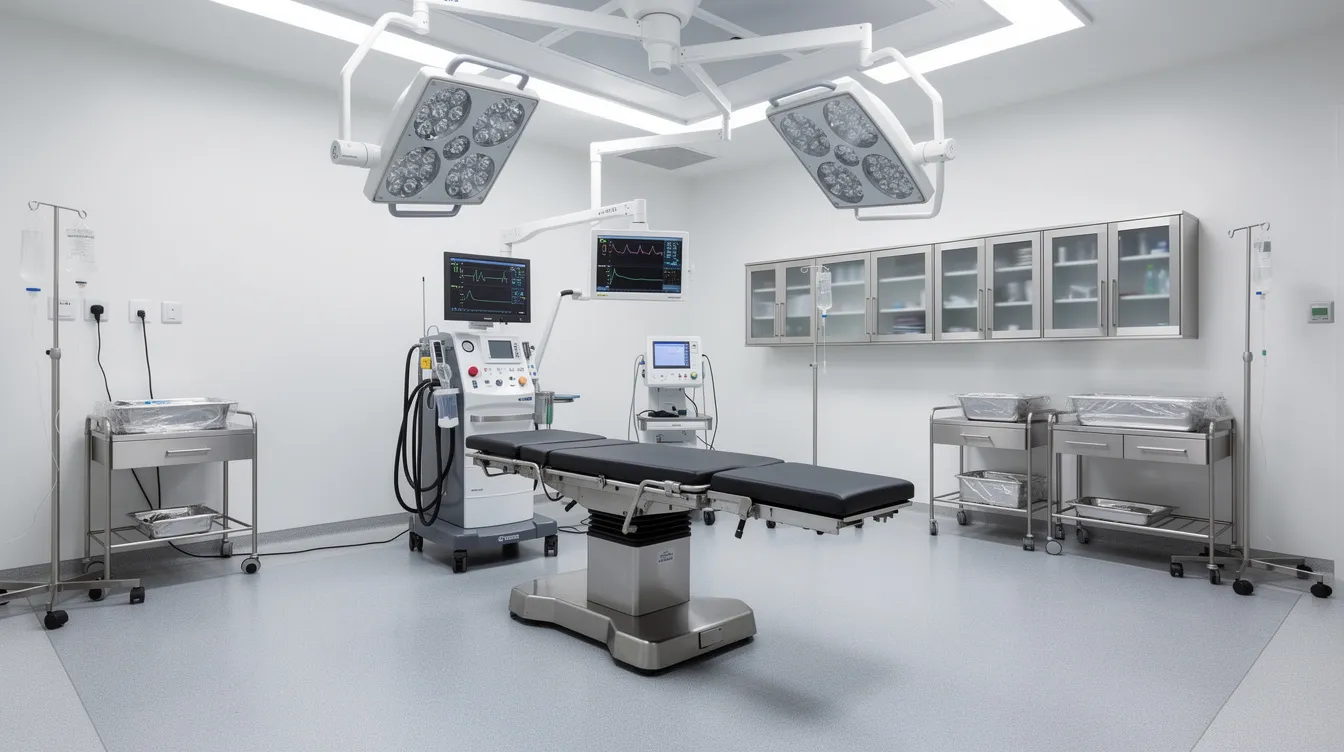
Multi-speciality hospitals with 2–5 operation theatres need a carefully planned OT equipment list. Surgical anesthesia workstations are crucial for managing patient anesthesia during operations – anesthesia machines regulate a precise mixture of medical gases during surgery for a pain free experience. Electrosurgical units control bleeding while cutting tissues during surgeries. C-arm fluoroscopy machines provide real-time X-ray imaging during interventions, and C-arm systems are used in orthopedics for real-time imaging during surgeries.
Surgical instruments include scalpels, forceps, and clamps. Mechanical cutters like scalpels are key surgical tools, while hemostatic instruments stop bleeding during surgery. Forceps are used to grasp and hold tissues during surgery. Surgical instruments are sterilized for safe use in operations. Suction devices clear airways during surgeries and emergencies.
| Equipment | Per OT | Indicative Cost Range |
|---|---|---|
| OT table (electro-hydraulic) | 1 | ₹2 lakh–₹7 lakh |
| OT light (LED shadowless) | 1–2 domes | ₹1.5 lakh–₹6 lakh per dome |
| Anaesthesia workstation | 1 | ₹4 lakh–₹12 lakh |
| Electrosurgical unit | 1 | ₹1 lakh–₹4 lakh |
| Patient monitor | 1 | ₹1 lakh–₹2 lakh |
| Laparoscopic system | 1 (where planned) | ₹15 lakh–₹60 lakh |
| C-arm | 1 (shared) | ₹12 lakh–₹40 lakh |
| Surgery instrument sets | Per OT | ₹2 lakh–₹8 lakh per OT |
3-OT complex (50-bed): ₹2.5 crore–₹5 crore. 4–5 OT complex (100-bed) with laparoscopy: ₹4 crore–₹8 crore. Speciality surgical equipment for procedures like neurosurgery or joint replacement can sharply increase the cost and should be commercially justified in financial projections.
CSSD and Sterilisation Equipment
Central Sterile Supply Department is fundamental for infection control. Hospital infection-control equipment includes hand-washing stations and PPE. PPE includes masks, gowns, gloves, and surgical goggles. PPE kits are essential for healthcare workers’ safety and became crucial during the COVID-19 pandemic. The government recommends 3-ply masks for infection control, and PPE kits were scarce during the first wave of COVID-19. This awareness about infection control now drives higher CSSD standards.
Key CSSD equipment includes autoclaves (₹4 lakh–₹12 lakh), ETO sterilisers (₹8 lakh–₹20 lakh), washer-disinfectors (₹12 lakh–₹35 lakh), and ultrasonic cleaners (₹1 lakh–₹3 lakh). Total CSSD investment: ₹30 lakh–₹1.2 crore depending on automation. CSSD layout should be planned in consultation with infection-control specialists and biomedical engineers, not purely on price comparison.
Radiology and Imaging Equipment – Major Cost Centre
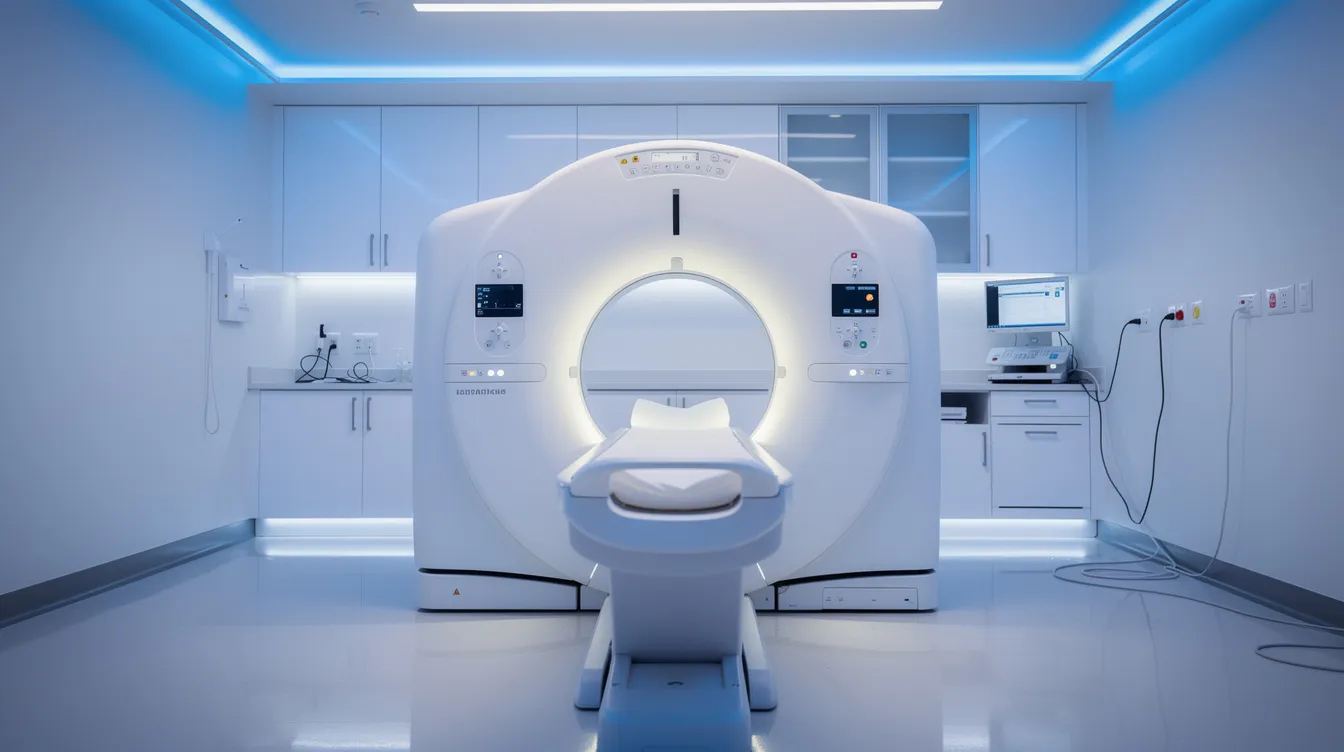
Radiology equipment is often the single largest component of medical equipment cost. X-ray machines produce radiographic images of bones and internal organs. Ultrasound machines visualize internal structures using high-frequency sound waves. CT and MRI scanners provide high-resolution imaging for various medical purposes. Magnetic Resonance Imaging provides high-resolution internal imaging. Diagnostic imaging systems are necessary for multi-specialty hospitals.
| Equipment | Indicative Cost Range (New) |
|---|---|
| Digital X-ray | ₹35 lakh–₹80 lakh |
| Portable X-ray | ₹10 lakh–₹25 lakh |
| Ultrasound (general) | ₹15 lakh–₹50 lakh per unit |
| C-arm (if not in OT) | ₹15 lakh–₹40 lakh |
| CT scan (16-slice) | ₹1.2 crore–₹2.5 crore |
| CT scan (64/128-slice) | ₹2.5 crore–₹6 crore |
| MRI 1.5T | ₹4 crore–₹9 crore |
| PACS/RIS + workstations | ₹15 lakh–₹60 lakh |
Mid-level radiology (X-ray + USG + basic CT): ₹1.5 crore–₹4 crore. With advanced CT + MRI: ₹8 crore–₹18 crore. According to Government of India GeM portal data, new CT equipment costs ₹4–20 crore and new MRI ₹9–28 crore depending on specifications. These decisions must be justified in the DPR with realistic patient volumes and referral patterns, as banks critically examine such expensive investments.
Pathology and Laboratory Equipment
Even a medium-sized multi-speciality hospital needs at least a basic in-house pathology and biochemistry lab. Biochemistry analyzers automate testing of blood and serum for chemical components. Hematology cell counters analyze blood samples for complete blood counts. Centrifuges spin blood samples to separate components like plasma.
Core lab equipment: biochemistry analyser (₹8 lakh–₹35 lakh), haematology analyser (₹6 lakh–₹25 lakh), electrolyte analyser (₹3 lakh–₹9 lakh), coagulation analyser (₹3 lakh–₹8 lakh), microscopes (₹40,000–₹2 lakh each), lab centrifuges (₹50,000–₹2 lakh). Total lab equipment: ₹60 lakh–₹2.5 crore depending on test menu and automation. Reagents and consumables including syringes and sample containers are ongoing operating costs, not CAPEX, but banks expect them modelled in working capital projections.
Cardiology Diagnostics and Non-Invasive Equipment
Most multi-speciality hospitals provide at least basic non-invasive cardiology services. Echocardiogram machines produce live images of heart dynamics using ultrasound. ECG machines capture electrical activity for diagnosis of heart conditions.
Key equipment: ECG machine (₹65,000–₹1,50,000), TMT system (₹6 lakh–₹18 lakh), Holter monitor (₹2 lakh–₹6 lakh), echocardiography machine (₹20 lakh–₹80 lakh). Basic non-invasive cardiology: ₹40 lakh–₹1.8 crore. Invasive cardiology (cath lab) adds ₹6 crore–₹20 crore and should be separately justified.
General Ward and Patient-Room Equipment
Although individual items like hospital beds are relatively low-cost compared to CT/MRI, they add up substantially. General patient-care equipment includes hospital beds, wheelchairs, and vital sign monitors.
| Item | Cost Range |
|---|---|
| Standard ward bed with mattress | ₹25,000–₹45,000 |
| Semi-private bed | ₹35,000–₹70,000 |
| Bedside locker | ₹4,000–₹10,000 |
| Overbed table | ₹5,000–₹12,000 |
| Wheelchair | ₹6,000–₹15,000 |
| Stretcher trolley | ₹18,000–₹45,000 |
Per-bed package cost (including furniture and accessories) is often ₹40,000–₹80,000. For 50–100 beds, total ward equipment budget: ₹40 lakh–₹1.5 crore. Nursing equipment like BP monitors, glucometers, and thermometers must also be planned.
Medical Gas Pipeline and Oxygen System
Medical gas pipeline systems (MGPS) and central oxygen plants are part of hospital infrastructure but are normally listed under hospital machinery and equipment in project reports. Components include central oxygen plant or manifold, vacuum plant, compressed medical air, pipeline network, bed-head panels, alarms, and control panels.
- 50-bed MGPS: ₹40 lakh–₹1.2 crore
- 100-bed MGPS: ₹80 lakh–₹2.5 crore
Regulators and accreditation bodies usually require proper documentation, testing, and verification successful certificates for MGPS installation before commissioning – under-budgeting this item can delay hospital opening.
Pharmacy, Blood Bank and Other Supporting Departments
Pharmacy equipment (medicine racks, drug refrigerators, deep freezers, dispensing counters) typically costs ₹10 lakh–₹35 lakh for a medium hospital store, excluding opening medicine stock which is working capital. Blood bank equipment (storage refrigerators, platelet agitators, centrifuges, deep freezers) ranges from ₹80 lakh–₹2 crore depending on regulatory requirements. Additional departments like dialysis, endoscopy, and physiotherapy each have separate equipment needs and should be budgeted only for services actually planned. A hospital security service desk and a waiting area with basic furnishing should also be accounted for. Never import a generic list – finalise services first, then prepare a customised hospital equipment list with price ranges.
Indicative Equipment Cost for 50-Bed and 100-Bed Multi-Speciality Hospitals
| Particular | 50-Bed Hospital | 100-Bed Hospital |
|---|---|---|
| Patient-care equipment (beds, ward) | ₹40 lakh–₹1.2 crore | ₹80 lakh–₹2.4 crore |
| ICU equipment | ₹1 crore–₹2 crore | ₹2.2 crore–₹4 crore |
| OT equipment | ₹2.5 crore–₹5 crore | ₹4 crore–₹8 crore |
| Diagnostic equipment (radiology + cardiology) | ₹1.5 crore–₹5 crore | ₹3 crore–₹12 crore |
| Laboratory equipment | ₹60 lakh–₹1.5 crore | ₹80 lakh–₹2.5 crore |
| Emergency equipment | ₹40 lakh–₹1.2 crore | ₹60 lakh–₹1.8 crore |
| CSSD | ₹30 lakh–₹80 lakh | ₹50 lakh–₹1.2 crore |
| Medical gas systems | ₹40 lakh–₹1.2 crore | ₹80 lakh–₹2.5 crore |
| Other equipment | ₹30 lakh–₹1 crore | ₹50 lakh–₹2 crore |
| Indicative Total | ₹6 crore–₹14 crore | ₹12 crore–₹25 crore |
Equipment cost does not increase proportionately with bed capacity because high-end diagnostic and surgical equipment (CT, MRI, CSSD, medical gas plant) often serves the entire hospital. These ranges should be refined for each project through actual vendor quotations and technical specifications from reputable manufacturers before finalising cost for a bankable DPR.
Key Drivers of Multi-Speciality Hospital Equipment Cost in India
Understanding cost drivers helps promoters decide where to invest and how to present a balanced hospital machinery and equipment list to lenders:
- Bed capacity and bed mix – ICU beds cost 5–10x more per bed than general ward
- Number and speciality of OTs – each additional specialised OT adds ₹50 lakh–₹2 crore
- Diagnostic capabilities – adding CT or MRI changes the total project cost materially
- Imported vs Indian brands and technology level – price gaps of 2–4x for similar equipment
- New vs refurbished medical devices – savings of 50–80% on imaging but with caveats
- Quality standards – NABH/NABL accreditation requires specific equipment standards
Life-cycle cost factors such as warranty periods, AMC/CMC charges, consumables, software licences, calibration, and staff training add to the “effective” equipment cost. Logistics costs including freight, customs duty (for imported equipment), installation, and performing security verification of vendors and service partners should also be factored into the DPR. Quality management of medical equipment encompasses procurement, maintenance, and safety over the equipment’s life. Avoid comparing vendors purely on lowest purchase price – compare total cost of ownership over 5–7 years with accurate alignment to projected patient volumes.
New vs Refurbished Hospital Equipment – Financial and Practical Considerations
Many Indian hospital promoters evaluate refurbished equipment – especially CT, MRI, and high-end OT systems – to reduce initial hospital setup equipment cost. Advantages include lower upfront investment, access to higher-end technology at mid-range cost, and easier cash-flow management in early years.
Key risks and evaluation points:
- Remaining useful life and availability of authorised service support in India
- Warranty and AMC terms from the vendor
- Regulatory compliance and proper security verification of the refurbishment process
- Bank/lender policy on financing refurbished assets (some banks impose stricter terms)
- Potential downtime risk affecting revenue and the efficiency of day to day operations
For critical equipment directly impacting patient safety (ventilators, anesthesia machines, ICU monitors), many hospitals prefer new equipment. A balanced multi-speciality hospital equipment investment mix may include new equipment for life-saving areas and carefully selected refurbished items for certain diagnostic functions, always documented clearly in the DPR. The bank verifies these details during appraisal.
Preparing an Equipment Budget for Hospital Project Report / DPR
A professionally prepared hospital equipment budget is the backbone of a credible DPR. Lenders quickly identify DPRs where equipment cost is inserted as a rough lump sum without item-wise logic. The process should follow this sequence:
- Finalise proposed specialties and services
- Fix bed configuration (ward, semi-private, deluxe, ICU, NICU, HDU)
- Decide number and type of OTs
- Define diagnostic services (radiology, cardiology, lab)
- Prepare department-wise hospital equipment lists aligned to these decisions
- Capture item name, specifications, quantity, and unit cost range based on 2–3 realistic vendor quotations
- Add installation, freight, civil/electrical provision, taxes (GST and customs), initial accessories, and software licences
- Include contingency margin (5%–10%) for technology or specification changes
- Map equipment procurement to the implementation schedule so that term-loan drawdowns and interest during construction are realistically modelled
Modern hospital procurement can also involve automated bot-driven alerts from supplier portals; hospitals should protect their procurement process from malicious bots on their website and ensure only genuine vendor responses through proper verification. When tracking online procurement orders, hospital IT systems may respond ray id-tagged confirmations on each page to maintain data integrity.
Hospital Equipment Cost and Bank Loan Assessment
From a banker’s perspective, hospital equipment cost is not just a technical number – it drives revenue potential, collateral coverage, and repayment capacity. Lenders review the hospital equipment list for project report submissions by examining:
- Department-wise equipment lists, quantities, and brand/technology levels
- Whether equipment is essential vs optional for the proposed bed capacity
- Whether high-cost items (CT/MRI, cath lab) are justified by projected case volumes
- Adequacy of promoter’s equity contribution for the chosen equipment mix
During credit appraisal, the hospital machinery and equipment list is cross-checked with revenue projections (number of scans, surgeries, bed-occupancy, ICU utilisation) to evaluate DSCR, break-even period, and overall viability. An inflated equipment plan without utilisation logic may reduce chances of favourable appraisal. Promoters should attach vendor quotations, technical brochures, and clear implementation timelines, and be prepared to discuss alternative scenarios – for example, starting without MRI initially if the bank finds equipment cost too aggressive for expected cash flows.
Equipment Cost vs Total Multi-Speciality Hospital Project Cost
Although this article focuses on medical equipment cost, lenders always view it within the context of total project investment. Other major components include land, building, interiors, HVAC, electrical infrastructure, fire safety, furniture, IT systems, pre-operative expenses, interest during construction, and initial working capital margin.
In many hospital projects, equipment cost for a 50–100 bed facility may constitute roughly 30%–50% of total project investment. For a complete view of all investment heads, refer to Multi-Speciality Hospital Project Cost in India which discusses land, building, and other non-equipment costs in detail. A financially sound DPR should show consistency between equipment plan, overall project cost, means of finance, and projected profitability over at least 7–10 years.
Equipment Procurement Strategy – One-Time Purchase vs Phased Procurement
New hospitals often struggle between buying all equipment upfront versus waiting and deferring some purchases. A practical approach groups equipment into:
- Essential pre-commissioning: ICU equipment, OT equipment, emergency equipment, basic radiology, CSSD, MGPS, minimum ward beds
- Utilisation-linked: Additional monitors, extra ventilators, second ultrasound
- Speciality-specific/advanced: MRI, cath lab, advanced laparoscopy
- Non-critical upgrades: Enhanced IT integration, convenience devices
Equipment essential for licences, patient safety, and core clinical services cannot be postponed. Banks may be more comfortable financing core equipment initially and can later consider equipment-specific loans when the hospital demonstrates stable cash flows – making the project more financeable in stages.
Common Mistakes When Estimating Hospital Equipment Cost
Many otherwise-strong DPRs lose credibility due to avoidable mistakes:
- Copying an equipment list from another hospital without matching specialties or focus
- Over-investing in high-end imported brands without realistic utilisation by the recovery period
- Ignoring installation, civil, electrical, and IT integration costs
- Excluding software, calibration, and staff training expenses
- Forgetting accessories (lead aprons for X-ray, probes for ultrasound, syringe-pump consumables)
- Relying on outdated or informal price information instead of fresh quotations
- Assuming unrealistically high occupancy or scan volumes from Day 1 while planning expensive CT/MRI
- Not accounting for diseases prevalence patterns and local demand when selecting diagnostic equipment
Hospital promoters should involve clinicians, biomedical engineers, and an experienced project-finance professional early while preparing the hospital machinery and equipment list.
Expert Note by CA Manish Gugliya – Aligning Equipment Plan with Financial Viability
In my project-finance practice, I have seen many hospital projects become stressed – not because of lack of demand, but because the equipment plan and debt structure were misaligned with realistic revenue potential.
A hospital equipment budget should not be prepared by merely adding vendor quotations. It must be internally consistent with bed capacity, specialty mix, expected patient volumes, pricing strategy, working capital needs, and term-loan repayment obligations.
Equipment-heavy configurations (for example, 64-slice CT + MRI + cath lab + 5 OTs) for a small or mid-size catchment area, without an adequate referral base and clinician team, can make DSCR weak even if the clinical plan appears impressive on paper. I advise promoters to run alternate scenarios – with or without MRI, staged addition of OTs – and choose the configuration that gives a balanced combination of clinical capability, capital intensity, and financial viability.
Expert Note by CA Manish Gugliya, Chartered Accountant, ProjectReportBank.com – specialising in hospital DPRs, CMA Data, financial projections and bank loan proposals for healthcare projects across India.
About CA Manish Gugliya
CA Manish Gugliya is a Chartered Accountant and lead consultant at ProjectReportBank.com with over 10–15 years of experience in project report preparation for hospitals and other MSME projects in India. His core competencies include multi-speciality hospital DPR preparation, detailed project reports for healthcare facilities, CMA Data preparation for bank finance, term-loan proposals, financial projections, DSCR analysis, and working-capital assessment.
He has worked with hospital promoters, doctors, diagnostic centres, and healthcare entrepreneurs in preparing realistic hospital equipment budgets, means-of-finance plans, and documentation for nationalised banks, private banks, and NBFCs. His advisory approach combines clinical-service planning inputs from doctors with financial modelling, sensitivity analysis, and practical understanding of bank appraisal processes.
Frequently Asked Questions
What is the approximate equipment cost of a small multi-speciality hospital in India?
For a relatively basic 30–40 bed multi-speciality hospital with 1–2 OTs, small ICU, X-ray, ultrasound, and basic lab, total hospital equipment cost might broadly fall in the ₹3.5 crore–₹8 crore range. The exact figure depends heavily on whether CT, higher-end OT equipment, and advanced ICU devices are included. Promoters should prepare a department-wise hospital equipment list and seek quotations for accurate figures.
How much ICU equipment cost should I plan per bed?
As a planning thumb-rule, many Indian projects budget about ₹5 lakh–₹10 lakh per ICU bed for essential equipment (motorised bed, monitor, ventilator share, pumps, suction, emergency trolley). This can rise to ₹12 lakh–₹15 lakh or more where higher-end ventilators, advanced monitoring, and redundancy are planned. ICU cost per bed should be estimated by listing exact items and validating through vendor quotations before including in the DPR.
Can refurbished CT or MRI be used in a new multi-speciality hospital?
Many Indian hospitals use refurbished CT/MRI systems, especially in Tier-2/Tier-3 cities, but decisions must factor in service support, warranty, compliance with radiation and safety norms, and the bank’s policy on financing refurbished assets. Promoters should obtain detailed technical inspection reports and AMC/CMC commitments before finalising, and document these clearly in the DPR.
Can medical equipment be financed separately from the main hospital project loan?
In practice, banks and NBFCs often structure separate equipment loans or vendor finance facilities for specific high-value items like CT, MRI, or cath lab equipment, sometimes with different tenures and security structures. Promoters should discuss this upfront with lenders and present clear hospital equipment cost break-ups in the project report.
Is it mandatory to attach detailed equipment quotations in a hospital DPR?
While not every bank mandates full quotations at the initial discussion stage, having at least indicative quotations or vendor budgetary offers for key equipment (CT/MRI, OTs, ICU, MGPS) makes the DPR substantially more credible. By the time the proposal reaches formal appraisal, promoters should ideally support the hospital equipment cost for project report with item-wise quotations from reputable suppliers.
If you are planning a new multi-speciality hospital and need a customised project report, DPR, financial projections, CMA Data, or bank loan documentation based on your actual hospital configuration, CA Manish Gugliya and team at ProjectReportBank.com can assist. Reach out for a professional consultation tailored to your project’s clinical plan, equipment requirements, and financing needs.
Explore All Multi-Speciality Hospital DPR Guides
Continue exploring our complete series on Multi-Speciality Hospital project planning, project cost, equipment, financial projections, repayment capacity and bank finance.