Key Takeaways
- There is no single standard “cost per bed” for a cancer hospital in India. Project cost varies by location, bed capacity, specialty mix, and whether radiation oncology or advanced diagnostics (PET-CT, MRI) are included.
- A 50 bed hospital focused on medical and surgical oncology in a Tier-2 city may require an illustrative investment of ₹15–30 crore excluding land. Adding LINAC-based radiation oncology can push the total project cost to ₹35–60 crore or more.
- Radiotherapy infrastructure (LINAC at ₹12–25 crore per machine, CT simulator, radiation bunker, and QA systems) and nuclear medicine can add ₹20–60+ crore to the oncology hospital project cost compared to a purely medical-surgical setup.
- Medical equipment typically accounts for 35% to 45% of the total setup budget for an oncology hospital, making equipment quotations a critical input for any cost estimation exercise.
- A bankable cancer hospital detailed project report must integrate project cost, means of finance, financial projections, working capital requirement, and DSCR analysis. CA Manish Gugliya and ProjectReportBank.com specialise in preparing such reports.
Explore Cancer Hospital DPR Guides
Explore our complete series on Cancer Hospital project planning, financial analysis and bank finance.
Introduction: Why Cancer Hospital Project Cost in India Has No Standard Figure
Setting up a dedicated cancer hospital in India requires higher capital expenditure than a standard multi-specialty hospital of equivalent bed count. The reason is straightforward: oncology demands specialised construction (radiation bunkers with lead shielding), imported high-value equipment (Linear Accelerators, PET-CT scanners), and a wider range of therapeutic services related to medical, surgical, and radiation oncology under one roof.
Costs for establishing oncology facilities vary based on geographic location and bed capacity. A 20-bed day-care chemotherapy centre in a Tier-3 town and a 100-bed tertiary cancer hospital with two LINACs and PET-CT in a metro city cannot be compared on the same “cost per bed” basis. The variables include land ownership, built up area, how many beds are planned, whether radiation oncology is included from Day 1, diagnostic depth, level of automation, and NABH accreditation aspirations.
This article is written from my perspective as a Chartered Accountant focused on project-finance and DPR preparation. It is intended for doctors, oncologists, hospital promoters, trusts, companies, and investors who need a practical project budget and cost estimation framework before approaching banks or investors. Clinical, architectural, and regulatory advice must come from qualified specialists in those fields.
Cancer Hospital Models in India and How They Change Investment Level
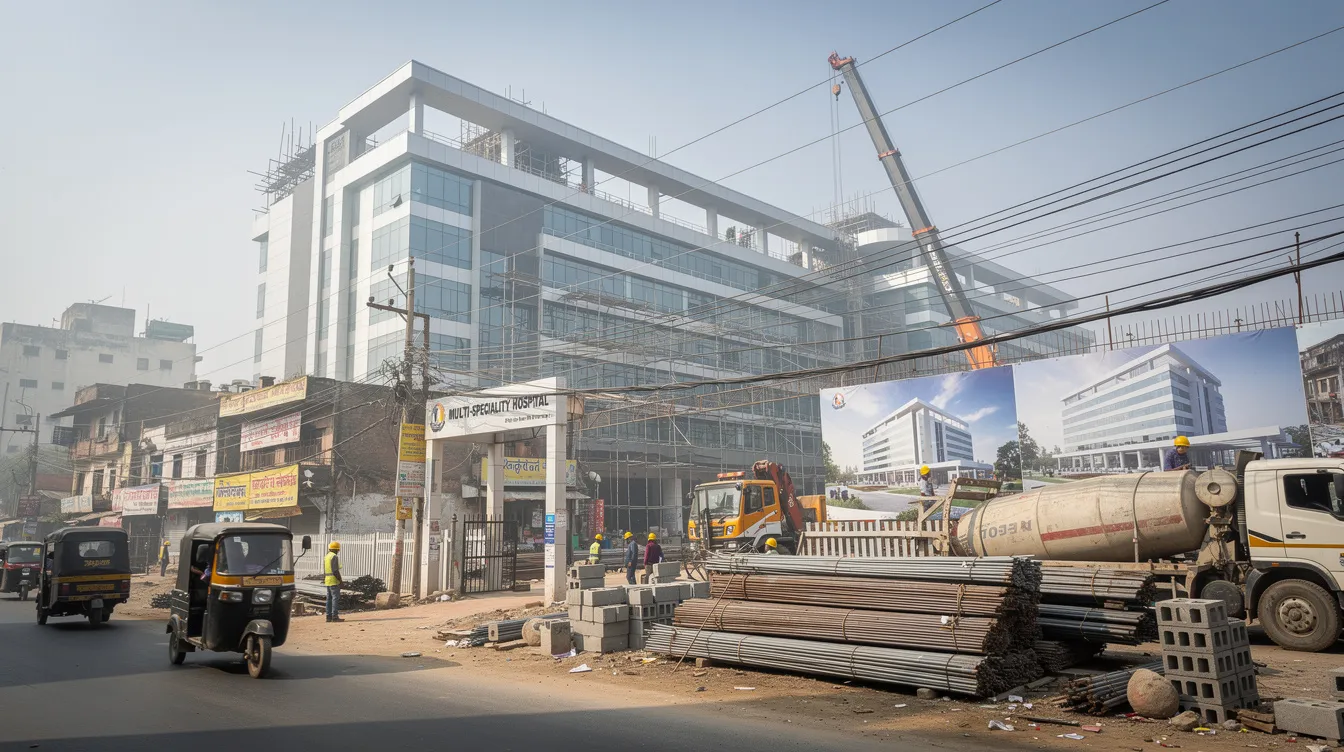
Cancer hospital setup cost depends first on the chosen model. Each configuration carries a different investment profile:
- Day-care chemotherapy centre: consultation rooms, infusion bays, pharmacy, basic lab. No inpatient beds or radiation. Lowest capex.
- Small oncology clinic (10–20 beds): limited IPD, day-care chemo, minor OT, basic diagnostics.
- Surgical oncology hospital (30–50 beds): multiple OTs, ICU beds, pathology, imaging. No LINAC.
- Medical oncology centre with IPD and day-care: chemo, palliative care, supportive services, pharmacy, lab.
- Radiation oncology centre: LINAC, CT simulator, bunker, brachytherapy. May operate as a standalone unit or within an existing facility.
- Integrated cancer hospital (50 beds): medical, surgical, and radiation oncology with diagnostics. Comprehensive cancer care setup.
- Tertiary cancer centre (100+ beds): all the facilities above plus nuclear medicine, PET-CT, bone marrow transplant, research, and advanced specialty services.
| Model | Capacity | Core Services | Radiotherapy? | Investment Intensity |
|---|---|---|---|---|
| Day-care chemo centre | Small | Consultation + Chemo | No | Low |
| Small oncology hospital | 20–30 beds | Medical + Surgical | No | Moderate |
| Mid-sized cancer hospital | 50 beds | Medical + Surgical + Diagnostics | Optional | High |
| Comprehensive cancer hospital | 50–100 beds | Medical + Surgical + Radiation | Yes | Very High |
| Tertiary cancer centre | 100+ beds | Full oncology + Nuclear Medicine | Yes | Very High |
Adding radiation oncology and nuclear medicine can multiply oncology centre setup cost in India even if the bed count stays constant.
Major Components of Cancer Hospital Project Cost in India
Any cancer hospital project cost in India is best understood as a structured list of components rather than a single lump sum. A credible project model for a comprehensive cancer center includes distinct expense categories for land, construction, and equipment.
Core cost heads include:
- Land and site development
- Hospital building and civil construction
- Interiors, MEP, and hospital infrastructure
- Medical equipment (non-radiation)
- Radiotherapy and nuclear medicine equipment
- Digital systems and IT (HIS, PACS, EMR)
- Statutory approvals, licensing, and compliance
- Pre-operative and professional expenses
- Contingency provision
- Margin money for working capital
| Component | Typical Share of Fixed Assets (50-bed, excl. land) |
|---|---|
| Building and civil work | 30–40% |
| Interiors and infrastructure | 10–15% |
| Medical equipment (non-RT) | 15–25% |
| Radiotherapy equipment (if included) | 15–30% |
| IT, furniture, pre-operative, contingency | 5–10% |
Banks and financial institutions expect a detailed project report structured along these heads for appraisal purposes.
Land and Site Development Cost
Land cost is often the single largest source of variation in cancer hospital project cost in India and should be kept as a separate line item. Land costs vary dramatically based on the city tier in which the hospital is built; a plot in a metro city may cost ₹30,000–₹80,000 per sq ft while Tier-2/3 cities range from ₹800–₹5,000 per sq ft. Land costs impact hospital project feasibility more than almost any other variable.
Three common scenarios:
- Land already owned by the promoter (reduces upfront capex; shown at book value in DPR)
- Land purchased at 2026 market rates (can run into several crores even in smaller cities)
- Long-term lease or space within an existing facility or multi-specialty campus
Site development elements include boundary wall, internal roads, parking for patients, staff and ambulances, approach road improvements, external utilities (water, power, STP), and landscaping. A 100-bed tertiary centre needs more parking, a separate radiation entry, and logistics docks compared to a 50-bed hospital, pushing site development costs higher.
Hospital Building and Civil Construction Cost
Cancer hospitals are more construction-intensive than general hospitals. Civil construction for cancer hospitals requires specialized structural engineering for radiation shielding; radiation bunkers use thick concrete walls and lead shielding that increase both cost and build time. Hospital construction costs vary by location and specialty mix.
Key functional blocks in a cancer hospital building: OPD and day-care chemo areas, IPD wards with isolation rooms, modular OTs for surgical oncology, ICU/HDU, radiation oncology zone, diagnostic imaging suite (CT/MRI/PET-CT rooms), pathology and lab, pharmacy, administration, and staff facilities. The built up area per bed is typically higher in oncology because of treatment and diagnostic spaces.
Construction cost benchmarks for 2026 (illustrative, not official standards):
| Location | Construction Cost Range (per sq ft) |
|---|---|
| Tier-2 / Tier-3 cities | ₹2,800 – ₹8,500 |
| Metro / premium hospitals | ₹8,000 – ₹12,000+ |
Hospital construction cost per bed ranges from ₹50 lakh to ₹1 crore excluding land, depending on specifications. NABH compliance increases hospital construction costs by 8–12% due to requirements for specific square feet allocations, infection-control finishes, and safety systems. For NABH accredited hospitals, these additional costs are non-negotiable.
Interiors, MEP, and Hospital Infrastructure
Interiors and infrastructure can add 10–20% over basic shell cost and are frequently underestimated in early project budgets. Hidden costs in this category often surface during execution.
Key elements:
- Flooring and wall cladding suitable for oncology infection-control protocols
- Patient rooms, nursing stations, modular OT interiors
- Medical gas systems and pipeline networks (oxygen, suction, compressed air)
- Electrical systems, LT panels, and distribution
- HVAC with zone-specific requirements, including negative pressure rooms for isolation and controlled environments in chemo preparation areas
- Fire detection, sprinkler systems, and safety interlocks
- Lifts, stretcher elevators, plumbing, RO plants, STP/ETP
- DG sets, UPS, and power backup systems
Digital systems are now a core part of cancer hospital infrastructure cost: HIS, EMR, PACS for imaging, networking, Wi-Fi, nurse-call systems, CCTV, and access control. These costs are rising annually as regulatory expectations around data security and telemedicine increase.
Promoters can refer to general hospital equipment and infrastructure guides for common items, but must account for oncology-specific additions like chemo-safe drug preparation areas and radiation-zone HVAC.
Medical Equipment and Oncology-Specific Technology
From a project-finance perspective, cancer hospital equipment cost is typically the second-largest component after building construction. Medical equipment makes up 35% to 45% of the total setup budget for an oncology hospital, which means inaccurate equipment estimates can derail bankability.
Equipment categories for a cancer hospital:
- Chemotherapy and day-care: infusion pumps, chemo preparation hoods, monitoring systems
- Surgical oncology: modular OT sets, electrosurgical units, laparoscopic towers, anaesthesia workstations
- ICU and monitoring: ventilators, multi-para monitors per icu bed, defibrillators, syringe pumps
- General imaging: digital X-ray, ultrasound, mammography, basic CT scan
- Laboratory and pathology: histopathology, haematology analysers, immunohistochemistry, flow cytometry
- Hospital furniture: beds, trolleys, cabinets, minor OT furniture, ward fixtures
High-end oncology equipment like PET-CT scanners drives up the budget for cancer facilities. Medical equipment costs for a basic 50-bed hospital (without radiation) range from ₹2 to ₹4 crore for non-imaging clinical equipment; adding a higher-slice CT, MRI, or PET-CT pushes this figure into double digits. Actual prices in 2026 vary by brand, technology, domestic versus imported origin, warranty, and AMC terms, so DPRs must be built on current vendor quotations.
Radiotherapy and Nuclear Medicine: The Biggest Cost Driver
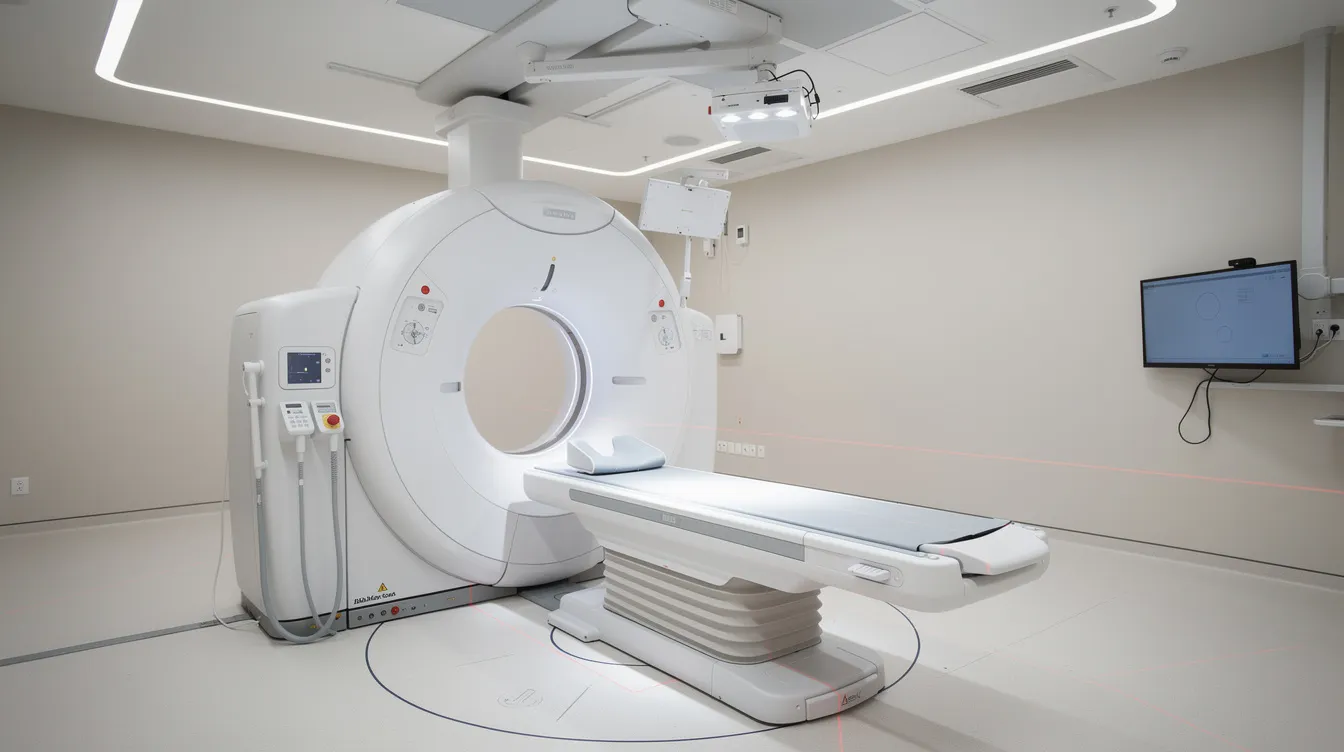
Adding radiation oncology fundamentally changes cancer hospital project cost in India. Radiotherapy departments require capital investments in specialized equipment that can add ₹20–60+ crore to the total cost depending on configuration. Radiation oncology consumes a large part of the budget due to equipment requirements alone.
Core radiotherapy components and their illustrative 2026 costs:
- Linear Accelerator (LINAC): ₹12 crore to ₹25 crore per machine, depending on features (3DCRT vs IMRT/IGRT/VMAT). At Salem’s GMKMCH, a LINAC cost ₹22.96 crore, with a brachytherapy unit at ₹4 crore and CT simulator at ₹4 crore.
- CT simulator for radiation planning: ₹4–6 crore
- Brachytherapy (HDR): ₹3–4 crore (imported systems)
- Treatment-planning systems, QA equipment, immobilisation devices
- Radiation bunker construction with concrete and lead shielding (specialised civil work)
- Dedicated HVAC, power supply, radiation monitoring, and safety interlocks
- Installation, commissioning, and physicist validation
Regulatory approvals from the Atomic Energy Regulatory Board (AERB) are mandatory for radiation-emitting equipment. Design, shielding calculations, and safety reviews must be handled by qualified radiation physicists and vetted by AERB before commissioning. This article does not replace technical or regulatory advice on these matters.
Nuclear medicine (PET-CT, SPECT, hot lab, dose calibrators, waste management) further increases cost. The FICCI-EY report on cancer care access estimates the national capital outlay for 500–550 new LINACs at ₹40,000–45,000 crore; that figure reflects the scale of radiation infrastructure investment required across India, resulting in growing investment opportunities in this space.
| Parameter | Without Radiotherapy | With Radiotherapy + PET-CT |
|---|---|---|
| Major equipment cost | ₹5–15 crore | ₹30–60+ crore |
| Construction complexity | Standard hospital | Bunker + shielding + specialised HVAC |
| Regulatory requirements | Standard clinical | AERB + standard clinical |
| Indicative total capex (50-bed, excl. land) | ₹15–30 crore | ₹50–80+ crore |
Capacity-Wise Cancer Hospital Project Cost (Illustrative)
All figures below are illustrative 2026 estimates for initial budgeting. They must be refined through a proper feasibility study and current vendor quotations.
| Model | Capacity | Core Services | Indicative Investment (excl. land) |
|---|---|---|---|
| Oncology day-care centre | Small | Chemo + consultation | ₹3–8 crore |
| Small cancer hospital | 20–30 beds | Medical + surgical oncology | ₹8–15 crore |
| Mid-sized cancer hospital | 50 beds | Medical + surgical + diagnostics (no LINAC) | ₹15–30 crore |
| Comprehensive cancer hospital | 50 beds with LINAC | Medical + surgical + radiation oncology | ₹35–60 crore |
| Tertiary cancer centre | 100+ beds | Full oncology + PET-CT + nuclear medicine | ₹150–300+ crore |
For reference, the Homi Bhabha Cancer Hospital in Muzaffarpur cost approximately ₹570 crore as a full-scale facility, and the National Cancer Institute at Jhajjar was sanctioned at ₹2,035 crore for ~710 beds. A 20-bed hospital project costs approximately ₹8–15 crore in India for a basic oncology setup. Avoid relying on a single “cancer hospital cost per bed” figure; at a glance, cost differences between configurations are driven by technology and service mix more than bed count alone.
50-Bed Cancer Hospital Project Cost: Illustrative Structure
Many promoters across India target a 50 bed hospital project as a balanced entry point. Here is an illustrative cost structure for two configurations, both in a Tier-2 city, excluding land:
| Cost Head | Without Radiotherapy (₹ crore) | With One LINAC (₹ crore) |
|---|---|---|
| Building and civil work | 8–14 | 12–20 |
| Interiors and infrastructure | 2–4 | 3–5 |
| Medical equipment (non-RT) | 2–4 | 2–4 |
| Radiotherapy equipment | – | 15–25 |
| Diagnostic equipment (CT/imaging) | 2–5 | 3–6 |
| Furniture and fixtures | 0.5–1 | 0.5–1 |
| IT, digital systems, PACS | 0.5–1 | 0.5–1.5 |
| Pre-operative and professional fees | 0.5–1 | 0.5–1.5 |
| Contingency | 0.5–1 | 1–2 |
| Working capital margin | 1–2 | 1.5–3 |
| Total (excl. land) | ₹15–30 crore | ₹35–60 crore |
How this changes by scenario: if land is already owned, land cost drops to book value or nil. If the hospital operates within an existing facility, building capex falls. If PET-CT is outsourced to a diagnostic partner, ₹5–10 crore in equipment and construction is deferred. If radiotherapy is phased in by Year 3–4, initial bed hospital project cost stays closer to the lower band, provided the plant layout accommodates future bunker construction.
This cost structure becomes the base for depreciation schedules, financial projections, and term-loan appraisal in a detailed project report.
100-Bed Comprehensive Cancer Hospital: Scale and Economies
Moving from a 50-bed to a 100 bed hospital project does not simply double costs. Tertiary/quaternary hospitals in India can require roughly ₹10 million or more in capital investment per bed in Tier-I cities, but common infrastructure provides partial economies. A 100-bed cancer hospital typically costs ₹30–60 crore or more for a basic configuration; with full radiation oncology, nuclear medicine, and advanced diagnostics, the figure can exceed ₹150–300 crore.
Elements that scale partially: OPD, administration, central diagnostics, IT systems, central utilities (DG, chiller plant economics improve at scale), and security.
Elements that need incremental investment: additional OTs, expanded ICU/HDU, larger day-care chemo, second LINAC, bigger inpatient blocks, manpower planning for larger teams, and staff recruitment budgets. For a modern 100-bed cancer hospital, estimated annual operating expenses could range from ₹52 crore to ₹108 crore, with salaries for specialized oncology personnel accounting for 40% to 45% of operational expenses and consumables and oncology drugs accounting for 25% to 30%.
Cancer hospitals can have relatively high revenue per occupied bed due to ancillary services and high-value treatments (chemotherapy, radiation, surgery), making well-planned projects with good scope for volume growth potentially highly profitable. The specialty mix (BMT, nuclear medicine, robotic surgery) and technology level change total cost more than bed count; DPR assumptions must clearly state the chosen configuration.
Pre-Operative, Statutory, and Compliance Costs
Many promoters underestimate pre-operative expenses when calculating cancer hospital investment in India, leading to funding gaps. These are real costs that must appear in the project budget.
Typical items:
- Company/trust/section 8 formation and legal documentation
- Architect, engineering, and hospital planning consultant fees
- DPR preparation and lender appraisal fees
- Key licenses include Clinical Establishment License and Fire Safety NOC
- AERB approval process for radiotherapy installations
- Environmental clearance, building permits, and local body approvals
Statutory approvals can add 20–30% to total licensing expenses. The licensing process typically takes 6 to 12 months, and starting the application process 6–12 months before planned opening is recommended. Operating without proper registrations is illegal under Indian law.
Soft-opening costs, including staff recruitment, training for oncology personnel, equipment trial runs, initial marketing, and interest during construction, also fall here. Ignoring or under-budgeting compliance can delay commissioning by months, directly inflating interest during construction and overall hospital project cost.
Contingency Provision for a Cancer Hospital Project
Contingency is especially important in oncology projects. The Nagpur GMCH LINAC project, approved at ₹23.20 crore in 2018, escalated to approximately ₹45 crore by 2026 due to delays and inflation.
Reasons to budget contingency: changes in building design after AERB or fire-department reviews, variation in steel/cement prices, foreign-exchange movement on imported LINACs or PET-CT systems, and scope revisions such as adding extra ICU beds.
From a lender’s perspective, an explicit contingency line in the detailed project report signals realistic planning rather than over-optimism.
Working Capital Requirement for a Cancer Hospital
Many promoters equate “project cost” with fixed assets alone. Banks and CAs treat project cost as fixed assets plus margin for working capital. Budgeting at least 6 to 12 months of operating cash is essential for new cancer hospitals, especially during the ramp-up when occupancy is low and receivables from insurance, TPAs, and government schemes are slow.
Working capital needs for an oncology hospital include high-cost oncology drugs and consumables, salaries, utilities, AMC payments on radiotherapy and imaging equipment, and coverage for credit periods offered to payers. Cancer patients often access treatment through insurance and government schemes, creating receivable cycles that stress cash flow.
Due to expensive chemotherapy drugs and implantables, the cancer hospital working capital requirement per bed can exceed that of many hospitals in India of comparable hospital size. Margin money for working capital is commonly included as part of total project cost in DPRs submitted for term-loan sanction.
Means of Finance for a Cancer Hospital Project
Total cancer hospital project cost = Promoter Contribution + Term Loan + Other Permissible Sources.
Typical components:
- Promoter equity (20–35% of total cost, depending on lender norms and project risk)
- Bank term loan for building and equipment
- Equipment finance or lease arrangements for high-value machines
- Working capital limits (cash credit, overdraft, bank guarantee lines)
- Unsecured loans from promoter or group entities, where applicable
Banks assess projects based on technical feasibility, promoter capability, realistic cost estimates, and sustainable Debt Service Coverage Ratio, not merely collateral. The means of finance structure must demonstrate that projected cash accruals can service debt. Structured phasing (e.g., starting without PET-CT or a second LINAC) can improve financial feasibility and reduce the initial term-loan requirement.
Cancer Hospital DPR and Financial Projections for Bank Loan
A professional cancer hospital detailed project report is indispensable for bank or investor discussions in 2026. Without one, serious lenders will not engage.
Core DPR sections: promoter profile, project concept and configuration (hospital beds, services, radiotherapy scope), location and catchment analysis with market research, detailed project cost with equipment quotations, implementation schedule, means of finance, revenue model based on realistic occupancy and service mix, operating cost estimates, and risk analysis.
Financial statements to include: projected Profit & Loss, balance sheet, Cash-Flow Statement, CMA data, working capital assessment, DSCR over loan tenure, return and break-even analysis, and sensitivity analysis. The DPR must provide reliable internal consistency: project cost must match capacity and the equipment list; revenue assumptions must align with realistic OPD/IPD volumes and payer mix; and projected financials must support loan repayment schedules.
ProjectReportBank.com, led by CA Manish Gugliya, focuses on this integrated financial modelling for oncology and new hospital projects, without guaranteeing loan sanctions.

Role of Feasibility Study and Business Plan in Controlling Project Cost
Before freezing cancer hospital setup cost or approaching banks, promoters should commission a proper feasibility study and business plan. Cancer is a condition where abnormal cells divide uncontrollably, potentially affecting blood and lymph systems, lymph systems, other tissues, and organs. Understanding the regional burden of cancer cases, the demand-supply gap, and where cancer cells are being treated (or not treated) in the catchment area is the foundation of project feasibility.
Key feasibility inputs: demand-supply gap for oncology in the chosen geography, expected patient volumes by service line, competing centres and their tariffs, referral patterns, and affordability. These outputs directly influence whether to start with 50 vs 100 beds, whether radiotherapy is viable from Day 1, and whether in-house PET-CT or outsourcing is optimal, and provide easy access to data-backed decisions.
A well-structured cancer hospital business plan, grounded in real market research and plant economics, becomes the backbone of the detailed project report, reducing cost-overruns and under-utilised assets. Many hospitals across India have failed not because the clinical need was absent, but because the project budget was built without robust demand validation.
Conclusion: Estimating Cancer Hospital Project Cost the Right Way
- Cancer hospital project cost in India must be built ground-up from configuration (services, technology, hospital size, specialty mix), not derived from generic “₹X lakh per bed” rules.
- The logical chain for bankable planning: Market & Feasibility → Capacity & Services → Infrastructure & Equipment → Project Cost → Means of Finance → Revenue & Operating Cost → Cash Flow → DSCR → Loan Repayment Capacity.
- Realistic budgeting of land, construction, radiotherapy, digital systems, pre-operative expenses, contingency, and machinery working capital cost is essential to avoid mid-project funding stress.
If you are planning a new hospital, cancer centre, or oncology expansion project anywhere in India, ProjectReportBank.com and CA Manish Gugliya can assist with customised cancer hospital DPRs, project cost estimation, CMA Data, financial projections, means-of-finance structuring, and bank-finance documentation. No consultant or CA can honestly guarantee loan approval, but a well-prepared DPR positions your project for informed evaluation by lenders. Subsequent cluster articles on equipment lists, revenue models, working capital, and DSCR for cancer hospitals will complement this project-cost guide.
FAQs: Cancer Hospital Project Cost in India
How much does it cost to start a basic cancer hospital in India without radiotherapy?
A small 20–30 bed oncology hospital focused on chemotherapy and surgical oncology, located in a Tier-2 or Tier-3 city and excluding land, might require an illustrative investment of ₹8–20 crore in 2026. A 50-bed medical oncology centre without a LINAC could fall in the ₹15–30 crore range. These india ranges depend on local construction rates, equipment specifications, and the scope of diagnostics included. Final figures must be based on actual quotations and a proper feasibility study rather than generic estimates.
Is radiotherapy equipment always included in Cancer Hospital Project Cost?
Not necessarily. From a DPR and bank-finance perspective, radiotherapy infrastructure (LINAC, CT simulator, bunker, and related works) should be identified as a separate sub-head within the total cost so lenders can evaluate its share. Some promoters intentionally phase radiation oncology in later, starting with medical and surgical oncology, and adding a LINAC once cancer patients volumes and cash flows justify the capital outlay. The original building’s plant layout should accommodate future bunker construction to avoid expensive rework.
Is working capital considered part of Cancer Hospital Project Cost for bank loans?
Yes. Banks and financial advisors treat “project cost” as fixed assets plus margin for working capital. A realistic provision for initial inventory of oncology drugs, salaries, utilities, insurance, and receivables must be included in the cancer hospital project report for bank loan rather than left to ad-hoc funding. Ignoring this creates a funding gap during the critical ramp-up period.
Does a Detailed Project Report guarantee that my cancer hospital loan will be sanctioned?
A professional cancer hospital DPR with realistic project cost, quotations, financial projections, DSCR analysis, and a clear business plan is a necessary input for lenders. Sanction depends on multiple factors: promoter profile, collateral, market risk, internal credit policies, and the project’s financial feasibility as assessed independently by the bank. No consultant or CA can honestly guarantee approval, but a credible DPR is the starting point for every serious financing conversation.
Can I start an oncology centre without a LINAC and add radiation oncology later?
Many promoters, especially in smaller markets, start with medical and surgical oncology plus diagnostics, outsourcing radiotherapy referrals to a nearby centre. They plan a second-phase investment in a LINAC and radiation bunker once patient volumes stabilise. This phased approach reduces initial bed hospital project cost and improves early-stage financial feasibility, provided the building design reserves space and structural capacity for future radiotherapy infrastructure.
Explore All Cancer Hospital Project Report Guides
Continue exploring our complete series on Cancer Hospital project planning, project cost, equipment, financial projections, repayment capacity and bank finance.