
Key Takeaways
- Seasonal businesses like ice cream carts, firecracker shops, wedding decorators, tourism operators and school suppliers can get mudra loans under Pradhan Mantri Mudra Yojana (PMMY) if they prove annual repayment capacity through proper documentation and realistic projections.
- Banks focus on total yearly cash flow, business experience, bank statements, ITR/GST data and quality of the project report – not only on equal monthly income – when deciding eligibility for loans upto rs 10 lakh.
- Present seasonal income through sales records, inventory details, customer lists and month-wise cash-flow projections so bankers feel comfortable about EMI repayment across the full year.
- Common rejection reasons include weak documentation, no past proof of seasonal sales, negative banking habits and unrealistic projections – all of which have specific, practical solutions covered in this guide.
- A professionally prepared Project Report and CMA Data tailored to seasonal patterns can significantly improve approval chances at any bank or financial institution.
Introduction – Seasonal Business and Mudra Loan Basics
Imagine Ramesh, a Diwali decoration trader in Jaipur, who earns most of his yearly income between September and November. He needs ₹6 lakh to stock up before the festival season but believes banks only finance businesses with stable monthly income. This belief is wrong – and it costs thousands of seasonal entrepreneurs access to affordable credit every year.
Pradhan Mantri Mudra Yojana, commonly known as mantri mudra yojana pmmy, is a government scheme launched in April 2015 to promote financial inclusion for micro and small enterprises across India. MUDRA loans support micro and small enterprises in India by providing collateral-free funding for non corporate, non farm income-generating activities – and that includes many seasonal businesses.
I am CA Manish Gugliya, a practicing Chartered Accountant with over 20 years of experience in MSME finance and Mudra loan consulting. This article focuses on practical banking behaviour, not textbook rules.
Here is what you will learn:
- Can seasonal businesses actually get a Mudra loan?
- How do banks evaluate uneven seasonal income?
- Which documents prove repayment capacity?
- Why do seasonal applications get rejected – and how to fix it?
- Practical tips to improve your approval chances

Table of Contents
What Is a Seasonal Business? (With Real Indian Examples)
A seasonal business is one where most sales and cash inflow happen only during specific months, while off-season months see low or almost zero turnover. The nature of income is inherently uneven.
Unlike a grocery shop earning roughly the same amount each month, a seasonal business invests heavily in inventory before peak season, generates concentrated revenue during that window, and then goes through a lean period. This creates unique funding needs that require careful working capital planning.
Common seasonal businesses relevant to Mudra loan applicants include:
- Festival goods sellers – Diwali lights, Holi colours, Rakhi items
- Firecracker traders – active mainly October to November
- Ice cream carts and parlours – peak March through September
- School uniform, stationery and book suppliers – surge between March and June
- Wedding decorators and tent houses – busiest November to February, then April to May
- Tourism and travel operators – vacation months and pilgrimage seasons
- Rainwear and umbrella traders – monsoon months
- Winter garment and heater sellers – November to January
- Religious mela and yatra vendors – tied to specific calendar events
Income fluctuates because of weather cycles, festival calendars, school schedules and marriage seasons. Banks across India are very familiar with these patterns and regularly finance such activities under PMMY and other schemes when the business model and documentation are strong.
Can Seasonal Businesses Get a Mudra Loan Under PMMY?
Yes, seasonal businesses can get a Mudra loan. Under Pradhan Mantri Mudra Yojana, any Indian citizen running a viable, legal, income-generating business can apply. Seasonal businesses can access Mudra loans to manage seasonal cash flows and support inventory purchase – the scheme does not require constant monthly income.
Mudra loans are available for amounts up to ₹20 lakh and are categorised into four categories:
| Category | Loan Range | Typical Seasonal Use |
|---|---|---|
| Shishu loans | Up to ₹50,000 | Small vendors, cart operators |
| Kishore | ₹50,001 to 5 lakh | Festival goods, school supplies |
| Tarun | Above ₹5 lakh to 10 lakh | Wedding decorators, tourism operators |
| Tarun Plus | ₹10 lakh to ₹20 lakh | For those who have successfully repaid previous loans under Tarun |
Borrowers do not need to provide collateral to obtain a Mudra loan. Specifically, collateral is not required for loans up to ₹10 lakh. Mudra loans can be used for both working capital and business expansion, covering loans for inventory, equipment, shop renovation and capital assets.
The eligibility criteria are straightforward:
- Indian citizen with a non farm, non corporate business
- Clear business purpose – inventory, equipment, renovation, services
- Clean or manageable credit history and satisfactory credit track record
- Proper KYC and business proof including Udyam registration
Banks do not reject applications simply because income is seasonal. They look at overall annual turnover, profit and cash flow. The scheme promotes financial inclusion for micro and small enterprises, and seasonal businesses fall squarely within that mandate.
In practice, banks prefer seasonal businesses with at least one to two completed seasons, but even new seasonal businesses can be financed if the promoter has relevant knowledge and necessary skills along with a strong business plan.
How Banks Evaluate Seasonal Income and Repayment Capacity
Bankers think in terms of annual cash flow, not equal monthly income. Their core question for any Mudra loan applicant is simple: “Will this borrower be able to pay EMIs on time across the entire year?”
Lenders look for a clear business proposal showing potential income generation when assessing applications. The proposed activity is assessed based on several data sources:
- Bank statements (12–24 months): Cash deposits during peak season, regularity of transactions, and savings behaviour in off months
- GST returns: Monthly filings that show turnover spikes during season and lows off-season
- Income Tax Returns: Annual profitability from seasonal operations
- Supplier invoices and sales records: Evidence of inventory purchase cycles and actual sales
The lending institution examines the cash-flow cycle in detail – when stock is purchased, when sales happen, how long receivables take to convert into cash, and what expenses continue during off-season months.
For example, if a firecracker trader does ₹30 lakh in sales during October and November with a 35% gross profit margin, the bank calculates whether the annual surplus after all costs can comfortably service, say, a ₹7–8 lakh Mudra loan EMI spread over 12 months.
Banks typically fix equal monthly EMIs even for seasonal businesses. They internally expect that peak-season profits will be saved to cover off-season EMIs. This is why they check whether the promoter has the discipline and banking track record to accumulate this buffer. Understanding the difference between cash flow and profit is critical here.
Some banks may offer flexible structures with lower off-season EMIs and higher peak-season payments, but under standard Mudra loan product offerings, most follow regular EMIs. The key factor remains whether the business can handle that schedule based on annual income.
Documents and Presentation Strategy for Seasonal Mudra Loan Applicants
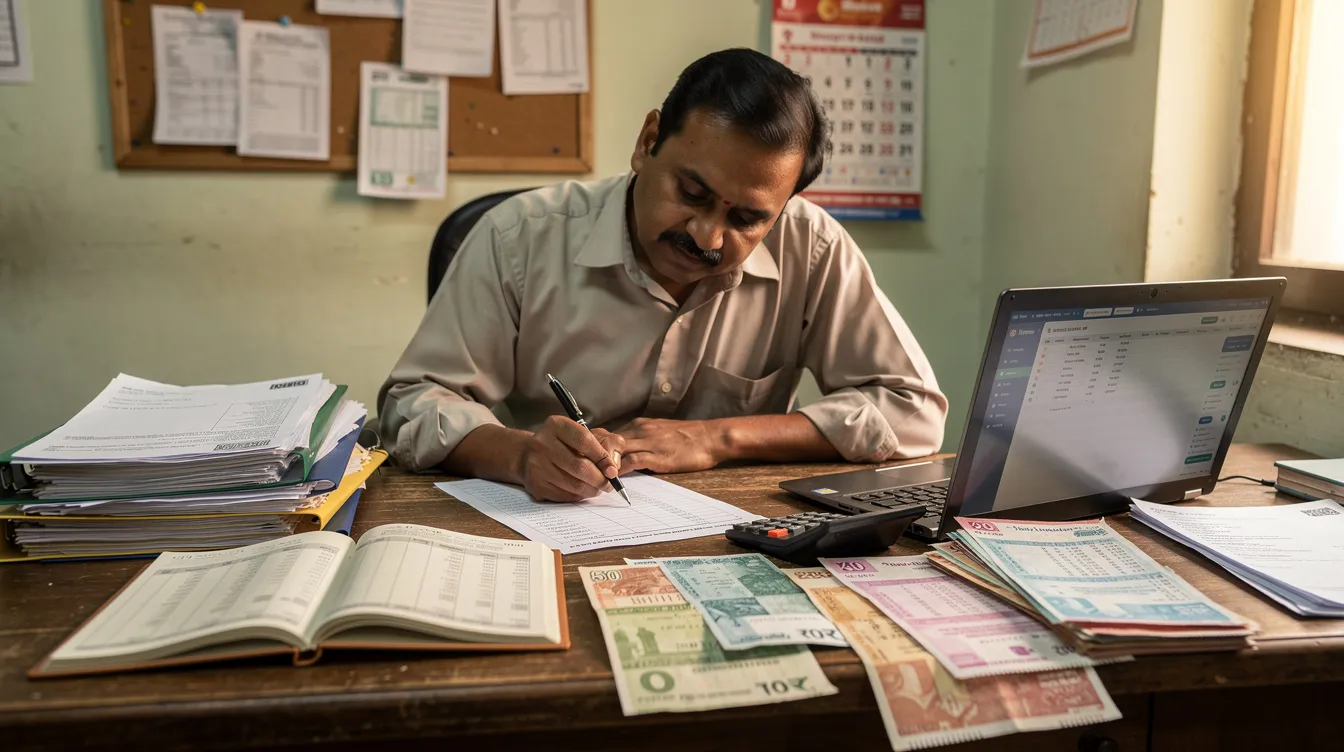
Documentation is the biggest strength or weakness for seasonal businesses applying for financial assistance. Well-organised papers often make the difference between approval and rejection even when the underlying numbers are similar. The application process for a Mudra loan typically involves submitting documentation to a participating lender, and applicants must submit KYC documents and a business plan.
Core KYC and Business Proofs:
- Aadhaar and PAN card
- Residential address proof (electricity bill, rental agreement)
- Business proof – shop licence, GST registration (if applicable), Udyam registration, trade licence
- Partnership deed if applicable
Financial and Turnover Proofs (Critical for Seasonal Units):
- Last 12–18 months bank statements showing seasonal inflows
- ITR for 2–3 years where available
- GST returns with visible seasonal spikes
- POS/UPI sales summaries from peak months
- Major supplier purchase invoices
Non-Formal Records That Still Convince Bankers:
- Notebook or Excel sales register from past seasons
- List of repeat customers (schools, hotels, event managers)
- Festival booking registers and advance orders
- Inventory stock photographs before and after season
Project Report and CMA Data:
A good project report contains month-wise cash-flow projections, working capital requirement calculations, inventory holding cycle details and realistic profit estimates. For seasonal businesses, this document must explicitly show the seasonal pattern. A weak or unrealistic project report is one of the fastest ways to get rejected.
Always explain – both in writing and verbally – how you will manage EMIs in off-season. Whether through side income, a complementary off-season activity, or a reserve fund from peak-season savings, this explanation directly reduces the banker’s risk perception.
Common Rejection Reasons for Seasonal Businesses and How to Fix Them
Based on more than two decades of practice, most seasonal Mudra loan rejections happen due to presentation and planning issues – not because the business is seasonal by nature.
Key Rejection Reasons and Practical Fixes:
| Rejection Reason | How to Fix It |
|---|---|
| No proof of past seasonal sales | Collect and organise invoices, UPI receipts, supplier bills from past seasons |
| Low banking transactions despite high claimed turnover | Route all collections through your bank account for at least 6 months before applying; avoid negative banking habits |
| Existing EMIs consuming most income | Settle small overdues first; avoid applying when already over-leveraged with previous loans |
| Poor CIBIL score or earlier defaults | Clear pending dues, wait for credit score to improve, avoid multiple loan enquiries |
| Incomplete KYC or business proof | Ensure PAN, Aadhaar and address proofs match; get Udyam registration, trade licence |
| Project report that does not match ground reality | Prepare a customised report reflecting actual seasonal patterns, not copy-paste templates |
Banks also have specific risk concerns for seasonal segments. They worry that funds will be diverted for personal use during off-season months. They question whether unsold inventory after season will erode assets created from the loan extended. They doubt whether business continuity exists beyond one festival or one year.
To overcome these fears:
- Keep photographs of your shop, warehouse and inventory across seasons
- Maintain past stock and sales records as a reference point
- Share supplier confirmations or advance orders for the upcoming season
- Explain any secondary off-season income that stabilises your cash flow
Practical Case Study – Festival Decoration Supplier Applying for ₹8 Lakh Mudra Loan
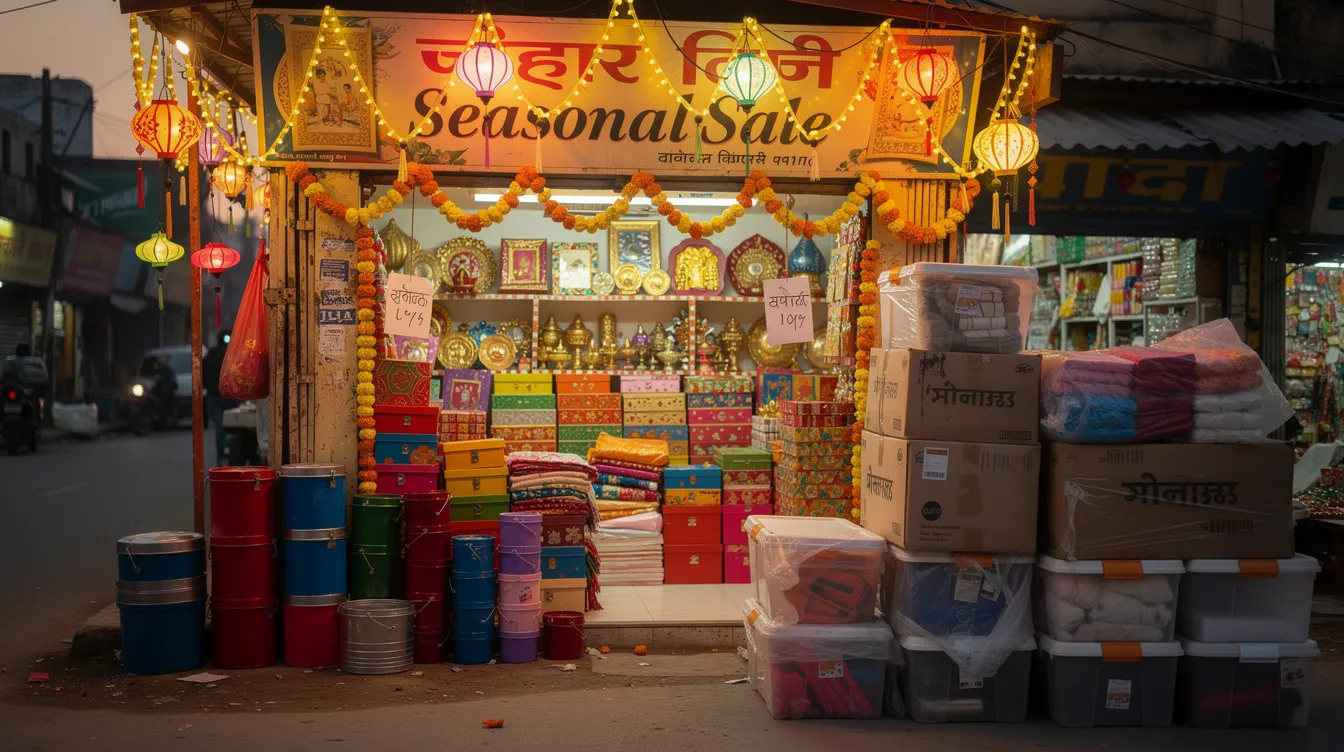
Meet Pradeep, a festival decoration trader in Indore who sells Diwali lights, Holi colours and Navratri décor from a rented shop. He has been running this seasonal business for four years with annual sales of ₹18–20 lakh, approximately 70% concentrated between September and November. He previously relied on a local financier charging 24–30% interest and wanted to shift to formal banking through PMMY.
Pradeep applied for a ₹8 lakh Mudra loan under the Tarun category for pre-season inventory and minor shop renovation.
Bank Concerns:
- High concentration of income in three months
- Limited formal records in initial years
- How would EMIs be paid between January and July when sales drop significantly?
Documents and Explanations That Addressed Concerns:
- Last two years GST returns showing clear seasonal spikes
- Bank statements reflecting UPI and card receipts during peak months
- Supplier bills from Indore and Delhi wholesale markets
- Photographs of shop, godown and stored inventory
- A project report with month-wise cash flow showing festival savings covering off-season EMIs, plus small decorative sales for weddings in off-months
Outcome: The bank sanctioned the ₹8 lakh loan with standard monthly EMIs over a four-year tenure. Interest rates for MUDRA loans are deregulated, and Pradeep’s rate was set based on the bank’s assessment – the current interest rate starts at around 9.05% per annum, though MUDRA loans can have fixed rates up to 21% depending on the lender and risk profile. The bank advised Pradeep to route all future sales through his bank account, turning a seasonal profile into an acceptable credit case through structured presentation.
This case shows how individual borrowers running small businesses can access financial support when they present seasonal income properly.
Expert Tips from CA Manish Gugliya for Seasonal Mudra Loan Applicants
These tips come from real discussions with branch managers, credit officers and MSME desk staff across commercial banks, small finance banks and various financial institutions over more than two decades.
Annual profitability matters more than monthly consistency. Bankers evaluating Mudra loans for seasonal businesses care whether the borrower can service debt over the year. A business earning ₹15 lakh in four months and nothing for eight months is not automatically riskier than one earning ₹1.25 lakh every month – provided the promoter demonstrates discipline.
Plan one full season in advance. Before applying, estimate how many EMIs will fall before and after your peak season. Build this into your pricing and profit margins. If you have 12 EMIs of ₹18,000 on a Tarun loan, you need to set aside approximately ₹1.44 lakh from peak-season earnings for off-season months. Your project report must reflect this calculation.
Maintain one dedicated bank account. Route as much turnover as possible through a single current or savings account for at least 6–9 months before applying. This single step dramatically improves credibility. Banks check account activity as a reference point for actual turnover.
Get a customised project report with proper CMA Data. Generic templates fail for seasonal businesses. The DSCR (Debt Service Coverage Ratio) must account for seasonal income patterns. My team at CA Manish Gugliya’s office prepares bank-ready documents that match realistic turnover, working capital cycles and repayment capacity for each beneficiary micro unit.
Discuss seasonality openly with your banker. Do not hide the seasonal nature of your business during the interview. Instead, carry simple month-wise tables or charts showing when cash flows in and how EMIs will be covered. Credit officers appreciate honesty – it builds trust faster than inflated numbers.
Note that 70% of MUDRA beneficiaries are women entrepreneurs, and many of them run seasonal or festival-based micro units. No educational qualification is required to apply. What matters is that you demonstrate the necessary skills and a viable proposed activity.
MUDRA operates as a refinance agency under Micro Units Development and Refinance Agency Ltd, covering loans through various financial institutions including commercial banks, small finance banks, RRBs and NBFCs. The credit guarantee mechanism further supports eligible borrowers. Whether you are in manufacturing trading or services, the scheme is designed to expand access to finance for micro enterprises engaged in non farm activities across India.
Frequently Asked Questions – Mudra Loan for Seasonal Businesses
These FAQs cover practical doubts that seasonal entrepreneurs frequently ask during consultations – questions that go beyond what the main sections cover.
Can a purely seasonal business with only 3–4 active months get a Mudra loan?
Yes. Even businesses active for just a few months – such as firecracker sellers or winter garment shops – can get Mudra loans if they show strong seasonal turnover, proper licences and a clear plan to save enough during peak months to cover all 12 EMIs. Banks check overall annual profit, bank statements and CIBIL score, but they do not automatically reject because operations are limited to a short season. Financial institutions understand that the nature of many small enterprises is inherently seasonal.
Is GST registration compulsory for seasonal businesses to get a Mudra loan?
GST is not compulsory for all applicants. It depends on your turnover threshold and the nature of goods or services as per current GST law. Many small vendors below the threshold can still get PMMY finance without GST registration. However, wherever applicable, having GST registration and filing returns strengthens the case significantly by giving the bank official proof of seasonal sales and tax compliance.
Can a new seasonal business without past sales apply for a Mudra loan?
New seasonal businesses can apply, but approval becomes more dependent on the promoter’s prior experience, personal income, own capital contribution and quality of the project report since there is no past turnover to show. Such applicants should prepare detailed cost estimates, confirmed supplier quotations, any advance orders or booking enquiries and a realistic first-season sales plan. When entering the next phase of business, a strong plan for the proposed activity helps the bank assess whether financial assistance is justified.
Up to what loan amount can a seasonal business apply under PMMY?
Under PMMY, seasonal businesses can seek Shishu, Kishore or Tarun loans depending on their requirement – upto rs 10 lakh without collateral. Those who qualify for Tarun Plus (having successfully repaid previous loans under Tarun) can access up to ₹20 lakh. The requested amount should match actual working capital or asset needs; overestimating without justification increases risk perception and can lead to partial sanction or rejection. The loan extended should align with what the business genuinely requires for inventory, equipment or other capital assets.
Will banks reduce my Mudra loan amount because my income is seasonal?
Banks may reduce the sanctioned amount if they feel the projected seasonal surplus is not enough to safely service EMIs on a larger loan – especially when banking history or documentation is weak. However, by presenting strong proof of demand, realistic financial projections and disciplined banking habits, applicants can justify higher limits that genuinely match their seasonal business potential. Remember, approval is assessed based on overall viability, not simply the pattern of income.
Seasonal income is not a disqualification – poor preparation is. If you are a seasonal entrepreneur looking for financial support through Mudra loans, invest time in proper documentation, realistic projections and a professionally prepared Project Report before approaching any bank.
For help preparing bank-ready Project Reports, CMA Data and complete Mudra loan documentation tailored to your seasonal business, reach out to CA Manish Gugliya. With the right presentation, your seasonal business can access the affordable credit it deserves.
- Can Bank Reduce Mudra Loan Amount Without Your Consent? Complete Practical Guide (2026)


- What to Do If You Cannot Pay Your Mudra Loan EMI (2026 Guide)

- Can a Bank Refuse a Mudra Loan Because the Target Is Completed? Complete Guide (2026)

- Bank Refused My Mudra Loan Application – What Are My Rights?

- Mudra Loan for Used Vehicles (2026): Eligibility, Documents, Bank Rules & Complete Guide

- Rejected Mudra Loan – What to Do Next? Appeal Process Explained (2026)

- Mudra Loan Project Report Madhya Pradesh – Bank-Ready DPR & CMA Guide

- Project Report for Mudra Loan Maharashtra: Complete Guide for MSMEs, Startups and Small Businesses (2026)

- Mudra Loan Uttar Pradesh: Complete Guide for MSMEs, Startups and Small Businesses (2026)

- Mudra Loan Bihar 2026: Eligibility, Documents, Online Application Process & Project Report Guide

- Jan Samarth Mudra Loan 2026: Complete Guide to Online Application, Eligibility, Documents & Approval Process

- MSME Mudra Loan: Complete Guide for Small Businesses, Startups & Manufacturing Units in India (2026)

- Is the Mudra Loan Subsidy Real or Fake? Get the Facts Here

- Mudra Loan Without CIBIL Score: How to Qualify and Apply

- Mudra Loan for Used Machine (2026 Guide) – Eligibility, Documents, Valuation & Approval Tips