Key Takeaways
- Indian animal feed mill owners in poultry, cattle and dairy segments are expanding capacity, automating production lines and preparing bankable project reports as demand pushes existing plants past 90% utilisation.
- Common brownfield scenarios include expanding from 5 TPH to 10 TPH or 10 TPH to 20 TPH, converting mash feed mills to pellet or crumble production, and replacing semi-automatic lines with PLC/SCADA-based automation.
- Every expansion decision must rest on a pre-expansion technical audit, realistic project cost estimates, incremental cash-flow projections and DSCR-focused financial modelling.
- Project Report Bank, led by CA Manish Gugliya, FCA, DISA (ICAI), prepares customised, bankable Animal Feed Mill Expansion Project Reports, CMA Data and financial projections for serious feed mill projects across India.
Introduction: Animal Feed Mill Expansion Project Report and Evolving Industry Needs
India’s organised animal feed industry has grown at a sustained pace between 2018 and 2026. Industrial feed production reached approximately 57.7 million metric tonnes in 2025, reflecting 4.5% year-on-year growth. Globally, animal feed production surpassed 1.3 billion metric tons in 2023, and Asia alone accounts for over 303 million metric tons of global feed output. The global animal feed market was valued at USD 548.1 billion in 2025 by some estimates and USD 637.15 billion by others, with projections indicating it could reach USD 702.75 billion by 2034 and USD 996.65 billion by 2035. The animal feed market is projected to grow at a CAGR of 4.6%.
This growth has pushed existing animal feed mills in India to operate near full capacity. Large commercial poultry integrators, organised dairy farms and feed distributors now demand consistent pellet quality, better feed conversion ratios, lower fines and reliable supply volumes. Older mills struggle with energy-inefficient hammer mills, manual batching, inconsistent mixing, bottlenecks at pelletisation and cooling, and poor data capture. Animal feed pellets are essential for livestock and pet food nutrition, and buyers expect nutritionally balanced, traceable products.
An Animal Feed Mill Expansion Project Report, in this context, is a bankable Detailed Project Report that integrates engineering, feed technology, capacity planning and financial viability analysis for brownfield expansion or modernisation. This article is written from the perspective of a professional project finance and feed mill advisory practice focused on capital investment in the ₹5-25 crore range and above.
Why Existing Animal Feed Mills Need Expansion and Modernisation
Rising demand from commercial poultry production, layer farming, cattle feed segments and aquaculture has increased compound feed consumption across India. Poultry feed demand is expected to grow by up to 20% annually in certain regions, and a survey of approximately 170 Indian feed mills found that average capacity utilisation exceeded 90%.
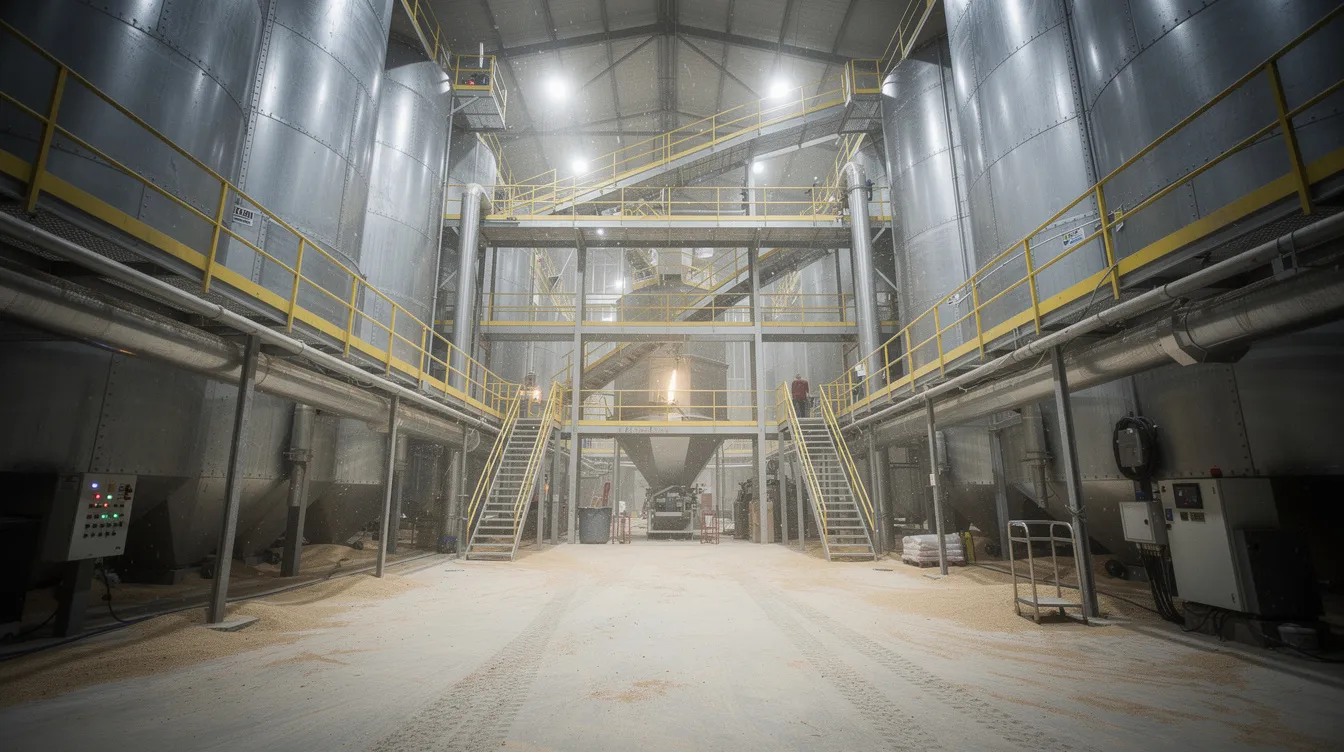
- Capacity constraints: Feed mills of 3-10 TPH commissioned before 2014-2016 often have limited silo storage, outdated grinders, short-conditioner pellet mills and small mixers. Annual production capacity at these plants typically ranges from 20,000 to 100,000 MT, but actual throughput falls well below nameplate rating because of equipment age and layout limitations.
- Process bottlenecks: Single intake pits slow raw material receiving. One overloaded hammer mill constrains grinding. Long mixer cycle times reduce batching speed. Old pellet presses with worn dies produce inconsistent output. Manual bagging and stitching create despatch delays.
- Cost penalties: Older equipment consumes more kWh per tonne; pelleting alone typically requires 9-11 kWh per tonne in well-maintained plants, and older machines can exceed this. Frequent breakdowns lead to overtime wages and delayed deliveries.
- Quality issues: Inaccurate manual batching, poor micro-ingredient dosing, uneven mixing (high coefficient of variation), variable pellet durability index and higher fines ratio generate field complaints. Quality control is essential because feed quality directly affects animal health and livestock farming outcomes.
- Modern requirements: Product traceability, batch-wise data logging, compliance with feed safety norms (such as BIS IS 2052:2009 for cattle feed), and the capability to run multiple formulations for different animal species without long changeover times.
- Brownfield versus greenfield: Modernisation is more economical when the existing site offers adequate land, strong local raw material access, a sound building shell, functioning utilities and an established customer base. When capacity, utilities or land are fundamentally insufficient, a new greenfield plant may be justified.
Animal Feed Mill Expansion Models and Project Configurations
Indian feed manufacturers typically evaluate several feed mill project configurations before committing capital.
A. Capacity expansion of an existing mill. Upgrading a 5 TPH line to 10 TPH requires higher-capacity hammer mills, mixers and pellet presses. Expanding from 10 TPH to 20 TPH often involves parallel pelleting lines. The trade-off between adding shifts and adding machinery depends on equipment condition, labour availability and whether the existing boiler and electrical infrastructure can support higher loads. Readers evaluating greenfield alternatives may refer to the poultry feed manufacturing plant project report on ProjectReportBank.com.
B. Semi-automatic to fully automatic conversion. Manual weighing and batching give way to automated ingredient silos, load-cell-based dosing, PLC-controlled batching and SCADA-based monitoring. Implications include reduced labour per tonne, improved formulation accuracy and end-to-end traceability.
C. Mash feed to pellet feed conversion. Adding steam conditioning, pellet mills, coolers, crumblers and screens to an existing mash feed mill opens access to broiler, layer and aqua feed markets where pellets and crumbles command better margins and feed efficiency.
D. Existing pellet mill modernisation. Replacing the pellet press, adding variable-frequency drives, upgrading coolers and installing auto bagging can improve energy efficiency and pellet quality without a large increase in overall TPH.
E. Integrated multi-species feed mill upgradation. Reconfiguring formulation and process design to handle poultry feed, cattle feed, dairy nutrition and other product lines within the same plant requires separate batching systems or scheduling protocols to prevent cross-contamination and meet the nutritional value targets of each feed type.
Capacity expansion involves the highest capital intensity. Automation upgrades require integration expertise. Process-route changes (mash to pellet) add boiler, conditioning and press costs. Each model must be compared on implementation complexity, downtime risk and expected commercial benefit before the proposed project is finalised.
Technical Assessment Before Animal Feed Mill Expansion
A structured technical audit of the existing animal feed mill is the foundation of any expansion plan. Technical specifications include process flow adjustments, equipment needs and site layout requirements.
- Compare installed versus practical achievable capacity using the last 12-18 months of production records, accounting for product mix, shift patterns and changeovers.
- Evaluate section-wise utilisation: raw material intake, storage, grinding, mixer cycle time, pellet mill load, cooler capacity, bagging speed and dispatch throughput.
- Assess building height for vertical process flow, floor loading for heavier equipment, and scope for mezzanines, bins or silos.
- Verify utilities: connected electrical load, transformer capacity, boiler and steam output, compressed air, water supply and dust-collection capacity. A useful reference for utility planning approaches is the dairy plant utilities guide published on ProjectReportBank.com.
- Inspect material handling systems (bucket elevators, screw conveyors, chain conveyors) for speed, spillage and compatibility with higher throughput.
- Assess major machinery condition: remaining useful life, breakdown history, spare parts availability, energy consumption benchmarks. The decision framework is retain, refurbish or replace.
A pre-expansion checklist covers capacity records, equipment condition, layout suitability, utility adequacy, safety systems, dust control, QC laboratory capability and current automation level.
Animal Feed Mill Expansion Manufacturing Process and Technology
The modernised animal feed manufacturing process in an upgraded plant follows this sequence: Raw Material Receiving, Sampling and Quality Testing, Cleaning and Magnetic Separation, Grinding, Automated Ingredient Batching and Weighing, Precision Mixing, Steam Conditioning, Pelletisation, Cooling, Crumbling (if needed), Screening, Final QC, Automated Weighing and Packaging, Finished Goods Storage, Dispatch.
Animal feed production involves raw material reception and storage as the first step. Animal feed production requires cereals, oilseed meals (including soybean meal), vitamins, minerals, amino acids, fatty acids and feed additives to produce nutritionally balanced formulations.
Crushing and grinding achieve desired particle size for feed ingredients. Target particle size for poultry feed is typically 0.6-0.8 mm; for cattle feed, less than 1 mm. Uniform grinding improves pellet binding and feed conversion ratios.
Mixing ensures uniform blending of feed ingredients for balanced nutrition. Automated micro and macro dosing with modern ribbon or paddle mixers targets a coefficient of variation below 5%, supporting precision nutrition across formulations.
Pelletization uses heat and pressure to form feed pellets. Steam conditioning temperatures typically range from 75-85°C with retention times around 60 seconds, raising mash moisture to 14-15% before pressing. These parameters vary by formulation, animal species and equipment design. For detailed pellet line configurations, the industrial feed pelleting plant project report provides additional reference.
Cooling prevents deformation of pellets after the pelletization process. Counter-flow coolers reduce pellet temperature and moisture (target below 11% moisture). Properly sized crumblers produce correct crumble size for broiler and layer feed. Vibrating screens separate fines for reprocessing.
Auxiliary requirements include dust management, cross-contamination controls, batch coding for traceability, and data capture at critical control points. Equipment design ratings (TPH, kW, retention time) differ from guaranteed operating performance; actual results depend on raw material quality, feed formulation, operator skill and maintenance discipline.
Machinery and Equipment Required for Animal Feed Mill Modernisation
This section covers key machinery groups for brownfield modernisation of an animal feed mill. For each category, the purpose, modernisation benefit, selection criteria and cost drivers are described. Detailed machinery and EPC cost analysis is available in the automatic animal feed mill machinery and EPC cost article.
- Raw material receiving and intake: Pits, hoppers, grids and pre-cleaners for fast unloading and reduced truck turnaround time.
- Cleaning and magnetic separation: Drum cleaners, vibro separators, de-stoners and magnets to remove impurities and protect downstream equipment.
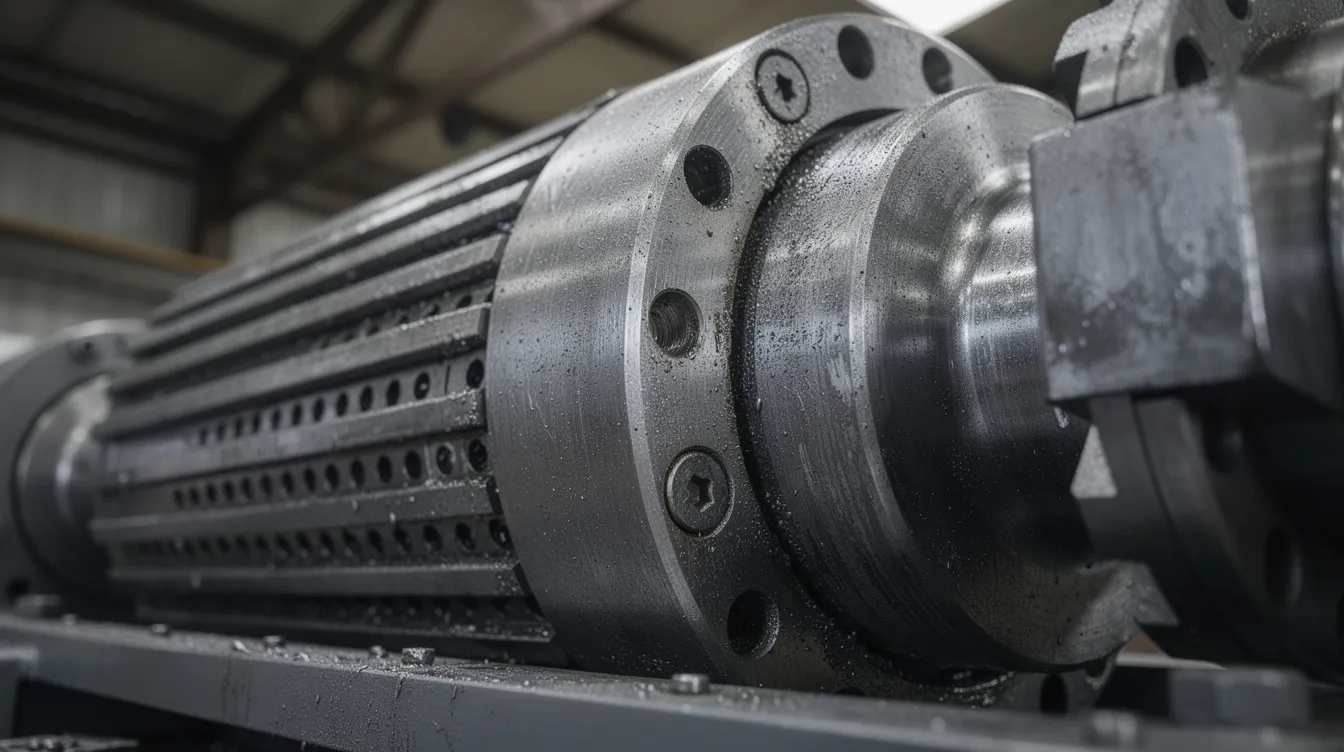
- Grinding equipment: Animal feed plants require hammer mills for grinding ingredients. Newer designs with larger screen areas and optimised rotor speeds reduce energy per tonne. Domestic 1-2 TPH hammer mills cost ₹2-8 lakh; imported versions ₹10-20 lakh.
- Automated batching and dosing: Bins, slide gates, screw feeders and weigh hoppers improve ingredient accuracy, reduce labour and speed recipe changeovers.
- Industrial feed mixers: Mixers are essential for uniform blending of feed ingredients. Horizontal ribbon or paddle types sized to target batch size and cycle time.
- Steam conditioners and pellet mills: High-capacity ring die pellet mills shape feed into animal feed pellets. Modern conditioners offer longer retention and better steam-mash mixing. Pellet mill line costs range from US$70,000 for 2 TPH to US$1.3 million for 20 TPH, depending on scope.
- Coolers, crumblers and screens: Cooling systems are necessary to maintain pellet integrity post-production. Counter-flow coolers, double-roller crumblers and vibratory screens ensure correct size distribution.
- Bucket elevators, chain and screw conveyors: Selected based on capacity, height, material and required robustness. Layout optimisation reduces spillage and handling energy.
- Boiler and steam system upgrades: Higher-capacity boilers, steam lines and condensate systems improve pellet quality and reduce steam cost per tonne.
- PLC/SCADA automation: Cost drivers include I/O point count, redundancy, communication with existing panels and integration scope. Further detail on PLC and SCADA automation in food processing plants is available on ProjectReportBank.com.
- Automated weighing and bagging: Automated packaging machines ensure efficient and precise packaging of feed pellets, reducing bottlenecks at dispatch.
- Dust collection and aspiration: Bag filters, cyclones and ducting for housekeeping, worker safety and fire/explosion risk reduction.
- Laboratory and QC equipment: Near-infrared analysers, moisture meters, pellet durability testers and sieves have modest capital cost but high impact on quality assurance.
Equipment costs vary depending on origin (Indian versus imported), alloy quality, warranty terms and whether VFDs, automatic lubrication and high-precision sensors are included.
PLC, SCADA and Smart Automation in Modern Animal Feed Mills
Three levels of automation exist in Indian feed mills: basic motor starters with local panels, PLC-based central control, and fully integrated PLC-SCADA systems connected to MIS or ERP.
Key automation features include automatic recipe management (storing formulations for broiler starter, finisher, cattle feed, layer feed), load-cell-based ingredient weighing for macro and micro dosing accuracy, batch sequencing with interlocks and alarms, real-time production monitoring (TPH, kWh per tonne, downtime logging), traceability through batch records linking raw material lots to finished output, and remote monitoring with preventive maintenance modules based on running hours and alarm histories.
Automation involves additional capital investment. The project report should quantify financial benefits through labour optimisation, fewer quality rejections, lower downtime and better decision-making, rather than speculative percentage savings.
Animal Feed Mill Expansion Project Cost and Investment in India
Animal feed manufacturing plant setup costs vary from a few tens of lakhs for partial machinery replacement to several crores for full capacity expansion with automation. Animal feed manufacturing plant setup costs include capital investments and operating expenses, and the total depends on scope, automation level and existing infrastructure.
Project cost estimation must separate existing and proposed investments to avoid duplication. Cost differences are substantial between limited-scope modernisation (replacing a single pellet mill or mixer, typically ₹20-80 lakh), mid-range automation upgrades (full batching plus PLC/SCADA), and complete capacity expansion (doubling plant TPH or adding a second line at ₹2-8 crore or more for domestic equipment in a 10-15 TPH integrated line).
For a 5 TPH to 10 TPH pelletised poultry feed expansion, much of the existing building, boiler, silos and some conveyors can typically be reused. A 10 TPH to 20 TPH expansion for mixed poultry and cattle feed may require a parallel pelleting line, transformer upgrade, additional silos and new civil works.
| Investment Component | Coverage |
|---|---|
| Civil and structural modifications | Mezzanine strengthening, new foundations for silos and pellet mills, raw material shed extensions |
| Plant and machinery | Production equipment, pellet presses, mixers, grinders |
| Material handling systems | Elevators, conveyors, storage integration |
| Automation and instrumentation | PLC, SCADA, sensors, HMI, control panels |
| Electrical infrastructure | Transformers, wiring, MCC panels, power distribution |
| Steam and utilities | Boilers, steam lines, condensate, compressed air |
| Installation and commissioning | Erection, testing, integration, trial runs |
| Engineering and consultancy | Layout, process design, project management |
| Contingencies | Provision for unforeseen civil, equipment or logistics costs |
| Interest during construction | Finance cost during 12-18 month implementation |
| Margin for working capital | Additional operating finance for higher throughput |
Interest during construction and pre-operative expenses can form a noticeable percentage of project cost for 12-18 month implementation schedules and must not be ignored. Project cost per TPH of additional capacity is influenced by automation scope, layout complexity, reuse of existing machinery, product mix (pellets versus mash), and whether the project is executed in one phase or staggered.
Brownfield Plant Expansion: Layout, Utilities and Implementation Challenges
Expansion within a running animal feed mill must minimise production disruption. Process engineers re-route conveyors, add elevators or rotate equipment orientation to maintain material flow within limited space and headroom. Floor loading and building structure must be verified before installing heavier machinery.
Utility enhancements include transformer upgrades, new LT panels, boiler capacity checks and compressed air distribution, all synchronised with machinery commissioning. Environmental compliance includes dust control, noise management and regulatory permits. Explosion relief provisions, fire-detection systems and safe routing of steam lines around existing production areas are mandatory.
Common causes of cost overruns include inadequate initial survey, underestimation of civil modifications, late design freezes, changes in machinery specification after order placement, and weak coordination between OEMs, contractors and plant operations teams. A professional DPR and implementation plan can anticipate many of these brownfield risks.
Working Capital Requirements for an Expanded Animal Feed Mill
Increased capacity drives additional working capital for raw materials, inventory and receivables. Raw material assessments focus on availability, procurement strategies and logistics for handling. Main working capital components include inventories of grains (maize, broken rice, wheat), oilseed meals, additives and premixes, packaging materials, finished feed stock, trade receivables and cash, net of trade payables.
Indian cattle feed and poultry feed plants typically stock more grain post-harvest when prices are lower. An increase from 6 TPH to 12 TPH effective throughput doubles monthly raw material consumption, raising average stock and receivables proportionately. Banks assess working capital via holding-level or turnover methods. CMA Data prepared by Project Report Bank would present projected working-capital figures over 5-7 years.
Common pitfalls include underestimating working capital in DPRs, ignoring seasonal peaks and misaligning repayment schedules with realistic cash-flow generation.
Production Cost, Operational Savings and Incremental Profitability
Operating costs in animal feed manufacturing are primarily driven by raw material consumption, especially maize, which accounts for 80-85% of total operating expenses. Gross profit margins for animal feed plants typically range from 15-25%.
A “Before versus After” comparison for a hypothetical plant might show: installed capacity utilisation rising from 65% to 85%, kWh per tonne falling from 11 to 8.5, tonnes per shift increasing from 40 to 72, labour per shift declining from 18 to 12 operators, downtime dropping from 10% to 5%, and pellet durability index improving from 88% to 94%.
Automation and better batching improve contribution margin through more accurate inclusion of costly ingredients (vitamins, minerals, feed additives, amino acids), reducing wastage. Incremental revenue can come from pelletised poultry and crumble feed, concentrate feeds, or consistent bagged cattle feed for nearby markets. The DPR must distinguish technical savings (lower energy per tonne) from realised cash savings, treating only measurable improvements as part of incremental cash flows.
Financial Projections and Financial Viability of Animal Feed Mill Expansion
Any serious Animal Feed Mill Expansion Project Report must include 7-10 year financial projections focused on incremental performance. Financial projections assess capital investment and operating costs. Projected operational costs increase due to inflation and market fluctuations; the model must account for these. Financial viability analysis determines projected profits, cash flows and repayment capabilities. A comprehensive project proposal should always align with strategic market demand and financial projections.
Revenue projections derive from capacity (TPH × hours × days × utilisation), product-wise volumes (broiler, layer, cattle feed) and realistic selling price assumptions.
Operating expenses model raw material consumption based on feed formulation ratios, plus projected trends in maize and soybean meal prices, power, fuel, steam, labour, packaging, and distribution. Financial projections for expansion include capital expenditure, working capital and profit and loss statements.
Profitability is derived through contribution margin, EBITDA, depreciation (on new capex), interest, profit before and after tax, and annual cash accruals.
Investment returns include simple payback period, ROI, project IRR, equity IRR and NPV using transparent discount-rate assumptions. The Debt Service Coverage Ratio is crucial for evaluating loan repayment capacity; DSCR analysis covers minimum, average and year-wise performance.
The model must isolate incremental investment, revenues, operating costs and financing cash flows rather than re-evaluating the entire existing business from zero. Actual IRR, DSCR or margin figures vary by project; Project Report Bank applies conservative, evidence-based assumptions for professional DPRs.
Bank Loan and Project Finance for Animal Feed Mill Expansion in India
Funding sources for expansion can include bank loans, promoter contributions and government schemes. Term loans cover plant and machinery, civil work and automation upgrades. Banks typically expect promoter margin of 25-30%, primary security over project assets, and sometimes collateral security. DPRs help in securing bank finance for animal feed projects by presenting credible technical and financial cases.
Existing borrowing, past repayment behaviour and current financial ratios affect eligibility and pricing. CMA Data, projected balance sheets and cash-flow statements must tie back to the DPR’s assumptions. Lender-focused indicators include DSCR, interest coverage and leverage ratios, along with sensitivity analysis for raw material and feed price movements given volatility in maize and soybean meal markets. Sanction terms depend on case-specific viability, security and promoter profile.
Government Incentives, Industrial Policies and Regulatory Requirements
Expansion of a registered animal feed mill may fall under state industrial policies for MSMEs or manufacturing enterprises. Some Indian states offer interest subsidies, capital subsidies or power-tariff benefits for eligible agro-processing units, subject to policy conditions and investment thresholds. Schemes like AHIDF (Animal Husbandry Infrastructure Development Fund) support new and expanded feed mills with interest subvention.
Regulatory requirements include factory licence updates, consent from State Pollution Control Board, electrical safety clearances, boiler registrations, fire NOC and building approvals. Statutory approvals and environmental compliance ensure adherence to local regulations and standards. Feed safety regulations, including BIS standards for cattle feed, poultry feed and aqua feed, must be updated to reflect changes in capacity and product range.
Eligibility for any subsidy or incentive cannot be assumed; promoters must independently verify current notifications.
Risk Analysis and Sensitivity Assessment
Feed mill expansion faces market, operational and financial risk factors that a robust Animal Feed Mill Expansion Project Report must address through structured analysis.
- Market and price risks: Raw material price volatility (maize, soybean meal, rice bran), competitive selling price pressure, and lower-than-expected capacity utilisation due to regional demand changes.
- Technical risks: Machinery performance below guarantee, integration challenges between old and new lines, automation teething problems and shortage of skilled operators.
- Financial risks: Interest-rate increases, delays in loan sanction or disbursement, higher-than-budgeted project cost and working-capital underfunding.
- Regulatory risks: Stricter feed regulations, quality complaints, batch recalls or failure to maintain traceability.
Sensitivity analysis evaluates risks like price fluctuations and lower capacity utilization by varying capacity utilisation (±10-15%), selling price (±3-5%), raw material cost (±5-10%) and total project cost (±10%), observing impact on DSCR, IRR and payback. Break-even analysis helps determine sales volume needed to cover costs of expansion. Mitigation strategies include long-term raw material sourcing, balanced customer base, preventive maintenance, operator training and conservative leverage. For a detailed discussion on sensitivity frameworks, see the dairy project sensitivity and risk analysis guide on ProjectReportBank.com.
New Animal Feed Mill versus Expansion of an Existing Feed Mill
Promoters often debate whether to expand or build a new greenfield plant.
| Parameter | Brownfield Expansion | New Greenfield Mill |
|---|---|---|
| Capital investment | Lower; reuses existing infrastructure | Higher; land, building, utilities from scratch |
| Land and building | Existing premises, possible constraints | New land acquisition required |
| Implementation time | Shorter, with staged commissioning | Longer; 18-30 months typical |
| Customer relationships | Retained; ongoing supply | Must be developed |
| Commissioning risk | Integration with old equipment | Clean-sheet design, fewer legacy issues |
| Plant layout | Constrained by existing structure | Optimised for capacity and future expansion |
Expansion is preferable when adequate free land exists, the building and utility capacity is robust, strong demand is local and no major logistical disadvantage applies. A new plant makes sense when urban encroachment constrains the existing site, space is inadequate, layout is obsolete, or the strategic investment case requires proximity to raw material sources or consumption centres in another region. The integrated animal feed mill project report on ProjectReportBank.com covers greenfield perspectives in detail.
How to Prepare a Bankable Animal Feed Mill Expansion Project Report
A bankable DPR integrates technical, commercial and financial perspectives. DPRs provide a roadmap for animal feed manufacturing units and include detailed project economics and capital investments. A DPR outlines raw material, utility, and manpower requirements. DPRs assess project viability and expected return on investment. Key components of an expansion project report include executive summary, market analysis and financial projections. The executive summary summarizes current capacity, proposed capacity, total investment and ROI. Market analysis assesses supply, demand trends, customer segments and competitive landscape. Expansion project reports require evaluating operations, market demand and technical feasibility.
Project implementation schedules often utilize Gantt charts to outline key phases and milestones. Technical feasibility content includes revised process flow, machinery configuration, layout sketches, utilities augmentation, manpower planning and milestones. Financial sections cover detailed project cost, means of finance, working-capital assessment, and projected profit and loss, balance sheet and cash-flow statements for 7-10 years. Analytical outputs include DSCR, break-even, IRR, NPV, sensitivity analysis and key financial ratios. Consistency is essential: production assumptions must match equipment capacity; sales projections must reflect realistic market absorption; cost assumptions should align with current input prices and industry trends.
Professional DPR, Financial Feasibility and Project Finance Advisory by Project Report Bank
ProjectReportBank.com, led by CA Manish Gugliya, FCA, DISA (ICAI), provides specialised professional advisory for industrial DPR preparation, financial modelling and project finance support for the animal feed industry across India.
- Customised Animal Feed Mill Expansion Project Reports covering technology choices (mash to pellet conversion, automation upgrades), plant layout modifications and realistic project schedules for brownfield upgrades.
- Financial modelling with 10-year projections, incremental cash-flow analysis, DSCR, IRR and NPV calculations, working-capital assessment and sensitivity analysis tailored to feed manufacturing economics.
- CMA Data, bank loan proposals and lender-specific documentation for term-loan and working-capital finance.
- Experience-based advisory on whether expansion or new plant offers better financial returns, optimising capacity steps, and aligning debt structure with expected cash generation.
Related resources on ProjectReportBank.com include the industrial cattle feed manufacturing plant project report and the automatic feed pellet manufacturing plant project report for readers exploring related projects.
Frequently Asked Questions
What is the typical investment required to expand an existing animal feed mill in India?
Investment varies depending on scope. Partial machinery replacement (a single pellet mill or mixer) may cost ₹20-80 lakh. A complete capacity expansion from 5 TPH to 10 TPH with automation typically falls in the ₹2-8 crore range for domestic equipment, excluding civil works and utilities. Larger 10-20 TPH expansions with imported pellet lines can reach ₹10-20 crore or more. Planning-level estimates must be refined with vendor quotations and site-specific assessments before committing capital.
How much does it cost to automate an older semi-automatic feed mill?
Cost depends on the number of dosing bins, PLC/SCADA scope, instrumentation level, sensor count and integration with existing panels. A basic PLC-controlled batching and mixing system may cost less than a full SCADA implementation with recipe management, traceability and ERP integration. A detailed technical study of the existing plant is needed before any firm figure can be quoted, as the animal feed mill automation cost in India varies with every configuration.
Can a mash feed mill be converted into a pellet or crumble feed plant?
Yes. Staged installation of a steam conditioner, pellet mill, cooler and crumblers can proceed alongside continued mash production, with only short shutdowns for tie-ins at connection points, provided plant layout and utilities (especially boiler capacity and electrical load) permit. The conversion adds pellet and crumble capability and allows the plant to serve broiler, layer and aqua feed markets where feed pellet products command better margins.
What DSCR do banks generally expect for feed mill expansion loans?
Many lenders prefer an average DSCR comfortably above 1.25-1.30 on projected figures, along with a reasonable moratorium during construction and ramp-up. Each bank’s credit policy and each borrower’s financial profile differ, so no universal threshold applies. The animal feed mill expansion financial feasibility study in the DPR must demonstrate year-wise DSCR adequate to cover principal and interest obligations across the repayment period.
Why is a customised professional DPR better than a generic template for an Animal Feed Mill Expansion Project Report?
Feed mill expansion involves project-specific machinery configurations, brownfield layout constraints, product mix for different animal species, existing utility capacity, and a unique financial structure. Generic templates cannot capture these variables. Professional DPRs from Project Report Bank reflect actual technical audits, realistic business requirements, market segmentation, and bank-focused financial modelling, including incremental cash-flow analysis, that template documents are unable to provide.
Conclusion: Planning a Financially Viable Animal Feed Mill Expansion
The animal feed market in India continues to expand, primarily driven by rising demand from organised poultry farm operations, increasing focus on cattle feed quality, rapid urbanization and population growth fuelling consumption of animal based products. Existing feed mills facing capacity constraints, outdated feed technology and competitive pressure must carefully analyze whether to expand, automate or modernise, and quantify the strategic investment required.
Expansion decisions that begin with rigorous technical audits and end with realistic financial projections produce better outcomes than those driven by capacity ambition alone. Proper technology selection, accurate animal feed mill capacity expansion cost estimation, incremental profitability analysis and structured risk assessment are the foundations of a financially viable project. A professionally prepared Animal Feed Mill Expansion Project Report supports smoother engagement with banks, ensures the business plan reflects strong demand and operational reality, and gives promoters confidence in the proposed project’s successful establishment.
Planning an Animal Feed Mill Expansion, Automation or Modernisation Project in India?
ProjectReportBank.com provides professionally prepared industrial DPRs, financial feasibility studies, financial projections and project finance advisory for existing feed manufacturing businesses planning capital investment. Contact CA Manish Gugliya, FCA, DISA (ICAI), through ProjectReportBank.com to discuss your expansion project and DPR requirements.