Key Takeaways
- This article explains, from an Indian DPR and project-finance perspective, how to plan, cost, finance and evaluate an oilseed processing and edible oil refining plant – from a small oil mill to a large-scale refinery – with concrete technical and financial insights.
- The article covers the full value chain (oilseed to refined edible oil), project configurations (soybean oil, multi-oilseed solvent extraction, crude and refined oil refining, palm oil, by-products), and how to structure a detailed project report including capital cost, working capital, DSCR, IRR and bank finance requirements.
- Content is written from the perspective of Project Report Bank, led by CA Manish Gugliya, FCA, DISA (ICAI), focusing on customised Detailed Project Reports, CMA Data, feasibility studies and project finance advisory for Indian entrepreneurs and MSMEs.
- No fixed project cost, capacity or margin is standard for every oil mill or edible oil manufacturing plant. All numbers must be tailored to each project’s raw materials, technology, location and financing structure.
- The article provides navigation to six specialised guides on soybean crushing, solvent extraction, large edible oil refinery, palm oil refining, multi-oilseed processing and oilseed meal/by-product projects for deeper study.
Explore Our Six Specialised Oilseed Processing & Edible Oil Project Guides
The edible oil industry in India spans a wide range of project types. Each raw material, technology route and plant configuration carries different investment requirements, technical risks and profitability drivers. To help promoters evaluate the right project type, Project Report Bank has published six specialised guides covering the major categories of oilseed processing and edible oil manufacturing in India.
These guides are designed to complement this main article. Each one examines a specific project category in technical, operational and financial detail relevant for DPR preparation.
| Project Category / Guide Title | Scope & Coverage | Link |
|---|---|---|
| Soybean Crushing, Oil Extraction & Refining Plant DPR | Soybean oil extraction, soybean meal, crude and refined soybean oil, integrated crushing and refining economics | Soybean Crushing, Oil Extraction & Refining Plant DPR |
| Industrial Solvent Extraction & Multi-Oilseed Processing Plant DPR | Multi-seed handling (soybean, rice bran, cottonseed, sunflower), solvent recovery, hexane safety, pre-press extraction | Industrial Solvent Extraction & Multi-Oilseed Processing Plant DPR |
| Large-Scale Edible Oil Refinery & Fractionation Plant DPR | Crude oil procurement, degumming, bleaching, deodorisation, fractionation, refinery tank farms and utilities | Large-Scale Edible Oil Refinery & Fractionation Plant Project Report & DPR |
| Palm Oil Refining, Fractionation & Integrated Processing Plant DPR | Crude palm oil imports, palm olein and stearin fractionation, port logistics, forex and duty exposure | Palm Oil Refining & Integrated Processing Plant DPR |
| Industrial Rice Bran, Cottonseed, Corn Germ & Multi-Oilseed Processing Plant DPR | Diverse oil-bearing raw materials, rice bran stabilisation, cottonseed processing, corn germ oil, seasonal procurement | Industrial Multi-Oilseed Processing Plant DPR |
| Oilseed Meal, Protein Ingredients & Industrial By-Products Manufacturing DPR | De-oiled cake, soybean meal, protein concentrates, lecithin, soapstock, fatty acid recovery, export markets | Oilseed Meal & By-Products Manufacturing DPR |
Introduction to India’s Oilseed Processing & Edible Oil Refining Sector
India produced approximately 42.99 million tonnes of oilseeds in 2024-25, led by soybean, rapeseed-mustard and groundnut. Yet, domestic edible oil production meets only about 40–45% of national consumption. India’s edible oil market was 25.33 million tons in 2025, and the market is projected to reach 28.47 million tons by 2034, growing at a CAGR of 1.3% from 2026 to 2034. This combination of rising consumption and persistent import dependence – particularly for palm oil, soybean oil and sunflower oil – creates substantial manufacturing opportunities.
The edible oil industry has evolved from traditional oil mills (ghani, kolhu) to modern solvent extraction plants and continuous edible oil refineries using degumming, bleaching and deodorisation units. Oilseed processing refers to cleaning, preparation, crushing, pre-pressing and solvent extraction of seeds. Edible oil processing encompasses crude oil handling, the edible oil refining process, fractionation and packaging. Oil manufacturing describes the complete industrial chain from seed to finished edible oil.
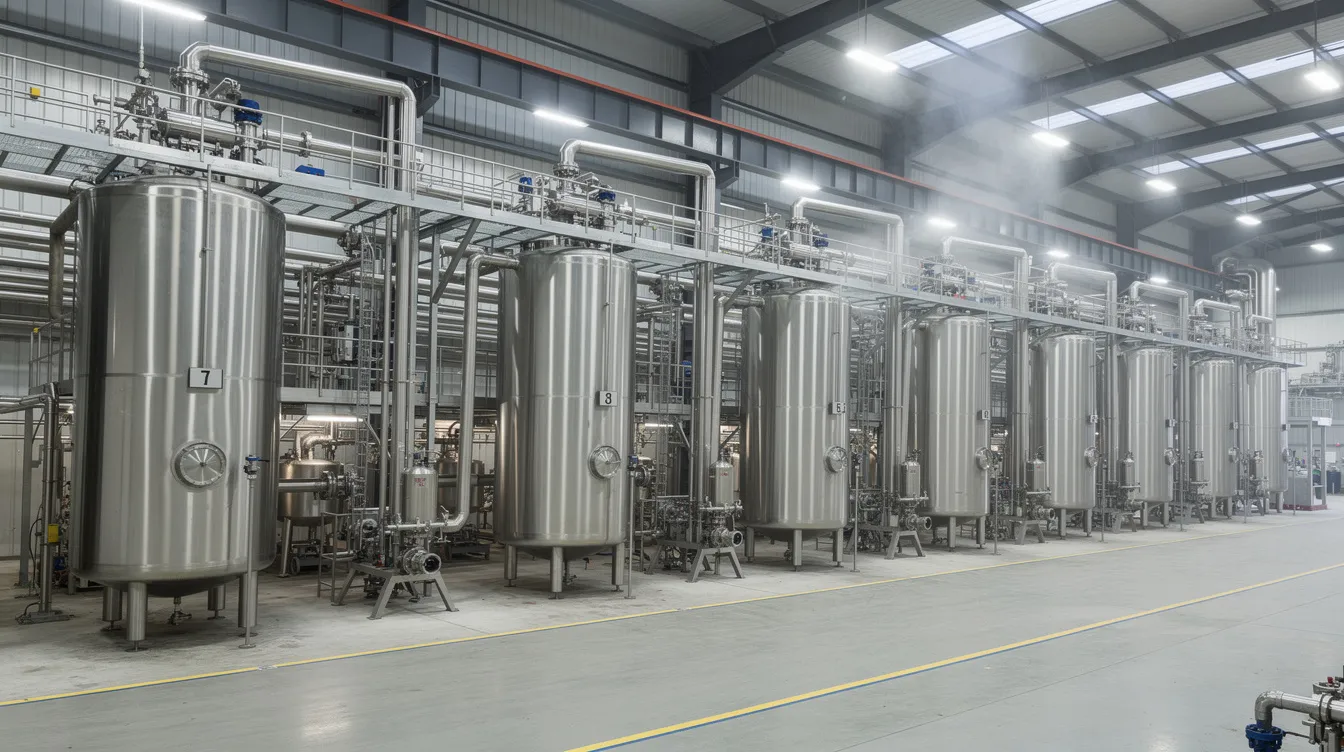
These projects demand a professional detailed project report and bankable feasibility study covering technical configuration, plant capacity, raw materials, various steps in refining, project cost, means of finance, working capital, DSCR and risk analysis. Edible oil manufacturing plants require detailed project reports because the capital commitments are significant and the margins are commodity-driven.
Project Report Bank is a Chartered Accountant-led project-finance advisory firm that prepares customised oilseed processing and edible oil manufacturing DPRs for capacities ranging from small MSME oil mills (20–50 TPD) to integrated solvent extraction and refinery complexes above 300–600 TPD.
Understanding the Complete Oilseed-to-Refined-Oil Value Chain
Different raw materials follow different oil processing routes. A mustard oil expeller-based oil mill in Rajasthan operates very differently from a multi-oilseed solvent extraction plant in Gujarat or a palm oil refinery near Kandla port. Oilseed processing involves extracting oil from seeds through mechanical pressing or solvent extraction, and the manufacturing process varies by crop and configuration.
The major stages in order are: oilseed procurement, cleaning and grading, dehulling and preparation, crushing or pre-pressing or expelling, solvent extraction (where applicable), crude oil clarification, edible oil refining, fractionation or winterisation (for palm oil, rice bran oils and specific others), and finally storage, packaging and distribution.
| Stage | Typical Inputs | Outputs | Key Equipment | Commercial Considerations |
|---|---|---|---|---|
| Cleaning & Preparation | Raw oilseeds | Clean, sized seeds | Screens, destoners, magnets | Reduces process losses, improves oil recovery |
| Crushing / Expelling | Prepared seeds | Crude oil + cake | Oil expellers, screw presses | Residual oil in cake 3–6% (expeller) |
| Solvent Extraction | Pre-pressed cake or flakes | Crude oil + de-oiled meal | Extractor, DT, distillation | Residual oil <0.6%; higher capital and safety cost |
| Refining | Crude oil | Refined edible oil | Degumming, neutraliser, bleacher, deodoriser | Refining losses 2–5% depending on FFA |
| Fractionation | Refined oil (palm, rice bran) | Olein + stearin fractions | Crystallisers, filter presses | Adds product flexibility and value |
Parallel by-product lines – oilseed meal for animal feed (poultry, cattle, aquaculture), lecithin, soapstock, fatty acids, deodoriser distillate and husk or biomass fuels – contribute significantly to total project revenue. By-products from oil processing can enhance profitability and reduce waste, often accounting for 25–35% of total sales in integrated soybean plants.
Six Major Categories of Oilseed Processing & Edible Oil Projects
The overall edible oil industry in India can be viewed as six broad project categories. Promoters typically choose one category or an integrated combination depending on raw material availability, market demand, capital budget and bank finance eligibility.
Soybean Crushing, Oil Extraction & Refining Projects
Soybeans account for 56% of global oilseed production, and soybean is one of India’s major kharif oilseeds, concentrated in Madhya Pradesh, Maharashtra and Rajasthan. A typical soybean oil manufacturing flow includes cleaning, dehulling, flaking, conditioning, solvent extraction (yielding 17–20% oil with residual below 0.6%), crude soybean oil filtration, and refining steps. Soybean oil refining includes degumming, neutralization, bleaching, and deodorization. A soybean oil plant requires oil expellers and filter presses for mechanical processing, or a full solvent extraction system for higher recovery. Commercial soybean crushing units typically range from 100 to 1,000 TPD. Meal realisation is a critical profitability driver. For a comprehensive guide, refer to the detailed Soybean Crushing, Oil Extraction & Refining Plant DPR.
Industrial Solvent Extraction & Multi-Oilseed Processing Plants
Solvent extraction plants handle multiple raw materials – soybean, rice bran, cottonseed, sunflower seed, groundnut cake – depending on season and location. Solvent extraction machines are crucial for higher oil recovery compared to mechanical pressing alone. Equipment includes the preparatory section, extractor, desolventiser-toaster, distillation and solvent recovery systems, with hexane handling requiring strict safety and environmental compliance. Multi-oilseed capability offers flexibility in raw material procurement, better utilisation of installed processing capacity and reduced seasonality risk, but demands a more detailed DPR with material balance and solvent loss budgeting. See the Industrial Solvent Extraction & Multi-Oilseed Processing Plant DPR for technical detail.
Large-Scale Edible Oil Refinery & Fractionation Projects
Large-scale edible oil refineries process crude soybean oil, sunflower oil, rice bran oil or palm oil in capacities often from 100 TPD upward. The main refining steps include degumming (which removes phospholipids and gum-forming materials from oil), neutralization (which reduces free fatty acids and impurities), bleaching (which removes pigments and remaining impurities using adsorbents like bleaching earth), and deodorization (which eliminates volatile compounds causing undesirable odors). Fractionation separates liquid and solid fractions used in cooking, frying oils, bakery fats and industrial applications. These projects require large tank farms, continuous operation and are sensitive to refining losses and margin spreads. For detailed guidance, see the Large-Scale Edible Oil Refinery & Fractionation Plant Project Report & DPR. You may also find the Edible Oil Refinery Machinery, Technology & EPC Guide useful for refining equipment selection.
Palm Oil Refining & Integrated Processing Projects
India is highly dependent on imported crude palm oil, refined and fractionated domestically near ports in Gujarat, Andhra Pradesh, Tamil Nadu and Odisha. A typical palm oil refinery flow covers CPO reception, storage, degumming, bleaching, deodorisation, and fractionation into palm olein and palm stearin. Specific commercial issues include dependence on import duties and tariff structures, foreign exchange exposure, international CPO prices and customs duty variations. Promoters should assess port-proximity and long-term crude supply contracts. Refer to the Palm Oil Refining, Fractionation & Integrated Processing Plant DPR for a comprehensive analysis.
Rice Bran, Cottonseed, Corn Germ & Other Industrial Oilseed Processing Projects
This category covers several high-potential Indian raw materials: rice bran from rice mills, cottonseed from ginning units, corn germ from maize processing, mustard oil seeds, groundnut and sunflower. Each has distinct oil content and extraction processes. Linking with existing grain-processing value chains (rice mills, flour mills, corn wet mills) ensures consistent supply. Successful oil processing projects rely on robust supplier networks for raw materials, and careful DPR preparation is needed for realistic assumptions on by-product pricing and seasonal availability. For more, see the Industrial Rice Bran, Cottonseed, Corn Germ & Multi-Oilseed Processing Plant DPR.
Oilseed Meal, Protein Ingredients & Industrial By-Product Processing Projects
High-protein oilseed meals (soybean meal, rapeseed meal, sunflower meal, groundnut meal) serve poultry, livestock and aquaculture feed markets. Upgraded protein ingredients such as soy protein concentrate, soy protein isolate and texturised vegetable protein create additional value for the food industry. Other by-products from oil refining and oil production – soapstock, acid oil, lecithin, deodoriser distillate and waxes – have industrial and feed applications. By-product realisation can significantly improve IRR and DSCR of an integrated oilseed processing complex. See the Oilseed Meal, Protein Ingredients & Industrial By-Products Manufacturing DPR for detailed analysis.
Comparative Analysis of the Six Industrial Project Categories
Promoters should compare these six edible oil processing options on technical, commercial and financial parameters before finalising their project configuration.
| Evaluation Factor | Soybean Crushing & Refining | Multi-Oilseed Solvent Extraction | Large Edible Oil Refinery | Palm Oil Refinery | Rice Bran/Cottonseed/Multi-Oilseed | Meal & By-Product Processing |
|---|---|---|---|---|---|---|
| Major raw materials | Soybean | Multiple oilseeds | Crude vegetable oils | Imported CPO | Rice bran, cottonseed, corn germ | De-oiled cakes, refinery by-products |
| Main products | Refined soybean oil, meal | Crude oils, meals | Refined edible oil, fractions | Palm olein, stearin | Refined oils, meals | Protein products, lecithin, fatty acids |
| Core technology | Extraction + refining | Pre-press + solvent extraction | Continuous refining + fractionation | Refining + fractionation | Extraction + refining | Protein processing, recovery |
| Investment intensity | Medium–High | High | High–Very High | High | Medium | Medium |
| Working capital intensity | High (seasonal seeds) | High | Very High (crude oil stock) | Very High (imports, forex) | Medium–High | Medium |
| Major profitability drivers | Meal price, oil yield | Utilisation, multi-seed flexibility | Refining margin, scale | Duty structure, CPO price | Supply linkage, yield | Export demand, quality specs |
| Principal risks | Crop availability, meal price | Solvent safety, seasonality | Margin compression, crude price | Forex, duty changes | Raw material continuity | Market development |
| Suitable financing | Bank TL + WC | Bank TL + WC + equity | Bank + equity for large projects | Bank + substantial equity | Bank TL + WC | Bank + strategic investor |
This comparison helps an entrepreneur short-list whether to begin with a smaller oil mill, an integrated edible oil manufacturing plant or a specialised by-products project based on their risk appetite, capital availability and market access.
Industrial Plant Capacity Planning and Project Configuration
In any project report, capacity is expressed as tonnes per day (TPD) of seed crushing or oil refining. Annual installed capacity depends on operating days per year (typically 300–330) and capacity utilisation, which often starts at 60–70% in year one and ramps up over 3–4 years.
Small scale plants can process 1 to 30 tons of oil daily, while large integrated complexes may handle several hundred TPD. Annual production capacity ranges from 100,000 to 300,000 MT for major commercial operations.
Illustrative example: A 200 TPD soybean extraction and refining plant operating 310 days at 75% utilisation would process approximately 46,500 tonnes of seed annually, producing roughly 8,400–9,300 tonnes of crude oil (at 18–20% recovery), with refined oil output after 3–4% refining losses.
Configuration choices – standalone expeller-based oil mill, expeller plus solvent extraction, import-based refinery, or vertically integrated crushing plus extraction plus refinery – should each be modelled separately in the DPR. The choice balances economies of scale against higher capital expenditure, more complex operations and larger working capital needs.
Land, Building, Machinery & Infrastructure Requirements
| Category | Key Components | DPR Remarks |
|---|---|---|
| Land | Industrial plot, road/port access, power and water availability | Size linked to capacity; statutory clearances required |
| Buildings | Seed godowns, processing hall, refinery building, boiler block, warehouse, lab, offices | Vendor layouts and civil estimates essential |
| Machinery | Seed cleaning, dehullers, flaking mills, expellers, solvent extractor, DT, refinery units (degumming, neutraliser, bleacher, deodoriser), fractionation vessels, filter presses, pumps | Quotations from suppliers required; cost represents significant portion of capex |
| Utilities | Steam boiler, thermic fluid heater, cooling tower, WTP, ETP, electrical substation, DG sets | Utilities play a vital role in maintaining processing operations, including water, power, and steam |
| Storage & Dispatch | Crude and refined oil tank farm, truck loading bays | Capacity matched to production and inventory policy |
Essential equipment includes refining and packaging machinery. Oil processing machinery must comply with industry safety standards, particularly for solvent handling. Machinery cost estimates in a project report must be sourced from vendor quotations, not guesswork. For detailed guidance on edible oil refinery machinery and EPC selection, refer to our specialised guide.
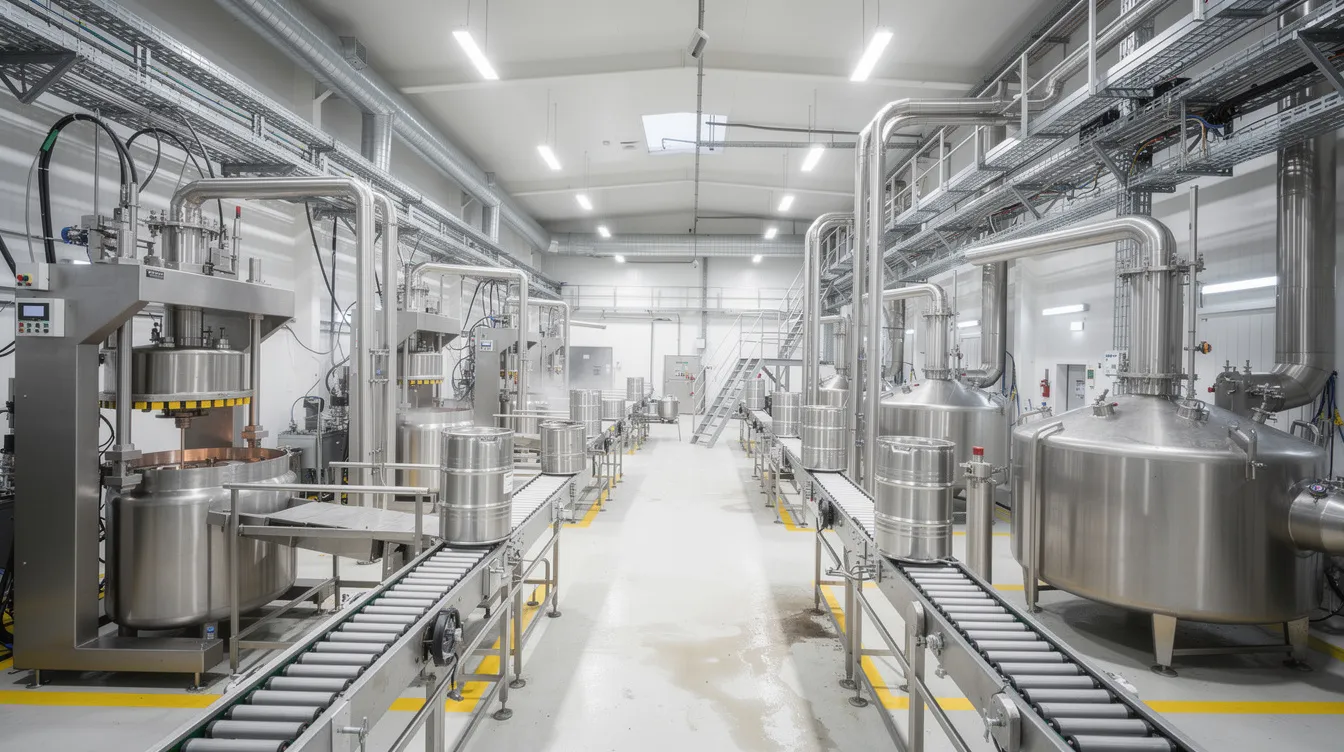
Oilseed Processing Plant Project Cost and Investment Planning
A comprehensive project report for oilseed processing is a blueprint for technical execution and financial planning. The major components of total capital investment include land and site development, civil construction, plant and machinery (indigenous and imported), installation, utilities (boiler, ETP, electricals), storage tanks, laboratory, furniture, preliminary and pre-operative expenses, contingency provision and interest during construction.
Fixed capital excludes margin money for working capital. Total project cost includes both fixed capital and working capital margin. Equipment costs represent a significant portion of capital expenditure, often 40–55% of fixed cost.
| Cost Head | Illustrative % Share of Fixed Cost | Notes |
|---|---|---|
| Plant & Machinery | 40–55% | Varies by technology, automation, imported equipment |
| Civil Works & Building | 15–25% | Location-dependent |
| Utilities & Infrastructure | 8–12% | Boiler, ETP, electricals |
| Land & Site Development | 5–10% | Industrial zone pricing |
| Pre-operative & Preliminary | 3–5% | Licences, consultancy, trial runs |
| Contingency & IDC | 5–8% | Essential buffer |
Working Capital Assessment for Edible Oil Manufacturing Projects
In edible oil manufacturing, raw materials account for 85-90% of operating expenses. Edible oils account for 85-90% of total operating expenses in production, meaning even small procurement misjudgements create significant liquidity impact. Edible oil processing costs are primarily driven by raw materials, and procurement is often seasonal (soybean, mustard, groundnut) or import-based (palm oil).
| Working Capital Item | Typical Considerations in DPR |
|---|---|
| Raw Material Inventory | 15–30 days stock; seasonal procurement may require higher |
| Work-in-Progress | 1–2 days processing cycle |
| Finished Goods | 7–15 days; bulk vs packed affects holding |
| Receivables | 30–45 days; institutional buyers may require credit |
| Payables | 15–30 days supplier credit |
| Net Working Capital Requirement | Equivalent to 60–90 days of production cost |
Financial instruments include cash credit limits, working capital term loans, LC-backed purchases for imported crude oil and bills discounting. Profitable edible oil plants can still face severe liquidity stress if inventory or receivable cycles are underestimated in the project report and CMA Data submitted to banks.
Production Economics, Oil Yield and By-Product Realisation
Small variations in oil content, extraction efficiency and refining losses can significantly impact contribution margins and profitability in the edible oil industry. Technical feasibility includes process flow and equipment specifications, but equally important is accurate material balance.
| Item | Quantity Basis | Commercial Notes |
|---|---|---|
| Seed Input | 100% (basis) | Cost driven by market, season, location |
| Crude Oil Produced | 17–20% (soybean, solvent) | Higher with solvent extraction; lower with expeller |
| Refined Oil Output | 95–97% of crude oil input | Refining losses depend on free fatty acids level |
| Meal / De-oiled Cake | 78–82% (soybean) | Major revenue contributor; priced per protein content |
| By-Products | 1–3% (lecithin, soapstock, fatty acids) | Incremental margin; natural markets in feed and food products |
Mechanical pressing and solvent extraction are common oil extraction methods, with extraction processes yielding different residual oil levels. Operating cost components include raw material cost (largest share), utilities (steam, power, water), chemicals and consumables (hexane, bleaching earth, caustic soda), labour, repairs and maintenance, packaging and quality assurance overheads.
Gross profit margins for edible oil plants range from 10-15%, and margins in commodity vegetable oil production are often thin and volatile. Operating costs are expected to rise significantly by the fifth year if raw material inflation is not managed. The role of by-product realisation (meal price, protein concentrate, lecithin, acid oil) in improving overall project IRR is essential, especially for integrated oilseed processing plants.
Market Demand, Raw Material Procurement & Sales Strategy
India’s consumption of edible oil spans soybean oil, mustard oil, groundnut oil, palm oil, and growing demand for sunflower oil, rice bran oils and blended oils. Healthy oils like olive and avocado are increasingly favored among urban customers, though normal vegetable oils dominate cooking consumption. Market analysis evaluates local and international demand for edible oils, and the food industry remains the largest buyer.
Raw material procurement strategies include direct purchase from farmers, tie-ups with mandis, contracts with aggregators, linkages with rice mills (for rice bran) and ginning units (for cottonseed), and import of crude oils via ports. Successful projects rely on robust supplier networks. Price volatility – linked to Chicago Board of Trade for soybean oil, Bursa Malaysia for palm oil, and domestic MSP – must be factored into every feasibility report.
A DPR for edible oil processing must incorporate realistic sales realisation assumptions, distribution costs and competitive landscape. Marketing channels include bulk tanker sales, institutional customers, creation of own edible oil brand, contract packing and B2B sales of meal to feed mills. There is high demand in both domestic and export markets for quality oilseed meals.
Financial Projections, CMA Data, DSCR, IRR & Project Feasibility
A bankable oilseed processing and edible oil refining project report requires integrated financial projections typically for 7–10 years. A well-prepared project report integrates market demand, technical feasibility, and financial analysis. A detailed project report provides a clear pathway for obtaining bank financing. Financial projections assess costs, revenues, break-even points, and profitability.
Project reports detail capital investment and operating expenses. The project report should include detailed financial statements and risk assessments.
| Financial Indicator | Purpose in Project Assessment | Key Inputs from DPR |
|---|---|---|
| DSCR | Loan repayment capacity | Cash profit, loan instalment, interest |
| IRR | Return on total investment | Net cash flows over project life |
| NPV | Present value of future cash flows | Discount rate, projected cash flows |
| Break-even Point | Minimum utilisation for cost recovery | Fixed costs, variable costs, selling price |
| Sensitivity Analysis | Impact of adverse changes | Raw material price, utilisation, realisation |
Break-even analysis is crucial for determining the operational sustainability of the project. In sample projects, break-even utilisation is often around 40–60% of installed capacity. Strong accounting profit does not automatically mean good DSCR; hence cash flow-based feasibility is essential. Sensitivity analysis assesses the impact of market fluctuations on project viability, covering scenarios varying raw material prices, refined-oil realisations, plant utilisation and interest rates.
Bank Finance, Project Loans & Equity Funding Opportunities
Indian banks typically finance edible oil processing business projects through term loans (for plant and machinery, civil works) and working capital limits. Promoter contribution norms, collateral expectations and appraisal criteria – project IRR, DSCR (minimum 1.25 per banking norms), debt-equity ratio and promoter track record – determine loan terms. Financial projections include capital investment and operating costs aligned with bank requirements.
A professionally-prepared DPR and CMA Data facilitate project loan sanctions. Key components of a project report include executive summary and market analysis alongside detailed financials. Equity funding options exist through strategic investors and private equity, supported by investor-ready DPRs and financial models. However, loan terms and cost of funds ultimately depend on bank policies and project specifics. No DPR can guarantee finance, but it can present the project credibly and transparently.
Government Approvals, Licences & Regulatory Requirements in India
Regulatory compliance includes obtaining licenses from authorities like FSSAI and Pollution Control Board. Requirements vary by state, scale and configuration.
- Entity and factory: Incorporation, PAN, GST, UDYAM for MSMEs, factory licence, municipal building approvals
- Food safety: FSSAI central or state licence for edible oil manufacturing, labelling regulations, periodic quality testing for control of acid value, peroxide value and contaminants
- Environmental: Consent to Establish and Consent to Operate from SPCB, ETP compliance, environmental clearance for large projects. Environmental compliance is critical during oil processing and refining operations
- Safety: Fire NOC, boiler inspector approval, PESO requirements for solvent handling where applicable. Oil processing machinery must ensure compliance with industry safety standards
- Labour and trade: EPF, ESI, minimum wages, legal metrology for packing, IEC and DGFT registrations for import/export
Promoters should cross-check current regulatory requirements with competent authorities at the time of implementation.
Major Risks in Oilseed Processing & Edible Oil Projects
Oilseed processing and edible oil refining are commodity businesses with multiple technical, commercial and financial risks.
| Risk Category | Specific Risk | Impact | Mitigation |
|---|---|---|---|
| Raw Material | Price spike, crop failure | Cost increase, DSCR stress | Long-term contracts, multi-source procurement |
| Extraction & Refining | Yield variation, high FFA | Lower output, higher losses | Process control, quality raw material |
| Operational | Breakdown, power cuts, solvent leakage | Production loss, safety hazard | Maintenance, DG backup, safety systems |
| Financial | Working capital shortage, interest rate rise | Liquidity stress, higher cost | Adequate WC limits, conservative assumptions |
| Market | Margin compression, competition | Reduced profitability | Brand building, by-product focus, scale |
| Regulatory | Duty changes, environmental non-compliance | Cost impact, operational disruption | Monitoring, compliance investment |
| Import-Specific (Palm) | Forex movement, port congestion, duty revision | CPO cost volatility | Hedging, port diversification |
Conservative assumptions, contingency provisions and sensitivity analysis in the DPR help understand worst-case scenarios.
Integrated vs Standalone Project Models
| Configuration | Key Advantages | Key Disadvantages | Capital Intensity | Typical Promoter |
|---|---|---|---|---|
| Standalone expeller oil mill | Low capital, simple operations | Low oil recovery, limited scale | Low | New MSME entrant |
| Crushing + solvent extraction | Higher oil recovery, meal quality | Solvent safety, higher capital | Medium–High | Established processor |
| Standalone crude oil refinery | Flexible crude sourcing | No control over crude supply | High | Trader, importer |
| Integrated crushing + extraction + refining | Captive crude supply, full margin | High capital, execution complexity | High–Very High | Established manufacturer |
| Import-based palm oil refinery | Large volumes, port logistics | Forex and duty exposure | High | Corporate, large trader |
| Integrated processing + by-products | Multiple revenue streams | Technical complexity, market development | High | Diversified food processor |
The final decision should be based on detailed DPR analysis including raw-material mapping, market access, fund availability and promoter capabilities, not solely on theoretical margin comparisons.
Step-by-Step Roadmap for Establishing an Industrial Oilseed Processing Plant
- Conceptualisation: Select oil type (soybean, mustard, rice bran, palm, sunflower, groundnut), assess promoter interest and market
- Market and raw material study: Preliminary demand analysis, catchment area assessment
- Location and capacity selection: Based on seeds availability, logistics, other factors
- Techno-economic feasibility: Process selection, preliminary cost estimation
- Machinery/EPC shortlisting: Vendor discussions, quotations
- DPR preparation and financial model: Comprehensive project report with projections
- Finance and investor discussions: Bank proposals, CMA Data, equity discussions
- Statutory approvals: Entity formation, FSSAI, PCB consents, factory licence
- Civil construction and machinery procurement: As per approved layout and specifications
- Installation, trial runs and commissioning: Performance testing
- Commercial production and stabilisation: Ramp-up to target utilisation
Indicative timeline from DPR completion to financial closure is typically 3–6 months; total project implementation may take 12–24 months depending on scale and approvals.
Why an Industry-Specific DPR Is Important for Industrial Oilseed Projects
Generic, template-based project reports are inadequate for oilseed processing and edible oil refining because yields, oil recovery, refining steps, machinery selection, project cost and margins differ widely across raw materials, configurations and locations. A detailed project report includes machinery and technology requirements, and the report should cover raw material and utility requirements specific to the chosen process.
An industry-specific DPR should include detailed process description, capacity and material balance, line-wise machinery list, project cost break-up, means of finance, year-wise financial projections, DSCR/IRR analysis, sensitivity scenarios and risk assessment. Quality assurance systems are essential in project reports for edible oils. For bank finance and investor appraisal, assumptions must be justifiable with supporting vendor quotes, realistic market prices and clearly stated basis.
A profit analysis grounded in plant-specific factors is more valuable than borrowed industry averages. Promoters should treat the DPR as an internal decision-making tool, not just a loan-application document.
Professional DPR, Feasibility Study & Project Finance Advisory by Project Report Bank
CA Manish Gugliya, FCA, DISA (ICAI), is a practising Chartered Accountant with over 20 years of experience in project finance, DPR preparation, CMA Data and industrial feasibility analysis. Project Report Bank provides customised advisory services for edible oil processing, fat processing and oilseed manufacturing projects.
Services relevant to this industry include:
- Customised Detailed Project Reports for bank finance
- Techno-economic feasibility studies for oil mill, solvent extraction and refinery projects
- Financial modelling, project cost and means-of-finance planning
- CMA Data preparation for bank loans
- DSCR, IRR, NPV and profitability assessment
- Investor-ready DPRs, business valuation and fundraising documentation
While the firm assists in preparing professional documentation and financial analysis, final financing decisions rest with banks and investors. No assured loan sanction or guaranteed profitability is promised.
Serious promoters planning an edible oil manufacturing project are encouraged to share brief project details – proposed product, capacity in TPD, location, estimated investment, own funds, bank-finance requirement and current project stage – via ProjectReportBank.com so that a tailored proposal for DPR and advisory services can be provided.
Frequently Asked Questions
What does an Oilseed Processing and Edible Oil Refining Project Report typically include?
A comprehensive oilseed processing and edible oil refining project report includes an executive summary, industry overview, technical process description, plant capacity and layout, raw material and utility planning, detailed project cost, means of finance, projected financial statements (P&L, balance sheet, cash flow), working capital assessment, DSCR/IRR/NPV analysis, break-even analysis, sensitivity scenarios and risk assessment. Project Report Bank structures such DPRs specifically for Indian bank appraisal and investor evaluation, with all assumptions clearly documented and reconciled. A well-prepared project report integrates market demand, technical feasibility, and financial analysis into a single coherent document.
How early should I prepare a DPR before ordering machinery for an edible oil plant?
Promoters should obtain at least preliminary vendor quotations and commission a DPR before placing any final machinery orders – ideally 3–6 months prior to committed expenditure. This ensures that capacity, configuration and funding structure are validated financially. Ordering machinery without a completed feasibility report risks mismatched capacity, inadequate financing or unviable project economics.
Can a project with thin edible oil refining margins still be viable?
Viability depends on multiple factors including plant utilisation, by-product realisation, interest cost, working capital cycle and degree of integration. Gross profit margins for edible oil plants range from 10-15%, and net margins are often thinner at 5–12%. Detailed sensitivity analysis in the DPR – varying oil realisations, raw material costs and utilisation – is essential rather than relying solely on headline refining margins.
Is it necessary to have prior industry experience to set up an oilseed processing plant?
While prior experience in the country’s edible oil industry is beneficial, new promoters can enter the sector provided they work with competent technical consultants, hire experienced plant managers and obtain a professionally prepared project report and financial model. Banks and investors assess promoter capability alongside business requirements and project feasibility, so demonstrating a structured approach through a credible DPR matters significantly.
How can Project Report Bank help if my bank has already asked for revised projections?
Project Report Bank can review the earlier DPR, update assumptions, refine financial projections, prepare fresh CMA Data and scenario analysis, and present a more robust case aligned with the bank’s specific queries. This requires sharing the original report, bank observations, updated quotations and any revised business requirements. The goal is to provide transparent, defensible projections rather than simply inflating numbers to meet targets.