Key Takeaways
- Equity funding rejection is a signal to systematically revise assumptions, financial projections, valuation and risk analysis in the investor-ready DPR; randomly tweaking numbers or reformatting the document does not address root causes.
- Promoters should convert investor feedback into a documented corrective-action register, then rebuild the financial model, cash flow, working capital cycle and funding structure based on verifiable evidence.
- All documents; the business plan, investor-ready DPR, pitch deck and financial model; must carry identical figures and assumptions before re-approaching potential investors.
- Professional support from Project Report Bank and CA Manish Gugliya can help promoters prepare a more credible, investor-ready project report for equity funding through structured financial modelling, valuation calibration and independent review.
Introduction: Equity Funding Rejection Is a Signal to Reassess Your DPR
Investor rejection is a common part of entrepreneurship, especially for manufacturing and expansion projects seeking ₹5 to ₹50 crore in equity capital. A project may be technically sound and commercially promising yet still fail to attract investors because the DPR does not present the business idea with the financial rigour and evidence that investors expect.
To revise an investor-ready DPR after funding rejection means re-examining every core assumption: demand, capacity utilisation, costs, cash flow, valuation and risk. It does not mean redesigning the document layout or inflating projected EBITDA margins without evidence.
Investors expect alignment between the business plan, DPR, cash flow model and pitch deck. Any mismatch across these documents reduces credibility. Four distinct reasons drive most rejections: genuine weakness in project economics, wrong investor mandate or sector fit, business valuation disputes, and incomplete or weak investor documentation. Each requires a different corrective response.
Increasing projected profitability or IRR without supporting data will usually worsen investor perception rather than improve it. Viewing rejection from the investor’s perspective aids improvement and leads to a stronger proposal.
Understand Why Investors Rejected the Original DPR
Before revising anything, promoters need to spend time on structured investor rejection feedback analysis rather than reacting emotionally. Rejection provides constructive feedback for future funding opportunities. Identifying and addressing specific reasons for previous funding denial strengthens revisions. Every meeting note, email and call discussion should be converted into a documented corrective-action register with specific action points. For a deeper framework on classifying rejection reasons, refer to this guide on analysing investor rejection feedback and identifying correctable funding gaps.
Common investor concerns in Indian equity funding deals include:
- Unrealistic demand and pricing assumptions not supported by market research
- Capacity utilisation projected at 80%+ in Year 1 without evidence
- Weak working capital and cash flow planning
- Inflated project cost or funding requirement
- Unreasonable business valuation versus sector averages (private manufacturing firms in India typically trade at 6×–14× EV/EBITDA, well below listed industrial machinery peers at 23–26×, per Kroll Industry Multiples data)
- Low promoter contribution reducing investor confidence
- Unclear exit route and weak equity IRR
- Missing regulatory approvals, land titles or environmental clearances
Proposals must showcase actual demand through reliable market research. Investors scrutinize financial projections and unit economics closely. A clear competitor analysis is essential in a DPR. Transparency about risks builds trust with potential investors.
| Investor Objection | Underlying Problem | Required DPR Revision | Supporting Evidence to Add |
|---|---|---|---|
| Valuation too high | Used listed-peer multiple without private discount | Recalibrate using private-sector comparables at 10×–14× | Kroll sector multiples, recent private transactions |
| Revenue projections unrealistic | No customer validation or firm orders | Rebuild revenue linked to validated demand | LOIs, pilot results, customer interviews |
| Capacity utilisation aggressive | 80% assumed in Year 1 | Revise to 55–60% Year 1 with gradual ramp-up | Industry benchmarks, commissioning timelines |
| Working capital insufficient | Receivable and inventory days understated | Recalculate working capital cycle | Supplier and customer credit terms, GST cycle |
| Promoter contribution low | Only 10% equity from promoters | Increase to 20–30% or show additional sources | Bank statements, asset valuations |
Step-by-Step Process to Revise an Investor-Ready DPR After Funding Rejection
This section outlines the core roadmap for manufacturing and expansion project promoters who need to improve their DPR for equity funding. Each step addresses a specific area where DPRs commonly fail.
Step 1: Reassess the market opportunity. Update demand estimates using 2024–2026 data from FICCI, IBEF or relevant industry associations. Market validation should include primary data like pilot results and customer interviews; not just secondary reports. Include a detailed market analysis covering competition and customer needs, and ensure the market size is quantified with verifiable sources. A clear competitor analysis differentiates your venture from others in the marketplace.
Step 2: Review project cost and capital expenditure. Obtain at least two to three quotations for each major machinery item. Factor in GST, import duties, freight, installation, civil works and a 5–10% contingency. Clearly state the total project cost in the report. A successful DPR needs to include a detailed breakdown of fund utilization so investors can evaluate where their money goes.
Step 3: Correct production and capacity assumptions. Project utilisation conservatively: 50–60% in Year 1, 70–75% in Year 2, 80–85% by Year 3. Account for maintenance shutdowns, product mix changeovers, wastage rates and labour learning curves. Indian manufacturing capacity utilisation averages fall below 70% in many subsectors, per industry analysis; assuming much higher without evidence is a red flag.
Step 4: Rebuild financial projections. Reconstruct the projected P&L, balance sheet and cash flow statements; monthly for the first 18–24 months, then yearly. Financial projections should cover at least five years (three to seven years depending on the project horizon). Recalculate the working capital cycle (inventory days, receivable days, payable days), DSCR where term loans are involved, and identify any funding gaps. Adaptive financial projections are key to demonstrating business viability. For common pitfalls in this process, see this discussion on financial model red flags.
Step 5: Reassess business valuation. Revisit DCF assumptions, discount rates (15–20% cost of equity is typical for Indian manufacturing), and comparable multiples. Private firms should expect a 20–30% discount to listed peers. Define pre-money and post-money valuations clearly, and model promoter dilution under different equity amounts. A detailed discussion of recalibrating rejected valuations is available in this article on handling business valuation rejection by investors.
Step 6: Review the debt-equity funding structure. Recalibrate promoter contribution, bank term loan quantum, working capital facilities and the investor equity requirement. A clear funding requirement section specifies needed capital and the terms under which it is expected. For projects involving conditional commitments or bank loan dependencies, understand how funding delays and dependencies can affect the overall plan.
Step 7: Strengthen risk analysis. A Detailed Project Report acts as a risk-mitigation tool for investors. Expand the risk section to cover raw material supply, sales realisation, power tariff changes, regulatory delays, execution risks and financing risks. Investors expect clear, actionable risk assessments with mitigation strategies. Include a SWOT analysis to evaluate business risks. A comprehensive risk management strategy helps investors feel secure about their investment. For manufacturing-specific risks, refer to this analysis of raw material, capacity utilisation and sales risks.
Step 8: Revise the investor return proposition. Recalculate equity IRR (distinct from project IRR), MoIC, dividend policy and exit scenarios (strategic sale, secondary sale, IPO potential). Investors require a credible repayment plan with debt servicing capacity outlined clearly. The sponsoring team’s domain expertise is crucial for project credibility; present the founding team’s track record and relevant experience.
Step 9: Update supporting documents. The revised investor-ready project report for equity funding, pitch deck, financial model and business plan must carry identical numbers. A well-organized DPR helps investors verify claims across documents. Due diligence involves reviewing financial, legal, and operational records; five critical documents include incorporation and financial records. Investors assess team structure and management agreements during due diligence.
Step 10: Conduct an independent final review. Engage an external Chartered Accountant or project finance advisor to verify numerical consistency, assumptions, evidence and completeness. Tracking project implementation timelines is essential for investor trust. Effective financial models include conservative, base, and stress-test scenarios; verify all three before resubmission.
Which Financial Sections of the DPR Need the Most Attention?
Most investor-ready DPR revision work after equity funding rejection concentrates in the financial sections. Realistic financial assumptions improve investor confidence in DPRs. The following components need careful rebuilding:
- Revenue projections by product line, linked to capacity, utilisation and validated pricing
- Gross margin and EBITDA margin trends, reflecting raw material and power cost escalation
- Fixed and variable operating costs, including realistic salary, maintenance and utility budgets
- Working capital cycle: inventory holding days, receivable days, payable days and their cash flow impact
Metrics that equity investors track closely:
| Metric | Primary Audience | Purpose |
|---|---|---|
| Equity IRR | Equity investors | Return on invested equity capital |
| Project IRR | Both lenders and investors | Overall project return |
| DSCR / Interest Cover | Lenders (and investors monitoring debt risk) | Debt repayment ability |
| Free Cash Flow to Equity | Equity investors | Cash available after debt service |
| Break-even Sales | Both | Minimum viable revenue |
| Payback Period | Equity investors | Capital recovery timeline |
Investor dilution, cap table evolution and sufficiency of funds (no hidden funding gap) are critical for promoters raising ₹5–50 crore. Building or rebuilding these sections often benefits from professional financial modelling support.
Original DPR vs Revised DPR: Practical Illustration
Consider a hypothetical ₹32 crore engineering manufacturing project in Gujarat seeking ₹10 crore in equity funding. The original DPR was rejected; the revised version corrects the assumptions. All numbers below are illustrative, not sector benchmarks.
| Parameter | Original DPR | Revised DPR |
|---|---|---|
| Year 1 Capacity Utilisation | 80% | 55% |
| Year 3 Capacity Utilisation | 95% | 80% |
| Year 1 Revenue | ₹28 crore | ₹19 crore |
| EBITDA Margin (Year 1) | 25% | 18% |
| Working Capital Requirement | ₹2.5 crore | ₹3.8 crore |
| Total Funding Requirement | ₹32 crore | ₹30 crore |
| Investor Equity Sought | ₹12 crore | ₹9 crore |
| Proposed Pre-Money Valuation | 15× EBITDA | 12× EBITDA |
| Downside Scenario Included | No | Yes |
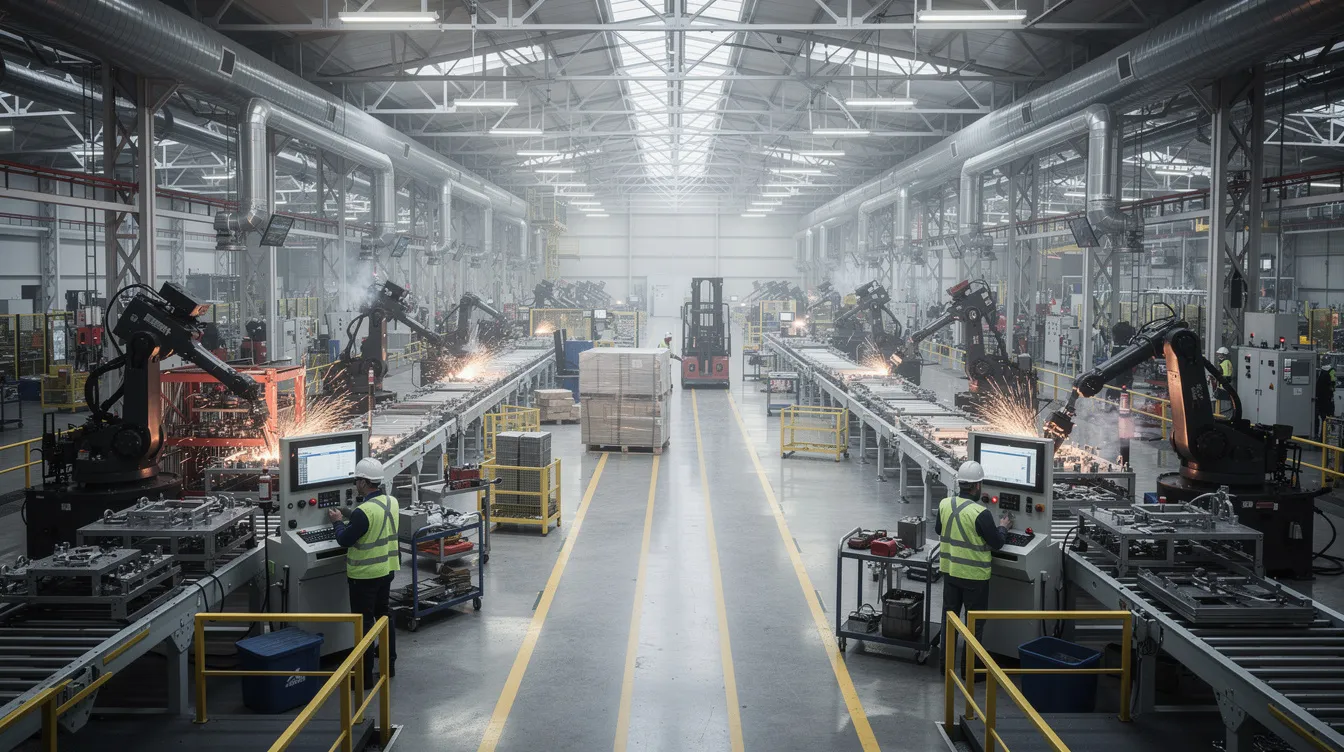
The revised DPR reduces Year 1 capacity utilisation from 80% to 55%, reflecting a realistic ramp-up. Revenue drops accordingly, but the projection is defensible. The investor equity requirement falls from ₹12 crore to ₹9 crore because tighter project cost estimates and better working capital planning reduce the total funding gap. Understanding rejection helps refine business ideas and pitches. Investor-ready reports require clear differentiation from competitors in the marketplace; the revised DPR includes a competitive mapping section absent from the original.
Even though equity IRR decreases from the original projection, investors are more likely to engage with a conservative, evidence-backed financial model than an optimistic one that cannot withstand scrutiny.
How to Perform Sensitivity Analysis Before Resubmitting the DPR
Investors now expect base-case, downside-case and upside-case scenarios as standard. A DPR submitted with only one optimistic projection is incomplete.
Core sensitivity variables for Indian manufacturing projects:
- Raw material cost increase of +10%
- Selling price reduction of -5%
- Capacity utilisation drop of 10 percentage points below base case
- Commissioning delay of 6–12 months
- Interest rate increase of 100–150 basis points on bank loans
| Variable Change | Impact on Equity IRR | Impact on DSCR (Year 2) |
|---|---|---|
| Raw material +10% | -3 to -5 pp | Drops by 0.15–0.25× |
| Selling price -5% | -2 to -4 pp | Drops by 0.10–0.20× |
| Utilisation -10 pp | -4 to -6 pp | Drops by 0.20–0.30× |
| 6-month delay | -2 to -3 pp | Delayed by one period |
Completing sensitivity analysis internally before investor meetings reduces surprises during due diligence. Persistence increases the likelihood of securing future investments; a prepared promoter who can talk through downside scenarios demonstrates operational maturity.
When Should Promoters Revise the DPR Instead of Changing Investors?
Some rejections demand DPR revision. Others stem from investor-project mismatch, where the solution is finding a better-aligned investor, not rewriting the document.
- Correctable documentation gaps (missing approvals, weak market evidence, inconsistent financials): revise the DPR.
- Fundamental feasibility problems (structurally low margins, commodity market without differentiation): may require project restructuring or postponement, not just a revised document.
- Pure valuation disagreement: recalibrate expectations using sector comparables, or seek investors willing to pay a growth premium.
- Investor mandate mismatch (wrong sector, ticket size, geography or stage): the DPR may be adequate; change the investor target list. This is not a good fit issue with the document.
- Unacceptable investment conditions such as highly dilutive terms or restrictive covenants: evaluate whether these are term sheet red flags rather than DPR problems.
Repeatedly circulating the same weak DPR to multiple investors can damage reputation. Rejection can lead to better-aligned funding opportunities, but only if the underlying concerns are addressed first.
Investor-Ready DPR Revision Checklist Before the Next Funding Approach
Before re-approaching equity investors, verify each of the following:
- Updated market analysis with competitor data, customer validation and demand evidence
- Validated project cost with machinery quotations, infrastructure estimates and contingency
- Realistic production ramp-up schedule over 3–5 years
- Business plan narrative aligned with financial projections
- Revenue, expenses, EBITDA, cash flow, working capital, DSCR, IRR and valuation consistent across DPR, pitch deck and Excel financial model
- Confirmed promoter contribution sources and timeline
- Bank debt assumptions with repayment schedule
- Investor equity requirement, post-money shareholding and cap table
- Key licences, land status, environmental and statutory approvals documented
- Risk mitigation measures for operational, market and regulatory risks
- Executive summary that answers the problem, solution, market size and funding ask concisely; a successful executive summary should answer these in under 90 seconds of reading
- The project report should include an executive summary that highlights the business concept and funding requirements
An investor-ready business plan includes a structured template. Educational and industry-specific content enhances project planning for businesses preparing these documents. For a more detailed supplementary list, see the investor-ready DPR checklist for equity funding.
How Professional DPR Revision and Financial Modelling Can Improve Investor Readiness
In my practice, I have observed that promoters who prepare DPRs independently often miss inconsistencies between cash flow, DSCR, IRR, valuation and means of finance. These gaps become visible during investor due diligence and erode confidence.
Professional review identifies where projections lack supporting evidence, where the financial model carries circular references or broken assumptions, and where the valuation logic does not hold against sector comparables. Investors require a detailed project report for evaluation; a professionally reviewed DPR meets that standard.
Through Project Report Bank, we provide:
- Investor-ready DPR revision for manufacturing and MSME projects
- Detailed financial modelling with base, conservative and stress-test scenarios
- Cash flow and funding-gap analysis
- Business valuation services calibrated to Indian market norms
- Alignment of DPR, pitch deck, financial projections and business plan into a cohesive investor-ready package
Professional documentation does not guarantee equity funding; no advisor can promise that. But it does address the correctable gaps that lead to avoidable rejections.
Serious promoters planning ₹5–50 crore equity raises can share their current DPR and investor feedback for a structured review through the investor-ready DPR and fundraising assistance page or via the ProjectReportBank.com WhatsApp contact.
Frequently Asked Questions
These FAQs address practical doubts about the fundraising process that promoters commonly raise after an equity funding rejection.
Can I use the same DPR with only updated dates after a funding rejection?
No. Changing dates or minor details is inadequate. Investors expect substantive changes to assumptions, cash flow and risk assessment based on their feedback. A credible investor-ready DPR revision should be able to show exactly what has changed and why it addresses the earlier rejection reasons.
How long does it usually take to revise an investor-ready DPR properly?
For a mid-sized manufacturing project, expect 2–4 weeks if data, machinery quotations and regulatory documents are available. If fresh market research, new quotations or regulatory clarifications are required, the process can take 4–6 weeks. Rushed revisions often miss inconsistencies; keep some buffer before the next investor meetings.
Should I pause approaching new investors until the DPR is revised?
In most cases, complete at least one thorough DPR and financial model revision before contacting new potential investors. High-level networking can continue, but detailed discussions with access to your financials should wait until the revised numbers, documents and narrative are ready and consistent.
Do all investors require the same depth of DPR and financial projections?
Institutional equity funds and family offices typically expect a full investor-ready project report for equity funding with detailed projections and sensitivity analysis. Some angel or early-stage investors may rely more on the pitch deck and business plan. For capital-intensive manufacturing projects above ₹5 crore, comprehensive documentation is expected regardless of investor type.
Can I prepare an investor-ready DPR without a detailed financial model in Excel?
A narrative business plan is useful for context, but serious equity investors for ₹5–50 crore expect a transparent, formula-based financial model they can test and stress. A standalone PDF with static tables does not allow investors to evaluate assumptions or run scenarios. Building a robust Excel-based financial model is essential for any company raising growth capital.
Conclusion: A Revised DPR Must Demonstrate Better Investment Readiness
Revising an investor-ready DPR after funding rejection is about strengthening assumptions with evidence, rebuilding financial projections on defensible numbers, calibrating valuation to sector norms, and presenting a clear, risk-aware funding proposal. The process requires discipline, not optimism.
Investors expect realistic, data-backed projections, clear exit routes, a balanced funding structure and transparent disclosure across the DPR, business plan and pitch deck. Treat rejection as a structured review point; a chance to present a stronger, more credible investment proposition the first time you re-approach capital.
Promoters working on manufacturing or expansion projects seeking ₹5–50 crore in equity funding can connect with CA Manish Gugliya through ProjectReportBank.com to discuss DPR revision, financial modelling and valuation support.
Author Bio
CA Manish Gugliya, FCA, DISA (ICAI) is a practising Chartered Accountant with more than 20 years of professional experience in Detailed Project Reports, financial projections, project finance, feasibility studies, business valuation and investor-ready documentation. Through ProjectReportBank.com, he provides professional project and financial advisory services to entrepreneurs, MSMEs, industrial promoters and established businesses across India.