
Key Takeaways
- Banks and financial institutions in India do finance new and expanding 3-star hotel projects; loan amounts range from ₹10 lakhs to ₹25 crores depending on project scale, lender policy and borrower profile.
- Banks typically finance 70% to 75% of eligible project cost (civil construction, interiors, FF&E, plant and machinery), while expecting meaningful promoter contribution and, in many cases, collateral security.
- Hotel project finance appraisal focuses on location, market demand, occupancy, ARR/ADR, RevPAR, DSCR and promoter profile rather than building value alone.
- A Detailed Project Report (DPR) with coherent project cost, means of finance, revenue model and DSCR is central to a successful bank loan proposal for a 3-star hotel.
- Actual eligibility criteria, interest rate, tenure and security requirements vary by bank, scheme, borrower risk profile and specific hotel project characteristics.
Introduction – Bank Loan for 3-Star Hotel in India
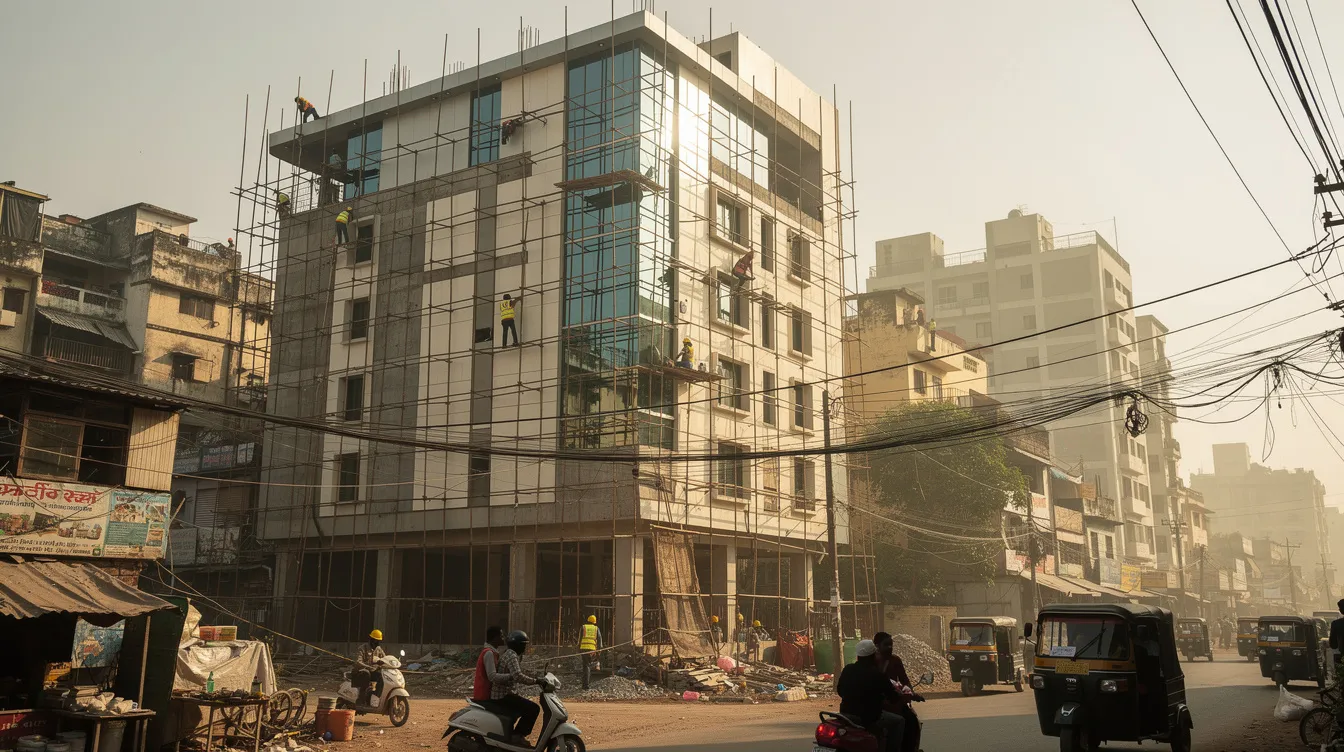
A 3-star hotel project is a capital-intensive undertaking. The expenditure covers land or building, civil construction, interiors, furniture and fixtures, hotel equipment, HVAC, fire-safety systems, pre-operative expenses and initial working capital margin. Securing a commercial bank loan for a 3-star hotel requires a significant capital outlay and structured planning before any brick is laid.
Most hotel promoters in India use a combination of promoter contribution, term loan from banks or financial institutions, and sometimes additional financing options such as unsecured loans or quasi-equity. Commercial Real Estate term loans are typically used for hotel property acquisition or construction.
This article covers bank loan for 3-star hotel projects in India, both greenfield and expansion, written from the perspective of CA Manish Gugliya for ProjectReportBank.com. The role of a detailed project report in presenting project cost, means of finance, revenue assumptions and financial projections in a bankable manner is discussed throughout. Subsequent sections address eligibility criteria, documents required, DSCR, revenue model, DPR contents and the step-by-step loan process.
Explore 3-Star Hotel Project Report Guides
Explore our complete 3-Star Hotel Project Report and DPR guides covering setup cost, equipment, project cost, revenue, financial projections, occupancy, feasibility, project finance and bank loan assessment.
What Is 3-Star Hotel Project Finance?
Project finance for a 3-star hotel means a term loan structured around the projected cash flows of the hotel project, not solely against the current balance sheet of the borrower. Hotel classification in India is managed through a voluntary system by the Ministry of Tourism, and the proposed category affects both cost and revenue assumptions.
Types of hotel project finance include:
- New 3-star hotel project loan (greenfield development)
- Expansion of room inventory or addition of banquet/restaurant facilities
- Renovation or upgradation of an existing property
- Purchase of hotel equipment and FF&E
- Working capital finance for day-to-day operations (assessed separately)
Banks evaluate hotel financing more stringently than standard commercial real estate. Lenders examine promoter background, project location, room inventory, F&B and banquet potential, project cost, means of finance, projected profitability, cash accrual and DSCR. Key parameters include occupancy assumptions, ARR/ADR, RevPAR, seasonality, competition and break-even point. Hotel project finance is typically sanctioned as a term loan, with separate working capital limits once the hotel becomes operational.
Can You Get a Bank Loan for a New 3-Star Hotel?
Banks and financial institutions in India do finance new 3-star hotel projects, subject to their credit policies, sector exposure limits and satisfactory appraisal. Eligible entities include individuals, companies and trusts. Applicants must be resident Indians aged 21 to 80 years. The minimum loan amount for hotel projects is ₹10 lakhs, and the minimum credit score required is 650 for loan eligibility; a healthy commercial credit score is typically around 700. Some lenders require that the business must have at least 3 years of operational history, though this may not apply to all greenfield schemes.
Factors that strengthen a proposal include a commercially suitable site with clear title, strong tourism or corporate demand in the catchment, realistic project cost, adequate promoter contribution, and credible financial projections. Even first-time hotel entrepreneurs can be considered if they demonstrate sound financial discipline, engage professional operators or consultants, and present a robust DPR.
Interest rates start at 9.75% for low-risk borrowers with strong profiles and security, while weaker risk profiles or NBFC financing may see interest rates for hotel loans range from 14% to 23% per annum. Sanctioned quantum, interest rate and tenure depend on projected hotel loan repayment capacity, DSCR, available security, and overall risk assessment.
What Can a Hotel Term Loan Finance?
A term loan for a 3-star hotel generally finances eligible fixed assets and project cost components, though policies differ across banks.
Cost heads often covered include: civil construction of the hotel building, renovation of existing structures, internal roads and basic site development; guest-room interiors, lobby, reception, restaurant/bar interiors, banquet halls, corridors and back-of-house areas; kitchen equipment, laundry machinery, HVAC systems, lifts, electrical installations, DG sets, water-treatment plants, fire-fighting systems, CCTV/security, IT/PMS and other plant and machinery; beds, mattresses, wardrobes, desks, lobby furniture, restaurant furniture and other FF&E.
Some lenders also finance permitted pre-operative expenses (consultancy, statutory fees, pre-opening marketing, interest during construction) and part of working capital margin. Treatment of land cost varies; some banks finance it partially (e.g., Bank of Maharashtra limits land purchase to 25% of project cost), while others treat it entirely as promoter contribution.
3-Star Hotel Project Cost – Main Components
Accurate estimation of project cost is crucial for determining realistic bank loan requirement and promoter contribution.
| Project Cost Component | Examples |
|---|---|
| Land / Site Development | Land, levelling, external development, compound wall |
| Civil Construction | Hotel building structure, roofing, glazing |
| Interiors | Guest rooms, reception, restaurant, common areas |
| Furniture & Fixtures | Beds, wardrobes, desks, lobby and banquet furniture |
| Plant & Equipment | Kitchen, laundry, HVAC, electrical, lifts |
| Safety & Utilities | Fire systems, DG, water treatment, CCTV |
| Pre-operative Expenses | Professional fees, pre-opening marketing, training |
| Contingencies | 5-10% of hard project cost |
| Working Capital Margin | Initial operating liquidity where applicable |
Civil construction and interiors usually form the largest share, followed by FF&E and plant and equipment. A prudent contingency of 5-10% is important to accommodate cost escalations from labour and material price rise. The detailed breakup by room count is discussed in our guide on 3-star hotel setup cost in India – 30, 50 and 75 room hotels. Inflating project cost only to show a higher loan quantum hurts DSCR and raises questions during appraisal.
Hotel Equipment, Furniture and FF&E in a 3-Star Hotel
FF&E represents a substantial part of project cost and should be estimated item by item, not as a single lump-sum figure. Major categories include guest-room furniture, mattresses, TVs, mini-fridges, lobby seating, restaurant and banquet tables and chairs, kitchen equipment, bar equipment, laundry machines and housekeeping trolleys.
Building systems classified as plant and equipment include HVAC units, VRF/VRV systems, electrical panels, lighting fixtures, security and access-control systems, IP cameras, fire-alarm systems and diesel generators. Banks may request quotations or budgetary offers for major equipment packages to validate estimates. For a complete breakdown, refer to the detailed 3-star hotel equipment, furniture and FF&E cost list.
Means of Finance for a 3-Star Hotel Project
Once total project cost is finalised, the promoter must structure the means of finance: the combination of promoter contribution, bank term loan and other sources. Typical components include the promoter’s own equity or internal accruals, bank term loan as primary project finance, unsecured loans from promoters or relatives where acceptable, and any applicable subsidy or scheme.
Illustrative Only:
| Source | Amount (₹) |
|---|---|
| Promoter Contribution | 3.00 crore |
| Proposed Bank Term Loan | 7.00 crore |
| Total Project Cost | 10.00 crore |
This is not a standard ratio. Each bank has its own norms on minimum promoter margin, maximum debt-equity ratio and treatment of land. For deeper discussion and scenarios, see the guide on 3-star hotel project cost and means of finance.
Promoter Contribution and Margin in Hotel Project Finance
Lenders insist on adequate promoter contribution to ensure genuine financial stake and to cushion the project against business uncertainties. Borrowers should expect to contribute 20% to 30% as a down payment for a hotel loan. Acceptable sources include own capital, liquidation of existing investments, internal accruals from other businesses, and capital from partners or shareholders.
In many cases, land or building already owned by the promoter can count toward promoter margin, subject to proper valuation, clear title and lender norms. Banks verify source and availability through bank statements, income-tax returns and net-worth statements. Artificially inflating project cost or understating promoter margin is risky and can lead to rejection once technical or valuation reports contradict the DPR.
Revenue Model Banks Examine for a 3-Star Hotel
From a lender’s perspective, loan repayment comes from operating cash flows, not from asset sale assumptions. Major revenue streams modelled in the DPR include room revenue, restaurant and coffee-shop income, bar revenue (where permitted), banquet and events income, conference and meeting room rentals, laundry, and ancillary services such as parking. Seasonal fluctuations in hotel occupancy can affect cash flow and loan servicing, making diversified revenue streams important.
Banks check whether projected revenue mix and margins align with typical 3-star hotel benchmarks in comparable cities. A good DPR shows how each stream is calculated; for example, “number of covers x average spend per cover” for restaurants. For detailed revenue modelling, refer to the 3-star hotel revenue model covering rooms, F&B, banquet and other income.
Occupancy, ARR/ADR and RevPAR – Core Performance Metrics
Banks rely on standard hotel performance metrics while reviewing a 3-star hotel DPR.
- Occupancy = (Rooms Sold / Available Room Nights) x 100. A 50-room hotel with 45 rooms sold on a given night operates at 90% occupancy that night.
- ARR/ADR (Average Room Rate / Average Daily Rate) = Total Room Revenue / Rooms Sold. If room revenue for a month is ₹15 lakh from 600 rooms sold, ARR is ₹2,500.
- RevPAR (Revenue per Available Room) = Occupancy x ARR, or Total Room Revenue / Total Available Room Nights. RevPAR measures how effectively the hotel converts inventory into revenue.
Aggressive assumptions, such as projecting 70-80% occupancy from Year 1, artificially inflate revenue, EBITDA, IRR and DSCR. Banks challenge these figures. For deeper formulas and examples, see the article on hotel occupancy, ARR, RevPAR and break-even analysis.
Financial Projections Required for Hotel Project Finance
Every bank loan for a 3-star hotel requires structured financial projections. Financial projections for a hotel project should span 5 to 10 years, depending on proposed tenure.
Main projected statements include Profit and Loss Account, Balance Sheet, Cash Flow Statement, and a detailed term-loan amortization schedule. Key assumptions to document: room inventory, ramp-up of occupancy over the first 3-4 years, ARR/ADR by season, F&B and banquet revenue, payroll, utilities, maintenance and management fees. Projected room revenue must reconcile with Rooms x Occupancy x ARR calculations. Banks derive DSCR, break-even, cumulative cash accrual and payback from these projections. Inconsistencies between narrative and numbers delay or derail appraisal. For templates and deeper explanation, see 3-star hotel financial projections for DPR.
DSCR and Loan Repayment Capacity for Hotel Projects
DSCR (Debt Service Coverage Ratio) measures cash available for debt service divided by total term-loan obligations (interest plus principal) for a given year. The Debt Service Coverage Ratio significantly impacts loan approval by banks.
Example: If projected cash accrual (net profit after tax plus depreciation) in Year 3 is ₹1.20 crore and total debt service is ₹0.80 crore, DSCR = 1.50x.
Banks focus on consistent positive cash flows and DSCR across the loan tenure, especially during the ramp-up phase. Lenders examine both average DSCR over the tenure and minimum DSCR in any single year. Thin coverage in early years is a concern even if later years appear strong. Different banks apply different DSCR comfort levels; no single universal minimum should be assumed.
Hotel Feasibility and Project Viability Assessment
A financially attractive spreadsheet is insufficient if underlying business feasibility is weak. Banks review both quantitative and qualitative aspects.
Key feasibility factors: city and micro-location, access and visibility, nearby demand generators (IT parks, industrial clusters, hospitals, tourist attractions), competing hotels, and future supply pipeline. Demand segments include corporate, MICE, leisure, weddings/events and transit; each affects occupancy and ARR seasonality differently. A sound feasibility study also analyses operating-cost structure, staffing norms, energy cost and break-even occupancy. Regulatory compliance is crucial for securing hotel financing. For a deeper framework, see the 3-star hotel feasibility study and project viability analysis.
What Should a 3-Star Hotel DPR Contain?
The DPR is the central document consolidating technical, market, financial and legal information. Detailed project reports and market analysis are essential for loan applications. Essential sections include:
- Executive summary, promoter profile, legal constitution, project background
- Proposed location, site details, hotel concept, room inventory and facilities
- Market and competition analysis, projected occupancy and ARR assumptions
- Detailed project cost with vendor quotes, means of finance, equipment and FF&E lists
- Revenue model, operating cost estimates, manpower plan
- Projected P&L, Balance Sheet, Cash Flow, term-loan repayment schedule
- DSCR analysis, break-even, sensitivity analysis
- Statutory approvals required (building plan, fire NOC, pollution control, tourism classification, liquor licence where applicable)
- Implementation schedule and risk-mitigation measures
Numbers and narrative must tell one consistent financial story. Discrepancies between cost, means of finance and projections are red flags.
Documents Required for Hotel Project Loan
Documentation requirements vary by bank and loan size. KYC documents are required for all partners or directors.
| Category | Examples |
|---|---|
| Promoter / KYC | PAN, Aadhaar, photographs, residence proof, CIBIL report |
| Business / Constitution | Partnership deed / MOA-AOA / LLP agreement, GST registration, Udyam Registration Certificate |
| Financial Documents | Last 3 years audited financials, ITR, bank statements (6-12 months), existing loan details, net-worth statement |
| Project Documents | DPR with technical appendices, quotations, architectural drawings, implementation schedule, financial projections |
| Property / Security | Title deeds, approved plans, property tax receipts, encumbrance certificate, valuation report, legal search report |
| Statutory / Approvals | Building plan approval, fire NOC, environmental clearance, tourism classification documents |
Borrowers must have a valid Udyam Registration Certificate where the hotel qualifies as an MSME unit. Collateral details must include a valuation report of the property. Exact lists vary by state and lender.
How Banks Assess a 3-Star Hotel Loan Proposal
Banks examine a 3-star hotel term loan proposal through multiple lenses before sanctioning project finance:
- Promoter Assessment: Experience in hospitality and tourism sector or related industries, managerial capability, financial strength, repayment track record and credit behaviour.
- Project Assessment: Suitability of location, hotel design and room mix, classification category, project cost reasonableness compared with technical/valuation reports, and implementation risk including approvals and timeline.
- Market Assessment: Demand drivers, existing and upcoming competition, realistic occupancy and ARR potential, seasonal variation, and diversified revenue mix.
- Financial Assessment: Projected revenue, EBITDA margin, cash accrual, DSCR, leverage ratios, sensitivity analysis results, and whether projected loan repayment fits within cash flow from operations.
- Security Assessment: Adequacy of primary security, any additional collateral, guarantee structure and insurance assignment. Final sanction conditions reflect the bank’s view of overall risk.
Security and Collateral in Hotel Project Finance
Primary security is the charge on project assets: land, building, plant and machinery, and FF&E financed by the term loan. Hypothecation of movable assets may be required as security for hotel loans. Collateral security refers to additional property or guarantees, where required.
Collateral often required for hotel loans includes the property itself and possibly additional assets. Collateral security must cover at least 100% of the loan amount in many bank policies. Mortgage of land and building, hypothecation of plant and machinery and FF&E, and assignment of hotel receivables and insurance policies are common forms.
Under schemes like CGTMSE, collateral-free loans up to ₹2 crore are available for MSMEs. Bajaj Finance offers hotel loans up to ₹8 million without collateral under specific terms. Personal guarantees of promoters and directors are often sought as additional comfort. Security structures are governed by each bank’s credit policy and cannot be standardised.
Term Loan vs Working Capital for a 3-Star Hotel
| Feature | Term Loan | Working Capital |
|---|---|---|
| Purpose | Capital expenditure (construction, interiors, FF&E, equipment) | Day-to-day operations (inventory, salaries, utilities) |
| Tenure | Up to 10 years including moratorium | Renewed annually |
| Repayment | Scheduled EMIs or instalments | Revolving; interest on utilised amount |
| Security | Mortgage on project assets | Hypothecation of current assets / receivables |
Maximum working capital limit is ₹5 crores under many MSME-oriented schemes. Mixing the two, for example using working capital limits to pay for construction, creates cash-flow stress and is discouraged by banks.
Loan Tenure, Moratorium and Repayment Structure
Hotel term loan tenure and moratorium are determined with reference to the implementation schedule, expected stabilization period and projected cash flows. Repayment period for loans can extend up to 10 years. Moratorium generally covers construction plus initial stabilization months; during this period only interest may be serviced and principal repayment starts after the commercial operations date.
Possible repayment structures include equal monthly or quarterly instalments, structured instalments increasing over time, or ballooning structures in limited cases. Longer tenure reduces instalment burden and may improve DSCR, but increases total interest cost. Actual tenure and moratorium depend on lender, project size, risk profile and applicable scheme.
Why Hotel Loan Proposals Get Rejected or Delayed
Many otherwise promising hotel projects face delays or rejection due to avoidable issues:
- Unrealistic project cost estimates without contingency
- Inadequate promoter contribution or unsubstantiated source of funds
- Over-optimistic occupancy or ARR assumptions not supported by market statistics
- Missing feasibility analysis; ignoring competition or new supply pipeline
- Incomplete title documents, pending building approvals, missing fire NOC
- Discrepancies between DPR, quotations and valuation reports
- Poor credit history, high existing leverage, frequent cheque returns
In my experience with project reports and bank finance, proactive planning and professional review of the DPR before submission resolves most of these issues.
Sensitivity Analysis in 3-Star Hotel DPR
Banks ask how the hotel project will perform under adverse but plausible scenarios. A good DPR therefore includes sensitivity analysis testing:
- Occupancy 5-10 percentage points lower than base case
- ARR lower by 10-15%
- Ramp-up taking one extra season to reach stabilization
- Construction cost overruns versus budgeted project cost
- Delayed opening causing higher interest during construction
- Higher-than-expected payroll or energy expenses
Each scenario should show its impact on revenue, EBITDA, cash accrual, DSCR and ability to meet term-loan instalments. Demonstrating resilience under reasonable stress improves lender comfort and makes the project more bankable.
Step-by-Step Bank Loan Process for a 3-Star Hotel
The journey from idea to disbursement follows a sequence. Submit a Detailed Project Report (DPR) for loan application as the central step. While the loan application itself can take a few minutes to complete online with some lenders, the preparation behind it takes weeks:
- Project concept and preliminary market scan
- High-level feasibility and location analysis
- Preparation of project cost estimate
- Structuring means of finance
- Appointment of consultant to prepare DPR and financial projections
- Submission of loan application with DPR and documents
- Bank’s internal appraisal: site visits, technical and valuation reports, credit analysis
- Credit committee review and sanction decision
- Acceptance of sanction terms, documentation, creation of security and mortgage
- Promoter’s margin infusion as per terms
- Staged disbursement linked to progress of construction
- Commencement of operations, regular repayment, periodic bank monitoring
Illustrative Example – 50-Room 3-Star Hotel Project Finance
Illustrative Example; Not a Bank Lending Norm. Numbers are for conceptual understanding only.
A 50-room 3-star hotel in a mid-tier Indian city, with total project cost of approximately ₹18 crore (covering land development, civil construction, interiors, FF&E, plant and equipment, pre-operative expenses and contingency).
| Item | Amount (₹ Crore) |
|---|---|
| Promoter Contribution (including land value) | 6.50 (~36%) |
| Proposed Bank Term Loan | 11.50 (~64%) |
| Total Project Cost | 18.00 |
Operational assumptions: occupancy ramps from 45% in Year 1 to 68% by Year 4; ARR grows modestly with inflation from ₹3,200; F&B and banquet revenue at approximately 35-40% of room revenue; operating margin stabilises around 30-35% by Year 3.
Projected DSCR: approximately 1.15x in Year 1 (during stabilization), improving to 1.55x by Year 4. Banks connect these revenue assumptions directly with repayment capacity. Promoters should customise their DPR and business plan to their specific location, scale and positioning rather than copying any example figures.

Conclusion – Making a 3-Star Hotel Bankable
Obtaining a bank loan for a 3-star hotel in India requires aligning market feasibility, realistic project cost, structured means of finance and credible financial projections. Lenders evaluate hotel project loans based on occupancy potential, ARR/ADR, RevPAR, operating margins, DSCR, promoter contribution and adequacy of security.
A well-prepared DPR helps both the promoter and the bank understand whether the chosen loan quantum, tenure and repayment structure are sustainable for the hotel’s projected cash flows. The next steps for any serious promoter: identify your location, validate demand, prepare a thorough DPR and approach your banker with a complete, consistent proposal.
At ProjectReportBank.com, CA Manish Gugliya assists entrepreneurs with preparation of project reports, DPR, CMA data, hotel financial projections and bank finance documentation. Final loan sanction always rests with the bank after its own independent appraisal.
Frequently Asked Questions (FAQs)
The following questions address practical doubts that commonly arise when planning bank finance for a 3-star hotel project in India.
Is there any specific government or bank scheme for financing 3-star hotels in India?
Several public-sector and private banks offer hospitality-focused loan products. The CANARA MSME INN scheme offers loans from ₹10 lakhs to ₹25 crores for eligible hospitality and tourism sector projects. PMEGP provides a subsidy of 15-35% for tourism businesses, which can reduce the effective promoter contribution. Government-backed loans can reduce the risk for banks and lower down payment requirements. CGTMSE allows collateral-free loans up to ₹2 crore for MSMEs, which can benefit small enterprises setting up hotels or resort projects. Availability and terms change over time; promoters should check with their existing banker and the local tourism department for current schemes.
Can an existing hotel refinance its project loan or fund renovation through a new term loan?
Many banks consider term loans for renovation, upgradation, expansion of room inventory or addition of facilities such as banquet halls or specialty restaurants in an existing hotel, provided the unit has a satisfactory track record. Refinancing or takeover of an existing hotel loan by another bank is possible if the hotel shows stable cash flows, satisfactory DSCR and a clean repayment record. For renovation loans, banks examine incremental cash flow and DSCR after renovation to confirm the additional borrowing remains serviceable. Tour operators or companies involved in hospitality development may also access these facilities for their own properties.
How long does it typically take to get a 3-star hotel term loan sanctioned and disbursed?
Timelines vary based on bank, loan amount, quality of documentation and internal approval layers. A well-prepared proposal can move from application to sanction in a few weeks to a few months. Key factors affecting timing: technical and valuation reports, legal scrutiny of title documents, clarifications on DPR assumptions, and credit-committee schedules. Promoters should allow adequate lead time before starting major construction activity and keep property and statutory papers ready. The process is faster when the DPR, financial projections and supporting documents are complete at the time of application.
Do banks insist on branding or management contracts with established hotel operators?
Banks do not universally mandate brand or management tie-ups for new hotels. However, many lenders take comfort if the hotel is operated under a reputed brand or by an experienced operator, as this can support assumptions on occupancy, ARR and operating efficiency. For first-time hotel owners, a credible management contract or franchise agreement can improve the bank’s view of project risk. Any management fees, brand fees and commissions payable under such contracts must be correctly built into the DPR and financial projections, as they affect profitability and DSCR. Access to technology platforms and distribution networks through a partner brand can also strengthen the revenue model.
At what stage should I engage a Chartered Accountant or project finance advisor for my hotel loan?
Promoters ideally involve a CA or project finance advisor early, at the stage of refining project cost, structuring means of finance and preparing the DPR, rather than after banks raise queries. Professional input helps ensure consistency between technical plans, cost estimates and financial projections, improves clarity on tax and regulatory implications, and pre-empts typical appraisal issues. A well-structured business plan identifies growth opportunities and highlights the viability of the hotel project before the formal loan application. Even with professional support, final responsibility for all representations in the DPR rests with the promoter, and the bank carries out its own independent assessment before sanction.
Explore More 3-Star Hotel Project Report Guides
Continue exploring our 3-Star Hotel DPR guides covering setup cost, equipment, project cost, revenue, financial projections, occupancy, feasibility, project finance and bank loan assessment.