
Key Takeaways
- The project cost of a 3 star hotel goes well beyond civil construction. It must account for land, interiors, furniture, fixtures and equipment, pre-operative expenses, interest during construction, contingency, and working capital margin – all estimated realistically in a detailed project report.
- For any 3 star hotel project in India, a bankable DPR must reconcile “Total Project Cost” with a credible “Means of Finance” covering promoter contribution, term loan, unsecured or subordinated funds, and other acceptable sources.
- Banks closely examine the debt-equity ratio, DSCR, promoter net worth, and the source and timing of promoter contribution before deciding the term-loan amount for a hotel project.
- This article provides an India-specific, illustrative 3 star hotel project cost structure and a matching funding structure, purely as examples and not as quotations or benchmarks.
- Professional preparation of a detailed project report, realistic cost estimation, and careful financing structure are critical to avoid cost overruns and funding gaps in hotel construction.
Explore 3-Star Hotel Project Report Guides
Explore our complete 3-Star Hotel Project Report and DPR guides covering setup cost, equipment, project cost, revenue, financial projections, occupancy, feasibility, project finance and bank loan assessment.
Introduction – Why 3 Star Hotel Project Cost & Means of Finance Matter
Many Indian hotel promoters begin their journey with a single question: “How much will it cost to construct a 3 star hotel?” That question is important – but it is only half the picture. Banks and financial institutions never look at cost alone. They look at cost and funding together.
In a DPR for a 3 star hotel project, “Project Cost” answers where the money will be spent – on land, hotel construction costs, interiors, FF&E, pre-operative expenses, and more. “Means of Finance” answers where the money will come from – promoter contribution, term loan, unsecured loans, investor equity, or subsidies where applicable. Developing a 3 star hotel requires a well-structured capital allocation plan that ties these two sides together.
In my practice as CA Manish Gugliya, I often see technically sound hotel projects struggle because of under-estimated costs, weak promoter contribution, or over-aggressive term-loan assumptions. A project that looks profitable on paper can become unfinanceable if the funding structure does not hold up under bank scrutiny.
This article focuses on India-specific 3 star hotel project finance, intended for entrepreneurs preparing a 3 star hotel project report for bank loan or seeking hotel project finance in India.
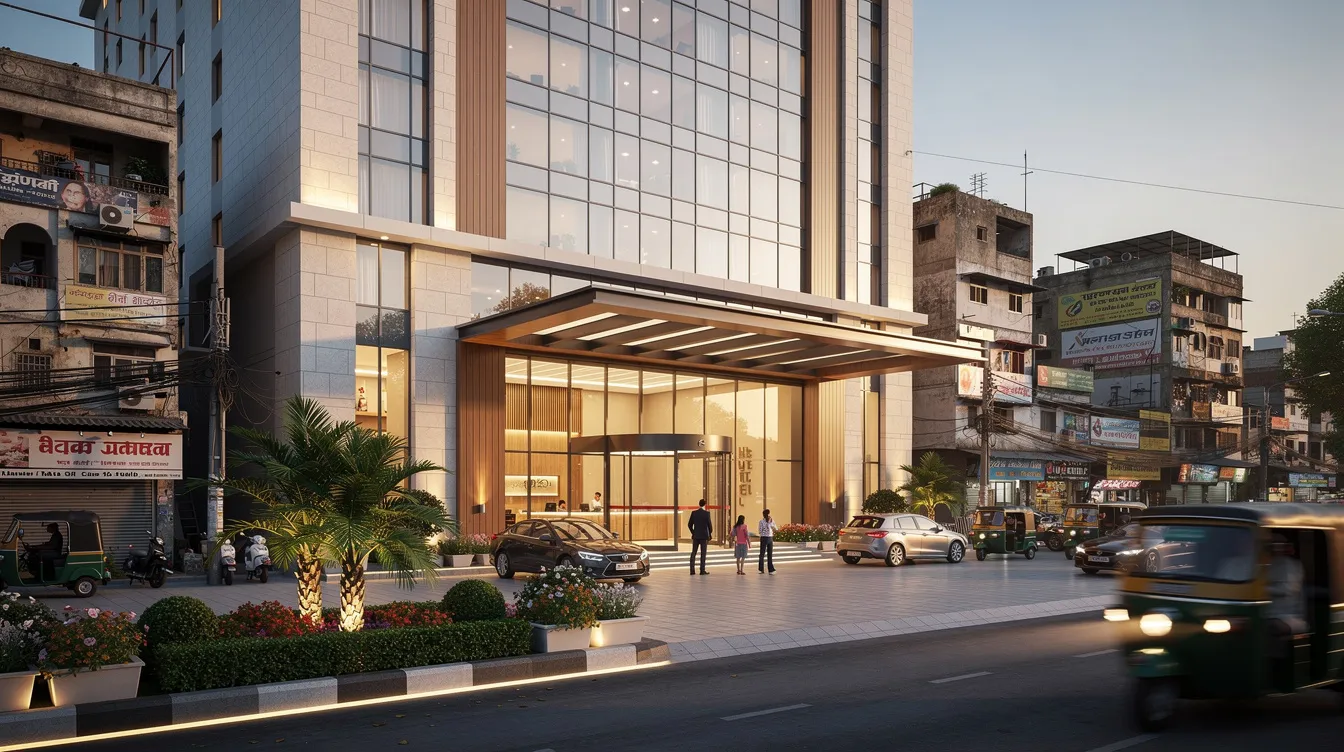
What Is the Project Cost of a 3 Star Hotel from DPR Perspective?
The total project cost of a hotel in a DPR means the complete capital requirement until the hotel is ready for commercial operation. It is not limited to the building cost per square foot. It covers every rupee that must be spent – or committed – before the first paying guest checks in.
Typical components in a 3 star hotel project cost include:
- Land acquisition and site development
- Building and civil construction (the largest hard cost head)
- Interior works and fit-outs
- Plant and machinery (HVAC, lifts, generators, boilers)
- Hotel FF&E cost – furniture, fixtures and equipment for guest rooms, restaurants, lobby, and public areas
- IT systems, property management software, CCTV, and security systems
- Pre-operative and preliminary expenses (consultancy, approvals, trial runs)
- Interest during construction on the term loan
- Contingency provision for cost escalation
- Deposits, licences, and statutory fees
- Margin for working capital to fund initial operating expenses
It is important to note that some banks may not finance specific components – especially land – even though they are included in total project cost. The DPR should clearly distinguish between total project cost and the portion eligible for bank finance.
This structure follows the standard practice in detailed project report and CMA data preparation used by banks and financial institutions during project appraisal across India.
Major Components of 3 Star Hotel Project Cost – Overview Table
Before discussing each cost head in detail, here is a summarised overview of the major components, what they cover, and how lenders typically view them in a hotel project financing structure.
| Project Cost Component | What It Includes | Financing Consideration |
|---|---|---|
| Land & Site Development | Purchase price, lease premium, stamp duty, site levelling, boundary, internal roads | Often expected from promoter’s own funds; not always eligible for term-loan financing |
| Building & Civil Construction | Guest rooms, lobby, restaurant, kitchen, BOH, parking, utility areas | Core eligible head for bank term loan; supported by architect estimates |
| Interiors & Fit-Outs | Room interiors, bathroom finishing, lobby décor, restaurant fit-out, corridor works | Usually eligible; banks want BOQ and vendor quotations |
| Plant & Equipment | HVAC, lifts, generators, DG sets, boilers, fire-fighting systems | Eligible for term loan; equipment specs and quotations required |
| Furniture, Fixtures & Equipment (FF&E) | Beds, chairs, tables, televisions, minibars, kitchen equipment, banquet furniture | Eligible; typically 12–16% of total development cost |
| IT/PMS & Security Systems | Property management software, POS, CCTV, access control | Eligible; relatively smaller proportion |
| Pre-operative & Preliminary Expenses | Professional fees, approvals, training, trial run, pre-opening marketing | Partially eligible; banks may cap certain heads |
| Interest During Construction (IDC) | Interest on term loan during construction and moratorium | Capitalised in project cost; subject to lender norms |
| Contingency | Buffer for price escalation, minor scope changes, unforeseen variations | Included in project cost; shows realistic planning |
| Deposits & Initial Licences | Electricity, water, municipal deposits, tourism licences | May or may not be funded by term loan |
| Margin for Working Capital | Initial operating cash for salaries, F&B, utilities, marketing | Part of project cost in many DPRs; shows launch readiness |
The following sections unpack the key cost heads and their treatment in hotel project finance in more detail.
Land and Site Development Cost in a 3 Star Hotel Project
A mid-size 3 star hotel with 80–120 rooms in an Indian tier-2 or sub-urban city typically needs 1–2 acres within city limits, or 2–3 acres or more on highways – depending on parking requirements, restaurant and banquet plans, and landscaping.
Key land-related costs include:
- Outright purchase price or long-term lease premium
- Stamp duty and registration charges
- Conversion charges (NA/CLU where agricultural land is being converted)
- Basic site levelling and soil testing
- Boundary wall, approach road widening, and internal roads
- Initial landscaping and drainage
Land acquisition costs for hotels vary significantly by location and market tier. In metro cities, land can account for up to 70% of hotel construction expenses, while in tier-2 or sub-urban locations, land costs may represent 9–14% of the total budget. Location can account for up to 70% of total project costs in extreme cases, which is why site selection directly shapes the entire cost model.
When presenting land in a hotel project cost for bank loan, promoters should note:
- If land is being purchased, include it at actual acquisition cost with supporting documentation.
- If the promoter already owns the land, include it at a supportable valuation – typically backed by a registered valuer’s report – and show it as promoter contribution in kind.
- Privately held land can significantly improve a hotel project’s financing structure because it reduces the cash equity requirement.
Banks may treat land as part of total project cost for viability analysis, but many lenders do not finance land acquisition through the term loan. This must be clarified project-wise based on lender policy and scheme eligibility.
Hotel Building and Civil Construction Cost (Hard Costs)
Hard costs – primarily civil construction and structural works – usually form the largest part of 3 star hotel investment cost in India. Hard costs typically make up 60–70% of the total budget in many hotel projects, though in some analyses hard construction costs range from 35% to 40% of total project costs when land and soft costs are included separately. The variation depends on how the cost classification is structured.
Typical built-up areas and spaces in a 3 star hotel include:
- Guest rooms and corridors (the Ministry of Tourism guidelines specify a minimum 130 sq ft bedroom for 3 star hotels)
- Lobby and reception area
- Restaurant, coffee shop, and bar
- Banquet and meeting rooms
- Kitchen, cold storage, and dry stores
- Staff facilities – lockers, canteen, restrooms
- Administrative and back-of-house areas
- Mechanical and plant rooms
- Parking areas (surface or basement)
- Utility areas and service entrances
Construction costs for a 3 star hotel range from $190 to $375 per square foot in many markets, with average construction costs around $282.5 per square foot globally. In India, rates vary depending on the city, structural type (RCC vs steel frame), finishing standards, and local labour and material price levels. In recent years, rising input costs for steel, cement, and labour have pushed estimates upwards.
For comparison, construction costs for a 5 star hotel can exceed $60 million for a large property, illustrating why star classification and scale significantly affect the budget.
Banks insist on architect’s estimates, structural drawings, item-wise cost breakup, and sometimes third-party engineer valuation when appraising hotel construction costs. Construction contingencies and GST on contracts must be included in the DPR to avoid understating the project cost.
Interiors and Fit-Out Cost for a 3 Star Hotel
Interiors and fit-outs can easily represent 20–30% of building cost in a 3 star hotel, and they are crucial for both hotel classification and guest perception. A 3 star hotel typically includes basic amenities like WiFi and gyms, but the interior finishing of rooms, lobby, and restaurant is what shapes the guest experience beyond these baseline facilities.
Specific areas requiring interior investment include:
- Guest-room interiors – wardrobes, headboards, flooring, false ceiling, curtains, wall treatments
- Bathrooms – tiles, sanitary fittings, shower partitions, vanity counters
- Lobby and reception décor – flooring, furniture, lighting, artwork
- Restaurant and bar interiors – seating, counters, décor elements
- Corridors and lift lobbies – flooring, lighting, wall finishes
- Public toilets and back-office interiors
Interior cost estimates should be supported by BOQs, vendor quotations, or interior designer estimates – especially when the project is targeting Ministry of Tourism 3 star hotel classification, which has specific requirements for finishing standards.
Many promoters under-provide this head in their hotel project cost, leading to compromises in finishing quality or last-minute cost overruns requiring additional promoter contribution. Interiors should be shown separately from civil construction in the DPR so that banks can clearly distinguish between structure and finishing costs.
Furniture, Fixtures & Equipment (FF&E) and OS&E
FF&E covers movable furniture, fixtures and operating equipment necessary for a 3 star hotel to function – beds, chairs, tables, televisions, minibars, loose lighting, banquet chairs, kitchen equipment, laundry machines, and more. Furniture, fixtures, and equipment typically account for 12–16% of total development cost in midscale hotels.
Key FF&E categories span guest rooms, lobby and public areas, restaurant and bar, banquet facilities, and back-of-house operations. The overall percentage of project cost depends on the hotel’s positioning and the quality of specifications chosen.
OS&E – operating supplies and equipment – includes linen, crockery, cutlery, glassware, and small operating equipment. Both FF&E and OS&E are usually capitalised as fixed asset investment or pre-opening inventory in a 3 star hotel project.
For a detailed asset-wise discussion, promoters may refer to our guide on 3-Star Hotel Equipment, Furniture & FF&E List with Cost.
Banks normally consider FF&E as part of fixed-asset investment eligible for term-loan funding, subject to margin requirements and acceptable vendor quotations. Lenders may ask for brand-wise or item-wise price comparisons to verify reasonableness.
Pre-Operative and Preliminary Expenses in a Hotel Project
Pre-operative expenses are costs incurred before the start of commercial operations, which are capitalised as part of the 3 star hotel project cost. Soft costs for hotel projects include architectural fees, permits, and legal fees – all of which fall under this category.
Typical items include:
- Professional fees – architect, structural engineer, CA, legal counsel
- DPR preparation and project management consultancy
- Statutory approvals and licence fees, including building permits
- Initial recruitment costs and pre-opening staff salaries
- Staff training before launch
- Branding, signage, and pre-launch marketing
- Trial-run expenses
- Travel and administrative overheads during construction
Soft costs and professional fees account for 6–10% of total development cost according to industry advisory data, while operational costs covering hiring and training staff can account for 1–5% of total budget. Pre-opening and working capital costs together account for 2–4% of total development cost in many midscale projects.
Accounting and tax treatment of these expenses follows applicable standards and income-tax provisions. From a project-finance perspective, they must be budgeted clearly in the DPR. Lenders examine the reasonableness of pre-operative assumptions and may cap certain heads – arbitrary lump-sum figures without basis should be avoided.
Under-provision for pre-operative expenses is a common reason for project cost overrun in hotel projects.
Interest During Construction (IDC) for 3 Star Hotel Term Loan
IDC is the interest on the term loan during the construction and pre-opening period – when the hotel has not yet started earning revenue. Since the borrower cannot service this interest from operations, it is capitalised as part of the project cost.
Key considerations for estimating IDC:
- Align the IDC calculation with the actual construction schedule (say 18–24 months for a 3 star hotel). A typical hotel project may take 36–48 months from approval to commissioning when approvals and stabilisation are included, and a new hotel project can take 2.5 to 3 years to complete.
- Match IDC with the expected term-loan drawdown pattern – banks disburse in tranches linked to construction milestones, not as a lump sum.
- Use the interest rate specified in the sanction letter or a realistic assumption based on current lending rates.
- Factor in the moratorium period granted by the bank before EMI payments begin.
If a 3 star hotel project is assumed to be completed in 18 months but actually takes 24–30 months, IDC will increase significantly and must be funded from contingency or additional promoter funds.
As an illustrative micro-example: if a ₹10 crore term loan is drawn down gradually over 18 months at an illustrative 10% interest rate, with average outstanding of about ₹5 crore, the estimated IDC would be approximately ₹75 lakh. This is purely illustrative and not a quotation.
Banks often capitalise IDC as part of project cost, but specific policies differ – this should be confirmed with the lender during sanction.
Contingency Provision in 3 Star Hotel Project Cost
Contingency is a formal buffer kept in the project cost to handle moderate price escalation or minor scope changes without disturbing the financing structure.
Best practices for contingency provision:
- Include contingency separately for civil works, interiors, and FF&E rather than one vague lump-sum figure
- Avoid unrealistically low contingency just to reduce the apparent project cost
- The actual percentage will depend on project complexity, location, stage of design finalisation, and current market trends in input prices
Banks usually appreciate a reasonable contingency provision because it indicates realistic project planning and promoter awareness of cost-overrun risks. It signals that the promoter has thought through industry trends in construction pricing.
Contingency is not meant to fund major design changes – like suddenly adding an extra banquet hall – but to cover normal variations in hotel construction costs, approval-related expenses, and implementation delays. The provision directly connects to the promoter’s ability to manage cost overruns without jeopardising debt-servicing capacity.
Working Capital Margin vs Project Cost – For Hotel Operations
A 3 star hotel needs not only capital expenditure for building and FF&E but also adequate working capital in the first year for salaries, utilities, F&B purchases, marketing, OTA commissions, maintenance, and other operating costs.
Important distinctions:
- Fixed or project investment covers building, plant, interiors, and FF&E – funded through term loan and equity
- Initial working-capital requirement represents the current assets minus current liabilities needed to run day-to-day operations
- Working-capital margin is the portion of working capital funded by the promoter rather than bank CC/OD limits
Typical working-capital elements for a 3 star hotel include inventories (F&B stock, housekeeping supplies), receivables from corporates and OTAs, cash and bank balances, and operating creditors. Fixed costs include mortgage, property tax, and insurance, while variable costs fluctuate based on daily hotel activity. Utilities can significantly impact operational costs, especially for properties with restaurants, laundry, and HVAC systems.
In many term-loan based hotel projects, margin for working capital for the first operating cycle is included as part of total project cost for bank appraisal, ensuring sufficient liquidity at launch.
Under-estimating working capital or ignoring working-capital margin can create severe cash-flow pressure immediately after opening – even if construction is completed within budget.
Illustrative 3 Star Hotel Project Cost Structure (India)
The following table presents an illustrative project cost structure for a hypothetical 3 star hotel of approximately 80–100 rooms in a tier-2 Indian city. All figures are illustrative only and do not represent industry standard quotations or current market rates.
A mid-scale hotel typically features 50 to 100 rooms and basic banquet spaces – this example assumes a property at the higher end of that range with a restaurant, small banquet, and standard amenities provided.
| Particulars | Illustrative Amount (₹ crore) | % of Total Project Cost |
|---|---|---|
| Land & Site Development | 4.00 | 13.8% |
| Building & Civil Works | 10.00 | 34.5% |
| Interiors & Fit-Outs | 4.50 | 15.5% |
| Plant & Equipment | 2.50 | 8.6% |
| Furniture & FF&E | 3.00 | 10.3% |
| Pre-operative Expenses | 1.50 | 5.2% |
| Interest During Construction | 1.00 | 3.5% |
| Contingency | 1.00 | 3.5% |
| Working Capital Margin | 1.50 | 5.2% |
| Total Project Cost | 29.00 | 100.0% |
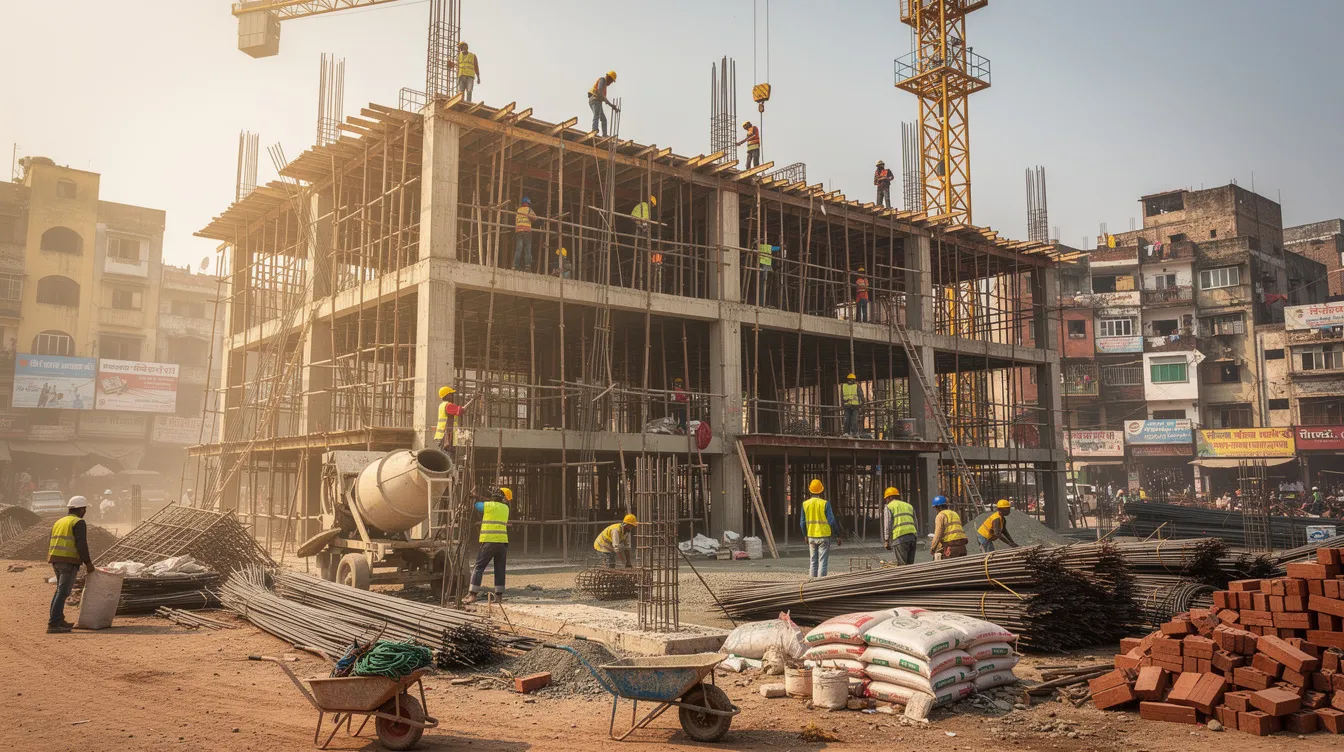
Globally, per-key development cost for a 3 star hotel ranges from $150,000 to $300,000, and building a 100-room 3 star hotel costs about $22.1 million in many markets. Indian costs vary depending on location, land ownership, and specifications. Hard costs in this example account for about 50–55% of total development cost, consistent with broader hospitality sector benchmarks.
Actual hotel investment cost in India can vary significantly based on whether land is owned or purchased, metro versus sub-urban location, number of rooms, built-up area per square foot, classification standards, and chosen amenities and services offered – such as swimming pool, banquet hall, or spa. This example is intended to explain the cost structure and bank-appraisal logic, not to serve as a cost estimation benchmark.
3 Star Hotel Setup Cost vs DPR Project Cost
In common usage, “setup cost” often refers to the visible brick and mortar costs – building, interiors, and equipment per key. The DPR concept of “total project cost” is broader: it includes IDC, pre-operative expenses, contingency, deposits, and working-capital margin – items that are not physical assets but are essential for project completion and launch.
Promoters looking for room-count-wise estimates – say for 30, 50, or 75 rooms – should refer to a specialised guide on setup cost. For room-count-wise estimates and per-room setup analysis, you may refer to our separate guide on 3-Star Hotel Setup Cost in India – 30, 50 & 75 Room Hotels. This present article focuses on how the project cost is structured and financed for bank appraisal.
Lenders will always assess the DPR-style total project cost – not just the civil or per-room construction cost – when appraising hotel project finance in India. Understanding this distinction helps promoters prepare more hotels that are financeable, not just buildable.
What Is “Means of Finance” in a Hotel Project?
Means of finance is the complete funding plan showing how every rupee of the 3 star hotel project cost will be met – from equity, debt, and other sources. It is the mirror image of the project cost.
The basic equation is straightforward:
Total Project Cost = Total Means of Finance
Any mismatch signals an incomplete or unreliable DPR. If the project costs ₹29 crore, the means of finance must also total exactly ₹29 crore – sourced credibly and time-phased realistically.
Key components of means of finance include:
- Promoter contribution (equity in cash or kind)
- Bank term loan for eligible CAPEX
- Unsecured loans or subordinated debt from promoter group
- Investor equity or partner capital
- Eligible subsidies or incentives where available
Banks expect the funding plan to be time-phased: promoter funds must come in alongside or before bank disbursements to maintain the desired debt-equity ratio throughout project implementation – not just at completion.
Major Sources of Finance for a 3 Star Hotel in India
A typical hotel project financing structure in India combines promoter contribution, term loan, and sometimes unsecured or investor funds. Hotel development often relies on a tiered capital stack, combining debt and equity. Pure 100% debt structures are rarely acceptable to any lender in the hospitality industry.
Subsidies and incentives – such as those under state tourism policies – may be available in some locations, but should be treated conservatively in DPRs since availability and timelines are uncertain.
Promoter Contribution – Equity for 3 Star Hotel Project
Promoter contribution is the equity or own funds that promoters bring into the 3 star hotel project. It forms the “equity” side in the debt-equity ratio. Developer equity generally accounts for 25% to 40% of total project cost depending on lender norms and project risk.
Acceptable forms of contribution include:
- Cash brought into the project bank account
- Land already owned by the promoter (shown at supported valuation)
- Building already constructed or partially constructed
- Unsecured loans converted into quasi-equity where the bank accepts subordination
Banks insist on visible, upfront investment rather than future promises. While some projects may show 30–40% promoter contribution, the actual required equity level varies by lender, risk perception, location, collateral, and projected cash flows.
Unsupported or vague sources – such as “family support” or “future sale of property” without documentary evidence – weaken the DPR and can delay sanction. Good DPRs show a timeline of promoter contribution: how much is already spent (with bills and receipts) and how much will be infused in future, matching the project schedule.
Bank Term Loan for 3 Star Hotel Project Finance
The term loan is long-term debt used to finance eligible fixed assets – building, interiors, plant and machinery, FF&E – and sometimes a portion of pre-operative expenses. Commercial bank and NBFC term loans cover 50% to 60% of funding for hotel projects in practice, though commercial construction loans typically cover up to 65–75% of the total project value at the upper end. Lenders typically look for a loan-to-value ratio of 65% to 75%.
Key parameters to discuss in the DPR:
- Loan amount based on eligible project cost minus promoter margin (not simply security value)
- Interest rate – hospitality lending rates range between 11% and 14% for project financing in the current market, varying by borrower profile and lender type
- Moratorium during construction plus an initial stabilisation period
- Repayment tenure – typically 10–15 years after commercial operations begin
- Security – first charge on project assets, collateral property where needed, and personal or corporate guarantees
Disbursement is usually linked to project milestones and submission of bills, meaning promoters must initially fund some costs from own sources before the first disbursement.
Banks assess the hotel term loan requirement alongside projected revenue, operating costs, and DSCR to ensure repayment is realistic. The largest possible loan is not always the best financing structure for the hotel business.
Unsecured Loans and Other Acceptable Funds
Unsecured loans in this context are funds brought in from promoters, directors, or group entities without specific security, sometimes subordinated to bank debt per sanction terms.
Some banks may treat long-term, interest-free, or subordinated unsecured loans as quasi-equity for calculating the effective debt-equity ratio – but only with proper documentation and subordination clauses.
Other sources include investor equity, partner capital in partnership or LLP structures, internal accruals for expansion projects, and eligible government subsidies or interest subvention schemes. State tourism boards often provide capital investment subsidies for hotel developments in certain regions, and government-backed loans can offer advantages like lower down payments for qualifying owner-operators.
Mezzanine financing is a hybrid structure bridging the gap between senior debt and equity – used in some larger hotel properties, though less common in standard 3 star hotel projects.
Subsidies should generally be treated as additional comfort or upside rather than a primary means of finance, since receipt depends on compliance and government timelines. Over-reliance on informal loans or short-tenure borrowings for a long-gestation hotel project can create repayment pressure before the hotel stabilises – and this is a risk lenders actively watch for.
Illustrative Means of Finance for a 3 Star Hotel Project
Continuing the earlier example of a ₹29.00 crore total project cost, here is an illustrative means of finance structure. All figures are illustrative only.
| Source | Illustrative Amount (₹ crore) | % of Total |
|---|---|---|
| Promoter Contribution | 10.15 | 35.0% |
| Bank Term Loan | 17.40 | 60.0% |
| Other Eligible Sources (Unsecured Loans / Subsidies) | 1.45 | 5.0% |
| Total Means of Finance | 29.00 | 100.0% |

Financing a 3 star hotel typically involves 60% to 70% debt and 30% to 40% equity, and this example falls within that range. The 35% promoter contribution and 60% term loan create a moderately leveraged structure appropriate for a mid-sized 3 star hotel in a location with reasonable demand.
Total means of finance must equal total project cost in the DPR – any shortfall indicates the project is under-funded, and any excess suggests inflated costs. Banks may also test alternative funding structures during their internal appraisal – for instance, a lower term loan with higher equity – to improve repayment comfort and DSCR.
Understanding Debt-Equity Ratio for Hotel Project Finance
The debt-equity ratio measures how much of the project is funded by borrowings versus the promoter’s own money:
Debt-Equity Ratio = Total Long-Term Debt ÷ Equity (Promoter Contribution + Accepted Quasi-Equity)
Using the illustrative example: if the term loan is ₹17.40 crore and equity plus quasi-equity is ₹11.60 crore (₹10.15 crore promoter contribution + ₹1.45 crore unsecured subordinated loans treated as quasi-equity), the debt-equity ratio is approximately 1.5:1.
This means for every ₹1 of promoter funds, there is ₹1.50 of debt. According to ICAI guidance, a debt-equity ratio of about 2:1 is often considered acceptable in hotel projects, though banks may require lower leverage depending on risk factors.
Too high debt-equity strains repayments when occupancy or average room rate drops. Too low debt-equity reduces financial leverage and returns for promoters but improves loan sanction chances. The optimal ratio must be aligned with projected cash flows, DSCR, and risk appetite rather than copied blindly from other projects.
How to Calculate Term Loan Requirement for a 3 Star Hotel
The term-loan requirement in a DPR is derived mathematically from the project cost and proposed equity, then cross-checked against DSCR and bank norms.
Step-by-step approach:
- Compute total project cost (e.g., ₹29.00 crore)
- Deduct confirmed promoter contribution including land value (e.g., ₹10.15 crore)
- Deduct other long-term sources such as unsecured subordinated loans or envisaged subsidies (e.g., ₹1.45 crore)
- The balance is the proposed term loan (₹29.00 – ₹10.15 – ₹1.45 = ₹17.40 crore)
If the promoter increases equity to ₹12.00 crore, the term-loan requirement drops to ₹16.55 crore, improving the debt-equity ratio and likely the DSCR.
However, the amount calculated mathematically is not automatically the amount a bank will sanction. Banks separately assess eligible project cost – which may exclude certain heads like land or specific soft costs – and apply their margin norms on that eligible cost. They then verify this against repayment capacity, security, promoter profile, and overall project viability before determining the sanctioned amount.
Promoters should not start with a target loan amount and back-calculate costs. Instead, they should first arrive at realistic costs and then test financing options against projected cash flows.
Promoter Contribution – Why Banks Scrutinise It Closely
For long-gestation assets like hotels – where the expected period from approval to commissioning can stretch to 36–48 months – lenders rely heavily on the promoter’s skin-in-the-game as a signal of commitment and capacity to handle challenges.
Banks typically review:
- Promoter net worth from audited financial statements
- Existing investments and bank balances
- Sources of the proposed contribution – own savings, sale of assets, internal accruals
- Existing loans and obligations that might compete for the same funds
- Evidence of funds already deployed – land acquisition payments, contractor advances, design fees
- Ability to meet future cost overruns from own resources
- Timing of promoter contribution relative to project milestones
Banks prefer that significant equity is invested upfront or alongside early construction stages, rather than back-loaded after full term-loan disbursement. Statements like “balance promoter margin will be brought at a later stage” without documentary support are red flags.
CAs can help structure and document promoter contribution sources in a bank-acceptable manner – including preparation of net-worth statements, fund-flow analysis, and evidence compilation.
Project Cost Overruns in Hotel Construction – Who Funds the Gap?
Hotel projects frequently face cost overruns. Understanding who funds the gap is commercially critical and directly affects the financing structure.
Common overrun reasons include:
- Increase in steel, cement, and labour prices – average costs have risen materially in recent years
- Extra built-up area or additional facilities beyond original scope
- Interior upgrades beyond original specifications
- Late approvals causing IDC to rise
- Changes in fire-safety or municipal norms mid-construction
- Unforeseen site conditions
Banks generally expect promoters to bear cost overruns from own funds. Sanction letters often explicitly state that additional debt for overruns is not automatic. This makes it essential to keep adequate contingency, maintain liquidity buffers outside the project, and avoid understating project cost just to make the numbers appear attractive.
During appraisal, lenders will directly ask how overruns will be financed and assess the promoter’s capacity to respond – this is one of the most important considerations in any hotel project appraisal.
Means of Finance, Cash Flows and DSCR – The Critical Link
DSCR – Debt Service Coverage Ratio – measures the hotel’s ability to repay its debt:
DSCR = Cash Available for Debt Servicing ÷ Total Debt Obligations (Interest + Instalments) for the Year
A higher term-loan amount leads to higher yearly principal and interest payments, which lowers DSCR if cash flows remain unchanged. Conversely, more equity may improve DSCR but reduce financial leverage.
For example, if a 3 star hotel’s cash available for debt servicing in a stabilised year is ₹5 crore and annual debt service (interest plus instalment) is ₹3.5 crore, the DSCR is approximately 1.43x. Banks often expect a DSCR of at least 1.25–1.40 in stabilised years, though internal benchmarks vary. Hospitality assets are operationally intensive and sensitive to economic cycles, which is why banks demand higher buffers.

The 3 star hotel means of finance should be designed such that projected DSCR remains comfortable even under slightly lower occupancy or ADR scenarios – not only in the best case. This connects directly to the role of financial analysis, sensitivity analysis, and conservative assumptions in a good 3 star hotel project report for bank loan.
Financing a hotel also requires a detailed feasibility model encompassing various revenue and cost projections, not just a single optimistic scenario.
How Banks Assess 3 Star Hotel Project Cost during Appraisal
From my experience as a practising CA, banks do not accept project cost at face value. They subject it to both technical and financial scrutiny.
Key aspects of bank assessment include:
- Reasonableness of land cost – supported by a registered valuation report and comparable market data
- Civil construction estimates cross-checked by empanelled engineers or independent valuers
- Comparison of BOQ rates with prevailing market rates for the site location
- Validation of area statements – FAR, built-up area, carpet area – against municipal approvals
- Review of vendor quotations for FF&E and plant and machinery
- Evaluation of interior cost vis-à-vis the target guest segment and star classification norms
- Verification that GST and applicable taxes are included in cost estimates
- Confirmation of expenses already incurred with supporting bills and receipts
Banks also examine the implementation schedule, alignment of cost phasing with drawdown, IDC calculations, and adequacy of contingency. Related-party contracts – where the promoter group is also the contractor or supplier – may receive extra scrutiny to ensure the project cost is not inflated and the project remains viable.
How Banks Assess Means of Finance for Hotel Projects
Lenders look at the quality of funds, timing of infusions, and adequacy of cash-flow support – not just the arithmetic equality of cost and finance.
Key evaluation areas include:
- Promoter’s bank statements and net worth to confirm ability to bring in proposed equity
- Review of existing borrowings and obligations across all entities
- Assessment of projected debt-equity ratio and DSCR year-by-year
- Analysis of security and collateral – both primary (project assets) and collateral (additional property)
- Stress testing by lowering assumed occupancy, ADR, or F&B revenues to see if DSCR remains acceptable
Institutions also consider sector risk, local hotel supply pipeline, dependence on a single demand segment (corporates, pilgrimage, leisure), and promoter’s hotel management capabilities. The hospitality sector and broader tourism sector face cyclical demand patterns, and banks factor these into their appraisal.
A well-structured means of finance, aligned to realistic projections, significantly improves the probability of a positive credit decision and faster sanction.
Common Mistakes in 3 Star Hotel Project Cost and Means of Finance
Based on my experience reviewing hotel DPRs, here are the most frequently observed mistakes – and their consequences:
Cost-side mistakes:
- Under-estimating civil construction cost per square foot – leads to cost overrun and funding gap mid-project
- Ignoring or severely understating interior and FF&E budgets – results in compromised finishing or unplanned borrowing
- Not providing for pre-opening expenses and IDC – causes cash shortfall before revenue begins
- Assuming bank will finance land 100% – creates immediate equity shortfall when land is excluded from eligible cost
- Keeping negligible contingency – leaves no buffer for even normal price escalation, undermining project viability
- Ignoring working-capital margin – creates liquidity crisis immediately after launch
- Preparing projections with unrealistically high occupancy or ARR from day one – makes DSCR look artificially strong
Financing-side mistakes:
- Showing a very high term-loan percentage without testing DSCR under moderate stress – leads to loan rejection or steep conditions
- Assuming promoter contribution without clear, documented sources – delays appraisal and erodes bank confidence
- Relying too heavily on short-term unsecured loans for a long-gestation asset – creates repayment pressure before stabilisation
- Not matching the funding schedule with project implementation – breaks the debt-equity ratio during construction
- Failing to reconcile total project cost with total means of finance – the most basic error, suggesting a poorly prepared project report
Each of these mistakes can result in loan proposal rejection, postponement, unfavourable sanction terms, or – worst of all – a half-built hotel with no money to complete it.
3 Star Hotel Project Cost & Means of Finance – CA’s Practical Perspective
As CA Manish Gugliya, I want to emphasise one principle that guides my work on hotel DPRs: a bankable 3 star hotel proposal should never be reverse-engineered from a desired loan amount.
The correct approach is:
- Start with realistic cost estimation – every head, every line item, supported by quotations and professional estimates
- Build revenue assumptions conservatively – accounting for ramp-up period, local demand, competition from existing hotel properties and more hotels entering the market, and seasonal variations
- Prepare detailed operating-cost projections – covering all costs involved from salaries and F&B to utilities and marketing
- Test cash flows, DSCR, and break-even under multiple scenarios – including a base case and a downside case
- Then – and only then – determine the appropriate financing mix that the project can sustain
Promoters must balance ambition with repayment capacity. The first 12–18 months after opening are often the most difficult, with occupancy building gradually. Accommodation options in the country are expanding, and the domestic tourism market, while growing, distributes demand across more properties. Operational efficiency in these early months is critical.
A good hotel project is not only one that obtains a term loan – it is one that can comfortably service that loan from sustainable operating cash flows over its life.
Professional advisory support – from experienced CAs and project consultants – can significantly improve the quality and credibility of hotel project submissions to banks and financial institutions.
Role of a Detailed Project Report (DPR) in 3 Star Hotel Finance
The DPR is the central document banks rely on to understand the hotel project, its economics, risks, and proposed financing structure. It is the foundation of every bank loan for a 3 star hotel project.
A comprehensive DPR integrates:
- Project concept – location, site details, number of rooms, classification, facilities and amenities
- Promoter profile and financial strength – background, net worth, experience in the hospitality industry or related fields
- Market and competition analysis – local demand drivers, existing supply, tourism sector trends, seasonal patterns
- Detailed project cost breakup – all heads as discussed in this article
- Means of finance – with time-phased equity and debt drawdown
- Revenue assumptions – room revenue, F&B, banquet, and other income based on feasibility study and market data
- Operating expense projections – departmental and undistributed expenses
- Projected P&L, balance sheet, and cash-flow statement for 10–15 years
- Term-loan repayment schedule with year-wise DSCR analysis
- Break-even analysis and sensitivity analysis for lower occupancy, lower ADR, or higher costs
A well-prepared DPR ensures internal consistency – costs tie to assets in the projected balance sheet, financing matches liabilities, and cash flows support debt servicing. This consistency is what makes a project report credible for credit committees and appraisal officers.
Project cost and means of finance cannot be assessed independently from these financial projections – they are part of one integrated financial analysis.
Conclusion – Structuring a Bankable 3 Star Hotel Project
A successful 3 star hotel project in India requires realistic and complete project cost estimation, appropriate promoter contribution, a sustainable term-loan level, adequate working-capital margin, and comfortable DSCR across projected years.
The core equation is:
Realistic Project Cost + Adequate Promoter Equity + Balanced Debt + Proper Working Capital + Strong Cash-Flow Planning = Robust Hotel Project Financing Structure
Project cost and means of finance cannot be decided in isolation. They must be aligned with projected operations, risk profile, industry trends, and bank-appraisal norms. A project that looks inexpensive on paper but cannot fund its operations – or one that is over-leveraged and cannot service its debt – will face difficulties regardless of location or demand.
ProjectReportBank.com, under the guidance of CA Manish Gugliya, assists promoters with 3 star hotel DPRs, financial projections, DSCR analysis, CMA data, and bank-loan documentation. We do not guarantee loan sanction – no one credibly can – but we work to ensure that your hotel project submission is professionally structured, financially sound, and ready for serious appraisal.
Promoters considering a 3 star hotel project should engage with experienced financial and technical advisors early – before locking in land, design, or financing commitments.
Frequently Asked Questions
The following questions address additional concerns commonly raised by hotel promoters while planning 3 star hotel project cost and means of finance in India.
Is the project-cost approach different if I am converting an existing building into a 3 star hotel?
Yes. For conversion or renovation projects, the DPR still uses a total project cost concept, but the existing structure is typically valued through a registered valuer’s report rather than at original construction cost. The main new investment lies in interiors, services, equipment, and compliance upgrades. Banks will want clear segregation between old and new investments, and may apply different margin norms to each portion based on the condition and residual life of the existing building.
How are franchise fees or management fees treated in a 3 star hotel DPR?
One-time brand affiliation or technical-services fees are usually capitalised as part of project cost or pre-operative expenses. Ongoing management or franchise fees are treated as operating expenses in projected P&L statements. Since these recurring fees directly reduce operating cash flow, they impact both profitability and DSCR – and must be factored into projections transparently. Heritage hotels or standard hotel brands may have different fee structures depending on the services offered and brand requirements.
When does the bank usually start disbursing the term loan for a hotel project?
Term-loan disbursement generally begins after certain pre-conditions are satisfied – such as specified promoter equity infusion, creation of charge on property, receipt of key approvals, and execution of loan agreements. Disbursements then follow project milestones with submission of bills and utilisation certificates. Promoters should be prepared to fund early expenses from own sources before the first disbursement, as banks will not release funds based purely on a budget.
Can I refinance my 3 star hotel project loan after the hotel stabilises?
Many promoters explore refinancing or balance-transfer options once the hotel has two to three years of stable operations and improved financials. Refinancing may allow a longer tenure, lower interest rate, or release of collateral – but it is subject to eligibility, updated valuation, repayment track record, and the refinancing bank’s lending policies at that time. It is not an automatic right, so the original financing structure should be viable on its own merits.
Does taking a working-capital limit from another bank affect my term-loan appraisal?
Lenders usually prefer to handle both term loan and working-capital facilities for better monitoring through a single banking relationship. If different banks are involved, each will still examine consolidated leverage, DSCR, and the overall security structure. Promoters must transparently disclose all existing and proposed borrowings – for the hotel project and otherwise – in their DPR and loan applications. Non-disclosure of existing debt is a serious red flag that can result in rejection of the financing proposal.
Explore More 3-Star Hotel Project Report Guides
Continue exploring our 3-Star Hotel DPR guides covering setup cost, equipment, project cost, revenue, financial projections, occupancy, feasibility, project finance and bank loan assessment.